In the tradition of heavy-music genre splicers such as Mr. Bungle, Secret Chiefs 3, and Estradasphere, French act Igorrr hybridizes industrial death metal, breakcore, chiptune, and other genres using a dizzying array of seemingly unrelated styles and instruments. Songwriter, DJ, and guitarist Gautier Serre weaves Baroque music, Balkan folk, Eastern motifs, operatic vocals, and death growls into a fabric made from sludgy midtempo riffs, breakneck drum fills, and all manner of digital manipulation. Originally a solo digital project, Igorrr expanded to include guest musicians in the early 2010s, and the 2017 album Savage Sinusoid expanded the lineup to a full band with a bevy of guests, including vocalist Travis Ryan (Cattle Decapitation), accordionist Adam Stacey (Secret Chiefs 3), and nearly a dozen classically trained instrumentalists. Following a full-band tour around Europe and the States, Igorrr is back with Spirituality and Distortion (Metal Blade), the group’s fourth full-length and its second consecutive album devoid of samples. The most notable addition to the already jam-packed combo of genres is Middle Eastern folk, which widens the music’s timbral palette and increases the occurrence of meditative moments and dancing opportunities. “Downgrade Desert” and “Camel Dancefloor” are the most obvious examples, thanks to the extended oud intro and distinctive melodic scale in the former and the infectious groove in the latter. “Nervous Waltz” borrows more from Western classical; it begins with a beautiful triple-feel string quartet with IDM rhythms and harmonized operatic singing before blastbeats and a quick-twitch piano melody segue into a chuggy breakdown. On “Parpaing,” Cannibal Corpse front man George “Corpsegrinder” Fisher lends his guttural vocals to a digital deathfest interrupted by aggro bitcore. A Frenchy accordion lead pairs with grind and black metal on “Musette Maximum,” and the ubercatchy “Polyphonic Rust” uses interludes by what sounds vaguely like an Eastern European women’s choir to color some of the best head-banging material on the entire album. Spirituality and Distortion can change styles or moods on a dime, and it matches its technical and melodic excellence with its boundary-defying imagination. v
When the Art Ensemble of Chicago reinvented itself as an orchestra for its 50th-anniversary recording, last year’s We Are on the Edge, the idea didn’t come out of thin air. It reflected a use of the classical methods and sounds that the ensemble’s lone surviving founder, woodwind and percussion player Roscoe Mitchell, has been pursuing in his own work since the 1980s. The new album Distant Radio Transmission consists of four completely notated works, three of which are derived from Mitchell’s improvisational practice. “Distant Radio Transmission” began life as a free improvisation by Mitchell, keyboardist Craig Taborn, and percussionist Kikanju Baku, and was subsequently transcribed and rearranged for orchestra. As performed by 31-piece Czech ensemble Ostravska Banda (joined by Mitchell’s trio), the piece has been expanded from a series of telegraphic exchanges of sonic information into a progression of rich textures charged by interjections from Mitchell’s stabbing sopranino saxophone and the absurdist syllable salad of vocalist Thomas Buckner. Mitchell doesn’t play on the rest of the record. “Nonaah Trio” and “Cutouts for Woodwind Quintet” transform material Mitchell first developed in the 1970s and 1980s into sharp-angled, cubist chamber music, while “8.8.88” is a dizzyingly complex work for Disklavier, a sort of computer-operated player piano. v
Enforced mass social isolation can really make you crave constant stimuli. As each day feels longer than the one before, the slow crawl of hours makes the frenetic dance music on Blood Blood Blood Blood Blood–the latest howler from Chicago-based producer RXM Reality, aka Mike Meegan–sound like a salve. It’s Meegan’s sixth album under that name and his most tightly crafted yet, brimming with ideas. “Exhale” evolves from glossy synth arpeggios to cryptic, fumbling beats, then employs an angelic vocal sample. On “Deaths, Resurrections, and Ascensions” Meegan plays a similar trick: after creating an airy, dizzying vortex of electronics, he injects it with glistening blips and an almost wistful atmosphere. The tracks mutate freely, shaped with the type of confidence that makes for a gripping listen; the constant chaos rarely gives you a moment to catch your breath. Despite their superficial fragmentation, though, Meegan’s jittery productions feel fully formed–like mini worlds unto themselves. This is the key to the success of Blood: no single moment feels more important than any other. Every second contains another explosion of fractured sonics, and they all jell together due to the album’s inspired restlessness. v
Chicago has many independent hip-hop labels, but few maintain rosters as multigenerational as that of Machine Wash Music. Rapper Daryl “Decay” Stewart cofounded Machine Wash after he had an unsatisfying experience putting out his 2008 album, The Unlikely Hero, through Molemen Records–he wanted a more mutual artist-label relationship. “The process wasn’t the same and I didn’t enjoy making that record as much,” Stewart told Voyage Chicago in 2018. “I went back to my friends and felt we needed to help artist [sic] realize their dream without taking their control.” Machine Wash doesn’t even have a dozen releases yet, but on the new compilation Machine, the label rolls deep, documenting the many current dimensions of underground Chicago hip-hop. Machine features savvy youngsters (Defcee, Green Sllime), long-grinding veterans (Encyclopedia Brown, Stewart’s alter ego Decay, the Llama), producers from the arty beat scene (Lanzo, Uncle El), and an MC who helped build the foundation for the local scene (Ang-13). The comp reframes hip-hop with a peculiar new slant, even when the big-footed beats and rubbery wordplay carry a whiff of tradition–and even the cuts that defy convention sometimes feel like long-lost classics. On “Rats,” rapper-producer Green Sllime attacks a bleary instrumental with glorious non sequiturs like he’s slicing through underbrush with a machete. Few artists sound like Sllime, and I wish more would take notes. v
A couple years ago, Chicago archival label Numero Group launched Cabinet of Curiosities, a compilation series focused on fringe private-press releases of yore. A lot of the strange music they’ve reissued under this banner intensely evokes the eras in which its creators lived, and Cabinet of Curiosities comps are unified less by genre than by spirit. The 1980s electronic sounds on 2018’s Escape From Synth City, for example, include glacial new age (“Konya” by Al Gromer Khan), chintzy boogie (“Intellectual Thinking” by New World Music), and progressive house (“Whirr” by Reader contributor Frank Youngwerth); the LP sleeve looks like a classic NES cartridge, a theme that Numero took further by creating an Escape From Synth Cityside-scrolling video game. The songs on the new Whispers: Lounge Originals ooze the laid-back essence of 1960s hotel bars, martini glasses, and Pat Boone, but the artists push the concept of lounge music to its outer edges. “Kids,” a lo-fi, bittersweet shot of blue-eyed soul from Minnesota singer-songwriter Chuck Senrick, rubs shoulders with “These Moments Now,” a bizarre intergalactic psych-rock romp by North Dakota act Justen O’Brien & Jake. Lounge music generally doesn’t try to draw much attention to itself, but the odd, twisted, and boldly beautiful songs on Whispers definitely deserve it. And this time the LP sleeve looks like a matchbook, naturally. v
Well, look at that. The world is ending. Suddenly we’re all cooped up, we can’t see friends or loved ones, we can’t go out for pizza, and we can’t grab a beer at the bar. I don’t know about you, but even if people weren’t suffering and dying from coronavirus, I’d be starting to feel really down. I’m frustrated and anxious, I’m stir-crazy, and I’m sleeping terribly. Everything is canceled–tours included–but at least there are still new records coming out. I’m finding the new U.S. Girls album, Heavy Light, to be a little ray of sunshine. U.S. Girls is the project of Toronto-via-Chicago musician Meghan Remy, who has been releasing various strains of experimental pop music under that name since 2007. Her first records skewed toward dark, fuzzy bedroom-recorded starkness, with lo-fi production and drum-machine backing. But she’s since developed her sound and shifted to the brighter side of the street, and Heavy Light is her biggest, cheeriest release yet. This time around Remy plays with lush AM Gold disco feels, foregrounding upbeat funky fun; it certainly wasn’t what I expected, but in these dark times, it was more than welcome. v
Are you quarantining alone and things are starting to get a little weird? Are you having too many conversations with yourself and sometimes the fridge? How about you spice it up a bit and listen to someone other than yourself — with a podcast! The best part? The Podcasts app is already downloaded on your iPhone (don’t believe us? Search for it!), so you can find and listen to any of these right now.
These are just some of the podcasts that will transport you to somewhere else when you need it the most.
For those who enjoy a lighter take on relationships without the invested interest of a friend or therapist, Just Break Up is for you. Created by slam poet, Sierra DeMulder, and her trusty friend, Sam Blackwell, Just Break Up is a deceptively deep yet healing podcast that will center you almost immediately (regardless of your relationship status). Listen to Just Break Up to connect with others through the language everyone has experienced but might not speak: love.
For those who are hard on themselves when their best just isn’t enough, you need to listen to Elizabeth Day’s How To Fail podcast. Day brings you a compassionate counter and a friendly dynamic while talking all things life. She also engages with guests, who share their lessons learned from royal mistakes. How To Fail is like the Chicken Soup of podcasts: it’s good for the soul.
This is a classic podcast for die-hard listeners and newbies alike. Recorded in Chicago, Wait Wait… Don’t Tell Me! makes current events fun and memorable. Listen on WBEZ, Chicago’s NPR station, to get a chuckle and feel connected with other people who don’t always get the current events right.
Being polite gets you far, but not far enough, in Anna Sale’s interview formatted podcast, Death, Sex, and Money. Every week, Sale uncovers the core of her guests’ stories with candor, humor, and grace. This podcast is ideal for those who need a reminder that people are connected through a common thread: humanity. Consider Death, Sex, and Money a timeless podcast about emotions, choices, and humanity.
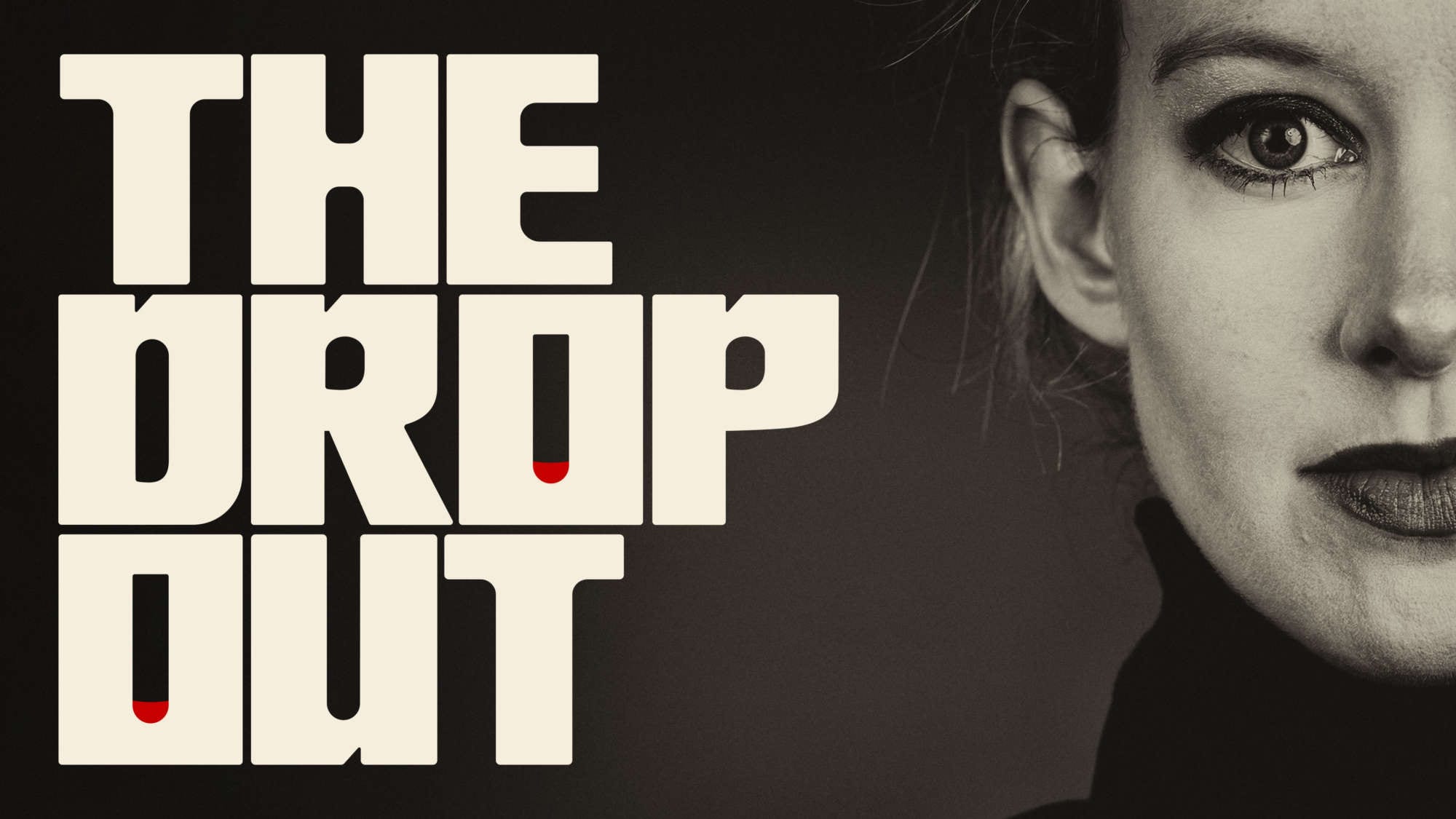
Although this podcast has only one season, The Dropout is ideal for those who appreciate investigative journalism about an underdog. Despite the already intriguing pull of medical innovations gone wrong, The Dropout is worthy of a binge-listen because of its cast of characters and ongoing relevance. Dive into the fated fairytale of Theranos, a Silicon Valley unicorn destined for failure, in The Dropout.
It’s like “truth or dare” with a twist of “fact or fiction.” Every episode of Lore is beyond absurd and emotionally riveting that it’s almost too good to be false! Lore is for individuals who enjoy thrillers and folktale about relatable stories without the blood and guts of a movie. Enjoy during the evening hours (if you dare!).
Miel Bredouw (with the help of a special guest) improves your favorite songs every week on Punch Up the Jam. Sounds hard to believe, right? Miel has an uncanny ability to find humor and joy in lyrics and melodies. You’ll find yourself chuckling, singing, and busting some dance moves in these episodes! From Britney Spears to Bruce Springsteen, Punch Up The Jam turns wild ideas into greater lyrics that you just want to pump — er, punch — up!
Still waiting on your letter from Hogwarts? Wishing you had a butterbeer right about now? Swish and Flick is the answer to your incantations and spells. Deep dive into all things Harry Potter with Swish and Flick’s cast of Potterheads. This podcast is definitely for those who have read the Harry Potter books and are looking to advance their understanding of the wizarding world!
Wanting to escape 2020 and dive back in time into the Roaring ’20s? How about a historical fiction? Now in its second season, Harlem Queen explores the Harlem Renaissance with a woman at the helm: Madame St. Clair. Femme fatale, “numbers queen,” and gangster, Madame St. Clair gives you drama, romance, and calculated moves. Harlem Queen is sure to keep you entertained and intrigued.
If you feel like you’ve been misunderstood but you don’t want to expose your own fuzzy feelings, this science fiction podcast is for you. The Bright Sessions brings you into the world of “atypicals” through their therapy discussions with Dr. Bright (a therapist). Atypicals are patients who just happen to have supernatural powers. As the seasons go on, you enter the world of the atypicals — and realize they are not so different from you. Ground yourself in emotion and find your island of friends with the atypicals.
Advertisement
After all this quarantining, you’ll need something else to talk about other than your breakfast. Give these pods a listen!
With everyone stuck inside with their significant other, day after day, it might feel like romance is officially dead for the next couple of weeks, at least. But just because we have to practice social distancing, doesn’t mean we can’t have the occasional date night, as long as we are taking the necessary precautions. Luckily, M&M Limo is providing the perfect solution for cooped-up couples who want a romantic evening out, all while practicing social distancing.
[embedded content]
Advertisement
The limousine company will send over a stretch limo for you to take your date night on the road. Instead of being greeted by a chauffeur, you’ll be met with glasses of complimentary champagne. You’ll never be in contact with the driver, who remains behind a closed partition at all times. That means you’ll be able to privately enjoy your date alone and enjoy some quality time together, away from everyone else. While this does mean you will have to open your own door, it is a small price to pay for keeping everyone safe!
While in the limo, you can enjoy the now quiet city of Chicago as you listen to music or watch your favorite movie on the limo’s TV. While you do get a complimentary bottle of champagne, you are welcome to bring your own alcohol as well to enjoy along the drive however you please. You can make it a complete night out and even order food from your favorite high-end restaurant (or McDonald’s—your drive won’t judge!) to be picked up along the way.
Advertisement
M&M Limo is taking the safety of their guests and their drivers very seriously. The limo is disinfected from top to bottom before you are picked up, and you’ll never be within six feet of the driver without a partition between you. The company has taken every precaution to keep everyone safe during this time.
Advertisement
Rides are available at $243.75 for three hours or $375 for five hours. The price is all-inclusive, with gratuity and fees already added into the final cost. To book your date night out on the town, you can either call 847-257-2111 or contact M&M Limo directly on their website.
Moving is stressful enough when you only have to think about your family. When you’re considering the needs of an entire business, things become a little more complicated.
When planning an office move, some minor details will inevitably fall through the cracks. You’ve got to get the big stuff out of the way and resolve as many of the potential pitfalls as possible so that when it comes time to go to work in the new space, business runs smoothly.
1. What Does Your Current Lease Look Like?
Hopefully, you haven’t overlooked the terms of your existing agreement. You should be nearing the end of the lease if you’re preparing to leave. Otherwise, you’ll need to investigate any penalties for breaking the contract early.
2. How Big Is the Moving Job?
If you’re expanding out of your home office, you might be able to get everything moved with a little help from your employees. For larger, corporate moves, you’ll need to hire a company. Look for one who has insurance and a strong safety record, as you’ll be moving some incredibly valuable equipment.
3. Appoint a Move Manager
If you’re busy running the company, it might be too much to take on orchestrating the move at the same time. Choose someone reliable to get all the small details worked out.
4. Choose a Good Date
If your entire office is packed up, ready to move when the busiest week of the year hits, you could miss out on a lot of revenue. Instead, think ahead about when the business can afford a few days offline. For larger companies, it might be that different departments move to the new space at staggered times.
5. Will There Be Parking?
Your employees are going to need somewhere to park in the future, and if the business is growing, you probably need space for new people as well. Make sure your new building has plenty of open parking and easy access for employees to keep from having to move again in the next few years.
6. Does the Building Have High-Speed Internet?
These days, a DSL connection isn’t going to cut it if you’re running a high-powered business. A quality building should have a dedicated underground dark-fiber line running to it, providing ample throughput.
7. How Safe Is It in an Emergency?
Make sure your new building includes fast methods of evacuation and backup infrastructure, such as a generator for when things get unpredictable. The design of most modern buildings keeps emergencies in mind, but some older ones can have dangerous layouts or outdated emergency systems.
This list is only a brief overview of things to remember in what is probably a much larger project. Every move is a little different, and you’ll likely overlook a few minor details. If you can get your arms around the large obstacles, those smaller pieces will fall into place eventually.
(A multipart reflection on fellowship written by Lira Luis)
“The best time to get an award is when you receive it.”
– Grafton Architects (Shelley McNamara), 2020 Pritzker Architecture Prize Laureate and 2020 Royal Gold Medallist
Part 2 – The RIBA Fellowship
We live in uncertain times, and I bet you’re a bit like me — you wonder about our world after we emerge from this long darkness of lockdowns.
I’m not sure how you would have reacted, but when I first inquired last year (2019) about the Royal Institute of British Architects (RIBA) Fellowship and the uncertain outcomes of a submission to this special recognition for current RIBA Chartered Members, I made an intentional choice to work towards it. Usually when the RIBA Fellow Assessment Panel reaches a decision about your submission, it could receive one of the three following outcomes:
1) Your application is approved and you are elected as an RIBA Fellow Member. (Most people would like this positive outcome.)
2) Your application is not approved, with written feedback provided as to why you do not meet at least 3 of the 5 eligibility criteria.
3) Your application is not approved but you are asked to re-apply, as the panel have been unable to accurately evaluate your application and require further written evidence and/or supporting documentation.
Just imagine, the only thing certain about its outcome is uncertainty. What most people would do in this situation is strongly assess if you’re prepared for this rigorous undertaking. The best time to work towards the Fellowship — regardless of your age, race, citizenship status, national origin, or ethnicity, is when you meet the qualifications as a member, and when you are ready.
In spite of the uncertain outcome, I worked towards it, for the strong vision and democratic process it offered. It’s a platform to impact your present and to provide a brighter future:
“Fellows of the RIBA are ambassadors for the profession and RIBA community, with membership providing a profile and platform to continue to affect change and celebrate architecture.”
You’ll see it expressed in the examples of RIBA Fellows like these, who came before me. I am inspired by their examples to continue, as I come behind them.
I started mulling about the RIBA Fellowship after attending the 16th International Architecture Exhibition of the Venice Architecture Biennale in October 2018, which was curated by Honorary Fellows of RIBA Yvonne Farrell and Shelley McNamara in Italy. The show created an impact on me, as the body of work I later submitted for the RIBA Fellowship is sympathetic with the “Freespace” architecture agenda on “generosity of spirit and a sense of humanity”. One of those works was the revival of the underutilised System-Built Homes — Frank Lloyd Wright’s foundational project that birthed his “Usonian” Jacobs House (a UNESCO World Heritage Site) — resulting in reduction of blight in a disadvantaged city block of New Jersey.
By February 2019, I had visited the RIBA headquarters in London that had an exhibit on 2019 Royal Gold Medallist Sir Nicholas Grimshaw, RIBA, Hon FAIA. He is a renowned British architect who is also a registered architect in the State of New York, USA. Within the retrospective, he had a project that reminded me of Buckminster Fuller, as well as a picture of him with Bucky himself at his project The Service Tower (also known as the Bathroom Tower). It served as inspiration for my RIBA Fellowship submission on how I would later present the research and development of Leapfrog Project’s “Living Ball” that enabled self-sufficient empowerment of extreme weather survivors through geodesic constructions.
When the application cycle opened on June 10, 2019 for 2020 RIBA Fellowship and after being a continuous RIBA Chartered Member for 11 years, I chose to participate for the process and not for the outcome — particularly when it’s uncertain. It was by choice, not because of a commitment or because I have no other options. I was there for the moment and I wasn’t trapped there with nowhere else to go. And it is with this mindset that I sent my submission which included an application form, signed declaration, and projects that demonstrated how I met 4 of the 5 criteria (3 is minimum) including signatures of decision makers who verified my contributions in those projects.
The gift of inspiration from “Freespace” at the Venice Architecture Biennale came full circle when I flew to London and attended the RIBA Fellowship Ceremony on February 12, 2020 at Florence Hall. I was one of the ten elected as Fellow this year.
In the Royal Gold Medal & Fellowships 2020 booklet for the awards ceremonies, headlined by 2020 Royal Gold Medallist Grafton Architects’ Yvonne Farrell and Shelley McNamara, I learned of the “extraordinary spirit of generosity with which they exercise their profession”.
(“For me personally, this RIBA booklet from the RIBA Fellowship Ceremony has taken on another level of meaning and value! It’s great to be in extremely good company with all the people featured in it… particularly its headliner, the 2020 Pritzker Architecture Prize laureates, Yvonne Farrell and Shelley McNamara of Grafton Architects”)
And it’s with that same spirit of generosity I experienced “fellowship” from those who empowered my elevation as Fellow of RIBA, as I described in my acceptance speech:
“I advance work for those impacted by extreme climate and inequities. It demands overcoming preconceptions. (The) RIBA, a professional institute pioneer, understands this. Many empowered my elevation as Fellow: Jason Boyle, FRIBA, FRSA; Dr Wayne Ruga, FAIA, FIIDA, Hon FASID; and others, including (the) RIBA — for electing me as your Fellow. Thank you. You inspire me to pay it forward by your examples.”
(When they told me I had 30 seconds to deliver my speech, which is almost the same amount of time as what Brad Pitt got for his 2020 Oscar speech, I found a creative way to deliver my 1,000-word message in that time frame. With a little help from my friends at London Fashion Week 2020, I wore the rest of my message instead: Defying Gravity, symbolized by a cape for flying. NB: On normal speaking time, RIBA is pronounced as it is spelled: R–I–B–A, and Jason Boyle as well as Dr Wayne Ruga are multiple Fellowship credential recipients.) [Video courtesy of Karl Lenton and Alex Nikjoo]
How would you feel if an uncertainty led to a brighter future? That was how I felt because everything about the process aligned at the right time for me — from submission to ceremony (happened a month before the Covid-19 pandemic would be declared). Through this RIBA Fellowship process I learned, the way to build is with inspiration. When you have that, you have hope for a brighter Future and the promise of better days regardless of uncertainty. In it I find meaning.
You’ll find the meaning of fellowship when working towards it means something for you.
Lira Luis is a 2020 Fellow of the Royal Institute of British Architects (RIBA). She is the first and only Taliesin Fellow from the Philippines at the Frank Lloyd Wright School of Architecture (FLWSA) since its founding. She is principal architect at ALLL/Leapfrog Project, delivers presentations at national conferences named in the “Gold 100 Listing of the world’s largest and most successful trade shows” for the past 20 years. She organized and led the AIA national Practice Management’s (PMKC) A’19 session “Virtual Architectural Practice: Alternate Realities for the Emerging Gig Economy” and “Virtual Practices: The Impact of Technology and Transience on New Histories in Practice” partner program at the 2017 Chicago Architecture Biennial, subsequently co-authored a resulting white paper with AIA Trust “An Architect’s Guide to Virtual Practice” that reached more than 30,000 AIA members, and moderated the webinar “Virtual Architectural Practice – An Alternate Reality”. At A’16 Conference on Architecture she shared solutions about the gig economy and potential for Virtual Practices in “Rethinking the Workplace: Co-Working Spaces for Architects”. She brings more than 25 years of architecture experience and is emeritus chair of AIA national PMKC. After graduating from the Frank Lloyd Wright School of Architecture (FLWSA), working in firms in the USA and abroad, earning NCARB certification, she runs a Virtual Practice on Blockchain Technology.
All things design in and beyond Chicago land. Contributing writers led by Lira Luis, FRIBA, AIA, NCARB, CEM, LEED AP and the ALLL staff including Leapfrog Project Collaborators.






Leave a comment