Videos

One murder, four years, no answersMaya Dukmasovaon May 12, 2020 at 4:30 pm

We’ve heard both versions of the story too often, tragic trajectories that begin with being a young Black man in Chicago and end in murder, either by police or by somebody else. In March 2016, as the city was reeling from the Laquan McDonald scandal and entering what would be its bloodiest year in two decades, 22-year-old Courtney Copeland wound up with a bullet in his back in front of the 25th District police station in the Belmont Cragin neighborhood, on the northwest side. He was shot as he was driving his BMW late at night to see his girlfriend. He spent his last moments trying to get help from the cops at the station, who handcuffed him and treated him like a suspect, leading to precious minutes lost in getting him potentially lifesaving medical care. It took his mother four years and a collaboration with journalists to figure out what happened that night–a story that police were in a position to put together within days of the murder.

Somebody is a new podcast about what Copeland’s mother, Shapearl Wells, had to endure to get answers from the Chicago Police Department. It’s a series that not only establishes narrative justice for her son–who she felt was misrepresented in scant prior media coverage–but offers a close look at the carelessness and incompetence with which this murder investigation was handled and how the department treated the loved ones of the victim and the community where the violence happened. The podcast was produced by Invisible Institute reporter (and sometimes Reader writer) Alison Flowers and StoryCorps prodcuer Bill Healy, but it’s unique in the true crime genre for Wells’s involvement and centrality to the story. She’s the host and narrator of the show, and she has led the investigative work that should have been done by police.

Wells says she contacted the Invisible Institute for help after reaching a dead end with her own efforts. She wasn’t able to get answers from detectives, no arrests had been made, and given the circumstances of the murder, Wells suspected a cop might have killed her son.

“I was at my wit’s end, I had exhausted all my options and I knew I needed to enlist some help in order to dig deeper,” says Wells. “I felt that having someone else to add pressure to CPD would definitely increase my chances of getting to the bottom of what happened.”

The podcast producers ultimately filed about 100 FOIAs, obtaining video, documents, and police records that CPD had told Wells didn’t exist. They interviewed dozens of witnesses, including people who’d never heard from the cops even after reporting relevant information. They identified the location of the shooting and three suspects. The podcast includes recordings of Wells’s conversations with detectives that reveal officers who are dismissive and defensive, seemingly more concerned with their authority being challenged than solving the murder. What’s more, the attitude of the police doesn’t change even when another person is murdered in a BMW in the same area more than two years later, likely by the same people.

“What I learned is that the reason why Chicago’s murder solve rate is so abysmal is because there’s not a lot of effort done in finding the killers that are out here plaguing our community,” Wells says. “I felt that because I was doing their job for them they felt offended during my interactions with them. But I shouldn’t have to do what they’re getting paid thousands of dollars to do, that’s their job. If you’re not investigating these cases, what are you doing?”

CPD’s murder clearance rate is among the lowest in the nation, and it’s even worse if the victim is Black. Between January 2018 and July 2019, for example, the police solved 47 percent of murders with white victims, and just 22 percent of those with Black victims, according to data reported by WBEZ. Usually, officials blame investigators’ failure to solve cases on lack of community collaboration. Somebody tells a starkly different story.

“Certainly there is a lack of trust and a lot of Black people feel that the police is an occupying force in their neighborhoods,” Flowers says. “But in this case, what the detectives told us was ‘We tried and people in the neighborhood just aren’t talking.’ And we found the opposite. All of this could have been known within days. The people who gave us this evidence were willing to talk to police . . . Everything that [the police] did was incredibly superficial, there was sloppy follow-up, and ultimately just a really shallow investigation.”

No one’s been charged with Copeland’s murder to this day. CPD has reclassified the murder as a “cold case” and still advertises it on their social media–citing the wrong neighborhood and cross streets for the incident. Wells still wants justice, but she knows it likely won’t come through the courts. She hopes that the podcast will, at the very least, impact protocols and operations among Chicago’s emergency responders (such as handcuffing a person who’s been shot), so that victims of violence don’t wind up being treated like they’re nobody.

Somebody is available on all podcast platforms. The final episode drops on Tuesday, May 12. The Invisible Institute will host a virtual listening party for the final episode at 3:00 PM on Tuesday, May 12, followed by a discussion with Shapearl Wells. Sign up for free at: bit.ly/somebodylistening. v


Read More

One murder, four years, no answersMaya Dukmasovaon May 12, 2020 at 4:30 pm Read More »

Aloft Circus Arts and Actors Gymnasium bring the circus from their homes to yoursKerry Reidon May 12, 2020 at 11:20 pm

Flying high and fearlessly in front of awestruck spectators is what circus is all about, right? So what happens when your show is grounded, so to speak, by COVID-19? On Saturday, two longtime Chicago circus arts training and performance centers show how they’ve adapted their art for the new normal, where we all feel like we’re working without a net.

Aloft Circus Arts offers Sanctuary in Place! Volume 4, in which an eclectic array of performers–some from the Aloft ensemble, some from out of town–perform live from their homes for a “Zoom-enabled circus show”–as the title implies, the fourth such online offering Aloft has produced since the shutdown. And Actors Gymnasium has transformed their planned live show for their annual Spring Youth Circus into Isolated, rehearsed online and recorded by the 28-member ensemble from their homes and then edited into streaming video.

For Shayna Swanson, who founded Aloft in 2005, these virtual shows have an ironic backdrop. After a long and expensive process, Aloft’s home–a former church in Logan Square whose high ceilings are ideal for trapeze and other aerial arts–finally received the coveted Performing Arts Venue license, or PAV, from the city. And then the coronavirus arrived.

“The timing was a little rough,” says Swanson. “We worked for a long time, and it was really expensive, and we did one show and it was over. It’s so crazy. You know, we could have not gotten it and kept having shows for under a hundred people for a donation, right? And now as we hear about what things will look like as they start to open back up–‘you’ll be able to have gatherings with 50 people’–I think ‘we could have just done that.'”

Sanctuary, a cross between a punk cabaret and circus, has been a staple showcase with Aloft for a while, so taking the show online made sense to Swanson. But that doesn’t mean there hasn’t been a learning curve. “We’re not technological people really by nature. We’re very tactile. We spend our time training our bodies to do hard things and we don’t spend a lot of time on computers. We’ve put in more time tech rehearsing this show than we do rehearsing a regular show,” she says.

The aim is for all the segments to go out live in real time. The only exceptions, Swanson notes, would be if bad weather prevented a live outdoor act from happening. And she doesn’t really curate ahead of time. “I don’t actually know what people are going to do until the show is happening. I don’t ask them to send me what they’re going to do beforehand. I like to be surprised. I am picking people I know make quality work, so I’m trusting what the output’s going to be.” And though the online show is available on a donation basis, Swanson says Aloft has made enough to pay performers the same rate they would receive for the live show.

For the 25-year-old Actors Gymnasium, housed in Evanston’s Noyes Cultural Arts Center, going online was a way to celebrate the achievements of their youth ensemble. But the focus of Isolated changed once the shutdown happened. Director Kasey Foster says, “The original idea was to show how much being on our devices can take away from the world in front of us or the world around us.” Now, of course, she has an ensemble of middle school and high school students who are more tethered than ever to their screens for online learning.

The show includes monologues about isolation as well as a variety of circus acts. Of necessity, many of these acts had to change from the aerial arts to other skills, such as acrobatics, juggling, or unicycle. Foster notes, “I keep telling this cast that 99 percent of the population doesn’t know how to do any of the things that you know how to do with your bodies.”

Actors Gymnasium founder and artistic director Sylvia Hernandez-DiStasi also worked with the youth ensemble on the show. She says, “I have to tell you, I am not a big fan of watching stuff online and rehearsing online and staring at a screen all day.” But she and Foster both note that they and the ensemble leaned into the “glitchiness” of working with Zoom and the inevitable lag times and technical difficulties that come along with it.

Says Hernandez-DiStasi, “I think that what art is about is being creative and making things happen and being flexible.” She also notes, “The apparatus is fun, but the fundamentals of knowing how to use your body is something that gets glossed over because the kids get so anxious to fly through the air, which is what everybody wants to do.”

Foster notes that not all the material in Isolated is melancholy, though the students in the show, like students everywhere, are mourning the loss of rituals such as graduation and prom, and just being able to see their friends every day. She mentions one monologue by a member of the ensemble that “started with she’s so angry and frustrated. All this time, all these years she’s put in at trying to be the best she can be and it comes to nothing, just a little piece of paper in the mail or something. But then halfway through she realizes that it’s all just an illusion and we can work as hard as we want, but it’s never accomplishing what we think. It was just super Zen.”

Both Aloft and Actors Gymnasium are offering online circus arts classes during the shutdown as well, and both groups say that even once they can go back to teaching and performing live and in public, the online components will remain. Swanson says that one of the advantages for the virtual Sanctuary show is “we can have performers from all over the world, and we have.” Both she and Hernandez-DiStasi also note that going online has reconnected them with past members of their ensembles.

And by going online, Aloft and Actors Gymnasium keep the ghost light for circus arts burning until they can all meet again under the silks and trapezes. Says Hernandez-DiStasi, “If art goes, everything goes. So it’s really important to keep it going and keep supporting it. It really is what is getting people through this time.” v


Read More

Aloft Circus Arts and Actors Gymnasium bring the circus from their homes to yoursKerry Reidon May 12, 2020 at 11:20 pm Read More »

‘Thank U, Stop’: Middle Eastern artists say ‘next’ to stereotypingYasmin Zacaria Mikhaielon May 12, 2020 at 11:45 pm

“Put down the brownie batter hummus and slowly step away from the culture.”

This command welcomes us into the pointed and poignant community-produced music video (Means of Productions) that is “Shukran Bas,” a parody of Ariana Grande’s breakup anthem “Thank U, Next.” In this five-minute masterpiece, we find much that is salty and sweet, just like the aforementioned hummus snack.

The music video dropped on Wednesday, April 29, after much anticipation. Director and creator Arti Ishak assembled a fierce team of collaborators to create opportunities “for younger artists to grow, try things they haven’t been given the chance to, and prove they are brilliant and capable of pushing the needle forward.”

This needle points towards widening the scope of Middle Eastern and North African representation in media. All too often, roles for our community of Brown artists consist of racist caricatures and hastily written cultural stereotypes. With this artistic endeavor, Ishak and her team take up a troubled legacy and advocate for authenticity and space-making through Ariana Grande’s own problematic lens.

As an avid cultural appropriator herself, the Ariana Grande aesthetic proved an effective way into the issues of misrepresentation and erasure that MENA artists battle with about every project they sign on to. Ishak notes, “Ariana Grande is one of the white women most famous for appropriating Black and Latinx culture for profit and it just felt right to steal something back while making a critique about brownface. I mean, I hate the original message but you gotta admit that song is a bop.”

With Grande’s original music video for “Thank U, Next,” she mashed up four major films including Mean Girls, Bring It On, 13 Going on 30, and Legally Blonde. What these films have in common include reclaiming of femme power, solidarity between friends, and coming-of-age narratives. When looking at “Shukran Bas” (which loosely translates from Arabic to “thank you, stop” or “thank you, but” depending on context), it’s clear similar sentiments are evoked when applied to the MENA media landscape at large.

“The movies [Grande] emulates [. . . ] are also famous coming-of-age romantic comedies that people of color were excluded from or used as props in,” Ishak notes. In a sense, “Shukran Bas” is a means for Middle Eastern artists to come into their own power as they’ve fallen in and out of love with industries either refusing or unequipped to hire their whole selves.

Like the plentiful Easter eggs present in Grande’s “Thank U, Next,” “Shukran Bas” includes its own treasures, ones that are more robust, endowed with deep cultural meaning.

The music video opens mirroring the confessional style found in Mean Girls, wherein characters are sharing hot goss and rumors around Regina George. In “Shukran Bas,” these opening moments shout out MENA politicians, celebrities, and activists who’ve rejected brownface or stepped up as activists.

“I saw Rashida Tlaib run for public office, so I ran for public office.” (Sidenote that the U.S. representative “liked” the video.)

“I heard Rami Malek refused to play a terrorist, so I refused to play a terrorist.”

Lines like these are heartening examples that seemingly small actions set big precedents. In interviews with cowriters Ishak, Gloria Imseih Petrelli, and Martin Zebari, they recall the birth of the concept this past November and the luckiness of a pre-COVID-19 wrap in February.

According to Ishak, “‘Shukran Bas’ was not a random occurrence. It was a culmination of a series of events that our Middle Eastern theater community, affectionately referred to as #TeamHabibi, planned for the start of 2020.” From a reading of Omer Abbas Salem’s new play Mosque4Mosque (which changed venues three times as it oversold) to a MENASA MidWest forum at the Steppenwolf Garage, this community has been organizing, as Ishak notes, to “problem solve and cultivate solutions with the aim of seeking more accurate and nuanced representation.”

When the bop kicks, Salem embodies Regina, lounging lavishly and donning pearls in a bedroom of deep pinks and reds. He’s accompanied by his pup Moudi, showing much solidarity as Salem flips through the iconic Burn Book. He lip-syncs:

“Thought I’d end up in film, but it wasn’t a match. Got my hopes up with theater, and now I watch it and laugh. Even tried to do TV. Homeland got canceled.”

Ishak pointed out that this scene includes an homage to The Arabian Street Artists, who were hired to graffiti “certain phrases on the walls to add authenticity but actually tagged the set of the show’s series finale with graffiti in Arabic that read ‘Homeland is racist.'”

Beats later, Salem struts in a fur coat down a high school hallway flanked by Petrelli and actor Sahar Dika. He snags a keffiyeh from a white student and tosses it to Petrelli, who is of Palestinian heritage. This scarf is usually worn as an act of resistance, and Salem’s small act of reclamation defies its appropriation as a cutely patterned accessory. Snippets of racist Hollywood imagery about MENA people and cultures are spliced in throughout.

In an interview, Petrelli says, “Collaborating on writing these lyrics was a dream. All of the scenes of our not-so-imagined Brown and blended future are really special to me. We weren’t just staging a table read with a room of our community–we are manifesting it. We aren’t just doing dabke with our friends–we are inviting our communities and allies to join hands and learn from one another.”

Similarly, this music video created opportunities for young artists to experiment with new roles in production. Zebari was brought on as a cowriter but found more joy in assistant directing. (Lowell Thomas II served as cinematographer and editor.) “I had no experience as an assistant director before, let alone one for a music video. Step by step, we figured out a rhythm, did what we felt was right and invited exactly the right people who helped make this dream a reality.”

Of course this labor of love involved a ton of labor. Means of Productions is a company based in New York with a small and mighty arm in Chicago. Ishak had prior experience with them and found Means of Productions stellar collaborators in making space for people of color. Interestingly enough, some of the critiques made in “Shukran Bas” reared their head in this part of the process. The music video includes a scene on casting with the auditors all being predominantly white-passing men. With Means of Productions also being a majority white company, they raised the question if they were the right team for this project. Ishak notes, “It was an opportunity for [Means of Productions] to examine their own structures and how to move forward making sure the right voice steered.” This music video not only called for more intentionality in process, but manifested it in the making of the project.

Too often Middle Eastern representation is erased from conversations centering equity and visibility. But with “Shukran Bas,” MENA artists are demanding not only to be a part of the discourse but also viewed as leaders actively working to better the field.

“My tongue’s been held, till you called it diversity.” Middle Eastern artists will not be sitting on the sidelines. v


Read More

‘Thank U, Stop’: Middle Eastern artists say ‘next’ to stereotypingYasmin Zacaria Mikhaielon May 12, 2020 at 11:45 pm Read More »

Billy Helmkamp, co-owner of the Whistler and Sleeping VillagePhilip Montoroon May 12, 2020 at 9:15 pm

PHOTO COURTESY BILLY HELMKAMP

Billy Helmkamp, 43, co-owns the Whistler (which he opened in 2008 with Rob Brenner) and Sleeping Village (opened in 2018 with Brenner and former Whistler bartender Eric Henry). He’s been a major player in the Logan Square Arts Festival for most of its history and serves on the board of I Am Logan Square, the nonprofit that organizes it. (If this summer’s fest happens, it’ll be as smaller events, on a scale deemed safe by public-health authorities.) Helmkamp is also on the board of directors at the Chicago Independent Venue League (CIVL), founded in 2018, and wears two hats at the brand-new National Independent Venue Association (NIVA): he’s one of two Illinois precinct captains and sits on the national lobbying committee.


We took a bit of a funny path with the Whistler. I lived in New York from ’97 till basically Christmas 2001, and one of my first and closest friends out there was my now partner at the Whistler and Sleeping Village, Rob Brenner. He came out to Chicago a couple years before I did. I worked in television, postproduction; he worked in commercial photography. And on the side we’d book and produce concerts, we’d shoot music videos, we’d make concert posters.

Eventually he moved into the building that the Whistler’s in. That was 2005, about three years before the Whistler actually opened. We had a long list of things we wanted to do in that space–artists’ studios, a recording studio, a record store. They all revolved around being able to throw shows at night. Really, we thought it was just gonna be an all-ages music venue, and we put together a business plan and quickly realized we’d be out of business before we ever started if we didn’t sell beer or drinks.

Neither of us had any bar experience, but Tim and Katie Tuten from the Hideout were extremely helpful. I came to them with more dumb questions than I can remember, and they were just happy to answer them every time.

The Chicago Independent Venue League started with a call from Katie: “Hey, can you come by the Hideout? I’ve gotta talk to you about something.” She filled me in on what we were looking at with the Lincoln Yards development, and what we were hearing Live Nation’s role in that was going to be.

When it became obvious what all of us were looking at with coronavirus and mandated shutdowns, Katie and I were talking to Rev. Moose from [New York music-marketing firm] Marauder, who was heading up Independent Venue Week. “Hey, we already have this organization in Chicago that represents a number of independent venues. You’ve got this huge mailing list, you’ve got organizational skills–we really need to start connecting all of these venues.”

Within the next week, we hear from them: “Hey, we’re forming the National Independent Venue Association. We have five committees: we’ve got governance, funding, research, lobbying, and marketing. We’ve got committee heads, we have a board of directors. We are gonna start getting venues to sign up for this, and we really need to go to D.C. for help.”

Because this is gonna devastate our industry. We were the first to close; we’re gonna be the last to reopen. And when we’re allowed to reopen, we’re gonna be doing so at a very diminished capacity. The writing’s on the wall–a lot of venues aren’t gonna make it through this.

When the CIVL members came on board, there were 30-something venues in NIVA. And at this point we’re looking at over 1,200 venues. I’m on the lobbying committee, which is being led by Dayna Frank, the CEO of First Avenue up in Minneapolis. And she is just a powerhouse. I’m on the board of directors for CIVL; for NIVA, another guy named Chris Bauman and I are co-precinct captains for Illinois and overseeing the midwest lobbying efforts.

The average person thinks venues are making money hand over fist, but our profit margins are pretty razor-thin. So we’re talking to our landlord about pausing rent. We have monthly expenses with our POS system provider, our ice-machine company, our glass-washer rental company–these are all people we’re reaching out to and getting our services either paused or reduced.

Right now NIVA has a very narrow focus. We’re really trying to reach the big four in Congress–Pelosi, McConnell, McCarthy, and Schumer–and we’re all obviously reaching out to other elected officials that represent us. But we need revisions to the PPP loan program. We’re looking to increase the loan cap to at least eight times the monthly average cost of all the qualified uses of the loan. Currently it’s only 2.5 months. We’re looking for a little bit more flexibility for loan forgiveness–PPP funds aren’t gonna do any good for covering rent because it needs to be 75 percent toward payroll, at least for any kind of forgivable portion. And we want to be able to extend that program until we can resume normal operations. A lot of venues, just due to the nature of how booking works and tour routing and promotion works, they’re not gonna be going again for another six to nine months after they get the OK. A 1,000-cap room can’t book a show for tomorrow.

We’re asking the government–you need to put more money toward increased testing and contact tracing and treatment and a vaccine. Because none of us think we’re gonna be back to business as usual until there’s a vaccine.

We need to make more noise. We’re important culturally and economically, and we need to remind our representatives about those two facts. NIVA has a section on their website where we outline what the public can do to help raise awareness. If people go to nivassoc.org, there’s a “take action” section. Beyond that, buy your favorite band’s record. Buy their merch, get a shirt, get a hoodie. Musicians aren’t making their living right now.

Katie pointed out that we keep saying, “We’ve got our hand up right now, not our hand out.” If you wanna look at how important venues are, look at our GoFundMe campaigns. She said that just between the Chicago venues, last she checked they’d raised over $300,000 for staff.

We’ve seen some testimonials of people who got Chicago Resiliency funds and PPP funds, who were like, “Oh, thank God I got this–my revenue’s down 20 percent because of this crisis!” And we’re all sitting here, like, “Twenty percent is just a bad month! Lose 100 percent.” v

Read More

Billy Helmkamp, co-owner of the Whistler and Sleeping VillagePhilip Montoroon May 12, 2020 at 9:15 pm Read More »

Naledge brings his rapper’s brain back to academiaLeor Galilon May 12, 2020 at 11:55 pm

"I have a different voice and a different viewpoint that I think isn't in academia." - COURTESY THE ARTIST

Jabari “Naledge” Evans expected to spend April in a Chicago recording studio with Michael “Double-O” Aguilar, his partner in hip-hop duo Kidz in the Hall. They met in 2000 while studying at the University of Pennsylvania and formed the group in 2004. Their 2006 debut album, School Was My Hustle, came out on respected indie label Rawkus Records shortly before its demise; the duo’s next three albums, ending with 2011’s Occasion, were issued by Duck Down Records. Since then Kidz in the Hall have been free agents, and in 2017 they self-released Free Nights & Weekends.

Evans and Aguilar have been working on a follow-up where and when they can–before the pandemic, they’d recorded five songs in New York and five in Los Angeles, where Aguilar lives. Their schedules have complicated in-person collaboration, which Evans prefers to trading files by e-mail. Aguilar DJs for Lupe Fiasco, and Evans is a PhD student and lecturer at Northwestern University; in 2016 he enrolled in the doctoral program at the School of Communication, where he’s also a research fellow with the Center on Media and Human Development.

Once Kidz in the Hall got famous, unscrupulous commentators weaponized their Ivy League origin story to suggest the group were somehow “inauthentic.” It hasn’t helped that their feel-good style has relegated them to the stereotypically brainy subgenre of “conscious hip-hop.” But when Evans finished at UPenn in 2004, years before the duo broke out, he’d had his fill of school. “As we got closer to graduation, I was like, ‘I’m never doing this ever again,'” he says. “‘I’m gonna be famous at the end of this.'”

By the time Occasion came out in 2011, though, enough time had passed for Evans to have a change of heart about higher education. He enrolled at the University of Southern California in 2012, and two years later he completed a master’s in social work. In Chicago, he got involved in youth-mentorship programs, volunteering at the Little Black Pearl Art & Design Academy in 2013 and working as a teaching artist for music-education nonprofit Foundations of Music in 2015. That year he also launched his own music-focused nonprofit, the Brainiac Project.

The more Evans worked with kids, the more questions he had. How could schools incorporate specifically hip-hop-related music-making programming into their curricula? How could that encourage students to find creative voices they can carry outside of institutional environments? How can technology help them in that process?

Exploring those questions through a PhD program looked more and more appealing, and Evans applied to three Chicago schools. His time at Foundations of Music has informed his Northwestern dissertation, which is still in progress–it unpacks how young people of color engage with subcultures and how that affects their world outside music, with a strong emphasis on the role of technology.

Evans is also working on a book for DIO Press called Learn Like a Rapper and building on a separate study of drill and technology that he began last summer, while interning for Microsoft Research New England’s Social Media Collective. Anyone following drill since Chief Keef’s emergence in 2012 could’ve predicted it would end up the focus of academic interest, and Evans is hardly the only person to examine the culture through such a lens. Ballad of the Bullet, a new book on drill, technology, and gangs by Stanford University sociology professor Forrest Stuart, is being published by Princeton University Press this week. Evans has already crossed paths with Stuart in his research, but their approaches are vastly different.

I met with Evans in the fall because he wanted to interview me about drill, and our conversation also touched on his studies and his experience making music in Chicago. I’ve been curious about how his work has progressed since then–he’s still on track to graduate as early as 2021–and about how the emergence of COVID-19 in the States might have affected his projects. Last month, I called Evans for a wide-ranging talk about his return to academia, his study of an art form he still creates, the nexus of technology and hip-hop, and more. Our conversation has been edited for length and clarity.

"The branding of drill should be around the fact that these kids from marginalized communities found ways to use cell phones to hack the industry. That's the story." - COURTESY THE ARTIST

Leor Galil: Why did you want to pursue a PhD?

Jabari “Naledge” Evans: I started seeing the utility as I started working with youth. I started going to these meetings where I was interacting with people to try to secure grants; I ended up being in rooms with a lot of researchers for these situations, and I ended up speaking at a lot of schools. People would say that to me: “You might benefit from a PhD, when this is all said and done.” The questions I was asking were things they figured could be solved at that level of study.

I had a realer conversation with a professor that’s at Northwestern, Aymar Jean “AJ” Christian. He broke it down to me: There’s not enough artists in academia. There’s a lot of people who speak about art, there’s a lot of people who research those worlds, and even people who have semi-access–there’s a ton of journalists that get into PhD work, and then they’re able to enter into spaces because they have relationships from their former jobs. But the perspective of an artist is different.

I didn’t realize what he meant until I got into pursuing a PhD. I have a different voice and a different viewpoint that I think isn’t in academia. He was like, “The fact that you went to Penn in undergrad and the fact that you have all this life experience, you’re actually a perfect candidate to be in our program.” All of my research–all of it–is driven by real-life situations and conversations with people in fields that I wouldn’t even have relationships with if I wasn’t in the trenches.

Seeing how our industry has changed, rapidly, I’m almost like an alien. I’m immersed in a world that I was raised into, but hip-hop changes every week. I’m realizing that when I talk to teenagers about what they’re doing to find audiences–what they’re doing to find out about themselves and forge friendships is light-years beyond what I was doing.

Both my parents are PhDs. If you asked my elementary school classmates or high school classmates, this was more the logical route than the idea of becoming an artist–I think that surprised people. I kinda took the long way home.

If this is a long road back to academia, with your music career being kind of a sabbatical, how did that help you figure out what you wanted to do as a PhD student?

I figured out real quickly that the whole point of the PhD is to have some type of question that can only be answered with a dissertation. Right before–I would say 2013, 2014–I started doing mentorship work with youth that wanted to get into the music industry. I started working with a lot of arts not-for-profits, one of which was Foundations of Music. They had brought me in to be a guest speaker–somebody who was in the industry could observe the curriculum and go in and basically be like, “Yo, is this thing that we’re trying to do,” which is hip-hop-based education in CPS schools, “is it corny? Is what we’re doing correct?”

Seeing how, for lack of better terms, I was a nerd, I was always the kid who kind of had to be quiet about some of his intellect. There was nothing in the school offerings that drew out of me confidence–things I could use my creative mind with to combine with my intellect. Those are things I found, generally, in sports. But then I had this other side of me that was very intellectual and very inquisitive. Growing up in South Shore–it sounds crazy, but to intellectually flex, it was taboo.

Working with Foundations of Music, they were putting programs in elementary level that would have been a dream to a kid like me. Having been somebody that’s actually went through the process of getting a record deal, my first experience with hip-hop music was, like, being 12 in a room full of blunts and 40-ounces, in spaces that were super sketchy, and lying to my parents about where I was going. It’s crazy thinking about the level of danger and stupidity that was involved in finding my craft. What if you had the ability to just go to school, and there was a part of the day that you could do that?

There’s people all over the globe that are doing this work. Hip-hop-based ed is a hashtag that’s been used long before me. It’s been interesting doing this stuff retroactively, reading all of what I missed while I was a touring artist. There were people in ’94 and ’95 who were doing super dope, interesting work on hip-hop ed. Even here in Chicago, you’ve got people like David Stovall, who’s at UIC–he’s one of the major people in the field–and people like Decoteau Irby, who’s also at UIC. Chris Emdin, who’s at Columbia in New York, he’s considered the godfather of hip-hop ed. But I think even the ways that they look at it is different from me. To reel that back in, my work in Foundations of Music led to me wanting to help with their curriculum and do more intensive work.

You wanted to focus on Chicago–but why media, technology, and society?

The youth I was interacting with–what they were doing is using the Internet. The more I realized a lot of the things they were able to do with super-duper constraints . . . I had to save money to go to a real studio; a lot of these youth are figuring out ways to put studios in their crib, to do beats on their phone. They’re utilizing these platforms that keep changing. When I was breaking in, it was MySpace; now we’re seeing the emergence of TikTok.

I was like, “The questions that I’m now thinking about have to involve technology.” I also wanted to be able to enter spaces where I could hear what people who create these technologies were doing. I did a talk at Spotify in Boston this summer. Ten years ago, they would’ve been placating me as an artist. Now, I’m more coming in with questions about society, not necessarily industry. I’m still asking questions about how youth create careers–I’m still doing that–and I’m also asking about the utility of the technology itself, and where they see it going.

One of my mentors from undergrad, Dr. James Peterson, he’s a hip-hop scholar who studied under Dr. Michael Eric Dyson–who’s the real godfather of all of this. He was telling me, “You can have some of the same ideas; you just have to flesh it out and translate it to academic-speak. Once you do that–once you get that validation of those three letters after your name–when you enter into the room, the access opens up different. There’s a journey for you afterwards that I think will be exciting for you.”

Being an academic, you’ve got to always be curious, and that’s something that is relatable. As an MC, you’ve gotta always be curious, because you can’t sit in the same spot. I can’t be “School Is My Hustle” Naledge no more. I’m 35 now, I’ve got a child, I’m sitting here thinking about marriage, but at the same time I’m struggling with “How do I leave this old life behind that made me Naledge?” That’s what my music is about now, so there’s an evolution.

The questions that I came into the program asking had to do with hip-hop-based education, its utility, and how do we bring the informal into formal settings. Through this study it’s pivoted, and I’m now thinking about “How do drill artists get big off YouTube?” I’m thinking about why, in Chicago, there’s an infrastructure that’s building through the Internet, more so than in other urban enclaves. I’m thinking about how DJs during this time of COVID-19 have been innovators in relational labor, and what does that tell us about the future of work? And what could small startups learn from how hip-hop artists bootstrap, time and time again, and innovate time and time again?

I don’t think I was even ready for this type of rigor, academically, when I was 23. I was smart, but I wasn’t mature enough–I didn’t have the life experience. I pursued a dream I had that drove my passion.

Kidz in the Hall gained traction at a weird time, where the Internet was really the wild wild west. I was just talking to Andrew Barber about that: “Yo, there was a point where we would do such impactful things that were getting views that no one was monetizing.” Labels didn’t really understand, like, “How does that translate to sales,” which is laughable now.

I used to tell Vic Mensa, and I think I told all the guys that I interacted with that were younger than me, when they were on their way up–I sat with all of them and told them they had it, and I told them things that I made mistakes with. I had hunches that they all were gonna be big on some level, and I think that’s a part of my legacy too. It’s a reason why I think mentorship on all levels and having a good ear for music is always gonna be a part of my legacy. As I got older, I realized it was up to people like me, Mikkey Halsted, GLC, Rhymefest, the Cool Kids–it was up to us to work in tandem with guys like DJ RTC and Andrew Barber to build what now has structure.

The program at Northwestern was fitting, because it was interdisciplinary yet broad–broad enough, yet allowed me to find my focus. Northwestern is like being on Def Jam as a rapper. It’s basically giving me a ton of resources and the ability to walk into a room and say, “This is where I’m studying,” and people respect it.

Going through the tenure track, I might not be able to stay in Chicago. But I’ll never not have ties to Chicago. The research that I’m doing, I have so much access here because of my ties–that’s something that’s gonna get me a nice jump-start thinking about this first book. And then also thinking about this second project that has emerged from doing interviews with artists–it started off thinking about the drill scene.

I talked to people like David Drake, Andrew Barber, and some people at Columbia College who were doing a documentary–they gave me some access to interviews with people like Young Chop, Spenzo, Big Homie Doe, and King Louie. These people were around me, but because the music they were making was so different from mine, I wasn’t understanding their genius.

That’s another project I’ve been thinking about. How the aesthetics of drill–the whole violent nature of it, and the way it’s tied to the criminal activity that goes on here in Chicago–have branded drill. When really, the branding of drill should be around the fact that these kids from marginalized communities found ways to use cell phones to hack the industry. That’s the story, and that’s the story I want to tell.

How does studying media as an academic–and being in spaces with youth who are shaping the way new technology is used–influence you and your art?

On a very superficial level, it just keeps me knowing what’s current, and then how I fit within that. That’s been helpful to know. If you were a regular guy my age, the only way you would figure out what’s current is to talk to your child, or to be where children are, and that’s not normal–unless you’re a schoolteacher, unless you’re a DJ, unless . . . I have homies like Joe Freshgoods, who owns a streetwear shop–he’s interacting with youth all the time. He’s driving what they think, but he also is hearing what’s on the undercurrent all the time. That’s kind of the position that research is giving me. I’ve been in CPS classrooms seeing what youth are interested in.

There’s the unicorns of the hip-hop space, like, the Chance the Rappers and the Drakes, who are able to enter anybody’s conversation, be themselves, and people accept it. But then there’s people like me, Little Brother, and Talib Kweli–we step outside of those conversations that people are used to from us, and it gets awkward. So we have to figure out new ways to reinvent ourselves that are palatable–that’s what’s been interesting to me.

The way we have to use technology during the pandemic is so radically different. How has that affected your day-to-day, and affected how you think about your dissertation?

Now, with everyone having to go remote, I’m doing just as much education on the technology itself. I’m teaching a class right now in Northwestern’s School of Professional Studies, which is adult learners continuing their education. So now I’m dealing with, like, the mother of three who works at the hospital, who is pursuing a degree, and has never used Zoom before.

Scheduling has become different; the university sent people home, so some people aren’t in Chicago. So now we have time scheduling that is different, in dealing with undergrads at least. You become more than a teacher. You become somebody who has to create energy as well, because people are in a state where they’re unable to necessarily focus on the task at hand, and that’s been different and difficult. When you’re in a classroom, you can sense your audience. Part of the whole lecture process is being able to feed off the energy of the people that are in the room, and so that becomes detached and weird; it feels like you’re just talking to yourself.

They say writing a dissertation is already social distancing. I was already annoying my girl, ’cause I sit for hours in front of a computer, writing, and she’s like, “Are you done?” And I’m like, “I don’t know.” This thing is never done. The writing of the dissertation has been about 14 months, but technically I’ve been doing this project for four years. I’ve been sitting in solitude, writing and reading.

You’ve been working on your dissertation for 14 months, and you’ve already come up with a follow-up, which is the drill study . . .

The only reason I was able to do that was ’cause I got an internship with Microsoft last summer. I was in Cambridge–they have a group called the Social Media Collective. All they do is think about research; they have this internship program, and the only rule for the summer internship is you do something that’s completely unrelated to your dissertation. So it forced me to find another project.

I collaborated with a scholar there that I looked up to, basically; I was working with a lady by the name of Nancy Baym, and her expertise is on online fandom and the ways in which artists relate to audiences through digital means. She knew nothing about the hip-hop space, and so we collaborated on a paper that led to me thinking about drill. But if I hadn’t had that internship, I wouldn’t have had the time to think about it.

I also got to interact with a professor named Forrest Stuart. He’d done a couple of public-facing things–he’d had an article in Chicago magazine. He studies drill more from a criminology standpoint and surveillance, thinking about how these online interactions spill into the street, what that means, and how police surveil that. He found some of the same things I found–like the ingenuity with the technology–even though I’m focused more on the industry, because that’s just more who I am and my background. But the ability to collaborate with tenured professors when I’m a student is super cool.

One thing that that experience gave me is I had to get up in front of machine-learning people, economists–people who were doing vastly different things than anything I was studying–and explain to them why what I’m studying is important. That was very valuable, because the questions they’re gonna ask are way different than what somebody who even remotely has an interest in hip-hop would ask. I learned how to frame my work during that summer. It’s like a taxi conversation–if somebody asks you, “What do you do?” Now I think I figured out how to explain that. It’s like these youths, who were marginalized, have been able to become walking startups, so to speak. How does a startup that bootstraps itself and is working on a lean budget compete with conglomerates? And these youth figured that out.

All my work has dealt with the implications of technology on race, access, and learning and workplace development. So when I’m talking to an economist, and I’m talking about what artists like Keef and Durk do for Chicago’s economy, that’s how it’s palatable to them.

I love getting in front of people, finding out about their life, immersing myself in their world, and trying to translate that. It’s not a feeling that can equal making a song, but I’ve found that it’s a close second. v

Read More

Naledge brings his rapper’s brain back to academiaLeor Galilon May 12, 2020 at 11:55 pm Read More »

Best Stoner Munchies in Chicago You Can Get Delivered Right NowNicole Hamzelooon May 12, 2020 at 9:39 pm

Now that weed is legal in Chicago and we have no reason to leave our houses, munchies for delivery are a must. We’ve rounded up the best guilty pleasure restaurants that stoners love that you can get delivered.

Photo Credit: Cheesie’s Pub & Grub- Lakeview Facebook

Cheesie’s

If you are looking for cheese, bread, and fried things, Cheesie’s is the best place to go when you’re high. They are closed right now but you can get them for delivery through DoorDash.

Advertisement


Photo Credit: Fatso’s Last Stand Facebook

Fatso’s

Fatso’s take hot dog stands to the next level, they offer everything a stoner could want from cheeseburgers to hot dogs, fried shrimp, Italian beef, and milkshakes. You may not get the hot dog stand experience but you can still order delivery from them on Grubhub.

Photo Credit: Devil Dawgs Facebook

Devil Dawgs

Another Chicago spot famous for its hot dogs, Devil Dawgs, is offering delivery during this time through Grubhub, Door Dash, and UberEats. Try one of their elevated hot dogs like the taco dog that has mustard, mayo, pico de gallo, shredded cheddar, and lettuce.

Advertisement


Photo Credit: Lola’s Coney Island Facebook

Lola’s Coney Island

If you want to feel like you’ve been transported to Detroit, you have to order from Lola’s Coney Island. You can order it for delivery on almost all delivery apps.

Photo Credit: Wazwan Facebook

Wazwan

An Asian fusion spot where you can get sandwiches inspired by traditional Asian meals. You have to try the THC, of course, which has tandoori fried chicken, acharya, maitake, and Wazwan honey.

Advertisement


Photo Credit: Sam’s Crispy Chicken Facebook

Sam’s Crispy Chicken

Stoners don’t need to go much further than Sam’s Crispy Chicken when they’re looking for a meal high. They have amazing crispy chicken sandwiches like their sandwich with chicken, bacon, and maple syrup on two golden waffles.

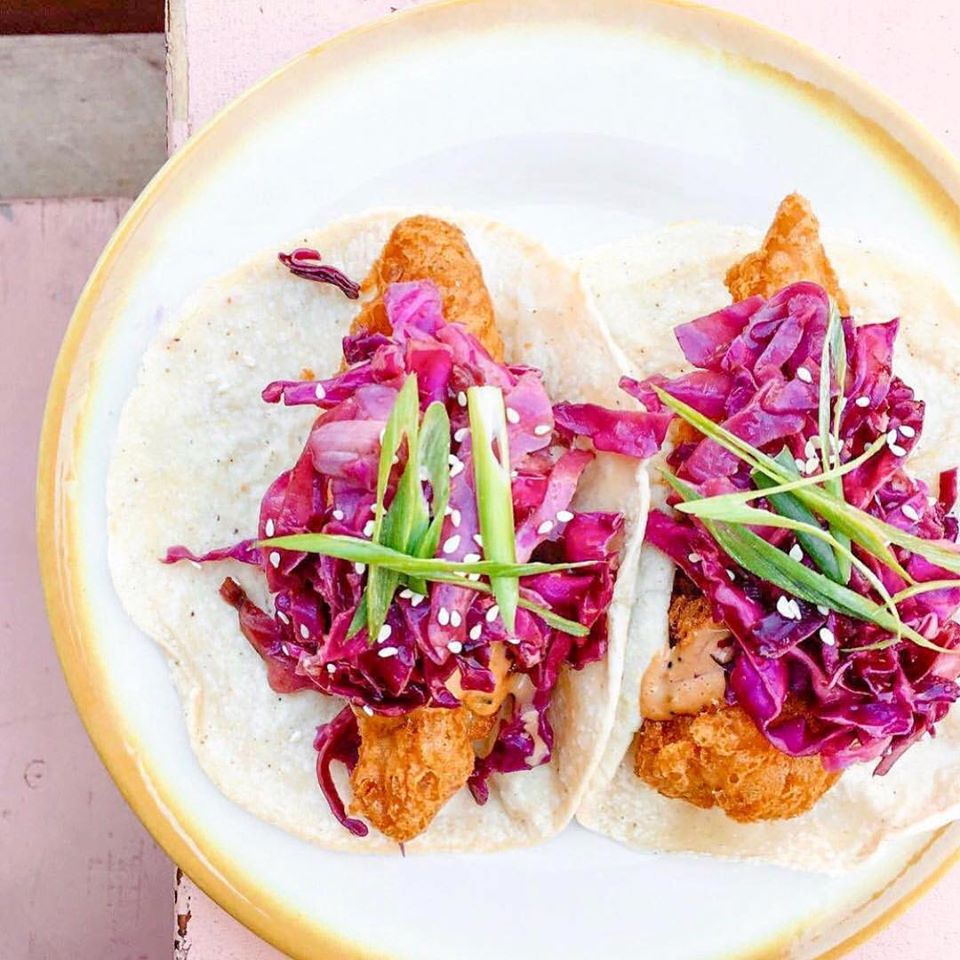
Photo Credit: Antique Taco Facebook

Antique Taco

If you can’t get enough tacos you have to try Antique Taco, named one of the 50 best tacos in America. With a wide range of taco menu items, this is an excellent place for stoners to get food delivered from when they’re blazed.

Advertisement


Photo Credit: CRISP Facebook

Crisp

For more amazing fusion food, Crisp offers a variety of wings with an Asian flair. One of Chicago’s best wing joints, you can get Crisp delivered to you through Door Dash.

Photo Credit: The Chicago Diner Facebook

Chicago Diner

Stoners can be vegetarians too right? If you are looking for some delicious vegan and vegetarian options, Chicago Diner has you covered. Order them through the Caviar delivery app.

Advertisement


Advertisement


Read More

Best Stoner Munchies in Chicago You Can Get Delivered Right NowNicole Hamzelooon May 12, 2020 at 9:39 pm Read More »

Kierkegaard finale (or “Why your hobbies matter now more than ever”)Chris O’Brienon May 12, 2020 at 12:48 pm

Medium Rare

Kierkegaard finale (or “Why your hobbies matter now more than ever”)

Read More

Kierkegaard finale (or “Why your hobbies matter now more than ever”)Chris O’Brienon May 12, 2020 at 12:48 pm Read More »

Masai and Kobay — Petraits RescueChicagoNow Staffon May 12, 2020 at 1:19 pm

Pets in need of homes

Masai and Kobay — Petraits Rescue

Read More

Masai and Kobay — Petraits RescueChicagoNow Staffon May 12, 2020 at 1:19 pm Read More »

PHOTOS: Near West Side home with private elevator: $1MChicagoNow Staffon May 12, 2020 at 1:20 pm

ChicagoNow Staff Blog

PHOTOS: Near West Side home with private elevator: $1M

Read More

PHOTOS: Near West Side home with private elevator: $1MChicagoNow Staffon May 12, 2020 at 1:20 pm Read More »

Blue Angels Chicago flight planCarole Kuhrt Breweron May 12, 2020 at 1:22 pm

Show Me Chicago

Blue Angels Chicago flight plan

Read More

Blue Angels Chicago flight planCarole Kuhrt Breweron May 12, 2020 at 1:22 pm Read More »