In 2016 Gossip Wolf described jazz guitarist Dave Miller as a Chicago expat based in NYC, but even then he seemed to do as much recording and gigging here as he did there. He’s since moved back to Chicago, and his new self-titled album, which comes out Friday, May 22, via Tompkins Square, would make any hometown scene proud! The funk- and soul-inflected grooves on Dave Miller feature standout local players such as Chicago bassist Matt Ulery, Milwaukee drummer Devin Drobka (whose groups include Field Report and Bell Dance Songs), and V.V. Lightbody keyboardist Dan Pierson (who helps run Miller’s new studio, Whiskey Point Recording, where the album was made). “Fellow Man” sets the tone early, with a gentle, loping shuffle that would fit in fine on a classic early-70s Hi Records single.
On Monday, May 18, unstoppable Chicago underground hip-hop label Why? Records dropped Art Is Love Vol. 1. The Why? team also assembled a Justice League of local DIY acts for the 20-track compilation, including psychedelic indie-rock band Glad Rags, R&B up-and-comer Jordanna, arty jazz-fusion unit Cordoba, and scene pillars Rich Jones and Nnamdi. The comp also features the four MCs who run the label–Malci, Davis, Joshua Virtue, and Ruby Watson–who collaborate on two cuts as Why Footclan. Art Is Love is a pay-what-you-want Bandcamp release, and all proceeds benefit the Chicago Community Bond Fund.
Jeff Pezzati’s cast-iron shout and indelible vocal melodies helped make Chicago punk forefathers Naked Raygun one of the most anthem-friendly hardcore bands of all time–so don’t be surprised if you’re immediately humming along to his tuneful new solo EP, The First EP, self-released on Tuesday, May 19. Gossip Wolf digs lo-fi Billy Bragg-style shout-along “It’s Late” and epic, winding opener “Make Me Whole (Chinese Wall Song),” which features stately piano and lovely synthesized strings. v
Since 2004 Plastic Crimewave (aka Steve Krakow) has used the Secret History of ChicagoMusic to shine a light on worthy artists with Chicago ties who’ve been forgotten, underrated, or never noticed in the first place.
I was introduced to the music of Thom Bishop by an obscure 1971 compilation LP, part of a series recorded at the Red Herring coffeehouse in Urbana. The Red Herring hosted a lot of folk music back in the day, and it’s still open, though it’s now a vegetarian restaurant–I’ve even been, because I went to college at the University of Illinois at Urbana-Champaign. The recordings on the Red Herring compilations are charmingly lo-fi and guileless, and I was further enchanted by the mystery surrounding the artists featured–though a 1969 volume does include a track from Dan Fogelberg, who was still in his teens when the LP came out but was already pretty darn good.
Bishop is one of my favorites across the multiple volumes of the series (he was a stylishly handsome devil too, judging from the few photos from that era I’ve seen), but he discounts his early-70s output as “embryonic” and deems it barely worth mentioning. When I contacted Bishop, I couldn’t help asking him about it, but at least we got the topic out of the way right at the start! And luckily, his career took plenty of interesting turns afterward, so there’s still quite a story to tell.
Born Thomas Burke Bishop Jr. in Litchfield, Illinois, Bishop grew up on Chuck Berry, West Side Story, Johnny Mercer, and Jacques Brel. He was an army brat, so his family moved all over the country during his youth, from Columbus, Georgia, to Santa Barbara, California–but he attended high school in Springfield, Illinois, where he played bass in bands such as the Brigs, Johnny & the Impalas (he wasn’t Johnny), and the Toffee Shoppe. The Brigs recorded one song at a local radio station, a cover of Richard & the Young Lions’ pounding but tuneful garage classic “Open Up Your Door.” It was never pressed or issued, but I haven’t given up bugging Bishop to get a listen.
In the early 70s, Bishop began gigging as a singer-songwriter (though he’s no fan of the term) in Urbana-Champaign, including at the folk festivals the Red Herring presented each fall and spring. The artists who participated could get their songs included on the aforementioned LPs, and Bishop contributed “White Lines and Road Signs” and “Kissed You Again” to the two volumes of Folk and Music From the Red Herring compiled in fall 1971. At publication time, a copy of the second LP was on sale through a local record shop for $225.
Bishop came to Chicago in 1974 and began playing steadily at famed venues such as Kingston Mines and the Earl of Old Town, usually accompanied by guitarist Louis Rosen–according to Rick Kogan, who wrote about Bishop for the Tribune in 1986, he won the Reader‘s “best new artist” honor that year. For a regular gig at Orphans, he put together a band with Billy Panda on electric guitar, Elliott Delman (formerly of Spoils of War and Mormos) on acoustic guitar, Jim Tullio on double bass, and Pennington McGee (who more famously played with SHoCM favorite Terry Callier) on percussion and backing vocals. Bishop also gigged with Callier himself, who worked a transcendent alchemy on folk, blues, and soul. “In my years in Chicago, while there were so many artists and musicians I admired, the one I was truly in awe of was Terry Callier,” he says. “And he was a beautiful person.”
Bishop got a formidable musical education sharing bills with blues royalty (Muddy Waters, John Lee Hooker), acoustic guitar gods (John Fahey, Leo Kottke), and legendary local songwriters (John Prine, Bonnie Koloc). Other notable appearances included a show with comedian Jackie Mason, a packed 1978 anti-nuke rally in Seabrook, New Hampshire (where Bishop went on between Dick Gregory and Pete Seeger), and an opening slot for rowdy country outlaw David Allan Coe in downstate Illinois.
In the mid-70s, while getting into writing music for theater, Bishop began recording solo material in New York and Lake Geneva. He debuted in 1981 with the LP The Wireless Wonder, and since then he’s released three more albums and an EP billed to Thom Bishop: 1990’s Restless State of Grace, 1996’s Feed Me a Dream (recorded in Nashville), 2013’s A Little Physics and a Lot of Luck, and 2016’s The Amber Ages (cut in Boulder). But many folks who know him through these records aren’t aware that he has a parallel career under another name.
Confused? I sure was. “In 1980, I was cast in an Equity production at the St. Nicholas Theater,” Bishop says. “Equity has a rule that if a member has your name, you have to take a different one. Although I assumed I would never act again, I took ‘Junior Burke,’ the two parts of my name I wasn’t using.” Years later, the alias came in handy for a different purpose. “When I was focused more on writing prose fiction, my mentor, Bobbie Louise Hawkins, said, ‘If you want to be perceived as a writer, rather than a musician who writes, you should adopt a pen name,'” Bishop explains. “So I told her I already had Junior Burke, and she said, ‘Well, you can be sure no other writer has it.’ Immediately, everything I submitted under that name was getting published.”
Bishop moved to Los Angeles in 1982, because the Chicago club scene had slowed down and he had no management. He wrote a play called American Express that was staged in LA, directed by Second City cofounder Paul Sills and featuring Saturday Night Live veteran Laraine Newman. He cowrote the tune “Trials of the Heart” for the 1986 film About Last Night and began collaborating on screenplays. He sold several to Universal and Trimark, but in most cases the movies were never produced–and when they were, the scripts had often been rewritten so heavily that he barely cared anymore.
Bishop’s focus lately has been writing fiction and teaching, the latter mostly at Naropa University in Boulder, Colorado. “That’s been my primary creative life for the past couple of decades,” he says. He’s still making music, though, under both his names–since 2007 he’s released two albums and an EP as Junior Burke, including 2019’s America’s a Lonely Town, whose six songs he wrote with his old bandmate Billy Panda. “If most of the songs were written this century, it’s a Junior Burke recording,” he says.
Bishop (as Burke) also has a new novel out this month through Gibson House Press, titled The Cold Last Swim. Set in an alternate-timeline version of golden-age Hollywood, it kicks off with James Dean shooting Ronald Reagan during a live TV broadcast in 1954 and gets stranger from there. v
There’s a SPACE invasion happening in suburban Evanston, but it doesn’t involve little green men. Known for their live music performances and recording studios, SPACE has hosted thousands of local and national touring acts on their stage. The Evanston concert venue is throwing “micro concerts” from a safe distance on your front lawn.
A post shared by Evanston SPACE (@evanstonspace) on May 1, 2020 at 8:22am PDT
Advertisement
North Shore residents can request an artist to come set up in the front or backyard to perform a 30-minute set for the whole block. The performer will bring all their own gear, set up, and be ready to play. Viewers are asked to keep to social distancing guidelines and enjoy the show from their porches. Each concert includes two ready-to-bake Detroit-style pizzas from Union Squared, drinks for 10 people, a dozen cookies from Noir d’Ebene, and some SPACE swag. This is a great way to celebrate a special occasion or just treat the community to a special musical event.
Reservations are available on a first come, first serve basis and inquiries can be sent on the SPACE website. SPACE is also hosting virtual livestream concerts nearly every night of the week, so you can always tune into their donation-based performances.
Advertisement
SPACE is part of 16” on Center, a Chicago-based hospitality collective by Bruce Finkelman and Craig Golden that oversees operations of over 10 restaurants and venues, including Thalia Hall in Pilsen and The Empty Bottle in Ukrainian Village.
Advertisement
At UrbanMatter, U Matter. And we think this matters.
Tell us what you think matters in your neighborhood and what we should write about next in the comments below!
Chicago’s shelter-in-place has drastically affected many local businesses. Retail shops can’t sell their goods. Restaurants and bars can’t serve patrons. Even bookstores have shuttered their doors in effort to slow the spread of the virus. But back when officials were deciding which businesses were essential or non-essential, an interesting thing happened: bike shops were given the greenlight to remain open. Since bikes are considered a form of transportation, businesses are able to continue to serve their communities. So if you’re in the market for a new set of wheels or need a quick tune up, here are some Chicago bike shops, ready to help you out!
Photo Credit: Village Cycle Center Facebook
Village Cycle Center
The nation’s largest bike store is open for business. You can shop online or talk to an associate over the phone if you have questions. To help shoppers stay safe, they’re offering curbside or store pickup. Village is so busy right now, they’re hiring full and part-time employees for bike mechanics and sales associates. Fill out an application here.
Advertisement
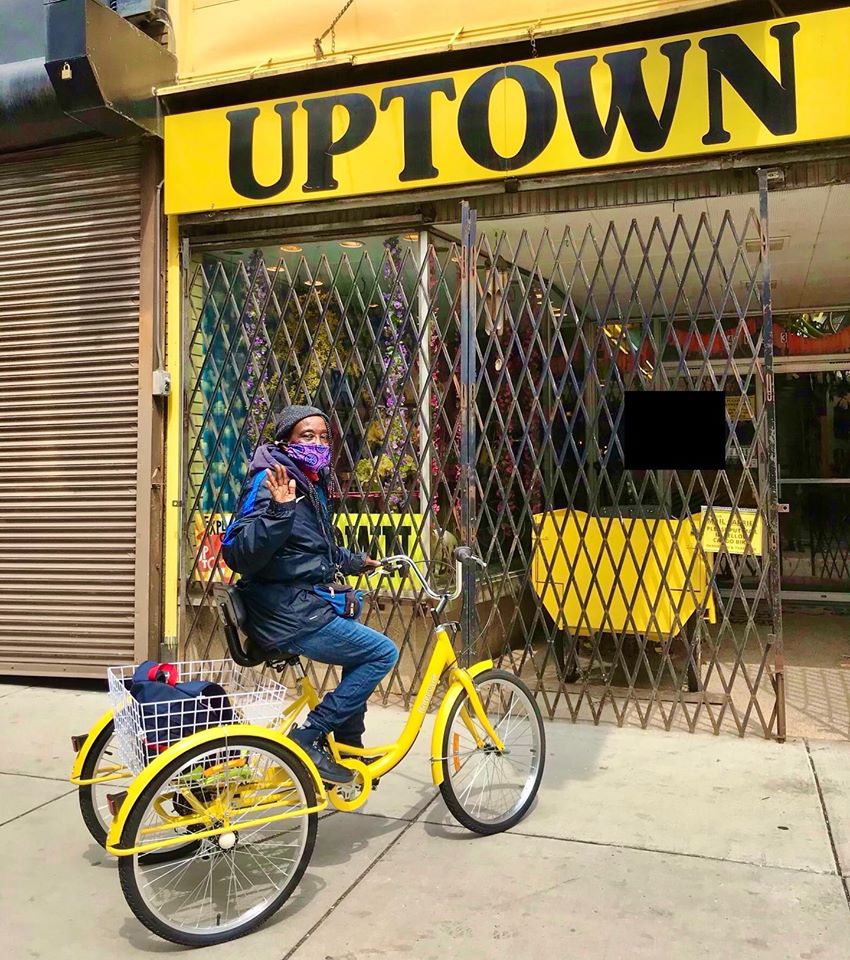
Photo Credit: Uptown Bikes Facebook
Uptown Bikes
This women-owned establishment is open for bike repairs only. If you need to schedule an appointment, you can text (872) 216-6564 or call (773) 728-5212. Uptown will work with you to arrange curbside pickup. Check out their list of products in stock that can help you keep cruising Chicago streets safely.
For over 75 years, Kozy’s has been Chicago’s premier bike store. They’re operating under a “Locked Door Admission policy” which means they’ll let in 2 to 3 customers at a time. Others will need to wait outside or stop back later. Of course, you can order online, opt for in-store pickup, curbside delivery, or local delivery.
Advertisement
Photo Credit: Boulevard Bikes Facebook
Boulevard Bikes
As the go-to for new and used bikes, this Logan Square favorite has been in the two-wheeler biz for almost two decades. They’re open during quarantine but have a system in place to minimize interaction. The folks at Boulevard are doing their part. This is a statement on their website, “Even if you are feeling fine, behave as if you might be unknowingly carrying a potentially deadly virus.”
Photo Credit: Comrade Cycles Facebook
Comrades Cycles
Located in West Town, this full-service neighborhood bicycle shop is open normal hours but customers are not allowed to browse in-store right now. You can arrange to test ride bikes before purchase but you’ll need to order online. If you need your bike tuned up, this Chicago bike shop is still accepting repairs.
Advertisement
At UrbanMatter, U Matter. And we think this matters.
Advertisement
Tell us what you think matters in your neighborhood and what we should write about next in the comments below!
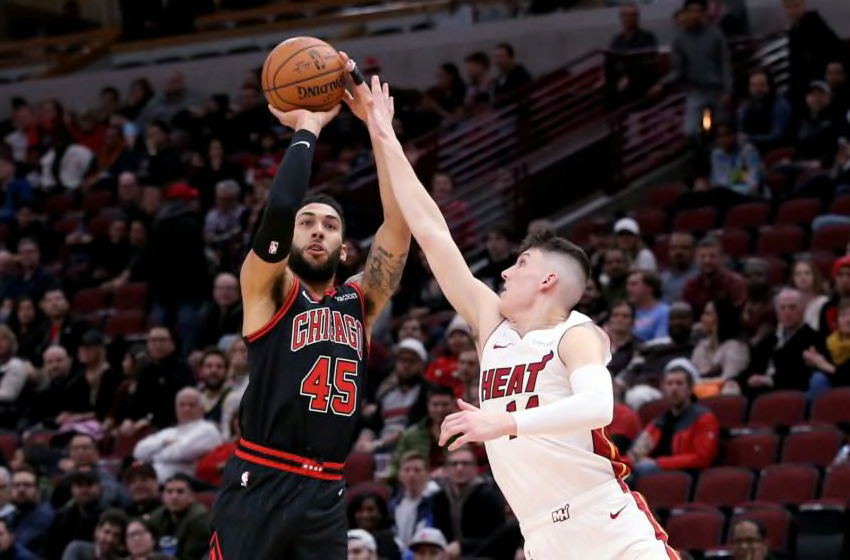
The ChicagoBulls and Denzel Valentine have had a rocky relationship since his selection back in 2016. Now, with the former Michigan State Spartan facing down free agency, the new front office should consider extending a qualifying offer to him.
Chicago Bulls fans should follow their new front office executives Arturas Karnisovas and Marc Eversley in combing through the current roster very carefully.
While the Bulls are strapped for cash going into the 2020-2021 season, there are a few players that are eligible to receive a qualifying offer going into the offseason, namely, point guard Kris Dunn and guard/forward Denzel Valentine.
Personally, I’ve written Dunn off because of his lack of production in his offensive game as well as his chemistry (namely lack thereof) with Zach LaVine and Lauri Markkanen. While his defensive game is admirable, Dunn simply does not fit the style of game the Bulls want going forward.
Valentine, on the other hand, is a bench player who fits in the modern NBA while also being a quasi-throwback in how he approaches the game. The 26-year-old forward has shown the ability to shoot from deep; he also possesses the capability to get into the lane with know-how instead of athleticism and can read the floor better than most current Bulls players on offense.
Valentine’s career started off slow in the brief era of “The Three Alphas“, but he showed out during his sophomore season in 2017-18 by averaging 10.2 points, 5.1 rebounds, and 3.2 assists while showing off a 38.6 percentage from three.
(Take a look at his stats per-36 minutes and tell me that isn’t quality offensive production.)
RELATED PRODUCT
Chicago Tie-Dye Basketball T-Shirt by BreakingT
It wasn’t flashy and the defensive awareness was dreadful, but Denzel could get buckets and occasionally throw up a 20-something point game
Fred Hoiberg‘s last full season as head coach of the Bulls saw Valentine appear in 77 games, starting 37 of them.
Just when it looked like Valentine was poised for a breakout, he missed the entire 2018-19 season recovering from reconstructive ankle surgery.
By the time the former Spartan could return to the court, there was a new coach in charge, and a once-hopeful offensive bench piece found himself in new head coach Jim Boylen‘s doghouse.
Boylen didn’t play Valentine unless there was no one else to throw out on the court, and even then showed massive hesitation due to Valentine’s lack of explosiveness.
Boylen continued to say “[Denzel] needs to play and he needs to grow.”
When pressed about which areas Valentine needed to grow in, Boylen said “all areas.”
So far in the 2019-20 season, Valentine has only appeared in 37 games and averaging a career-low in minutes per game (13.6), but again his per-36 minute stats are through the roof.
Granted, Valentine isn’t some superstar that will affect the outcome of every game due to a ridiculous stat line, but he has shown intelligence on a young team with his shot selection, passing and ability to keep up in a faster-paced offense.
Especially with Boylen looking to be on his way out of Chicago once the season resumes, Valentine might be more comfortable with whatever new coach and system the new executives decide to bring in.
Regardless of how the rest of this NBA season shakes out with the coronavirus hiatus, Karnisovas and Eversley should absolutely give Denzel a qualifying offer. Worst case scenario, he attracts a price tag that is out of reach and you let him go.
Denzel Valentine is a decent bench piece if it is decided that he will move forward with the Bulls, and the team should spend some time doing research on him before pulling the plug.
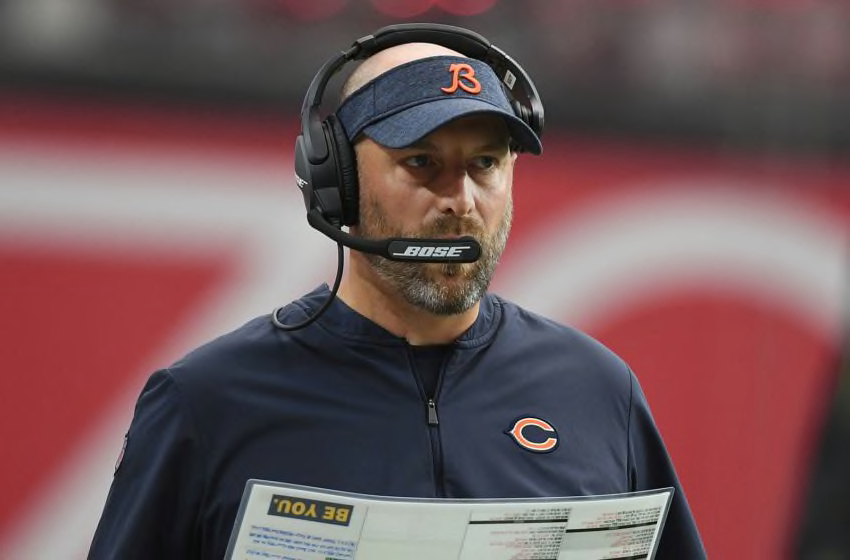
ChicagoBears (Photo by Jennifer Stewart/Getty Images)
A lot went wrong with the Chicago Bears’ 2019 season. Could it be, in part, because their coach got too comfortable?
There was a lot that went wrong in 2019 for the Chicago Bears. In fact, everything that seemed to break their way in 2018 amid their magical 12-4 season, seemed to go against them last season. Since the final whistle, Bears fans have spent the entire offseason pointing fingers and assigning blame.
So far, their victims have been the regression fo Mitchell Trubisky, poor offensive line play, and even Matt Nagy’s playcalling. However, after a recent article from Albert Breer of Sports Illustrated’s Monday Morning Quarterback, those looking for another finger to point might have another option.
In the piece, Breer documents the dynamic of the Bears’ new quarterback room and how things are taking shape in an environment dominated by COVID-19, forcing teams to work entirely remotely.
Throughout the piece, there are interesting nuggets, including Nick Foles‘ declaration to Nagy that he’s “coming here to win the job” or even Nagy’s perplexion at how his bag of tricks, which worked in 2018 fell so short of the mark in 2019.
Yet, it was the tail-end of the piece that caught my attention. Specifically, Nagy’s reaffirmation to focusing on the “details” as captured in the excerpt below:
So just as he asked his coaches, and his players to be on the details that slipped last year, he’s putting just as much pressure on himself to be all over those–whether it’s staying on the details of what’s happening in the offensive meeting rooms, so he can be a better play-caller, or setting the standard for everyone as the head coach.
That can be in a meeting, if we say guys can’t have phones in a meeting, it means they don’t have phones in a meeting,” Nagy said. “It doesn’t mean in Week 8 they start bringing them in. It means they never have them in the meeting. If they show up 9:00 or 9:01, they’re walking in as I’m walking in–no, get there early. It’s just a lot of different things. For me, that’s what I’m going to focus on. Now, for me to do that, I have to have really, really great support from the rest of our coaches, and have that trickle down to players.
Perhaps Nagy was speaking hypothetically as he cited those very specific examples, but it sounds more like an admission that he might have been too relaxed with the players. After parting ways with the disciplinarian style of John Fox, the team opted for a younger perspective in coach Nagy. He quickly worked to improve the morale in the locker room, introducing “Club Dub” and allowing the players to have more fun playing the game they love.
It worked in 2018 but is it possible the team got too complacent in 2019 and let slip their attention to detail? Did Nagy not tighten the reins when he saw it transpiring? It’s at least a possibility given Nagy’s comments and renewed focus on details this season. I’d look for a reinvigorated Nagy and a whole lot more accountability.
The ChicagoBulls saw their great dynasty covered in ESPN’s “The Last Dance” and it was brilliant. What were the three best episodes?
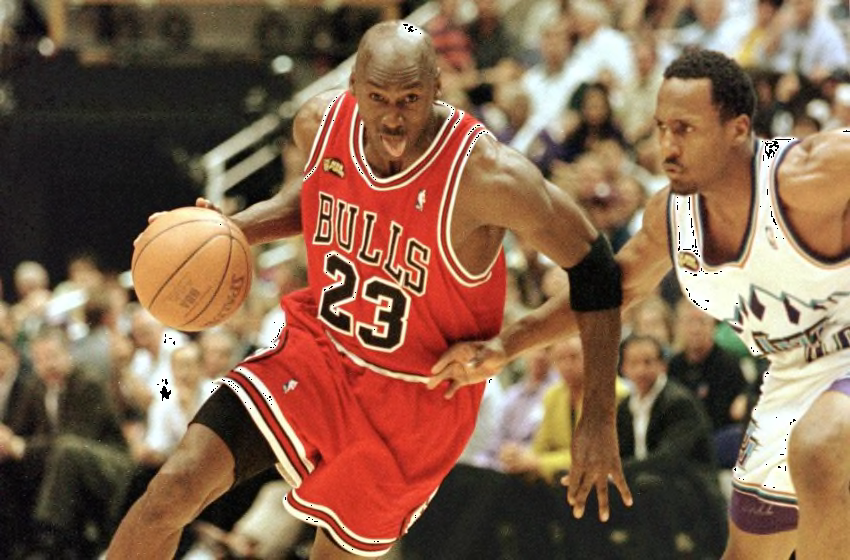
The Chicago Bulls were the greatest dynasty in the history of basketball and one of the greatest in the history of team sports. They won six NBA Titles over the span of eight years led by the greatness of Michael Jordan. He went on to become the greatest basketball player of all time and he is one of the best team sports athletes of all time. He also had Scottie Pippen there for all six titles and Dennis Rodman was there for the final three.
“The Last Dance” was an ESPN documentary that went over the Michael Jordan era of the Chicago Bulls and in particular, the 1997-98 Championship season. It showed clips and behind the scene footage of many different focal points throughout his career. It gave an insight on things fans knew about already, may not have known about, or extra detail about things we knew but were foggy on.
The dynasty didn’t end the way that we wish it would have but six titles in eight seasons are without a doubt a good run. “The Last Dance” gave us everything we ever would have wanted in terms of a movie about those Bulls teams. There was an insight about just about every important figure to the team having as much success as it did.
Every episode went in many different ways but mostly had one underlying theme. Each episode was very entertaining television, as you would imagine. You can’t say which episode was definitively the best but there are three that stick out to me as my three favorites:
The ChicagoBlackhawks are in a weird spot. They fired John McDonough before the season is even over so are Stan Bowman’s days numbered?
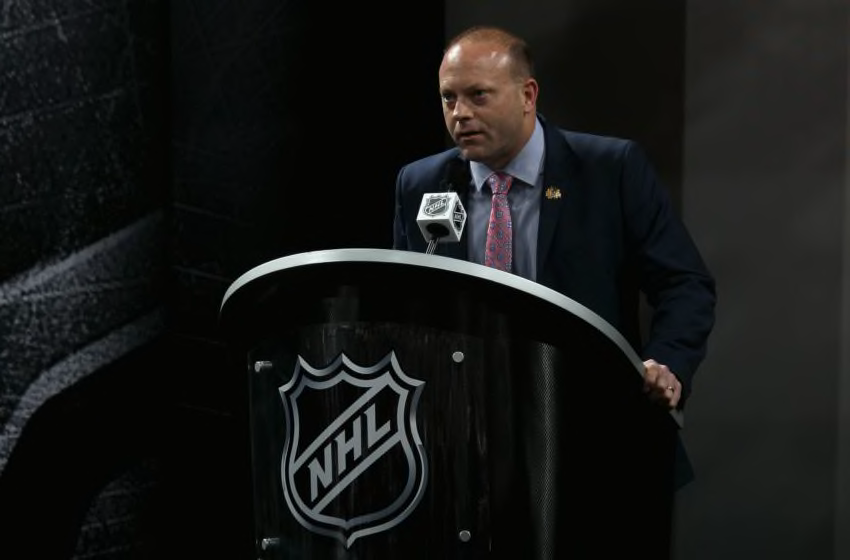
The Chicago Blackhawks have had better days over the past decade. They won the Stanley Cup multiple times during that time and had a perennial contender with marketable players leading the way. Well, over the past few seasons, things have gone way south. John McDonough and Stan Bowman collectively deserve blame for that. Well, McDonough has been fired since the NHL season paused so is Stan Bowman next?
He capped it all off by drafting Kirby Dach over Bowen Byram. It hasn’t been a terrible pick yet because Dach is a pretty good player and he might become a really good player. With that said, Byram projects to be a top-flight defenseman that can be a number one on a lot of teams and that is what Chicago really needs right now. Bowman and the Hawks might regret passing on him later on.
It just seems that his time is up. He was an okay GM early on but has been pretty brutal since 2015. He also gets a lot of credit for the way this team won under him but he largely got lucky along the way. Dale Tallon, his successor, drafted Jonathan Toews and Patrick Kane, scouted and helped develop Brent Seabrook and Duncan Keith, and signed Marian Hossa. All of them were pillars to this team having the success that it did under Bowman.
He might have a job as another GM one day but his time with the Hawks certainly might be up. It might be a while before the team makes any more moves but it is clear that it is imminent. They are searching from the outside and from within for a new team president and that guy might want his own GM running the show. That could lead to Stan getting fired sometime soon or within the next few months. At the end of the day, his days are numbered.
With The Last Dance finally having concluded, what are some takeaways from the greatest documentary ever about the ChicagoBulls?
Since it’s been nearly two months without Chicago Bulls basketball and no sports, The Last Dance documentary has given us all the sports we’ve needed. If you’ve been keeping up with the series, the last five weeks have been thrilling.
Not only have casual fans been able to see a side of the Bulls and Michael Jordan that was hidden for so many years, die-hard fans are able to relive the Jordan years through another lens. Then there’s the generation that was born after Jordan, many of whom are watching the documentary and seeing the impact that Jordan and the ’90s Bulls had on the game compared to what LeBron James and current NBA superstars are doing.
For all of us, the last five weeks have been unique. Because every Sunday evening, when we sit down to watch The Last Dance, for two hours, we’re all amazed at everything that went on behind the scenes during the Jordan Years.
Not only does the documentary shed light into Jordan’s rise to stardom, but it all also gives us a great look into his greatest rivals and how to this day, they’ll admit that the Bulls were above all else. Appearances from Patrick Ewing, Gary Payton, Larry Bird, Magic Johnson, Isiah Thomas, and many more only begin to scratch the surface of Jordan’s impact on the game.
RELATED PRODUCT
Chicago Bulls Varsity Jacket Ornament
With the ten part documentary series officially having concluded, what are some takeaways on the greatest documentary ever produced that’s going to have an impact both on and off the basketball court? Let’s find out.
Cornell Craig is the only player in SIU history to amass 1,000 yards receiving in a single season (and he did it twice).
Photo courtesy SIU Athletics
Cornell Craig set the gold standard for receivers at Southern Illinois.
Craig, who played for the Salukis from 1996 to 1999, established numerous career receiving records at SIU, including most receptions, most receiving yards and most touchdown catches.
As a senior, he caught 77 passes for 1,419 yards and 15 touchdowns, earning him national recognition as the Division I-AA Player of the Year. He was an All-American in 1999 and a three-time All-Conference honoree.
Today, Craig — a 2008 inductee into the SIU Hall of Fame — serves as the Chief Diversity and Inclusion Officer (CDIO) at Hofstra University in Hempstead, NY.
According to a Hofstra release that announced his hiring in March 2019, “The CDIO, who will report directly to the president, will work collaboratively with academic and administrative departments, and with students and the surrounding community. Among the key responsibilities of the role are establishing and chairing a University Diversity and Inclusion Council that will develop and implement a diversity strategic plan, developing diversity and retention plans for faculty, administrators and staff, and creating education and training programs on diversity and inclusion including bias, sensitivity and cultural competency.”
Prairie State Pigskin wants you to get to know Cornell Craig in today’s Moving the Chains Q&A.
What do you remember from your days in Carbondale at SIU?
I really miss the community aspect of it. Even though when I was there it was a large institution, approximately 20,000 students, it felt like a tight-knit community, very supportive in the aspect of what a college town is supposed to be. I look back on those memories fondly, not only athletically but just overall my college experience. It just felt comfortable and supportive.
What game is freshest in your memory?
My very first game as a true freshman. We played against Central Arkansas at McAndrew Stadium (in Carbondale). It was more than I could have imagined or dreamed. My first reception came on the 20-yard line going in; I caught a slant pass and took it into the end zone with defenders on me. First catch. Touchdown. I was floating on cloud nine. Then on Monday the Daily Egyptian had my photo on the front of the sports page. That really stands out because it was an introduction to college football, to SIU football and it gave me confidence to realize that maybe I could be pretty good on the college level.
You mentioned old McAndrew Stadium, which was built in the Great Depression. Have you seen Saluki Stadium, which opened in 2010?
I have (chuckles). I’m glad that the program has it and is progressing and continues to progress with the facilities that they have. Saluki Stadium is beautiful. I appreciated McAndrew Stadium, of course it wasn’t the most modern of facilities. It’s good to see that the current and recent players have had an opportunity to play in an updated, upgraded, state-of-the-art stadium like they have now.
Which SIU record that you hold or award that you received means the most to you now?
I was always into stats growing up. I flipped baseball and football cards over and read the backs. I looked at where the players were from, what their career averages were, so when I got to SIU I looked into the book of statistics and saw they hadn’t had a 1,000-yard receiver. I told the coaches as a freshman that I was going to be the first 1,000-yard receiver, but it wasn’t just about me. You set a goal and worked hard to get there. It was a team effort as far as the offenses that we had, the coaches putting me in the game plan, and then the way we were able to execute.
Craig in his SIU days
Now, I look forward to the opportunity for someone to join me in that group. My goals and my records were mine, but I’m not protective of them in the sense that I don’t want company and I don’t want records broken.
[Note: Craig twice recorded 1,000-yard receiving seasons. A third time, he missed by just 73 yards. No one else has accomplished the feat for a single season at SIU.]
What challenges has the pandemic created for you in your role at Hofstra University?
Before the pandemic, there were inequities within our society. Historic inequities and current inequities. Any time a crisis comes, it’s going to exacerbate and highlight some of those inequalities. It’s something that institutions, not just Hofstra, but higher level institutions across the country are battling and strategizing ways to be efficient and stay afloat in this environment. Oftentimes we focus on the mainstream and narrowing down and trimming the fat and focus on profits. Sometimes we neglect those who are on the margins . . .
. . . We have to understand that serving the community involves all in the community. We need to do all that we can do at our higher ed institutions but also at our middle perspective to help those who are most vulnerable and most at risk, not just having a decline in profit but having health outcomes and other longer-lasting outcomes that are more existential. More so than just financial.
What was the biggest adjustment you had to make to working in New York City?
It was good, but it was a bit of a shock, a culture shock so to speak. You work in an international city. You have people from all over, and I grew up primarily Midwestern in the United States where lines are a little more clearly defined and clearly drawn. Some of those assumptions, some of those stereotypes that I carried with me had to be destroyed and torn down and reformed into new knowledge and new information. There are people from everywhere (here) from all walks of life. That’s the beauty of this metropolitan area.
But, as crowded as it is and as densely populated as it is that’s also one of the vulnerabilities that’s showing up in this current crisis, this pandemic. In its best sense, it’s very beautiful and very full of opportunity to learn and engage other cultures from the superficial such as food to the more substantial as far as understanding challenges and other struggles that people have within our state but also internationally as well.
I really embrace the city. I always tell people that if you don’t love and hate New York City, then you’re really not in New York City because there’s always something to love about it and always something to hate about it. I really enjoy the time I spend here.
What is something that you have rediscovered or gotten back into during this pandemic quarantine?
My father (Neal) played professional football. He was drafted by the Bengals in ’71. He played for the Bengals, the Browns and the Bills in the ’70s. I’ve been searching You Tube and finding old NFL Films clips and sending them to him on text messages in the evenings. He stopped playing in ’76, so he was done playing by the time I was born in ’78. It’s been fun to watch the old footage and talk with him about what was going on with him when he was in his early 20s playing professional football. That’s been fun, but I’ve been taking advantage and appreciating family. I don’t have any family in the New York City area, so as much as we can we try to talk and have Zoom conversations. There’s a new level of appreciation that I have now that previously I didn’t have. This isolation and this quarantine has refocused and put things in a different perspective.
What is something that would surprise your old SIU teammates if they found out about it now?
A hobby that was burgeoning while I was in Carbondale that not a lot of people knew about is poetry. I like writing. I’ve written a lot of poetry over the years. I’m yet to be published, I haven’t attempted to be published, but I have a large collection of my own writing. It’s really a hobby of mine that I really enjoy. I participate in open mic and spoken word and then hearing other perspectives. It’s just the art of the written word. I really enjoy that.
Blog co-authors Barry Bottino and Dan Verdun bring years of experience covering collegiate athletics. Barry has covered college athletes for more than two decades in his “On Campus” column, which is published weekly by Shaw Media. Dan has written four books about the state’s football programs–“NIU Huskies Football” (released in 2013), “EIU Panthers Football (2014), “ISU Redbirds” (2016) and “SIU Salukis Football” (2017).