Videos

BREAKING NEWS – TRUMP TO CANCEL ELECTIONSDenise Williamson July 30, 2020 at 7:10 pm

Uncommon Sense

BREAKING NEWS – TRUMP TO CANCEL ELECTIONS

Read More

BREAKING NEWS – TRUMP TO CANCEL ELECTIONSDenise Williamson July 30, 2020 at 7:10 pm Read More »

Game Post 7/30Sean Hollandon July 30, 2020 at 8:37 pm

Cubs Den

Game Post 7/30

Read More

Game Post 7/30Sean Hollandon July 30, 2020 at 8:37 pm Read More »

For Kamala Harris Her Time Will Likely Soon ArrivePaul M. Bankson July 30, 2020 at 11:09 pm

The Patriotic Dissenter

For Kamala Harris Her Time Will Likely Soon Arrive

Read More

For Kamala Harris Her Time Will Likely Soon ArrivePaul M. Bankson July 30, 2020 at 11:09 pm Read More »

Flashback: David Byrne Live in Chicago, IL on June 17, 2004Bare1000on July 30, 2020 at 11:45 pm

Eye Tunes

Flashback: David Byrne Live in Chicago, IL on June 17, 2004

Read More

Flashback: David Byrne Live in Chicago, IL on June 17, 2004Bare1000on July 30, 2020 at 11:45 pm Read More »

G Herbo uses his own journey toward healing to help Black youth treat their traumaAaron Allenon July 30, 2020 at 11:00 am

G Herbo is launching a mental health initiative called "Swervin' Through Stress." - COURTESY THE ARTIST

July is Minority Mental Health Awareness Month, and Herbert Wright III–better known as rapper G Herbo–has a lot on his mind.

In February, Herb released his latest album, PTSD, which explores the effects of post-traumatic stress disorder on his upbringing in Chicago. He was diagnosed with PTSD almost two years ago, and since then he’s become an outspoken advocate for accessible mental health resources, specifically in underserved Black communities.

Today Herb announced the launch of a multifaceted initiative called “Swervin’ Through Stress: Tools to Help Black Youth Navigate Mental Wellness.” It’s designed to provide therapeutic resources for young adults who have experienced trauma, and to raise public awareness about mental health issues. To get the initiative off the ground, Herb’s label, Machine Entertainment Group, has partnered with the National Alliance on Mental Illness, music-streaming platform Audiomack, and Massachusetts-based InnoPsych, which works to connect POC with therapists of color.

“Swervin’ Through Stress is a project I put together to put 150 kids through therapy,” Herb says. “At their age, you never know how critical it can be to have someone to talk to–to have someone help you better yourself and your situation.”

Herb is offering free 12-week therapy sessions to Black youth ages 18 through 25, partially funded by proceeds from a T-shirt collaboration with local designer Don C, owner of Chicago streetwear staple RSVP Gallery (applications will be accepted beginning in September at swervinthroughstress.com). Working with NAMI, Herb’s team has also created a hotline for anyone who needs to talk to a professional: right now it’s operating Monday through Friday from 9 AM till 5 PM CST at 844-457-PTSD (7873), and emergency help is available 24/7 by texting NAMI to 741741.

Additionally, on Wednesday, July 29, Herb participated in a livestreamed panel on Twitch with fellow rap stars: City Girls, Saweetie, Wale, and NLE Choppa. Moderated by psychiatrist Jessica Clemons, it aimed to help destigmatize therapy for Black youth and encourage open dialogue about mental health.

In many ways, Herb’s crusade for emotional and mental wellness is uncharted territory in hip-hop. The genre is built upon machismo and toughness, and that’s especially true for artists known as gangster rappers–artists like Herb, whose lyrics largely consist of vivid depictions of life growing up in one of Chicago’s infamous red zones.

Lately, though, Herb has tapped into a new level of emotional honesty, spurred by the personal growth made possible through therapy. “Everything I do comes from my life experience,” he says. “I understood at an early age that even though my story is significant in its own way, other people could relate to it. But I was never motivated to be a voice [on PTSD] or a key focal point until I recognized I actually became a product of it. That was a direct result of being in the streets, losing people close to me.”

The fight to raise awareness about the effects of trauma on young Black people hits very close to home for Herb. Growing up in the South Shore neighborhood, in a disinvested area of the city commonly known as “Terror Town,” Herb was surrounded by drug addiction, violence, and the daily trauma of living in poverty. Herb says he witnessed his first murder when he was eight or nine years old, and even though his mother was there when it happened, he never really spoke with her about it–or with anyone else.

By his mid-teens, Herb had lost several friends and associates to gun violence in his neighborhood–premature death had become normal, even expected. In the ninth track on PTSD, “Gangbangin,” Herb raps, “I got a story to tell you, a memory vivid with niggas that died / I got so immune that I was confused and ain’t know if not I should cry.”

Feeling paralyzed by trauma in a world where everyone he knew was going through similar daily struggles and facing the same mental battles, Herb felt his only option was to suppress his emotions and adapt. “I feel like I really became a product of my environment,” he says. “I grew immune to it.”

The emotional stress resulting from this normalization of daily shoot-outs and near-death experiences heavily impacted the choices he made throughout his adolescence. Looking back, Herb attributes a lot of his early decision-making to the PTSD from which he silently suffered.

“Trust me, with PTSD, you make certain decisions based upon the way you feel and how you react to certain situations,” he says. “I couldn’t finish school because I had PTSD. I didn’t know I had PTSD, but I know I couldn’t graduate high school because I was in fear of somebody always trying to do something to me, trying to kill me. I was in fear of my life all the time, so I had to carry guns.”

Herb believes that life all comes down to the decisions you make as an individual, and his trauma-led choices pushed him further into the streets.

“I wanted to play basketball, I wanted to go D1. I wanted to go to school,” he says. “But I was afraid that someone might try to kill me while traveling there. So I ditched. Sometimes I would go to jail when I should’ve been in school. Sometimes I got shot at when I should’ve been in school.”

On the cover of PTSD, Herb holds a bleeding, bullet-riddled American flag, with faces of deceased friends and associates replacing the 50 stars. A common theme in his music is the sense of brotherhood he built with his neighborhood crew as they took losses and learned to survive the harsh east-side streets together, without older figures to protect or advise them. Without real mentorship or leadership structures in the community, they were forced to make adult decisions on their own. They operated on survival instinct, and coped with the massive amounts of trauma affecting them the best ways they knew how.

For Herb, coping meant turning to the most accessible and most socially acceptable method to escape his reality.

“I started to self-medicate and do drugs like crazy,” he says. “I was addicted to lean, I was addicted to Percocets, oxycodone pills . . . all these heavy substances at 15 years old. And it took a real big toll on me.”

His drug addiction took such a toll, in fact, that Herb eventually visited a Phoenix detox facility and participated in a 30-day retreat to get clean. After coming home from his first visit, he relapsed and had to complete a second stay.

Herb’s early music thoroughly documents the trauma he endured in the streets and his heavy drug use, but he says no one ever presented therapy or any type of professional help to him as an option. Today he feels that he would’ve been much better off if he’d been directed toward help earlier, or better yet, if youth in neighborhoods like his had regular access to those types of resources in the first place.

“You’d be surprised to see how many kids have absolutely no one to open up to to get insight on life,” he says. “And I feel like that’s unfair. So many kids have that and take it for granted. If I had someone to talk to at 14, 15, I would’ve made a lot better decisions for myself.”

Herb reached a turning point in his journey when he was arrested in February 2018 on a gun charge (along with two others) after being pulled over in the South Loop. Herb’s lawyer, while working on his defense, suggested that his client see a therapist to demonstrate his sincerity to the court–and to help him work through the trauma that led him to feel like he had to carry guns in the first place.

At first Herb thought the idea of venting to a stranger was ridiculous. He describes his therapist as a white woman in her 30s who had no familiarity with the world where Herb had learned to survive. But he says this cultural gap turned out to be useful, because it forced him to open up more candidly to better illustrate his point of view and allow her to understand the baggage he carries.

He remembers his first session as especially cathartic, and frequently mentions that he cracked his ID in half from anxiously fidgeting with it while venting.

“She was just listening that first therapy session. Honestly, she was psyched out by a lot of the stuff I was telling her,” Herb explains. “That’s why I ended up breaking my ID, just telling her so much stuff. You know it hits home talking about losing people who close to you.”

One trip turned to five, and five eventually turned into regular visits. As Herb began developing trust with his therapist, he shifted from recalling difficult memories to really analyzing how those experiences shaped the person he has become–and how they continue to affect the ways he navigates the relationships that mean the most to him.

“I would say 80 percent of my therapy sessions were about my son and being a long-distance father, living in another state as my son, controversies with me being an artist, stuff that I’ve been through throughout my journey,” he says. “Being an early father, making mistakes as an early father and trying to correct that.”

Herb insists that pinpointing harmful behaviors and toxic traits while reflecting on life through the eyes of a trusted, unbiased person has allowed him to work through his past deliberately, instead of simply trying to get high enough to avoid it. “Therapy helped because it was cool to get opinions and insight from someone who didn’t see life from the perspective that I saw it,” he says. “I’ve been through a lot at an early age, and we get desensitized by it. But I feel like therapy helped me in a way that made me able to help myself.”

As Herb continues to find solutions in his battles with his demons, he’s also been thinking a lot about creating solutions for kids who are growing up like he did and face similar poverty-related traumas.

“PTSD is not just related to having experienced violence–it’s a stress disorder,” he says. “It’s about reliving certain moments. People don’t come back from epidemics and recessions, when they’re not able to provide for their families for months and months. All that goes right back to PTSD.”

In 2018, Herb and his partners, including Joseph “JB” Bowden and Mikkey Halsted at Machine Entertainment Group, bought shuttered south-side school Anthony Overton Elementary to rehab and repurpose it as a multimedia lab and tech incubator, to provide sorely needed safe recreational spaces for inner-city kids. But Herb knows that the material resource gap is only half the battle. He considers individual healing and wellness resources to be just as important.


“Coming from where we come from, we don’t have nobody to open up to. We don’t have nobody to tell us that this stuff isn’t normal,” Herb says. “That’s why I’m doing this project, giving kids therapy. And it works hand in hand, because we have a facility to be able to put our resources back into the community, to give the kids a safe haven, and the opportunity to do things like Swervin’ Through Stress, to be able to do things like giveaways, have block parties, and give back to the community in any way possible. It’s a blessing, and I’m grateful to be a part of this. I’m excited to see what the future holds.”

Herb is determined to make these 150 kids just the beginning of his therapy program. He says the next goal will be 500 kids, and he hopes to keep expanding from there.

Are Herb’s childhood friends who came up in the streets with him following his lead and seeking professional help? He says they’re aware that he goes to therapy and that it has probably crossed their minds, but people have to want it for themselves–he doesn’t want to impose his life choices on others. He says everyone should try it at some point, though, because we all have repressed feelings to work through.

“I can’t tell you how your sessions would go, but I would recommend everybody to go through the process,” Herb says. “A lot of times, people don’t understand or realize it, but you hurt the people closest to you while suffering from this mental illness, because you think it’s normal and you try to react where you don’t let it affect you. But it’s OK to be emotional, it’s OK to be vulnerable. So you can just let it out as much as possible.” v

Read More

G Herbo uses his own journey toward healing to help Black youth treat their traumaAaron Allenon July 30, 2020 at 11:00 am Read More »

Fifty years ago, Trilogy brought the west coast’s countrified rock sound to ChicagoSteve Krakowon July 30, 2020 at 11:00 am

sh_trilogy_web.jpg

Since 2004 Plastic Crimewave (aka Steve Krakow) has used the Secret History of Chicago Music to shine a light on worthy artists with Chicago ties who’ve been forgotten, underrated, or never noticed in the first place.


These days Skip Griparis lives in Bolingbrook and is best known as a musical comedian–his highest-profile gig has probably been playing opposite Bob Uecker as a color commentator in the 1989 baseball comedy Major League and its 1994 sequel. But in 1970 he put out an album with a great band called Trilogy, and it deserves more ears.

Griparis was born in Joliet in 1948, and he grew up hearing his mother play classical music on an upright piano in their home. She was giving him lessons by the time he was five, and soon he started getting into early rock ‘n’ roll like Del Shannon, Fats Domino, and Elvis Presley–the first single he bought was “Hound Dog”–as well as surf rock like the Ventures and R&B like Sam Cooke.

Griparis started on saxophone at age 13, and in 1963 he bought his first electric guitar–a “peppermint twist” Gretsch Corvette–from his uncle’s shop in Villa Park. Within the year he’d started his first band, the Aristocats, and he went on to play in the Telstars, State Prism, and the Boyz (though not the one that featured a young Rick Nielsen or the one that became well-loved local biker band the Boyzz).

The Boyz had evolved from the Jaguars, and included guitarist and singer Bob Wilson from that group; Griparis also knew guitarist and keyboardist Kevin “Mack” McCann from another local band called the Knights. Griparis met with Wilson and McCann in his basement to discuss forming a Joliet “supergroup,” and they named themselves the Crystal Tower. The band became a five-piece, though Bernie Pershey (drums, tabla) and Jim Branshaw (bass) functioned more like sidemen. The Crystal Tower played originals alongside covers by heroes such as Buffalo Springfield, Cream, and the Association, and they gigged all over the midwest–they opened for the Byrds at Chicago’s International Amphitheatre, for the Nitty Gritty Dirt Band in Indiana, and for Buddy Rich at the Young Adults Club in Frankfort, Illinois.

Not all their shows were so glamorous, though. “The Crystal Tower played a frat party in the basement of a Chicago Greek church,” Griparis remembers. “In the middle of a set, the house lights turn off, and there’s pandemonium while an old Greek lady yells, ‘Open dee light, open dee light!’ When the lights come back on, we can see that the pie-eating contest in front of us had become a pie-throwing melee, with pie covering all of us, our guitars, and our amps. This had obviously been planned by the frat boys. Disgusted, we packed up and left.”

The Crystal Tower secured management in the form of famed Mercury Records exec Robin McBride, who got them a weeklong gig at the Bitter End in New York City, supporting the legendary Dion DiMucci. But it didn’t turn out to be much of a stepping stone. “Dion was awesome, but we were paid $300 total, out of which we had to pay our hotel (we all stayed in one room) and travel,” Griparis says. “Plus some of our equipment got stolen from the basement of the club. Woo-hoo! We’re big-time now!”

In 1968, McBride also arranged for the Crystal Tower to record six songs in the Chicago studio of jingle producer Dick Marx (father of late-80s pop star Richard Marx). Nothing ever became of those tapes, but Griparis suspects other people managed to hear them somehow. “Two years later, Chicago releases ‘Make Me Smile,’ which seems to borrow heavily from my ‘Lost Ellen’ from the Crystal Tower sessions,” he says. “Coincidence?”

In late 1969 (or possibly early 1970) the Crystal Tower dissolved and regrouped as Trilogy, with Thom Richards replacing Branshaw on bass. They promptly recorded an album at RCA Studios in Chicago, adding acoustic tracks laid down at Ter-Mar Studios. Engineer Brian Christian and producer Pat McBride (from the New Colony Six) mixed it at RCA late at night, and Griparis was the only member who stuck around for that step. “Bob and Mack had taken off with two pretty girls,” he says. “I’m amazed that the mix was decent, given how exhausted we were.”

The sole Trilogy album, I’m Beginning to Feel It, came out in 1970, and it’s an excellent mix of harmonious and heady folk rock (“Three Blind Minds,” “The Royal Shut”) and heavy countrified rock (“I’m Beginning to Feel It,” “Thought #2 / Removing Myself”). It sounds a little like west-coast bands such as Moby Grape and CSNY, which made it stand out in Chicago. Mercury chose the title track and “Red Wine” as the first two singles, but the latter was promptly pulled from radio thanks to a national crackdown on songs referencing drugs or alcohol. The LP and the singles sank without a trace.

“Mercury Records hardly bothered to promote us,” Griparis says. “They were more interested in breaking Buddy Miles and Rod Stewart. Years later, Robin McBride told me, ‘We really blew it with you guys!'”

The band soon fell apart. Pershey had left right after the sessions, before the album even came out, moving to Minneapolis to join heavy psych act Lightning (formerly White Lightning, with members of the Litter). He was replaced for the remaining Trilogy gigs by Rick Barr, who now drums with the reconstituted version of the New Colony Six. Pershey would later move to Los Angeles and play in Olivia Newton-John’s band.

Wilson joined a string of groups in Nashville, and in 1999 he wrote lyrics for a few songs on Griparis’s first solo record, Love in Lincoln Park. He retired in 2012 from his job as principal at the Nashville School of the Arts, but he continues to gig in the cover band Timeline. McCann has worked for decades in hotel catering in Orange County, California.

Griparis joined Stronghold immediately after Trilogy split, then moved on to the New Colony Six, adding guitar and lead vocals to the original band’s final two singles between 1972 and ’74. In 1975 he also joined the Olivia Newton-John band, sticking with that gig till ’78, and the following year he backed Demis Roussos, formerly of Aphrodite’s Child.

In 1983 Griparis went solo, developing a musical comedy act that includes tons of impressions. He has a successful career to this day, and in one of his most popular shows he recounts the early history of rock by impersonating dozens of musicians from the 1940s through the ’60s–coming full circle back to the music he fell in love with as a kid. v


The radio version of the Secret History of Chicago Music airs on Outside the Loop on WGN Radio 720 AM, Saturdays at 6 AM with host Mike Stephen. Past shows are archived here.


Read More

Fifty years ago, Trilogy brought the west coast’s countrified rock sound to ChicagoSteve Krakowon July 30, 2020 at 11:00 am Read More »

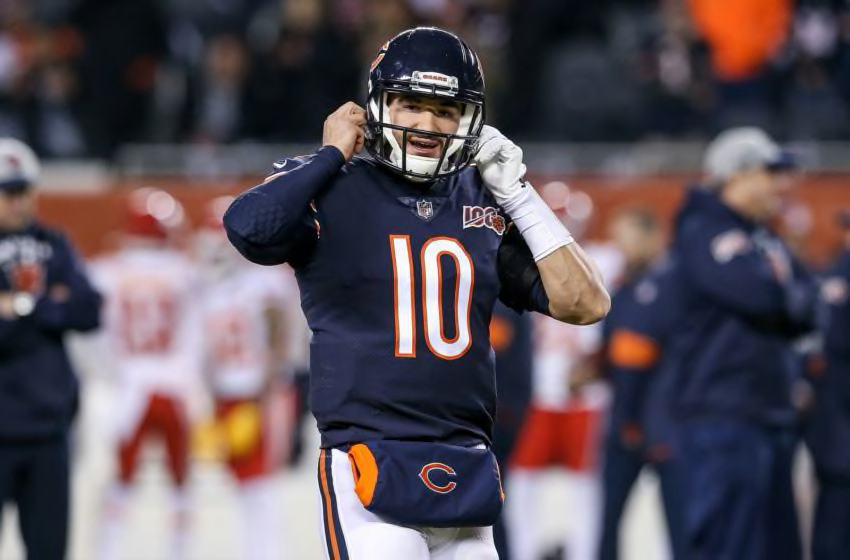
Chicago Bears: Ryan Pace should not have a say on QB decisionPatrick Sheldonon July 30, 2020 at 11:00 am

Read More

Chicago Bears: Ryan Pace should not have a say on QB decisionPatrick Sheldonon July 30, 2020 at 11:00 am Read More »

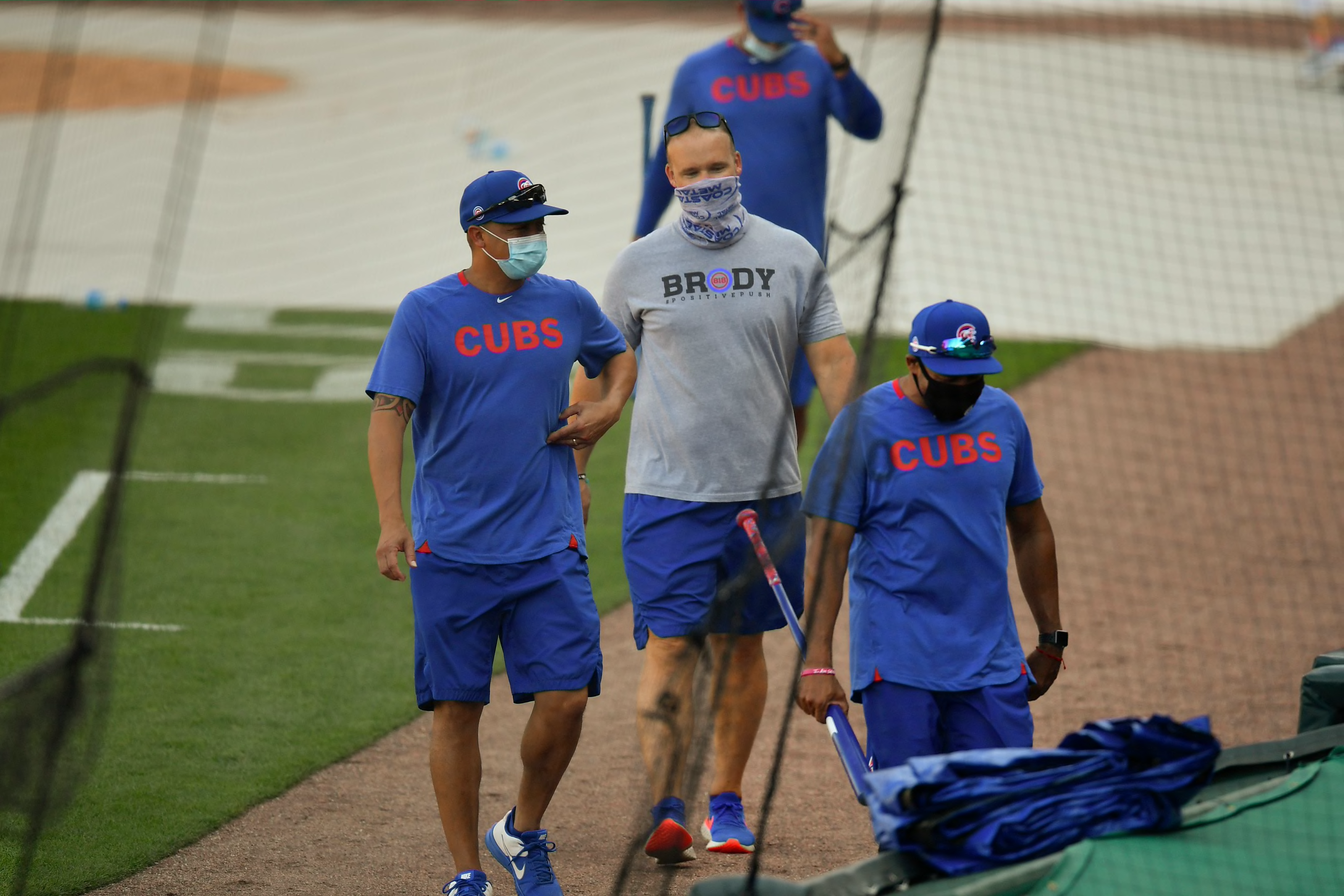
Chicago Cubs: Three early observations of manager David RossBrandon Hinrichson July 30, 2020 at 12:00 pm

Read More

Chicago Cubs: Three early observations of manager David RossBrandon Hinrichson July 30, 2020 at 12:00 pm Read More »

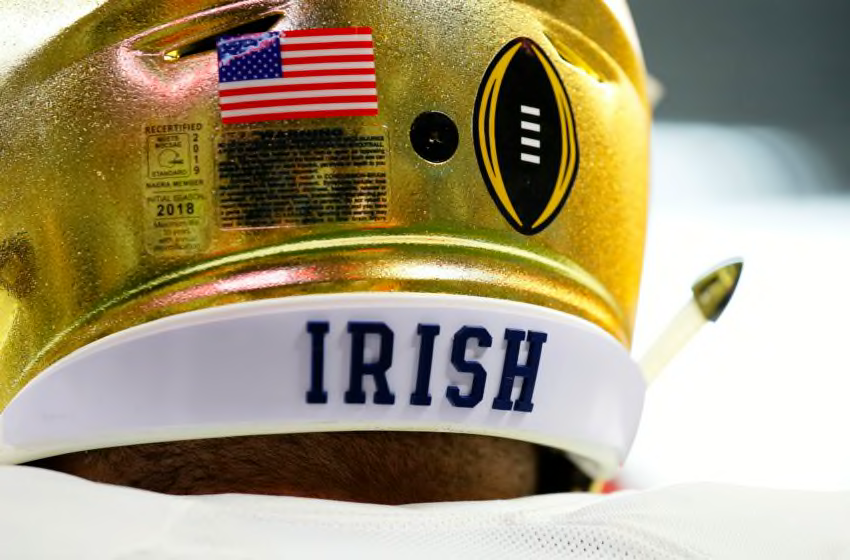
Notre Dame Football: Irish join ACC for 2020 seasonVincent Pariseon July 30, 2020 at 1:00 pm

Read More

Notre Dame Football: Irish join ACC for 2020 seasonVincent Pariseon July 30, 2020 at 1:00 pm Read More »

Chicago Blackhawks: Lots to build on from Blues exhibitionVincent Pariseon July 30, 2020 at 2:00 pm

Read More

Chicago Blackhawks: Lots to build on from Blues exhibitionVincent Pariseon July 30, 2020 at 2:00 pm Read More »