Videos

Pitcher Luis Lugo makes the most of pandemic baseballStephanie Lynnon August 10, 2020 at 10:30 pm

Cubs Den

Pitcher Luis Lugo makes the most of pandemic baseball

Read More

Pitcher Luis Lugo makes the most of pandemic baseballStephanie Lynnon August 10, 2020 at 10:30 pm Read More »

PHOTOS: Looting in ChicagoCandace Jordanon August 10, 2020 at 11:20 pm

Candid Candace

PHOTOS: Looting in Chicago

Read More

PHOTOS: Looting in ChicagoCandace Jordanon August 10, 2020 at 11:20 pm Read More »

Was that so hard?Leanne Staron August 11, 2020 at 12:43 am

Star Gazing

Was that so hard?

Read More

Was that so hard?Leanne Staron August 11, 2020 at 12:43 am Read More »

Biden’s VP Gauntlet Was Cruel from the Startcinnatwistson August 11, 2020 at 2:41 am

cinnamon twists

Biden’s VP Gauntlet Was Cruel from the Start

Read More

Biden’s VP Gauntlet Was Cruel from the Startcinnatwistson August 11, 2020 at 2:41 am Read More »

Chicago rapper-singer Osa North brings Nigerian pop back home on 5 Boys 3 CarsLeor Galilon August 7, 2020 at 10:00 pm

Osa Obaseki, aka rapper-singer Osa North, grew up in Uptown, but in 2006 his parents sent him to live with his aunt and uncle in the capital of Nigeria’s Edo State, Benin City. He was 11 when he arrived, and he lived there for five years, soaking up Nigerian culture as he came of age–he took a particular liking to Afrobeat. North returned to Chicago in 2011, and within a year he’d recorded his first rap song, working with his younger brother. Since launching his music career, he’s been keen to enrich his growing catalog with percussion and melodies borrowed from Nigerian pop. On his second EP of the year, June’s 5 Boys 3 Cars, he bounces between two types of songs: straightforward rap tracks with trap drums and hard-boiled verses, and joyous Afrobeat-inspired cuts with sun-saturated synths, bubbly syncopated rhythms, and lighter-than-air singing. The Afrobeat material seems to be winning out–on the title track, North’s slippery vocals play off a simple, glassy synth melody and a minimal dancehall beat that supercharges the song’s summertime glow. v

[embedded content]

Osa North . 5 Boys 3 Cars

Read More

Chicago rapper-singer Osa North brings Nigerian pop back home on 5 Boys 3 CarsLeor Galilon August 7, 2020 at 10:00 pm Read More »

Sao Paulo big band Bixiga 70 cook up a life-giving brewPhilip Montoroon August 10, 2020 at 11:00 am

click to enlarge
Bixiga 70 - COURTESY THE ARTIST

My first impression of Bixiga 70–which I’m a little embarrassed to say came just last month, almost ten years into their career–was something like, “Hey, it’s the Brazilian Antibalas.”

Both bands have double-digit rosters, with squadrons of horn players and multiple percussionists, and both take inspiration from Afrobeat. But while Antibalas collide Afrobeat with Black American, Nuyorican, and Afro-Caribbean sounds, Bixiga 70–named after their Sao Paulo neighborhood–refract it through the vast, multifaceted prism of Afro-Brazilian music.

Baritone saxophonist and flutist Cuca Ferreira explained the group’s underpinnings to Bandcamp in 2018, on the occasion of Bixiga 70’s most recent studio release, Quebra Cabeca. “The first important thing to say is that there is no Brazilian music without African influence,” he said. “Gilberto Gil was a bigger influence for us than Fela Kuti–of course, there’s a lot of Fela Kuti in Gilberto Gil’s music, but we came to know it via Gilberto Gil. We only found about the Afrobeat guys after listening to Brazilian music for years and years.”

Bixiga 70 formed in 2010, and Quebra Cabeca is their fourth album (they’ve since released their first live record, Sessoes Selo Sesc #5). For a ten-piece ensemble without a leader, where every choice has to pass muster with every musician, that’s an impressive rate of output. They used an outside producer for the first time on Quebra Cabeca, working with longtime friend Gustavo Lenza (Ceu, Marisa Monte, Lucas Santtana). The title translates to “puzzle,” or more literally “break head.”

“Some of us come from candomble, others from jazz, reggae, dub, everything,” said Ferreira. “The whole idea of the band has been to take all these different elements that form us, from Africa and Brazil, and create a hybrid from them.”

Unlike a lot of beat-driven music, the songs on Quebra Cabeca have elaborate structures, with bridges, interludes, and sometimes distinct movements. It’s not just about stacking vamps and riffs–though the vamps and riffs definitely bring the heat. Bixiga 70’s stanky, frothy, lovingly decocted grooves aren’t even trying to communicate with the top floors of your brain; they go straight for the meat in the basement that controls the rhythms of your heart and lungs. This stuff is like the electric juice that can make a frog’s legs dance, even without the rest of the frog. v


The Listener is a weekly sampling of music Reader staffers love. Absolutely anything goes, and you can reach us at [email protected].

Read More

Sao Paulo big band Bixiga 70 cook up a life-giving brewPhilip Montoroon August 10, 2020 at 11:00 am Read More »

Chicago tattoo artist and rapper Phor talks mental health on Self LoveLeor Galilon August 10, 2020 at 1:00 pm

In October 2015, VH1 launched Black Ink Crew: Chicago, a reality show chronicling the intertwining lives of tattoo artists working at 9 Mag, a Black-owned and -operated tattoo parlor in Pilsen. Black Ink Crew turned the shop’s regulars into celebrities, but cast member Phor Robinson already wanted to make a name for himself as a rapper before the first episode even aired–he’d dropped the full-length Sacrifice in early 2015. Since then, Robinson has put out four more albums as Phor, averaging nearly one a year. The new Self Love (NMOL) mostly concerns mental health, though a few of its 16 tracks focus on demonstrating Robinson’s steely skills. He’s got a knack for powering up the bounce in his cadence by fitting his rubbery lines into the pocket of a song’s beat, and he can make his flow feel simultaneously fluid and hard-edged. On “Mind Over Matter” Robinson marries depressive angst to seesawing verses, delivering his lyrics so gently and thoughtfully that even his shortest lines communicate emotional complexity. v

Read More

Chicago tattoo artist and rapper Phor talks mental health on Self LoveLeor Galilon August 10, 2020 at 1:00 pm Read More »

Bobby Rush fires up the acoustic Delta blues on Rawer Than RawJames Porteron August 10, 2020 at 5:00 pm

This is a huge oversimplification, but there are generally two kinds of blues crowds: the Black audience that gravitates toward soul singers, and the white audience that loves instrumental virtuosity. In their time, B.B. King and Albert King were two of the few blues artists to enjoy equal adoration from both crowds, and today Bobby Rush seems set to be the next to pull off that feat. Rush was born in Louisiana in 1933 and moved to Chicago with his family in the early 50s, and he’s become a mainstay on the local blues scene as well as on the chitlin’ circuit, with a live show famous for the shake dancers doing their thing behind him as he sang. Rush lit up the R&B charts in the 70s, 80s, and 90s with hits such as “Chicken Heads,” “I Ain’t Studdin’ You,” and “Sue.” Starting around the beginning of the millennium–roughly the same time he moved to Mississippi, to be near where his grandparents had lived–he began making new inroads into the higher-profile crossover circuit. While his fame has steadily risen ever since, he hasn’t changed much. His shows still feature shake dancers and the same risque songs, and he sounds as good as ever. If he performs two sets or a single longer show, he usually includes a solo segment where he plays acoustic Delta blues on the guitar. His new album, Rawer Than Raw (Deep Rush), is an entirely acoustic collection in that vein. A few of these songs are time-tested chestnuts already covered a thousand times–Elmore James’s “Dust My Broom,” for instance–but in Rush’s hands they never feel like tired genre exercises. He delivers this rough-edged, old-fashioned material with the same gusto he brings when the amps are plugged in. v

Read More

Bobby Rush fires up the acoustic Delta blues on Rawer Than RawJames Porteron August 10, 2020 at 5:00 pm Read More »

Six artists of color make their mark in classical music — an industry where diversity is rareKyle MacMillan – For the Sun-Timeson August 10, 2020 at 8:00 pm

When trumpeter Tage Larsen won his 2002 audition to become the first and still the only African American musician in the Chicago Symphony Orchestra, then-music director Daniel Barenboim met with the new appointee.

“People are going to say that you were hired because you are Black,” Larsen recalls the conductor saying, “but I want you to know that you were hired because of the quality of the playing.”

That Barenboim felt compelled to speak those words says a great deal about the troubled state of diversity and inclusion in classical music at the time. The fact that nearly 20 years later there are only six Latino and Asian instrumentalists and singers in area professional ensembles clearly says that little has changed since then.

Dalia Chin
Dalia Chin
Marc Perlish Photography

“I do feel there is work to do, for sure — lots of work to do,” said Dalia Chin, a Costa Rican-born flutist who moved to Chicago in 2010. She is a 2020-21 collaborator with the Grammy Award-winning contemporary classical ensemble Eighth Blackbird.

Backing these perceptions are stark numbers. According to the most recent statistics available in a 2016 report released by the League of American Orchestras, the share of African American and Latino musicians in American orchestras stood at just 2.5 percent in 2014.

At the same time, the Institute for Composer Diversity reports that works by composers from underrepresented racial, ethnic and cultural groups made up only 6 percent of the 2019-20 programming by 120 orchestras across the country.

Singer John Orduna 
Bass-baritone John Orduna sings with the Grant Park Orchestra and Chorus.
Provided

“This is America, and for all the diversity that we do have, we are still rather segregated in many ways. And classical music is one of those places for a myriad of reasons,” said bass-baritone John Orduna, one of three Black regular members of the Grant Park Orchestra and Chorus.

None of the six artists interviewed for this story have faced blatant discrimination, but many have experienced subtle or not-so-subtle biases.

“I have worked with some fantastic people who are also very racist and don’t know it,” Orduna said. “We’re not talking about people being purposefully insidious. We’re talking about people having blind spots.”

Chin has felt slighted sometimes when she has been hired for a concert only to discover that she was chosen not necessarily for her skills but to check off a diversity box and serve as a kind of Latina representative for an ethnic program.

The first step toward solutions, Orduna said, is for the classical field to acknowledge the problem and for orchestras and other organizations not just to offer lip service but to devote meaningful resources to solving it.

Success for Marlea Simpson will be when the entire field functions like the Chicago Sinfonietta, where the African American musician has served as principal violist since 2014. The ensemble is an unusual outlier in the orchestral realm, because at least one third of its musicians, staff and board are people of color.

“I get to experience classical music in the way I feel it should be experienced,” she said.

One solution that all five instrumentalists opposed was changing the orchestral world’s blind audition process in which candidates try out behind curtains or screens. In a July article in the New York Times, music critic Anthony Tommasini argued that such an approach was no longer tenable and that orchestras had to take more “proactive steps” to hiring.

Marlea Simpson
Marlea Simpson
Courtesy of the artist

“I do believe that the blind audition process is a good tool for inclusivity,” said violist Danny Lai, who was appointed to the Chicago Symphony in 2014. “It’s not a question of fairness. It’s a question of training a generation of Black and Latinx musicians and supporting them in ways so they can take these auditions and win them.”

He pointed to the National Alliance for Audition Support, which was co-founded in 2018 by the Sphinx Organization, New World Symphony and League of American Orchestras. It provides Black and Latino musicians with such help as mentoring, audition preparation and stipends for travel to tryouts.

Image 533 was captured during a performance at Orchestra Hall. R. to L. CSO Viola Danny Lai, CSO Violin Sylvia Kilcullen.
Chicago Symphony Orchestra Viola Danny Lai (center, pictured with CSO Violin Sylvia Kilcullen) performs during a CSO concert at Orchestra Hall in 2019.
(C) Todd Rosenberg Photography

In a similar vein, some groups offer fellowships like the Grant Park Music Festival’s Project Inclusion, which provides opportunities each summer to usually four singers and four instrumentalists from underrepresented backgrounds. (Simpson is an alumna of the program.) Lai hopes the CSO will bring back its short-lived Orchestra Diversity Fellowship Program, which provided opportunities in the early 2000s for promising musicians ages 18-32 to work with its members and perform with the orchestra on a substitute basis.

Larsen would also like to see orchestras allow musicians of color to observe audition finals, something he was allowed to do in 1995 after being eliminated in the first round of a tryout with the New York Philharmonic.

“That was really eye-opening for me,” he said. “I knew at the time I wasn’t ready, but I also knew it wasn’t an impossibility. With a lot of practice, I knew I could do it eventually.”

Rika Seko
Rika Seko
Momoko Hasselbring

Equally important, said Rika Seko, concertmaster of the Elmhurst Symphony and a frequent performer with other area ensembles including the Music of the Baroque, is exposing children of color to classical music and providing crucial early instrumental lessons.

Chin, who teaches privately and has participated in several after-school programs including the Chicago Metamorphosis Orchestra Project, has observed frequent unfair differences in such opportunities from neighborhood to neighborhood. “There is a huge issue of inclusion,” she said.

Few of the artists interviewed see the racial and ethnic inequities in classical music being fixed quickly. “This is a long-term situation,” Chin said. “This is not going to be solved next year. It’s going to take time, patience and effort from all of us.”

But for Simpson, who is 25 years old and just beginning what she hopes will be a long, fruitful career, the transformation cannot come soon enough. “I want to change things,” she said, “so that when I’m hopefully tenured in a top orchestra, I don’t have to have these same conversations.”

Kyle MacMillan is a local freelance writer.

Read More

Six artists of color make their mark in classical music — an industry where diversity is rareKyle MacMillan – For the Sun-Timeson August 10, 2020 at 8:00 pm Read More »

Top 10 Chicago Sportswear of All TimeDrew Krieson August 10, 2020 at 2:04 pm

Table of Contents

The city of Chicago is home to some of the greatest sports franchises. We’ve got the Chicago Bears for football, the Blackhawks for hockey, the Bulls and the Sky for basketball, and the Cubs and White Sox for baseball. Throughout the years, each of these teams has released some iconic sportswear. By doing this, they’ve given us fans the opportunity to represent our favorite teams in style. Whether it be a timeless throwback jersey or a fresh pair of kicks, Chicago sportswear is the best out there. We know everyone has their own favorite jersey to wear on game days, which is why we put together our top ten pieces of Chicago sportswear of all time.

The Chicago Bulls 90’s Jerseys

When it comes to the all-time great Chicago teams, the Chicago Bulls from the ’90s are considered to be at the top. And their classic black pinstripe jerseys aren’t too bad either. Led by Michael Jordan and Scottie Pippen, the Bulls dominated the NBA for the better part of the entire decade. If it weren’t for a brief stint in baseball, who knows how many championships their team would’ve won.

Advertisement

Photo Credit: Fanatics

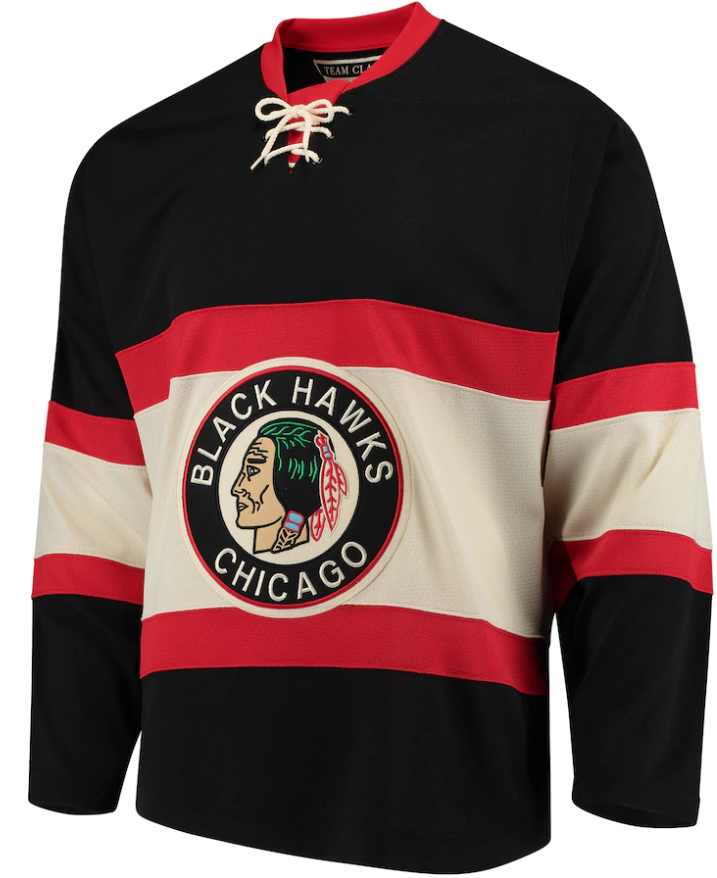
Chicago Blackhawk’s Throwback Jersey

In the early 2010s, it was almost impossible to go a day without seeing someone representing the Chicago Blackhawks. And who could blame them? The team won three Stanley Cups in a period of five seasons and turned everyone into hockey fans. When it comes to their jerseys, the Blackhawks throwback jersey definitely takes the top spot as our favorite. To make things better, the team isn’t doing too bad after the NHL reset its season a few weeks ago. They beat the Edmonton Oilers in the qualifying round of the playoffs and are set to face the Las Vegas Knights next.

Photo Credit: Jonathan Daniel

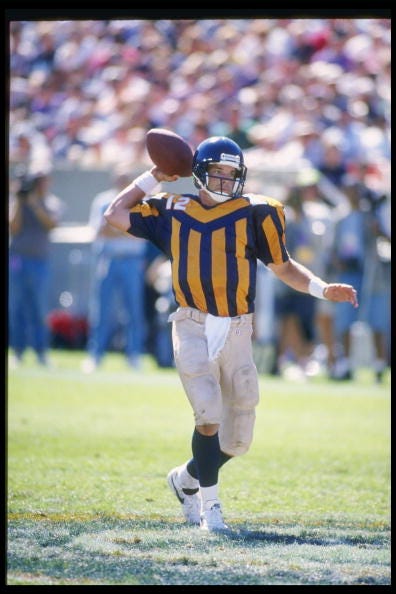
1994 Chicago Bears Uniforms

Of all the Chicago sportswear out there, the Bears uniforms should definitely be high on anyone’s list. In 1994, the Chicago Bears wore these throwback uniforms in week three to honor the franchise from the 1920s. Despite making it on ESPN Rochester’s top 10 worst uniforms of all-time list, we disagree. We’ll always bleed blue and orange, and these uniforms are proof of that.

Advertisement

chicago sportswear

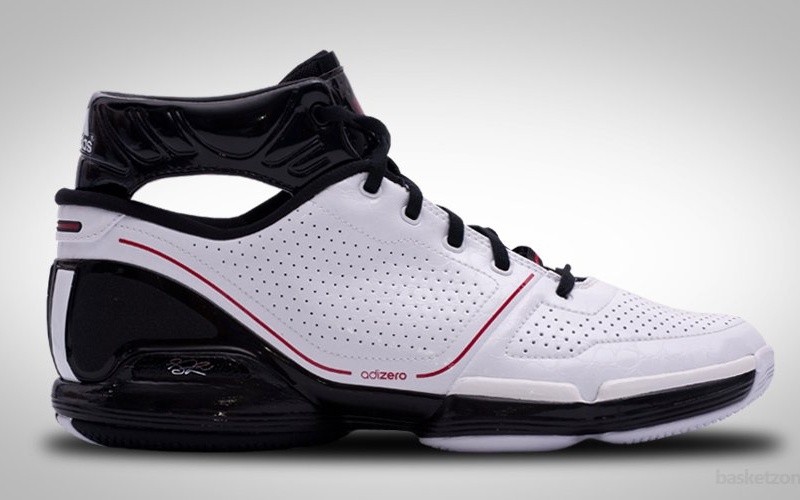
Adidas adiZero Rose 1 Shoe

He’s too big, too fast, too strong, and too good. After the Michael Jordan era Bulls, Derrick Rose’s time on the team was nothing short of extraordinary. When the team took him first overall in the 2008 NBA draft, a star was born. Derrick eventually became the league’s youngest MVP and led the Bulls on plenty of deep playoff runs. His signature shoe, the Adidas adiZero Rose 1, is the first shoe released by Rose and an iconic piece of Chicago sportswear.

Advertisement

Photo Credit: WNBA Store

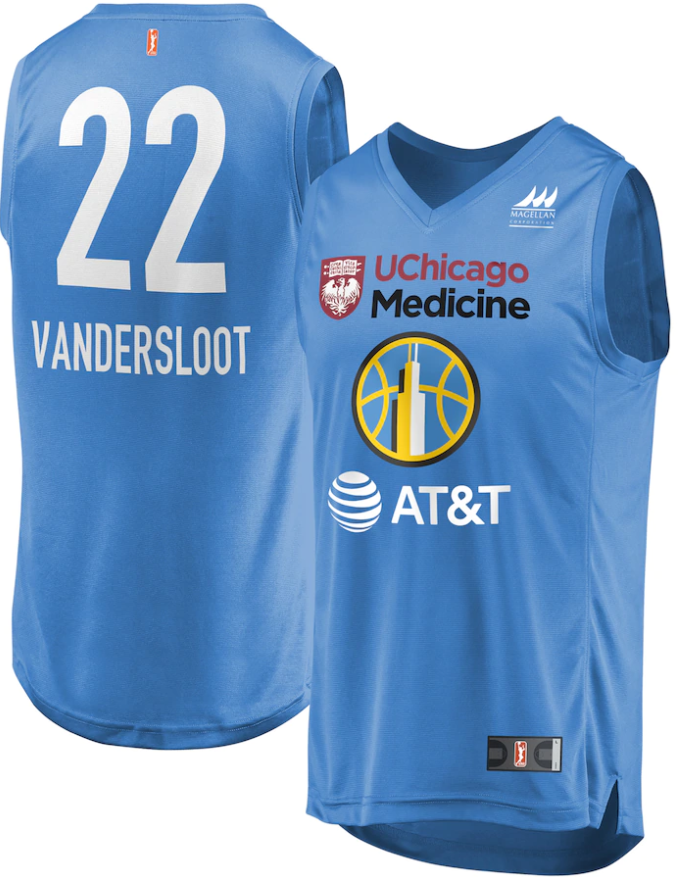
Chicago Sky Jersey

We’re staying on the basketball track with our next favorite Chicago sportswear item on this list. Up next is the Chicago Sky’s uniforms. Out of all the jerseys on this list, these ones are the most unique and honor Chicago’s famous skyscrapers on the front of them. The sky blue combined with the yellow is definitely one of our favorite combos, and it doesn’t hurt that the Sky gets to wear it.

Photo Credit: Chicago Sun-Times

Chicago White Sox Throwback Jersey

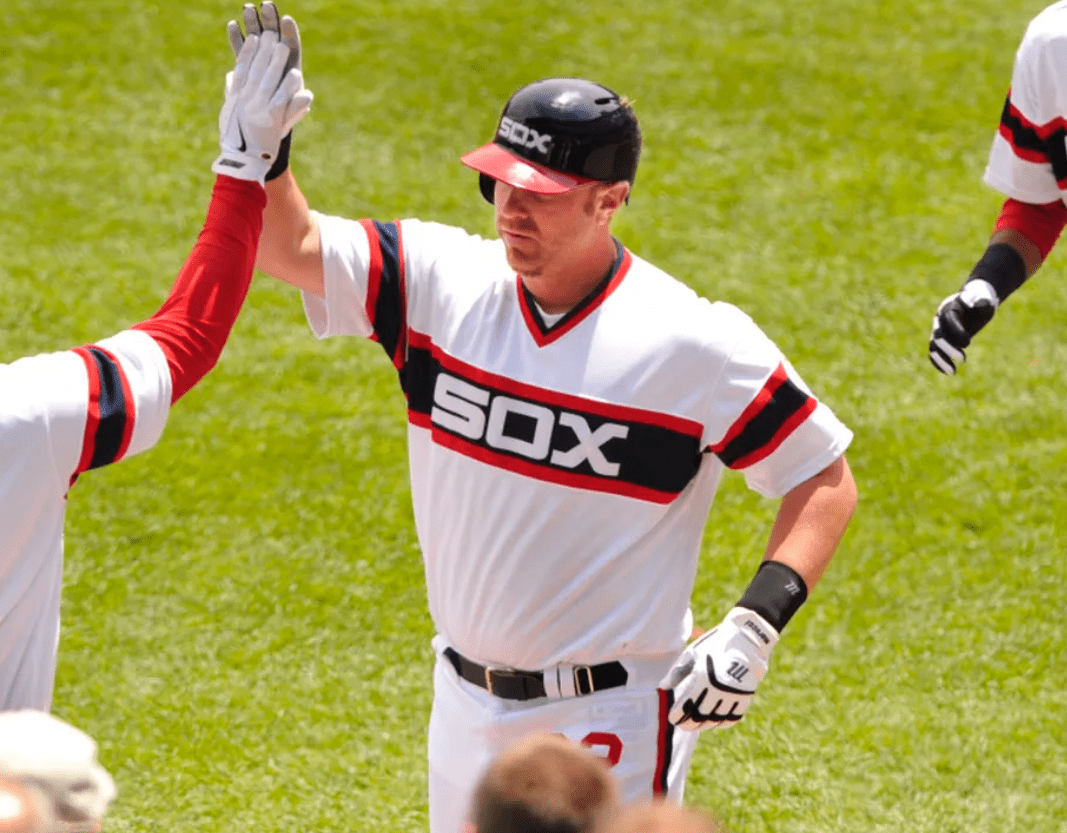
Up next on our list is another throwback jersey, but this time we’re turning it over to baseball. Of Chicago’s two MLB franchises, the Chicago White Sox have plenty of awesome jerseys. One of our favorites comes from the 1980s team. Everyone will recognize this retro jersey as it is truly one of the best White Sox jerseys of all time.

Advertisement

Photo Credit: Grailed

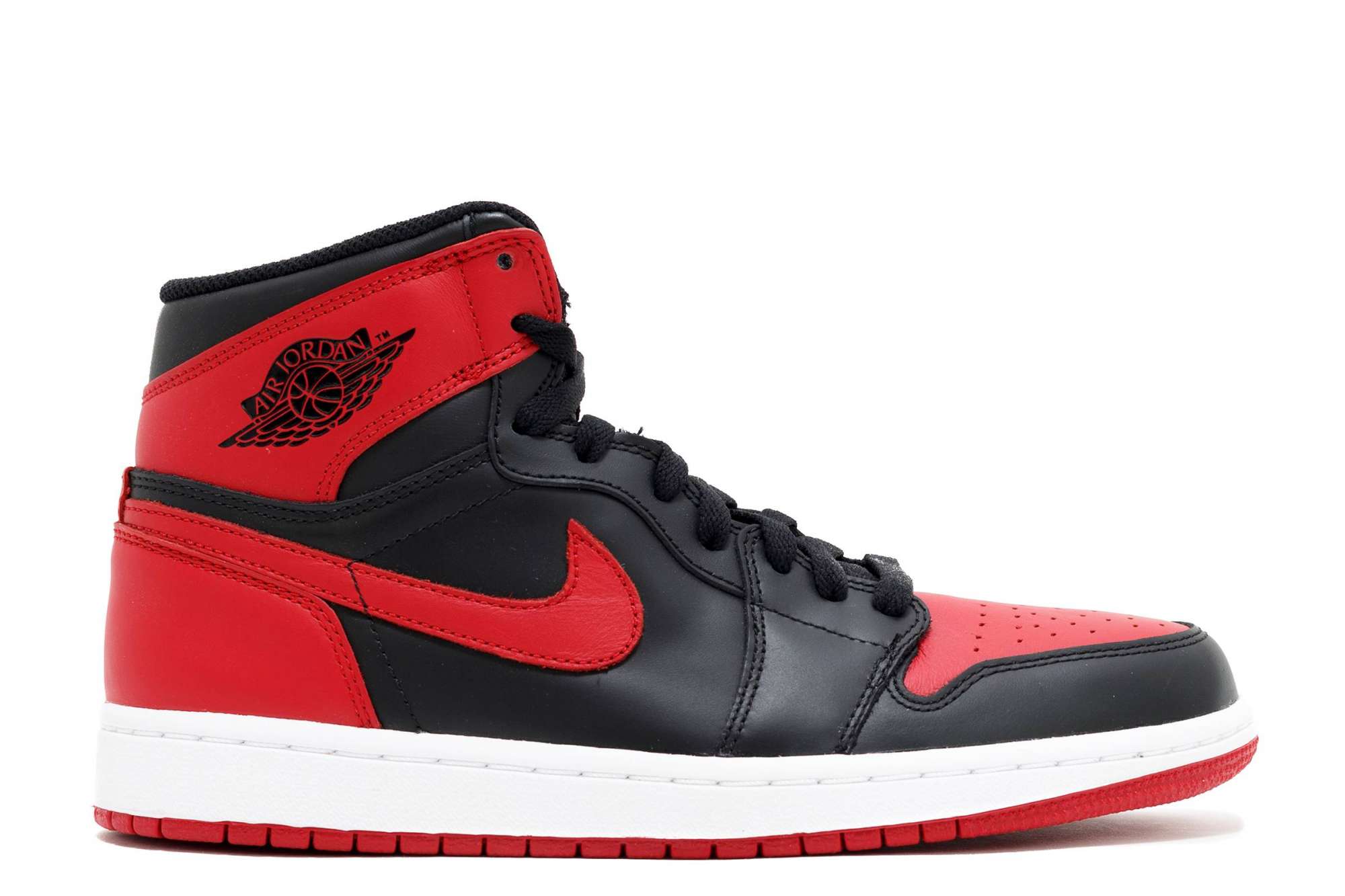
Air Jordan 1

No shoe is more famous than Michael Jordan’s Air Jordan sneakers. Not to be confused with the Air Force 1s, nearly every ballplayer in the city dreams of owning a pair of these shoes. Of course, the story about how these shoes came to be is almost as legendary as Jordan himself. Michael didn’t want to sign with Nike and was set on wearing Chuck Taylors. However, given the fact that he was Michael Jordan, the company decided to create a brand around him. Thus, the Air Jordan 1s were born.

Photo Credit: Mitchell Leff/Getty Images

1968 Chicago Cubs Jersey

Nothing screams Chicago more than donning Chicago Cubbie blue. Out of all their uniforms and jerseys over the years, the 1968 jersey is one of our favorites. The style is simple, with blue and red lettering that spells out ‘Chicago’ on the front. No numbering on the back meant you really had to know the team to tell who was playing, and that’s just the way we like it.

Advertisement

Chicago Bears Color Rush Uniforms

When the NFL released the color rush edition uniforms years ago, the Bears we’re blessed to have one of the best editions in the league. The Chicago Bears color rush uniforms from 2016 we’re easily the best color rush uniform in the NFC North. They honor the Bears franchise with the all blue color and hints of orange accents.

Chicago Bulls City Edition Jerseys

Last on this list of our favorite pieces of Chicago sportswear is the Chicago Bulls city edition jerseys. More specifically, the city edition jerseys from this past 2019-2020 season. These jerseys are full of inspiration from Chicago and draw a lot from the city’s flag. The powder blue and the six-pointed stars are iconic. Honestly, the Bulls should just switch to these uniforms full time.

At UrbanMatter, U Matter. And we think this matters.

Tell us what you think matters and what we should write about next in the comments below!

Featured Image Credit: Chicago Bulls Twitter

READ MORE LIKE THIS

DOWNLOAD THE URBANMATTER APP

FIND PARKING

Read More

Top 10 Chicago Sportswear of All TimeDrew Krieson August 10, 2020 at 2:04 pm Read More »