Videos

How many lives could Bob Woodward have saved?Howard Mooreon September 10, 2020 at 11:11 am

I’ve Got The Hippy Shakes

How many lives could Bob Woodward have saved?

Read More

How many lives could Bob Woodward have saved?Howard Mooreon September 10, 2020 at 11:11 am Read More »

Destinos al Aire brings Latinx culture to the drive-inCatey Sullivanon September 9, 2020 at 5:40 pm

When Myrna Salazar founded the Chicago Latino Theatre Alliance (CLATA) in 2016 and presented the first Destinos International Latino Festival in 2017, the longtime artist-activist-entrepreneur launched both a new brand of must-see fall theater and a platform to amplify the voices of Latinx artists.

Last year’s Destinos built soundly on the first two, with dozens of artists flocking to the sponsoring Goodman Theatre and other venues for a six-week series of performances from local, national, and international companies that drew hundreds of audience members.

This year? “Well,” said Salazar, “We wanted Destinos to showcase Latinx talent, and for years, Destinos did that. Then, COVID. So now what?”

Now, Destinos is going drive-in. Destinos al Aire takes place on Thursday, September 17 at Pilsen’s ChiTown Movies. The evening will include an open-air screening of the Mexican rom-com American Curious (directed by Gabylu Lara and set in Chicago and Mexico City), preceded by performances (both live and taped) from the Chicago artists of UrbanTheater Company, Aguijon, Repertorio Latino Theater, Teatro Vista, and the Cielito Lindo Family Folk Music ensemble. WGN reporter Ana Belaval and comedian Mike Oquendo will emcee.

Tickets are $30 per car for the event spearheaded by CLATA, (still) sponsored by the Goodman, and in collaboration with the National Museum of Mexican Art, the International Latino Cultural Center, and the Puerto Rican Arts Alliance. Attendance will be capped at 140 cars, Salazar said. (The $30 fee covers up to six individuals, regardless of how they arrive.)

“It’s unique in that you can watch everything from the security of your car, or bring a mask and lawn chairs and watch that way. You can ride your bike up if you want to. As long as you’re wearing a mask,” Salazar said.

The starry alliance of local Latinx theater companies kicking off the evening speaks to the fact that while Destinos‘s performances are rich with drama, music, and beauty, they are about far more than just entertainment.

Diversity, inclusion, and anti-racism may be at the forefront of a national conversation this year, but Destinos has been all about that conversation for far longer. Like the artists and companies it spotlights, Destinos shows the limitations of the Eurocentric artistic foundation that many (if not most) Chicago theaters have drawn from since Joseph Jefferson was a tyke.

Consider, for example, UrbanTheater Company’s !Dimelo Cantando! The piece by Ivelisse Diaz uses bomba music to tell a story of resistance and rebellion, said UTC artistic director Miranda Gonzalez. The traditional music is rooted in Yoruban culture, the lifelong Humboldt Park resident noted.

“A lot of what UTC is about is decolonizing art and challenging what the Eurocentric ideas of art are and how they dictate making art,” Gonzalez said.

“We’re dealing with dual pandemics in our community–the plague of Black bodies dying at the hands of police and systematic racism on top of an actual plague. Now, more than ever, we have to root ourselves. Connect to the spiritual and stay grounded.

“Ivelisse speaks on that level–her work is vibrational. I’m not sure how else to describe it. There is an ancient sound that only our souls know.

“Though it may be one person up there on stage, you can tell there are many, many people–ancestors–there with her. It’s one of the most beautiful things I’ve ever seen. It’s otherworldly,” Gonzalez said.

As co-artistic directors of the oldest Latinx theater company in Chicago, Aguijon’s Marcela Munoz and her mother, Rosario Vargas, are celebrating their company’s 31st year. They are bringing La Gran Tirana: Descarga Dramatica to the Destinos stage. Munoz describes the work as “a seam of sound and color,” exploring what it’s like to be an artist in exile.

“It’s about how important it is at this time to make sure we’re creating and holding spaces for Latinx artists.” The show uses the sounds and music of the Caribbean to delve into the experiences of immigrant artists, and the impact leaving your homeland can have on your art. “The piece is about finding that artistic aspect of yourself when you’re in a new, strange place away from your motherland,” Munoz said.

With COVID upending almost every aspect of life–economic, familial, spiritual, artistic–Destinos is more important than ever, Salazar said.

“The arts drive the economy but they also infuse your spirit,” she said. “I had a talent agency for 25 years. Now, I want to pay it forward. Support the artists, and get others to support them as well. Will we do this again? What’s to stop us? Nothing.” v


Read More

Destinos al Aire brings Latinx culture to the drive-inCatey Sullivanon September 9, 2020 at 5:40 pm Read More »

96 Hours is popping in lockdown at LinksIrene Hsiaoon September 9, 2020 at 8:00 pm

Along with every other performance venue in town, Links Hall went dark in March of this year, cancelling the 40 remaining shows of the season and leaving its wood floor minus its customary dust and polish left there by the many bodies rolling across its lustrous surface. To launch its new season in a time when audiences and live performance are reinventing themselves, Links Hall is hosting a 96-hour pop-up performance festival–a four-day blitz of remote collaboration between teams of artists and technicians who have never worked together before and never worked together like this–during a pandemic. The resulting performances, ranging from 20 to 45 minutes in length, will be presented over livestream with at least one artist from each team on-site for some time at Links. The event will set the stage for the next year of production at the experimental performance incubator.

“The joke is that it’s like a 24-hour performance festival, except everything takes four times as long in a pandemic,” says executive director Stephanie Pacheco. “How much time do we need if we have to bring cameras and microphones to artists spread across the city? How much time do people need to reimagine what the collaboration process looks like? There are a lot of questions about how to prioritize the work we’re doing as an arts organization that seeks to support independent artists. Links has done a lot of presenting and copresenting, but we’re fundamentally an incubator. Our mission talks about research and development of work as much as we talk about presentation. Presentation is not going to look the same for awhile. Our mission now is supporting artists in creating new work so that two years down the line there’s still work to present.”

In preparation for new modes of presentation, Links has adapted and upgraded its equipment with LEDs and robocams. “LEDs have a spectrum of color choices that you can program, and robocams are controlled from the booth. That way you can keep distance between artists and technicians. It’s all remote in the space,” says production manager Giau Truong. In partnership with music venue Constellation, Links has been developing their theatrical spaces into film and video production studios. “We’ve been getting a lot of inquiries. Artists are looking for spaces to do recording right now. With the equipment we’re installing, we can do things at higher quality than they can do on their own.” But, he emphasizes, “We don’t want to lose the live performance aspect.”

And the 96 Hours Festival is geared to provide some answers–or at least pose some questions–about what live performance looks like now. Curated by Truong and Links partnership coordinator Aaliyah Christina, the festival combines an eclectic roster of multidisciplinary artists in dance, puppetry, storytelling, music, film, and fire-spinning into teams of three, each partnered with a Links Hall technician. With a grab bag of tasks and prompts that include the themes of transformation and exchange, as well as requirements for a live element, a pre-recorded element, some form of audience interaction, some presence at Links, and the use of an object selected by another team, the festival guidelines look like a wishlist crossed with a treasure hunt.

“We want to see what people will come up with,” says Christina. “We don’t want to restrict them too much, but we want them to have an intentional way of devising the work. Especially with our sociopolitical and socioeconomic climate, with COVID, with Black Lives Matter uprisings, and personal and communal things that are happening that can inform everybody’s work, we wanted to see how they manifest with all the artistic backgrounds. We’ll be there to help guide. We want to be transparent and supportive throughout the process.”

Adds Truong, “The 96 Hours Festival gives us an opportunity to experiment and learn from the process as artists, administrators, and technicians. We are learning how to maneuver around this world we’re living and creating in. Links is not in the business of selling content; we’re in the business of being able to provide opportunity, space, and resources for artists to do what they need to do–so I have a day planned for technicians to come in and explore the equipment and learn how to use it so people understand what their options are technically, how to use it, and innovate with it.”

Further in the future, Links anticipates a hybrid audience–a limited live audience at performances and a limitless livestream that would enable accessibility for people in more far-flung areas of the city and beyond. “You reach a lot more people doing livestream than you do with live performance, so why not have both worlds at the same time?” says Truong. “The answer is somewhere mixed in the TV, film, and theater worlds. [In film, TV, and livestream], you’re framing a lot [that] people are seeing. Is there a way to break out of that frame itself?”

Yet both Truong and Christina cite connection as the crucial element that keeps live performances living. “We’re able to experience and witness this thing with other people,” says Christina. “You’re able to witness and experience people witnessing and experiencing you. At Links Hall, you feel connected to the performer even if you don’t know who they are, and there’s a sense of levelness with the performer and the witness, and the viewer. ‘I feel you seeing me seeing you.’ That’s the essence of Links Hall’s live performance.”

“I look at environment and behavioral changes,” says Truong, recalling a past project raising quail. “Their behavior changes with every member you add in–their group behavior changes constantly. With people as well, when you’re in a space, they change how you feel. How do you create that sense by yourself in a space? I’ve been in meditation spaces such as Plum Village by Thich Nhat Hanh in France–you’re there by yourself but feel connected to everyone who’s come into that space to meditate. I’ve been pondering that question of how we create connection, even at a distance.”

“96 Hours will tell us where we’re going,” says Christina. “We have hypotheses but we don’t have any idea what the conclusion may be. We’re not expecting rentals for the new season. We are moving forward with the Co-MISSION residencies for fall and spring. The festival will inform us how to move forward and how we can support artists through this. The first half of the season will not look as it usually does–we won’t have a live show in the space every other week. This will be our blueprint.”

With an industry in radical reconfiguration, Links Hall has remained centered on the needs of artists making new work. “One of the things we heard while talking to artists this summer is that some folks were in critical self-care mode and needed to deal with Maslow’s hierarchy of ‘I need food, I need shelter, I need to make sure I’m healthy and my family is healthy,’ and some artists were furiously creating at home, because that’s what they need to do to survive, and there was a subset of artists that were like, ‘I’d like to be making things, but I just don’t know how, and I don’t know where to begin,'” says Pacheco. “We heard this in the virtual retreat we did in April with the other dance service organizations–people were feeling overwhelmed and don’t know where to start. One of the things I love about Links is that we can give you platforms and tools and resources. It used to be a subsidized rate, and marketing, box office, and technical support. Folks who have never produced a show before get producing support. So now, how do we build a container that then allows people to be creative? We need to set some structured boundaries and walls for people to push out against.” v


Read More

96 Hours is popping in lockdown at LinksIrene Hsiaoon September 9, 2020 at 8:00 pm Read More »

Throwing Muses evolve their version of alt-rock on Sun RacketSalem Collo-Julinon September 9, 2020 at 5:00 pm

Few bands embody the aesthetic of alt-rock as thoroughly as Throwing Muses. Founded in Rhode Island in 1983 by teenage stepsisters Kristin Hersh and Tanya Donelly, the group made moody songs rife with sharp-tongued lyrics, postpunk guitars, and psych-folk vocal harmonies. Guitarists Hersh and Donelly traded lead vocals and shared the songwriting, and after adding bassist Leslie Langston and drummer David Narcizo, the band recorded a demo that eventually landed them a deal with London indie 4AD–the label’s first American signing. Langston left Throwing Muses to pursue other projects shortly before the band recorded their fourth album, 1991’s The Real Ramona, and Donelly left a year later to help found the Breeders with Pixies bassist Kim Deal (she’d later record more alt-rock favorites with her band Belly). Throwing Muses recruited bassist Bernard Georges in 1994, and went through some ups and downs before disbanding in 1997. Hersh then turned her focus toward solo albums, family life, and the harder-edged rock trio 50 Foot Wave, which she started in 2003 with Georges. Donelly briefly came back to Throwing Muses in the early 2000s, playing with the band at a few reunion shows and recording backup vocals for a self-titled Throwing Muses album in 2003. She’s absent from the band’s 2013 release, Purgatory/Paradise, as well as from their tenth album, Sun Racket (Fire), where the lineup consists of Hersh, Narcizo, and Georges. The new record comes across like an evolved version of the band’s late-80s material: though its rock songs sometimes border on the experimental, they stay tethered to the dark clouds of Hersh’s lyrics. The album opens with the crunchy, bass-heavy “Dark Blue,” where Hersh’s distinctive raspy voice makes her sound like she’s got a devil child trying to crawl out of her throat. “Upstairs Dan” feels like remembering a slightly disturbing dream first thing in the morning–the danger has passed, but Narcizo’s stark drums and Hersh’s reverberant guitar conspire to bring the monsters back. The melodic guitar of closing track “Sue’s” calms like a lullaby, at least until Hersh breaks the spell with her startling words: “The devil has no soul,” she sings. “Doesn’t love who he fucks.” Like all the best Throwing Muses albums, Sun Racket is bittersweet and daring but crafted with care and trust. v

Read More

Throwing Muses evolve their version of alt-rock on Sun RacketSalem Collo-Julinon September 9, 2020 at 5:00 pm Read More »

Assessing the Chicago Bears Depth Chart and Quarterback DecisionBrian Lendinoon September 9, 2020 at 3:17 pm

We have reached Week 1 of the NFL season, and that means the Chicago Bears depth chart has been released. By some miracle it looks like the league will kickoff as expected with Houston vs. Kansas City on Thursday night. As for the Bears, they’ll begin their 2020 season on Sunday against the Detroit Lions.

With the season due to start, teams were required to trim to the 53-man rosters the league mandates and submit them the to the league. It’s also customary for final positional battles to be decided and a starting 22 to be posted in anticipation for the regular season. The Bears had more than a handful of close battles, but no more closely monitored than at quarterback between Mitchell Trubisky and Nick Foles.

Advertisement

Let’s take a look at the Chicago Bears depth chart for 2020 and ultimately the decision to hand the QB job to the incumbent Trubisky over the newcomer Nick Foles.

Quarterbacks

Mitchell Trubisky, Nick Foles

Advertisement

It wouldn’t be a Chicago Bears offseason without a hotly contested QB battle between two JV superstars. After their disappointing 8-8 campaign in 2019 and the trade that brought Nick Foles to Chicago, that bar argument became the hottest topic of contention leading up to this past weekend, when it was announced that Trubisky would, in fact, be the Bears starter. This comes as a surprise to many, considering the money the Bears are committing to Foles in 2020. However, when you really take a step back, you begin to understand that this was pretty much a given all along.

Advertisement

Trubisky isn’t the Bears starter in 2020 because he magically got better at football overnight. Once the Bears bench him in favor of Nick Foles, they have effectively lost Trubisky for good so they’re essentially hedging their bet. If Trubisky fails, you go to Foles. If you start Foles and Foles fails, it’s much more difficult to say, “OK, at least we have Mitch to turn to.”

The Bears have 99 problems but a Mitch ain’t one…or so we hope.

Advertisement

Advertisement

Running Backs

Tarik Cohen, David Montgomery, Ryan Nall, and Cordarrelle Patterson

The Chicago Bears depth chart consists of four running backs. Nothing out of the ordinary here unless you think it’s weird to see Cordarralle Patterson listed as a running back, the position he’s been most successful in the past few years outside of kick returner. The Bears issues at running back aren’t depth, it’s talent and their ability to be effective in short-yardage situations.

Cohen and Patterson are gadget players, while Montgomery proved nothing in his rookie year to make anyone believe the Bears running game might be a strength again in 2020, especially if they’re planning on running the ball 40 percent of plays yet again.

Wide Receivers

Allen Robinson II, Anthony Miller, Ted Ginn Jr., Riley Ridley, Javon Wims, and rookie fifth-round pick Darnell Mooney.

The Bears will keep six receivers on the depth chart. Robinson and Miller expect to get the lion share of snaps, but it’s Darnell Mooney who has buzzed most in camp. The rookie could see some play out of the slot in his first year with how Matt Nagy likes to draw up trickery. Ted Ginn is a savvy veteran who’s good for one or two big plays per year, get you excited in fantasy, and then do nothing the rest of the year.

Riley Ridley and Javon Wims have been breakout candidates for what seems like ages but are fighting for snaps on an offense that isn’t deep.

Tight Ends

Jimmy Graham, Cole Kmet, Demetrius Harris, J.P. Holtz, and Eric Saubert

Despite having something like 10 tight ends on the roster at one point, the Bears cut that number in half by the time the season will start. Jimmy Graham comes over from Green Bay and was good maybe four years ago. Cole Kmet has a ton of promise but starts 2020 having to defend his draft position after many believe the Bears reached for the Arlington Heights by way of Notre Dame prospect. Harris, Holtz, and Saubert are run blocking assets at most, with the potential to sneak a red zone play when Matt Nagy gets too cute in the 4th quarter.

Offensive Line

Your starters from left to right will be: Charles Leno, Jr., James Daniels, Cody Whitehair, Germain Ifedi, and Bobby Massie. The four reserves are Alex Bars, Rashaad Coward, Jason Spriggs, and rookie seventh-round pick Arlington Hambright.

The Bears offensive line on paper isn’t too shabby in 2020, but once they take the field it’s a whole different story as we saw in 2019. They’re more of a finesse group, working best in short long-yardage downs versus having to get down and dirty in the trenches. In fact, the Bears were one of the worst teams in football on 3rd & 1 last year and much of that is because of the lack of power on the offensive line to just put a hand in the dirt and make something happen.

The unit is also fairly thin, so one injury to a starter and you have a reserve getting meaningful snaps that you aren’t going to be comfortable with.

Defensive Line

Interior DL: Akiem Hicks, Bilal Nichols, and John Jenkins
Ends: Roy Robertson-Harris and Brent Urban

The success of the Bears starts with the interior of the defensive line with Akiem Hicks and Bilal Nichols. Their ability to neutralize the opponent’s run game is immense in what allows them to dominate in other parts of the game via the Chuck Pagano’s 3-4 scheme. This unit would include Pro Bowler Eddie Goldman, too, but the stud lineman opted out of the 2020 season due to COVID-19 concerns.

Linebackers

Outside Linebackers: Khalil Mack, Robert Quinn, Barkevious Mingo, James Vaughters, and rookie fifth-round pick Trevis Gipson.
Inside Linebackers: Danny Trevathan, Roquan Smith, Joel Iyiegbuniwe, and Josh Woods

Welcome to the definitive strength of the Chicago Bears. With Mack and Quinn, the Bears have two elite pass rushers in an NFL that focuses on throwing the ball. Their ability to put pressure on the quarterback is the most important thing the Bears can do on defense. Up the middle, Trevathan makes the team yet again for his instinctual football and ability to sniff out the run, while Smith needs to make a jump in his junior year from a football IQ perspective because the raw talent is clearly there.

The front seven together is one of the scariest units in the entire league.


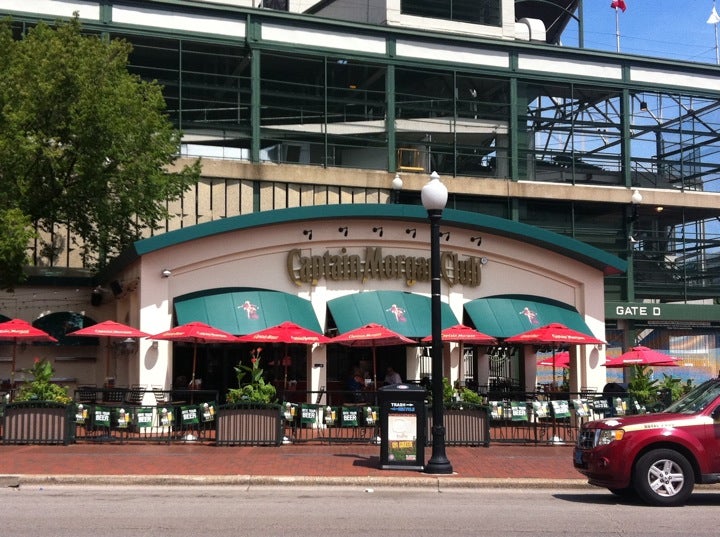
Photo Credit: FourSquare

The Cubs and DraftKings Have Partnered to Put a Sportsbook at Wrigley

Tired of the dreary Chicago Bears depth chart? Check out more info on this historic partnership between the Cubs and DraftKings.

View the Just How You Can Start Betting at Sporting Events


Defensive Backs

Cornerbacks: Kyle Fuller, rookie second-round pick Jaylon Johnson and rookie fifth-round choice Kindle Vildor, Buster Skrine, and Duke Shelley.
Safeties: Eddie Jackson, Deon Bush, Tashaun Gipson, DeAndre Houston-Carson, Sherrick McManis, and Marqui Christian

The success of the front seven is what allows the defensive backs to have success. Fuller and Jackson are All-Pro caliber players but after that, there is a ton of uncertainty on the depth chart. Gipson was a huge signing to pair with Jackson, but after CB Artie Burns tore his ACL in August, they’ll rely on a rookie second-round pick in Johnson to play their CB2 position opposite of Fuller.

Special Teams

Kicker: Cairo Santos, K
Punter: Pat O’Donnell

Eddy Pinero was moved to IR to start the season with a groin injury, moving Santos to the opening week roster. This is what it is so long as we don’t get another iteration of a double doink.

In total, there weren’t any major surprises on the Bears depth chart drop. Mitchell Trubisky is the quarterback and that’s all something we’re just going to have to accept. With the Detroit Lions and New York Giants to open up the season, let’s hope he can take advantage of the screen pass the NFL schedule-makers made him. Looking down the rest of the board, six of the seven 2020 draft picks made the roster, with 7th round offensive tackle Lachavious Simmons as the lone selection of being left off.

The Bears defense will be their strength yet again, while we can only hope the offense can muster enough juice to keep them off the field. In a season with no game prep and limited training camp, time of possession is going to be an x-factor in which teams are successful and which ones burn out faster than normal. Keeping the defense off the field could be the difference between 9-7 and the playoffs or 7-9 and Matt Nagy’s job.

The NFL kicks off this Thursday night with the Kansas City Chiefs vs Houston Texans on FOX. The Bears begin their 2020 campaign at noon on Sunday at Detroit on FOX.

At UrbanMatter, U Matter. And we think this matters.

Tell us what you think matters in your neighborhood and what we should write about next in the comments below!

Featured Image Credit: Mitchell Trubisky Fans on Facebook

Read More

Assessing the Chicago Bears Depth Chart and Quarterback DecisionBrian Lendinoon September 9, 2020 at 3:17 pm Read More »

Lincoln Park’s Kaathis is Fast Casual Street Food With RootsBrian Lendinoon September 9, 2020 at 5:47 pm

It may not be a yellow brick road, but just steps from Chicago’s famed Oz Park sits Kaathis, an Indian-inspired fast-casual restaurant where the essence of Indian culture can be found abundantly within its recipes. 

With its memorable blend of robust flavors, Kaathis is bringing the taste found in Indian Street food to the Chicago restaurant scene, a treat for anyone without access to the region in this current moment in time. And it’s that commitment to quality that is unmatched and undeniability makes Kaathis the preeminent destination for anyone wanting true Indian cuisine in fast fashion.

Advertisement

But what is it that makes Kaathis so good? Outside of the obvious push to get into the fast-casual, cafeteria-style service, the restaurant has been steadfast in maintaining inclusiveness for individuals of all cultures. Per the company website, all of their meats (Lamb, Beef, and Chicken) are Zabiha Halal and are certified by the Halal Food Standard Alliance of America (HFSAA). The Lincoln Park staple is also extremely allergy conscious — offering gluten-free rice bowls and their food is free of soy, nuts, seafood, and corn. They also provide vegan and vegetarian options, as well, and have now expanded into providing diet-friendly (think Keto, Weight Watchers, Atkins, etc) weekly meal options. They have also opted to avoid frying food and bake them instead, such as their unique mouthwatering masala wedges.

Advertisement

Every time you visit Kaathis you can expect an experience filled with delicious meat and vegetables, perfectly seasoned in founders Aditya Burman and Dr. Sandhya Nagubadi’s blend of spices. But make no mistake, despite their personal touch, nothing about Kaathis is not authentic. These are recipes derived from the vibes of Indian street culture and in some cases, directly from the table of Nagubadi’s home kitchen or Burman’s own mother—a beautiful homage to their roots and the food that inspires those like them to chase their passion to share it with the world. These historic flavors are often blended with more modern touches. Take, for instance, the mango buffalo chicken samosa, a baked fusion of sweet and heat!

Advertisement

Sharing is something Burman and Nagubadi take very seriously. Despite their own limitations due to the COVD-19 pandemic and the subsequent financial effect it had on the restaurant industry, Kaathis made a conscious effort to be a vocal presence in the community. Burman states that Kaathis donated 2000+ meals to Chicagoland nursing homes and hospitals through their partnership with the city. They are now partnering with OpenMeals.org to provide meals to those experiencing difficult times due to the pandemic.

It’s that dedication to serving those in Chicago hit hard by the COVID-19 virus that makes Kaathis the perfect small business to highlight, especially in an era where sitting down and dining out opportunities are few and far between.

In total, you can expect to be in and out of Kaathis in 20 minutes if you choose to dine in. Should you opt for carryout, think Chipotle. But instead of big kitchen concoctions, the recipes have been crafted over decades of life in India and perfected for everyone to enjoy.

Whether you’re looking for a quick bite of something out of your normal rotation, looking to satisfy a hankering after a few drinks at Halligan Bar across the street, or simply in search of your new favorite fast-casual restaurant, it doesn’t matter. Kaathis’ traditionally beautiful Indian street food staples are a must if you live in the Lincoln Park neighborhood. Heck, they’re a staple regardless of neighborhood, say you want them to cater a small socially distanced gathering you’re having, they do that too.

You can visit Kaathis Restaurant at 2273 N Lincoln Ave in Chicago’s Lincoln Park neighborhood and is currently open Tuesday-Friday for lunch from 10:30AM-3PM and 5PM-9P (10:30PM on Friday) for dinner, Saturday from 11AM-10:30PM, and Sunday 5PM-9PM. They are currently fully functioning with limited dine-in seating, outdoor seating, full take out menu, and contact-free delivery.

You can follow Kaathis on Instagram and Facebook here.

At UrbanMatter, U Matter. And we think this matters.

Tell us what you think matters in your neighborhood and what we should write about next in the comments below!

Featured Image Credit: Kaathis

 
Read More

Lincoln Park’s Kaathis is Fast Casual Street Food With RootsBrian Lendinoon September 9, 2020 at 5:47 pm Read More »

Clark Street Dining Extended to 7 Days a WeekBrian Lendinoon September 9, 2020 at 6:40 pm

Hungry for some uninterrupted, seven-day-a-week outdoor dining in River North? Well, good news for you then because the city has announced that Clark Street dining has been extended as three blocks of the River North corridor will remain completely closed to traffic for the entire week in order to entertain more outdoor diners before the weather takes a turn.

The project began over the weekend and is now extending to the entire week to serve a wider audience. The closures extend from Kinzie Street to Grand Avenue, in addition to the one block of Wells Street between Superior and Huron, and Rush Street to State Street by way of Bellevue Place.

Advertisement

Here is a collection of popular restaurants that will benefit from the newly minted schedule for you to try out before winter comes.

Advertisement

View this post on Instagram

Doesn’t get better than patio margs.

Advertisement

A post shared by Xoco Chicago (@xocochicago) on Aug 31, 2020 at 5:11pm PDT

Advertisement

XOCO

449 N Clark St, Chicago, IL 60654

XOCO is the brainchild of famed Chef Rick Bayless and presents his take on Mexican street food. It’s fun, tasty, and has arguably the best margaritas in the city.

Advertisement

Beatrix

519 N Clark St, Chicago, IL 60654

Beatrix is like the brunch dream for a wild pack of blonde social-mights. It’s essentially 25 percent American eatery, 25 percent bakery, 25 percent coffee shop, 25 percent wine bar, and 100 percent Instagrammable. Imagine how insane that gets when you extend the patio into the middle of Clark and you can add skyline shots to your avocado toast with smoked salmon.

Havana Grill

412 N Clark St, Chicago, IL 60654

Havana Grill at night is a gem of River North with its live music and Latin vibe that has you feeling like you’re in Havana itself. During the day, it’s turning out incredible Pan-Latin food and beautiful cocktails.

View this post on Instagram

See you outside ✨

A post shared by The Smith (@thesmithrestaurant) on Aug 15, 2020 at 4:43pm PDT

The Smith

400 N Clark St, Chicago, IL 60654

The Smith is classy and your go-to happy hour date spot on this strip of Clark St. The indoor is super nice, but with the large open windows, even if you are sitting on the extended patio, you can get a feel of the sophistication it takes to be a regular at The Smith.

The Boss Bar

420 N Clark St, Chicago, IL 60654

The Boss Bar is the 5 AM tank of a bar that attracts the drunkest of the drunk on a weekend. Little do people know, it actually has a super good menu that includes one of our favorite burgers in the city. But even if only a drink is in your future, the patio extension will make your ice-cold Miller Lite that much more satisfying.

View this post on Instagram

Sunshine and whiskey! ☀️ 🥃

A post shared by Bub City (@bubcity) on Aug 16, 2020 at 12:33pm PDT

Bub City

435 N Clark St, Chicago, IL 60654

BBQ and live music in the heart of River North? Yes, that’s Bub City for you. So for some warm pulled pork on a nice fall afternoon to really make you feel like you’re in the heart of football season, head to Bub City.

View this post on Instagram

FRESH AF.

A post shared by theepicburger (@theepicburger) on Aug 19, 2020 at 8:54am PDT

Epic Burger

407 N Clark St, Chicago, IL 60654

Pretty self-explanatory, the burgers are pretty epic.


Best Pizza Places in Chicago
Photo Credit: Uno Instagram

View the Best Pizza Restaurants in Chicago, Ranked

Are you trying to find the best pizza places in Chicago to visit? View our list of the top 50 pizza restaurants in the city.

View the Best Pizza Places in Chicago


View this post on Instagram

That one salad you can always rely on for comforting, healthful, feel good vibes…yours truly ❤️ Kale Caesar • Made with local @lovelilbucks & @localfoods @mightyvine tomatoes, this GF classic caesar is a favorite for vegans and non-vegans. We make our vegan caesar dressing in-house so simply skip the cheese and you have yourself a vegan Caesar 🌱 • Stop in or order online [link in bio] #lyfekitchen . . . . #loveyourfoodeveryday #sociallyfe #locallyfe #thenewhealthy #healthyish #veganeats #caesarsalad #chicagofoodmag #localchicago #chicago #vegan #glutenfree #eeeeeats #instafood #picoftheday #eaterchicago #infatuationchi #chicagoeats #312food #spoonuniversity #bestfoodchicago #goodeatschicago #chicagofoodauthority #balance #wellness #glutenfreeeats #likechicago

A post shared by Love Your Food Everyday (@lyfekitchen) on Aug 31, 2020 at 1:36pm PDT

Lyfe Kitchen

413 N Clark St, Chicago, IL 60654

Lyfe Kitchen is trendy and healthy and attracts a lot of people during their lunch hour. Even if it’s a more take-and-go spot, it has a patio for diners who wish to take a beat while eating their quinoa and kale salad.

Maggiano’s

516 N Clark St, Chicago, IL 60654

On the northern-most point of the Clark St closing, Maggiano’s is the most recognizable name on this list. Known for its family-style Italian food and dark mahogany ambiance, you wouldn’t imagine it’d be the first destination for outdoor diners. But, regardless, the eggplant parmesan on a nice September evening doesn’t sound all too bad.

At UrbanMatter, U Matter. And we think this matters.

Tell us what you think matters in your neighborhood and what we should write about next in the comments below!

Featured Image Credit: Bub City Facebook Page

 
Read More

Clark Street Dining Extended to 7 Days a WeekBrian Lendinoon September 9, 2020 at 6:40 pm Read More »

Chicago Cubs: Kyle Hendricks sets franchise record in Monday’s winRyan Fedrauon September 9, 2020 at 12:00 pm

Read More

Chicago Cubs: Kyle Hendricks sets franchise record in Monday’s winRyan Fedrauon September 9, 2020 at 12:00 pm Read More »