Videos

Someone You Should Know: Dr. Goldwyn B. Foggie AKA Dr. GoldieDeanna Burrellon October 9, 2020 at 5:42 pm

The Red Cup Adventures

Someone You Should Know: Dr. Goldwyn B. Foggie AKA Dr. Goldie

Read More

Someone You Should Know: Dr. Goldwyn B. Foggie AKA Dr. GoldieDeanna Burrellon October 9, 2020 at 5:42 pm Read More »

Surviving Remote Learning and WorkingAnne Marie Williamson October 9, 2020 at 5:59 pm

Mom About Town

Surviving Remote Learning and Working

Read More

Surviving Remote Learning and WorkingAnne Marie Williamson October 9, 2020 at 5:59 pm Read More »

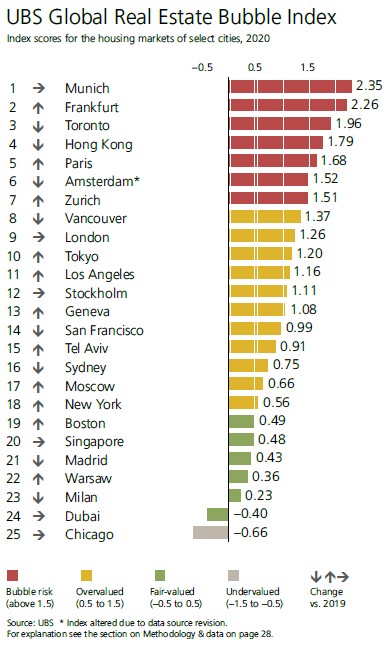
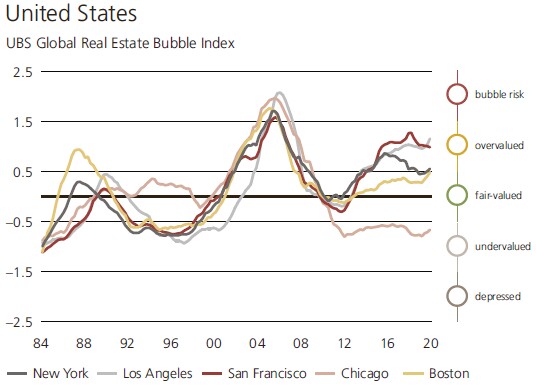
UBS: Chicago Homes Most Affordable Among 25 Major Global CitiesGary Lucidoon October 9, 2020 at 6:48 pm

Getting Real

UBS: Chicago Homes Most Affordable Among 25 Major Global Cities

Read More

UBS: Chicago Homes Most Affordable Among 25 Major Global CitiesGary Lucidoon October 9, 2020 at 6:48 pm Read More »

Mask up with the Chicago flagChicagoNow Staffon October 9, 2020 at 7:39 pm

ChicagoNow Staff Blog

Mask up with the Chicago flag

Read More

Mask up with the Chicago flagChicagoNow Staffon October 9, 2020 at 7:39 pm Read More »

Biden’s contemptible message to voters and the media: It’s none of your business.Dennis Byrneon October 9, 2020 at 8:22 pm

The Barbershop: Dennis Byrne, Proprietor

Biden’s contemptible message to voters and the media: It’s none of your business.

Read More

Biden’s contemptible message to voters and the media: It’s none of your business.Dennis Byrneon October 9, 2020 at 8:22 pm Read More »

Artist BRYANTLamont presents the SOFAseriesDeanna Burrellon October 9, 2020 at 10:26 pm

The Red Cup Adventures

Artist BRYANTLamont presents the SOFAseries

Read More

Artist BRYANTLamont presents the SOFAseriesDeanna Burrellon October 9, 2020 at 10:26 pm Read More »

Dystopia on the airKaylen Ralphon October 9, 2020 at 1:30 pm

Is life on Earth doomed?

That’s the question at the heart of H.G. Wells’s science fiction novel, The War of the Worlds, originally published in 1898, and then adapted for radio by Orson Welles in 1938. When Welles’s version originally hit the airwaves, listeners who unwittingly tuned into the broadcast were convinced Earth was actually being invaded by Martians.

It wasn’t, of course, but the dark allure of such a possibility remains. Beginning October 15, Theatre in the Dark will premiere its own live 21st-century iteration of the sci-fi classic, one with a modern-day twist for a Chicago (still) in quarantine.

The company is one of a handful of Chicago-area theaters paying homage to the golden age of radio drama this fall, both as a necessary adaptation to the restrictions of COVID-19, as well as an exploration of subject matter applicable to these “uncertain times.”

Beginning October 19, Steppenwolf for Young Adults is presenting Animal Farm as a radio play (a first for the program) as part of the 2020/21 season, adapted by Steve Pickering for radio from Althos Low’s original stage adaptation and directed by Lili-Anne Brown. And on October 13, Northlight Theatre is taking part in a nationwide, simultaneous broadcast of Berkeley Rep’s radio play adaptation of Sinclair Lewis’s novel It Can’t Happen Here.

In the 82 years that have passed since the initial radio broadcast of Welles’s The War of the Worlds, Martians have yet to invade Earth, and the planet has somehow managed to remain intact, at least in form (if not function).

As the threat of COVID-19 persists, and theaters plan for the reality of no-audience productions through the 2021 season, the resurgence of radio plays are an experiment in form meeting function. In step with the Great Depression, radio plays achieved widespread popularity during the 1920s and 1930s as a way for families to entertain themselves cheaply in between bouts of news about the weather and the economy. The genre remained the leading form of entertainment through World War II.

In Theatre in the Dark’s A War of the Worlds, adapted from H.G. Wells’s original by artistic producer Mack Gordon and producing artistic director Corey Bradberry, H.G. Wells (played by Gordon) is recast as a Chicagoland science journalist covering an attack from Mars at the turn of the 21st century. Gordon and Bradberry began working on the script at the end of last year, but the events of 2020 have certainly given new significance to the themes of colonialism H.G. Wells was exploring as far back as 1898.

“Having gone now through the pandemic, the quarantine, the protests over the summer that are still continuing–it’s been a very reflective time for us (as artists),” Bradberry said. “All of the sociopolitical themes [in The War of the Worlds] have become increasingly more and more relevant. What I’m hoping people walk away with is a story that is not about our times, but that is a metaphor for our times, that resonates past just October or November of 2020. This stretches back to 1898, and beforehand, and I think these are going to be things that we’re going to continue to grapple with nationally, culturally, locally. And so it’s very interesting for Mack and I as playwrights to try and figure out how Chicago would deal with this insurmountable obstacle.”

George Orwell’s Animal Farm is an allegory about revolutionizing in the face of unchecked, consolidated power. When Steppenwolf for Young Adults produced Animal Farm as a stage production in 2014, the accompanying educational programming for students centered around the idea of historical revolution, challenging them to think about important uprisings they’d potentially heard about or learned about in school. But now, the idea of revolution is much more immediate.

“When we were doing Animal Farm [in 2014], it felt like we were asking young people . . . to think about the historical implications of, for example, the civil rights era,” said Megan Shuchman, Steppenwolf’s director of education. “And now . . . there might be young people that will say, ‘I was just out marching last week about the unjust murder of Breonna Taylor and the implications that came down from the grand jury.'”

The scale of revolution doesn’t feel strictly historical anymore.

“I think the idea of reaching back for examples is potentially three days ago, and so I imagine that that will feel really immediate in a way that isn’t about just pulling from history,” Shuchman said. “And I hope what we can do is still have that conversation about the micro, because I think there are young people who do see that action happening, and they take part in it, and then I think there are young people who see that action, and they’re not quite sure where their role is. Something that the arts offers is a way to be like, actually, we can all participate in a way that’s meaningful to us. And how do we use the arts as the entryway for that?”

The political, cultural, and social landscape we as a society are navigating now is just as (if not more) terrifying than either of the eras in which radio plays and the content they championed first flourished. There’s a reason a resurgence in radio theater has arrived in step with these stories, specifically.

Berkeley Rep first performed It Can’t Happen Here in 2016. The last performance of the show–adapted from Sinclair Lewis’s novel about an idiot elected to be America’s president amidst the rise of European fascism–was one week before the election in which Donald Trump became president. Berkeley Rep’s associate director, Lisa Peterson, who directed the 2016 production, collaborated with Berkeley Rep’s former artistic director Tony Taccone to devise their original production for radio (Taccone and Bennett S. Cohen did the adaptation), which will stream for free through YouTube on October 13 (and is then available on demand through November 8). Northlight Theatre is one of the nonprofit theaters across the country participating in the simultaneous broadcast. (Goodman, Berwyn’s 16th Street Theater, Rivendell Theatre Ensemble, and the Columbia College Chicago theater department are also listed as local broadcast partners.)

“Right now, things are so crazy that it’s hard to know how to make art out of it yet,” Peterson said. “And so I think that both audiences and artists may be looking back to reflect on the way that artists 100 years ago in this country were thinking about the dangers of fascism. It’s uncanny with It Can’t Happen Here, it’s uncanny how much the character of Buzz Windrip, who is this idiot that runs for president . . . The comparisons between him and our current president are so unbelievable.” v


Read More

Dystopia on the airKaylen Ralphon October 9, 2020 at 1:30 pm Read More »

The Chicago Loop’s sole hit featured guitar legend Mike BloomfieldSteve Krakowon October 9, 2020 at 11:00 am

sh_chicago_loop_web.jpg

Since 2004 Plastic Crimewave (aka Steve Krakow) has used the Secret History of Chicago Music to shine a light on worthy artists with Chicago ties who’ve been forgotten, underrated, or never noticed in the first place.


I’m not going to lie–for some reason, the story of the Chicago Loop has been tough for me to piece together. It’s beyond me how there could be so little information on the Web about a band that produced a decent-size hit and included two members who were already well-known at the time, but I’ll do my best by this important Windy City group.

The core of the Chicago Loop were former folk singers Judy Novy (sometimes billed incorrectly as “Navy”) and Bob Slawson. Novy was born in Chicago in January 1946 and formed a vocal duo with her brother Len that released its debut 45 in 1961. On that collectible single, “I’m Leaving Town, Baby” b/w “Willy Nilly Joe” (released by Chicago label Deer Records), Len & Judy planted themselves firmly in swingin’ rockabilly territory. But by 1965 they’d hopped on the folk-boom bandwagon for an LP on Prestige called Folk Songs/Sweet & Bittersweet.

Despite a painfully wholesome-looking cover, the album was surprisingly progressive for its time. It includes a spaced-out version of “In My Time of Dying” that prefigures mainstream psychedelia by a few years, and the musicians involved include George Edwards (later of H.P. Lovecraft) on 12-string guitar and the underrated Dwain Story (formerly of the Knob Lick Upper 10,000) on guitar and Dobro.

The duo gigged around the midwest, frequently visiting Michigan, and after their split in the mid-60s I can find little further evidence of Len’s career–in 1969 he did make an interesting solo LP for Atco, which mixes up weird country-rock and straightforward crooner pop.

In 1966, Judy Novy joined a band called Time with vocalist-guitarist Bob Slawson and pianist Barry Goldberg, the latter of whom had recently found fame sitting in with the Butterfield Blues Band when they backed Bob Dylan for his “heretically electric” appearance at the 1965 Newport Folk Festival. Slawson had been in folk groups such as the Almanac Singers, and in ’65 he’d played harmonica for Shel Silverstein’s 1966 LP “I’m So Good That I Don’t Have to Brag!” Shel Silverstein Sings His Songs. Time supposedly recorded a six-song demo (though by then they may have changed their name to the Chicago Loop), but the tapes have never turned up.

Butterfield Blues Band guitarist Mike Bloomfield (later of many a “super session”) might have played on that demo too, and he was definitely in the band’s orbit–he would soon contribute to a tune on their debut as the Chicago Loop. In 1966 their lineup grew to include bassist Carmine Riale and drummer John Siomos, and they worked with producer Bob Crewe (most famous for his work with the Four Seasons) for two singles on Crewe’s DynoVoice label. Bloomfield’s smokin’ guitar leads appeared on the A side of the first 45, “(When She Needs Good Lovin’) She Comes to Me,” which hit number 37 on the Billboard Hot 100.

The single also earned releases in the UK, Canada, France, the Netherlands, and Brazil–it represented the most sales success anyone in the band had seen at that point. The Chicago Loop’s work with Crewe also produced a fuzzed-out, punky cover of Simon & Garfunkel’s “Richard Cory,” released early in 1967, but by then Bloomfield had left, replaced by John Savanno. “Richard Cory” had just been covered by Van Morrison’s Them, and the Chicago Loop version hit number 98 on the Canadian charts but did nothing elsewhere.

Bloomfield moved to San Francisco, soon followed by Goldberg, to put together his band the Electric Flag. Slawson assembled a new Chicago Loop lineup and signed the group to Mercury Records. He and Novy were the only original members remaining–for their stint on Mercury, the other members included keyboardist Roy Hope, drummer P.J. Bailey, bassist George Miller, and a few different guitarists. The 1967 single “Saved” b/w “Can’t Find the Words” was a nice slab of garage pop, but it tanked. The Chicago Loop’s final release–and my favorite of theirs–is the wildly psychedelic 1968 single “Technicolor Thursday” b/w “Beginning at the End.” These catchy tunes, steeped in strange backward effects, spacey atmospherics, and guitar scuzz, were written by an outside songwriter, Christopher Welch–who also cowrote material later performed by Sonny & Cher and the Brady Bunch. The 45’s sound was right in line with plenty of music that charted in 1968, but it too failed, spelling the end of the Chicago Loop.

By then Crewe had already recruited Riale, Slawson, and Siomos to form the rhythm section of a horn-heavy ten-piece band backing bluesy rocker Mitch Ryder of “Devil With a Blue Dress On” fame–in February 1967 they’d first hit the road as the Mitch Ryder Show. Riale is credited as producer and arranger for a 1975 single, “She’s a Stone Freak,” by a funky band called Frog, and both he and Novy are credited as producers or sound technicians on a rare 12-inch released by folky, psychedelic “world music” group Annapurna in 1976. Bloomfield and Goldberg went on to have high-profile musical careers, of course, but I can’t track any other veterans of the Chicago Loop past the late 70s–the rest of their story remains a delicious mystery. v


The radio version of the Secret History of Chicago Music airs on Outside the Loop on WGN Radio 720 AM, Saturdays at 6 AM with host Mike Stephen. Past shows are archived here.


Read More

The Chicago Loop’s sole hit featured guitar legend Mike BloomfieldSteve Krakowon October 9, 2020 at 11:00 am Read More »

Watch Cook County State’s Attorney Republican Candidate Pat O’Brien’s 30 minute interview tonite & tmw night in Cook County’s southern suburbs & towns: Comcast Cable Ch. 19 & WebJeff Berkowitzon October 8, 2020 at 8:56 pm

Public Affairs with Jeff Berkowitz

Watch Cook County State’s Attorney Republican Candidate Pat O’Brien’s 30 minute interview tonite & tmw night in Cook County’s southern suburbs & towns: Comcast Cable Ch. 19 & Web

Read More

Watch Cook County State’s Attorney Republican Candidate Pat O’Brien’s 30 minute interview tonite & tmw night in Cook County’s southern suburbs & towns: Comcast Cable Ch. 19 & WebJeff Berkowitzon October 8, 2020 at 8:56 pm Read More »