
Videos

New Climate Normalson May 8, 2021 at 9:30 pm

Chicago Weather Watch

New Climate Normals

Read More

New Climate Normalson May 8, 2021 at 9:30 pm Read More »

Virtual World’s Continuation Means Golden Age for Transcription Appson May 8, 2021 at 9:55 pm

The Patriotic Dissenter

Virtual World’s Continuation Means Golden Age for Transcription Apps

Read More

Virtual World’s Continuation Means Golden Age for Transcription Appson May 8, 2021 at 9:55 pm Read More »

Lloyd Price, singer and early rock influence, dies at 88Associated Presson May 8, 2021 at 8:06 pm

Lloyd Price appears backstage at the Rock and Roll Hall of Fame induction ceremony, in New York on March 14, 2011. | AP

Lloyd Price, an early rock ’n roll star and enduring maverick whose hits included such up-tempo favorites as “Lawdy Miss Clawdy,” “Personality” and the semi-forbidden “Stagger Lee,” has died. He was 88.

NEW YORK — Singer-songwriter Lloyd Price, an early rock ‘n roll star and enduring maverick whose hits included such up-tempo favorites as “Lawdy Miss Clawdy,” “Personality” and the semi-forbidden “Stagger Lee,” has died. He was 88.

Price died Monday at a long-term care facility in New Rochelle, New York, of complications from diabetes, his wife, Jacqueline Price, told The Associated Press on Saturday.

Lloyd Price, inducted into the Rock and Roll Hall of Fame in 1998, was among the last survivors of a post-World War II scene in New Orleans that anticipated the shifts in popular music and culture leading to the rise of rock in the mid-1950s. Along with Fats Domino and David Bartholomew among others, Price fashioned a deep, exuberant sound around the brass and swing of New Orleans jazz and blues that placed high on R&B charts and eventually crossed over to white audiences.

Price’s nickname was “Mr. Personality,” fitting for a performer with a warm smile and a tenor voice to match. But he was far more than an engaging entertainer. He was unusually independent for his time, running his own record label even before such stars as Frank Sinatra did the same, holding on to his publishing rights, and serving as his own agent and manager. He would often speak of the racial injustices he endured, calling his memoir “sumdumhonkey” and writing on his Facebook page during the 2020 Black Lives Matter protests that behind his “affable exterior” was “a man who is seething.”

Born in Kenner, Louisiana, one of 11 siblings, Price had been singing in church and playing piano since childhood. He was in his late teens when a local DJ’s favorite catchphrase, “Lawdy Miss Clawdy,” helped inspire him to write his boundary-breaking first hit, which he worked on in his mother’s fried fish restaurant.

Featuring Domino’s trademark piano trills, “Lawdy Miss Clawdy” hit No. 1 on the R&B charts in 1952, sold more than 1 million copies and became a rock standard, covered by Elvis Presley and Little Richard among others. But Price would have mixed feelings about the song’s broad appeal, later remembering how local officials in what was still the Jim Crow South resisted letting both Black people and white people attend his shows. Price was drafted and spent the mid-1950s in military service in Korea. He began a career restart with the 1957 ballad “Just Because,” and hit the top with the brassy, pop-oriented “Stagger Lee,” one of the catchiest, most celebratory songs ever recorded about a barroom murder.

Written by Price, “Stagger Lee” was based on a 19th century fight between two Black men — Lee Shelton, sometimes known as Stag Lee, and Billy Lyons — that ended with Shelton shooting and killing his rival. Their ever-changing legend was appearing in songs by the 1920s, and has inspired artists ranging from Woody Guthrie and Duke Ellington to Bob Dylan and the Clash.

Price’s version opened with a few spoken words that had the understated tension of a crime novel: “The night was clear, the moon was yellow, and the leaves came tumbling … down.” The band jumps in and Price shouts out the story of Stagger Lee and Billy fighting over a game of dice, concluding with a bullet from Stagger Lee’s 44 passing through Billy and breaking the bartender’s glass. “Go Stagger Lee!” a chorus chants throughout.

The song reached No. 1 on the Billboard pop chart early in 1959, but not everyone was entertained. “American Bandstand” host Dick Clark worried the song was too violent for his teen-centered show and pressed Price to revise it: For “Bandstand” watchers and some future listeners, Stagger Lee and Billy peacefully resolve their dispute.

“I had to go make up some lyrics about Stagger Lee and Billy being in some kind of squabble about a girl,” Price told Billboard in 2013. “It didn’t make any sense at all. It was ridiculous.”

Price followed with the top 10 hits “Personality” and “I’m Going To Get Married” and the top 20 songs “Lady Luck” and “Question.” He fared no better than many of his contemporaries once the Beatles arrived in the U.S. in 1964, but he found his way into other professions through a wide range of friends and acquittances. He lived for a time in the same Philadelphia apartment complex as Wilt Chamberlain and Joe Frazier and, along with boxing promoter Don King, helped stage the 1973 “Thrilla in Manila” between Frazier and Muhammad Ali and the 1974 “Rumble in the Jungle” championship fight between Ali and George Foreman. He was also a home builder, a booking agent, an excellent bowler and the creator of a line of food products.

His career in music continued, sporadically. He and his business partner Harold Logan started a label in the early 1960s, Double L Records, that gave an early break to Wilson Pickett, and they also ran a New York nightclub. But after Logan was murdered, in 1969, Price became so disheartened he eventually moved to Nigeria and didn’t return until the 1980s. He would become a favorite on oldies tours, performing with Little Richard and Jerry Lee Lewis among others.

He settled in New York with his wife, but was not forgotten back home. A street in Kenner was renamed Lloyd Price Avenue and for years Kenner has celebrated an annual Lloyd Price Day.

Price would credit clean living and steady focus for his endurance.

“I never drank, smoked, used drugs or had bad habits,” he told interviewer Larry Katz in 1998. “I’d drive a taxi cab to get me the food I need to live. I never was starstruck. I had 23 hit records and I never looked for the next record to hit. I never had that need that they had to be somebody. I just wanted to be.”

___

Dalton reported from Los Angeles.

Read More

Lloyd Price, singer and early rock influence, dies at 88Associated Presson May 8, 2021 at 8:06 pm Read More »

Firefighters battle Uptown blazeSun-Times Wireon May 8, 2021 at 8:42 pm

A Chicago Fire Department truck.
A fire was reported May 8, 2021, in Uptown. | Sun-Times file photo

Crews responded to the fire about 3:25 p.m. in the 1400 block of West Carmen Avenue, according to Chicago fire officials.

Firefighters were battling a blaze Saturday in Uptown on the North Side.

Crews responded to the fire about 3:25 p.m. in the 1400 block of West Carmen Avenue, according to Chicago fire officials.

Information on any injuries was not immediately available.

This is a developing story. Check back for updates.

Read More

Firefighters battle Uptown blazeSun-Times Wireon May 8, 2021 at 8:42 pm Read More »

The best play for this Bulls front office? No more snake oil.on May 8, 2021 at 6:48 pm

The street show was always spectacular.

The fast-talking mountebank would show up in the depressed dusty town with a flashy wagon, a box full of his magical elixir, and two sickly-looking members of the audience, planted days earlier.

Within hours, the elixir was allegedly making hair grow, curing dysentery, and fixing marriages all with one swig, while the marks freely tossed what money they had at the feet of the swindler.

Hope sells, and they were all in on buying it, hook, line and sinker.

And by the time they realized it was actually false hope, the flashy wagon was long gone … until the next flashy wagon pulled in months later and promised even more from their batch of snake oil.

Bulls fans know what that’s like.

Year after year they drank the elixir. Sure, they had to fight Bears fans over it, but a sprinkle of a safe No. 7 overall pick here, a trade Jimmy Butler-and-rebuild sip there. Heck, why not a dash of out-of-shape and mopey hometown kid Jabari Parker?

And every April when the wagon pulled away, the lost townspeople promised themselves “That’s the last time!”

Until it wasn’t.

That’s basically been the relationship between Bulls fan and front office the last two-plus decades.

Does it feel like the new regime of executive vice president of basketball operations Arturas Karnisovas and general manager Marc Eversley are using the same operating handbook? Absolutely not.

All indications are that Karnisovas has a plan and it is an aggressive one.

Flashes of it have already been shown at the trade deadline, as young potential – and a certain amount of softness – was sent out for a proven All-Star in Nikola Vucevic, a tough-minded big who resembles a bad guy out of a Jason Statham movie in Daniel Theis, and couple of interesting wing defenders in Troy Brown Jr. and Javonte Green.

On paper, all solid moves, and even more importantly, a powerful message sent to the rest of the league that these were not the same old Bulls, spinning in the mud of survival mode.

The problem with big swings? Sometimes they miss. While the jury is still out on the long-term effect Karnisovas’ first major roster moves will have, the immediate payoff as far as this season has to be considered a fail.

Even if the Bulls somehow win their last five games, and the Pacers or Wizards have an historic collapse, opening the door for a play-in game, what can this Bulls roster really accomplish?

One or two meaningful games for Zach LaVine and Vucevic to play together before the roster gets yet another facelift this offseason?

No thanks. Save bonding time for the two this summer with less health and safety protocols expected from the league, and then next fall training camp. LaVine will be entering his eighth season and Vucevic his 11th. If they can’t figure it out quickly by then, well, maybe that says something about the players.

The best way to handle these last five games? Sit both of them. Play the Greens, Browns and Coby Whites. Play the lottery percentages and pray.

This roster is a generational point guard away from becoming something special. The price for possibly a Chris Paul or Michael Conley will be huge. Meanwhile, this 2021 draft – one in which the Bulls will not participate in unless they land in the top four of the lottery – has two such players in Cade Cunningham and Jalen Suggs.

Marching out LaVine and Vucevic for some sort of development/meaningful-game showcase down the stretch is the wrong play.

It’s bad medicine.

Unfortunately for far too many Bulls fans, they’ll drink it up. They don’t know anything different.

It’s yet another flashy wagon coming through town.

Read More

The best play for this Bulls front office? No more snake oil.on May 8, 2021 at 6:48 pm Read More »

Tawny Kitaen, actress, star of music videos, dies at 59Associated Presson May 8, 2021 at 5:44 pm

Tawny Kitaen in May 1998. Authorities in Orange County, California say she died at her home in Newport Beach on Friday, May 7, 2021. | Bruce C. Strong/The Orange County Register via AP

Tawny Kitaen, who appeared in rock music videos during the heyday of MTV and starred opposite Tom Hanks in the 1984 comedy “Bachelor Party,” has died. She was 59.

NEWPORT BEACH, Calif. — Tawny Kitaen, the sultry red-haired actress who appeared in rock music videos during the heyday of MTV and starred opposite Tom Hanks in the 1984 comedy “Bachelor Party,” has died. She was 59.

The Orange County coroner’s office said she died at her home in Newport Beach on Friday. The cause of death was not immediately released.

Her daughters, Wynter and Raine, confirmed their mother’s death on Kitaen’s Instagram account.

“We just want to say thank you for all of you, her fans and her friends, for always showing her such support and love. You gave her life everyday,” their statement said.

Kitaen became the rock world’s “video vixen” after appearing on the cover of two albums from the heavy metal band Ratt and starring in several music videos for Whitesnake, including the 1987 smash song “Here I Go Again.” The video, played repeatedly on the burgeoning music television network, featured Kitaen performing cartwheels on the hood of a Jaguar.

She also starred as the fiancee to Tom Hanks’ character in the comedy “Bachelor Party,” and as Jerry Seinfeld’s girlfriend in a 1991 episode of “Seinfeld.” Other TV credits included a stint as co-host of “America’s Funniest People” and on the reality shows “The Surreal Life” and “Celebrity Rehab with Dr. Drew,” in which she revealed her struggle with substance abuse.

Kitaen had a tumultuous personal life, which included a brief marriage to Whitesnake’s lead singer, David Coverdale, and a rocky marriage to baseball pitcher Chuck Finley, with whom she had two daughters.

“My sincere condolences to her children, her family, friends & fans,” Coverdale tweeted on Saturday.

Read More

Tawny Kitaen, actress, star of music videos, dies at 59Associated Presson May 8, 2021 at 5:44 pm Read More »

Daily Cubs Minors Recap: Stewart punches out 9 as Iowa wins in extras; Pelicans earn first winon May 8, 2021 at 3:37 pm

Cubs Den

Daily Cubs Minors Recap: Stewart punches out 9 as Iowa wins in extras; Pelicans earn first win

Read More

Daily Cubs Minors Recap: Stewart punches out 9 as Iowa wins in extras; Pelicans earn first winon May 8, 2021 at 3:37 pm Read More »
The One Before I Dieon May 8, 2021 at 3:52 pm

World Series Dreaming

The One Before I Die

Read More

The One Before I Dieon May 8, 2021 at 3:52 pm Read More »

Online speech shield under fire as Trump Facebook ban staysAssociated Presson May 8, 2021 at 4:28 pm

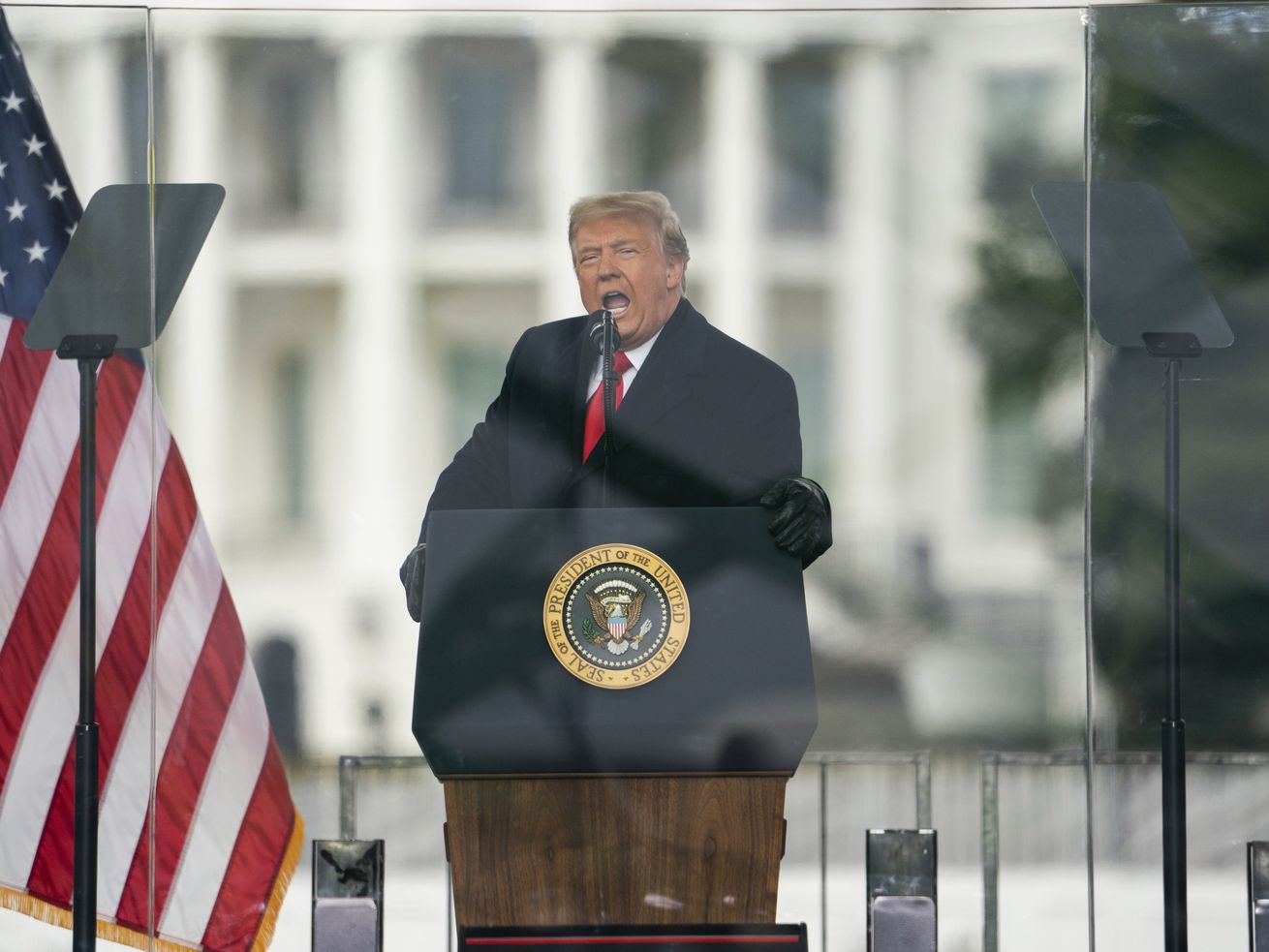
Former President Donald Trump speaks during a rally protesting the electoral college certification of Joe Biden as President in Washington on Jan. 6, 2021. | Evan Vucci/AP

Do the protections carved out for companies when the internet was in its infancy 25 years ago make sense when some of them have become global powerhouses with almost unlimited reach?

WASHINGTON — Lurking beneath Facebook’s decision on whether to continue Donald Trump’s suspension from its platform is a far more complex and consequential question: Do the protections carved out for companies when the internet was in its infancy 25 years ago make sense when some of them have become global powerhouses with almost unlimited reach?

The companies have provided a powerful megaphone for Trump, other world leaders and billions of users to air their grievances, even ones that are false or damaging to someone’s reputation, knowing that the platforms themselves were shielded from liability for content posted by users.

Now that shield is getting a critical look in the current climate of hostility toward Big Tech and the social environment of political polarization, hate speech and violence against minorities.

The debate is starting to take root in Congress, and the action this week by Facebook’s quasi-independent oversight board upholding the company’s suspension of Trump’s accounts could add momentum to that legislative effort.

Under the 1996 Communications Decency Act, digital platform companies have legal protection both for content they carry and for removing postings they deem offensive. The shelter from lawsuits and prosecution applies to social media posts, uploaded videos, user reviews of restaurants or doctors, classified ads — or the underworld of thousands of websites that profit from false and defamatory information on individuals.

Section 230 of the law, which outlines the shield, was enacted when many of the most powerful social media companies didn’t even exist. It allowed companies like Facebook, Twitter and Google to grow into the behemoths they are today.

Republicans accuse the social media platforms of suppressing conservative voices and giving a stage to foreign leaders branded as dictators, while Trump is barred. Democrats and civil rights groups decry the digital presence of far-right extremists and pin blame on the platforms for disseminating hate speech and stoking extremist violence.

“For too long, social media platforms have hidden behind Section 230 protections to censor content that deviates from their beliefs,” Sen. Roger Wicker of Mississippi, the senior Republican on the Senate Commerce Committee, has said.

On this, Trump and President Joe Biden apparently agree. Trump, while president, called for the repeal of Section 230, branding it “a serious threat to our national security and election integrity.” Biden said during his campaign that it “immediately should be revoked,” though he hasn’t spoken about the issue at length as president.

Facebook, with a strong lobbying presence in Washington and a desire to have an input into any changes, has stepped out in favor of revisions to Section 230. Congress should update the 1996 law “to make sure it’s working as intended,” CEO Mark Zuckerberg has said. And he’s offered a specific suggestion: Congress could require internet platforms to gain legal protection only by proving that their systems for identifying illegal content are up to snuff.

Some critics see a clever gambit in that, a requirement that could make it more difficult for smaller tech companies and startups to comply and would ultimately advantage Facebook over smaller competitors.

Spokespeople for Twitter and Google declined to comment on the prospects for legislative action on Section 230 following the Facebook board ruling; a spokesperson for Menlo Park, California-based Facebook had no immediate comment.

The decision announced by the Facebook oversight board upheld the suspension of Trump, an extremely rare move that was based on the company’s conclusion that he incited violence leading to the deadly Jan. 6 Capitol riot. But the overseers told Facebook to specify how long the suspension would last, saying its “indefinite” ban on the former president was unreasonable. The ruling, which gives Facebook six months to comply, effectively postpones any possible Trump reinstatement and puts the onus for that decision squarely back on the company.

Trump was permanently banned after the riot from Twitter, his favored bullhorn. But it was Facebook that played an integral role in both of Trump’s campaigns, not just as a way to speak to his more than 32 million followers but also as a fundraising juggernaut driving small-dollar contributions through highly targeted ads.

Critics of Facebook generally saw the oversight board’s ruling as positive. But some view the board as a distraction by Facebook to skirt its responsibility and to stave off action by Congress or the Biden administration. What must be addressed, critics insist, are the broader problems for society from the fearsome power, market dominance and underlying business model of Facebook and the other tech giants — harvesting data from platform users and making it available to online advertisers so they can pinpoint consumers to target.

That’s where the debate over changes to Section 230 comes in, as a key area for new regulation of social media.

Gautam Hans, a technology law and free-speech expert and professor at Vanderbilt University, said he finds the board to be “a bit of a sideshow from the larger policy and social questions that we have about these companies.”

___

Associated Press writer Jill Colvin contributed to this report.

Read More

Online speech shield under fire as Trump Facebook ban staysAssociated Presson May 8, 2021 at 4:28 pm Read More »

Man charged with carjackings in Englewood, ScottsdaleSun-Times Wireon May 8, 2021 at 2:41 pm

A man was charged in connection with a December 23, 2020, shooting in Austin.
A man is facing charges in connection with two armed carjackings from April 30, 2021, in Englewood and Scottsdale. | Adobe Stock Photo

Keshawn Wordlow allegedly committed both carjackings less than an hour apart, police said.

A man is accused of committing two armed carjackings less than an hour apart in Englewood and Scottsdale last week.

Keshawn Wordlow, 18, allegedly carjacked a 37-year-old woman at gunpoint about 11:20 a.m. April 30 in the 200 block of West 66th Street, Chicago police said.

Later, about 12:10 p.m., Wordlow approached a 27-year-old woman and a 28-year-old man in the 8300 block of South Pulaski Road and allegedly took their vehicle and property by force, police said.

Wordlow was arrested Thursday and charged with two felony counts each of vehicular hijacking with a firearm and armed robbery with a firearm, police said.

He was denied bail at a court hearing Friday, according to the Cook County sheriff’s office.

Wordlow was expected back in court May 14.

Read More

Man charged with carjackings in Englewood, ScottsdaleSun-Times Wireon May 8, 2021 at 2:41 pm Read More »