A senior receives the Johnson & Johnson COVID-19 vaccine at the Aaron E. Henry Community Health Service Center in Clarksdale, Miss. Medicare will require nursing homes to report COVID-19 vaccination rates for residents and staff in what officials hope will become an incentive to keep giving shots even as the worst ravages of the pandemic ease in facilities across the nation. | Rogelio V. Solis / AP
Until now, nursing homes have been now required to report coronavirus cases and deaths — but not vaccinations. Only a few have provided the data voluntarily.
Medicare will now require nursing homes to report COVID-19 vaccination rates for residents and staff.
That’s as government officials hope to nudge the long-term care facilities to keep giving shots as the worst ravages of the coronavirus pandemic ease but the danger of a rebound still lurks.
“We’re hoping to drive increased vaccination rates among residents and staff, as well as transparency for residents and their families,” said Dr. Lee Fleisher, chief medical officer at the federal Centers for Medicare and Medicaid Services.
Medicare’s move to sustain the pace of vaccinations comes as an initial effort to get shots to nursing homes across the country has wound down. That partnership between the government and retail pharmacy giants Walgreens and CVS is being succeeded by an ongoing collaboration with specialized long-term care pharmacies that cater to the needs of the nursing home industry. Assisted-living facilities and other care centers serving older people also can participate.
A smooth transition will be critical because the coronavirus is far from eradicated even as new residents are being admitted to long-term care facilities and staffing ebbs and flows.
People living in long-term care facilities have borne a heavy toll from the pandemic. They represent about 1% of the U.S. population but accounted for roughly one in three deaths, according to previous estimates from the COVID Tracking Project.
“This is an important development that is months overdue,” said David Grabowski, a Harvard health policy professor who has tracked the industry’s struggles with the outbreak. “Many of us argued that this information should have been published starting in December, when the federal long-term care vaccination effort began.”
Nursing homes will now be required to submit weekly vaccination numbers for residents and staff to the federal Centers for Disease Control and Prevention. That requirement will take effect within two weeks. Medicare officials say it could take two to four more weeks afor the data to start coming in.
The plan is to post facility-level information on the Internet so residents and families can easily access the details from Medicare’s “Compare Care” website.
“This action will give us much greater insight into the levels of vaccination,” Fleisher said.
By being able to monitor across the entire industry, health officials will be able to direct vaccines to nursing homes that appear to be lagging.
For example, a new AP analysis of nursing homes in New York found that rates of vaccination have been far from even across the state. Overall, 79% of residents were fully vaccinated, as well as 55% of staff. In Brooklyn, though, the corresponding vaccination rates were 63% for residents and 40% for staff. New York facilities reported 782 infections among staff and residents in the 14 days ending April 25, the most in the nation.
Academic researchers think that the virus most likely entered nursing homes through staff members who had gotten infected elsewhere and became unwitting carriers. Many aides in the low-wage industry work shifts at different facilities.
Medicare’s new rule also requires nursing homes and facilities serving people with intellectual disabilities to offer shots and education about vaccination to residents, staff and clients.
Until now, nursing homes have been now required to report COVID cases and deaths — but not vaccinations. A relatively small number of facilities provide the data voluntarily to the government.
“Publicizing this information will hopefully encourage facilities and policymakers to continue efforts to vaccinate staff and residents,” Grabowski said. “Many staff were initially hesitant about the vaccine, and new staff and residents also need to be vaccinated. There is still a lot of work left to do.”
The numbers of cases and deaths have plummeted after the government launched a concerted effort to vaccinate residents and staff. According to the CDC, nearly 2.9 million nursing home residents and workers are fully vaccinated. Nursing homes and other long-term care facilities have again opened up family visits after spending a year in lockdown.
Nursing homes already are required to report rates of flu vaccination. But, until the new requirements were issued Tuesday, there was no similar requirement for COVID-19 vaccines even though the coronavirus is far more lethal.
The main nursing home industry trade group, the American Health Care Association, said it supports public reporting of vaccination data — but that it shouldn’t apply only to them. The lobbying group — whose leaders made clear their concern is that the vaccination data might be used to “judge” nursing homes with low rates of inoculation — wants hospitals, home health agencies and other providers to also be required to post their numbers.
A 20-year-old man was charged with a fatal shooting May 8, 2021, in the 600 block of North Homan Avenue. | Adobe Stock Photo
Deangleo Watson shot a 36-year-old man at the home after he learned that his wife’s ex had stopped by the residence.
A 20-year-old security guard has been charged with shooting and killing a man after he allegedly flew into a fit of rage when he learned that his wife’s ex-boyfriend had stopped by at a home in East Garfield Park.
Deangleo Watson repeatedly called his wife Sunday when he learned she was at her friend’s house with her daughter, where her ex — the father of the daughter — had briefly stopped by, Assistant Cook County State’s Attorney James Murphy said Tuesday.
Watson became increasingly angry during the calls and when his wife’s daughter answered a call, he warned her that he had a gun and was coming over, Murphy said.
Watson came to the house and knocked on the front door around 10 p.m. Robert Hogan, who Watson had know for years from the neighborhood, answered the door, Murphy said.
Watson’s ex was not at the home, in the 600 block of North Homan Avenue, at the time, prosecutors said.
Hogan — the boyfriend of the woman who lived at the home — tried to tell Watson to leave, but Watson pulled out a 9-mm handgun and allegedly fired a shot into the air. Watson then trained the gun on Hogan and fired repeatedly, striking him multiple times, Murphy said.
Watson was taken into custody when he went to his wife’s home the next morning, Murphy said. He allegedly told detectives that he had spent the night at a co-worker’s home, but the co-worker told investigators that wasn’t true and that Watson had never been to his home before.
Watson had called the co-worker that morning and said he had to talk to the co-worker about something, but that it needed to be done in person, Murphy said.
Watson’s wife’s daughter and Hogan’s girlfriend, who were standing behind Hogan when he answered the door, both identified Watson as the shooter, Murphy said.
Watson works as an unarmed guard at sporting events and was “trying to enlist in the Army,” an assistant public defender said.
Judge John F. Lyke Jr. ordered Watson held without bail.
Drones have been added to the arsenal of the Chicago Police Department, emails show. | Getty Images
In an email last summer, a police official reported that its counter-terrorism bureau started a pilot drone program using forfeiture proceeds — money and other assets seized in connection to criminal investigations.
The Chicago Police Department started a secretive drone program using off-budget cash to pay for the new technology, the Sun-Times has learned.
Details of the police department’s drone program were included in an email sent last summer by Karen Conway, director of police research and development. In the email, Conway told other high-ranking police officials that the department’s counter-terrorism bureau “utilized 1505 funds for a pilot Drone program that operates within the parameters of current laws.”
The drones “have been purchased and the Electronic & Technical Support Unit (Counter-terrorism) is in the process of creating a training to start a pilot. Some of the Drone uses will be for missing persons, crime scene photos, and terrorist related issues,” Conway said in the June 12, 2020, email to former Deputy Supt. Barbara West and Michele Morris, the department’s risk manager.
The department’s “1505” fund is made up of forfeiture proceeds — money and other assets seized in connection to criminal investigations. The money isn’t included in the department’s official budget and has reportedly been used in the past to purchase other controversial technology, like Stingrays, which mimic cell towers and send out signals to trick phones into transmitting their locations and other information.
A state law that went into effect in July 2018 requires law enforcement agencies to report seizure and forfeiture information to the Illinois State Police.
Over the past two years, the department reported taking in seized or awarded assets valued at an estimated $25.9 million. That haul stems from investigations into alleged drug crimes and money laundering, but the reports don’t give the full scope of the department’s take because details about seized vehicles were redacted.
The reports state that roughly $7.7 million was spent over that period on operating expenses, witness protection, informant fees and controlled drug buys, as well as travel, meals, conferences, training and continuing education. The spending isn’t itemized, but the reports state that operating expenses can cover vehicles, guns and equipment, such as drones.
Conway’s message about the drone program was among a cache of hacked city emails that were leaked online last month by Distributed Denial of Secrets, a transparency nonprofit likened to WikiLeaks. Other emails show the Chicago Fire Department started a similar program and spent at least $26,000 on drones.
Details of the police department’s drone program were included at the bottom of an email sent last summer by Karen Conway, director of police research and development.
Asked about the police department’s drone program, a spokesman said it “regularly investigates new technology and strategies.”
“The Department considers every tool available when it comes to maintaining public safety and actively searches for innovative opportunities,” spokesman Don Terry said in a statement without specifically mentioning drones.
“CPD has strict guidelines for all tools and programs to ensure individual privacy, civil rights, civil liberties and other interests are protected,” Terry added. “We also meet with community partners to make certain that all enforcement efforts meet the highest standards and have support among the individuals Chicago police officers are sworn to serve and protect.”
Terry and other spokespeople for the police department and the mayor’s office didn’t respond to specific questions about the emails. Kristen Cabanban, a spokeswoman for Chicago’s Law Department, issued a statement Friday saying city agencies wouldn’t answer questions about the contents of the hacked emails.
Maudlyne Ihejirika/Sun-TimesEd Yohnka, spokesman for ACLU-Illinois, has concerns about the drone program.
ACLU raises alarms
Over the course of multiple emails about the drone programs, Susan Lee, the former deputy mayor of public safety, twice noted there were concerns over the expected response from privacy advocates. However, city employees included in the discussions never independently raised alarms over privacy issues.
Ed Yohnka, a spokesman for the American Civil Liberties Union of Illinois, told the Sun-Times the emails show the city “continues to pursue the invasive technologies without any public disclosure, oversight or publicly adopted privacy policies,” undercutting Terry’s claims.
“We should not be surprised. This behavior goes back more than two decades when Chicago first began to place surveillance cameras all across the city,” Yohnka said. “To this day, residents of the city have never seen a privacy policy for the use of those cameras.”
In 2018, the ACLU accused former Mayor Rahm Emanuel of being the heavy hand behind legislation in Springfield that would have allowed police officers to use drones equipped with facial recognition technology to monitor protests. Versions of the legislation passed both the state house and senate but a final bill was never signed into law.
“Given that the city not so long ago sought legislation to permit using drones to surveil public gatherings, including those engaged in First Amendment activity, it is worth questioning its motivations,” Yohnka said of the new revelation.
In a report issued in February lambasting the city’s response to the protests and unrest that broke out in the wake of the police killing of George Floyd last year, city Inspector General Joseph Ferguson noted that drones were likely flying overhead at some demonstrations.
On May 30, the day an early downtown protest devolved into chaos, Ferguson said CPD officials contacted the Illinois State Police “to request its deployment, and ISP made determinations about which resources to deploy, including crowd control teams, canine units, videographers, drones and SWAT teams.”
“By ISP’s accounting of their deployment in Chicago and their operating procedures, they used videographers and/or drone footage to capture records of potential uses of force and arrests,” Ferguson wrote. “However, a review of ISP’s force reporting obligations and compliance was out of the scope of this report.”
Use of drones in car chases discussed
LinkedInKaren Conway, director of police research and development for the Chicago Police Department
Conway’s comments about the police department’s drone program were included in an email discussing a new vehicle pursuit policy.
The memo also included other technology options the department was considering to apparently minimize the risk of engaging in chases: a device to shut down a fleeing vehicle’s engine and a system for remote tracking. The latter option, StarChase, is a mechanism that allows cops to shoot a GPS-equipped dart at a suspect’s car.
Last August, the police department issued revised directives on pursuits, but the general order bears no mention of the technologies.
An email sent on Aug. 16, 2019 by Tamika Puckett, the city’s former chief risk officer, presented drones as a potentially cheaper alternative to StarChase, which reportedly charges $5,000 for each cannon and another $500 for every GPS dart.
“StarChase might be too costly of an option for our needs. If so, then we should research the drone issue, especially the city ordinance and what changes need to be made to it in order to even consider this an option,” Puckett wrote to Morris and other staffers.
Chicago’s drone ordinance is highly restrictive, though law enforcement agencies operating in the city are afforded an exception to its prohibitions if their drone use complies with state law. That law allows police to use drones for a variety of purposes, namely countering terrorism, searching for missing persons, photographing crime scenes and even pursuing crime suspects.
While the conversations about drones apparently happened in fits and starts, the high-level correspondence stretched on for months. Many of the emails related to the city’s need to purchase drone insurance.
In an email chain on that topic dated March 5, 2020, Lee expressed her intention to hold a meeting “because all three public safety agencies want drones.” Although her email doesn’t name the agencies, later emails show the police and fire departments both ultimately bought drones. It’s unclear whether the Office of Emergency Management and Control also purchased drones.
6 drones purchased in 2020
Over the course of those emails, Keith Wilson, a former deputy district fire chief, reported on Sept. 22, 2020, that the department purchased six drones worth $26,000. Two days earlier, Angela Weis, Lightfoot’s senior adviser on public safety policy and operations, told Lee that the fire department planned to use the drones for search and rescue operations.
A spokesman for the fire department didn’t respond to questions.
The Chicago Fire Department Foundation, a nonprofit that supports firefighters and paramedics and their families, previously published a blog post last April reporting that Wintrust Financial had donated three other drones to the department.
“For the CFD, the use of drones has the potential to make a large impact in how effectively the Department can mitigate fires, disasters or large-scale incidents, offering an aerial perspective and helping to identify areas of evacuation and most urgent needs for response,” according to the post. “Equally important is the utilization of images and videos post-incident to assist in fire investigations, critiques and training purposes.”
On October 5, 2020, Puckett ultimately told former Chicago Fire Commissioner Richard Ford II that “the city purchased drone property and liability insurance coverage for our drone programs citywide,” apparently closing the loop on a conversation that stretched nearly a year and clearing the devices for takeoff.
Norman Lloyd played Dr. Daniel Auschlander on the 1982-88 series “St. Elsewhere.” | NBC
In his many decades on screen he worked with talents from Orson Welles to Charlie Chaplin to Denzel Washington to Amy Schumer.
LOS ANGELES — Norman Lloyd, whose role as kindly Dr. Daniel Auschlander on TV’s “St. Elsewhere” was a single chapter in a distinguished stage and screen career that put him in the company of Orson Welles, Alfred Hitchcock, Charlie Chaplin and other greats, has died. He was 106.
Lloyd’s manager, Marion Rosenberg, said the actor died Tuesday at his home in the Brentwood neighborhood of Los Angeles.
His credits stretch from the earliest known U.S. TV drama, 1939′s “On the Streets of New York” on the nascent NBC network, to 21st-century projects including “Modern Family” and “The Practice.”
“If modern film history has a voice, it is Norman Lloyd’s,” reviewer Kenneth Turan wrote in the Los Angeles Times in 2012 after Lloyd regaled a Cannes Film Festival crowd with anecdotes about rarified friends and colleagues including Charlie Chaplin and Jean Renoir.
The wiry, 5-foot-5 Lloyd, whose energy was boundless off-screen as well, continued to play tennis into his 90s. In 2015, he appeared in the Amy Schumer comedy “Trainwreck.”
His most notable film part was as the villain who plummets off the Statue of Liberty in 1942′s “Saboteur,” directed by Hitchcock, who also cast Lloyd in the classic thriller 1945’s “Spellbound.”
His other movie credits include Jean Renoir’s “The Southerner,” Charlie Chaplin’s “Limelight,” “Dead Poets Society” with Robin Williams, “In Her Shoes” with Cameron Diaz and “Gangs of New York” with Daniel Day-Lewis.
On Broadway, Lloyd played the Fool opposite Louis Calhern’s King Lear in 1950, co-starred with Jessica Tandy in the comedy “Madam, Will You Walk” and directed Jerry Stiller in “The Taming of the Shrew” in 1957.
He was also part of Welles’ 1937 modern-dress fascist-era production of “Julius Caesar” that has gone down in history as one of the landmark stage pieces in the American theater. Norman played the small but key role of Cinna the Poet, opposite Welles’ Brutus. Stage magazine put Welles on its June cover and proclaimed the production “one of the most exciting dramatic events of our time.”
Born Nov. 8, 1914, in Jersey City, New Jersey, Lloyd jumped into acting as a youngster in the 1920s. On stage, he was a regular with Welles’ Mercury Theater, the groundbreaking 1930s troupe that also featured Joseph Cotton and Agnes Moorehead and formed the basis of Welles’ classic film debut, “Citizen Kane.”
His other plays included “Crime,” directed by Elia Kazan and featuring his future wife, Peggy Craven. The couple were married for 75 years, until Peggy Lloyd’s death in 2011 at age 98.
TV viewers knew him best as the memorable calm center of St. Eligius hospital on the 1982-99 NBC drama series “St. Elsewhere,” which co-starred William Daniels and Denzel Washington. His Dr. Daniel Auschlander was originally only supposed to appear in a few episodes, but Lloyd became a series regular and stayed with the show for the entire run.
Lloyd worked steadily as a TV actor and director in the early 1950s, but the political liberal found his career in jeopardy during the Hollywood blacklist period aimed at communists or their sympathizers.
In 1957, Hitchcock came to his rescue, Lloyd told the Los Angeles Times in 2014. When the famed director sought to hire Lloyd as associate producer on his series “Alfred Hitchcock Presents” but was told “there is a problem with Norman Lloyd,” Hitchcock didn’t back down, Lloyd recalled.
“He said three words: ‘I want him,’ ” Lloyd said. He was immediately hired and eventually worked as executive producer on another series, “The Alfred Hitchcock Hour.”
His other TV credits include roles in “Star Trek: The Next Generation,” “Murder, She Wrote,” “The Paper Chase,” “Quincy M.E.,” “Kojak” and “The Practice.”
In 2014, in recognition of his 82 years in show business, and reaching the age of 100, the Los Angeles City Council proclaimed that his birthday of Nov. 8 would be honored as “Norman Lloyd Day.”
Freddy Marquez and his wife, Nubia Marquez, near the scene where her mother and other family members were killed in a mass shooting early Sunday, May 9, 2021, in Colorado Springs, Colo. | AP
The shooter, 28-year-old Teodoro Macias, had been in a relationship with one of the victims, 28-year-old Sandra Ibarra, for about a year and had history of controlling and jealous behavior, Colorado Springs police Lt. Joe Frabbiele said at a news conference.
COLORADO SPRINGS, Colo. — A man who fatally shot six people at a Colorado birthday party before killing himself was upset after not being invited to the weekend gathering thrown by his girlfriend’s family, police said Tuesday, calling the shooting an act of domestic violence.
The shooter, 28-year-old Teodoro Macias, had been in a relationship with one of the victims, 28-year-old Sandra Ibarra, for about a year and had history of controlling and jealous behavior, Colorado Springs police Lt. Joe Frabbiele said at a news conference. Police said there were no reported incidents of domestic violence during the relationship and that the shooter didn’t have a criminal history. No protective orders were in place.
“At the core of this horrific act is domestic violence,” Police Chief Vince Niski said, adding that the gunman had “displayed power and control issues” in the relationship. About a week before the shooting, there was another family gathering where there “was some sort of conflict” between the family and Macias, Niski said.
The other victims of the shooting early Sunday were Ibarra’s extended family.
Investigators don’t know yet how the shooter got the weapon, which Frabbiele described as a Smith & Wesson handgun. He said it was originally purchased by someone else in 2014 at local gun store but was not reported stolen. The gunman had two 15-round magazines, one of which was empty, and police recovered 17 spent shells at the scene.
The shooting occurred at a home in the Canterbury Mobile Home Park on the east side of Colorado’s second-largest city.
Three children at the party, ages 2, 5 and 11, were not hurt. All were orphaned by the shooting and were transferred to the custody of relatives, Frabielle said.
Police say the families of the victims had requested privacy.
“In Colorado, we’ve had domestic terrorism incidents where lots of people were killed, we’ve had random acts like going into a King Soopers or a movie theater, but let’s not forget about the lethality of domestic violence,” Colorado Springs Mayor John Suthers said.
He was referring to a March 22 attack on a King Soopers supermarket in Boulder, Colorado, that killed 10 people, including a police officer, and a 2012 shooting at a movie theater in the Denver suburb of Aurora that killed 12 and injured 70.
The weekend attack follows a series of mass shootings — defined as four or more dead, not including the shooter — to plague the U.S. this year.
Before the Colorado Springs shooting, a database compiled by The Associated Press, USA Today and Northeastern University showed there had been at least 11 mass shootings since Jan. 1, compared with just two public mass shootings in 2020.
Colorado Springs saw a 2015 attack on a Planned Parenthood clinic that killed three people, including a police officer, and injured eight others. In 2007, a man killed two people and wounded three at Colorado Springs’ New Life Church before taking his own life. Earlier the same day, he’d killed two people and injured two at a Youth With a Mission Center in the Denver suburb of Arvada.
After the Boulder shooting, Colorado lawmakers introduced a bill to create a state Office of Gun Violence Prevention to educate residents about gun safety and collect data on Colorado gun violence.
Other bills advancing through the Democratic-led Legislature would tighten background checks, allow municipalities greater freedom to adopt gun control laws that are stricter than state law, and require a person facing a protection order related to domestic violence to report what firearms they possess.
___
Associated Press writers James Anderson and Patty Nieberg in Denver contributed to this report.
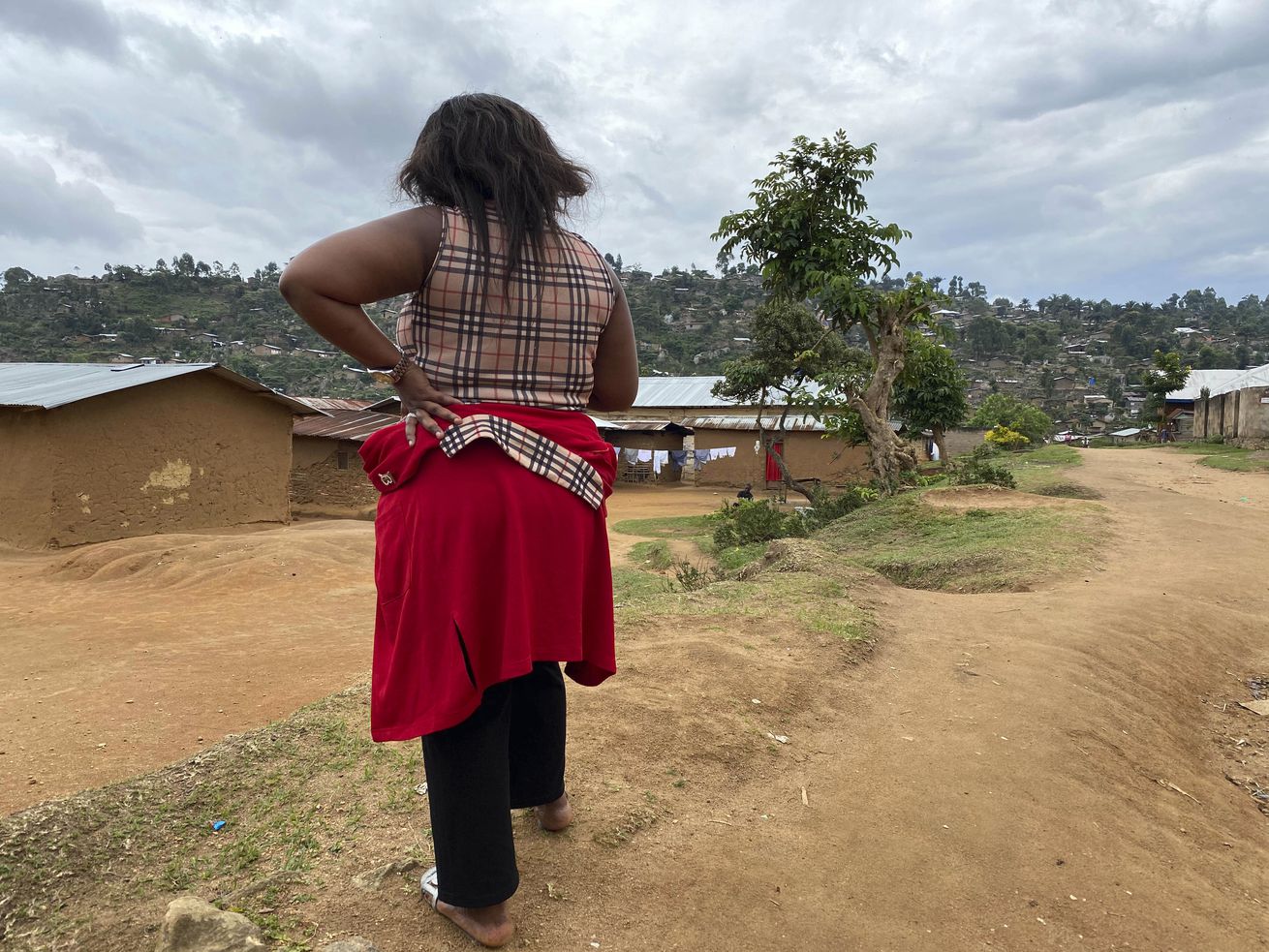
Shekinah stands near her home in Beni, eastern Congo on Thursday, March 18, 2021. When she was working as a nurse’s aide in northeastern Congo in January 2019, she said World Health Organization Dr. Boubacar Diallo, of Canada, offered her a job investigating Ebola cases at double her previous salary _ with a catch. “When he asked me to sleep with him, given the financial difficulties of my family….I accepted.” | AP
The World Health Organization has been facing widespread public allegations of systemic abuse of women by unnamed staffers.
BENI, Congo — When Shekinah was working as a nurse’s aide in northeastern Congo in January 2019, she said, a World Health Organization doctor offered her a job investigating Ebola cases at double her previous salary — with a catch.
“When he asked me to sleep with him, given the financial difficulties of my family …. I accepted,” said Shekinah, 25, who asked that only her first name be used for fear of repercussions. She added that the doctor, Boubacar Diallo, who often bragged about his connections to WHO Director-General Tedros Adhanom Ghebreyesus, also offered several of her friends jobs in return for sex.
A WHO staffer and three Ebola experts working in Congo during the outbreak separately told management about general sex abuse concerns around Diallo, The Associated Press has learned. They said they were told not to take the matter further.
WHO has been facing widespread public allegations of systemic abuse of women by unnamed staffers, to which Tedros declared outrage and emergencies director Dr. Michael Ryan said, “We have no more information than you have.” But an AP investigation has now found that despite its public denial of knowledge, senior WHO management was not only informed of alleged sexual misconduct in 2019 but was asked how to handle it.
The AP has also for the first time tracked down the names of two doctors accused of sexual misconduct, Diallo and Dr. Jean-Paul Ngandu, both of whom were reported to WHO.
Ngandu was accused by a young woman of impregnating her. In a notarized contract obtained by the AP, two WHO staffers, including a manager, signed as witnesses to an agreement for Ngandu to pay the young woman, cover her health costs and buy her land. The deal was made “to protect the integrity and reputation” of WHO, Ngandu said.
When reached by the AP, both Diallo and Ngandu denied wrongdoing. The investigation was based on interviews with dozens of WHO staffers, Ebola officials in Congo, private emails, legal documents and recordings of internal meetings obtained by the AP.
A senior manager, Dr. Michel Yao, received emailed complaints about both men. Yao didn’t fire Ngandu despite the reported misconduct. Yao didn’t have the power to terminate Diallo, a Canadian, who was on a different kind of contract, but neither he nor any other WHO managers put Diallo on administrative leave.
The AP was unable to ascertain whether Yao forwarded either complaint to his superiors or the agency’s internal investigators, as required by WHO protocol. Yao has since been promoted to be director of Geneva’s Strategic Health Operations Department.
Eight top officials privately acknowledged that WHO had failed to effectively tackle sexual exploitation during the Ebola outbreak and that the problem was systemic, recordings of internal meetings show. The revelations come at a time when the U.N. health agency is winding down its response two recent Ebola epidemics in Congo and Guinea, and is already under pressure for its management of the global response to the COVID-19 pandemic.
WHO declined to comment on specific sex abuse allegations, and none of the 12 WHO officials contacted responded to repeated requests for comment. Spokeswoman Marcia Poole noted that Tedros announced an independent investigation of sex abuse in Congo after media reports came out in October. Findings are due at earliest in August, investigators have said.
“Once we have these, we will review them carefully and take appropriate additional actions,” Poole said. “We are aware that more work is needed to achieve our vision of emergency operations that serve the vulnerable while protecting them from all forms of abuse.”
WHO’s code of conduct for staffers says they are “never to engage in acts of sexual exploitation” and to “avoid any action that could be perceived as an abuse of privileges,” reflecting the unequal power dynamic between visiting doctors and economically vulnerable women. But an internal WHO audit last year found some aid workers weren’t required to complete the agency’s training on sex abuse prevention before starting work during Ebola.
“All of us may have been suspecting for as long as the Ebola response was taking (place) that something like this would be possible,” said Andreas Mlitzke, director of WHO’s office of compliance, risk management and ethics, during an internal meeting in November. Mlitzke likened WHO officials in Congo to “an invading force” and said, “Things like this have historically happened in wartime.”
Mlitzke said during the meeting that WHO typically “takes the passive approach” in its investigations, and that it couldn’t be expected to uncover wrongdoing among staffers.
“What prevents us from doing something proactive is our own psychology,” he said.
Ryan, meanwhile, said the sexual harassment incidents were unlikely to be exceptional.
“You can’t just pin this and say you have one field operation that went badly wrong,” he told his colleagues in an internal meeting. “It does reflect a culture as well … This is in some sense the tip of an iceberg.”
Internal emails from November 2019 show WHO directors were alarmed enough by the abuse complaints that they drafted a strategy to prevent sexual exploitation and appointed two “focal points” to liaise with colleagues in Congo and elsewhere. Directors also ordered confidential probes into sexual abuse problems more broadly and U.N training on how to prevent sexual harassment, along with the independent investigation announced last year.
But staffers remain concerned that not enough has been done. At a WHO meeting in January to address sex abuse, Dr. Renee Van de Weerdt, chief of emergency management and support, told colleagues that the risk “remains high across our operations” and that “more robust supervision” was needed.
Dr. Gaya Gamhewage, head of WHO’s learning and capacity development, said at an internal WHO discussion on sex abuse that “the impunity with which we have operated is leading to this.” She warned, “Training is not going to solve this problem.”
___
Shortly after Ebola was identified in eastern Congo in 2018, WHO’s Swiss headquarters gave the outbreak its most serious emergency designation, allowing Geneva to take control from its Africa office. WHO chief Tedros traveled to Congo 14 times during the epidemic to personally oversee the response, and his emergencies chief, Ryan, made at least seven visits.
Over 2018 and 2019, three Ebola experts, including two who worked for WHO at the time, told the AP they raised concerns about sex abuse in general, and Diallo in particular, with senior managers. But they said they were told that controlling the Ebola outbreak was more important, and two said Diallo was considered “untouchable” because of his relationship with Tedros.
Complaints about Diallo were also raised with emergency operations manager Yao, who was responsible for leading WHO’s overall Ebola response in Congo, with hundreds of staff, under Ryan’s supervision. On Feb. 22, 2019, Yao received an email from the WHO outbreak team leader in North Kivu with the subject line, “Private. Chat.”
“Chief, please let’s have a Private chat tomorrow,” the staffer emailed, saying he wanted to discuss Diallo, then an outbreak manager in North Kivu. The staffer didn’t want to be identified by the AP for fear of losing his job.
“We cannot afford to have people tarnishing the sweat and effort of individuals sacrificing themselves thru (sic) inappropriate sexual harassment and bullying,” the staffer wrote. “I will fill you in (in) private.”
Yao responded the next morning: “Ok we shall talk.” The staffer said that Yao told him the matter would be handled, but he didn’t believe his concerns were taken seriously and was very upset. He added that he was sidelined for complaining about Diallo.
Two WHO officials with knowledge of the situation said the agency investigated complaints that Diallo acted unprofessionally, including an alleged sexual assault, and there was insufficient evidence to corroborate the charges. But investigators failed to interview any of the women involved or the whistleblowers who flagged the harassment claims, according to a senior WHO official who didn’t want to be identified for fear of losing his job. Diallo continued to work for WHO months after concerns were raised about him.
Diallo was described as a charismatic, outgoing leader with connections to some of WHO’s top managers, including Tedros. In a speech in January 2019, Tedros singled out Diallo among the Ebola responders working under heavy gunfire in Beni.
On WHO’s website, Diallo, Tedros and Yao are pictured smiling and bumping elbows during Tedros’ June 2019 trip to Congo. On Diallo’s Facebook page, he appears in more than a dozen photos with Tedros.
Several months after Tedros’ visit, Diallo met Anifa, a young Congolese woman working in an Ebola treatment center in Beni. She said Diallo told her: “How can a beautiful girl like you work here, testing people’s temperatures and washing their hands? That’s terrible.” She said he offered her another job at five times more than her current salary where “the conditions were very simple,” according to him.
“He wanted me to sleep with him,” she told the AP, noting that Diallo frequently wore a badge with “VIP” inscribed in red, attached to his dark blue WHO vest. Anifa declined to share her full name, fearing it could harm her future job prospects. The AP doesn’t identify victims of sexual abuse.
“I told him I studied hard to be employed by the treatment center,” Anifa said. She rejected Diallo’s offer, saying that “if he hires me after sleeping with him … I would be a sex slave, not a WHO employee.”
Diallo denied the claims outright.
“I have never offered a woman a job in exchange for sex and I have never sexually harassed a woman in my life,” he told the AP in an email. He said he was never informed of any complaints about his behavior at WHO or disciplined for misconduct, and his relationship with Tedros was “purely professional.”
Diallo said his contract for WHO finished at the end of July and he hasn’t worked for the agency since.
___
The same manager, Yao, was also told of alleged sexual misconduct by the other doctor, Ngandu, in an email obtained by the AP dated April 23, 2019, with the subject line, “Urgent need for your guidance.” Outbreak manager Mory Keita wrote in French: “I hereby inform you that we have a colleague who has impregnated a girl from Beni.”
Keita told Yao that a young woman and her aunt had come to the Hotel Okapi in Beni with two armed police officers, looking for senior WHO staff. They said the young woman had been having an affair with Ngandu, and the hospital had confirmed she was now pregnant. Ngandu was avoiding them, the aunt said, so they went to the police to find him.
Keita told Yao that when confronted, Ngandu acknowledged a relationship with the girl but said it was only for two weeks. The woman’s aunt, however, said her niece first spent the night with him about a month and a half ago, and at the time he gave her $100, “a detail that Ngandu could not deny,” the email noted.
The two women demanded payment for all medications and hospital treatment during pregnancy and the purchase of land for the child, “given that Dr. Jean-Paul will abandon the girl and she will be obliged to raise her child alone.”
“We have asked Jean-Paul to honor the request from the family of the girl and the aunt and try to find some common ground,” Keita said. “(Ngandu) suggested that we manage the situation here at our level here in Beni and not inform the hierarchy, but I felt … you should be informed so that you would tell us your directions for how to better manage this problem.”
Less than one week later, Ngandu and the young woman signed a notarized contract in which he agreed to pay her $100 a month until her baby was delivered, to provide all necessary health care, and to buy her a plot of land in Beni. Four witnesses signed the document, including two from WHO, Keita and Achile Mboko, a human resources officer. Keita didn’t respond to requests for comment, and Mboko acknowledged his signature and presence.
Two handwritten contracts signed by the young woman and Ngandu confirmed he paid $2,800 for land with a house in a Beni neighborhood and transferred ownership rights to her in August 2019.
“This was a private matter and did not implicate WHO,” Ngandu told the AP. Ngandu said he wasn’t the father of the baby and that he agreed to the settlement after WHO colleagues, including Keita, “advised me to settle out of court to avoid sullying the reputation of the organization and myself.”
Ngandu, who is from Congo, said he wasn’t disciplined by WHO and continued to work until his contract ended in June 2019. Ngandu is now based in Namibia and said he is in talks with WHO for potential future employment. The young woman declined to talk to the AP.
Paula Donovan, co-director of the Code Blue Campaign, which is campaigning to end sexual exploitation by U.N. peacekeepers, said WHO’s attempt to effectively silence the victim was “beyond concerning.”
“It’s a perversion of justice that WHO thinks they could take the law into their own hands and resolve a case without going to the proper authorities,” Donovan said. “If this is how they treated one case, how are they treating all the others?”
In May 2019, Yao was told of yet another unrelated sexual harassment complaint in Bunia, roughly 200 kilometers (125 miles) north of Beni. Two women told the World Bank they were refused jobs at WHO because they declined to sleep with the recruiting officer, in an email seen by an Ebola aid worker. The aid worker, who asked to remain anonymous for fear of reprisals, told the AP that the World Bank alerted Yao, but nothing was done.
Throughout the summer, Yao was praised for his leadership of the Ebola response. He was named in a July 17 tweet from Ebba Kalondo, a spokesperson for the African Union, as one of WHO’s “exceptional men” and was pictured alongside colleagues, including Diallo. Kalondo urged her followers: “Know their names. Write about them.”
Two months later, a young Congolese woman named Reby, then 20, met Diallo when he came into the Vodacom shop where she was working. He gave her $100 for “transport costs” to meet him at a hotel and asked her how much she made in the telecommunications job, she told the AP.
“My God, a beautiful girl like you who gets $60 a month is not enough,” he said, according to Reby. “If you sleep with me, you are going to be a high-ranking member of the Ebola response in Beni and you are going to receive around $800 a month.”
Reby declined to use her full name for fear of retribution. She said she refused Diallo’s offer, but continued to see him when he came into her shop. “From that day on, he always called me the difficult girl,” she said.
In a confidential slide presentation in January 2020, WHO officials reported that an internal U.N. review of the Ebola response in Congo had found a need for “safe-guarding mechanisms for preventing sexual exploitation.” All staff were to complete training on harassment and other issues.
_____
The publication of general sex abuse allegations in Congo in the media last fall set off a flurry of responses from WHO.
Yao said in an internal meeting in September that despite U.N. protocols to prevent sexual abuse, “it looks like this system is not working at the grassroots level.” He added that a recent U.N. assessment hadn’t revealed any problems, “so we were surprised about a case happening.”
WHO director-general Tedros called the allegations a “shocking” betrayal in an email to staff and promised “serious consequences,” including immediate dismissal and referral to local authorities.
At a town hall meeting in November, emergencies chief Ryan said sexual abuse issues had been “neglected” for years and apologized to his staff.
“There are behaviors here that are not acceptable,” he said.
WHO staffers, especially women, were unconvinced.
“Quite frankly, I think this is not good enough,” said Maria Van Kerkhove, WHO’s technical lead on COVID-19, at the same meeting. “We know in every situation we go in, we’re at risk.”
Staffers also worried that problems persisted in the agency’s response to another Ebola outbreak in Congo last year.
“We still do not have a robust (sexual abuse prevention) program in place,” Geneva-based project officer Jessica Kolmer said during a meeting in November. She said donors told them their new measures, including posting flyers in their offices and establishing a sexual abuse prevention committee, were “not sufficient.”
Back in Congo, Anifa said she was deeply disturbed that WHO staffers hadn’t been disciplined for their treatment of women.
“I condemn WHO for not sanctioning Dr. Boubacar Diallo because I know already they have complaints against him,” she said. “I asked myself, ‘Why did the people who came to help us, to fight Ebola here at home, why do they want to destroy our lives?’”
Shekinah said she “couldn’t count how many times” she slept with Diallo. She said she knew about a dozen other women in Beni whom he had similarly victimized.
“I wanted to quit,” she said. “But because of my financial problems, I endured it.”
Shekinah said she was often paid in cash or mobile credit, with little paperwork. Even after she and Diallo separated, she said, he continued to ask for nude pictures or video calls while she was naked.
Diallo should be punished “for his sexual abuse of all those girls in Beni as a lesson to these international organizations that this should not happen again,” she said. “I would like justice to be done.”
____
Maria Cheng reported from London. Krista Larson in Dakar, Senegal, contributed to this report.
Chester Frazier in his Illini playing days. | Robert K. O’Daniell, AP
Former Illini point guard Chester Frazier was brought in as an assistant to help run the recruiting show after Orlando Antigua and Chin Coleman both left for Kentucky.
One of the first moves Bruce Weber made after being fired by Illinois in 2012 and taking the head coaching position at Kansas State three weeks later was to call his former Illini point guard Chester Frazier and offer him a job.
Then 25 and playing pro ball in Germany, Frazier said yes and dove straight into the deep end as a first-time assistant.
Fast-forward eight years, and Frazier is the veteran hand Illini Brad Underwood decided he needed to keep the program on solid ground after the departures of star players Ayo Dosunmu and Kofi Cockburn and star recruiters Orlando Antigua and Chin Coleman. The latter pair left last week for Kentucky.
“I’ll be shocked in three years if Chester is not a head coach someplace,” Underwood said Tuesday.
Until then, he’ll have to prove he can cut it in a different sort of recruiting pool.
At Kansas State, Frazier helped Weber find tough kids whose talent wasn’t so obvious that Kansas and other “it” programs swooped in and got involved. At Virginia Tech after that, Frazier looked for interchangeable parts who could play off the ball in a motion offense. Both the Wildcats and the Hokies tried to keep the pace down and scores low.
The Illini? Different ballgame, folks.
“High-octane, transition, score in the first 7 seconds, guards that are fun to watch,” said Frazier, calling it an easier, “sexier” sell to players, which it certainly is.
Think: guards like Dosunmu and Andre Curbelo. Coleman led the way on the former and Antigua on the latter. Underwood is counting on Frazier to reel in his own versions.
Meanwhile, this is the most transition Underwood has ever dealt with in an offseason when he wasn’t on the move himself. His best players, gone. His best coaches, gone. That’s a daunting crossroads the Illini are at, isn’t it?
“It’s the way the world’s going to be when you get good,” Underwood said, also citing the effects of the transfer portal, which cost the Illini guard Adam Miller.
“You’d better have pros, or you’re not getting good. I don’t think it’s a crossroads. I just think it’s the new norm.”
But Illinois winning a Big Ten tournament title and getting a No. 1 seed in the NCAA Tournament isn’t the norm. That was all shiny and new. What’ll be harder for Underwood: getting the Ilini to that level or keeping them there?
“The climb’s hard,” he said. “We’re going to find out.”
Photo by Jonathan Daniel/Getty ImagesFoley’s late-game comment in the finale was a strange way to end things.
JUST SAYIN’
NBC SportsChicago’s telecast of Monday’s Blackhawks season finale took a dark, unfortunate twist near the end of the third period just as longtime play-by-play man Pat Foley was complimenting team personnel for navigating through difficult travel conditions during a pandemic.
“Had I been traveling with the team this year,” Foley told viewers, “I might have put a bullet in my head.”
Metaphorical, but still insensitive and jarring. And a shame because Foley had just finished calling out the Hawks for their porous defense throughout a non-playoff season, and that was a fair and valid point. It was refreshing to hear needed criticism put so bluntly by a local announcer. We don’t need pom-pom waving, after all.
Foley apologized on the air for the “bullet” comment a few minutes before Dallas scored in overtime for a 5-4 win.
“I wish I didn’t say that,” he said. “I’m sorry if I offended some folks, which apparently I did. So I apologize.”
A strange way to end the season.
• The hottest team heading into the Stanley Cup playoffs? It’s not close. Joel Quenneville’s Panthers have won six straight, and 10 of their last 12, and overwhelmed the defending champion Lightning 5-1 and 4-0 in the last two games of the regular season. Good luck dealing with all that.
Photo by Casey Sykes/Getty ImagesWestbrook is triple-double waiting to happen. Playoff success is another story.
• Did you catch what Wizards guard Russell Westbrook said Monday after his 182nd career triple-double, breaking Oscar Robertson’s record?
“My motto is, ‘Why not?’ That’s how I live, and that’s how I think. Each and every time I step on the floor, I try to do things that people said I can’t do.”
Translation: “Stick that in your ear, Kevin Durant.”
• Don’t know if we’ve seen the last of Albert Pujols, who was of no use to Angels skipper Joe Maddon and — in his 40s and with 667 home runs, fifth all-time — perhaps should put a bow on it and call it a career.
But it would be wonderful theater to see him in a Cardinals uniform again, even if it’s just in a pinch-hitting role. Come on, baseball gods, make it happen.
• We can’t let May 12 go by without acknowledging the anniversary — No. 51 — of Ernie Banks’ 500th home run, hit off the Braves’ Pat Jarvis at Wrigley Field in 1970. It’s always fun to note that Billy Williams later homered to tie that game in the ninth inning and Ron Santo won it with a base hit in the 11th. It should be known as the Hall of Fame Game.
It’s also the 66th anniversary of Cubs pitcher Sam “Toothpick” Jones’ no-hitter against the Pirates at Wrigley. Jones was the first African-American to accomplish this feat in an MLB game. A side note: With the score 4-0, he walked the first three batters of the ninth inning before striking out the side. Nowadays, not even Tony La Russa would leave him in to finish that one.
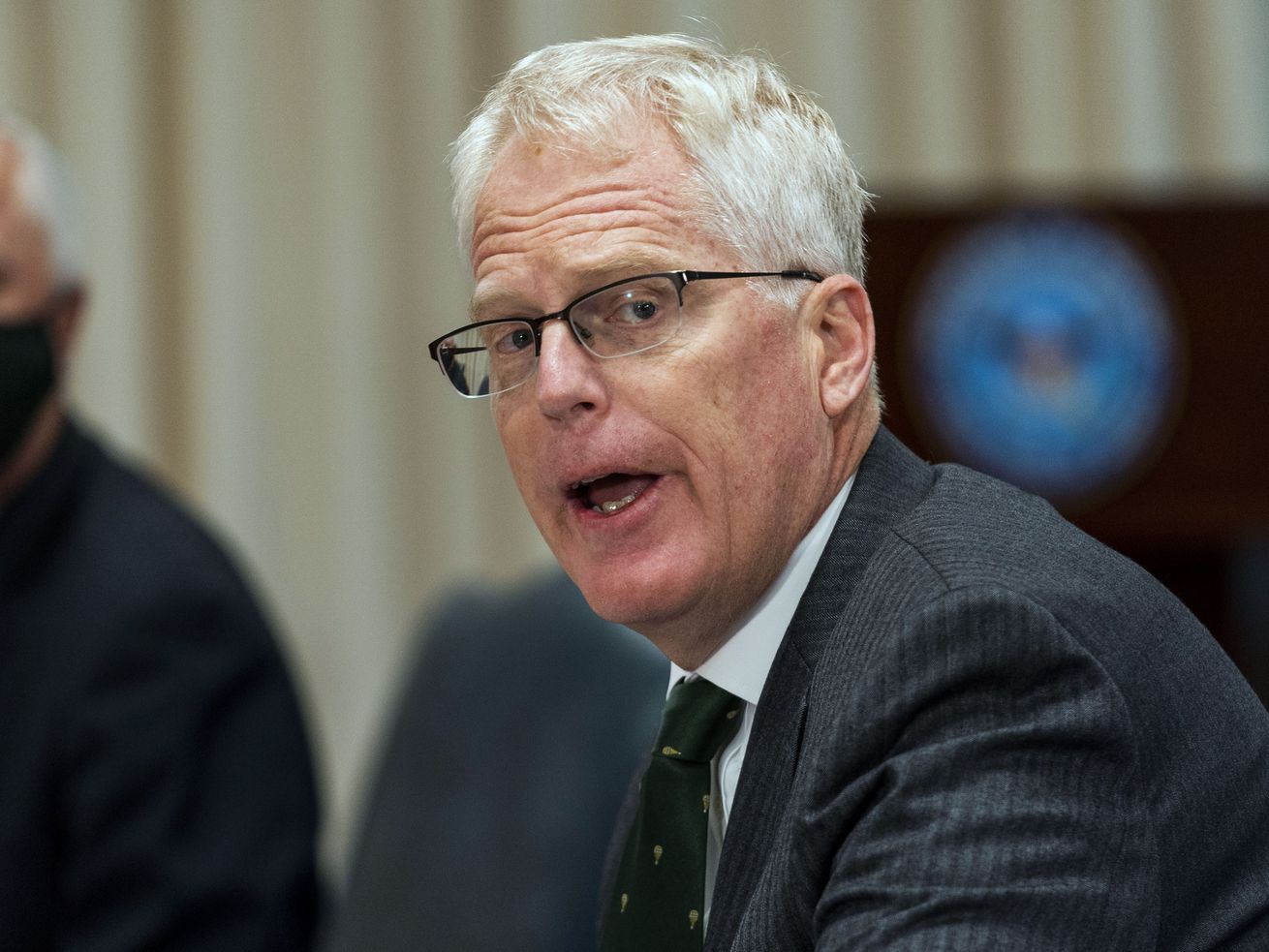
In this Nov. 13, 2020, file photo, then-acting Secretary of Defense Christopher Miller speaks during a meeting at the Pentagon. Miller, President Donald Trump’s acting defense secretary during the Jan. 6 Capitol riots plans to tell Congress that he was concerned in the days before the insurrection that sending troops to the building would fan fears of a military coup and could cause a repeat of the deadly Kent State shootings, according to a copy of prepared remarks obtained by The Associated Press. | AP
Christopher Miller’s testimony is aimed at defending the Pentagon’s response to the chaos of the day and rebutting broad criticism that military forces were too slow to arrive even as pro-Trump rioters violently breached the building and stormed inside.
WASHINGTON — President Donald Trump’s acting defense secretary during the Jan. 6 Capitol riots plans to tell Congress that he was concerned in the days before the insurrection that sending troops to the building would fan fears of a military coup and could cause a repeat of the deadly Kent State shootings, according to a copy of prepared remarks obtained by The Associated Press.
Christopher Miller’s testimony is aimed at defending the Pentagon’s response to the chaos of the day and rebutting broad criticism that military forces were too slow to arrive even as pro-Trump rioters violently breached the building and stormed inside. He casts himself as a deliberate leader who was determined that the military have only limited involvement, a perspective he says was shaped by criticism of the aggressive response to the civil unrest that roiled American cities months earlier, as well as decades-old episodes that ended in violence.
The Defense Department, he will tell members of the House Oversight Committee on Wednesday, has “an extremely poor record in supporting domestic law enforcement,” including during civil rights and anti-Vietnam War demonstrations in the 1960s and 1970s.
“And some 51 years ago, on May 4, 1970, Ohio National Guard troops fired at demonstrators at Kent State University and killed four American civilians,” Miller will say, adding, “I was committed to avoiding repeating these scenarios.”
He will also deny that Trump, criticized for failing to forcefully condemn the rioters, had any involvement in the Defense Department’s response and will say that Trump had even suggested that 10,000 troops might be needed for Jan. 6.
Miller, expected to testify alongside former acting Attorney General Jeffrey Rosen and District of Columbia Police Chief Robert Contee III, will be the most senior Defense Department official to participate in congressional hearings on the riots. The sessions have been characterized by finger-pointing by officials across agencies about missed intelligence, poor preparations and an inadequate law enforcement response.
The Capitol Police have faced criticism for being badly overmatched, the FBI for failing to share with sufficient urgency intelligence suggesting a possible “war” at the Capitol, and the Defense Department for an hourslong delay in getting support to the complex despite the violent, deadly chaos unfolding on TV.
Rosen, for his part, is expected to tell lawmakers that the Justice Department “took appropriate precautions” ahead of the riot, putting tactical and other elite units on standby after local police reports indicated that 10,000 to 30,000 people were expected at rallies and protests, according to prepared remarks obtained by the AP.
Miller’s testimony will amount to the most thorough explanation of Pentagon actions after months of criticism that it took hours for the National Guard to arrive.
In his remarks, he defends his resistance to a heavy military response as being shaped by public “hysteria” about the possibility of a military coup or concerns that the military might be used to help overturn the election results. Fearful of amplifying those suspicions — as well as the chance that a soldier might be provoked into violence in a way that could be perceived as an attack on First Amendment activities — he says he agreed in the days before the insurrection to deploy soldiers only in areas away from the Capitol.
“No such thing was going to occur on my watch but these concerns, and hysteria about them, nonetheless factored into my decisions regarding the appropriate and limited use of our Armed Forces to support civilian law enforcement during the Electoral College certification,” Miller will say. “My obligation to the Nation was to prevent a constitutional crisis.”
The hearing marks the first time that Miller and Rosen will testify publicly about the Jan. 6 insurrection. In his remarks, Miller also noted that there was concern about a lack of coordination and information-sharing between law enforcement agencies.
The committee’s chair, Rep. Carolyn Maloney, D-N.Y., said that Trump’s “inflammatory language provoked and incited the violent mob” and that many questions remained unanswered.
“Our hearing will provide the American people the first opportunity to hear from top Trump Administration officials about the catastrophic intelligence and security failures that enabled this unprecedented terrorist attack on our nation’s Capitol,” Maloney said in a statement.
Democrats have signaled that they intend to press Miller on why it took so long for the National Guard to arrive despite urgent plans for help. Miller will contend that those complaints are unjustified, though he also concedes that the Guard was not rushed to the scene — a decision that he maintains was intentional.
“This isn’t a video game where you can move forces with a flick of the thumb or a movie that glosses over the logistical challenges and the time required to coordinate and synchronize with the multitude of other entities involved, or with complying with the important legal requirements involved in the use of such forces,” he will say.
Even after the Guard was requested, he said he felt compelled to send them “in with a plan to not only succeed but that would spare them unnecessary exposure and spare everyone the consequences of poor planning or execution.”
“We appreciated the seriousness of the situation, but we did not want to piece-meal National Guard forces into the zone of conflict,” Miller will say.
Although the timeline Miller offers in his remarks generally matches up with that provided by other high-ranking leaders, he notably puts himself at odds with William Walker, who as commanding general of the D.C. National Guard testified to what he said were unusual Pentagon restrictions that impeded his response and contributed to a three-hour delay between the time he requested aid and the time it was received. Walker has since become the House sergeant-at-arms, in charge of the chamber’s security.
Miller will say that Walker was given “all the authority he needed to fulfill the mission” and that before Jan. 6 he had never expressed any concern about the forces he had at his disposal. He contends that he authorized the deployment of 340 National Guard personnel, the total amount Walker had said would be necessary, and authorized him to use a 40-member quick reaction force provided that Walker could provide him with a so-called concept of operations.
Miller said he approved the activation of the Guard at 3 p.m.. He said that though that support did not arrive at the Capitol complex until 5:22 p.m., the coordination, planning and deputizing of personnel by civilian law enforcement all took time.
Miller, a Green Beret and retired Army colonel, served as a White House counterterrorism adviser under Trump before being tapped as acting defense secretary for the final months of the Trump administration. He replaced Mark Esper, who was fired after the election after being seen by Trump as insufficiently loyal.
The abrupt appointment raised concerns that Miller was in place to be a Trump loyalist. In his opening statement, though, he will say that he believes Trump “encouraged the protesters” but declines to say if he thinks the president bears responsibility. He recounts a conversation on Jan. 5 when Trump, struck by a crowd of supporters at a rally that day, told him that 10,000 troops would be needed the next day.
“The call lasted fewer than thirty seconds and I did not respond substantively, and there was no elaboration. I took his comment to mean that a large force would be required to maintain order the following day,” Miller says in his statement.
___
Associated Press writer Nomaan Merchant in Washington contributed to this report.
From left, Tim Williams, warehouse assistant for Medisys, Ray Fredericks, assistant director for Medisys, and Dr. Abhu Kaur with Khalsa Aid USA, a global humanitarian organization, load dozens of electrical transformers onto a pallet, which will be shipped to New Delhi with oxygen concentrators this week on New York’s Long Island, Friday, May 7, 2021. | AP
From coast to coast, faith groups tied to the Indian diaspora have collected hundreds of oxygen concentrators and electrical transformers to ship to overwhelmed hospitals, raised millions for everything from food to firewood for funeral pyres and gathered in prayer for spiritual support for the Asian nation.
Volunteers at Hindu temples, Muslim groups and Sikh relief organizations across the United States are mobilizing to support India as the world’s second most populous country struggles to handle a devastating surge of the coronavirus.
From coast to coast, faith groups tied to the Indian diaspora have collected hundreds of oxygen concentrators and electrical transformers to ship to overwhelmed hospitals, raised millions for everything from food to firewood for funeral pyres and gathered in prayer for spiritual support for the Asian nation.
“This is a human tragedy, said Manzoor Ghori, executive director of the California-based Indian Muslim Relief and Charities, which has donated more than $1 million for purposes including supporting teachers and providing families with thousands of medical kits and more than 300,000 meals.
Ghori said he has had five loved ones, including two nephews, die in India from COVID-19 — “so, it is a personal tragedy” as well.
He’s one of many in the U.S. diaspora to have lost relatives to the virus in India, where total confirmed infections and deaths have surpassed 22.6 million and 246,000, respectively, though the true numbers are believed to be much higher.
Kashyap Patel, an Atlanta-based physician, said the pandemic has been “catastrophic” for him, with about a dozen members of his extended family in India contracting the virus, from teenagers to octogenarians, and his 73-year-old uncle dying from it.
He volunteers for the North America branch of the BAPS Swaminarayan Sanstha Hindu organization, which has provided 250 oxygen concentrators and several hundred thousand dollars in COVID-19 relief to help with India’s overwhelmed health system.
“It is challenging to find hospital beds,” Patel said. “It is challenging to find oxygen, to find contemporary medicine.”
India’s Supreme Court recently said it would set up a national task force consisting of top experts and doctors to conduct an “oxygen audit” to determine whether supplies from the government were reaching states in the country of nearly 1.4 billion people amid widespread complaints of shortages.
The U.S. branch of Khalsa Aid, a U.K.-based Sikh humanitarian organization, is sending another 500 concentrators and 500 electrical transformers this week to New Delhi, where the group’s team is already helping COVID-19 patients, hospitals and NGOS with essential supplies as well as wood for cremations.
At a warehouse on New York’s Long Island, workers busily packed, sorted and labeled dozens of boxes containing transformers on a recent day ahead of their shipment.
“In these last two weeks, many of us haven’t slept. We’ve been running our day jobs at the same time,” one of the group’s directors, Manpreet Kaur said.
“It’s been an intense period of time, but for us, it’s about giving back to the community,” Kaur continued. “And the people in India definitely need that support.”
Khalsa Aid’s India relief effort has gotten grassroots support from individuals all over the country, such as Tahil Sharma, a Los Angeles-based interfaith activist born to a Hindu father and a Sikh mother. He raised nearly $3,000 on Facebook for the initiative.
“It’s a small amount for a really big crisis,” Sharma said. “But it helps mitigate the costs that Khalsa Aid needs to take upon itself sometimes in being able to get oxygen concentrators, to be able to secure beds at gurdwaras (Sikh houses of worship) on the ground in New Delhi, to help them get the resources that they need so people don’t get hit by more waves of deaths.”
Seeing individual pledges like that on social media platforms motivated members of Shri Shirdi Saibaba, a Hindu Temple in South Brunswick Township, New Jersey, to organize as a religious organization for their own effort, temple founder and chairman Rajesh Anand said. So far the temple has raised about $3,000 to buy concentrators for two hospitals in New Delhi.
“We are one among many to help the cause,” Anand said.
In the New York City borough of Queens, the Hindu Temple Society of North America has also been fundraising online and has so far donated more than $50,000 to the India Development and Relief Fund in Washington, D.C., for concentrators and other medical needs.
The temple also organized special group prayers for those who have died of COVID-19 and a virtual vigil featuring music, prayer and speeches by interfaith leaders and elected officials.
“When we learned more about the difficulties the country was facing,” said Ravi Vaidyanaat, the temple’s director of religious affairs, “we immediately thought we had to do something.”
Support for India has come, too, from the American Jewish Joint Distribution Committee, which sent ventilators to hospitals in Mumbai and Ahmedabad and personal protective equipment to rural communities. It is also recruiting U.S. and Israeli intensive-care doctors and nurses for a telemedicine training program.
“In the efforts that we’re making in India … what we keep in mind is that with each action that we engage in, we can save one life,” said Michael Geller, the group’s director of communications and media relations. “And that one life represents an entire world of people who can be impacted.”
Nepal, India’s much-smaller neighbor, is seeing its own pandemic spike, with doctors there warning recently of a major crisis as hospitals run out of beds and oxygen. That has prompted similar aid efforts by Nepalese in the United States.
“It’s a landlocked country, and there’s a lack of resources there. … The situation in Nepal is very bad,” said Urgen Sherpa, a former president and current adviser of New York City’s United Sherpa Association, which has raised about $5,000 for Nepal.
___
Associated Press religion coverage receives support from the Lilly Endowment through The Conversation U.S. The AP is solely responsible for this content.



/cdn.vox-cdn.com/uploads/chorus_asset/file/22507807/Deangelo_Watson__20.jpg)

/cdn.vox-cdn.com/uploads/chorus_asset/file/22507812/Screen_Shot_2021_05_11_at_5.07.56_PM.png)
/cdn.vox-cdn.com/uploads/chorus_asset/file/22507814/Screen_Shot_2021_05_11_at_5.08.13_PM.png)
/cdn.vox-cdn.com/uploads/chorus_asset/file/16045946/edyohnka030717.jpg)
/cdn.vox-cdn.com/uploads/chorus_asset/file/22507879/Image_from_iOS__6_.png)



/cdn.vox-cdn.com/uploads/chorus_asset/file/22507674/477632154.jpg)
/cdn.vox-cdn.com/uploads/chorus_asset/file/22507678/1232826031.jpg)