Billy Helmkamp, 43, co-owns the Whistler (which he opened in 2008 with Rob Brenner) and Sleeping Village (opened in 2018 with Brenner and former Whistler bartender Eric Henry). He’s been a major player in the Logan Square Arts Festival for most of its history and serves on the board of I Am Logan Square, the nonprofit that organizes it. (If this summer’s fest happens, it’ll be as smaller events, on a scale deemed safe by public-health authorities.) Helmkamp is also on the board of directors at the Chicago Independent Venue League (CIVL), founded in 2018, and wears two hats at the brand-new National Independent Venue Association (NIVA): he’s one of two Illinois precinct captains and sits on the national lobbying committee.
We took a bit of a funny path with the Whistler. I lived in New York from ’97 till basically Christmas 2001, and one of my first and closest friends out there was my now partner at the Whistler and Sleeping Village, Rob Brenner. He came out to Chicago a couple years before I did. I worked in television, postproduction; he worked in commercial photography. And on the side we’d book and produce concerts, we’d shoot music videos, we’d make concert posters.
Eventually he moved into the building that the Whistler’s in. That was 2005, about three years before the Whistler actually opened. We had a long list of things we wanted to do in that space–artists’ studios, a recording studio, a record store. They all revolved around being able to throw shows at night. Really, we thought it was just gonna be an all-ages music venue, and we put together a business plan and quickly realized we’d be out of business before we ever started if we didn’t sell beer or drinks.
Neither of us had any bar experience, but Tim and Katie Tuten from the Hideout were extremely helpful. I came to them with more dumb questions than I can remember, and they were just happy to answer them every time.
The Chicago Independent Venue League started with a call from Katie: “Hey, can you come by the Hideout? I’ve gotta talk to you about something.” She filled me in on what we were looking at with the Lincoln Yards development, and what we were hearing Live Nation’s role in that was going to be.
When it became obvious what all of us were looking at with coronavirus and mandated shutdowns, Katie and I were talking to Rev. Moose from [New York music-marketing firm] Marauder, who was heading up Independent Venue Week. “Hey, we already have this organization in Chicago that represents a number of independent venues. You’ve got this huge mailing list, you’ve got organizational skills–we really need to start connecting all of these venues.”
Within the next week, we hear from them: “Hey, we’re forming the National Independent Venue Association. We have five committees: we’ve got governance, funding, research, lobbying, and marketing. We’ve got committee heads, we have a board of directors. We are gonna start getting venues to sign up for this, and we really need to go to D.C. for help.”
Because this is gonna devastate our industry. We were the first to close; we’re gonna be the last to reopen. And when we’re allowed to reopen, we’re gonna be doing so at a very diminished capacity. The writing’s on the wall–a lot of venues aren’t gonna make it through this.
When the CIVL members came on board, there were 30-something venues in NIVA. And at this point we’re looking at over 1,200 venues. I’m on the lobbying committee, which is being led by Dayna Frank, the CEO of First Avenue up in Minneapolis. And she is just a powerhouse. I’m on the board of directors for CIVL; for NIVA, another guy named Chris Bauman and I are co-precinct captains for Illinois and overseeing the midwest lobbying efforts.
The average person thinks venues are making money hand over fist, but our profit margins are pretty razor-thin. So we’re talking to our landlord about pausing rent. We have monthly expenses with our POS system provider, our ice-machine company, our glass-washer rental company–these are all people we’re reaching out to and getting our services either paused or reduced.
Right now NIVA has a very narrow focus. We’re really trying to reach the big four in Congress–Pelosi, McConnell, McCarthy, and Schumer–and we’re all obviously reaching out to other elected officials that represent us. But we need revisions to the PPP loan program. We’re looking to increase the loan cap to at least eight times the monthly average cost of all the qualified uses of the loan. Currently it’s only 2.5 months. We’re looking for a little bit more flexibility for loan forgiveness–PPP funds aren’t gonna do any good for covering rent because it needs to be 75 percent toward payroll, at least for any kind of forgivable portion. And we want to be able to extend that program until we can resume normal operations. A lot of venues, just due to the nature of how booking works and tour routing and promotion works, they’re not gonna be going again for another six to nine months after they get the OK. A 1,000-cap room can’t book a show for tomorrow.
We’re asking the government–you need to put more money toward increased testing and contact tracing and treatment and a vaccine. Because none of us think we’re gonna be back to business as usual until there’s a vaccine.
We need to make more noise. We’re important culturally and economically, and we need to remind our representatives about those two facts. NIVA has a section on their website where we outline what the public can do to help raise awareness. If people go to nivassoc.org, there’s a “take action” section. Beyond that, buy your favorite band’s record. Buy their merch, get a shirt, get a hoodie. Musicians aren’t making their living right now.
Katie pointed out that we keep saying, “We’ve got our hand up right now, not our hand out.” If you wanna look at how important venues are, look at our GoFundMe campaigns. She said that just between the Chicago venues, last she checked they’d raised over $300,000 for staff.
We’ve seen some testimonials of people who got Chicago Resiliency funds and PPP funds, who were like, “Oh, thank God I got this–my revenue’s down 20 percent because of this crisis!” And we’re all sitting here, like, “Twenty percent is just a bad month! Lose 100 percent.” v
Now that weed is legal in Chicago and we have no reason to leave our houses, munchies for delivery are a must. We’ve rounded up the best guilty pleasure restaurants that stoners love that you can get delivered.
If you are looking for cheese, bread, and fried things, Cheesie’s is the best place to go when you’re high. They are closed right now but you can get them for delivery through DoorDash.
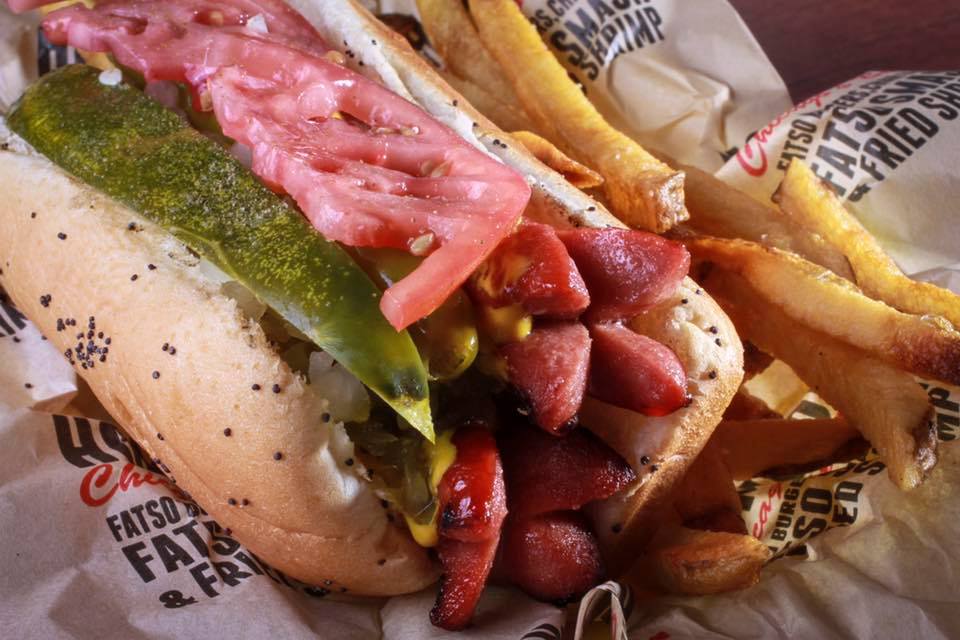
Fatso’s take hot dog stands to the next level, they offer everything a stoner could want from cheeseburgers to hot dogs, fried shrimp, Italian beef, and milkshakes. You may not get the hot dog stand experience but you can still order delivery from them on Grubhub.
Another Chicago spot famous for its hot dogs, Devil Dawgs, is offering delivery during this time through Grubhub, Door Dash, and UberEats. Try one of their elevated hot dogs like the taco dog that has mustard, mayo, pico de gallo, shredded cheddar, and lettuce.
If you want to feel like you’ve been transported to Detroit, you have to order from Lola’s Coney Island. You can order it for delivery on almost all delivery apps.
An Asian fusion spot where you can get sandwiches inspired by traditional Asian meals. You have to try the THC, of course, which has tandoori fried chicken, acharya, maitake, and Wazwan honey.
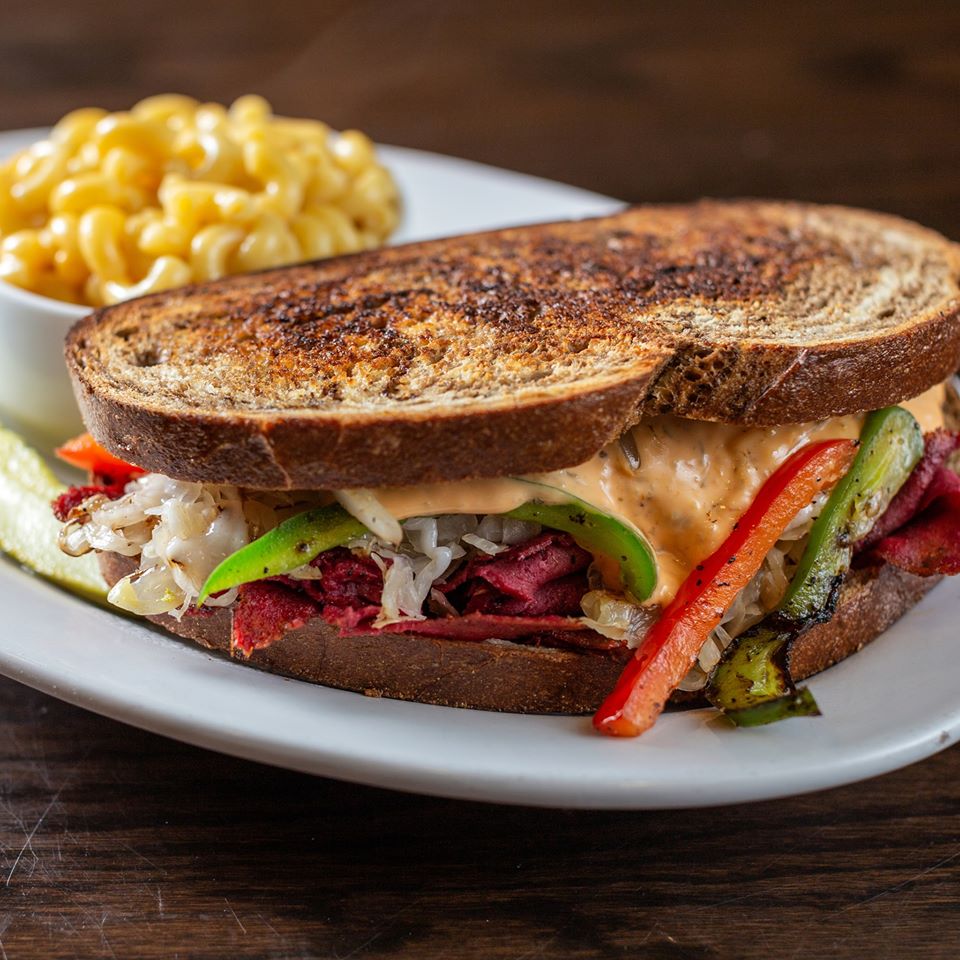
Stoners don’t need to go much further than Sam’s Crispy Chicken when they’re looking for a meal high. They have amazing crispy chicken sandwiches like their sandwich with chicken, bacon, and maple syrup on two golden waffles.
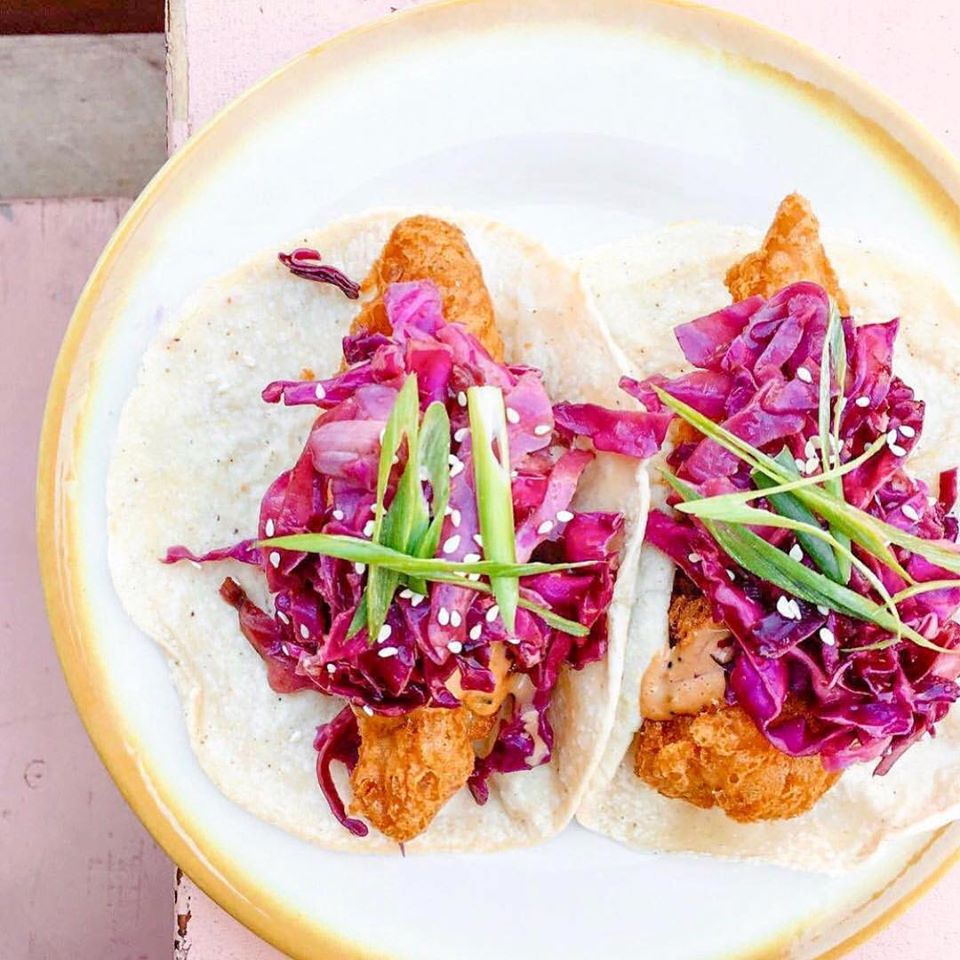
If you can’t get enough tacos you have to try Antique Taco, named one of the 50 best tacos in America. With a wide range of taco menu items, this is an excellent place for stoners to get food delivered from when they’re blazed.
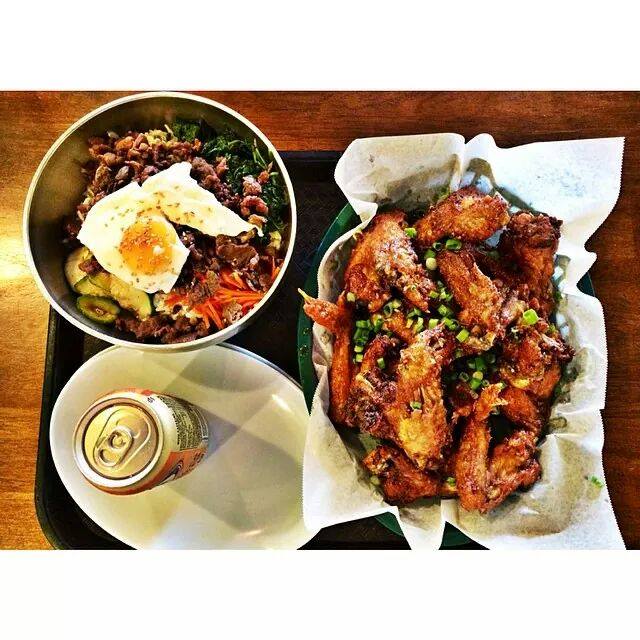
For more amazing fusion food, Crisp offers a variety of wings with an Asian flair. One of Chicago’s best wing joints, you can get Crisp delivered to you through Door Dash.
Stoners can be vegetarians too right? If you are looking for some delicious vegan and vegetarian options, Chicago Diner has you covered. Order them through the Caviar delivery app.
I had big plans for 2020. There was writing to be done, trips to be taken, professional opportunities to explore…
I’ll tell you what, they certainly didn’t include social distancing, lockdowns, unemployment, and a global pandemic.
Did you ever hear a story from an elder of how different a place the world was for them than whatever the present day is? Now, for the first time, some of us are experiencing that feeling for ourselves. With COVID-19’s wicked fast spread across the United States, we feel as if we are living in a different world than we were just a few short months ago. The economy is in a perpetual nosedive, supply chains are breaking down and leaving once-ample conveniences scarce, and statewide lockdowns are forcing residents to shelter in place and learn to live without regular social contact.
The once bustling streets of Chicago, now a ghost town. Image courtesy of Joe Martin.
It’s certainly not like anything I’ve personally experienced in my almost four decades of living.
This is understandably driving a lot of fear and uncertainty. Outside of the potential long-term health and economic ramifications of what is happening now, people simply don’t know what’s waiting around the next corner, and that kind of uncertainty can be devastating.
Yet somehow, amidst all of that uncertainty, I’ve discovered that I’m not experiencing fear or panic. Instead, I am realizing that this may be a once-in-a-lifetime opportunity for us – an opportunity to embark on a journey of discovery, to find pleasure in all this new space in life that I’ve suddenly been blessed with, and to reflect amidst the relative stillness of an outside world that is being forced to slow way down.
As it turns out, learning to slow it down seems to be just one of many lessons this pandemic is forcibly laying upon us, lessons that – if social media can stop the blame/complain/let’s-argue-about-it cycle for a moment and leave us a little breathing space for personal contemplation – may lead us to a future we’ve never envisioned before, a lifestyle that’s a totally fresh idea.
Of all the important things I’m learning through this pandemic, these are the 5 lessons I’m taking most to heart and putting in my pocket to keep with me for whatever the future may bring.
Save it for a rainy day
Who else had parents that told you to always put away 20% of your paycheck? I did. But as a young adult who didn’t make very much and had oodles of [pointless] things she felt she needed to have, this idea didn’t make a lot of sense to me when I was in my teens and 20’s.
Fast forward to my 30’s, and now with 10+ years of the unexpected in my past (and undoubtedly still in my future) – everything from layoffs to spur-of-the-moment travels – I’ve learned to admit that, as with many things, *sigh* my parents were right. Having some kind of a savings (or a play day fund, whatever you want to call it) has saved my ass more than a few times in my life. Some years those savings accounts are healthier than others, but there’s always something there, usually at least enough to live off for a couple months.
Today COVID-19 has plummeted the entire world into economic crisis. Businesses are shutting their doors, people are being laid off in unprecedented numbers, and markets are crashing (then rebounding a bit, then crashing again…), taking lots of investment and retirement accounts down with it.
Luckily both my husband and myself have been good little savers for the past couple of years and are now fully comprehending the benefits of this way of thinking. The screeching halt of income and the disappearance of employment possibilities that have become a reality for so many (including us) haven’t hit us nearly as hard as it would have had we not had some savings set aside.
This time is a hell of a lesson in lifestyle choices as well. While the choice to live paycheck to paycheck isn’t necessarily a choice for some, it is most certainly a choice for others due to the way they live and their lifestyle choices. Which leads me to lesson #2…
Learn that less is more
I’ve had the occasional visit to homes of friends and family who have a whole lot of stuff. For sure, our home is by no means spartan, but these folks have serious stuff. Stuff in every nook and cranny, covering every surface, behind every door, and around every corner.
Just being in those kinds of places makes me anxious. I’m legitimately bothered by clutter. But I also can’t help but wonder, how much healthier would these people’s bank accounts be with half this stuff? How much less debt would they be struggling with? How much less would they need to work? How many more trips could they afford to take? How much less anxiety would they experience?
I can’t speak with certainty as to the practices of other cultures, but it seems America holds one of the top spots for heavy consumer culture. It’s all about the stuff in this country. There’s always something else to buy, whether it’s the next thing you “need” or the cartfuls of impulse purchases at Target that everyone seems to find so amusing.
Now suddenly many of us who’ve had some measure of “disposable” income find it vanishing and we’re learning that we don’t need all that stuff after all. I can be as guilty of unnecessary spending as the next person, although luckily coming from a somewhat frugal childhood that unnecessary spending lives on the low end of the money spectrum (ooh, I don’t have a $10 t-shirt in that color yet!).
Still, it all adds up to a bunch of stuff that ultimately bogs us down. It depletes our bank accounts, weighs on our spirits, and, ultimately, eats away at our freedom bit by bit.
I’ve always said that the key is not in having more but in needing less, and now with our household income drastically altered I find myself becoming more aggressively (and intuitively) faithful to that mantra than ever before. And, I must say, it’s an incredibly refreshing change.
Love (who, what, where) you got
Gratitude practices are all the rage these days, and while I don’t have a “practice,” I’ve been making a big effort to pay more attention to all the little pieces that make up this wonderful life.
I’ve heard an awful lot of complaining since we went into this lockdown in the US, mostly along the lines of, “I can’t go to this place, I can’t see this person, I have so much anxiety because I can’t live my “normal” life.” And my thoughts are that I’d mostly like to ship those folks over to Sub-Saharan Africa where there’s no running water and rampant poverty, or to the Middle East where a good chunk of people live in terror every day, and see how their “anxiety” fares in those environments.
In reality, we don’t even have have to leave our home soil to find pretty crappy living conditions; there’s plenty of people right here in the US that would probably give a limb to have the luxuries of a safe home and a computer or TV at their disposal.
Our lives here aren’t perfect, and there are certainly struggles this pandemic lifestyle brings with it. But let’s be honest…most of us have SO MUCH and we don’t even pay attention to it. Roofs over our heads, running water, plenty of food on the table, endless options for entertainment, and piles upon piles of options for bettering ourselves (not to mention the time with which to pursue those things).
I’ve doubled down on making it a priority to wake up everyday with gratitude for my home, my family, and all the incredible blessings that make up my daily life. It’s become abundantly clear to me just how much we’ve twisted the word “need” in our culture and just how truly simple the things are in this life that bring happiness and contentment.
We’ve all become accustomed to a world of endless distractions, one where misdirection is revered, appearances and perception reign supreme, and social media masquerades as meaningful. The need to forget or ignore something was satisfied by the newest blockbuster or the corner bar, once always available for pacification, procrastination, or inebriation.
It may be only now with a fresh layer of silence that we can see the truth of environments we’ve created for ourselves. For those who aren’t loving the who, what, and where in their lives, this might be your wake up call.
Don’t count on tomorrow
We love to make plans don’t we?
Whether it’s a fun plan (vacation in six months!) or a way of procrastinating (I’ll finish cleaning out that room next weekend), there’s always this idea of the future. More than an idea…a dependency on the concept. It’s always the expectation that there’s more time ahead and that the things we’re used to in life will be a constant.
Flash forward to now, and someone who’s not only worked in the travel industry, but who immensely enjoys traveling herself, couldn’t tell you when that aspect of the world will restart, or what it will look like when it does. Within all of our cities and towns, grocery store shelves that have been fully stocked through most of our lifetimes are empty and we’re discovering that none of us know what to expect next month, or even next week.
The shopping list doesn’t matter when there’s nothing on the shelf.
When we first moved to our rural home that’s 30 minutes from town, my farmer-bred husband tried to break me of my suburban-raised habit of, “I’ll only buy what I need for this week,” or “I’ll just run to the store to grab this or that if I run out.” After some repeated failures (on my part) and some time, I finally started to get the idea of back stocking and staying prepared for longer periods between grocery runs.
As much self-sufficiency as possible has always been a priority goal in this household, so by the time COVID-19 came blazing into the picture we didn’t feel the need to go out and “hoard” anything; we’d already mostly adapted to a lifestyle that tomorrow is never a promise and that we never know when the world will turn on its head in an instant.
But being prepared isn’t just about having stuff – it’s also about knowledge and skills, about being in a physical condition that is healthy and sustainable, and about having the resources to make do when things go horribly awry. People can fill their safes with gold or their basements with toilet paper, but if the food supply chain breaks will you be able to grow your own? Would you have a water supply if the electric grid failed for an extended period of time? What kind of medications do you depend on and how could you improve your health to avoid that dependence?
At no time in recent history has the value of such questions become so readily apparent.
Understand the larger message
We humans have a tendency to be rather self-centered as a species – it’s all about us. But there’s a lot more happening in this big, beautiful world than our little dramas, a lot that has (or would like to have) absolutely nothing to do with us.
It can’t be denied we’re still a spreading problem on this abused planet, one that has yet to be remedied. If we can’t begin to grasp the massive damage we’re causing to our home and aggressively work towards culling the effects of our existence, then Mother Nature will probably find a way to do it for us.
As much damage as COVID-19 has already done, it’s just a test run for what’s to come if we don’t get things under control. This endless mentality of “me first”, of profit & power over morality & accountability, of excess over balance, is simply not sustainable. Not even a little.
In the first half of 2020 the world has already seen extraordinary positive changes across the globe due to the harsh restrictions of COVID-19, mostly centered around massive pollution reductions and a resurgence of wildlife cultures. Some people are beginning to recognize that our “normal” prior to all of this was not a good one, everything from the deterioration of the travel culture into a dirty tourism culture to the exposure of our desperately broken long-distance and “Just In Time” food supply chains.
This is the first time in my lifetime that there has been an exceptional opportunity for a global reset button. It’s an opportunity to re-examine values and lifestyles, and to make better, more intentional choices as we all move forward.
On a smaller scale, it’s also an opportunity to hit a personal reset button now that the parts of life that aren’t working have become glaring neon signs in the stillness. For me, instead of being in a hurry to return to “normal,” I’m trying to immerse myself as much as possible in this time of flux and allow for a redirection in those areas of my life that didn’t really fit before, areas that were simply passing as “good enough.”
Because really, how often do we get the opportunity to re-examine, re-analyze, and reboot? What an incredible gift. I, for one, won’t be taking this gift for granted, and I can’t wait to see what not only my, but the world’s new “normal” will look like.
There’s a lot to wish for, hopefully humanity can step up to the plate and swing for the fences.
The drive to radiation is wet. Unseasonable rain pounds the windshield, causes semi-trucks to loom larger in the inconsistent traffic. Mike is tired. I am tired. The radiation fatigues his brain to the extreme, and his sleep is interrupted over and over again each night. I am tired because I do not go to bed until Mike is well and truly asleep, and I sleep with one eye open, jumping to action each time he stirs, supporting him when he sits, assisting him if he stands, pushing his legs back towards the middle of the bed when they wander to the ends and threaten to wake him by dragging him to the floor. Sometimes he sleeps through his waking, barely drifting close enough to the surface of sleep to respond to prompts. I am awake. I am awake until he is asleep again. I am awake until I am positively sure. I have slept, at best, three full nights since March 16th.
It is now May 12th.
When it’s possible, he naps. I don’t nap. I’ve found myself waking once or twice, after falling insensate on the bed without intention, confused and alarmed, missing important hours of the day, still exhausted.
I sleep two or three hours at a time, twice a night, maybe three times, and then I drive an hour to radiation, in the rain.
No matter the time of day, there is rain. At least one way.
Driving home, we encounter car accidents. So many collisions. Scattered debris of automobiles, wrecked across three lanes of the freeway. A tire and a chunk of an axel. An explosion of glass fragments. Tow trucks clustered around carcasses of metal. One night there’s a woman in the midst of the metal. She is thin, she looks cold standing in the rain, her homemade mask dangling under her chin, flailing and screaming at a figure beside one of the three cars wrecked beside hers. I wonder who she has lost, who is speeding away behind me towards the hospital Mike and I have just vacated, where she was going before her car vanished around her and her passengers sped back the way she had come.
I help him to bed and then spend hours putting the children down. We talk about Daddy sometimes, but mostly COVID, the other hard times I’ve seen in my lifetime, 9-11, the AIDS crisis, the Columbine shooting. I draw them graphs and charts. I tell them I never had an active shooter drill in school. I tell them I knew people who died from AIDS, and I know people living with it now, and that new diseases can be treated and cured and the whole world doesn’t end. This helps them sleep, but Mike is restless again.
“Stop moving your legs,” I tell him. “The blankets will all fall off, and you’ll freeze.”
“I’m not moving my legs,” he says, but the sound of his foot, dragging across the sheet, is deafening in the silence of the house.
When I help him sit and stand and sit again my back aches and I beg him to wake up more, be awake enough to engage fully in whatever he needs. When he is, he apologizes to me, for all of this.
“Don’t do that,” I tell him. “This isn’t your fault. You’re not making me do anything. I want to do this for you.”
“I love you,” I say. “Stop moving your fucking legs around and go to sleep.”
I listen until the sound of his feet against the sheets fades to the slow intakes of his breath before I rest my head on my own pillow.
I wake up when he stirs again, and the sun still isn’t up. When he’s asleep twenty minutes later, I’m not. I’m wondering what the point is if I’m already awake, and in a few hours I will need to get him ready for another wet drive downtown.
The number of cars on the road is low, but the volume of accidents is so high, and I wonder how tired everyone else is behind the wheel. Where they’re all going at 3pm on a Tuesday during a shelter-in-place order.
I wonder about the woman standing in the rain at twilight, in the middle of the freeway, in the wreckage of her car, screaming with a finger pointed to somebody’s chest, thin and brittle and young and alive amidst the violent chaos of her personal disaster.
If I could find her, I’d hug her. We have so much in common. We are alive. We are finding our ways through. We do not feel safe, but with something to rage against, we can tether ourselves to something important.
My legs are restless, and no matter how soothing the sound of the rain on the window may be, the night is long. And there is wreckage everywhere.
Lea Grover scribbles about sex-positive parenting, marriage after cancer, and vegetarian cooking. When she isn’t revising her upcoming memoir, she can be found singing opera, smeared to the elbow in pastels, or complaining/bragging about her children on twitter (@bcmgsupermommy) and facebook.
Look up–if you hear them you’ve already missed them
Although it’s not the Chicago Air and Water Show, it is one of the most exciting things that’s happened around here since mid-March.
The Blue Angels will be flying over Chicago today to honor all COVID-19 workers.
ETA 11:45 am. to noon
The salute to the frontline COVID-19 responders is scheduled to takeoff at 11:45am and end at noon (please note times are subject to change).
The city is recommending that people stay home, stay safe, saying “residents should observe the flyover from the safety of their homes and should refrain from traveling to see the flyover. Stay home and stay safe!”
Although Show Me Chicago doesn’t recommend that you spread your blanket on North Avenue Beach—which, by the way is closed—if you do not live in the “flyover area” there may be some ways that you can still view the Blue Angels and follow city/state COVID-19 restrictions.
First, check out the flight pattern below. If the Angels will be flying nearby your location, go to your balcony, backyard, front porch or anywhere you can get a good view of the action.
If you do not live within viewing distance:
Find the closest location to your house and walk, bike or drive to an open area where you can practice social distancing–at least six feet away from other people–and stay in your spot.
Wear a mask–not around your neck–but covering your entire mouth and nose.
After the flyover–do not linger. Leave immediately.
The Blue Angels will also being flying over Detroit and Indianapolis today,
Subscribe to Show Me Chicago by email
If you would like to keep in touch with what’s happening in Chicago, like us on Facebook or subscribe to Show Me Chicago by email. To subscribe, type your email address in the box below and click the “create subscription” button. Our list is completely spam free, and you can opt out at any time.
1117 W. Monroe St., Unit 19, Chicago: $999,500 | Listed April 6, 2020
This 3,000-square-foot Near West Side home has four bedrooms and 4.5 bathrooms. The kitchen features Bosch, Kitchen-Aid and Fisher & Paykel appliances and an island. The master bathroom is complete with a double bowl vanity, heated towel bars, a separate shower and a jet tub. Additional features include separate dining and living rooms as well as a two-car attached garage. A front yard, patio, deck and top floor balcony make up the multiple outdoors spaces, which are professionally landscaped.
Agent: Mario Greco of Berkshire Hathaway HomeServices, 773-687-4696
Masai and Kobay are best friend six-month-old female guinea pigs looking for loving guardian together.
These girls get along beautifully and are wonderfully socialized and sweet.
Masai and Kobay make fabulous whistles, squeaks, wheeks and pops!
Guinea pigs eat a diet of unlimited Timothy hay (or Orchard hay if you have allergies), limited pellets, and fresh greens including romaine, red leaf and green leaf lettuces, cilantro, etc. And, since guinea pigs like humans can’t manufacture their own vitamin C, they needs daily red pepper or Vitamin C tablets. They actually love Oxbow’s Vitamin C supplement cookies as a treat.
Please read up on guinea pig care and diet before adopting by visiting this excellent web site http://www.guinealynx.info/.
They would love a home with a family who will handle them daily, keep them well fed, and keep their habitat nice and clean.
If you’re interested in meeting and possibly adopting Masai and Kobay, please contact [email protected].
They are being fostered in Chicago’s Andersonville neighborhood.
Their adoption fee of $60 as a pair benefits the Friends of Petraits Rescue. For an additional $75, we’ll include a kit of everything you need to care for them including a nice large cage, hay, litter, food, hidey hut and water bottle.
I clicked the blue publish button. Closed the laptop. Walked down the foggy street to that little bar in Rosario, Argentina, right by the Paraná River. Søren Kierkegaard was still there, jotting down notes on a napkin.
Note: This is a work of fiction/philosophy. For this post to make more sense, I recommend starting with the first one: “Kierkegaard Intermission”
“Back already?” he asked. “Get your article done?”
“Yeah,” I said, taking a seat. “Barely, though. And I didn’t get in everything I wanted to say. There were these great stories about the Di Sapio family throwing backyard BBQs on the 4th of July. And other holidays. Even when their restaurants are closed, they’re still grilling up steaks. And then Paulo makes these trips down to Argentina to taste the different wines. And I didn’t tie in the Argentina basketball team either.”
“True, but you finished a project,” Kierkegaard said. “There’ll always be more things to write. You picked one and got it done.”
“Yeah, at least this thing has a finish line.”
“What do you mean?”
“This whole Coronavirus chapter. We don’t know when it will end. One report says things will be opened up by June. Back to normal by fall. Another says we’ll be in masks for the next couple of years. Another says we may never see a return to the old normal. Which one is it? If we could just have one finish line to strive for, I feel like it’d be a lot easier to get through.”
“Ah, but life is not a problem to be solved, but a reality to be experienced,” Kierkegaard said.
“Yeah, but what happens when the reality sucks?”
Kierkegaard set down his drink. He looked at the bar for a second and did that move where you tap one finger at a time, pinky, ring, middle, index, and repeated this a few times.
“Well, it’s interesting,” Kierkegaard finally said, breaking the silence. “Because there are two separate realities going on simultaneously. There are those who’ve gotten the virus, or lost someone to the virus, or the healthcare workers fighting it. That is the most brutal reality. And the other reality, what the majority of people are experiencing, is sheltering at home. Not seeing our friends. Worrying about what could happen or just being frustrated by the whole thing.”
“Right and I feel like the second reality is much easier. I feel a little guilty wanting a day off because I’m thinking what’s so hard about my job? I’m on Zoom meetings. I look at a computer screen. That’s nothing compared to the healthcare workers. Or losing a job. Or losing a–“
“Ah, but the mistake people make is thinking the expression, ‘Things could be worse,’ is supposed to be comforting,” Kierkegaard interrupted. “That idea just introduces more possibilities. And, as I said before, anxiety is the dizziness of freedom. For people sheltering at home, not only are they imagining all the ways things could be worse, but they’ve also lost their normal barriers. The clarity of going into an office. ‘This is where I work.’ Home: This is where I play. School: This is where the kids go. All of that has merged together into one space and it’s like having a bunch of tabs open on your computer. Which one should you focus on?”
“And somehow it feels like there’s still not enough time in the day to get everything done.”
“Exactly. The American belief has always been there’s not enough time in the day. And so the answer, seemingly, would be to add more time to the day. And that’s exactly what happened with the stay at home orders. We have plenty of time now. But with time grew all the possibilities of things to get done and with those new possibilities always comes anxiety. We’ve got too many tabs open. You’re in the grocery store without a list, overwhelmed by all of the options.”
“Then what can we do?”
“Exactly what you did with the last article. Focus on one thing at a time. Give yourself to a hobby. Sit down and say, ‘I’m working on this and this only’ because, for those few hours, there’s a sense of order to the universe. Or when you’re with family, that’s family time. Work while you work and for the love of God, close the laptop when you’re eating lunch. You see, it’s interesting, the more barriers you start setting up, the more freedom you’ll have. There’s a peace in having a set list at the grocery store. Then repeat that a few times. Repetition is the reality and the seriousness of life.”
I looked down at the bar, understanding maybe 60 percent of what he just said. But I thought about the last two Argentina blog posts. I reached over and picked up that random photo of my Dad shaking hands with the president of Argentina.
“Here’s another thing I was trying to work into the story,” I said, holding up the photo.
I flipped the photo over. On the back written in faint pencil was a poem. I shook my head a little as I read it over.
“What’s up?” Kierkegaard asked.
“When I was a kid, my Dad used to read stories from this book called the ‘Book of Virtues.’ If I were to draw things back, why I love stories, and philosophy, and thinking about what stories can be, I’d tie it all back to hearing those stories at bedtime. There was this one poem in there.”
I pointed to the writing on the back of the photo.
Work while you work
Play while you play.
One thing each time,
That is the way.
All that you do,
Do with your might.
Things done by halves
Are not done right.
Kierkegaard smiled.
“We already have most of the answers in life, we just forget we already learned ’em,” Kierkegaard said. “We pretend to be unable to understand because we know very well that the minute we understand, we are obliged to act accordingly. So we pretend our hobbies aren’t incredibly important. That writing needs to be about something else. It needs to lead to a full-time career, or you need to hit a number of pageviews, or it needs to be building toward something to be worth doing. It seems too small to say, ‘You know, writing is worth doing just for the sake of doing it.’ Doing it with all your might.”
I could still feel all the uncertainty around me, but it felt further away. Outside the bar, lost in the fog. There were still no answers to the Coronavirus questions. When will things go back to normal? What is the new normal? When will Chicago be down to zero cases per day?
The questions were drifting further to the Paraná River. Will anyone in my family get it? Will I get it? What will our jobs look like in five months? In five weeks. When can we travel again to see family? As I wrote, I felt the sense of peace I thought could only come once I had answers to all of the unanswerable questions. I was lost in my hobby. It’s like that moment when Peter was walking on water, everything was working until he looked down and thought, “Woah, what if I fall?”
My only answers: I’m finishing this blog post. I’ll read it over. Make a few edits. Click the blue publish button. Close the laptop. Leave the bar in Rosario, Argentina. I’ll make some breakfast and then I’ll log on for work.
Tomorrow morning there’ll be a new idea, a new story to tell. I’ll be walking Crash, taking a shower, sitting at my laptop, and something will just click. Oh! What if I wrote about this!
And, for those next few hours, I’ll be lost in the hobby. Writing a new story.
This 4-part Argentina series, I think, works best read in order. So if you’re new to this series or want to look back at how it all ties together, here are the previous posts:
Despite the name, Medium Rare isn’t normally a food blog. But for the next several weeks, I’ll be featuring great local restaurants around the Lakeview neighborhood in hopes that readers support these spots with pickup & delivery orders now and go in-person later this year. Other posts include:
I was born and raised in Midland, Michigan and moved here to Chicago a couple years ago after graduating from Hope College. I live in the city with my beautiful wife Ashley.
A little bit about me – I go to bed early, I enjoy greasy food and would wear sweatpants everyday if I were allowed to. I just signed up for a year-long Divvy membership, but could very well be the slowest bicyclist in Chicago.
I write the Medium Rare blog and will have a new post up every Monday.
As we continue quarantine in our sacred spaces and while the streets have slowed, the parks and public spaces have closed, I can’t help but think of the built environment of Chicago and how there’s such a rich history in building types, layout, city-planning and home styles.
In every city, there’s usually an event that influences the style of real property which has a profound impact on construction and building within the city. In our city, this was The Great Chicago Fire of 1871 spanning three days in early October, destroying 18,000 edifices, killing roughly 300 people and displacing more than 100,000 residents from their homes. The fire was rumored to start in a barn just southwest of the city, and rapidly spread east and north due to a combination of dry, hot and windy conditions; additionally the primary building material during that time was wood, creating a condition ripe for the area’s catastrophic event. This crisis would change the city-planning strategy and building code to create a stronger and more resilient built environment that would certainly thwart a future fire of this magnitude.
After the fire smoldered and extinguished, primarily by rainfall and breaks in the built environment, the damage was found to span over 2,000 acres causing $222M in damage then, or $4.7B in today’s dollars. As Chicago recovered from this devastating fire, donations came in from all around the country, while a focused look on Chicago’s building codes created a better standard for fire protection. Prominent architects were drawn to the city to help the re-build of Chicago and included Dankmar Adler, a German-born architect known for his co-design of the Romanesque Auditorium Building that is now part of Roosevelt University and Daniel Burnham, an architect and urban planner from New York, most known for his work on the Montauk Block, a 10-story building erected in 1891, which utilized an innovative concrete-footing foundation to allow taller construction. John Wellborn Root, another architect of the re-build and Georgia-born civil engineer was cited for his work on this commercial marvel. This building, through its use of hollow-tile sub-floor and encasement of steel columns and wrought-iron floor beams, joined to create a fire-proof edifice, a building marvel at the time.
William Holabird, also a New York-born architect, was part of the Chicago School, a group of architects and engineers who promoted the commercial style; this modern technology pushed innovative skyscraper design. Holabird and designer William Le Baron Jenney worked together as members of the Chicago School to express this design of building. Jenney would design the Home Insurance Building erected in 1885, while Holabird implemented the steel skeleton superstructure. This building, although demolished in 1931, is argued by many real estate enthusiasts and scholars to be the world’s first skyscraper.
Finally, Louis Sullivan, an architect that hailed from Boston, created not only residential designs, but also was a major pioneer of the commercial style of architecture. Famed Chicago designer, Frank Lloyd Wright also was Sullivan’s understudy and spent 6 years as his apprentice. Wright would go on to make a name for himself and design structures that still have lasting impact today.
On the residential front, Chicago has several home styles that are prevalent in the built environment. During the city’s building boom of the early 20th century, the Chicago Bungalow was a home style that was popular due to its utilitarian arts and crafts focus, large living space and overall geometric layout that lends itself to the standard 25’ x 125’ land parcel. These homes are primarily made of decorative brick in the front of the dwelling and Chicago common brick on each side and sometimes rear of the home.
The American Four Square home is also a style frequented in Chicago’s urban landscape that is a nod to the Craftsman and Prairie School design style. The Prairie School design was focused on the horizontal nature of America’s native prairie scene, while the craftsman style honors the arts and crafts movement which began in 1880 and continued through the 1920s.
The Worker’s Cottage is another style of home that is plentiful in the city. Built from readily available materials, either brick or wood, these cottages have a first floor that is raised above grade while the structure is 1 ½ stories in height with an A-frame roof line. The raised 1st floor made space for a garden unit to be rented to another family and allowed maximization of economic prudence for the owner.
The Greystone was a style of home that gained popularity in the 1890s; Bedford limestone was readily available in the area and was a great option for those who wanted a home that touted more opulence and grandeur during the rebuild that followed The Great Chicago Fire. Built primarily in a Neoclassical or Romanesque style, these homes were large in square footage and appealed not only to the wealthy who utilized these structures as single family homes, but also other classes that utilized the homes to include two, three or even four families per structure.
The Queen Anne home was popular in Chicago’s urban landscape in the late 1800s and was a nod to the Victorian style popular among some in the middle class. These homes are rather ornamental and include towers, decorative spindles, gables, a myriad of textures and sometimes classically-columned porches. This exterior ornamental style continued into the home’s interior and included decorative wood, textured wallpaper, embellished tile and fine art.
The Two-Flat comprises roughly 30 percent of Chicago’s built environment and was primarily erected in the first quarter of the 20th century. Modest in appointment, the Two-Flat features an apartment on each level with one entry and had an exterior façade of brick, wood or stone. This building type was erected in response to the increasing population that began to inhabit Chicago at the time and was intended to increase the amount of families that could live within the standard Chicago lot. This type of structure was also built to benefit the future economics of the live-in owner. Similarly, the Three and Four-Flat had this same philosophy of construction and economic outlook.
Continue to enjoy being home and let’s appreciate Chicago’s built environment for what it is: a city of buildings, land and homes of varied sizes, styles, interpretations and influences. Take a look at your own home and ponder how one can honor the style and focus that was intended during Chicago’s building boom. Enjoy home, builders!
Hey there! My name is Dion Hickles and I am a trained civil engineer, construction manager, real estate developer, broker, homemaker, gardener, interior designer and artist. I have experience in real estate, construction operations, project management, home-making, party planning, gardening and artistry. I would be elated for my readers to take this ride with me. I do believe everyone has an innate passion for creating their own sanctuaries and safe-spaces. Enjoy home, builders!























 the re-build of Chicago and included Dankmar Adler, a German-born architect known for his co-design of the Romanesque Auditorium Building that is now part of Roosevelt University and Daniel Burnham, an architect and urban planner from New York, most known for his work on the Montauk Block, a 10-story building erected in 1891, which utilized an innovative concrete-footing foundation to allow taller construction. John Wellborn Root, another architect of the re-build and Georgia-born civil engineer was cited for his work on this commercial marvel. This building, through its use of hollow-tile sub-floor and encasement of steel columns and wrought-iron floor beams, joined to create a fire-proof edifice, a building marvel at the time.
 On the residential front, Chicago has several home styles that are prevalent in the built environment. During the city’s building boom of the early 20th century, the Chicago Bungalow was a home style that was popular due to its utilitarian arts and crafts focus, large living space and overall geometric layout that lends itself to the standard 25’ x 125’ land parcel. These homes are primarily made of decorative brick in the front of the dwelling and Chicago common brick on each side and sometimes rear of the home.
 The Worker’s Cottage is another style of home that is plentiful in the city. Built from readily available materials, either brick or wood, these cottages have a first floor that is raised above grade while the structure is 1 ½ stories in height with an A-frame roof line. The raised 1st floor made space for a garden unit to be rented to another family and allowed maximization of economic prudence for the owner.
 The Queen Anne home was popular in Chicago’s urban landscape in the late 1800s and was a nod to the Victorian style popular among some in the middle class. These homes are rather ornamental and include towers, decorative spindles, gables, a myriad of textures and sometimes classically-columned porches. This exterior ornamental style continued into the home’s interior and included decorative wood, textured wallpaper, embellished tile and fine art.
 The Two-Flat comprises roughly 30 percent of Chicago’s built environment and was primarily erected in the first quarter of the 20th century. Modest in appointment, the Two-Flat features an apartment on each level with one entry and had an exterior façade of brick, wood or stone. This building type was erected in response to the increasing population that began to inhabit Chicago at the time and was intended to increase the amount of families that could live within the standard Chicago lot. This type of structure was also built to benefit the future economics of the live-in owner. Similarly, the Three and Four-Flat had this same philosophy of construction and economic outlook.


