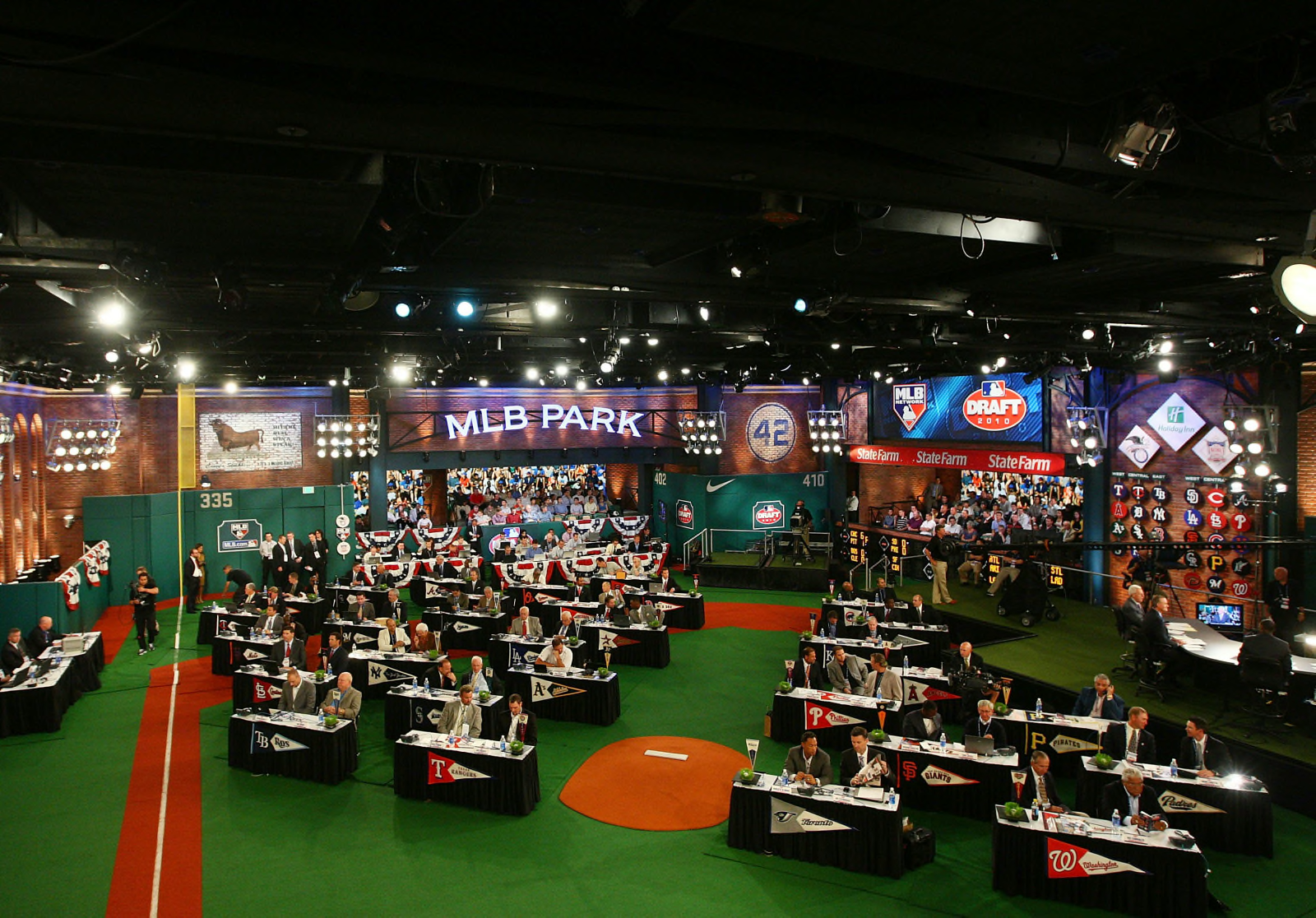
Part I in this series, we looked at three pitching prospects that the Chicago Cubs could target in the second round of the 2020 MLB Draft.
Ideally, the Chicago Cubs will target a college pitcher in the first round to reduce the timeframe that he is projected to be ready for the big leagues. Last year, Ryan Jensen was pegged as the future with the 27th overall pick. The Fresno State product was ranked as the 55th best prospect in the draft, according to Fangraphs, and obviously the Cubs’ brass felt that he wouldn’t be available in the second round.
Within the first five picks, four college pitchers were chosen, and all had promising starts at short-season Eugene. Looking ahead to June’s draft, a similar approach would seem to make sense, given the average pitching talent in the farm system. Also, it doesn’t help that the Cubs lose Jon Lester, Tyler Chatwood, and Jose Quintana from the rotation regardless if a season is played.
However, the Cubs are no stranger to taking top high school talent as well, and several players that were taken now sit among the top of the organization’s best prospects.
Hunter Barnhart, RHP, St. Joseph High School
At 6-foot-3, 210 pounds, Barnhart already has a frame that is built for a future starting pitcher. He has a verbal commitment to Arizona State in the fall, but Baseball America ranks him as the 58th best prospect in the class. He’d make a lot of sense going to the Cubs with the 51st overall pick and is one of the hardest throwing high school pitchers in the draft.
RELATED PRODUCT
The Bryzzo Show T-Shirt by BreakingT
At the 2019 Perfect Game Showcase, Barnhart topped out at 94 mph, which put him in the 99.3 percentile. He transferred from Paso Robles High School after his sophomore year. During his freshman and sophomore seasons, he made 18 appearances, collecting two saves and struck out 38 batters in 34.1 innings. Barnhart also walked 21 batters but posted a 1.22 ERA.
At St. Joseph, he made eight appearances – including two starts – and struck out 44 batters in 27.2 innings. He allowed 18 walks but, remarkably, posted a 1.27 ERA, including a 0.64 ERA this season before the shutdown. Barnhart is an incredibly gifted athlete, earning league MVP in football and added 15 pounds of muscle to his frame during the offseason.
Per Baseball America, he features one of the best curveballs in the class and also complements his fastball with a changeup. Mechanically, Barnhart has a simple leg kick and releases from the 3/4 arm slot. He needs to clean up his plant foot to consistently land in the same spot because it results in some off-balance pitches.
The Chicago Bears have a quarterback conundrum developing heading into the upcoming season. Many fans feel the front office will lean on the draft but here’s why that won’t be happening…
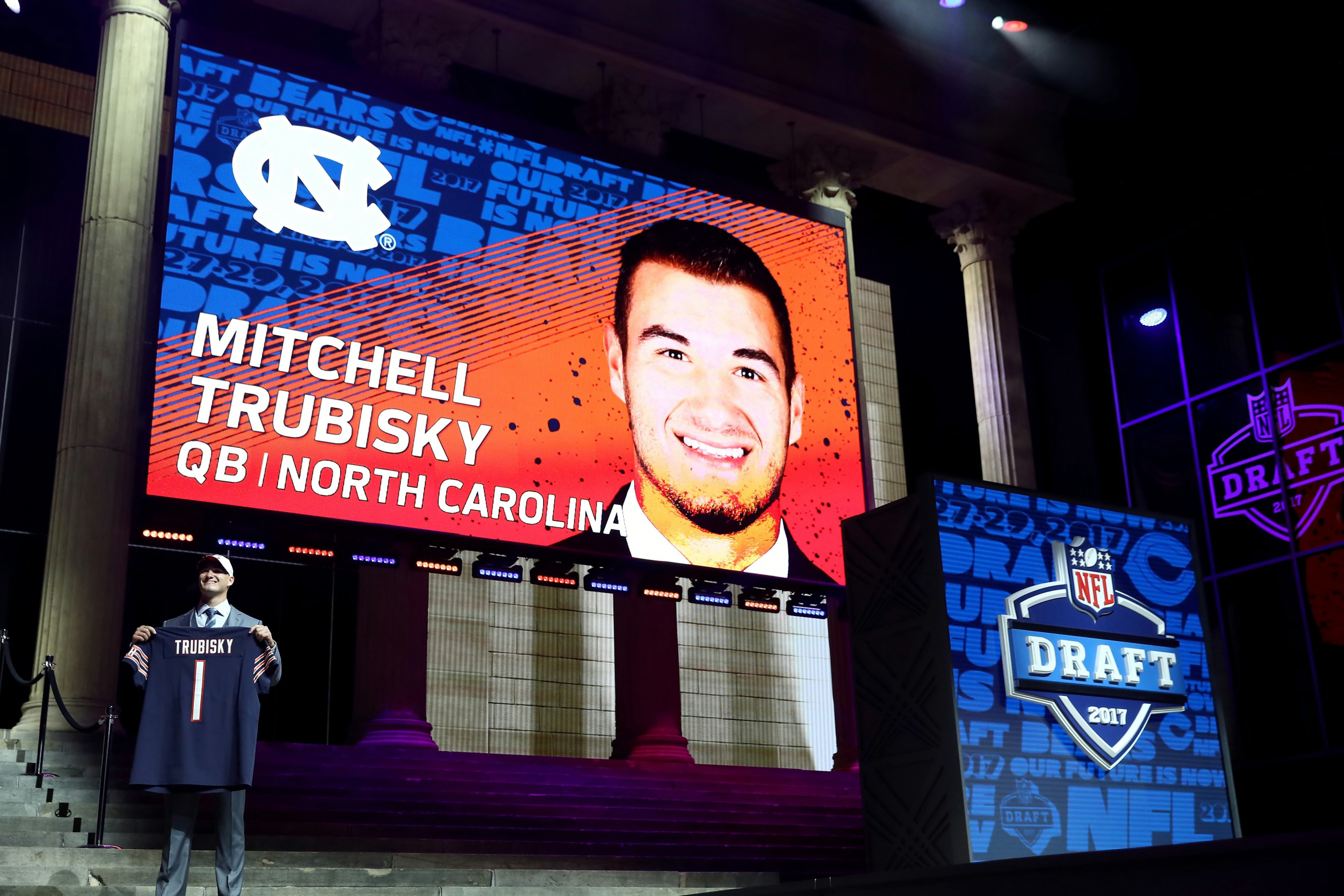
The NFL Draft will be underway this Thursday and the rumor mill has been churning out headline after headline. One of the top attention grabbers in Chicago has been that the Bears are interested in possibly drafting a prospective passer for Head Coach Matt Nagy to develop.
As of now, Chicago’s quarterback room is made up of newly acquired veteran, Nick Foles, former second-overall pick, Mitchell Trubisky and ole trusty dusty, Tyler Bray.
Alright, jokes aside, it would make sense for Ryan Pace to add a young, talented arm to the mix. However, I think there are four factors that will greatly impact the Bears chances of wanting to select a passer come this draft day.
How much will these factors impact the Bears decision making process? In my opinion, so much so that I will go on record stating that I do not believe that the Bears will select a quarterback during the 2020 NFL Draft.
While Bears fans recover from that big gasp, I will say that I do want the Bears to select a passer this year, but I don’t think it’s plausible.
RELATED PRODUCT
Download theScore App and Enter our Top 10 Draft Contest for a chance to win $5000!
While many will argue that Ryan Pace has stated he’d like to take a quarterback each draft, that seems to only be an option in a perfect world and if you haven’t looked around lately, it’s not a perfect world.
The Chicago Bears will scoop up a UDFA passer and will head into camp (if there is one) with the likes of Foles, Trubisky, Bray and a UDFA. Will this warm the hearts of the Chicago hopeful? Most likely not, but it’s what we’ll have to settle with.
Though fans may not be okay with the Bears passing talents, I have a funny feeling that the Bears franchise does; even if it is just for one-year. So, lets go ahead and take a look at the four factors that will lead to the Chicago Bears not selecting a quarterback prospect in the 2020 NFL Draft…
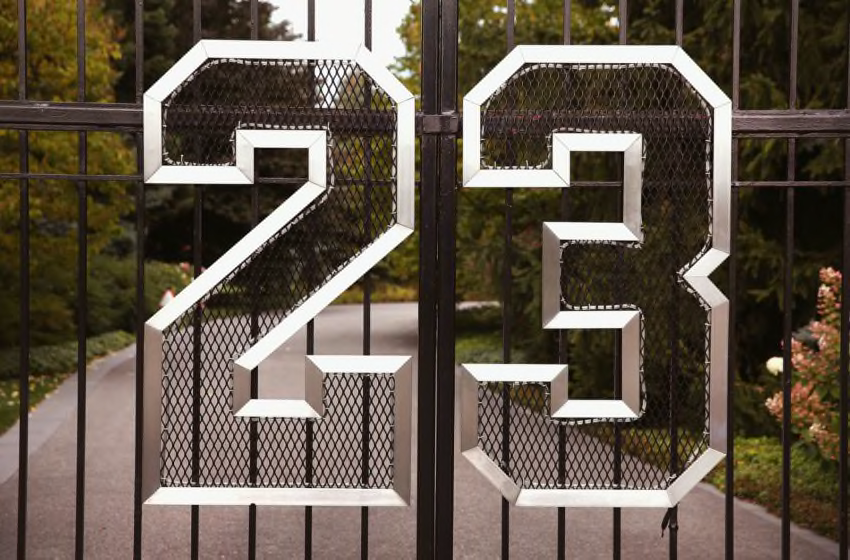
HIGHLAND PARK, IL – OCTOBER 21: A gate with the number 23 controls access to the home of basketball legend Michael Jordan on October 21, 2013 in Highland Park, Illinois. Twenty-three is the number Jordan wore while playing basketball for the Chicago Bulls. The home which had been offered for sale for $29 million and later dropped to $21 million is scheduled to be sold at auction on November 22. The 32,683-squre-foot home features nine bedrooms, 19 bathrooms, a 15-car attached garage and an “NBA-quality” basketball court. (Photo by Scott Olson/Getty Images)
The number 23 is a special number in the history of ChicagoSports. Each team has had someone great players wear that number during some great times.
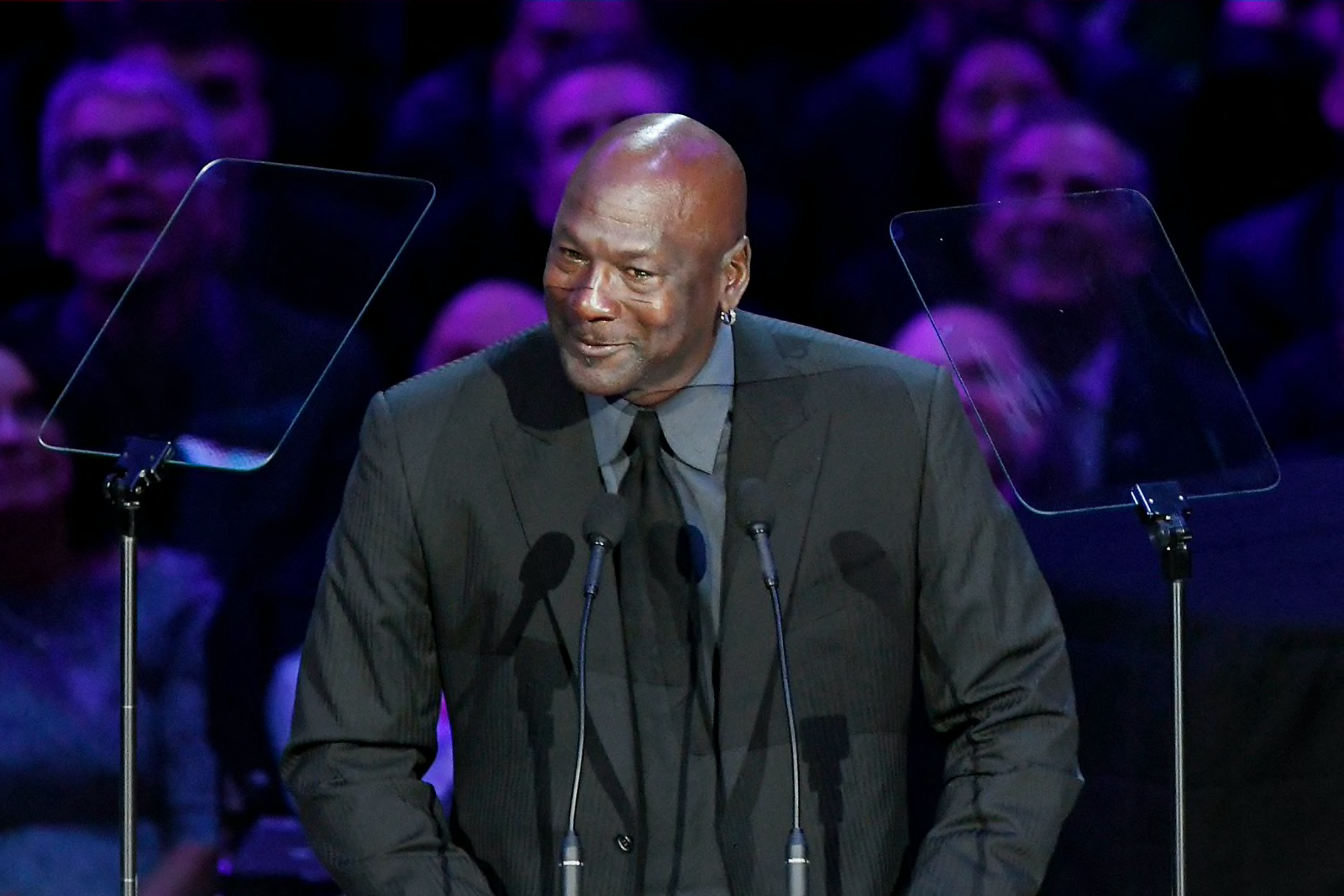
Everyone watched “The Last Dance” documentary that was streamed on ESPN. We all know that Michael Jordan put Chicago Sports on the map but this outstanding show is giving us a deeper dive into the final year of that great dynasty coming to an end in 1997-98. It appears that the ultimate ending is going to be on a sour note but there were definitely some great times.
Well, it is clear that Michael’s number 23 is a legendary number for a legendary player. He isn’t the only player in Chicago to have a legendary number for their teams. Patrick Kane‘s number 88 or Jonathan Toews‘ number 19 will be the two of the most remembered numbers in Chicago history. We all remember that sweetness number 34 worn by Walter Payton back in the day. Every franchise has those great players that wore significant numbers that will always be remembered.
Well, oddly enough, each Chicago team has a great association with the number 23. Not every team’s greatest player wore number 23 but there were some legends that did. It is a great looking number that is remembered as the best number in Chicago Sports history. Each franchise should remember the number fondly as it hangs forever in a couple of buildings around Chicago.
This documentary has put the legendary number in the spotlight more than it already would be. Well, the other teams’ that had amazing 23s deserve some love too. These are the best players to wear number 23 for each of the five major sports teams in Chicago:
It appears the ChicagoBears may be parting ways with another one of their former top draft picks.
Just a few weeks ago, the Chicago Bears had more tight ends on their roster than Michael Jordan had Jerry Krause “short” jokes. At one point, the Bears had 10 tight ends on their roster. Following the recent release of free-agent bust Trey Burton, they currently have nine.
However, it appears that number may shrink by one more by the end of the week if a recent rumor is to be believed.
According to Michael Lombardi (who is not the most popular amongst Bears fans), Adam Shaheen is someone who the Bears have made available and are looking to deal.
Shaheen, who according to Lombardi also goes by the alias Adam Sheehan (possibly in an attempt to remain under the radar) is “available” implying that Ryan Pace is listening to offers ahead of this week’s NFL Draft.
More players available…Malik Hooker, Indy, PJ Hall Oakland, Rasul Douglas Phila, Adam Sheehan, Chicago. It’s going to be a fun week.
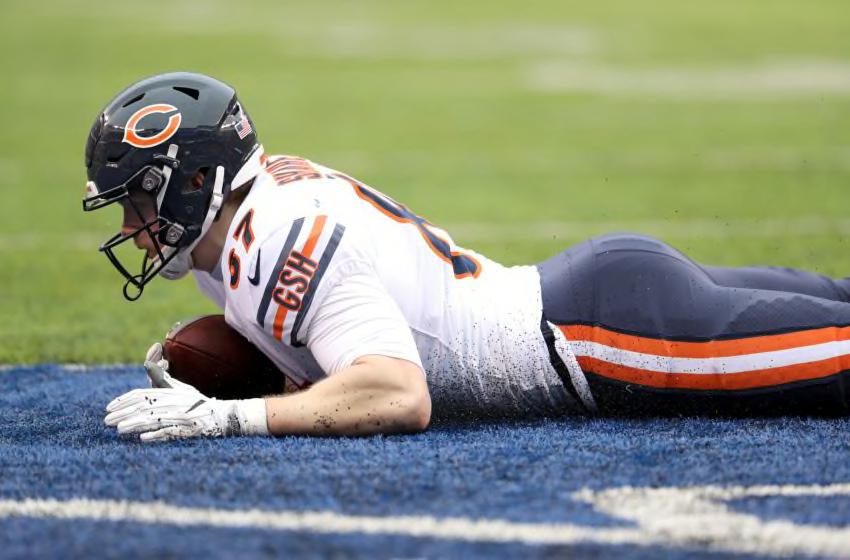
In doing so, Ryan Pace is signaling a willingness to admit that he has once again whiffed on a top draft pick. From Kevin White to Leonard Floyd, to Mitchell Trubisky to now Shaheen, Pace has had a dubious history in the early rounds of the NFL Draft. However, Shaheen has to go down as one of his worst picks.
On paper, you could see what Pace was thinking. A giant tight end with high-end athleticism to pair with the green franchise quarterback he just traded up for. Makes all the sense in the world — unless you draft the wrong tight end — which Pace did.
RELATED PRODUCT
Download theScore App and Enter our Top 10 Draft Contest for a chance to win $5000!
Inconsistency and injuries have come to be the hallmarks of Shaheen’s Bears’ career. He has had a few moments where he flashes the talent that led to him being a second-round pick, but those moments have been so few and far between that it’s easy to forget them entirely.
What, if anything, the Bears could get for Shaheen remains a question, though I’d assess his current value between a USB flash drive and a coupon book for 10 free McFlurries. Regardless, even if the Bears aren’t able to get anything for Shaheen, the fact that they’ve indicated a willingness to move him says he is not long for this roster and his time in Chicago may be coming to an end. Hey, by the time training camp opens, whenever that is, the Bears may be down to eight tight ends! So that’s something!
Pinpointing a potential defensive target for the ChicagoBears in each round of the 2020 NFL Draft.
The Chicago Bears may not hold a first-round selection, but they undoubtedly have a chance to add some serious talent in the 2020 NFL Draft. General manager Ryan Pace is not afraid to move up and down the board and find specific players who can help this team going forward. It is certainly fair to question some of the decisions that Pace has made in his Bears’ tenure, but he has undoubtedly done a nice job of trading around the draft and finding potential value.
As things stand now, the Chicago Bears currently hold the following picks in the 2020 NFL Draft:
Round 2, 43rd overall
Round 2, 50th overall
Round 5, 163rd overall
Round 6, 196th overall
Round 6, 200th overall
Round 7, 226th overall
Round 7, 233rd overall
The two second-round picks are nice, but this team has a lot of holes and not a lot of draft capital to work with. Do not be surprised to see Pace get creative with trades during the 2020 NFL Draft and put the Bears in a position to add impact players throughout the entire process.
In this post, we are going to look to find potential draft targets for the Bears on the defensive side of the ball. In 2018, the Bears had without a doubt the best defense in the entire NFL. The defensive unit was still strong last season, but they did take a step back, ranking eighth in defensive DVOA as opposed to being the far and away top defense in the league in 2018.
RELATED PRODUCT
Brian Urlacher Chicago Bears NFL HOF Bobblehead
This is still a strong defense, but they are far from a perfect unit. There are obvious needs on that side of the ball that simply must be addressed in the upcoming draft. Without further ado, let’s take a look at the best potential defensive target for the Chicago Bears in each round of the 2020 NFL Draft.
The quarterback position was a hot topic at the ChicagoBears media session on Tuesday morning.
On Tuesday morning, the Chicago Bears held a phone conference with the media ahead of the 2020 NFL Draft, scheduled to begin on Thursday night. There were a number of topics discussed, including Trey Burton‘s release, Eddy Pineiro‘s new competition and plans for the Bears in the draft.
However, the hottest topic of the call was the quarterback position. Candidly, since Ryan Pace traded up for Mitchell Trubisky it has been all fans have talked about. So it was no surprise that it once again dominated the discussion.
There were two interesting tidbits that came out of the call, neither of which seems particularly promising for Trubisky.
First, Pace was still unwilling to commit to a decision on Trubisky’s fifth-year option. While they have until May 4th to make the decision, it doesn’t appear they will learn anything new in the next 13 days that would impact their decision. Perhaps they don’t want to tip their hand in the draft and signal to the league that they’re unlikely to draft a quarterback? Well, that might make sense if it wasn’t for the other revelation that doesn’t bode well for Trubisky.
But something feels different about the state of the position this time around. In 2016 he had Jay Cutler in the last year of his contract, and a roster needing nearly a complete overhaul, so the position was a critical need. Prior to last season, Pace was hoping Trubisky would make a big jump from year two to three in Nagy’s offense and wasn’t going to undermine his confidence with more competition.
RELATED PRODUCT
Download theScore App and Enter our Top 10 Draft Contest for a chance to win $5000!
That’s all out the window now, as the addition of Nick Foles through free agency signals, the kid gloves are off. So this year when Pace says the team may draft a quarterback, it’s more believable — especially considering the seat upon which he sits is warming up — quickly.
Expect the quarterback position to continue to be a hot topic of discussion until the season starts, and if they select one in the draft, that’ll only intensify.
How many of you have heard the murmurs about inflating automobile tires with nitrogen rather than air? After doing a little research, it appears more folks are electing to use this method of tire inflation than in the past.
It’s not a new phenomenon. Perhaps not as common to the average car owner, nitrogen tire inflation gas has been used for several years in the Formula One and NASCAR vehicles, heavy-duty off-road equipment and by NASA and other commercial and military aircraft. The Moon Buggy had nitrogen in its tires, as do the Tour de France cyclists.
One of the reasons nitrogen tire inflation hasn’t caught on, say the experts, is that in the past, nitrogen was very costly to obtain and gas had to be purchased in liquid form. Growth of the nitrogen tire inflation system has been slow in highway transportation too, because of the lack of availability.
The use of nitrogen tire inflation gas is more commonly used in car dealerships and among multi-unit maintenance service providers. More and more nitrogen filling facilities are now appearing and preparing for affordable on-site generators.https://depositphotos.com/26324211/stock-photo-car-workshop.html
A natural inert gas, nitrogen is not dangerous, and is environmentally safe and non-combustible. Nitrogen will not burn and has a life expectancy well beyond 20 years if well maintained according to the recommended maintenance schedule. Seventy-nine percent of the air we breathe is nitrogen.
As an environmentally friendly automotive solution, inflating car and truck tires with nitrogen has several benefits, including maintaining of proper tire inflation, maximizing the life of the tire, improves overall performance. Additionally, a tire filled with nitrogen will not heat up and expand.
The previous owner of my 2003 Corvette used nitrogen in the tires and I have not changed that since purchasing the vehicle in 2011. A little air is needed now and then, but nothing like using just air in the tire. Benefits of using Nitrogen include an improvement in the overall life of the tire, better fuel efficiency and improvement in the handling of a vehicle, all due to tire-pressure retention. An environmentally friendly automotive solution, inflating cars and truck tires with nitrogen has several benefits.
Regarding the environment, the use of nitrogen assures better retread-every retread produced means one less new tire produced. Less energy is used and the cost of benefits to users of retreaded tires is lower. In most commercial vehicle fleet businesses, replacing tires is the third larges item in the operating budget. Retreading tires also saves millions of gallons of oil every year, uses less rubber and reduces the loss of natural habitat.
Because nitrogen provides strong casings for more re-tread, retreaded tires contribute to conservation of valuable finite natural resources and help to reduce solid waste disposal problems.
The air pressure required in a nitrogen tire inflation system is an inlet pressure of 145 psi, the amount at which the system is set to operate. A pressure as low as 110 psi can be used but adjustments will need to be made to system components to properly operate at this level.(When considering using nitrogen vs. air, check all psi levels and what works for your particular automobile).
A nitrogen tire inflation system is easy to install, according to experts. What is needed is calibrating the nitrogen analyzer monthly, changing the coalescing filter elements every 6-18 months. The required equipment is available in one complete package. Nothing else is needed except a hose to inflate the tires. The system is anchored to the floor and the air is connected to the inlet. A hose is then connected to inflate the tire. The average person isn’t expected to have such a system in their own garage (unless they race). But dealerships and some service stations would be so equipped.
Manufacturers advise that tires containing both air and nitrogen be purged and re-inflated with the proper amount of nitrogen. For instance, if a nitrogen-inflated steer tire has been repaired and refilled with air, it is recommended that nitrogen be let out of the other steer tire and refilled with air. A tire can be filled with air if nitrogen is not available. However, the effects of nitrogen will be lost, yet the tire will be fine until it can be purged and refilled with nitrogen.
Checking tire pressure is still important, however, with the use of nitrogen inflation gas; tires still need to be checked when cold. Maintaining your vehicles’ tires will not only maximize tire life and fuel economy, but also assure that the car handles well. Over the life of the tire, pressurized air inside a tire travels and permeates its way into and through the tire. Because air contains moisture, the oxygen and moisture in the air reacts with the rubber compounds which then cause a breakdown and loss of the tire’s strength and durability.
A tire that is underinflated is more likely to prematurely fail because when the tire rolls, it flexes more than it was designed to do. The flexing leads to bending of the tire’s rubber and steel which generates heat. A tire’s worst enemy, heat, accelerates tire wear. Air is not an inert gas therefore, it is affected by the change in temperature, which affects the rate of air loss.
When a tire inflated with air gets heated it expands, and more air is lost in hot weather. For every 10-degrees Fahrenheit change in temperature there is a one psi (pound per square inch) change in the tire’s pressure. Nitrogen on the other hand, an inert gas, is not readily changed by chemical reactions. Furthermore, nitrogen does not fluctuate as much, provides constant pressure and reacts less to accelerated diffusion caused by changing temperatures.
When most of the oxygen in tires is eliminated, tire components can’t rust or age as fast. Nitrogen-filled tires age more slowly, chemically. The nitrogen tire inflation system utilizes a semi-permeable membrane to separate nitrogen from the current shop air system.
Building esteem for women (and men) through passion for the sports car. Brought to you by a certifiable car nut by night and weekends, who happens to be a veteran psychotherapist by day.
The 2020 Infiniti QX80 is the largest SUV in the automaker’s lineup and seats 7 or 8 depending on the middle seat configuration. (Photo by Jill Ciminillo)
So, another week recording the podcast from home. And another week without donuts. I bought a donut pan, though, and if it comes in time, we’ll see if I can rectify that for the next episode.
This week we discuss the Infiniti QX80, which is the big daddy SUV in the Infiniti lineup. Its seats 7 or 8 depending on the middle row configuration, and in its top-tier trim, it costs more than $93k. Overall, Damon, Tom and I felt fairly lukewarm about this vehicle. You’ll have to listen to the podcast to see why.
Our news item this week covered Covid-19 speeders on U.S. highways. Many cities have been reporting speeds upwards of 80 mph. Anecdotally, we’ve each experienced this on the Kennedy and Edens in Chicago. In one instance, I was going 65 mph in the right lane, and got passed like I was standing still! I’d be curious to know if anyone else out there has experienced this — feel free to comment below to share.
The bulk of this episode contained an interview with Mike Levine, North American Product Communications Manager for Ford Motor Company, who discusses the wide variety of things Ford is doing to help in the battle against Covid-19. One of the coolest things (IMHO) pertains to how Ford is re-using airbags!
Now a small note/apology: Because we don’t have visual cues to see when someone wants to jump into the conversation, we step on each other a lot in this episode. We’re working on a solution, so fingers crossed we’ll do better next week!
While I will continue to post the podcast to my blog each week, you can subscribe to the Consumer Guide Car Stuff Podcast on any podcast subscription service or visit the Buzzsprout link. New episodes are usually posted on Friday, and then the show itself airs on WCPT 820 AM on Sundays from 1 to 2 p.m.
Be sure to let us know if you have questions or if there are any topics you’d like us to cover on future podcasts.
When it comes to finding an occupant for his seven-bedroom estate in north suburban Mettawa, retired ChicagoBears linebacker Brian Urlacher is taking a new tactic — and it’s aimed at urban dwellers fearful of the coronavirus.
Urlacher now is offering the 6,829-square-foot mansion, situated on 9.4 acres, as a rental for $9,000 per month. The estate, located 36 miles from the Loop, remains for sale at just under $1.8 million — well below the $3 million he sought when he first listed the property in March 2017.
The historic Argus Brewery Building. Source: Argus Brewery.
Argus Brewery, in Chicago’s far south Roseland neighborhood, has announced they are closing after 10 years in operation.
A story today in Patch.com carried the announcement. The father and son team of Bob and Patrick Jensen opened Argus in 2009, in an old Schlitz Brewery distribution stable at 11314 S. Front St. Argus had relied mostly on draft sales, which dried up once Illinois bars had to shut down to fight the COVID-19 virus. A surge in bottled beer orders has allowed them to remain in operation until its current stock is sold.
Argus started by providing house branded beers to local taverns in the Chicago area. Among its more notable brews has been Paschke Pilsner, a Polish style lager named for Chicago artist Ed Paschke. In 2016, they hired brewmaster Ted Furman, who had founded pioneering brewery Golden Prairie Fermentations in 1990. Furman re-launched Golden Prairie in 2018, after his flagship Doppel Alt won a Gold medal at the Great American Beer Fest. Argus also took a Bronze medal at the 2016 World Beer Cup for their Argus Lager. In 2017 they released Tuskegee Airmen Pursuit, an homage to Jack Lyle, a regular taproom customer who was also one of the last surviving Tuskegee Airmen, a group of African-American WWII military pilots.
Argus’ building has been visible from the Metra Electric line, with its distinctive terra cotta horses heads. The stable were designated a Chicago Historic Landmark in 2011, along with a neighboring “tied house” that once formed “Schlitz Row,” a block of Schlitz taverns and housing for Schlitz workers that just happened to be across the street from the dry Pullman area.
Argus also paid tribute to the Pullman neighborhood by releasing Pullman Monumental Lager in 2015, upon the occasion of Pullman being declared a National Monument. The occasion brought a visit from President Barack Obama, who heard about the one-day beer release. Argus got a call from the Secret Service, requesting four cases to be put on Air Force One.
Bob Jensen told Patch he hopes to sell the brewery building and its equipment as a turnkey for new owners.
Fresh Beer Events, occasional bacon, but always spam free, opt out any time.
Meet The Blogger
Mark McDermott
Writer, trivia maven, fan of many things. I thought to learn all there is to know about beer as a way to stay interested in learning. It is my pleasure to bring Chicago’s craft beer scene to you.









 Chicago’s Favorite Food Critics and Bloggers


Leave a comment