Videos

Heartbreak, melodic intricacy, and lush arrangements shape Owen’s tenth album, The AvalancheScott Morrowon June 5, 2020 at 9:45 pm

Few indie-rock artists are more prolific than singer-songwriter Mike Kinsella, who’s been playing in Illinois bands since the late 80s, including Cap’n Jazz, Joan of Arc, and American Football. The latter band reunited in 2014 following a 14-year break and subsequently released two acclaimed albums, 2016’s American Football (or LP2) and last year’s American Football (LP3). Now the singer and multi-instrumentalist is set to release The Avalanche (Polyvinyl), the tenth studio album from his solo project, Owen. Produced by Bon Iver drummer and fellow musical Swiss army knife Sean Carey (who recorded Owen’s ninth LP, The King of Whys), the nine-song album is typical Kinsella: full of beautiful, intricate melodies, lush arrangements, and naked lyrics. Whatever the project, Kinsella pours his life into his writing, and The Avalanche is no exception. His lyrics on last year’s American Football LP were metaphorical and opaque, with allusions to heartbreak, self-medication, and a broken father-son relationship. By contrast, The Avalanche is straightforward about his personal issues, and frankly addresses the end of his marriage. Over the folksy acoustic melody, hushed brush strokes, and pedal steel of “Dead for Days,” Kinsella sings, “Now I’ve got friends that don’t know me / A wife that’s disowned me / You in concept only to miss / And I’ve been sober for over two weeks.” Accompanied by the light alt-country vibe of “The Contours,” he confesses, “I’m in therapy / She’s in therapy / Turns out all the answers are just questions / For next week’s sessions.” But perhaps most cutting is “Mom and Dead,” which is also the album’s most musically emotive song, with cascading guitars and a beautiful glockenspiel sequence over descending bowed cello. As the track slowly climaxes, Kinsella sings, “How can you live without me? / Who’ll pour your drinks? / Who’ll make your heart beat?” It’s often said that pain makes for great art, and The Avalanche is the latest proof. v

Read More

Heartbreak, melodic intricacy, and lush arrangements shape Owen’s tenth album, The AvalancheScott Morrowon June 5, 2020 at 9:45 pm Read More »

Stanzas in placeMarissa De La Cerdaon June 5, 2020 at 8:00 pm

Just one week after Chicago Public Schools (CPS) went remote, the Chicago Poetry Center (CPC), a not-for-profit 501c3 arts organization designed to facilitate creative literacy and self-expression through poetry, was able to follow suit and pivot their CPS school-based poetry residencies “Hands On Stanzas” to virtual programs.

Currently, CPC has virtual residencies in 26 classrooms across nine schools in the city. The residencies, which usually consist of a Chicago poet/teaching artist (a poet in residence) meeting with their assigned classrooms weekly to read, write, and perform poetry, now exist via videos for students with computer and Internet access, or via workbook packets for those in need of non-digital support.

“We try to make sure that we’re delivering workbooks and instructions that can turn into paper packets if students are coming to the school for meal and enrichment packet pick up so that way we can support students without Internet access,” says Elizabeth Metzger Sampson, executive director of CPC. The workbooks consist of two to three pages of step-by-step instruction on the poetry lessons the poets in residence have chosen for the week.

“Each poet has done this a little bit differently,” says Metzger Sampson. “For instance, one of our poets, Joy Young, she actually throws the workbook on her screen, screen shares, and really does sort of an ‘I do, you do, we do’ sort of lesson with the students in the screen share.”

Similarly, Leslie Reese, who works with second graders at Swift Elementary School, says she uses the bond she created with her students in person as an encouragement to experiment with her remote teaching method.

“I set up a colorful corner in my apartment with a display of illustrated poetry anthologies and my flipboard with markers and that’s where I recorded my videos. I reshaped some lessons from my syllabus so that there was room for students to channel their feelings imaginatively,” she says. “For instance, in the ‘persona poems’ lesson, I asked students, ‘Do you think that school misses us?’ and then guided them to write poems in the voice(s) of things at school (art paintbrushes, classrooms, etc.) that miss the sights and sounds of being used and inhabited by students and teachers.”

Pre-COVID-19, the poets in residence would collect students’ work and publish different poems on CPC’s website every week. Now, the publishing is limited to who is writing and sending in work. The work is published on CPC’s “Shelter in Poetry” blog–currently, the blog has 12 posts with a brief description of the lesson students were taught and the poems they wrote as a result.

“In ‘A Little Girl’s Poem’ by Gwendolyn Brooks, the voice of the child shares a vision of what is good and what is not right in the world. She ends by saying ‘Life is for us, and is shining. / We have a right to sing,'” says Reese. “Reading that poem inspired me to create the ‘My World’ poems lesson. I wanted students to feel encouraged to share their own candid, whimsical, and visionary ideas for the world we live in.”

There is also work by students from Taft Freshman Academy, whose poet in residence is Timothy David Rey. In these poems, seventh-to-ninth-grade students were inspired by Li Po’s “Quiet Night Thoughts” and wrote about the quietness (or lack thereof) of their evenings.

“I try to pick poems that were written where they could express themselves, maybe about what’s going on now with the pandemic, or how they’re feeling,” says Rey. “A lot of poems had to do with self-care, so they could sort of look around themselves and see what’s happening and respond to that through poetry.”

Rey believes one of the challenges of teaching poetry virtually is that there is no chance for feedback. Yet he’s found that even with this challenge, students are still engaging with the material, even the most reluctant writers. “We would receive writings from students who may not have written when they were in a formal classroom setting,” he says.

Another way CPC has continued engaging with their students is by transitioning their pop-up assemblies into a remote format. Last week they hosted their first virtual assembly with Urban Gateways attended by more than 90 fifth-grade students. Additionally, they have moved their annual “All Schools Reading” event online, which features a select number of students reading their poems in front of family and friends. “We got 35 videos back with 35 signed parental media releases,” says Metzger Sampson. “We are now building out a couple of videos that are going to be broken up by grade group, and we’ll be debuting that video in probably like mid-June.”

With these lessons, virtual assemblies, and videos, CPC hopes students feel encouraged and inspired throughout these trying times. “I think a lot of what these lessons are teaching right now is, it’s okay to have feelings. It’s okay to explore that feeling. It’s okay to have complicated feelings,” says Metzger Sampson. “And alternately, what I think that they’re exploring is, ‘Hey, let’s dream. Let’s imagine and let’s create’ because [this is] a wonderful way to energize themselves and spend their time while we’re all stuck at home.” v

Read More

Stanzas in placeMarissa De La Cerdaon June 5, 2020 at 8:00 pm Read More »

An examination of Black identity and timeArionne Nettleson June 5, 2020 at 9:30 pm

When William Nathaniel Jackson arrived in Philadelphia in the early 1900s, he became a new man. He was fleeing from somewhere near the Carolinas when he traveled north. There, he took a new name, made a new family, and built a new life.

He buried his old life. He became a pillar of the community–he was likely one before, which may have contributed to his need to escape. The full story, though, is a puzzle that his family can vaguely make out but possibly never see complete, an oral history pieced together with memories and stories.

It’s a familiar narrative for Black families who relocated during the first and second waves of the Great Migration. The mining of these memories led conceptual artist Nate Young to his new work, “Transcendence of Time,” showing virtually and in-person by appointment through Chicago’s Monique Meloche Gallery. Jackson was Young’s great-grandfather–the father of his paternal grandmother.

“If he was someone before he left and then he was someone else when he arrived, or set up a new life, that liminal state was kind of a vacuum of identity,” Young says. “And that was what was really driving my initial interest in him as a character.”

Today, a century after Jackson’s move, Young’s exploration of time feels eerily more relevant than ever–a blending of the past and present. The combination of a global pandemic that disproportionately affects Black communities and widespread protests against racism-driven police violence feels both unprecedented and reminiscent of past struggles.

“The thing that I’ve been thinking about a lot lately is the complicated nature of time, about the potential of collapsing the past and the present and the future into one thing as opposed to thinking about it linearly,” Young says.

In Philadelphia, Jackson was a fugitive. While looking through his journals and writings, Young found that out of fear Jackson put down the horse that he’d used to travel north and buried it. Jackson also attempted to take his own life. The horse’s bones and words from Jackson’s suicide letter are incorporated throughout the work.

“How do you hide something so large? A horse is a huge, really strong, and really large animal,” Young says. “To hide something like that is very difficult; it takes a lot of effort. So I was thinking about that in parallel with . . . the way that history is erased as well–or hidden, buried and then unearthed at different times. It’s sort of, once those hidden things start to come to light, in the context of a different time, they take off, and they may take on different kinds of meanings.”

In the online presentation, Young explains his family’s history and how he created the work, and guides audiences through the exhibition, which has multiple sets of sculptural works made of the excavated bones and handwritten words from Jackson’s suicide note. White oak and walnut reliquaries (or box altars) line the walls and walnut vitrines (or displays) that also have motion-activated audio of the bones rubbing together are placed randomly throughout the gallery. Young’s use of sound here is intentional.

“I wanted to use sound as a proof of a presence of an object that you can’t necessarily see, and that for me is parallel to thinking about history,” Young says. “I never saw my great-grandfather. I’ve seen a picture of him, but even that picture is constantly evading me. I’ve been trying to find it and I haven’t been able to find it for years. But there must be another way to prove his existence, and maybe a sound is a memory.”

Young’s exhibition lies in the in-between, in what you can and cannot see, and he hopes that visitors spend time in that place of doubt.

“When someone encounters the exhibition and then leaves, that doubt is important to me because it reveals the dichotomy between belief: belief and unbelief,” Young says. “Because what I don’t want is just to reveal my own familial history, but to think about the ways in which those ideas are transmitted–whether it’s through historical text, whether it’s through oral tradition, whether it’s visually, whether it’s sound–that vessel that I was describing is the vehicle through which belief can be produced.” v

Read More

An examination of Black identity and timeArionne Nettleson June 5, 2020 at 9:30 pm Read More »

NBA lookback: Jerry Krause got a raw deal in ‘The Last Dance’ChicagoNow Staffon June 5, 2020 at 12:28 pm

ChicagoNow Staff Blog

NBA lookback: Jerry Krause got a raw deal in ‘The Last Dance’

Read More
NBA lookback: Jerry Krause got a raw deal in ‘The Last Dance’ChicagoNow Staffon June 5, 2020 at 12:28 pm Read More »
The best of Chicago’s Lori Lightfoot memesChicagoNow Staffon June 5, 2020 at 2:20 pm

ChicagoNow Staff Blog

The best of Chicago’s Lori Lightfoot memes

Read More

The best of Chicago’s Lori Lightfoot memesChicagoNow Staffon June 5, 2020 at 2:20 pm Read More »

Prepare for 5 months of turmoil!Newsboyon June 5, 2020 at 3:09 pm

Newsboy: John Ruane’s Paper Route

Prepare for 5 months of turmoil!

Read More

Prepare for 5 months of turmoil!Newsboyon June 5, 2020 at 3:09 pm Read More »

The two-man parade of fools: Trump and BidenDennis Byrneon June 5, 2020 at 3:58 pm

The Barbershop: Dennis Byrne, Proprietor

The two-man parade of fools: Trump and Biden

Read More

The two-man parade of fools: Trump and BidenDennis Byrneon June 5, 2020 at 3:58 pm Read More »

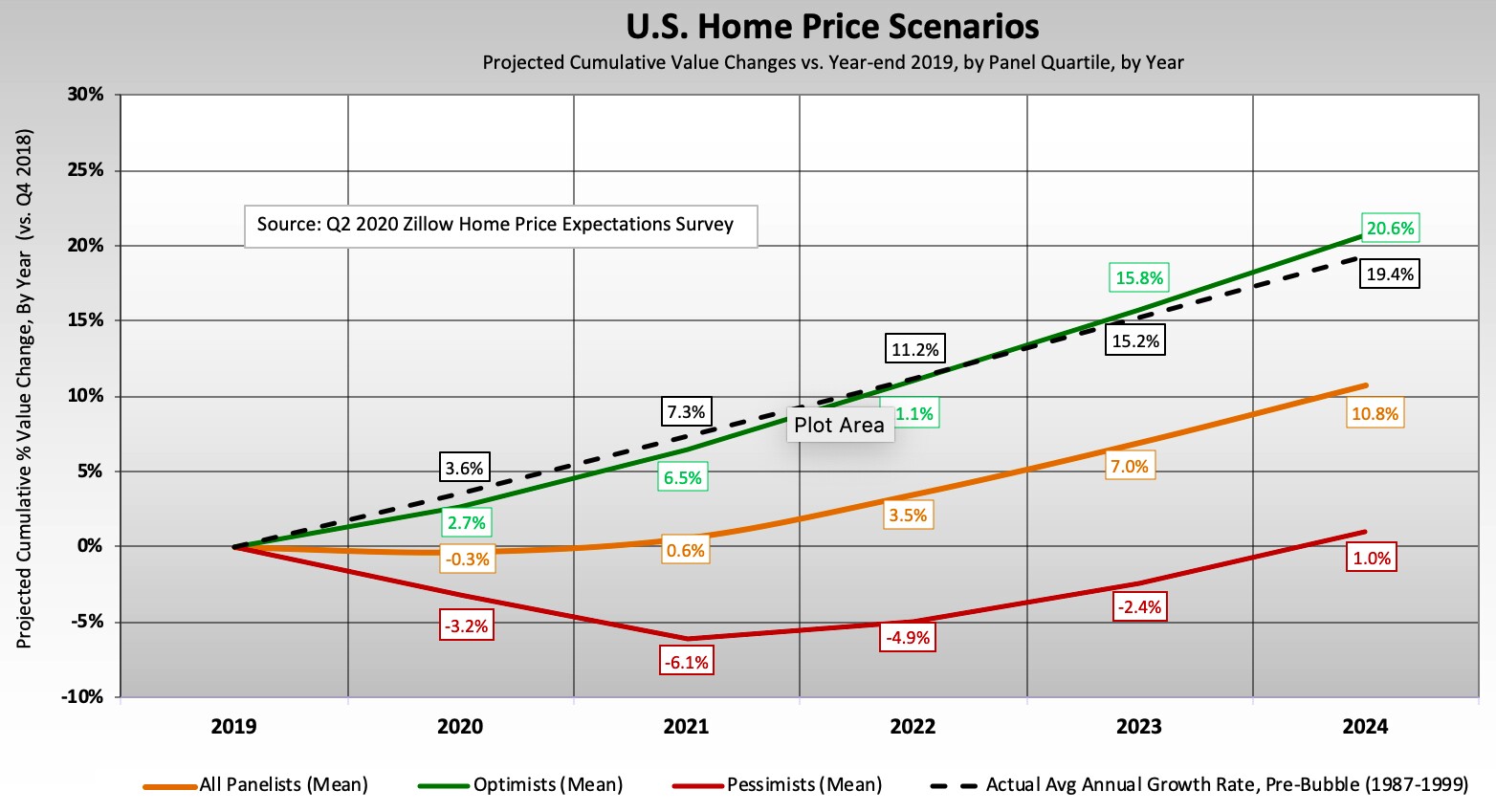
Surprise! Real Estate Experts Turn Negative On Home Price OutlookGary Lucidoon June 5, 2020 at 6:48 pm

Getting Real

Surprise! Real Estate Experts Turn Negative On Home Price Outlook

Read More

Surprise! Real Estate Experts Turn Negative On Home Price OutlookGary Lucidoon June 5, 2020 at 6:48 pm Read More »

The surprising argument for police defunding: Sensitivity training didn’t workDennis Byrneon June 5, 2020 at 7:09 pm

The Barbershop: Dennis Byrne, Proprietor

The surprising argument for police defunding: Sensitivity training didn’t work

Read More

The surprising argument for police defunding: Sensitivity training didn’t workDennis Byrneon June 5, 2020 at 7:09 pm Read More »

It’s the Little Things That Mean a LotBarbara Revsineon June 5, 2020 at 7:41 pm

A Bite of Chicago

It’s the Little Things That Mean a Lot

Read More

It’s the Little Things That Mean a LotBarbara Revsineon June 5, 2020 at 7:41 pm Read More »