Videos

How Siblings Inspire Success – A Tribute to My Brotherson July 17, 2020 at 2:01 am

Success Stories

How Siblings Inspire Success – A Tribute to My Brothers

Read More

How Siblings Inspire Success – A Tribute to My Brotherson July 17, 2020 at 2:01 am Read More »

Chicago Pop Stars, Hardcore Heroes, and House Legends Book Launch Partyon July 17, 2020 at 1:00 am

Join the Chicago Reader on July 16 for the launch of Chicago Pop Stars, Hardcore Heroes, and House Legends: 10 Years of Chicago Reader Music Features by Leor Galil. Celebrate Leor’s debut book with interviews and performances by Kaina, Pivot Gang and the John Walt Foundation, Mike Kinsella of American Football, and Alderman Andre Vasquez.


Thursday, July 16, 7 PM-8 PM
Virtual, free, no RSVP


Rewatch the event here:


Learn more about the book and order your copy! ->

click image
leorbook-square-logo.jpg

Read More

Chicago Pop Stars, Hardcore Heroes, and House Legends Book Launch Partyon July 17, 2020 at 1:00 am Read More »

A manifesto, a performance art protest, and the return of (some) live theateron July 16, 2020 at 4:40 pm

Back in June, a coalition of more than 300 BIPOC theatermakers released a public testimonial under the moniker “We See You, White American Theater.” The open letter in part called out “theatres, executive leaders, critics, casting directors, agents, unions, commercial producers, universities and training programs,” adding, “You are all a part of this house of cards built on white fragility and supremacy. And this is a house that will not stand.” The testimonial was signed by several Chicago-based BIPOC artists (including Sydney Charles, Regina Victor, Wardell Julius Clark, and Sandra Marquez, among others) as well as high-profile names like Viola Davis, Wendell Pierce, and Lin-Manuel Miranda. An accompanying petition on change.org has nearly 83,000 signatures as of this writing.

We See You W.A.T. followed this initial shot across the bow this month with the “BIPOC Demands for White American Theatre”–a comprehensive and detailed compilation that both anatomizes the systemic racism in the American theatrical ecosystem and provides a roadmap for ways to begin dismantling it.

There’s a lot to unpack in the 31-page document, which can be read in its entirety in a PDF here. It’s broken down into sections covering cultural competency, working conditions and hiring practices, artistic and curatorial practices, funding and resource demands for BIPOC organizations, commercial theater and Broadway, unions, press, and academic and professional training programs.

Some of the points dovetail with those made in broader areas of anti-racist reform, such as the demand that theaters “cease all contractual security agreements with police departments.” Others are more granular in nature, such as demanding that theaters “provide the necessary hair and makeup products, barbers, and/or hairdressers when working with Black artists.” Demands for greater transparency and equity across all areas–funding, hiring, salaries, season selection, and board member affiliations among them–resonate throughout the document.

There will be much more to report on We See You W.A.T. in the months to come, but the collaborative “living document” they’ve created should be required reading for all who are interested in breaking down racist structures and practices in theater and beyond.

Honk for justice

One Black Chicago theatermaker and organizer has come up with a creative form of protest. Jocelyn Prince, who has worked as a dramaturg at theaters around the country as well as being a principal partner at ALJP Consulting (a planning and search firm focused on creating equity, diversity, and inclusion in cultural organizations), wants you to “Honk for Justice.”

The protests, which take place daily at locations throughout the north side, bring a dollop of performance art to the sidewalks of West Town, Uptown, Rogers Park, and elsewhere.

Prince notes, “When the protests began nationwide around the George Floyd murder, I first started protesting on the south side of Chicago. I’m from the south side, I protested down there for several days. And these were the types of protests where we were getting in the faces of police officers with batons.”

But, she adds, “I live in Rogers Park. I’ve lived in Lakeview, I went to school in Evanston at Northwestern, I have a connection to the north side. So I was thinking about how people on the north side don’t tend to go to the south side or the west side, they perceive those areas to be dangerous. It’s where the Black people live, people of color live, they’re poor dangerous areas. And a lot of this brutality enacted on Black people by police are in those areas.”

Prince wanted to see more people on the north side standing up for anti-racism and justice. After discussions with her friend Madison Kamp (who is white), they started out in early June with what Prince calls “regular visibility protests” on sidewalks at busy intersections. But then, says Prince, “What I started to think about was me as a Black woman having to do all of this work to organize people, to try to teach and organize white people to stop being racist toward me, and how tiring that labor is. And I started thinking about activists like Fannie Lou Hamer who said famously, ‘I’m sick and tired of being sick and tired.’ And so, you know, for me, that was where I came up with the image of me sort of lounging on the beach. Not the literal beach, but with the straw hat and everything, soaking my feet.”

That’s where Honk for Justice adds a performance art twist to the regular protest motif. When Prince is there, she sits in a lawn chair reading. White volunteers serve as mediators between her and anyone who wants to interact with her, telling them, as Prince says, “‘No, she’s resting. She needs to rest. You can talk to me.’ Which is also an interesting dynamic.”

The protests have included musicians and theater artists–Chicago actor Joe Foust has shown up as a “sad clown,” handing out black helium balloons to children. Prince wants to see more Chicago theater artists as well as families of all kinds showing up, holding signs and making noise to call attention to anti-racism and justice.

“I think it’s a good way for kids to process and understand all of this stuff that is happening around them. I think it’s also a good way to teach kids that they have a voice in their democracy, too. And I think that an eight-year-old will remember this and it will inspire them to participate civically in their communities when they get older. And I think that is very important.” You can check out the schedule for upcoming Honk for Justice events on Facebook.

Phase four for playmakers

A handful of companies are dipping their toes back into the live performance waters this month. As of this writing, Judy and Liza–Once in a Lifetime: The London Palladium Concert–A Tribute, which opened at the Greenhouse in early March and then had to shut down with all the other shows in town, is planning on reopening at the Greenhouse on July 24. Stars Nancy Hays (who also coproduces) and Alexa Castelvecchi return as the mother-daughter diva duo, with a three-piece band, reenacting their 1964 concert. Reader critic Albert Williams wrote of that earlier outing, “The show’s best moments are the duet medleys, in which Hays and Castelvecchi evoke the deep and honest affection that bonded mother and daughter in both triumphant and trying times.” They’ll now be evoking that bond at a putatively safe distance, though it bears emphasizing that singing has been suspected to be a particularly effective spreader of the COVID-19 virus.

The audience will be required to wear face masks, and the Greenhouse’s mainstage space is capped at 25% capacity. The theater further promises that “special filters will be used in all our heating and air conditioning units.” Judging by responses on social media, it’s a controversial decision and it remains to be seen if these songbirds in the coal mine will draw audiences. Right now, the show is scheduled through August 9.

If you’re more comfortable with outdoor performance, Chicago director Jessica Thebus and collaborators have been organizing “Random Acts of Theater.” On July 11, they offered Flight of Birds on the beach near Loyola (shhh! Don’t tell the mayor!), featuring a large blue heron puppet and several smaller bird puppets “to offer an image of Freedom and Power to all the people in the park.” On Saturday, August 8, they present Mariposas Nocturnas: A Twilight Procession, created by Ismael Lara. It will “celebrate the lives of all those who have gone before, with the image of luminous white moths, candles, and music,” says Thebus. Those interested in this family-friendly event should congregate by 8:30 PM at the end of Farwell Avenue in Loyola Park, wear dark clothing, and carry an electric candle. The performance will be socially distanced and masks are required. You can follow them on Instagram for more information. v


Read More

A manifesto, a performance art protest, and the return of (some) live theateron July 16, 2020 at 4:40 pm Read More »

The myth of housing mobilityon July 16, 2020 at 6:00 pm

As cities around the country continue to grapple with the economic and social fallout of decades of racist public policy, a new book by Georgetown University sociologist Eva Rosen offers a compelling ethnography of the Section 8 housing voucher program. Though The Voucher Promise (Princeton University Press) is focused on a low-income Black neighborhood in Baltimore, its insights apply to Chicago and probably every other segregated American city.

Section 8–now officially called the Housing Choice Voucher program–has emerged in recent decades as the primary vehicle for subsidizing rental housing. Just five million households across the U.S. receive federal housing assistance, and more than half of them are in the private housing market. Where the federal government once allocated funds to cities for building and maintaining public housing, it now offers subsidies to landlords for housing poor people. Tenants pay a portion of their income in rent, while landlords collect the rest from the government. The “failure” of the public housing experiment (now widely understood by experts to have been preventable and even planned) has not resulted in poor people gaining access to less segregated, more resource-rich neighborhoods, however. Rosen’s work adds to a chorus of research findings from the last ten years that have revealed vouchers to be inadequate for promoting housing integration and upward socioeconomic mobility.

While they alleviate the heavy financial burden of housing costs for some of the poorest families, vouchers also help reinforce segregation. Because the value of vouchers is usually calculated using metropolitan-area rental cost averages, the vouchers end up bringing in more money than market rents would to landlords in poorer neighborhoods. This incentivizes landlords to aggressively court voucher holders there. “In a complete reversal of the state policy goals of the program, a program meant to provide a safety net to tenants ends up acting as one for landlords,” Rosen writes. She found that landlords can sometimes get hundreds of dollars per month more from a tenant with a voucher than from one without.

Thus, voucher holders find themselves at the mercy of landlords, who steer them to units “that deliver the biggest profits, which happen to be in the very neighborhoods from which the voucher might afford families the opportunity to escape.” Since many voucher holders don’t have extra money for security deposits and are operating on the tight deadlines set up by housing authorities, their options are limited and the landlords can easily leverage this by offering units with attractive cosmetic remodels, waiving security deposits, and providing transportation to viewings. “These tactics wrest control and choice away from tenants,” Rosen writes. And, once they have them in their units, “landlords exploit the intricacies of the voucher rules to limit the movement of voucher holders out of their properties.”

Meanwhile, vouchers bring less money than landlords in wealthier, whiter neighborhoods would get from market-rate renters, which adds an economic disincentive on top of racial and class biases against voucher holders there. But finding housing in a lower-income Black neighborhood doesn’t mean voucher holders (who are disproportionately Black) are free of discimination and class bias.

Rosen’s ethnography of Section 8 is based on the experience of renters, homeowners, and landlords in the Park Heights neighborhood of Baltimore. Like many Black neighborhoods around the country its history is one of de jure segregation and redlining that gave way to blockbusting and white flight. The neighborhood declined as deindustrialization sapped jobs from its residents and various forms of discrimination and disinvestment overlapped to hinder wealth building by the Black homeowners. In recent decades the housing stock has aged and devalued, municipal services have dried up, and the neighborhood has experienced an influx of renters squeezed by market conditions and public policy. While the homeowner and renter classes in the area are overwhelmingly Black, the landlord class is disproportionately white. It’s the voucher holders that are most often scapegoated for the decline of the neighborhood, however.

Rosen documents in detail the class divides that exist between homeowners, unassisted renters, and voucher holders (and reminds us, once again, that Black people aren’t a monolith). Though her insights are undoubtedly limited by the fact that she’s a white woman, her observations about the social dynamics between these groups are crucial to understand for anyone doing community organizing work or advocating for public policy changes in neighborhoods like Park Heights. Like researchers of mixed-income housing in Chicago, Rosen underscores that proximity to higher-income neighbors with more social capital does not translate into tangible benefits for poorer voucher holders. Even when living cheek-to-jowl with better-off homeowners or unassisted renters, voucher holders are often isolated and stigmatized.

Rosen’s years of research and months of living in Park Heights lead her to conclude that “the ‘choice’ of where to live that policymakers hope to provide to voucher holders is largely an illusion.” Indeed by now we should all be on guard when we hear policymakers use the word “choice,” especially when new policies purport to offer “choices” to the most marginalized people. “Removing financial constraints to make room for choice is not always enough to allow people to take full advantage of the available options,” Rosen writes. She concludes the book with a discussion of possible solutions to the corruptions and shortcomings of the voucher program.

While the narrative, anecdotal parts of the book can feel truncated and lacking in depth and texture, it remains an engaging read. Most compellingly, Rosen offers a moving psychological portrait of her interlocutors, revealing how people cope with neighborhood change and reconcile limited opportunities and chronic disappointments. The mental gymnastics residents of Park Heights undertake to deal with their realities are at stark odds with policymakers’ rosy narratives about how people make decisions about where they live and how neighborhood social bonds are formed. Instead, the people we meet in the pages of The Voucher Promise share what happens when your only way out of a neighborhood is through the story you tell yourself about it. v

Read More

The myth of housing mobilityon July 16, 2020 at 6:00 pm Read More »

Cité, One of Chicago’s Best Views, is for Saleon July 16, 2020 at 8:04 pm

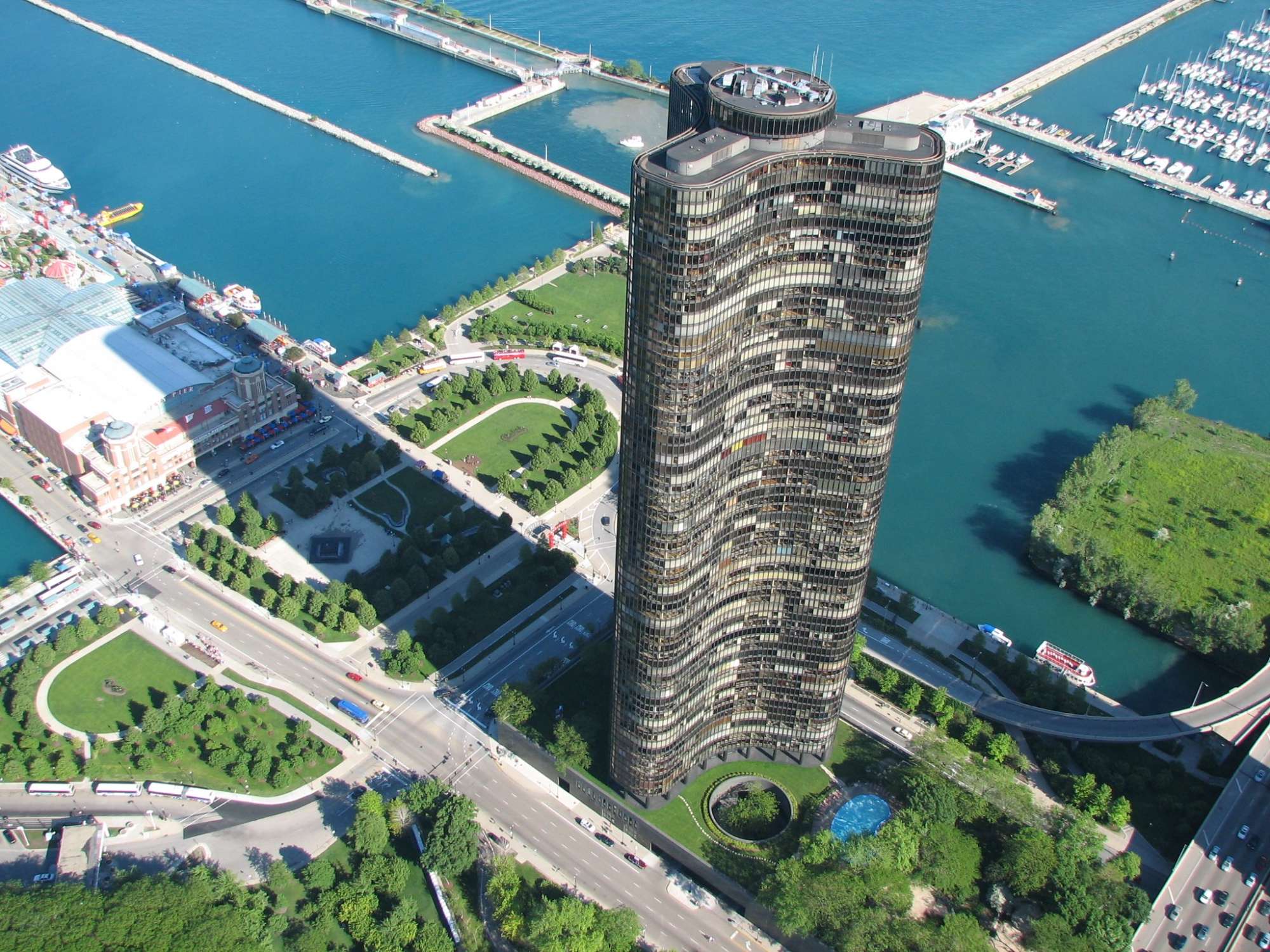
Cité, one of the highest-altitude restaurants in Chicago (and arguably one of the best views), is now up for sale. This opportunity is a lucrative one for a resident or a restaurant, considering that this space sits on top of the only high-rise that’s east of Lake Shore Drive.

Photo Credit: Cité Yelp Page

Sitting in a circular space on the 70th floor of Lake Point Tower, Cité has been in operation at its current location for decades. Broker Rick Scardino, who represents restaurant owner Evangeline Gouletas for the sale. In a statement to the Chicago Tribune, Scardino said that part of the attraction of Cité’s location is that “It’s the only commercial building east of Lake Shore Drive, with a 360-degree view of the city.” He also noted that “The term ‘once-in-a-lifetime’ is overused in my industry, but one can make the argument that this truly is a once-in-a-lifetime opportunity.”

Advertisement

With Scardino declining to estimate the value of the space and with a lack of a list price, it’s hard to say exactly what the space is going for, but for how treasured of a space it’s in, offers in the millions would certainly not be out of the question. Part of the reason Cité’s space is so tantalizing is the utility in the space itself. If the space is to stay a restaurant, a new restaurant operator could also buy the open space from the building’s condo association and turn the roof atop the 69th floor of Lake Point Tower into outdoor seating.

Photo Credit: Lake Point Tower Flickr Page

Lake Point Tower, with its unique status as the only high-rise east of Lake Shore Drive, has panoramic views of the lake as well as the skyline. Designed by George Schipporeit and John Heinrich, architects who were students of Ludwig Mies van der Rohe at the Illinois Institute of Technology, the building initially opened just as apartments in 1968 until the entire structure was completed in 1969. American Invsco, the Gouletas family’s development firm, converted the building into condo units in the late 80’s. As of today, there are about 758 homes sitting inside Lake Point Tower.

Advertisement


Photo Credit: Shore Club

View Where To Get Boozy Slushies in Chicago

Want to take your slushie game to new heights? View our list on where to get boozy slushies in the city.

View Where To Get Boozy Slushies in Chicago

Advertisement


“It’s been in the works for a period of time,” Scardino said about the sale, dissuading any beliefs that the selling of Cité’s space is a result of the economic hit the restaurant industry has taken from the ongoing coronavirus pandemic. “This is really the last of the owner’s holdings in this market.”

Photo Credit: Cité Yelp Page

Along with the 4,706 square feet of Cité on the 70th floor, another space of roughly 3,000 square feet is included for sale on the building’s second floor. The second floor includes a kitchen, office, and storage space, but could also be sold separately. Cité is currently opened at a limited capacity under the state’s reopening plan and will be in operation until the space is sold.

Advertisement

At UrbanMatter, U Matter. And we think this matters.

Tell us what you think matters in your neighborhood and what we should write about next in the comments below!

Advertisement

Featured Image Credit: Cité Yelp Page

Advertisement

Advertisement

Read More

Cité, One of Chicago’s Best Views, is for Saleon July 16, 2020 at 8:04 pm Read More »

2020 MLB Season Defined by Individuals Taking Personal Reponsibilityon July 16, 2020 at 5:06 am

The Patriotic Dissenter

2020 MLB Season Defined by Individuals Taking Personal Reponsibility

Read More

2020 MLB Season Defined by Individuals Taking Personal Reponsibilityon July 16, 2020 at 5:06 am Read More »

Catching up on Cubs news and notes as season approacheson July 16, 2020 at 11:29 am

Cubs Den

Catching up on Cubs news and notes as season approaches

Read More

Catching up on Cubs news and notes as season approacheson July 16, 2020 at 11:29 am Read More »

“We cannot mistake absolutism for principle, or substitute spectacle for politics, or treat name-calling as reasoned debate.” President Barack Obama’s inaugural address – Jan. 2013on July 16, 2020 at 1:00 pm

Cheating Death

“We cannot mistake absolutism for principle, or substitute spectacle for politics, or treat name-calling as reasoned debate.” President Barack Obama’s inaugural address – Jan. 2013

Read More

“We cannot mistake absolutism for principle, or substitute spectacle for politics, or treat name-calling as reasoned debate.” President Barack Obama’s inaugural address – Jan. 2013on July 16, 2020 at 1:00 pm Read More »

Shop Lookpreneur Julyon July 16, 2020 at 2:10 pm

The Look Chicago

Shop Lookpreneur July

Read More

Shop Lookpreneur Julyon July 16, 2020 at 2:10 pm Read More »