Videos

“Neither snow nor rain…”on July 21, 2020 at 9:45 pm

Chicago Weather Watch

“Neither snow nor rain…”

Read More

“Neither snow nor rain…”on July 21, 2020 at 9:45 pm Read More »

Here’s the scoop on Jeni’s Splendid Ice Cream’s exclusive State Fair collectionon July 21, 2020 at 9:59 pm

Chicago Eats

Here’s the scoop on Jeni’s Splendid Ice Cream’s exclusive State Fair collection

Read More

Here’s the scoop on Jeni’s Splendid Ice Cream’s exclusive State Fair collectionon July 21, 2020 at 9:59 pm Read More »

Chicagoland emo project Park National cuts its own path in sparklepunkon July 21, 2020 at 1:00 pm

Chicagoland multi-instrumentalist Liam Fagan is 18: young enough to treat emo bands who are still establishing themselves (particularly critical darlings Oso Oso) as aesthetic polestars, but also old enough to legally get the name of one of his favorite albums (the Hotelier’s Goodness) tattooed on his arm. As the mastermind and sole musician behind Park National, Fagan has figured out how to cut his own path in emo. The project’s recent debut, The Big Glad (self-released via Fagan’s P Natty Records), relies on pop-punk propulsion, glistening loop-the-loop guitars, and enough hyperactive hooks to enrapture the most distractible listener–in other words, it ticks all the boxes for the emo subcategory known as sparklepunk. Though Fagan leans heavily on the subgenre’s basic components, even his sloppiest melodies and quietest passages get an extra bump of personality from his youthful debonair streak–which also intensifies the feeling that he’s onto something new. On “The Key,” Fagan sings about interpersonal friction in terms vague enough that virtually everyone has wrestled with something similar, and his unvarnished, aggrieved vocals might speak straight to you if you’ve ever had a falling out with a confidant. v

Read More

Chicagoland emo project Park National cuts its own path in sparklepunkon July 21, 2020 at 1:00 pm Read More »

Protomartyr dive into the murk of modernity with Ultimate Success Todayon July 21, 2020 at 5:00 pm

These days, nihilism isn’t a choice–it’s a corner that we’ve boxed ourselves into in a feeble attempt to preserve some semblance of peace of mind. By 2020, Protomartyr had already spent more than a dozen years making malaise seem ineffably cool, with vocalist Joe Casey serving up tongue-lashings over gummy bass lines and bristling riffs. On the band’s new fifth album, Ultimate Success Today, Casey confronts the decline of his own health alongside the decay of our planet due to human recklessness. In a bit of gallows humor in the press release for the album, he says he treated it like it might be the band’s final act: “I made sure get my last words in while I still had the breath to say them.” Casey’s farewell letter reads like a laundry list of quagmires and calamities–rabid dogs and disease gnash through the anti-police dirge “Processed by the Boys,” while they must ward off black bile to make way for golden light in the acid-punk-tinged “Tranquilizer.” Ultimate Success Today could have easily buckled beneath the weight of Protomartyr’s dissatisfaction, but the Detroit four-piece enlisted a seasoned crew of guests to help shoulder the load, including improvising saxophonist Jemeel Moondoc, vocalist Nandi Rose (aka Half Waif), and cellist Fred Lonberg-Holm. Thankfully the extra hands don’t distract the band from their postpunk whims: Casey still incants like a whiskey-sloshed soothsayer, and the two-man rhythm section still hot trots and syncopates with abandon. Had Ultimate Success Today been released in a year untouched by pandemic, rebellion, and locusts, it would’ve landed somewhere between cautionary tale and philosophical inquiry. Today it arrives like a wretched proof of life. v

Read More

Protomartyr dive into the murk of modernity with Ultimate Success Todayon July 21, 2020 at 5:00 pm Read More »

Toronzo Cannon, bluesman and bus driveron July 21, 2020 at 7:20 pm

COURTESY ALLIGATOR RECORDS

Toronzo Cannon is an internationally recognized Chicago bluesman. For more than 25 years, he’s also been a bus driver for the CTA. In September 2019, he released his second album for Alligator Records, The Preacher, the Politician or the Pimp.


Facebook has a way of making you feel good and making you feel bad, because you see memories of what you did in the past. Last year today I was at the mayor’s office to get a certificate to bring to Aomori, Japan, to kind of make us “blues sister cities.” For 17 years, the Japan Blues Festival in Aomori has hired exclusively Chicago blues musicians. And I thought maybe we could get some kind of certificate or something to make a splash out of playing there. So we went to City Hall and met Mayor Lightfoot, and she gave me and Nora Jean Wallace a certificate to take to Japan.

While I’m on the west side, driving the bus through economically deprived neighborhoods that are fresh from the uprising or whatever, stores are not open yet; our ridership is not like it used to be because downtown is still closed. Things are not in the groove yet. There’s no schoolkids. So I’m sitting reminiscing about last year. I went to probably four or five countries before June of last year, and now I wonder, “Wow, will I ever get a chance to do that again?”


Millennium Park at Home: Blues Music featuring Ivy Ford, Toronzo Cannon & the Chicago Way, and host Tom Marker
Night three of the livestreamed festival Blues Music in the Key of Chicago, presented by DCASE and WXRT. Sun 8/2, 6-8 PM, youtube.com/user/ChicagoCultureEvents/featured.


I never took it for granted, but you miss it when you don’t have it. It’s just a little depressing, but I’m glad to have a job. I’m glad to be, I guess, an essential worker–I didn’t know I was an essential worker until they said you have to keep coming to work, you know?

Our routes normally last about three months, but with the whole pandemic and the shutdown, this particular route lasted six months–which is unheard of. If there’s a lady who takes the bus every day at 5:45 in the morning, I’m going to look down the street for her. Or she might tell me she’s not coming to work tomorrow because she has a vacation day so I don’t have to look for her. Those people all of a sudden disappeared, because either they can work from home or their job didn’t require them to come in anymore. So for about a month, I was on the bus by myself for most of the day. And all the while I’m reminiscing about things I’ve done musically that were, in my mind, great achievements.

As musicians, I think a lot of us have lost our momentum. That’s been my objective: to not lose my momentum with the music, and find some way to be out there, doing livestreams or Instagram stuff or just putting a song out to let people know I’m still here. All of us have been put on pause, where we’re forced to go sit down and think about our lives, because things can be taken away just like that. It forces you to say, “OK, I need a helluva plan B,” because this can always happen again. We have to sit and think about what we’ve done, what we want to do, and what we don’t, which could be a good thing. You have to reinvent yourself.

I try not to write songs about the pandemic. I don’t want to hear songs about COVID-19. You can use metaphors or find some kind of slick way to write about the heaviness of what’s going on in society. But I wouldn’t want my next CD to be a whole CD of COVID-19 songs, you know? My last CD came out in September. It takes about four or five months for a CD to actually gain momentum. And then in the summertime, you tour on it. So just when I was getting ready to do the major gigs to promote the CD, the pandemic came.

My first CD for Alligator Records [The Chicago Way] did so well that I ate off of it for three years. The festivals would call, and we’d hit a bunch of different countries and cities. But March 13 was my last gig. It was at FitzGerald’s, and everybody was freaking out because we’re thinking they’re gonna close the city down. I was thanking everyone for coming out, but I was like, “I don’t want to touch anything.” They had hand sanitizer at the front door. People didn’t want to shake hands. It was only about a week before the shelter-in-place order.

I always do well at that particular venue, and it was still kind of OK. Things were weird–not scary, but weird, where you think, “We have to get used to this.” With fans you can usually take a picture, or with your friends you do the brotherly hug, the chest bump, or whatever. Now, if you cough, that’s like a gunshot–everybody ducks for cover.

The online stuff is what it is, but it’s hard to look into the camera sometime and not get that energy from the crowd. I’m very in the moment when it comes to music. I might see a pair of red shoes in the audience, and I might say something about them and put the attention on the person wearing them, and that might go into my next song. So it’s a different kind of stage, because there’s nobody to play off of.

I’m trying not to be humdrum about it, but it makes for good songs. There has to be a silver lining somewhere too. It can’t just be about being paused and how you felt in every song, because that contributes to some kind of depression or spirit of “Oh my God, woe is me, the world is coming to an end.” So I still manage to write some funny songs. Songs that might take your mind off of the situation, or songs about relationships, written in the weird way that I see them.

What are the scenarios when we’re in a situation where we’re in the house together for 14 days? There are things that you might go through with your lover or something, the funny things–leaving the toilet seat up, or underarm hair, or things like, “I didn’t know that you did that before quarantine.” So it’s a funny take on the 14 days of quarantine without talking about the elephant in the room. As my grandma would say, “Laugh to keep from crying.” v

Read More

Toronzo Cannon, bluesman and bus driveron July 21, 2020 at 7:20 pm Read More »

Cookies keep you healthy, soup makes you saneon July 21, 2020 at 3:40 pm

click to enlarge
Stained Glass Cookies - BONNIE TAWSE

I wonder if one day we’ll be able to correlate a second surge in Chicago COVID-19 cases to the fact that five months into the pandemic, Lincoln Park got sick of its own cooking. If it turns out June’s reopening of bars and restaurants is even partly to blame for another wave of tragedy, I’m gonna blame the sourdough bros who traded their boules for Corona buckets this summer.

Of course cooking isn’t the problem. Cooking has been one of the few reliable sources of comfort in this malignant mess. Cooking is an easily solitary activity, but it’s inevitable second act, eating, is inherently communal. There’s nothing more lonely than eating alone (except drinking alone).

That’s why the recent release of two books from Belt Publishing about the inextricable bonds of cooking and community seem like bittersweet timing. But I’m biased.

The Belt Cookie Table Cookbook by local food writer Bonnie Tawse studies a unique wedding tradition native to Pittsburgh (my hometown), nearby Youngstown, Ohio, and all the hills and hollows in between. For new immigrants in the early 20th century, wedding cakes were “dear” (as my Gram would say), and so friends and family would mobilize to produce a kind of pastry potluck: a dessert table laden with a bonanza of cookies and sweets, the surplus usually collected by each guest at the end of the party as a wedding favor.

This tradition hasn’t died. Recipes, some more than a century old, have been handed down over generations, even today perpetuating in Facebook groups with tens of thousands of members. Tawse tapped into this culture–just in the nick of real time–on a road trip to the Mahoning Valley Historical Society’s Cookie Table and Cocktail Gala at the Basilica of Our Lady of Mount Carmel in Youngstown in February, just before everything went off the rails.

Therein she was confronted with a massive spread of some 8,000 donated cookies, guarded by the Youngstown State University football team’s defensive line (to ensure an equal distribution of the wealth). From this single event, Tawse made connections and collected 41 recipes and their family backstories, tested them at home under lockdown, and produced this extraordinary collection of cookies. Buckeyes, Clothespin Cookies, Pecan Tassies, Pizelles, Snowballs–you may know them by different names, depending on where you’re from–but even without photos you can visualize their collective majesty and the labor that makes it possible; e pluribus unum.

click to enlarge
Cookie table security provided by Youngstown State University football team's defensive line - BONNIE TAWSE

The same principle underlies the Soup & Bread Cookbook by former Reader editor Martha Bayne, in a second edition published under Belt’s Parafine Press side hustle. OK, really it’s a third incarnation, born out of the Hideout’s 12-year-old Soup & Bread event series, founded by Bayne in 2009 and interrupted in March–when everything went off the rails. That first year, Bayne collected recipes from professional and amateur cooks alike (Tawse and myself included), who’d dish their home-cooked soups out of crockpots in front of the stage each Wednesday night, over the years collecting nearly $100,000 in donations toward Chicago hunger relief efforts. That first spiral-bound collection, designed by former Reader art director Sheila Sachs, was released by Surrey/Agate in 2011 in expanded form, filled out with similar stories of the power of soup to build community. Celebrity soups like Doug Sohn’s Sausage Chili and Stephanie Izard’s Pear, Parsnip, and Pistachio Soup shared equal billing with equally extraordinary potages like artist Derek Erdman’s Pizza Soup and radio producer Robin Linn’s 40-Watt Garlic Soup. Besides all that, Soup and Bread was–is–always a reliably, mellow good time.

Born in a recession, and now reborn in a pandemic, the pages are likely to inspire pangs of longing in anyone who showed up at the Hideout on a cold Wednesday night with a couple of bucks or a crockpot of liquid gold. I have to believe Soup & Bread will come back (just as I have to believe I haven’t plundered my last cookie table), but for now the rerelease of the cookbook can do some good: half the royalties from its sale go to the Greater Chicago Food Depository. The other half will go to grassroots hunger-relief and mutual aid organizations.

Right now, I don’t need better reasons to stay inside and make soup and cookies.

Stained Glass Cookies
Sage Benchwick

The Benchwick family could possibly be the eastern Ohio version of the Von Trapp Family Singers, except the Benchwick talents are apparently in the kitchen, whipping up baked goods. Their skills are best demonstrated each year with their participation and success in the annual Cookie Table and Cocktails baking contest. In 2020, three generations of Benchwicks had platters of cookies displayed on the enormous cookie table: Rachelle Benchwick, her son Ryan, daughters Carissa and Stephanie, and Ryan Benchwick’s daughter, Sage, who baked these cookies and was awarded the title of 2020 Youngest Baker.

2 cups flour

3/4 cup butter (one and a half sticks), softened

1/2 cup Life Savers or Jolly Ranchers

1/4 cup sugar

1 teaspoon vanilla

pinch of salt

Optional: food coloring for the dough

Unwrap and separate the candies (Life Savers or Jolly Ranchers) by color then place in separate small resealable bags. Crush into bits using a meat mallet; set aside.

Cream the butter and sugar until fluffy; add vanilla. If you would like to create a colored dough, add food coloring now and stir until completely blended. Add flour and salt, then mix by hand until a dough is formed. Wrap the dough in plastic wrap and chill for 30 minutes.

On a lightly floured surface, roll out the dough 1/2-inch thick. Use any shaped cookie cutters desired, but you will need the cutters in two sizes: one for the cookie and one smaller to cut out the center “window” where the crushed hard candy will go to make the “glass.” (Sage used heart-shaped cookie cutters, and the cookies were dyed in a variety of colors.)

Cut as many of the cookies as you can from the rolled-out dough; place these on an ungreased cookie sheet covered with parchment paper. Using the smaller cookie cutter, cut out the inside shape, carefully peel away the cut piece of dough. You can bake these as mini cookies, without the candy, or set aside and reuse this dough.

Bake the cookies at 350 F for five minutes. Remove from the oven and using a demitasse spoon, carefully fill the hole in the middle of each cookie with the crushed candy, about 2/3 of the way full. (If you overfill, the candy will bleed out on top of the dough.) Return to the oven and bake for about seven to ten more minutes, until cookies are golden brown. Do not transfer cookies yet! Allow the cookies to rest on the cookie sheet so that the liquified candy in the center of each cookie can cool and harden. Once candy has hardened, transfer cookies to a wire rack to cool completely. v

Read More

Cookies keep you healthy, soup makes you saneon July 21, 2020 at 3:40 pm Read More »

25 local books to stock your shelveson July 21, 2020 at 9:40 pm

OUT NOW

All Hack by Dmitry Samarov (self-published)
The Reader contributor’s illustrated memoir about driving a cab in Boston and Chicago

The Beauty of Your Face by Sahar Mustafah (W. W. Norton & Company)
This debut novel looks at the aftermath of a violent attack on a Muslim school in the Chicago suburbs and the principal who must pick up the pieces.

Between Everything and Nothing by Joe Meno (Counterpoint Press)
The author’s first nonfiction book, following two young men from Ghana and their quest for asylum

Everywhere You Don’t Belong by Gabriel Bump (Algonquin Books)
A novel following a young man growing up in South Shore and coming to terms with the idea of home

The Heart of a Woman: The Life and Music of Florence B. Price by Rae Linda Brown (University of Illinois Press)
About Florence B. Price, who lived in Chicago and was the first Black woman composer in the U.S. to have her music played by a major orchestra

Hood Feminism by Mikki Kendall (Viking)
A collection of essays asking readers to reconsider what feminism is and how they’ve shown up for women of color

The King of Confidence: A Tale of Utopian Dreamers, Frontier Schemers, True Believers, False Prophets, and the Murder of an American Monarch by Miles Harvey (Little, Brown and Company)
This nonfiction work digs deep into the legacy of 19th-century Mormon leader and charlatan James Strang.

The Lost Book of Adana Moreau by Michael Zapata (Hanover Square Press)
This author’s debut, a mystery novel about a lost science-fiction manuscript

Pew by Catherine Lacey (Macmillian)
A small town takes in a mysterious, silent, androgynous person and tries to uncover their true identity.

Prison by Any Other Name by Maya Schenwar and Victoria Law (The New Press)
An examination of the consequences of prison reform

Queer Legacies: Stories from Chicago’s LGBTQ Archives by John D’Emilio (University of Chicago Press)
A deep dive into Gerber/Hart Library’s records related to gay, lesbian, bisexual, transgender, and queer-identified people and organizations in the city

Recipe for Persuasion by Sonali Dev (HarperCollins)
The second in a series of rom-com novels putting a unique, modern twist on Jane Austen classics

Saving Ruby King by Catherine Adel West (Park Row)
West’s debut novel follows one young woman’s life in the aftermath of her mother being killed in her home on Chicago’s south side.

So Forth by Rosanna Warren (W. W. Norton & Company)
A new collection from the renowned poet

The Taste of Sugar by Marisel Vera (Liveright)
A novel based in 1898 Puerto Rico on the eve of the Spanish-American War

Troublemakers: Chicago Freedom Struggles Through the Lens of Art Shay by Erik Gelman (University of Chicago Press)
A close look at Chicago’s social movements from the 1940s to the ’60s through the work of the legendary photographer

Wow, No Thank You by Samantha Irby (Vintage)
Laugh-out-loud essays about getting older and being a “cheese fry-eating slightly damp Midwest person” outside of the midwest

COMING SOON

JULY 28

Memorial Drive by Natasha Trethewey (Harper Collins)
In this memoir the Pulitzer Prize-winning poet reflects on her mother’s life and how she grieved when her mother was killed by her stepfather.

AUGUST 4

The Living Dead by Daniel Kraus and George A. Romero (Macmillan)
A new zombie tale started by Romero and finished after his death by Kraus

AUGUST 11

Cher Ami and Major Whittlesey by Kathleen Rooney (Penguin Books)
A novel based on the true story of the relationship between a WWI messenger pigeon and a soldier

Finna by Nate Marshall (One World)
Poetry celebrating the Black voice

AUGUST 25

The Sprawl by Jason Diamond (Coffee House Press)
Essays reconsidering the suburbs as cultural hotspots

SEPTEMBER 8

The Seventh Mansion by Maryse Meijer (Macmillian)
A coming-of-age fantasy novel about humanity’s relationship with nature

SEPTEMBER 22

Maya and the Rising Dark by Rena Barron (Houghton Mifflin Harcourt)
Twelve-year-old Maya must fight dark forces that only she sees in her south-side Chicago neighborhood to bring her father home in this YA fantasy novel.

OCTOBER 6

Golem Girl by Riva Lehrer (One World)
A memoir about living with spina bifida and using art to change the way the world sees people with disabilities v

Read More

25 local books to stock your shelveson July 21, 2020 at 9:40 pm Read More »

The Dial’s next chapteron July 21, 2020 at 10:00 pm

Peter Hopkins and Heidi Zheng at the Dial - COURTESY THE DIAL BOOKSHOP

Heidi Zheng never had plans to run a bookstore. In fact, neither she nor her husband, Peter Hopkins, had any retail experience when they were approached to take over the Dial Bookshop. But still, it was an opportunity they couldn’t pass up. “What a story!” Zheng says. “That’s the thing about people who grow up reading too many books, I simply cannot refuse because it’s such a good story.”

And there’s much more to the story: Zheng and Hopkins had their first date at the Dial in the Fine Arts Building in the Loop in December 2018. When deciding where to go Zheng dropped the name of her favorite bookstore with a casual yet trying-to-be-cool “Have you heard of it?” Hopkins had not only heard of it, he built it. A woodworker and friend of the owners, he constructed the bookshelves when the space opened as the Dial in 2017. Six months after their first date, the couple got married and had a party at the bookstore. One month after that, store owners Mary Gibbons and Aaron Lippelt decided to get married themselves and move to Michigan, and they asked Zheng and Hopkins to take over. The two signed an agreement to take on the lease and the business starting on April 1, 2020.

“It’s sort of hard to separate all the nervousness and excitement I feel around owning a bookstore from all that’s attached to the current moment,” Hopkins says.

Navigating the choppy and uncertain waters of doing business during a pandemic is daunting enough for a seasoned shop owner, and for a pair with no experience it could easily be enough to call it quits. But Zheng and Hopkins are keeping the Dial afloat thanks to support from Chicago’s independent bookstore community, loyal Dial devotees, and the couple’s love for books and the store that brought them together.

“They met and married in a bookstore, so I don’t need to tell you that they love books,” Gibbons says. “But their personalities really compliment each other in a way that I think makes them good business partners in addition to good life partners. Peter is more precise, methodical, and analytical and really has a handle on the business end of things in a way that Aaron nor I never did. Heidi has a real passion and creativity that will draw readers into the store and towards books they might not find on their own. I can’t wait to see how they improve on the shop in the years to come.”

Zheng grew up in China where she started reading around the age of four. Books became her entire identity, the way she understood society and learned about the world around her. When she was 14, her family moved to the United States. Self-conscious about her accent and nervous about interacting with other students or teachers, she used books to learn and perfect English. “The last book I ever read in Chinese before I left the country was Lolita,” Zheng says. “It was very inappropriate, I don’t know why my parents let me read it, at Lolita’s age no less. But I just kind of cross-referenced the Chinese edition and English edition side-by-side with words I didn’t know.” Soon after, when Zheng was a junior in high school, Jeffrey Eugenides’s novel The Marriage Plot came out, and she took that and ran. The book takes place at Brown University in the 80s, and Zheng wrote down every reference to an author or a book and created her own reading list of works related to continental philosophy–Nietzsche and Heidegger among them.

“It’s not lost on me that these are all dead white men,” Zheng says. “But I think that’s also the function of being a first-generation immigrant myself is that a lot of the information I consciously absorbed was to help me assimilate and have the cultural currency to be able to hold a conversation in the institution that is the university.”

In the years since, Zheng has diversified her own reading list, and now as the person in charge of the Dial she is working to do the same for her customers. A lot of attention has been given to Instagram, where every Saturday she posts five weekend picks, providing a range of books. “I pay a lot of attention to the genre split and the gender and the national origin of the authors and try to squeeze in at least one translated work or work based in non-Western settings just to kind of diversify what our readers can see,” Zheng says. “And it’s not like checking off a box, like we gotta have one Black female, we gotta have one Indigenous person. I also pay attention to the content, too, because I know that not everyone wants to keep reading autofiction or autobiographical work. I know there are a lot of good scholars of Asian descent who don’t write about Asian stuff at all, and I want to feature those as well to show just another way that diversity is not just about amplifying voices talking about themselves, those voices are able to tell other stories as well.”

Another online initiative has been the monthly book club in which subscribers receive a mystery book and then talk about it via Zoom. The surprise aspect, Zheng says, really allows her to give readers something they would not normally read on their own. And the results have been overwhelmingly positive–not only were there more subscribers than books originally ordered, but it’s also become clear from the discussions that readers have loved the books and sought out more works by those authors or similar stories.

The two books Zheng recommends to customers now are The Undocumented Americans by Karla Cornejo Villavicencio and Minor Feelings by Cathy Park Hong, both works that offer a multidimensional and very redeeming depiction of the immigrant experience. Similarly, Hopkins recommends reading the play Kim’s Convenience by Ins Choi, about a Korean family who opens a convenience store in Canada and the tension that develops between the parents, who fondly remember Korea, and their children, who are ready for a new life. And former Dial owner Gibbons, who started her first garden in quarantine, recommends Fermented Vegetables by Christopher and Kirsten Shockey, an intro to the art of fermentation.

As the Dial has worked to find its footing, the support from other shops in the city has been instrumental. “Here in Chicago the indie bookstore community is extremely supportive and helpful,” Zheng says. “There’s a lot of resource sharing and guidance and a lot of warmth, too. People would approach us first and be like, you’re obviously new and this is a weird time, so this is what you’re supposed to do.”

The Dial opened its doors for in-person business on July 6, and despite a power outage on the first, very hot day, things have been running fairly smoothly. Zheng and Hopkins are working hard to ensure all social distancing regulations are being observed, but have still had as many customers as they can in at a time. Future plans for the store include an initiative to support local authors and cultivate that community, as well as expanding the book club program and eventually selling more custom library furniture like the shelves Hopkins built for the store. For now, they are finding delight in being able to share their love of books and return to a sense of relative normalcy.

“It’s really nice to have those interactions,” Zheng says. “It’s really nice to our regulars and put faces to the names, but it’s also nice to kind of see that like surprise and joy on people’s faces when they walk in and realize it’s a bookstore.” v

Read More

The Dial’s next chapteron July 21, 2020 at 10:00 pm Read More »

4 Indie Movie Theaters in Chicago Reopening This Julyon July 20, 2020 at 8:52 pm

Table of Contents

Movie theaters have been one of the many industries hit hard by the coronavirus. In an attempt to stay afloat, some cinemas have been offering a virtual theater experience or a popcorn delivery service. Smaller, independent movie theaters have been hit especially hard, as the owners have had to make tough decisions on whether or not it is safe to reopen now that Chicago has entered into Phase 4 of the reopening plan.

For people who have been starved for entertainment, the new phase is a welcome change, even though movie theaters do have to follow strict guidelines in order to be allowed to reopen. However, many of the cinemas aren’t showing new releases but instead will be featuring releases from earlier this year like Invisible Man or Trolls World Tour, while others are bringing back favorites like Space Jam or Batman Begins. While not every Chicago movie theater has decided to reopen, here are a few that are already open or are planning on reopening in July.

Advertisement

Photo Credit: Music Box Theatre

Music Box Theatre

Southport Ave, Chicago, IL 60613

Starting back on July 3rd, the Music Box Theatre reopened its doors. Masks are required, and tickets must be purchased online in advance. You are also not allowed to enter the theater if you have any COVID-19 or flu-like symptoms. To help keep their patrons safe, the Music Box Theatre will be implementing the following safety procedures: No self-service stations, plexiglass dividers at all points of sale, reduced capacity (50 patrons in the main theater, and 18 patrons in the Screening Room), frequent cleaning of bathrooms and other high-touch surfaces, seats, and armrests to be cleaned between each movie showing and having social distancing guidelines implemented.

Advertisement

Some of the movies currently available to watch are Interstellar, Relic, and The Babadook. If you aren’t quite ready to go back to the cinema, you can watch movies at home while supporting the theater. Check out House of Hummingbird, John Lewis: Good Trouble, and others.


Photo Credit: Noah’s Ark Waterpark

View the Best Waterparks Near Chicago

Trying to beat the heat? View our list of the best waterparks near the city.

Advertisement

View the Best Waterparks Near Chicago


Advertisement

chicago movie theaters
Photo Credit: Classic Cinemas Facebook Page

Classic Cinemas

Multiple Locations

Classic Cinemas is still currently closed, but they have plans to open at the end of the month, starting on July 31st. Stay tuned on their website to discover what the movie times will be, and the safety procedures will be in place when they do resume business.

Advertisement

chicago movie theaters
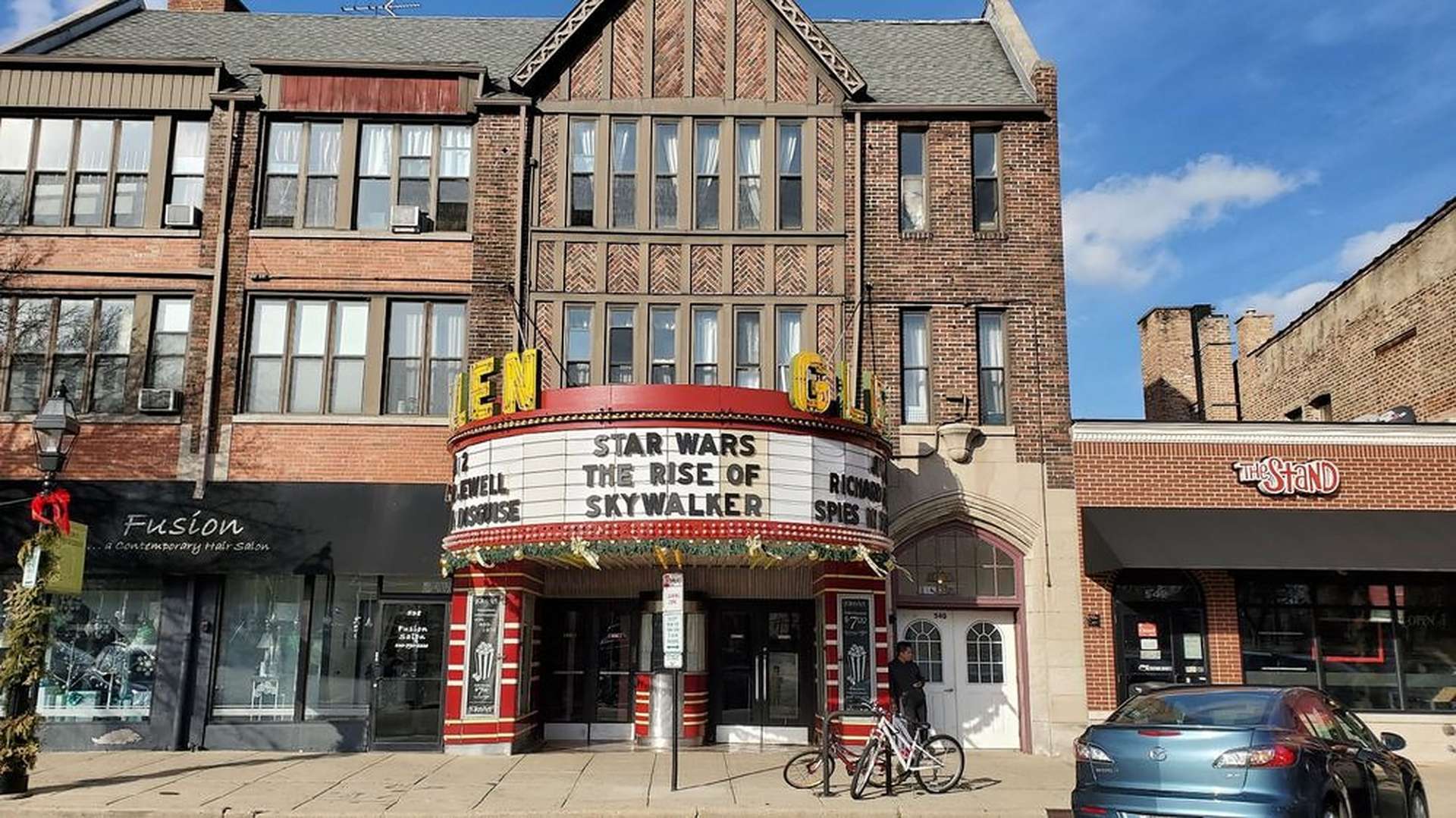
Photo Credit: Glen Art Theatre Yelp Page

The Glen Art Theatre

540 Crescent Blvd, Glen Ellyn IL, 60137

Glen Art Theatre is open once again and is playing older movies like La La Land, Chicago, The Goonies, and Ghostbusters. The theatre is hoping to play new releases like Tenet, Mulan, and A Quiet Place Part II in the upcoming weeks and months.

Advertisement

On the theater’s website, there is no information on what their safety precautions are, including if a mask is required to enter the premises. Before coming to the theater, call them to see what the restrictions are and what sanitation measures they have in place.

chicago movie theaters
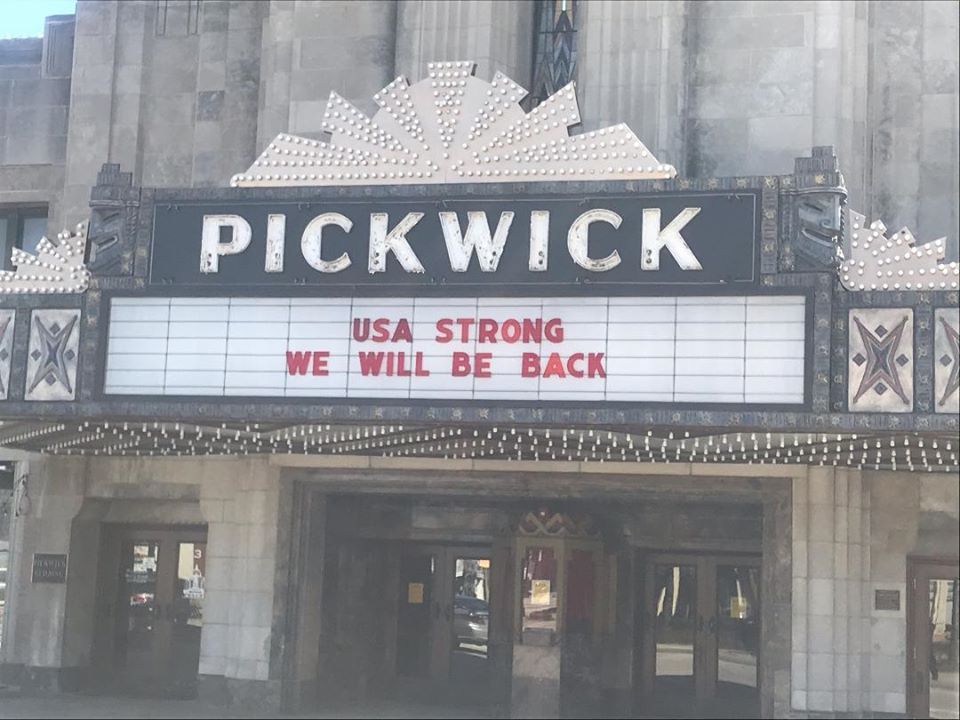
Photo Credit: Pickwick Facebook Page

Pickwick Theatre

5 S Prospect Ave, Park Ridge, IL 60068

Advertisement

Owner Dino Vlakahkis reported that he had hoped to reopen the theatre on July 11th, but as of now, the doors are still closed. They are now aiming to be open by July 24th, in time for the opening weekend of Mulan.

One thing that is pushing the opening day back is that the 50-person limit will make it difficult for the Pickwick Theatre, which can seat 900 people in the theatre. Vlakahkis hopes that these restrictions can be less strict to allow Pickwick Theatre to practice social distancing, but still have more patrons in the building.

Currently, Pickwick’s page doesn’t have any upcoming showtimes or any guidelines.

At UrbanMatter, U Matter. And we think this matters.

Tell us what you think matters in your neighborhood and what we should write about next in the comments below!

Featured Image Credit: Classic Cinemas Facebook Page

Read More

4 Indie Movie Theaters in Chicago Reopening This Julyon July 20, 2020 at 8:52 pm Read More »