
Top Chicago Realtors: COVID-19 “a Blip” in Healthy Marketon July 22, 2020 at 1:35 pm
Top Chicago Realtors: COVID-19 “a Blip” in Healthy Marketon July 22, 2020 at 1:35 pm Read More »
DES MOINES, Iowa — Halloween and college football are scheduled to coincide this fall, three days before national elections, with the COVID-19 pandemic an unwelcome backdrop to all of it.
In the South on Oct. 31, Georgia and Florida are supposed to renew their annual rivalry in Jacksonville, a boisterous tradition dubbed “The World’s Largest Outdoor Cocktail Party.” The Baylor Bears are intended to travel to Austin to tangle with the Texas Longhorns in a contest that would have the full attention of that football-loving state. And in the Midwest, Nebraska and Ohio State are on tap to trod into the Horseshoe, where two proud fan bases would normally converge to create a red October.
There is nothing normal about this college football season. There’s a strong chance the stadiums will be empty, an open question of whether the games will be played at all.
And that could underscore the seriousness of the grip the coronavirus has on America as voters head to the polls Nov. 3.
“No one gives a hoot in hell if organic chemistry classes are canceled,” veteran Washington Post political columnist George Will told USA TODAY Sports. “But cancel the Alabama-Mississippi game and you’re playing with fire.”
President Donald Trump is up for re-election. So are 11 governors, including those in West Virginia, North Carolina, Utah, Washington, Indiana and Missouri, all home to FBS football programs. There is no research on whether the absence of America’s favorite sport would cause some voters to turn on incumbent officeholders. Then again, there’s never needed to be.
“I think it’s a fascinating question,” said Justin Holmes, a political science professor at the University of Northern Iowa.
“For a lot of incumbents, there is the goal to get back to normal in some way. We’ve had a lot of deviations from normal as of late. We have an awful lot of people get wrapped up in college sports. The audience for that is huge. They tailgate around it. They have parties around it. I don’t think it’s different in kind from other deprivations that we’ve had. But people who spend their Saturdays in front of the TV, what are they going to do with themselves? That could hit home. Whether they take it out on people politically, I’m not sure what that looks like.”
Trump has been pushing for schools to resume face-to-face learning in the fall. His vice president, Mike Pence, even brought that message to Baton Rouge, Louisiana, this month, sitting at a table with Ed Orgeron, the head coach of reigning college football champion LSU and applauding as Orgeron proclaimed: “Football is the lifeblood of our country. It gets everything going, the economy going – the economy of Baton Rouge and the economy of the state of Louisiana.”
The optics of that meeting were not lost on political observers such as David Wasserman, an analyst for the nonpartisan Cook Political Report and an NBC News contributor.
“It’s not just college football. It’s school,” Wasserman said of what Americans may be missing as they prepare to cast their ballots Nov. 3. “I think it has an indirect effect on the presidential election since the voters believe the country is on the wrong track, much more than they did three or four months ago. And that is a terrible climate for an incumbent president to be running for re-election.
“If (Trump) can portray Democrats as the party of keeping schools closed, portray Republicans as the party of keeping schools open, that becomes a more complicated public policy issue.”
Wasserman doesn’t believe the absence of college football would have any bearing on gubernatorial races, since polls show strong support for incumbents in those positions. Nor does he sense a broad anti-incumbent sentiment in America generally as politicians grapple with how to keep constituents safe from the coronavirus without derailing the economy.
“Sports may be the one unifying thing we have left in the country that unites urban and rural areas of states as they’ve become more politically polarized,” Wasserman said.
“(Trump’s sliding approval ratings) means voters are in a bad mood, and they are upset with the direction of the country.”
John Weaver is a college football fan, particularly of his alma mater Texas A&M, and a political consultant best known for his work on the presidential campaigns of Republicans John McCain and John Kasich. He’s spending this election cycle as an adviser to the Lincoln Project, dedicated to defeating Trump and what he sees as members of the Republican Party who have “enabled” him.
Weaver said he believes empty college football stadiums from Texas to Michigan would cast a powerful symbolic message in early November, just when the college season typically reaches its crescendo.
“It will show the instability and chaos in the country and the cost to the country of the lack of a plan, the lack of effort to see this thing through,” Weaver said.
“We’ll have empty stadiums that normally hold 50,000 to 100,000 people on a glorious Saturday afternoon that also helps fund every other sports program at a university. That is going to resonate with a pretty broad group of fans across the country. There will be a political price to pay, too. It’s a further eroding of things in our society that people in their mind’s eye hold dear.”
Weaver said he believes an autumn without college football could spur enough anger to be decisive in a close electoral race.
Holmes, the professor, pointed out that there has been research done on whether rain on election day puts voters in a bad enough mood that it alters their decision at the ballot box. Something that seems so trivial can have a marginal impact.
“We do know that there are voters – and I don’t understand these people, but they exist – who really make their mind up for the presidential vote on election day. Somebody like that I think is more apt to be influenced by (the lack of football) or just any little thing,” Holmes said.
“In a close race, anything that would remind us of how things used to be and they’re now not would feed into that general sense of dissatisfaction that people have. For Trump, that’s a lot of his problem.”
Will isn’t convinced that football, or the absence of it, will be a significant factor in the results of Nov. 3.
Not even in the Deep South?
“If the pandemic can shut down the SEC,” Will allowed, “then it is of world historic importance.”
Read more at usatoday.com
Many prolific musicians call Chicago home, but multi-instrumentalist Ben Baker Billington is a veritable Energizer Bunny. He’s been contributing otherworldly experimental sounds to the scene since his mid-aughts stint in noise project Druids of Huge, and his musical resume is too long to reproduce in full here. Any outre artist looking for an open-minded collaborator with a refined ear and exacting technique would be well advised to call on Billington, and many have: he’s played drums for free-jazz misfits Tiger Hatchery, industrial-gospel legends Ono, and twisted psych-improv outfit ADT, as well as in the backing bands of Ryley Walker and Circuit des Yeux. Billington has also helped shape the city’s experimental scene as a concert programmer: he spearheads the Hideout’s monthly Resonance series, and during the COVID-19 pandemic he’s been helping organize Experimental Sound Studio’s celebrated livestream series, the Quarantine Concerts. Earlier this month, he became the assistant director of the Elastic Arts Foundation, the Logan Square community arts nonprofit that runs the eponymous performance space. But not to be forgotten amid all this activity is Billington’s long-running solo project, Quicksails. On Blue Rise, the latest Quicksails album for eclectic local label Hausu Mountain, he employs modular and digital synthesizers to create subtle, wide-screen tones. He teases the featherweight atmospheres of “Florian’s Brush” with drum brushstrokes, telegraphing an imminent shift in mood as sudden as a summer storm–it never arrives, though, and instead he builds toward a cinematic, heavenly melody. Billington understands how to harness the power of understatement, and on Blue Rise the tiniest details open doors to immersive worlds. v
As you swipe through dating apps, pausing sometimes to read a little further through people’s bios, you see a lot of love for a particular food: tacos. What’s not to love about a tasty little hammock of well-seasoned meats (if you’re into that sort of thing), veggies, and pico de gallo? While you might not swipe right on every guy holding up a fish in his profile picture, you can pretty much always say yes to the fish tacos at these glorious Mexican restaurants in Chicago.
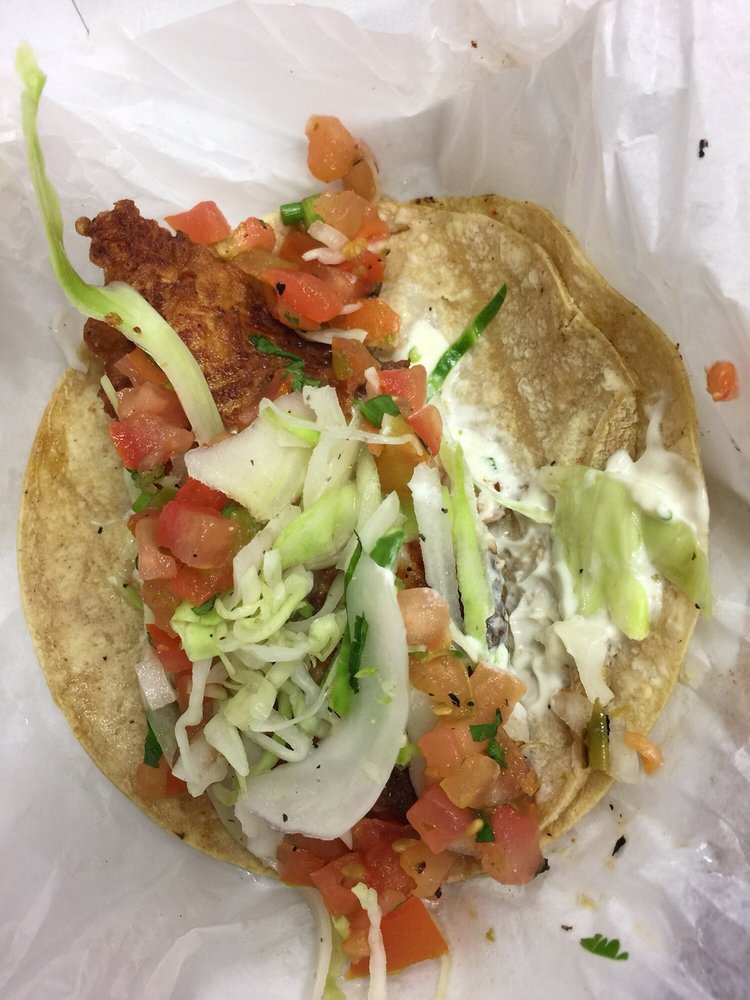
3749 W Fullerton Ave, Chicago IL
Started in Logan Square in 2012 by the Gonzalez family, L’ Patron’s fish filet tacos are created using tilapia, which is dressed up with cabbage and pico de gallo.
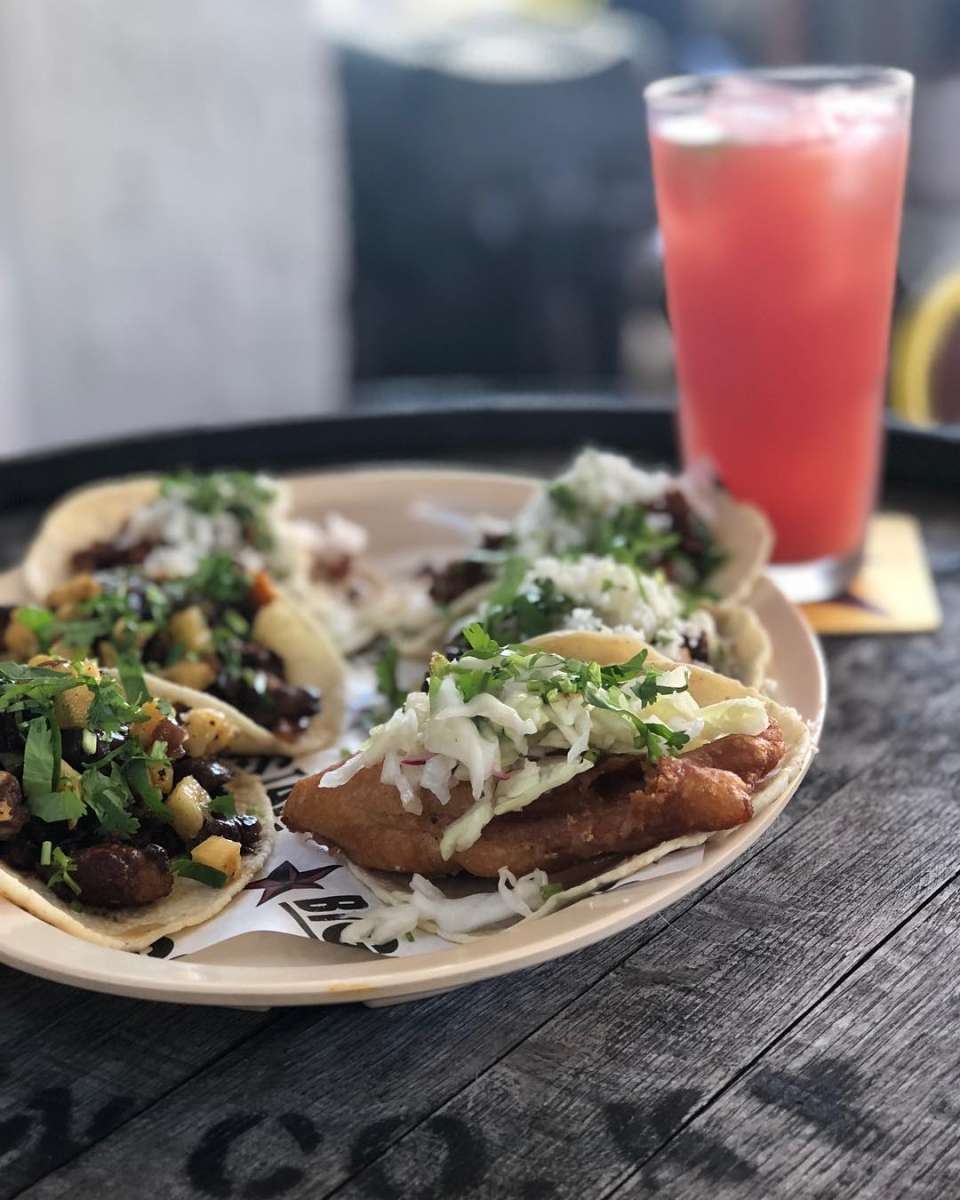
1531 N Damen Ave, Chicago IL | 3640 N Clark St, Chicago IL
This version of the fish taco includes — along with cabbage, red onion, lime, and cilantro — the zest of chipotle mayo, so be sure to have your margarita ready to cool things off.
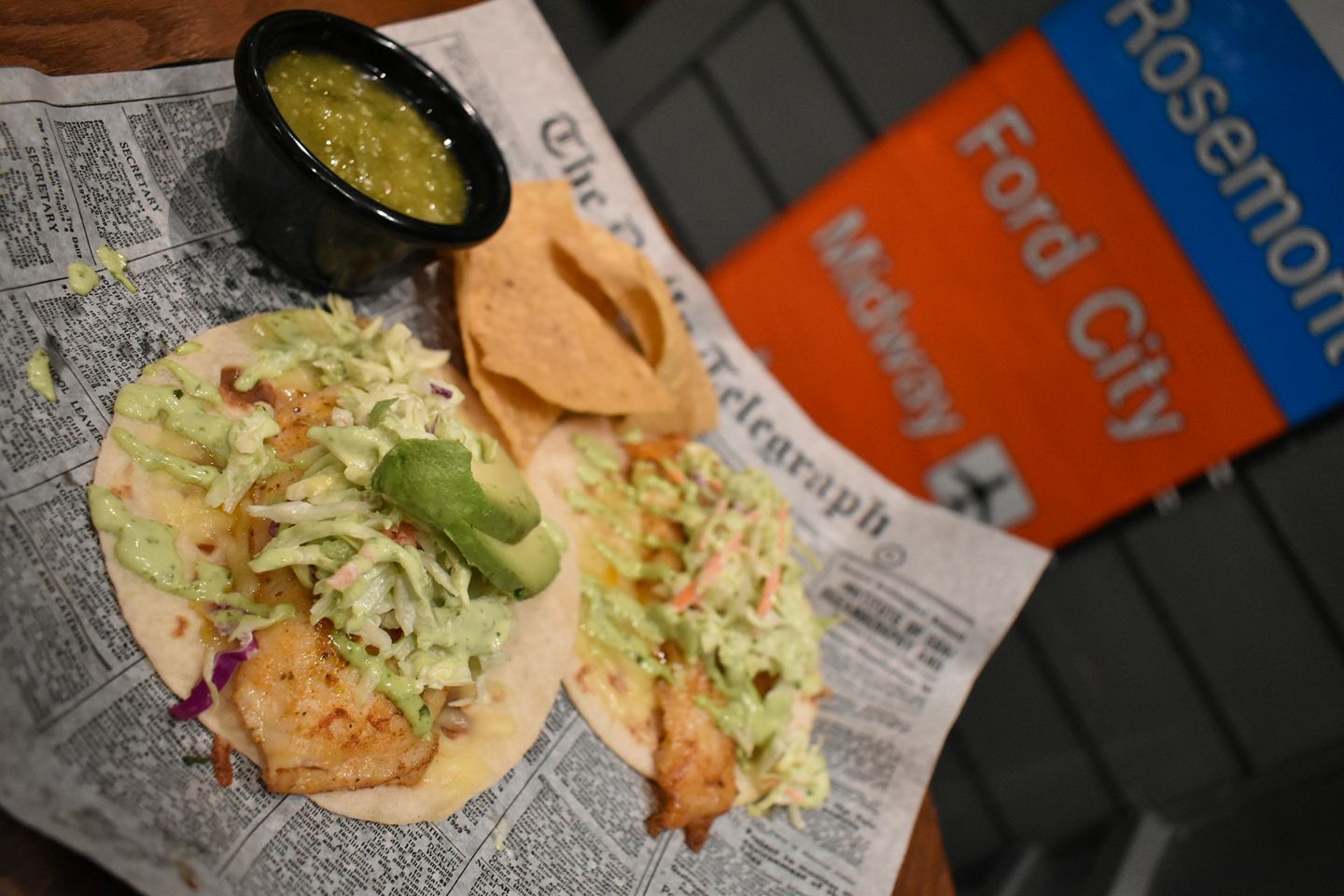
4219 W Irving Park Rd, Chicago IL 60641
If you’re looking to catch the train to Flavortown, you’re on the right track — this spot in Irving Park tops its fish tacos with cajun seasoning, jalapeño coleslaw, Chihuahua cheese, and cilantro aioli.

3382 N Milwaukee Ave, Chicago IL 60641
If you’re looking for something more authentically Mexican and a little less trendy, it’s about time you checked out the highly-praised fish tacos at this small Irving Park spot.
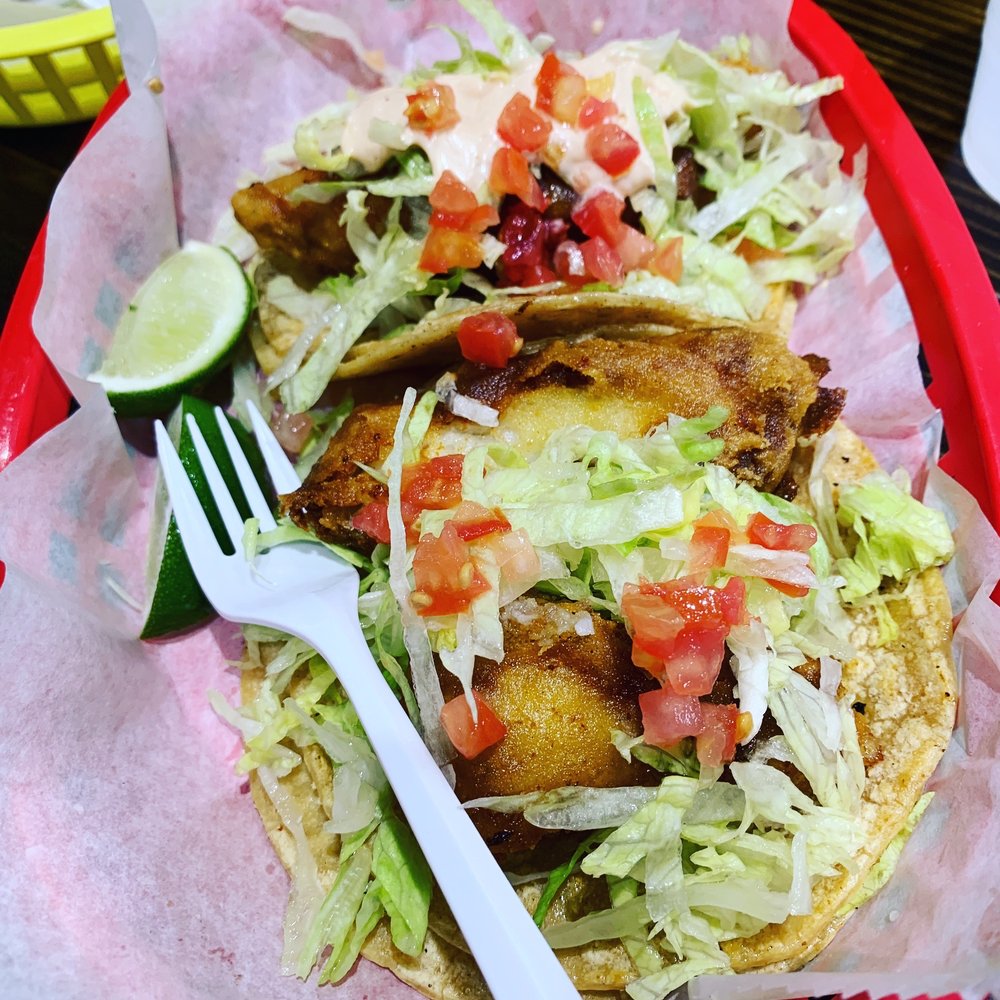
5624 N Broadway, Chicago IL 60660
The delicious fish tacos of Edgewater Tacos comprise Alaskan cod, lightly battered with some lettuce, tomato, and a dash of chipotle mayo for a little kick.
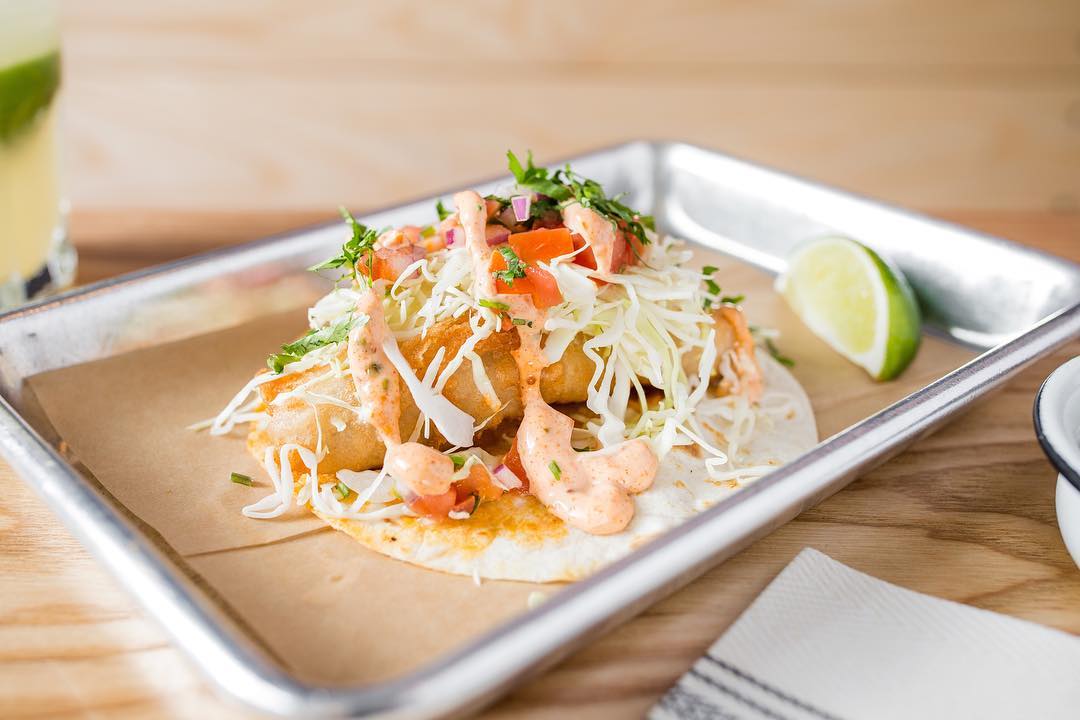
2101 N California Ave, Chicago IL 60647
Visit this hip Logan Square establishment for some amazing margaritas and the truly excellent Baja Fish tacos, which include beer-battered tilapia, cabbage, pico de gallo, rémoulade, and salsa verde.
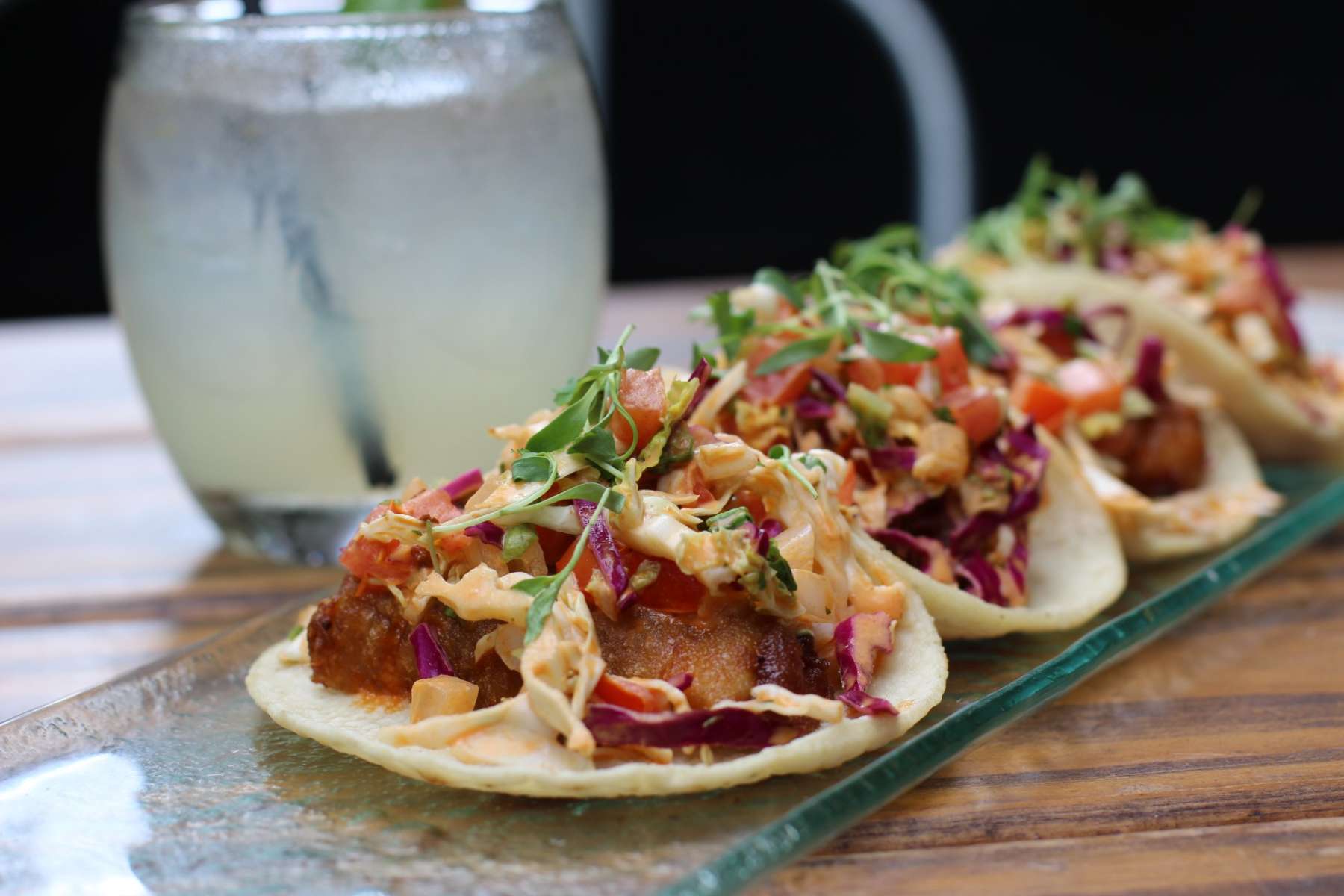
108 W Kinzie St, Chicago IL 60654
While many of your standard fish tacos include a beer-battered cod or tilapia, those of the Mercadito variety use herb-marinated, grilled mahi-mahi, topped with caper aioli and spring slaw. This is for the experienced fish taco-taster looking for something a little different.

1437 W Taylor St, Chicago IL 60607
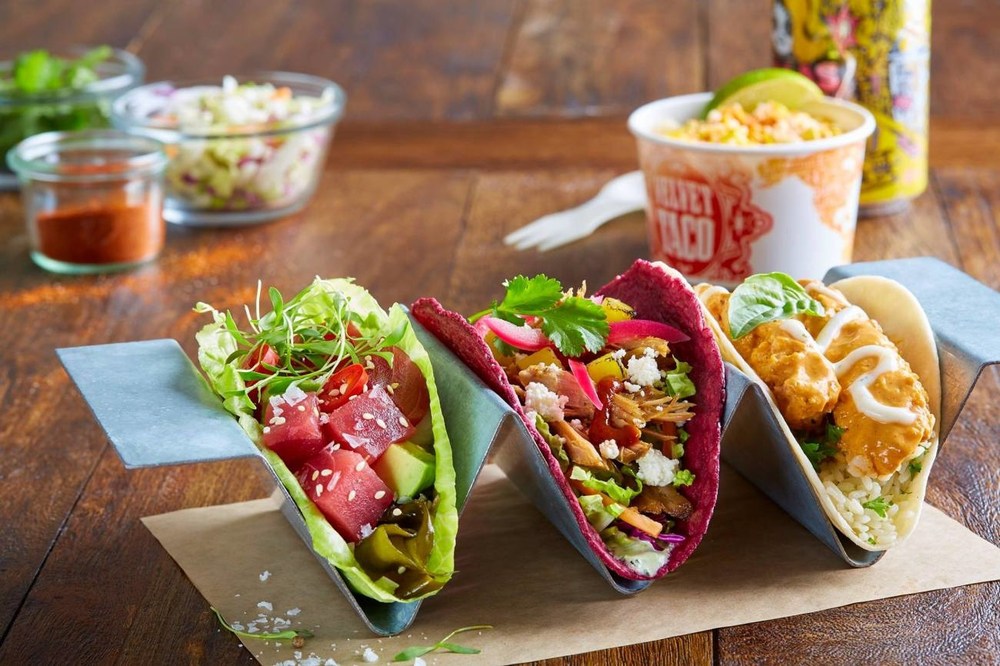
Known for a variety of great Mexican street food, Chilango tops its well-loved fish tacos with jalapeño, radishes, carrots, cilantro relish, and a coconut-cilantro sauce.
Craving tacos but not a fan of fish? View our list of the best tacos by neighborhood in the city.
View the Best Tacos by Neighborhood in Chicago

1008 W Irving Park Rd, Chicago, IL 60613
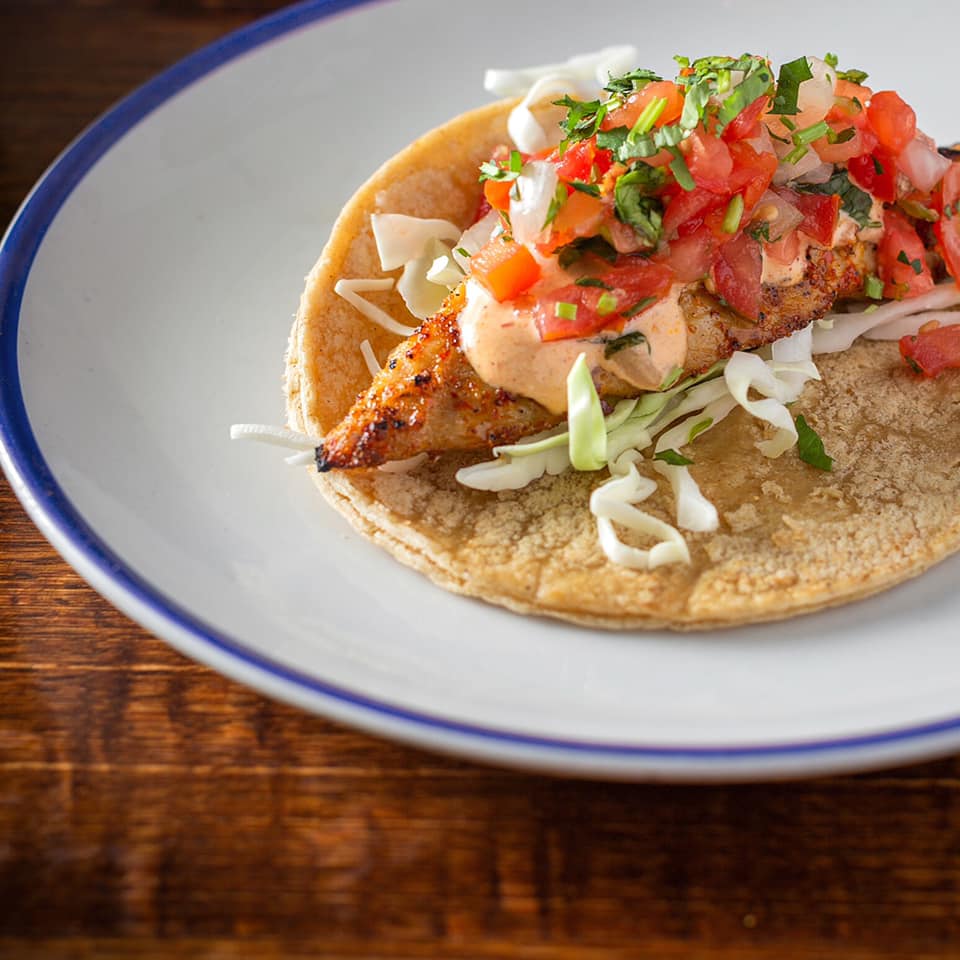
The Buena Park restaurant and taqueria, boasting a “modern interpretation of classic dishes” as well as fresh ingredients, round out a full menu of Mexican dishes with classic fish tacos.
3358 N Southport Ave, Chicago IL 60657
Another purveyor of the mahi-mahi-based fish taco, Tuco and Blondie tops said taco with cabbage (a must), a zesty and bright chipotle lime creme, and, of course, pico de gallo.
At UrbanMatter, U Matter. And we think this matters.
Tell us what you think matters in your neighborhood and what we should write about next in the comments below!
10 Mexican Restaurants for Legendary Fish Tacos in Chicagoon July 21, 2020 at 8:31 pm Read More »


325 E. 8th St., Hinsdale: $8,900,000 | Listed June 2, 2020
This 17,591-square-foot Hinsdale mansion has five bedrooms and 10 bathrooms. The custom-built home, completed in 2013, is situated on a 1.68-acre, professionally landscaped lot.
Agent: Dawn McKenna, Coldwell Banker Realty, 630-686-4886
(VHT Studios)
Filed under:
Uncategorized
Completely spam free, opt out any time.
Latest on ChicagoNow
Posts from related blogs

Most recent post: 10 years ago today from the Trib and Sun-Times: the Bears reach the Super Bowl
More from News: Media
Read these ChicagoNow blogs


Read these ChicagoNow Bloggers


©2020 CTMG – A Chicago Tribune website –
Crafted by the News Apps team


Browsing though “The *More or Less* Definitive Guide to Self-Care,” as I’ve done before, yielded a surprise on Wednesday morning: “Little Acts of Kindness” was listed in the Ls.
No, I’m not questioning the alphabetizing — little acts can seem like something to look for when I need to take care of myself. But when I am looking for something to take care of myself, it can be surprising to find advice to be kind to someone else.
Surprising, but useful.
As author Anna Borges put it, “Good deeds don’t need to be 100 percent selfless. Making other people happy — whether it’s loved ones or strangers — has the power to get you out of your own head and give you a small sense of purpose, even when you’re feeling the most down and useless.” (Now remember, she wrote this before COVID-19 hit.)
The opposite page from that sentence has a big, blue box full of ideas, headlined “What does an act of kindness actually look like?” Here are some of my favorites for us these days:
“Run an errand for a friend who is totally swamped.”
“Randomly text your friends your favorite things about them or memories you cherish.”
“Call a loved one you don’t talk to often but who you know would love to hear from you.”
See? Except for the “totally swamped” part, kindness hasn’t changed all that much. My pandemic edit for that would to run an errand for a friend who can’t get out to a store.
Any of these things — or anything you’re thinking of now because you expected them instead — just change your thinking away from moping about whatever’s wrong and into trying to add to what’s right.
Go ahead, make someone’s day. Chances are, it’ll make yours, too.
Margaret Serious has a page on Facebook.
Take care of your writing mind — subscribe! Type your e-mail address in the box and click the “create subscription” button. My list is completely spam-free, and you can opt out at any time.
Filed under:
Sustaining Books
Tags:
Self-care
Meet The Blogger

I moved to Chicago from the south suburbs in 1986. I have diverse interests, but I love writing about what I’m interested in. Whether it’s a personal interest or part of my career, the correct words to get the idea across are important to me. I love words and languages — French and Scottish words enrich my American English. My career has included years as a journalist and years working in museums, and the two phases were united by telling stories. I’m serious about words and stories. So here I am, ready to tell stories about words and their languages.
Completely spam free, opt out any time.
Monthly Archives
Latest on ChicagoNow
Posts from related blogs

Most recent post: Landlines Before Cell Phones; Life in Banana Republics

Most recent post: ESPN’s broadcast of the Sox-Cubs game was absolutely awful

Most recent post: Where was “Mom” Lightfoot last night to turn the car around and send the “kids” home?
More from News: Opinion
Read these ChicagoNow blogs
Read these ChicagoNow Bloggers
Self-care that’s contagious: Kindnesson July 22, 2020 at 2:25 pm Read More »
If you are a typical fan of the Chicago Bears, the summer months are probably filled with scouring the web for the latest team news, quotes and sound bites. Without football, all we do is look forward to the fall when it returns. However, this has been an unusual offseason, to say the least. It’s been much, much longer than any offseason in recent memory.
The past few months have probably seen more video games played than any similar period in history. Due to quarantine life and a lack of sports, we have all had to cope and stay busy in any way possible. For football fans, they will finally have the new installment of the Madden franchise on August 25th.
Starting back in June of 1988, the Madden franchise has gripped the hearts and souls of football fans everywhere. Many of us remember how those graphics began, but now, they’re as realistic as ever.
A staple in the game, for years now, is the franchise mode. Gamers can choose to take either an existing franchise and roster as far as they possibly can down the road, or start fresh with a draft.
If you elect to begin with a draft, that first pick is crucial. Do you go quarterback? Do you automatically go for a player with that oh-so-coveted 99 overall rating? How do you choose that first, all-important cornerstone for your franchise?

There are tons of strategies for different gamers, but that first pick has to be perfect. If you land in the top five picks, it’s even more critical. Luckily, there are some obvious choices — including Bears pass rusher Khalil Mack. But, who else belongs in that top-5 category? Let’s analyze.


Like many baseball fans, I’ve looked forward to projecting Opening Day rosters since I was a young kid. I’ve maintained a tried and true method: 25 names written on paper (always), ink pen for the sure’s and pencil for the maybe’s, from 1B around the horn, through the OF, and back to C. 5 starting pitchers, plus a bench and bullpen. As I became more advanced and eloquent as a baseball fan (around age 10), I began penciling in possible replacements, aka the top names at AAA. This method served me well for decades, and I still have several old binders that I occasionally look back on with fondness to see my thought process heading into the 1986 or 1996 or 2002 seasons.
Things have changed over the past decade or so. I’ve had to reluctantly shorten my bench and add to the bullpen. Some pitchers have been added as swingmen, and certain bench players have adopted the UT label rather than my traditional IF or OF. This season was going to further test my conventional leanings with the addition of a 26th man. I was nearly ready to break my trusty black Bic and faithful yellow #2 when things really got weird…
2020 happened.
2020 was already set to introduce several changes to the traditional roster construction, with the addition of a 26th player as well as a limit of 13 pitchers, the official title of “two-way” players, and limitations on when position players would be allowed to pitch in a game. There are/were several other rule changes adopted over the past offseason, but for the purposes of this discussion, I’ll try to stick to the roster rules. The 13-pitcher max rule, as well as the “two-way” player designation and restrictions on when position players are allowed to pitch, have all been scrapped for this season.
It would take an entire article to describe all the unique roster regulations for this season, and as much of a baseball nerd as I am, I’d much rather just link to this breakdown here at MLB. I will point out some key factors to keep in mind.
I could go on, but nah. That’s most of what we need to know to get to the good stuff.
I’m going to be completely honest here and admit I am not as in tune to what is happening as I would normally want to be to feel comfortable writing a predictive piece. These past several months have done that to everyone in one form or another. But like everything else in these uncertain times, we have to persevere through the uncertainty. I’ll put my thoughts on record, and feel free to make fun of me if (when) I miss two or ten.
Sports bring out strong emotions, and I’m certainly not immune to the hot take. I’ve never consumed much talk radio, but I am aware the louder and more ignorantly one yells on that platform the more attention one receives. I am, however, somewhat active on Twitter, which is far worse.
I say this not to ask for sympathy, but to assure you I try to obtain my information from more legitimate sources.
Theo has had several interviews discussing possible roster configuration, and his insights are both telling and somewhat obvious. You don’t want a young prospect sitting at home with no minor league season, but you also don’t want him sitting on a ML bench without playing time. As much as we want to see Brennen Davis, Miguel Amaya, and Christopher Morel playing at Wrigley, it’s not going to happen without a catastrophic series of events.
Theo has said that the top prospects will remain in South Bend to continue their development. Any fringe players carried on the active MLB roster will likely be those who can serve a specific role, while providing versatility if possible, without worrying about hindering their future development. Think AAAA players who may have use to win a game but without much upside. This seems fairly obvious, and certainly plays on my thoughts in selecting those last few roster spots.
I’ve been very intrigued by how Boss Ross would handle being the boss. I’ve thought that since he is not far removed from his playing days he would more easily relate to the daily mental grind the players endure, and may be more sympathetic to a routine than Maddon was. I think he’ll produce a more structured and consistent lineup, while also demanding accountability for production while understanding that certain players shouldn’t play in certain situations.
The biggest influence I’ve felt Ross would have, however, is his handling of the pitching staff. That’s his gig. The analytical analysis of his career playing stats pale in comparison to his reputation as a handler and even de facto coach of a pitching staff.
Ross has said that, if it’s up to him, he would prefer to go initially with 14 position players and 16 (!) pitchers on the Opening Day roster. As much as that shocks my traditional sensibilities, it also makes a lot of sense. I haven’t seen confirmation from the front office, but that’s the template I’m going to work with.
There are many here that are obvious, so I’ll just get them out of the way without much drama. I think this is our generic starting lineup:
I feel there are also some fairly safe picks on the bench, which will of course also be used in platoon situations and to carry on the tradition in that other league of part-time baseball players:
If we go by Ross’s wish of 14 position players on the initial roster, we have one spot open. There are three players I see as having a legitimate shot.
Left-handed hitter Daniel Descalso is highly respected for his leadership abilities and clubhouse presence, but his performance and lack of versatility hinder his chances at a spot on the Opening Day roster. In fact, my guess is he is removed from the 40-man to open a roster spot.
Switch-hitter Robel Garcia is another option. He’s been a feel-good story, but like Descalso, I just feel that the Cubs have his potential skill set covered. Javy has SS, with Nico as a backup. 2B is covered by no less than four players likely to make the roster, and we seem to have some pop off the bench with a good balance of lefties and righties. Like Descalso, I can see Garcia being removed from the 40-man if a roster crunch arises, though I think he holds his spot longer than Daniel does.
That leaves my pick for the last position player slot:
I believe Miller fills a couple roles necessary to win a particular game or two, in addition to being just old enough (relatively) and without enough upside to be concerned about hindering his development. He can play all the outfield spots well, and can steal a base in a tight situation. I think he makes the initial cut, but will need to be added to the 40-man. Whether he survives the culling of the roster over time is anyone’s guess. I hope his performance demands it.
Like the starting lineup, there isn’t much drama in the starting staff, with a couple notable asterisks. Jose Quintana has been throwing after receiving stitches on a finger on his throwing hand following a dishwashing incident, and is on the IL. He is expected to miss at least the first couple weeks of this abbreviated season.
Alec Mills has been tapped to take Q’s spot in the rotation. That was expected. What wasn’t expected, and something I have not been able to confirm, is a statement from Ross that Lester is slated to enter the season as the #4 starter.
I don’t put much stock in #1-#5 slots, as they always change throughout the season and even based on usage and matchups. I just don’t know why Ross would say that, if for nothing else but a PR backlash. I haven’t heard that Lester has been bad. In fact, I’ve heard he is in incredible shape and looked very good. Maybe Chatwood looks incredible? We can hope!
Anyway, Hendricks has been announced as the Opening Day starter, an honor I completely agree with. So with that in mind, the starters:
So now we get to the pen, where things begin to get crazy. I’ll just start off here with a little trivia nugget I saw the other day:
As far as Cubs bullpen experience goes, could you guess who currently holds the title as most tenured pen arm?
That would be Kyle Ryan, who was called up on 4/16/2019. Chatwood is now listed as a starter. Let that insane amount of turnover sink in for a minute or two. No one even remotely associated with the Championship team is left in the pen.
Further following Ross’s wishes, we have to create an 11-man bullpen. That is not a misprint. We have to construct an 11-man bullpen. Seriously, I’m not kidding. An 11-man bullpen. Welcome to 2020.
Oh, heck, let’s start with the probables:
You know most of these guys, either through reputation, Michael’s development updates, or both. As much promise as there are question marks, especially at the top end. I will say I have heard very good things about Underwood, Jr. He’s been sitting a tick higher out of the pen, 94-96mph, but the big news is his development of the Cubs’ soon-to-be-patented knuckle-curve.
I don’t know if that is all due to Kimbrel or the pitching lab, but the proliferation of this particular pitch throughout the Cubs’ system may very well be Kimbrel’s lasting legacy for his time with the Cubs.
A few others who probably make the initial cut:
Why not? Have I mentioned we have to build an 11-man bullpen? This is how you fill out an 11-man bullpen.
So, if I’m right (and I’m not, but even so), that leaves 2 spots. These 2 spots are the most nonsensical and unpredictable of any on the roster. What immediately sticks out to me is the lack of lefty arms, especially those that can miss bats in a critical situation. Rex Brothers fits that bill immediately, though I believe he would also need to be added to the 40-man.
I feel the reason Ross wants to overload the roster with pitchers is because the starters aren’t properly stretched out to begin the season. He will likely go easy on the main guys, which will require more depth, and possibly guys who can throw multiple innings. That’s where players like Jharel Cotton and possibly even Colin Rea could get a look.
As always, Adbert Alzolay looms large, but for his health. He could be a complete non-factor or a season savior out of the pen in crucial situations. Same with Dillon Maples and even Dakota Mekkes. It’s 2020, why not?
If we really want to get crazy, we can dream on 2nd-rounder Burl Carraway, who was just added to the 60-man Player Pool. His 100 mph fastball and absolute hammer curve from the left side would look really good if he can harness his control, which most observers believe he can do when he gets into a professional program. I believe Carraway is going to be our greatest homegrown reliever since Lee Smith, and I think he will make his debut and an impact in 2020, but not on the Opening Day roster.
So, we have two pen spots left. The two most volatile and subjective spots on the team. The only credible opinions on who will secure these final two spots of an 11-man (!!!) pen are those who have seen them throw and know who is in the right state physically and mentally.
That isn’t me, so I have to guess.
I really think Ross wants some arms to go multiple innings so he can go easy with the starting staff the first time or two through the rotation, but he has an 11-man (!!!!!!!) bullpen at his disposal. I think we go with what we know.
That equals 30, right?
There needs to be a 3-man “taxi squad” traveling with the team. One of these players has to be a catcher.
This taxi squad is assumed to be a catcher, position player, and a pitcher. The purpose is to avoid air travel if a team needs to make a transaction while on a road trip. These taxi squad players do not have to be on the 40-man roster, but would need to be placed on it to replace an injured or Covid-19 positive player on the active roster.
Josh Phegley will likely fill the role of taxi squad catcher. He will not be on the 40-man. Whoever survives the 40-man cut between Descalso and Garcia could be the position player, or I could see someone like Zagunis traveling around, just because.
Your guess is as good as mine on the taxi squad pitcher. It’s likely to be a rotating role, with the possibility of getting the “big-league” travelling experience and the major league scouting and coaching structure more of a draw than the possibility of actual game action.
I often end my nonsensical ramblings with a well-placed (in my mind) musical lyric.
As we head into this crazy season of whacked-out baseball in these most trying of times, there is something I’d love to hear much more than any rhyme from Mick, Paul, or even Bob.
I’d love to see a comment from TC.
GO CUBS!
Filed under:
Analysis, Roster decisions
Completely spam free, opt out any time.
Recent Comments


Latest on ChicagoNow
Posts from related blogs

Most recent post: It’s time to change how pitchers get “W”s

Most recent post: Rizzo’s home run depressed me.

Most recent post: 2017 Cubs Convention: Down on the Farm
More from Sports: Cubs
Read these ChicagoNow blogs

Read these ChicagoNow Bloggers

A Guess At The Cubs 30-Man Roster For Opening Dayon July 22, 2020 at 9:55 am Read More »


When the coronavirus first took the country by storm and people started staying home – in many cases without pay – the federal agencies that support the mortgage market imposed a moratorium on foreclosures. The initial moratorium was going to expire at the end of June but it was extended to the end of August. Because of that we have now seen three straight months where national and Chicago foreclosure activity has hit the lowest levels since I’ve been tracking the data. But what will happen when the moratorium is lifted?
ATTOM Data Solutions released their Midyear 2020 U.S. Foreclosure Market Report last week and updated their RealtyTrac data. The report contains the graph below which shows just how dramatically foreclosure activity has dropped since 2008 and since last year even. That’s a 44% decline in just the last year!
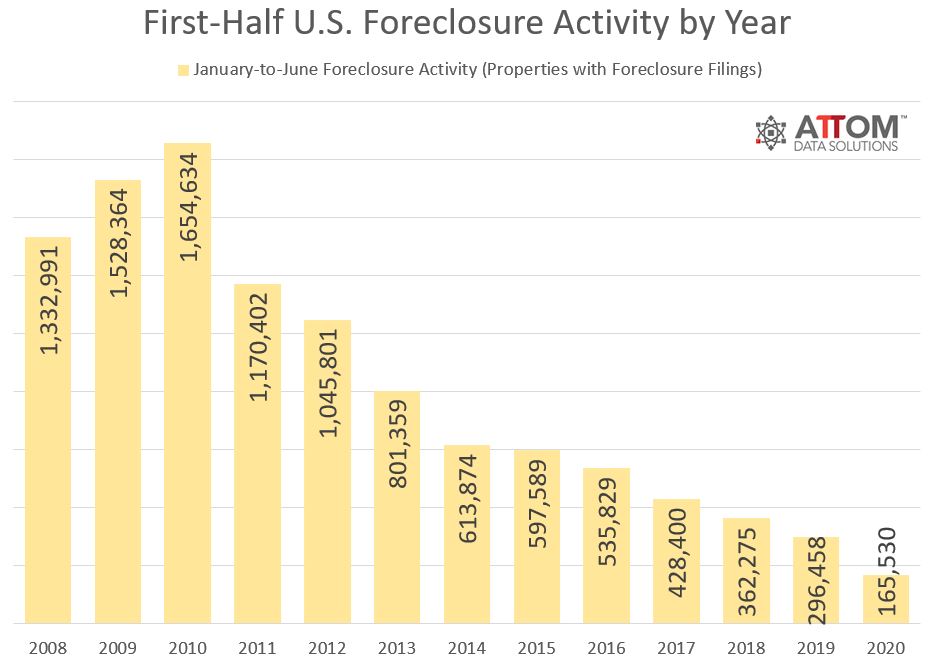
First half 2020 foreclosure activity hit a record low with the help of a moratorium on foreclosures.
According to Ohan Antebian, general manager of RealtyTrac:
Foreclosure starts and completions were already declining rapidly last year because the housing market and the economy were riding so high. Now they’re down to lows not seen for at least 15 years as the federal government has banned lenders from pursuing most delinquent loans until at least the end of August 2020 to help people weather the pandemic. Distressed property volume is almost guaranteed to increase significantly once the moratorium is lifted because millions of Americans missed their mortgage payments in June and will continue to because of unemployment. But for now, everything is on hold and the foreclosure numbers reflect that pause.
Using the RealtyTrac data I’m able to produce the monthly Chicago foreclosure activity graph below. Activity really plunged starting in April.

Chicago foreclosure activity has declined dramatically since the housing crisis. However, the recent plunge is the result of the moratorium placed on foreclosures in light of the Covid-19 crisis.
Just because foreclosures are way down does not mean that everything is hunky dory. In fact, as you would totally expect, mortgage delinquencies are skyrocketing according to Corelogic. The intentionally (but not my intention) distorted graph below shows the percentage of mortgages that transition to 30 days past due each month. So we are probably in for a huge wave of foreclosures once the moratorium is lifted, which is what Ohan was saying.
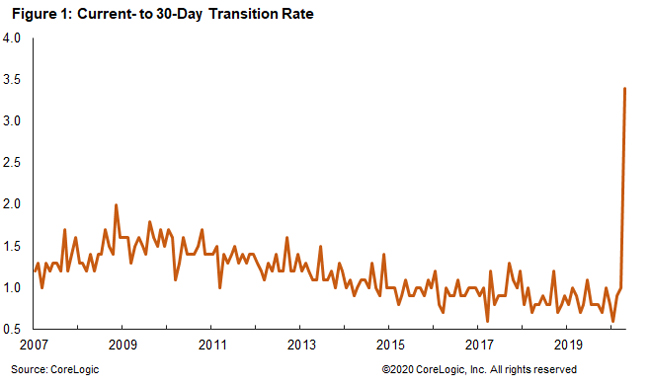
The percentage of mortgages that transitioned to 30 days past due skyrocketed in April, though this graph is cheating to make the point.
One other interesting statistic highlighted in the ATTOM Data report is the time required to complete a foreclosure. As the graph below shows it has been gradually trending down though the most recent quarter did tick up a bit from the first quarter of the year.
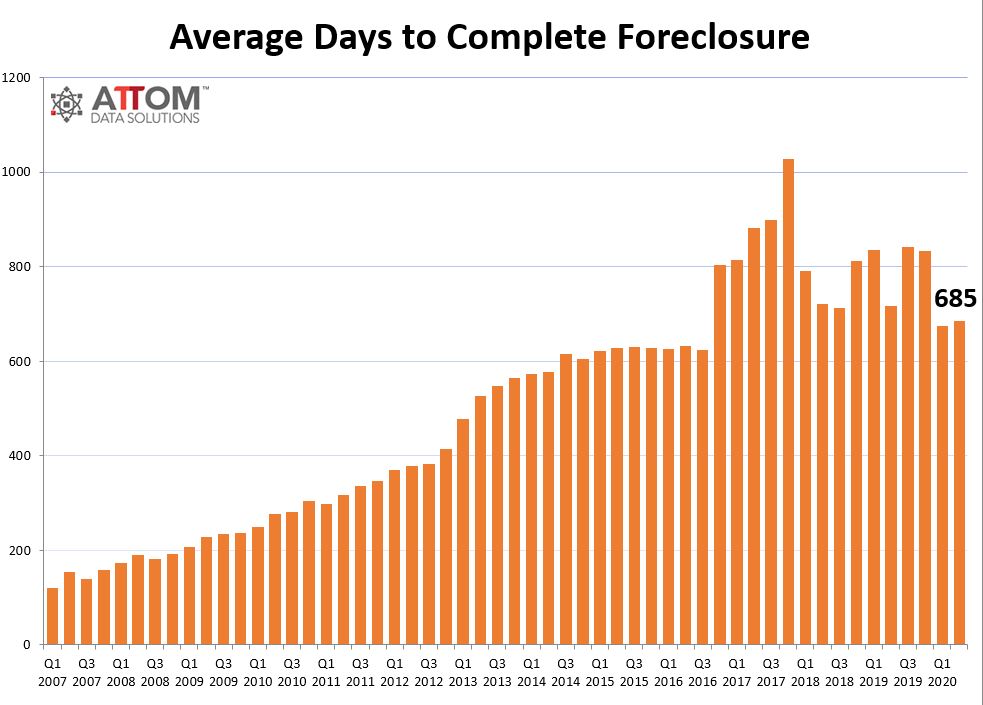
The time required to complete a foreclosure is down to ridiculous levels from absurd levels.
Interestingly, the number of homes in Chicago that are in the foreclosure process continues to decline. I still don’t know how this happens unless there is some kind of data error or there are special circumstances that allow a foreclosure to proceed. Each of the last 4 months has had a decline of over 200 homes.
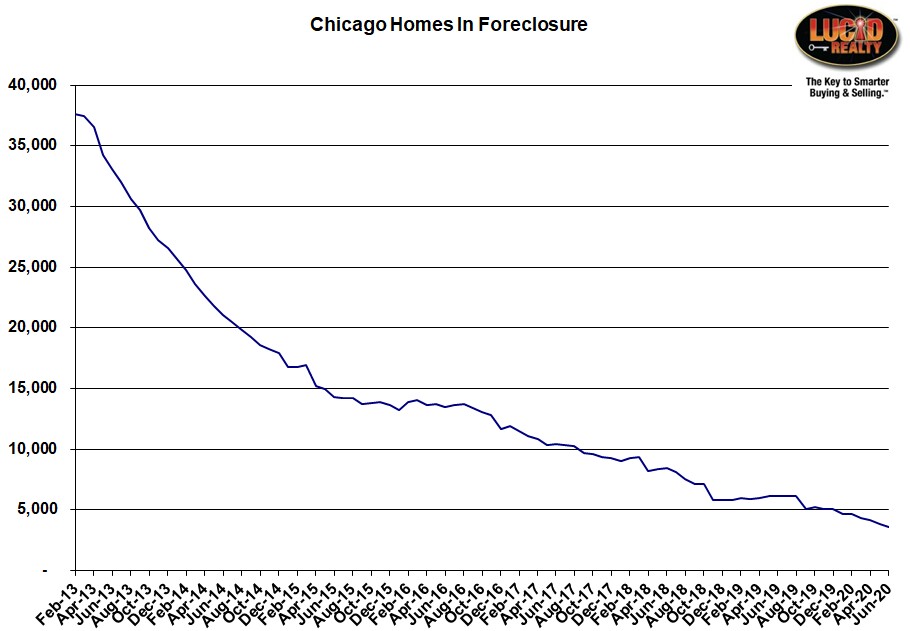
The number of homes in foreclosure in Chicago continues to decline during the pandemic
#Foreclosures #ChicagoForeclosures
Gary Lucido is the President of Lucid Realty, the Chicago area’s full service real estate brokerage that offers home buyer rebates and discount commissions. If you want to keep up to date on the Chicago real estate market or get an insider’s view of the seamy underbelly of the real estate industry you can Subscribe to Getting Real by Email using the form below. Please be sure to verify your email address when you receive the verification notice.
Filed under:
Foreclosures/ Short Sales, Market conditions
Subscribe To Getting Real
Meet The Blogger

After 20 years in the corporate world and running an Internet company, Gary started Lucid Realty with his partner, Sari. The company provides full service, while discounting commissions for sellers and giving buyers rebates.
Posts from related blogs

Most recent post: Real Estate & COVID-19

Most recent post: So Much to Love About 618 5th Street in Wilmette

Most recent post: Staying Strong in River North and Carrying On with Real Estate!
More from Lifestyle: Real Estate
Read these ChicagoNow blogs
Read these ChicagoNow Bloggers
©2020 CTMG – A Chicago Tribune website –
Crafted by the News Apps team


Whatever the hell is wrong with the Mayor of Chicago and her resistance to Federal help to fight Chicago’s massive epidemic of shootings and killings, it’s lost on me. A few weeks ago when the President of the United States offered to have Agents sit down with Chicago’s officials and discuss a partnership to go after Chicago’s out of control street gangs she responded by saying “HE WAS PLAYING POLITICS WITH THE LIFE OF SHOOTING VICTIMS.” Imagine someone mentioning the murders of children and the hundreds of other victims, being accused of playing politics. I will keep this current, but just as a point of reference, from Friday afternoon until 3 pm Tuesday, when I am writing this, an astonishing 104 people have been shot and 18 have been murdered on Chicago’s streets.
Since Memorial day an average of over 20 people have been shot on a daily basis. Over 205 souls have been murdered and well over 900 have been shot. One would think after facing that kind of mayhem any leader would gladly accept any help offered even if it was only Barney Fife himself. Mayor Lightfoot would be right if the President decided to send in Federal troops or the National Guard. The list against this idea is endless but I will share personal experiences.

Back in 1968 the National Guard and Federal troops were in fact deployed to patrol Chicago’s streets. The first wave came in April immediately after the assassination of Dr. Martin Luther King, Jr. The second wave came that same year in late August during the massive demonstrations at the Democratic National Convention.
Some folks and even politicians sometimes find themselves saying, well! send in the troops. From my personal experience, Federal troops and the National Guard patrolling America’s streets are a horrendous idea. Keep in mind that troops deployed to fight crime and violence, do not know the state’s laws, they do not know municipal laws, they are unacquainted with arrest search and seizure, they are not skilled in the use of deadly force, they are bound by the Rules of Engagement set forth in the Geneva Conventions.
Being an Ex-Marine, I can tell you that type of occupation has no place in America’s free society. Troops are not acquainted with the Miranda Warnings. They did not know the neighborhoods they were assigned to patrol. They did not know a gang member or a gang affiliate or the turf the gangs controlled. Stop and frisk became “HEY YOU COME HERE.” The violations of civil rights were every day, every hour, occurrences. We live in a free society and every single person in America has the freedom of movement without harassment. When we did on occasion need assistance, the military bureaucracy was such that trying to get through the chain of command was fruitless. When violence is going down, there is no time to wait for contacting higher command officers.

So Federal Troops and the National Guard is a really bad idea in my opinion, BUT TRAINED FEDERAL AGENTS ARE NOT. I BELIEVE IT’S CHICAGO’S BEST CHANCE TO BRING THE EPIDEMIC OF VIOLENCE UNDER CONTROL. Federal agents from the FBI, ATF, DEA, HLS, AND OTHERS SUCH AS THE IRS, BRINGS FEDERAL CHARGES, FEDERAL COURTS, FEDERAL JUDGES AND FEDERAL SENTENCING. What’s in place now is failing on a colossal scale, including local courts, and local sentencing. Too many violent, vicious, criminals are being set free and sent back to the streets they have been terrorizing with little or no accountability. A vicious cycle that has permeated for far too long in a city that is out of control. Any Chicago or County leader who fights against Federal agents coming to assist Chicago cops should be called out and exposed. Let’s hope the Mayor and her advisors finally wise up. How long can they make excuses and refuse help?
Filed under:
Uncategorized
Meet The Blogger

Bob Angone is a Marine VETERAN and a retired Chicago Police Lieutenant. He worked his entire Career covering the streets of Chicago as a Tactical Officer, Tactical Sergeant, and Tactical Lieutenant. His last assignments were in special Functions, he was the C/O of the CPD Swat teams his last five years and was an HBT (Hostage Barricade Terrorist) Sergeant for 10 years.
Completely spam free, opt out any time.
Latest on ChicagoNow
Posts from related blogs

Most recent post: Five Books I Read Years Ago That Still Have a Message for Today

Most recent post: Chicago’s “most common” contribution to architecture deserves a tour

Most recent post: Tech Unicorn Valuations Are a Lottery Bet, Not an Investment
More from Lifestyle: Opinion
Read these ChicagoNow blogs
Read these ChicagoNow Bloggers
©2020 CTMG – A Chicago Tribune website –
Crafted by the News Apps team


Leave a comment