Videos

Exhibition Game: Twins at Cubson July 22, 2020 at 9:42 pm

Cubs Den

Exhibition Game: Twins at Cubs

Read More

Exhibition Game: Twins at Cubson July 22, 2020 at 9:42 pm Read More »

Chicago Cubs: Overreactions already running wildon July 22, 2020 at 12:00 pm

Read More

Chicago Cubs: Overreactions already running wildon July 22, 2020 at 12:00 pm Read More »

Chicago Bears: Underrated names to watch on defenseon July 22, 2020 at 1:00 pm

Read More

Chicago Bears: Underrated names to watch on defenseon July 22, 2020 at 1:00 pm Read More »

Manual Cinema celebrates a decade of innovative workon July 22, 2020 at 2:00 pm

“The cradle rocks above an abyss, and common sense tells us that our existence is but a brief crack of light between two eternities of darkness,” writes Vladimir Nabokov in Speak, Memory, where he describes the past as a series of illuminated pictures, through which one’s character “becomes visible when the lamp of art is made to shine through life’s foolscap.” Potent backlit images magnified to eyelash-fine detail before being whisked away, with a sly billow of the curtain that brings the mechanism of the art abruptly into view also describes the magic of Manual Cinema, the homegrown puppet theater company celebrating its tenth anniversary this year. Using overhead projectors and cut paper visibly moved by hands, wires, and transparencies, Manual Cinema combines the low-tech nostalgia of silhouettes in the dark with dazzling projections, cerebral design, and live music in quadraphonic surround sound. Mostly wordless, sometimes embodied, their productions tell stories in images and episodes that flicker by as the artists rendering them work ceaselessly in the drama of plain sight.

Artistic directors Drew Dir, Sarah Fornace, Ben Kauffman, Julia Miller, and Kyle Vegter first teamed up for the Rough House Experimental Puppetry Festival in 2010. The Ballad of Lula Del Ray, their 20-minute piece on a single overhead projector about a desert-dwelling teen’s quest for country music, proved so popular that they found themselves performing all over town. “We did Lula at the Whistler, at Cole’s, at a bunch of bars in Logan Square, at friends’ events,” recalls Miller, who first became intrigued with shadow puppetry–and acquainted with Fornace–while working with Redmoon Theater the year before. “We were like, Oh! People are into this! Maybe we could make another thing! Maybe we should come up with a name!” They dubbed themselves “Manual Cinema,” and, project by project, they developed the cinematic shadow puppetry they’re now known for worldwide.

“Definitely none of us were experts in this medium,” says Dir. With a diverse array of backgrounds in theater, visual art, and music, the company has developed a method and medium they compare to making films.

“The process for each production takes at least a year under ideal circumstances,” says Kauffman. “We do some written treatment but quickly move to more cinematic tools to develop an idea: storyboards, animatics, demo videos. Our shows don’t have a lot of dialogue or text, so we rely on visual language, sonic language, and cinematic language of editing, compressing, and expanding time.”

“It is an iterative process and very designed at every level,” says Dir. “Each time we bring in another layer of artists, it changes–the show might begin with a storyboard, but then the puppets are built and start to change the story. The composers start to change the story, and the puppeteers. The show is remade over and over again. In that way it’s a lot like film, written as a screenplay, remade again in production, remade in postproduction. We’re constantly cutting it.”

“It is a living organism,” adds Kauffman. “There’s enough unknowns and curveballs that you don’t know what a show is until it’s fully up on its feet on a stage”–he and Miller speak rapidly, their words dovetailing into a single sentence–with “costumes, lighting” (Miller), “performers” (Kauffman), “the timing of what they’re doing–until it opens” (Miller). “We made four or five versions of Lula as we were learning how much more story we could tell” (Miller).

This collaborative, experimental approach has defined how the company developed its particular art over the years. “A huge part of the ethos of Manual Cinema is showing the mechanism and the technique of how we’re making the show and sharing the stage with the final image, but we didn’t start that way,” says Miller. After two years of working more traditionally behind a screen, a 2012 collaboration with video artist Rasean Davonte Johnson while in residence at the Logan Center for the Arts resulted in an installation version of Lula del Ray, with the company performing live inside the black box theater as video of the work was projected onto a screen in the lobby, where speakers created a surround sound environment, with audiences encouraged to wander between the two.

An engagement at Theater on the Lake the next year further solidified their methodology: “It’s a big theater, and we had a tiny footprint!” says Miller. “That’s when we hung a big video projection screen and had us underneath it.” Each production thereafter has added more variables and possibilities to the product: projections, live actors, experimentation with depth of field, and so on.

Their touring schedule brought to a halt by COVID-19, like others, Manual Cinema began streaming archival video in April–to enthusiastic response. “You see one show, but we might not come back to your theater for two years–or ever,” notes Miller. As it became clear that their tenth anniversary performance series at the Chopin Theatre would be canceled, they added the four intended productions to the queue to be streamed starting July 27, billed as a “retrospectacular.” Yet still hungry for “the live element,” the company has continued to work remotely to create a live performance streaming August 22 as a “Tele-FUN-draiser,” with 10 percent of the proceeds going to the artists who were in the archival videos and previously booked for the run.

They anticipate cautiously working in person again this fall to develop an adaptation of A Christmas Carol, a project long on their to-do list. “There’s so much to mine right now: social distancing, isolation, holidays with family members, what’s safe, what’s not. Can you visit your grandparents?” says Miller. “We’re in the process of coming up with protocols: what PPE is required, how does everyone have a station so no one is touching the same stuff. We experimented with that on a video shoot in May for [the forthcoming feature film] Candyman, but it’s a weird position to be in when you have no federal oversight and you have to figure out what’s safe for you and your employees.”

Reflecting on the last ten years, Kauffman says,Our tenth anniversary roughly coincides with the decades of our lives. We started Manual Cinema in our early 20s; now we’re in our 30s. So it feels like the end of a chapter, and the pandemic is making us think about the future in a new way and forcing us to reimagine what we do and who we are.”

Miller remembers Manual Cinema’s first international performance in 2014, the first time Americans were invited to perform in the Tehran Mobarak International Puppet Festival. “We went to Iran during the U.S. nuclear conversation. We did two shows to a packed audience, and it was the first time they flew the American flag in Tehran since the revolution. They didn’t have gaffer’s tape in the theater because they had been under the trade embargoes. It was so emotional to be invited, and I feel fortunate to be able to share our work.”

“I don’t think any of us expected to be in this line of work or saw ourselves making this kind of art when we started out,” says Dir. “All of us fell into it, and we’re grateful that we found it and each other–or the work found us. For the first couple years it was just experimentation of the medium, trying to figure out what this is, Manual Cinema. What makes it really creatively alive is that we’re still trying to answer that question, and the work is continuing to give us new and exciting answers to that question. The answers keep changing, so that’s what makes it a worthwhile project to continue.” v


Read More

Manual Cinema celebrates a decade of innovative workon July 22, 2020 at 2:00 pm Read More »

Looking to enjoy art offline?on July 22, 2020 at 4:15 pm

I’ve been enjoying the virtual aspects of my art-viewing experience the past few months. People got a little experimental; they had to think outside of the box to get folks to view work. I, by no means, plan to attend opening receptions or risk my health to commute around the city to check out art on a wall, but now that physical spaces are reopening I will travel to a gallery or two to see a show if proper regulations are put into place (like I did with Western Exhibitions).

This weekend I took a little trip up to Andersonville and when I passed by a bar, I heard people screaming and cheering. From. The. Inside. It was like normal times. I had to pause and peep inside. urely I wasn’t imagining this. Sure enough, there was a drag queen spinning around a pole in a Dolly Parton wig. Masks were nowhere to be seen as folks were packed in the tiny place. Horrified, I continued walking.

It’s no wonder everyone else is feeling the pressure to reopen. If we can hoot, scream, and cheer, why wouldn’t the masses flock to everything else? If they are doing it, why can’t we? It starts as a trickle and becomes a flood. Before I could even blink, I was getting e-mail notifications about museums and galleries reopening. While I may not personally be rushing to step inside (although my experience at Western Exhibitions almost makes more sense than walking down a busy neighborhood street), it seems a lot safer and justifiable than ordering a cheeseburger and swapping flying particles of spit with the table next to me.


If you’re looking to get outside of your house and into a new white-wall setting, here are a few places where you can do so safely.


Dank Haus Gallery

The German American Cultural Center Gallery is having its first public event with the Chicago Alliance of Visual Artists (CAVA) since the pandemic started. “Urban Lives/Social Fabric” will open with the theme of how artists cope, view, and emotionally traverse turbulent times. The artists involved in the group show focus on the city’s industry, Chicago neighborhoods, festivals, and the diversity that make up the city. The opening of the reception will adhere to strict mask requirements and hand sanitizing stations. Located in the heart of Lincoln Square, the gallery requires visitors to RSVP to the exhibition’s two reception sessions, which are Fri 7/24, 5 PM-6 PM and 6:30 PM-8 PM.


Corbett vs Dempsey

After closing in mid-March, Corbett vs. Dempsey will be reopening with a new group show called “Cosmic Meteorites & Other Burners.” John Corbett says, “We are cautiously excited to reopen because making exhibitions in real space is what we do. There is no substitute for the experience of art in person.” Over the course of the pandemic, the gallery had various virtual initiatives as well as a series of online exhibitions called the “Big Dig,” which look at the archives of artists like Rebecca Morris and Karl Wirsum. The new group show looks at the idea of transition or transformation. Corbett says, “It was inspired by a group of ‘burners’ -ceramic objects meant to emit smoke during performance processions–by Cauleen Smith, as well as a glass-based sculpture by Josiah McElheny that consists of a beautiful blue ‘meteorite’ housed in a blue glass case. All the work in the show, somehow, has a kind of defiant radiance.” Visitors to the gallery will be required to wear a mask, make an appointment, and capacity will be limited to four folks in the gallery at a time. The exhibition runs through 8/29.


Art Institute of Chicago

After working throughout the pandemic on how to eventually reopen, the Art Institute announced its opening slated for Thu 7/30 with an exhibition of work by Malangatana Ngwenya, the pioneer of modern African art. The Art Institute invites visitors to purchase tickets in advance, wear the proper face coverings, and practice social distance. A spokesperson from the museum explains that the decision to reopen was “a combination of guidance from the city and state along with confidence in our ability to provide an environment where visitors feel safe and comfortable while enjoying an experience they have come to expect from the Art Institute.” Moreover, the spokesperson said that they were willing to adapt to the needs of visitors, “whether they visit on July 30, 2020 or July 30, 2030.”


Silver Room AMFM

Former gallery AMFM will be presenting the work of Isiah “ThoughtPoet” Vaney, at the Silver Room with the exhibition “Black & Mild.” The photographic works look at life in urban areas and how COVID-19 has impacted people in the artist’s neighborhood. The show was previously slated to be on view in April but was postponed due to the pandemic. All proceeds from purchasing work will go to BYP 100, Let Us Breathe Collective, and Good Kids Mad City. It’s on view until Fri 7/24.


Elmhurst Art Museum

The Elmhurst Museum‘s reopening plan includes “A Space Problem,” which features local artists and mid-century furniture. In September, an exhibition of the early influences of Frank Lloyd Wright will open. In the main atrium, the museum will be displaying “Art in the Post,” which are postcards created by artists and community members on their experience during the last few months. Moreover, Luftwerk will be creating three colored flags that signal S.O.S. as an outdoor project for the museum.


John McKinnon, the executive director of the museum, explains that while they were closed, the museum regularly checked in with other organizations, reviewed CDC guidelines, and watched the reopening of other museums around the world. “We were prepared when Phase four protocol came out,” he says, “and opened just after other businesses in our immediate area.” The museum stayed busy during the pandemic, says McKinnon. During their closure, they created a new outlet called, “Museum From Home,” which included activities, charities, yard-sign campaigns, online talks, and a special Pride Month activity guide. “We plan to continue our ‘Museum From Home’ activities after reopening, which will provide in-person and remote possibilities to respond to our current exhibits,” says McKinnon.


Masks will be required, tickets should be purchased in advance, and capacity will be limited. Extra cleanings throughout the day and staff health checks are protocol within the museum. v


Read More

Looking to enjoy art offline?on July 22, 2020 at 4:15 pm Read More »

The Beauty of Your Face isn’t afraid to get uglyon July 22, 2020 at 4:50 pm

Sahar Mustafah’s novel, The Beauty of Your Face, is the story of Afaf Rahman, the middle child in a Palestinian American family struggling to make its way in Chicago. It’s bookended by a terrorist attack on a Muslim school for girls, with final chapters that are likely to leave you discomfited, but the heart of it is a coming-of-age journey among characters both unexpected and recognizable. Published in April by W.W. Norton, it’s the first novel for Mustafah, whose collection of short stories, Code of the West, came out in 2017. (She’ll discuss it at a Women & Children First virtual event at 7 PM, August 5.) Here’s an edited version from a phone interview last week.

Deanna Isaacs: This is a story steeped in Palestinian American culture, but it’s also a real Chicago book; how did that happen?

Sahar Mustafah: This is not autobiographical, but the settings are obviously super familiar to me. I was born in Chicago, and I went to St. Simon the Apostle, on the south side; it was the neighborhood Catholic school. We were the only Arabs and the only Muslims in that school. When I was ten years old we went overseas to Palestine. We were there five years, which was formative and probably the first time I felt like I belonged. There were many expats like me; we all went to an incredible school founded by American Quakers. I came back to Chicago as a sophomore at Gage Park High School, and graduated from there.

Afaf has trouble at school and more trouble at home; her stomach “knots up” when she thinks about her mother. What’s up with that character?

She’s not the kind of mom that a child deserves. I was imagining her as someone incredibly broken. She’s displaced from her country when they immigrate, and then she loses her firstborn. So grief takes its toll on her, and that trickles down to the relationship with Afaf. She comes off as incredibly harsh, but what I intend to do with almost everything I write is to have readers understand where characters are coming from. I’m not interested in justifying behaviors. I’m interested in what are the choices that we make, the forces that carry us along? And that can be said for the shooter, which is why I include him. I’m also defying that trope of the Palestinian mother who tends to suffer and is basically abused by a domineering husband.

That’s just one of the ways in which this is not the story readers might expect; did that make it hard to find a publisher?

In the industry it’s important for publishers to package books–they’re only letting in certain narratives. Books by Arab American writers are relatively limited; I felt a responsibility. I just didn’t want to continue to inflate the stereotypes. I’m heartened by readers who’ve reached out to say they hadn’t read this before.

Without going into spoiler territory, can you talk about the ending?

I’m an optimistic person, but I’m also resisting making audiences, particularly white audiences, feel hopeful and good. My endings are always in service to the experiences of my characters. I had rejections with notes about how I needed to drop the shooter, which really infuriated me. I thought it seems like the industry’s just going to reject it because they don’t want me to tell this story. I don’t give the shooter time; I don’t allow him a confession. I think it’s wrong to even speculate beyond “OK, here’s how he became radicalized.” I don’t have answers. I’m not trying to solve the problems of the world. But I like to think that after reading this a reader is going to have shifted a little bit maybe in their thinking.

Will we hear more about this family?

No, at least not for the time being. I just finished a first rough draft of a second novel; it’s such a strange time to release a book, in the pandemic. Thank goodness I had this other project. I need to let this book go on its journey among readers, and I need to continue to write. v


Read More

The Beauty of Your Face isn’t afraid to get uglyon July 22, 2020 at 4:50 pm Read More »

Chicago theater on the pageon July 22, 2020 at 5:30 pm

So you can’t go to the theater because (gestures weakly toward everything). Sure, there are streaming productions galore right now–even if they lack the communal experience of live performance. But there is also a special thrill to curling up with a great script and becoming a director in your own mind, imagining how this world on the page looks and feels in three dimensions.

Chicago has been blessed with many great dramatists, and in recent years there has been an explosion of new theatrical voices. It’s impossible to provide a comprehensive list of must-read plays from the last decade or so. And unfortunately, some of the most memorable shows have yet to be published in a widely accessible format. (Get on that, publishers!) But here are a few titles to get you going–including a couple on history and practices in Chicago theater.

The e-word

For good or ill, our local theater scene has historically been defined by the notion of ensemble. What that means is open to interpretation (as a friend who is a biologist and theatermaker once observed on hearing encomia about the theater community, “biologically, community means organisms competing for resources”). But two recent books examine the ensemble concept through the lens of history and artistic practice.

Mark Larson’s Ensemble: An Oral History of Chicago Theater (2019, Agate Midway Books) is an exhilarating, exhaustive (700 pages and 300 interview subjects) overview of the organisms that made Chicago theater world-class, from the 1950s on, focusing on artists and companies both legendary and overlooked.

For an in-depth look at how the theatrical sausage gets made, Ensemble-Made Chicago: A Guide to Devised Theater (2018, Northwestern University Press) by Chloe Johnston and Coya Paz Brownrigg is indispensable. The authors are theater academics, but also have firsthand experience in creating new work in ensemble–Paz Brownrigg was a founder of Teatro Luna and is currently artistic director of Free Street, while Johnston worked with the Neo-Futurists. This book combines interviews with members of companies such as Albany Park Theater Project, Honey Pot Performance, and Lookingglass, while also providing practical hands-on exercises for creating work in ensemble.

The magnificent seven

Chicago playwright Ike Holter’s “Rightlynd” cycle of seven loosely connected plays, which began with 2014’s Exit Strategy at Jackalope and concluded with 2019’s Lottery Day at the Goodman, offers a kaleidoscopic and often scathing portrait of a city dealing with everything from the crisis in public education to police violence to gentrification (which is usually the knot tying all the other issues together). But it’s not docudrama: Holter sprinkles in superheroes, roman a clef nods to Chicago’s storefront theater (most notably in 2019’s Red Rex with Steep Theatre), and plenty of uproarious righteous humor. Exit Strategy was supposed to be revived this upcoming winter with Victory Gardens, but the COVID shutdown ended that plan. However, that title and several others in the cycle (as well as his non-Rightlynd plays) have been published and can be ordered through your favorite indie bookseller.

Border drama

Isaac Gomez made his Steppenwolf debut in 2018 with La Ruta, a searing drama about the women who work in the maquiladoras (and have been murdered or disappeared in huge numbers over the past few decades) in Ciudad Juarez, across the border from Gomez’s hometown of El Paso. That play was based on interviews Gomez conducted with the women of Juarez. But he also created a one-woman show, The Way She Spoke, also drawn from interviews, that premiered in 2019 with New York’s Audible Theater, starring Kate del Castillo. It’s available as a download with Audible.

Native daughter

Nambi E. Kelley, who is now a writer for Showtime’s The Chi, was born in New York City but grew up in Chicago, where she started her career as an actor and playwright. Her 2016 adaptation of Richard Wright’s classic Chicago novel Native Son (a coproduction of Court Theatre and American Blues Theater) brought the story of Bigger Thomas to life in a swift and searing 90 minutes. It’s available in script form through Samuel French. Kelley has since adapted Toni Morrison’s Jazz for the stage in addition to her television writing.

Seeing The Light

Like Kelley, Loy Webb is now a television writer (for AMC’s NOS4A2). Her 2018 playwriting debut, The Light with New Colony, was a compelling and taut two-hander about a Black couple dealing with the aftermath of a sexual assault and other relationship baggage. It’s available through Samuel French. She followed that up with 2019’s His Shadow at 16th Street Theater, about a college football player personally affected by police violence. We hope that she, like so many other fine Chicago dramatists of the times, will be back in production here as soon as COVID recedes into history. v


Read More

Chicago theater on the pageon July 22, 2020 at 5:30 pm Read More »

Original Rainbow Cone Ice Cream Truck Coming to Chicago Suburbson July 22, 2020 at 8:12 pm

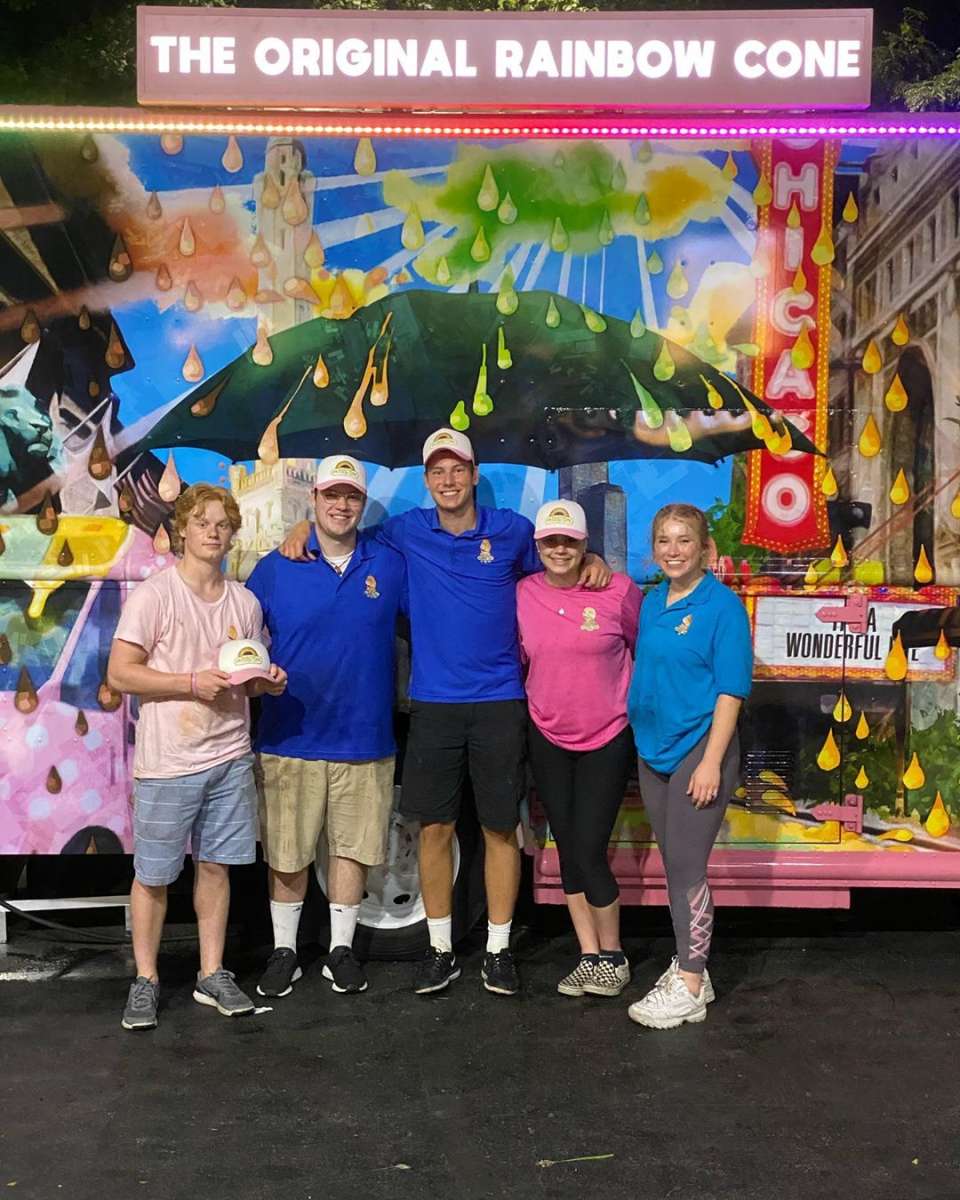
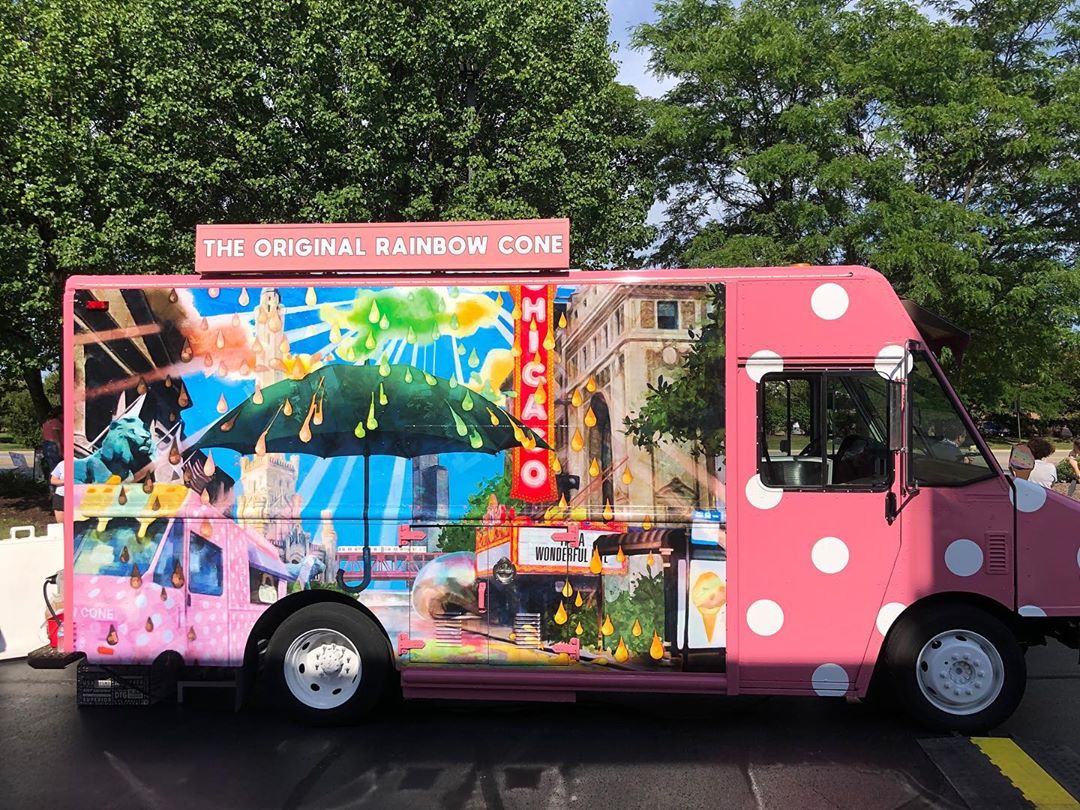
With coronavirus putting a lock on music festivals, beaches, local street festivals, and more, summer in Chicago really hasn’t felt like true summer. Though they weren’t at Taste of Chicago To-Go, Original Rainbow Cone now has an ice cream truck to be our summer staple. First stop? The Chicago suburbs. 

With indoor bar service coming to a halt this Friday and more restrictions coming into place for indoor dining, Original Rainbow Cone’s truck is hoping to extend the establishment’s reach to get their signature cone to customers that aren’t able to reach their brick and mortar location on 9233 S. Western Ave.

Advertisement

original rainbow cone truck
Photo Credit: The Original Rainbow Cone Instagram Page

Lynn Sapp, owner of Original Rainbow Cone and grandson of the man who founded the famed business in 1926, is usually used to bringing Original Rainbow Cone’s goodies to festivals across the city in the summertime. While the truck has been in the works for quite some time now, Sapp said that the abrupt adaptation the business has needed due to the coronavirus pandemic was the push to get the truck operational sooner than later.

The truck hasn’t made its way into cities and neighborhoods yet, given that parking and logistics are still difficult to get a handle on, but Original Rainbow Cone’s truck is bringing the Chicago favorite out into the suburbs and their parking lots. (The plan is to eventually have the truck make its rounds in the city and its neighborhoods, to keep updated on its whereabouts, we recommend following their Instagram page.)

Advertisement

original rainbow cone truck
Photo Credit: The Original Rainbow Cone Instagram Page

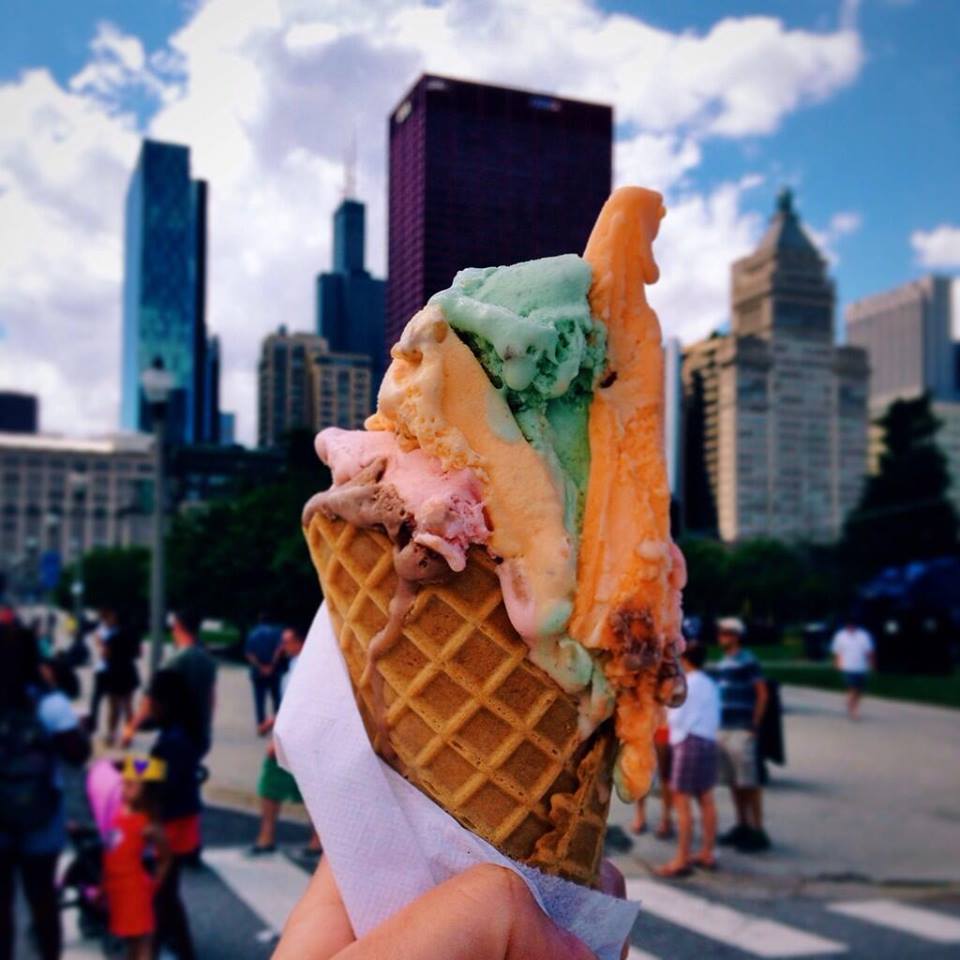
The cones that Original Rainbow Cone serves are a little more complicated than the standard ice cream cone, mainly because the signature stack includes a slab of chocolate, pistachio, strawberry, New York cherry, and orange sherbet. “We have a little bit of a learning curve with the extreme heat and elements like that and getting used to serving out of a truck,” Sapp said. “I’m pretty excited that a company that’s been around for [94 years] is now on wheels.”


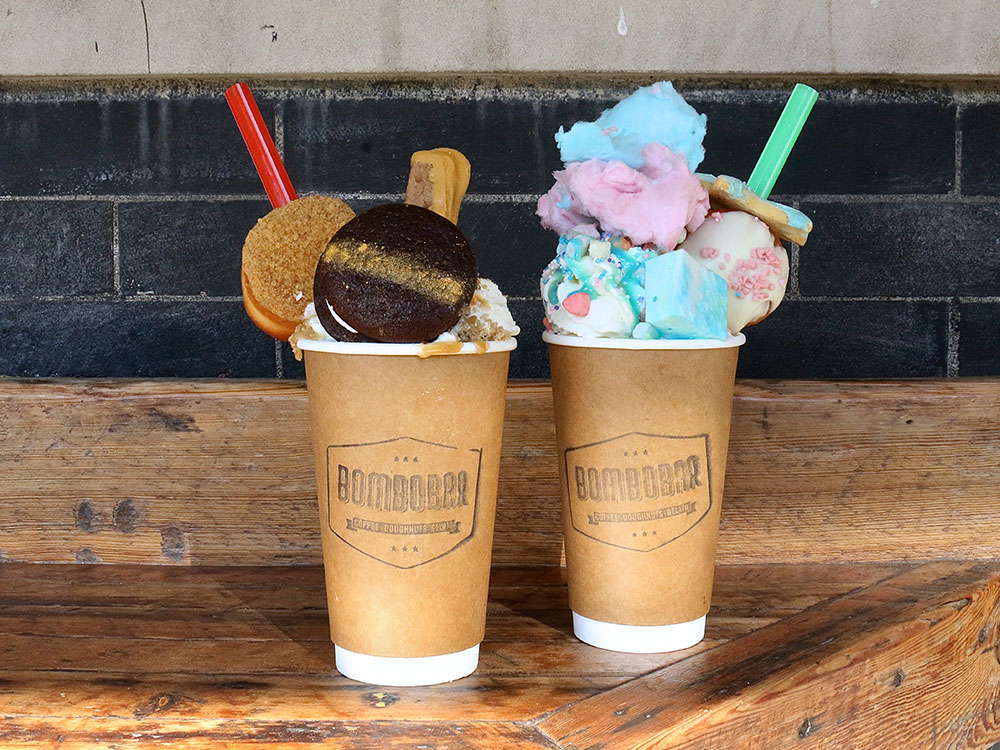
BomboBar
Photo Credit: Bombo Bar

View the Best Dessert Places in Chicago

Craving even more of that good stuff? View our list of the best dessert places in the city.

Advertisement

View the Best Dessert Places in Chicago


On July 11th, the truck made its suburban debut at the Buona Beef in Darien. Starting this Friday, July 24th, the truck will spend its weekend at the Buona Beef in Bolingbrook. On Friday you can grab their almost century-old, famous cone from 4 pm to 10 pm; 2 pm to 10 pm is your primetime for ice cream-ing Saturday and Sunday at the same location.

Advertisement

rainbow cone chicago
Photo Credit; Original Rainbow Cone Facebook Page

For those located in the city and have the means to, the Original Rainbow Cone location in Beverly is still open for pickup, takeout, and catering!

Advertisement

At UrbanMatter, U Matter. And we think this matters.

Tell us what you think matters in your neighborhood and what we should write about next in the comments below!

Advertisement

Featured Image Credit: Original Rainbow Cone Instagram Page

Advertisement

Read More

Original Rainbow Cone Ice Cream Truck Coming to Chicago Suburbson July 22, 2020 at 8:12 pm Read More »