Videos

“Black Is Beautiful” Beer Review: Noon WhistleMark McDermotton August 15, 2020 at 4:10 am

The Beeronaut

“Black Is Beautiful” Beer Review: Noon Whistle

Read More

“Black Is Beautiful” Beer Review: Noon WhistleMark McDermotton August 15, 2020 at 4:10 am Read More »

Dave ‘Medusa’ Shelton was a fairy godmother to Chicago’s club sceneLeor Galilon August 14, 2020 at 6:00 pm

Dave "Medusa" Shelton with the famous perm that earned him his nickname in the 1970s - COURTESY MIGUEL ORTUNO

With his open friendliness and his mane of curly hair–which earned him the nickname “Medusa”–Dave Shelton was a magnetic presence on Chicago’s nightlife scene in the mid-1970s. DJ Teri Bristol recalls first spotting him at a Lakeview gay club called Broadway Limited. “His hair was past his shoulders–it was in ringlet curls,” she says. “He stuck out to me. It was almost like he was illuminated. I was instantly drawn to him. He was so interesting looking, and I could not stop staring at him.”

The name “Medusa” became Shelton’s calling card as he began hosting his own parties. His career as a promoter began auspiciously: on March 17, 1979, he put together a night at the legendary Warehouse. Shelton booked Frankie Knuckles, the godfather of house music, to DJ at the space that gave house its name.

Four and a half years later, in October 1983, Shelton opened his own club in Lakeview. The original Medusa’s was open for just nine years, but it’s influenced generations of alternative culture. Medusa’s became a north-side hub for house music and a hangout for the industrial fanatics who ate up everything Wax Trax! Records put out–Belgian EBM pioneers Front 242 made their U.S. debut at Medusa’s in 1984, the year before Wax Trax! released their album No Comment in the States. The club hosted performances by crucial local and national bands–Ministry, Smashing Pumpkins, Fugazi, White Zombie–but dance nights remained its biggest draw. Shelton had a stable of DJs who mixed subterranean sounds to suit the eclectic tastes of crowds from all walks of life: Black house heads, preppy white suburban teens, Latinx punks, skinheads, queer runaways, even sailors.

Shelton cared about inclusivity and loved outrageousness, and because Medusa’s reflected both, it didn’t go over well with everyone in the neighborhood: the club drew the ire of Alderman Bernie Hansen, who oversaw its section of Lakeview. When Shelton’s lease on the building at Sheffield and School ran out in 1992, he closed Medusa’s and left, but he kept throwing irreverent parties, beginning at the Congress Theater. In 1997 he opened a new Medusa’s in his native Elgin, which he ran until last week, when he died at age 63. The club’s general manager, Miguel Ortuno, says Shelton died of natural causes related to a chronic heart condition. “Dave had a huge heart in terms of taking care of people and loving people,” Ortuno says. “He had a weak heart in terms of functionality.”

You could try to measure Shelton’s influence on underground culture by listing the famous songs Medusa’s DJs broke or the canonized bands that performed there. But his greatest legacy is the generosity he extended, particularly to the young people who flocked to his original Sheffield club. Howard Bailey began working as a doorman at Medusa’s in the late 80s, when he was 16, and he says his time there changed his life. Bailey went on to open Wicker Park record store Beat Parlor in the early 90s and Goose Island nightclub Slick’s Lounge in 2000; he also had a son with a woman he met at Medusa’s. Bailey threw his first party at Medusa’s in the early 90s, and Shelton encouraged him. “He’s my mentor,” Bailey says. “He’s my fairy godmother. He’s my teacher.”

Greg “Blue” Pittsley met Shelton in 1975 at a mutual friend’s apartment. “My friend was really drunk–he sat in the corner and was smoking a cigar, and Dave and I put on a drag show using towels for wigs,” Pittsley says. Shelton worked for United Airlines and aspired to be a kindergarten teacher, and Pittsley had trained to be a secondary education teacher but could only find work at a construction management company. They were young and had ample free time at night. If they weren’t partying at Shelton’s Lakeview apartment, they’d work the room at any number of favorite clubs–River North gay disco Dugan’s Bistro, Lincoln Park punk hangout La Mere Vipere, Old Town gay dive Carol’s Speakeasy. After the Warehouse opened in 1976, Pittsley and Shelton made their way there too.

Warehouse founder Robert Williams took a liking to Shelton. “He was silly, just like me,” Williams says. “So we got along marvelously.” Williams recalls one Halloween when he, Shelton, and Frankie Knuckles had dressed in drag to go to a party at South Shore gay bar the Jeffery Pub when the car they were riding in broke down at a gas station on 67th Street. “We had to get out in these various costumes–we were posing on top of the car,” Williams says. “The people were looking at us like we had really lost our mind. It was hilarious.”

Williams became an advisor to Shelton as he began throwing his own parties, and pitched in when Shelton opened his first club, 161 West, in 1980. “We loaned equipment from the Warehouse, and Frankie played,” Williams says. Pittsley helped set up the club too, and remembers that the invitation for its opening night bore an architectural drawing of the club–each one was rolled up like a blueprint.

Shelton gained a reputation for playful, borderline vulgar spectacle. In the 2019 book Do You Remember House?, Micah E. Salkind writes about a party called “Medusa Pigs Out at the Bistro” that Shelton hosted at Dugan’s Bistro in 1979: he served a thousand free White Castle sliders on silver platters and laid out a soiled mattress on the dance floor. Shelton continued in this vein at 161 West; Williams remembers Shelton bringing in coffins for a Halloween party. “Dave’s effect was very avant-garde-ish,” he says.

Pittsley says 161 West stayed open maybe six or eight months. After it closed, Shelton happened to walk past a four-story building on Sheffield near School with a handwritten “For Rent” sign on the door. “There was nothing fancy about it,” Pittsley says. “The bathrooms were about as primitive as you get, and they were in pretty bad shape because the building had been there since the 1920s.” Shelton took the place and turned the first three floors into Medusa’s.

Williams advised Shelton to find a different space. “The only time I disagreed with him was when he went to Sheffield,” Williams says. “I told him it was gonna be a problem. But he overlooked that because the space was so fantastic. He loved it. I couldn’t blame him, but it caused a lot of problems.”

In 1983, Joe Michelli was attending the School of the Art Institute by day and working as a video jockey at Berlin at night, and he got a tip about a new club opening nearby. He first went to Medusa’s while Shelton and Pittsley were still building it out; Shelton showed Michelli the third floor, which became the video room. “I asked him about some of their gear, and they needed a few more pieces,” Michelli says. “I told him what they needed to get to make it really run well. Dave was like, ‘Yep, sure, whatever we need, let’s get it.'” Michelli became the club’s first VJ, and helped open Medusa’s in October of that year.

Medusa’s operated as a juice bar–it couldn’t sell alcohol, but it could stay open after bars were legally required to close. Shelton had always intended it to be an after-hours club, and at least at first, a Medusa’s party could run well into the next day. “We had to play until the last person stopped dancing,” Bristol says. “Sometimes that could go until ten in the morning.”

Bristol got her start at Medusa’s in the mid-80s, after one of the club’s innovative early DJs, Mark Stephens, asked her to step up to the turntable when he needed a bathroom break. “He never came back until the end of the night,” Bristol says. “He was like, ‘That was your trial by fire.’ And Medusa loved it–he was like, ‘All right, do you want to be in the rotation on Fridays?'”

Shelton seemed to find a way to throw his support behind everyone he worked with. Designer Tom Hemingway met Shelton in 1984 while at Medusa’s to help fix up the interior of the women’s bathroom. “It felt a little daunting, and he put me at ease,” Hemingway says. He decided to go for a brothel look–he put in loud, colorful 1970s wallpaper and a hanging chandelier. “Dave didn’t put any reins on me at all,” Hemingway says. “The crazier the idea, the more he loved it.”

Hemingway oversaw the club’s gaudy interior, which he’d change every month. Typically it took most of a week for Hemingway and a crew of art students to design and build a new theme for the dance floor. Once he outfitted the space with Dali’s surreal melting clocks; another time he and Shelton brought in gigantic statues of Jesus and the Virgin Mary to preside over altars around the dance floor. One night an air-conditioning duct fell from the ceiling right into the arms of Jesus. “We’re like, ‘Oh my God, Jesus saved all these kids,'” Hemingway says.

Medusa’s regularly featured performance art, and Hemingway collaborated with those performers too. He once created a theme based on the kitschy 1988 horror comedy Killer Klowns From Outer Space, and its performance-art component involved an oversize papier-mache clown head so large that it wasn’t yet completely dry when the performer had to put it on. “What we didn’t know was that cockroaches had gotten into the papier-mache,” Hemingway says. “They kept being like, ‘Things are crawling on my head!'”

In the mid-80s, Shelton partnered with Loyola University’s radio station, WLUW. “Medusa’s was helping provide some DJs for WLUW, who would do 30-minute mixes at lunchtime and in the evening,” says Jennifer Prietz Marszalek, who worked at WLUW at the time. The partnership helped promote the club to a younger crowd, boosting the Saturday teen nights that Medusa’s began hosting for under-18 clubgoers in 1986.

“Dave was really creative, and he went a mile a minute,” Marszalek says. “He had a ton of ideas.” When she quit WLUW in 1988, she called Shelton and he offered her a job at Medusa’s–she handled the club’s promotions, managed its membership program, and ran lights from the DJ booth.

“I became one of Dave’s kids when I started working for him,” Marszalek says. “Every kid that went to the club felt like a Medusa’s kid and had some connection to Dave, or to someone that worked there that helped them feel like they belonged. And that was really the greatest thing that Dave ever did, was make anybody that he ever met feel like they belonged to something.”

Howard Bailey was a teen from the west side working at a Lincoln Park burger joint when he was offered a job as a Medusa’s doorman. “At that point, I was definitely not a socialite,” he says. “I really just thought it was a job–it was an opportunity to make some money on the weekends and not smell like hot dogs and hamburgers.”

He didn’t meet Shelton for his first four months, because Shelton was hanging out in Hawaii, a favorite destination of his. When Shelton first walked up to the door during one of Bailey’s shifts, the teen was suspicious. “My first words to him were, ‘Sir, I don’t think this is age appropriate for you,'” Bailey says.

Bailey took a liking to Shelton. “I’ve never met somebody so dark, twisted, and morbid, but at the same time so full of love and life,” Bailey says. They developed an easy rapport, and Shelton liked to tease him. “He always offered me an obscene–or at least what I thought at the time was an obscene amount of money–to go in drag as Whitney Houston,” Bailey says. He never took Shelton up on it.

Lorri Francis, who worked as an office manager for Medusa’s, likens the club’s inner circle to a family. Shelton was the father figure, Pittsley the mother. “If you needed something, they would be more than happy to help you get it,” she says.

In the mid-1980s, when Francis needed a place to live, Shelton offered her a room in the Medusa’s building. “We lived there for free. We didn’t have to pay any bills–no utilities,” she says. “If someone didn’t have somewhere to live for a while, they could just stay there in some little room or something.” Medusa’s DJs, including Stephens, Bristol, and Val “Psycho-Bitch” Scheinpflug, lived there periodically, and so did a couple skinheads who worked security. “The people who knew Dave are very, very loyal to him,” Francis says. “The people that lived there and worked for Dave would have done anything for him–anything at all.”

Shelton’s generosity also extended beyond his club family. Among the many people Shelton supported was Sean Duffy of punk production company Last Rites, who began booking shows at Medusa’s in 1987. “There were a couple of shows where I took a beating, and he would give me a huge break–I think maybe one time he even dropped the whole room rental,” Duffy says. “Nobody in the city back then would have done that. They would have made me owe it forever.”

Such kindness in turn benefitted Chicago’s punk scene–when Last Rites wore out its welcome at Metro and the Cubby Bear, Duffy could work with Medusa’s until he found a new venue, instead of giving up on booking punk shows. “There were no places to go,” he says. “There were gaps when I would get told to leave a place–if he wasn’t there, there would have been no shows.”

In 1986, 44th Ward alderman Bernie Hansen cosponsored a proposal to force juice bars to follow regular bar hours, apparently motivated largely by noise complaints about Shelton’s club. The ordinance went into effect the following year. The Medusa’s teen nights, begun before the new regulation, helped keep the club afloat–ordinarily you had to be 18 to get in, but until 10:30 PM on those Saturdays, everybody was welcome. And Marszalek’s promotion work gave the club’s popularity a bump too: she cold-called MTV to pitch the 120 Minutes crew the idea of filming a spot at Medusa’s, and in 1989 they did, shooting while Rights of the Accused played in the rock room.

“The way they filmed it and the way they presented it, they made it look like it was the rockin’ place in the world for kids to be,” Pittsley says. “We never had anything but packed Saturdays from that point on.”

The popularity of Medusa’s benefited Wax Trax! Records, whose symbiotic relationship with the club extended beyond it playing the label’s music and booking its bands–Julia Nash, daughter of Wax Trax! cofounder Jim Nash, started working at Medusa’s in 1989. (Jim died in 1995, and Julia revived the label in 2014.) “Dave was hugely responsible for the label doing as well as it did,” Nash says. “By playing those records, his DJs would report to Billboard magazine and give us super-high marks. That relationship was really an important part of the growth of Wax Trax! Records.”

The relationship helped the Wax Trax! store too. Jonathan “Scrappy” Gilbert bought a test pressing of Front 242’s 1986 single “Quite Unusual” there, after a resident DJ at Medusa’s played it. By the end of the decade, Gilbert had become a resident too. On his watch an influx of preppy suburban teens flocked to the club, but he loved how eclectic the crowd remained. “Medusa’s, it didn’t matter what you’d play–I could play a record backwards, in a different language, it wouldn’t even matter because the energy was so amazing,” Gilbert says. “It didn’t take much to be successful there–you just had to know to play good music for people.”

Leroy Fields, who replaced Joe Michelli as Medusa’s main VJ in the mid-80s, thinks Medusa’s succeeded because of Shelton. “He was probably the greatest club impresario I’d ever encountered, ever met, ever seen–the entire place reflected his values of openness, creativity, and acceptance,” Fields says. “I would never want to work for anybody else in a club except for Dave. I did work for other people, but Dave set a standard that no one will ever be able to meet.”

The dance floor at the original Medusa's location on Sheffield - COURTESY MIGUEL ORTUNO

Medusa’s hosted the last party at its original Lakeview location in June 1992. Shelton soldiered on at the Congress Theater, and though Marszalek worked with him for a couple more years, not everyone in the Medusa’s family stuck around. Pittsley and Hemingway opened a bar called Foxy’s near Belmont and Halsted; Bailey rented a Wicker Park storefront owned by Nash’s family to open Beat Parlor. The debut of Medusa’s at the Congress had a “Kennedy ’63” theme, and Shelton brought in a convertible similar to the one in which JFK had been shot. As Shelton told Reader critic Bill Wyman in 1992, “A lot of the younger kids don’t know anything about the assassination. It’ll be educational.”

“He was like a John Waters movie,” Marszalek says.

In 1997, Miguel Ortuno was working at Tower Records in Bloomingdale when Shelton came in to browse the store’s collectibles. They hit it off, and when Shelton opened a new Medusa’s in Elgin later that year, Ortuno was on the payroll. He started out working wherever he was needed and eventually became the general manager.

Ortuno and Shelton also shopped at HomeGoods together and frequently sent each other Internet memes. Shelton was fond of his friend’s dog, though he loved animals of all kinds. “He always liked to take care of animals,” Ortuno says. “He would put all this food outside of the house, and you would see a possum eating some food from one of the bowls and then a skunk at the next bowl, and then cats in the next one. They were all just getting along eating the food and then they would all go to sleep–it’s just the weirdest thing.”

Medusa’s runs two nights a week, catering to teens on Saturdays. In fall 2019, an Elgin LGBTQ+ bar called Phoenix closed, and Shelton and Ortuno decided to do something about it. “Me and Dave were like, ‘Well, now the gay community has nowhere to party. Let’s bring them to Medusa’s,'” Ortuno says. They promptly launched the club’s Pride Fridays. “We’ve always welcomed the gay community, so it was kind of like a no-brainer.”

Shelton had been in talks with Nash about hosting a two-day extravaganza at Medusa’s celebrating the 40th birthday of Wax Trax! Records. They’d planned to do it in April–but then COVID-19 hit.

Medusa’s remains in business, insofar as any nightclub can remain in business during the pandemic. “We can keep it going,” Ortuno says. “But if we close the club, it wouldn’t be because of Dave’s passing. It would be because of coronavirus.”

In January 2020, Bristol was hospitalized for kidney failure. Shelton reached out, and sent her a three-disc mix of religious songs he’d made in tribute to his aunt Sally. “It had a whole story about his childhood, his aunt Sally, and what these songs meant to him,” Bristol says.

As it turns out, Shelton sent that mix to a lot of the people in his Medusa’s family. When Bailey posted on social media about the aunt Sally CDs he’d gotten, a crowd of Medusa’s friends told him they’d received copies too. “He knew his time was coming,” Bailey says. “This was him saying goodbye in a way that we never, ever, ever would have seen coming.”

After 5 Magazine broke the news of Shelton’s death last Friday night, old Medusa’s regulars began to congregate outside the original club’s address, 3257 N. Sheffield, which is now a condo. Those who came left bouquets of flowers, candles, cards, and at least one sculpture of the gorgon Medusa from Greek mythology. They left messages in chalk along the sidewalk and on the brick walls. One visitor wrote down the words that Shelton had often used to describe the people who made the Medusa’s community so special: “They were already stars, I just gave them a place to shine.”

Pittsley went to the site to meet some of his old Medusa’s family, including Bailey. “Howie came up to me and just threw his arms around me, and I lost it,” he says. “We had very tight bonds, all the people that worked there together. If we haven’t seen each other for years, when we run into each other we always dissolve into tears.” v


Miguel Ortuno is planning a memorial service for Dave “Medusa” Shelton at the Medusa’s in Elgin (209 E. Chicago) on Saturday, August 22, beginning at 7 PM. More details are forthcoming, including procedures and requirements for COVID-19 safety. He’s also creating a foundation in Shelton’s name.
Read More

Dave ‘Medusa’ Shelton was a fairy godmother to Chicago’s club sceneLeor Galilon August 14, 2020 at 6:00 pm Read More »

The generation-spanning Fountain of Time is an intriguing peek into Chicago new-music lab the Grossman EnsembleHannah Edgaron August 14, 2020 at 8:13 pm

The Grossman Ensemble could be thought of as a new-music incubator. The resident ensemble of the Chicago Center for Contemporary Composition (CCCC) at the University of Chicago, the 13-piece group–which comprises some of the best contemporary players in the city–rehearses extensively with composers over the course of several weeks. Some of their commissions emerge collaboratively from a nearly blank page, with composers drawing on the group’s input to flesh out their ideas. Others arrive on the members’ music stands with every staccato dotted and tremolo crossed. No matter how the compositions arise, they must fit the ensemble’s idiosyncratic instrumentation: flute, saxophone, clarinet, oboe, horn, piano, harp, percussion, and string quartet. Fountain of Time, the ensemble’s debut release (out on the CCCC’s own label), collects five of the 24 pieces commissioned by the center during the Grossman’s first two seasons. Casual listeners may be put off by the homogeneity of the works; not only do they share the same instrumentation, but many of them also bank on somewhat cliched whiz-bang contrasts. But the record rewards repeat listenings. Shulamit Ran’s glittery Grand Rounds chases its own tail before whirling itself into lassitude; Anthony Cheung’s sinuous, often ambiguous three-movement work, Double Allegories, is similarly intoxicating. David Dzubay’s PHO, whose title is an astronomical abbreviation for potentially hazardous objects whose orbits could put them on a collision course with Earth, is appropriately taut and cinematic. Even so, the most indelible contributions on Fountain of Time come from younger composers. Clay Mettens’s hypnotic and lithe Stain, Bloom, Moon, Rain constructs a riveting drama out of humble building blocks, while Tonia Ko–a ubiquitous name on local new-music marquees for the past few seasons–offers a sensuous petting zoo of sounds in Simple Fuel. v

Read More

The generation-spanning Fountain of Time is an intriguing peek into Chicago new-music lab the Grossman EnsembleHannah Edgaron August 14, 2020 at 8:13 pm Read More »

Exotic Sin take spiritual jazz and minimalism into the 21st centuryBill Meyeron August 14, 2020 at 10:00 pm

The instruments of some musical icons end up displayed in museum exhibits or auctioned off for charity at vast sums. Others get handed down to the younger generations to do with as they wish. In the case of Exotic Sin, the London-based duo of multi-instrumentalists Naima Karlsson and Kenichi Iwasa, that’s been a good thing. Karlsson is a grandchild of Don Cherry, who played pocket trumpet with Ornette Coleman as well as a variety of non-Western instruments on records that predicted the evolution of world music, and his wife Moki, who accompanied Cherry on tambura and executed the colorful and powerfully vibe-inducing artwork for their album covers and stage banners. In Exotic Sin, Karlsson plays acoustic and voltage-dependent keyboards while Iwasa wields synthesizers, percussion, and three of Don’s old horns–one trumpet and two “saxophones” made from reed mouthpieces attached to plastic plumbing components. On their debut LP, Customer’s Copy (Blank Forms), Karlsson’s bold piano flourishes bring to mind the playing of Alice Coltrane, and the duo’s lengthy, layered compositions and repetitive keyboards hint at Don’s work with minimalist composer Terry Riley. But this isn’t some revival outfit; the duo’s music also contains digitally distorted voices and spasmodic, electronic percussion, which make far more sense in a world well acquainted with glitchy failure than in one where electronics represent the hope of a progressive future. v

Read More

Exotic Sin take spiritual jazz and minimalism into the 21st centuryBill Meyeron August 14, 2020 at 10:00 pm Read More »

Former manager’s phone threat to New York theater canceled screening of ‘Surviving R. Kelly’: fedsCarly Behmon August 15, 2020 at 12:05 am

Federal prosecutors say R. Kelly’s former manager called in a gun threat to a New York theater screening a docuseries about the R&B singer’s alleged abuse in 2018.

Donnell Russell, 45, is charged with one count of threatening physical harm and one count of conspiracy to threaten physical harm, according to the U.S. Attorney’s Office in New York.

On Dec. 4, 2018, the NeueHouse Madison Square theater in New York planned the premiere screening of “Surviving R. Kelly,” which details Kelly’s alleged sexual abuse of women and girls, according to a complaint. The premiere also was to feature a panel discussion that included some of R. Kelly’s accusers. That day, the feds allege, Russell made multiple attempts to stop the screening, leading up to a call threatening to shoot up the theater.

He allegedly emailed a cease-and-desist letter to the theater and tried contacting New York fire and police officials to stop the screening, the complaint said. Russell eventually called the theater from his landline, according to the feds, saying there was a person at the screening with a gun ready to shoot.

Guests were evacuated, and the event was canceled, according to the complaint, though there was no shooting.

In August 2019, investigators interviewed Russell, and he told them he contacted NeueHouse but denied making a threat, the complaint said. Charges were filed under seal in March, and announced Friday, the day Russell was to appear in federal court in New York.

“By allegedly threatening a shooting at the theater, Russell prevented the screening, which was attended by a number of R. Kelly’s alleged victims,” Acting U.S. Attorney Audrey Strauss said in a statement issued Friday. “Threats of gun violence aimed at intimidating and silencing victims of sexual abuse are unlawful as well as unacceptable. We are committed to aggressively investigating and prosecuting such crimes.”

Read more on crime, and track the city’s homicides.

Read More

Former manager’s phone threat to New York theater canceled screening of ‘Surviving R. Kelly’: fedsCarly Behmon August 15, 2020 at 12:05 am Read More »

11 Best Spanish Restaurants for Tapas in ChicagoAlicia Likenon August 14, 2020 at 4:11 pm

Table of Contents

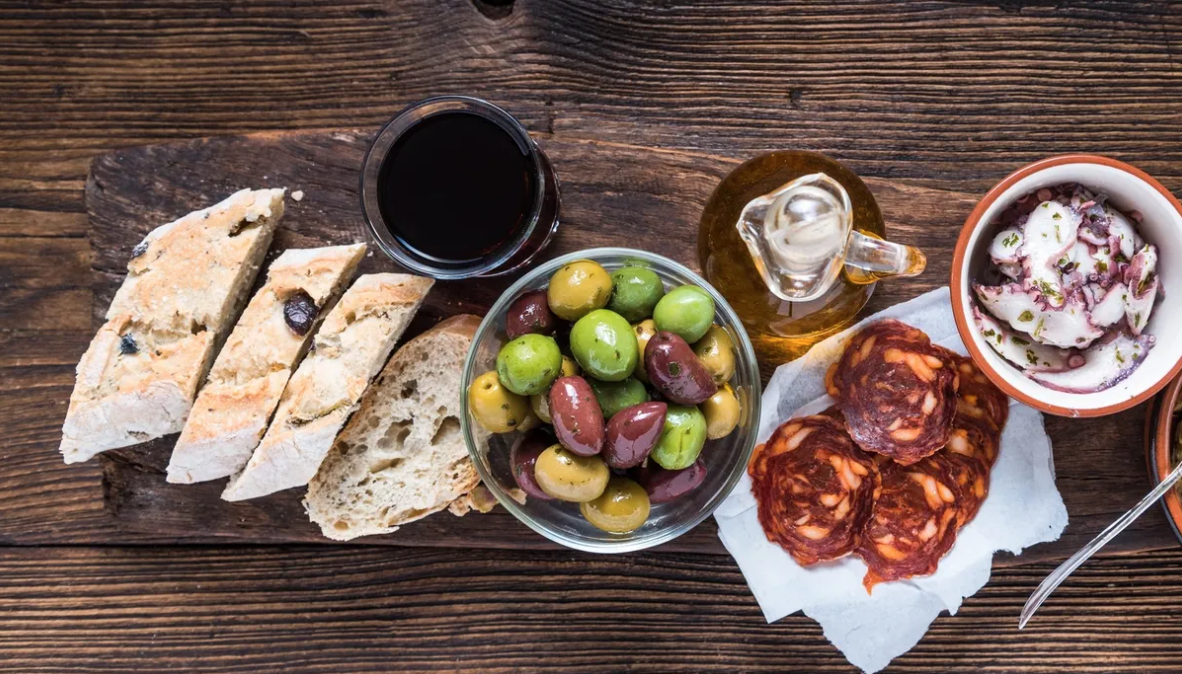
Imagine this: you have a group of friends or family visiting over the weekend. You want to treat them to a nice, long meal but you’re not sure what everyone likes. Your solution? Tapas! Take your loved ones on a culinary adventure by ordering up a variety of interesting dishes. Add some sangria or fancy cocktails and by the end, everyone will be impressed (and very full). These are the best restaurants you can find for tapas in Chicago.

Mercat a la Planxa
Photo Credit: Mercat a la Planxa Facebook

638 S Michigan Ave, Chicago, IL 60605

Advertisement

Looking for a modern interpretation of timeless Catalan traditions? Of course, you are. Mercat’s robust menu invites foodies to experience a masterful twist on authentic Spanish cuisine. From meal-sized classics to street food starters, each item offers a new journey for your tastebuds. To top it off, Mercat offers a finely curated selection of sangria, wine, and cava. ¡Qué Rico!

tapas chicago
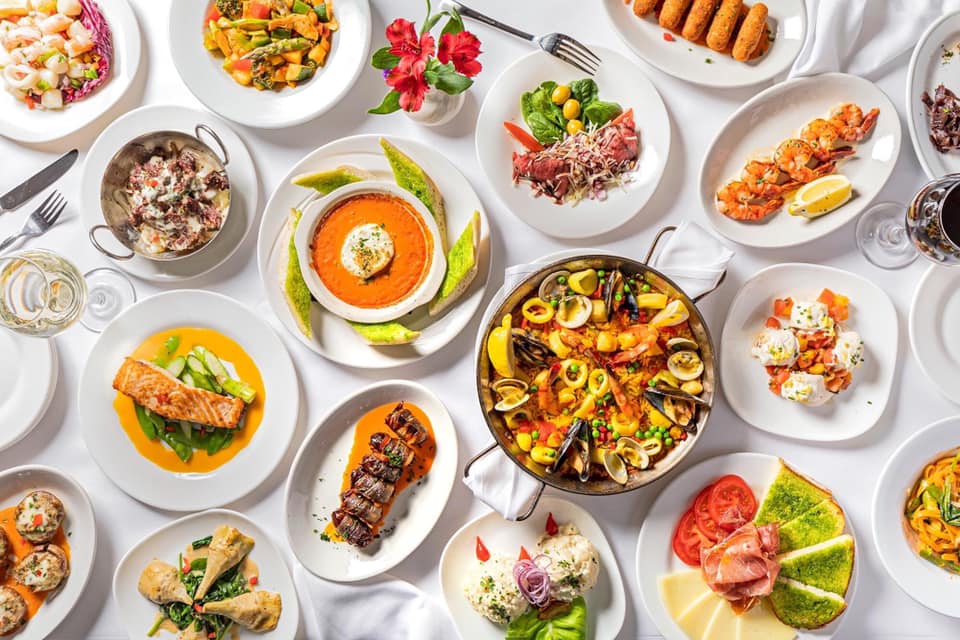
Photo Credit: Café Marbella

5527 N Milwaukee Ave, Chicago, IL 60630

Advertisement

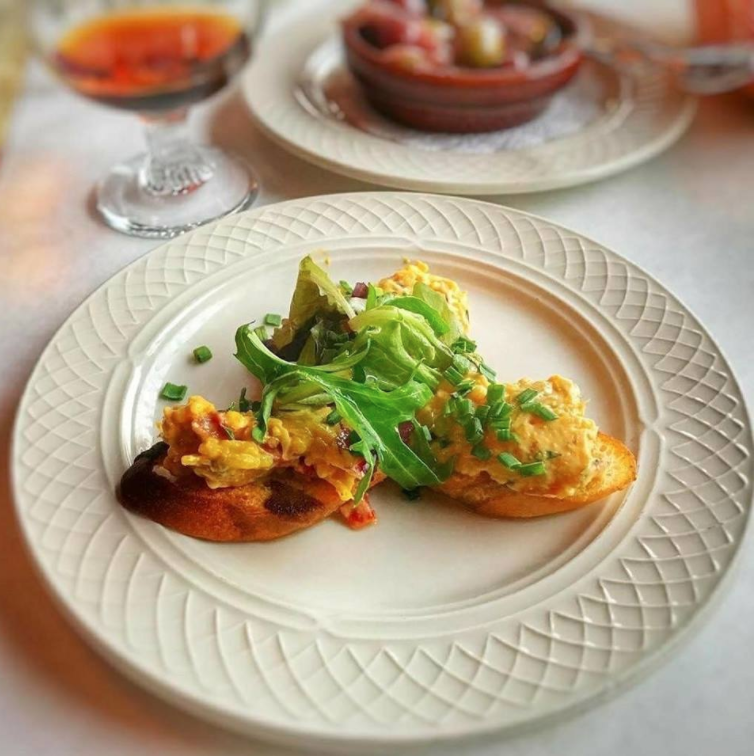
For over 40 years, restaurant Chef Virgilio Trujillo has perfected classic dishes like Gambas al Ajillo, Tortilla Espanola, and Gazpacho Andaluz. And Chef V. knows a thing or two about presentation — some of the items are almost too pretty to eat. Almost. With items like Albondigas Al Vino Tinto and Escalopes De Cerdo, you’ll leave Cafe Marbella feeling satisfied, guaranteed.

Photo Credit: Bar Roma Facebook Page

441 N Clark, Chicago, IL 60654

Advertisement

You don’t have to venture far to explore soulful Spanish tapas. Chef Hisanobu Osaka has curated a small plates menu with savory delights such as house-made tomato bread, Mushroom Pintxos, and Galician Octopus. Plus Bar Ramone’s wine program features an extensive list of just over 100 bottles. Decisions, decisions.

Cafe Ba-Ba-Reeba!
Photo Credit: Cafe Ba-Ba-Reeba!

2024 N Halsted St, Chicago, IL 60614

Advertisement

A Spanish tapas with a fun name? Sign us up. This Lincoln Park staple has been dishing up authentic Spanish cuisine since 1985. Their menu was crafted to share and features tapas, pintxos (bite-sized tapas), and paella. They also have killer pitchers of sangria which go down a little too easy.

tapas chicago
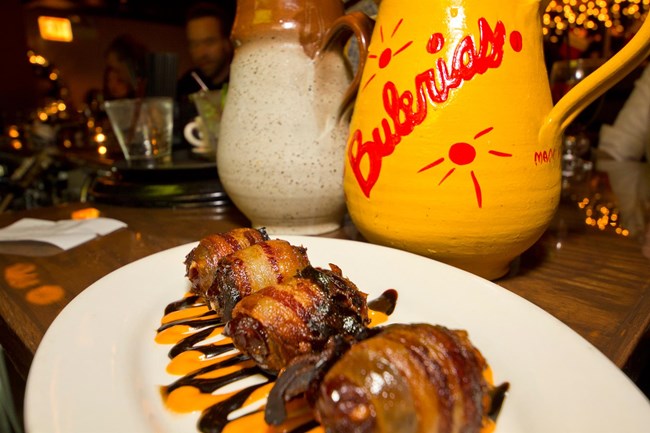
Photo Credit: Bulerias

3656 N Ashland Ave, Chicago IL 60613

Advertisement

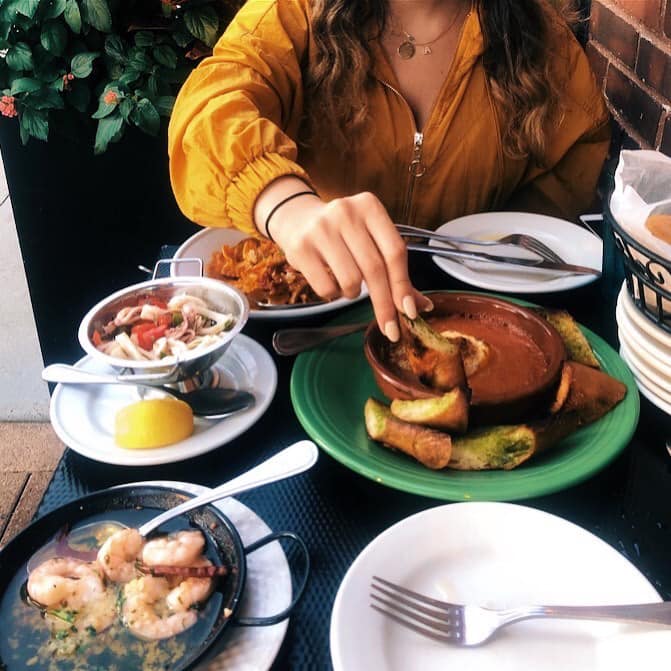
Did you know: ‘Bulerías’ is a fast, rhythmic form of flamenco dancing? It’s a fun, energetic experience which is exactly what the folks at Bulerias Tapas aim to deliver with their cuisine. Stop by with a large group and order favorites like Chicken Croquettes, Carne En Tostada, and Gambas Al Ajillo. You’ll be happy you did.

tapas chicago
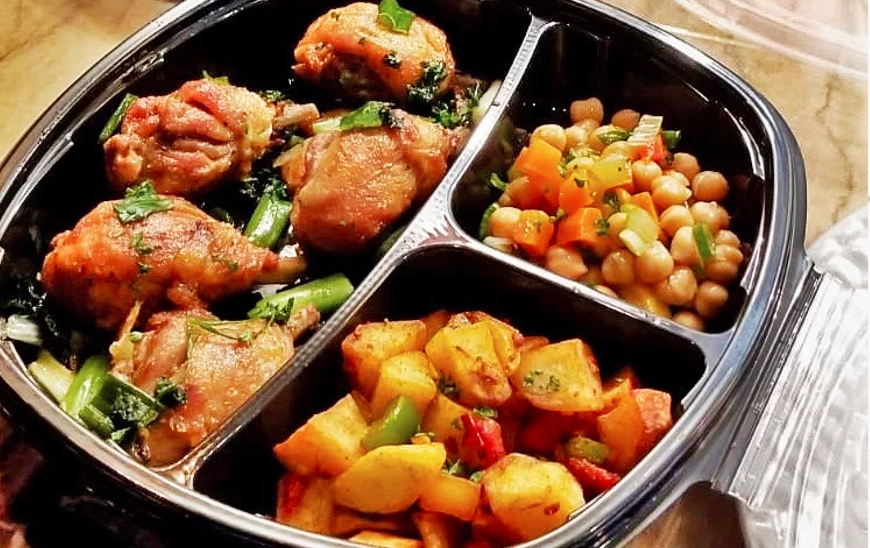
Photo Credit: Iberico Express

737 N LaSalle Dr, Chicago, IL 60654

Advertisement

After 30 years of serving up the finest Tapas in Chicago, Iberico Express has adapted to serve fresh, ready-to-go items during the pandemic. Their combination plates come with a main dish and two fresh, prepared sides. Or try their Paellas, Garlic Chicken, and famous Empanada Gallega in small, medium, or large sizes.

Photo Credit: Tapas Valencia

1530 S State St, Chicago, IL 60605

Advertisement

As Chicago’s Taste of Spain™, this South Loop joint offers a vibrant atmosphere, intriguing cocktails, and creative Spanish tapas. Whether you’re dining with co-workers or just looking for something different, Tapas Valencia is the perfect spot for any occasion.

Roof on theWit
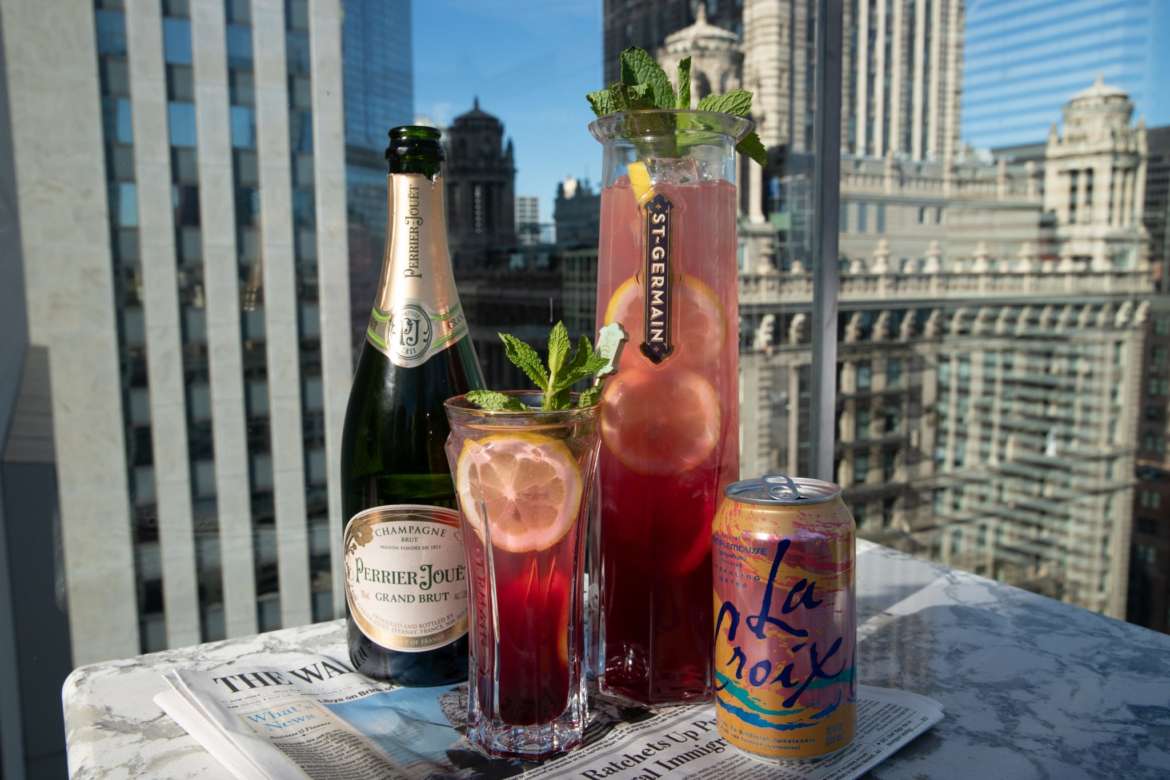
Photo Credit: Roof ontheWit

201 N State Street, Chicago, IL 60601

Set at 27 stories above it all, ROOF on theWit has earned international awards for its gorgeous design and lively entertainment. Explore unique hand-crafted cocktails and cuisine with a side of sweeping skyline views.

807 West Fulton Market, Chicago, IL 60607

Imported from New York in 2019, this Barcelona-style tapas bar offers a cozy vibe with a design aesthetic inspired by European modernism. Indulge in a rotating menu of seasonal dishes and Spanish classics.

tapas chicago
Photo Credit: Emilios

4100 Roosevelt Rd, Hillside, IL 60162

In 1988, Emilio Gervilla opened his first restaurant. He quickly gained the title “Tapas King” for his own impressive recipes, honed over a lifetime of working his way through restaurants in Spain, and traveling to the US to share his talent. The menu is seemingly never-ending, in both Italian and English.

Photo Credit: Tapas Barcelona

1615 Chicago Ave, Evanston, IL 60201

Traveling to the ‘burbs? Check out this colorful, modern space. Since 1995, Tapas Barcelona has been serving fine Spanish cuisine in Evanston at an affordable price. Their Tapas menu is stacked with popular items like Pulpito a la Plancha and Filete con Patatas. It’s worth the trip.

Read More

11 Best Spanish Restaurants for Tapas in ChicagoAlicia Likenon August 14, 2020 at 4:11 pm Read More »

River North Rainforest Cafe Location Closing A Year EarlyNishat Ahmedon August 14, 2020 at 7:27 pm

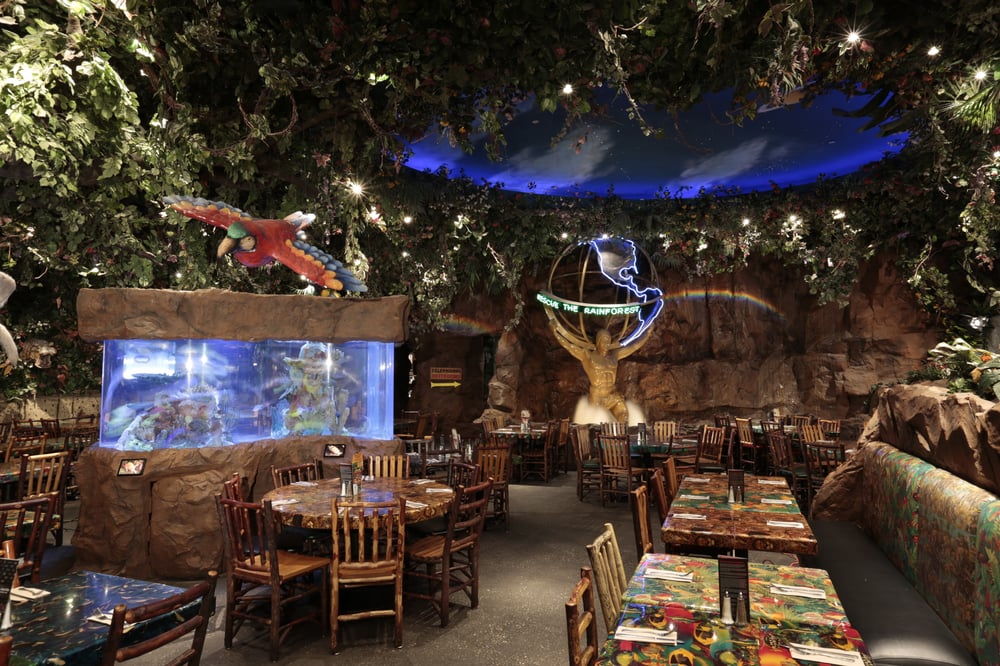
After almost a quarter-century at its famed location at the northwest corner of Ohio and Clark, River North’s Rainforest Cafe location is closing a year early. The jungle-themed restaurant chain closed its Schaumburg location at the start of this year “due to a natural lease expiration.”

Rainforest Cafe
Photo Credit: Rainforest Cafe Yelp Page

The property owner of the building that the River North Rainforest Cafe location is situated in, Sean Conlon, confirmed with Block Club Chicago that the closure was partly a result of the coronavirus pandemic. The two-story building was “due to leave in one year’s time but [the pandemic] accelerated things,” said Conlon, a real estate developer and “The Deed: Chicago” star. “It’s an iconic restaurant that’s served families well, but there was simply no business.”

Advertisement

Like other restaurants, diners, and attractions popular for both tourists and residents alike, spring’s lockdown hit the River North Rainforest Cafe hard with the restaurant closing its doors initially because of the pandemic, but then never reopening for dining (indoor or outdoor) or carryout service.

Rainforest Cafe
Photo Credit: Rainforest Cafe Yelp Page

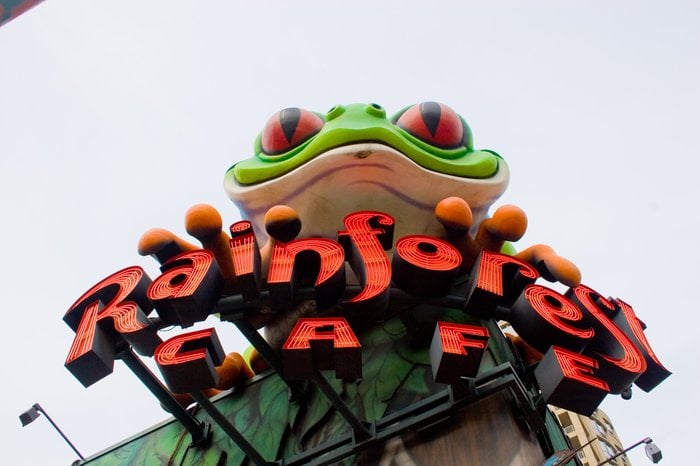
Houston-based Landry’s Restaurants, the owners of the chain and operators of other notable brands such as Bubba Gump Shrimp and Morton Steakhouse, have given no comment as to why the location shuttered its doors. The iconic, neon “Rainforest Cafe” sign was removed from the building last weekend. Conlon has an agreement with the leaving tenants to keep one of the animatronic gorillas, but there’s no word on what will happen to the famed tree frog, “Cha! Cha!” (Could we put our hat in the ring for him?)

Advertisement

Colon said his lawyers were surprised to see a gorilla being mentioned. “Looking over the contract, my lawyer told me it’s the first time he’s encountered a gorilla clause,” Conlon said. “But I didn’t ask them for the frog. Perhaps I was a poor negotiator?” 

Rainforest Cafe
Photo Credit: Rainforest Cafe Yelp Page

The future of the River North site is unclear but Conlon imagines that two things will probably happen, the existing space will be renovated for a new retail tenant or the structure itself will be demolished and rebuilt in place as a high-rise. Rainforest Cafe turning into a high rise wouldn’t make it the first for an establishment in the neighborhood. Regardless, Conlon is optimistic. 

Advertisement


Photo Credit: Tapas Valencia

View the Best Tapas Places in Chicago

Wanna go somewhere that is open? View our list of the best tapas restaurants in the city.

View the Best Tapas Places in Chicago

Advertisement


“Obviously the world has changed, but even in a crisis this is still one of the premier corners in Chicago,” Conlon said. “It’s too early to say [what the outcome will be], but I get several calls a week about it. Some opportunity will emerge.”

Advertisement

At UrbanMatter, U Matter. And we think this matters.

Tell us what you think matters in your neighborhood and what we should write about next in the comments below!

Advertisement

Featured Image Credit: Rainforest Cafe Yelp Page

Advertisement

Read More

River North Rainforest Cafe Location Closing A Year EarlyNishat Ahmedon August 14, 2020 at 7:27 pm Read More »

Chicago Bulls fire head coach Jim BoylenCCS Staffon August 14, 2020 at 1:41 pm

A new era is truly being ushered in for the Chicago Bulls in the Windy City.

After a few weeks of speculation that the franchise may retain Jim Boylen as head coach for another year, the team made a big announcement on Friday. They have officially relieved Boylen of his duties as head coach and will move in a new direction:

Boylen took over for Fred Hoiberg and went 39-84 in his first two seasons as head coach. The team struggled to really develop any sort of chemistry under Boylen despite having some talent on the roster.

With the franchise hiring Artavius Karsavious as President of Basketball Operations and Marc Eversley as General Manager, it’s clear they want to go in a new direction. Rumors swirled over the Summer that Karsavious could have his hands tied in terms of picking a new head coach due to financial situations but on Friday, that wasn’t the case.

The search now begins (or continues) to find a new head coach for the franchise ahead of the 2021-22 season, whenever that starts. Adrian Griffin is a name that has been floated out there with ties to the new regime and might make the most sense for the Bulls.

Ime Udoka is another name to keep an eye on and has been called a “front runner” to win the job due to his connections inside the franchise.

I imagine that list could continue to grow as the team gets through the process over these next few weeks in Chicago.

Read More

Chicago Bulls fire head coach Jim BoylenCCS Staffon August 14, 2020 at 1:41 pm Read More »

Plague time at the Art InstituteDmitry Samarovon August 14, 2020 at 5:45 pm

When it was announced the Art Institute of Chicago was reopening I swore I wouldn’t go. Museums are severely restricted places in the best of times. Would there be anything left to enjoy while masked, distanced, and subject to mandatory directional signage? Can art, which can give a window to the infinite, be appreciated despite the new and necessary scrims and barriers? Yet, when my old college friend Frank asked if I wanted to go, I was among the first in line outside the entrance to the Modern Wing a few minutes before noon on Thursday, July 30, waiting for the doors to open.

The first hour was limited to museum members and inside there was a receiving line of employees welcoming us back. We went up to visit an old friend first. Frank and I were students at SAIC at the start of the 90s. We have both been to this museum hundreds of times these past 30 years and have rarely missed a look at Willem de Kooning’s Excavation. Curators have moved it several times as the museum has expanded and reconfigured, but to us it is a touchstone the way Georges Seurat’s A Sunday at La Grande Jatte or Edward Hopper’s Nighthawks is to the general public. Excavation is currently in a room which is a little too small for it, but at least it’s got a couple other de Koonings to keep it company.

In the week prior to reopening the big art world tabloid news item was local billionaire Ken Griffin’s announcement that he’d parked the Jean-Michel Basquiat he’d recently purchased for $100 million on one of the museum’s walls. A few minutes after leaving de Kooning we found it. There were a couple other viewers in the gallery straining to see what $100 million looks like. I couldn’t see it either. The painting, Boy and Dog in Johnnypump, is certainly big enough to pretend to be important, but without the famous dead artist’s name, if encountered, say, at a regional art fair, it wouldn’t rate a slowdown to one’s pace. Its importance has less to do with art than with the state of the world, where a rich guy can display his latest status symbol purchase in a public place for the envy of others.

One thing I noticed, which marked this visit as different from any previous one, is how much interaction there was between visitors and guards. They are usually just part of the scenery. The only time one talks to them is to ask for directions or be admonished for coming too close to the art. But this day every guard was acknowledged like a long-missed friend. It was like greeting distant relations at church after not having attended in years.

New signs were all over. Arrows, Xs, squares, and circles form a now-familiar Hobo Alphabet to everyone living through this plague time. The museum’s floors and doors bore the telltale markings. Movements through rooms I know by heart are now micromanaged and regulated. Strolling through the Old Masters galleries we encountered a guard who pointed out an X on the floor and told us to turn around. Not being able to choose one’s path is a sure sign of a drastic realignment.

It was just after 1 PM when we wandered near the Michigan Avenue entrance to see a stream of visitors slowly filing in. The public was here, it was time for us to leave, but out of the corner of his eye, Frank noticed something new. Gustave Caillebotte’s Paris Street; Rainy Day, 1877–practically a mascot for the museum–didn’t look like its old self. We came closer and noticed little differences; bits of color now popped, where once they’d receded, contrasts were now accentuated where they were once blurred. Restorers had obviously spent serious time deep cleaning the painting during the shutdown. It was like seeing an old movie in hi-def; perhaps more crystal clear than it needs to be.

I don’t know when I’ll return. For now, the first hour of every day–the museum is closed Tuesdays and Wednesdays–is restricted to members. Even before COVID, I had no love for crowds, so the chance to spend time with paintings I’ve loved for decades without being oppressed by groups of audio tour zombies staggering about is tempting. On the other hand, wearing a mask and being ever vigilant of breaking new rules is no way to lose oneself in the moment. This is our lot now. We have to take our respites and pleasures wherever they’re offered, no matter how circumscribed or limited. v

Read More

Plague time at the Art InstituteDmitry Samarovon August 14, 2020 at 5:45 pm Read More »

Chicago Blackhawks: Stayed in the game but couldn’t finish itVincent Pariseon August 14, 2020 at 1:00 pm

Read More

Chicago Blackhawks: Stayed in the game but couldn’t finish itVincent Pariseon August 14, 2020 at 1:00 pm Read More »