If Ald. Matt O’Shea is able to follow through with his plan to annex Mount Hope Cemetery, it would be the first time Chicago’s borders have expanded since the mid-20th Century. That’s when we absorbed O’Hare Airport, as well as a forest preserve and a stretch of Foster Avenue to connect it to the rest of the city.
Meanwhile, the cities of the Sun Belt have continued to expand into the 21st Century, so much so that Houston is now threatening to bump Chicago from Third City to Fourth City by population. Like most Northern industrial hubs, Chicago’s growth ground to a halt decades ago. Why did we stop growing, and can we ever grow again?
In the late 19th and early 20th centuries, Chicago grew into a great metropolis by gobbling up suburbs we now know as city neighborhoods. In the 1880s, the city limits were bounded roughly by Fullerton, Pershing, and Pulaski.
Then, Chicago landed the Columbian Exposition, which was envisioned as our coming-out party as a world-class city. At the time, Chicago only had 500,000 people, making it the fourth-largest city in the U.S. That wasn’t enough for our ambitions. We wanted to challenge New York.
In order to become the Gotham of the Great Lakes, the city’s leaders approached the residents of four bordering townships: Lake View to the north, Jefferson to the northwest, Hyde Park to the south, and Lake to the southwest. Join us, went the offer, and you’ll get better police and fire protection, better water and sewers, better roads, and the prestige of a Chicago address.
In 1889, all four townships voted themselves into the city, doubling its population and making it the nation’s second city, behind New York. (In Hyde Park Township, workers at the Pullman Palace Car Company were eager to dissolve the “company town” established by their bosses.)
“The city had better supplies of water, city services, and these suburbs couldn’t compete,” said Dominic A. Pacyga, author of Chicago: A Biography.
(New York, which at the time consisted only of the island of Manhattan, responded by amalgamating with four surrounding counties, building a five-borough city whose population was beyond the reach of Chicago.)
In the years following that mass annexation, Chicago added bits and pieces along its borders: Rogers Park and Norwood Park in 1893, Edison Park in 1910. (The latter was won by Chicago’s new Schurz High School, which was easier to get to than neighboring Maine Township’s.) Mount Greenwood was the last major residential neighborhood to join the city, in 1927.
Annexation ended for two reasons: the city was growing too large and unwieldy to manage, and it hit a wall of suburban resistance. We courted Oak Park and Evanston, but, with well-established identities as railroad suburbs, they turned us down. The Metropolitan Water Reclamation District allowed suburbs to buy water from Chicago, and neighboring towns developed their own city services, often better than Chicago’s. Then, in the white flight era following World War II, suburban addresses became a class symbol.
“Once the smaller suburban communities figured out how to provide water and sewer and high schools, they went on their merry way,” said Ann Durkin Keating, professor of history at North Central College.
Cleveland stopped growing in 1923, and Detroit in 1926. But that hasn’t been true of all Northern cities. Indianapolis merged with its suburbs in 1970. Columbus has grown into the largest city in Ohio by requiring annexation in order to join its water system. Even here in Illinois, Decatur has been grabbing unincorporated land to make up for population losses resulting from its flailing industrial base.
Down South, Houston has expanded to 662 square miles — nearly three times Chicago’s size — by ruthlessly grabbing every piece of land in the path of its growth. Thankfully, even Houston is slowing down, due to a new Texas law requiring cities to get permission from the communities they annex.
That’s the law in Illinois, too. Even annexing Mount Hope Cemetery, which is in an unincorporated area and contains no voters (we’ll spare you the joke about dead people voting in Chicago), would require an act of the legislature. Those barriers mean Chicago’s borders will likely remain fixed.
“There was talk a few years ago: ‘Why doesn’t Evergreen Park become part of Chicago? Why don’t the inner-ring suburbs become part of Chicago?’” Pacyga said. “It’s more expensive to live in the suburbs, but you get this feeling, ‘I live in the suburbs.’ It’s a social class thing.”
Chicago doesn’t have the motivation to grow, either, according to Pacyga. The city makes more money selling its water to suburbs than to its own residents. Struggling suburbs such as Riverdale and Dolton might benefit from joining Chicago, because their property tax rates are so much higher than ours, but absorbing another municipality could be a strain on the city’s budget.
Lastly, there’s the issue of cultural identity. As we learned in the great “bruh” debate of 2017, Chicagoans have a nose for suburbanites claiming the city as home. (You can even take a quiz about it.)
In the Cash Box Kings’ song “Joe, You Ain’t From Chicago,” a narrator in the song’s opening skit calls Johnnie’s Italian Beef “the best beef place in Chicago.”
“Joe, that ain’t Chicago,” he’s told. “That’s Elmwood Park.”
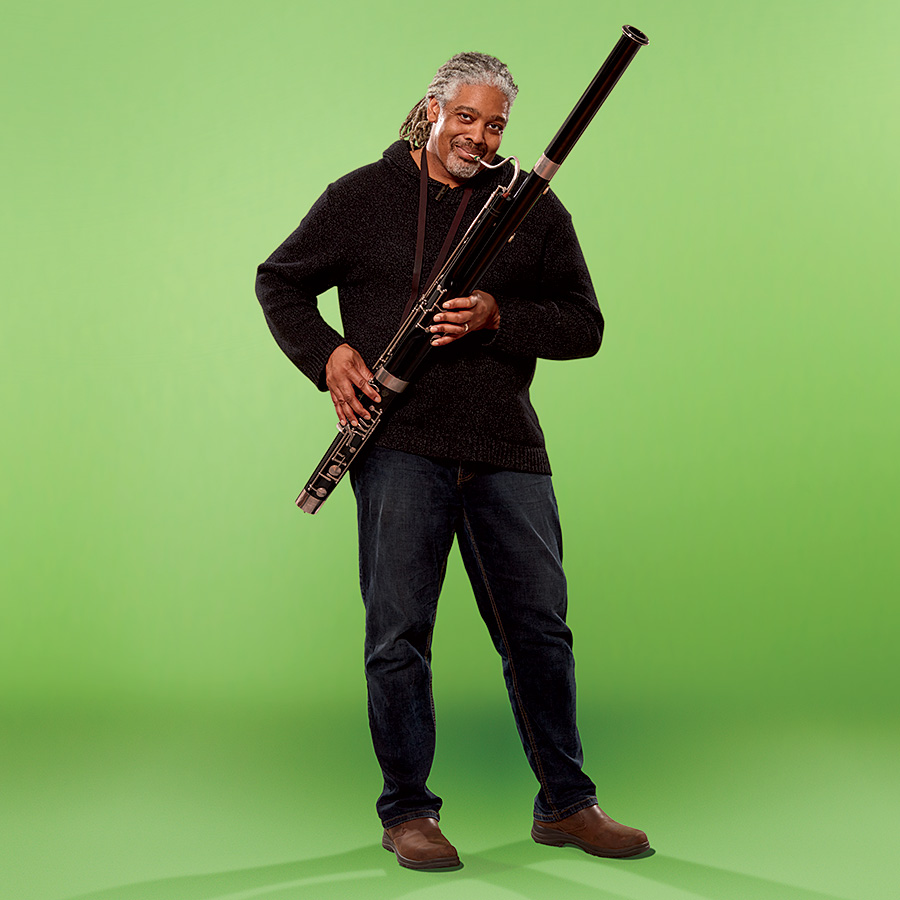
Photos: Lisa PredkoH. Steven Sims Cyclist, musician, natural medicine lover Otolaryngologist and director of the Chicago Institute for Voice Care at the University of Illinois Hospital & Health Sciences System
Training routine
Three times a week or so, I bike two and a half miles to work, and then on my ride home to the South Loop, I’ll take the scenic route — up to Lincoln Park or farther out west. I also have a mini stepper, which I use twice a week for about 30 minutes. Exercise helps with stress, so it helps with the job. The interesting thing is, doing very delicate surgery has increased my physical coordination. I chuckle to myself because my reflexes now are so quick that when I drop my keys they never hit the floor.
Part of how I decompress from the day is to go upstairs to where my keyboard, trombone, and sometimes bassoon are and sit and play for 10 or 15 minutes. Music is a mode of expression and catharsis for me. It helps with alertness and overall energy, and it releases endorphins. I sing all the time walking around my office, much to the chagrin of everyone around me. My music background also helps me listen carefully to a patient’s voice and notice changes in pitch or cadence of speech.
DIY immunotherapy
I make something called thieves’ oil. It’s a blend of cinnamon, clove, eucalyptus, lemon, and rosemary essential oils. I’ve found it helpful for soothing a sore throat and cutting down on mucus, and the clove oil is a bit of an anesthetic. You can add some water and make a spray for the back of the throat.
Cold-crushing formula
There’s a mushroom called chaga that stimulates parts of our immune system. I put it in a jar, pour in some Everclear — you need a pure alcohol so it will extract the properties but not add contaminants — and put in one or two sticks of cinnamon to make it taste better. I let that sit for a couple of weeks, then transfer it into a dropper bottle. I take a dropperful under the tongue five or six days a week, and I typically don’t get colds.
Lots of liquids
I’m telling patients all the time they should have eight eight-ounce glasses of water per day, so I try to do at least that. I drink nettle leaf tea because I have allergies. If you notice you’re very phlegmy after you have dairy milk, that means it’s not for you. So I drink almond and coconut milk. Coffee is dehydrating if you have a lot of it, and that will lead to thicker mucus too, so I’ll have just two sips and set it down.
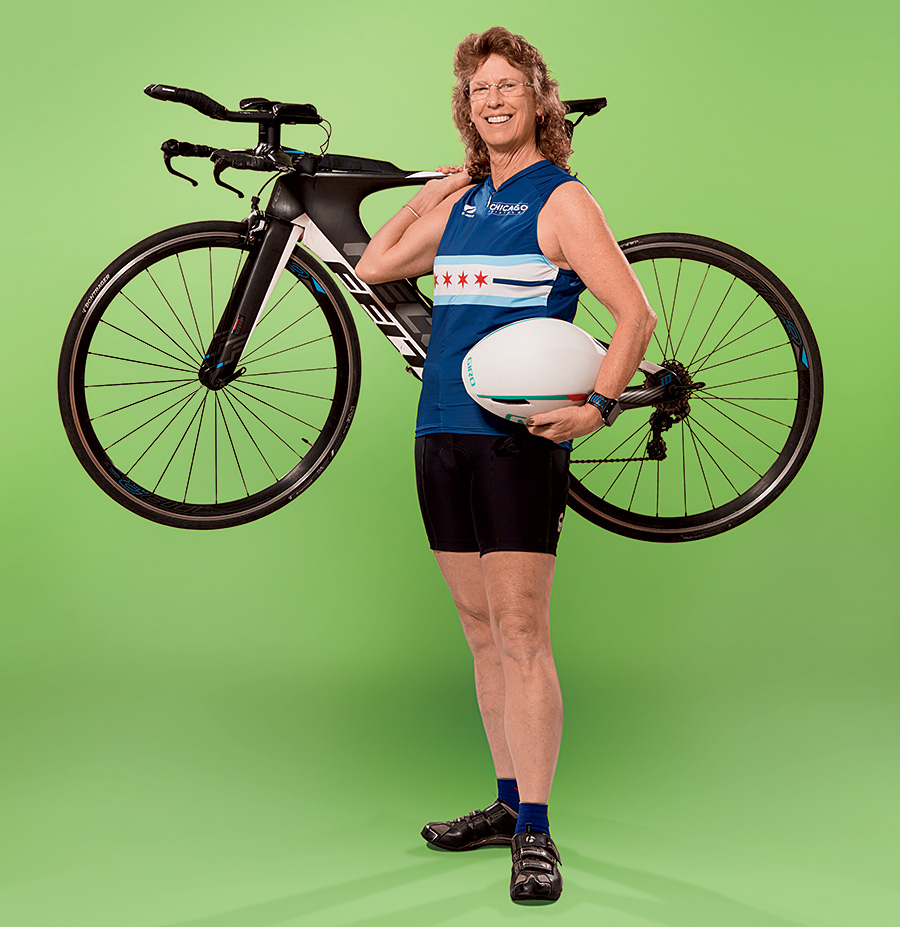
Deborah Burnet Triathlete, salt avoider, woman of faith Professor of medicine and chief of general internal medicine at UChicago Medicine
Triathlon training
I’m 62. About five years ago, my gym had an indoor triathlon, and I won. Not just for my age group — I won for all the women. I thought, This seems good. I’ve got to keep doing this. And then I won the Chicago Triathlon for my age group the last couple years. Since COVID, pools are mostly shut down, so I’ve been biking more. I bike with the Joliet Bicycle Group on Saturdays; we often go about 50, 60 miles. During the week, I do 20 miles or so on the local paths, or I run three miles. It clears my brain. My husband and I also bought indoor bike trainers, the Tacx Flux 2. You put your bicycle on it, and you can see other cyclists doing their workouts, but it looks like you’re together in London or Central Park or wherever.
Boning up
I was recently diagnosed with osteopenia, which is borderline bone thinning, so I take 1,000 units of vitamin D a day, plus about 1,000 milligrams of calcium. Interestingly, there’s some evidence that people with low vitamin D are more susceptible to COVID and to more severe COVID.
Say no to sodium
I’m on a low-salt diet for Ménière’s disease, which is an inner ear condition, and to keep my blood pressure down. A low-salt diet is no more than 1,500 milligrams of sodium a day. Bread from the store is actually very salty — a hard roll has about 450 milligrams in it — so I bake my own sourdough bread two or three times a week. A lot of recipes use a tablespoon of salt, but I use an eighth to a quarter teaspoon and, for the rest, NoSalt potassium chloride. I make homemade pizza, and for that I use Swiss cheese, which is much lower in salt. The one time I’m more liberal about my salt is if I’m going to do a half-marathon, because that expends a lot of sweat. I’ll drink half-strength Gatorade.
Serenity now
I don’t do meditation per se, but I often pray or read scripture in the morning. Before I go into an exam room and see a patient, as I clean my hands, I try to empty my mind of the last patient and the other stuff I’m thinking about and say a little prayer: “My hands, God’s work.”
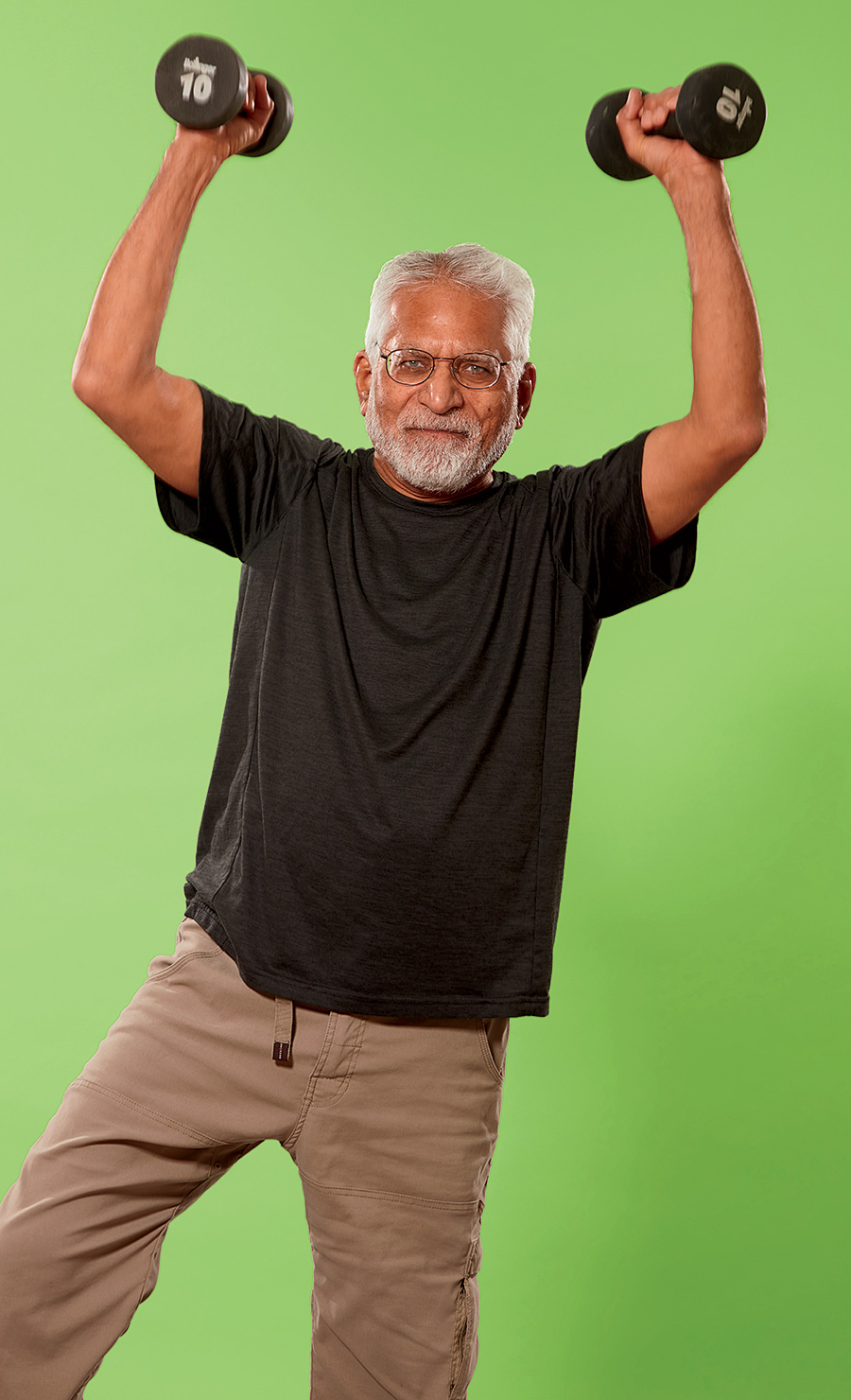
Surendra Gulati Planker, soaked almond eater, casual wordsmith Neurologist at Amita Health St. Joseph Medical Center, Joliet
Training routine
I ask all my patients, “Do you exercise?” “Yeah,” they say, “I take the garbage out,” or “I go to the mailbox.” That’s very disheartening. As we age, we need to keep the body in the best possible condition. There’s evidence that having a good cardio program helps with memory function. I’m 70, and I work out five days a week in my home gym. I do the elliptical, then I do pushups and plank. My planking record is five minutes and 15 seconds. In my office, oftentimes between patients I’ll do 10-pound weights with my arms, standing on one leg, then the other. Doing that makes me more energetic than going for a cup of coffee.
Stretching it out
There was a time in my practice that I was a lot busier than I am right now, when I was working 14 hours a day, and I realized that I had become deconditioned. I’d often get a backache when I stood for a while. So I got into a habit of stretching my hips and hamstrings years ago. That can result in significant improvement in lower back pain.
Staying sharp
I ask my patients with speech difficulties to read aloud every day — it’s a good form of speech therapy. I read every day too, though not aloud. I also subscribe to things like Word of the Day. Today’s word was simple: “propensity.” Many of the words I might know already, but it’s a reminder to use them.
A nutty diet
I need to watch my cholesterol. I’ve taken coenzyme Q10 every day for the last few months; it’s a derivative of fish oil for cholesterol management. And every night my wife soaks some almonds, which helps too. I’ll have six or seven. The soaking is a tradition that goes back to India. I also think soaked almonds taste better, and they’re digested better by the body.
Balancing the booze
I like to drink Scotch, but I limit it to a couple of times a week. Alcohol can affect balance and walking, which is important for older people. If they’re sitting home watching television and drinking — which happens a lot to patients I see — that becomes a recipe for problems like deconditioning, gait disturbance, and fall risk.
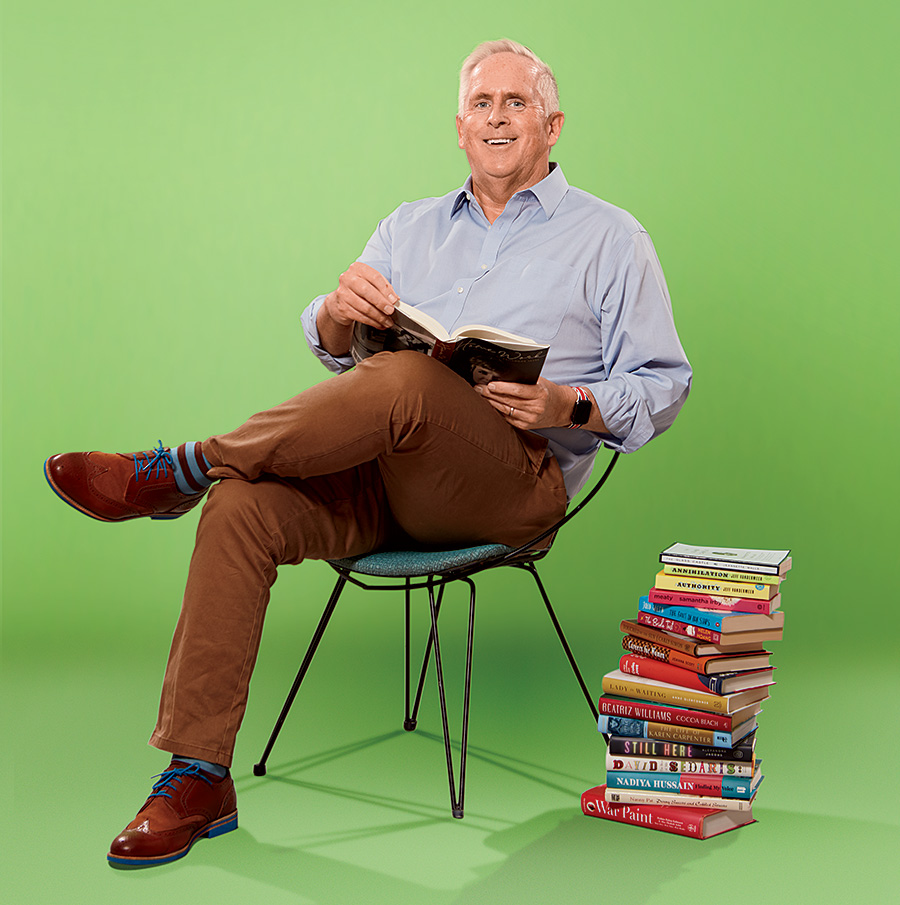
Thomas Klarquist Peloton rider, bedtime reader, high-tech water drinker Internal medicine specialist at Advocate Illinois Masonic Medical Center
Revving up
I go for walks as much as I can. If I’m going to an exam room, I’ll even circle around different hallways, just to get a few extra steps. I also have a Peloton bike that I use in the evenings and on weekends for 30 minutes. It’s a good way to relax, because I like listening to the music — ’80s and ’90s dance mixes. You’d think that exerting yourself would make you more tired, but it actually makes me more awake.
Sheet pan supper
During COVID, I’ve learned how to do sheet pan dinners, where you roast vegetables and use skinless, boneless chicken breasts with seasoning, so you’re increasing the flavor without increasing the sodium. It’s low calorie, healthy, and you have only one pan to wash. When I order in Asian food, I limit how much rice I have, because I’m a type 2 diabetic, and rice really increases my blood sugar.
Hydrate!
If you have excess blood sugar, you have to urinate it out, and staying hydrated helps. I use the HidrateSpark, a bottle that you fill with water, and then it lights up when you’re supposed to drink. At work, other people have their water bottles, and whenever mine signals, I announce: “It’s time to drink.” So everybody has to drink up. Alcohol is pretty much a bowl of sugar, so for me it’s a strawberry margarita probably once every three months.
The one-minute rule
When you’re about to eat something, think about it for a minute. And in that minute, you can decide to have a smaller portion, an alternative, or just forgo it. Even if you end up eating that same cookie two hours later, you’re getting used to saying no to food at that time. The other thing I’ll do is postpone my dessert for a half hour or so after dinner. That keeps me from snacking later on.
Much-needed R&R
I try to have at least an hour of time before I go to sleep where everything winds down. That means washing my face, brushing my teeth, moisturizing, and then getting into bed and reading. Reading is my retreat for my mental health. I do it up to 30 minutes each night — sometimes it’s comic books, sometimes it’s Charles Dickens. I use my Apple Watch to see my sleep pattern, and when I read, I don’t wake up as much during the night.
Anju Tripathi Peters Power walker, M&M popper, mask evangelist Allergist and immunologist at Northwestern Memorial Hospital
The power of walking
Prior to COVID, at least four times a week I would go to my gym and do classes, like cardio kickboxing. What the lockdown did was force my family to start walking again. We’re in Lincoln Park, and we walk to my parents, who live two miles away in Wrigleyville. I’m like, “Let’s do power walking,” and I move my arms, and my teenagers make so much fun of me. I hope I’m not as crazy as they say I look. I told my kids, “If walking is good enough for Fauci, it’s good enough for us.” On weekends, I get anywhere from 12,000 to 14,000 steps a day or more. Between my clinics, if I have 20, 25 minutes, some of my colleagues and I will go walk on the track in the park next to the hospital. We used to meet for lunch or a cup of coffee. Now we walk.
A mostly healthy diet
We don’t know if any particular food or drink helps the immune system, but the most important thing is to eat healthy in general. There are some studies suggesting vitamin D is key. I take a multivitamin, and getting some sun is important. Still, we eat foods that are not good for us because they give us tremendous happiness. Literally every day — I didn’t do this before COVID — I have between five and 10 peanut butter M&M’s. I’ll have a margarita now and then, but I’m not a big drinker, because alcohol compromises your immune system. Also, when people drink, they let their guard down, masks come down.
Takeout respite
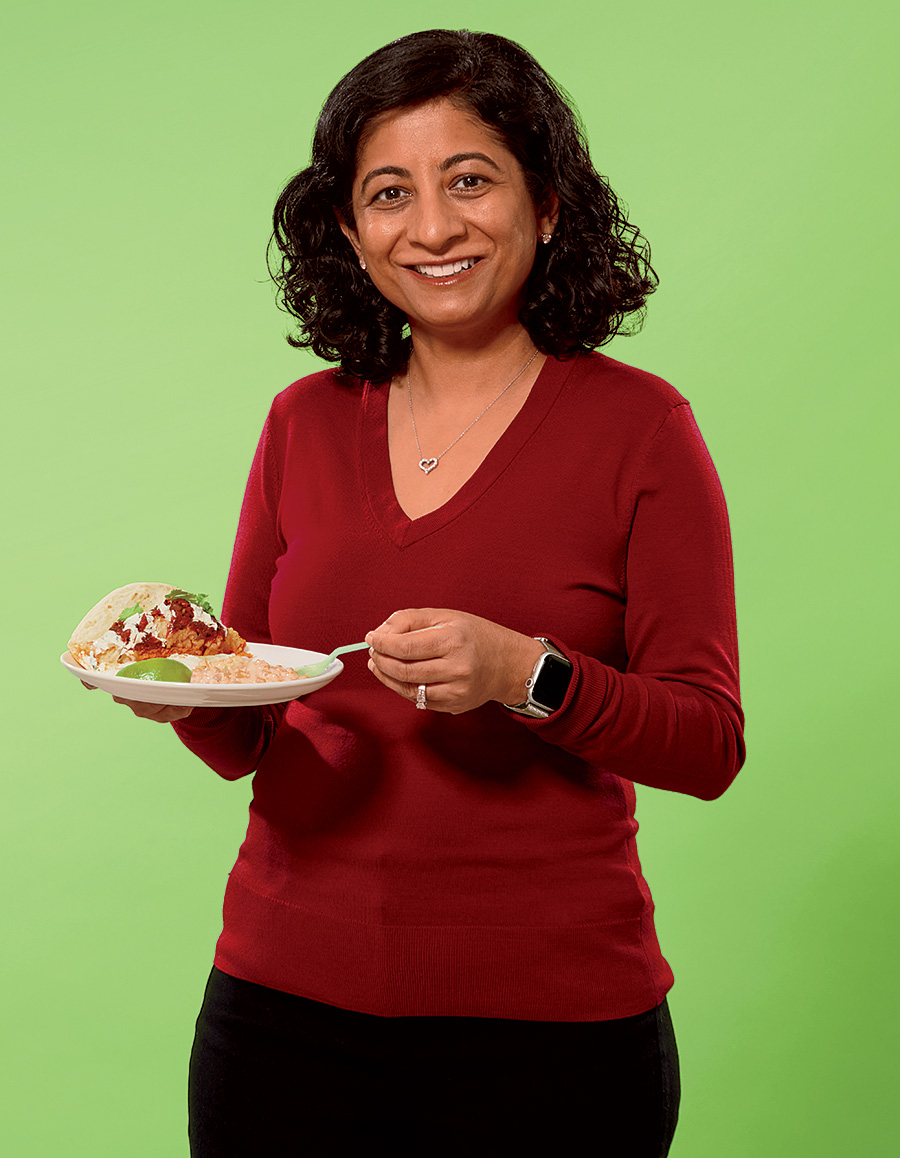
After a long day’s work, when I’m tired and don’t want to cook, my family walks to a restaurant and we get food to bring home. This has been good for my well-being. For a family of five, dishes are a huge issue. They opened a Velvet Taco in my neighborhood last year, and I like it because they have many options, so there is something for everyone in my family. The tacos come in flour shells, but you can get them in lettuce, which is healthier.
Masks’ many benefits
Stress messes up the immune system bigtime, and you won’t be able to fight off harmful things as easily. One way I keep it under control is by doing things that make me feel like I won’t get the virus. I wear a mask as soon as I step outside. When you’re an allergist, you worry about things irritating people’s lungs. I focus on sinus disease and severe asthma, and I’m very aware that if there are allergens outside, people who are allergic potentially will have more symptoms. But one thing that’s been very helpful this year is the mask. By wearing masks, people have prevented a lot of infections, not just coronavirus.
Don’t see the Specialty you’re looking for? Find the top doctors in these fields in the following issues.
Orthopedics October 2020 (chicagomag.com/ortho) Pediatrics and Maternal Health February 2021 Cardiology June 2021 Surgery October 2021
About This List
This list was compiled by Castle Connolly Medical Ltd., a health care research and information company founded in 1992 by a former medical college board chairman and president to help guide consumers to America’s top doctors and hospitals. Castle Connolly’s selection process, under the direction of an MD, involves surveying hundreds of thousands of physicians, as well as academic medical centers, specialty hospitals, and regional and community hospitals across the nation. Online nominating (at castleconnolly.com/nominations) is open to all licensed physicians. Educational and professional experience is screened before final selection is made among those physicians most highly regarded by their peers. After identifying the top doctors in America, Castle Connolly provides consumers with detailed information about their education, training, and expertise in its paperback guides and online directories. Doctors do not and cannot pay to be selected. Castle Connolly was acquired by digital health care company Everyday Health Group in 2018. EHG, a division of J2 Global Inc., combines social listening data and analytics expertise to deliver personalized health care content and patient-engagement solutions. Its websites have an audience of more than 53 million consumers and more than 780,000 practicing U.S. physicians. Its flagship brands include Everyday Health, What to Expect, MedPage Today, Health eCareers, and PRIME Education, and it has an exclusive partnership with MayoClinic.org and the Mayo Clinic Diet.
Among sneakerheads, shoes are traded like stocks, and few kicks have more value than limited-edition deadstock. Which is why entering the new Stadium Goods flagship — the online marketplace’s second brick-and-mortar boutique, after the crazy popular one in New York City — feels like walking into a grown-up candy shop (albeit an expensive one). The 6,000-square-foot space is filled with never-worn hard-to-find Air Jordan colorways and rare Off-White drops, all carefully placed on floor-to-ceiling shelving like pieces of art.
Why set up shop here? “Chicago is a sneaker town through and through,” says co-CEO John McPheters. “Two native Chicagoans — Kanye West and Virgil Abloh — are arguably the most influential sneaker designers of the past five years, and Joe Freshgoods designed one of the hottest sneakers of 2020.”
Fans willing to wait for the perfect Adidas Y-3 Reberus (from $410) or Raf Simons RS Ozweegos (from $309) — not to mention singular Travis Scott Nike Air Force 1s ($639) or Supreme motorcycle helmets ($1,595) — can stop by frequently to check out the ever-changing array of street-style fashions and sneakers, which typically number around 1,000. Short on cash? Take your pristine Dunks and Yeezys to the intake center in Bucktown (1719 N. Damen Ave.), where you can get an estimate for consignment. 60 E. Walton St., Gold Coast
$80
Stadium Goods cotton hoodie
Photos: Courtesy of Stadium Goods $309 and up
Air Jordan 4 Retro “Fire Red 2020”$89
Stadium Goods basketball shorts$1420 and up
Off-White x Air Jordan 4 Retro “Sail”$60
Travis Scott cotton tee
1 She got her early-career nom de plume by chance.
“According to our family stories,” Michelle Duster writes in Ida B. the Queen (out January 26), Wells had seen the d in her name handwritten on a document as if it were two letters, so that her first name looked like “Iola.” She liked it, and when she began writing a social-justice-oriented weekly column for a Black newspaper in Memphis, Tennessee, in the mid-1880s, she used it as a pen name. “Iola’s articles were popular and began to spread across the country,” Duster writes.
2 She was a data journalism pioneer.
Writing under her real moniker, Wells collected information from Southern newspapers to create statistics “to convey the vast scale of America’s lynching problem.” She was praised for this by none other than Frederick Douglass, but her work came at a cost. In 1892, while she was away from Memphis on a business trip, a mob destroyed her printing press and threatened to kill her if she returned. She moved to Chicago and never lived in the South again.
3 She was Chicago’s first female probation officer.
Wells took the job to pay rent for the Negro Fellowship League, a community center for Black migrants from the South that she ran with her husband. She combined the roles, telling “many of her probationers to report to her at the center, so that she could keep her eye on them while helping them find work.”
4 She had one-on-ones with the top leaders of the day.
In meetings with Presidents William McKinley and Woodrow Wilson and Illinois governor Frank Lowden, Wells advocated making lynching a federal crime, ending segregation in the White House, and providing justice for Black victims of a downstate race riot. She “spoke candidly about the injustices she saw,” Duster writes. “Advocating on behalf of people who could not always walk into those rooms with her, she refused to homogenize her message or back down from her ideals.”
5 She used savvy tactics to confront racism within the suffragist movement.
When organizers of a 1913 women’s voting rights march in Washington, D.C., said they wanted Black women to walk in the back “in order to appease the southern suffragists,” Wells pretended to agree. The next day, they couldn’t find her beforehand. “When the Illinois delegation started to march, suddenly Ida B emerged from the crowd to march front and center.”
If pot pie is the cozy sweater of meals, then the version at Spinning J in Humboldt Park delivers comfort with style. Chef Dinah Grossman fills a buttery pie crust with saag paneer, the classic Indian mixture of spinach, spices, and cubes of paneer, a mild, creamy Indian-style cheese that miraculously holds its shape and texture when baked. You can find it fresh or frozen at Metro Spice Mart or Cermak Fresh Market.
Makes:One 9-inch pie Active time:1 hour Total time:3 hours
1 Tbsp.
Unsalted butter
1 Tbsp.
Olive oil
2
Medium onions, chopped
1 tsp.
Kosher salt, plus more as needed
½ tsp.
Black pepper
1½ Tbsp.
Minced ginger
5
Garlic cloves, chopped
1½ tsp.
Curry powder
1 tsp.
Garam masala
½ tsp.
Cumin
½ tsp.
Turmeric
½ cup
Heavy cream
5 cups
Frozen spinach, thawed and drained
1 Tbsp.
Lemon juice
3½ cups
Cubed paneer
2
9-inch pie crusts, fresh or thawed, rolled out flat
1
Egg
1 Tbsp.
Water, plus more as needed
Mango chutney, for serving
Heat butter and olive oil in a large skillet over medium-high heat. Add onions, salt, and pepper and cook, stirring frequently, until onions begin to caramelize, about 15 minutes.
Reduce heat to medium; stir in ginger, garlic, and spices and cook until fragrant, about 2 minutes. Add cream and spinach and cook until spinach is very tender, 25 to 30 minutes. Remove from heat and let cool.
Heat oven to 400 degrees. Blend mixture in a food processor until smooth. Stir in lemon juice and paneer; taste and add more salt if desired. Set aside. Press 1 pie crust into a 9-inch pie tin, add filling, and brush edges of dough with water.
Drape the second crust on top, turning overhanging dough underneath itself to seal. Crimp edges with fingers or a fork, make 3 vents on top with a paring knife, and chill pie in the freezer for 15 minutes. Beat egg with 1 tablespoon water and a pinch of salt.
Remove pie from freezer, brush with egg wash, and bake until deep golden brown, 50 to 60 minutes. Let cool for 30 minutes before slicing. Serve with mango chutney.
Your winter eating plan, step 1: Order some Japanese katsu kare (cutlet curry). Step 2: Lean the crispy cutlet against the white rice like Deborah Kerr on Burt Lancaster in From Here to Eternity, then slosh the thick, dark curry sauce around them like waves of flavor. Step 3: Enjoy. Kare raisu (curry rice), a staple of quick-service lunch counters throughout Japan, is pure comfort food. It’s also the hottest carryout dish from chefs making a pandemic pivot.
These chefs aren’t using the blocks of additive-laden curry roux found in supermarkets. Instead, they’re making flavor-packed sauces with caramelized onions for body, apples for sweetness, fresh spices, and a few secret ingredients. Foremost among these curryheads is Shin Thompson, the Michelin-starred chef behind the Furious Spoon ramen chain. His curry-focused virtual restaurant, Bokuchan’s (3517 N. Spaulding Ave., Avondale), is designed with the weeaboo (Japanophile) in mind. Place your order, then wait for a bag that looks like a special delivery from an anime studio, packed with containers slapped with the logo of a kid eating curry. Each order comes with shredded cabbage, pickled cukes, and beni shoga (red pickled ginger). The katsu kare (from $14.50) is good, but the best is the beef stew curry ($15.50), with beef drippings giving the sauce extra depth and richness.
Tonkatsu kare from Bokuchan’s
Having frequented many curry rice counters during my years teaching in Japan, I got nostalgic feels from the dark, gloppy katsu curry ($11.95) at Ramen House Shinchan (701 N. Milwaukee Ave., Vernon Hills; 1939 S. Plum Grove Rd., Palatine). It starts with turmeric-heavy Japanese curry powder, goes to a spicy place, and finishes with a hint of sweetness. It also comes with proper fukujinzuke (sweet-sour curry pickles). At Momotaro (820 W. Lake St., West Loop), Gene Kato makes a roux with Japanese curry powder and the right admixture of onion, shiitake, and apple to hit the center of the sweet-savory nexus. Get the version featuring a pair of chicken cutlets ($24) — holy Pokémon, are they crunchy and perfect.
There is yet more curry. Bo Fowler makes a maitake katsu ($28) at Bixi (2515 N. Milwaukee Ave., Logan Square), Brett Suzuki serves vegetable curry ($12) in a bento box at Arigato Market (1407 W. Grand Ave., West Town), and Julia Momose of Kumiko (630 W. Lake St., West Loop) offers a buttery katsu version ($21) served alongside mugicha, a roasted barley tea she drank with curry rice as a kid (she loves the dish so much, her New Wave cocktail is inspired by it).
We may not be eating in restaurants this winter, so thank the spirits and forest sprites for carryout curry.
If you don’t recognize Germaine as the love interest of Chicago’s Abby McEnany on Showtime’s acclaimed Work in Progress, you may have seen the nonbinary Hyde Park actor as a campaign manager on the Netflix comedyThe Politician. And if you’re a theatergoer, you surely know them from roles at Steppenwolf and Chicago Shakespeare Theater. Here’s how the 27-year-old stays well, despite long hours on set and frequent trips to New York for filming.
Flight school
“When I was a young kid, I wanted to run away with the circus. There weren’t many opportunities to learn in my small town of Murphysboro. So I did power tumbling and taught myself stilt walking. In college in Champaign, I used my one day off of school and work to drive up to Chicago to take trapeze and silks classes at Aloft Circus Arts. I considered dropping out of college to train full time, but I stayed and studied acting. In plays, I would do the physical stuff — if they needed somebody to climb or to flip, I was the go-to.”
Woke fitness
“I still go to Aloft. With aerial circus, you get a body awareness that’s unique. It’s my favorite form of fitness, an art, and I feel passionate about trying to make it even more inclusive. People, especially women, say, ‘Oh, I don’t have the upper body strength.’ I’m like, ‘Let’s talk about how sexism has informed your perception of strength.’ ”
Training routine
“While filming the second season of The Politician, I’ve been going to Circus Warehouse in New York, both group classes and private lessons. I also lift weights — big-muscle exercises like squats and dead lifts, and auxiliary exercises to train smaller muscles. I don’t really care what I look like; I just like being strong. I also love biking and Rollerblading, and I started taking ballet last year. I’m like a large dog in a small apartment — if I’m not active, I start to lose my mind.”
Food philosophy
“I think diet culture is really toxic, harmful, fatphobic, and ableist. I don’t think about food as good or bad. Instead, I eat intuitively. I make sure I’m eating enough vegetables and getting enough protein to support how much physical activity I’m doing. I eat Greek yogurt, kimchi, and other things with probiotics because I have intestinal sensitivities. And I try to eat frequently so my blood sugar stays level. Sometimes I’ll eat fruit, but sometimes I just want a bag of Cheetos.”
DIY dermatology
“Drinking a lot of water keeps my skin healthy. I also take a combination of vitamin C, zinc, lysine, and magnesium that’s good for collagen production, and a biotin supplement for hair and nails. If my face is feeling super gross, like if I had to wear makeup on set, I’ll wash with micellar water, then exfoliate gently before using a toner, an essence, a serum, then an eye cream and moisturizer.”
Self–pep talk
“I’ve had issues with impostor syndrome. I’m a weird kid from a small town who’s having a lot of amazing opportunities. There are a lot of people who would not want to see somebody like me on TV and probably some people who don’t believe that somebody like me is a valid human. But then I remember that’s people having wrong, outdated ideas. Usually what I do now is say to myself: ‘Let’s look at the bigger picture. You’re doing great. You’re doing your best.’ ”
Scottish troops at their their billet on New Year’s Day, 1916. Bagpipes, kegs and football ready. Flickr photo from National Library of Scotland.
As it turns out, I’ve been busy pumping a lot of last-minute New Year’s Eve beer events into my previous calendar article. I cut a few shortcuts by setting announcements with both New Year’s Eve and Day events so they cover both dates.
I have seen reports that some areas of northeastern Illinois have been able to lower their COVID infection rates. Maybe enough that indoor dining can resume. But this is dependent on everybody having taken the correct precautions over Chirstmas. So do your part, wear your mask, and keep your sanitized fingers crossed.
Fresh Beer Events, occasional bacon, but always spam free, opt out any time.
Meet The Blogger
Mark McDermott
Writer, trivia maven, fan of many things. I thought to learn all there is to know about beer as a way to stay interested in learning. It is my pleasure to bring Chicago’s craft beer scene to you.
Four people, including two children, were hospitalized after a fire broke out in Englewood Wednesday on the South Side.
Firefighters responded to the blaze about 8:40 p.m. in the 6800 block of South Perry Avenue, Chicago fire officials said.
Two children were taken to Comer Children’s Hospital in good condition, officials said. Two adults were taken to the University of Chicago Medical Center in fair-to-serious condition.
Animal Care and Control was called for three pets who died in the fire, officials said.
The blaze was extinguished by 9:30 p.m., officials said. The cause of the fire is under investigation.

 This list was compiled by Castle Connolly Medical Ltd., a health care research and information company founded in 1992 by a former medical college board chairman and president to help guide consumers to America’s top doctors and hospitals. Castle Connolly’s selection process, under the direction of an MD, involves surveying hundreds of thousands of physicians, as well as academic medical centers, specialty hospitals, and regional and community hospitals across the nation. Online nominating (at


 Chicago’s Favorite Food Critics and Bloggers


Leave a comment