
How Has the Tech Boom Helped the Philippines Economy Grow?on March 2, 2021 at 12:49 am
How Has the Tech Boom Helped the Philippines Economy Grow?on March 2, 2021 at 12:49 am Read More »
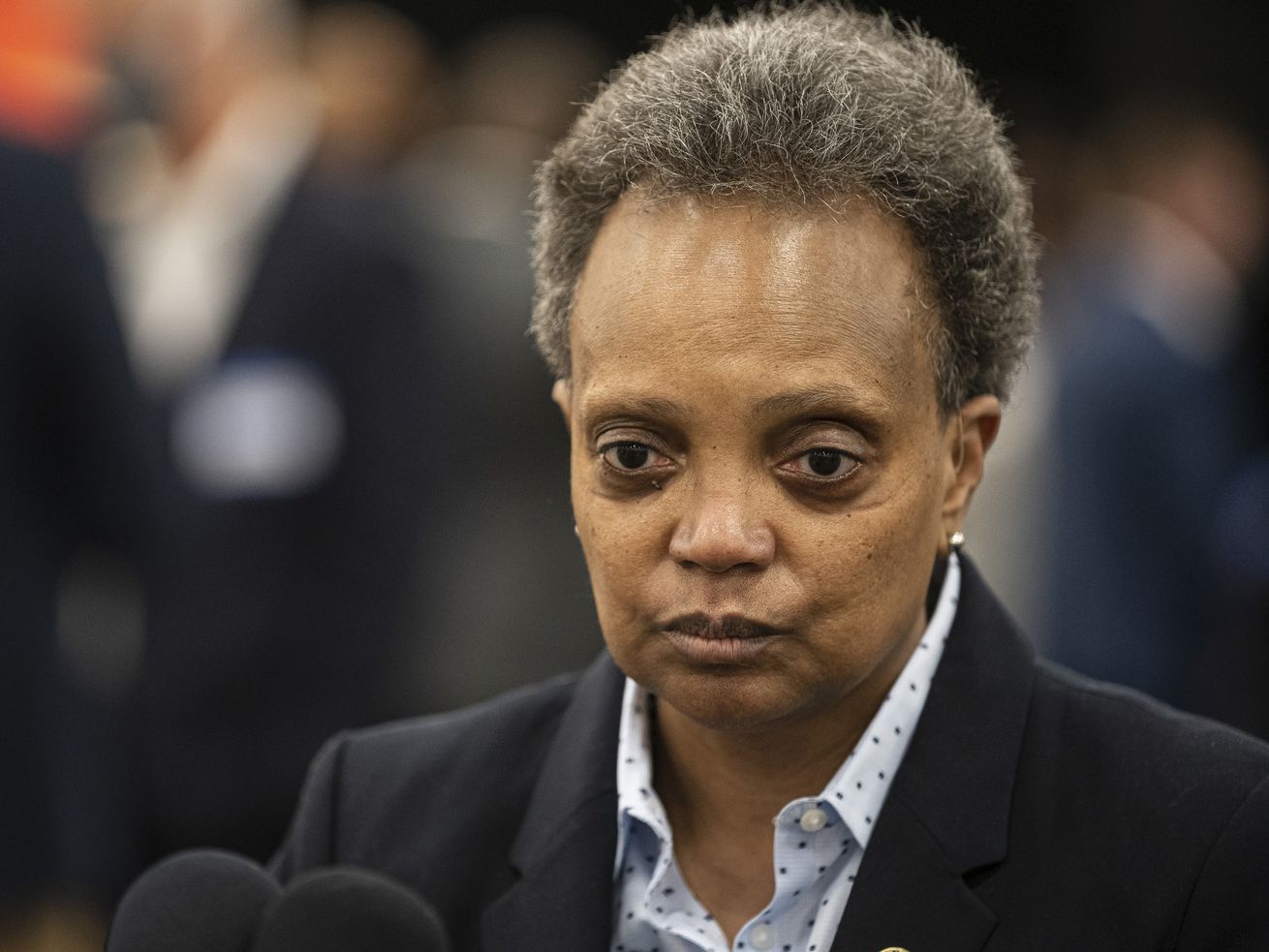
The mayor argued that two pending proposals for civilian police review due to be voted on by the City Council’s Committee on Public Safety had “significant holes in them.”
Mayor Lori Lightfoot has been accused of abandoning the police reform she championed — by repeatedly derailing a City Council showdown on the volatile issue of civilian police review.
On Thursday, the mayor offered her most detailed explanation yet about why she has stalled those rival proposals.
“This is going to be one of most important policy decisions that is made by the city of Chicago in decades. … Really recalibrating the relationship between the people and the police,” Lightfoot said during a virtual panel on criminal justice reform sponsored by the University of California, Berkeley.
“We’ve got to get this right … so we are actually setting these proposals up for success and not failure.”
Lightfoot argued that two pending proposals for civilian police review awaiting votes by the Council’s Committee on Public Safety had “significant holes in them.”
Critical questions left unanswered, she said, include the “structure of governance” and “issues regarding policy and who makes those decisions?”
“Call me silly but I believe that public policy, when it goes to a vote and is gonna become the law of the land, can’t be with a lot of the key decisions T.B.D. — to be decided later. They need to be decided now. They need to be debated in a public forum and not have a check-the-box circumstance where we say we’re doing something but we leave much of the hard work to be decided at some later time,” the mayor said.
Lightfoot did not explain why she has insisted on retaining power to break disputes when she and the commission disagree on proposed changes to police policy. Nor did she say why she has objected to empowering the civilian board to take an advisory vote of no-confidence in the police superintendent — a vote that would trigger the superintendent’s firing if two-thirds of the Council then votes for removal.
She said only that civilian police review must include a “wide variety of community voices” and be done “in harmony with the Police Department” because “the police department as a failure means our city fails. It means our neighborhoods aren’t safe.”
“Harder to do in practice than in theory,” she said.
Last month, Lightfoot pressured Public Safety Committee Chairman Chris Taliaferro (19th) to postpone a showdown vote on civilian police review to give her time to introduce a substitute ordinance.
The following day, two groups that have long pushed different versions of civilian police review turned up the heat on the mayor by saying they now are working together with support from 40 of Chicago’s 50 aldermen.
That means Lightfoot is headed for a showdown vote she could lose.
As a former police board president who co-chaired the Task Force on Police Accountability, Lightfoot demanded that then-Mayor Rahm Emanuel empower a civilian oversight board to fire the police superintendent and establish police policy. She promised to deliver that commission within her first 100 days in office.
Now approaching mid-term, she’s still no closer to delivering on one of her most important campaign promises.
On Thursday, the mayor insisted she has not wavered.
“We have to have civilian oversight of the police because, if we do not, then the core mission of the police to serve and protect communities will be done without the legitimacy that’s gonna be necessary for them to be successful in that mission … to keep everybody safe — regardless of ZIP code, regardless of neighborhood,” Lightfoot said.
As for the Chicago Police Department’s painfully slow compliance with a federal consent decree, Lightfoot argued it’s one thing to “check the boxes” on court mandates, but quite another to change the “hearts and minds and the culture” of an entrenched institution.
“Very difficult to do from the outside in. That is one of the biggest challenges of consent decrees. You’ve got a group of people from the outside that are trying impose cultural change on an institution that is comfortable with its culture,” the mayor said.
“How do you get buy in? How do you disrupt that culture? How do you change the status quo? That should be the work of consent decrees. And unfortunately, the way that many of them have been constructed over the years, they don’t seem to recognize that fundamental conundrum that is really the key to making a difference.”

Julio Rubio-Gonzalez, 19, was ordered held without bail Thursday for Carlos Cruz’s murder in December.
A 19-year-old man is facing murder charges in a fatal shooting in the Mayfair neighborhood on the Northwest Side.
Shortly before 1 p.m. on Dec. 17, Carlos Cruz called his brother because he was worried about a white Nissan Maxima that was following him, in the 4000 block of West Wilson Avenue, Cook County prosecutors said Thursday.
Cruz’s brother then came out of his nearby house and allegedly saw Julio Rubio-Gonzalez get out of the Maxima’s rear passenger door and fire at Cruz, striking him multiple times.
Cruz’s brother hid behind a garbage can about 15 feet away and watched until Rubio-Gonzalez got back in the car and drove away, prosecutors said.
Cruz, 19, was taken to Illinois Masonic Medical Center, but later died.
/cdn.vox-cdn.com/uploads/chorus_asset/file/22346400/Julio_Rubio_Gonzalez__19.jpg)
The Maxima crashed shortly after the shooting and a description of the car and shooter were broadcast to Chicago police officers, who found Rubio-Gonzalez carry a bag in an alley off the 5000 block of West Montrose Avenue, prosecutors said.
The officer told Rubio-Gonzalez to show his hands, but he ran off, leaving the bag, which contained the murder weapon and a key for the Maxima, which had been stolen in an earlier carjacking, prosecutors said.
Fingerprints taken from the gun matched Rubio-Gonzalez’s, prosecutors said. Additional fingerprints taken from inside the Maxima are still being tested.
Cruz’s brother told investigators he recognized Rubio-Gonzalez from the neighborhood.
Rubio-Gonzalez surrendered himself to police when he learned he was wanted in connection with the shooting, his lawyer told Judge Susana Ortiz Thursday.
Rubio-Gonzalez most recently was working with his mother cleaning office buildings, the defense attorney added.
Ortiz ordered Rubio-Gonzalez held without bail.
He is expected back in court on March 23.

White Sox manager Tony La Russa: “I’m putting no limitations on him.”
SCOTTSDALE, Ariz. – Michael Kopech will start the season in the White Sox bullpen. Who knows where he ends it?
Manager Tony La Russa said the Sox are keeping their options open, that his role could evolve over the course of the season.
“I think the answer has to be yes,” La Russa said Thursday. “Mostly because the season is so unpredictable. Nobody has a crystal ball. You start out with him as a starter-in-waiting and getting some experience and learning, but as the season gets on and the opportunities are there and the way he competes, we’re going to try and win, so you take your best shot and he’s going to try to be part of that best shot. So, not putting any limitations on him.”
La Russa noted Kopech’s improvement with each bullpen and live batting practice session, and from talks with him, likes his mindset. Kopech in the bullpen, with lefty Garrett Crochet alongside for a full season, are potentially huge additions to a bullpen that was good in 2020.
But Kopech, who has not pitched in two seasons and was a starter before that, must adjust to relief pitching.
“I’m trying to realize that short-time recovery is going to be a lot more important,” he said. “I’ve kind of gotten used to having four days in between starts, doing everything I needed to in those four days and having plenty of time to recover.
“Now I’m getting back up every couple of times, it is going to be an adjustment for me.”
Jimenez’ high ceiling
Frank Menechino still maintains that Eloy Jimenez, who has power “from pole to pole” as he puts it, can be a high average hitter. Not just .296 high, like he was in 2020.
“Eloy is a gifted hitter,” Menechino said. “He has a special talent.”
Jimenez “can be a .320, .340 hitter when he is convicted with his approach and do what he wants to do in that at-bat, being able to take the walk and not give in.”
Jimenez, 0-for-3 with two strikeouts against the Giants Thursday, is still finding his timing early in spring. When he has it, Menechino says Jimenez has the ability to “control the depth” of the baseball.
Meaning?
“He can allow the fastball to get deep, he can catch the fastball out front, he can allow it to get deep, he can control the depth of the baseball when it’s a hanging slider,” Menechino said. “He doesn’t try to hit it out front, he can let it drop and drive it to right center.”
Reinsdorf sons seek stake in Sox
Chairman Jerry Reinsdorf’s sons Michael and Jonathan are looking to buy a non-controlling share of the Sox, a move that could strengthen the family’s collective ownership of the club, according to Crain’s Chicago Business.
Terms of an offer made to the team’s investors by the sons’ group were not known.
“This is an opportunity for many of the longtime Chicago White Sox partners to monetize their investment, some of whom have been with the team for as long as 40 years,” Michael Reinsdorf told Crain’s. “Jonathan and I believe in the growth and long-term prospects of baseball and the White Sox.”

The story of a Chinese American kid’s hoop dreams is hard to enjoy when the depictions of the game are so wrongheaded.
Block or charge?
The first foul committed by the culture-clash basketball drama “Boogie” is a fundamental lack of understanding about how the recruiting game works when it comes to major colleges and blue-chip high school prospects.
The second offense: basketball sequences supposedly depicting New York City high school hoops at the highest level, but nobody appears to be taller than about 6-foot-1 and the games move at a relatively slow pace, with the players appearing to be average at best.
Another problem is the title character is borderline likable. He’s a basically decent kid, but he can be rude and crude — and even more damning, he’s not all that interesting. Compared to Ray Allen’s Jesus Shuttlesworth in “He Got Game,” Penny Hardaway’s Butch McRae in “Blue Chips” or Duane Martin’s Kyle Lee Watson in “Above the Rim” (all real-life hoopsters playing fictional characters), Taylor Takahashi as Boogie is solid but just doesn’t have the same level of game, on or off the court.
Writer-director Eddie Huang (“Fresh Off the Boat”) gives “Boogie” an authentic and gritty docudrama look as we meet Takahashi’s Alfred Chin, who has recently transferred to City Prep High School because it offers better basketball opportunities and tells the English teacher who calls him Alfred on the first day of class, “I prefer my stripper name, Boogie.” Charming.
Boogie has grown up in a strict and chilly household where disappointment permeates the air. His father (Perry Yung) is a schemer and dreamer who has run afoul of the law and is completely irresponsible even as he lectures his son, and his mother (Pamelyn Chee) is a harsh and bitter woman who constantly voices regret over her choice of husband, literally slaps Boogie when he lets her down and goes behind Boogie’s back to arrange a deal for Boogie to play pro basketball in China when it appears no college scholarships are forthcoming.
Which brings us to one of the aforementioned plot stumbling blocks. According to the narrative, Boogie’s future hinges almost solely on whether he and City Prep can defeat a powerhouse team led by the No. 1 high school prospect in New York City, a trash-talking phenom known as Monk (played by the late Bashar Jackson, who performed under the name Pop Smoke). “If we stick to our plans and beat Monk, we get our shot at the NBA,” says one of the many adult voices in Boogie’s ear. But prep basketball isn’t like the Olympic boxing trials; sure, it would make an impression on scouts if Boogie played well against his top rival in a pivotal game, but scholarships aren’t won or lost depending on the final score in one high school contest.
“Boogie” has a provocative premise as we see the title character trying to make his mark in a sport where few Chinese Americans have excelled. (Jeremy Lin is mentioned, but not in the highest regard.) There’s also a tender and involving romance involving Boogie and a Black classmate named Eleanor (Taylour Paige), who brings out the best in Boogie and helps him mature. Alas, the basketball scenes and the basketball talk in this basketball movie continually bounce the wrong way, and there’s no overcoming that.