Videos

13 questions with CPS CEO Janice Jackson a week after schools reopenNader Issaon March 5, 2021 at 11:30 am
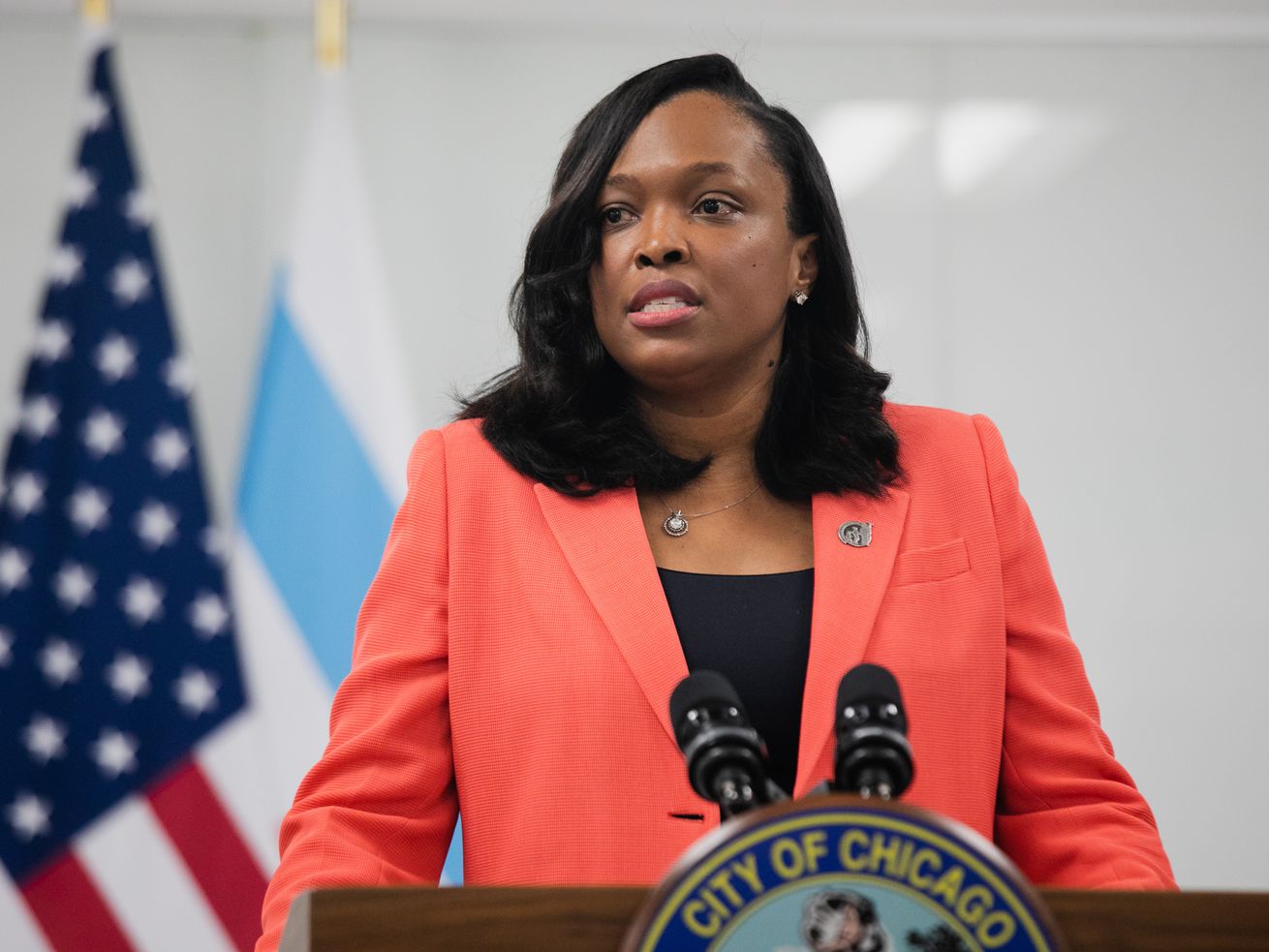
Chicago Public Schools CEO Dr. Janice Jackson speaks during a press conference at the Chicago Public Schools Headquarters last July.
Chicago Public Schools CEO Dr. Janice Jackson speaks during a press conference at the Chicago Public Schools Headquarters last July. | Pat Nabong/Sun-Times

As schools open widely for the first time in a year, Jackson sat down for a wide-ranging interview about the pandemic’s educational impact, families’ trust in the system and the outlook for the rest of the year.

With nearly a week in the books for Chicago Public Schools’ long-awaited reopening, schools chief Janice Jackson sat for a one-on-one interview with the Sun-Times covering a wide range of topics.

The conversation took place Thursday at Kershaw Elementary in Englewood. Here is a transcript:

K-8 reopening

Sun-Times: How has the first week of reopening gone? Has it lived up to your expectations?

Jackson: I’m happy with the first week. Of course, I’m excited that we’re back. I think that the fact that we’re starting with a phased-in approach, a smaller group of students, is allowing for a successful transition for our principals. A lot of people are nervous about the return to school, implementing the protocols. And so I think it’s easier when you come back with a smaller group of students to really get the rhythm. So I haven’t heard major concerns. Every school opening you have to deal with logistical things here and there, but overall it has met my expectations.

Parents and children line up outside George B. Armstrong International Studies Elementary School as students return to in-person learning at the Rogers Park neighborhood school on the North Side, Monday, March 1, 2021, in Chicago. (Ashlee Rezin Garcia/Chicago Sun-Times via AP) ORG XMIT: ILCHS602
Ashlee Rezin Garcia, AP Photos
Parents and children line up outside George B. Armstrong International Studies Elementary School as students return to in-person learning at the Rogers Park neighborhood school on the North Side, Monday, March 1, 2021, in Chicago. (Ashlee Rezin Garcia/Chicago Sun-Times via AP) ORG XMIT: ILCHS602

Staffing concerns

Sun-Times: As far as staffing goes, you said you feel the district is ready. There have been a lot of principals who, talking privately, they’re saying they’re worried about staffing. If a few teachers get sick, they don’t really have a backup plan. What do you say to those principals about their concerns over the next few weeks?

Jackson: We keep getting this question, and I don’t think it’s helpful in the aggregate, right? Because on the whole, we’re ready to go. Now obviously there’s schools that are outliers where we have concerns, and to your point, if a large number of teachers get sick, then yeah, we have to deal with that issue. But we have put those protocols in place, and I would say if you’re in a position where you’re having major concerns like that in a school, it probably would trigger some other kind of action. But for our part, I think the district has done a really good job matching the staff availability. Our principals are being extremely flexible at the ground level. You have some schools where maybe one first grade teacher is the remote teacher because they have an accommodation and the person who’s in-person is now teaching all the students that come. And so, if I thought that we didn’t have the staffing to reopen, we wouldn’t be in this position. Obviously there are going to always be outliers and one-on-one situations that we have to address. And I think the district has been doing a good job addressing those.

New hires

Sun-Times: The 2,000 new hires you set out to make, the miscellaneous employees and the cadre substitutes, what are the obstacles to getting those hired? You’re only about halfway there, a little over halfway.

Jackson: With the miscellaneous employees, we’re close to getting to 1,000. I don’t have the exact number, but I know we’re closer than we are with cadres. And I feel like that’s a group where we’re going to nail that number. It’s more about getting individuals to know about the opportunities. I think we’re doing job fairs this week if I’m not mistaken. And so once we get them staffed, they’ll be deployed to schools and principals are able to identify people on the ground within their communities. So with miscellaneous staff, I feel very confident we’re going to meet those goals in short order.

The cadre group is the harder group to crack. You need teachers who, in some cases these are licensed teachers who may be licensed to teach in other areas but we have them filling in in different spaces. And so I think that the talent office has done a really good job sourcing all of the people who could have supported us to do this work. But then we’re also now trying to be a little bit more aggressive in reaching directly out to people through LinkedIn and other mechanisms to get them signed on. So we’re closing in on our goal, but I do think that’s going to be a heavier lift than staffing the miscellaneous employees.

Sun-Times: For the miscellaneous employees, obviously it’s a pandemic and people need opportunities, but do you think any part of that is the job not being attractive with minimum wage and no benefits?

Jackson: No, well, I think people need to work. I don’t think that there’s more stuff you can do to sweeten the deal. I mean, you’ve got people who are either going to work during a pandemic or people who don’t yet feel comfortable coming into the building. But like I said, with the miscellaneous employees, I don’t have any concerns about us meeting those goals. I think it’s like anything else, it’s a large hiring lift and we’re working through it. The requirements to get the job are pretty low, so I think that we’ll be fine. With the cadre subs, that is a smaller pool of people. They have to have a degree, they have to have a certain background. And so it is a little bit more difficult attracting people, but we’re going to keep working hard to do that.

Vaccines and the fourth quarter

Sun-Times: You said that you’re hoping this is a successful third quarter and more families see that and opt in for the fourth. Do you expect staffing issues there if you’re already not to the pact of hiring you wanted?

Jackson: I think our staffing is going to be better. Because a lot of the accommodations are related to people with medical conditions and the fact that we’ve been vaccinating people at such a fast clip, I think that that’s going to really help us. We’ve been offering vaccines now, we’re almost to 50% of our entire school-based staff, which I think is amazing. And with Joe Biden’s announcement this month about prioritizing teachers, hopefully more vaccine coming in, I have no doubt that we’re going to be able to meet that goal. And I know principals should expect to have even more staffing because we are getting people vaccine and therefore will be able to ask them to come back to work.

Sun-Times: So President Biden’s goal of every school worker getting at least one dose by the end of the month, you think CPS will meet that?

Jackson: We’re going to work hard to meet it. I think, first of all, I’m excited that he made that declaration publicly. Chicago Public Schools was already moving along nicely with our agreement with CTU to get people vaccinated. But we also feel really excited about the third vaccination that’s on the market, we think that that’s going to be a game-changer. We think the fact that the United Center and the county are offering more opportunities to vaccinate people. So because there’s more access to vaccine, which is something that we have been talking about for the past couple of months now, coupled with the system that we have set up individually for our employees, I think we’re in a really good position to meet that goal.

Sun-Times: There are a lot of schools that just don’t have the space to have six feet between desks. Do you think you’re going to be able to accommodate any students who do want to come back? Let’s say there are tens of thousands who are wanting to come back.

Jackson: We’ve tracked this across other spaces. Obviously with COVID things change. I think we’ll be able to do it. In most cases, even in districts like in Florida and Texas where there’s always been a requirement to offer in-person all day, every day, you rarely see above 50% [of students returning], maybe around 60% or 65% at kind of the highest position. So I think we’ll be able to sustain that this year. There are going to be questions about what the fall looks like, and we will be looking to the CDC as well as [the Illinois State Board of Education] and [Illinois Department of Public Health] to provide guidance around how we do that. Of course in our high schools that are much larger, it’ll be much more difficult to have students six feet apart the entire time. And I know that the people making decisions related to that are thinking about that. And we’re just looking for the guidance related to that. But right now CPS will implement the guidance with fidelity, and I think that if you have more parents wanting to come, I count that as a good problem. We would have to figure it out, we would have to look at alternative spaces. But right now, based on what we’ve seen in other school systems, I think we’ll be able to make it work with the number of people that will opt in.

Chicago Public Schools CEO Janice Jackson speaks with parents at Belmont-Cragin Elementary School on the Northwest Side during a roundtable discussion about the district’s transition to in-person learning, Tuesday morning, Jan. 19, 2021. | Ashlee Rezin Garcia/Sun-Times
Ashlee Rezin Garcia/Sun-Times, Ashlee Rezin Garcia/Sun-Times
Chicago Public Schools CEO Janice Jackson speaks with parents at Belmont-Cragin Elementary School on the Northwest Side during a roundtable discussion about the district’s transition to in-person learning, Tuesday morning, Jan. 19, 2021. | Ashlee Rezin Garcia/Sun-Times

High school reopening plans

Sun-Times: Speaking of high schools, we’ve all talked and heard about the complexities with scheduling and mobility within the school. What’s the compromise there? How do you get to a plan that works? I imagine pods are a lot harder when kids have first, second, third period with different students.

Jackson: I think for us, we are now clear schools need to open. I heard the union president say he believes schools can open this year, so that’s great. We have to sit down at the table with them and figure out how to do it, and what those compromises are. So I’m not going to negotiate here, but we have started those conversations with them. And so we’ll hear what some of those concerns are and work with the union and our health officials to make a compromise. But we’re doing it with sports, we’re figuring things out. And my philosophy throughout this has always been, ‘We have to try, and we have to start.’ And I feel good that we’re finally in a position that we’re trying and we’ve started and now it’s time to figure it out and do it right.

Sun-Times: But aside from CTU negotiations, what does it look like for in-person high school? We haven’t seen an example — or many examples, we’ve seen some. But how do pods work if kids have classes in different periods?

Jackson: There are examples, the Catholic high schools are open. Right now the way our plan — which we put out in August, that obviously we didn’t bring high schoolers back — we did talk about pods, we talked about creative scheduling where instead of kids having eight classes, maybe you have four on a given day or four in a semester, and that way you’re reducing the number of transitions. You can’t isolate students the way you can in an elementary school where everybody’s in one home room all day. But there are ways to limit the kind of interactions. So limiting open spaces like the lunch rooms, the gymnasium, things like that are some of the things that we’ve taken into consideration. But again, I think these are some of the things that CTU will have questions about, so I don’t want to start making proclamations about what it’s going to look like without having those discussions with them and hearing their concerns and suggestions.

Educational impact of the pandemic

Sun-Times: How worried are you about learning loss? Obviously last spring there was missed time, this spring we know there are some students who aren’t being served well in remote learning.

Jackson: I’m happy that the press is acknowledging learning loss now because for a while people were acting like we were making it up. But obviously there’s a lot of research around learning loss as it relates to summer slide. People have studied other places where natural disasters have occurred and kids have been out of school for extended periods of time, like Puerto Rico, places that have had other natural disasters. So it is a big concern. And there’s a body of research that shows when kids are excluded from school, when they don’t have access to high quality teachers, that the learning is impacted. Couple that with what we already know about the disparities in learning here in Chicago between black students in particular, Latino students, white students and Asian students, I’m very concerned about that.

And so our Teaching and Learning Department right now is working on our “unfinished learning plan,” which is what we’re calling it. We don’t want to call it learning loss because the kids in many cases haven’t even had an opportunity to learn some of these things. They haven’t been presented with the information. And so we’re going to be putting out guidance around how we address that. What that’s going to look like will vary at each school level because we think the principals and LSCs and the teachers at the local level will have a better idea about what their students need in order to recover. But we’re going to be using our CARES money and stimulus money to support our students. And I want to be clear, the goal is not remediation. I think if we approach this with a remediation focus, kids are going to be set back. We have to make sure kids are presented with grade-level appropriate curriculum, and we have to provide as many resources and supports as possible to help them access that curriculum.

Sun-Times: What does that look like in terms of making up for some of that setback, however you want to put it? And I think the issue you mentioned, that people haven’t wanted to bring it up, some of the issues are families are saying they’re happy to make it through the pandemic, to have survived. And they want to get away from this sort of deficit language. And so do you acknowledge that, and is it part of your thinking to not put more pressure on kids because they’ve had all this happen over the past year?

Jackson: I think we have to address the SEL concerns that our students have and had prior to that. I reject the notion that having expectations around learning is putting undue pressure on students. White students and affluent students across this country have been learning and presented with opportunities throughout the pandemic, and it shouldn’t be an excuse for Black and Latino students, or poor students, not to have those opportunities. We have to work harder to do that. And anybody who signed up to work in an urban school setting understands that’s part of the job. So we have to attend to both those SEL concerns, the things that have been devastating throughout this pandemic, but we also can’t make excuses and leave our kids behind when their peers from more affluent communities and backgrounds are continuing to move ahead. They’re still taking the ACT, SAT, they’re still applying to colleges. The kids in CPS deserve the same opportunities.

Jackson’s future

Sun-Times: In terms of yourself and navigating this whole situation over the past year, how long do you see yourself sticking with CPS?

Jackson: I think I’ve proven throughout this process that I can handle everything that’s thrown my way. It hasn’t been an easy stint. I’ve been the CEO for the past three and a half years but in senior leadership for six. We’ve dealt with a financial crisis, sex abuse scandal, strike, almost two strikes. So CPS is a place that I’ve been my entire life, I love Chicago Public Schools, and I think that I’ve proven that I can lead through turbulent times. So I don’t have a timeline on anything. I’m here for the district, and as long as I’m here I’m going to continue to do what I think is an exceptional job for the kids here in CPS.

I’m worn out like everyone else. It’s a pandemic, I’m not superwoman. I’m not going to sit here and act like I’m not impacted. I want my kids in school, I’m trying to do three different jobs like everybody else. But I know what I signed up for. And I think me, and I think my team is doing an exceptional job leading during this time.

Trust in the system

Sun-Times: A lot of families have said part of the reason they haven’t come back isn’t necessarily because of the data or the science, they understand that. But it’s because this idea of trust in the system. Why do you think that trust isn’t there, and do you think you’ve don’t enough to build trust with families?

Jackson: I think the trust has to be at the local level. If anybody’s waiting, if parents need me to tell them to send their kids to school, that’s never going to happen. Some people will listen to that, not everybody. But parents by and large trust their teachers and they trust their principals. So throughout this process the places where we’ve seen higher opt-in rates, where we’ve seen parents signing up and we’ll continue to see those increase, is because they have strong relationships at the local level. I can’t tell you what’s happening in each school community. We set the vision, we set the policy, but it really is the amazing principals and teachers who really do the hard work of building and fostering that trust. As a school system, we have to do a better job of transparency and communication. I think we’ve made a lot of progress, but we still hear from people that they want more opportunities to weigh in before we make decisions, and we try to do that as much as possible. And I’ll continue to do more to have them weigh in before we make big decisions and big plans.
Read More

13 questions with CPS CEO Janice Jackson a week after schools reopenNader Issaon March 5, 2021 at 11:30 am Read More »

‘Locking up a drug dealer will not bring my child back, but it may just save yours’Frank Mainon March 5, 2021 at 11:30 am

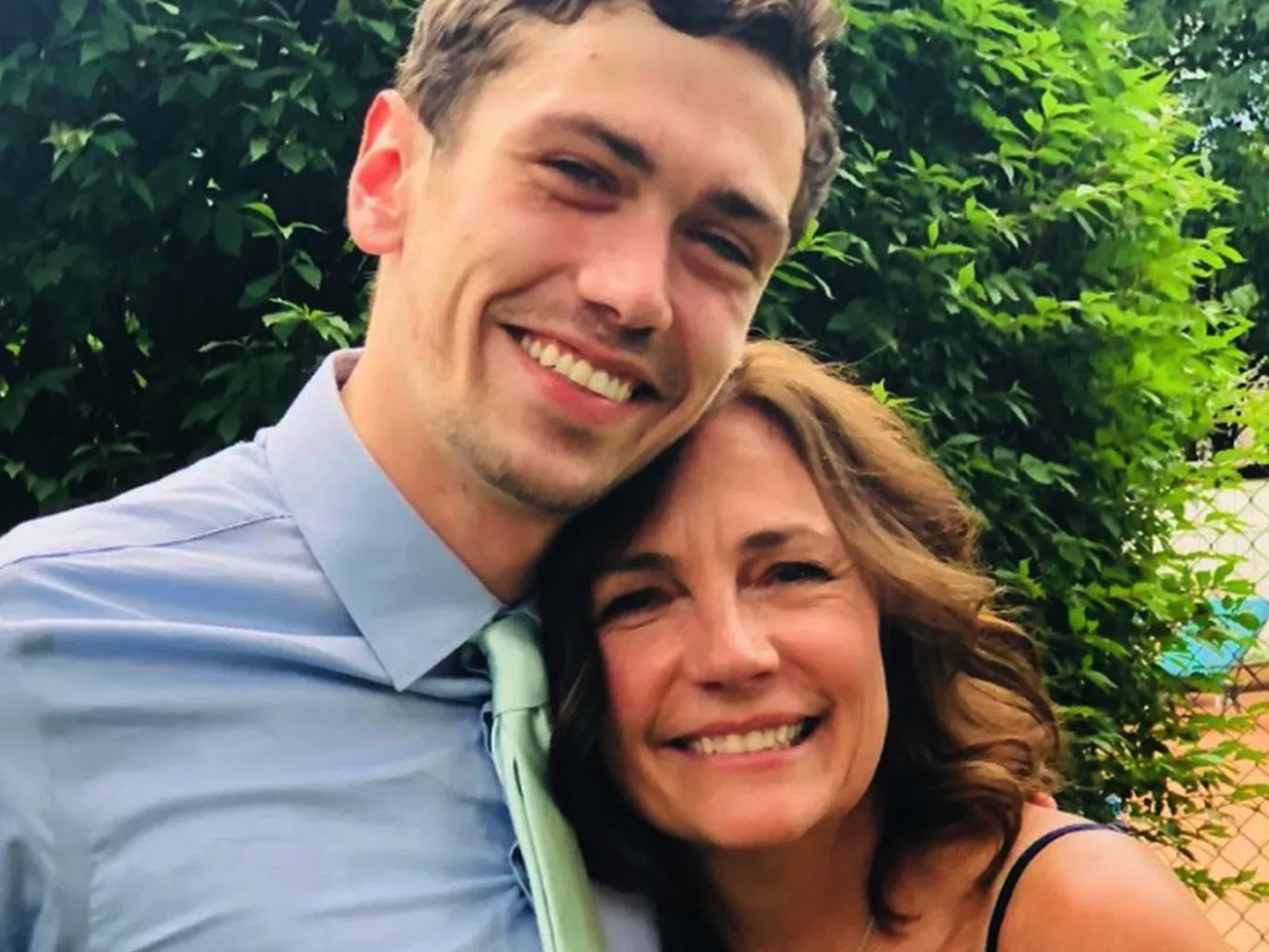
Sylvia Schafer with her son Joshua Bloomfield, who died in 2019 of poisoning from alcohol and a cocktail of drugs including heroin, Fentanyl and methamphetamine.
Sylvia Schafer with her son Joshua Bloomfield, who died in 2019 of poisoning from alcohol and a cocktail of drugs including heroin, Fentanyl and methamphetamine. | Provided

Pushed by families who lost loved ones to drugs, the Chicago Police Department quietly has begun to investigate drug-related deaths as potential homicides.

Sylvia Schafer is among dozens of parents in the Chicago area whose children have died from drugs and demanded justice, calling on police and prosecutors to treat the deaths as homicides and go after those responsible.

Their lobbying paid off. In late December, the Chicago Police Department quietly approved its first-ever guidelines for detectives to investigate drug deaths under what Illinois law labels drug-induced homicides.

“I am very grateful that the department has taken steps to treat these cases, like surrounding counties do,” Schafer says.

Last year, at least 1,600 people died in Cook County as a result of opioid poisoning. But few of those deaths resulted in homicide charges against sellers who provided the drugs.

Prosecutors in the collar counties charge far more people with drug deaths than in Cook County. In McHenry County, officials have said their efforts might be making a difference. The number of drug-related deaths in that county declined in 2018 and 2019, which they think might be in part because of aggressive prosecution of dealers under the state’s decades-old drug-induced homicide law.

Brendan Deenihan, the Chicago Police Department’s chief of detectives.
Ashlee Rezin Garcia / Sun-Times file
Brendan Deenihan, the Chicago Police Department’s chief of detectives, pushed to make drug-induced homicide investigations a bigger priority.

About five years ago, Chicago police officials met with their suburban counterparts to see how they were investigating drug deaths. But interest in those cases seemed to wane until last year, when Brendan Deenihan, Chicago’s new chief of detectives, said he was committed to pursuing these cases.

“I was especially impressed at how welcoming Chief Deenihan has been, and he literally got busy on this the day I met with him,” Schafer says. “He followed through on his promise, which those before him did not.”

Not every drug death will result in a homicide investigation because detectives are busy with the rising numbers of fatal shootings, Deenihan says.

“This isn’t going to be something where the detective division can do 2,000 investigations on overdoses or even 1,000 — or even 100 a year,” he says.

Deenihan says a strong homicide case might involve a dealer who sells narcotics that kill a group of users in a short period.

In recent years, the police have opened investigations after clusters of addicts die from taking highly potent Fentanyl. Some of those dealers have been charged in federal drug conspiracy cases.

“This gives us another tool,” Deenihan says.

Still, filing drug-induced homicide charges remains controversial. Some say the fear of getting locked up on a homicide charge can keep a dealer from calling 911 to seek help for a customer suffering from drug poisoning.

Before they drafted their six-page policy for investigating drug deaths, Chicago police officials consulted with the Cook County state’s attorney’s office, prosecutors in the collar counties, the Cook County medical examiner’s office and other agencies.

The new policy makes clear why these cases will be pursued: “Drug-induced homicide incidents are serious crimes, not only against the victim but also to the decedent/victim’s family, loved ones and the entire community.”

If detectives investigating a death think the person likely died from drugs, they’re supposed to canvass the scene as they would with any other murder case. They’re being told to collect evidence such as drug paraphernalia, cell phones and any remaining drugs, to identify witnesses and to conduct interviews. In the past, the police didn’t do all of that with drug-related deaths.

The new guidelines tell detectives to focus on cell phones and social media for potential evidence of communication between victim and seller.

They’re being asked to stay in contact with the medical examiner’s office for autopsy and toxicology results. And they’re being told to make sure that any drugs recovered at the scene of the death get tested by the Illinois State Police crime lab.

Deenihan says these cases aren’t easy to investigate.

Detectives will have to prove that a dealer sold the particular drugs that killed a user, Deenihan says. That’s complicated, he says, because drug users often get drugs from multiple sources.

Victims’ families say the law only requires police to prove a drug was a contributing factor to a death.

Valerie Teper, 33, died of drug poisoning in November 2016 in the 1900 block of West Belmont Avenue.
Provided
Valerie Teper, 33, died of drug poisoning in November 2016 in the 1900 block of West Belmont Avenue.

Terry Slaw, a lawyer whose 33-year-old stepdaughter Valerie Teper died of drug poisoning in 2016, calls the police department’s new guidelines “overdue.”

But Slaw worries about possible legal problems involving such cases. He points out that the Cook County medical examiner almost always finds drug deaths were accidental — even in cases in which prosecutors later charge the supplier with a drug-induced homicide.

“They’re either homicides or accidents,” Slaw says. “You can’t have it both ways.”

His view is that, under Illinois law, drug-related deaths are homicides and that the medical examiner doesn’t have discretion to say otherwise. Slaw filed a lawsuit to compel the medical examiner to rule drug deaths as homicides but lost last year in Cook County circuit court and then on appeal.

Schafer says her 29-year-old son’s drug death in 2019 was ruled an accident, but she was able to persuade the Chicago police to investigate it as a homicide.

“Had I not hired a private attorney to help me navigate, I would not have gotten very far in any of this,” she says.

Schafer’s son Joshua Bloomfield died in his Edgewater apartment of toxicity from alcohol and a cocktail of drugs including heroin, Fentanyl, methamphetamine and clonazepam, according to the medical examiner.

Last summer, Christopher Paulus was arrested on a drug-induced homicide charge in Bloomfield’s death. Paulus and Bloomfield were friends who met in drug rehabilitation. Phone records showed Bloomfield planned to buy heroin from Paulus the day before he died, according to Cook County prosecutors.

Paulus’s lawyer told a judge his client never would have intentionally sold Bloomfield a fatal dose. Paulus is free on bail, awaiting trial.

Retired Chicago police Officer Theresa Almanza and her husband John Schergen, a Chicago firefighter, who lost their daughter Sydney Schergen in 2015.
Provided
Retired Chicago police Officer Theresa Almanza and her husband John Schergen, a Chicago firefighter, who lost their daughter Sydney Schergen in 2015.

Theresa Almanza, a former Chicago cop whose 18-year-old daughter Sydney Schergen died from drugs in 2015, pushed for the police to look more deeply into her daughter’s death after initially closing their investigation without seeking criminal charges.

As a result, Brent Tyssen of Midlothian ended up being sentenced in 2018 to six years in prison for drug-induced homicide. And an accomplice, Cynthia Parker, got probation.

“It is my hope that this protocol will be strictly enforced by the Chicago Police Department and Cook County state’s attorney’s office,” Almanza says. “Locking up a drug dealer will not bring my child back. But it may just save yours.”

Read More

‘Locking up a drug dealer will not bring my child back, but it may just save yours’Frank Mainon March 5, 2021 at 11:30 am Read More »

‘My Salinger Year’: Literary newbie’s memories of the author are the kind of wry worth catchingRichard Roeperon March 5, 2021 at 11:30 am

A newcomer at a literary agency (Margaret Qualley) is charged with replying to letters addressed to the “Catcher in the Rye” author in “My Salinger Year.” | IFC Films

The endearing Margaret Qualley plays our starry-eyed heroine, working for a tough literary agent (Sigourney Weaver) in 1990s New York.

Back in the ancient era of the 1980s and 1990s, Val Kilmer, Joanne Whalley, Johnny Depp, Ethan Hawke, Uma Thurman and Andie MacDowell were appearing in major motion pictures. Cut to present day, and over the last couple of weeks, I’ve seen movies featuring:

  • Jack Kilmer (son of Val and Joanne).
  • Lily Rose-Depp (daughter of Johnny and French singer-model-actress Vanessa Paradis).
  • Maya Hawke (daughter of Ethan and Uma).
  • Margaret Qualley (daughter of Andie MacDowell and former model Paul Qualley).

Each of these second-generation actors has demonstrated impressive chops, with Qualley arguably the deepest talent, as evidenced by her fine performances in the HBO series “The Leftovers” and the FX miniseries “Fosse/Verdon,” and her scene-swiping work opposite Brad Pitt in “Once Upon a Time … in Hollywood.” In the borderline trifling but consistently amusing and wry period piece “My Salinger Year,” Qualley has the opportunity to carry the story, and she delivers an effortlessly endearing performance in a literary adventure that plays like “The Devil Wears Prada” meets “Can You Ever Forgive Me,” only at lower stakes.

With writer-director Philippe Falardeau putting a whimsical and at times almost dreamy spin on the memoir by Joanna Rakoff, “My Salinger Year” is set in 1995, when New York City was teeming with brick-and-mortar bookstores and getting published meant GETTING PUBLISHED, as in magazines and books you held in your hands, with pages to be turned. Qualley’s Joanna arrives in New York City with the wide-eyed enthusiasm of a literary-minded Holly Golightly and a romanticized notion of soaking in the hustle and bustle of the city, living in a delightfully shabby apartment and writing in cafes. Step One: Joanna gets a job as an assistant to Margaret, the legendary (and legendarily tough) literary agent at a stuffy and traditional but still successful agency that has handled some of the great American authors of the 20th century, including one J.D. Salinger, who has been a recluse for some three decades but still occasionally rings the agency to talk to Margaret.

Joanna is bursting with enthusiasm. A real job at a real literary agency! Margaret, who terrorizes the office staff with sarcastic bon mots and slamming doors, tells Joanna to calm down and get to work — with the work including the responsibility of reading every single letter sent to Salinger and responding with one of a half-dozen form replies. (Ever since Mark David Chapman had a copy of “The Catcher in the Rye” in his possession when he murdered John Lennon, the agency has assigned someone to read every letter sent to Salinger in order to weed out potentially dangerous stalker types.) At times we see the letter-writers in the various locales, speaking the content of their writings to camera. It’s a nice touch that demonstrates the vast majority of these supposed ‘weirdos’ are just lost and lonely, and they relate to Holden Caulfield.


IFC Films
The tough literary agent Joanna works for (Sigourney Weaver) freely belittles her employees.

Joanna takes it upon herself to start responding to Salinger’s fans with personalized replies, which seems to help some of them and infuriate others and will get her fired if discovered. Tread lightly, Joanna! With Margaret often out of the office, Joanna develops something of a telephone friendship with Salinger (perfectly played by Tim Post as a voice on the phone and a figure seen in silhouette). Meanwhile, Joanna moves into an apartment with Don (Douglas Booth), who works at a socialist bookstore and is writing a novel and forever talking about writing a novel and takes Joanna to poetry readings and mansplains all things life and literary to Joanna, and he’s even worse than he sounds. We’re rooting for Joanna to find the time and inspiration to write, and we’re rooting for her to wake up to Don’s bull—- and get on with the best part of her life, which surely lies just ahead.

Sigourney Weaver is a fountain of dry wit (can you be a fountain of dry wit, let’s say yes) as Margaret, who can be absolutely dreadful in her dismissiveness but — SHOCKER — just might turn out to have a beating heart beneath the cloak of sarcasm. Theodore Pellerin is a standout as the Salinger fan known as “Boy from Winston-Salem.” Mostly, though, this is Margaret Qualley’s movie and Joanna’s story, and whether Joanna is dancing in a fantasy sequence or finding her voice as a writer and as a person, it’s a lovely and endearing performance.

Read More

‘My Salinger Year’: Literary newbie’s memories of the author are the kind of wry worth catchingRichard Roeperon March 5, 2021 at 11:30 am Read More »

FOID card: Tremendous spike in FOID applications in Illinois and some long waits on renewalsDale Bowmanon March 5, 2021 at 12:16 pm

Illinois residents need a Firearm Owner’s Identification Card (FOID card) to legally possess firearms or ammunition, such as this still life of a 12-gauge shotgun, a .22 rifle and a 20-gauge shotgun with shotgun shells and slugs atop an ammo box. Credit: Dale Bowman
Illinois residents need a Firearm Owner’s Identification Card (FOID card) to legally possess firearms or ammunition, such as this still life of a 12-gauge shotgun, a .22 rifle and a 20-gauge shotgun with shotgun shells and slugs atop an ammo box. | Dale Bowman

Illinois saw a tremendous spike in applications for the FOID card over the last year and some FOID renewals are taking a really long time.

I thought renewal of my Firearm Owners Identification (FOID) card in 2019 was tough, arriving only days before dove hunting began.

That was nothing compared to what is going on for the last year.

Between the start of the pandemic and lockdown a year ago, then social unrest in May and, recently, the Capitol insurrection, there’s been a staggering jump in FOID card applications (from 166,649 in 2017 to 445,945 as of November 2020).

With the pandemic and lockdown, FOID applications spiked from 13,629 in February to 36,762 in March. That spike was surpassed after the late May social unrest from 17,420 in May to 62,815 in June.

A similar spike occurred in Firearms Transfer Inquiry Program transactions, from 33,605 in February to 64,028 in March, only to be surpassed by a jump from 38,362 in May to 65,222 in June.

Processing time for FOID card applications, as of January, was averaging 121.74 days.

FOID cards were created in 1968: “To legally possess firearms or ammunition, Illinois residents must have a [FOID card], which is issued by the Illinois State Police to any qualified applicant.”

The time-consuming process for the ISP is weeding out felons, addicts, people with significant mental health issues and other factors.

As to renewals, the ISP did not have an average processing length, but Sgt. Christopher “Joey” Watson emailed, “There are approximately 138,000 renewal applications pending at this time. The pending renewals remain valid under emergency rules enacted in response to the COVID-19 pandemic.”

An extension was made for FOID card renewals. But it’s advised to carry a copy of your application receipt.

Firearm Owners Identification (FOID) card are required to Illinois residents to possess firearms or ammunition. Credit: Dale Bowman
Dale Bowman
Firearm Owners Identification (FOID) card are required to Illinois residents to possess firearms or ammunition.

Some waits for renewals are stunning.

Patrick Patel tweeted, “Applied for my FOID in June, just got it Monday. So I guess ahead of schedule for me.”

“My thing with the State is I renewed my Concealed Carry License [CCL] just prior to renewing my FOID card,” Leonard Ackman emailed. “I received my [CCL] in approximately three weeks. Nothing to this day on the FOID card after several emails. Phone calls don’t work as one can’t even leave a message. My account says `Under Review.’ They received my application and money on Dec. 10. 2019.”

ISP has hired more staff and upgraded its phone system, but the wait continues in many areas as does demand.

“I applied for a new FOID card on June 9th, 2020,” Curt Annis emailed. “I am still waiting. The [ISP] web page says the application is still under review. Covid related problems aside, don’t you think nine months is too long to wait?”

Yes.

“I submitted my FOID renewal on March 3rd [2020] and I am still waiting: `Under review,’ “ Jennifer Becker messaged.

“I passed the one-year mark for renewal already,” Christian Howe messaged. “At least I have the note that ISP mailed me that they received my renewal application.”

Terry Juricic Jr. applied for his FOID card in July and still doesn’t have it.

“I did get a letter to carry when hunting, but c’mon already,” he exclaimed.

“I applied for my FOID renewal, fall of 2019,” Alva Miller noted. “Even after a call to a state senator’s office, who, after investigating, assured me all was in order, I still do not have my renewal as of [Feb. 28]!”

“Today, Feb 27, makes exactly 14 months since I applied for a FOID renewal,” messaged Carol Blando Baker on Instagram.

In December, ISP Director Brendan Kelly said, “Our people believe in building a system that makes it hard for the bad guys and simple and safe for the good guys. The Illinois State Police will keep pushing hard, but frankly we will need authority from the legislature to untangle, streamline and integrate the aging patchwork of FOID, concealed carry, firearms transactions, and records checks if we are going to fulfill this mission.”

More FOID information is at isp.illinois.gov/Foid/Foid. More on the Firearms Services Bureau is at isp.illinois.gov/Foid.

Read More

FOID card: Tremendous spike in FOID applications in Illinois and some long waits on renewalsDale Bowmanon March 5, 2021 at 12:16 pm Read More »

Blackhawks moving toward purchasing Rockford IceHogs while increasing focus on AHL developmentBen Popeon March 5, 2021 at 12:30 pm

The Rockford IceHogs’ BMO Harris Bank Center is 40 years old and needs improvement. | Google Maps

At least 19 NHL teams already own their AHL affiliate. The Blackhawks could soon join that group, cementing their control over an increasingly important part of the organization.

The Rockford IceHogs, the Blackhawks’ AHL affiliate, likely will be sold by the City of Rockford to the Hawks in 2021.

The Rockford Area Venues and Entertainment Authority (RAVE), which oversees the IceHogs, filed a Request for Proposals (RFP) on Wednesday to accept bids on the team.

The RFP is the first step in a process that most believe will result in the Hawks purchasing their own affiliate, following a trend set by many franchises in recent years. At least 19 NHL organizations already own their AHL affiliates.

“At the direction of our ownership, we are exploring many ways in which the Chicago Blackhawks can work more closely with the city of Rockford and the American Hockey League to enhance our standing in the sport while increasing that economic benefit to the city and state,” the Hawks said in a statement. “Obviously, we are looking closely at the city’s overture as a means to accomplish those goals.”

The IceHogs have been the Hawks’ AHL partner since moving to Rockford in 2007, but the current affiliation agreement is set to expire at the end of the 2021-22 season.

The purchase of the team would cement the affiliation and the IceHogs’ future in Rockford, while giving the Hawks full control over business decisions and some financial hurdles.

The IceHogs’ arena, the 6,200-seat BMO Harris Bank Center, needs modernization after turning 40 this year. IceHogs ticket sales also have lagged, dropping attendance to 3,759 last season (sixth-lowest in the AHL).

If the purchase goes through, the Hawks would relieve RAVE of its $400,000 annual affiliation payments and plan to spend $20 million on BMO Harris Bank Center upgrades, WTVO Rockford’s Scott Leber reported this week.

The Hawks’ front-office changes last summer stimulated increased dialogue between the team and the IceHogs about “strengthening our partnership,” ultimately leading to this new direction, RAVE chairman Craig Thomas said in a statement.

“Based on those discussions, we believe it may be in the best interest of the team, and equally important the City of Rockford, to consider expanding our relationship to include a deeper investment by the Blackhawks in Rockford,” Thomas added. “The RFP is an important first step in evaluating the positive impact of an expanded Blackhawks presence in the community.”

The Hawks’ off-ice move toward purchasing the IceHogs comes as the on-ice affiliation also takes on a different dynamic in 2021.

On one hand, Hawks general manager Stan Bowman’s increased focus on building through youth at the NHL level has made prospect development at the AHL level even more important.

Most of the rookies exceeding expectations on the Hawks this season — Kevin Lankinen, Brandon Hagel, Philipp Kurashev, Nicolas Beaudin and others — all gained key experience in Rockford last season. Hawks coach Jeremy Colliton also traces his roots in the organization to coaching the IceHogs in 2017-18.

The Hawks have stacked the IceHogs’ roster full of more highly touted prospects this season, including Evan Barratt and Wyatt Kalynuk, the No. 5- and No. 6-ranked prospects, respectively, and recently sent down Beaudin, Collin Delia and Lucas Carlsson for tune-ups.

But young rosters are often death curses (standings-wise) in the AHL.

Additionally, the NHL’s new taxi squads and COVID-related travel restrictions mean the Hawks now bring 28 or 29 players on their road trips instead of the usual 20 to 23, further gutting their AHL depth during those stretches.

As a result, the IceHogs have struggled mightily. On Wednesday, an embarrassing 9-4 loss to Grand Rapids, the Red Wings’ affiliate, dropped their record to 1-7-1.

“Being competitive is part of development,” Colliton said Thursday. “But at the same time, it is a special circumstance this year. More than anything, we just want to know [their players are] improving and doing everything they can to hopefully be contributors for us down the road.”

Read More

Blackhawks moving toward purchasing Rockford IceHogs while increasing focus on AHL developmentBen Popeon March 5, 2021 at 12:30 pm Read More »

Chicago Bulls: Four best players over last twenty seasonsVincent Pariseon March 5, 2021 at 1:00 pm

The Chicago Bulls have had some impressive players play for them over the last 20 years since they were a dynasty. The Chicago Bulls and the rest of the NBA put out their NBA All-Stars last week and that sparked some debate around the Chicagoland area. Specifically, on ESPN 1000‘s Kap and J-Hood, they debated […]

Chicago Bulls: Four best players over last twenty seasonsDa Windy CityDa Windy City – A Chicago Sports Site – Bears, Bulls, Cubs, White Sox, Blackhawks, Fighting Illini & More

Read More

Chicago Bulls: Four best players over last twenty seasonsVincent Pariseon March 5, 2021 at 1:00 pm Read More »

Chicago Bears 2021 Free Agency: Recent cap casualties to avoidon March 5, 2021 at 12:00 pm

Read More

Chicago Bears 2021 Free Agency: Recent cap casualties to avoidon March 5, 2021 at 12:00 pm Read More »

State’s daily COVID-19 vaccine rate dips a bit, but Pritzker pushing for 100,000 shots a day soon: ‘That is tremendous’Mitchell Armentrouton March 5, 2021 at 1:25 am

Carmen Romero De Vaca, 52, a special education classroom assistant at James B. McPherson Elementary School in Ravenswood, receives her first dose of the Pfizer-BioNTech COVID-19 vaccine at Weiss Memorial Hospital on the North Side, Monday, Feb. 15, 2021. | Ashlee Rezin Garcia/Sun-Times

The federal government has shipped about 4 million doses in all since Illinois’ campaign started almost three months ago, and availability is expected to “soar” in the weeks ahead, according to Gov. J.B. Pritzker.

Another 93,302 COVID-19 vaccine doses have been administered in Illinois, bringing the state’s shot total since December to nearly 3 million, public health officials announced Thursday.

Wednesday’s vaccine total marked the state’s fourth most productive day yet, but a week removed from its last 100,000-plus shot day, the state’s rolling average of daily doses administered decreased slightly to 78,942.

And still, only 952,141 residents — about 7.5% of the population — are considered fully vaccinated, either with both required doses of the Pfizer or Moderna vaccines, or with the new one-and-done Johnson & Johnson vaccine that arrived in Illinois Wednesday.

The federal government has shipped about 4 million doses in all since Illinois’ campaign started almost three months ago. Gov. J.B. Pritzker said “vaccine availability is set to soar in the coming weeks.”

“We expect at least 100,000 doses per day in Illinois by mid-March. … That is tremendous,” Pritzker said at a news conference in downstate Centreville, near East St. Louis.

As the ramp-up continues, coronavirus infection rates are approaching all-time lows across the state.

Graph not displaying properly? Click here.

The Illinois Department of Public Health reported 1,740 new cases of the disease were diagnosed among 73,990 tests, keeping the average statewide positivity rate at an eight-month low of 2.4%. Chicago’s regional rate is at 2.9%, its lowest point since the virus emerged.

And COVID-19 hospitalizations are lower than they ever got last summer, with 1,200 beds occupied as of Wednesday night.

But officials reported 42 more viral deaths, including that of a Will County woman in her 30s.

The virus is still claiming an average of 38 Illinois lives per day, down from a rate of 54 daily fatalities in early February.

Illinois’ coronavirus death toll is up to 20,668, among nearly 1.2 million people confirmed to carry the virus over the past year.

Read More

State’s daily COVID-19 vaccine rate dips a bit, but Pritzker pushing for 100,000 shots a day soon: ‘That is tremendous’Mitchell Armentrouton March 5, 2021 at 1:25 am Read More »

31-year-old man falls to death at Archer Heights warehouseSun-Times Wireon March 5, 2021 at 1:38 am

A man fell to his death March 3, 2021, in Archer Heights.
A man fell to his death March 3, 2021, in Archer Heights. | Sun-Times file photo

Jose Merchan fell off a “cherry picker,” a crane used to raise and lower people, about 1 p.m. at a warehouse located at 4308 W. 44th St., Chicago fire officials said.

A 31-year-old man fell to his death Wednesday at a warehouse in Archer Heights on the Southwest Side.

Jose Merchan fell off a “cherry picker,” a crane used to raise and lower people, about 1 p.m. at a warehouse located at 4308 W. 44th St., Chicago fire officials said. Another person who fell off was critically injured.

Chicago police could not provide details about the incident.

An autopsy ruled Merchan’s death an accident, according to the Cook County medical examiner’s office.

The Occupational Safety and Health Administration did not immediately respond to a request for comment.

Read More

31-year-old man falls to death at Archer Heights warehouseSun-Times Wireon March 5, 2021 at 1:38 am Read More »