President Joe Biden speaks at a meeting of his Cabinet at the White House on Thursday. | AP Photos
He pledged to work across party lines, but he is ramming through the biggest progressive agenda in American history without any Republican votes.
Joe Biden was elected president as a moderate-left Democrat, but he is not governing as one. He pledged repeatedly to work across party lines, but he is ramming through the biggest, most expensive progressive agenda in American history without any Republican votes.
Biden is almost certain to try it again with his next two spending proposals, the largest since Lyndon Johnson’s Great Society programs. As the White House pushes these mammoth bills with only Democratic votes, Americans are realizing they got a very different president from the one they bargained for, the one they were promised during the campaign.
What’s unclear is whether they will recoil from this new reality.
Throughout the summer and fall, Biden ran as a unifier who could work across party lines. He wanted to do so, he said, and he reiterated that comforting message as late as his inaugural address. It was probably his most important policy message, and Americans believed it. They remembered his years in the Senate and his primary victory over socialist Bernie Sanders.
The reality has been very different from the promises. Biden’s pledge of bipartisanship and unity turned out to be a cynical sleight-of-hand, raw partisanship masquerading as comity. In the general election, it worked well enough to defeat a divisive incumbent, whose impulsiveness, rancor and personal attacks repulsed many Americans. Now that the election is over, so is the message. Despite razor-thin Democratic majorities on Capitol Hill, Biden is determined to pass an ambitious agenda with no support from Republicans.
The clearest indication of Biden’s bait and switch came with the stimulus bill. Before signaling his final position, the president reached out to Republicans, who proposed a $600 billion package, focused on immediate needs plus some fiscal stimulus.
The bipartisan meeting was all for show. Biden quickly rejected the Republicans’ proposal, made no effort to meet with them again or negotiate any compromise, and chose instead to push for a bill three times as large, much of it to be spent long after the COVID crisis has passed. The extra $1.3 trillion did not include the infrastructure and other programs he now considers essential. Those are coming in additional bills with huge price tags and associated tax hikes.
President Biden, Speaker Nancy Pelosi, and Senate Majority Leader Chuck Schumer knew their mammoth COVID bill would face unified Republican resistance. No matter. They pushed it through anyway, using the Senate’s arcane rule for budget reconciliation. They went big and unilateral, even though Republicans were eager to sign off on a large relief bill that would have commanded a Senate supermajority. This week, we learned Schumer has quietly asked the Senate parliamentarian if he can use the same 50-vote procedure for Biden’s latest spending bills, hoping to avoid any Republican filibuster.
Will this ram-it-through mentality characterize the remainder of Biden’s first two years? You don’t have to visit the Oracle at Delphi for an answer. The clearest indication is that the president, who ran for the Oval Office as a man of the Senate, now wants to smash long-standing Senate rules so he can pass the rest of his legislative agenda without Republican votes.
The filibuster rules, Biden says, are nothing more than “relics of the Jim Crow era.” He’s relying on the distant memory that, more than half a century ago, Southern senators used the filibuster to oppose desegregation. Yet the huge civil rights and voting rights bills of the mid-1960s still passed. What’s more, they passed with enough debate and votes to buttress the statutes with a national political consensus.
Since then, both parties have used the filibuster to oppose all sorts of bills, most of them far removed from race. The Democrats used the technique repeatedly last year, when they were in the minority. They used it, for instance, to stop a police reform bill proposed by Tim Scott, an African American representing the state that fired the first shots in the Civil War. But that’s only one example among many. When Joe Biden and Barack Obama served in the Senate, they not only used the filibuster, they explicitly defended it. So did Chuck Schumer. Were they defending Jim Crow? No. They were defending the historic role of the Senate, which grants some power to the minority party.
Now, the same Democrats want to overturn those rules, and they are cynically deploying the sensitive issue of race to do it. But race is not the real issue here. It is whether the Senate wants to afford significant rights to the minority party, as it has for over two centuries, forcing either compromise solutions or stalemate. Put differently, do senators really want to turn their chamber into something like the House, where the minority is powerless and debate is meaningless? Once they do that, they can never turn back.
Behind Biden’s choice to go big, progressive, and unilateral lie three basic calculations.
The first is that, if history is any guide, Democrats are likely to lose the House in 2022. The incumbent president’s party almost always suffers losses, often big ones, and the Democrats don’t have any seats to spare. That means Biden has only two years to pass his aggressive agenda.
Second is Biden’s judgment that voters really like big government spending. Recent polling suggests they do, for now. The question is whether that support will last and whether it will outweigh voters’ concerns about tax hikes to pay for those programs.
Third, Biden is betting that voters in 2022 and 2024 will care a lot more about today’s practical results than about yesterday’s broken campaign promises. That’s probably true. The White House also knows it can blame Republicans for any resistance to its agenda. It has a bully pulpit and a compliant media to help.
The result is a president determined to pass everything on the Democrats’ all-you-can-eat menu, even if he has to do it with strict party-line votes. As a candidate, Joe Biden promised voters a center-left agenda and bipartisanship. As a president, he is giving them neither. Biden’s deception is based on the oldest marketing technique in the book: bait and switch.
Charles Lipson is the Peter B. Ritzma Professor of Political Science Emeritus at the University of Chicago, where he founded the Program on International Politics, Economics, and Security.
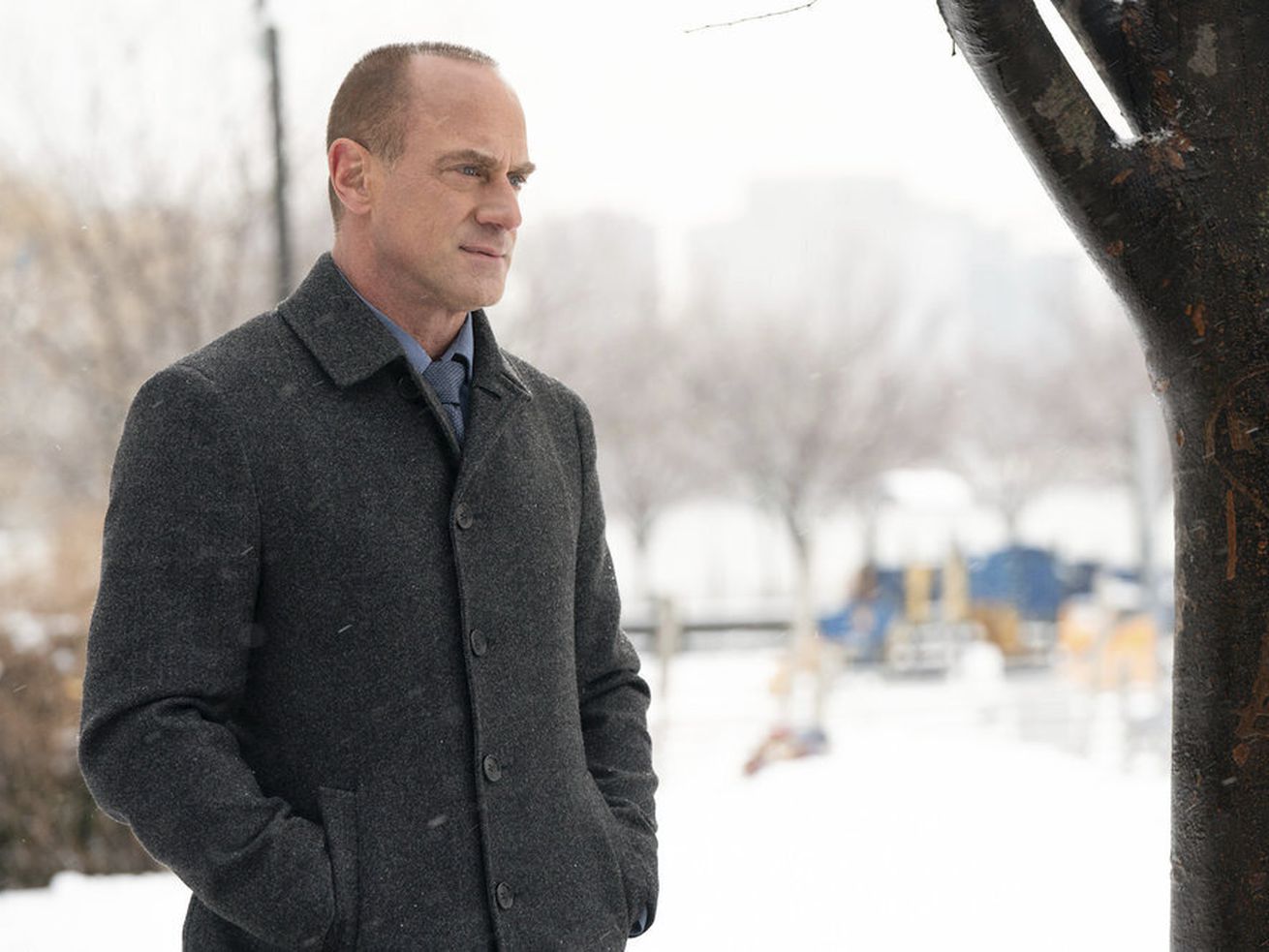
Christopher Meloni portrays Det. Elliot Stabler in a scene from the new “Law & Order: Organized Crime” series premiering April. 1 on NBC. | AP
NBC’s “Law & Order: Organized Crime” stars Christopher Meloni as New York police detective Elliot Stabler, the role he played until 2011 on “Law & Order: Special Victims Unit.”
LOS ANGELES — The latest member of the “Law & Order” franchise has a familiar face playing a familiar character, but producer Dick Wolf says he’s switching up the storytelling.
NBC’s “Law & Order: Organized Crime” stars Christopher Meloni as New York police detective Elliot Stabler, the role he played until 2011 on “Law & Order: Special Victims Unit.”
Unlike the largely self-contained episodes of its “Law & Order” relatives, the new drama shifts from one criminal syndicate to another in multi-episode arcs. It debuts at 8 p.m. Thursday, paired in a crossover episode with “Law & Order: SVU” at 8 p.m.
Think of it this way, Wolf suggested: “If the first eight episodes are ‘The Godfather,’ the second eight episodes are ‘American Gangster’ and the third eight episodes are ‘Scarface.’”
“You have major antagonists around to build a really good, longer-term story,” he told The Associated Press. That allows for options “we haven’t had a chance to explore yet, including antagonists that aren’t complete ‘black hats,’ that can be more nuanced.”
“Law & Order: Organized Crime” also brings a new writer-producer to the franchise’s ranks, Ilene Chaiken, whose credits include the groundbreaking “The L Word,” which featured LGBTQ characters, and “The Handmaid’s Tale.”
“I’ve known her by reputation for a long time,” Wolf said. “Over the last 30 years there’s very few truly landmark shows, but ‘The L Word’ is one of them.”
Chaiken is “not only skilled, she’s incredibly insightful about human emotion” and with a different “rhythm” than he has, Wolf said. He called that a necessity for “Organized Crime,” with Meloni’s Stabler among the most ”pre-Miranda cops on television.”
In other words, the sort of law enforcement officer who didn’t like to play by the rules, such as informing a person under arrest of their rights — the sort of character that TV once routinely celebrated as heroic.
“What she had to do was keep that character intact, but soften and change him in a believable manner that got him into the present, so that’s he’s not a dinosaur,” Wolf said. “Not an easy thing to do.”
The franchise’s theme music will be featured, with what he fondly calls yet another “Goldberg Variations” — a reference to Bach’s 19th-century aria and its 30 iterations. The “Law & Order” tune is practically an American standard, given the original show’s ubiquity in reruns and the enduring “Law & Order: SVU,” now in its 22nd season with Mariska Hargitay.
The new series is just part of the expansive TV real estate Wolf’s empire occupies, including NBC’s “ChicagoFire” and its pair of spinoffs, and CBS’ “FBI” and its about-to-be two spinoffs, with the recent announcement of “FBI: International” for next season. All are produced by Wolf Entertainment and Universal Television.
He cites Charles Dickens as inspiration for his intertwined shows, explaining how his approach compares to that of the British novelist.
“It’s Dickens’ London: Anybody who appears in any of the books can appear in any of the others,” he said, excepting ‘A Tale of Two Cities,” which adds Paris to the mix. Wolf owns all the books in the format in which they were released, most in monthly sections.
“People would line up for six hours” for the next installment, he said. And, like TV and unlike films, the story could go on as long as the author and the public wanted.
“A movie exists for 110 minutes. A successful show exists for 110 hours,” Wolf said.
Here’s Wednesday’s news on how COVID-19 is impacting Chicago and Illinois.
Latest
Coronavirus spike all the more reason to skip Easter celebrations, Chicago’s top doc says
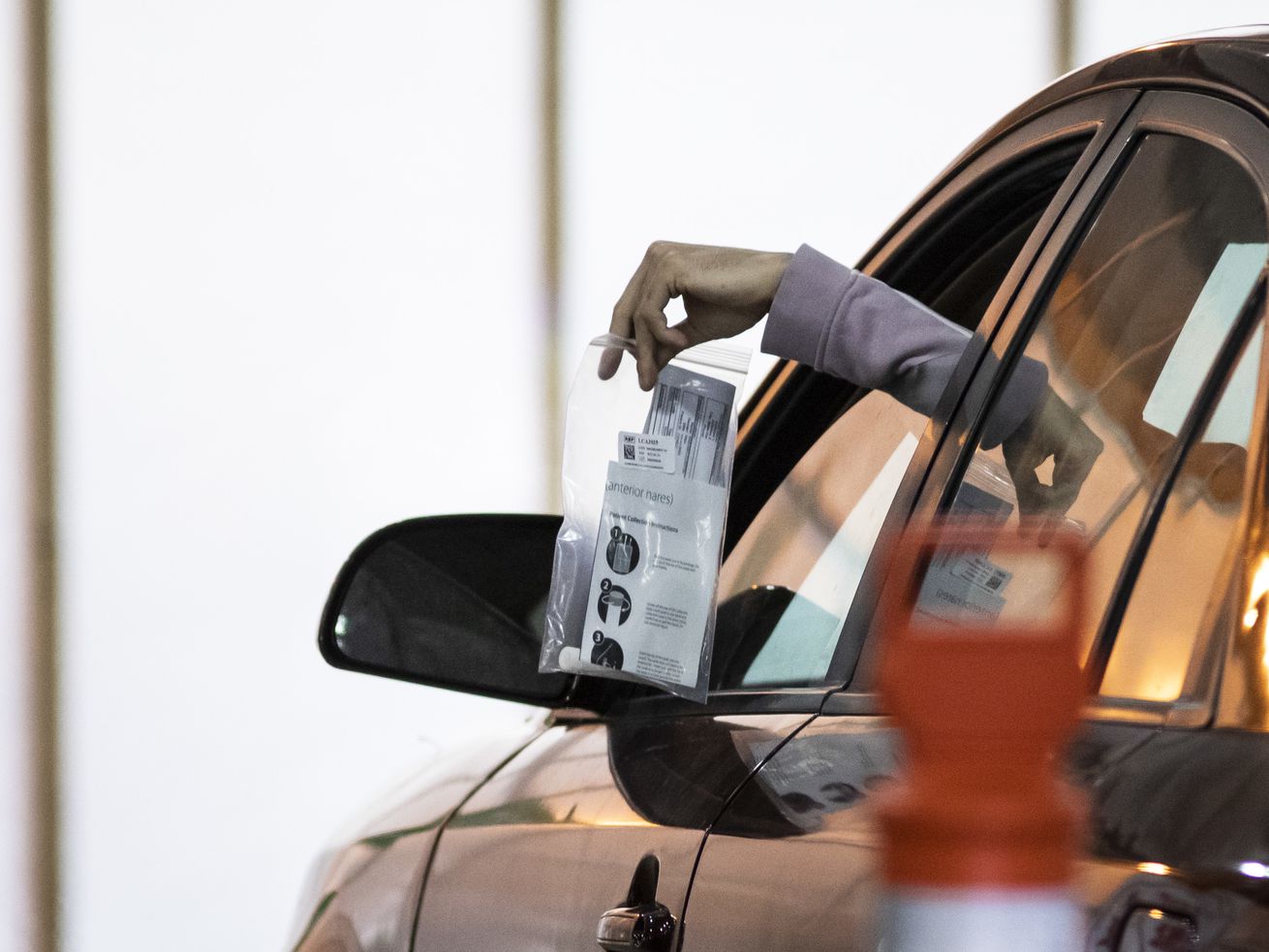
In-person Easter celebrations should be put on hold as coronavirus infection rates hop back up to troubling levels, the city’s top doctor warned Thursday.
Unless family members are fully vaccinated — meaning two weeks removed from their final dose — it’s best to keep gatherings virtual with COVID-19 still looming, according to Chicago Public Health Commissioner Dr. Allison Arwady.
That’s even more important this weekend because the virus is already spreading across the city and state at the quickest rate seen in almost two months, Arwady said during an online Q&A.
“You don’t want your Easter celebration to turn into a contact tracing event. You really don’t,” she said. “Each day as more people get vaccinated, these things are becoming safer, but with the amount of people fully vaccinated — unless you’ve got a fully vaccinated group gathering, there still is a fair bit of risk.
“It’s a time when a lot of people traditionally get together, but the virus does not know that it’s Easter. It does not know that it is Passover,” Arwady said. “The things that we’ve been doing to protect each other and protect those we care about — especially now with vaccine in the mix — become even more important.”
3:12 p.m. Chicago sees ‘quantum leap’ in COVID-19 cases — widening Lightfoot-Pritzker split over vaccine plans
Ashlee Rezin Garcia/Sun-Times
Illinois’ COVID-19 uptick took another jump Wednesday as Chicago’s “quantum leap” in cases raised more concerns of a potential third surge of the virus, officials said.
Another 2,592 residents across the state were diagnosed with the virus among 77,727 tests, which lowered Illinois’ average positivity rate to 3.3%, according to the Illinois Department of Public Health.
But that key metric has shot up 57% overall in under three weeks, while COVID-19 hospitalizations have jumped 24% over the same time frame. More than 1,400 beds were occupied by coronavirus patients Tuesday night, the most the state’s hospitals have treated since Feb. 24.
Gov. J.B. Pritzker and Mayor Lori Lightfoot agree the uptick has halted any talk of further reopening — but they’re still far apart on when all adults should be eligible to receive a COVID-19 vaccine dose.
The governor voiced concern Wednesday over the city’s timetable for that move, saying “I think that they will want to do that sooner than they are currently planning to.”
12:39 p.m. Company producing J&J vaccine had history of violations
The company at the center of quality problems that led Johnson & Johnson to discard 15 million doses of its coronavirus vaccine has a string of citations from U.S. health officials for quality control problems.
Emergent BioSolutions, a little-known company vital to the vaccine supply chain, was a key to Johnson & Johnson’s plan to deliver 100 million doses of its vaccine to the United States by the end of May. But the Food and Drug Administration repeatedly has cited Emergent for problems such as poorly trained employees, cracked vials and problems managing mold and other contamination around one of its facilities, according to records obtained by The Associated Press through the Freedom of Information Act. The records cover inspections at Emergent facilities since 2017.
Johnson & Johnson said Wednesday that a batch of vaccine made by Emergent at its Baltimore factory, known as Bayview, cannot be used because it did not meet quality standards. It was unclear how many doses were involved or how the problem would affect future deliveries of J&J’s vaccine. The company said in a statement it was still planning to deliver 100 million doses by the end of June and was “aiming to deliver those doses by the end of May.”
“Human errors do happen,” Dr. Anthony Fauci, the nation’s top infectious disease expert, said Thursday in an interview on CBS’ “This Morning.” “You have checks and balances. … That’s the reason why the good news is that it did get picked up. As I mentioned, that’s the reason nothing from that plant has gone into anyone that we’ve administered to.”
11:58 a.m. Positive COVID-19 test forces postponement of Mets-Nationals season opener
WASHINGTON — The Opening Day baseball game between the Nationals and Mets was postponed hours before it was scheduled to begin Thursday night because of coronavirus concerns after one of Washington’s players tested positive for COVID-19.
The Nationals issued a statement saying “ongoing contract tracing involving members of the Nationals organization” was the reason for scrapping the game at their stadium.
The contest was not immediately rescheduled, even though Friday already had been set up as an off day that could accommodate a game pushed back from Thursday if there were a rainout, for example.
The Nationals said in a statement the game “will not be made up on Friday.”
Washington general manager Mike Rizzo said Wednesday that one of his team’s players had tested positive for COVID-19 on Monday, before the team left spring training camp.
Rizzo said four other players and one staff member were following quarantine protocols after contract tracing determined they were in close contact with the person who tested positive.
Rizzo did not identify any of those involved.
“We’re still in the process of finding out exactly what their status is,” Rizzo said Wednesday. “They’re certainly out for tomorrow’s game.”
9:24 a.m. James Taylor kicking off rescheduled 2021 tour at the United Center
Live music may be returning to the United Center this summer.
James Taylor on Wednesday announced his postponed world tour with special guest Jackson Browne will kick off at the Chicago venue on July 29.
Tickets purchased for the original dates will be honored for the trek that wraps up Nov. 1 in San Diego. (The tour was originally slated for a stop June 9 the United Center; refunds are available at point of purchase for those unable to make the new date.)
Taylor postponed the tour last April due to the COVID-19 pandemic, which shut down all live music/theater venues across the country. Browne contracted coronavirus last March, revealing at the time he suffered only minor symptoms and recuperated while quarantining at home.
“(Jackson and I/James and I) want to thank all those who have graciously held onto their tickets; we appreciate your continued patience as we navigate these unchartered waters. We didn’t want to have to cancel this tour that we’ve been waiting so long to perform together, so we’ve been working to get these dates rescheduled to a time period when the U.S. is reopened and safe to gather for a concert,” the two legendary singer-songwriters said in a joint statement.”
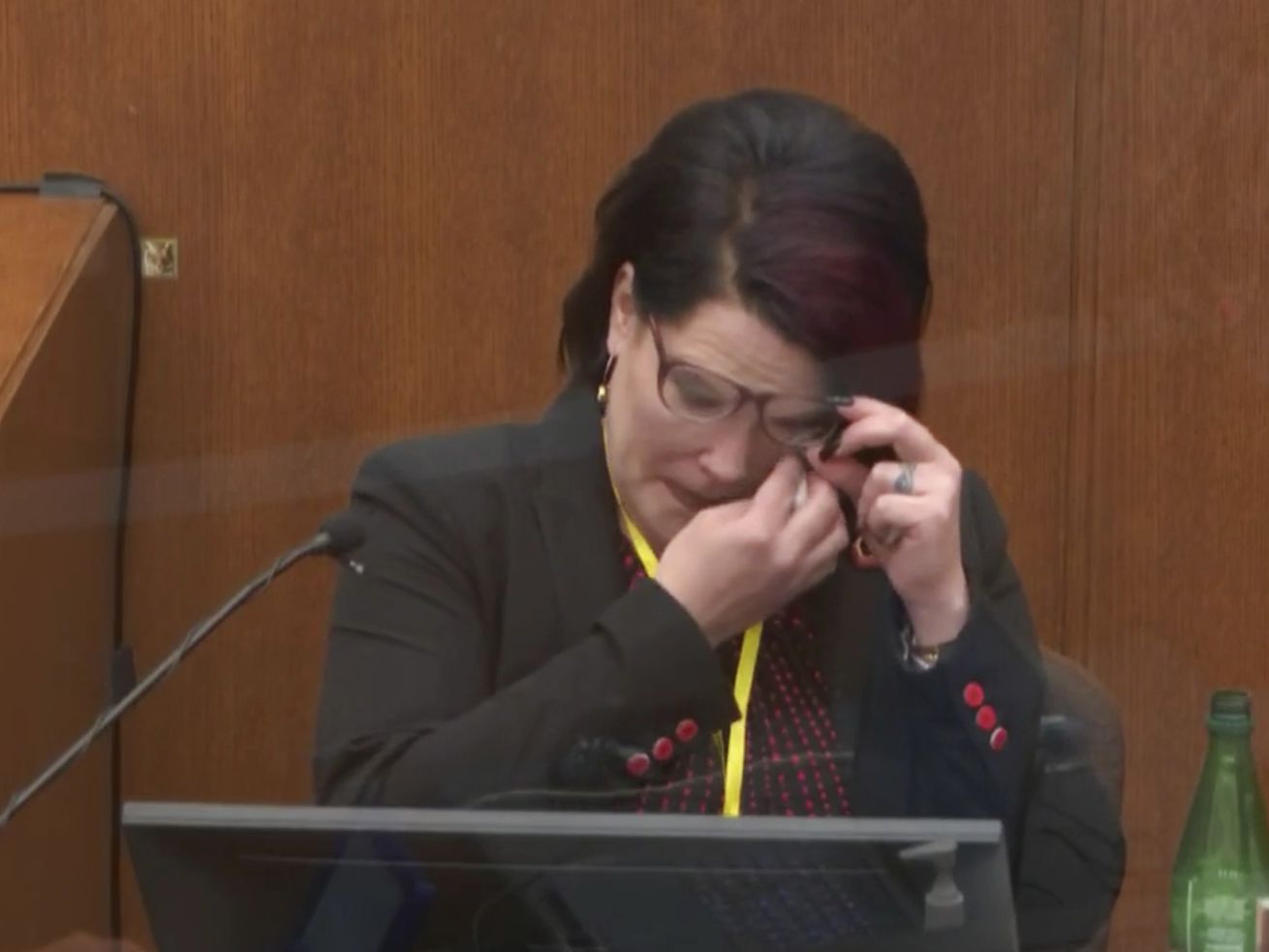
In this image from video, witness Courteney Ross answers questions as Hennepin County Judge Peter Cahill presides Thursday, April 1, 2021, in the trial of former Minneapolis police Officer Derek Chauvin at the Hennepin County Courthouse in Minneapolis, Minn. Chauvin is charged in the May 25, 2020 death of George Floyd. | AP
“Both Floyd and I, our story, it’s a classic story of how many people get addicted to opioids. We both suffered from chronic pain. Mine was in my neck and his was in his back,” 45-year-old Courteney Ross said on Day Four of former Officer Derek Chauvin’s murder trial.
MINNEAPOLIS – George Floyd’s girlfriend tearfully told a jury Thursday the story of how they met — at a Salvation Army shelter where he was a security guard with “this great, deep Southern voice, raspy” — and how they both struggled mightily with an addiction to opioids.
“Our story, it’s a classic story of how many people get addicted to opioids. We both suffered from chronic pain. Mine was in my neck and his was in his back,” 45-year-old Courteney Ross said on Day Four of former Officer Derek Chauvin’s murder trial.
She said they “tried really hard to break that addiction many times.”
Prosecutors put Ross on the stand as part of an effort to humanize Floyd in front of the jury and portray him as more than a crime statistic, and also explain his drug use.
The defense has argued that Chauvin did what he was trained to do and that Floyd’s death last May was caused by his illegal drug use, underlying health conditions and his natural adrenaline. An autopsy found fentanyl and methamphetamine in his system.
Ross’s testimony could help prosecutors blunt the argument that drugs killed Floyd. Medical experts have said that while the level of fentanyl in his system could be fatal to some, people who use the drug regularly can develop a tolerance to it.
Chauvin, 45, is charged with murder and manslaughter, accused of killing Floyd by kneeling on the 46-year-old Black man’s neck for 9 minutes, 29 seconds, as he lay face-down in handcuffs, accused of passing a counterfeit $20 bill at a neighborhood market.
The case triggered scattered violence around the U.S. and widespread soul-searching over racism and police brutality. The most serious charge against the now-fired white officer carries up to 40 years in prison.
In her testimony, Ross described how both she and Floyd struggled with addiction to painkillers throughout their relationship. She said they both had prescriptions, and when those ran out, they took the prescriptions of others and also used illegal drugs.
”Addiction, in my opinion, is a lifelong struggle. … It’s not something that just kind of comes and goes. It’s something I’ll deal with forever,” she said.
In March 2020, Ross drove Floyd to the emergency room because he was in extreme stomach pain, and she learned he had overdosed. In the months that followed, Ross said, she and Floyd spent a lot of time together during the coronavirus quarantine, and Floyd was clean.
But she suspected he began using again about two weeks before his death because his behavior changed: She said there would be times when he would be up and bouncing around, and other times when he would be unintelligible.
Chauvin attorney Eric Nelson drove hard at Floyd’s drug use in cross-examining Ross, asking questions aimed at showing the jury that it was dangerous. He pointed out that she supposedly told the FBI that she believed Floyd had overdosed on heroin in March and that the couple used pills in May that made her feel as if she was going to die.
Under questioning from Nelson, Ross also disclosed that Floyd’s pet name for her in his phone was “Mama” — testimony that called into question the widely reported account that Floyd was crying out for his mother as he lay pinned to the pavement.
Also Thursday, a paramedic who arrived on the scene that day testified that the first call was a Code 2, for someone with a mouth injury, but it was upgraded a minute and a half later to Code 3 -– a life-threatening incident that led them to turn on the lights and siren.
Seth Bravinder said he saw no signs that Floyd was breathing or moving, and it appeared he was in cardiac arrest. A second paramedic, Derek Smith, testified that he checked for a pulse and couldn’t detect one: “In layman’s terms? I thought he was dead.”
Bravinder said they loaded Floyd into the ambulance so he could get care “in an optimum environment,” but also because bystanders “appeared very upset on the sidewalk,” and there was some yelling. “In my mind at least, we wanted to get away from that,” he said.
Smith likewise said there were “multiple people” with “multiple cellphones out,” and “it didn’t feel like a welcoming environment.”
Chauvin’s lawyer has argued that the police on the scene were distracted by what they perceived as a growing and increasingly hostile crowd. Video showed somewhere around 15 onlookers not far from where Floyd lay on the pavement.
Bravinder said after he drove the ambulance three blocks and jumped in back to help his partner, a monitor showed that Floyd had flatlined — his heart had stopped. He said they were never able to restore a pulse.
On cross-examination, Chauvin’s lawyer questioned why the ambulance did not go straight to the hospital, and he pressed Smith on Floyd’s condition as he lay on the pavement, in an apparent attempt to plant doubt as to whether Chauvin was directly responsible for his death. The paramedic expressed himself in blunt terms that Floyd was “dead” or “deceased.”
Ross began her testimony by telling how she and Floyd first met in 2017 at a shelter where Floyd was a security guard.
“May I tell the story?” she asked. “It’s one of my favorite stories to tell.”
She said she had gone to the shelter because her sons’ father was staying there. But she got upset that day because the father was not coming to the lobby to discuss their son’s birthday. Floyd came over to check on her.
“Floyd has this great, deep Southern voice, raspy,” Ross recalled. “And he’s like, ‘Sis, you OK, sis?’ And I wasn’t OK. I was like, ‘No, I’m just waiting for my sons’ father.’ He said, ‘Can I pray with you?’”
“We’ve been through so much, my sons and I,” she continued, “and this kind person, just to come up to me and say, ‘Can I pray with you?’ when I felt alone in this lobby, it was so sweet. At the time, I had lost a lot of faith in God.”
Minnesota is a rarity in explicitly permitting such “spark of life” testimony about a crime victim ahead of a verdict. Defense attorneys often complain that such testimony allows prosecutors to play on jurors’ emotions.
The approximate location where Chicago police killed 13-year-old Adam Toledo, in an alley way near 24th and Sawyer, Thursday, April 1, 2021. | Tyler LaRiviere/Sun-Times
The boy was identified as Adam Toledo by the Cook County medical examiner’s office.
Police shot and killed a 13-year-old boy after what officials described as an “armed confrontation” in Little Village early Monday, although no video and few details have been released so far.
Adam Toledo, 13, who lived in the neighborhood, was shot in his chest and later died, the Cook County medical examiner’s office said.
In a statement, police said officers responded to a ShotSpotter alert about 2:35 a.m. and saw two males standing in an alley in the Southwest Side neighborhood.
One person, who was allegedly armed, ran from the scene and was shot by a police officer during an “armed confrontation” in the 2300 block of South Spaulding Avenue, police said. Farragut Career Academy High School is located at the end of the block.
That person, later identified as Adam, died at the scene, police said. An autopsy found he died of a gunshot wound to his chest.
Police shared a photo of a gun allegedly recovered at the scene.
The other person who ran from police, 21-year-old Ruben Roman Jr. of Edgewater, was arrested and charged with a misdemeanor count of resisting arrest, police said. In 2019, Roman pleaded guilty to illegal gun possession stemming from an arrest in Evanston and was sentenced to probation, court records show.
‘Very disheartening’
On Thursday, on the residential block in front of the alley where the shooting took place earlier in the week, residents gathered for a yard sale and formed a line along 24th Street near Sawyer, where a local church was holding a food drive.
A surveillance video taken from a camera on United Methodist Church, which is at the corner of 24th and Sawyer, caught flashes of light from the shooting and additional police officers as they arrived on the scene. However, neither the officer who fired the shots nor Adam could be seen in the video.
The church pastor said his son heard the gunshots but they did not witness the incident.
Many at the food drive expressed shock to hear that the person gunned down by police behind their homes was a 13-year-old boy.
Nakia Smith, a mother of a 13-year-old boy herself, said she heard gunshots on early that morning, followed moments later by a swarm of blue lights.
“It’s very disheartening, especially with what happened a year ago, with the [Derek] Chauvin trial and everything,” Smith said, referring to the Minneapolis officer who is currently on trial in the murder of George Floyd. “And then Monday morning, come to find out it was a 13-year-old boy killed … it’s just quite a bit.”
She added: “I do understand that the police don’t always know what someone is going to do, but there has to be a better way.”
Meanwhile, Rafael Hurtado Jr., 30 — who lives a few houses down from where Adam lived about a mile and a half away — called the incident tragic and urged CPD to release any footage related to the shooting.
“It’s hard to take CPDs word for it” that he was armed, he said. “Especially with everything that’s been going on with the police shootings in other places.”
He said that “it’s tragic for everyone involved, for the family, for the kid because he was so young and for the officer who pulled the trigger.”
Chicago policePolice released this photo, which they said was a weapon recovered after a person was shot by police and another was arrested March 29. 2021 in Little Village.
Officer on desk duty; no video released
The officer in Monday’s incident was placed on desk duty for 30 days while the Civilian Office of Police Accountability investigates the shooting, police said.
The shooting was captured by body-worn camera, but it wasn’t immediately clear if investigators would release it, COPA said in a statement Thursday.
COPA is required to release body camera video of police shootings within 60 days of the incident, but policy prohibits them from sharing video if the victim is under 18 years old. Absent a court order, the video would not be released, COPA said.
However, investigators will release other evidence including 911 calls, police reports and radio transmissions within 60 days, COPA said.
Two other people have been shot by Chicago police officers this week. Early Wednesday, an officer fatally shot an armed man in Portage Park after officers chased the man on foot. An officer fired shots after the man allegedly pulled out a gun in the 5200 block of West Eddy Street, police said.
Less than an hour later, an off-duty Chicago police officer shot someone breaking into their home in Albany Park on the Northwest Side. The officer shot the man in his face about 12:55 a.m. as the man broke into the officer’s home in the 3100 block of Belle Plaine Avenue, police said. The man was rushed in serious condition to Illinois Masonic Medical Center.
Secretary of State Antony Blinken, left, and Secretary of Defense Lloyd Austin listen as President Joe Biden speaks during a Cabinet meeting in the East Room of the White House, Thursday, April 1, 2021, in Washington. | AP
All attendees, including the president, donned masks. And the afternoon meeting did not include the over-the-top tributes to the chief executive that came to define Cabinet meetings held by President Donald Trump.
WASHINGTON — President Joe Biden used his first Cabinet meeting to promote his new infrastructure plan, but the gathering had a very different look and tone from those held by his predecessor.
To begin with, the full Cabinet met Thursday in the spacious East Room, rather than the comparatively cramped West Wing room that bears its name, to allow for social distancing. All attendees, including the president, donned masks. And the afternoon meeting did not include the over-the-top tributes to the chief executive that came to define Cabinet meetings held by President Donald Trump.
The timing of the first meeting was deliberate: a week after the full Cabinet was confirmed and a day after Biden released his infrastructure plan, which will likely dominate Washington through the summer and shape next year’s midterm elections.
The White House allowed press to witness just the opening three minutes of the meeting, where the president tapped five Cabinet secretaries “to take special responsibility to explain the plan to the American public.” He directed Transportation’s Pete Buttigieg, Energy’s Jennifer Granholm, Housing and Urban Development’s Marcia Fudge, Labor’s Marty Walsh and Commerce’s Gina Raimondo to be visible to Americans and lead outreach on Capitol Hill.
Biden also directed the entire Cabinet to examine their agency spending to ensure it follows his “Buy American” commitment.
With the sales blitz for the infrastructure plan just beginning, the focus of the meeting will be on how the package can help across government, as well on continuing to emphasize the benefits of the $1.9 trillion COVID-19 relief bill that Biden signed into law this month, said White House deputy press secretary Andrew Bates.
Cabinet meetings in the modern era are less about setting administration policy than ensuring that all the government agencies are on the same page, say former officials. The sessions also are an opportunity for the president to make his priorities and values clear. Policy debates are generally reserved for smaller, subject-specific gatherings of Cabinet officials and senior advisers, such as the National Security Council and the Domestic Policy Council.
“As the federal government has become increasingly complex over the years, the role of the Cabinet has evolved as well,” said Chris Lu, President Barack Obama’s first-term Cabinet secretary. “In addition to serious policy discussions, Cabinet meetings are an opportunity for the president to lay out broad directions for how his team should operate.”
“The meetings can help align priorities, build morale, and allow Cabinet members to develop relationships with colleagues who they don’t normally see,” Lu said.
All 16 permanent members of the Cabinet — the vice president and heads of the executive departments, including Treasury Secretary Janet Yellen, Secretary of State Antony Blinken and Pentagon chief Lloyd Austin — are attending in person. So were other Cabinet-ranked officials, including White House chief of staff Ron Klain and Director of National Intelligence Avril Haines.
Shalanda Young, acting budget head, was participating because Neera Tanden, Biden’s first choice for that job, withdrew her nomination amid Senate opposition. Biden is also awaiting the confirmation of Eric Lander to be the director of the Office of Science and Technology Policy, a post that the president has elevated to Cabinet rank.
In all, 25 people were attending, the White House said. In normal times, scheduling an in-person Cabinet meeting would require weeks, if not months, of planning to block off time in the travel schedules of the various principals. But most have remained in Washington due to the pandemic.
Trump’s Cabinet meetings became known for their high level of presidential adoration, with “Dear Leader”-esque praise coming from attendees. His first full Cabinet meeting, held in June 2017, began with Vice President Mike Pence declaring that it was “the greatest privilege of my life to serve as the vice president to the president who is keeping his word to the American people.”
Vice President Kamala Harris speaks during a virtual meeting with community leaders to discuss COVID-19 public education efforts in the South Court Auditorium in the Eisenhower Executive Office Building on the White House Campus, Thursday, April 1, 2021, in Washington. | AP
The administration’s “We Can Do This” campaign features television and social media ads, but it also relies on a community corps of public health, athletic, faith and other groups to spread the word about the safety and efficacy of the three approved vaccines.
WASHINGTON — Seeking to overcome vaccine hesitancy, the Biden administration on Thursday stepped up its outreach efforts to skeptical Americans, launching a coalition of community, religious and celebrity partners to promote COVID-19 shots in hard-hit communities.
The administration’s “We Can Do This” campaign features television and social media ads, but it also relies on a community corps of public health, athletic, faith and other groups to spread the word about the safety and efficacy of the three approved vaccines. The campaign comes amid worries that reluctance to get vaccinated will delay the nation’s recovery from the coronavirus pandemic — and is kicking off as the U.S. is anticipating a boost in vaccine supply that will make all adult Americans eligible for vaccines by the beginning of May.
President Joe Biden encouraged more than 1,000 faith leaders on Thursday to continue their efforts to promote vaccinations in their communities. “They’re going to listen to your words more than they are to me as president of the United States,” Biden said.
Vice President Kamala Harris and Surgeon General Vivek Murthy held a virtual meeting with the more than 275 inaugural members of the community corps on Thursday to kick off the effort. The Department of Health and Human Services was also encouraging other groups, as well as everyday Americans, to join the effort.
“You are the people that folks on the ground know and rely on and have a history with,” Harris said. “And when people are then making the decision to get vaccinated, they’re going to look to you.”
A White House official said Harris plans to take on a larger role in promoting the uptake of vaccines, in addition to her efforts selling the president’s $1.9 trillion COVID-19 relief bill and working to address the root causes of migration driving an increase in unaccompanied minors entering the U.S. along the southern border.
The focus on trusted validators stems from both internal and public surveys showing those skeptical of the vaccines are most likely to be swayed by local, community and medical encouragement to get vaccinated, rather than messages from politicians.
Courtney Rowe, the White House’s COVID-19 director of strategic communications and engagement, briefed governors on the new initiative Tuesday, telling them that people “want to hear from those they know and trust.” She added that the initiative would be “empowering the leaders people want to hear from.”
A new poll from The Associated Press-NORC Center for Public Affairs Research conducted late last month finds that three-quarters of American adults now say they have or will get a vaccine, compared with 13% who say they probably will not, while 12% say they definitely will not. The share saying they probably or definitely will not has ticked down since January, when a combined 32% said that.
The coalition includes health groups like the American Medical Association and the National Council of Urban Indian Health, sports leagues like the NFL, NASCAR and MLB, rural groups, unions and Latino, Black, Asian American Pacific Islander and Native American organizations, as well as coalitions of faith, business and veterans leaders.
The community corps will receive fact sheets and social media messages to share with members of their communities, as well as regular updates from the Biden administration with the latest vaccine confidence resources.
The Centers for Disease Control and Prevention announced last week that it will devote $3 billion to support outreach by community leaders and groups to boost vaccine confidence.
HHS was also launching its first national ad campaign promoting vaccinations, aimed at senior, Latino and Black Americans, with the roughly $250 million initial ad campaign. And in partnership with Facebook, it was deploying social media profile frames so that ordinary Americans could share their intent to get vaccinations and their experience with the shots to their peers.
The White House is also deploying Dr. Anthony Fauci, the nation’s top infectious-disease expert, and Dr. Marcella Nunez-Smith, who chairs Biden’s COVID-19 equity task force, to speak directly to the public about the benefits of the vaccines. On Wednesday, the pair conducted an interview with rapper and actor LL Cool J and DJ Jazzy Jeff.
By the end of May, the U.S. will have enough supply of COVID-19 vaccine to cover all adults in the country. Dr. Anthony Fauci, the nation’s top infectious-disease expert, has estimated that 70% to 85% of the population needs to be immune to the virus to reach herd immunity.
___
Associated Press writer Emily Swanson contributed to this report from Washington.
NEW YORK — Hulu will produce a documentary series based on ” The 1619 Project,” stories in The New York Times that examined the legacy of slavery in America dating from the arrival of the first slave ship from Africa.
Roger Ross Williams, an Academy Award-winning director for his film “Music by Prudence,” will oversee and produce the series, it was announced Thursday.
The announcement was an outgrowth of a deal announced last summer by the Times, Lionsgate and Oprah Winfrey to develop “The 1619 Project” into a portfolio of films, television series and other content.
The cover art for a special issue of The New York Times Magazine’s “The 1619 Project. AP
The Pulitzer Prize-winning newspaper series, from writer Nikole Hannah-Jones, began appearing on the 400th anniversary of ship’s arrival in the then-British colony of Virginia.
“‘The 1619 Project‘ is an essential reframing of American history.” Williams said. “Our most cherished ideals and achievements cannot be understood without acknowledging both systemic racism and the contributions of Black Americans. And this isn’t just about the past — Black people are still fighting against both the legacy of this racism and its current incarnation.”
The streaming service gave no indication of when the documentary series will appear.


/cdn.vox-cdn.com/uploads/chorus_asset/file/22413235/RUSH_11XX20_09__1_.jpg)

/cdn.vox-cdn.com/uploads/chorus_asset/file/22405015/Exo8kR3WEAM_TPf.jpg)

