A 16-year-old boy was shot and killed Tuesday night in Lawndale on the West Side, according to police.
The boy was standing in the front yard of a home about 9:10 p.m. in the 3100 block of West Douglas Boulevard when someone in a vehicle fired shots, Chicago police said.
He suffered gunshot wounds to the head and arms and was transported to Mt. Sinai Hospital, where he was pronounced dead, police said.
The Cook County medical examiner’s office has not yet released information on the fatality.
Billy Donovan isn’t looking to revolutionize the game of basketball.
There’s no middle finger being held up at analytics or some diabolical plan to turn back the clock to the days when big men methodically roamed the paint of NBA arenas.
“I’ve got to play, we’ve got to play, to the strengths of our team,” Donovan said very matter-of-factly when asked about the jumbo-sized lineups that he continued to throw on the floor in any given rotation.
And right now the strength of the team is Nikola Vucevic. All 6-foot-11 of him.
The Pacers found that out on Tuesday, when the key piece to come in the Mar. 25 trade deadline deal scored 32 points, grabbed 17 rebounds and handed out five assists. No word on if Vucevic also drove the team bus to the airport after the 113-97 win.
Bigger picture than the Bulls now having back-to-back wins at Bankers Life Fieldhouse for the first time since it opened? How about what it meant in the standings?
The Bulls (21-28) have now pulled to within a game of the Pacers in the Eastern Conference, as the two teams are each looking to move up. The safe place to be is the No. 6 seed or higher.
The play-in scenario is the No. 7 seed will host the No. 8 seed, and the No. 9 will host the No. 10.
If Vucevic and Zach LaVine can do what they did against the Pacers – with LaVine adding 19 – the feeling is that the No. 10 seed should be in the rearview mirror sooner than later.
“Zach needs to be who he is and ‘Vuch’ needs to be who he is, and as long as we’re generating good shots and we’re efficient with what we’re doing offensively, I really don’t care who gets the shots,” Donovan said of how he wants his two alphas to co-exist. “And I think those guys would say the same thing. For as great of a scorer as Zach is and for as great of a scorer as ‘Vuch’ is, these guys are team guys, and want to win.”
That was evident through the first two stanzas, as the 13-point lead at halftime was not only earned it was taken.
Even without Daniel Theis (personal reasons), the length of, Vucevic, Thad Young, Lauri Markkanen and guard Tomas Satoransky helped the visiting team outrebound the Pacers 28-13, including 8-0 on the offensive glass. That’s why the Bulls went into the locker room with 14 second-chance points, while Indiana took the zero.
Obviously not having Domantas Sabonis (left ankle) hampered what the Pacers like to usually do around the basket, as point guard Malcolm Brogdon also missed the game, but considering there’s only 23 regular season games left, winning by any means necessary has to be the mindset for a team to take on when there’s a possible playoff spot on the line.
“Those lineups can be very good for us,” Vucevic said of the bigger lineups being used. “We’re also big men that can still move and can cover a lot of ground, so I think defensively we can take up a lot of space and control the boards. It also gives us an advantage on the offensive glass.
“A lot of teams like to play small nowadays and we have lineups that can do that, but I think with the big lineup so far we’ve been pretty efficient and if we continue to grow as a team it can be very successful for us for sure.”
“Truth” (his apparently) is more important than objectivity
The death of journalism IV–a continuing series
UPDATE AT END
NBC News anchor Lester Holt, while accepting the Edward R. Murrow Lifetime Achievement Award from Washington State University, kicked the corpse of what used to be called journalism to make sure it was dead.
Old school journalists–the few of them left–had to be shocked to hear Holt instruct the world that the sacred goals of balance, fairness, objectivity and the rest were less important than the “truth.” His, truth, I imagine.
“I think it’s become clearer that fairness is overrated,” he declared, adding:
Woah, before you run off and tweet that headline, let me explain a bit. The idea that we should always give two sides equal weight and merit does not reflect the world we find ourselves in. That the Sun sets in the west is a fact, any contrary view does not deserve our time or attention. And I know recent events assure that you won’t have to look far to find more current and relevant examples. I think you get my point.
Decisions to not give unsupported arguments equal time are not a dereliction of journalistic responsibility or some kind of agenda. In fact, just the opposite. Providing an open platform for misinformation, for anyone to come say whatever they want, especially when issues of public health and safety are at stake, can be quite dangerous.
Our duty is to be fair to the truth. Holding those in power accountable is at the core of our function and responsibility. We need to hear our leader’s views, their policies and reasoning. It’s really important, but we have to stand ready to push back and call-out falsehoods.”
Okay, let’s engage. Traditional journalism ethics have not required that every whacko gets to tell his story. Often they would show up at the our newspaper’s reception desk, and some reporter was assigned to go out to the “nut locker” to listen. Sometimes the “nut” was on to something, some real news. So, we listened.
But the president never showed up in the locker. It would have been unthinkable to shut down his voice, no matter how much we disagreed with him. Unlike those social media moguls.
To be clear: what we’re talking about here are different views of public policy issues. Some policies are good, some not so much. Some work, others don’t. We aren’t talking about truth in the philosophical sense, as in there is objective truth. Instead the subject is the debatable stuff, such as immigration, economic, pandemic and other policies.
Maybe God knows the “truth” of what public policy is best, but he’s not sharing it with reporters, anchors, editorial writers, op-ed columnists or commentators. Even though they sometimes think they’re acting like a god who knows the “truth.”
By the way, Holt is right when he says, “We need to hear our leader’s views, their policies and reasoning.” How odd that the media failed to adhere to that principle with President Joe Biden. His campaign was cloaked in darkness and his policies…well, can anyone persuasively say that Biden, the “moderate candidate” really believes all that far-left baloney that he says, or is he (over) scripted? What’s the truth?
In an effort to be objective, fair, etc., I’m linking to a Snopes factcheck, “Did Lester Holt ‘Urge Journalists to Ditch Objectivity’?’ It declared the headline, “Holt’s remarks about the dangers of misinformation on the internet were misconstrued in a misleading headline … on the internet” to be “misleading.”
I’m not sure that Snopes’ conclusion is my “truth.” Maybe I should delete the link.
UPDATE: This is rich. Poynter considers itself the self-appointed ethical and professional leader, I anxiously turned to its posting, “Holt’s Remarks” to see if it had the courage to step away from the gospel according to woke and take exception to his redefining journalism.
Silly me. The post was buried under, I guess, a more important on that proclaimed, “The bad news about COVID-19 and what the media can do about it: Perhaps were closer to the end of the pandemic than the beginning, but the media needs (sic) to mind its (sic) audiences that the end is not here.”
Here’s the rich part: Unless I missed it elsewhere, the post, “Holt’s Remarks,” completely ignored the anchor’s redefinition of professional journalism. Instead it quote at some length Holt’s taking an opportunity to take a swipe at “the past four years,” (Read: Donald Trump). He said:
Imagine, if you would, what the pandemic would look like without the media holding leaders to account for vaccine rollouts or countering harmful misinformation or why some communities are being left behind. Regard for truth must regain a foothold in our society so that we can weather the storms of tomorrow’s calamities, tomorrow’s pandemics.
Now the question becomes: Will the media hold the current administration responsible for “harmful misinformation.”
You see, I had known Ted since I was young. Well, “known” is a bit of a stretch. Like many others, I first was “introduced” to him when Superstar was shown on TV every Easter.
Later, as I grew up into the early 80s, the music stayed with me. So much so that when my friends and I entered a “Battle of the Bands” contest at my all-boys catholic high school, we called our band, “Pontius Pilate.” We also advertised the show at the local all-girls catholic high school (you can imagine how well that went over). The night of the event, we started our set with a shortened version of the musical’s 39 Lashes, which we then segued into Born to be Wild. Yes, we were musical pioneers. Visionaries, if you will.
Later still, in 1994, my soon-to-be-wife, Gina, bought us tickets to see the musical at the Star Plaza Theatre in Merrillville, Indiana, a stop on its national tour. After the show, which featured Ted as Jesus, Carl Anderson as Judas Iscariot, and Dennis DeYoung of Styx as Pontius Pilate, we stood at the stage door, while I waited nervously for my childhood hero, not knowing what to expect from a man who had been playing Jesus for almost half his life already by that time.
As he walked out, I introduced myself. And though I had not really thought about what I was going to say, fortunately a question came immediately to mind.
“What’s it like to do Gethsemane?” I asked, referencing what to me is the most powerful moment from the musical − a testament to the power not only of Ted’s performance, but also Andrew Lloyd Webber’s music and Tim Rice’s lyrics.
“It’s a journey every night,” he replied.
A Journey Indeed
“Journey.” A word that perfectly describes the song, the musical, and the making of the musical − all captured in the expanded documentary produced by Ted and directed by Frank Munoz. The documentary features behind-the-scenes interviews, photos and videos by photographer David James, and even the cast’s one-night-only reunion in New York in 2015.
Yes, there were many coincidences, indeed, that led up to me interviewing Ted.
And then, when I talked with Ted, I learned of how many coincidences led to him playing Jesus for so long and for so many. And how many coincidences made their way into the final film, like the director’s “on the spot” decision to use already-there scaffolding and the sudden and sacred appearance of a shepherd in a pivotal scene (you can watch the full conversation to learn more about these coincidences.
Ted doesn’t get tired. Now granted, I have only personally talked to him less than two hours in my entire life, but I sure get this impression. With that, I asked him how he finds the energy to keep playing the role, especially with emotionally draining songs like Gethsemane and The Last Supper. “Every time I walk out on that stage,” he said, “when that guitar hits the opening notes of the Overture, it feels like the first time I’m doing it. My body becomes filled with absolute energy and, for the duration of the show, I can’t feel my feet touch the ground. And, what makes it even better is that I don’t have to pretend anything when I’m in the role. It all feels very real to me when I’m out there.”
We are family. Whether it’s the cast, the crew, or the millions of fans who have been touched by the musical, there is a grace and gratitude about the show, which comes through Ted’s answers and the documentary. Whether focusing on Norman Jewison, who created that unforced feeling of family during the shoot, Carl Anderson (“Judas Iscariot”) and Barry Dennen (“Pontius Pilate”), both long-time friends and castmates of Ted’s who have both sadly passed away, the rest of the cast and crew, Tom O’Horgan, who directed Ted in Hair, and even the contagiously playful way that Josh Mostel (“Herod”) recreates his “Herod’s Song” song and dance during the documentary, there is something happening here that, with apologies to Buffalo Springfield, is more than exactly clear. These people love each other – “love” as in present tense. And they love their fans, and their fans love them back. Now, is “love” too strong a word? Well, I’ll leave that up to you. But, as someone who grew up with the musical, I’d have to argue whatever points you made. And, just to underscore my hypothesis that love is in the air, while watching the interview, notice how Ted introduces his wife, Leeyan Granger, as he proudly shares that she is a classically trained ballerina who he met in Israel during the film shoot. And also watch how Ted introduces us to the couple’s new dog, “Benji,” and just try not to smile. I dare you.
How would it affect you to play a person of peace for over 45 years? Interestingly and probably not too surprisingly, Ted exudes many of the qualities that you would expect from the man he portrays. Now, I’m not saying he’s actually divine (I’m guessing he’d agree with that pretty aggressively), but I am saying that when I met Ted for the first time outside that stage door in Merrillville, Indiana, I felt something, a presence, a “being there” that I don’t feel from a lot of people. And his own words seem to reinforce this appraisal. “How possible would it be to represent Jesus for all these years,” Neeley said, “and not understand at least a bit of what it might feel like to be him?” To add just a little more oomph to my argument, in the documentary, Jewison touches on this presence when he says it wasn’t Ted’s fake beard or hair that mattered to him in selecting him for the role, it was his eyes. Though I cannot obviously confirm it with Norman, I’m guessing what he meant was that he also saw a “being there” there, too.
As opposed to baseball, there is most definitely crying when it comes to “Jesus Christ Superstar.” Lots of it. Growing up, I remember how emotional the film was, especially during Gethsemane and the crucifixion, and of course, at the poignant ending, when the entire cast gets back on a bus to leave, except one person − Ted. In the documentary, there is also much talk of tears. And, in Scott Haskin’s recent podcast about the documentary, Ted explained that he always cries when he sings Gethsemane during the show. Being curious, during our conversation, I asked Ted about this point. “Growing up in my small hometown of Ranger, Texas,” Ted offers, “I was surrounded by a large, accepting, affectionate family, which was surrounded by a large, accepting, and affectionate community. In that environment, crying was as natural as smiling, and there were many tears, often tears of joy. So, when I started playing Jesus, tears became the essence of what the role and the story represented to me. Plus, I hug everyone. In fact, in Italy, where we were performing an extended run of the show, unfortunately cut short by the pandemic, I’m known for my ‘Teddy Hugs.’”
The Boy Scouts played an important role in the musical. Having been a scout myself, I was surprised to learn that one of the Boy Scout’s guiding principles played a major role in Ted’s getting cast as Jesus. “As a Boy Scout,” he said, “I learned the importance of their ‘Be Prepared’ motto. And that is why I tried to always be prepared for whatever might happen. So, for example, when I was in the musical Tommy in Los Angeles in the early 70s, I read in the paper that Norman Jewison was in the city doing casting for his new musical, Jesus Christ Superstar. I wanted to meet him, not necessarily to get a role, but just because I admired his work. So, I tracked down which agency represented him, called to speak to his agent, and then asked his agent to ask Norman to come see me in the musical. And that is also why, after finding out that he had come to the one show I wasn’t in because of an injury suffered in the previous day’s show, I called back and asked his agent if I could meet with him in another way, leading to me being invited for lunch the next day at the hotel he was staying at with his wife. Which led to me, in preparing for that meeting, asking a friend to do makeup that made me look like Jesus, with a fake beard and long hair. Finally, the next day, at his hotel room door, I knocked once. No answer. I knocked twice. Again, no answer. And then, though I thought I might be getting a Hollywood-type brush-off, I knocked one more time, which led to him answering, us having lunch, and ultimately me getting the part. Imagine if I hadn’t knocked that third time.”
An actor not wanting to be typecast by a large, early success is almost cliché, but Ted has never been concerned about that. Not only does Ted want to talk about Superstar, but you get the sense that he needs to. That it burns in him bright, fast, hot, and “right now.” And that’s how the stories come out, like they just happened yesterday, or maybe earlier that morning. “This role and musical changed my life,” Neeley says. And you can tell that he feels honored to have been – and still be — part of it. For anyone who doubts his commitment and passion, they need only watch how Ted interacts with his fans both in-person and online. In fact, it’s quite fun to watch how he personally and regularly responds to their online comments on his Facebook page, for example, and watch their responses.
“Hamilton” and “Jesus Christ Superstar” are coincidentally connected, too. After being introduced to the also-so-super musical, Hamilton, by my daughter, something about it kept nagging at me, that somehow the feeling that Lin-Manuel Miranda’s musical evoked in me was connected to how I felt about Superstar. So, I mentioned it to Ted, not exactly knowing what I was feeling or why I was asking. And, of course, the coincidences came. First, Ted referenced Miranda’s answer to ET at the 2016 Tony Awards when asked if he was completely leaving the role of Alexander Hamilton. Not at all, he explained, saying that he actually wanted to “out-Ted Neeley Ted Neeley,” by coming back to the role in the future. In response, Neeley sent Miranda a photo of himself watching Hamilton for the first time. And, all one needs to do is a cursory Google search to see how even a young Lin-Manuel felt about the musical and later did a “playoff” with Andrew Lloyd Webber with Lloyd Weber singing You’ll Be Back from Hamilton and Miranda singing Everything’s Alright, which was followed by a tweet from Neeley congratulating them both and inviting Miranda to join him and Yvonne Elliman (“Mary Magdalene”) for a future rendition of the song. And, to cap off the coincidences, Hamilton star Brandon Victor Dixon, who played Aaron Burr in the musical, played Judas in the Easter Sunday live TV broadcast of Jesus Christ Superstar in 2018, which was re-broadcast in April last year, a needed moment of peace in a year of turmoil.
One Last, but Major, Coincidence
And, to top it off, was one last coincidence. As I was doing final preparations for the interview, a friend mentioned that I was interviewing him on Good Friday. A day that marked the beginning of a transformation, followed by rebirth and hope.
Speaking for a world that is just now coming out of a long year’s sleep, I do believe that is quite a coincidence indeed.
Comments Note: All comments are reviewed. Any that are considered to be a personal attack or hate speech will be removed. In my blog, I always try to be respectful. I expect the same from my readers, both in responses to me, and about or to each other. And, again, thank you for reading. Without you, I’d just be writing for myself.
James Warda, author of “Where Are We Going So Fast?”, is a keynote speaker who focuses on connecting to each other, and ourselves, through our moments. His background also includes being a writer and speaker for Chicken Soup for the Soul Enterprises, and a columnist for the “Chicago Tribune” and Pioneer Press.
Western Illinois opted out of the remainder of the spring Missouri Valley Football Conference season. (photo courtesy of GoLeathernecks.com)
A day after announcing its football program was opting out of the remainder of the spring season Western Illinois head coach Jared Elliott and his team captains addressed the media Tuesday afternoon.
“When we got through the game on Saturday (against Youngstown State) and get into Sunday we always get our weekly report of where our roster is in terms of injuries and readily available players,” Elliott said in his opening remarks. “It became very clear early on when we got that report late Sunday night into the morning on Monday that is wasn’t in the best interest of our program to move forward with the remaining (two) games in our spring season.”
Western is the sixth FCS school to opt out in-season. Illinois State was the first, declaring its intention March 21, a day after hosting and defeating WIU for its lone win of the spring.
Indiana State, another Missouri Valley member, opted out before the spring season began.
Elliott said that the WIU decision was done in-house and that the other schools that opted out did not factor into the decision.
“The decision that was made is in the best interest of our players, our program, everybody involved on a daily basis,” Elliott said. “We don’t make decisions, I’m never going to make decisions, that involve people outside of that. This is the best decision for Leatherneck football.
“My job was to communicate that with our players, which we did yesterday (Monday) evening. I think we did it the right way. We brought in our three captains (Eryk Preston, Connor Sampson and Tony Tate) and had some really open and honest dialogue.
“It was no secret where we are as a team. These guys all understand. There’s disappointment obviously that we’re not going to be able to get those couple more opportunities to compete. We all share that disappointment, but at the same time our entire football team understands exactly where we’re at and the reality that we are facing in this moment.”
Along with informing his coaching staff, players and administration, Elliott also contacted the players’ parents.
“I reached out with a message to make sure they all understood why this decision was made and an update about where we were and where we’re going moving forward,” he said. “I felt that’s where the priority needed to be.”
The Leathernecks entered the spring season with some players already injured. As the weeks passed, injuries continued to take their toll — especially in the offensive and defensive lines.
Elliott indicated that some of the injuries will likely carry over into the fall.
“We played six games straight in a row,” Elliott said. “These kids have done everything we’ve asked them to do. The sacrifices they’ve made to make sure we could play those games . . . We didn’t have one positive (Covid) test for seven straight weeks.”
The players were aware of the toll the season was taking on the roster.
“We definitely realized that guys were going down, but it was the next man up mentality whether we were going to play this week or next week,” quarterback Connor Sampson said. “Unfortunately, we just didn’t have enough guys to do that.”
Receiver Tony Tate added, “It was definitely tough. I don’t think anybody joins any team in college football just to practice. We all just want to compete and want an opportunity to play in the game, but at the end of the day the coaches and the administration made it very clear that our health and safety was the most important thing.
“They kept that first and foremost. They didn’t want to put us in a predicament where guys would continue to get hurt. They wanted to keep us safe and I think the rest of the team understands that.”
‘I’m going to make decisions that are best for the guys’
When asked if this was the toughest decision he’s made as a head coach, Elliott responded that it actually wasn’t.
“It was tough because I knew our kids still wanted to play and wanted to compete; that’s what’s tough,” he said, “(but) there was no part of me that was, ‘hey what’s this going to look like?’ It was an easy decision in terms of knowing what was the right thing for us. And at the end of the day it’s my job to worry about Leatherneck football, to worry about our players.
“I’ve always believed this. I was told this as a young coach, there’s going to be a lot of opinions outside. The people that have those opinions don’t have relationships with these players, with these families. They don’t love these players, they don’t care about these players. I do. And my staff does. And I’m going to make decisions that are best for the guys that we go to war with everyday. This was by far the best decision for our program.”
That decision was also supported by the Missouri Valley adminstration.
“Starting with (commissioner) Patty (Viverito), they have done a good job communicating that this is a season like no other,” Elliott said. “Can we all sit here and pretend that every situation is the same at every place or that there is a cookie-cutter type of mold and the numbers and all those things are the same? The Valley has done a really good job.
“I know this, in our situation they were extremely supportive and extremely understanding. They backed us 100 percent. There was no question why.”
National perspective
On Sunday, national FCS writer Craig Haley stated in a story: “It’s disappointing that schools such as Albany, Chattanooga, Cal Poly and Illinois State have opted out of the remainder of their schedules, but they’re doing what they’re supposed to be doing – making health and safety the priority in a season played during a pandemic.
“Schools are faced with two seasons in the same calendar year (spring and fall) and have different circumstances, including teams in other sports ending their seasons early. School and conference officials expected starts and stops throughout the spring season, so what’s happening isn’t surprising.”
As Elliott himself pointed out, there are several teams that have not opted out yet have only played 2-4 games due to stoppages.
“Nothing that anyone else has done outside of us made us think about anything differently or make a decision for us or help us make the decision. Our decision was solely based on what was best for us,” he said.
Blog co-authors Barry Bottino and Dan Verdun bring years of experience covering collegiate athletics. Barry has covered college athletes for more than two decades in his “On Campus” column, which is published weekly by Shaw Media. Dan has written four books about the state’s football programs–“NIU Huskies Football” (released in 2013), “EIU Panthers Football (2014), “ISU Redbirds” (2016) and “SIU Salukis Football” (2017).
Well the Cubs won their third game in a row Monday against the Brewers. Trevor Williams impressed his dad, and everyone else at Wrigley, with six strong innings in his Chicago debut. A three homer 4th inning gave the Cubs all they needed on offense. Adbert Alzolay gets the nod Tuesday night to try and win the series.
I moved to Chicago from the south suburbs in 1986. I have diverse interests, but I love writing about what I’m interested in. Whether it’s a personal interest or part of my career, the correct words to get the idea across are important to me. I love words and languages — French and Scottish words enrich my American English. My career has included years as a journalist and years working in museums, and the two phases were united by telling stories. I’m serious about words and stories. So here I am, ready to tell stories about words and their languages.
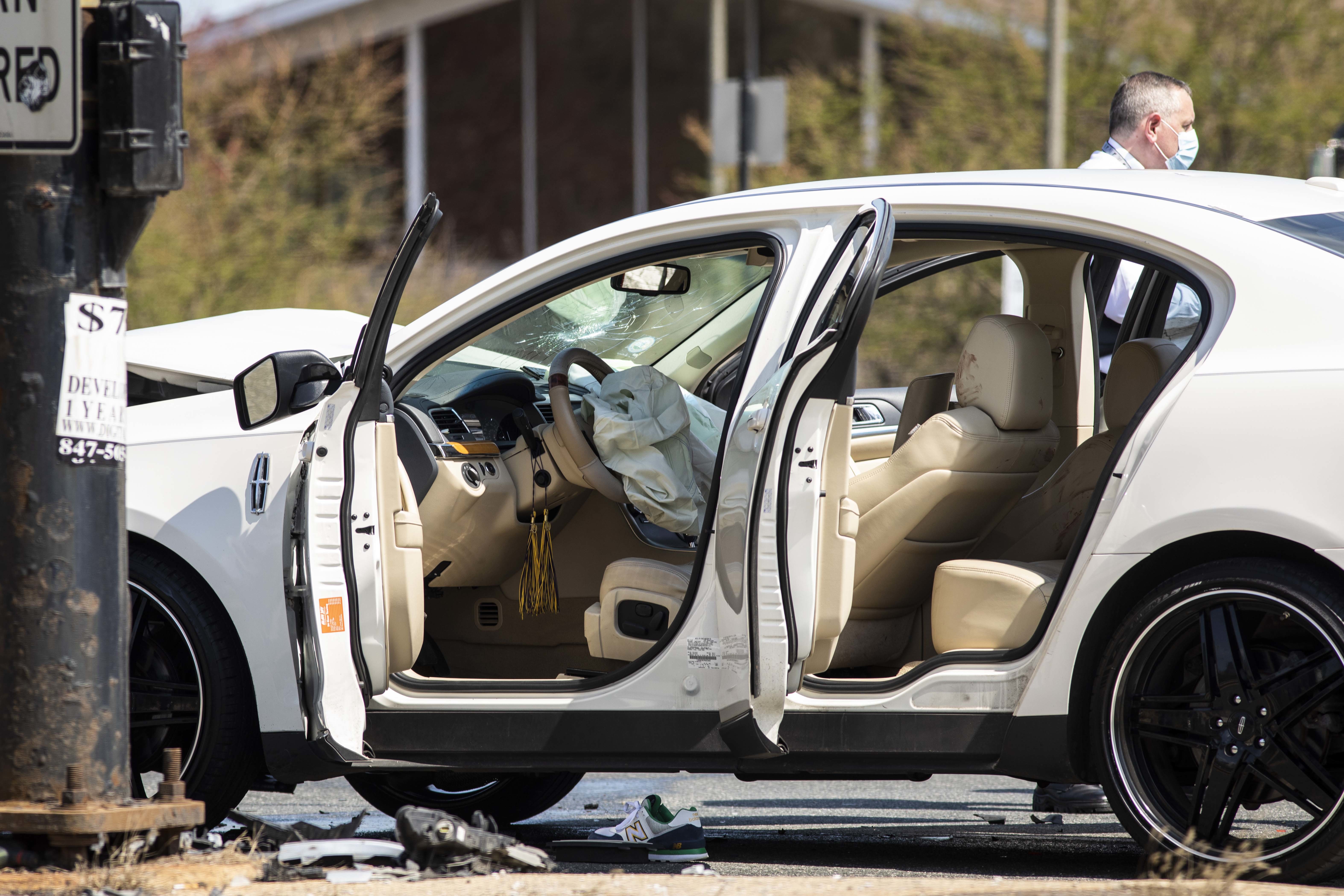
Police were questioning a person of interest Tuesday evening after a 1-year-old boy was shot in the head during an apparent road-rage incident late Tuesday morning on Lake Shore Drive near Grant Park, Chicago police said.
The boy suffered a brain injury and was at Lurie Children’s Hospital in critical condition, according to Dr. Marcelo Malakooti, medical director of the hospital’s pediatric intensive care unit. He’s requiring full critical care support and is on a ventilator.
“It’s really hard to predict right now what will happen,” Dr. Malakooti said. “It’s a very tenuous situation, it can change hourly.”
Dr. Malakooti said his team will be “doing all we can do for this little boy and thank everyone for their concern.”
Police said Tuesday evening that Area Three detectives were questioning a person in connection with the shooting.
A dispute over one car not letting another car into a lane of traffic about 11 a.m. on northbound Lake Shore Drive just south of Soldier Field apparently led to the shooting, Chicago Police Cmdr. Jake Alderden said at a news conference Tuesday afternoon.
Both cars continued north and shooting began on Lake Shore Drive just west of the Shedd Aquarium. Bullet casings were recovered over a two-block stretch as the cars proceeded north, he said.
The vehicle the child was in crashed at Monroe Street and Lake Shore Drive, near the Chicago Yacht Club and Maggie Daley Park.
A good Samaritan in a passing Tesla saw the crashed car and drove the boy and a male and female occupant to Northwestern Memorial Hospital. The boy, who was shot in the temple, was later transferred to Lurie, police said.
Detectives “have witnesses and a suspect … and are actively pursuing the other car that was involved,” Mayor Lori Lightfoot said later Tuesday.
There was early confusion over the child’s exact age; a hospital statement described him as “nearly 2” years old.
A handgun was recovered from an occupant of the crashed vehicle, though police couldn’t immediately say if it was used in the shooting or if it was possessed legally.
Alderden expected information about the other car involved in the shooting, which fled the scene, to be released soon.
A bullet hole could be seen in the rear passenger window of a car in which a child was shot April 6, 2021, near at Monroe and Lake Shore drives near Grant Park.Ashlee Rezin Garcia/Sun-Times
A bullet hole could be seen in the rear passenger window of the crashed vehicle. Northbound Lake Shore Drive was closed until about 1:30 p.m. as police investigated.
Lightfoot called the shooting a case of “simple, stupid road rage.” She was incredulous that adults would unleash their anger and use a gun with a child so near.
“It’s mind boggling to me that people carry guns in the way that they do. That they use them in the way that they do. … It’s just a terrible tragedy,” she said at an unrelated news conference.
“These were not two rival gangs … shooting at each other. This was simple, stupid road rage,” the mayor said. “I just hope that we are smarter and more committed to making sure that we set the example for our children that we want them to follow. And getting upset about a traffic incident — in whether you can merge or not — that that would result in gunfire is an absurdity to me.”
Lightfoot said people in both cars in the incident were firing weapons.
“There was shooting going from that car and coming to that car. That doesn’t make any sense to me,” Lightfoot said.
Community activist Ja’Mal Green, father of a 2-year-old, is personally funding a $5,000 reward for information leading to the arrest of the gunman.
In a news conference near the hospital, Green called out community leaders, including Lightfoot, Gov. J.B Pritzker and Vice President Kamala Harris, who landed in Chicago two hours after the shooting to speak about COVID-19 vaccine equity.
“I understand how important it is to vaccinate people and talk about this cover pandemic but here in Chicago, folks every single day are walking around trying to dodge bullets in hopes they can survive a nice day like today,” Green said.
“This is the most I’ve ever seen them talk about our communities. This is the most I’ve ever seen them want to give something to our communities… but we’re asking for real health and real change, and the root problems to be solved in our communities. We need to invest in these communities, we need to make sure that we can have a safe summer.”
Green was joined by several other young Chicago residents — many of whom he mentors — including 18-year-old Madison Harvey.
“Every day when I go into the streets in the city, I fear for my own life,” Harvey said. “This situation is extremely sad, but it’s almost making us extremely angry because our anger stems from fear — fear that we could be next.”
With summer around the corner, Green demanded that officials invest more into the communities most impacted by gun violence. He also called for a “ceasefire” on young people.
“We can’t take this any longer,” he said.
CPD said it could not immediately say how many road-rage shootings happen in the city each year.
Illinois State Police said there have 56 expressway shootings in the Chicago area this year, a 167% increase compared to last year at this time. Between Jan. 1, 2020, through April 5, 2020, state police investigated 21 expressway shootings. State police couldn’t say how many of those shootings were road-rage incidents.
Police have responded to at least five other shootings this year in the Loop.
Police investigate after a child was shot April 6, 2021, near at Monroe and Lake Shore drives near Grant Park.Ashlee Rezin Garcia/Sun-Times
Last weekend two men were wounded in separate shootings on Lower Wacker Drive. On Easter, an 18-year-old man was shot about 7:10 a.m. while driving with his girlfriend in the first block of North Lower Wacker, police said. Struck in the neck, he was hospitalized in critical condition. Before dawn Saturday, a 29-year-old man was shot in his knee as he traveled in a vehicle on Lower Wacker, police said.
On March 19, three people were arrested for allegedly firing gunshots shortly after midnight in the first block of East Lake Street, police said. A hotel security guard gave a vehicle description to police, who found the car on Wacker Drive.
In October 2020, prosecutors said Lake Shore Drive became a “shooting gallery” when someone shot out the eye of a 19-year-old woman in a vehicle at Jackson Boulevard, just south of where the child was shot Tuesday.
Chicago police’s 1st District, which covers the Loop and South Loop, has seen two other shootings this year through March 28, according to police statistics. Overall crime in the district has fallen 35% over the same period last year, according to the numbers. Meanwhile, reports of sex assault and vehicle thefts have increased over the last year.
Chicago police investigate in the northbound lanes of Lake Shore Drive at East Monroe Street, where a 2-year-old boy was shot in the head while he was traveling inside a car near Grant Park, Tuesday, April 6, 2021.
Ashlee Rezin Garcia/Sun-Times
Chicago police investigate in the northbound lanes of Lake Shore Drive at East Monroe Street, where a 2-year-old boy was shot in the head while he was traveling inside a car near Grant Park, Tuesday, April 6, 2021.
Ashlee Rezin Garcia/Sun-Times
Chicago police investigate in the northbound lanes of Lake Shore Drive at East Monroe Street, where a 2-year-old boy was shot in the head while he was traveling inside a car near Grant Park, Tuesday, April 6, 2021.
Ashlee Rezin Garcia/Sun-Times
Chicago police investigate in the northbound lanes of Lake Shore Drive at East Monroe Street, where a 2-year-old boy was shot in the head while he was traveling inside a car near Grant Park, Tuesday, April 6, 2021.
Ashlee Rezin Garcia/Sun-Times
Chicago police investigate in the northbound lanes of Lake Shore Drive at East Monroe Street, where a 2-year-old boy was shot in the head while he was traveling inside a car near Grant Park, Tuesday, April 6, 2021.
Ashlee Rezin Garcia/Sun-Times
Chicago police investigate in the northbound lanes of Lake Shore Drive at East Monroe Street, where a 2-year-old boy was shot in the head while he was traveling inside a car near Grant Park, Tuesday, April 6, 2021.
No one was home at the time of the fire, and it was declared under control by about 8:15 a.m., Douglass said.
A house was completely destroyed Monday morning in Cary in the northwest suburbs.
Crews were called to a fire about 6:40 a.m. in the 500 block of Holly Lynn Drive, and an off-duty firefighter who arrived on scene five minutes later saw the back of the two-story house was “well involved in fire,” according to Cary Fire Protection District spokesman Lt. Michael Douglass.
No one was home at the time of the fire, and it was declared under control by about 8:15 a.m., Douglass said.
One firefighter was taken in good condition to Good Shepherd Hospital in Barrington after they said they weren’t feeling well, Douglass said.
No other injuries were reported, but the house was a “complete loss,” Douglass said.
The cause of the fire remains under investigation.
The Leighton Criminal Courthouse. | Sun-Times file
A Cook County judge Monday found Luke Hatzipetros not guilty on all counts during a bench trial.
A Cook County sheriff’s deputy was acquitted this week on a slew of sex charges leveled against him more than two years ago.
Luke Hatzipetros, 45, was facing several charges, including criminal sexual assault and criminal sexual abuse, after a former girlfriend’s daughter accused him of inappropriately touching her on multiple occasions.
On Monday, Cook County Judge Alfredo Maldonado found Hatzipetros not guilty on all counts following a bench trial.
At his bond hearing in 2019, prosecutors said Lake County officials were also investigating a claim that Hatzipetros had touched the same minor inappropriately at a pool in their jurisdiction, and allegations made by another girl.
Neither of those investigations resulted in charges, Hatzipetros’ defense attorney Jonathan Bedi said Tuesday.
“We were confident from the start of this case we were going to prevail,” Bedi said in an emailed statement. “I am grateful the Court saw truth and found my client not guilty.”
Cook County prosecutors declined to comment.
The sheriff’s office started an internal investigation into the allegations against Hatzipetros a month before criminal charges were filed, resulting in Hatzipetros being “de-deputized” and placed on administrative leave without pay in February 2019.
The office then sought to fire Hatzipetros in November that year. The case is still pending before the sheriff’s office Merit Board.



:no_upscale()/cdn.vox-cdn.com/uploads/chorus_asset/file/22424602/20210406111736_6M8A2658.jpg)
:no_upscale()/cdn.vox-cdn.com/uploads/chorus_asset/file/22424658/DSC05834.jpg)







3 comments