Videos

No region in the world spared as coronavirus cases, deaths surgeon April 9, 2021 at 6:26 pm

WARSAW, Poland — Hospitals in Turkey and Poland are filling up. Pakistan is restricting domestic travel. The U.S. government will send more help to the state with the country’s worst infection increase.

The worldwide surge in coronavirus cases and deaths includes even Thailand, which has weathered the pandemic far better than many nations but now struggles to contain COVID-19.

The only exceptions to the deteriorating situation are countries that have advanced vaccination programs, mostly notably Israel and Britain. The U.S., which is a vaccination leader globally, is also seeing a small uptick in new cases, and the White House announced Friday that it would send federal assistance to Michigan to control the state’s worst-in-the-nation transmission rate.

The World Health Organization said infection rates are climbing in every global region, driven by new virus variants and too many countries coming out of lockdown too soon.

“We’ve seen rises (in cases) worldwide for six weeks. And now, sadly, we are seeing rises in deaths for the last three weeks,” Dr. Margaret Harris, a WHO spokeswoman, said at a briefing in Geneva.

In its weekly epidemiological update, the WHO said over 4 million COVID-19 cases were reported in the last week. New deaths increased by 11% compared to last week, with over 71,000 reported.

The increasing infections, hospitalizations and deaths extend to countries where vaccinations are finally gaining momentum. That leaves even bleaker prospects for much of the world, where large-scale vaccination programs remain a more distant prospect.

In Turkey, which is among the badly hit countries, most new cases of the virus can be traced to a variant first found in Britain.

Ismail Cinel, head of the Turkish Intensive Care Association, said the surge was beginning to strain the nation’s relatively advanced health care system and “the alarm bells are ringing” for intensive care units, which are not yet at full capacity.

“The mutant form of the virus is causing more harm to the organs,” Cinel said. “While 2 out of 10 patients were dying previously, the number is now 4 out of 10. And if we continue this way, we will lose six.”

Turkish President Recep Tayyip Erdogan eased COVID-19 restrictions in early March to minimize pain to his nation’s ailing economy. The new spike forced him to announce renewed restrictions, such as weekend lockdowns and the closure of cafes and restaurants during Ramadan, which starts April 13.

Turkish medical groups say the reopening in March was premature and that the new measures do not go far enough. They have been calling for full lockdowns during the holy Muslim month.

In the U.S. capital, President Joe Biden’s administration outlined how the federal government planned to help Michigan better administer the doses already allocated to the state, as well as expand testing capacity and the availability of drugs. The effort will not include any extra vaccine doses, a move Gov. Gretchen Whitmer sought.

Doses are currently allocated to states proportionally by population. Whitmer has called for extra doses to be shifted to states like hers experiencing a sharp rise in cases. She also urged a voluntary two-week halt to in-person high school classes, youth sports and indoor restaurant dining, but stopped short of issuing new restrictions.

The death toll in Iran is also rising, prompting new restrictions that will take effect for 10 days in 257 cities beginning Saturday. They involve the closure of all parks, restaurants, confectionaries, beauty salons, malls and bookstores.

Authorities in Pakistan, which is in the middle of a third surge of infections, are restricting inter-city transportation on weekends starting at midnight Friday.

Elsewhere in Asia, authorities in Thailand ordered new restrictions Friday in an effort to contain a growing coronavirus outbreak just days before the country’s traditional Songkran New Year’s holiday, when millions of people travel.

Japan, meanwhile, announced tougher measures ahead of the Summer Olympics.

In Germany, Poland and other countries in the 27-member European Union, vaccination programs are finally ramping up after a slow start in the first three months of the year due to delivery shortages.

Thousands of German medical practices joined the vaccination campaign this week. That helped Germany reach its second consecutive daily record on Thursday of almost 720,000 doses administered — meaning that 14.7% of the population has now received at least one dose and 5.8% have received both shots.

Yet German health officials are warning of a steep rise in intensive care patients and are calling for stronger action to contain infections.

Neighboring Poland is also seeing a dramatic spike in deaths, and hospitals have been forced to turn away cancer and other patients as ICU and other hospital beds are taken by COVID-19 patients. Hospitalizations of virus patients there have jumped 20% in the past two weeks.

Harris, from the WHO, said the world knows how to fight these surges. She cited good news from the U.K., where new coronavirus cases dropped 60% in March amid a strong vaccination program, “but we have to do it all.”

“We have to keep on social distancing. We have to avoid indoor crowded settings. We have to keep wearing the masks, even if vaccinated,” she said. “People are misunderstanding, seeming to think that vaccination will stop transmission. That is not the case. We need to bring down the transmission while giving the vaccination the chance to stop the severe disease.”

Read More

No region in the world spared as coronavirus cases, deaths surgeon April 9, 2021 at 6:26 pm Read More »

Chicagoans speak out on how anti-Asian violence coupled with the pandemic have affected their mental health (LIVE UPDATES)on April 9, 2021 at 6:36 pm

The latest

Kaylee Cong, 32, whose Vietnamese father was attacked, poses for a portrait outside a nail spa she manages in the Logan Square neighborhood, Saturday afternoon, March 27, 2021.
Pat Nabong/Sun-Times

Record vaccination rate in Illinois hasn’t been enough to tamp down a sharp rise in infections

People line up for COVID-19 vaccine doses Thursday at Cook County's Forest Park Community Vaccination Site at 7630 Roosevelt Road in Forest Park. About 2.6 million Illinois residents have been fully vaccinated so far, or about 20% of the population.Ashlee Rezin Garcia/Sun-Times

Illinois public health officials on Friday reported a second straight record-setting day for COVID-19 vaccinations — but the state also hit a worrying milestone by logging more than 4,000 new cases of the disease for the first time in 10 weeks as the latest coronavirus surge builds momentum.

With 164,462 doses administered Thursday, Illinois is vaccinating more people than ever, at an average clip of 118,336 shots per day over the last week, according to the Illinois Department of Public Health.

That still hasn’t been enough to tamp down a sharp rise in infections over the past month, as most key metrics have almost doubled.

With another 4,004 residents testing positive for the virus — the most in a day since Jan. 29 — about 3,122 Illinoisans have contracted COVID-19 each day over the past week. That rate is up 91% compared to the first week of March, when the state was reporting an average of 1,663 daily cases.

Read the full story by Mitchell Armentrout here.


News

1:30 p.m. No region in the world spared as coronavirus cases, deaths surge

WARSAW, Poland — Hospitals in Turkey and Poland are filling up. Pakistan is restricting domestic travel. The U.S. government will send more help to the state with the country’s worst infection increase.

The worldwide surge in coronavirus cases and deaths includes even Thailand, which has weathered the pandemic far better than many nations but now struggles to contain COVID-19.

The only exceptions to the deteriorating situation are countries that have advanced vaccination programs, mostly notably Israel and Britain. The U.S., which is a vaccination leader globally, is also seeing a small uptick in new cases, and the White House announced Friday that it would send federal assistance to Michigan to control the state’s worst-in-the-nation transmission rate.

The World Health Organization said infection rates are climbing in every global region, driven by new virus variants and too many countries coming out of lockdown too soon.

Read the full story here.

12:20 p.m. Riverwalk vendors begin phased reopening Friday

Vendors on the Chicago Riverwalk began a phased-in reopening Friday that will have all vendors open by the end of May.

Island Party Hut, Beat Kitchen on the River and City Winery opened Friday. A new vendor addition this year is Pier 31, which plans to open in May.

“The Riverwalk is not only an important part of our city’s economic engine, but it also adds to the liveliness of our iconic summers,” Mayor Lori Lightfoot said in a news release.

“This reopening serves as yet another indicator of our city’s resilience in the face of the COVID-19 pandemic, and we look forward to making this Chicago staple available to residents and visitors this spring and summer.”

Read the full story by Zinya Salfiti here.

11:05 a.m. Aldermen move to prevent parade permit infighting

With 500 permits issued every year, it’s safe to say that Chicago loves a parade.

On Thursday, the City Council’s Committee on Cultural Affairs and Special Events proved that love by providing a bit of post-pandemic protection.

At Mayor Lori Lightfoot’s behest, aldermen endorsed an ordinance that preserves permit priority for “traditional parades” scheduled at around the same time along the same route “in connection with a specific holiday or consistent theme for at least the prior five years.”

That priority status would remain even though those “traditional parades” were canceled last year because of the coronavirus — and even though none have been held so far this year, either.

Deputy Transportation Commissioner Mike Simon said the goal of the mayor’s ordinance is to prevent the temporary hiatus from opening the door to post-pandemic feuds between parade organizers vying for permits on the same day.

Here’s the full story from Fran Spielman.

10:30 a.m. ‘Trauma upon trauma’: Asian Americans say mental health has suffered amid COVID-19, anti-Asian violence

The coronavirus pandemic sparked a mental health crisis. For Asians and Asian Americans also facing a rise in hate incidents across the country, it’s been “trauma upon trauma,” says Anne Saw, a Chicago psychologist.

“A lot of our communities are experiencing so many pandemic stressors that are then compounded by a lot of anti-Asian discrimination that we’re also experiencing,” says Saw, who teaches at DePaul University and directs the Chicago Asian American Psychology Lab.

“It’s tough to, like, get your head above water and get some room to breathe when every day we’re confronted with new traumas,” she says.

We talked to seven Chicagoans about how anti-Asian violence coupled with the pandemic have affected their mental health and their everyday lives. Among them was Kaylee Cong, 32, of Uptown, who manages a nail spa.

On March 20, four days after the Atlanta shootings, Cong says, her 60-year-old Vietnamese father was punched in the head as he walked alone that night near Broadway and West Ainslee Street. He turned to run, saw a white man holding a baseball bat watching him and called 911.

“We’re really scared,” says Cong, who’d been talking with her father about the Georgia shootings the day before he was attacked. “What if the person come back and do revenge? My entire life living here, it was so peaceful. There was no violence like this.”

She says her father hasn’t wanted to leave the house since that happened.

Older Asian Americans “just want to keep quiet and don’t want to make waves,” Cong says. “I have really different mentality. We deserve to, you know, feel safe. And we shouldn’t be afraid to stand up for ourselves.”

Read the stories of six more Chicagoans we spoke to here.

9:56 a.m. CPS high school reopening agreement remains elusive

A final high school reopening agreement remains elusive between Chicago Public Schools and the Chicago Teachers Union just days before high school teachers are due to return to classrooms — and the union president said Thursday the next few days of negotiations will determine whether workers show up on Monday.

Though the range of issues is smaller and disagreement over those items is not as severe as the hostile K-8 negotiations in February, there are still a few unresolved concerns the union is expressing as COVID-19 infections once again rise in the city.

CPS officials have directed 5,350 high school teachers to return to buildings Monday with or without a CTU agreement, and about 26,000 students in grades 9-12 are expected back the following week.

Whether or not that timeline sticks is dependent on “how outrageous the board’s positions are as we go ahead,” CTU President Jesse Sharkey told a few hundred members at a virtual meeting Thursday that was closed to the public.

“I’ve heard people say, ‘Sharkey, I want a really definitive answer, am I going in on Monday?'” he said. “And my really definitive answer is, it depends on where we’re at.”

Read Nader Issa’s full story here.

8:08 a.m. Spike in COVID-19 cases causes University of Chicago to announce stay-at-home period for students

University of Chicago announced a stay-at-home period for students Wednesday evening following the largest COVID-19 outbreak at the university since the start of the academic year.

After more than 50 cases of the coronavirus were detected among undergraduates in recent days, the university announced that students living on-campus must observe a week-long stay-at-home period immediately.

“We expect this number to increase,” university officials said in an email sent to members of the university community Thursday.

All undergraduate classes will be fully remote for at least a week starting Thursday and students can only leave their residence halls for food, medical appointments and short walks for exercise.

Read the full story from Zinya Salfiti here.


New cases and vaccination numbers

Read More

Chicagoans speak out on how anti-Asian violence coupled with the pandemic have affected their mental health (LIVE UPDATES)on April 9, 2021 at 6:36 pm Read More »

Mike Bryant — Kris’ dad — weighs in on walk-year pressure and what else Cubs fans should knowon April 9, 2021 at 6:44 pm

Mike Bryant’s baby boy hit a home run Thursday in Pittsburgh. Doubled, too. That’s a good day for any ballplayer, especially when his team wins. It’s a pretty good day for a ballplayer’s dad as well.

“They’re all good days,” Bryant said. “Kris is a great son.”

A few minutes after the final out of the Cubs’ 4-2 win against the Pirates, the elder Bryant, 62, was on the phone and downplaying the significance of his son’s strong performance at the plate. Even the most talked-about, speculated-about, Tweeted about, loved, doubted, cheered, criticized, walk-year third baseman is going to have good days and bad days, hot streaks and slumps. It’s nothing to get too high or low about.

“This is a contract year for Kris,” Bryant said. “It happens. I don’t sweat it.”

It sounded a bit like what the former NL Rookie of the Year, MVP and three-time All-Star said himself on the next-to-last day of the 2020 regular season: “I don’t give a [expletive]. How about that?”

But we know negative comments about Bryant the player — his production, his durability, his at-bats in the clutch, whatever — have bothered him before, because he has openly acknowledged as much.

And we can be pretty sure they’ve bothered his dad, too, because, well, have you ever been a parent? Or met one?

“Kris and I know he is blessed to be able to play this game with the best players on the planet,” Bryant said. “He and I will never take that for granted. I think the city of Chicago needs to know that, too.”

The Bryants have been a baseball team since the 29-year-old slugger took his first swings as a tiny, smiley tot. No one taught Kris half as much about hitting as his old man, an ex-minor leaguer in the Red Sox organization, and they’re still in this thing together as much as they ever were. For much of the past offseason — after Kris slashed just .206/.293/.351 over a dreadful 34 games in 2020 — they worked in Mike’s batting cage three or four times a week and on the field at the Class AAA ballpark in Las Vegas twice a week.

Cincinnati Reds v Chicago Cubs
Mike Bryant in 2017.
Photo by Ethan Miller/Getty Images

It was precious time for Mike, who didn’t get to see his son in the flesh while the Cubs were operating in their 2020 pandemic bubble.

“This COVID thing put a squash on that,” he said, “and it has been really painful. Last year was rough. It’s hard because I love to watch him play ball.”

It also was precious time spent with his first grandchild — Kris’ son, Kyler, who celebrated birthday No. 1 Wednesday.

“There’s nothing like it,” Mike said. “Kyler is the first thing I think about when I wake up in the morning and the last thing I think about when I go to bed at night.”

So: What’s it really like to watch your kid fight for his career and reputation in a contract year?

“I mean, sure, you have some anxiety as a dad and an ex-player,” he allowed.

At least a droplet of sweat, then. As much as he can, though, Mike encourages Kris to let any pressure exist “outside of his own bubble.” Because when the pressure gets in, it can infect things in a hurry. That never seemed to happen in Bryant’s early seasons with the Cubs.

“And what could be worse than having a billboard up before you’ve ever played a game?” Mike said. “Talk about laying all these expectations on him.”

Given the shifts in sentiment and tone toward Bryant, it’s almost funny to remember the giant Adidas billboard of him — “Worth the wait,” it read — that went up across the street from the Wrigley Field marquee after the Cubs sent him down to the minors despite his spectacular spring training in 2015. Bryant wasn’t even in the big leagues, but already he was being viewed as a can’t-miss superstar. His service-time clock hadn’t even started, yet already there were — hey, literally — signs of friction between him and the organization.

Bryant handled seemingly everything with a confident, good-natured ease in 2015, 2016, 2017. But 2018, 2019 and 2020 had their bumps. It all set up the current season as the defining one of Bryant’s career as speeds toward the intersection of potential free agency and his 30s.

“He just tries to get better and just learn,” Mike said. “He gives 100% all the time. He never slacks. I’m just hoping he stays healthy. He’s been snakebitten since May of ’18.

“But for me, really? All I want is to watch my son play baseball for as long as he can.”

Read More

Mike Bryant — Kris’ dad — weighs in on walk-year pressure and what else Cubs fans should knowon April 9, 2021 at 6:44 pm Read More »

Chicagoans speak out on how anti-Asian violence coupled with the pandemic have affected their mental health (LIVE UPDATES)on April 9, 2021 at 5:19 pm

The latest

Kaylee Cong, 32, whose Vietnamese father was attacked, poses for a portrait outside a nail spa she manages in the Logan Square neighborhood, Saturday afternoon, March 27, 2021.
Pat Nabong/Sun-Times

The coronavirus pandemic sparked a mental health crisis. For Asians and Asian Americans also facing a rise in hate incidents across the country, it’s been “trauma upon trauma,” says Anne Saw, a Chicago psychologist.

“A lot of our communities are experiencing so many pandemic stressors that are then compounded by a lot of anti-Asian discrimination that we’re also experiencing,” says Saw, who teaches at DePaul University and directs the Chicago Asian American Psychology Lab.

“It’s tough to, like, get your head above water and get some room to breathe when every day we’re confronted with new traumas,” she says.

We talked to seven Chicagoans about how anti-Asian violence coupled with the pandemic have affected their mental health and their everyday lives. Among them was Kaylee Cong, 32, of Uptown, who manages a nail spa.

On March 20, four days after the Atlanta shootings, Cong says, her 60-year-old Vietnamese father was punched in the head as he walked alone that night near Broadway and West Ainslee Street. He turned to run, saw a white man holding a baseball bat watching him and called 911.

“We’re really scared,” says Cong, who’d been talking with her father about the Georgia shootings the day before he was attacked. “What if the person come back and do revenge? My entire life living here, it was so peaceful. There was no violence like this.”

She says her father hasn’t wanted to leave the house since that happened.

Older Asian Americans “just want to keep quiet and don’t want to make waves,” Cong says. “I have really different mentality. We deserve to, you know, feel safe. And we shouldn’t be afraid to stand up for ourselves.”

Read the stories of six more Chicagoans we spoke to here.


News

12:20 p.m. Riverwalk vendors begin phased reopening Friday

Vendors on the Chicago Riverwalk began a phased-in reopening Friday that will have all vendors open by the end of May.

Island Party Hut, Beat Kitchen on the River and City Winery opened Friday. A new vendor addition this year is Pier 31, which plans to open in May.

“The Riverwalk is not only an important part of our city’s economic engine, but it also adds to the liveliness of our iconic summers,” Mayor Lori Lightfoot said in a news release.

“This reopening serves as yet another indicator of our city’s resilience in the face of the COVID-19 pandemic, and we look forward to making this Chicago staple available to residents and visitors this spring and summer.”

Read the full story by Zinya Salfiti here.

11:05 a.m. Aldermen move to prevent parade permit infighting

With 500 permits issued every year, it’s safe to say that Chicago loves a parade.

On Thursday, the City Council’s Committee on Cultural Affairs and Special Events proved that love by providing a bit of post-pandemic protection.

At Mayor Lori Lightfoot’s behest, aldermen endorsed an ordinance that preserves permit priority for “traditional parades” scheduled at around the same time along the same route “in connection with a specific holiday or consistent theme for at least the prior five years.”

That priority status would remain even though those “traditional parades” were canceled last year because of the coronavirus — and even though none have been held so far this year, either.

Deputy Transportation Commissioner Mike Simon said the goal of the mayor’s ordinance is to prevent the temporary hiatus from opening the door to post-pandemic feuds between parade organizers vying for permits on the same day.

Here’s the full story from Fran Spielman.

9:56 a.m. CPS high school reopening agreement remains elusive

A final high school reopening agreement remains elusive between Chicago Public Schools and the Chicago Teachers Union just days before high school teachers are due to return to classrooms — and the union president said Thursday the next few days of negotiations will determine whether workers show up on Monday.

Though the range of issues is smaller and disagreement over those items is not as severe as the hostile K-8 negotiations in February, there are still a few unresolved concerns the union is expressing as COVID-19 infections once again rise in the city.

CPS officials have directed 5,350 high school teachers to return to buildings Monday with or without a CTU agreement, and about 26,000 students in grades 9-12 are expected back the following week.

Whether or not that timeline sticks is dependent on “how outrageous the board’s positions are as we go ahead,” CTU President Jesse Sharkey told a few hundred members at a virtual meeting Thursday that was closed to the public.

“I’ve heard people say, ‘Sharkey, I want a really definitive answer, am I going in on Monday?'” he said. “And my really definitive answer is, it depends on where we’re at.”

Read Nader Issa’s full story here.

8:08 a.m. Spike in COVID-19 cases causes University of Chicago to announce stay-at-home period for students

University of Chicago announced a stay-at-home period for students Wednesday evening following the largest COVID-19 outbreak at the university since the start of the academic year.

After more than 50 cases of the coronavirus were detected among undergraduates in recent days, the university announced that students living on-campus must observe a week-long stay-at-home period immediately.

“We expect this number to increase,” university officials said in an email sent to members of the university community Thursday.

All undergraduate classes will be fully remote for at least a week starting Thursday and students can only leave their residence halls for food, medical appointments and short walks for exercise.

Read the full story from Zinya Salfiti here.


New cases and vaccination numbers

Read More

Chicagoans speak out on how anti-Asian violence coupled with the pandemic have affected their mental health (LIVE UPDATES)on April 9, 2021 at 5:19 pm Read More »

Infant critically hurt in Jane Byrne Interchange crashon April 9, 2021 at 5:35 pm

An infant was critically hurt in a Friday morning crash that shut down the Jane Byrne Interchange ramp from the northbound Dan Ryan to westbound Eisenhower.

Four adults were also injured in the two-car crash, which happened about 7 a.m., according to preliminary information from Illinois State Police spokeswoman Elizabeth Clausing.

The ramp from Interstate 94 northbound to Interstate 290 westbound was closed until about 12:30 p.m., according to the Illinois Department of Transportation.

A citizen attempted to drive the infant to the hospital themselves, but then pulled over and awaited an ambulance, which took the infant in critical condition to Stroger Hospital, according to Chicago fire spokesman Larry Merritt.

Merritt said four other adults, three male and one female, were taken in either fair or serious condition to Stroger and Mount Sinai Hospitals.

Additional details weren’t immediately available.

Read More

Infant critically hurt in Jane Byrne Interchange crashon April 9, 2021 at 5:35 pm Read More »

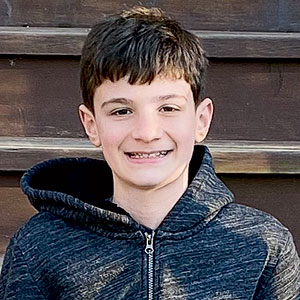
We Have Some Ideas for the Kid Coder Who Created a Vaccine Databaseon April 9, 2021 at 5:14 pm

Eli Coustan
Photograph: Courtesy of Eli Coustan

Thirteen-year-old Eli Coustan from Evanston succeeded where adults with more than a year to prepare failed: He created ILVaccine.org, a database that pulls in open COVID-19 shot appointments from all available locations, eliminating the need to check dozens of websites ad infinitum. So we wondered: What other inexplicably convoluted processes would we like to see him hack next?

■ Transferring money from one Ventra card to another

■ Getting to the Hollywood Casino Amphitheatre in Tinley Park without a car

■ Registering for Chicago Park District summer camps

■ Finding restaurant patios where you can bring your dog

■ Obtaining legal records from the Circuit Court of Cook County

■ Navigating the zoned parking in Wrigleyville

■ Identifying which forest preserves in Cook County have bathrooms

■ Merging into the Logan Square traffic circle

Read More

We Have Some Ideas for the Kid Coder Who Created a Vaccine Databaseon April 9, 2021 at 5:14 pm Read More »

With Aaron Rodgers hosting, it was only a matter of time before Vince Lombardi came up on ‘Jeopardy’on April 9, 2021 at 3:52 pm

It took four episodes, but you can finally cross “Green Bay” off your bingo card.

Aaron Rodgers gave a nod to his NFL city during his opening segment as guest host on Thursday’s episode of “Jeopardy!” It was the first time Green Bay came up since his 10-episode hosting stint began on Monday.

“Being here is really personal for me. I truly am a ‘Jeopardy!’ fan, and the people who know and love me understand not to call me at 6 o’clock, because that’s when ‘Jeopardy!’ airs in Green Bay,” he said. “I’m so happy to be here, and I hope you’re enjoying this as much as I am.”

That was just the warmup for the Vince Lombardi namedrop that would come when Rodgers chatted up Pasquale Palumbo, a contestant from Hawhorne, New York, who explained he and the Green Bay Packers quarterback share a football connection.

Deep breath …

Palumbo said he played and coached football at White Plains High School, where his head coach was Mark Santa-Donato, who was coached by Ralph Friedgen Sr., who was coached by Earl “Colonel Red” Blaik at the U.S. Military Academy at West Point, who had Lombardi on his coaching staff from 1949 to 1953.

“So we’re football cousins,” Palumba said.

A stretch, for sure, but an A for effort.

“OK, that’s a good four degrees of separation there,” Rodgers said, laughing.

“Hey, it’s better than six,” Palumba replied.

Props to Rodgers for getting Panzerkampfwagen Maus, the name of the heaviest tank ever built, to somehow roll off his tongue during a clue under the Heavy Metal category. But perhaps a missed opportunity not to have a little more fun than he did with the lyrics to “Smelly Cat” from “Friends” for the Funny TV Songs category?

Rodgers did sound excited, however, to be able to read this clue: “The Princess Bride,” 1987: This leading man whose name was not Inigo Montoya.”

When returning champ Brandon Deutsch incorrectly answered Mandy Patinkin, Rodgers, a huge “Princess Bride” fan, seemed to take some delight in telling him that Patinkin was Inigo Montoya. (Correct answer: Cary Elwes.)

Coincidentally, “The Princess Bride” came up in an Instagram story Rodgers did with fiancee Shailene Woodley on Monday, in which she encouraged viewers to watch “Jeopardy!” She asked him what people should expect from his time as guest host.

“There’s some laughs, maybe some tears, excitement, mystery,” Rodgers said. “… It’s like ‘The Princess Bride’ — fencing, fighting, torture, revenge, miracles, true love. You never know.”

Rodgers has frequently mentioned the romantic comedy classic in interviews as one of his all-time favorite movies and has been known to blurt out quotes from it around his Packers teammates. He appeared on the “Chips, Dips and Dorks” podcast a few years ago for an episode devoted to the film. He talked about watching it as a kid and everybody taking parts as the characters (Westley has the best lines, he said) and enjoying its “subtle humor” as an adult.

So if you’re keeping track at home of some of Rodgers’ favorite pop culture things that have popped up on “Jeopardy!” so far, add “The Princess Bride” to a list that also includes Ewoks and Turd Ferguson. Still plenty of time for a “Game of Thrones” or “The Office” moment.

Rodgers earned another $9,799 Thursday for his charity of choice, the North Valley Community Foundation in his hometown of Chico, California.

Read more at usatoday.com

Read More

With Aaron Rodgers hosting, it was only a matter of time before Vince Lombardi came up on ‘Jeopardy’on April 9, 2021 at 3:52 pm Read More »

Driver dies after I-57 shooting at Halsted Streeton April 9, 2021 at 3:53 pm

A driver died after he was shot and then crashed into a light pole late Thursday morning on Interstate 57 near Halsted Street.

The man, 24, was shot by someone in another vehicle about 11 a.m. as he drove in the northbound lanes, Illinois State Police said in a statement.

He crashed into a pole and was taken in critical condition to Christ Medical Center in Oak Lawn, state police and fire officials said. He later died of his injuries, according to State Police and the Cook County medical examiner’s office. His name hasn’t been released.

All inbound lanes were closed at 111th Street until 2:15 p.m. for an investigation, state police said.

Read More

Driver dies after I-57 shooting at Halsted Streeton April 9, 2021 at 3:53 pm Read More »

Restored mosaic on the Far North Side highlights Jewish immigrants’ struggleson April 9, 2021 at 4:00 pm

A mosaic at the Bernard Horwich Jewish Community Center on the Far North Side tells the story of Jewish immigration to the United States in the late 19th and early 20th centuries.

Titled “Fabric of Our Lives” and created in 1980, its images and words portray challenges they faced, coming to Chicago and elsewhere, typically from Eastern Europe, with little money, no jobs and often no grasp of English.

The 15-feet-tall, 13-feet-wide, glass-tile mosaic had suffered from the onslaught of decades of Chicago winters but restored in October at a cost of about $8,000 by Miriam Socoloff and Cynthia Weiss, the artists who originally had assembled the work in 1980.

“In addition to our strong feelings for the themes of the mosaic, it was profoundly meaningful and satisfying to repair something,” says Weiss, 67, amid a year marked by the coronavirus pandemic and loss. “2020 was such a hard year. There was so much devastation.”

The Horwich JCC, at 3003 W. Touhy Ave., is in a neighborhood that’s fairly heavily Jewish.

One of the tenets of Judaism is that people should work to repair the world. That made it even more meaningful to painstakingly restore the mosaic, Weiss says.

After 40 years, the “Fabric of Our Lives” mosaic outside of the Bernard Horwich JCC, 3003 W. Touhy Ave., was in poor condition. Artists Miriam Socoloff and Cynthia Weiss restored it in October.
Provided

Socoloff, 71, says the weather hadn’t damaged the faces of any of the figures in the mosaic, but there was damage to some key parts of the work.

For one thing, the letters had fallen away from a sign a woman bears that calls for “a living wage for all” — meant to represent the labor union movement of the early 20th century, a time when many Jewish immigrants worked in sweatshops, toiling at tasks such as sewing garments for little pay. Socoloff says that’s a message that’s “still very much pertinent today.”

Before starting work on the mosaic four decades ago, “I didn’t know the history of Jewish labor,” Socoloff says. “This was all new to me, learning about the sweatshops, even though it was the history of my own family.”

One of her grandmothers immigrated to the United States and lived in New York tenements while working in a sweatshop before moving to Chicago.

Weiss had a grandfather who lived in Philadelphia and helped Jewish immigrants there adjust to their new country and find jobs.

Artist Cynthia Weiss sits on the scaffolding used to repair the top part of the “Fabric of Our Lives” mosaic at the Bernard Horwich Jewish Community Center.
Provided

The mosaic includes a musician, a Yiddish theater actor, someone holding newspapers representing the Yiddish press and a writer, for all of the “sweatshop poets and intellectuals,” according to the artists.

Sweatshop imagery takes up a big portion of the artwork. Three women are shown working on sewing machines, their fabric flowing into Maxwell Street, the historic first stop in Chicago for many Jews coming from Eastern Europe.

A woman and a child make a purchase from a pushcart salesman at the old Maxwell Street market.
Kyle Brown / Sun-Times

Maxwell Street — the last of which was destroyed in a Mayor Richard M. Daley-era move to create the new University Village near the University of Illinois at Chicago, much as it had been chopped up decades earlier to make way for the Dan Ryan Expressway — was home to many Jewish immigrants in the early 20th century and, continuing long beyond that, to its eponymous, bustling open-air market.

The mosaic also offers another nod to Maxwell Street with a scene of a woman and a child making a purchase from a man offering his wares from a Maxwell Street pushcart.

Along the base of the mosaic is the line: “From deep within my soul’s despair arose a striving reaching high.” That’s repeated in Yiddish.

Three women working in a sweatshop in the “Fabric of Our Lives” mosaic outside the Bernard Horwich Jewish Community Center.
Kyle Brown / Sun-Times

There also are symbols of Jewish papercuts — a form of folk art that involves cutting images and sayings from paper — that include religious symbols and the tools of laborers, like a hammer and tile nippers.

“Those three ideas of culture coming from everyday experience, mutual aid and organizing for a living wage for all — those are the three ideas that are really meaningful to me,” Weiss says.

Artist Miriam Socoloff when she was working on restoring the “Fabric of Our Lives” mosaic 40 years after its creation.
Provided

Weiss and Socoloff — who’ve known each other since they were neighbors in Chicago in the late 1970s — were trying something new when they created “Fabric of Our Lives.”

“We had never made a mosaic,” Socoloff says. “So in a way, the whole thing was an act of faith.”

Click on the map below for a selection of Chicago-area murals

Read More

Restored mosaic on the Far North Side highlights Jewish immigrants’ struggleson April 9, 2021 at 4:00 pm Read More »

Chicagoans speak out on how anti-Asian violence coupled with the pandemic have affected their mental health (LIVE UPDATES)on April 9, 2021 at 4:07 pm

The latest

Kaylee Cong, 32, whose Vietnamese father was attacked, poses for a portrait outside a nail spa she manages in the Logan Square neighborhood, Saturday afternoon, March 27, 2021.
Pat Nabong/Sun-Times

The coronavirus pandemic sparked a mental health crisis. For Asians and Asian Americans also facing a rise in hate incidents across the country, it’s been “trauma upon trauma,” says Anne Saw, a Chicago psychologist.

“A lot of our communities are experiencing so many pandemic stressors that are then compounded by a lot of anti-Asian discrimination that we’re also experiencing,” says Saw, who teaches at DePaul University and directs the Chicago Asian American Psychology Lab.

“It’s tough to, like, get your head above water and get some room to breathe when every day we’re confronted with new traumas,” she says.

We talked to seven Chicagoans about how anti-Asian violence coupled with the pandemic have affected their mental health and their everyday lives. Among them was Kaylee Cong, 32, of Uptown, who manages a nail spa.

On March 20, four days after the Atlanta shootings, Cong says, her 60-year-old Vietnamese father was punched in the head as he walked alone that night near Broadway and West Ainslee Street. He turned to run, saw a white man holding a baseball bat watching him and called 911.

“We’re really scared,” says Cong, who’d been talking with her father about the Georgia shootings the day before he was attacked. “What if the person come back and do revenge? My entire life living here, it was so peaceful. There was no violence like this.”

She says her father hasn’t wanted to leave the house since that happened.

Older Asian Americans “just want to keep quiet and don’t want to make waves,” Cong says. “I have really different mentality. We deserve to, you know, feel safe. And we shouldn’t be afraid to stand up for ourselves.”

Read the stories of six more Chicagoans we spoke to here.


News

11:05 a.m. Aldermen move to prevent parade permit infighting

With 500 permits issued every year, it’s safe to say that Chicago loves a parade.

On Thursday, the City Council’s Committee on Cultural Affairs and Special Events proved that love by providing a bit of post-pandemic protection.

At Mayor Lori Lightfoot’s behest, aldermen endorsed an ordinance that preserves permit priority for “traditional parades” scheduled at around the same time along the same route “in connection with a specific holiday or consistent theme for at least the prior five years.”

That priority status would remain even though those “traditional parades” were canceled last year because of the coronavirus — and even though none have been held so far this year, either.

Deputy Transportation Commissioner Mike Simon said the goal of the mayor’s ordinance is to prevent the temporary hiatus from opening the door to post-pandemic feuds between parade organizers vying for permits on the same day.

Here’s the full story from Fran Spielman.

9:56 a.m. CPS high school reopening agreement remains elusive

A final high school reopening agreement remains elusive between Chicago Public Schools and the Chicago Teachers Union just days before high school teachers are due to return to classrooms — and the union president said Thursday the next few days of negotiations will determine whether workers show up on Monday.

Though the range of issues is smaller and disagreement over those items is not as severe as the hostile K-8 negotiations in February, there are still a few unresolved concerns the union is expressing as COVID-19 infections once again rise in the city.

CPS officials have directed 5,350 high school teachers to return to buildings Monday with or without a CTU agreement, and about 26,000 students in grades 9-12 are expected back the following week.

Whether or not that timeline sticks is dependent on “how outrageous the board’s positions are as we go ahead,” CTU President Jesse Sharkey told a few hundred members at a virtual meeting Thursday that was closed to the public.

“I’ve heard people say, ‘Sharkey, I want a really definitive answer, am I going in on Monday?'” he said. “And my really definitive answer is, it depends on where we’re at.”

Read Nader Issa’s full story here.

8:08 a.m. Spike in COVID-19 cases causes University of Chicago to announce stay-at-home period for students

University of Chicago announced a stay-at-home period for students Wednesday evening following the largest COVID-19 outbreak at the university since the start of the academic year.

After more than 50 cases of the coronavirus were detected among undergraduates in recent days, the university announced that students living on-campus must observe a week-long stay-at-home period immediately.

“We expect this number to increase,” university officials said in an email sent to members of the university community Thursday.

All undergraduate classes will be fully remote for at least a week starting Thursday and students can only leave their residence halls for food, medical appointments and short walks for exercise.

Read the full story from Zinya Salfiti here.


New cases and vaccination numbers

Read More

Chicagoans speak out on how anti-Asian violence coupled with the pandemic have affected their mental health (LIVE UPDATES)on April 9, 2021 at 4:07 pm Read More »