University of Chicago Medicine Comprehensive Cancer Center
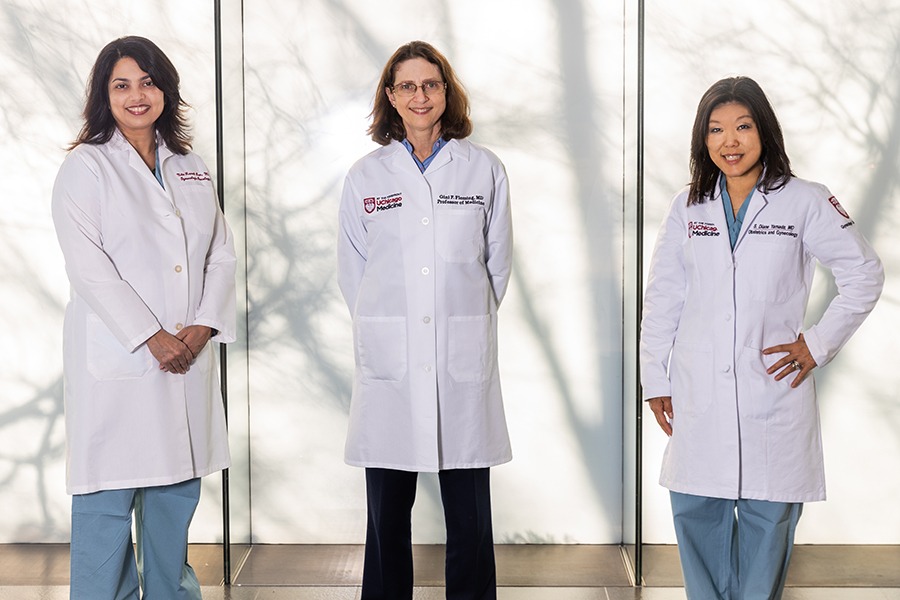
From left: Nita Karnik Lee, MD, MPH; Gini Fleming, MD; S. Diane Yamada, MD. Photograph: Francis Son
This year three of the Gynecologic Cancer specialists at the University of Chicago Medicine Comprehensive Cancer Center — Nita Karnik Lee, MD, MPH; Gini Fleming, MD; and S. Diane Yamada, MD — were acknowledged for being at the forefront of cancer care by being named to Castle Connolly’s list of “Exceptional Women in Medicine.”
Nationally recognized for both gynecology and cancer care, UChicago Medicine has a reputation as a health care leader, largely driven by board-certified specialists who represent the best in clinical and research excellence. As a multidisciplinary team, they work together to provide the highest level of care possible for individuals with Gynecologic Cancer, utilizing groundbreaking medical and surgical therapies, and clinical trials not widely available to create a comprehensive, tailored approach.
The expert Gynecologic Cancer team also includes: Josephine Kim, MD Katherine Kurnit, MD, MPH Ernst Lengyel, MD, PhD Kathryn Mills, MD John Moroney, MD
The experts at UChicago Medicine provide individualized, compassionate, and comprehensive care throughout all phases of one’s cancer journey. Visit our website or call to make an appointment today.
Chicago Hyde Park • Chicago River East New Lenox • Orland Park • Schererville 855-702-8222
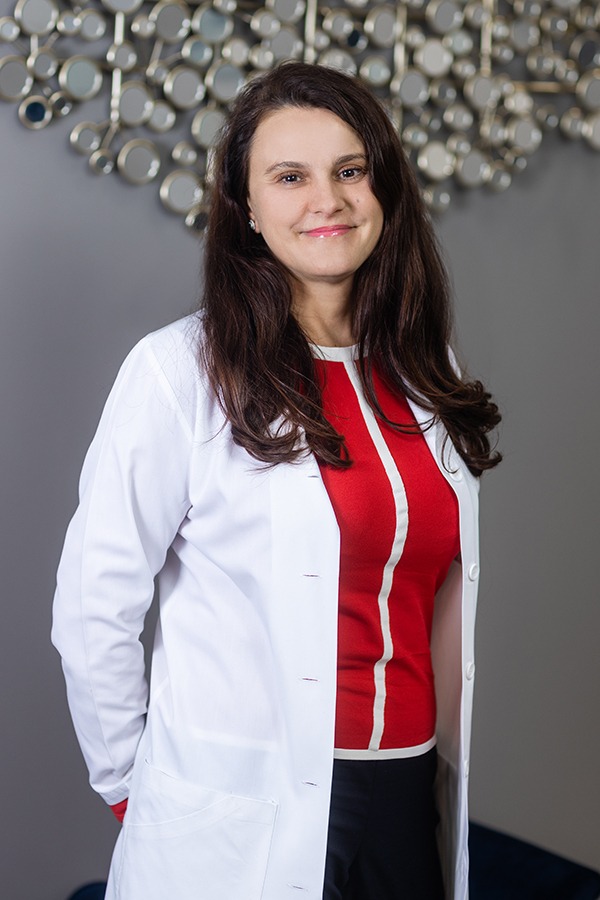
President and medical director, reproductive medicine institute
Photograph by Francis Son
For patients who are searching for infertility care in an individualized setting, Reproductive Medicine Institute (RMI) offers the most successful treatment options, giving patients a sense of control and hope, while treating each patient like a family member.
Our expert team of physicians, nurses, embryologists, and staff understands that fertility care can be an emotional experience that requires a hands-on, homegrown touch, while still having access to global clinical breakthroughs.
Built on a foundation of providing safe and advanced treatment options delivered with compassionate expertise spanning more than 20 years, RMI has become one of the largest and most successful fertility centers in the Midwest.
Convenient locations and office hours across the Chicago area combined with the compassionate expertise of Dr. Trukhacheva, Dr. Rana, Dr. Nayak, and Dr. Dmowski make RMI a unique choice for infertility care.
Highly trained and accredited, the RMI physician team is well-respected and works closely with referring providers from hospital networks surrounding the Midwest. We know our patients have high hopes and expect to see and hear from their physician well after the first consultation and fertility workup. RMI is devoted to working together with patients to ensure the highest quality of care.
While our physicians and nurses focus on your clinical health, our financial team can help you understand your insurance benefits and out-of-pocket expenses. In order to provide our patients with the highest quality of care at an affordable price, we are contracted with most major health care plans.
Chicago 233 E. Erie St. Suite 307 Chicago, IL 60611 312-664-0305
Oak Brook 2425 W. 22nd St. Suite 200 Oak Brook, IL 60523 630-954-0054
Evanston 2500 Ridge Ave. Suite 107 Evanston, IL 60201 847-869-7777
Oak Lawn 5851 W. 95th St. Suite 117 Oak Lawn, IL 60453 708-741-7012
For patients who are searching for infertility care in an individualized setting, Reproductive Medicine Institute (RMI) offers the most successful treatment options, with convenient locations and office hours across the Chicago area. Dr. Trukhacheva, Dr. Rana, Dr. Nayak, and Dr. Dmowski give patients hope through their journey to parenthood, while treating each patient like a family member.
Built on a foundation of providing safe and advanced treatment options delivered with compassionate expertise spanning more than 20 years, RMI has become one of the largest and most successful fertility centers in the Midwest.
To learn more about RMI, schedule your appointment today, or view insurances accepted at RMI please visit www.reproductivemedicineinstitute.com for more details.
In this image from video, defense attorney Eric Nelson, left, and defendant, former Minneapolis police officer Derek Chauvin listen to Hennepin County Judge Peter Cahill read instructions to the jury before closing arguments, Monday, April 19, 2021, in the trial of Chauvin at the Hennepin County Courthouse in Minneapolis. Chauvin is charged in the May 25, 2020 death of George Floyd. | AP
Closing arguments began with the city of Minneapolis on edge against a repeat of the violence that erupted last spring over the excruciating bystander video of Derek Chauvin pressing down on or close to Floyd’s neck for up to 9 minutes, 29 seconds, as bystanders yelled at the officer to get off.
MINNEAPOLIS — Officer Derek Chauvin “had to know” he was squeezing the life out of George Floyd as the Black man cried out over and over that he couldn’t breathe and finally fell silent, a prosecutor told jurors Monday as closing arguments began at Chauvin’s murder trial.
Floyd was “just a man, lying on the pavement, being pressed upon, desperately crying out. A grown man crying out for his mother. A human being,” prosecutor Steve Schleicher said as he sought to convince the racially diverse jury that Chauvin’s actions as he pinned Floyd to the pavement with his knee were reckless, unreasonable and criminal.
Closing arguments began with the city of Minneapolis on edge against a repeat of the violence that erupted last spring over the excruciating bystander video of Chauvin pressing down on or close to Floyd’s neck for up to 9 minutes, 29 seconds, as bystanders yelled at the officer to get off.
The defense for the now-fired white officer contends Floyd put himself at risk by using fentanyl and methamphetamine, then resisted officers trying to arrest him — factors that combined with his heart disease to lead to his death.
But Schleicher described how Chauvin ignored Floyd’s cries that he couldn’t breathe, and continued to kneel on Floyd after he stopped breathing and had no pulse — even after the ambulance arrived — saying he “had to know what was right beneath him.”
“George Floyd’s final words on May 25, 2020 were ‘Please, I can’t breathe.’ And he said those words to Mr. Officer. He said those words to the defendant.” Schleicher said, as he pointed to Chauvin. “He asked for help with his very last breath.”
“The defendant heard him say that over and over. He heard him, but he just didn’t listen. He continued to push him down, to grind into him, to shimmy, to twist his hand for 9 minutes and 29 seconds. He begged. George Floyd begged until he could speak no more, and the defendant continued this assault,” said Schleicher, who repeatedly used the word “assault.”
Prosecutors need to prove underlying assault for most serious charge of second-degree murder.
Chauvin was “on top of him for 9 minutes and 29 seconds and he had to know,” Schleicher said. “He had to know.”
He also reminded jurors that Minneapolis police take an oath to protect with courage, and said it might be difficult to “imagine a police officer doing something like this,” but reminded jurors that they were asked during jury selection to set aside any preconceived notions about police officers.
“George Floyd was not a threat to anyone. He wasn’t trying to hurt anyone. He wasn’t trying to do anything to anyone. Facing George Floyd that day that did not require one ounce of courage. And none was shown on that day. No courage was required. All that was required was a little compassion and none was shown on that day.”
Judge Peter Cahill opened the day’s court session by instructing the jurors on reviewing different types of evidence and told them that they will consider each charge against Chauvin separately.
The anonymous jury will deliberate in a downtown courthouse surrounded by concrete barriers and razor wire, in an anxious city heavily fortified by National Guard members and just days after fresh outrage erupted over the police killing of a 20-year-old Black man in a nearby suburb.
A few protesters gathered outside the courthouse Monday as light snowflakes blew in the wind. “No breaths. No pulse. 3 1/2 minutes. Chauvin didn’t let up/get up,” read one protester’s sign.
Chauvin, 45, is charged with second-degree murder, third-degree murder and second-degree manslaughter. All three charges require the jury to conclude that Chauvin’s actions were a “substantial causal factor” in Floyd’s death — and that his use of force was unreasonable.
Second-degree murder requires prosecutors to prove Chauvin intended to harm Floyd, but not that he intended to kill him. Third-degree murder requires proof that Chauvin’s actions were “eminently dangerous” and done with indifference to loss of life. Second-degree manslaughter requires jurors to believe that he caused Floyd’s death through negligence and consciously took the chance of causing severe injury or death.
Each count carries a different maximum sentence: 40 years for second-degree unintentional murder, 25 years for third-degree murder, and 10 years for second-degree manslaughter. Sentencing guidelines call for far less time, including 12 1/2 years on either murder count.
___
Webber reported from Fenton, Michigan. Associated Press writer Mohamed Ibrahim contributed.
For the ChicagoBears, expect the unexpected when the 2021 NFL Draft rolls around next week. Picking at 20th overall in round one, Chicago clearly is on the outside looking in when it comes to quarterbacks. Unless the Bears plan on packaging multiple first round picks to move up, the odds of Chicago landing a […]
Thornridge’s DuVaughn Williams knew how it looked from the outside.
The Falcons were coming off a 2-7 season under Stafford Owens, their third coach in three seasons, and had one playoff berth since 2006.
Williams, an unusual hybrid of an athlete who was starting at quarterback and defensive end, had played only one full game as a junior before being sidelined by a broken tibia.
“I really feel like I had something to prove,” Williams said. “Everybody was doubting us because we were ‘just Thornridge,’ That’s how we are to people, we’re just ‘Thornridge.'”
That’s changing though, and Williams is a big reason why.
The Falcons have avenged 2019 losses to Bloom and District 205 rival Thornton, with Williams completing 58% of his passes for 822 yards with 10 touchdowns and no interceptions through four weeks.
On the other side of the ball, he had 18 tackles and three sacks.
At 6-4 and 225 pounds, Williams certainly has the size to play both quarterback and defensive end at the high school level. But it’s not something you’d expect to see, even if Owens says it makes some sense.
“I played in the (Mid-American) Conference with some big guys just like him: (Ben) Roethlisberger, (Byron) Leftwich,” said Owens, who was a running back and receiver at Ohio. “(Williams) kind of reminds me of them. Both of those guys could have played some ‘D’ too.”
It was no guarantee that Williams would play defensive end, quarterback or anywhere after that injury in 2019.
He was sidelined for six months, coming back just days before the pandemic shut down sports in March, 2020.
“I was taking it little by little, step by step,” Williams said. “Doing little stuff with my (physical) therapist. Just learning how to walk and … running three or four miles on the treadmill, trying to get my bone back into running shape.”
Then came the lockdown. Williams lost access to his training facilities and had to improvise.
“I couldn’t get into the school and everything was shutting down,” he said. “At my house I built a little training course for myself. … I bought whatever weights I could and I just did home workouts, whatever I could to keep myself in shape.”
Owens had been Williams’ basketball coach at the lower levels before he took over the football job. He wasn’t surprised by Williams’ perseverance.
“DuVaughn is a tough kid,” Owens said, “He always had that heart.”
That kept him going during the long months when it looked like he might not get a senior season.
“It was frustrating because we had a whole lot riding on our season,” Williams said. “But I knew I had to keep a level head and focus on doing my part, on being the best person I could be. Focus on being a student-athlete, getting my grades right, doing well at school.”
Now he’s doing well on the football field too, and making people think twice about overlooking the team that used to be “just Thornridge.”
Looking to make new friends or connections? Consider joining a local club with like-minded people! Whether you’re into the arts, education, business, or social events, check out these top members-only clubs in Chicago.
Located in an old belt factory, Soho House Chicago is a perfect spot for local artists, musicians, producers, and creatives in the Fulton Market District. Amenities include a rooftop pool, bar and outdoor fireplaces, a movie theater showing new releases, old classics and kids’ movies, a gym with a boxing ring, and plenty of space to work, dine, or relax. You’ll have to fill out an application to join and basic memberships start at $2,290.00 per year.
Nestled in the heart of downtown Chicago, the University Club boasts top-notch amenities including state-of-the-art athletic facilities, 59 beautifully appointed guest rooms, six unique dining venues, 13 private event spaces, and much more. To join, you’ll need three letters of recommendation from current members as well as other requirements.
Advertisement
The powers that be have stepped aside and the final countdown has begun – the Cliff is reopening this week! We will be…
Do you consider yourself a creative person? Join this private club to connect with people who are (or have been), actively engaged in painting, music, design, acting, architecture, writing, art education, and other related categories. Just a heads up, new members will need a sponsor and co-sponsor. Not sure if it’s your thing? Try it out for $150 three-month trial membership!
Strong women support each other. That’s why in 1898, the Woman’s Athletic Club was the first women-old club created “by the ladies, for the ladies.” The WAC offers modern facilities for health and fitness, including a pool, gym, a full-service spa, elegant event rooms, as well as studio rooms for classes.
Calling all corporate executives! With stunning views of the city on the 66th and 67th floors of the Willis Tower, The Metropolitan is Chicago’s hub for professional networking, business amenities, and upscale dining. They’re all about their members—from bringing in guest speakers and wine tasting to offering exceptional programming and social events.
If you love tennis, Midtown is the place to be. Originally established in 1970, Midtown is one of the world’s largest indoor tennis clubs with state-of-the-art fitness facilities. From group exercise and competitive tennis programs to a contemporary hotel with 55 rooms, there’s plenty to love at Midtown. Monthly costs range from $220 a person to $475 for family plan as well as a $500 initiation fee for each membership.
Hey artists! Come mingle with other people like you. For over 100 years, The Arts Club has brought together artists and patrons of the arts. The AC offers a permanent collection including work by many modern and contemporary masters, around three and four public exhibitions per year, and extensive programming for members and guests.
The ULCC is a private club where members can network and learn, work and workout, grab a quick bite or dine in luxury, meet new people and catch up with old friends. Membership in the ULCC means exclusive access to activities, events and facilities to make the most of life. Amenities include two restaurants, a gastro pub, a coffee shop, large event spaces, fitness facilities, conference rooms, a library, remote workspaces, and 180 overnight guest rooms.
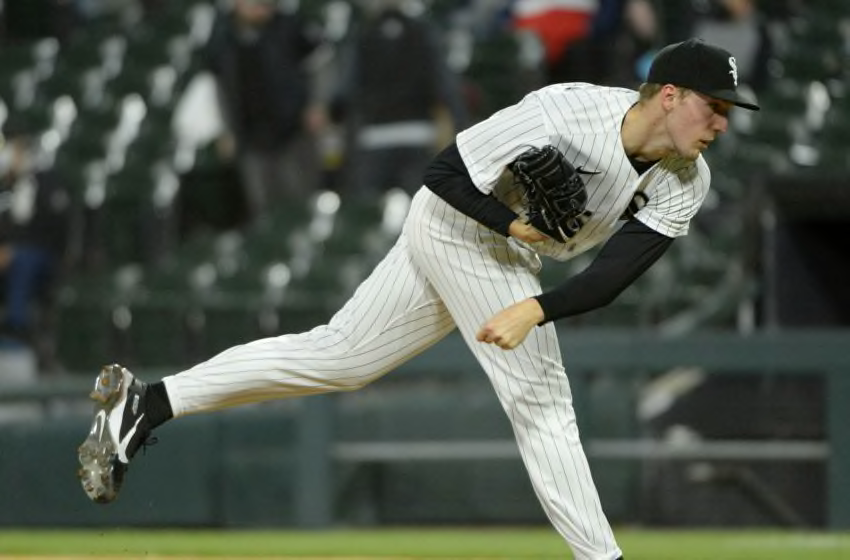
Garrett Crochet, 21, has yet to pick up a win this season for the Chicago White Sox because of where manager Tony La Russa places him. Crochet was the 11th overall pick by the White Sox in the 2020 MLB draft out of Tennessee. In his last three outings, Crochet has not lived up to expectation, letting up four total runs (only one earned). He has a record of 0-2 on the season thus far.
Garrett Crochet will succeed for the Chicago White Sox in 2021 if put in the right spot.
The problem for Crochet this season has been his innings pitched have come late in games in tight situations. Crochet is just a rookie in this league he should be dialed back to a middle reliever in every game.
His last outing, before his entrance to the bump on Sunday against the Boston Red Sox, he played against the Cleveland Indians. In that game, he came into the seventh inning with zero outs, no one on base, and down one run. He left giving up two hits, one run, and the Sox going down two.
His two losses on the season came in his two outings before then. He came into both games, one against the Indians and the other versus the Kansas City Royals, in the tenth inning. Against the Royals, Crochet gave up the game-winning run. Against the Indians, he left the game giving up two hits and two runs.
Crochet is an excellent talent in the MLB. He is already a big part of the Sox bullpen because he has a cannon of an arm. However, his fielding and control need to improve which isn’t a problem because he’s only 21 years old.
The problem is that the Sox can’t be relying on Crochet to be a set-up man like Aaron Bummer. Sometimes, like in his two losses, to act as a closer for the Sox in crunch time. It showed in both of his losses that he may not be ready for that type of role. He committed fielding errors in each of those games which were costly to the game. He looked shook on the mound and unprepared to come into high-intensity situations where he was asked to get the Sox out of a jam.
Crochet is a fastball heavy pitcher. He uses the fastball for 70.9 percent of his pitches. He only has two other pitches in his arsenal. While that seems dynamic and dominant enough to be a set-up man, he does not yet seem ready to step into that role.
Against the Boston Red Sox on Sunday evening, Crochet came into the fifth inning and got the Sox out of a jam after Matt Foster. Crochet allowed one hit and struck out one batter to get out of the jam. He was replaced by Aaron Bummer who played the set-up man role in the sixth inning.
It is possible that La Russa noticed the pattern of Crochet’s struggles and used him as a short-leashed middle reliever for the doubleheader on Sunday. Sox fans should continue to monitor Crochet’s situation. Not only because he has struggled this season at times but because he is a young talent with plenty of MLB upside.