Videos

Method Man and Redman next up in Verzuz battleon April 19, 2021 at 6:36 pm

A “How High 4/20” Verzuz battle between Method Man and Redman — longtime friends, collaborators and well-known cannabis advocates — is slated for 7 p.m. Tuesday via Instagram and the Triller app.

Outside of standout tracks and past collaborations from the duo over the years, expect some sort of tribute to their former Def Jam Recordings labelmate and occasional collaborator, DMX, who died earlier this month. The trio rhymed on the hit 1997 track “4, 3, 2,1” with LL Cool J and the recently deceased rapper known for his gritty lyrics.

Method Man, the only rapper to appear on Notorious B.I.G. and 2 Pac albums while the two artists were alive, is primarily known for his music as a member of the Wu-Tang Clan (“Method Man”). In 1994, Method Man released the first of his six solo albums including “Tical,” a RIAA-certified platinum album, and “Tical 2000: Judgement Day.”

Standout tracks from those albums include “Bring the Pain,” “Judgement Day,” and “Break Ups 2 Make Ups,” featuring past Verzuz guest D’Angelo, and “I’ll Be There for You/You’re All I Need to Get By,” Method Man’s duet — a wildly popular wedding song — with legendary R&B singer Mary J. Blige.

Redman, a Def Squad affiliate (Erick Sermon and Keith Murray) who debuted in 1992 with “Whut? Thee Album,” is known for a string of hits including “Time 4 Sum Aksion,” “Tonight’s da Night,” “Can’t Wait,” “I’ll Bee Dat”, and “Let’s Get Dirty (I Can’t Get in da Club),” among many others.

The two joined forces for “How High,” a track from the 1995 album “The Show: The Soundtrack,” and later parlayed their friendship — and charisma — into a film, movie soundtrack and TV series by the same name, along with other albums including “Blackout!” and “Blackout! 2.”

Poet and author Kevin Powell says the friendship between Method Man and Redman is tangible proof of how two highly successful creatives can produce timeless music while staying close.

“Method Man and Redman are not only two of the greatest characters in hip-hop’s history, but their deep friendship has endured across styles and eras of culture like, say, Ella Fitzgerald and Louis Armstrong in jazz, or Elton John and Billy Joel in pop music,” said Powell in a statement to the Chicago Sun-Times.

Upcoming Verzuz battles include a May 8 Mother’s Day edition with R&B groups SWV and Xscape, and a “rematch” of previous contestants scheduled for Memorial Day weekend.

Read More

Method Man and Redman next up in Verzuz battleon April 19, 2021 at 6:36 pm Read More »

Shots fired at Rogers Park police station from passing vehicleon April 19, 2021 at 6:47 pm

Police are searching for a gunman who opened fire at a police station from a passing car in Rogers Park.

Ald. Andre Vasquez (40th) said the Sunday morning drive-by was an “unfortunate attack” targeting the 24th District station. No one was hurt.

Chicago police said someone in a black vehicle opened fired about 10:30 a.m. in the 6400 block of North Clark Street, striking the outer brick wall of the station in several places.

A witness sitting at a nearby bus stop saw the car slow down and heard six gunshots, police spokeswoman Sally Bown said.

An officer inside the building heard the gunfire, but it wasn’t clear if the shooting targeted anyone in particular, Bown said.

No arrest has been made.

Read More

Shots fired at Rogers Park police station from passing vehicleon April 19, 2021 at 6:47 pm Read More »

Does Chicago have a Last Straw/ Is there any Shame/Chicago’s Children under Fire/Shocking Numbers/The Gangs of Chicago Keep Marching On/on April 19, 2021 at 5:39 pm

JUST SAYIN

Does Chicago have a Last Straw/ Is there any Shame/Chicago’s Children under Fire/Shocking Numbers/The Gangs of Chicago Keep Marching On/

Read More

Does Chicago have a Last Straw/ Is there any Shame/Chicago’s Children under Fire/Shocking Numbers/The Gangs of Chicago Keep Marching On/on April 19, 2021 at 5:39 pm Read More »

Wait, wait, wait before we judge and condemn in shooting of Adam ToledoRoger Flahertyon April 19, 2021 at 5:18 pm

Little Village resident Andre Gordillo is silhouetted carrying a flag of Chicago during a peace walk honoring the life of 13-year-old Adam Toledo on April 18. | AP Photos

So, should the cop have waited another second? Maybe. What would you do were you in his position? Don’t be so sure.

Wait, wait, wait before making any more resounding damnations.

A 13-year-old boy was shot dead by a Chicago policeman. He had his hands up. It was murder, an assassination! Thousands perhaps march in protest, many carrying pickets calling for police to stop killing our children. The pain and shame of Adam Toledo’s death cuts to the heart.

But . . . let’s take this scene into some of its many parts.

Indeed, Adam was raising his hands in the stop-action video we all saw. It also appears that he had a gun in his hand less than a second before. Shots had been fired, a cop is chasing a guy with a gun down an alley at two in the morning, shouting for the gun to be dropped. He doesn’t know the gunman is a 13-year-old. When the gunman turns, quite likely the cop doesn’t know the gun had just been discarded. That image doesn’t show on body cam footage, only from another camera mounted nearby.

So, should the cop have waited another second? Maybe. What would you do were you in his position? Don’t be so sure. In any case, accusations of assassination and murder go beyond the awful truth of this shooting.

Next. What was Adam doing out on the streets at two in the morning? Are you going to blame Adam’s parents? From all we can tell his mother is a loving and attentive parent. In the best of homes in the best of neighborhoods, teenagers get into dangerous situations, often unbeknown to their parents. Add to this the lure and threat of the streets in Little Village and other poverty-stricken parts of Chicago where gangs recruit the young, often with threats. What light penalty awaits the man who put the gun in Adam’s hand?

Are cops killing the young in our city? No, overwhelmingly it is the young killing the young. Still. Policing here and everywhere else in the country needs serious reform. For instance, cops rarely need to pull out their guns in making a traffic stop. Cops lie, constantly, whether to protect themselves or a fellow cop or, often, in an effort to bolster evidence. Racism is pervasive, often causing fear in the ones who harbor it, leading to their bullying, overcharging and, at its worst, serious physical harm or death to its victims.

So, punish and get rid of misbehaving cops. Give no leeway to those who lie to give cover to fellow officers. Seek better ways to give pursuit. Maintain strict procedures on pulling out guns. Train cops to identify miscreants with mental health issues and create special teams to aid in such situations. Be forceful in identifying and taking action against racist talk and behavior.

Surely there is need for more, as outlined in an ongoing federal consent decree to revise the policies and practices of the Chicago Police Department. But, whatever, get serious about “defunding” the police. We need them to serve and protect.

While not all the shootings and murders in the city are traceable to gangs, they certainly account for a major share. And most in some way pertain to drug dealing, territorial disputes and whatnot. We call on the police to clean up their messes, but how willing are we to provide resources to drug addicts, the markets for gang wares? Still more, how willing are we as a city ready to put more public money into stressed neighborhoods — money for better schools, for more physical and mental health services, for economic development, for family support.

Family support . . . That brings us back to Adam and his mother.

There’s no guarantee that increased income would have saved Adam from a policeman’s bullet, but odds are overwhelming that it would. Income is always the key factor in comparative living standards. Thousands are there to march in protest, but where are the thousands willing to tax themselves to better the incomes of others? How many thousands have marched to City Hall, Springfield and Washington to demand it?

The poet Wislawa Szymborski asked in a poem called “Hatred”: “Has compassion ever first across the finish line?”

So, I say wait, wait, wait to condemn. Instead, act now to give compassion a win. Adam Toledo deserved it.

Roger Flaherty is a retired Sun-Times reporter and city desk editor.

Send letters to [email protected].

Read More

Wait, wait, wait before we judge and condemn in shooting of Adam ToledoRoger Flahertyon April 19, 2021 at 5:18 pm Read More »

Prosecutor: FedEx shooter didn’t have ‘red flag’ hearingAssociated Presson April 19, 2021 at 5:29 pm

A body is taken from the scene where multiple people were shot at a FedEx Ground facility in Indianapolis, Friday, April 16, 2021.
A body is taken from the scene where multiple people were shot at a FedEx Ground facility in Indianapolis, Friday, April 16, 2021. A gunman killed eight people and wounded several others before apparently taking his own life in a late-night attack at a FedEx facility near the Indianapolis airport, police said, in the latest in a spate of mass shootings in the United States after a relative lull during the pandemic. | AP

Authorities believed they had done what they needed to by seizing the pump-action shotgun from Brandon Scott Hole in March 2020, Marion County Prosecutor Ryan Mears said.

INDIANAPOLIS — A former employee who shot and killed eight people at a FedEx facility in Indianapolis never appeared before a judge for a hearing under Indiana’s “red flag” law, even after his mother called police last year to say her son might commit “suicide by cop,” a prosecutor said Monday.

Marion County Prosecutor Ryan Mears said authorities did not seek such a hearing because they did not have enough time under the law’s restrictions to definitively demonstrate Brandon Scott Hole’s propensity for suicidal thoughts, something they would need to have done to convince a judge that Hole should not be allowed to possess a gun.

The “red flag” legislation, passed in Indiana in 2005 and also in effect in other states, allows police or courts to seize guns from people who show warning signs of violence. It is intended to prevent people from purchasing or possessing a firearm if they are found by a judge to present “an imminent risk” to themselves or others. Police seized a pump-action shotgun from Hole, then 18, in March 2020 after they received the call from his mother. But the law only gave them two weeks to make their case.

“This individual was taken and treated by medical professionals and he was cut loose,” and was not even prescribed any medication, Mears said. “The risk is, if we move forward with that (red flag) process and lose, we have to give that firearm back to that person. That’s not something we were willing to do.”

Indianapolis police have previously said that they never did return the shotgun to Hole. Authorities say he used two “assault-style” rifles to gun down eight people at the FedEx facility last Thursday before he killed himself.

“There are a number of loopholes in the practical application of this law. … It does not necessarily give everyone the tools they need to make the most well-informed decisions,” Mears said.

Mears said he had already spoken to legislators in the past about lengthening the two-week timeline and he reiterated that call on Monday.

Indiana lawmakers did not immediately comment on Mears’ remarks.

Extending the deadline would give prosecutors more time to investigate a person’s background and mental health history before going in front of a judge, said Mears, who added that he would also like to see the statute prohibit a person under investigation from buying a gun until the hearing is held and the judge makes a final ruling.

Mears said the “red flag” law is “a good start, but it’s far from perfect.”

Indiana was one of the first states to enact the law, after an Indianapolis police officer was killed by a man whose weapons were returned to him despite his hospitalization months earlier for an emergency mental health evaluation.

___

Associated Press reporter Rick Callahan contributed to this report. Casey Smith is a corps member for the Associated Press/Report for America Statehouse News Initiative. Report for America is a nonprofit national service program that places journalists in local newsrooms to report on undercovered issues.

Read More

Prosecutor: FedEx shooter didn’t have ‘red flag’ hearingAssociated Presson April 19, 2021 at 5:29 pm Read More »

2 US agencies send teams to probe Tesla crash with no driverAssociated Presson April 19, 2021 at 5:31 pm

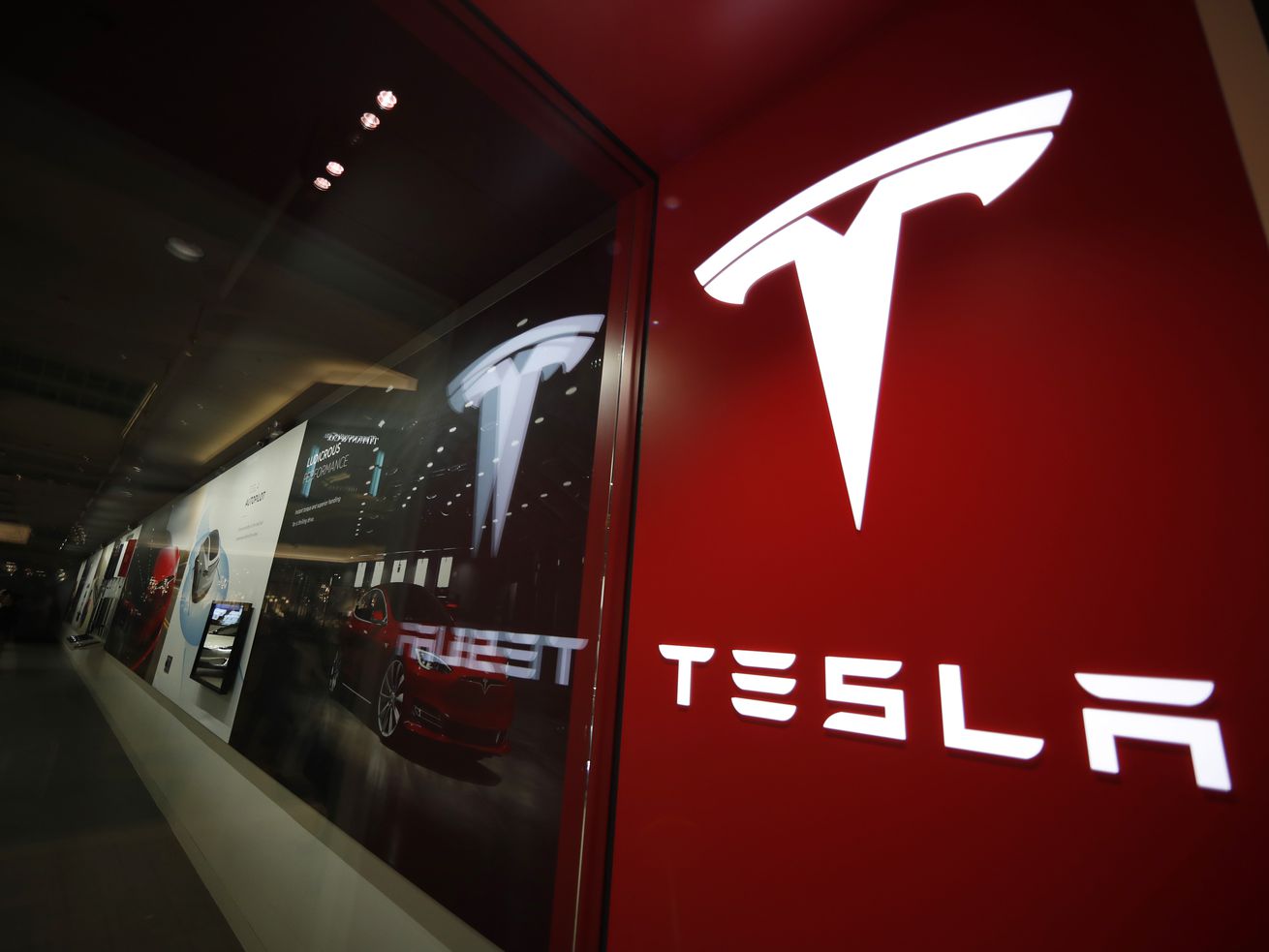
This Feb. 9, 2019, file photo shows a sign bearing the company logo outside a Tesla store in Cherry Creek Mall in Denver. Federal safety regulators have sent a team to investigate the fatal crash of a Tesla electric car near Houston 
This Feb. 9, 2019, file photo shows a sign bearing the company logo outside a Tesla store in Cherry Creek Mall in Denver. | AP

Investigators are “100% sure” that no one was driving the 2019 Tesla Model S that ran off a residential road in Spring, Texas, hit a tree and burst into flames, killing two men inside, Harris County Precinct Four Constable Mark Herman said.

DETROIT — Two federal agencies are sending teams to investigate the fatal crash of a Tesla near Houston in which local authorities say no one was behind the wheel.

The National Highway Traffic Safety Administration and the National Transportation Safety Board said Monday they will send investigators to Spring, Texas, to look into the fiery Saturday night crash. Two men were killed.

Investigators are “100% sure” that no one was driving the Tesla that missed a curve on a residential road, hit a tree and burst into flames, killing two men inside, Harris County Precinct Four Constable Mark Herman said.

But they’re still trying to determine whether the electric car was operating on Tesla’s Autopilot driver-assist system, or if the company’s “Full Self-Driving Capability” system was in use.

One of the men was found in the front passenger seat of the badly burned car, and the other was in the back seat, Herman told The Associated Press Monday.

“We are actively engaged with local law enforcement and Tesla to learn more about the details of the crash and will take appropriate steps when we have more information,” NHTSA said Monday.

Investigators are in the process of getting several search warrants seeking evidence in the crash, but Herman would not say if those warrants are directed at Tesla. He said he didn’t know if investigators had spoken with the Palo Alto, California, electric vehicle maker. Also, investigators are working with NHTSA and the NTSB, both of which investigate serious auto crashes.

Tesla has had serious problems with its Autopilot partially automated driving system, which has been involved in several fatal crashes where it didn’t spot tractor trailers crossing in front of it, stopped emergency vehicles, or a highway barrier. The NTSB has recommended that NHTSA and Tesla limit the roads on which the system can safely operate, and that Tesla install a more robust system to monitor drivers to make sure they’re paying attention. Neither Tesla nor the agency took action.

A message was left Monday morning seeking comment from Tesla, which did away with its media relations department. The company has said in the past that drivers using Autopilot must be ready to intervene at any time. It says the “Full Self-Driving Capability” system can’t drive itself and also must be continually monitored by drivers.

Investigators haven’t determined how fast the Tesla was driving at the time of the crash, but Herman said it was a high speed. He would not say if there was evidence that anyone tampered with Tesla’s system to monitor the driver, which detects force from hands on the wheel. The system will issue warnings and eventually shut the car down if it doesn’t detect hands. But critics say Tesla’s system is easy to fool.

KHOU-TV reported that the car was a 2019 Tesla Model S, and the two men found in the car were aged 59 and 69. Herman said the car went about 100 feet after running off the road, hit a tree and immediately caught fire.

Firefighters, he said, used at least 32,000 gallons of water to extinguish the flames fed by the car’s lithium-ion battery, he said. Firefighters at the scene contacted Tesla for advice on how to extinguish the blaze and were told just to let it burn out, Herman said.

The Harris County crash is the 28th to which NHTSA has sent investigators during the past few years.

On Sunday, Tesla CEO Elon Musk tweeted that the company had released a safety report from the first quarter showing that Tesla with Autopilot has nearly a 10 times lower chance of crashing than the average vehicle with a human piloting it.

But Kelly Funkhouser, head of connected and automated vehicle testing for Consumer Reports, said Tesla’s numbers have been inaccurate in the past and are difficult to verify.

“You just have to take their word for it,” Funkhouser said, adding that Tesla doesn’t say how many times the system failed but didn’t crash, or when a driver failed to take over.

Shares of Tesla Inc. fell 3.6%, more than the broader markets, to $712.95 in afternoon Monday. That decline follows enormous gains for Tesla, whose shares are up 370% in the past 12 months.

Read More

2 US agencies send teams to probe Tesla crash with no driverAssociated Presson April 19, 2021 at 5:31 pm Read More »

Prosecutor: FedEx shooter didn’t have ‘red flag’ hearingon April 19, 2021 at 4:10 pm

INDIANAPOLIS — A former FedEx employee who shot and killed eight people at a FedEx facility in Indianapolis never appeared before a judge for a hearing under Indiana’s “red flag” law, even after his mother called police last year to say her son might commit “suicide by cop,” a prosecutor said Monday.

Authorities believed they had done what they needed to by seizing the pump-action shotgun from Brandon Scott Hole in March 2020, Marion County Prosecutor Ryan Mears said.

“Absolutely there needs to be some intervention and absolutely the firearm needs to be taken away. … But the risk is if we move forward with that (red flag) process and lose, we have to give that firearm back to that person,” Mears said. “That’s not something we were willing to do.”

The shotgun was never returned to Hole, police have said.

Mears added, “I think this case illustrates the limitations” of the law.

Indianapolis police said Saturday that Hole, 19, legally bought what they described as assault rifles he used in Thursday’s attack. The police did not reveal where he bought them, citing the ongoing investigation.

In 2005, Indiana was one of the first states to enact a “red flag” law after an Indianapolis police officer was killed by a man whose weapons were returned to him despite his hospitalization months earlier for an emergency mental health evaluation.

The legislation allows police or courts to seize guns from people who show warning signs of violence. It is intended to prevent people from purchasing or possessing a firearm if they are found by a judge to present “an imminent risk” to themselves or others.

Authorities have two weeks after seizing someone’s weapon to argue in court that the person should not be allowed to possess a gun.

Read More

Prosecutor: FedEx shooter didn’t have ‘red flag’ hearingon April 19, 2021 at 4:10 pm Read More »

Billions spent on coronavirus fight, but what happens next?on April 19, 2021 at 4:25 pm

Congress has poured tens of billions of dollars into state and local public health departments in response to the coronavirus pandemic, paying for masks, contact tracers and education campaigns to persuade people to get vaccinated.

Public health officials who have juggled bare-bones budgets for years are happy to have the additional money. Yet they worry it will soon dry up as the pandemic recedes, continuing a boom-bust funding cycle that has plagued the U.S. public health system for decades. If budgets are slashed again, they warn, that could leave the nation where it was before the coronavirus: unprepared for a health crisis.

“We need funds that we can depend on year after year,” said Dr. Mysheika Roberts, the health commissioner of Columbus, Ohio.

When Roberts started in Columbus in 2006, an emergency preparedness grant paid for more than 20 staffers. By the time the coronavirus pandemic hit, it paid for about 10. Relief money that came through last year helped the department staff up its coronavirus response teams. While the funding has helped the city cope with the immediate crisis, Roberts wonders if history will repeat itself.

After the pandemic is over, public health officials across the U.S. fear, they’ll be back to scraping together money from a patchwork of sources to provide basic services to their communities — much like after the Sept. 11 attacks and the SARS and Ebola outbreaks.

When the mosquito-borne Zika virus tore through South America in 2016, causing serious birth defects in newborn babies, members of Congress couldn’t agree how, and how much, to spend in the U.S. for prevention efforts, such as education and mosquito abatement. The Centers for Disease Control and Prevention took money from its Ebola efforts, and from state and local health department funding, to pay for the initial Zika response. Congress eventually allocated $1.1 billion for Zika, but by then, mosquito season had passed in much of the U.S.

“Something happens, we throw a ton of money at it, and then in a year or two we go back to our shrunken budgets and we can’t do the minimum things we have to do day in and day out, let alone be prepared for the next emergency,” said Chrissie Juliano, executive director of the Big Cities Health Coalition, which represents leaders of more than two dozen public health departments.

Funding for Public Health Emergency Preparedness, which pays for emergency capabilities for state and local health departments, dropped by about half between the 2003 and 2021 fiscal years, accounting for inflation, according to Trust for America’s Health, a public health research and advocacy organization.

Even the federal Prevention and Public Health Fund, which was established with the Affordable Care Act to provide $2 billion a year for public health, was raided for cash over the past decade. If the money hadn’t been touched, eventually local and state health departments would have gotten an additional $12.4 billion.

Several lawmakers, led by Democratic U.S. Sen. Patty Murray of Washington, are looking to end the boom-bust cycle with legislation that would eventually provide $4.5 billion annually in core public health funding. Health departments carry out essential government functions — such as managing water safety, issuing death certificates, tracking sexually transmitted diseases and preparing for infectious outbreaks.

Spending for state public health departments dropped by 16% per capita from 2010 to 2019, and spending for local health departments fell by 18%, KHN and The Associated Press found in a July investigation. At least 38,000 public health jobs were lost at the state and local level between the 2008 recession and 2019. Today, many public health workers are hired on a temporary or part-time basis. Some are paid so poorly they qualify for public aid. Those factors reduce departments’ ability to retain people with expertise.

Compounding those losses, the coronavirus pandemic has prompted an exodus of public health officials because of harassment, political pressure and exhaustion. A yearlong analysis by the AP and KHN found at least 248 leaders of state and local health departments resigned, retired or were fired between April 1, 2020, and March 31, 2021. Nearly 1 in 6 Americans lost a local public health leader during the pandemic. Experts say it is the largest exodus of public health leaders in American history.

Brian Castrucci, CEO of the de Beaumont Foundation, which advocates for public health, calls Congress’ giant influx of cash in response to the crisis “wallpaper and drapes” because it doesn’t restore public health’s crumbling foundation.

“I worry at the end of this we’re going to hire up a bunch of contact tracers — and then lay them off soon thereafter,” Castrucci said. “We are continuing to kind of go from disaster to disaster without ever talking about the actual infrastructure.”

Castrucci and others say they need dependable money for high-skill professionals, such as epidemiologists — data-driven disease detectives — and for technology upgrades that would help track outbreaks and get information to the public.

In Ohio, the computer system used to report cases to the state predates the invention of the iPhone. State officials had said for years they wanted to upgrade it, but they lacked the money and the political will. Many departments across the country have relied on fax machines to report COVID-19 cases.

During the pandemic, Ohio’s state auditor found that nearly 96% of local health departments it surveyed had problems with the state’s disease reporting system. Roberts said workers interviewing patients had to navigate several pages of questions, a major burden when handling 500 cases daily.

The system was so outdated that some information could be entered only in a non-searchable comment box, and officials struggled to pull data from the system to report to the public — such as how many people who tested positive had attended a Black Lives Matter rally, which last summer was a key question for people trying to understand whether protests contributed to the virus’ spread.

Ohio is working on a new system, but Roberts worries that, without a dependable budget, the state won’t be able to keep that one up to date either.

“You’re going to need to upgrade that,” Roberts said. “And you’re going to need dollars to support that.”

In Washington, the public health director for Seattle and King County, Patty Hayes, said she is asked all the time why there isn’t a central place to register for a vaccine appointment. The answer comes down to money: Years of underfunding left departments across the state with antiquated computer systems that were not up to the task when the coronavirus hit.

Hayes recalls a time when her department would conduct mass vaccination drills, but that system was dismantled when the money dried up after the specter of Sept. 11 faded.

Roughly six years ago, an analysis found that her department was about $25 million short of what it needed annually for core public health work. Hayes said the past year has shown that’s an underestimate. For example, climate change is prompting more public health concerns, such as the effect on residents when wildfire smoke engulfed much of the Pacific Northwest in September.

Public health officials in some areas may struggle to make the case for more stable funding because a large swath of the public has questioned — and often been openly hostile toward — the mask mandates and business restrictions that public health officials have imposed through the pandemic.

In Missouri, some county commissioners who were frustrated at public health restrictions withheld money from the departments.

In Knox County, Tennessee, Mayor Glenn Jacobs narrated a video posted in the fall that showed a photo of health officials after referencing “sinister forces.” Later, someone spray-painted “DEATH” on the department office building. The Board of Health was stripped of its powers in March and was given an advisory role. A spokesperson for the mayor’s office declined to comment on the video.

“This is going to change the position of public health and what we can and cannot do across the country,” said Dr. Martha Buchanan, the head of the health department. “I know it’s going to change it here.”

A KHN and AP investigation in December found at least 24 states were crafting legislation that would limit or remove public health powers.

Back in Seattle, locally based companies have pitched in money and staff members for vaccine sites. Microsoft is hosting one location, while Starbucks offered customer service expertise to help design them. Hayes is grateful, but she wonders why a critical government function didn’t have the resources it needed during a pandemic.

If public health had been getting dependable funding, her staff could have been working more effectively with the data and preparing for emerging threats in the state where the first U.S. COVID-19 case was confirmed.

“They’ll look back at this response to the pandemic in this country as a great example of a failure of a country to prioritize the health of its citizens, because it didn’t commit to public health,” she said. “That will be part of the story.”

___

KHN senior correspondent Anna Maria Barry-Jester and Montana correspondent Katheryn Houghton contributed to this report.

___

Follow Michelle R. Smith on Twitter @MRSmithAP, Lauren Weber @LaurenWeberHP and Hannah Recht @hannah_recht.

___

This story is a collaboration between The Associated Press and KHN (Kaiser Health News), which is a national newsroom that produces in-depth journalism about health issues. Together with Policy Analysis and Polling, KHN is one of the three major operating programs at KFF (Kaiser Family Foundation). KFF is an endowed nonprofit organization providing information on health issues to the nation.

Read More

Billions spent on coronavirus fight, but what happens next?on April 19, 2021 at 4:25 pm Read More »

McDonald’s BTS meal latest celebrity menu collaborationon April 19, 2021 at 4:41 pm

The latest superstars to team up with McDonald’s on a new celebrity meal: BTS.

On Monday, the fast food giant announced it will launch The BTS Meal starting May 26 in the U.S. and 11 other countries. The meal will launch in nearly 50 countries during May and June.

The chain had successfully launched similar limited-edition celebrity meals featuring musicians Travis Scott and J Balvin.

The meal includes a 10-piece Chicken McNuggets, medium fries, a medium Coke — and, for the first time in the U.S. — Sweet Chili and Cajun dipping sauces. McDonald’s says the sauces are inspired by popular recipes from its restaurants in South Korea, where the boy band is from.

“The band has great memories with McDonald’s,” said said Big Hit Music, the record label of BTS, in a statement. “We’re excited about this collaboration and can’t wait to share the BTS Meal with the world.”

The meal will be available in the U.S. May 26 through June 20.

Customers in the U.S. will be able to order the BTS Meal in restaurants and drive-thrus, through contactless mobile order in the McDonald’s app or through the chain’s delivery service, McDelivery.

“We’re excited to bring customers even closer to their beloved band in a way only McDonald’s can – through our delicious food — when we introduce the BTS signature order on our menu next month,” said Morgan Flatley, chief marketing officer for McDonald’s USA, in a statement.

Read more at usatoday.com

Read More

McDonald’s BTS meal latest celebrity menu collaborationon April 19, 2021 at 4:41 pm Read More »

Exceptional Women in Medicineon April 19, 2021 at 4:00 pm

Exceptional Women in Medicine

Addiction Psychiatry
Deborah L. Couch

Adolescent Medicine
Karen Bernstein
Aurelia Peera
Michele L. Zucker

Allergy & Immunology
Priya J. Bansal
Christina E. Ciaccio
Uma D. Gavani
Leslie C. Grammer
W. Mona Hirani
Renee Lantner
Kelly Newhall
Irma M. Oliff
Diane L. Ozog
Payal D. Patel
Anju T. Peters
Carol Saltoun
Ewa H. Schafer
Kathy R. Sonenthal
Rachel E. Story
Dolly Thomas
Preeti Vemuri

Cardiac Electrophysiology
Erica D. Engelstein

Cardiovascular Disease
Joan E. Briller
Maria Rosa Costanzo
Jeanne DeCara
Jessica Delaney
Elizabeth M. McNally
Marla A. Mendelson
Elizabeth M. Retzer
Vera H. Rigolin
Gaile Sabaliauskas
Priya Sateesha
Melissa J. Tracy
Annabelle S. Volgman

Child & Adolescent Psychiatry
Elizabeth V. Bernardino
Susan Jane Friedland
Kathleen M. Kelley
MaryBeth Lake
Gunnbjorg B. Lavoll
Marcia Slomowitz

Child Neurology
Nancy L. Kuntz
Carol Macmillan
Sunila E. O’Connor
Priti Singh
Priyamvada Tatachar

Colon & Rectal Surgery
Amy L. Halverson
Michelle I. Slogoff

Dermatology
Iris K. Aronson
Martha P. Arroyo
Victoria H. Barbosa
Diana Bolotin
Tracy Campbell
Jordan Carqueville
Nona Craig
Shannon M. Ewing
Virginia C. Fiedler
Roopal V. Kundu
Amanda  LaReau
Sheetal Mehta
Julie A. Moore
Amy S. Paller
Arlene Ruiz de Luzuriaga
Jessica Sheehan
Melinda Simon
Christina Steil
Amy Forman Taub
Annette M. Wagner
Dina Yaghmai

Developmental-Behavioral Pediatrics
Dana M. Brazdziunas
Reshma Shah

Diagnostic Radiology
Margaret D. Gore
Erin I. Neuschler
Cynthia K. Rigsby

Endocrinology, Diabetes & Metabolism
Ayla Bakar
Elena Barengolts
Pauline M. Camacho
Andree C. De Bustros
Mary Ann Emanuele
Inessa Gelfand
Janice L. Gilden
Olena Hungerford
Elizabeth A. McAninch
Erica G. Sinsheimer
Kristina I. Todorova- Koteva
Tamara J. Vokes

Family Medicine
Joanna Borowicz
Brenda Brak
Lakshmi P. Dodda
Erin Dominiak
Deborah L. Edberg
Lisa M. Fortman
Deirdra Greathouse-Williams
Maureen Grosdidier
Margaret M. Hannon
Eileen E. Heffernan
Jean A. Howard
Emelie Ilarde
Delaney Koehler
Georgia D. Lubben
Kerry A. Marcheschi
Stephanie Mauch
Leslie Mendoza Temple
Deborah Miller
Anna Pacis
Cressa Perish
Catherine A. Plonka
Dorothea Poulos
Margaret E. Wade
Margo Wolf

Gastroenterology
Jennifer Dorfmeister
Sonia S. Godambe
Laura M. Kulik
Mary E. Rinella
Suriya V. Sastri
Carol E. Semrad
Noura M. Sharabash
Helen S. Te

Geriatric Medicine
Victoria L. Braund
Ha Jeong Lee
Stacie Levine
Najma Lokhandwala
June M. McKoy

Geriatric Psychiatry
Sandra S. Swantek

Gynecologic Oncology
Amina Ahmed
Summer B. Dewdney
Carolyn V. Kirschner
Nita Karnik Lee
S. Diane Yamada

Hand Surgery
Surbhi Panchal
Jennifer M. Wolf

Hematology
Olga Frankfurt
Lynne S. Kaminer
Seema Singhal
Wendy Stock
Jane Norma Winter

Hospice & Palliative Medicine
Monica Catherine Malec

Infectious Disease
Nina M. Clark
Susan Ellen Cohn
Catherine M. Creticos
Rodica Dumitru
Ellen J. Glick
Kathleen M. Mullane
Ruba Odeh
Gail E. Reid
Beverly E. Sha
Mia A. Taormina

Internal Medicine
Diane Altkorn
Reed Berger
Jennifer A. Bierman
Victoria C. Buchanan
Deborah Burnet
Monika M. Cohen
Kathleen A. Cordeiro
Kamala G. Cotts
Erin Davis-Delay
Ami P. Desai
Merle Diamond
Melinda D. Einfalt
Maureen P. Fearon
Noreen Galanter
Monica Elisabeta Gavran
Susan B. Glick
Florie Ann Gonsch
Kim Therese Grahl
Catherine Grotelueschen
Amy Hashimoto
Danuta K. Hoyer
Michele M. Kannin
Asra R. Khan
Helen Kim
Joanne C. Kirby
Mary Jo Liszek
Nancy M. Mantich
Marilyn G. Pearson
Lisa M. Peck-Rosen
Valentina Polyak
Heidi Renner
Mindy Schwartz
Michelle Seo
Reena Shah
Yvette M. Shannon
Vesna Skul
Kavitha Srinivasan
Pamela D. Strauss
Linda  Tayeh
Susan M. Thomas
Toshiko L. Uchida
Monica B. Vela
Jennifer T. Virant
Lexy A. Wistenberg

Interventional Cardiology
Ranya N. Sweis

Maternal & Fetal Medicine
Patricia M. Garcia
Jean Ricci Goodman
Sarosh Rana

Medical Oncology
Worood Abboud
Kathy Sue Albain
Nafisa Burhani
Simona Chivu
Melody Ann Cobleigh
Marilyn Evrard
Linda Ferris
Mary Jo Fidler
Gini F. Fleming
Lucy A. Godley
Olwen M. Hahn
Sigrun Hallmeyer
Rekha Harting
Maha H. Hussain
Pamela E. Kaiser
Paramjeet Khosla
Hedy Lee Kindler
Arti A. Lakhani
Ann M. Mauer
Mary F. Mulcahy
Rita Nanda
Halla S. Nimeiri
Olatoyosi Odenike
Olufunmilayo I. Olopade
Jyoti Dinker Patel
Barbara Pro
Jayanthi Ramadurai
Shaina Rozell
Deepti A. Singh
Sonali M. Smith
Regina Stein
Neeta Venepalli
Victoria M. Villaflor
Elaine Lee Wade

Neonatal-Perinatal Medicine
Leslie R. Farolan
Aloka L. Patel
De-Ann M. Pillers
Jean M. Silvestri
Debra E. Weese-Mayer

Nephrology
Cybele Ghossein
Karen A. Griffin
Mary S. Hammes
Tamara Isakova
Maria S. Khan
Z. Teresa Kravets
Rupal C. Mehta
Nancy A. Nora
Lisa Pillsbury
Anca I. Zegrean

Neurological Surgery
Sepideh Amin-Hanjani
Robin M. Bowman
Mina Foroohar

Neurology
Sabra M. Abbott
Tomi L. Ashaye
Antoaneta J. Balabanov
Yvonne M. Curran
Ninith Kartha
Kathrin LaFaver
Ligia N. Rioja
Susan M. Rubin
Tanya Simuni
Aimee Joy Szewka
Cindy Zadikoff
Phyllis C. Zee

Obstetrics & Gynecology
Christine L. Anderson
Julie Barton
Anita K. Blanchard
Patricia M. Boatwright
Nadine Bolger
Caroline A. M. Casey
Monica  Christmas
Ellen Embry
Elyse P. Erlich
Mary S. Farhi
Meghan M. Flannery
Arin E. Ford
Gail S. Gerber
Yesim F. Gulecyuz
Parul Gupta
Sadia Haider
Catherine  Harth
Heather B. Heiberger
Jill K. Holden
Teresa Hubka
Tracy Irwin
Emily S. Jungheim
Elena M. Kamel
Linda S. Katz
Gloria E. Kim
Ann Marie LaBarge
Anita Levin
Julie M. Levitt
Stacy T. Lindau
Randee L. Lopata
Liana C. Lucaric
Angela C. McElwee
Eileen T. Morrison
Kimberly A. Mullin
Maria Munoz
Akemi L. Nakanishi
Katherine Nolan-Watson
Sherry K. Nordstrom
Elizabeth R. Nye
Therese M. O’Connor
Kristia Patsavas
Jennifer L. Schaefer
Maryam Siddiqui
Gayle M. Simmons
Shari G. Snow
Yevgeniya Sorokin
Adriana M. Spellman
Leslie A. Spencer
Lauren F. Streicher
Merita Tan
Crystal J. Wadyal
Paula White-Prock
Karen E. Wolowick
Ricca Y. Zaino

Ophthalmology
Jihan Akhtar
Kathy A. Anderson
Michelle Andreoli
Nathalie F. Azar
M. Soledad Cortina
Kimberlee Curnyn
Patricia L. Davis
Marlyn F. Goldberg
Debra A. Goldstein
Rachael A. Greenberg
Samra Hashmi
Saima Jalal
Tosca Kekish
Kristi Kozlov
Janet A. Lee
Deena F. Leonard
Jennifer Lim
Ann-Marie Lobo
Cereesa E. Longest
Manvi P. Maker
Diany S. Morales
Lisa M. Nijm
Anna J. Park
Lisa F. Rosenberg
Carol Schmidt
Lena C. Shah
Kabita S. Shifrin
Lisa S. Thompson
Monica L. Thoms
Thasarat S. Vajaranant
Amy VanDenBrook
Ruth D. Williams
Kenya Williams
Lisa G. Wohl
Tamara B. Wyse

Orthopaedic Surgery
Laura Lemke
Sheryl Lipnick
Mary K. Morrell
Amy Jo Ptaszek
Maria Z. Siemionow
Leah R. Urbanosky
Julie M. Wehner
Karen Wu

Otolaryngology
Elizabeth Astin Blair
Judy L. Chen
Shilpa R. Cherukupally
Jacquelynne P. Corey
Krystyna V. Gal
Katherine K. Hamming
Susan T. Lyon
Miriam Redleaf
Andrea Shogan
Kerstin M. Stenson
Regina Paloyan Walker

Pain Medicine
Magdalena  Anitescu
Holly S. Carobene

Pathology
Cathryn A. Goldberg

Pediatric Allergy & Immunology
Cynthia Lerner
C. Lucy Park
Jacqueline Pongracic
Joyce Rabbat

Pediatric Cardiology
Elfriede Pahl
Paula E. Williams

Pediatric Endocrinology
Wendy J. Brickman
Dianne Deplewski
Stephanie Drobac
Courtney A. Finlayson
Naomi R. Fogel
Carla Z. Minutti
Shivani P. Shah
Christine Yu

Pediatric Gastroenterology
Ruba Azzam
Suzanne P. Nelson
Sona Y. Young

Pediatric Hematology-Oncology
Susan L. Cohn
Jill De Jong
Lisa Giordano
Tara Henderson
Jennifer McNeer
Elaine R. Morgan
Radhika Peddinti
Mary Lou Schmidt
Alexis A. Thompson

Pediatric Infectious Disease
Ellen G. Chadwick
Mary Ann J. Collins
Karen Hayani
Barbara Hendrickson
Anne H. Rowley

Pediatric Nephrology
Rekha  Agrawal
Sara  Jandeska
Mahima  Keswani

Pediatric Otolaryngology
Kathryn L. Colman
Eileen M. Mahoney
Dana Suskind
Dana M. Thompson
Nancy Young

Pediatric Pulmonology
Maria L. Dowell
B. Louise Giles
Susanna A. McColley

Pediatric Rheumatology
Marisa Klein-Gitelman
Melissa S. Tesher
Linda Wagner-Weiner

Pediatric Surgery
Katherine A. Barsness
Julia E. Grabowski
Jessica J. Kandel
Deborah Susan Loeff
Grace Z. Mak
Marleta Reynolds
Erin E. Rowell

Pediatric Urology
Elizabeth B. Yerkes

Pediatrics
Maria Christine Bayang
Eileen M. Beaty
Laura Bianconi
Rachel N. Caskey
Danielle Smith Cherian
Hannah Chow
Shana N. Christian
Mary B. Collins
Stanislava Coufal
Virginia M. DePaul
Cathy DiVincenzo
Lorene S. Eckberg
Diane W. Fondriest
Lisa Franco
Irene J. Freeman
Mary E. Gruszka
Deborah Gulson
Mary C. Hall
Wafaa G. Hanna
Heather A. Haukness
Daphne Hirsh
Julie Holland
Youn J. Hong
Barbara N. Johnston
Dawn Li
Dhanya P. Limaye
Linda Lopata
Deanna Monroe
Nafeesa Moosabhoy
Martine Nelson
Amanda D. Osta
Ellen Papacek
Mary E. Rauen
Christine Rejdukowski
Sheri Ross
Susan A. Roth
Ruby Roy
Margaret A. Scotellaro
Susan M. Sheinkop
Katherine L. Shepherd
Barbara Y. Slivnick
Margaret Stefani
Madhupa Sud
Heidi E. Swanson
Erin Taback
Marlene Tanquilut
Elizabeth Thompson
Rebecca Unger
Marilyn A. Zwirn

Physical Medicine & Rehabilitation
Bonita Alexander
Brooke A. Belcher
Michelle S. Gittler
Mary E. Keen
Susan Keeshin
Marie Kirincic
Susan Lis
Christina Marciniak
Monica E. Rho

Plastic Surgery
Laurie Casas
Lorri Cobbins
Iliana E. Sweis

Psychiatry
Fatima Z. Ali
Catherine Camilleri
Geraldine S. Fox
Karen B. Kreiner
Heidi Meredith
Kimberly E. Merenkov
Caroline M. Morrison
Marie Tobin
Pauline K. Wiener

Pulmonary Disease
Ada I. Arias
Jane E. DeMatte-D’Amico
Min Joo
Michelle Lee Hinsch Prickett
Sharon Reifler Rosenberg
Mary E. Strek
Nidhi S. Undevia

Radiation Oncology
Katherine F. Baker
Katherine L. Griem
Yasmin  Hasan
Arica  Hirsch
Christy Kesslering
Anne R. McCall
Arpi Thukral

Reproductive Endocrinology/Infertility
Angeline N. Beltsos
Michelle Catenacci
Eve C. Feinberg
Mary Wood Molo
Shweta R. Nayak
Mary Ellen Pavone
Elizabeth Puscheck
Barbara A. Soltes
Elena V. Trukhacheva
Meike L. Uhler

Rheumatology
Jennifer J. Capezio
Anjali R. Casey
Judith E. Frank
Christine Hsieh
Sakeba Issa
Brinda P. Joshi
Darcy S. Majka
Manjari G. Malkani
Lynn Meisles
Chinyoung Park
Rosalind Ramsey-Goldman
Elisa Y. Rhew
Diana S. Sandler
Maria Sosenko
Anna Stanislaus
Nadera J. Sweiss
Claudia L. Vergara

Sports Medicine
Kara Vormittag

Surgery
Yolanda T. Becker
Gia M. Compagnoni
Sara J. Fredrickson
Nora M. Hansen
Nora Jaskowiak
Seema A. Khan
Barbara L. Krueger
Andrea Madrigrano
Amrit Mangat
Elizabeth M. Marcus
Heidi Memmel
Alejandra Perez-Tamayo
Miraj Shah-Khan

Thoracic & Cardiac Surgery
Jessica S. Donington

Urogynecology/Female Pelvic Medicine & Reconstructive Surgery
Cynthia A. Brincat
Kimberly S. Kenton
Christina Lewicky-Gaupp
Sandra Valaitis

Urology
Laurie Bachrach

Vascular & Interventional Radiology
Ramona Gupta

Vascular Surgery
Bernadette Aulivola
Nancy Schindle

Castle Connolly Medical Ltd. is a healthcare research and information company founded in 1992 by a former medical college board chairman and president to help guide consumers to America’s top doctors and top hospitals. Castle Connolly’s established nomination survey, research, screening and selection process, under the direction of an MD, involves many hundreds of thousands of physicians as well as academic medical centers, specialty hospitals and regional and community hospitals all across the nation. Castle Connolly’s physician-led team of researchers follows a rigorous screening process to select top doctors on both the national and regional levels. Its online nominations process – located at www.castleconnolly.com/nominations – is open to all licensed physicians in America who are able to nominate physicians in any medical specialty and in any part of the country, as well as indicate whether the nominated physician(s) is, in their opinion, among the best in their region in their medical specialty or among the best in the nation in their medical specialty. Careful screening of doctors’ educational and professional experience is essential before final selection is made among those physicians most highly regarded by their peers.  The result – we identify the top doctors in America and provide you, the consumer, with detailed information about their education, training and special expertise in our paperback guides, national and regional magazine “Top Doctors” features and online directories. Doctors do not and cannot pay to be selected and profiled as Castle Connolly Top Doctors. Physicians selected for inclusion in this magazine’s “Top Doctors” feature may also appear as online at www.castleconnolly.com, or in in conjunction with other Castle Connolly Top Doctors databases online and/or in print. Castle Connolly Medical Ltd., is part of Everyday Health Group (EHG), a recognized leader in patient and provider education that reaches an engaged audience of over 57 million health consumers and over 780,000 U.S. practicing physicians and clinicians through its premier health and wellness websites.  EHG’s vision is to drive better clinical and health outcomes through decision-making informed by highly personalized healthcare consumer content and effective patient engagement solution. Healthcare professionals and consumers are empowered with trusted content and services through the Everyday Health Group’s flagship brands including Everyday Health®, What to Expect®, MedPage Today®, Health eCareers®, PRIME® Education and our exclusive partnership with MayoClinic.org® and The Mayo Clinic Diet.®  

Read More

Exceptional Women in Medicineon April 19, 2021 at 4:00 pm Read More »