Videos

In Minneapolis, a fortified city awaits Derek Chauvin verdictAssociated Presson April 20, 2021 at 4:13 pm

National Guard members are seen through fencing and wire near the Minneapolis Police 3rd Precinct in Minneapolis on Monday, April 19, 2021, after the murder trial against former Minneapolis police Officer Derek Chauvin advanced to jury deliberations.
National Guard members are seen through fencing and wire near the Minneapolis Police 3rd Precinct in Minneapolis on Monday, April 19, 2021, after the murder trial against former Minneapolis police Officer Derek Chauvin advanced to jury deliberations. | AP

Concrete barriers, chain-link fences and barbed wire now ring parts of downtown Minneapolis so that authorities can quickly close off the courthouse where the trial is being held.

MINNEAPOLIS — Just outside the entrance to Smile Orthodontics, in a Minneapolis neighborhood of craft breweries and trendy shops, two soldiers in jungle camouflage and body armor were on watch Monday, assault rifles slung over their backs. Snow flurries blew around them. A few steps away at the Iron Door Pub, three more National Guard soldiers and a Minneapolis police officer stood out front, watching the street. A handful of other soldiers were scattered nearby, along with four camouflaged Humvees and a couple police cars.

Across the street was a boarded-up building spray-painted with big yellow letters: “BLACK LIVES MATTER ALL YEAR ROUND.”

Adam Martinez was walking down the street when he briefly stopped to stare at the scene.

“This city feels like it’s occupied by the military,” said Martinez, a commercial painter who lives in nearby St. Paul. “This is so weird.”

More than 3,000 National Guard soldiers, along with police officers, state police, sheriffs deputies and other law enforcement personnel have flooded the city in recent days, with a verdict looming in the trial of Derek Chauvin, the former police officer charged with murder in the death last year of George Floyd.

But in the city that has come to epitomize America’s debate over police killings, there are places today in Minneapolis that can feel almost like a police state.

It leaves many wondering: How much is too much?

Concrete barriers, chain-link fences and barbed wire now ring parts of downtown Minneapolis so that authorities can quickly close off the courthouse where the trial is being held. It’s become normal in recent days to pass convoys of desert-tan military vehicles on nearby highways, and stumble across armed men and women standing guard.

One day they’ll park their armored vehicles in front of the high-end kitchen store with its $160 bread knives and $400 cooking pots. The next they’ll be outside the Depression-era movie theater, or the popular Mexican grocery store or the liquor store ransacked by rioters during the protests that followed Floyd’s death.

Meanwhile hundreds, and perhaps thousands, of stores and other buildings have been boarded up across the city, from Absolute Bail Bonds to glass-walled downtown office towers to Floyd’s 99 Barbershop.

Behind all the security are the days of violence that began with protests over Floyd’s death. Minneapolis Mayor Jacob Frey and Minnesota Governor Tim Walz faced withering criticism for not stepping in quicker to deploy the National Guard. City officials estimate the city suffered roughly $350 million in damage, mostly to commercial properties.

“They’re between a rock and hard place,” said Eli Silverman, professor emeritus at the John Jay College of Criminal Justice and a longtime scholar of policing. “You don’t want to overmilitarize and make it appear that you’ve converted a sovereign state into a police state. But on the other hand, you have to be prepared, too,” in case protests flare again.

More important than the size of the force, he said, is the expertise and planning behind it. Law enforcement leaders, for example, need to ensure proper crowd control training, and that officers from other jurisdictions are under a single command.

“It’s not just numbers, it’s the strategic decisions that are incorporated in these things,” he said.

Minneapolis has a coordinated law-enforcement plan, called Operation Safety Net, that oversees planning and law-enforcement responses.

Speaking on Monday to reporters, top law-enforcement officials stood alongside local community leaders and vowed to protect property, allow peaceful protests, and try to de-escalate tensions before demonstrations turn violent.

Recent history, though, hasn’t been so peaceful. A little over a week ago, 20-year-old Daunte Wright, a Black man, was killed by police during a traffic stop in the Minneapolis suburb of Brooklyn Center.

Protests outside the city’s police headquarters regularly spilled into violence, with protesters lobbing water bottles and the occasional rock at an array of law enforcement officers, and law enforcement responding by going after protesters – and sometimes journalists – with pepper spray, tear gas and rubber bullets.

“We know we need to do better. What happened the last few days wasn’t something we wanted,” Hennepin County Sheriff David Hutchinson said at the press conference. “But we had to act to keep the community safe. And I will never back down from anybody when it comes to keeping this county safe.”

Many here doubt the promises of law enforcement, which has long had a troubled relationship with the city’s Black community.

Burhan Israfael, a community organizer who lives in Cedar-Riverside, a Minneapolis neighborhood with one of the largest East African communities in the country, said the presence of military vehicles and armed soldiers was terrifying. He said the terror strikes particularly sharply at the city’s many immigrants who fled violence for the safety of the United States.

“I don’t know anybody that experienced and lived through something like that, that feels comfortable coming outside,” he said. “To be faced with the violent image of somebody dressed in all that camouflage, sort of parading around those massive weapons — is unsettling for sure.”

But plenty of others believe the city needs to be ready for trouble.

The Rev. Ian Bethel, a leader in the city’s Black church community, sounded almost angry Monday as he spoke alongside the law enforcement officials.

“We’re at a difficult time here, all of us having emotions, anxieties and stress that most of us have not been able yet to express in a proper way,” he said. “But let me make this clear: One way you do not express whatever you got tied up in you is through violence.”

On Monday afternoon, soon after lawyers’ closing arguments and the Chauvin case going to the jury, about 300 protesters marched outside the courthouse.

There was no sign of violence.

___

Associated Press writers Kathleen Hennessey and Mohamed Ibrahim contributed to this report.

___

Read More

In Minneapolis, a fortified city awaits Derek Chauvin verdictAssociated Presson April 20, 2021 at 4:13 pm Read More »

Five storylines from last weekend’s club basketball actionJoe Henricksenon April 20, 2021 at 4:44 pm

Buffalo Grove’s Kam Craft (12) attempts to shoot the ball over Rolling Meadows’ Daniel Sobkowicz (4).
Buffalo Grove’s Kam Craft (12) attempts to shoot the ball over Rolling Meadows’ Daniel Sobkowicz (4). | Kirsten Stickney/For the Sun-Times

The Prep Hoops Chi-Town Tip Off was held this past weekend throughout the area. 

The Prep Hoops team provided the area with a platform, an opportunity for a whole lot of club basketball teams and players to be seen, thanks to the Prep Hoops Chi-Town Tip Off held this past weekend throughout the area.

Here are a five storylines taken from another busy weekend of basketball.

Meanstreets vs. Bradley Beal what club basketball is about

Without question the highlight of a jam-packed weekend was the intense tussle between Meanstreets and Bradley Beal Elite at the 17U level. This is what makes club basketball special in its own right.

This was a collection of top-level talent on both teams competing against each other on the same floor at the high school level. This simply doesn’t happen in regular scholastic high school basketball –– at least not to this degree –– where multiple nationally-ranked players are going at it and Division I players are coming off the bench.

The matchup was circled early on when the schedule came out. These are two highly-regarded national programs that play on the Nike grassroots EYBL circuit, which is without question the best club basketball you will find In the country. Thus, there is a lot of familiarity with the two programs, both geographically in the Midwest and in EYBL action.

The game did not disappoint. These two went at it, back and forth all game long, making play after play before Buffalo Grove’s Kam Craft ended it on a 25-foot jumper at the buzzer, giving Meanstreets a thrilling 70-69 win.

The talent level on display was eye-opening, starting with the Meanstreets frontcourt trio of 6-8 AJ Casey, 6-8 Jalen Washington and 6-6 Ty Rodgers.

Casey, who plays at Young, and Washington, who preps at Gary West Side in nearby Indiana, are two players ranked among the top 25 in the country. Rodgers, who plays at Grand Blanc, Mich., is a top 100 player nationally. All three took turns impressing and living up to the hype.

Casey, the top junior prospect in Illinois, gets it done in so many different ways. There is the jump-hook at the basket, a drive, slash and dunk at the rim, a floater in the lane, a good-looking three-point shot. There are simply so many tools to work with.

Washington has the desired on-the-block game that’s gone missing in basketball. His footwork and maneuvering around the basket and along the baseline, coupled with his soft and efficient 10-15 foot face-up jumper, is why virtually the entire Big Ten is courting him.

And you will be hard pressed to find a better combination of high-running motor, power and athleticism than what you will find with Rodgers. This is an active rebounder and interior finisher at his size. The skill needs to be refined, but those aforementioned attributes translate to all levels of basketball. And they can be game-changing at the high school level.

Rodgers led Grand Blanc to its first-ever Michigan state championship earlier this month.

Kam Craft ready to open eyes

As mentioned, Craft provided the most dramatic moment of the weekend. Craft burying that 25-foot pull-up three-pointer to beat Bradley Beal Elite showed the type of intestinal fortitude he regularly plays with.

Craft has been outstanding this spring. First, he opened eyes with his play at NY2LA’s Swish N’ Dish a couple of weeks ago. Then he did it again this past weekend. In addition to that ice-in-his-veins moment, Craft also scored a team-high 18 points in the win.

Remember, this is a player who averaged 27.1 points this past season as a junior and set a school record with 46 points in a game as a sophomore.

While Craft was a bit of a high-volume shooter this past weekend –– the efficiency was lacking –– make no mistake about the fact the 6-5 guard is a bonafide perimeter shooting threat. He can create space for himself, elevate and get his shot off in a variety of ways. Plus, Craft is comfortable and pretty fearless with his own game. I’m going to be fine running a set for Craft in clutch situations.

But what has jumped out over the past few weeks in watching Craft is added athleticism and bounce off the floor. There has been plenty of evidence to support that, including a massive baseline dunk in a game played on Sunday that generated a buzz in the gym.

All of this will be showcased this summer as he tries to prove and solidify himself as a high-major prospect in front of college coaches.

Welcome back, Jeremy Fears Jr. –– kind of

With the uncertainty of the Illinois high school basketball season last fall, Joliet West super sophomore Jeremy Fears, Jr., headed off to prep school. He crossed the Illinois-Indiana border and headed to La Lumiere.

But the Joliet native returned home this past weekend as the starting point guard for Bradley Beal Elite, playing up an age group and still impressing in the Chi-Town Tip Off.

Fears has made some serious strides physically and with his game over the past year. He’s much more athletic and has grown to a legit 6-1 while maintaining his feel at the point guard position.

With what we hope is some normalcy next basketball season, it would be a boon to everyone involved if Fears were to return to Joliet for his junior season.

Fears would be a signature player in this basketball state. He would significantly enhance the hopes of the Tigers, be able to play for “something” with his younger brother, enjoy a traditional high school life and gain notoriety and regular headlines along the way.

Basically, Fears would get back to taking the same path so many other Illinois prep stars have taken without going the prep school route, where they are eventually forgotten about in time.

Here’s hoping Fears is back in Joliet next year.

Players continue to solidify themselves as Division I prospects

Until college coaches can truly get out to see and evaluate prospects again in person, it’s going to take time for players to actually do the following: solidify themselves as Division I prospects.

However, there are a few who have not been heavily courted just yet but who have clearly established themselves as Division I prospects. They will finally be seen –– fingers crossed –– this June and July.

But know this: Glenbrook South’s Nick Martinelli and Timothy Christian’s Ben Vander Wal are legit Division I players. Both proved once again their value while playing at a high level this past weekend.

Martinelli has a unique game. The craftiness and the consistent production outweighs the short supply of flash he provides. Don’t wait for the highlight reel when it comes to Martinelli. But who cares how he gets it done.

The 6-7 Martinelli, who produced at a significant level while leading Glenbrook South to a 16-2 record and a share of the Central Suburban League South this past year, is all about substance. He simply finds a way, always putting himself –– or finding himself –– in the right spots.

There is a competitive edge with Vander Wal, who at 6-6 is becoming more and more of a space-the-floor 4-man. He shoots it with range and with growing efficiency, especially for the position as a catch-and-shoot threat.

With the sneaky bounce he has off the floor and the toughness he plays with, along with that shooting ability, Vander Wal is a no-brainer Division I player.

And how many times can you say this about a player: VanderWal has an uncanny ability to draw charges. Lots of them. You see it while playing with his Breakaway team on the club circuit, and there is further proof when digging deeper. Vander Wal took 14 charges this past season in 16 games for Timothy Christian, where he averaged 18 points and 10 rebounds a game.

The low-major/low-major plus programs, especially those high-academic schools, will keep their fingers crossed he doesn’t move up a level and solidify himself as a bonafide mid-major player.

Tavari Johnson may be the best-kept secret in Illinois

The Lyons point guard didn’t play varsity as a sophomore. Then a makeshift junior year followed where the Lions only played 17 games in a five-week stretch –– and all of them against West Suburban Conference foes.

The slender 6-0 guard is not going to dazzle you with blinding speed or raw explosiveness, yet he gets where he needs to get on the floor. He’s so steady, calm and offers a beautiful blend of taking care of the ball, facilitating and plenty of scoring ability at the point guard position to go with it.

While Johnson is on the small side when evaluating and projecting him forward at the Division I level, he’s a playmaking and shot-making lead guard. A wiggly player with the ball who changes speeds, Johnson has an easy way about him with the ball in his hands.

However, there aren’t any Division I offers just yet, which makes Johnson arguably the best-kept secret in the state right now. Johnson is a legitimate Division I player.

Read More

Five storylines from last weekend’s club basketball actionJoe Henricksenon April 20, 2021 at 4:44 pm Read More »

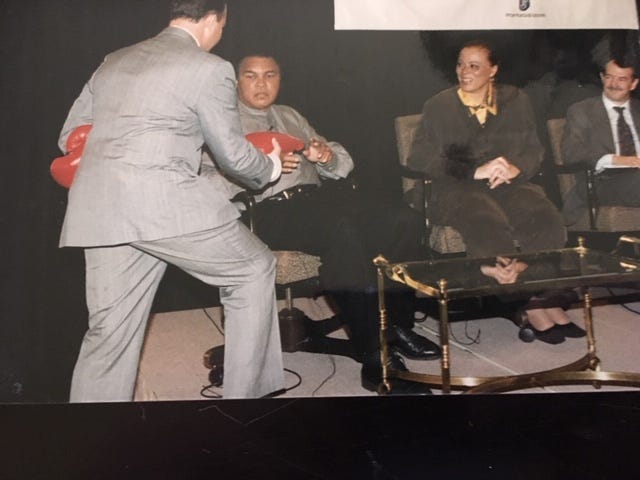
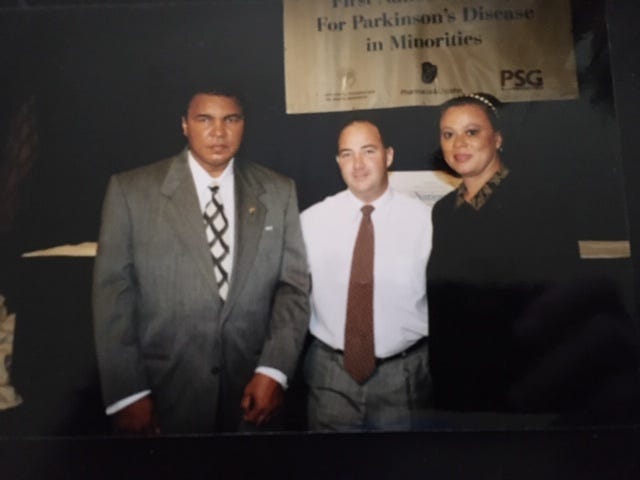
Meeting The Greateston April 20, 2021 at 3:19 pm

Newsboy: John Ruane’s Paper Route

Meeting The Greatest

Read More

Meeting The Greateston April 20, 2021 at 3:19 pm Read More »

Being alone is a choice for many older womenon April 20, 2021 at 3:30 pm

Retired in Chicago

Being alone is a choice for many older women

Read More

Being alone is a choice for many older womenon April 20, 2021 at 3:30 pm Read More »

Shake What Doesn’t Stickon April 20, 2021 at 3:51 pm

Free Your Mind

Shake What Doesn’t Stick

Read More

Shake What Doesn’t Stickon April 20, 2021 at 3:51 pm Read More »

Jessie Montgomery named Chicago Symphony Orchestra’s next composer-in-residenceon April 20, 2021 at 3:00 pm

The Chicago Symphony Orchestra on Tuesday announced the appointment of Jessie Montgoery as the next Mead Composer-in-Residence.

Appointed by CSO music director Riccardo Muti, Montgomery will begin her three-year post on July 1.

“The Chicago Symphony Orchestra has an important tradition of sharing new music with audiences. I am looking forward to continuing that tradition and introducing audiences to the music of composer Jessie Montgomery, whose work I have come to know and admire, in making this selection of the orchestra’s next composer-in-residence,” Muti said.

A composer, musician and educator, Montgomery is also the winner of the the Sphinx Medal of Excellence, the highest honor bestowed by the Sphinx Organization (“a social justice organization dedicated to transforming lives through the power of diversity in the arts,” according to its website), which recognizes extraordinary classical Black and Latinx musicians; and the ASCAP Foundation’s Leonard Bernstein Award in support of emerging composers.

In her new role, Montgomery will receive commissions to write three new orchestral works for the Chicago Symphony Orchestra, according to Tuesday’s announcement, and curate the CSO’s MusicNow contemporary music series, which will feature the Chicago premieres of some of her existing works. A series of newly commissioned chamber pieces will premiere in the final two seasons of her tenure.

“I am deeply grateful to Maestro Muti for having faith in my experience and perspective, for giving me the chance to bring new and exciting music to the CSO, and for sharing his artistry to premiere my own works for symphony orchestra,” Montgomery said. “In my curatorial role, I’m particularly excited about engaging more closely with the new music community in and around Chicago, as well as bridging connections between the CSO and other artists, especially composers with diverse backgrounds, experiences and approaches to music creation.”

Montgomery’s commissioned works have been presented by the Albany Symphony, the American Music Festival, the Chicago Sinfonietta, the Joyce Foundation, the National Symphony Orchestra, the St. Louis Symphony Orchestra and the Young People’s Chorus of New York, among others.

On May 20, Montgomery will join current Mead Composer-in-Residence, Missy Mazzoli, in the livestreamed “From the Composer’s Studio,” an in-depth conversation about “what it means to be a composer working with symphony orchestras in 2021.” A Q&A will follow the 6 p.m. presentation, which is free and open to the public; advance reservations are required and can be made here.

Read More

Jessie Montgomery named Chicago Symphony Orchestra’s next composer-in-residenceon April 20, 2021 at 3:00 pm Read More »

What Does “Defund the Police” Really Mean?on April 20, 2021 at 3:30 pm

Manuel Almanza Jr. sat at the foot of the Illinois Centennial Memorial Column in Logan Square last Friday, wearing his old Marine camo jacket, and holding a handwritten placard reading “I AM ADAM TOLEDO/ FUND THE HOOD/ DEFUND THE POLICE.”

“I could have been Adam,” said Almanza, who grew up in Little Village and served in the Marine Corps from 2008 to 2012. “I was a teenager one time. I liked hanging out with my friends at the park or the YMCA. The way to dress was baggy. Being tall, brown, I was constantly harassed by the police.”

Almanza was in Logan Square Park for a demonstration to protest the police shooting of 13-year-old Adam Toledo. The killing was not “an isolated incident,” he said, but a symptom of a police culture that endangers minority communities more than it protects them.

“The time of talking to the mayor, the police is over,” Almanza said. “It’s time to defund, disarm, dismantle and abolish the police.”

The shooting of Adam Toledo, occuring during the soon-to-conclude trial of Derek Chauvin, has put the “defund the police”/police abolition movement back in the spotlight after a lot of attention was paid by the press during the midterm elections. Much of that attention created more heat than light, because behind the straightforward and sincerely meant slogan lies a lot of ambiguity, in part because organizers are still working on the hows and the whens. “Defund the Police” has transcended politics to become a cultural slogan, printed on t-shirts for sale across the street at Wolfbait & B-girls, a women’s clothing store.

Do they mean “defund”? Yes. But that doesn’t mean fully defund tomorrow, or the next budget year, even if such a thing were possible, which it’s pretty obviously not. A good place to start is a June 2020 New York Times op-ed by Mariame Kaba, director of Project NIA, titled “Yes, We Mean Literally Abolish the Police.” But here’s the key: “We don’t want to just close police departments. We want to make them obsolete.”

Framed this way, it’s theoretically something almost anyone could get behind: not needing police because people just aren’t violent enough to need to be policed, which you’d get to by addressing problems at their root. Setting aside everything else about it, policing is pretty much a last-minute solution to crime and violence. Cops are limited in what they can do if someone is not committing a crime, and then when someone is, significant powers kick in. And this gets most of our attention and money for “fighting” crime.

Many of the Logan Square rally’s speakers expressed a fundamental disagreement with the idea that the state should be empowered to use force and violence against its citizens. This, of course, is fundamental to policing. Police have the authority to restrain, attack, and even kill people they believe are endangering the public. That authority is considered essential for preserving law and order. Now, though, large communities feel that “law and order” is more threatening than the lawlessness that would supposedly ensue in its absence.

“The police do not keep us safe,” the event’s emcee, Karina Solano, shouted to the crowd. “Who keeps us safe?”

“We do!” the thousands in the park shouted back. 

“This is state violence,” said Solano, an organizer with Unete La Villita. “Police: you are not judge, jury, and executioner. We don’t need to see the video to know that Adam deserved to live. The police have a long history of corruption and cover-ups, and they expect us to believe them? There are no excuses. There are no good cops. There is no reforming the police.”

Between speeches, the Chicago Freedom Ensemble, a brass band, performed “We Shall Overcome” and Marvin Gaye’s “What’s Goin’ On?,” an appropriate soundtrack for what has become a significant early 2020s social movement.

Sandra Nevarez, the mother of Marc Anthony Nevarez, who was shot and killed by the police in Little Village last October, noted that Illinois abolished the death penalty—but still allows police to kill.

“We need justice,” Nevarez said. “There’s no reason I should be going to the cemetery every day. Why do they do this to us? Is CPD now the death penalty?”

Despite the “Yes, We Mean Literally Abolish the Police” headline, Kaba writes that “this change in society wouldn’t happen immediately.” Because it is hard to conceive. The Chicago Reader has done some of the best reporting on the subject, and in a 2017 piece, Maya Dukmasova described the step-by-step process of conceiving it by asking the basic question “Are their alternatives to calling 911?”. This was the question posed to attendees of a workshop on police abolition hosted by Showing Up for Racial Justice:

When it came to traffic accidents—for which insurance companies often require police reports—or witnessing drunk or reckless driving, imagining alternatives became considerably more difficult. Kim and Steph presented a set of even more challenging situations: running across an incapacitated stranger, witnessing a mental health crisis or escalating violence.

“We have to recognize that there are times when you are going to have to call the police,” one of the workshop facilitators told attendees. “That doesn’t mean you’re a terrible person.” The late Pat Hill, a former Chicago beat cop and Harold Washington bodyguard—a reform advocate, but not of abolition in the near term—noted to Dukmasova that policing had replaced social services in impoverished Chicago neighborhoods during the end of the 20th century, limiting the scope not only of what’s available, but what seems possible.

The result has been a black-and-white portrayal, even though there’s a lot of nuance just below the surface. It’s also not merely a Black-and-white issue. As Darryl Holiday reported for Chicago, the young police abolitionists have a sometimes tense generational relationship with older Black leaders like Jesse Jackson and former Black Panther Bobby Rush. Not just because of their differences, but because of their similarities, as Rush told Holiday—the older generation wants to bring their experiences to bear on the matter, and they don’t always get listened to, a tale as old as time.

The dynamics will continue to evolve. Toledo came from a Latino neighborhood with different political dynamics, locally and otherwise. What’s largely been a movement led by Black youth and younger adults could change in approach and tenor with more Latino leadership, such as we saw at the Logan Square rally. Or they could follow parallel paths in their own communities. Beneath the simple slogan of “defund the police,” and the simple discourse about it, there’s a lot going on.

Read More

What Does “Defund the Police” Really Mean?on April 20, 2021 at 3:30 pm Read More »

5 Best Spots Around Chicago to Get High on 4/20on April 20, 2021 at 3:07 pm

You guessed it. It’s 4/20! Time to get hiiiigh! Since recreational marijuana has been legalized in Illinois, fellow stoners, like yourself (you’re reading this so it’s safe to assume you’re a cannabis user), are finding unique and chill places to get high. And if you read my last article on dispensaries, you’ll know that Chicago has plenty of shops to purchase weed. So, stock up and head on over to one of our five favorite spots around Chicago to get high this 4/20.

601 W. Montrose Drive, Chicago, IL 60614

Montrose offers outstanding northern views of the skyline and easy access to parks and beaches that straddles Lincoln Park, Lakeview, and Wrigleyville. The best time to enjoy your high is at night when you can see the lit up skyline. With the weather slowly warming up, this is the perfect place to sit by the water and get stoned, or enjoy your trip. 

Advertisement

Yet another favorite spot is the lakefront trail. You can either sit by the water and roll a joint or come high and watch the waves crash. Your choice, but it’s worth coming here to enjoy the skyline and fresh air. 

Advertisement

2001 N Clark St, Chicago, IL 60614

Advertisement

Normally I wouldn’t recommend getting high in such a busy place, but Lincoln Park Zoo is one of the best places to get high. If you’re wanting to smoke during the day, I would recommend doing that before and then taking a walk through the zoo. But, if you’re like me and zoos aren’t really your thing, Lincoln Park has a cool trail that you can walk or just chill at. It’s pretty secluded, so you can roll one out without any distractions. 

1805 N Ridgeway Ave, Chicago, IL 60647

The famous 606 trail is also on this list. Although it is sometimes packed if you come towards the evening and take a few minutes to find your spot, it’s a perfect place to smoke weed. Light up while strolling on the trail as you pass through multiple Chicago neighborhoods. 

1700 S Wentworth Ave, Chicago, IL 60616

Ping Tom Memorial Park is a 17.24-acre public urban park in Chicago’s Chinatown neighborhood, in the South Side, Chicago. Park goers  come to Ping Tom Park to enjoy Night Out in the Parks special events such as concerts and dance performances on the lawn, Shakespeare in the Park, Movies in the Park screenings, and much more. So if you’re looking to actually do something while you’re high that requires minimal effort. This might be the spot for you. Who wouldn’t want to watch a movie while high or enjoy a concert or two? 

Spots to Get High Chicago Featured Image Credit: Pixabay

Disclaimer: This article was written for entertainment purposes only. We are not advocating breaking the law by smoking weed in public. *But* if you did, these are five pretty dope spots, just saying. 

Read More

5 Best Spots Around Chicago to Get High on 4/20on April 20, 2021 at 3:07 pm Read More »

Natural Information Society reaches a new ecstatic peak with Evan ParkerBill Meyeron April 20, 2021 at 11:00 am


While it’s impossible to pinpoint a single peak in John Coltrane’s vast discography, Ascension is one of his most intense expressions of transcendental intent. Local musician Joshua Abrams knows his Coltrane, so it’s no accident that he’s given the name Descension to this summit between his group Natural Information Society and English saxophonist (and fellow Coltrane aficionado) Evan Parker, recorded in 2019 at London’s Cafe Oto.…Read More

Natural Information Society reaches a new ecstatic peak with Evan ParkerBill Meyeron April 20, 2021 at 11:00 am Read More »