Videos

You Must Check Out This Marvel Exhibit at the Museum of Science & Industryon April 23, 2021 at 3:54 pm

If you’ve lived in Chicago long enough, there are decent odds that you’ve visited one, or all, of the famous museums located in the city. A field trip to the Art Institute to see the Van Gogh Experience, the Adler Planetarium to take in a show about the solar system or even the Field Museum to see Sue the T-Rex or any of the animals on display. The overlooked gem of all of these museums has to be the Museum of Science and Industry and its newest exhibit of the history of Marvel comics and films is guaranteed to draw visitors. 

By my own admission, I hadn’t been to the Field Museum for a long time. The exact year escapes but let’s just say it was when the U-505 was still outside of the building. Speaking of, the indoor exhibit for the famed submarine is reminiscent of the submarine pen from Raiders of the Lost Ark. The German U-Boat is awe inspiring to look at and seems to surprise visitors as it almost pops around the corner and the artifacts and information boards are spectacular. Tours are still being offered on a scheduled basis and it’s best to book these tickets ahead of time.

Advertisement

Museum of Science & IndustryHowever, the main reason for my visit was that of the new Marvel Universe exhibit featuring artifacts, original panels, costumes from the films and photo opportunities that are sure to excite the adult and kid in everyone. I had booked my ticket with a friend of mine several months ago and we intentionally purchased tickets for a weekday in order to limit crowds and ensure our spot. While there were some crowds during my visit, it wasn’t enough to dampen my time among the exhibit. As you enter, you’re treated to a brief history of comics and how Marvel didn’t initially start as the media juggernaut we know it to be today. It wasn’t until World War II and the introduction of Captain America that Marvel comics really took off and how it had to contend with the Comic Codes to combat the rise in other pulp genres like horror and crime. 

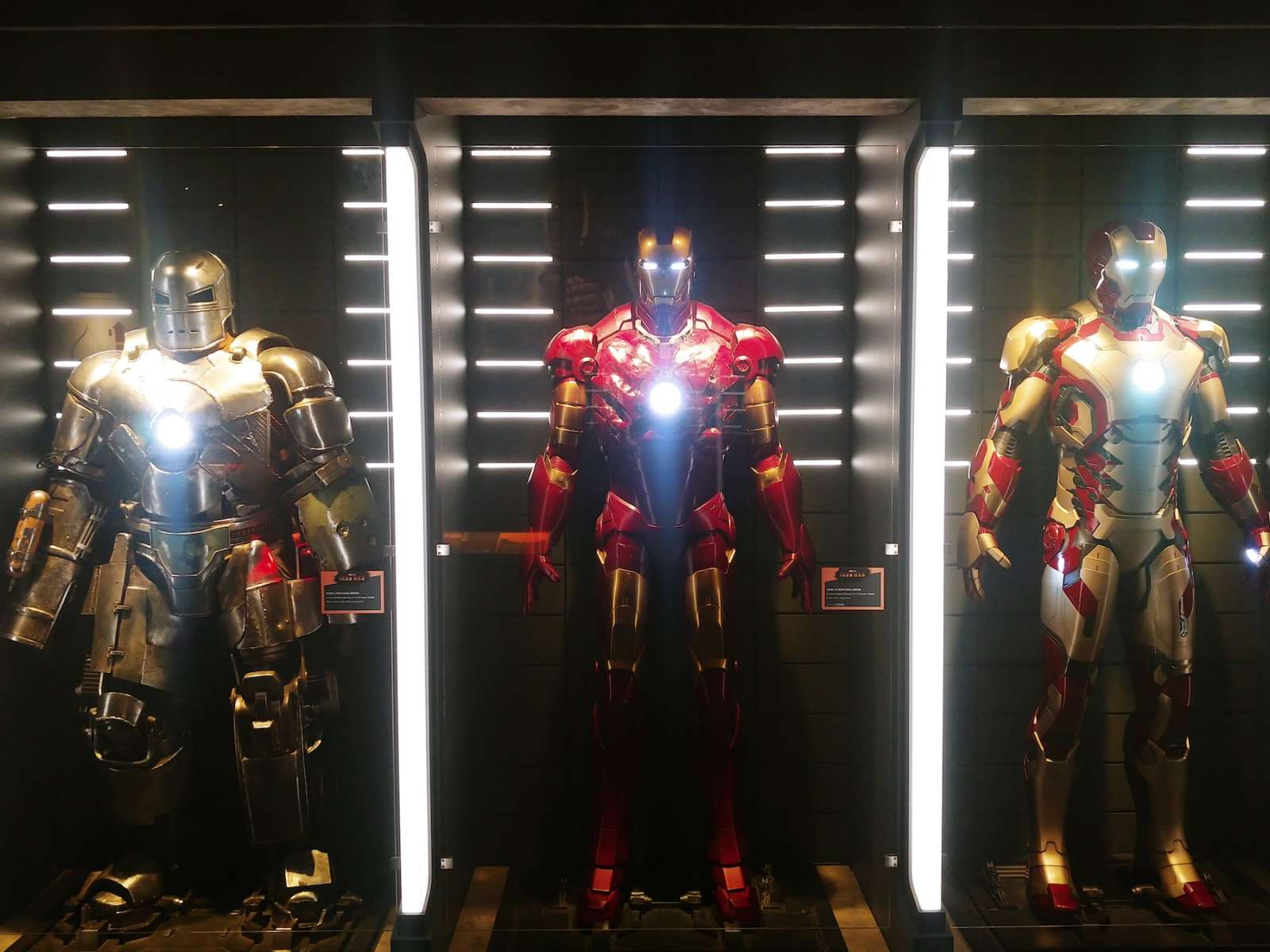
Following this section of the beginning history of Marvel, we then see the portion of the exhibit that’s dedicated to Stan Lee and Jack Kirby as they would go on to create the most iconic superheroes in history including the Fantastic Four, Black Panther, Spider-Man, Iron Man, Ant-Man, The Punisher, Hulk and Thor. While the history of these characters is briefly explored through the use of interactive video monitors and information panels, several statues are available in case you want a photo opportunity with The Thing, Black Panther, Ms. Marvel, Spider-Man or even several of the Iron Man suits from the Marvel Cinematic Universe. 
Advertisement

Museum of Science & IndustryThe exhibit does an amazing job of blending together the lore of the comics with the mass appeal of the films as it proudly displays props and costumes from the films as well as concept art and an explanation of how certain characters would cross over and create new storylines. The overall exhibit is divided into two sections; one with the history and major heroes and the second with some of the other heroes like Daredevil, Jessica Jones, The Guardians of the Galaxy, Captain Marvel and Luke Cage. Not much is devoted to the villains of Marvel with the exception being Thanos and several of the other alien species that are adversaries to the main crop of heroes. 

If the exhibit is lacking in anything, it’s detail in regards to several heroes like The Punisher or Ant-Man and the X-Men section left something to be desired as that section seemed to favor Daredevil and Frank Miller’s contribution to that hero’s storyline. It’s unclear exactly when the exhibit was designed but there’s no mention of the upcoming slate of Marvel films including Shang Chi, Blade or The Eternals. There are only several small information panels regarding the heroes. If you or anyone in your life is a Marvel fan and judging by the box office numbers that’s likely, do yourself a favor and check out the Marvel Universe exhibit as it is running at the Museum of Science and Industry until October 24th but tickets are going fast so get your spot while it is still available. While you’re there, be sure to check the other exhibits such as the U-505, the Space Center and the IMAX Theater which is currently showing a Michael Jordan film. 

Advertisement

Museum of Science & Industry Featured Image Credit: Chris Rupp

Advertisement

Read More

You Must Check Out This Marvel Exhibit at the Museum of Science & Industryon April 23, 2021 at 3:54 pm Read More »

Former Kentucky basketball player Terrence Clarke dies in car crashAssociated Presson April 23, 2021 at 3:03 pm

Kentucky says freshman guard Clarke died following a car accident in Los Angeles. He was 19.
Kentucky says freshman guard Clarke died following a car accident in Los Angeles. He was 19. | Darron Cummings/AP

The 19-year-old Clarke entered the NBA Draft last month.

LEXINGTON, Ky. — Kentucky freshman guard Terrence Clarke died Thursday following a car accident in Los Angeles. He was 19.

The university announced Clarke’s death in a release Thursday night, but did not include any more details. Coach John Calipari said he was “absolutely gutted and sick tonight” and called the player “a beautiful kid, someone who owned the room with his personality, smile and joy.”

“We are all in shock,” Calipari said. “I am on my way to Los Angeles to be with his mother and his brother to help wherever I can. This will be a difficult period for all those who know and love Terrence, and I would ask that everyone take a moment tonight to say a prayer for Terrence and his family. May he rest in peace.”

Los Angeles Police Department Sergeant John Matassa, who works in the Valley Traffic Division, told ESPN that Clarke was a solo occupant in a vehicle that ran a red light going “at a very high rate of speed” in the San Fernando Valley area of Los Angeles at approximately 2:10 p.m. PDT.

Matassa said surveillance video showed that Clarke collided with another vehicle preparing to turn left, hit a street light pole and then a block wall. Clarke was taken to Northridge Hospital Medical and later pronounced dead.

Matassa said the other driver, who was in a truck, did not claim any injuries. Clarke was driving a 2021 Hyundai Genesis and not wearing his seat belt properly, according to Matassa.

The 6-foot-7 Clarke entered the NBA Draft last month after playing in just eight games last season because of a right leg injury. He averaged 9.6 points and 2.6 rebounds.

On Wednesday, Clarke and former Kentucky teammate Brandon Boston Jr. signed with Klutch Sports Group. Agency CEO Rich Paul announced on Twitter that “we are saddened and devastated” by Clarke’s passing and called him “an incredibly hard-working young man.”

From Boston, Clarke started Kentucky’s first six games and was one of its top scorers, highlighted by a career-best 22 points in a loss to Georgia Tech on Dec. 6. The injury ultimately sidelined him for the entire Southeastern Conference regular-season schedule, though he returned to post three assists and two points off the bench in the Wildcats’ SEC Tournament loss to Mississippi State that ended a 9-16 season.

Despite his limited action, Clarke announced his decision to enter the NBA Draft on March 19 and lamented in a release that he didn’t expect to be injured. But he understood that it was “part of the game” and thanked Calipari and teammates among many.

Celtics coach Brad Stevens heard reports about the crash and Clarke’s death shortly after his team beat the Phoenix Suns on Thursday night. Clarke was familiar to the Celtics, their players and even Stevens’ son.

“Not sure how much I want to talk about the game, when you consider he’s a Boston kid … those kids are important to us here,” Stevens said. “I never met him. My son looks up to him. Hard to talk about a basketball game.”

Read More

Former Kentucky basketball player Terrence Clarke dies in car crashAssociated Presson April 23, 2021 at 3:03 pm Read More »

Japan issues new coronavirus state of emergency ahead of OlympicsMari Yamaguchi | Associated Presson April 23, 2021 at 3:42 pm

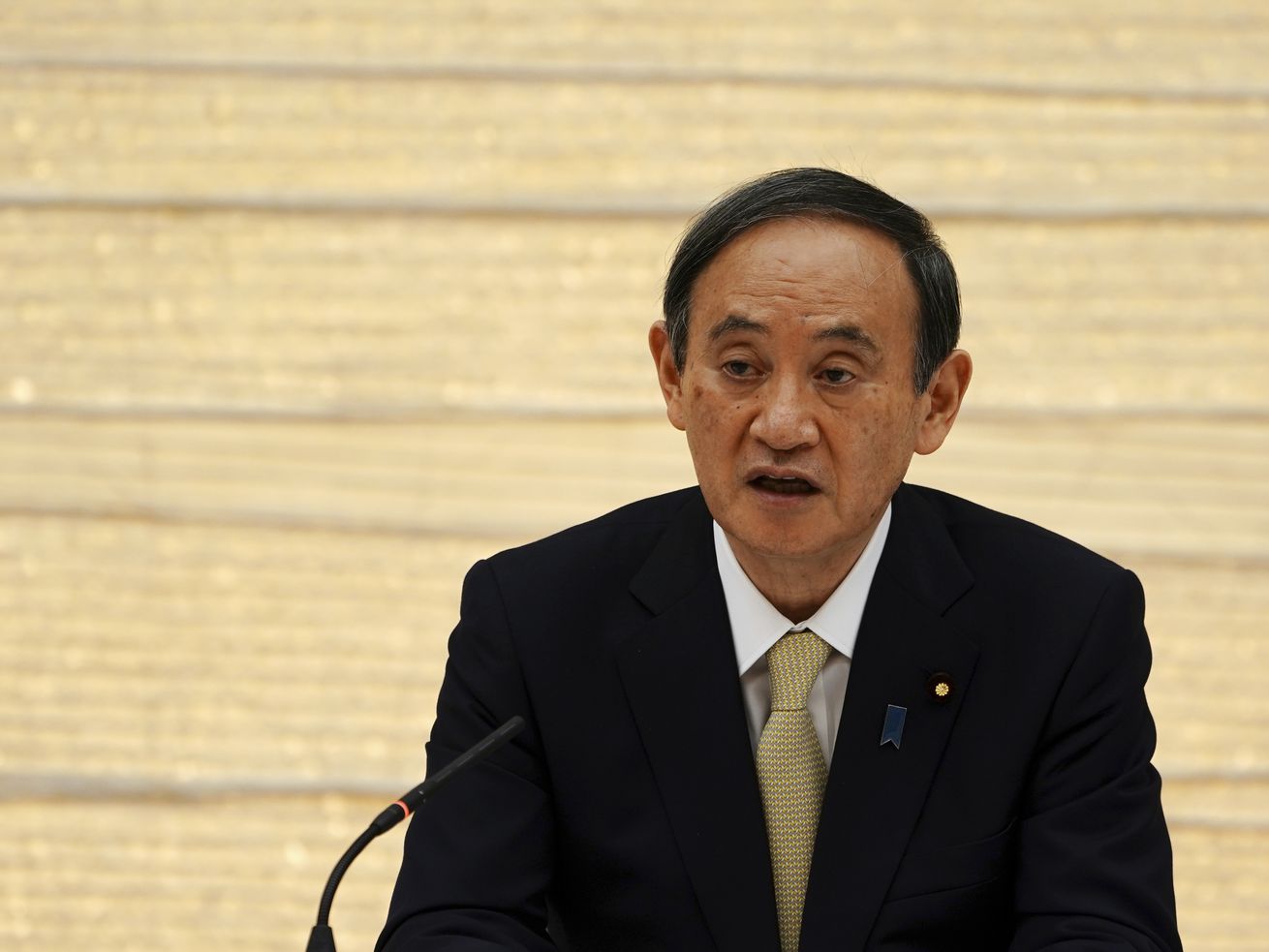
Japanese Prime Minister Yoshihide Suga declares a state of emergency for Tokyo and three other prefectures during the government task force meeting.
Japanese Prime Minister Yoshihide Suga declares a state of emergency for Tokyo and three other prefectures during the government task force meeting. | Eugene Hoshiko/AP

The step is largely intended to be “short and intensive” to stop people from traveling and spreading the virus during Japan’s “Golden Week” holidays from late April through the first week of May.

TOKYO — Japan declared a third state of emergency for Tokyo and three western prefectures on Friday amid skepticism it will be enough to curb a rapid coronavirus resurgence just three months ahead of the Olympics.

Prime Minister Yoshihide Suga announced the emergency for Tokyo, Osaka, Kyoto and Hyogo from April 25 through May 11.

The step is largely intended to be “short and intensive” to stop people from traveling and spreading the virus during Japan’s “Golden Week” holidays from late April through the first week of May, Suga said.

“I sincerely apologize for causing trouble for many people again,” said Suga, who earlier had pledged to do his utmost to prevent a third emergency. But he said he is alarmed by the fast=spreading new variant of the virus in the four prefectures and tougher steps are needed.

Suga said he will ensure enough vaccines are delivered to local municipalities so all of the country’s 36 million senior citizens can receive their second shots by the end of July — a month behind an earlier schedule.

Japan’s third state of emergency since the pandemic began comes only a month after an earlier emergency ended in the Tokyo area. For days, experts and local leaders said ongoing semi-emergency measures have failed and tougher steps are urgently needed.

Past emergency measures, issued a year ago and then in January, were toothless and authorized only non-mandatory requests. The government in February toughened a law on anti-virus measures to allow authorities to issue binding orders for nonessential businesses to shorten their hours or close, in exchange for compensation for those who comply and penalties for violators.

The measures this time are to include shutdown requirements for bars, department stores, malls, theme parks, theaters and museums. Restaurants that do not serve alcohol and public transportation services are asked to close early. Schools will stay open, but universities are asked to return to online classes.

Mask-wearing, staying home and other measures for the general public remain non-mandatory requests, and experts worry if they will be followed.

Japan, which has had about half a million cases and 10,000 deaths, has not enforced lockdowns. But people are becoming impatient and less cooperative and have largely ignored the ongoing measures as the infections accelerated.

Osaka, the epicenter of the latest resurgence, has since April 5 been under semi-emergency status, which was expanded to 10 areas including Tokyo, a step promoted by Suga’s government as an alternative to a state of emergency with less economic damage.

Osaka Gov. Hirofumi Yoshimura, who on Tuesday requested the emergency, said the semi-emergency measures were not working and hospitals were overflowing with patients.

COVID-19 treatment is largely limited to a handful of public-run hospitals, while many small private institutions are not helping out or are unprepared for infectious diseases.

Osaka recorded 1,162 new cases Friday, while Tokyo had 759.

The government has also been slow in rolling out vaccinations, leaving the population largely unprotected before the Olympics begin on July 23.

The May 11 end of the emergency, just ahead of an expected visit by International Olympic Committee President Thomas Bach, triggered speculation that the government is prioritizing the Olympic schedule over people’s health.

Suga said Japan has no choice but to follow the IOC decision to hold the games. “The IOC has the authority to decide and the IOC has already decided to hold the Tokyo Olympics,” Suga said. “We aim to hold the games while taking strong measures to protect people’s lives from the further spread of infections.”

Suga has been reluctant to hurt the already pandemic-damaged economy and faced criticism for being slow to take virus measures.

Japan’s inoculation campaign lags behind many countries, with imported vaccines in short supply while its attempts to develop its own vaccines are still in the early stages. Inoculations started in mid-February but progress has been slow amid shortages of vaccines and healthcare workers.

The rapid increase in patients flooding hospitals has raised concerns of a further staff shortage and delay in vaccinations.

Read More

Japan issues new coronavirus state of emergency ahead of OlympicsMari Yamaguchi | Associated Presson April 23, 2021 at 3:42 pm Read More »

I’m an educator. We shouldn’t give standardized tests this year — or everon April 23, 2021 at 2:38 pm

It’s that time of year again in school districts across America.

No, it’s not time to reflect on the crazy year students have had as remote, hybrid, or maybe even full-time, in-person learners amid a devastating pandemic. And sadly, no, it’s not a time to celebrate, with many traditional end-of-school events — proms, celebrations, graduations — modified or cancelled.

It’s that time of year when students sit hunched over their desks, Number 2 pencils in hand, filling in the bubbles on standardized tests.

Opinion

During my early teaching days on the South Side of Chicago at Corliss and TEAM Englewood high schools (where the majority of the student population was Black), I became an opponent of standardized tests. I saw how test results labeled my students and my schools as failures. I watched as my brightest students, who showed their brilliance on a daily basis in my class, became dismayed by low scores.

I was often dumbfounded as to why their intelligence did not translate into a high test score. Was it anxiety over test-taking? But then I read the ample research on racial bias in standardized testing. During my career of working mainly with students of color, I have come to this conclusion: It is the testing itself that leads to the “achievement gap,” not the students.

Last week, I proctored the SAT test at East Leyden High School, a suburban Chicago school in Franklin Park. As I read the test directions aloud, I realized how this standardized exam, administered every year to millions of high school students across America, does not accurately measure how students learn or show their understanding of concepts.

Students’ results on any standardized test hinge on their ability to pick the right answer on multiple-choice questions. All of their understanding of a text or a math problem is reduced to their choice of fill-in bubble. As any educator in the field of literacy knows, there are a variety of ways to read texts. There are different ways to solve math problems too.

And in the real world, I can’t think of a single job in which adults read text and then answer a multiple choice question. Instead, they apply their skills to the job at hand.

Biden’s broken promise

Last spring, due to the pandemic, many districts cancelled standardized exams and colleges began waiving exam requirements for applicants. Even before the pandemic, a growing number of colleges and universities had begun eliminating exam requirements, as research has shown that student GPA’s predict college success better than standardized test scores.

So, why are we bringing back the pre-pandemic testing status quo now, in an about-face from the Biden administration?

In 2019, Joe Biden campaigned on the promise of curbing standardized testing. But now, his Department of Education has ordered that exams be administered despite the pandemic.

Biden’s administration says it wants to see the impact of disrupted learning due to COVID-19. The National Urban League, the National Center for Learning Disabilities and other groups agree, especially as it pertains to the impact on students of color.

But when has testing ever led to an educational revival for schools or students? It usually has the opposite effect: Labeling schools as “bad” and putting them at risk for closure, overwhelmingly in communities of color.

It took a pandemic for educators to imagine and operate in a world without testing — and our kids and schools did just fine without it.

Trust educators

What if we trusted teachers in the way that we trust other professionals to do their job? Instead, the Department of Education has decided to trust the test.

Standardized exams will be given as usual this year, though many state leaders oppose that action, including in Illinois. Once the pandemic is over, we can expect the same routine.

I invite our federal decision-makers to come to our schools and see learning in action. Watch as our students discuss Shakespeare or solve a calculus problem. Listen to them play music. See how often they check out library books because they’ve learned to love reading.

Then, come on the day they have to take a standardized exam. No joy, no sound, no creativity.

It is time for us to go beyond re-thinking standardized testing and end them altogether.

Trust our educators to teach, assess and prepare our students for the world beyond school.

Gina Caneva is the library media specialist for East Leyden High School in Franklin Park. She taught in CPS for 15 years. Follow her on Twitter @GinaCaneva

Send letters to [email protected]

Read More

I’m an educator. We shouldn’t give standardized tests this year — or everon April 23, 2021 at 2:38 pm Read More »

Breaking down Week 6’s top high school football gameson April 23, 2021 at 2:45 pm

No. 1 Loyola at No. 5 Marist, 6 p.m. Friday

With no playoffs, the biggest prize available this season is the final No. 1 ranking. No. 2 Lincoln-Way East has a strong case too, but running the table in the state’s toughest conference could wrap it up for Loyola (5-0, 2-0 CCL/ESCC Blue). No one’s been able to slow down Ramblers running back Vaughn Pemberton, and the Ramblers defense has passed every test. Marist (4-1, 1-1) has a dominant lineman in Notre Dame-bound Pat Coogan and a productive quarterback in Dontrell Jackson.

No. 4 Mount Carmel at No. 11 Brother Rice, 6 p.m. Friday

If Marist beats Loyola, Mount Carmel (4-1, 1-1) could grab a share of the CCL/ESCC title with a win. Dual-threat quarterback Justin Lynch, a Temple recruit, makes the Caravan go. Illinois recruit Kenenna Odeluga is an impact player on both sides of the ball for Mount Carmel. Brother Rice (3-2, 0-2) has the conference’s reigning Offensive Player of the Year in running back Willie Shaw.

No. 14 Prospect at No. 13 Barrington, 7 p.m. Friday

The beginning of the IHSA playoffs in 1974 meant the end of the Mid-Suburban League Super Bowl matching the conference’s division champs. It’s back for at least one year as a showdown between 5-0 teams with powerhouse offenses. Prospect is led by quarterback Gary Moeller and running back Luke Zardzin, who will be preferred walk-ons at Wisconsin and Northern Illinois respectively. Quarterback Peter Anderson has passed for 11 touchdowns and run for five more for Barrington.

No. 15 WW South vs. St. Charles North, 1 p.m.
No. 19 Wheaton North vs. No. 16 Batavia, 4 p.m. Saturday at Huskie Stadium, DeKalb

The DuKane Conference has established itself as the state’s premier Class 7A league, and it’s wrapping up the pandemic season with the closest thing we’ll get to playoffs: the four best teams playing a doubleheader at one of the IHSA’s rotating state final sites. With a number of juniors making an impact on offense and sophomore Ross Dansdill sparking the defense, Wheaton North (4-1) will be a force this fall. Batavia (4-1) has one of the state’s premier linebackers in Arizona-bound Matt Weerts (53 tackles, seven tackles for loss) and a balanced offense. WW South (4-1) features an elite pass-and-catch duo in Parker Brown and Brandon Bell, who teamed up on a 99-yard TD last week. Jordan Nubin, who will be a preferred walk-on at Minnesota this fall, is one of several two-way standouts for St. Charles North (3-1).

Read More

Breaking down Week 6’s top high school football gameson April 23, 2021 at 2:45 pm Read More »

Norwegian noise-rockers Årabrot delve into dark pop on Norwegian GothicMonica Kendrickon April 23, 2021 at 11:00 am


Norwegian noise-rock band Årabrot have undergone many personnel changes over their two-decade career, and front man, composer, and sole constant member Kjetil Nernes has brought forth a different phase in the group’s sound with every one. In recent years, his main collaborator has been Swedish-Norwegian electronic producer and singer Karin Park; they’re also a married couple, and live in an old church in Park’s home village in Sweden that doubles as their studio (though they’ve also made several recordings at Electrical Audio, including 2011’s Solar Anus, which won them a Spellemann Prize for best metal record).…Read More

Norwegian noise-rockers Årabrot delve into dark pop on Norwegian GothicMonica Kendrickon April 23, 2021 at 11:00 am Read More »

Topless clubs in Las Vegas among Nevada businesses allowed to reopen under COVID protocolsAssociated Presson April 23, 2021 at 12:51 pm

Dancers at Las Vegas clubs like this one, Girls of Glitter Gulch, can soon shed their tops along with some coronavirus restrictions under rules a Nevada COVID-19 task force has approved.
Dancers at Las Vegas clubs can soon shed their tops along with some coronavirus restrictions under rules a Nevada COVID-19 task force has approved. | Jeff Scheid / Las Vegas Review-Journal via AP

As of May 1, dancers there also can once again get face-to-face with patrons. But masks are still required for adult entertainment employees and recommended for customers.

LAS VEGAS — Topless dancers in Las Vegas can soon shed coronavirus restrictions along with some of their clothing and once again get face-to-face with patrons under rules accepted Thursday by a Nevada COVID-19 task force.

But masks still will be required for adult entertainment employees and will still be recommended for customers.

Strip clubs that went dark when Nevada Gov. Steve Sisolak ordered casinos, clubs and nonessential businesses closed in March 2020 will be able to open May 1 at 80% of fire code capacity under strict social distancing guidelines.

The rules will allow strip club entertainers to get closer than three feet to patrons if the entertainer has gotten at least a first coronavirus vaccination 14 days earlier, according to county rules or if the dancers test negative in a weekly COVID test.

Occupancy limits will be relaxed but not completely lifted at many other businesses — stores, spas and saunas, restaurants and bars, even karaoke clubs — under a new reopening plan adopted by Clark County officials.

Deputy Clark County Fire Chief Billy Samuels.

Hair and nail salons, tattoo parlors and massage therapists will be able to book customers by appointment only.

A separate plan to lift restrictions almost completely in Washoe County skidded to a stop after health district, school and Reno city officials protested, pointing to rising coronavirus case numbers.

Existing rules including 50% capacity and six-foot social distancing will remain in effect.

The coronavirus pandemic has claimed 5,400 lives in Nevada and badly hurt an economy dependent on tourism, conventions, hotel bookings and big crowds. It also shut down businesses and threatened the livelihood of bartenders, waiters, entertainers and hotel clerks.

“We know there is COVID fatigue in our community,” Washoe County Commission Chairman Bob Lucey said before accepting an offer from task force chief Caleb Cage to broaden support and submit a finalized plan in coming days. No firm time frame was set.

Lucey had favored what he termed a “workable” plan to relax restrictions but acknowledged a rift among policymakers.

“People are going to return to life and the things they’ve missed in the last year whether we dictate mandates or not,” he said.

The snag came after last-minute protest letters Wednesday from county Health Officer Kevin Dick and Reno City Manager Doug Thornley pointed to a rise in the number of Washoe County COVID-19 cases linked to a variant first detected in the United Kingdom and a rise in the county’s 14-day test positivity rate to 7.2%. The World Health Organization goal to relax restrictions is 5% or less.

Scientists in Great Britain believe the variant is more contagious than previously identified strains. But U.S. health officials say vaccinations being given now are thought to be effective against the variant.

Dick and Thornley called for social distancing requirements to stay in place at least until June 1.

The governor has set a June 1 date for essentiallly lifting all state restrictions except for a requirement for people to wear face coverings.

Several rural Nevada counties received the go-ahead Thursday to relax restrictions and reopen businesses May 1, including Churchill, Douglas, Elko, Eureka, Humboldt and Nye. Other counties received approval last week.

Kyra Morgan, a Nevada state biostatistician, reminded the task force that lifting restrictions almost certainly will spread the virus.

The state Department of Health and Human Services has tallied more than 312,000 cases in the past 13 months. But rates have slowed since peaks in December and January.

As restrictions are relaxed in and around Las Vegas, bar seating will be OK next month with up to four people per group, and 12 people can be seated around dining tables, Samuels said. Most restrictions on youth and adult sports will be lifted.

Casino dayclubs and nightclubs can reopen, but designated dancing areas will remain closed until health officials report that a 60% community vaccination rate is met.

The reopening plan that Clark County lawmakers adopted for the state’s most populous area and its key economic region relies on reports from regional health officials about the percentage of people 16 and older in the county who have had gotten at least one vaccination shot, a number that’s now reached about 43%.

Read More

Topless clubs in Las Vegas among Nevada businesses allowed to reopen under COVID protocolsAssociated Presson April 23, 2021 at 12:51 pm Read More »

Vocabulary questions and lightning round tie-breaker added to National Spelling BeeBen Nuckols | Associated Presson April 23, 2021 at 1:05 pm

The eight co-champions of the 2019 Scripps National Spelling Bee hold the trophy at the end of the competition in Oxon Hill, Maryland.
The eight co-champions of the 2019 Scripps National Spelling Bee hold the trophy at the end of the competition in Oxon Hill, Maryland. | AP

The 96-year-old bee has in the past included vocabulary on written tests but never in the high-stakes oral competition rounds, where one mistake eliminates a speller.

WASHINGTON— The Scripps National Spelling Bee is undergoing a major overhaul to ensure it can identify a single champion, adding vocabulary questions and a lightning-round tiebreaker to this year’s pandemic-altered competition.

The 96-year-old bee has in the past included vocabulary on written tests but never in the high-stakes oral competition rounds, where one mistake eliminates a speller. The only previous tiebreaker to determine a single champion was a short-lived extra written test that never turned out to be needed.

The changes, announced this week, amount to a new direction for the bee under executive director J. Michael Durnil, who started in the job earlier this year.

Both new elements, however, also signal a departure from what for many observers is the core appeal of the bee: watching schoolchildren who have such mastery of roots and language patterns that they can figure out how to spell the trickiest words in the dictionary, even if they’ve never heard them before.

The 2020 bee was canceled because of the pandemic, the first time since World War II that the bee wasn’t on the calendar. This year’s event will be mostly virtual, and the in-person finals on July 8 have been moved from the bee’s longtime home in the Washington area to an ESPN campus in Florida.

The bee had co-champions from 2014-16, and the 2019 bee ended in an eight-way tie after organizers ran out of words difficult enough to challenge the top spellers, whose preparation with personal coaches and comprehensive study guides was no match for the vaunted Scripps word list.

Durnil did not directly criticize the previous bee but said ending with one winner was a priority.

“I think the spellers don’t enter into our competition thinking that they’re going to have to share the ultimate distinction of the spelling champion with anybody else,” Durnil told The Associated Press. “From a competitive standpoint, we owe it to the spellers to identify the champion of the spelling bee.”

In the lightning round, spellers would have 90 seconds to spell as many words as they can correctly. The rapid-fire tiebreaker would only be used if the bee gets toward the end of its allotted time and can’t get to a single winner in the traditional way, by eliminating spellers for getting a word wrong. The remaining spellers would get the same words in the lightning round and be isolated from one another.

Adding vocabulary, Durnil said, brings more academic rigor to the bee in keeping with its educational mission.

Siyona Mishra, a finalist in the bee in 2015 and 2017 who now coaches younger spellers — kids can’t compete after eighth grade — said there was a contradiction in Scripps’ justification for the changes.

“Simultaneously saying that vocab questions on (the) live stage are being added to encourage understanding of words doesn’t really match up with their addition of a lightning round of spelling,” Mishra wrote in an email. “Adding a lightning round will only emphasize to spellers that memorizing and immediately recognizing a word is what is more important than really learning the words.”

Memorizing definitions is not a core element of spellers’ training, said Zaila Avant-Garde, a 14-year-old from Hardey, Louisiana, who will be competing in this year’s bee.

“I just kind of pick up the definition. It seeps into me from looking at them. It’s not like I specifically dedicate time to studying vocabulary,” Zaila said. “Will I now study it? I’m not really sure.”

Zaila stressed that she didn’t mind the addition of vocabulary or the lightning round, which she said “will be really entertaining to watch or even to compete in.”

Scripps said live vocabulary rounds — in which spellers are given multiple-choice questions about word definitions — are being used in some regional bees this year, but some spellers were caught off guard by the change.

“I think it’s unfortunate that these changes were rolled out so late in the process,” Scott Remer, a former speller and spelling coach who wrote a book about how to train for the bee, said in an email. “Many students (including my tutees) have been studying hard for nationals for many months without any certainty about the format of the bee.”

Amber Born, who competed in the bee from 2010-13, said the lightning round “emphasizes speed over skill in a contest where that shouldn’t be the deciding factor.”

“I would prefer they just asked harder words,” Born added, “but it probably wouldn’t be as interesting on TV.”

Read More

Vocabulary questions and lightning round tie-breaker added to National Spelling BeeBen Nuckols | Associated Presson April 23, 2021 at 1:05 pm Read More »