Videos

Mayor unveils details of capital spending planFran Spielmanon April 26, 2021 at 6:00 pm

The Chicago and United States of America flags fly outside City Hall with the Chicago Board of Trade building in view on July 18, 2018.
Mayor Lori Lightfoot on Monday announced details of her capital spending plan, loaded with infrastructure projects. | Sun-Times file

Lightfoot is unveiling details of her five-year capital plan at the start of the 2021 street-paving season.

Mayor Lori Lightfoot famously warned African-American aldermen who dared to vote against her 2021 budget, “Don’t ask me for s—t for the next three years” when it comes to choosing projects for her five-year, $3.7 billion capital plan.

Ald. Jeanette Taylor (20th) was so infuriated, she said it proved Lightfoot was “no better than Daley or Rahm.”

On Monday, that mayoral threat, coming before the closest budget vote Chicago has seen since Council Wars, was all but forgotten at a feel-good press conference launching the five-year capital plan at the start of the 2021 paving season.

There was no more talk about punishing recalcitrant aldermen. Instead, a City Hall news release distributed before the press conference talks about a capital plan that relies on “data to select and prioritize investments across the full array of public assets, address the worst first, along with an emphasis on equity and safety in order to create jobs.”

To emphasize the “equity” component, Lightfoot chose an arterial street resurfacing project at 81st Street and Damen Avenue in Auburn Gresham as the backdrop for Monday’s announcement.

It’s among 75 miles of arterial streets and 500 blocks of residential streets expected to be resurfaced across over the next two years, nearly double Chicago’s annual average. That’s thanks to mayor’s ambitious capital plan as well as an infusion of state and federal funding.

“With paving season underway across our city, we are thrilled to be able to create and offer jobs to our residents that will allow us to make critical infrastructure repairs in all 77 of our neighborhoods,” Lightfoot was quoted as saying in the press release.

“With an emphasis on equity, the Chicago Works infrastructure plan will allow us to invest in the lives of residents in need and bring out entire city closer together by literally building bridges between our communities. This effort will allow us to unlock our city’s full potential, give our residents the resources they need to succeed right in their own neighborhoods and ensure that our city retains its reputation as a world class destination filled with state-of-the-art infrastructure.”

The first two years of the mayor’s capital plan is funded by a $1.4 billion general obligation bond issue approved by the City Council, with $600 million of that spent in the first year.

Projects includes everything from road and bridge repairs, police cars, fire trucks and snow plows to long-deferred maintenance on libraries, fire houses and health centers. There’s even enough money for streetscapes, lighting, sidewalks and bikeways as well as traffic safety improvements and public art.

The goal is to make Chicago a more sustainable and safer city to walk, bike and take mass transit.

“Additional investments in fleet and equipment will not only drive down our operations and maintenance costs, but improve the efficiency and productivity of our workforce, ensuring residents get services faster,” Assets Information and Services Commissioner David Reynolds was quoted as saying.

Transportation Commissioner Gia Biagi said the $3.7 billion capital plan sets the stage for, what she called a “legacy investment in our critical transportation infrastructure,” especially in neighborhoods historically “challenged by mobility and economic hardships.”

“As our city leads the way on recovery from the pandemic, Chicago Works includes funding for streetscapes, lighting, bikeways, bridges, sidewalks, traffic safety, public art and more,” Biagi was quoted as saying.

“These improvements prioritize making it easy to safely move around the city in sustainable ways like walking, biking and taking public transit while making our streets and our public streets and our public way vibrant, safe and inviting places.”

As always with city construction contracts valued at more than $100,000, at least half the jobs must be performed by Chicago residents.

At last week’s City Council meeting, former Black Caucus Chairman Roderick Sawyer (6th) introduced an ordinance to narrow that residency requirement. Instead of just any Chicago residents, he wants half the jobs to go to residents of areas that are “socio-economically disadvantaged.”

“Now more than ever, we must invest in our city’s human infrastructure by providing good-paying, sustainable jobs to stay afloat and contribute to our economic recovery,” Economic and Capital Development Committee Chairman Gilbert Villegas (36th), Lightfoot’s former floor leader, was quoted as saying.

Last fall, aldermen were told the largest capital plan in Chicago history would be bankrolled by a mix of tax increment financing, a first-year bond issue backed by property and/or sales taxes and “interim financing and cash-flow management” in anticipation of future state and federal funding.

That wasn’t good enough to satisfy Civic Federation President Laurence Msall.

Not when Lightfoot’s “pandemic” budget already included a $1.7 billion debt restructuring and refinancing.

“It’s very hard to see how the city could afford to go to market for a $3.7 billion capital plan without a new revenue source to back it up at the same time they’re looking to re-structure their existing debt merely to free up room in the current operating budget,” Msall told the Sun-Times.

“The city is very highly leveraged. It has a very low credit rating. And to undergo that type of additional borrowing without a new revenue source would be very expensive. And it might not be feasible.”

Lightfoot was asked then how the city could afford $3.7 billion in additional debt without a new, clearly identified funding source. “We can’t afford not to,” she replied.

“The need is there. We have to figure out a way to move forward and not just say, `It’s too much. It’s too big.’ We got the same blowback when we said we’re gonna start the process [of replacing] lead service lines. That can’s been kicked down the road so many times, it’s unrecognizable,” the mayor said on that day.

Pounding the podium for emphasis, Lightfoot added: “I ran, I’m here to solve big problems and I’m not gonna shy away from them. We have to be committed to … taking on the needs of our city. And having a rational, long-term capital plan is a critical part of who we must be.”

Lightfoot says she also believes “government can actually be a stimulus” at a time of unprecedented economic hardship.

“If we are actually committed to a long-term capital infrastructure plan, that means we’re creating jobs and jobs is something that we all desperately need,” she said.

Yet another source of controversy is the mayor’s plan to increase the “buying power” of the aldermanic menu program — from $1.32 million-a-year for each of the 50 aldermen to $1.5 million — by taking projects off their plate.

In return, she wants aldermen already reeling from her elimination of aldermanic prerogative to relinquish control over the selection of projects, turning it over to the Chicago Department of Transportation.

That will undoubtedly please Inspector General Joe Ferguson, who’s sought menu reforms for years. But it’s a non-starter with mayoral allies and critics alike.

“Our communities depend on us — not a bureaucrat, but us. Their elected officials. I can’t buy something I cannot deliver,” Health and Environmental Protection Committee Chairman George Cardenas (12th) has said.

“We ought to get the extra buying power. But as far as giving up control, I don’t think that’s in the cards. Our constituents depend on the fact that, when they talk to the alderman, some things are gonna get done. We need to speak with certainty — not hypotheticals.”

Among the highlights of the first two years of projects:

• Aldermanic menu program: $216 million over two years; the yearly menu budget increases from $1.32 million to $1.5 million per ward.

• Bridges and viaducts: $164.3 million to complete funding for 23 bridge replacement projects; $66.2 million for 37 bridge repair projects; $16.9 million to rehabilitate 13 underpasses; and $7.5 million to begin the process of improving vertical clearance at 5 viaducts.

• Streets and alleys: $250.4 million for residential and arterial street resurfacing. Also funds one “green alley” in each ward every year.

• Street lighting: $112.3 million for the complete replacement of 300 blocks of lighting infrastructure, along with targeted light pole replacements and wiring repairs.

• Traffic signals: $28.4 million to modernize Chicago’s traffic signal system.

• Sidewalks and pedestrian rights-of-way: $112.2 million for sidewalk repair.

• Complete streets: $49.0 million for improvements to bike lanes, priority bus routes, pavement markings and Vision Zero pedestrian safety projects; $104.2 million toward funding 24 streetscape projects, including those in Invest South/West Corridors; $6 million for planting 12,000 trees.

• Waterways: $12.3 million to rebuild one mile of lakeshore encompassing Morgan Shoal and expand the Calumet River Dredging Facility to ensure clean waterways for commerce on the Calumet River.

• Facilities: $132.5 million for renovations and system upgrades to public facilities such as Department of Family and Supportive Service centers, Chicago Department of Public Health locations, Chicago Public Library locations. Also includes environmental remediation of city-owned land and demolition of hazardous buildings.

• Equipment: $162.1 million for the Chicago’s vehicle fleet, equipment, and IT systems.

Read More

Mayor unveils details of capital spending planFran Spielmanon April 26, 2021 at 6:00 pm Read More »
It’s the teachers’ union — not charter schools — lobbying for an elected Chicago school boardAndrew Broyon April 26, 2021 at 6:24 pm

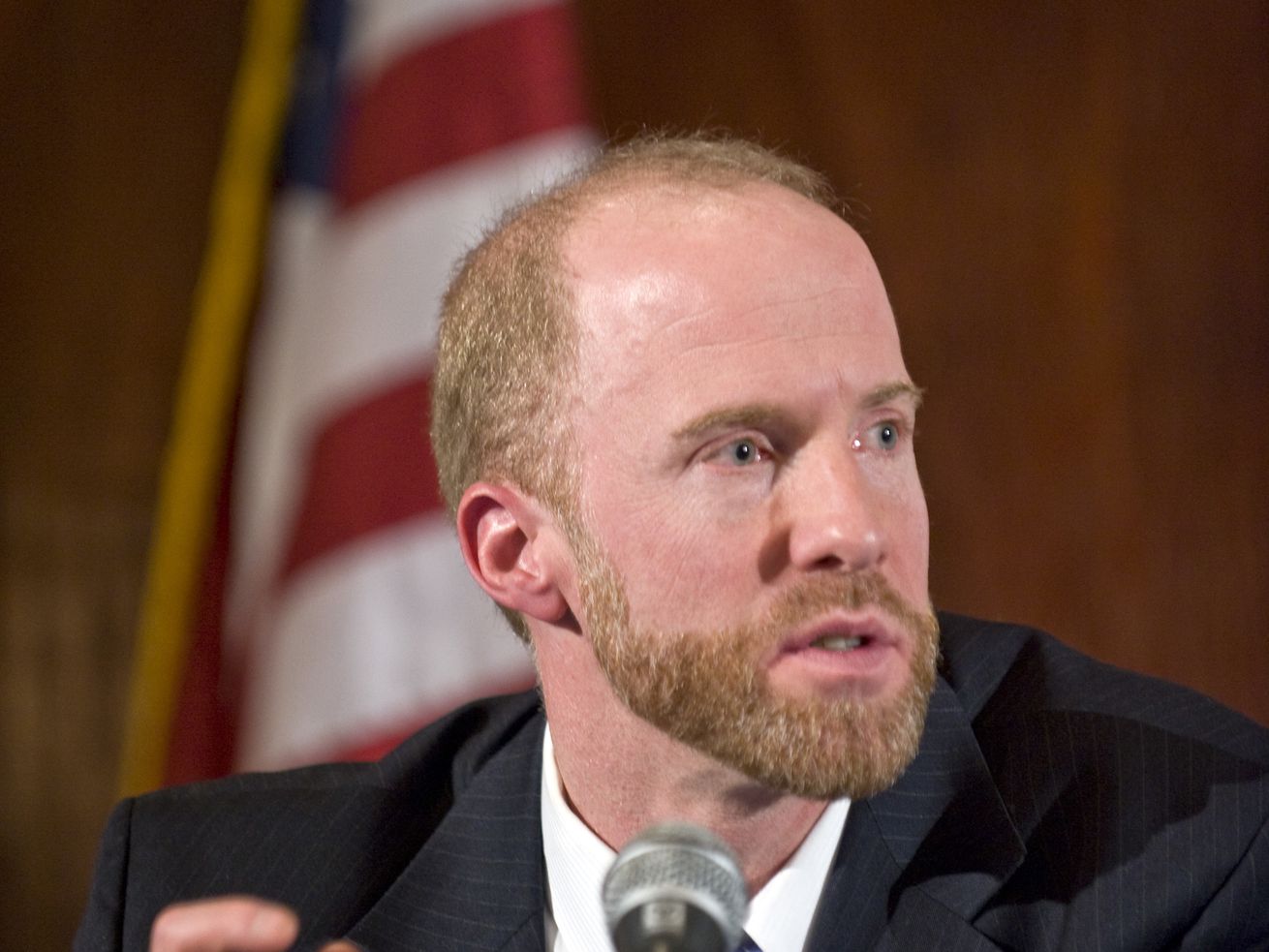
Andrew Broy, president of the Illinois Network of Charter Schools, argues against a proposal in Springfield to create a 21-member elected Chicago school board, but says his organization will supporter candidates to the board if it comes to that. | Sun-Times Media

But charter advocates will be prepared to offer candidates for an elected board, standing with Black and Latinx families and educators who choose charter public schools.

As the leader of the principal charter public school advocacy organization in Chicago, I feel compelled to respond to recent reports and op-eds in the Sun-Times related to proposed legislation to create a fully elected school board in Chicago.

Multiple articles have claimed that an elected board ultimately will lead to a high-dollar political fight between the Chicago Teachers Union and charter advocates, similar to what has taken place in major cities like Los Angeles. This creates a false equivalency between the CTU and our organization. The Illinois Network of Charter Schools is not the organization lobbying Springfield in an attempt to create a fully elected school board.

To be clear, the question of school board governance is not about individual organizations, special or adult interests. Getting this legislation right is about serving the Black and Latinx communities in this city who have been historically voiceless in education decisions and outcomes. This process is about righting the wrongs of past policies that did not seek enough community input and support before altering the foundation of many Chicago communities — its public schools.

But to think such a result will occur by adding 21 new politicians to Chicago’s fractured political environment is the height of naivete.

Whatever the outcome in Springfield, charter advocates will be prepared to offer candidates for an elected board and unify our coalition to back a series of candidates who will stand with Black and Latinx families and educators who choose charter public schools. We cannot in one breath say that Chicagoans deserve to exercise their voice through an elected board, but then in the next diminish the voices of tens of thousands of charter public school families who have voted with their feet for over 20 years in this city.

Unfortunately, it has become politically advantageous to scapegoat the charter public school community and the families who choose this option. But we will not allow our families to be used as political footballs to score points with a vocal minority of adult advocates. We fight for children and respect families’ choices — that will never change.

INCS supports a school board that is ready and willing to work with all communities and families, including the 97% of Black and Latinx families that charter public schools serve. We support a school board that leads with policies and actions that prioritize students and their individual needs, respects families’ choices, and supports all public schools equitably, regardless of school type. When school boards act critically and fairly, there is no need for political volleying of children to elevate adult interests. We work with elected school boards across the state that have authorized charter schools, from Rockford to East St. Louis. The boards that are most effective are those that put student interests and learning ahead of self-interest, narrow parochial concerns, or ideological battles.

One thing remains constant for INCS: no matter if Chicago has a fully elected school board, a hybrid school board, or mayoral control, charter public schools are a critical component of the success of Chicago Public Schools over the past two decades. To deny that fact is to deny the reality of the thousands of charter public school graduates who have graduated college and are successfully contributing to their communities every day. Many of these graduates are currently employed by the city, CPS or in the charter public school community.

Simply put, INCS supports policies that center the needs of students and leaders who lead with integrity, equity, and are community-minded. We always stand with those individuals who are willing to work in coalition and partnership to create the best outcomes for students.

Andrew Broy is president of the Illinois Network of Charter Schools and a former civil rights attorney and public school teacher.

Send letters to [email protected].

Read More

It’s the teachers’ union — not charter schools — lobbying for an elected Chicago school boardAndrew Broyon April 26, 2021 at 6:24 pm Read More »

2021 Chosen Few picnic postponed; online event scheduled for July 4 weekendEvan F. Mooreon April 26, 2021 at 6:37 pm

The 2021 Chosen Few Picnic & House Music Festival has been postponed.
The 2021 Chosen Few Picnic & House Music Festival has been postponed. | Kathy Chaney/ Sun-Times

For the second summer in a row, Chicago’s house heads will have to get their fix online.

Chicagoans craving a semblance of live summer music in the city are taking yet another hit to their plans as a popular local event rebrands as a virtual festival due to COVID-19 concerns.

The Chosen Few Picnic & House Music Festival, which takes place annually in Jackson Park, has postponed its usual slate of in-person activities in favor of a July 3 online event, according to an official announcement Monday.

Last spring, the group consisting of DJs Wayne Williams, Jesse Saunders, Alan King, Andre Hatchett, Mike Dunn and Terry Hatcher made a similar announcement, and despite ideas to hold an in-person socially distanced show, the group wants to wait for an actual picnic and festival — a popular event on the social calendar of many Black Chicagoans — local house heads know and love.

“The health and safety of our attendees continue to be our top priority, and it is not possible for us to execute the very costly and time-consuming process of planning for an event that may not happen given the level of public health uncertainty that still exists,” the Chosen Few DJs said in a website statement.

The Chosen Few DJs said the details on the 2021 virtual event, where tickets purchased for the 2020 festival will be honored at the 2022 in-person event, are coming in the “next few days.”

Ticket holders also have the option to submit a request for a refund at https://explore.seetickets.us/refund-form-chosen-few-2021/. Refund requests must be made by 11:59 p.m. on May 22, 2021.

Earlier this month, the Silver Room Block Club Party, which normally takes place in July in the Hyde Park neighborhood, was also canceled for the second consecutive summer amid COVID-19 and business concerns.

Read More

2021 Chosen Few picnic postponed; online event scheduled for July 4 weekendEvan F. Mooreon April 26, 2021 at 6:37 pm Read More »

Walk-ins now welcome at all six COVID-19 mass vaccination sites in suburban Cook County (LIVE UPDATES)Sun-Times staffon April 26, 2021 at 6:44 pm

Ashlee Rezin Garcia/Sun-Times

Get the latest news on how COVID-19 is impacting Chicago and Illinois. Follow here for live updates.

The latest

Walk-ins now welcome at all six COVID-19 mass vaccination sites in suburban Cook County


Ashlee Rezin Garcia/Sun-Times
Members of the Illinois National Guard and workers help set up the county’s sixth large-scale community vaccination site in Matteson, Tuesday afternoon, April 13, 2021.

Starting Monday, all six COVID-19 mass vaccination sites in suburban Cook County will start accepting walk-in appointments.

While scheduling appointments in advance are still encouraged, walk-ins will be welcomed at the county’s mass vaccination sites Monday through Saturday from 8:30 a.m. to 5 p.m.

For help finding an appointment in Chicago, visit zocdoc.com or call (312) 746-4835.

For suburban Cook County sites, visit vaccine.cookcountyil.gov or call (833) 308-1988.

To find providers elsewhere, visit coronavirus.illinois.gov or call (833) 621-1284.

Read Madeline Kenney’s full story here.


News

1:43 p.m. 2021 Chosen Few picnic postponed; online event scheduled for July 4 weekend

Chicagoans craving a semblance of live summer musicin the city are taking yet another hit to their plans as a popular local event rebrands as a virtual festival due to COVID-19 concerns.

The Chosen Few Picnic & House Music Festival, which takes place annually in Jackson Park, has postponed their usual slate of in-person activities in favor of a July 3, online event according to an official announcement Monday.

Last spring, the group consisting of DJs Wayne Williams, Jesse Saunders, Alan King, Andre Hatchett, Mike Dunn and Terry Hatcher, made a similar announcement, and despite ideas to hold an in-person socially-distanced show, the group wants to wait for an actual picnic and festival — a popular event on the social calendar of many Black Chicagoans — local house heads know and love.

Read the full story from Evan Moore here.

12:32 p.m. With graduations virtual, Chicago college students dream of in-person, multi-school ceremony at Soldier Field

With only weeks before Chicago colleges face yet another graduation period during the pandemic, many schools have again made plans for virtual ceremonies this spring.

That’s led some students to take matters into their own hands.

Three Columbia College Chicago students have launched a campaign called #CommenceAnyways to hold an in-person ceremony at Soldier Field — which would not involve campus administration in any way.

“I’ve learned and grown so much during my time being a college student, and it’s really this moment to be celebrated,” said organizer Nathan Branch.

Branch, along with classmates Jahmelah Miller and Alice Scharf, started the initiative as an event for CCC students, but have since opened up their Eventbrite ticket page for all Chicago-area graduating students.

According to the organizers, this would be the first in-person citywide graduation event in Chicago for college students, although last year, the city hosted a citywide virtual graduation for high school seniors.

“We set out to be the change we wanted to see,” Miller said. “After a few weeks of getting feedback we decided not only Columbia students deserved this effort but all college students. We have all worked so hard and deserve this moment.”

The campaign involves a social media push for donations on their gofundme page. In a video, several Chicago students expressed why they find the campaign important.

“As a first generation immigrant, graduation means a lot to me and my family,” said Bichoy Boutros, fashion design major at CCC,. “So thank you to #commenceanyways for making that happen.”

Read the full story here.

11:23 a.m. EU launches legal action against vaccine-maker AstraZeneca

BRUSSELS — The European Union’s executive branch said Monday that it has launched legal action against coronavirus vaccine-maker AstraZeneca for failing to respect the terms of its contract with the 27-nation bloc.

The AstraZeneca vaccine has been central to Europe’s immunization campaign, and a linchpin in the global strategy to get vaccines to poorer countries. But the slow pace of deliveries has frustrated the Europeans and they have held the company responsible for partly delaying their vaccine rollout.

European Commission spokesman Stefan De Keersmaecker said that Brussels launched the legal action against AstraZeneca last Friday “on the basis of breaches of the advance purchase agreement.”

He said the reason for the legal action was that “some terms of the contract have not been respected” and that “the company has not been in a position to come up with a reliable strategy to ensure a timely delivery of doses.”

AstraZeneca’s contract with the EU, which was signed by the Commission on behalf of the member countries last August, foresaw an initial 300 million doses for distribution among member countries, with an option for a further 100 million.

The British-Swedish drugmaker had hoped to deliver 80 million doses of that in the first quarter of 2021, but only 30 million were sent. According to the Commission, the company is now set to provide 70 million doses in the second quarter, rather than the 180 million it had promised.

AstraZeneca said in a statement that it “regrets” the Commission’s decision to take legal action and that it will “strongly defend” itself in court.

“We believe any litigation is without merit and we welcome this opportunity to resolve this dispute as soon as possible,” AstraZeneca said. It said deliveries are improving “following an unprecedented year of scientific discovery, very complex negotiations, and manufacturing challenges.”

“We are making progress addressing the technical challenges and our output is improving, but the production cycle of a vaccine is very long which means these improvements take time to result in increased finished vaccine doses,” it said.

Read the full story here.

10:09 a.m. From rotten teeth to advanced cancer, patients feeling effects of pandemic-era treatment delays

With medical visits picking up again among patients vaccinated against covid-19, health providers are starting to see the consequences of a year of pandemic-delayed preventive and emergency care as they find more advanced cancer and rotting and damaged teeth, among other ailments.

Dr. Brian Rah, chair of the cardiology department at Montana’s Billings Clinic, was confused in the early days of the covid pandemic. Why the sudden drop in heart attack patients at the Billings Clinic? And why did some who did come arrive hours after first feeling chest pains?

Two patients, both of whom suffered greater heart damage by delaying care, provided what came to be typical answers. One said he was afraid of contracting covid by going to the hospital. The other patient went to the emergency room in the morning, left after finding it too crowded, and then returned that night when he figured there would be fewer patients — and a lower risk of catching covid.

“For a heart attack patient, the first hour is known as the golden hour,” Rah said. After that, the likelihood of death or a lifelong reduction in activities and health increases, he said.

Read the full story here.

8:52 a.m. Community colleges hope to bring students back to campus this fall

Community colleges across Illinois are cautiously optimistic they will be able to bring back students for in-person classes this fall.

And while a few four-year schools in the Chicago area — including Loyola University Chicago, Columbia College and DePaul University — have announced that students will be required to be vaccinated before returning to campus, most community colleges do not plan to make vaccines mandatory.

After more than a year of nearly all remote coursework, most community colleges said they plan to offer classes four different ways this fall: fully in-person; a hybrid format involving a combination of both in-person and online instruction; virtual classes that involve online synchronous meetings; and fully asynchronous, online classes.

City Colleges of Chicago will offer a range of in-person and remote options for students to take classes this summer and fall, officials said.

“While we strongly encourage all Chicagoans who are eligible to get vaccinated, students will not be required to be vaccinated. We are currently running a COVID-19 testing pilot at three City Colleges of Chicago locations,” said a City Colleges spokeswoman.

Read the full story from Zinya Salfiti here.


New cases and vaccination rates

  • State health officials on Sunday reported 2,035 new coronavirus cases and an additional 24 virus-related deaths. That brings the state’s pandemic totals to 1,321,033 cases and 21,826 deaths. The Chicago area accounted for 16 of Sunday’s fatalities, which included a Cook County woman in her 20s.
  • The new cases were diagnosed among the 61,299 tests processed by the Illinois Department of Public Health in the last day. That kept the statewide seven-day positivity rate at 3.5%, the lowest its been since the beginning of this month.
  • More than 8.8 million COVID-19 vaccine shots have now gone into the arms of Illinoisans since mid-December, including an additional 74,461 doses doled out Saturday, officials said.
  • As of Saturday night, 3,769,787 people in Illinois were fully vaccinated, meaning two weeks removed from their final dose, according to the Illinois Department of Public Health’s website. That’s about 29.6% of the state’s populations — still well under 80% needed for herd immunity.

Read More

Walk-ins now welcome at all six COVID-19 mass vaccination sites in suburban Cook County (LIVE UPDATES)Sun-Times staffon April 26, 2021 at 6:44 pm Read More »

Bil Vermette continues his galaxy quest on Hunting for Planet 9Salem Collo-Julinon April 26, 2021 at 5:00 pm


Bil Vermette has been making ambient and electronic soundscapes for more than 40 years, and his new album, Hunting for Planet 9, won’t disappoint fans looking for another collection of instrumental, synthesizer-heavy space waves to add to their playlist. The Berwyn musician became known for his hypnotic compositions as a member of late-70s synth collective VCSR, and after the band split in the early 80s, Vermette began self-releasing solo work on his own Rainforest Productions label, starting with 1984’s Katha Visions (reissued in 2013 by the Galactic Archive label run by Reader contributor Steve Krakow, in conjunction with Permanent Records).…Read More

Bil Vermette continues his galaxy quest on Hunting for Planet 9Salem Collo-Julinon April 26, 2021 at 5:00 pm Read More »

Drug buys recorded weeks before Black man shot dead in North Carolina: warrantAssociated Presson April 26, 2021 at 5:17 pm

Kirk Rivers addresses demonstrators outside City Hall as they await members of the city council who held an emergency meeting on Friday, April 23, 2021, in Elizabeth City, N.C., in regards to the death of Andrew Brown Jr., who was shot and killed by a Pasquotank County Deputy Sheriff earlier in the week.
Kirk Rivers addresses demonstrators outside City Hall as they await members of the city council who held an emergency meeting on Friday, April 23, 2021, in Elizabeth City, N.C., in regards to the death of Andrew Brown Jr., who was shot and killed by a Pasquotank County Deputy Sheriff earlier in the week. | AP

The fatal shooting of Andrew Brown Jr. last Wednesday in Elizabeth City has prompted days of protests, calls for the public release of deputy body camera video and civil rights leaders decrying that warrants shouldn’t lead to a fatal shooting.

ELIZABETH CITY, N.C. — North Carolina deputies who fatally shot a Black man outside of his house obtained the search warrant that brought them there after investigators recorded him selling small amounts of cocaine and methamphetamine to an informant, according to court documents released Monday.

The fatal shooting of Andrew Brown Jr. last Wednesday in Elizabeth City has prompted days of protests, calls for the public release of deputy body camera video and civil rights leaders decrying that warrants shouldn’t lead to a fatal shooting. Signs including emergency scanner traffic and an eyewitness account indicate that Brown was shot in the back as he was trying to drive away. Authorities have released few details.

Brown’s family had hoped to have a private viewing of the body camera video on Monday morning, but county officials indicated that would be delayed because they were working on blurring some faces in the recording.

Civil rights attorney Benjamin Crump, who’s among lawyers representing Brown’s family, told reporters Monday morning that the delay is meant to protect law enforcement officers at the same time as they release the warrants with negative details about Brown.

“Now, you all may have noticed that they released a warrant saying all kinds of things about Andrew Brown, but they want to redact the face of the … officers that killed Andrew Brown,” he said, adding that law officials blurring deputies’ faces are “going to protect them and not show their face and not say their names … because what they want to do is assassinate the character” of Brown.

Pasquotank County Sheriff Tommy Wooten II has said that multiple deputies fired shots. Elizabeth City police were not involved in the shooting. Seven deputies are on leave pending a probe by the State Bureau of Investigation.

The warrant released Monday was obtained by the Pasquotank County sheriff’s office and signed by a local judge to allow the search of Brown’s Elizabeth City home. It said that an investigator in nearby Dare County was told by the informant that the person had been purchasing crack cocaine and other drugs for over a year from Brown. The informant described purchasing drugs at the house that was the target of the search.

The warrant said that in March, local narcotics officers used the informant to conduct controlled purchases of methamphetamine and cocaine from Brown on two separate occasions. The warrant says both drug transactions were recorded using audio and video equipment.

The search warrant said investigators believed Brown was storing drugs in the home or two vehicles. The document, which indicated the search wasn’t completed, didn’t list anything found.

The arrest warrants, which were released last week, charged him with possession with intent to sell and deliver 3 grams of each of the drugs.

Calls have been growing to release deputy body camera footage of the incident, which is not public record in North Carolina. A judge must generally sign off on any release of body camera video. Wooten has said he would ask a local judge as early as Monday to allow the release of the footage. A coalition of media has also petitioned the court for its release, and city officials also plan to.

Short of releasing it publicly, state law allows law enforcement to show body camera video privately to a victim’s family. County officials said Monday they will show the video to family after blurring out some of the faces in the video to protect an active internal investigation.

“As soon as these redactions are complete, we will allow the family to view this footage,” Pasquotank County Attorney R. Michael Cox said in a statement. “We hope this occurs today, but the actual time will be driven by the completion of the redactions.”

Also Monday, Elizabeth City officials declared a state of emergency amid concerns about how demonstrators would react to a possible video release. Protests since the shooting in the eastern North Carolina town of about 18,000 have generally been peaceful.

Drew reported from Durham, N.C.

Read More

Drug buys recorded weeks before Black man shot dead in North Carolina: warrantAssociated Presson April 26, 2021 at 5:17 pm Read More »

Kanye West Grammy sneakers fetch record $1.8MMark Kennedy | AP Entertainment Writeron April 26, 2021 at 5:20 pm

Kanye West performs at the 50th Annual Grammy Awards in Los Angeles on Feb. 10, 2008. The Nike Air Yeezy 1 Prototypes worn by West during his performance were acquired for $1.8 million by social investing platform Rares.
Kanye West performs at the 50th Annual Grammy Awards in Los Angeles in 2008. The Nike Air Yeezy 1 Prototypes worn by West during his performance were acquired for $1.8 million by social investing platform Rares. | AP

The price is nearly triple the auction record for a sneaker set in 2020 at Christie’s for $615,000. That was a pair of ’85 Jordan 1s that the basketball superstar wore when he famously shattered the backboard during a pre-season game in Italy.

NEW YORK (AP) — A pair of prototype Nikes worn by Kanye West during his performances of “Hey Mama” and “Stronger” at the Grammy Awards in 2008 has shattered the record for a pair of sneakers ever sold.

Sotheby’s announced Monday that West’s so-called “Grammy Worn” Nike Air Yeezy 1 fetched $1.8 in a private sale. It was acquired by RARES, a sneaker investment marketplace.

The sale marks the highest publicly recorded price for a sneaker sale and the first pair of sneakers to top $1 million. Sotheby’s brokered the private sale.

The Nike Air Yeezy 1 Prototypes worn by West during this 2008 performance at the Grammy Awards were recently acquired by social investing platform Rares.
AP
The Nike Air Yeezy 1 Prototypes worn by West during this 2008 performance at the Grammy Awards were recently acquired by social investing platform Rares.

The size 12 shoes designed by West and Mark Smith are made of soft black leather with perforated detailing throughout the upper, and the heel overlay is branded with a tonal Swoosh. The design features the iconic Yeezy forefoot strap and signature ‘Y’ medallion lacelocks in bright pink.

The price is nearly triple the auction record for a sneaker set in 2020 at Christie’s for $615,000. That was a pair of ’85 Jordan 1s that the basketball superstar wore when he famously shattered the backboard during a pre-season game in Italy.

“We are thrilled with the result, which has nearly tripled the highest price on record,” Brahm Wachter, Sotheby’s head of streetwear and modern collectables, said in a statement. “The sale speaks volumes of Kanye’s legacy as one of the most influential clothing and sneaker designers of our time, and of the Yeezy franchise he has built which has become an industry titan.”

Read More

Kanye West Grammy sneakers fetch record $1.8MMark Kennedy | AP Entertainment Writeron April 26, 2021 at 5:20 pm Read More »

Mark Brown fairly sized up the hard truth in Adam Toledo shootingLetters to the Editoron April 26, 2021 at 5:25 pm

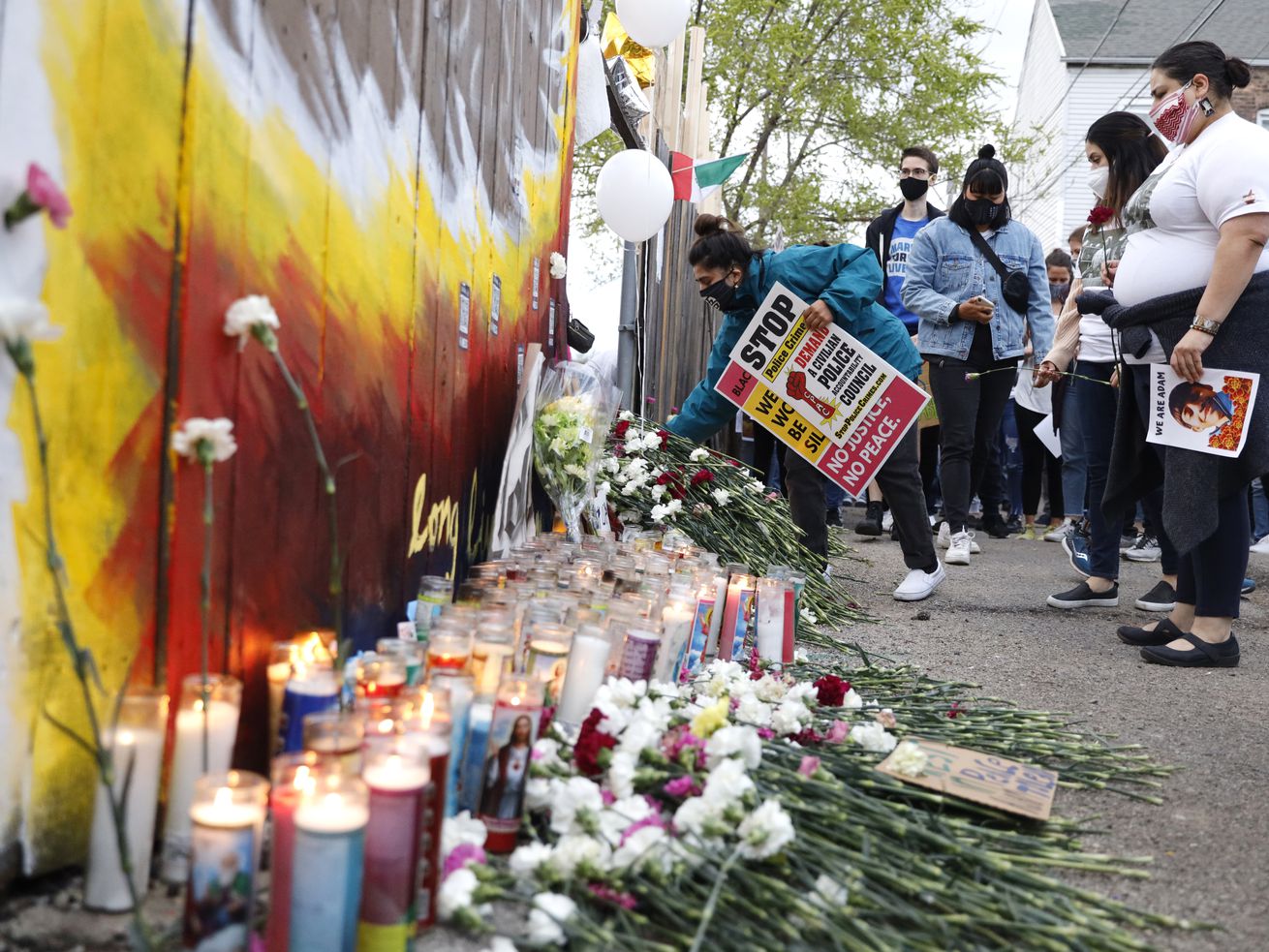
People pay tribute at the site in Little Village where 13-year-old Adam Toledo was shot by a police officer. | AP Photos

“I expect you will receive much negative reaction from activists, the general population and even by your own peer group.”

Kudo’s to you Mark Brown for your well thought out column about the Adam Toledo shooting. I expect you will receive much negative reaction from activists, the general population and even by your own peer group.

I’m sure you knew this, but followed through.

The current one-sided attitude of “my way or no way” is tearing the country apart. There are always two sides to a story but lately the press has put on blinders. Keep up your unbiased and unfettered views.

Steve Babyk, East Humboldt Park

SEND LETTERS TO: [email protected]. Please include your neighborhood or hometown and a phone number for verification purposes. Letters should be 350 words or less.

Police need better ways

Mark Brown is correct. No one should be jumping for joy that a young teen was shot and killed by a police officer, but no one should be sitting in judgment of the officer — who was called to the scene by fearful neighbors. The officer made a fatal mistake, but that’s what it was — a mistake, an error in a split-second situation. This is why the Chicago Police Department must, must, must come up with better ways of handling future similar crisis situations. Could more — many more — officers respond to these calls? Could officers be trained to aim for a suspect’s legs? There must be better ways to deal with suspects in these situations than to shoot to kill.

George Pfeifer Evanston

Home runs and Roger Maris

Great column on Saturday by Rick Telander about the New York Yankee greats Mickey Mantle, Roger Maris and Billy Martin. Unfortunately for me, my 1961 baseball fandom ended in July of that year. Some guy named “Uncle Sam” needed me. So whenever I get a chance to read about Maris’ 61 home runs in 1961, I jump at it. “Jump” might be an exaggeration at my age. I’m 80. Let’s just say I enjoy it.

But my arithmetic must differ with Telander’s. Babe Ruth hit 60 home runs in 154 games while Maris hit 61 home runs in 162 games? Looks to me like Maris had eight more games to break Ruth’s record. Congrats to Maris for his 61 homers, but as for the record, hmmm.

Bob Meder, Romeoville

Allow nurses to work across state lines

The past year has highlighted the critical importance of ensuring Illinois hospitals and clinics can quickly hire an adequate number of professional registered nurses. The pandemic also has highlighted the need for nurses to travel across state lines to provide care to those in need. Disease and disaster don’t respect state boundaries, and neither should our licensing laws.

The Nurse Licensure Compact would ensure that nurses could practice across state lines without having to obtain numerous, separate licenses. This would allow nurses to begin working in Illinois more quickly than our current system allows and ensure patients receive the quality care they need.

Nurses licensed in the compact can currently practice in 34 states under a single multi-state license. The compact has been in place for over 20 years and provides safe and effective care by ensuring all included nurses meet the same uniform licensure requirements to practice.

Nurse leaders across Illinois have been challenged with identifying enough nurses to provide care in their facilities and often that need strikes with little warning. On behalf of the Illinois Organization of Nurse Leaders, we urge the Illinois General Assembly to support adding our state to the Nurse Licensure Compact. In a crisis, time is of the essence and the Compact helps Illinois respond to the need for professional nursing services.

Elaine Kemper, Denise Wienand, Nicole Wynn, Tim Carrigan and Nicole Wynn, all members of the Illinois Organization of Nurse Leaders

Read More

Mark Brown fairly sized up the hard truth in Adam Toledo shootingLetters to the Editoron April 26, 2021 at 5:25 pm Read More »

Boy, 17, fatally shot in Little VillageEmmanuel Camarilloon April 26, 2021 at 5:26 pm

A teenage boy was shot dead April 26, 2021, in Little Village.

Shootings in the 10th District, which includes Little Village, have risen 29% this year compared to the same period in 2020, according to police statistics. 

A 17-year-old boy was killed in a shooting in Little Village on the Southwest Side Monday morning, police said.

The teen was walking with a female about 10:15 a.m. in the 2700 block of South Drake Avenue when someone opened fire, striking him in the head, Chicago police said.

The boy was pronounced dead at the scene, police said. His identity has not been released.

The companion saw a small white car speed off immediately after the shooting, police said. She did not get a good look at the driver.

Shootings in the 10th District, which includes Little Village, have risen 29% this year compared to the same period in 2020, according to police statistics.

On Saturday, a 16-year-old boy was wounded in a shooting a few blocks away in the 3300 block of West 28th Street.

Earlier this month, 17-year-old Lydia Jimenez was fatally shot while in a vehicle in the 4100 block of West 25th Street, police said.

No arrests have been reported in the shootings.

Read More

Boy, 17, fatally shot in Little VillageEmmanuel Camarilloon April 26, 2021 at 5:26 pm Read More »

Why I can’t wait to move from California to ChicagoMark Kosinon April 26, 2021 at 5:28 pm

“I’ve felt a pull that goes beyond familial obligations,” writes Mark Kosin about why he is moving back to Chicago. “I’m also a 30-something professional looking for a better life post-pandemic.” | Tyler LaRiviere/Sun-Times

Finally seeing light at the end of the pandemic’s long, dark tunnel, my mind can’t help but wonder: how is this great city going to remake itself yet again?

When I started to remotely interview with companies in Chicago from sunny California during this February’s barrage of snowstorms and single-digit wind chills, I was often met with questions, explicit and implied, mostly starting with the word “Why?!”

Why leave the ocean, mountains, and 70 degree days? Why trade the Golden Coast for a big lake? Why go against nearly a decade of Illinois population decline? Admittedly, there are a few bedrock reasons for my move: family roots, good friends I don’t see enough, and I’ve missed far too many 1:20 p.m. Friday starts at Wrigley.

But there’s something more — I’ve felt a pull that goes beyond just familial obligations. I’m also a 30-something professional looking for a better life post-pandemic. I’m moving back because after a nightmare of a year, Chicago is poised for a breakout decade. And I want in.

It’s no secret my current home state of California has faced its own steep challenges even before the pandemic hit. Unaffordable housing has pushed thousands onto the streets and forced 56% of lower-income residents to spend too much of their paychecks on rent. Pollution and wildfires keep the state among the worst in the world for air quality. And did you know that a major quake along the San Andreas fault could cut off 70% of Southern California’s fresh water supply?

Lake Michigan may produce some intense weather, but at least it’s not going anywhere.

Beyond the long-term environmental and housing concerns (no small things if you’re looking to start a family), I couldn’t help feeling the crowding and costs of California as professionally and personally stifling. Even my lifelong Californian neighbor would tell me with a shrug, “Hey, we’re a great place to visit.” Over the last year, I contemplated a future back east across the Mississippi and saw a wide open prairie of possibility.

Yes, Chicago was devastated by 2020. Shuttered businesses and restaurants, unrest from an overdue racial reckoning, and a crippling plague that claimed over 10,000 souls all turned the city into something almost unrecognizable to residents. Urban disaster without rival — except for Chicago, which famously burned to the ground 150 years ago.

It’s a tale we’d almost risk over-telling if it weren’t so incredible. Decimated in 1871, Chicago would aggressively charge into the future, remaking itself into a global icon that would literally host the world at a fair two decades later. Imagining myself as part of yet another rebuild — a “second” Second City? — is something too irresistible to ignore.

Finally seeing the light at the end of this long, dark tunnel, my mind can’t help but wonder: how is this great city going to remake itself yet again? What new businesses will arise out of this year of disruption? How will the arts scene respond once we can crowd into black box theaters and gallery spaces again? How will chefs and bartenders excite and inspire us out of our homes and back into their establishments?

The future is objectively bright. The city and state are set to benefit from both a major COVID-19 relief bill and a potential infrastructure cash influx to bolster Chicago as a transit hub. Chicagoland is still rated as a “Top Metro” for corporate investment (last year saw 327 business expansions and relocations according to Site Selection Magazine). Startups in the Chicago area offer a return-on-investment that far outpaces national averages per a recent report. And Chicago continues to have one of the largest and most diversified economies in the world.

This is not to paper over the heavy lift for citizens and city leaders. There’s a reason a poll showed that 73% of residents think the city’s on the wrong track. Even its greatest boosters know Chicago has deep systemic problems that threaten to derail a robust recovery. The road ahead is not for the weak-willed. Luckily, if there’s something that Chicagoans are famous for — a virtue extolled by legendary writers in prose and poetry — it is hard work.

It’s a city that turns its back on pessimism. The city I know is not going into the future with misplaced idealism, but with bullish confidence in itself and its people.

As far as I’m concerned, there’s never been a better time to be a Chicagoan.

Mark Kosin is a writer who recently accepted a job as a copywriter at a Chicago tech firm.

Send letters to [email protected].

Read More

Why I can’t wait to move from California to ChicagoMark Kosinon April 26, 2021 at 5:28 pm Read More »