Videos

CDC says many Americans can now go outside without a maskon April 27, 2021 at 8:24 pm

NEW YORK — The Centers for Disease Control and Prevention eased its guidelines Tuesday on the wearing of masks outdoors, saying fully vaccinated Americans don’t need to cover their faces anymore unless they are in a big crowd of strangers.

And those who are unvaccinated can go outside without masks in some situations, too.

The new guidance represents another carefully calibrated step on the road back to normal from the coronavirus outbreak that has killed over 570,000 people in U.S.

For most of the past year, the CDC had been advising Americans to wear masks outdoors if they are within 6 feet of one another.

“Today, I hope, is a day when we can take another step back to the normalcy of before,” CDC Director Dr. Rochelle Walensky said. “Over the past year, we have spent a lot of time telling Americans what you can’t do. Today, I am going to tell you some of the things you can do, if you are fully vaccinated.”

The change comes as more than half of U.S. adults — or about 140 million people — have received at least one dose of vaccine, and more than a third have been fully vaccinated.

Walensky said the decision was driven by rising vaccination numbers; declines in COVID-19 cases, hospitalizations and deaths; and research showing that less than 10% of documented instances of transmission of the virus happened outdoors.

Dr. Mike Saag, an infectious disease expert at the University of Alabama at Birmingham, welcomed the change.

“It’s the return of freedom,” Saag said. “It’s the return of us being able to do normal activities again. We’re not there yet, but we’re on the exit ramp. And that’s a beautiful thing.”

Some experts portrayed the relaxed guidance as a reward and a motivator for more people to get vaccinated — a message President Joe Biden sounded, too.

“The bottom line is clear: If you’re vaccinated, you can do more things, more safely, both outdoors as well as indoors,” Biden said. “So for those who haven’t gotten their vaccinations yet, especially if you’re younger or thinking you don’t need it, this is another great reason to go get vaccinated now.”

The CDC, which has been cautious in its guidance during the crisis, essentially endorsed what many Americans have already been doing over the past several weeks.

The CDC says that whether they are fully vaccinated or not, people do not have to wear masks outdoors when they walk, bike or run alone or with members of their household. They can also go maskless in small outdoor gatherings with fully vaccinated people.

But unvaccinated people — defined as those who have yet to receive both doses of the Pfizer or Moderna vaccine or the one-shot Johnson & Johnson formula — should wear masks at small outdoor gatherings that include other unvaccinated people, the CDC says. They also should keep their faces covered when dining at outdoor restaurants with friends from multiple households.

And everyone, fully vaccinated or not, should keep wearing masks at crowded outdoor events such as concerts or sporting events, the CDC says.

The agency continues to recommend masks at indoor public places, such as hair salons, restaurants, shopping centers, gyms, museums and movie theaters, saying that is still the safer course even for vaccinated people.

“Right now it’s very hard to tease apart who is vaccinated,” Walensky explained.

She said the CDC guidance should be a model for states in setting their mask-wearing requirements.

The advice to the unvaccinated applies to adults and children alike, according to the CDC. None of the COVID-19 vaccines in use in the U.S. is authorized for children under 16.

In the small town of Oxford, Nebraska, population 800, hardly anyone wears a mask, and the school district dropped its mask mandate last month. Superintendent Bryce Jorgensen said maybe 10 of the 370 students are still covering their faces.

“What goes on in other states is what goes on in other states,” Jorgensen said. “You just can’t compare Chicago to Oxford, Nebraska. Things are just different.”

Dr. Babak Javid, a physician-scientist at the University of California, San Francisco, said the new CDC guidance is sensible.

“In the vast majority of outdoor scenarios, transmission risk is low,” Javid said.

Javid has favored outdoor mask-wearing requirements because he believes they increase indoor mask-wearing, but he said Americans can understand the relative risks and make good decisions.

He added: “I’m looking forward to mask-free existence.”

“The timing is right because we now have a fair amount of data about the scenarios where transmission occurs,” said Mercedes Carnethon, a professor and vice chair of preventive medicine at Northwestern University’s Feinberg School of Medicine in Chicago.

What’s more, she said, “the additional freedoms may serve as a motivator” for people to get vaccinated.

___

AP medical writer Carla K. Johnson in Washington state contributed to this report.

___

The Associated Press Health & Science Department receives support from the Howard Hughes Medical Institute’s Department of Science Education. The AP is so

Read More

CDC says many Americans can now go outside without a maskon April 27, 2021 at 8:24 pm Read More »

FBI starts probe into death of Black man killed by deputies in North Carolinaon April 27, 2021 at 8:32 pm

ELIZABETH CITY, N.C. — The FBI launched a civil rights probe Tuesday into the death of Andrew Brown Jr., a Black man killed by deputies in North Carolina, as his family released an independent autopsy showing he was shot five times, including in the back of the head.

North Carolina Gov. Roy Cooper called for a special prosecutor as pressure built on authorities to release body camera footage of last week’s shooting. A judge scheduled a hearing Wednesday to consider formal requests to make the video public.

The FBI’s Charlotte field office, which opened the civil rights investigation into Brown’s death, said in a statement that its agents planned to work closely with the Department of Justice “to determine whether federal laws were violated.”

The independent autopsy was performed Sunday by a pathologist hired by Brown’s family. The exam noted four wounds to the right arm and one to the head. The state’s autopsy has not been released yet.

The family’s lawyers also released a copy of the death certificate, which lists the cause of death as a “penetrating gunshot wound of the head.” The certificate, signed by a paramedic services instructor who serves as a local medical examiner, describes the death as a homicide.

Brown was shot last Wednesday by deputies serving drug-related search and arrest warrants at his house in the North Carolina town of Elizabeth City, about 160 miles northeast of Raleigh.

The autopsy results come a day after Brown’s relatives were shown a 20-second clip of footage from one deputy’s body camera. Another family lawyer, Chantel Cherry-Lassiter, who viewed the video, said Monday that officers opened fire on Brown while he had his hands on the steering wheel of a car. She said the video showed Brown trying to drive away but posing no threat to officers.

Brown’s son Khalil Ferebee questioned why deputies opened fire.

“Yesterday I said he was executed. This autopsy report shows me that was correct,” he said Tuesday at a news conference. “It’s obvious he was trying to get away. It’s obvious. And they’re going to shoot him in the back of the head?”

The pathologist, North Carolina-based Dr. Brent Hall, noted a wound to the back of Brown’s head from an undetermined distance that penetrated his skull and brain. He said there was no exit wound.

Two shots to Brown’s right arm penetrated the skin. Two others shots to the arm grazed him. The pathologist could not determine the distance from which they were fired.

The shooting prompted days of protests and calls for justice and transparency. Pasquotank County Sheriff Tommy Wooten II has said multiple deputies fired shots but released few details about what happened. Seven Pasquotank County deputies have been placed on leave while the State Bureau of Investigation probes the shooting.

The governor, a Democrat, said appointing a special state prosecutor to handle the shooting case would serve the interests of justice and preserve confidence in the judicial system.

“This would help assure the community and Mr. Brown’s family that a decision on pursuing criminal charges is conducted without bias,” Cooper said in a statement.

State Attorney General Josh Stein said state law puts control of criminal prosecutions in the hands of the local district attorney, so his office cannot intervene unless asked. He said he has offered assistance to prosecutors, but has only received an acknowledgment.

“For my office to play a role in the prosecution, the District Attorney must request our assistance,” Stein said.

District Attorney Andrew Womble, who oversees Pasquotank County, did not immediately respond to an email seeking reaction comment.

Wednesday’s court hearing on the video will consider petitions to release the footage, including filings by a media coalition and by the county attorney on behalf of the sheriff. A North Carolina law that took effect in 2016 allows law enforcement agencies to show body camera video privately to a victim’s family, but it generally requires a court to approve any public release.

It’s not clear how soon a judge could rule or how quickly the video would be released if the release is approved. In similar cases, it has sometimes taken weeks for the full legal process to play out.

The slow movement has prompted an outcry from protesters, the family’s lawyers and racial justice advocates, who noted that law enforcement agencies in other states have moved faster. In Columbus, Ohio, the day before Brown was shot, body camera footage was released within hours of an officer fatally shooting a 16-year-old Black girl who was swinging a knife at another girl.

Democrats in the North Carolina General Assembly filed a measure this month proposing that body camera video be released within 48 hours unless a law enforcement agency asks a court to delay its distribution. But the legislation faces long odds with the GOP controlling both chambers of the Legislature.

A key Republican lawmaker, state Sen. Danny Britt, issued a statement saying GOP lawmakers are open to considering improvements to the current law. But with a hearing set for Wednesday, he said, the process has had little time to unfold.

___

Drew reported from Durham, North Carolina. Associated Press Writer Gary D. Robertson in Raleigh contributed to this report.

Read More

FBI starts probe into death of Black man killed by deputies in North Carolinaon April 27, 2021 at 8:32 pm Read More »

Closed by COVID-19, hotel overlooking riverwalk sends ‘message of hope’ through window designson April 27, 2021 at 8:40 pm

Driving North on Michigan Avenue, the image became clearer near Wacker Drive.

Yup. That definitely looks like a tulip on the south exterior of the Sheraton Grand Chicago hotel. And that must be a sun with a spray of sunrays in the left corner.

If you’ve driven through downtown this past year, you’ve likely seen other images: a heart at the peak of the pandemic; a gingerbread man at Christmas; a martini glass at New Year’s.

Or maybe the nods to Chicago institutions: a Cubs “W,” the “LU,” when Loyola University progressed in the NCAA Sweet Sixteen.

“I’ll send an idea to the general manager and say, ‘What do you think?’ Then armed with a map of the building, the targeted windows and the room numbers, we unleash our fantastic engineering team,” said Sheraton’s chief engineer, Mike Dukelow.

“They go room to room, switching on the lights. It’s the room lamp and the standing floor lamp — right in front of the windows, with the curtains open.”

Like most of the hospitality industry, Sheraton, one of Chicago’s largest convention hotels, with 125,000 square feet of meeting space on the downtown riverwalk, was shuttered by the pandemic. Its doors closed Mar. 27, 2020, three weeks after COVID-19 halted all travel.

After it closed, 635 employees — 1,000, if you count part-time staff — was reduced to a crew of 32. General Manager Mark Lauer said there was a desire among remaining managers and engineers to connect with a city devastated by the rising death count.

“One of the managers first came to me and said, ‘Everyone’s putting a heart on their buildings.’ I told Mike, let’s do it. After the heart was up a number of months, I challenged him to come up with other ideas,” said Lauer, 63, who lives near his hotel.

Lauer has worked in the industry for 40 years. Before his seven years at the Sheraton was four years with the New York Hilton and nine with the New York Waldorf-Astoria.

Engineering staff at the Sheraton Grand Chicago turned on room lights to create an image of a martini glass on its exterior in honor of New Year's Eve.
Engineering staff at the Sheraton Grand Chicago turned on room lights to create an image of a martini glass on its exterior in honor of New Year’s Eve.
Instagram/@barrybutler9

“At first we wondered if anyone would even notice. Then we started seeing photos of our window designs all over social media. It was bringing just a little bit of joy, which was all we were trying to do at a very difficult time for so many. And it’s been fun,” the hotelier said.

Like much of the industry, the Sheraton, at 301 E. North Water St., has looked forward to reopening in spring or summer, as vaccines took hold nationwide.

Local economies have begun emerging from a COVID-19 recession that pummeled the leisure and hospitality sector, and spring travel trends were encouraging for summer.

Bookings are starting to come in, and the Sheraton expects to reopen in June.

Illinois remains in a “bridge” phase to a return to normal, with the Illinois Hotel & Lodging Association pushing for larger capacity limits for meetings, conferences and conventions.

Mike Dukelow (l), chief engineer, and Marcus Cornelious, director of sales and marketing, in the engineering room at the Sheraton Grand Chicago. One of the city's largest convention hotels, the Sheraton has used designs on its massive windows as a way to stay connected to the Chicago community while shuttered this past year by the pandemic.
Mike Dukelow (l), chief engineer, and Marcus Cornelious, director of sales and marketing, in the engineering room at the Sheraton Grand Chicago. One of the city’s largest convention hotels, the Sheraton has used designs on its massive windows as a way to stay connected to the Chicago community while shuttered this past year by the pandemic.
Provided

“I’ll never forget last March. Everything happened so quickly. My department went from 27 people to 10 — by far one of the worst days of my career, just surreal,” said Dukelow, 50, of Oak Forest, who’s been with the Sheraton for nearly three years.

Prior to that was two years with London House, a year at Trump Tower, 12 1/2 at Ritz Carlton.

Surprisingly, turning the massive windows into an art canvas is very low-tech.

“I print out a picture, put it on a building map and start filling in the windows with a sharpie, then run white correction ribbon over the sharpie to simulate light, label the rooms on the ribbon, and then we go room to room, first of all turning off the old design,” Dukelow said.

“As simple as they’ve been — a snowflake, mug of beer for St. Patty’s Day, heart with ‘XO’ in the middle for Valentine’s — it takes several tries to get them right. Curves are hard to simulate with square windows. Sometimes you’re trying to light half a window.”

Marcus Cornelious, director of sales and marketing, also will never forget last March. For him, it was watching hard-earned bookings of thousands of guests cancel, one after the other.

Engineering staff at the Sheraton Grand Chicago turned on room lights to create an image of an “XO” — symbolizing hugs and kisses — inside a heart on its exterior in honor of Valentine’s Day.
Instagram/@cakeyizumi

“About the time the governor’s stay-at-home order went in place, travel in general came to a screeching halt,” recounted Cornelious, 38, of the West Loop, who’s worked at the Sheraton two years.

Before that was The Glen for three years; and several years at New York City hotels — including two with W Hotels there — had followed 10 years with The Langham here.

“I remember sitting around the table, thinking, ‘What can we do to send a message of hope?’ That’s when we came up with the windows,” he said.

“After that initial heart image, people started tagging us in photos of our windows on social media, and calling the hotel, sending handwritten ‘Thank-you’ notes, saying the designs were uplifting them in such a dark time. It was really powerful,” he added.

“In the beginning, it was more about solidarity. Then we started to get more playful. There are brighter days ahead for all of us. And our visuals are changing to match that.”

Read More

Closed by COVID-19, hotel overlooking riverwalk sends ‘message of hope’ through window designson April 27, 2021 at 8:40 pm Read More »

Why drafting a QB could be the Bears’ plan all alongon April 27, 2021 at 8:41 pm

The only thing scarier than the Bears’ quarterback hunt not going to plan this offseason is the notion that it did.

That, of course, would be ludicrous. General manager Ryan Pace and coach Matt Nagy surely haven’t decided to stake their careers on the right arm of Andy Dalton, a quarterback who’s won 24 of his last 65 games, right? Pace surely won’t let his tenure end having drafted Mitch Trubisky and not a single other quarterback, right?

By that rationale, it’s likely — if not certain — the Bears will add a quarterback this week. There’s room for one, too, with just Dalton and Nick Foles under contract.

Pace could trawl the depths of the trade market for someone like Gardner Minshew, who will be made irrelevant the minute the Jaguars draft Clemson’s Trevor Lawrence No. 1 overall Thursday night. He could take Stanford’s Davis Mills in Round 2 or Texas A&M’s Kellen Mond in Round 3. Both are perfectly defensible developmental projects.

Pace’s reputation, though, suggests he’ll think bigger and will at least explore a trade up from pick No. 20 to grab a quarterback.

After the Jaguars take Lawrence, the Jets are expected to draft BYU’s Zach Wilson. The 49ers traded three years’ worth of first-round picks to move up to No. 3, where they’ll take either Alabama’s Mac Jones, Ohio State’s Justin Fields or North Dakota State’s Trey Lance.

Pace could trade up to draft either of the remaining two quarterbacks — if he’s willing to pay a steep price. The Falcons’ No. 4 pick will cost more than the 49ers paid. If a quarterback slides, though, the cost would move from crippling to merely painful.

Drafting outside the top 10 for the first time, Pace is at the mercy of other teams.

“Some of it’s in our control, some of it’s not in our control,” he said Tuesday during his annual tight-lipped pre-draft press conferences. “It’s just exploring all the different options at the quarterback position and the positions throughout our team.”

A general manager who’s crowed about having a “a no-regrets mindset,” Pace takes home run swings, for better or — as it pertains to the first round — worse. He won’t shorten up his swing just because his career is facing a two-strike count.

Desperation is a great motivator. Not that Pace needs it –in his six drafts, he’s traded his first-round pick four times: twice to move up to draft Leonard Floyd and Trubisky, and twice more for Khalil Mack.

Beyond the top two quarterbacks, this year’s draft gets murky fast. Coronavirus concerns canceled the NFL Scouting Combine. Some players opted out of their seasons, while other conferences played shortened slates. Lance played one game last year, Mills five.

Tuesday, Pace ticked off what the Bears look for when they move up to take a player: a consensus among team scouts and coaches; physical skills; mental makeup; a clean medical grade; intelligence; and football IQ.

“As you’re putting this puzzle together, this pie chart together for each player,” he said, “it kind of gives you confidence when to go up.”

Pace said the Bears’ quarterbacks room could be a good incubator for a young passer. He praised the involvement of Nagy, offensive coordinator Bill Lazor and quarterbacks coach John DeFilippo in draft prep. None of the three were on staff when Pace took Trubisky.

Pace said he meets frequently with chairman George McCaskey and president/CEO Ted Phillips, too, to keep them updated on the team’s draft plans.

“Every offseason there’s a storyline, right?” Pace said. “And every day there’s a different turn. And I just think bringing our staff and our ownership along on this storyline is a big part of my job …”

Pace has one more week to change the storyline. To do anything less would be admitting Dalton was the team’s storybook ending all along.

Read More

Why drafting a QB could be the Bears’ plan all alongon April 27, 2021 at 8:41 pm Read More »

Did Carson Palmer almost land with the Chicago Bears in 2003 NFL Draft?CCS Staffon April 27, 2021 at 5:45 pm

Former No. 1 overall pick Carson Palmer hints that he would have loved playing for the Chicago Bears.

The post Did Carson Palmer almost land with the Chicago Bears in 2003 NFL Draft? first appeared on CHI CITY SPORTS l Chicago Sports Blog – News – Forum – Fans – Rumors.Read More

Did Carson Palmer almost land with the Chicago Bears in 2003 NFL Draft?CCS Staffon April 27, 2021 at 5:45 pm Read More »

Back a better Illinois law to temporarily take guns from people who pose a dangerLetters to the Editoron April 27, 2021 at 6:58 pm

In 2018, Illinois passed the Firearms Restraining Order law. The law needs an upgrade. | Getty

I have proposed House Bill 1092, which would strengthen the Firearms Restraining Order law to better prevent the next mass shooting.

Though we’re beginning to see light at the end of the tunnel in the fight against COVID-19, our nation’s pandemic of gun violence continues to kill innocent Americans daily. The Illinois Legislature, I believe, must answer the call to fight this pandemic as well.

In 2018, Illinois passed the Firearms Restraining Order law, with bipartisan support, in response to rising rates of firearm suicides, firearm domestic violence and mass shootings. The law allows family members and law enforcement agencies to petition the courts to temporarily remove firearms from people who pose a significant danger to themselves or others.

Unfortunately, the law is underused, and its implementation has been inconsistent due to a lack of awareness.

SEND LETTERS TO: [email protected]. Please include your neighborhood or hometown and a phone number for verification purposes. Letters should be 350 words or less.

I have proposed new legislation, House Bill 1092, that would strengthen the existing FRO law, helping to prevent the next mass shooting in Illinois. The bill would ensure that, when allowed by the court order, ammunition also is removed from a person who is exhibiting dangerous behavior. And it would make sure firearms are removed in a timely manner.

To address the lack of awareness about FRO, the bill would create a public education campaign about the law. And because law enforcement officers often are the ones who file FRO petitions, it would require yearly training on how to use the FRO law.

By passing House Bill 1092, Illinois can strengthen its existing FRO law. It can help prevent mass shootings, hate crimes and firearm suicides.

No family should have to bury a child or spouse or parent because of preventable gun violence. We must pass HB 1092 to take lethal weapons out of the hands of those who pose a significant danger to themselves or others. Let’s not miss an opportunity to prevent a tragedy like the ones we continually see across the nation.

Please reach out to your state legislators and ask them to support this critical bill.

State Rep. Denyse Stoneback, D-Skokie

Immigrants getting us through this pandemic

Three of my grandparents were immigrants, born in Europe. The fourth was born in America, but both his parents were immigrants. America has always benefited from immigrants’ contributions to our society.

Recently, immigrants have played a critical role throughout the COVID-19 pandemic. Nearly 23 million immigrants have been putting their health at risk by performing essential roles that have kept our children and families healthy, and kept our child care, health care system, long-term care, food supply chain and our economy running.

That’s why it is so important that immigrant essential workers, Dreamers and Temporary Protected Status (TPS) holders are given a pathway to citizenship in the upcoming economic recovery package. This would be an important step toward rebuilding our nation’s care infrastructure. Since mothers have stepped out of the labor force at a higher rate than fathers, we can support their return to the workforce by supporting child care jobs often held by immigrants.

Please support all efforts to protect immigrant families who have worked to support our communities throughout the pandemic. Please let your federal representatives know that you support this important effort, which benefits all Americans.

Bob Chimis, Elmwood Park

Not always two sides to a story

I agree with a Sun-Times’ reader who wrote this week in support of Mark Brown’s column about the shooting of Adam Toledo. It was a tragedy on all sides. Everybody in the media should view the recording of the shooting and see how little time passed from when Adam Toledo dropped his gun to when he turned and was shot. If we are not fair in this case, it will be harder to achieve fairness in others.

I disagree with the other reader, though, that “there are always two sides to a story.” Many times, yes, but were there two valid sides to the George Floyd killing? Or to the issue of Barack Obama’s birthplace? Or as to who was responsible for what happened at the Capitol on Jan. 6 (no matter what House Minority Leader Kevin McCarthy has changed his story to)?

Kevin Coughlin, Evanston

Read More

Back a better Illinois law to temporarily take guns from people who pose a dangerLetters to the Editoron April 27, 2021 at 6:58 pm Read More »

Pioneer League replaces extra innings with a home run derbyon April 27, 2021 at 6:01 pm

SPOKANE, Wash. — The Pioneer League is replacing extra innings with a tiebreaking home run derby.

The independent partner league of Major League Baseball said Tuesday that tied games this season will be decided by each team designating a batter who will receive five pitches, and the team hitting the most long balls during the derby will receive the win. If the derby is tied after five swings each, another hitter will be selected for a sudden-death derby round.

The league said the rule is designed “to avoid the excessive strain on our pitching staffs.”

While Major League Baseball is behind experimental rule changes in the independent Atlantic League, it is not involved in the Pioneer League changes.

Other Pioneer League rule changes involve:

— Designated pinch hitter: Each team can use once per game a designated pinch hitter, who will bat for a player, but the original player may then return to his defensive position unless and until substituted. The designated pinch hitter may not subsequently return to the game.

— Designated pinch runner: Each team can use once per game a designated pinch runner, who will run for a player, but the original player may then return to his defensive position unless and until substituted. The designated pinch runner may not subsequently return to the game.

— Check swings: A hitter may appeal a check swing strike decision to a base umpire. Under standard baseball rules, only the defensive team can ask for an appeal.

— Three-man umpire crews will be used instead of two-man crews.

Founded in 1939, the Pioneer League lost its affiliated status as part of changes to the minor leagues implemented by MLB ahead of the 2022 season. It will operate as a partner league with eight teams in Colorado, Idaho, Montana and Utah playing a 96-game schedule starting May 22.

“The Pioneer Baseball League is committed to developing ideas that enhance the strategy of the game, protect the safety of our players and add to the fun and engagement of our fans,” league president Michael Shapiro said in a statement. “We believe this focus will help assure the future of the game among a broader and more diverse audience.”

Read More

Pioneer League replaces extra innings with a home run derbyon April 27, 2021 at 6:01 pm Read More »

CDC says many Americans can now go outside without a maskon April 27, 2021 at 6:21 pm

NEW YORK — The Centers for Disease Control and Prevention eased its guidelines Tuesday on the wearing of masks outdoors, saying fully vaccinated Americans don’t need to cover their faces anymore unless they are in a big crowd of strangers.

And those who are unvaccinated can go outside without masks in some situations, too.

The new guidance represents another carefully calibrated step on the road back to normal from the coronavirus outbreak that has killed over 570,000 people in U.S.

For most of the past year, the CDC had been advising Americans to wear masks outdoors if they are within 6 feet of one another.

“Today, I hope, is a day when we can take another step back to the normalcy of before,” CDC Director Dr. Rochelle Walensky said. “Over the past year, we have spent a lot of time telling Americans what you can’t do. Today, I am going to tell you some of the things you can do, if you are fully vaccinated.”

The change comes as more than half of U.S. adults have gotten at least one dose of vaccine, and more than a third have been fully vaccinated.

Walensky said the decision was driven by rising vaccination numbers; declines in COVID-19 cases, hospitalizations and deaths; and research showing that less than 10% of documented instances of transmission of the virus happened outdoors.

Dr. Mike Saag, an infectious disease expert at the University of Alabama at Birmingham, welcomed the change in guidance.

“It’s the return of freedom,” Saag said. “It’s the return of us being able to do normal activities again. We’re not there yet, but we’re on the exit ramp. And that’s a beautiful thing.”

More people need to be vaccinated, and concerns persist about variants and other possible shifts in the epidemic. But Saag said the new guidance is a sensible reward following the development and distribution of effective vaccines and about 140 million Americans stepping forward to get their shots.

The CDC, which has been cautious in its guidance during the crisis, essentially endorsed what many Americans have already been doing over the past several weeks.

The CDC says that fully vaccinated or not, people do not have to wear masks outdoors when they walk, bike or run alone or with members of their household. They can also go maskless in small outdoor gatherings with fully vaccinated people.

But from there, the CDC has differing guidance for people who are fully vaccinated and those who are not.

Unvaccinated people — defined by the CDC as those who have yet to receive both doses of the Pfizer or Moderna vaccine or the one-shot Johnson & Johnson formula — should wear masks at outdoor gatherings that include other unvaccinated people. They also should keep using masks at outdoor restaurants.

Fully vaccinated people do not need to cover up in those situations, the CDC says.

However, everyone should keep wearing masks at crowded outdoor events such as concerts or sporting events, the CDC says.

And the agency continues to recommend masks at indoor public places, such as hair salons, restaurants, shopping centers, gyms, museums and movie theaters, saying that is still the safer course even for vaccinated people.

“Right now it’s very hard to tease apart who is vaccinated,” Walensky explained.

She said the CDC guidance should be a model for states in setting their mask-wearing requirements.

The advice to the unvaccinated applies to adults and children alike, according to the CDC. None of the COVID-19 vaccines in use in the U.S. is authorized for children under 16.

Dr. Babak Javid, a physician-scientist at the University of California, San Francisco, said the new CDC guidance is sensible.

“In the vast majority of outdoor scenarios, transmission risk is low,” Javid said.

Javid has favored outdoor mask-wearing requirements because he believes they increase indoor mask-wearing, but he said Americans can understand the relative risks and make good decisions.

He added: “I’m looking forward to mask-free existence.”

“The timing is right because we now have a fair amount of data about the scenarios where transmission occurs,” said Mercedes Carnethon, a professor and vice chair of preventive medicine at Northwestern University’s Feinberg School of Medicine in Chicago.

What’s more, she said, “the additional freedoms may serve as a motivator” for people to get vaccinated.

___

AP medical writer Carla K. Johnson in Washington state contributed to this report.

___

The Associated Press Health & Science Department receives support from the Howard Hughes Medical Institute’s Department of Science Education. The AP is solely responsible for all content.

Read More

CDC says many Americans can now go outside without a maskon April 27, 2021 at 6:21 pm Read More »

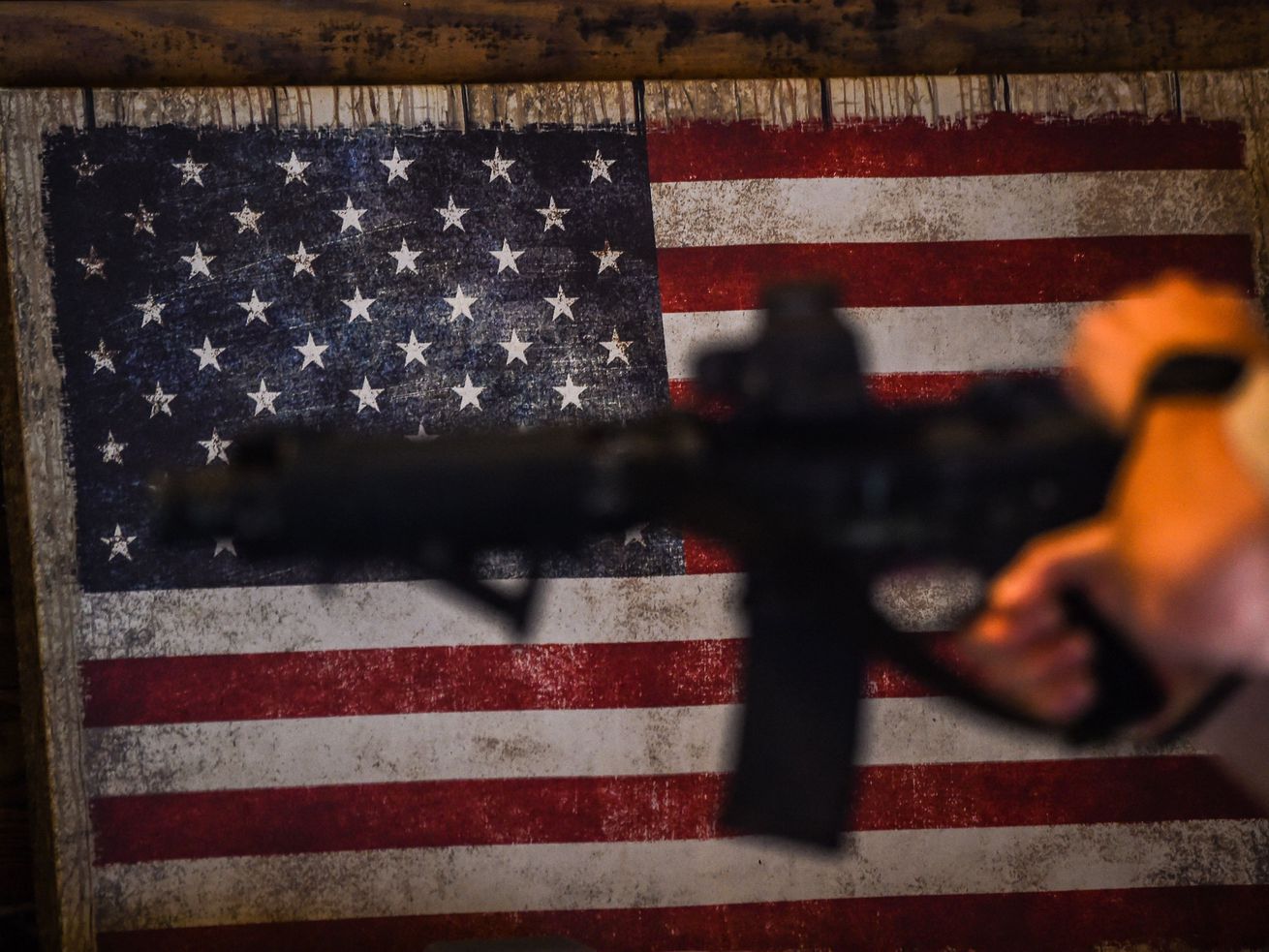
Supreme Court will decide whether your right to bear arms extends beyond your doorstepon April 27, 2021 at 6:46 pm

While it may seem obvious that the constitutional right to “keep and bear arms” extends beyond the home, federal courts have been debating the question for years.

This week, the Supreme Court agreed to hear a case that finally could settle the issue, which the petitioners call “perhaps the single most important unresolved Second Amendment question.”

The case involves a New York law that requires applicants for handgun carry licenses to show “proper cause,” which according to state courts means more than a “generalized desire” to “protect one’s person and property.” Applicants must “demonstrate a special need for self-protection distinguishable from that of the general community,” which in practice means that ordinary New Yorkers have no right to armed self-defense once they leave their homes.

The vast majority of states are less demanding, typically requiring that people who want to carry concealed handguns meet a shortlist of objective criteria. But several states have laws like New York’s, enforcing subjective standards such as “good cause” (California), “proper purpose” (Massachusetts), “justifiable need” (New Jersey), “good and substantial reason” (Maryland), or a special “reason to fear injury” (Hawaii).

In the case that the Supreme Court will hear this term, the New York State Pistol & Rifle Association, joined by two New Yorkers who unsuccessfully applied for carry licenses in Rensselaer County, argues that such policies transform a “right of the people” into a privilege enjoyed only by the favored few. “A law that flatly prohibits ordinary law-abiding citizens from carrying a handgun for self-defense outside the home cannot be reconciled with the court’s affirmation of the individual right to possess and carry weapons in case of confrontation,” the petitioners say.

They are referring to the landmark 2008 case District of Columbia v. Heller, which overturned a local ban on handguns. While that decision focused on the right to “use arms in defense of hearth and home,” it more generally recognized “the individual right to possess and carry weapons in case of confrontation.”

The possibility of being confronted by violent criminals, of course, exists in public as well as private. “Like the threats that might precipitate a need to act in self-defense,” the petitioners say, the right to bear arms “necessarily extends beyond the four walls of one’s home.”

Two other aspects of Heller reinforce that argument. The court said its decision did not “cast doubt” on “laws forbidding the carrying of firearms in sensitive places such as schools and government buildings,” a caveat that would have been unnecessary if the right to armed self-defense were limited to the home, and it described bans on the open carrying of pistols that were overturned by state supreme courts in the 19th century as “severe restriction(s).”

Two federal appeals courts, the 7th Circuit and the D.C. Circuit, have agreed that the Second Amendment protects the right to carry firearms in public. But the 2nd Circuit, which rejected this lawsuit, concluded that New York’s regulations are constitutional, and four other appeals courts — the 1st, 3rd, 4th and 9th circuits — have upheld similar policies in other states.

Last month, the 9th Circuit went so far as to declare that the Second Amendment has no bearing at all on a state’s authority to impose a virtual ban on public carry. In a blistering dissent, Judge Diarmuid O’Scannlain complained that the majority’s position “reduces the right to ‘bear arms’ to a mere inkblot.”

O’Scannlain and Judge Jay Bybee, who wrote the majority opinion, both delved extensively into the historical background of the right to bear arms, early gun control laws, and 19th-century decisions rejecting or upholding them based on state analogs to the Second Amendment. The Supreme Court will now have to revisit that territory.

Because of laws like New York’s, the petitioners say, “tens of millions of citizens are being deprived of individual, fundamental rights guaranteed by the Constitution.” Whether that situation continues will depend on how the Court resolves this circuit split.

Jacob Sullum is a senior editor at Reason magazine.

Send letters to [email protected].

Read More

Supreme Court will decide whether your right to bear arms extends beyond your doorstepon April 27, 2021 at 6:46 pm Read More »

How to change your ‘gruntlement’on April 27, 2021 at 5:40 pm

Margaret Serious

How to change your ‘gruntlement’

Read More

How to change your ‘gruntlement’on April 27, 2021 at 5:40 pm Read More »