Northwestern will promote Mike Polisky to athletic director to succeed Jim Phillips, according to multiple reports. The school will make the announcement Monday.
Polisky has been Northwestern’s deputy athletic director for external affairs since 2010. Previously, he was president and general manager of the Arena Football League’s Chicago Rush and president of business operations for the Chicago Wolves of the American Hockey League.
Phillips took the ACC commissioner job in December and finished his time at Northwestern in February.
The school’s search for a replacement was delayed as it investigated a federal lawsuit filed by a former cheerleader who named Polisky as one of four defendants, as well as the university. Northwestern filed a motion to dismiss the lawsuit Friday.
Hayden Richardson claims she and her teammates were “presented as sex objects” at numerous events, including football tailgates, and were forced to interact with drunk and belligerent fans for the university’s financial gain. Some were sexually harassed on numerous occasions while wearing their Northwestern uniforms, according to the lawsuit.
The complaint states that Polisky accused Richardson of fabricating her claims and didn’t allow her to meet with Phillips.
The Adams County Health Department’s mass vaccination site is at the Oakley-Lindsay Center and accepts appointments for residents from anywhere in Illinois. | AP
While smaller sites can cost less to run, it can be exceedingly expensive, on a per-shot basis, to vaccinate those in more rural or underserved areas of the country.
The Oakley-Lindsay Center in Quincy — a five-hour drive from Chicago — became an unlikely go-to spot during the pandemic. The regional convention center along the Mississippi River has distributed 25,000 vaccine doses per month, including thousands to Chicagoans who had trouble booking shots here.
But the costs to run the mass vaccine site, even with new, reduced hours and lower demand lately, still run into the thousands each day, said Jerrod Welch, the public health administrator of the Adams County Health Department.
It’s $50,000 a month to lease the convention center. Staff are paid $20 per hour. At its peak, the total operating cost to run the mass vaccine site every month is $175,000.
Still, that’s far less than the estimated price tag for the largest mass vaccine sites across Illinois — about $400,000 a day. That’s according to a spreadsheet featuring internal calculations prepared by the Federal Emergency Management Agency and obtained by the Documenting COVID-19 project in collaboration with the Chicago Sun-Times.
As millions in federal relief money flows to local governments, the spreadsheet provides a detailed look at how much it costs to run such facilities — from a small clinic handling just 250 daily doses to “megasites” handling 6,000. So far, Illinois has received hundreds of millions in FEMA reimbursements during the pandemic, including nearly $8 million to distribute vaccines at the United Center.
A megasite — defined as a facility at least 15,000 square feet in size — could employ as many as 304 people, including security, traffic control, vaccinators, pharmacists, IT support, translators and even legal affairs officers, according to the internal state estimates. Although the vaccination site set up outside the United Center meets the guidelines for the largest sites, officials have not released its daily costs of operations or indicated whether they approach the $400,000 estimate.
The state portion of the costs for the largest mass vaccination sites is $156,240 per day, the Illinois Department of Public Health said. The Illinois National Guard, which staffs many sites including the United Center, is currently deployed under Title 32 orders, which means their pay and benefits are provided by the federal government.
“These expenses are 100% reimbursable by the federal government, resulting in zero impact to the state’s budget,” IDPH said in an email.
The bigger the site, the cheaper the per-unit cost of the vaccine dose. Megasites can average $62 per dose per day, while the smallest sites, averaging 2,500 square feet, approach nearly $200 per dose.
Then there’s the one-time costs, assuming the vaccine sites are open for three months: the freezers, the message boards in the parking lots, chairs and tables, Internet hotspots. For a megasite, the one-time costs can reach nearly $1.5 million. For the smallest sites, $140,000.
And finally the materials: needles, syringes, alcohol prep pads, Band-Aids, gloves, masks, shields, oxygen, Epi-Pens, antihistamines. The range from small to mega, each day: $3,000 to $22,000.
What the spreadsheet and the Adams County figures underscore: It can be considerably expensive, on a per-shot basis, to vaccinate those in more rural or underserved areas of the country.
Ashlee Rezin Garcia/Sun-TimesNurse Shannon Lesch prepares to administer one of Illinois’ first five Pfizer-BioNTech COVID-19 vaccinations outside of Chicago to chief of emergency services Dr. Victor Chan, 35, at OSF Saint Francis Medical Center in downstate Peoria, Tuesday morning, Dec. 15, 2020.
There are at least 20 statewide vaccination clinic sites throughout Illinois that have appointments available to any Illinois resident regardless of the ZIP code they live in, according to IDPH. It’s unclear how long those mass vaccine sites will stay open or if they will reduce hours and staff.
In Adams County, for example, the health department is experimenting with pop-up vaccine sites — in rural villages, in thrift stores, bus stops, churches or food kitchens, with spaced tables, moving nurses and some car vaccinations. A pop-up in a town 13 miles from Quincy, with a population of just 750, vaccinated 50 mostly elderly residents in one event. Health officials said they were surprised by the numbers who showed — and how many said they “did not want to come to Quincy, the ‘big city,’ with its big processes,’” Welch said.
Other communities are trying to make the mass vaccine sites more accessible and appealing; the Rock Island Health Department, after hearing cellist Yo-Yo Ma’s recent COVID-19 vaccine performance, is inviting a musician to perform for an hour at its mass vaccine site to reduce post-vaccination anxiety. The Quad Cities Symphonic Orchestra is working at other sites.
But public health experts say the costs of mass vaccine sites or smaller pop-up sites can still weigh on some communities and, even with federal and state reimbursement, might not last.
“We will start seeing these clinics slow down,” said Dr. William Parker, an assistant professor of pulmonary critical care medicine who is assistant director for the University of Chicago MacLean Center for Medical Ethics. “If demand for these, sometimes difficult-to-access vaccination sites start to go down, I’m sure they’ll close up shop.”
Still, as vaccine supply increases and more people get vaccinated, the use of such megasites is slowing. The week of April 12, the Adams County Health Department opened the Oakley-Lindsay Center for just 16 hours. It’s now been reduced to 12 hours.
Some appointments cancelled
Robert Davies, the emergency preparedness planner at the Champaign-Urbana Public Health District, said while the department is still calculating vaccination costs, it is seeking FEMA public assistance reimbursement for $130,000 to cover expenses from late January to mid-March. Davies said the reimbursement is intended to go to the health district’s community partners, who provided labor and a facility to run the community’s clinics.
Davies said as some of the initial vaccine demand has slowed, clinic staffing has also downsized.
“Some days, we have 250 appointments, other days, we have 200,” Davies explained. “Some weeks, we have a clinic four or five days a week. Other weeks, we have clinics just on one or two days.”
For those trying to schedule staffers and clinics, it can be a lesson in ever-fluctuating supply and demand.
On the Champaign-Urbana’s department’s busiest days, there are 16 vaccinators working on the ground, vaccinating about 1,300 people. The department has tried to plan for a larger number of vaccinations per day, but Davies said vaccine dose allocations have been unpredictable.
Sun-Times filesSpringfield’s mass vaccination site — where Gov. J.B. Pritzker got a shot — is open to Illinois residents.
At one point this spring, in Springfield, upwards of 40% of those seeking the vaccine came from outside Sangamon County, said Gail O’Neill, director of public health for Sangamon County Department of Public Health.
That has slowed to just a few people from northern Illinois traveling upwards of three hours to get a vaccine dose, O’Neill said. But on a single day in mid-April, the department saw more than 300 vaccine appointment cancellations.
It was unclear how many of the canceled appointments were attributed to the pause on the Johnson & Johnson vaccine — which was found to be associated with blood clots in a very small fraction of cases — or other factors, including residents who may have gotten the vaccine elsewhere.
“At least they canceled, but in addition to no-shows, we’ve been seeing fewer numbers,” O’Neill said. “So either people have gotten it elsewhere or have decided against vaccinating that day.”
Vaccine appointments in suburban and rural sites across the state are aplenty. Hundreds of next-day, second-dose appointments are available in Kane County, in a former Sam’s Club store. At the shuttered Shabbona Middle School in Morris, there are dozens of same-day appointments available, all the way until 6 p.m.
Ryan Hallahan (left) and Christopher Sheard star as tennis rivals in Writers Theatre’s production of ‘The Last Match.” | Screen shot courtesy Writers Theatre
Set primarily on the court at the U.S. Open and punctuated by flashbacks that fill in the players’ histories, “The Last Match” feels like it’s missing a final, climactic scene.
Playwright Anna Ziegler defaults with ‘The Last Match” by creating nail-biting tension over a denouement she doesn’t deliver. What follows isn’t a spoiler, it’s a deeply disappointing dramatic flaw, made all the more frustrating because Writers Theatre’s otherwise all-aces streaming production makes you feel deeply for the players.
But after building relentlessly toward the make-or-break outcome of the titular tennis match that frames the four-character play, “The Last Match” cops out. Imagine watching a breathlessly close Wimbledon final, only it culminates without a winner being declared. That’s the sense of deflation “The Last Match” ultimately serves.
Fromm’s cast scores nonetheless because it is so intensely watchable. For Russian challenger Sergei (Christopher Sheard), American world champion Tim (Ryan Hallahan) and their romantic partners Galina (Heather Chrisler) and Mallory (Kayla Carter), everything rides on the U.S. Open match. Its outcome will be life-changing for all involved, its consequences lifetimes in the making. Tim, once named the best tennis player in the world by the New York Times, is now 34 and plagued by injury, self-doubt and personal tragedy. Sergei is the volatile young upstart who once idolized the American player but is hellbent on taking him down.
Set primarily on the court and punctuated by flashbacks that fill in the players’ histories, “The Last Match” feels like it’s missing a final, climactic scene.
Choreographer Steph Paul has Hallahan and Sheard in constant, kinetic motion as they spar and volley and relive key moments of their lives. William Boles’ set is net-less tennis court, a looming electronic backboard broadcasting neon scores (lighting by Christine Binder) as the players dart back and forth. Nobody actually holds a racket or lobs a ball. But between Hallahan and Sheard’s exquisite form and the whiz and thunk of Pornchanok Kanchanabanca’s sound design, it sure looks and sounds like they’re actually playing.
Throughout, Fromm uses tennis to explore themes that transcend sport: Failure, ambition and death, tennis as a metaphor for all. As the match progresses, “The Last Match” becomes both a joyful celebration of being alive and a grim look at the inevitable breakdown and decay of our bodies. Aging is inherently dramatic for everyone, but for elite athletes, it can spiral into a bona fide tragedy and an existential crisis. Ziegler mines the topic for all its drama.
Screen shot courtesy Writers TheatreKayla Carter (background), Ryan Hallahan (center) and Christopher Sheard are shown in a scene from Anna Ziegler’s “The Last Match,” streaming at Writers Theatre through May 30.
As the legendary veteran, Hallahan is a hyper-focused, tightly-wound, pure type-A, ego-driven super-competitor, trained to play through pain and anything else that might distract him from winning. Where Hallahan’s Tim tries to keep his emotions as tightly sealed as an vacuum-sealed can of tennis balls, Sheard’s Sergei wears his on his sleeve, as clearly as the blood-orange Nike swoosh on his gear. (Costume designer Noël Huntzinger provides plenty of subtle clues into character with her work). Sergei’s raw ambition has him cresting the apex, just as Tim begins comes to grips with descending it.
As Mallory and Galina, Carter and Chrisler, respectively, bring nuance and layers to the underwritten romantic interests. This isn’t their story, and both are ancillary. They’re memorable nonetheless — Galina all fire and ice and ruthless pragmatism, Mallory radiating warmth and generosity.
“The Last Match” was scheduled to run live last year, pre-COVID. As a streaming show, it has a cinematic flair that’s both an attribute and a detriment. HMS Media’s sharp use of close-ups brings an intense clarity of focus to intensely emotional moment, its wider shots capturing the grace and beauty of elite athletes. As the boundaries of the set blur into blackness in the wider shots, it strengthens the feeling that court is the only place in the universe, the players in a world unto themselves. The downside is familiar at this point in COVID: Watching alone at home is no replacement for the adrenaline rush of that comes with experiencing a live show in communion with a live audience.
“The Last Match” has many attributes. It’s a shame that its conclusion — such as it is — detracts from them.
In this April 26, 2021 file photo, a few visitors arrive for their tour of the ancient Colosseum, in Rome. | AP
A $22 million contract to build and install a retractable structure that will restore the traditional “arena,” or stage for combat for gladiatorial shows in ancient Rome, was announced Sunday.
ROME— A project to build a high-tech, lightweight stage inside the Roman Colosseum will allow visitors a central viewpoint from within the ancient structure “to see the majesty of the monument,” Italy’s culture minister said Sunday.
Dario Franceschini announced a $22 million contract to build and install the retractable structure that will restore the traditional “arena,” or stage for combat for gladiatorial shows in ancient Rome.
The stage was original to the first-century amphitheater and existed until the 1800s when it was removed for archaeological digs on the subterranean levels of the ancient structure, Franceschini said.
The project should be completed by 2023. The mobile system will be able to quickly cover or uncover the underground structures below, to both protect them from rain or allow them to be aired out. The project is reversible, meaning it can be removed if plans for the Colosseum change in the future.
The new stage will allow visitors to stand in the center and view the Colosseum’s vaulted walls as they would have been seen by gladiators in ancient Rome. It also will permit the staging of cultural events that are respectful of the Colosseum as a symbol of Italy, Franceschini said.
The Colosseum reopened to the public last week after a 41-day closure because of rolling pandemic restrictions. Officials have set up a one-way itinerary as part of safety measures, and visitors are limited to 1,260 a day, compared with as many as 25,000 a day in 2019, pre-pandemic.
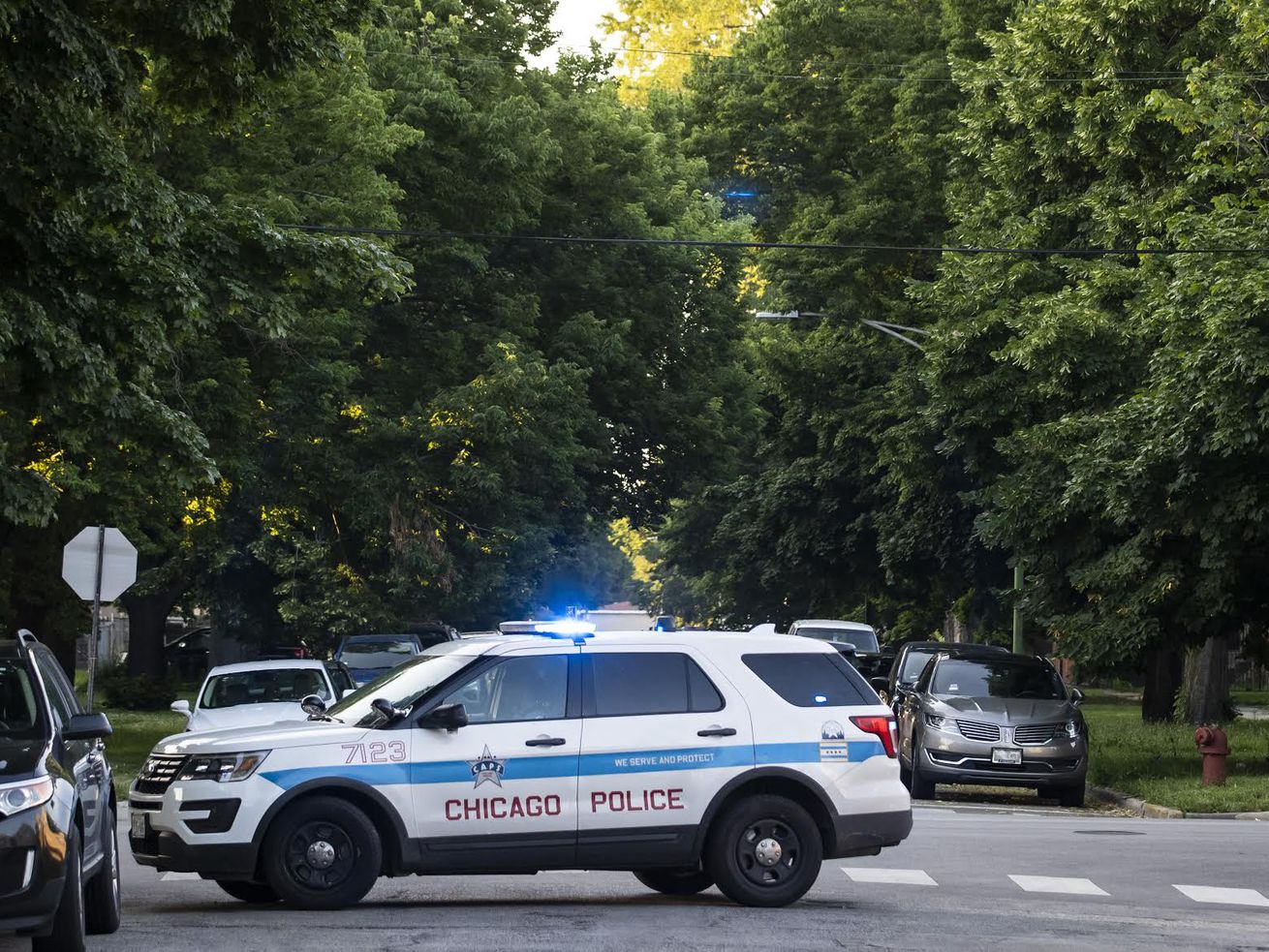
Two people were shot, one fatally, May 2, 2021, in Humboldt Park. | Sun-Times file
The men were outside about 2 p.m. in the 800 block of North Ridgeway Avenue when someone walked up and fired shots at them, Chicago police said.
Two men were shot, one of them fatally, Sunday in Humboldt Park on the West Side, according to police.
The men were outside about 2 p.m. in the 800 block of North Ridgeway Avenue when someone walked up and fired shots at them, Chicago police said.
One man, 34, was struck in the shoulder and leg and taken to Mt. Sinai Hospital, where he died, police said. The Cook County medical examiner’s office has not identified him.
The other man, 40, was in good condition with gunshot wounds to the arm and abdomen, police said.
No one is in custody as Area Four detectives investigate.
The men were outside about 2 p.m. in the 800 block of North Ridgeway Avenue when someone walked up and fired shots at them, Chicago police said.
One man, 34, was struck in the shoulder and leg and taken to Mt. Sinai Hospital, where he died, police said. The other man, 40, was in good condition with gunshot wounds to the arm and abdomen.
Late Saturday night, 12 people were shot within the span of two hours citywide.
One man was killed and another critically wounded in a shooting Saturday in Englewood on the South Side.
Just before midnight, the men, 27 and 30, were outside in the 5600 block of South Morgan Street when they heard shots and felt pain, Chicago police said.
The 27-year-old suffered gunshot wounds to the hip, shoulder and buttocks, police said. He was taken to St. Bernard Hospital where he was pronounced dead, according to police. The Cook County medical examiner’s office identified him as Benjamin Dawkins.
The 30-year-old was struck multiple times in the shoulder and taken to the same hospital in critical condition, police said.
About 45 minutes earlier, a 21-year-old man was fatally shot while riding in a vehicle in Burnside on the South Side.
The man was sitting in the front passenger seat of a vehicle about 11:15 p.m. traveling in the 800 block of East 87th Place when someone fired shots in his direction, police said.
The man was struck three times in the head and twice in the arm, police said. He was taken to Jackson Park Hospital where he was later pronounced dead, according to police. The medical examiner’s office has not yet identified him.
A 37-year-old man was fatally shot during a fight Saturday night in West Pullman on the Far South Side.
Travis Willis was standing outside with a group of people in the 11800 block of South Lafayette Avenue about 10:50 p.m. when he began arguing with another male, according to Chicago police and the Cook County medical examiner’s office.
The two started physically fighting and the other male shot Willis once in the head and fled, police said.
Willis was transported to Roseland Hospital where he was later pronounced dead, according to police.
In nonfatal attacks, a 35-year-old woman was critically hurt in a shooting Sunday morning in Brainerd on the South Side.
About 4:05 a.m., she was sitting in the front seat of a vehicle driving in the 9400 block of South Halsted Street when someone in a white pick-up truck began shooting at her, police said. She was struck in the back of the head and transported to the University of Chicago Medical Center in critical condition, police said.
A 29-year-old man was shot Sunday while filling up his vehicle at a gas station in East Ukrainian Village.
The man was at a gas station about 2:35 a.m. in the 1900 block of West Augusta Boulevard when a male approached him and fired shots, police said. He suffered a gunshot wound to the leg and went to St. Mary’s Medical Center in good condition, police said.
A 14-year-old boy was shot Saturday night in Grand Crossing on the South Side.
About 7:05 p.m., he was on the sidewalk in the 7200 block of South Blackstone Avenue, when he heard shots and felt pain, police said. He was struck in the hand, calf and grazed on the head, and was taken to Comer Children’s Hospital in good condition, police said.
Another teenage boy was critically hurt in a shooting Friday night in Lawndale.
The boy, 17, was standing in front of a home about 7:35 p.m. in the 1900 block of South Drake Avenue when someone approached him and fired shots, police said. He suffered gunshot wounds to both legs and was transported to Mount Sinai in critical condition, police said.
At least 27 other people have been hurt in shootings since 5 p.m. Friday.
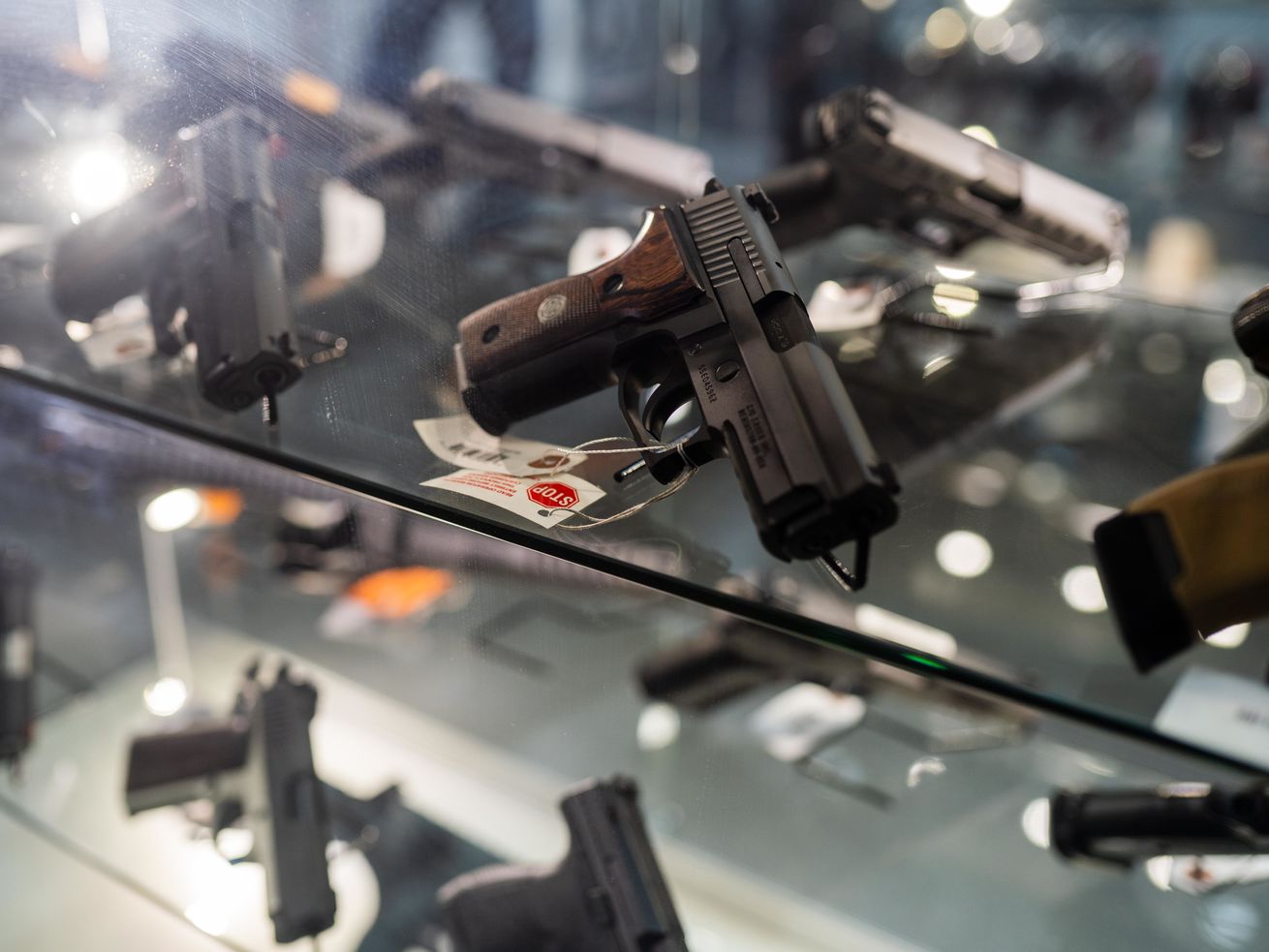
Guns on display at Kee Firearms and Training in New Lenox in January. | Pat Nabong/Sun-Times file
The Illinois attorney general’s appeal of a downstate judge’s ruling sets up a battle over whether the state can require residents to hold an ID card in order to own a firearm. First enacted in 1968, the state’s Firearm Owner Identification Act does just that. But a southern Illinois judge said that makes residents’ Second Amendment rights a “façade.”
SPRINGFIELD — For more than half a century, anyone in Illinois who wanted to own a gun needed to first apply for a special state identification card.
But now the state’s top court is being asked to decide whether the Firearm Owner’s Identification cards — popularly called FOID cards — are a necessary safeguard or a violation of the U.S. Constitution.
Last week, a downstate judge ruled the FOID card system was unconstitutional, reducing residents’ Second Amendment rights to bear arms to a “façade.”
Gun control advocates denounced the ruling as “frightening and radical,” and Illinois Attorney General Kwame Raoul quickly appealed the decision to the Illinois Supreme Court.
The appeal filed last Thursday sets up a battle over whether the state can require its citizens to hold such an ID card in order to own a firearm.
First enacted in 1968, the state’s Firearm Owner Identification Act requires Illinoisans to apply for the card with the Illinois State Police in order to legally own a firearm. But in his ruling Tuesday, White County Judge T. Scott Webb wrote that the FOID card “makes criminals out of law abiding citizens who are attempting to protect their lives within their homes.”
“A citizen in the State of Illinois is not born with a Second Amendment right. Nor does that right insure when a citizen turns 18 or 21 years of age. It is a facade,” wrote White. “They only gain that right if they pay a $10 fee, complete the proper application, and submit a photograph. If the right to bear arms and self-defense are truly core rights, there should be no burden on the citizenry to enjoy those rights.”
Pat Nabong/Sun-Times fileStaff work at Kee Firearms and Training in New Lenox in January.
But Webb’s ruling is a “frightening and radical decision contrary to a whole body of research about the effectiveness of FOID-type laws” said Jonathan Baum, a lawyer for the Giffords Law Center to Prevent Gun Violence, who has submitted briefs in the case supporting the FOID system’s constitutionality.
“The whole emphasis of this decision is ‘Well, this is taking guns away from law-abiding citizens.’ And yet it wants to strip the state of the mechanism for determining who is abiding the law,” Baum said. “So, all this does is deprive states of a critical tool for keeping guns out of the hands of people who shouldn’t have them.”
Webb’s order also dismisses charges against Vivian Brown, whose 2017 arrest had initiated the lawsuit. Brown was charged with owning a rifle without a FOID card even though she was a “law-abiding citizen” and “otherwise eligible to receive a FOID card,” according to her lawyer David Sigale.
Sigale is also the lawyer for several cases initiated by the Illinois State Rifle Association that challenge Illinois State Police delays in FOID and Concealed Carry card applications and renewals. Sigale denied the state gun lobbying group was involved with Brown’s lawsuit, saying she “merely knew someone prominent in the Second Amendment rights community” who put her in touch with him.
Brian Rich/Sun-Times fileCustomers browse for firearms at Marengo Guns in Marengo in January.
Sigale disagreed with Baum, arguing that “numerous other mechanisms” are in place to keep guns away from those who shouldn’t have them and that the FOID law “really serves no purpose.”
“Let’s say a hypothetical person was committing a crime with a rifle or had a felony criminal conviction that would disqualify them from owning a firearm. Without a FOID card that would still be a crime, so the FOID does nothing except to hurt lawful people like Ms. Brown,” Sigale said.
Baum said he is “confident” the state Supreme Court will take up the case in the summer and reverse Webb’s ruling.
Sigale said he “hopes that the [Illinois Supreme] Court knows this law turns people into second-class citizens and treats this right more like a privilege and that’s not how it’s supposed to be.”
Anna D. Shapiro has served as Steppenwolf Theatre artistic director since 2015. | Frank Ishman
The longtime artistic director, whose stage credits include the landmark “August: Osage County,” is set to direct a movie about a real-life White House correspondent.
Anna D. Shapiro, a rising star in the theater and now the movie world, will step down in August as Steppenwolf Theatre’s artistic director, the company said Sunday.
She has held the title since 2015 and has been working on a succession plan for several months, as the end of her contract neared. Last week, news emerged that Shapiro is about to direct a film, “Bury the Lede,” about the 50-year tenure of White House correspondent Connie Lawn.
The script is by Joy Gregory, the Lookingglass Theatre co-founder who went on to work on TV’s “Jericho” and “Madam Secretary.”
While Shapiro earlier directed the filming of her National Theatre revival of “Of Mice and Men,” starring James Franco and Chris O’Dowd, “Bury the Lede” will be her first work originating on the big screen.
An Evanston native, Shapiro has been a key national player in the stage world for more than a decade, since winning a Tony Award in 2008 for directing the Broadway production of “August: Osage County.” Earlier she directed the world premiere of the Tracy Letts drama at Steppenwolf.
In addition to her Steppenwolf work in recent years, she’s been working on “The Devil Wears Prada,” a new musical based on the hit movie with music by Sir Elton John, lyrics by Shaina Taub and book by Paul Rudnick. After several delays, it now is scheduled to premiere in July 2022 at Chicago’s James M. Nederlander Theatre on its way to Broadway.
Shapiro will remain part of the Steppenwolf ensemble and is slated to direct two plays in the 2021-22 season announced last week: Letts’ “The Stretch,” part of a trio of short streaming plays set to debut in September, and Rajiv Joseph’s “King James,” a world premiere planned for a world premiere on stage in February.
In this file photo, circa 1960, child actor Johnny Crawford looks forward to eating a pile of pancakes in an International House of Pancakes, a chain of eateries in the US started in 1958 by Californian brothers Al and Jerome Lapin. | Getty Images
According to the actor’s website, he died last Thursday with his wife by his side, after battling Alzheimer’s disease and contracting COVID-19.
Actor Johnny Crawford, known for his role as Mark McCain as a child actor on “The Rifleman,” has died. He was 75.
According to the actor’s website, he died Thursday with his wife by his side after battling Alzheimer’s disease and contracting COVID-19.
“It is with great sadness that we share the news of Johnny Crawford’s passing,” the website posted. ”We are grateful for the outpouring of love and support from friends and fans around the world.”
Getty ImagesActor Johnny Crawford attends the Museum of Television and Radio Cocktail Party on September 9, 2004, at The Museum of Television and Radio, in Beverly Hills, California.
Crawford rose to stardom after being cast in the ABC series “The Rifleman” which ran for five seasons. Crawford played the son of a western rancher Lucas McCain (Chuck Connors) who was also a union Civil War veteran. His role in “The Rifleman” led him to be Emmy-nominated for best supporting actor in a dramatic series.
Before playing young McCain, Crawford was one of the first Mouseketeers on the Mickey Mouse Club. He also made appearances in many TV series aired in the 1950s including “The Lone Ranger,” “The Count of Monte Cristo” and “The Loretta Young Show.”
The actor also worked in music. In 1962, Crawford’s song “Cindy’s Birthday” peaked on the Billboard charts at No. 8. He is also credited with performing the song “Easy Come Easy Go” featured on 2004 film “Hellboy.”
My dear friend #JohnnyCrawford just passed away. I pray for his wife Charlotte as she was by his side. Johnny was a real cowboy and will be greatly missed. He was an original Mickey Mouse Club member and played the son on The Rifleman. pic.twitter.com/oNKeC5Ouac
Friends in entertainment remembered Crawford on Twitter as an “inspiration” and a “dear friend.”
“My dear friend #JohnnyCrawford just passed away. I pray for his wife Charlotte as she was by his side. Johnny was a real cowboy and will be greatly missed,” wrote “Happy Days” actor Scott Baio.
“How the West Was Won” actor Bruce Boxleitner wrote: ”@johnnycrawford was one of the kindest guys I ever met. I never heard a cross word pass his lips. An inspiration to me as a boy and a friend of mine since the 80s.”
.@johnnycrawford was one of the kindest guys I ever met. I never heard a cross word pass his lips.
An inspiration to me as a boy and a friend of mine since the 80s, I had the pleasure of experiencing the man behind the actor, singer, musician, trick roper, and cowboy.


/cdn.vox-cdn.com/uploads/chorus_asset/file/22479489/VACCINE_121620_14.jpg)
/cdn.vox-cdn.com/uploads/chorus_asset/file/22479498/IMG_20210324_111918577.jpg)

/cdn.vox-cdn.com/uploads/chorus_asset/file/22485504/8___Kayla_Carter___Ryan_Hallahan___Christopher_Sheard.jpeg)

/cdn.vox-cdn.com/uploads/chorus_asset/file/22269234/GUNS_020121_18.jpg)
/cdn.vox-cdn.com/uploads/chorus_asset/file/22483343/GUNS_020121_8.jpg)


/cdn.vox-cdn.com/uploads/chorus_asset/file/22486593/GettyImages_51282500.jpeg)