OAKLAND, Calif. — Major League Baseball instructed the Athletics to explore relocation options as the team tries to secure a new ballpark it hopes will keep the club in Oakland long-term.
MLB released a statement Tuesday expressing its longtime determination that the current Coliseum site is “not a viable option for the future vision of baseball.”
“MLB is concerned with the rate of progress on the A’s new ballpark effort with local officials and other stakeholders in Oakland,” MLB said. “The A’s have worked very hard to advance a new ballpark in downtown Oakland for the last four years, investing significant resources while facing multiple roadblocks. We know they remain deeply committed to succeeding in Oakland, and with two other sports franchises recently leaving the community, their commitment to Oakland is now more important than ever.”
In November 2018, the A’s announced they had found a waterfront location for their ballpark, with picturesque views toward San Francisco, the Bay Bridge and Port of Oakland. The goal had been to open in 2023.
A’s owner John Fisher said in a statement Tuesday he will honor MLB’s instructions but remains committed to continuing to pursue the waterfront ballpark proposed for construction in the city’s Howard Terminal location, close to the popular Jack London Square neighborhood.
“The future success of the A’s depends on a new ballpark,” Fisher said. “Oakland is a great baseball town, and we will continue to pursue our waterfront ballpark project. We will also follow MLB’s direction to explore other markets.”
The proposed ballpark site is about six miles from the Coliseum and there is no mass transit. The A’s and city have said they plan to build a gondola that would go from the waterfront area of ballpark over Interstate 880 to downtown.
The team’s new downtown offices would have a view of the project, including right from President Dave Kaval’s large corner window.
Kaval has asked the City Council to make a decision on the ballpark plan via a vote before summer break.
The Athletics have moved twice since the franchise was founded in Philadelphia, arriving in Kansas City for the 1955 season and in Oakland for the 1968 season.
Just two MLB teams have moved in the past half-century: The expansion Washington Senators became the Texas Rangers for the 1972 season and the Montreal Expos transformed into the Washington Nationals for the 2005 season.
The Braves also moved twice, switching from Boston to Milwaukee for the 1953 season and to Atlanta for 1966.
There were a flurry of switches in the 1950s and ’60s: the St. Louis Browns became the Baltimore Orioles (1954), the Brooklyn Dodgers moved to Los Angeles for 1958, the New York Giants moved to San Francisco for 1958, the original Washington Senators became the Minnesota Twins (1961) and the Seattle Pilots became the Milwaukee Brewers (1970).
Baseball Commissioner Rob Manfred has said MLB will not consider expansion until the A’s and Tampa Bay Rays get new ballparks.
Rays owner Stu Sternberg had been working to build a ballpark in Tampa’s Ybor City area but abandoned that plan in December 2018. MLB’s executive council gave the Rays permission in June 2019 to explore splitting their home schedule between the Tampa Bay area and Montreal after their lease at the Trop expires at the end of the 2027 season.
GAZA CITY, Gaza Strip — A confrontation between Israel and Hamas sparked by weeks of tensions in contested Jerusalem escalated Tuesday as Israel unleashed new airstrikes on Gaza while militants barraged Israel with hundreds of rockets. The exchange killed a number of militants and civilians in Gaza and at least three Israelis.
The barrage of rockets from the Gaza Strip and airstrikes into the territory continued almost nonstop throughout the day, in what appeared to be some of the most intense fighting between Israel and Hamas since their 2014 war. The fire was so relentless that Israel’s Iron Dome rocket-defense system seemed to be overwhelmed. Columns of smoke rose from many places in Gaza.
By late Tuesday, the violence extended to Tel Aviv, which came under fire from a barrage of rockets launched from the Gaza Strip. A 50-year-old woman was killed. The outgoing volleys set off air raid sirens across the city, and the main international airport quickly closed, forcing flights to divert.
Hamas said it launched a total of 130 rockets, its most intense strike so far, in response to Israel’s destruction of a high-rise building in Gaza earlier in the evening. The sound of the outgoing rockets could be heard in Gaza. As the rockets rose into the skies, mosques across Gaza blared with chants of “God is great,” “victory to Islam” and “resistance.”
One rocket struck a bus in the central city of Holon, just south of Tel Aviv. Medics said three people, including a 5-year-old girl, were wounded and the bus went up in flames.
Since sundown Monday, 28 Palestinians — including 10 children and a woman– were killed in Gaza, most by airstrikes, health officials there said. The Israeli military said at least 16 of the dead were militants.
Two women were killed by rockets fired from Gaza that hit their homes in the southern city of Ashkelon — the first Israeli deaths in the current violence. At least 10 other Israelis have been wounded since Monday evening.
After those deaths, Israeli Prime Minister Benjamin Netanyahu said officials decided to “increase both the strength and rate of the strikes” against militant groups Hamas and Islamic Jihad in the Gaza Strip.
Egyptian officials said they were trying to broker a cease-fire, but the cycle of violence was gaining momentum. Even before the two Israeli deaths, the Israeli military said it was sending troop reinforcements to the Gaza border, and the defense minister ordered the mobilization of 5,000 reserve soldiers.
Lt. Col. Jonathan Conricus, a military spokesman, told reporters that the objective was to send a “clear message” to Hamas.
Diplomats sought to intervene. U.N. Secretary-General Antonio Guterres demanded a halt to the “spiraling” violence, a U.N. spokesman said. U.S. Secretary of State Antony Blinken spoke to the Israeli foreign minister to condemn the Hamas attacks and “reiterate the important message of de-escalation,” the State Department said.
The barrage of rockets and airstrikes was preceded by hours of clashes Monday between Palestinians and Israeli security forces, including dramatic confrontations at Jerusalem’s Al-Aqsa Mosque compound, a sacred site to both Jews and Muslims. The current violence, like previous rounds, including the last intifada, or uprising, has been fueled by conflicting claims over Jerusalem, which is at the emotional core of the long conflict.
In a sign of widening unrest, hundreds of residents of Arab communities across Israel staged overnight demonstrations denouncing the recent actions of Israeli security forces against Palestinians. It was one of the largest protests by Palestinian citizens in Israel in recent years.
In the central Israeli town of Lod, police fired tear gas and stun grenades after mourners threw rocks at officers during the funeral of an Arab man allegedly shot to death by a Jewish resident the night before. Thousands took part in the funeral, and police said the crowd set fire to a patrol car, a bus and a motorcycle. Two police officers were injured.
Israel and Hamas have fought three wars and numerous skirmishes since the militant group seized control of Gaza in 2007. Recent rounds of fighting have usually ended after a few days, often helped by mediation by Qatar, Egypt and others.
Israel carried out dozens of airstrikes, including two that targeted high-rise apartment buildings where militants were believed to be hiding.
One strike demolished a 12-story building in Gaza City that housed the offices of top Hamas officials. Israeli drones fired a series of warning shots at the roof to give people time to leave the building before it was destroyed. There were no immediate reports of casualties.
At midday, an airstrike hit a building in central Gaza City, sending terrified residents running into the street, including women and barefoot children. The Islamic Jihad militant group confirmed that the strike killed three of its commanders.
Another strike hit a high-rise as people were conducting dawn prayers, killing a woman, her 19-year-old disabled son and another man, residents said. Health officials confirmed the deaths.
The Gaza Health Ministry said 28 people, including 10 children and the woman, have been killed and 152 wounded. Ashraf al-Kidra, a spokesman for the ministry, said Israel’s “relentless assault” was overwhelming the health care system, which has been struggling with a COVID-19 outbreak.
The escalation comes at a time of political limbo in Israel.
Netanyahu has been caretaker prime minister since an inconclusive parliamentary election in March. He failed to form a coalition government with his hard-line and ultra-Orthodox allies, and the task was handed to his political rivals last week.
One of those rivals is Israel’s defense minister, who is overseeing the Gaza campaign. It was not clear whether the political atmosphere was spilling over into military decision-making, though the rival camps have unanimously expressed support for striking Hamas hard.
The support of an Arab-backed party with Islamist roots is key for the anti-Netanyahu bloc. But the current tensions might deter the party’s leader, Mansour Abbas, from joining a coalition for now. The sides have three more weeks to reach a deal.
The current violence in Jerusalem coincided with the start of the Muslim fasting month of Ramadan in mid-April.
Critics say heavy-handed police measures helped stoke nightly unrest, including a decision to temporarily seal off a popular gathering spot where Palestinian residents would meet after evening prayers. Another flashpoint was the east Jerusalem neighborhood of Sheikh Jarrah, where dozens of Palestinians are under threat of eviction by Jewish settlers.
Over the weekend, confrontations erupted at the Al-Aqsa Mosque compound, which is the third holiest site of Islam and the holiest site in Judaism.
Over several days, Israel police fired tear gas, stun grenades and rubber bullets at Palestinians in the compound who hurled stones and chairs. At times, police fired stun grenades into the carpeted mosque.
On Monday evening, Hamas began firing rockets from Gaza. From there on, the escalation was rapid.
Gaza militants fired more than 500 rockets at Israel, with about one-third falling short and landing in Gaza, Conricus said.
At midday, a barrage of some 10 rockets whizzed above the southern city of Ashdod, filling the skies with streaks of white smoke.
A rocket that hit an apartment building in Ashkelon injured six people, according to Israeli paramedic service Magen David Adom. A building in Ashdod was also hit, lightly wounding four, Israeli police said.
The military hit 130 targets in Gaza, including two tunnels militants were digging under the border with Israel, Conricus said. He did not address Gaza Health Ministry reports about the dead children.
Seven of the deaths in Gaza were members of a single family, including three children, who died in an explosion in the northern Gaza town of Beit Hanoun. It was not clear if the blast was caused by an Israeli airstrike or errant rocket.
___
Federman reported from Jerusalem. Associated Press writers Karin Laub in the West Bank, Ilan Ben Zion in Jerusalem and Samy Magdy in Cairo contributed.
NEW YORK — Broadway shows are tripping over themselves to announce that tickets are once more available. But don’t get dressed up just yet: The curtains won’t rise for most until September or October.
“Hamilton,” “The Lion King” and “Wicked” return Sept. 14, as does “Chicago.” “Ain’t Too Proud – The Life and Times of the Temptations” restarts Oct. 16, “The Phantom of the Opera” on Oct. 22, “Jagged Little Pill” on Oct. 21 and “Come From Away on Sept. 21. “Six,” which had planned to open officially on the day of the 2020 shutdown, will restart Sept. 17, as will David Byrne’s “American Utopia.” “Mrs. Doubtfire” will return Oct. 21. More are expected to announce new dates soon — for the fall.
Selling tickets now allows producers to gauge interest in their shows, like putting a big toe in the water to check the temperature. Is there thunderous demand or is it more tepid? How enduring is the interest? Once producers get answers — and much-needed cash from interested theater-goers — they can plan. Shows that find a lukewarm response may need to invest in more advertising or change it up.
Broadway shows thrive on tourists — who were roughly two-thirds of the people in the seats before the pandemic struck — and producers are banking that visitor numbers will be up by fall. The hope is that theater lovers — both tourists and New Yorkers — will loudly cheer the return. It will be a big occasion.
“The moment those theater lights go down and the stage lights come up is probably going to be one of the most emotional moments in theater in New York. And I can’t wait to be standing in my spot in the back of the theater,” says Stacey Mindich, the lead producer of “Dear Evan Hansen.”
Broadway shows can’t just restart like flipping a light switch, especially big musicals. Cast members may have left, requiring new hiring. Orchestras and ensembles must re-learn their parts, choreographers need the cast in the room to synchronize and costumers need to check fittings. Producers say the task is like opening a show from scratch all over again.
The pandemic also has added new safety fears for everything from handling props to theater cleaning. Broadway seats are very close together, and the venues are not particularly airy or spacious. Just getting inside before the pandemic required standing in a long line and cramming into entrances. It’s no surprise that the first report of COVID-19 invading Broadway was when a part-time usher and security guard tested positive.
So questions need to be addressed: Will temperature checks be enough? Must actors be vaccinated? Will audiences have to show vaccination cards? Will masks be required? Some theater owners have installed new air filters and some have updated bathrooms. Is that enough? Might shows eliminate intermission and bar service to curb people from mingling? Producers and union leaders must reach agreements on all these issues before shows open.
Audiences are also going to have to adjust. Actor Katharine McPhee wondered about small things, like folks coughing during a show. That used to be annoying; now it may be triggering. “I feel like it’s going to take a long time for people to not have some trauma connected to us all being fearful,” she said.
Those shows likely to fare best, at least initially, have legions of fans and histories as a tested entertainment source — think “Hamilton,” “The Lion King” and “Wicked.” Those in the most precarious positions are new plays or musicals that few know about, but are bravely opening post-pandemic. Initially, after 18 months of pent-up demand, theater lovers are expected to make a point of buying tickets and cheering the return. But the months after those die-hard fans have come and gone will be the trickiest. Theater actors certainly are hopeful.
“I think it has, for me, reset my passion for theater,” says Jesse Tyler Ferguson, who is waiting for his revival of “Take Me Out” to restart. “I think for a lot of people, it’s been something that we’ve taken for granted. And I think when we do get back to being able to commune and join together and watch live theater together, I’m going to have that same feeling in my heart and in my soul as when I first sat down to see my first Broadway show at 17 years old.”
Away from the Great White Way, shows have already opened with socially distanced audiences, but that’s not possible for the 41 Broadway theaters. The financial demands simply don’t favor keeping many seats purposefully empty.
The average operating costs for a play are about $300,000 per week, while weekly costs run $600,000 for musicals. Conventional wisdom is that many shows need to sell at least 80% of tickets just to break even. Figuring out ticket pricing will also be a headache: Should there be regular prices initially and then deep discounts later in the fall to attract more wary customers? Disney is luring customers by promising to pay all Ticketmaster fees and offering skittish ticket buyers the freedom to exchange or even cancel tickets at no charge. There’s going to be a lot of number-crunching from now until fall.
Financials aside, the existing theater community is going through a reflective and turbulent period as it comes under criticism from people — inside and outside the business — demanding racial justice, inclusion, fair wages, accountability and representation.
Spurred on by the protests over the police-involved death of George Floyd, marchers have taken to the streets to denounce the labor union Actors Equity Association and have successfully forced producer Scott Rudin to step aside in the face of bullying allegations. The voices are calling for wholesale changes from a system that has been static for decades. Working out what a more inclusive Broadway will take time.
“I think that we are at a point now where people are listening and people are willing to make changes,” Vanessa Williams, a leader in the new group Black Theatre United, said in March. “It’s almost like a reset button now: ‘OK, now we’re listening and now we’re going to make changes.'”
WASHINGTON — President Donald Trump’s acting defense secretary during the Jan. 6 Capitol riots plans to tell Congress that he was concerned in the days before the insurrection that sending troops to the building would fan fears of a military coup and could cause a repeat of the deadly Kent State shootings, according to a copy of prepared remarks obtained by The Associated Press.
Christopher Miller’s testimony is aimed at defending the Pentagon’s response to the chaos of the day and rebutting broad criticism that military forces were too slow to arrive even as pro-Trump rioters violently breached the building and stormed inside. He casts himself as a deliberate leader who was determined that the military have only limited involvement, a perspective he says was shaped by criticism of the aggressive response to the civil unrest that roiled American cities months earlier, as well as decades-old episodes that ended in violence.
The Defense Department, he will tell members of the House Oversight Committee on Wednesday, has “an extremely poor record in supporting domestic law enforcement,” including during civil rights and anti-Vietnam War demonstrations in the 1960s and 1970s.
“And some 51 years ago, on May 4, 1970, Ohio National Guard troops fired at demonstrators at Kent State University and killed four American civilians,” Miller will say, adding, “I was committed to avoiding repeating these scenarios.”
He will also deny that Trump, criticized for failing to forcefully condemn the rioters, had any involvement in the Defense Department’s response and will say that Trump had even suggested that 10,000 troops might be needed for Jan. 6.
Miller, expected to testify alongside former acting Attorney General Jeffrey Rosen and District of Columbia Police Chief Robert Contee III, will be the most senior Defense Department official to participate in congressional hearings on the riots. The sessions have been characterized by finger-pointing by officials across agencies about missed intelligence, poor preparations and an inadequate law enforcement response.
The Capitol Police have faced criticism for being badly overmatched, the FBI for failing to share with sufficient urgency intelligence suggesting a possible “war” at the Capitol, and the Defense Department for an hourslong delay in getting support to the complex despite the violent, deadly chaos unfolding on TV.
Rosen, for his part, is expected to tell lawmakers that the Justice Department “took appropriate precautions” ahead of the riot, putting tactical and other elite units on standby after local police reports indicated that 10,000 to 30,000 people were expected at rallies and protests, according to prepared remarks obtained by the AP.
Miller’s testimony will amount to the most thorough explanation of Pentagon actions after months of criticism that it took hours for the National Guard to arrive.
In his remarks, he defends his resistance to a heavy military response as being shaped by public “hysteria” about the possibility of a military coup or concerns that the military might be used to help overturn the election results. Fearful of amplifying those suspicions — as well as the chance that a soldier might be provoked into violence in a way that could be perceived as an attack on First Amendment activities — he says he agreed in the days before the insurrection to deploy soldiers only in areas away from the Capitol.
“No such thing was going to occur on my watch but these concerns, and hysteria about them, nonetheless factored into my decisions regarding the appropriate and limited use of our Armed Forces to support civilian law enforcement during the Electoral College certification,” Miller will say. “My obligation to the Nation was to prevent a constitutional crisis.”
Democrats have signaled that they intend to press Miller on why it took so long for the National Guard to arrive despite urgent plans for help. Miller will contend that those complaints are unjustified, though he also concedes that the Guard was not rushed to the scene — a decision that he maintains was intentional.
“This isn’t a video game where you can move forces with a flick of the thumb or a movie that glosses over the logistical challenges and the time required to coordinate and synchronize with the multitude of other entities involved, or with complying with the important legal requirements involved in the use of such forces,” he will say.
Even after the Guard was requested, he said he felt compelled to send them “in with a plan to not only succeed but that would spare them unnecessary exposure and spare everyone the consequences of poor planning or execution.”
“We appreciated the seriousness of the situation, but we did not want to piece-meal National Guard forces into the zone of conflict,” Miller will say.
Although the timeline Miller offers in his remarks generally matches up with that provided by other high-ranking leaders, he notably puts himself at odds with William Walker, who as commanding general of the D.C. National Guard testified to what he said were unusual Pentagon restrictions that impeded his response and contributed to a three-hour delay between the time he requested aid and the time it was received. Walker has since become the House sergeant-at-arms, in charge of the chamber’s security.
Miller will say that Walker was given “all the authority he needed to fulfill the mission” and that before Jan. 6 he had never expressed any concern about the forces he had at his disposal. He contends that he authorized the deployment of 340 National Guard personnel, the total amount Walker had said would be necessary, and authorized him to use a 40-member quick reaction force provided that Walker could provide him with a so-called concept of operations.
Miller said he approved the activation of the Guard at 3 p.m.. He said that though that support did not arrive at the Capitol complex until 5:22 p.m., the coordination, planning and deputizing of personnel by civilian law enforcement all took time.
Miller, a Green Beret and retired Army colonel, served as a White House counterterrorism adviser under Trump before being tapped as acting defense secretary for the final months of the Trump administration. He replaced Mark Esper, who was fired after the election after being seen by Trump as insufficiently loyal.
The abrupt appointment raised concerns that Miller was in place to be a Trump loyalist. In his opening statement, though, he will say that he believes Trump “encouraged the protesters” but declines to say if he thinks the president bears responsibility. He recounts a conversation on Jan. 5 when Trump, struck by a crowd of supporters at a rally that day, told him that 10,000 troops would be needed the next day.
“The call lasted fewer than thirty seconds and I did not respond substantively, and there was no elaboration. I took his comment to mean that a large force would be required to maintain order the following day,” Miller says in his statement.
___
Associated Press writer Nomaan Merchant in Washington contributed to this report.
The Press Room is a small restaurant with a big heart in Chicago’s West Loop, serving sophisticated but familiar food, friendly wines and classic cocktails. The Press Room runs on attentive service and friendly vibes. It’s on the lower level of a century-old building, originally the Free Methodist Publishing House. It continues to find ways to surprise and delight guests with special experiences amidst the pandemic’s restrictions, most recently with Dead Plants — a 1920s speakeasy brought to life.
Dead Plants at The Press Room in Chicago brings the speakeasy experience from the 1920s into this century by launching a live music series on the second Saturday of each month. Priced at $45 per person, each ticket will include a 90-minute show and one cocktail. Doors to The Press Room open at 8:30pm and the show will start at 9pm. Only 26 tickets will be available per show, guaranteeing an intimate live-entertainment event.
Starting on the second Saturday of each month, you can experience the ultimate speakeasy feel and musical acts when you travel to Dead Plants at The Press Room in Chicago. The first musical guest will be Brandon Markell Holmes on March 13th, who will be performing a tribute show to Luther Vandross. You can expect to hear songs by Luther Vandross, Smokey Robinson Algreen and many more.
On April 10th, you can enjoy Jazz and pop classics at The Press Room in Chicago from Sam Fazio. Sam has established a name for himself in the music scene over the past several years and has entertained audiences at some of the most prestigious venues in the country, including Green Mill, Jazz Showcase, Andy’s Jazz Club, City Winery, Untitled, and more.
You are more than welcome to enjoy a full evening of revelry at Dead Plants – when making a reservation for dinner, a request to purchase tickets to the event can be made, allowing you to experience dinner and a show at The Press Room.
Advertisement
Additionally, the team behind The Press Room is behind another new Chicago hot-spot, Dough Daddy’s. Dough Daddy’s, a new virtual restaurant based out of Chicago’s West Loop, opened on Thursday, January 21. Available exclusively for takeout and delivery through GrubHub, this pop-up offers Chicago a chance to experience Detroit-style pizzas created with a special sourdough starter, that has been with Chef Noah Zamler for five years.
To celebrate the relaunch of The Press Room as a speakeasy, the team is partnering with Argonaut Catering Company, a high end seafood company, on May 14th and 15th for a special dinner series. Tickets will cost $80.00 a person and can be purchased by texting 872-240-2317. Live music from Shawn Maxwell Duo will be performed on both nights from 6:30pm to 9:30pm. To play into the 1920s, guests are encouraged to dress their best. Those who dress the part will be entered into a raffle to win a bottle of champagne.
To keep the speakeasy vibe, The Press Room will continue to offer the previous menu. Instead of texting a phone number for admission, guests will be able to book their reservation experience on Tock. The cell phone number guests originally texted will still be used for music, drag shows, and cigar events. The Press Room will also be launching the patio service, weather permitting. Service will be offered on Wednesdays and Thursdays from 4:00 pm to 11:00 pm. On the weekends, service will be available on Friday and Saturday from 4:00 pm to 12:00 am.
Dead Plants The Press Room Featured Image Credit: The Press Room
“I wish I didn’t say that,” Pat Foley said during Monday’s Blackhawks game, referring to his “bullet in my head” remark. “I’m sorry if I offended some folks. Apparently I did, so I apologize.” | James Foster/For the Sun-Times
He was referring to the boredom players had to deal with while on the road because of the NHL’s COVID-19 protocols.
Blackhawks play-by-play announcer Pat Foley apologized Monday for making an on-air remark about putting “a bullet in my head” during the team’s season finale against the Dallas Stars.
Foley has been calling away games remotely this season for NBC SportsChicago, and during the third period, he praised the players for playing through difficult COVID-19 protocols on the road without needing to have a game rescheduled.
He mentioned that players were limited to their hotel room and the rink and couldn’t go out to dinner or visit family and had to deal with a lot of boredom.
“Had I been traveling with the team this year, I might have put a bullet in my head,” he said during the Stars’ 5-4 overtime win. “I wouldn’t even have had access to the player lounge.”
Foley apologized on air during overtime for the imagery.
“I wish I didn’t say that,” he said. “I’m sorry if I offended some folks. Apparently I did, so I apologize.”
Foley has called Blackhawks games for nearly four decades, starting in 1981-2006 and returning for the 2008-09 season. He received the Hockey Hall of Fame’s Foster Hewitt Award in 2014 for outstanding contributions as a hockey broadcaster.
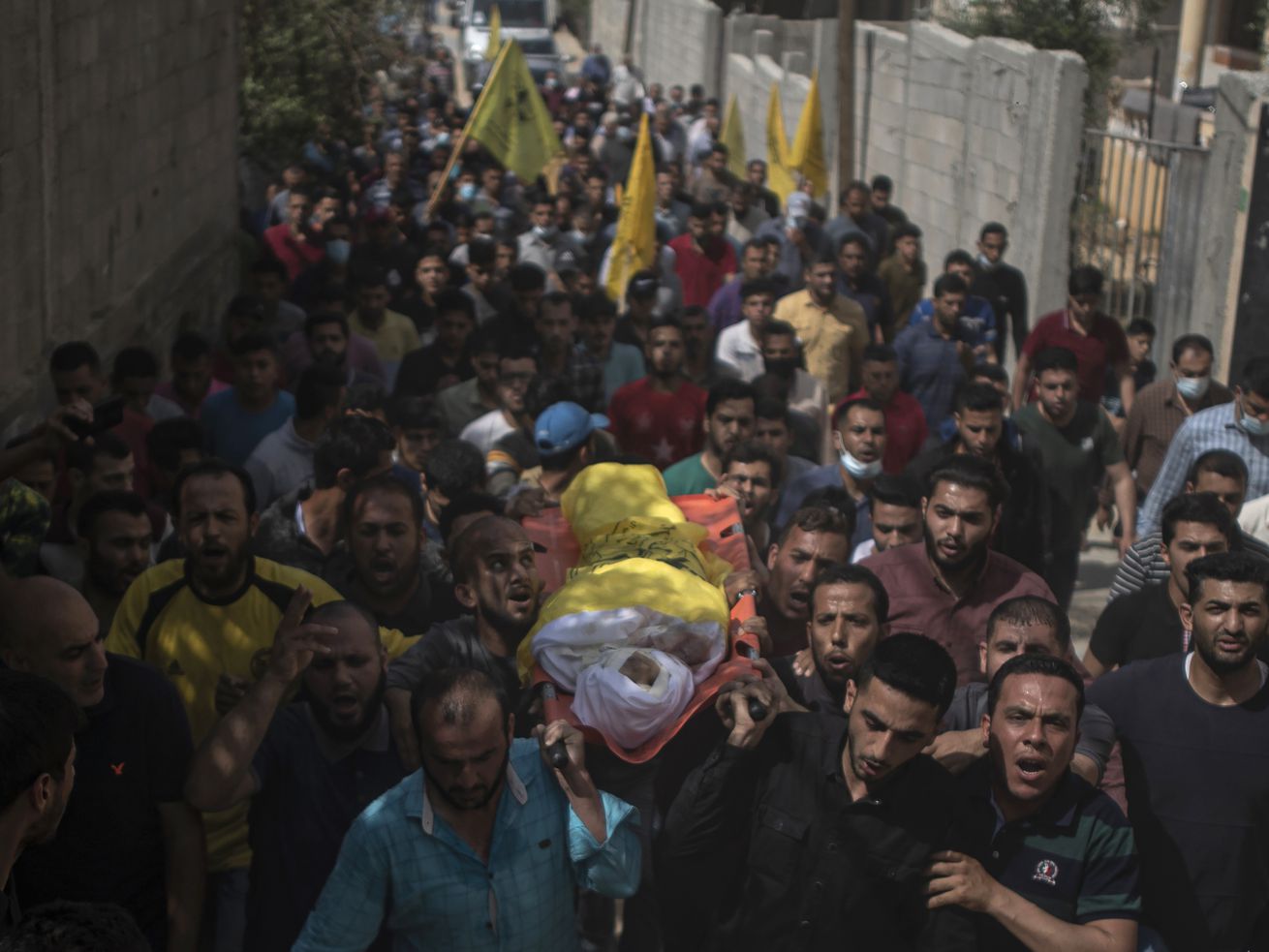
Palestinian mourners carry the body of 11-year-old Hussain Hamad, who was killed by an explosion during the ongoing conflict between Israel and Hamas, during his funeral in Beit Hanoun, northern Gaza Strip, Tuesday, May 11, 2021. | AP
Since sundown Monday, 28 Palestinians — including 10 children and a woman— were killed in Gaza, most by airstrikes, health officials there said.
GAZA CITY, Gaza Strip — A confrontation between Israel and Hamas sparked by weeks of tensions in contested Jerusalem escalated Tuesday as Israel unleashed new airstrikes on Gaza while militants barraged Israel with hundreds of rockets. The exchange killed a number of militants and civilians in Gaza and at least two Israelis.
The barrage of rockets from the Gaza Strip and airstrikes into the territory continued almost nonstop throughout the day, in what appeared to be some of the most intense fighting between Israel and Hamas since their 2014 war. The fire was so relentless that Israel’s Iron Dome rocket-defense system seemed to be overwhelmed. Columns of smoke rose from many places in Gaza.
By late Tuesday, the violence extended to Tel Aviv, which came under fire from a barrage of rockets launched from the Gaza Strip. The outgoing volleys set off air raid sirens across the city.
Hamas said it launched a total of 130 rockets, its most intense strike so far, in response to Israel’s destruction of a high-rise building in Gaza earlier in the evening. The sound of the outgoing rockets could be heard in Gaza. As the rockets rose into the skies, mosques across Gaza blared with chants of “God is great,” “victory to Islam” and “resistance.”
Since sundown Monday, 28 Palestinians — including 10 children and a woman— were killed in Gaza, most by airstrikes, health officials there said. The Israeli military said at least 16 of the dead were militants.
Two women were killed by rockets fired from Gaza that hit their homes in the southern city of Ashkelon — the first Israeli deaths in the current violence. At least 10 other Israelis have been wounded since Monday evening.
After those deaths, Israeli Prime Minister Benjamin Netanyahu said officials decided to “increase both the strength and rate of the strikes” against militant groups Hamas and Islamic Jihad in the Gaza Strip.
Egyptian officials said they were trying to broker a cease-fire, but the cycle of violence was gaining momentum. Even before the two Israeli deaths, the Israeli military said it was sending troop reinforcements to the Gaza border, and the defense minister ordered the mobilization of 5,000 reserve soldiers.
Lt. Col. Jonathan Conricus, a military spokesman, told reporters that Israel was beefing up defensive forces on the border to prevent possible infiltrations and increasing its offensive forces as well, primarily in the air.
He said the objective was to send a “clear message” to Hamas.
The barrage of rockets and airstrikes was preceded by hours of clashes Monday between Palestinians and Israeli security forces, including dramatic confrontations at Jerusalem’s Al-Aqsa Mosque compound, a sacred site to both Jews and Muslims. The current violence, like previous rounds, including the last intifada, or uprising, has been fueled by conflicting claims over Jerusalem, which is at the emotional core of the long conflict.
In a sign of widening unrest, hundreds of residents of Arab communities across Israel staged overnight demonstrations denouncing the recent actions of Israeli security forces against Palestinians. It was one of the largest protests by Palestinian citizens in Israel in recent years.
In the central Israeli town of Lod, police fired tear gas and stun grenades after mourners threw rocks at officers during the funeral of an Arab man allegedly shot to death by a Jewish resident the night before. Thousands took part in the funeral, and police said the crowd set fire to a patrol car, a bus and a motorcycle. Two police officers were injured.
Israel and Hamas have fought three wars and numerous skirmishes since the militant group seized control of Gaza in 2007. Recent rounds of fighting have usually ended after a few days, often helped by mediation by Qatar, Egypt and others.
Israel carried out dozens of airstrikes, including two that targeted high-rise apartment buildings where militants were believed to be hiding.
One strike demolished a 12-story building in Gaza City that housed the offices of top Hamas officials. Israeli drones fired a series of warning shots at the roof to give people time to leave the building before it was destroyed. There were no immediate reports of casualties.
At midday, an airstrike hit a building in central Gaza City, sending terrified residents running into the street, including women and barefoot children. The Islamic Jihad militant group confirmed that the strike killed three of its commanders.
Another strike hit a high-rise as people were conducting dawn prayers, killing a woman, her 19-year-old disabled son and another man, residents said. Health officials confirmed the deaths.
The Gaza Health Ministry said 28 people, including 10 children and the woman, have been killed and 152 wounded. Ashraf al-Kidra, a spokesman for the ministry, said Israel’s “relentless assault” was overwhelming the health care system, which has been struggling with a COVID-19 outbreak.
The escalation comes at a time of political limbo in Israel.
Netanyahu has been caretaker prime minister since an inconclusive parliamentary election in March. He failed to form a coalition government with his hard-line and ultra-Orthodox allies, and the task was handed to his political rivals last week.
One of those rivals is Israel’s defense minister, who is overseeing the Gaza campaign. It was not clear whether the political atmosphere was spilling over into military decision-making, though the rival camps have unanimously expressed support for striking Hamas hard.
The support of an Arab-backed party with Islamist roots is key for the anti-Netanyahu bloc. But the current tensions might deter the party’s leader, Mansour Abbas, from joining a coalition for now. The sides have three more weeks to reach a deal.
The current violence in Jerusalem coincided with the start of the Muslim fasting month of Ramadan in mid-April.
Critics say heavy-handed police measures helped stoke nightly unrest, including a decision to temporarily seal off a popular gathering spot where Palestinian residents would meet after evening prayers. Another flashpoint was the east Jerusalem neighborhood of Sheikh Jarrah, where dozens of Palestinians are under threat of eviction by Jewish settlers.
Over the weekend, confrontations erupted at the Al-Aqsa Mosque compound, which is the third holiest site of Islam and the holiest site in Judaism.
Over several days, Israel police fired tear gas, stun grenades and rubber bullets at Palestinians in the compound who hurled stones and chairs. At times, police fired stun grenades into the carpeted mosque.
On Monday evening, Hamas began firing rockets from Gaza. From there on, the escalation was rapid.
Gaza militants fired more than 500 rockets at Israel, with about one-third falling short and landing in Gaza, Conricus said.
At midday, a barrage of some 10 rockets whizzed above the southern city of Ashdod, filling the skies with streaks of white smoke.
A rocket that hit an apartment building in Ashkelon injured six people, according to Israeli paramedic service Magen David Adom. A building in Ashdod was also hit, lightly wounding four, Israeli police said.
The military hit 130 targets in Gaza, including two tunnels militants were digging under the border with Israel, Conricus said. He did not address Gaza Health Ministry reports about the dead children.
In Gaza, most of the deaths were attributed to airstrikes. However, seven of the deaths were members of a single family, including three children, who died in an explosion in the northern Gaza town of Beit Hanoun. It was not clear if the blast was caused by an Israeli airstrike or errant rocket.
Dozens of mourners took part in the funeral of Hussein Hamad, an 11-year-old boy who was among the dead.
Israel struck scores of Gaza homes in its 2014 war with Hamas, arguing it was aiming at militants, but also killing many civilians. The practice drew broad international condemnation at the time. Israel’s latest tactics in Jerusalem have drawn angry reactions from leaders from the Arab and Muslim world.
___
Federman reported from Jerusalem. Associated Press writers Karin Laub in the West Bank, Ilan Ben Zion in Jerusalem and Samy Magdy in Cairo contributed.
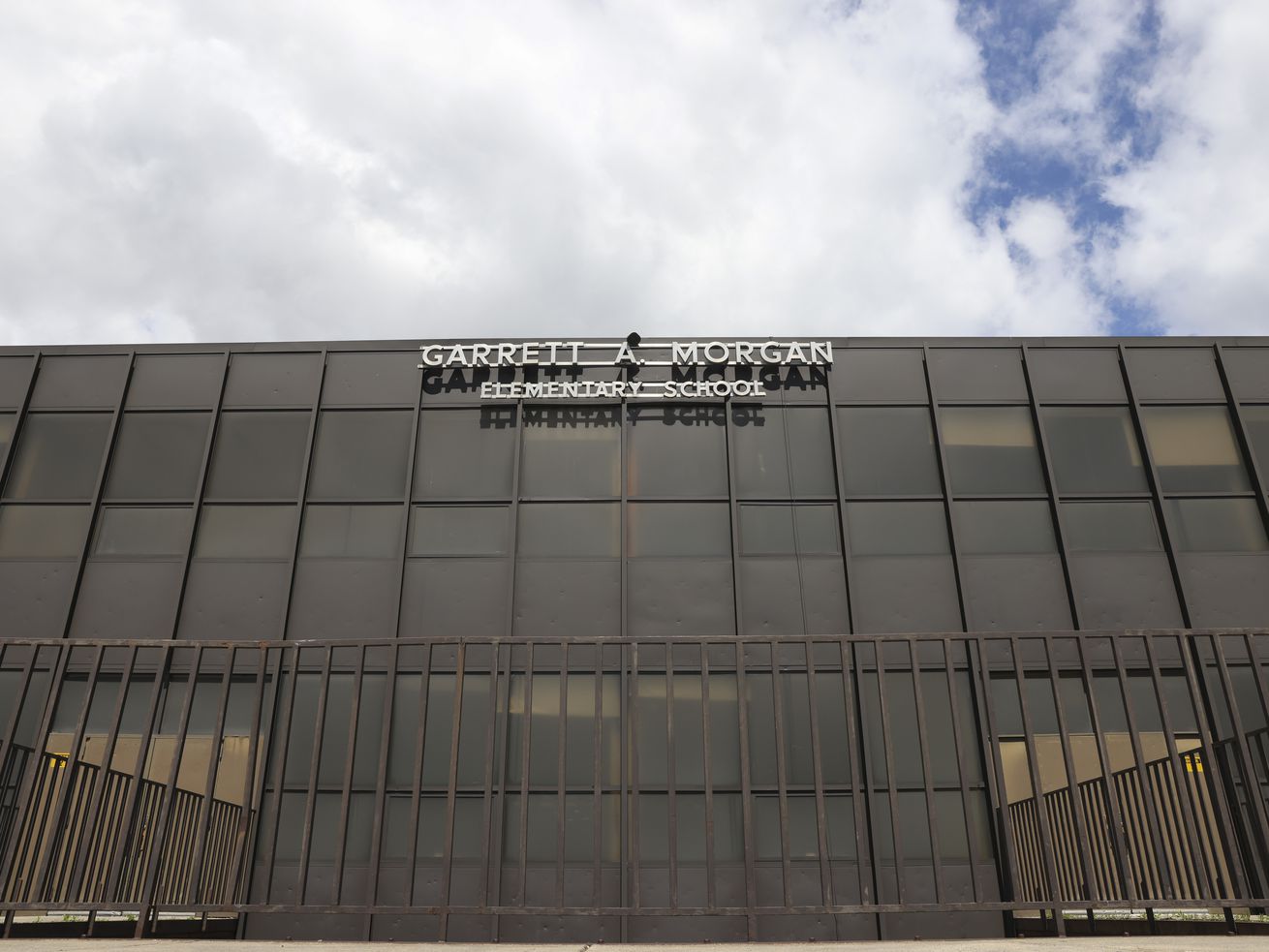
Ja’Mal Green is part of an effort to acquire the former Garrett Morgan Elementary School, 8407 S. Kerfoot Ave., tear it down, and build a youth center in its place. | Anthony Vazquez/Sun-Times
“She takes things too personal,” Green told the Sun-Times. “Her vindictiveness, her personal vendettas. … That’s the game ball that she plays. If you’re not her friend, she is not willing to help you.”
Community activist Ja’Mal Green is accusing Mayor Lori Lightfoot of putting the kibosh on a $15 million youth center he wants to build on the site of a shuttered elementary school in Auburn-Gresham in retaliation for Green’s outspoken criticism of the mayor.
“She takes things too personal and has an allegiance to her friends only,” Green told the Sun-Times on Tuesday.
“Her vindictiveness, her personal vendettas. ….That’s the game ball that she plays. If you’re not her friend, she is not willing to help you.”
Green was a former mayoral challenger himself, before dropping out and endorsing Lightfoot over Cook County Board President Toni Preckwinkle in the April 2019 runoff.
But it wasn’t long before Green was publicly criticizing Lightfoot.
The first public break came when Lightfoot proclaimed as a “done deal” a $95 million police and fire training academy that Green and others called a symbol of Rahm Emanuel’s misplaced spending priorities. In fact, Lightfoot said the project needed to be made bigger, better and, undoubtedly, more expensive.
That was followed by Green’s outspoken criticism of Lightfoot’s selection of David Brown as Chicago Police Department superintendent, and also what Green viewed as the heavy-handed treatment of protesters by CPD officers during civil unrest last summer.
Green also slammed Lightfoot’s decision to seal off downtown by raising the bridges after protests triggered by the death of George Floyd devolved into two devastating rounds of looting.
But the very personal and apparently final straw for Lightfoot came last month when the mayor took to Twitter to shoot down what she called “homophobic, racist and misogynistic rumors” about her own personal life.
In a now-deleted tweet for which he has apologized, Green declared, “Lori Lightfoot is resigning tomorrow in a stunning end to her mayorship.”
Now Green has unleashed yet another Twitter tirade against the mayor.
This week, he accused Lightfoot of holding up his plan to demolish Garrett Morgan Elementary School, 8407 S. Kerfoot Ave., and build an 80,000 square foot job training and recreational center tailor-made to help young people avoid becoming perpetrators or victims of gang violence.
In addition to recreational programs and a wellness center for mental health, the mecca Green calls “Morgan All-Stars” would include everything from flight simulators to train young people for careers in aviation, to coding development courses, to training rooms for entrepreneurship and the building trades.
Before the project can move forward and seek federal, state or city capital development funds, the Chicago Board of Education must convey the shuttered school to the city. The city then could sell or donate it to the development team Green has assembled.
“It’s probably the most revolutionary center to tackle the root causes of why young people are acting the way they are in our communities,” Green said.
Anthony Vazquez/Sun-TimesThe former Garrett A. Morgan Elementary School, 8407 S. Kerfoot Ave., was among 50 Chicago Public Schools closed in 2013. Former mayoral candidate Ja’Mal Green is part of a group that wants to demolish the building and put up an 80,000 square foot job training and recreational center. But he says the mayor has taken his criticisms too personally and is blocking the project because he’s involved.
Green said the project was moving along until a few weeks ago, when Deputy Mayor for Economic Development Samir Mayekar “told our developer, ‘We’re not moving on this project because Ja’Mal is involved and the mayor doesn’t like it.”
“I texted the mayor about it. She told me to stop contacting her. The mayor is blocking a project that will save lives. WOW! … Because I’m a part, no movement any more. Insane,” Green tweeted.
“Whatever we have between us has nothing to do with the community and our young people laying in pools of blood. … It’s not fair to our youth that hating me is more important than their survival.”
To underscore the point, Green included a screen shot of Lightfoot’s text to him. It read, “I have already told you several weeks ago to stop contacting me.”
The mayor’s office had no immediate comment on Green’s claims.
PISSED: There’s a massive youth center being built on the south side of Chicago & Mayor Lightfoot told her staff to stop working on it cuz I’m apart of it. I texted the mayor about it, she told me to stop contacting her. The mayor is blocking a project that will save lives, WOW!
David Doig, the former city planning commissioner and Chicago Park District superintendent now serving as president of Chicago Neighborhoods Initiative, refused to discuss his negotiations with the city.
When Green endorsed her in March 2019, Lightfoot’s campaign posted a statement on its website quoting Green: “We’re going to disagree. But, we’re going to give her a chance to make this city the great city it could be for our kids, for our teachers, for students, for re-entry citizens, for those suffering in poverty, for the homeless.”
Tuesday, Green argued Lightfoot’s decision to put the kibosh on the youth center is no different than her threat to Black aldermen a few months ago.
She warned those who dared to vote against her 2021 budget, “Don’t ask me for s–t for the next three years” when it comes to choosing projects for her $3.7 billion capital plan.
“This is the biggest character flaw of the mayor. … This is how she governs,” Green said.
“She’s probably not gonna get another term because she runs this city in a very vindictive way and she can be spiteful with those who go against her. That’s no way to be mayor.”
Ndeye Yacine Dieng drops embers over peanut shells covering fish as she walks amidst the smoke on Bargny beach, some 22 miles east of Dakar, Senegal, Wednesday April 21, 2021. | AP
The first true fishing season since the pandemic devastated the industry has brought renewed hope for a fish-processing industry that employs hundreds of thousands.
BARGNY, Senegal — Since her birth on Senegal’s coast, the ocean has always given Ndeye Yacine Dieng life.
Her grandfather was a fisherman, and her grandmother and mother processed fish. Like generations of women, she now helps support her family in the small community of Bargny by drying, smoking, salting and fermenting the catch brought home by male villagers.
They were baptized by fish, these women say.
But when the coronavirus pandemic struck, boats that once took as many as 50 men out to sea carried only a few. Many people here were too terrified to leave their houses, let alone fish, for fear of catching the virus.
When the local women did manage to get their hands on fish to process, they lacked the usual buyers, as markets shut down and landlocked neighboring countries closed their borders. Without savings, many families went from three meals a day to one or two.
Dieng is among more than 1,000 women in Bargny and many more in the other villages dotting Senegal’s sandy coast who process fish — a crucial link in a chain that constitutes one of the country’s largest exports and employs hundreds of thousands of people.
“It was catastrophic — all of our lives changed,” Dieng says. But, she says, “Our community is a community of solidarity.”
That spirit sounds throughout Senegal with the motto “Teranga,” a word in the Wolof language for hospitality, community and solidarity. Across the country, people tell each other: “On est ensemble,” French meaning, “We are in this together.”
Leo Correa / APSmoked and processed fish is set in a basket after being cleaned and separated by female workers at a processing site on Bargny beach, 22 miles east of Dakar, Senegal, April 25, 2021.
Leo Correa / APMen wade through the water as they carry the fish cargo from the pirogues to the shore of Bargny beach, 22 miles east of Dakar, Senegal, April 22, 2021.
Last month, the first true fishing season since the pandemic devastated the industry kicked off, bringing renewed hope to the processors, their families and the village. The brightly painted vast wooden fishing boats called pirogues once again are each carrying dozens of men to sea, and people swarm the beach to help the fishermen carry in their loads.
But the challenges from the coronavirus — and much more — remain. Rising seas and climate change threaten the livelihoods and homes of those along the coast. Many can’t afford to build new homes or move inland.
A steel-processing plant rising near Bargny’s beach raises fears about pollution. It will join a cement factory that’s also nearby, though advocates argue they’re needed to replace resources depleted by overfishing.
“Since there is COVID, we live in fear,” says Dieng, 64, who has seven adult children. “Most of the people here and women processors have lived a difficult life.
“We are exhausted. But now, little by little, it’s getting better.”
Leo Correa / APNdeye Yacine Dieng talks with her 3-year-old grandson Babacar as she arrives at her home in Bargny, Senegal some 35 kilometers (22 miles) east of Dakar, Senegal, Wednesday April 21, 2021. Since her birth on Senegal’s coast, the ocean has always given Ndeye Yacine Dieng life. Her grandfather was a fisherman, and her grandmother and mother processed fish. Like generations of women, she helps support her family in the small community of Bargny by drying, smoking, salting and fermenting the catch brought home by male villagers. They were baptized by fish, these women say.
Dieng and her fellow processors weathered the pandemic by relying on each other. They’re accustomed to being breadwinners — one expert estimated that each working woman in Senegal feeds seven or eight family members. Before the pandemic, a good season could bring Dieng the equivalent of $1,000. Last year, though, she says she made little to nothing.
Dieng’s husband teaches the Quran at the mosque next door to their home. The couple pooled their money with their children, with one son finding work repairing TVs. Other women got help from family members abroad or rented out parts of their refrigerators for storage.
They survived.
But they missed their work. For them, it isn’t just a job. It is their heritage.
“Processing is a pride,” Dieng says.
Most fishing in Senegal is small-scale, carried out in traditional, generations-old methods as old as the ways Dieng and other villagers process the fish.
Once processed, the fish is sold to local and international buyers. Preserving it means it lasts longer than fresh and is cheaper to buy.
In Senegal alone, the fish accounts for more than half of all protein eaten by the 16 million residents of the West African nation.
Industrial fishing is carried out in Senegal’s waters as well, though via motorized vessels and trawlers instead of the traditional pirogues. More than two dozen companies also specialize in industrial processing in the country alongside fishmeal factories and canning plants. The fishmeal factories price women like Dieng out by paying more for the fish and depleting resources — to produce five kilograms of fishmeal, a lower-grade powder-like product that’s used to feed farm animals and pets, they need five times as much fish.
Senegal’s government also has agreements to allow other countries to fish off its coast, imposing limits on what they can haul in. But monitoring what these large boats from Europe, China and Russia harvest has proven difficult. Villagers say the outsiders are devastating the supply.
Leo Correa / APNdeye Yacine Dieng (lower left) covers fish with peanut shells to process it on Bargny beach. Dieng’s grandfather was a fisherman, her grandmother and mother fish processors. They baptized her with money from fish. They taught her the traditions and work of fish processing.
Dieng has become a leader and mentor whose neighbors increasingly come to her for advice on everything from money to their marriages. She’s part of a rising collective voice of women in Senegal working for change along the coast and beyond.
Senegal has designated land near Bargny as an economic zone in its efforts to invest in redevelopment. Dieng’s neighbor Fatou Samba is a town councilor and president of the Association of Women Processors of Fish Products. She has testified about the challenges of such artisanal fishing and hopes to stop much of the expansion of big industry as fishmeal companies scoop up fish and send the product to Europe and Asia.
“If we let ourselves be outdone, within two or three years, women will not have work anymore,” Samba says. “We are not against the creation of a project that will develop Senegal. But we are against projects that must make women lose the right to work.”
Samba also warns of the effects of climate change, with rising tides eroding Senegal’s coast and forcing fisherman to seek their catch further out to sea. Samba and Dieng have each lost at least half of their seaside homes as water gutted rooms during the rainy seasons of the past decade.
Besides their laborious work processing fish, Samba and other women handle the bulk of the work at home.
Leo Correa / APA woman works at a fish-processing site on Bargny beach.
Leo Correa / APA woman gestures as a man unloads his horse-drawn cart of the catch brought by fishermen at Bargny beach.
Leo Correa / APNdeye Yacine Dieng spreads the fish on the ground before processing it on Bargny beach.
“Especially in Africa, women are fighters. Women are workers. Women are family leaders,” Samba says. “Therefore, women must be empowered.”
Dieng, Samba and other women want to be heard — by the government and by the companies building projects near them. They want better financing, protection of their fish and processing sites and improved health regulations.
Late last month, when word spread that fishermen were finally coming back to Bargny with catches, Dieng and others hurried to meet the pirogues, tethered by ropes to the beach.
It was the longest Dieng had been away from the catch. She bought enough to have her haul carried by horse-drawn cart to the plot of land that she and friends claimed along acres of black sand. Then, she started the work she’s done for decades.
Once the fish were piled onto the ground, the women smoothed them out with a small, flat piece of wood. They covered them in light brown peanut shells, bought by the sack, then lit embers in a bowl and placed those on the shells, which started to burn. Smoke billowed everywhere, a sign of progress. But it also made trying to breathe as brutal as toiling under the hot sun.
Leo Correa / APSiny Gueye (center left) and other women fish processors sing a blessing and thankful song at Bargny beach in Senegal.
Leo Correa / APNdeye Yacine Dieng breaks the fast with her family during the holy month of Ramadan at her home in Bargny, Senegal.
Leo Correa / APA man walks past pirogues used as fishing boats as the full moon rises over Bargny, Senegal.
The women stoked the fire, and, once confident it would smoke for hours, stepped away. After a day or so, they returned to turn the fish and let it dry in the sun.
Another day passed, and the women returned to clean it.
Finally, the fish was packaged in vast nets, sold and taken away in trucks.
The pandemic has taught the people of Bargny a crucial lesson: Money from fish might not always be there. So it’s important to try to save some of what they make.
The pandemic also is not over. So Dieng and other women go door to door to raise awareness and urge people to get vaccinated.
Like many countries in sub-Saharan Africa, Senegal imposed strict measures at the start of the pandemic. The government was widely commended for its overall handling of the pandemic. Curfews have been lifted and restrictions largely eased. But the country has had more than 40,000 cases, and volunteer and government campaigns aim to keep another wave at bay.
After a long day of work and before going home to break fast of Ramadan with her family, Dieng stands in front of her smoking fish and records a video she hopes will to motivate the women working in the industry.
“It’s our gold,” Dieng says of the coast and its vital importance to Bargny. “This site is everything for us. All the women must rise up.
“We must work to always work and work again for our tomorrows, for our future.“
Leo Correa / APA woman working on a fish-processing site walks through the thick smoke coming from burning peanut shells used to cure fish on Bargny beac.
People place lit candles on the ground to form the number 175 after a shooting at school No.175 in Kazan, Russia, Tuesday, May 11, 2021. Russian officials say a gunman attacked a school in the city of Kazan and Russian officials say several people have been killed. Officials said the dead in Tuesday’s shooting include students, a teacher and a school worker. Authorities also say over 20 others have been hospitalized with wounds. | AP
Four boys and three girls, all eighth-graders, died, as well as a teacher and another school employee, said Rustam Minnikhanov, governor of the Tatarstan republic, where Kazan is the capital.
MOSCOW — A gunman launched an attack on a school in the Russian city of Kazan that left at least nine people dead Tuesday — including seven youngsters — and sent students hiding under their desks or running out of the building.
At least 21 others were hospitalized, six in extremely grave condition, authorities said.
The attacker, identified only as a 19-year-old, was arrested, officials said. They gave no immediate details on a motive.
But Russian media said the gunman was a former student at the school who called himself “a god” on his account on the messaging app Telegram and promised to “kill a large amount of biomass” on the morning of the shooting.
“I was in the classroom when a man with a firearm broke into our classroom and just started shooting,” said student Akhmat Khairulin. He said students hid under their desks at their teacher’s direction, though one jumped out of a window.
Attacks on schools are rare in Russia, and President Vladimir Putin reacted by ordering the head of the country’s National Guard to revise regulations on the types of weapons allowed for civilian use.
Four boys and three girls, all eighth-graders, died, as well as a teacher and another school employee, said Rustam Minnikhanov, governor of the Tatarstan republic, where Kazan is the capital.
The teacher who died, Elvira Ignatyeva, had been an English instructor at the school for four years, the state news agency Tass reported.
Footage released by Russian media showed students dressed in black and white running out of the building. Another video depicted shattered windows, a stream of smoke coming out of one, and the sound of gunfire. Dozens of ambulances lined up at the entrance.
Russian media said while some students were able to escape, others were trapped inside during the ordeal.
“The terrorist has been arrested, 19 years old. A firearm is registered in his name. Other accomplices haven’t been established. An investigation is underway,” Minnikhanov said.
Authorities said the 21 hospitalized included 18 children.
Authorities announced a day of mourning on Wednesday and canceled all classes in Kazan schools. Authorities tightened security at all schools in the city of about 1.2 million people, 430 miles east of Moscow.
The deadliest school attack in Russia took place in 2004 in the city of Beslan, when Islamic militants took more 1,000 people hostage for several days. The siege ended in gunfire and explosions, leaving 334 dead, more than half of them children.
In 2018, a teenager killed 20 people at his vocational school before killing himself in Kerch, a city in the Russian-annexed peninsula of Crimea. In the wake of that attack, Putin ordered authorities to tighten control over gun ownership. But most of the proposed legislative changes were turned down by the parliament or the government, the Kommersant newspaper reported.
Russian lawmaker Alexander Khinshtein said on Telegram that the suspect in the Kazan attack received a permit for a shotgun less than two weeks ago and that the school had no security aside from a panic button. Authorities did not specify what kind of gun the attacker used.
Authorities in Tatarstan ordered checks on all gun owners in the region.
Putin extended condolences to the families of the victims and ordered the government to give them all necessary assistance. Russian officials promised to pay families roughly $13,500 each and give $2,700-$5,400 to the wounded.
The Kremlin sent a plane with doctors and medical equipment to Kazan, and the country’s health and education ministers headed to the region.


/cdn.vox-cdn.com/uploads/chorus_asset/file/22507150/YOUTHCENTER_051221_22.jpg)

/cdn.vox-cdn.com/uploads/chorus_asset/file/22507007/merlin_97549496.jpg)
/cdn.vox-cdn.com/uploads/chorus_asset/file/22507011/merlin_97549488.jpg)
/cdn.vox-cdn.com/uploads/chorus_asset/file/22507056/merlin_97549518.jpg)
/cdn.vox-cdn.com/uploads/chorus_asset/file/22507130/merlin_97550338.jpg)
/cdn.vox-cdn.com/uploads/chorus_asset/file/22507137/merlin_97549500.jpg)
/cdn.vox-cdn.com/uploads/chorus_asset/file/22507141/merlin_97550354.jpg)
/cdn.vox-cdn.com/uploads/chorus_asset/file/22507146/merlin_97549492.jpg)
/cdn.vox-cdn.com/uploads/chorus_asset/file/22507190/merlin_97550336.jpg)
/cdn.vox-cdn.com/uploads/chorus_asset/file/22507192/merlin_97549502.jpg)
/cdn.vox-cdn.com/uploads/chorus_asset/file/22507198/merlin_97549504.jpg)
/cdn.vox-cdn.com/uploads/chorus_asset/file/22507210/merlin_97549514.jpg)
