NO PURCHASE NECESSARY TO ENTER OR WIN. A PURCHASE WILL NOT INCREASE YOUR CHANCES OF WINNING. The Visit South Bend Mishawaka Sweepstakes (“Sweepstakes”) starts at 9:01 a.m. CT on May 19, 2021, and ends at 11:59 p.m. CT on May 26, 2021 (“Sweepstakes Period”). This Sweepstakes will be subject to these Official Rules, and by … Read moreRead More
White Sox manager Tony La Russa, left, said he has not sensed any pushback from players over his handling of Yermin Mercedes. “I’d be willing to bet there isn’t anybody in that clubhouse that’s upset that I mentioned that’s not the way we compete.” | Aaron Doster/AP
“I’m really surprised that I’m getting so many questions on this,” La Russa said.
MINNEAPOLIS — Tony La Russa kept the conversation going about Yermin Mercedes swinging on a 3-0 count and launching a 429-foot homer against a position player in a blowout game two days ago, saying Wednesday he was surprised there’s so much talk about it and expressing no concern that calling out the rookie sensation is an issue in his clubhouse.
“I’d be willing to bet there isn’t anybody in that clubhouse that’s upset that I mentioned that’s not the way we compete,” La Russa said before the Sox played the host Twins Wednesday afternoon in the rubber game of a three-game series. “I walked around the clubhouse last night, and nobody was giving me the Heisman.”
Sox players have supported Mercedes through social media platforms, including Tim Anderson tweeting “The game wasn’t over! Keep doing you, big daddy” to an NBC SportsChicago tweet.
One player declined to discuss La Russa’s comments but said, “I will say this: We all have each other’s backs. Everyone who wears our jersey is family.”
The Sox blew a 4-0 lead Tuesday night and lost 5-4. Twins righty Tyler Duffey threw behind Mercedes and was ejected along with Twins manager Rocco Baldelli, who apparently took issue — as La Russa did with his own player — for swinging on 3 and 0.
Pitcher Lance Lynn backed Mercedes saying unwritten rules are off when a position player is pitching.
“The more I play this game, the more those rules have gone away and I understand it,” Lynn said Tuesday. “The way I see it is for position players on the mound, there are no rules. Let’s get the damn game over with. And if you have a problem with whatever happens, then put a pitcher out there. That’s the way I see it. Can’t get mad when there’s a position player on the field and a guy takes a swing.”
La Russa did not agree Wednesday.
“Lance has a locker. I have an office,” La Russa said. “I don’t agree.”
It’s a sportsmanship issue for La Russa, who was trending on Twitter Wednesday but said he wasn’t aware of the widespread reaction — most of it objecting to La Russa’s take — is getting. La Russa apologized to the Twins, called out Mercedes publicly for missing a sign and stood by his belief that teams should call off the dogs when leading big late in games.
It’s an old school take that is hotly debated in a newer age of baseball.
“I’m really surprised that I’m getting so many questions on this,” La Russa said. ”Evidently there is some chatter about it. I’m not going to say it’s much ado about nothing, it’s much ado about a little bit. He [Mercedes] missed a sign.”
Mercedes, batting fourth in La Russa’s lineup again with Jose Abreu out, didn’t apologize Tuesday, saying he would continue to “be Yermin.” La Russa had no issue with that.
“If you ask him right now, he’s not going to tell you if the coach gives the take sign he’s going to decide to hit on his own,” La Russa said. “What he said was he has a flair when he plays.”
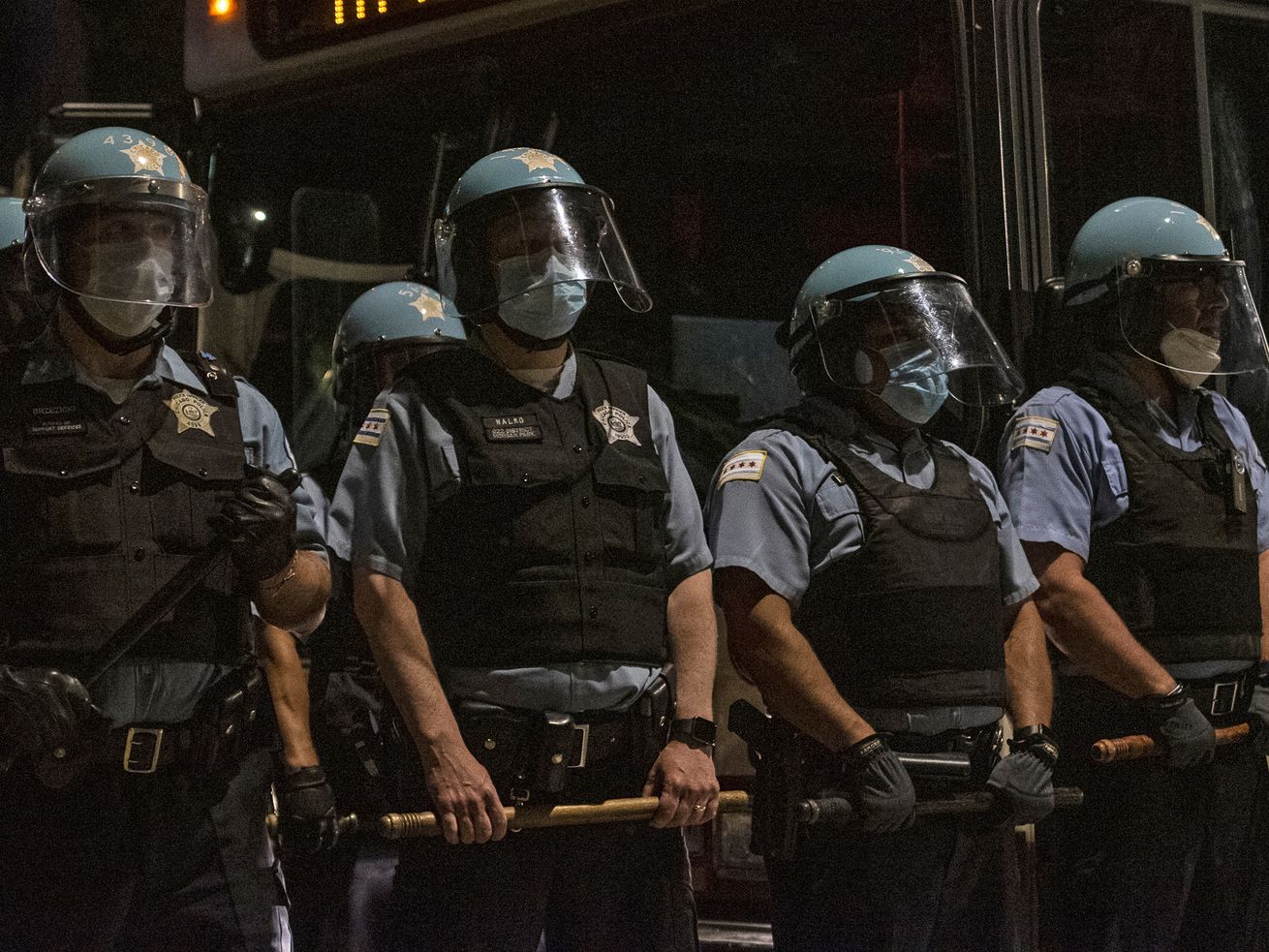
Chicago police officers block Michigan Avenue at 36th Street while protesters march toward CPD headquarters last June during a march to demand justice for George Floyd, who had been killed by a Minneapolis police officer. | Tyler LaRiviere/Sun-Times
Ald. Chris Taliaferro said he has no doubt Lightfoot will want to retain power to set the CPD budget and hire and fire the police superintendent, COPA chief and Police Board president. And she should, he added.
Mayor Lori Lightfoot will deliver her own plan for civilian police oversight on Thursday, almost certainly stripped of policymaking, budgeting and hiring and firing powers coveted by police reform advocates.
After months of broken promises, Ald. Chris Taliaferro (29th), chairman of the City Council’s Committee on Public Safety, said “the mayor’s team” has told him “I should have something in hand on Thursday.”
Taliaferro said he hasn’t seen or been briefed on the mayor’s version and has no idea how it will read.
But, he has no doubt Lightfoot is determined to retain the final say on disputes over police policy along with the power to determine the Chicago Police Department’s budget and hire and fire the police superintendent, COPA chief and Police Board president.
“She had concern about not being able to weigh in on policymaking when it comes down to policies that affect police officers. The other ordinances essentially took her out of the process. And any mayor would be somewhat cautious of not being able to hire or fire a superintendent, chief administration [of COPA] and Police Board members. Our mayor is apprehensive about that as well,” Taliaferro said.
“The mayor will have to wear the hat, no matter who appoints. As the chief executive of the city, any mayor would have to wear the hat of what goes wrong and what goes right with our police department. So, it would be this mayor’s contention — and mine as well — they should be involved in the process.”
Sun-Times fileAld. Chris Taliaferro believes the mayor should retain more power over the Chicago Police department than a proposed civilian oversight plan would provide. The mayor is expected to unveil her own plan on Thursday.
A former Chicago police officer, Taliaferro emphatically denied the mayor’s version would be tantamount to “gutting” the powers of a civilian oversight panel. To the contrary. He portrayed it as preserving the separation of powers.
“We cannot converge all the powers of city government on one authority. Because then, the fight or the comments down the road will be, `Why does this organization have so much power? Why isn’t this power dispersed? Where are the checks-and-balances?’ Taliaferro said.
“If you convey the power to hire, the power to fire, the power to create budget, the power to do everything in one organization, where are the checks-and-balances?”
Earlier this week, the City Council’s Black Caucus joined the Hispanic and Progressive Caucuses in endorsing a civilian police oversight plan summarily rejected by Lightfoot.
Ald. Jason Ervin (28th), chairman of the Black Caucus, said then that aldermen were tired of waiting for Lightfoot to honor a campaign promise to deliver civilian police oversight — with the power to hire and fire the police superintendent and be the final arbiter in policy disputes — within her first 100 days in office.
“We definitely need some level of civilian oversight and accountability in the police department in addition to what we have today. This is what our residents have asked for. …This is an ordinance that delivers that,” Ervin told the Sun-Times.
“If the mayor sees something different, she’s obligated to put something on the table. To date, nothing has been put on the table. … We, as a City Council, have been waiting on that for a number of months. She definitely has an opportunity to put something on the table to have a conversation. But you can’t negotiate against yourself.”
The compromise endorsed by three major caucuses would ask Chicago voters in the 2022 primary to approve a binding referendum empowering a civilian police oversight commission to hire and fire the police superintendent, negotiate police contracts and set CPD’s budget.
Lightfoot would lose the power to hire and fire the police superintendent. Her Law Department and hand-picked negotiators would lose the power to negotiate police contracts.
And Lightfoot and aldermen would lose their power to establish the CPD budget. That power would be held by an 11-member civilian oversight commission — nine elected, two appointed by the mayor.
Even if voters reject the binding referendum, the 11-member commission would have final say in disputes over police policy unless two-thirds of the Council decides otherwise. The commission also would be empowered to take a vote of no-confidence in the superintendent and hire and fire the chief administrator of the Civilian Office of Police Accountability.
The support of that compromise from three major caucuses could set the stage for Lightfoot’s first City Council defeat.
But, Taliaferro said: “If the mayor proposes an ordinance, it certainly would put everything else up in the air. Remember, most of our caucuses do not vote in bloc whenever a vote is taken. Even though the caucus may support it, you may not have the individual vote of every single member.”
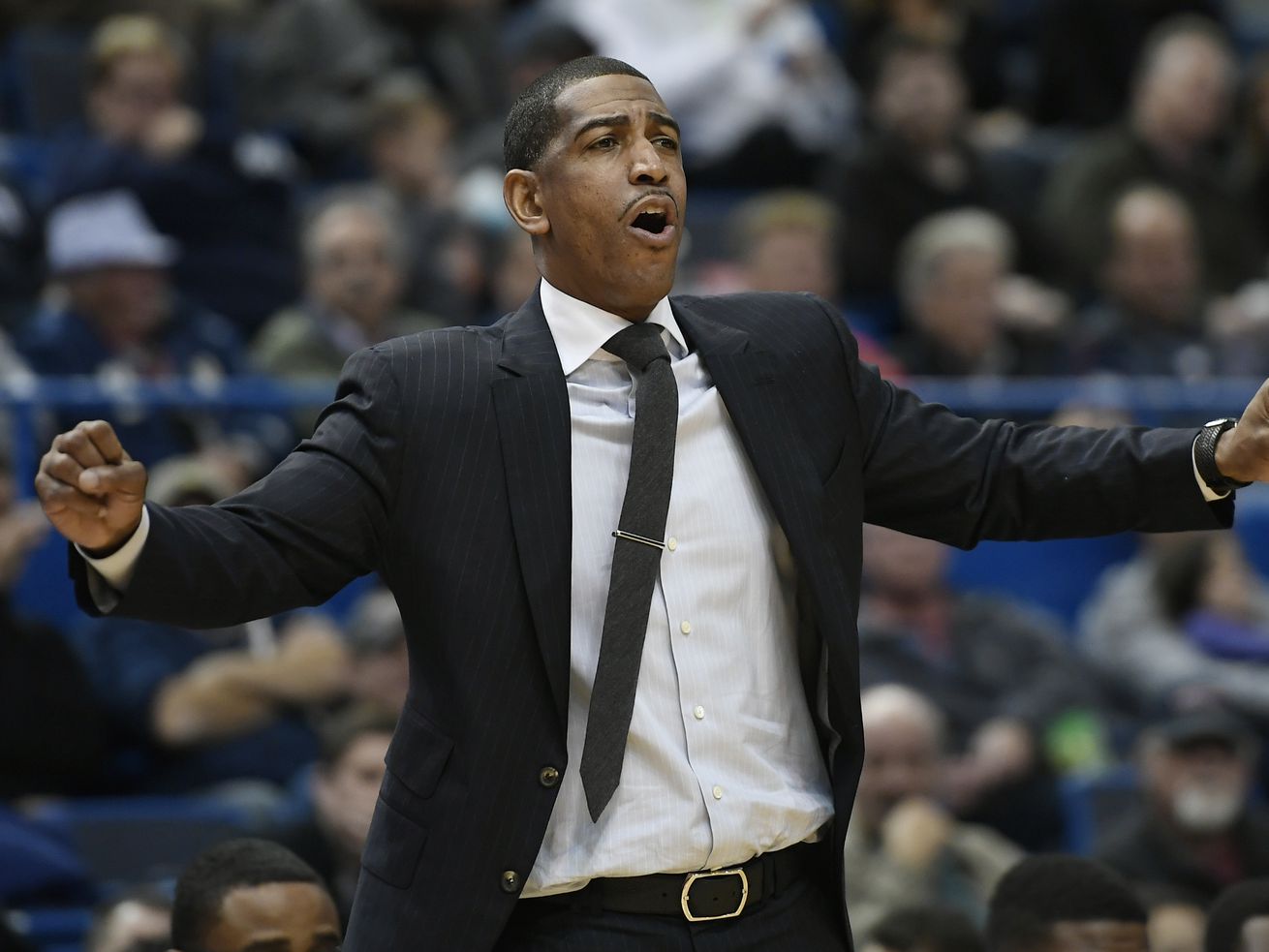
Former UConn coach Kevin Ollie will be a coach in a new league designed for top-level high school basketball players. | Jessica Hill/AP
The new league markets itself to top-notch players between 16 and 18 years old with promises of an academic education and a six-figure salary.
A new basketball league created for standout high school players is building a state-of-the-art facility in Atlanta.
Also under construction: the high-level hoopsters set to join a league that offers another possible avenue to the NBA.
Overtime Elite announced Wednesday it is constructing a 103,000-square-foot complex where prep players will train, study and compete. The new league markets itself to top-notch players between 16 and 18 years old with promises of an academic education and a six-figure salary. It’s another potential route to the NBA besides college, the developmental G League or heading overseas.
Last month, the league hired a head coach in Kevin Ollie, who led UConn to a national title in 2014.
Scheduled to start in September, the league will feature 30 players — yet to be named — all living and playing in Atlanta.
Overtime Elite was launched through the sports media company Overtime, which counts among its investors rapper/songwriter Drake and NBA players such as Kevin Durant of Brooklyn, Carmelo Anthony of Portland and Trae Young of Atlanta.
“Overtime Elite is a welcome addition to Atlanta’s rich sports tradition, elevating the city as a global center for basketball development and a cultural hub for people of all backgrounds,” Young said in a statement as the Hawks head into the postseason as a No. 5 seed.
Each player is guaranteed a minimum salary of at least $100,000 a year, along with signing bonuses and shares in the company. They will also generate revenue from use of their name, image and likeness, in addition to sales of custom jerseys, trading cards, video games and nonfungible tokens.
One caveat: Their college eligibility would be forfeited.
The city of Atlanta was selected after a yearlong search. The facility will be located in the Atlantic Station neighborhood, which is near the Georgia Tech campus.
“The city’s storied basketball history, diverse population, vibrant business community and rich culture make Atlanta a city where OTE wants to make a commitment as an active contributor to the community,” Overtime Elite commissioner and president Aaron Ryan said in a news release.
Added Atlanta Mayor Keisha Lance Bottoms: “We look forward to welcoming the next generation of basketball stars to our city.”
People inspect the rubble of destroyed the Abu Hussein building that was hit by an Israeli airstrike early morning, in Gaza City, Wednesday, May 19, 2021. | AP
Benjamin Netanyahu’s tough comments marked the first public rift with the United States since the fighting began last week and could complicate international efforts to reach a cease-fire.
GAZA CITY, Gaza Strip — Israeli Prime Minister Benjamin Netanyahu vowed to press ahead with a fierce military offensive in the Gaza Strip, pushing back Wednesday against calls from the United States to wind down the operation that has left hundreds dead.
Netanyahu’s tough comments marked the first public rift between the two close allies since the fighting began last week and could complicate international efforts to reach a cease-fire.
Israel continued to pound targets in Gaza with airstrikes Wednesday, while Palestinian militants bombarded Israel with rocket fire throughout the day. In another sign of potential escalation, militants in Lebanon fired a barrage of rockets into northern Israel.
After a visit to military headquarters, Netanyahu said he “greatly appreciates the support of the American president,” but said Israel will push ahead “to return the calm and security to you, citizens of Israel.”
He said he is “determined to continue this operation until its aim is met.”
He spoke shortly after U.S. President Joe Biden told Netanyahu “that he expected a significant de-escalation today on the path to a ceasefire,” the White House said.
AP Graphics
Biden had previously avoided pressing Israel more directly and publicly for a cease-fire with Gaza’s Hamas militant rulers. But pressure has been ramping up on Biden to intervene more forcefully as other diplomatic efforts also gather strength.
Netanyahu has repeatedly vowed to press ahead with the operation, and his latest response to Biden signaled he had no intentions of stopping.
Egyptian negotiators have also been working to halt the fighting, and an Egyptian diplomat said top officials were waiting for Israel’s response to a cease-fire offer. The diplomat spoke on condition of anonymity in line with regulations. Meanwhile, German Foreign Minister Heiko Maas said he would fly to the region Thursday for talks with Israelis and Palestinians.
Earlier in the day, the Israeli military said it was widening its strikes on militant targets in southern Gaza to blunt continuing rocket fire from Hamas. At least nine people were killed in the Gaza Strip on Wednesday.
The current round of fighting between Israel and Hamas began May 10 when the militant group fired long-range rockets toward Jerusalem after days of clashes between Palestinian protesters and Israeli police at the Al-Aqsa Mosque compound, a flashpoint site sacred to Jews and Muslims. Heavy-handed police tactics at the compound and the threatened eviction of dozens of Palestinian families by Jewish settlers had inflamed tensions.
Since then, Israel has launched hundreds of airstrikes against what it says are targeting Hamas’ militant infrastructure, and Hamas and other militant groups embedded in residential areas have fired more than 3,700 rockets at Israeli cities, with hundreds falling short and most of the rest intercepted or landing in open areas.
At least 227 Palestinians have been killed, including 64 children and 38 women, with 1,620 people wounded, according to the Gaza Health Ministry, which does not break the numbers down into fighters and civilians. Hamas and Islamic Jihad say at least 20 of their fighters have been killed, while Israel says the number is at least 130. Some 58,000 Palestinians have fled their homes.
Twelve people in Israel, including a 5-year-old boy, a 16-year-old girl and a soldier, have been killed.
On Wednesday, militants in Lebanon fired a barrage of rockets into northern Israel, threatening to open up a new front in fighting.
The rocket attack, which drew Israeli artillery fire in response but did not cause any injuries, raised the possibility of dragging Israel into renewed conflict with the powerful Lebanese militant group Hezbollah to its north.
No one immediately claimed responsibility for the attack, and Hezbollah, which fought a monthlong war against Israel in 2006, has stayed out of the fighting for now. The rockets are widely believed to be fired by Palestinian factions based in south Lebanon.
But they cannot operate without Hezbollah’s tacit consent, and the barrage appears to be carefully calibrated to send a political message that the group, which has tens of thousands of missiles, could join the battle at any time. Israel considers Hezbollah to be its most formidable threat, and has threatened widespread destruction in Lebanon if war were to erupt.
In Gaza, one of the Israeli airstrikes destroyed the home of an extended family.
Residents surveyed the piles of bricks, concrete and other debris that had once been the home of 40 members of al-Astal family in the southern Gaza town of Khan Younis. They said a warning missile struck the building five minutes before the airstrike, allowing everyone to escape.
Ahmed al-Astal, a university professor, described a scene of panic, with men, women and children racing out of the building. Some of the women didn’t even have time to cover their hair with Muslim headscarves, he said.
“We had just gotten down to the street, breathless, when the devastating bombardment came,” he said. “They left nothing but destruction, the children’s cries filling the street. … This is happening, and there is no one to help us.”
Another strike in nearby Deir al-Balah killed a man, his wife and their 2-year-old daughter, witnesses said. Iyad Salha, a brother of the man who was killed, said the family had just sat down for lunch when the missile hit.
Among those killed Wednesday were a reporter for Hamas-run Al-Aqsa radio and two people who died when warning missiles crashed into their apartment.
The Israeli military said it was striking a militant tunnel network in southern Gaza, with 52 aircraft hitting 40 underground targets.
Military officials, meanwhile, said a mysterious explosion that killed eight members of a Palestinian family on the first day of the fighting was caused by a misfired rocket from Gaza. “This wasn’t an Israeli attack,” said Lt. Col. Jonathan Conricus, a military spokesman.
Since the fighting began, Gaza’s infrastructure, already weakened by a 14-year blockade, has rapidly deteriorated. Medical supplies, water and fuel for electricity are running low in the territory, on which Israel and Egypt imposed the blockade after Hamas seized power in 2007.
Israeli attacks have damaged at least 18 hospitals and clinics and destroyed one health facility, the World Health Organization said. Nearly half of all essential drugs have run out.
The Gaza Health Ministry said it had salvaged coronavirus vaccines after shrapnel from an Israeli airstrike damaged the territory’s only testing facility, which also administered hundreds of vaccines. The operations were relocated to another clinic.
Dr. Majdi Dhair, head of preventive medicine at the ministry, said the territory was already struggling to recover from a coronavirus wave that hit in February, with more than 4,200 active cases. At least 986 people have died from COVID-19 in Gaza, which only has enough supplies to vaccinate some 55,000 people out of a population of 2 million.
Among the buildings leveled by Israeli airstrikes was one housing The Associated Press’ Gaza office and those of other media outlets.
Netanyahu has alleged that Hamas military intelligence was operating in the building. Secretary of State Antony Blinken said Tuesday that Israel had given the U.S. information about the bombing, without elaborating.
The AP has called for an independent investigation. The news organization’s president, Gary Pruitt, has said the AP had no indication Hamas was present in the building.
The fighting, the worst since a 2014 war between Israel and Hamas, has ignited protests around the world and inspired Palestinians in Israel and the occupied territories to call a general strike Tuesday. It was a rare collective action that spanned boundaries central to decades of failed peace efforts. Israel captured the West Bank, east Jerusalem and Gaza in the 1967 Mideast war, territories the Palestinians want for their future state.
___
Krauss reported from Jerusalem. Associated Press writers Bassem Mroue and Zeina Karam in Beirut, Isabel DeBre in Dubai, United Arab Emirates, Samy Magdy in Cairo, and Frank Jordans in Berlin contributed to this report.
Other popular acts slated to take the stage for the four-day event include Megan Thee Stallion, Steve Aoki and Modest Mouse. Daily schedules with details on set times for the whole lineup will be released at a later date.
Tickets went on sale at noon CT on Lollapalooza’s website. Four-day general admission passes are listed for $350, although prices will increase in phases as the festival’s start draws closer. It’ll cost a lot more if you’re looking for VIP access or a hotel package.
And while the festival will be held at “full capacity,” the city will require proof of full COVID-19 vaccination or negative COVID-19 test results in order to enter.
The presence of Foo Fighters atop the lineup isn’t a surprise after lead singer Dave Grohl appeared in a YouTube video with Mayor Lori Lightfoot on Tuesday to promote the festival. The band is having a busy 2021, with a recent appearance at the “Vax Live” charity event and tour dates picking up.
Check out the full lineup for Lollapalooza 2021 below.
Police investigators work at the scene of a shooting in Champaign, Ill., Wednesday, May 19, 2021. | AP
Champaign police said in a statement that two officers who were called to the scene of a domestic disturbance on the city’s north side about 3:20 a.m. encountered an armed person after exiting their police cars and an exchange of gunfire followed.
CHAMPAIGN, Ill. — A suspect in a domestic disturbance was fatally shot and two central Illinois police officers were wounded, one critically, in an exchange of gunfire early Wednesday, police said.
Champaign police said in a statement that two officers who were called to the scene of a domestic disturbance on the city’s north side about 3:20 a.m. encountered an armed person after exiting their police cars and an exchange of gunfire followed.
The suspect was pronounced dead at the scene, while both officers sustained gunshot wounds and were taken to a hospital. One officer was in critical condition and the other was stable, police said.
Champaign police did not immediately release additional details on the shooting in the city about 130 miles south of Chicago.
A message seeking additional information, including whether the officers’ body cameras captured the shooting, was left for police by The Associated Press.
The (Champaign) News-Gazette reported that the shooting occurred at an apartment complex and it came days after Champaign Police Chief Anthony Cobb said he feared a shooting involving police could happen as the city deals with escalating gun violence.
There have been about 85 reports of shots fired, and many injuries, in Champaign so far this year, the newspaper reported.
Champaign police said Illinois State Police will lead the investigation into the shooting, with assistance from Urbana police, the Champaign County Sheriff’s Office and the University of Illinois Police Department.
The Champaign Police Department’s officers were equipped with body cameras in 2017, and those cameras are activated when an officer responds to service calls or is engaged in any law enforcement-related encounter, according to information posted on the department’s website.
Emily Baumgartner, left, and Luke Finley, second from left, join friends from their church group in a birthday toast to one of the members, upper right, during their weekly “Monday Night Hang” gathering at the Tiki Bar on Manhattan’s Upper West Side Monday, May 17, 2021, in New York. | AP
Starting Wednesday, vaccinated New Yorkers can shed their masks in most situations, and restaurants, stores, gyms and many other businesses can go back to full capacity if they check vaccination cards or apps for proof that all patrons have been inoculated.
NEW YORK — More than a year after coronavirus shutdowns sent “the city that never sleeps” into a fitful slumber, New York could be wide awake again this summer.
Starting Wednesday, vaccinated New Yorkers can shed their masks in most situations, and restaurants, stores, gyms and many other businesses can go back to full capacity if they check vaccination cards or apps for proof that all patrons have been inoculated.
Subways resumed running round-the-clock this week. Midnight curfews for bars and restaurants will be gone by month’s end. Broadway tickets are on sale again, though the curtain won’t rise on any shows until September.
Officials say now is New York’s moment to shake off the image of a city brought to its knees by the virus last spring — a recovery poignantly rendered on the latest cover of The New Yorker magazine. It shows a giant door part-open to the city skyline, letting in a ray of light.
Is the Big Apple back to its old, brash self?
“Maybe 75%. … It’s definitely coming back to life,” said Mark Kumar, 24, a personal trainer.
But Ameen Deen, 63, said: “A full sense of normalcy is not going to come any time soon. There’s far too many deaths. There’s too much suffering. There’s too much inequality.”
Last spring, the biggest city in America was also the nation’s deadliest coronavirus hotspot, the site of over 21,000 deaths in just two months. Black and Hispanic patients have died at markedly higher rates than whites and Asian Americans.
Hospitals overflowed with patients and corpses. Refrigerated trailers served as temporary morgues, and tents were set up in Central Park as a COVID-19 ward. New York’s hectic streets fell quiet, save for ambulance sirens and nightly bursts of cheering from apartment windows for health care workers.
After a year of ebbs, surges, reopenings and closings, the city hopes vaccinations are turning the tide for good. About 47% of residents have had at least one dose so far. Deaths have amounted to about two dozen a day in recent weeks, and new cases and hospitalizations have plummeted from a wintertime wave.
Large swaths of the country and world are also starting to get back to normal after a crisis blamed for 3.4 million deaths globally, including more than 587,000 in the U.S.
Las Vegas casinos are returning to 100% capacity and no social distancing requirements. Disneyland in California opened up late last month after being shuttered for more than 400 days. Massachusetts this week announced that all virus restrictions will expire Memorial Day weekend.
Summer music festivals like Lollapalooza are back on, the Indy 500 is bracing for more than 100,000 fans, and the federal government says fully vaccinated adults no longer need to wear masks.
France is opening back up on Wednesday as well, with the Eiffel Tower, Parisian cafes and cinemas and the Louvre bringing back visitors for the first time in months.
In New York, Mayor Bill de Blasio has declared it the “summer of New York City.”
There are other signs New York is regaining its bustle. Some 80,000 city employees returned to their offices at least part time this month, joining the many municipal workers whose jobs never were done remotely.
Subway and commuter rail ridership is averaging about 40% of normal after plunging to 10% last spring, when the subway system began closing for several hours overnight for the first time in its more than 115-year history.
Shakeem Brown, an artist and delivery person who works late in Manhattan, spent up to three hours a night commuting back to his Queens apartment before 24/7 service resumed Monday. Brown, 26, said it’s “refreshing” to see things opening up.
At e’s Bar on Manhattan’s Upper West Side, “we feel the energy” of social life ramping up, co-owner Erin Bellard said. “People are so excited to be out.”
Still, receipts at the bar and grill have been down about 35% because of pandemic restrictions on hours and capacity, she said. The impending end of the midnight curfew will give the bar two more crucial hours, and the owners are planning to survey patrons to determine whether to regain full capacity by requiring vaccinations.
From other vantage points, “normal” looks farther off.
The sidewalks and skyscrapers of midtown Manhattan, for instance, are still noticeably empty. Big corporate employers largely aren’t looking to bring more workers back until fall, and only if they feel it’s safe, said Kathryn Wylde, CEO of the Partnership for New York City, a major employers group.
“Shutting down was easy. Reopening is hard,” Wylde said after a meeting last week with a group of CEOs. “All the employers say that there still is fear and some resistance to coming back.”
Besides virus fears, companies and workers are wondering about safety, she said.
Crime in the city has become a growing source of concern, but it’s a complicated picture. Murders, shootings, felony assaults and auto thefts rose in the first four months of this year compared with the same period in pre-pandemic 2019, but robberies and grand larcenies fell. So did crime in the transit system, probably because of the drop in ridership.
Brandon Goldgrub has been back at his midtown office since July, but it’s just in the last few weeks that he has noticed the sidewalks seem a bit crowded again.
“Now I feel it’s a lot more normal,” said Goldgrub, 30, a property manager.
Visiting from Tallahassee, Florida, Jessica Souva looked around midtown and felt hopeful about the city where she used to live.
“All we heard, elsewhere in the country, was that New York was a ghost town, and this doesn’t feel like that,” said Souva, 47. “It feels like a city in transition.”
___
Associated Press writer Michael R. Sisak contributed to this report.
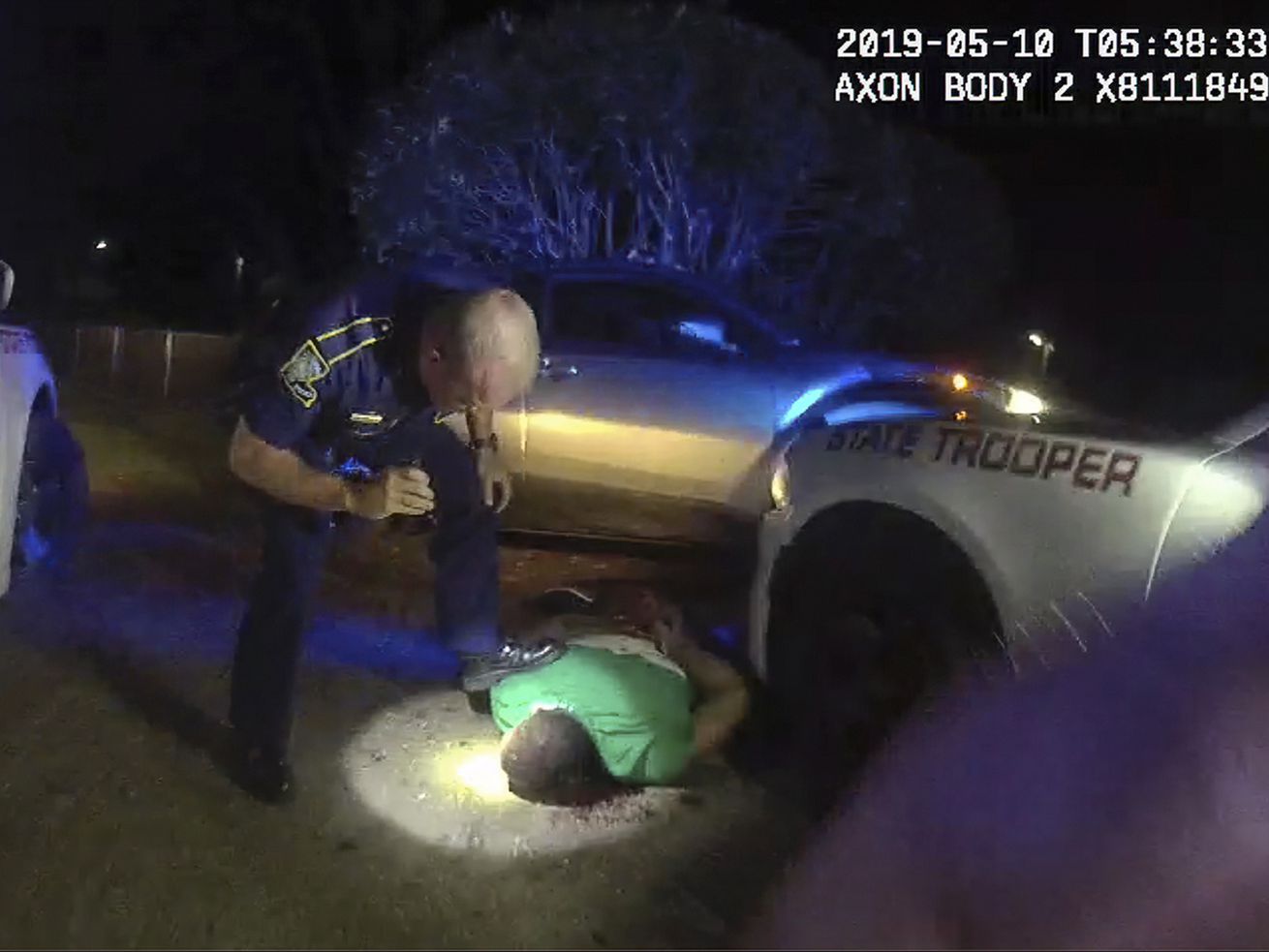
This image from video from Louisiana state police state trooper Dakota DeMoss’ body-worn camera, shows trooper Kory York bending over with his foot on Ronald Greene’s shoulder after he was taken into custody on May 10, 2019, outside of Monroe, La. | AP
“I’m your brother! I’m scared! I’m scared!” Ronald Greene can be heard telling the white troopers as the unarmed man is jolted repeatedly with a stun gun before he even gets out of his car.
NEW ORLEANS — Louisiana state troopers can be seen on a dark roadside stunning, punching and dragging a Black man as he apologizes for leading them on a high-speed chase — body camera video of the moments leading up to the man’s death that The Associated Press obtained after authorities refused to release it for two years.
“I’m your brother! I’m scared! I’m scared!” Ronald Greene can be heard telling the white troopers as the unarmed man is jolted repeatedly with a stun gun before he even gets out of his car.
The 2019 arrest outside Monroe, Louisiana, is the subject of a federal civil rights investigation. But unlike other in-custody deaths across the nation where body camera video was released almost immediately, Greene’s case has been shrouded in secrecy and accusations of a cover-up.
Louisiana officials have rebuffed repeated calls to release footage and details about what caused the 49-year-old’s death. Troopers initially told Greene’s family he died on impact after crashing into a tree during the chase. Later, State Police released a one-page statement acknowledging only that Greene struggled with troopers and died on his way to the hospital.
Only now in the footage obtained by the AP from one trooper’s body camera can the public see for the first time some of what happened during the arrest.
The 46-minute clip shows one trooper wrestling Greene to the ground, putting him in a chokehold and punching him in the face while another can be heard calling him a “stupid motherf——.”
Greene wails “I’m sorry!” as another trooper delivers another stun gun shock to his backside and warns, “Look, you’re going to get it again if you don’t put your f——- hands behind your back!” Another trooper can be seen briefly dragging the man facedown after his legs had been shackled and his hands cuffed behind him.
Instead of rendering aid, the troopers leave the burly man unattended, facedown and moaning for more than nine minutes, as they use sanitizer wipes to wash blood off their hands and faces.
“I hope this guy ain’t got f—— AIDS,” one of the troopers can be heard saying.
After a several-minute stretch in which Greene is not seen on camera, he appears again, limp, unresponsive and bleeding from his head and face. He is then loaded onto an ambulance gurney, his arm cuffed to the bedrail.
In many parts of the video, Greene is not on screen, and the trooper appears to cut the microphone off about halfway through, making it difficult to piece together exactly what was happening at all times. At least six troopers were on the scene of the arrest but not all had their body cameras on.
“They murdered him. It was set out, it was planned,” Greene’s mother, Mona Hardin, said Wednesday. “He didn’t have a chance. Ronnie didn’t have a chance. He wasn’t going to live to tell about it.”
An attorney for Greene’s family, Lee Merritt, said the footage “has some of the same hallmarks of the George Floyd video, the length of it, the sheer brutality of it.”
“He apologized in an attempt to surrender,” Merritt said.
A State Police spokesman declined to comment, citing the federal investigation.
State Police brass initially argued the troopers’ use of force was justified — “awful but lawful,” as ranking officials described it — and did not open an administrative investigation until 474 days after Greene’s death.
“Police departments have got to stop putting roadblocks up to information that is, in the public’s eye, questionable. They have to reveal all that they know, when they know it,” said Andrew Scott, a former Boca Raton, Florida, police chief who testifies as an expert witness in use-of-force cases. “It suggests that you’re hiding something.”
While noting Greene “was not without fault” and appeared to resist the troopers’ orders, Scott said dragging the handcuffed man facedown by his ankle shackles was “malicious, sadistic, completely unnecessary.”
“That should never have never happened,” he said. “You’ve got the guy completely compromised. He’s not hurting anybody.”
Charles Key, another use-of-force expert and former Baltimore police lieutenant, questioned the troopers’ decision to leave Greene unattended, handcuffed and prone for several minutes, calling the practice “just dead wrong.”
“You don’t leave somebody lying on the ground, particularly after you’ve had this fight,” Key said. “The training has been for a number of years that, as soon as you get someone under control, you put them on their side to facilitate their breathing … and particularly this guy, because he was very heavy. “
Gov. John Bel Edwards allowed Greene’s family to view the same body camera footage last year and pledged to release it to the public after the federal investigation runs its course.
Greene’s family has filed a federal wrongful-death lawsuit alleging troopers “brutalized” Greene, and “left him beaten, bloodied and in cardiac arrest” before covering up the cause of death. His family has released graphic photographs of Greene’s body on a gurney, showing deep bruises and cuts on his face and head.
Greene, a barber, failed to pull over for an unspecified traffic violation shortly after midnight on May 10, 2019, about 30 miles south of the Arkansas state line. That’s where the video obtained by AP begins, with Trooper Dakota DeMoss chasing Greene’s SUV on rural highways at over 115 mph.
Seconds before the chase ended, DeMoss warned on his radio: “We got to do something. He’s going to kill somebody.”
As DeMoss and Master Trooper Chris Hollingsworth rush Greene’s SUV, he can be seen appearing to raise his hands and saying over and over, “OK, OK. I’m sorry.”
Hollingsworth shocks Greene with a stun gun within seconds through the driver’s side window as both troopers demand he get out of the vehicle.
Greene exits through the passenger side as the troopers wrestle him to the ground. One trooper can be heard saying “He’s grabbing me” as they try to handcuff him. “Put your hands behind your back, bitch,” one trooper says.
Hollingsworth strikes Greene multiple times and appears to lie on one of his arms before he is finally handcuffed.
At one point, Trooper Kory York yanks Greene’s leg shackles and briefly drags the man on his stomach even though he isn’t resisting.
York was suspended without pay for 50 hours for the dragging and for improperly deactivating his body camera. York told investigators the device was beeping loudly and his “mind was on other things.”
Hollingsworth, in a separate recording obtained by AP, can be heard telling a colleague at the office that “he beat the ever-living f— out of” Greene.
“Choked him and everything else trying to get him under control,” Hollingsworth is heard saying. “He was spitting blood everywhere, and all of a sudden he just went limp.”
Hollingsworth later died in a single-vehicle highway crash that happened hours after he learned he would be fired for his role in the Greene case.
DeMoss, meanwhile, was arrested in connection with a separate police pursuit last year in which he and two other troopers allegedly used excessive force while handcuffing a motorist.
Exactly what caused Greene’s death remains unclear. Union Parish Coroner Renee Smith told AP last year his death was ruled accidental and attributed to cardiac arrest. Smith, who was not in office when that determination was made, said her office’s file on Greene attributed his death to a car crash and made no mention of a struggle with State Police.
The AP last year also obtained a medical report showing an emergency room doctor noted Greene arrived dead at the hospital, bruised and bloodied with two stun-gun prongs in his back. That led the doctor to question troopers’ initial account that Greene had “died on impact” after crashing into a tree.


/cdn.vox-cdn.com/uploads/chorus_asset/file/16079210/watchdogstaliaferro.jpg)


/cdn.vox-cdn.com/uploads/chorus_asset/file/22525570/60a52347c2e7990f6ed3b3dd_LP21_Lineup_Final_Press.png)