Videos

Republican Bailey describes sex education bill as teaching ‘perversion’ — sparking Democratic outcryAndrew Sullenderon May 21, 2021 at 2:34 am

State Sen. Darren Bailey, R-Xenia, left, earlier this month; State Sen. Mike Simmons, D-Chicago, right, in February.
State Sen. Darren Bailey, R-Xenia, left, earlier this month; State Sen. Mike Simmons, D-Chicago, right, in February. | Facebook; Ashlee Rezin Garcia/Sun-Times file

The Senate bill on sex education seeks to standardize the curriculum in Illinois schools, ensuring each grade “has the opportunity to be safe and … have access to age- and developmentally appropriate and medically accurate information,” according to the bill’s sponsor, state Sen. Ram Villivalam, D-Chicago.

SPRINGFIELD — Two of the state Senate’s newest members — the chamber’s first LGTBQ senator and a Republican farmer from southern Illinois — clashed Thursday over legislation meant to standardize sex education curriculums in the state.

State Sen. Darren Bailey, a downstate Republican running for governor, accused the bill’s Democratic sponsors of “pushing perversion in our schools.”

North Side state Sen. Mike Simmons, who is gay, called Bailey’s remark “deeply offensive” and asked that it be stricken from the record.

In the House, members advanced legislation that would require menstrual hygiene products to be available in bathrooms in every school building, male and female — a bill that also prompted a heated verbal exchange.

The Senate bill on sex education seeks to standardize the curriculum in Illinois schools, ensuring each grade “has the opportunity to be safe and … have access to age- and developmentally appropriate and medically accurate information,” according to the bill’s sponsor, state Sen. Ram Villivalam, D-Chicago.

Starting in second grade, students would learn to define consent, gender identity, and different types of families, including cohabitating and same-sex couples. Villivalam said those standards help students “understand a healthy relationship.”

State Sen. Ram Villivalam in 2018.
Rich Hein/Sun-Times file
State Sen. Ram Villivalam in 2018.

But Bailey objected.

“Teachers who work hard to teach our kids about proper education have absolutely no reason in teaching this … absolute nonsense,” said the Republican from downstate Xenia, a former House member elected to the Senate in November.

In a statement following the vote Bailey denied his remark about “perversion” referred to teaching students about same-sex relationships.

“It’s a bill teaching children sexual acts and more that should not be taught in public schools,” he said. “[The Democrats] know it’s wrong and they don’t want parents to actively know what they’re trying to make our schools teach their kids.”

Other Republicans in the chamber said that the standards in the bill were being pushed by “dark money” abortion rights groups that support educators providing graphic images to minors.

Then state Rep. Darren Bailey, R-Xenia, speaks at a protest against Gov. J.B. Pritzker’s stay-at-home order in Springfield last year.
Ted Schurter/The State Journal-Register via AP file
Then state Rep. Darren Bailey, R-Xenia, speaks at a protest against Gov. J.B. Pritzker’s stay-at-home order in Springfield last year.

“One of the organizations that’s advocating for this, a portion of their curriculum has photographs that 10-year-olds will be looking at with complete frontal nudity including pubic hair — both male and female – [and] one picture that has a male erection,” said state Sen. Terri Bryant, R-Murphsyboro.

Simmons, who was appointed to the state Senate in February, did not respond to a reporter’s request to elaborate on his understanding of Bailey’s remarks.

But state Sen. Celina Villanueva, D-Chicago, said that she had worked as a sexual health educator and that “misinformation and a lack of knowledge for our students” leads to serious consequences.

“I’m not going to allow it to happen when people decide that they want to call this bill ‘perversion.’ Because let’s be completely honest, when you use your Trumpian talking points about a bill teaching children about their body and [would] also educate them about the predators that actually exist in this world — you’re just using them to get a soundbite.”

The bill passed in a partisan 37 to 18 vote and advanced to the House.

That chamber saw its own verbal fireworks over a bill that would require menstrual hygiene products to be made available “in bathrooms of every school building that are open for student use in grades 4 through 12 during the regular school day,” according to a synopsis of the bill.

State Rep. Barbara Hernandez, D-Aurora, said the bill is important to young “menstruators who are not able to purchase products, and they need this as an emergency situation.”

State Rep. Andrew Chesney, R-Freeport, asked Hernandez “why you feel it’s appropriate to put menstrual products in a male bathroom?”

“As a male who did go to a public high school, as a male who went to bathrooms from sixth grade to 12th grade, I can promise you, not one of my male friends ever needed these, and I would really appreciate if the sponsor would stay the hell out of my bathrooms, and I promise her I will stay out of hers,” Chesney said.

Despite the division, the bill passed 68 to 43 with seven members not voting.

Read More

Republican Bailey describes sex education bill as teaching ‘perversion’ — sparking Democratic outcryAndrew Sullenderon May 21, 2021 at 2:34 am Read More »

White Sox like a band of brotherson May 21, 2021 at 1:01 am

The White Sox must be thankful that, as they prepare for a three-game series against the Yankees this weekend in New York, clubhouses will remain off limits to media because of COVID-19 restrictions.

With the hullabaloo surrounding them because of manager Tony La Russa’s strong stance on an unwritten rule of baseball — former Yankees left-hander CC Sabathia unloaded Thursday on La Russa, keeping the firestorm burning — imagine Sox players being subjected to New York’s media army for three days.

The Sox are a story because they have one of the best records in the majors and are a sideshow they don’t care to be because of La Russa calling out one of his own players, Yermin Mercedes, for missing a sign and hitting a home run on a 3-0 pitch against Twins position player Willians Astudillo on Monday.

La Russa, 76, was brought out of a nine-year retirement by chairman Jerry Reinsdorf last fall to replace Rick Renteria and has made headlines with a few admitted missteps on the field, most recently not knowing about a rule in a 10-inning loss to the Reds on May 5.

La Russa got raked over the coals by fans and media for that one. And while that oversight might not have factored into a 1-0 loss that day anyway, the Sox responded with six victories in a row just as they were losing center fielder Luis Robert to an injury for at least three months.

Fast-forward to this week. The national attention on the Sox shifted to La Russa’s old-school stance on sportsmanship, his calling Mercedes ”clueless” and apologizing to the Twins for the homer Mercedes hit after he missed a take sign and then not having a problem with a pitch thrown behind Mercedes as obvious payback. All of that over a game that turned into a sideshow, as games always do when position players pitch to save bullpens.

It was a lot for Sox players to digest, especially in the context of La Russa’s team-building push under the premise they are one family. Teammates did what good brothers do: They stood by Mercedes.

”No negativity,” right-hander Lucas Giolito after pitching eight innings of one-run ball in the Sox’ 2-1 victory Wednesday. ”We all support Yermin. We love home runs here. That’s it.”

In the same way the Sox didn’t waver after the controversy against the Reds, they won the day after the Twins’ 5-4 walk-off victory while the Mercedes flap was hitting the fan. That gave them a victory in a series played without slugger Jose Abreu.

”We’re going to move on,” Giolito said before going to his locker to put on, like all of his teammates did, a cheesy-looking romper for the Sox’ charter flight to New York.

A team photo near the plane, smiling faces everywhere, captured one of those fun, team-bonding events for a group doing everything in its power to move past anything threatening to be a distraction, including La Russa, who was seen smiling on the plane but wearing a plaid shirt.

The Sox look good on the field, and they know it.

”We want the whole thing,” Giolito said. ”So we’re going to do everything in our power to make that happen, and that means taking every single game seriously, motivating each other and also having a lot of fun, which is what we’re doing.”

And La Russa, a Hall of Famer with three World Series rings, won’t get in the way as long as he doesn’t lose games managing them, which shouldn’t happen any more than it would for any manager. The game and its new culture might be passing him by, but he’s getting to know his team better, and indications are he hasn’t forgotten how to call the shots during a game.

”Winning is fun, so we don’t want to get away from that,” Giolito said.

Read More

White Sox like a band of brotherson May 21, 2021 at 1:01 am Read More »

To mask or not to mask? Here’s what we’re going to doon May 21, 2021 at 1:24 am

To wear a mask — or not?

That’s the decision Chicagoans face now that the city and state have fallen in line behind the latest Centers for Disease Control and Prevention guidelines, unveiled recently to much confusion and head-scratching.

According to the guidelines, those of us who are fully vaccinated now have the green light to ditch masks in almost all settings, indoors and out.

Very cool.

But that leaves it to us to figure out how we handle, say, that big and crowded get-together coming up that may or may not be outdoors, depending on the weather. And that may or may not include stubborn, refuse-to-be-vaccinated friends and relatives.

So we’ve done the math, as it were, and we’ve decided. Though we’re all fully vaccinated — we of the Sun-Times editorial board — we’re all still inclined to carry a mask and err on the side of wearing it.

Just out of an abundance of caution.

Chicago is on the honor system now, following a Tuesday announcement to that effect by Public Health Commissioner Dr. Allison Arwady. Masks no longer will be required in most places, the exceptions being city-owned buildings, health care settings, schools, public transit and other “congregate settings.” In those places, masks remain mandatory.

That means all businesses are free to drop mask mandates, though the city is encouraging them to keep mask policies in place and to verify customers’ vaccination status until the city lifts all pandemic restrictions.

“At some level here,” Arwady said, “we are really needing folks to be doing the right thing.”

What it comes down to is what it’s always come down to, ever since the pandemic hit: Balancing personal freedom with being a good neighbor and responsible citizen. Not to mention this: The pandemic is still with us and just 38% of Chicagoans are fully vaccinated.

So we’re taking incremental steps and urging others to do the same. We’re ditching masks outdoors, which we would not do if we were not fully vaccinated, but we’ll still be wearing masks indoors a lot even when no mask is required.

We’ll wear one in a grocery store. Maybe at a wake. Maybe in a crowded music club.

That kind of thing.

Not as a matter of virtue signaling but out of an instinct to proceed with caution.

Send letters to [email protected]

Read More

To mask or not to mask? Here’s what we’re going to doon May 21, 2021 at 1:24 am Read More »

Israel, Hamas agree to cease-fire to end bloody 11-day warAssociated Presson May 20, 2021 at 11:10 pm

A man inspects the rubble of destroyed residential building which was hit by Israeli airstrikes, in Gaza City, Thursday, May 20, 2021.
A man inspects the rubble of destroyed residential building which was hit by Israeli airstrikes, in Gaza City, Thursday, May 20, 2021. | AP

At least 230 Palestinians have been killed, according to Gaza health officials, while 12 people in Israel have died.

GAZA CITY, Gaza Strip — Israel and Hamas agreed to a cease-fire Thursday, halting a bruising 11-day war that caused widespread destruction in the Gaza Strip, brought life in much of Israel to a standstill and left more than 200 people dead.

Like the three previous wars between the bitter enemies, the latest round of fighting ended inconclusively. Israel claimed to inflict heavy damage on Hamas but once again was unable to halt the Islamic militant group’s nonstop rocket barrages. Almost immediately, Israeli Prime Minister Benjamin Netanyahu faced angry accusations from his hard-line, right-wing base that he stopped the operation too soon.

Hamas, the Islamic militant group sworn to Israel’s destruction, also claimed victory. But it now faces the daunting challenge of rebuilding in a territory already suffering from poverty, widespread unemployment and a raging coronavirus outbreak.

Netanyahu’s office said his Security Cabinet had unanimously accepted an Egyptian cease-fire proposal after recommendations from Israel’s military chief and other top security officials. A statement boasted of “significant achievements in the operation, some of which are unprecedented.”

It also included a veiled threat against Hamas. “The political leaders emphasized that the reality on the ground will determine the future of the campaign,” the statement said.

The fighting erupted on May 10, when Hamas militants in Gaza fired long-range rockets toward Jerusalem. The barrage came after days of clashes between Palestinian protesters and Israeli police at the Al-Aqsa Mosque compound. Heavy-handed police tactics at the compound, built on a site holy to Muslims and Jews, and the threatened eviction of dozens of Palestinians by Jewish settlers had inflamed tensions.

The competing claims to Jerusalem lie at the heart of the Israeli-Palestinian conflict and have repeatedly triggered bouts of violence in the past.

Hamas and other militant groups fired over 4,000 rockets into Israel throughout the fighting, launching the projectiles from civilian areas at Israeli cities. Dozens of projectiles flew as far north as Tel Aviv, the country’s bustling commercial and cultural capital.

Israel, meanwhile, carried out hundreds of airstrikes targeting what it said was Hamas’ military infrastructure, including a vast tunnel network.

At least 230 Palestinians were killed, including 65 children and 39 women, with 1,710 people wounded, according to the Gaza Health Ministry, which does not break the numbers down into fighters and civilians. Twelve people in Israel, including a 5-year-old boy and 16-year-old girl, were killed.

The United States, Israel’s closest and most important ally, initially backed what it said was Israel’s right to self-defense against indiscriminate rocket fire. But as the fighting dragged on and the death toll mounted, the Americans increasingly pressured Israel to stop the offensive.

In a rare public rift, Netanyahu on Wednesday briefly rebuffed a public call from President Joe Biden to wind things down, appearing determined to inflict maximum damage on Hamas in a war that could help save his political career.

But late Thursday, Netanyahu’s office announced the cease-fire agreement. Hamas quickly followed suit. The deal was to take effect at 2 a.m., and militants continued to launch sporadic rocket at Israel early Friday.

In Washington, Biden hailed the cease-fire. “I believe we have a genuine opportunity to make progress, and I’m committed to working for it,” he said.

Biden said the U.S. was committed to helping Israel replenish its supply of interceptor missiles for its Iron Dome rocket-defense system and to working with the internationally recognized Palestinian Authority — not Hamas — to provide humanitarian aid to Gaza.

Netanyahu quickly came under heavy criticism from members of his hawkish, nationalist base. Gideon Saar, a former ally who now leads a small party opposed to the prime minister, called the cease-fire “embarrassing.”

In a potentially damaging development for the Israeli leader, the Palestinian militants claimed Netanyahu had agreed to halt further Israeli actions at the Al Aqsa Mosque and to call off the planned evictions of Palestinians in the nearby Sheikh Jarrah neighborhood.

An Egyptian official said only that tensions in Jerusalem “will be addressed.” He spoke on condition of anonymity because he was discussing behind-the-scenes negotiations and provided no details.

Itamar Ben Gvir, head of the far-right Jewish Power party, tweeted that the cease-fire was “a grave surrender to terrorism and the dictates of Hamas.”

The cease-fire comes at a sensitive time for Netanyahu. In the wake of an inconclusive election in March, Netanyahu failed to form a majority coalition in parliament. His opponents now have until June 2 to form an alternative government of their own.

The war greatly complicated the efforts of his opponents, who include both Jewish and Arab parties and were forced to suspend their negotiations in such a fraught environment. But the inconclusive outcome of the war could give them renewed momentum to restart those talks.

Meanwhile in Gaza, a Hamas spokesman, Abdelatif al-Qanou, said Israel’s announcement was a “declaration of defeat.” Nonetheless, the group said it would honor the deal, which was to officially go into effect at 2 a.m.

Ali Barakeh, an official with Islamic Jihad, a smaller group that fought alongside Hamas, said Israel’s declaration of a truce was a defeat for Netanyahu and “a victory to the Palestinian people.”

Despite the claims, both groups appeared to have suffered significant losses in the fighting. Hamas and Islamic Jihad said at least 20 of their fighters were killed, while Israel said the number was at least 130 and probably higher.

Some 58,000 Palestinians fled their homes, many of them seeking shelter in crowded United Nations schools at a time of a coronavirus outbreak.

Since the fighting began, Gaza’s infrastructure, already weakened by a 14-year blockade, has rapidly deteriorated.

Medical supplies, water and fuel for electricity are running low in the territory, on which Israel and Egypt imposed the blockade after Hamas seized power from the Palestinian Authority in 2007. Since then, Palestinian President Mahmoud Abbas has governed autonomous areas of the Israeli-occupied West Bank and has limited influence in Gaza.

Israeli attacks have also damaged at least 18 hospitals and clinics and destroyed one health facility, the World Health Organization said. Nearly half of all essential drugs have run out.

Israeli bombing has damaged over 50 schools across the territory, according to advocacy group Save the Children, destroying at least six. While repairs are done, education will be disrupted for nearly 42,000 children.

___

Akram reported from Gaza City, Gaza Strip. Associated Press writers Ilan Ben Zion in Jerusalem, Samy Magdy in Cairo, Zeke Miller in Washington and Iris Samuels in Helena, Montana, contributed reporting.

Read More

Israel, Hamas agree to cease-fire to end bloody 11-day warAssociated Presson May 20, 2021 at 11:10 pm Read More »

Everyone on 71st Street watched out for William Crawl. Now they’re mourning his loss after he was caught in crossfireMitch Dudekon May 20, 2021 at 11:18 pm

Maged Salem outside of Big Salem’s Food Mart at 1724 E. 71st St. in South Shore. Salem remembers William Crawl as a man who was always friendly. | Anthony Vazquez/Sun-Times | Anthony Vazquez/Sun-Times

For William Crawl, 71st Street served as an anchor and safe haven in a life fraught by mental illness. But he was killed there Wednesday night when he was caught in the middle of a gun fight.

As a teenager, William Crawl hung out with his buddies at the pizza parlors along the buzzing retail corridor on 71st Street in South Shore.

Years later, homeless and struggling with mental illness, he returned to the street.

“He’s been out there, like a mailbox, for years. Doesn’t matter if there’s snow or cold. He didn’t bother anybody, wouldn’t hurt a fly,” said Lincoln Brown, a barber and one of several shopkeepers who said they regularly offered Crawl a place to warm up, a bite to eat, and odd jobs to make sure he had a few dollars in his pocket.

Lincoln Brown poses for a portrait at Cut It Out Curt at 1741 1/2 E 71st St, in Southshore, Thursday, May 20, 2021. | Anthony Vazquez/Sun-Times
Anthony Vazquez, Anthony Vazquez/Sun-Times
Lincoln Brown at Cut It Out Curt at 1741 1/2 E 71st St, in Southshore, Thursday, May 20, 2021. | Anthony Vazquez/Sun-Times

On Wednesday evening, Crawl, 49, was standing outside a convenience store that he counted on every morning for free coffee when he found himself caught in the middle of a gun fight.

Seeking refuge, Crawl ran inside the store but apparently didn’t realize the shooter outside was exchanging gunfire with people inside the store. He was fatally shot in the back of the head. A 16-year-old boy involved in the gunfight was also shot and killed.

Big Salem’s Food Mart at 1724 E. 71st St. in Southshore, Thursday, May 20, 2021. | Anthony Vazquez/Sun-Times
Anthony Vazquez, Anthony Vazquez/Sun-Times
Big Salem’s Food Mart at 1724 E. 71st St. in South Shore, Thursday, May 20, 2021. | Anthony Vazquez/Sun-Times

News of Crawl’s death spread fast and hit hard.

“We’re a Christian barbershop, so I try not to curse in here. But it’s a damn shame,” said Brown, who works across the street from where Brown was killed. “Some people live a lifestyle where that comes with it. He wasn’t that. He was a good person.

“I wish they’d stop this senseless killing,” Brown added as he cut a man’s hair with electric clippers. “They’re driving good people out of the city. We can’t take it no more. We’re getting tired of it.”

Crawl didn’t always live on the street.

One of four siblings, Crawl grew up just blocks from where he was killed, the son of a police officer and a nurse, according to his brother, Anthony Crawl, 53.

He graduated from South Shore High School, where he played basketball, and spent a semester at Chicago State University.

“He loved dressing up, he loved cars, he loved jewelry, he loved all those things anyone else would love, and he loved to work. He had a few jobs,” Anthony Crawl said.

He also had five kids and a wife.

“But mental illness kicked in and he found his own way of dealing with it, and we had to find our own way of dealing with that,” said Anthony Crawl, who lives on the South Side and works as a prep cook at a suburban restaurant.

“We tried to get him into the hospital and get him the help he needed, but you can’t make someone do what they don’t want to do,” he said.

His family tried to keep tabs, and sometimes Crawl would find his way to one of their homes to shower, eat and sleep.

“He was a kind person, he was a loving person and he helped people whichever way he could,” Anthony Crawl said.

“He helped older ladies carry their bags, he’d help them home. People, they trusted him, although he was mentally ill, they trusted him. That’s why he gained so much support and no one judged him because mental illness can happen to anyone,” he said.

“Our parents are still alive and we’re focused on paying attention to them and keeping them together,” he said.

Crawl had been in and out of the lives of his own kids. Anthony Crawl said he could not imagine the pain they, too, are going through.

There will also be a void on 71st Street.

“It’s going to be different around here without Will. He didn’t deserve that,” said an employee at a chicken and fish shop steps from where Crawl was killed.

Big Salem’s Food Mart Owner, Maged Salem, holds open the door as he recounts stories of William Crawl, an innocent bystander who was shot outside of Big Salem’s Food Mart at 1724 E. 71st St. in Southshore, Thursday, May 20, 2021. | Anthony Vazquez/Sun-Times
Anthony Vazquez, Anthony Vazquez/Sun-Times
Big Salem’s Food Mart owner Maged Salem recounts stories of William Crawl, an innocent bystander who was shot outside the store at 1724 E. 71st St. in South Shore, Thursday, May 20, 2021. | Anthony Vazquez/Sun-Times

“He was in the wrong place at the wrong time,” said Maged Salem, who owns the convenience store where Crawl died, and gave him coffee and donuts every morning, along with a few bucks for cleaning garbage from the adjacent parking lot.

“It’s sad,” he said.

Read More

Everyone on 71st Street watched out for William Crawl. Now they’re mourning his loss after he was caught in crossfireMitch Dudekon May 20, 2021 at 11:18 pm Read More »

‘1971’ does some powerful mixing of the year’s events and the year’s songsRichard Roeperon May 20, 2021 at 11:34 pm

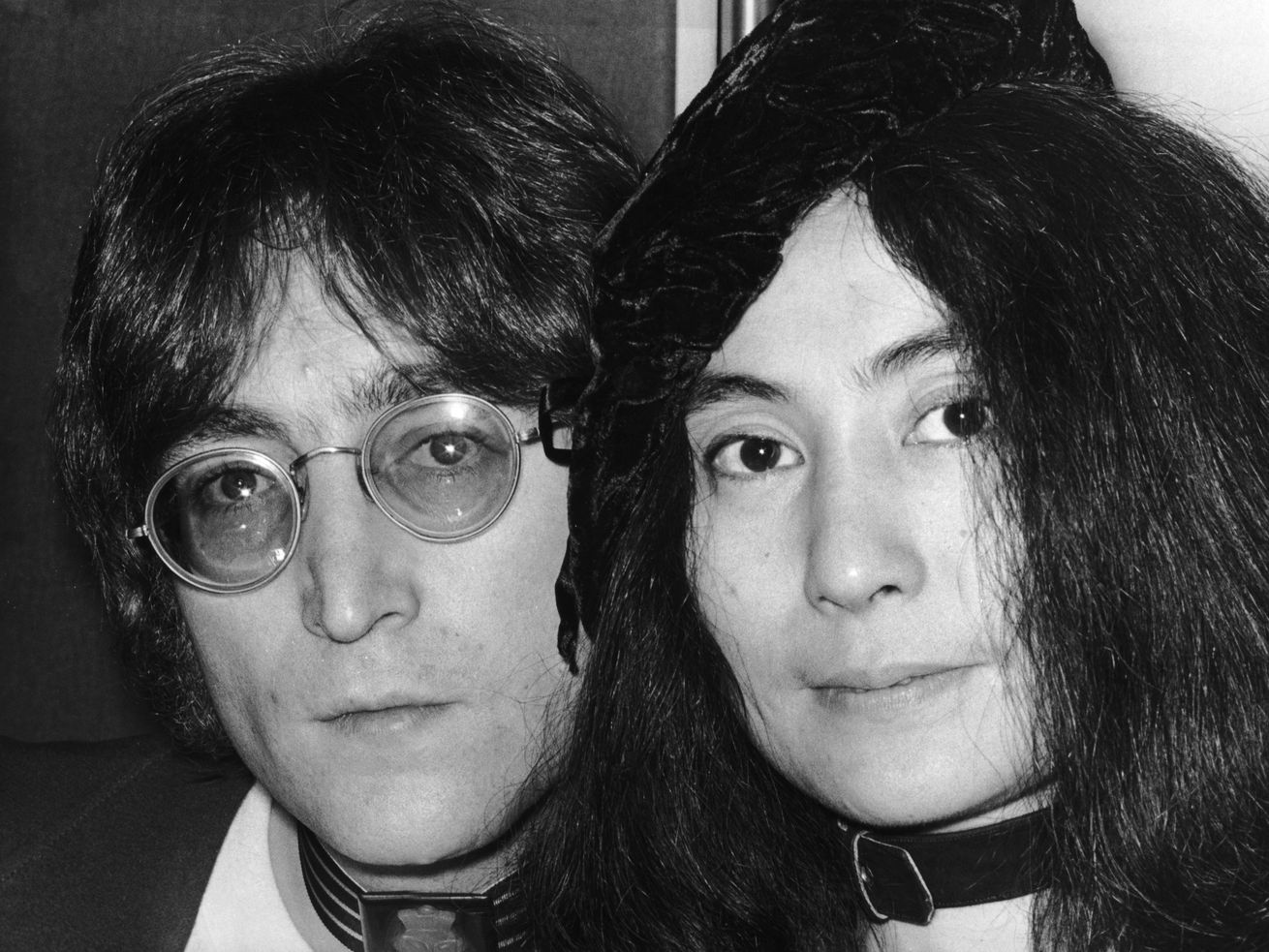
John Lennon and Yoko Ono in 1971. Lennon’s recording of “Imagine,” a song written with his wife, is chronicled in “1971: The Year That Music Changed Everything.” | Getty Images

Apple TV+ docuseries makes the case that ‘Imagine,’ ‘What’s Going On,’ ‘Ohio’ and other anthems reflected and, in some cases, influenced young America.

Any list of the greatest protest and social commentary songs would have to include the following:

  • “Imagine” by John Lennon
  • “Ohio” by Crosby, Stills, Nash & Young
  • “The Revolution Will Not Be Televised” by Gil Scott-Heron
  • “What’s Going On?” by Marvin Gaye
  • “Won’t Get Fooled Again” by the Who

All released in 1971 — the same year that yielded the albums “All Day Music” by War, “Madman Across the Water” by Elton John, “Roots” by Curtis Mayfield, “Surf’s Up” by the Beach Boys, “Sticky Fingers” by the Rolling Stones, “There’s a Riot Goin’ On” by Sly and the Family Stone, “Tapestry” by Carole King, “Who’s Next” by the Who, “Blue” by Joni Mitchell and Led Zeppelin IV — so yes, there’s enough music and more than history in the making to justify Apple TV+ devoting eight episodes of approximately 45 minutes each to the documentary series “1971: The Year That Music Changed Everything.” This is the definitive visual history of one of the most tumultuous years in American history — and arguably the greatest year ever for rock, pop and soul.

From the opening scenes of police officers dragging detainees through the streets, construction workers and anti-war protesters clashing in New York City and the burning of the ROTC building on the campus of Kent State, the filmmaking team (whose credits include “Amy” and “Exit Through the Gift Shop”) make it clear “1971” is going to be as much about the tenor of the times as the music that reflected and, in some cases, influenced young America.

“There was a huge divide in America, because of Vietnam,” says Chrissie Hynde of the Pretenders, who was a student at Kent State University at the time of the still-shocking, almost incomprehensible killing of four students and the wounding of nine others at the hands of National Guardsmen who fired into the unarmed crowds in the spring of 1970. “Shocked? Yeah!” says Hynde. “These kids were lying on the ground, bleeding to death.”

Cue the spine-chilling opening notes and lyrics of “Ohio,” the brilliant anthem by Crosby, Stills, Nash & Young: “Tin soldiers and Nixon’s coming, we’re finally on our own, this summer I hear the drumming, four dead in Ohio …”


AP File
Marvin Gaye’s “What’s Going On” was another pivotal song of 1971.

We often see the lyrics of songs superimposed onto still photos and archival footage of the time, e.g, when we hear how Marvin Gaye was inspired to write “What’s Going On?” by his brother being sent to Vietnam, we see footage of caskets arriving in America as families weep, and see the lyrics: Mother mother, there’s too many of you crying, brother brother brother, there’s far too many of you dying. It’s a powerful technique, merging the music with the movements.

“1971” is also filled with audio recordings of comments from the prominent artists of the day, and incredible behind-the-scenes footage of John Lennon working out the arrangement for “Imagine,” George Harrison and Bob Dylan rehearsing “If Not For You” prior to the Concert for Bangladesh, as well as deep dives into the careers of Sly & the Family Stone and the Who, among many others — and recordings of Richard Nixon plotting with Henry Kissinger in the White House, a reminder of the pure evil of Charles Manson (the Manson trial was in 1971) and Vietnam, always Vietnam. In 1971, we often heard the best of America (and Great Britain) on the radio and saw the worst of it in the pro-war politics of the time.

Read More

‘1971’ does some powerful mixing of the year’s events and the year’s songsRichard Roeperon May 20, 2021 at 11:34 pm Read More »

Teen shot on Far South SideSun-Times Wireon May 20, 2021 at 11:49 pm

A 16-year-old boy was wounded in a shooting May 20, 2021, on the far South Side.
A 16-year-old boy was wounded in a shooting May 20, 2021, on the far South Side. | Adobe Stock Photo

The 16-year-old was in the 13200 block of South Langley Avenue when someone opened fire, striking him in the abdomen and groin area, Chicago police said.

A 16-year-old boy was shot Thursday on the Far South Side.

About 5:12 p.m., he was in the 13200 block of South Langley Avenue when someone opened fire, striking him in the abdomen and groin area, Chicago police said.

The teen was taken to Christ Medical Center in Oak Lawn in serious condition, police said.

No arrests have been reported.

Read More

Teen shot on Far South SideSun-Times Wireon May 20, 2021 at 11:49 pm Read More »

Seven medical professionals charged with involuntary manslaughter in Diego Maradona’s deathAssociated Presson May 20, 2021 at 10:05 pm

A man places a flower on a jersey with the face of late soccer star Diego Maradona in March. Seven health professionals who tended to Maradona in the days before his death have been charged with involuntary manslaughter.
A man places a flower on a jersey with the face of late soccer star Diego Maradona in March. Seven health professionals who tended to Maradona in the days before his death have been charged with involuntary manslaughter. | Natacha Pisarenko/AP

Maradona, who led Argentina to victory in the 1986 World Cup, died of a heart attack Nov. 25 at a rented residence outside Buenos Aires following brain surgery two weeks earlier. He was 60.

BUENOS AIRES — Seven health professionals who tended to Diego Maradona in the days before his death have been charged with involuntary manslaughter.

Maradona, who led Argentina to victory in the 1986 World Cup, died of a heart attack Nov. 25 at a rented residence outside Buenos Aires following brain surgery two weeks earlier. He was 60.

A medical board’s report given to prosecutors this month concluded that Maradona was in agony for more than 12 hours, did not receive adequate treatment and could still be alive if he had been properly hospitalized.

Prosecutors on Wednesday charged neurosurgeon Leopoldo Luque and psychiatrist Agustina Cosachov, the two leaders of Maradona’s medical team, and five other health professionals with involuntary manslaughter.

A doctor, a psychologist, two nurses and a nurse coordinator were the others.

The medical panel’s report said “the patient’s signs of risk of life were ignored,” adding that Maradona “showed unequivocal signs of a prolonged agony period” of at least 12 hours.

The care that Maradona received at the rented house, the report said, “did not fulfill the minimum requirements” for a patient with his medical history, and that he would have survived with “adequate hospitalization.”

Maradona had suffered a series of medical problems, some due to excesses of drugs and alcohol. He was reportedly near death in 2000 and 2004.

Julio Rivas, a lawyer for Luque, said earlier this month that medical forensics of the report were flawed and “biased … with no scientific foundation.”

Read More

Seven medical professionals charged with involuntary manslaughter in Diego Maradona’s deathAssociated Presson May 20, 2021 at 10:05 pm Read More »

Violence tests Biden’s pullback from Middle East hotspotsAssociated Presson May 20, 2021 at 10:15 pm

President Joe Biden looks towards the table with the COVID-19 Hate Crimes Act on it before the signing in the East Room of the White House, Thursday, May 20, 2021, in Washington.
President Joe Biden looks towards the table with the COVID-19 Hate Crimes Act on it before the signing in the East Room of the White House, Thursday, May 20, 2021, in Washington. | AP

President Joe Biden and his supporters say that by shifting the U.S. military and diplomatic focus from the region’s bogged-down conflicts, he’s bringing an overdue end to failed policies that often only prolonged strife, and that the stepped-back U.S. engagement already is encouraging countries to resolve disputes on their own. But fighting has flared recently in some of the areas affected by Biden’s pivot.

Surges in violence and scenes of civilian suffering are testing President Joe Biden’s resolve to wrench America’s foreign policy focus and troops away from the hotspots of the Middle East and Afghanistan, and giving ammunition to Biden’s political rivals at home.

Biden and his supporters say that by shifting the U.S. military and diplomatic focus from the region’s bogged-down conflicts, he’s bringing an overdue end to failed policies that often only prolonged strife, and that the stepped-back U.S. engagement already is encouraging countries to resolve disputes on their own. But fighting has flared recently in some of the areas affected by Biden’s pivot.

The Israel-Gaza war has exploded just as Biden has tried to step back, creating scenes of crushed bodies and flattened homes and a growing rift in Biden’s own party about whether he should do more. Israel and Hamas announced a cease-fire Thursday in airstrikes and rocket attacks that have killed at least 230 Palestinians and 12 in Israel. The end came a day after Biden greatly increased public pressure on Israel, calling for “significant de-escalation” within hours.

Fears of a Taliban takeover and renewed civil war are building ahead of Biden’s troop withdrawal in Afghanistan. And outside desert cities under siege in Yemen, Iranian-backed Houthi rebels are pressing an offensive as Biden ends U.S. military support for a 6-year Saudi-led war there.

“This is the fruit of the policy of U.S. President Joe Biden,” Yemeni journalist Walid al Rajhi tweeted this month after shelling from Iran-allied Houthi rebels on the walled city of Taiz. He was echoing a claim that fighters in a besieged Yemeni government stronghold, Marib, also are making to visiting news crews: that Biden’s military withdrawal and overtures to the rebels have only emboldened the Iranian-allied Houthis to press for decisive battlefield victories.

How resolutely Biden carries out the pivot, and what happens in the hotspots after will shape his foreign policy legacy.

Biden seems to be gambling that even if violence flares in the Middle East and Afghanistan as the U.S. shifts primary focus away, that’s a price worth paying to extract the U.S. from regional conflicts as greater challenges emerge elsewhere.

Blame already is in no short supply. “Americans’ decisions hurt us, and we hope that the Americans will go back on their decision,” Lt. Gen. Sagheer bin Aziz, chief of staff of the Yemen army, said in one such battlefield interview, with CNN.

Republicans say the same. Biden’s moves have “only encouraged Houthi aggression, a lesson the administration should remember with the Iranian regime,” Sen. Tom Cotton of Arkansas tweeted.

And as fighting between Israel and Palestinian militant groups surged to its highest level since 2014, heartland Democratic lawmakers this week joined progressives in pushing Biden to wade back into intensive U.S. diplomacy. “Too many people have already died. More will unnecessarily perish if America does not act with the immediacy this violence demands,” Rep. David Price, a North Carolina Democrat, told Biden in a letter signed by 138 others.

Biden calls it essential for the United States to pull back from its efforts to police Middle East conflicts and turn to dealing with long-term priorities. That includes competition with China and climate change.

“No one wants to say that we should be in Afghanistan forever, but they insist now is not the right moment to leave,” Biden said last month in setting a Sept. 11 deadline for U.S. military withdrawal.

“‘Not now’ — that’s how we got here,” Biden said of the 20-year U.S. deployment in Afghanistan that has left the Taliban still undefeated and the Afghan government still vulnerable.

For the administration and its supporters, the answer is pulling out of stalemated, costly wars, and managing Middle East diplomatic efforts so that foreign policy efforts don’t rack up air miles in years of fruitless shuttle diplomacy in peace processes that combatants often don’t want.

When it comes to Yemen’s war, for example, “At some point you have to accept what the facts on the ground are telling you,” said Sen. Chris Murphy, a Connecticut Democrat who met with Gulf and U.S. officials in a tour of the region this month. “The United States was involved for six to seven years, and Yemen during that period of time moved further and further away from peace.”

Since 9/11, “all we have done through fighting war after war in the region is to make our country less safe,” Murphy said. “So yeah, it may take some adjustment if the United States decides to remember how it protected its interests prior to 2001. But I think that would ultimately accrue to the benefit of our security interests.”

The Biden administration points to intensive efforts by its diplomats for Yemen peace talks despite the end of military support. On Thursday the U.S. imposed sanctions on two Houthi leaders in the offensive on Marib.

Murphy argues U.S. efforts to ease confrontation with Iran already are promoting conciliation attempts on the ground. That includes Saudi Arabia this year reaching out to top rival Iran and to fellow Arab grudge partner Qatar, after President Donald Trump gleefully backed Saudi Arabia in intense confrontation with both.

Even before Biden came to power and sought to calm tensions, Arab rulers, including the United Arab Emirates’, had realized that teaming up in Trump’s maximum-pressure campaign on Iran had only spurred it and its allies to double down on attacks, said Ali Vaez, the International Crisis Group’s Iran project director and a former U.N. official who was active in the 2015 Iran nuclear talks.

“I do think that the United States is not looking at the region as a priority anymore,” said Marwan Muasher, a former foreign minister of Jordan, long deeply involved in efforts for a broad Israeli-Palestinian accord. But some smart U.S. engagement will be crucial, he said.

“The Biden administration should not do more on the peace process” between Israel and the Palestinians, Muasher said. “It just should do things differently.”

Read More

Violence tests Biden’s pullback from Middle East hotspotsAssociated Presson May 20, 2021 at 10:15 pm Read More »

South Side dance coach provided safe space for children. He was shot dead a block from his studio.David Struetton May 20, 2021 at 10:49 pm

Verndell Smith was shot and killed Wednesday in Park Manor. Family and friends remember him as a mentor who provided a safe space for his students.
Verndell Smith was shot and killed Wednesday in Park Manor. Family and friends remember him as a mentor who provided a safe space for his students. | Provided photo

“He wanted to give other children an outlet to forget their struggles in life,” Verndell Smith’s sister said.

Verndell Smith’s motto was, “Stop shooting and start dancing.”

It’s why he opened the Ultimate Threat Dance Organization, to get kids off the streets.

“He wanted to give other children an outlet to forget their struggles in life,” his sister LaToya Smith said. “People came in the door not knowing how to dance. And they left, as we’d say, ‘the coldest in Chicago.’ ”

Late Wednesday morning, Smith was walking near his studio in Park Manor when the driver of a silver SUV pulled into the parking lot and opened fire in the 7400 block of South King Drive, hitting Smith in the leg, arm, forehead and torso.

Paramedics took Smith to the University of Chicago Medical Center, where he was pronounced dead, police said. Detectives were reviewing surveillance video, but no one had been arrested by Thursday afternoon.

The shooter’s motive was unclear.

Verndell Smith stands in front of his dance studio, labeled with its former name.
Provided photo
Verndell Smith stands in front of his dance studio, labeled with its former name.

Although partially deaf, Smith “found his voice” through dancing, LaToya Smith said.

“My brother was a giver,” she said, not only instilling a passion for dancing but helping his students any way he could.

Sheila Neal’s 15-year-old son has danced at Smith’s studio for three years. “That man was a sweetheart. He cared about those kids beyond recognition,” she said.

Neal said her son doesn’t have a father figure around and Smith “took him under his wing” and helped him think positively.

When her son went to practice but was too sick to dance, “Verndell texted me he was all right and he got him an Uber home,” she said. Her son ended up in the ER with a migraine, and Smith texted her all night to check in on him.

Smith once wrote a lighthearted song about his disability, “Speak up, I can’t hear you,” Neal said. “You always had to look in his face for him to hear you. He made jokes out of it.”

Smith dreamed of leading the Bud Billiken Parade, Neal said. “That was his dream. ‘One year I’m gonna be the Bud,’ that’s all he said.”

Verndell was born in Elizabeth, New Jersey, and moved at age 6 to Chicago. He was influenced by R&B and the dance moves of Usher, Chris Brown, B2K and Michael Jackson, according to his Bud Billiken Parade biography.

Verndell’s dance company performed in competitions across the country, including the Apollo Theater in New York.

“He’s definitely a dance legend and he should never be forgotten,” said Devoureaux Wolf, who has a dance platform on the West Side and sometimes collaborated with Smith.

“He opened up a way to let these boys and girls be comfortable. Some of them needed a way to express themselves and Verndell would get that out of them,” he said.

Smith, who had a 10-year-old son, considered his studio a safe space. His sister recalled the time he learned two boys were carrying guns in his place. “He grabbed them and asked why they were doing it. They said it was protection for school. And he said he’d take them to school until it calmed down,” she said.

Days later, someone called police and reported that the boys were carrying guns at the studio, LaToya Smith said. Officers entered the studio and Verndell stood between them and the boys until the officers’ supervisor arrived.

When the situation calmed down, police searched the boys and found no guns, she said. Later the police invited the dance group to perform at one of its functions.

LaToya Smith hopes her brother is remembered for his determination and for his dreams.

“He had a disability, the fact he couldn’t hear, and he continued to push through,” she said. “I want people to go after your dreams. He wanted to be a rapper, and at age 31, he started to rap again. It’s never too late.”

Read More

South Side dance coach provided safe space for children. He was shot dead a block from his studio.David Struetton May 20, 2021 at 10:49 pm Read More »