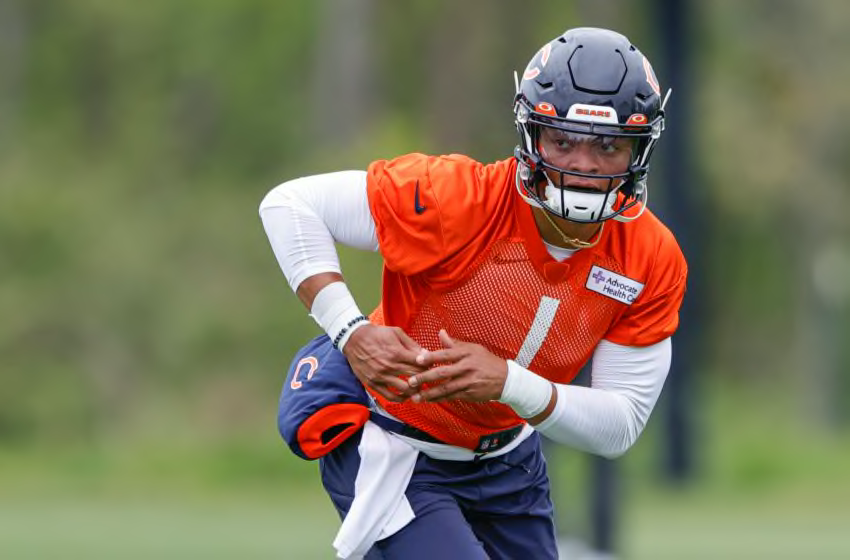
The Chicago Bears have been disastrous at the quarterback position for a very long time. It has been well documented as they have tried and failed to make it right more than once. The latest edition of trying to make it right will come in the form of Justin Fields. This one feels just a bit different because of his style and the talents he brings to the table. He was a dynamic player at Ohio State so the Bears are hoping that he can bring some of that to their organization.
The Chicago Bears have a lot of faith in the future of Justin Fields going forward.
The Bears signed Andy Dalton not long before the draft and the fanbase didn’t take it well. It makes sense because it just felt like another short-term band-aid that wasn’t going to work. Now, the quarterback room has Fields, Dalton, and Nick Foles (who was acquired from the Jacksonville Jaguars during the 2020 offseason).
The question for the Bears now is whether or not the Bears will use Justin Fields early in the season. There are people on both sides of the argument but there seems to be one great week to start him based on a few different things.
The Chicago Bears should start Andy Dalton in week one against the Los Angeles Rams on the road. That is probably the best defense that Chicago will face all season long so it is smarter to let a veteran like Dalton handle them. Chances are that things aren’t going to go great for the Bears there on Sunday night football, so there might be a change not long after that.
Week two will see Chicago come home to play the Cincinnati Bengals. Joe Burrow’s squad is going to be looking to improve in 2021 but they certainly don’t jump off the page as contenders just yet. Burrow is very good and he could get them there eventually but it may take another year or two. That is the perfect game to start Fields for the first time in his NFL career.
Fields making a start against one of the weaker teams on the schedule is the perfect way to get his feet wet in the league. It will be nice for him to not have someone like Aaron Donald chasing him around all night. It will also give Bears fans a chance to see this guy play for the first time at home where Soldier Field is sure to be rocking for the first time since the end of 2019. Regardless of when that Fields debut actually comes, it is going to be exciting to watch.
When Lisa Osborne Ross was named chief executive officer of public relations giant Edelman U.S. in early May, it was the culmination of 25 years in public relations, politics and public affairs, rising through the ranks in corporate America.
It’s the first time an African American has held the top position in the 69-year history of the global firm — founded in Chicago in 1952, now with more than 2,300 employees in 13 states — and a first for an African American leading a PR/advertising firm of its size.
“It almost brings me to tears when you say it like that,” Ross said from her Washington, D.C., offices.
“The magnitude of what it has meant — certainly to women that look like us and to men that look like us — but also what it has meant to so many, has moved me. And, if I allow it, it could dismantle me, honestly.
“I’ve been overwhelmed by the global village that I feel is behind me,” said Ross, who came to Edelman in 2017 as president and was promoted to chief operating officer in February 2020.
That was just before the coronavirus pandemic shut down the American economy, followed by the killing of George Floyd, a Black man, at the hands of a white Minneapolis cop, which sent many in a locked-down nation to the streets in protest.
Lisa Osborne Ross became the first African American CEO of Edelman U.S. in early May. The company is among Chicago area corporations or regional headquarters that have undertaken momentous moves to propel racial equity in the year of racial reckoning following George Floyd’s death. Provided
Ross led her firm’s COVID task force and its racial justice task force.
“I’m aware of the history of the moment, and it’s an amazing, amazing feeling,” she said of her promotion at Edelman, one of several Chicago area corporations that have undertaken momentous moves to propel racial equity in the year of racial reckoning following Floyd’s death.
“But with that comes the responsibility, right? And the expectation. And, if I allowed it, the worry of: ‘Can I do this?’ “
But she said, “I feel confident, secure, committed. I have a very clear vision.”
The killing while in uniform triggered a collective soul-searching over structural racism inherent in every aspect of American life, including racial disparities in COVID infections and deaths and the racial income and wealth gap.
That also poured out into the corporate sector, sports, entertainment and media.
Protests that began peacefully grew violent as they spread from Alaska to West Virginia, Americans of every race and creed joining voices to declare: Enough.
“For me personally, it was just like air came out of your body,” Alice Rodriguez, managing director and head of JPMC Community Impact at JPMorgan Chase, said of watching the video of the killing. “You couldn’t breathe. It was hard to believe this was even happening in our country.”
Alice Rodriguez, managing director and head of JPMC Community Impact at JPMorgan Chase, leads the banking giant’s $30 billion Path Forward commitment to advance racial equity through investments in affordable housing, home ownership, small businesses and family financial health in Black and Latinx communities, and diversity within its workforce.Provided
Rodriguez is one of the nation’s highest-ranking Latinos in banking and chairwoman of the U.S. Hispanic Chamber of Commerce, which advocates for America’s 4.7 million Hispanic-owned businesses and the Hispanic workforce. The daughter of an immigrant, she climbed the ranks over the course of 34 years with the nation’s largest bank.
She talks about how her mother, with a seventh grade education, worked to provide opportunities for her four children — one of them now overseeing JPMorgan Chase’s $30 billion commitment to advance racial equity. Called Path Forward, it is a response to the reckoning by a bank with $3.7 trillion in assets.
The seminal tragedy of Floyd and the demands for change prompted corporate America to speak out against racism and injustice.
That put a spotlight on racism in hiring and promotion, segregation in C-suites, lending for homes/businesses, denigrating treatment of and portrayals of Black and Brown narratives.
Many questioned whether the statements from a corporate community facing pressure to weigh in from customers, employees and other stakeholders were just talk.
“The pandemic had revealed all of these inequities, and BIPOC” — Black, Indigenous and people of color — “communities had gotten hit so hard by the pandemic, so people were raw,” Edleman’s Ross said of the reckoning that prompted mea culpas from many corporate entities.
Demands for change sent many of those big corporations running to firms like Edelman. Ross ended up overseeing the PR giant’s counseling of more than 400 clients regarding diversity, equity and inclusion efforts and multicultural outreach efforts.
“There are four things companies have to do,” Ross said. “You have to use your influence — not just say something but do something. You have to educate yourself on systemic racism in your industry, then advocate for change. Then, you have to get your own house in order. When you are posting this and communicating that, remember that people will be, like, ‘Well, let me look at your board and your executive committee and your C-suite.’
“And recognize that there will be consequences if you don’t. This is a movement, not a moment. The demand for equity is not going away. If anything, it’s going to accelerate.”
Ross’ appointment follows the history and headlines made earlier this year by two other African American women ascending to the top post at Fortune 100 companies.
A month before, Roz Brewer, formerly chief operating officer of Starbucks Corp., was named CEO of Walgreens Boots Alliance, the 120-year-old, Deerfield-based pharmacy giant.
Only one other African American woman — Ursula Burns, former head of Xerox — has held that top post in the 66-year history of the list representing America’s largest companies. Mary A. Winston was interim CEO of Bed Bath & Beyond for seven months in 2019.
Only a handful of African American men or women hold the top post.
Rosalind Brewer (left), CEO of Walgreens Boots Alliance, and Thasunda Duckett, CEO of the Teachers Insurance and Annuity Association of America. The May appointment of Lisa Osborne Ross to CEO of Edelman U.S. follows the history-making ascension by these two African American women to the top post at Fortune 100 companies.Provided
Carlos Cubia, senior vice president and global chief diversity officer for Walgreens, has long worked on diversity, equity and inclusion. He came to Walgreens in 2017 after driving diversity agendas at Covidien, Blue Cross Blue Shield and Safeco Insurance.
“The racial equity movement accelerated some initiatives that we already had in the works. Now, we’re implementing them,” Cubia said. “We are weaving DE&I throughout every aspect of our business, from the C-suite to our board of directors to our global beauty brands to our recruiting, hiring and retention to our marketing efforts.”
A “Leadership Accountability Model” now ties bonus incentives to Walgreens’ goals of increasing the numbers of women and people of color in leadership positions year after year — women by 3 percentage points, people of color by 2 percentage points.
And a new recruitment tool analyzes language in Walgreens job descriptions with the aim of helping to ensure inclusivity.
A “Marketing for Change” team was established to review product marketing in Walgreens stores, responding to insights from African American consumers.
Regarding health disparities, the company’s “Vaccine Equity Initiative” focused distribution in POC communities disproportionately affected by COVID, and a partnership with Uber is offering free transportation to vaccines in Chicago, Atlanta, Houston and El Paso, Texas.
Brewer wasn’t the only African American woman to break barriers at Walgreens. The company also appointed Valerie Jarrett, former White House senior adviser under President Barack Obama, to its board — the first African American woman in that role at the company.
Carlos Cubia, senior vice president, global chief diversity officer for Walgreens Boots Alliance.Provided
“While we are proud of the work we’ve done, we know we still have a long way to go, which is why this is both a critical and exciting time to be in this space,” Cubia said.
According to a Federal Reserve survey, America’s racial wealth disparities remained unchanged over the past decade. The typical white family had eight times the wealth of a typical Black family and five times the wealth of the typical Hispanic family.
A report by the Center for American Progress think tank blames racism for the Black-white wealth gap, pointing at a discriminatory economic system in which the labor, housing and financial markets stymie African American households from acquiring generational wealth.
“If you look at median net worth for white households, it’s $188,000,” JPMorgan Chase’s Rodriguez said. “If you look at it for a Latino household, it’s $36,000. For a Black household, it was $24,000.
“If you start to peel back then the two drivers of wealth creation in this country, homeownership is one of the big ones, then entrepreneurship. Long-term savings is another. There’s a lot of different drivers, but these three come to the top. Path Forward is our approach to the wealth divide in this country.”
Launched in October, the initiative is helping 40,000 Black and Latinx families nationwide to become homeowners in the next five years, with $5,000 grants for down payments.
According to Rodriguez, the company is aiming to help 3,000 families on the South Side and the West Side.
Phillip Sinclair celebrates closing on his new home in Woodlawn earlier this month. An artist known as “P. Scott” and the owner of Pilsen’s NYCH Gallery, Sinclair was able to buy his first home through JPMorgan Chase’s “Path Forward” initiative. That effort aims to eliminate barriers to homeownership and financial health for 3,000 Black and Latinx families on Chicago’s South Side and West Side.Provided
“I always figured by the age of 30 I’d stop paying rent and build my own assets, instead of helping others with theirs,” said Phillip Sinclair, a 45-year-old Chicago artist known as “P. Scott,” who closed on his first home on May 11. “Owning my own home has always been a goal.”
After years of trying, the father of two and owner of Pilsen’s NYCH Gallery was able to purchase a two-flat in Woodlawn through the JPMorgan Chase program.
“I’ve been an entrepreneur since age 22, and income is not always guaranteed,” said Sinclair, who’s also a fashion designer and full-time hairstylist for NBC’s “Chicago P.D.” show, which is filmed in Chicago. “A lot of times, banks get nervous with entrepreneurs. I’ve attempted this a few times. Chase made me believe I could make this happen. They took the time to really walk me through the steps. The downpayment grant was essential in this whole process.
“It still feels surreal. To come from where I came from, to close on my first house is just a dream come true.”
Path Forward grew out of a nationwide listening tour with community leaders by top bank executives. The $30 billion commitment for the program includes home refinancing for 20,000 Black and Latinx families, with $2,500 grants, financing of 100,000 affordable rental units, 15,000 small business loans and $750 million to be spent with Black and Latinx suppliers.
Another element: a mentoring program to help Black and Latinx-owned small businesses grow in 13 communities nationwide. That targets 1,500 businesses in Chicago.
Patrice Darby Neely is founder of GoLogic Solutions, a data aggregation and economic development start-up. Through a JPMorgan Chase program offering mentoring to 1,500 Black and Latinx-owned small businesses in Chicago, Neely got help on diversifying revenue while she builds her base of clients.Provided
South Shore resident Patrice Darby Neely, a second-generation entrepreneur, has taken advantage of the program for her year-old data-aggregation and economic development startup, GoLogic Solutions. Among a rare breed of Black women in tech, Neely started GoLogic after COVID hit her first one, GoNanny, hard. It shut down after four years of growth.
The one-on-one mentoring she’s gotten since joining the program in September has been critical to the growth of her newest endeavor, Neely said.
“My mentor helped us create a strategic partnership strategy to be able to work with Fortune 500 companies and corporate philanthropic organizations,” she said. “Having a reliable partner who you can trust to inform your business decisions is one of the most important things you can do as an entrepreneur.”
Path Forward also includes 1 million low-cost checking/savings accounts for those new to or previously locked out of banking and a new community center branch model offering skills training and atypical bank programs in communities like South Shore.
The bank also has committed to investing $50 million with Black- and Latinx-led banks.
Like Walgreens, JPMorgan Chase — which, with 14,000 workers in Chicago, is one of the city’s biggest employers — now plans to hold executives accountable, in their performance evaluations and their pay, for meeting workforce diversity goals.
Northbrook-based Allstate Corp., one of America’s largest home and car insurers, is doing the same.
William Jaramillo, in the new role of community manager, listens to Mayor Lori Lightfoot at the Feb. 4 grand opening of the Chase Stony Island Community Center Branch, one of three Chase branches revamped under a community center model. Its $2.6 million in renovations was awarded to minority-owned contractors.Provided
“We knew we needed to take a bigger stand than what we had done in the past,” said Christy Harris, Allstate senior vice president of talent management, employee experience, culture, employee value proposition and inclusive diversity. “Our CEO sent a letter to all of our employees, basically saying, ‘It’s just us. We have the opportunity to model different behavior within this organization that will bleed out externally.’ And, with that, we decided to declare Juneteenth a company holiday.”
Commemorating Juneteenth — the emancipation on June 19, 1865, of the last enslaved people in the holdout state of Texas — was a step considered by several municipalities and corporations in the weeks after the Floyd killing. Allstate blazed a trail.
The company also launched a three-year DE&I strategic plan covering not only hiring and promotion but also its supply chain and charitable giving. Allstate’s charitable foundation added a racial and economic equity pillar to its mission.
In November, Allstate made history on Wall Street. To fund its $4 billion acquisition of National General Holdings Corp., the company awarded its $1.2 billion corporate bond offering exclusively to banks owned by people of color, women and veterans. Such business typically is snagged by large banks like JPMorgan Chase, Bank of America and Citigroup.
It was the largest-ever corporate deal managed solely by diverse firms, breaking barriers in a financial management arena long plagued by inequity. For its $92 billion investment portfolio, Allstate has committed to doubling trading volume with diverse firms this year.
“Normally, you’d go to the big players, but, when you’re really intentional, you can carve out this kind of opportunity,” said Harris, who has led DE&I efforts at the insurance giant for five years.
Christy Harris, an Allstate Corp. senior vice president who oversees areas of the insurer’s business including inclusive diversity efforts.Provided
“This is where businesses can make a big difference, when your values align with your business practice,” she said. “For some of these banks, this is the first time they’ve been able to engage in something this size. Sometimes, you just need a chance. And once given that chance, the window has now opened for you to create even bigger opportunities.”
Allstate is among nearly four dozen large companies — from Accenture, American Express and Aon to Wells Fargo, Whirlpool and Yum! — that, in December, launched OneTen, a new organization with a mission to upskill, hire and promote 1 million African Americans to family-sustaining, upwardly mobile jobs in the next 10 years.
That pledge comes as preliminary U.S. Census Bureau data show an acceleration in the browning of America. Similarly, a Brookings Institution analysis found America’s white population declining for the first time since the first census was taken in 1790, a decline largely due to aging.
All population growth occurred among other race and ethnic groups, with rising racial and ethnic diversity among millennials, Gen Z and younger groups now comprising over half the nation’s population.
Statistics project a majority Black and Brown America by 2045, when whites are expected to comprise 49.7% of the population, Hispanics 24.6%, African Americans 13.1%, Asians 7.9% and people who are multiracial 3.8%.
Harris said she sees diversity, equity and inclusion efforts spurred by the Floyd tragedy as critical to a future workforce.
And like so many parents of Black sons, the racism that too often seeps into America’s policing — laid bare in that horrific video — fuels her worry for her sons, who are 16 and 17.
“I’m from Minneapolis,” said Harris, whose husband is African American. “I grew up there and lived there many years. And, being a white female, maybe didn’t realize what was happening there. I now think about this all the time.”
READI Chicago got a $2 million grant from JPMorgan Chase on May 5 to support its response to reduce gun violence through behavioral therapy, jobs, training and other support services. Seen here (from left) are program participants Rashawn Carson and Tevin Pope, senior director Eddie Bocanegra and participant Terrell Matthews.Provided
“Last year, my 17-year-old and I were walking down the street,” Harris said. “He was telling me how girls at his school like boys who are 6 feet tall, light-skinned, curly hair, etc. I said, ‘Oh, kind of like you.’
“And he said, ‘You know, Mom, isn’t it interesting how everyone wants to look like me but nobody wants to be me?’ I said, ‘Why do you say that?’ And it happened that a police officer was driving by right then. He points and says, ‘Because of that right there.’ “
As corporate America continues efforts to make good on Floyd-era pledges, leaders of community organizations in disadvantaged Black and Latinx communities hope the benefits of this pivotal time in American history will be long term.
One of those, the 4-year-old READI Chicago, got a major boost from a $2 million grant from JPMorgan Chase on May 5 to help provide jobs, behavioral therapy and other supports to men at high risk of ending up involved in violence. Of those READI serves, 96% have been arrested and 64% previously incarcerated. READI works to help these neighborhood residents return to the workforce.
“I’m so glad this country is finally coming to a level of recognition and reckoning with race and equity,” said Eddie Bocanegra, READI’s senior director.
“Too often, the population we focus on is overlooked and dismissed because of mistakes of the past,” Bocanegra said. “When we talk equity, we’re talking about employment, the importance of creating career pathways and opportunities for everyone. Everyone deserves a second chance.”
Eddie Bocanega, senior director of READI Chicago, a community organization that got a $2 million grant from JPMorgan Chase: “Too often, the population we focus on is overlooked and dismissed because of mistakes of the past.”Provided
The Chicago Police Board has cleared a veteran police officer accused of lying to investigators after video surfaced appearing to show the officer punching a handcuffed man at a South Side Hospital nearly seven years ago.
In a 5-3 vote during its monthly meeting Thursday, the board passed a motion finding Officer Clauzell Gause not guilty of making a false statement about his use of force and restoring him to his position.
The Civilian Office of Police Accountability had recommended last year that Gause be fired for allegedly lying to investigators. He had also been hit with felony misconduct charges, but those were dropped by the Cook County state’ attorney’s office in 2019.
The confrontation happened June 3, 2014, when then-24-year-old Rayshon Gartley was taken to Jackson Park Hospital for a mental health evaluation. Prosecutors said Gause was seen on surveillance footage punching and shoving Gartley, who was restrained and handcuffed at the hospital.
Gause omitted from a report that Gartley was handcuffed when he punched him, according to a document outlining the charges. Gause also told COPA investigators in an interview that he didn’t make contact with Gartley’s face or head, the document states.
But hospital surveillance video allegedly captured Gause, who was in uniform, holding Gartley’s arms behind his back and shoving him against a wall, causing him to bounce back toward the officer, prosecutors said. Gause then appeared to punch Gartley in the face with a closed fist.
It was not the first time Gause had been accused of misconduct while wearing a CPD uniform. At least 14 complaints have been filed against him, according to the Citizens Police Data Project.
Gause was also one of 11 Chicago police officers named in a federal lawsuit filed by Jerome James, who accused the officers of using excessive force after he was arrested outside a White Castle restaurant in December 2013.
According to the suit, James was throwing something in a trashcan outside the restaurant in Rosemoor when officers who were waiting for food took him into custody “without any probable cause that a crime had been committed.”
While James was being held at the Calumet District station, he asked the officers why he was being held, causing the officers to assault him, the lawsuit states.
The officers allegedly used “brass knuckles” to punch him in the face, hurled racial epithets at him and ripped the clothes off his body, leaving him naked for “several hours,” the suit states.
James was taken to Roseland Community Hospital, but only after another detainee alerted a supervising officer that James needed medical attention, the suit alleges.
The city settled the lawsuit for $60,000 in December 2015, records show.
Eleven people were shot May 20, 2021 in Chicago. | Sun-Times file photo
A 16-year-old boy was seriously wounded in a shooting Thursday evening on the Far South Side.
Eleven people were shot Thursday in Chicago, including a 16-year-old boy seriously wounded on the Far South Side.
About 5:15 p.m., the teen was in the 13200 block of South Langley Avenue when someone opened fire, striking him in the abdomen and groin area, Chicago police said.
He was taken to Christ Medical Center in Oak Lawn in serious condition, police said. No arrests have been reported.
A 36-year-old woman was shot late Thursday in Woodlawn on the South Side.
The woman was riding as a passenger in a vehicle about 11:45 p.m. in the 400 block of East Marquette Road when a male fired shots from the sidewalk, police said. She was struck in the right shoulder and driven to the University of Chicago Medical Center in good condition, police said.
A man was shot Thursday night in The Island neighborhood on the West Side.
The 30-year-old was walking on the sidewalk about 11:20 p.m. in the 1100 block of South Mason Avenue when someone fired shots, striking him in the right calf, according to police. He was driven to West Suburban Medical Center, where he was listed in fair condition, police said.
About five minutes earlier, a 17-year-old boy was shot in Austin on the West Side.
He was outside about 11:15 p.m. in the 900 block of North Lockwood Avenue when he heard several shots and felt pain, police said. The teen suffered a gunshot wound to the leg and was taken to Mount Sinai Hospital where his condition was stabilized, police said.
Two men were wounded in a shooting in Austin on the West Side.
About 11:05 p.m., the men were outside in the 700 block of North Lorel Avenue when someone fired multiple shots, police said.
One man, 33, suffered a gunshot wound to the abdomen and went to West Suburban Medical Center in Oak Park where he was listed in serious condition, police said. The other man, 21, was struck in the left calf and taken to the same hospital where his condition was stabilized, police said.
An 18-year-old woman was shot in Humboldt Park on the West Side.
About 10:40 p.m. she was a passenger in a vehicle traveling in the 1300 block of North Monticello Avenue when a male on the sidewalk began shouting gang slogans before shooting at the vehicle, police said. The woman suffered two gunshot wounds to the upper left arm and was taken to St. Marys Medical Center in good condition, police said.
A man was shot and critically wounded on the South Side.
He was outside about 7:20 p.m. in the 9500 block of South Constance Avenue when someone opened fire, striking him in the abdomen and leg, police said. The 32-year-old was taken to the University of Chicago Medical Center in critical condition, police said.
Another person was shot Thursday evening in West Englewood on the South Side.
The shooting happened about 5:45 p.m. in the 6500 block of South Claremont Avenue, police said. A male suffered gunshot wounds to his lower back and abdomen in the incident, police said. He was taken to a hospital in serious condition.
A 40-year-old man was shot Thursday afternoon on the Southwest Side.
He was in a vehicle about 3 p.m. at a parking lot in the 7600 block of South Cicero Avenue when someone opened fire, striking him in the neck, police said. He was taken to Christ Medical Center in Oak Lawn in fair condition, police said.
In the day’s first reported shooting, a man was wounded in Grand Crossing on the South Side.
He was sitting in his vehicle about 1:55 a.m. in the 7400 block of South Stony Island Avenue when someone inside a white-colored vehicle began firing shots, police said. The 30-year-old was struck in the face and was taken in good condition to the University of Chicago Medical Center, police said.
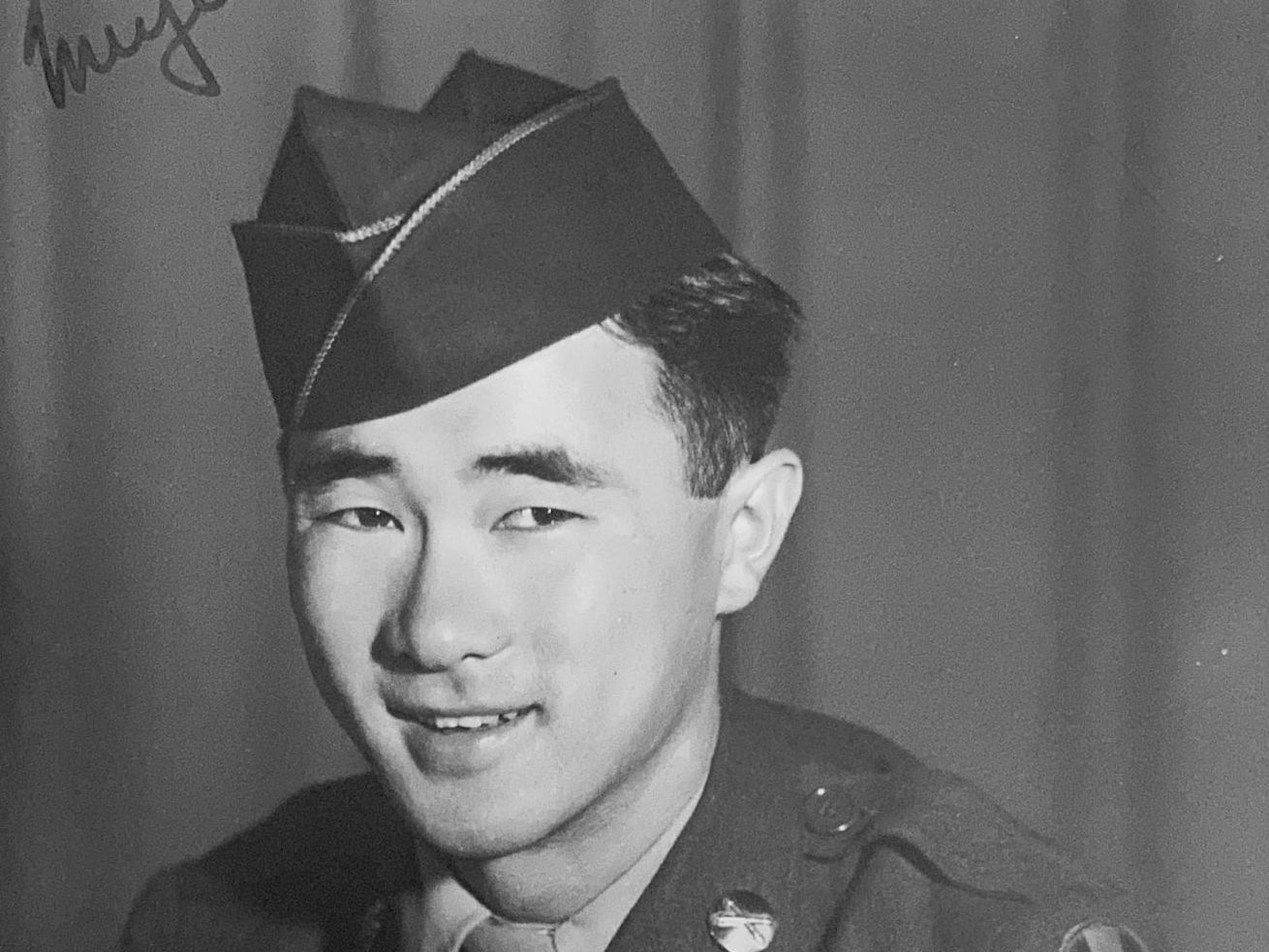
Yosh Yamada enrolled in college after being held at a World War II internment camp for Japanese Americans. But soon he was drafted into the Army. | Provided
After being held at the Topaz Internment Camp, he was drafted into the Army, where, he later wrote, ‘I served the very country that had imprisoned me.’
The football players he coached at Englewood High School said the racial prejudice Yoshio “Yosh” Yamada experienced as a Japanese American during World War II helped him empathize with his Black students.
“He was in one of the internment camps during the war, so he understood the oppression of Black people,” said Charles Hudson, 73, a 1967 graduate who played guard on the Englewood Eagles football team. “That was like being in prison. I think he just felt he had to help underprivileged people like Black people.”
Mr. Yamada called himself “a coach-counselor” in a 1965 interview with the Chicago Daily News.
“I know that athletics help to keep many boys in school that would otherwise drop out,” he said. “If I see a boy on the verge of quitting, I’ll give him more responsibility. . .make him feel he’s needed.”
Mr. Yamada died last month in Sacramento, where he’d moved to be closer to his sister June Tamanaha and his extended family. He was 94 and suffered from heart failure and kidney disease, according to his nephew Steve Tamanaha.
Chicago Daily NewsYosh Yamada coaching his football players at Englewood High School in 1965.
A respected coach, athletic director and gym teacher, he was a familiar figure on the South Side. He worked at Englewood High School from 1952 until his retirement in 1991, coaching from the 1950s into the 1970s, and lived for a time in Bronzeville’s Lake Meadows apartments.
His students respected his no-nonsense style on the field and in the driver’s education courses he taught.
“If you messed up,” Hudson said, “he would let you know: ‘You’re going to the prom by CTA.’ ”
And when his players didn’t have money for extras or essentials, “He’d get them socks and things like that,” Hudson said.
“I never kept track of how much money I took out of my own pocket to pay for equipment, shoes, carfare or meals,” Mr. Yamada once said in a Chicago Sun-Times interview. “I used to pay for trips to colleges, so I could show them what they had to look forward to if they became good football players.”
“He was inspiring,” said Eugene Hudson, 73, who played fullback for Mr. Yamada at Englewood. “Most of his players went to college.”
Eugene Hudson, who worked for Western Electric, and Charles Hudson, who went on to a career with the Chicago Public Schools that included coaching football at Englewood, credit Mr. Yamada with helping them get into Morehouse College.
Both men are relatives of Jennifer Hudson, the Chicago-raised singer and actor. When three members of her family were killed in 2008, Mr. Yamada was invited to the funeral for her mother Darnell Donerson, brother Jason and nephew Julian, according to Eugene Hudson, who is an uncle of the Academy Award-winner.
“He sat with the family,” said Charles, a first cousin of Darnell Donerson. “That did us a lot of good to see Coach show up.”
Mr. Yamada grew up in Oakland, California. He was the second-youngest of nine children of Masayo and Masaoki Yamada, natives of Yamanashi prefecture in Japan. His father died when he was a child, and his mother operated a small laundry business.
Mr. Yamada later wrote about the day the U.S. government ordered his family into captivity. They wound up at Topaz Internment Camp near Delta, Utah.
“One Friday afternoon in 1942 when I was 15 years old, my family got a knock on the door,” he wrote. “When my mother answered she was told to take my eight brothers and sisters and me to our church on Sunday to be delivered to a camp. My family was sent by train to an internment camp in Utah where we remained for 2-and-a-half years.
“We lost everything, including our home and business in Oakland. I. . . graduated from the high school in the camp where we often moved about with guns pointing at us.”
Topaz initially wasn’t ready for internees, so the Yamadas were first housed at Tanforan, a former racetrack near San Francisco.
“All the manure was still below the floorboards, so it really stunk,” said Mr. Yamada’s niece Paula Mishima.
Mishima said her mother Miye told her life at Topaz meant “having to wait in line for everything and how there was no privacy, how cold it was and how dusty it was.”
1944 Ramblings yearbookYosh Yamada played for the Topaz Rams, a high school football team at Topaz Internment Camp.
Young Yosh excelled with the Topaz Rams basketball, football and track teams, the latter which had to make do “without a track, pole vault pit, high jump pit, and who used chairs for hurdles,” according to the high school yearbook at the camp.
Jane Beckwith, president of the Topaz Museum Board, said it was a point of pride with the Topaz athletes that they often beat the “big farmboys” they competed against from nearby high schools “who were at least 50 pounds heavier.”
1944 Ramblings yearbookYosh Yamada (top right) and other members of the Topaz Rams football team. I
He graduated in 1944 and enrolled at the University of Wisconsin-Madison. A few months after that, he was drafted into the Army, where, he later wrote, “I served the very country that had imprisoned me.”
After the war, he returned to Madison, where he got bachelor’s and master’s degrees in physical education. He ran track and lettered with the school’s champion 150-pound football squad.
Mr. Yamada and his brothers and sisters scattered to New York, St. Louis and Chicago, where he and his mother, who worked for Curtiss Candy Co., lived in an apartment building on Sheffield Avenue for a time.
Englewood High School yearbook (courtesy of Robert Pruter)Coach Yosh Yamada (under arrow) with his winning Chicago Public League Blue Division players on the 1958 Englewood High School Eagles football team.
At Englewood, his players won the Chicago Public League’s first Blue Division championship in 1958. He coached them against Hyde Park High School in what’s been called the oldest football rivalry in the state.
At home, his family said he was a “fun” uncle.
“He gave me his car when I was in high school, so, when I graduated in 1979, I was driving a ’76 Grand Prix, black,” Steve Tamanaha said. “He was the uncle who would always take me to Bargain Town” — an old Chicago toy store.
In 1991, the year he retired, Mr. Yamada received a $20,000 reparations check from the U.S. government for his internment.
“There never was any evidence that any of us had done anything against the United States,” he told the Sun-Times then. “These reparations are too little and too late.”
ProvidedAn athlete all his life, Yosh Yamada enjoyed golfing.
He liked to play golf, go to the Super Bowl every year and gamble at the Hammond Horseshoe casino. In his later years, living on the West Coast, he enjoyed the local casinos, visits with family and doing Sudoku puzzles.
In addition to his sister June Tamanaha, Mr. Yamada is survived by many nieces, nephews, grandnieces and grandnephews.
A celebration of his life is being planned for the summer, Steve Tamanaha said.
When he retired, Mr. Yamada told the Sun-Times, “Working in the public schools gave me a chance to do something for minorities, especially in the Black community, to help repay for some of the things that were given to me.
“I have no regrets. It was enjoyable to work with kids. They never discriminated against me.”
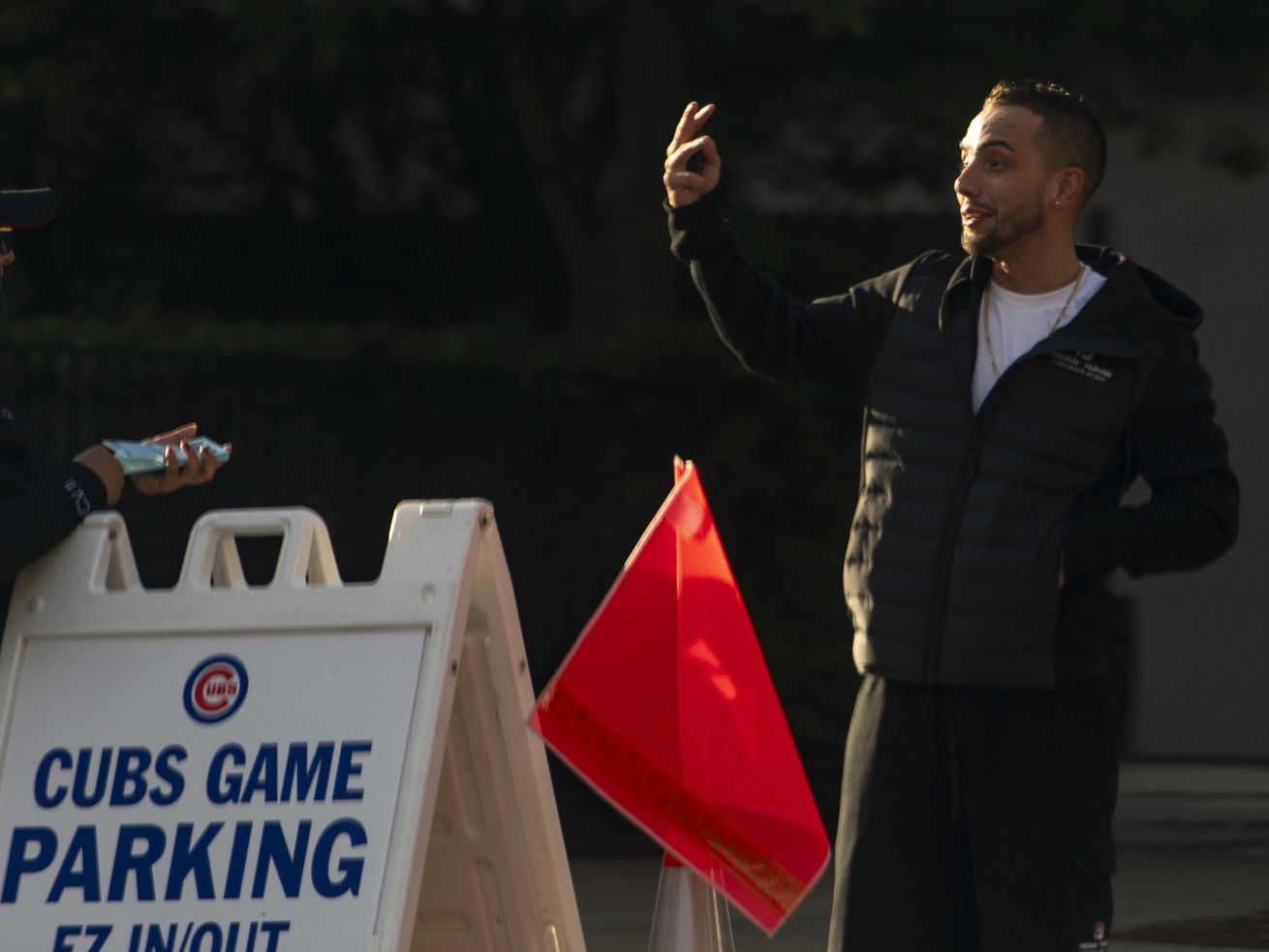
Premium 1 Parking owner Dylan Cirkic at a Chicago Public Schools owned-lot at 3830 N. Southport Ave. during a Cubs game Monday night. | Tyler LaRiviere / Sun-Times
School system replaced parking operator who was indicted with one that’s in arrears to the city and repeatedly has been cited for violations. It also bounced 2 checks to City Hall.
The last time the Chicago Public Schools system agreed to lease some of its school parking lots to a company that would then charge people to park there during nearby sporting events, things didn’t end well.
The clout-heavy company that had that deal for nearly a decade kept charging for parking at those school lots but stopped paying, according to CPS. It sued the company — which the Chicago Sun-Times found had a convicted child sex offender parking cars for a Cubs game while kids played nearby on the school’s busy playground.
Soon after CPS sued, the company’s owner was indicted in an unrelated federal bribery case.
So CPS went looking for somebody else who’d pay to get the lucrative business. Several clout-heavy companies wanted in.
But the one that CPS chose, Premium 1 Parking Inc., owes the city tens of thousands for unpaid taxes and fines, has been in arrears for three years and doesn’t have all of the required city business licenses, records show.
Under Premium 1 Parking’s current contracts with CPS, which took effect April 1, the company agreed to pay about $13,000 a month to use 10 school lots near Wrigley Field and other busy neighborhoods.
Premium 1’s city licenses for valet parking and for garage parking — required for using the school lots — have been placed “on hold” by the city Department of Business Affairs and Consumer Protection as of April 30. The city says that means the company won’t be able to renew those licenses or obtain new ones until its debts are paid.
And city inspectors cited Premium 1 in March for “operating without the required public garage license” at 10 schools.
In December, city officials agreed to put Premium 1 on a 24-month payment plan to pay off $45,000 it owed for unpaid valet parking taxes and fees resulting from 52 administrative violations dating to 2018 — including fees for twice bouncing checks it used to pay the city.
But, aside from a $20,000 payment on Dec. 14, owner Dylan Cirkic hasn’t made any of the $1,000-a-month payments he agreed to, according to City Hall. That’s what triggered his company’s latest license problems.
“No other payment was remitted beyond the initial down payment,” says Kristen Cabanban, spokeswoman for Mayor Lori Lightfoot’s city law department.
Cirkic, who started Premium 1 in 2016, disputes that he’s in arrears to City Hall, saying, “I don’t owe any money.”
CPS was still allowing his company to charge people up to $40 as recently as Monday to park on school property during a Cubs home game.
But Cirkic’s company owes CPS “approximately $23,000 in rental fees, plus late fees and applicable revenue fees,” having missed payments in April and May after paying a total of $77,300 to 10 CPS schools prior to that, according to schools spokesman James Gherardi.
Gherardi says CPS could dump Premium 1 after June 10 if it doesn’t pay up and then would “launch a competitive bidding process for parking lot rentals to ensure schools have the highest possible potential revenue streams.”
He says CPS “was not aware of serious concerns with the vendor when it entered into its agreement. And when discussing repayment, the vendor misled the district and provided false information regarding its accounting, which is completely unacceptable.”
Tyler LaRiviere / Sun-TimesParking attendants with Premium 1 Parking flag drivers during a Cubs home game Monday to park in a garage at 808 W. Addison St. that InterAmerican Elementary Magnet School shares and that it leases to the company.
For over a decade, CPS has let principals bring in extra money for their schools by leasing their parking lots and auditoriums for use when school’s not in session and kids aren’t in their buildings. Each school gets to keep whatever money it brings in, with the deals all vetted by the school system’s central office downtown.
The leases can be lucrative for schools near the ballparks and United Center — areas that generally are wealthier and more heavily white than the city as a whole.
Other schools have gotten smaller payments by leasing space for nearby restaurants and churches to use.
During the 2010s, the company leasing the most school lots was Blk & Wht, a business owned by James T. Weiss — who’s former Cook County Assessor Joseph Berrios’ son-in-law and a friend of the Daley family — and Iman Bambooyani, who also operated The Raw Bar near Wrigley Field.
Blk & Wht had contracts for parking cars at as many as 11 schools, agreeing to pay $2.1 million from April 2018 to the end of 2020 — including $1.1 million to a single school, InterAmerican Elementary Magnet School, near Wrigley Field.
Then, in April 2019, Blk & Wht stopped paying to use lots at three schools nearest Wrigley Field, according to CPS, which sued.
On Nov. 19, 2019, Weiss told CPS he no longer would be parking cars on school property, breaking his contract — but he continued parking cars on one of the school lots for another month, according to CPS’s lawsuit.
Weiss broke his contract six days after his offices were raided by federal authorities as part of an investigation of then-state Rep. Luis Arroyo, a Chicago Democrat who later was charged with paying a bribe to then-state Sen. Terry Link to support legislation to legalize video gambling machines in towns that ban such gambling.
Its lawsuit against Weiss’s company still in the courts, CPS says Blk & Wht owes it about $366,000.
InterAmerican used to count on getting hundreds of thousands of dollars a year by leasing its parking lot and the garage it shares with the Chicago Police Department’s 19th District station on Addison Street. The school had been getting $381,000 a year that it used to hire extra teachers, according to Carolina Barrera-Tobón of InterAmerican’s Local School Council.
“The effects of those funds no longer being available is still hurting our community,” Barrera-Tobón says. “Those parking garage funds have historically been used to fill extra ‘specials’ positions and a climate and culture position.”
Eager to keep the parking revenue coming in for its schools, CPS sought bids for 11 lots not long before the coronavirus pandemic hit and tanked the economy.
CPS’s procurement department told prospective bidders to certify that they “are not in arrears or default with CPS” and would pay the costs of the required insurance, background checks and city permits.
In February 2020, Premium 1 put in the biggest offer by far to snag the parking deal — at least $800,000 to cover the period from March through December.
Among the seven other bidders that tried to get the CPS parking business was LAZ Parking, which has the city’s parking-meter deal.
Another company, One Parking, at one point was offered the InterAmerican school contract, according to InterAmerican’s Local School Council. But CPS canceled that deal and other school rentals after COVID closed the schools and “decimated the sports and restaurant parking market and was especially devastating near Wrigley Field,” Gherardi says. “We are pursuing much more limited licenses with short terms until the market improves.”
Cirkicand his lawyer William J. Didier said in documents filed with his bid that Premium 1 had parked cars at Hawthorne Elementary School in Lakeview in 2017 and 2018.
Apart from leasing the school lots, Premium 1 also handled valet parking at pricey Loop and River North restaurants and at Barney’s until the pandemic shut down the luxury department store adjacent to the Magnificent Mile for good.
The parking deals with private businesses led to trouble for Premium 1. In 2019, city inspectors cited the company for engaging “in deceptive practice by offering/conducting valet parking services at 15 E. Oak St. for Barneys New York to consumers without first obtaining the required city of Chicago valet parking license.”
According to city records, Premium 1 also parked cars elsewhere without having valid licenses from the city or insurance and illegally parked a customer’s Lexus in a tow zone at 338 W. Belden Ave. while handling valet parking at 2300 N. Lincoln Park West for a nearby restaurant.
Premium 1 parking attendants also were accused, according to city records, of showing city inspectors expired licenses or licenses from competitors they used to work for.
In 2019, its workers outside the Italian Village restaurants in the Loop were cited for pretending to be working for a company called Priority Parking.
The fines piled up. Twice when Premium 1 tried to pay, its checks bounced.
Still, CPS stuck with Premium 1, though by the time schools officials negotiated new parking contracts last September, they agreed to accept about $13,000 a month for 10 schools — far less than the $84,000 a month that Premium 1 had offered to pay pre-pandemic.
From April 1 to June, schools officials allowed Premium 1 to extend its contracts even though the company’s parking licenses were suspended for failing since December to make the monthly payments it agreed to give City Hall under its payment plan.
Dan O’Conor, who calls himself the Great Lake Jumper, dives into Lake Michigan near Montrose Harbor while guitarist Cam Mahai sings “EndTimes.” | Ashlee Rezin Garcia / Sun-Times
Nearly a year ago, before he became the Great Lake Jumper, Dan O’Conor was just a guy with a hangover and a need to clear his mind, like a lot of us then, really.
Dan O’Conor had no grand plan or higher purpose when he rode his bicycle from his home in Lincoln Square to the lakefront last June 13 and jumped into Lake Michigan.
He had no thought of becoming the Great Lake Jumper, the crazy guy who would jump into the lake every single day for a year, no matter the conditions, drawing attention to the plight of musicians and music venues hurt by the coronavirus shutdown.
No, back then, O’Conor was just a guy with a hangover and a need to clear his mind of the pandemic and the politics and all of the other stuff weighing on him, the same stuff weighing on most of us then, really.
It worked.
The water was refreshing, and O’Conor felt rejuvenated.
So he came back the next day and the day after that. It wasn’t until the fourth day that he took a photo of the lake and posted it to Twitter to chronicle the fact.
He didn’t start making videos until the streak hit Day 120. And it was yet another week after that before he began recording his actual jumps — with his camera phone perched in his shoe, which served as a tripod.
That attracted the attention of a reporter from Block Club Chicago, which helped make O’Conor a media star, his exploits quickly spreading to radio and television.
Still, in that first interview, O’Conor said he had no intention of continuing through the winter when the lake froze over. I mean, who would do a crazy thing like that?
By then, O’Conor had become a thing. And a thing needs a higher purpose.
“People kept asking: What is this benefiting? How can I support it?” O’Conor says.
The honest answer was that it was benefiting O’Conor and his mental health. But he realized that probably wasn’t enough.
His wife Margaret, who runs a neighborhood food pantry and knows well her husband’s passion for live music, offered a suggestion: “You should have people serenade you in the lake.”
O’Conor keeps a spreadsheet of the more than 6,800 musical acts he’s seen perform, beginning with Alice Cooper at ChicagoFest in 1980. He used to work for SPIN, the music magazine, starting as a writer before moving on to ad sales. These days, he drives a paratransit van in the suburbs and sometimes a limo.
So O’Conor teamed up with his friends at CIVL, the Chicago Independent Venue League, figuring he could promote the organization’s emergency relief fund to help furloughed staff, artists and performance venues.
As his videos chronicle, O’Conor, 53, didn’t stop jumping into the lake when it froze over or when winter waves threw car-size chunks of ice onto the shoreline.
Instead, he’d hack a hole in the ice using shovels, hammers, even a bowling ball attached to a chain to keep his streak going, moving his jumps inside Montrose Harbor only when safety demanded.
Since mid-January, musical accompanists have regularly joined O’Conor for his lake jumps, everyone from a woman playing a washboard to the 15-piece Mucca Pazza band.
In the videos, you can see the musicians play as O’Conor comes from off-screen and dives into the water.
Ashlee Rezin Garcia / Sun-TimesDan O’Conor in his Great Lake Jumper robe.
What O’Conor’s diving lacks in style, he makes up with enthusiasm. His best dive is a front somersault — a throwback to growing up in Buffalo Grove, attending Wheeling High School and playing football well enough to make the Sun-Times’ all-state team in 1985.
At this point, it should be simple for O’Conor to keep going through June 12, which will be Day 365.
He isn’t saying for sure he’ll quit that day. But he’s got a family vacation scheduled for July on Cape Cod, so it will end.
On Wednesday, Day 341, O’Conor jumped from the point beyond Montrose Harbor, with guitarist Cam Mahai alongside wearing a red clown nose and singing “EndTimes.”
O’Conor’s 19-year-old son Keith was there, as he has been for most of his dad’s jumps since the start of winter, when Margaret insisted that O’Conor not go out there alone.
“It’s incredible, a little bit inspiring, the commitment,” Keith says of his dad. “He has not missed a day, and I’ve witnessed that. That’s definitely changed my view on how motivated you can be for anything.”
Who is to say where the boundary of perseverance, commitment, determination and obsession lies? Not me.
O’Conor climbs from the water in his Motorhead swim trunks, and he smiles a genuine smile beneath his drooping handlebar moustache.
Two teenagers were wounded, one critically, in a shooting early Friday night in Gresham on the South Side.
The pair were sitting in a living room of a home about 1:10 a.m. in the 7900 block of South Laflin Street when someone fired shots from outside, Chicago police said.
An 18-year-old man suffered gunshot wounds to the abdomen and back, according to police. He was taken to Christ Medical Center in Oak Lawn in critical condition, police said.
A 19-year-old man suffered a graze wound to the arm and was transported to Holy Cross Hospital in good condition, police said.
There is no description of the shooter and no one in custody, according to police.
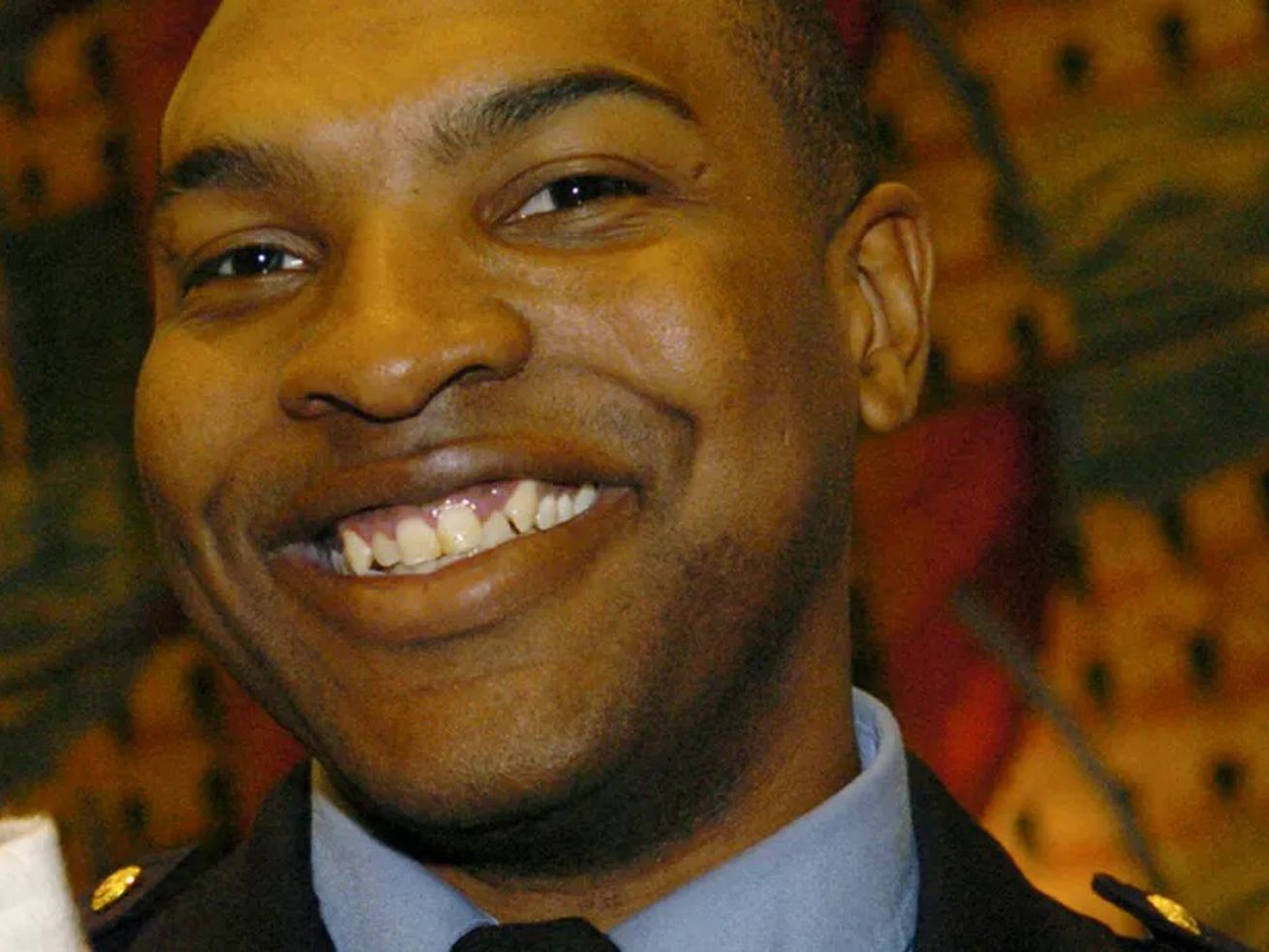
The Chicago Police Board voted Thursday to restore Officer Clauzell Gause to his position. | Sun-Times file photo
In a 5-3 vote during their monthly meeting Thursday, the board passed a motion declaring Officer Clauzell Gause not guilty of making a false statement regarding his use of force and to restore him to his position.
The Chicago Police Board has voted to clear a veteran police officer accused of lying to investigators after video surfaced that appeared to show the officer punching a handcuffed man at a South Side Hospital nearly seven years ago.
In a 5-3 vote during their monthly meeting Thursday, the board passed a motion declaring Officer Clauzell Gause not guilty of making a false statement regarding his use of force and to restore him to his position.
The Civilian Office of Police Accountability recommended Gause be fired last year for allegedly lying to investigators about the incident. He had also been hit with felony misconduct charges, but those were dropped by the Cook County state’ attorney’s office in 2019.
The confrontation happened June 3, 2014, when then-24-year-old Rayshon Gartley was taken to Jackson Park Hospital for a mental health evaluation. Prosecutors said Gause was seen on surveillance footage punching and shoving Gartley, who was restrained and handcuffed at the hospital.
Gause omitted from a report that Gartley was handcuffed when he punched him, according to a document outlining the charges. Gause also told COPA investigators in an interview that he didn’t make contact with Gartley’s face or head, the document states.
But hospital surveillance video allegedly captured Gause, who was in uniform, holding Gartley’s arms behind his back and shoving him against a wall, causing him to bounce back toward the officer, prosecutors said. Gause then appeared to punch Gartley in the face with a closed fist.
It was not the first time Gause had been accused of misconduct while wearing a CPD uniform. At least 14 complaints have been filed against him, according to the Citizens Police Data Project.
Gause was also one of 11 Chicago police officers named in a federal lawsuit filed by Jerome James, who accused the officers of using excessive force after he was arrested outside a White Castle restaurant in December 2013.
According to the suit, James was throwing something in a trashcan outside the restaurant in Rosemoor when officers who were waiting for food took him into custody “without any probable cause that a crime had been committed.”
While James was being held at the Calumet District station, he asked the officers why he was being held, causing the officers to assault him, the lawsuit states.
The officers allegedly used “brass knuckles” to punch him in the face, hurled racial epithets at him and ripped the clothes off his body, leaving him naked for “several hours,” the suit states.
James was taken to Roseland Community Hospital, but only after another detainee alerted a supervising officer that James needed medical attention, the suit alleges.
The city settled the lawsuit for $60,000 in December 2015, records show.
State Sen. Darren Bailey, R-Xenia, left, earlier this month; State Sen. Mike Simmons, D-Chicago, right, in February. | Facebook; Ashlee Rezin Garcia/Sun-Times file
The Senate bill on sex education seeks to standardize the curriculum in Illinois schools, ensuring each grade “has the opportunity to be safe and … have access to age- and developmentally appropriate and medically accurate information,” according to the bill’s sponsor, state Sen. Ram Villivalam, D-Chicago.
SPRINGFIELD — Two of the state Senate’s newest members — the chamber’s first LGTBQ senator and a Republican farmer from southern Illinois — clashed Thursday over legislation meant to standardize sex education curriculums in the state.
State Sen. Darren Bailey, a downstate Republican running for governor, accused the bill’s Democratic sponsors of “pushing perversion in our schools.”
North Side state Sen. Mike Simmons, who is gay, called Bailey’s remark “deeply offensive” and asked that it be stricken from the record.
In the House, members advanced legislation that would require menstrual hygiene products to be available in bathrooms in every school building, male and female — a bill that also prompted a heated verbal exchange.
The Senate bill on sex education seeks to standardize the curriculum in Illinois schools, ensuring each grade “has the opportunity to be safe and … have access to age- and developmentally appropriate and medically accurate information,” according to the bill’s sponsor, state Sen. Ram Villivalam, D-Chicago.
Starting in second grade, students would learn to define consent, gender identity, and different types of families, including cohabitating and same-sex couples. Villivalam said those standards help students “understand a healthy relationship.”
Rich Hein/Sun-Times fileState Sen. Ram Villivalam in 2018.
But Bailey objected.
“Teachers who work hard to teach our kids about proper education have absolutely no reason in teaching this … absolute nonsense,” said the Republican from downstate Xenia, a former House member elected to the Senate in November.
In a statement following the vote Bailey denied his remark about “perversion” referred to teaching students about same-sex relationships.
“It’s a bill teaching children sexual acts and more that should not be taught in public schools,” he said. “[The Democrats] know it’s wrong and they don’t want parents to actively know what they’re trying to make our schools teach their kids.”
Other Republicans in the chamber said that the standards in the bill were being pushed by “dark money” abortion rights groups that support educators providing graphic images to minors.
Ted Schurter/The State Journal-Register via AP fileThen state Rep. Darren Bailey, R-Xenia, speaks at a protest against Gov. J.B. Pritzker’s stay-at-home order in Springfield last year.
“One of the organizations that’s advocating for this, a portion of their curriculum has photographs that 10-year-olds will be looking at with complete frontal nudity including pubic hair — both male and female – [and] one picture that has a male erection,” said state Sen. Terri Bryant, R-Murphsyboro.
Simmons, who was appointed to the state Senate in February, did not respond to a reporter’s request to elaborate on his understanding of Bailey’s remarks.
But state Sen. Celina Villanueva, D-Chicago, said that she had worked as a sexual health educator and that “misinformation and a lack of knowledge for our students” leads to serious consequences.
“I’m not going to allow it to happen when people decide that they want to call this bill ‘perversion.’ Because let’s be completely honest, when you use your Trumpian talking points about a bill teaching children about their body and [would] also educate them about the predators that actually exist in this world — you’re just using them to get a soundbite.”
The bill passed in a partisan 37 to 18 vote and advanced to the House.
That chamber saw its own verbal fireworks over a bill that would require menstrual hygiene products to be made available “in bathrooms of every school building that are open for student use in grades 4 through 12 during the regular school day,” according to a synopsis of the bill.
State Rep. Barbara Hernandez, D-Aurora, said the bill is important to young “menstruators who are not able to purchase products, and they need this as an emergency situation.”
Rich Hein/Sun-Times fileState Rep. Barbara Hernandez, D-Aurora, last year.
State Rep. Andrew Chesney, R-Freeport, asked Hernandez “why you feel it’s appropriate to put menstrual products in a male bathroom?”
“As a male who did go to a public high school, as a male who went to bathrooms from sixth grade to 12th grade, I can promise you, not one of my male friends ever needed these, and I would really appreciate if the sponsor would stay the hell out of my bathrooms, and I promise her I will stay out of hers,” Chesney said.
Despite the division, the bill passed 68 to 43 with seven members not voting.

:no_upscale()/cdn.vox-cdn.com/uploads/chorus_asset/file/21750357/maudlogo2_e1529693044957.0.jpg)
:no_upscale()/cdn.vox-cdn.com/uploads/chorus_asset/file/22528340/merlin_97610842.jpg)
:no_upscale()/cdn.vox-cdn.com/uploads/chorus_asset/file/22513442/merlin_97610858.jpg)
:no_upscale()/cdn.vox-cdn.com/uploads/chorus_asset/file/22521534/merlin_97699350.jpg)
:no_upscale()/cdn.vox-cdn.com/uploads/chorus_asset/file/22514020/merlin_97624216.jpg)
:no_upscale()/cdn.vox-cdn.com/uploads/chorus_asset/file/22517470/Phillip_Scott_Sinclair_closed_on_his_first_home_on_May_11__2021__with_the_help_of_a_new_JPMorgan_Chase_program_offering__5_000_grants_in_communities_of_color.jpg)
:no_upscale()/cdn.vox-cdn.com/uploads/chorus_asset/file/22513577/Patrice_Darby_Neely__Founder__CEO__GoLogic_Solutions.jpg)
:no_upscale()/cdn.vox-cdn.com/uploads/chorus_asset/file/22513943/merlin_97610860.jpg)
:no_upscale()/cdn.vox-cdn.com/uploads/chorus_asset/file/22514022/merlin_97610862.jpg)
:no_upscale()/cdn.vox-cdn.com/uploads/chorus_asset/file/22517797/Eddie_Bocanegra__Senior_Director__READI_Chicago__with_program_participants__2019.jpg)
:no_upscale()/cdn.vox-cdn.com/uploads/chorus_asset/file/22528315/Eddie_Bocanegra__Senior_Director_2__READI_Chicago.jpg)

/cdn.vox-cdn.com/uploads/chorus_asset/file/22528248/Yoshi_Yamada_7.jpg)
/cdn.vox-cdn.com/uploads/chorus_asset/file/22528260/Yoshi_Yamada3.jpg)
/cdn.vox-cdn.com/uploads/chorus_asset/file/22528262/0_2.jpg)
/cdn.vox-cdn.com/uploads/chorus_asset/file/22528300/182350872_10216994685453232_975306688080990922_n.jpg)
/cdn.vox-cdn.com/uploads/chorus_asset/file/22528302/184965236_10217034399366055_5677680897990923799_n.jpg)
/cdn.vox-cdn.com/uploads/chorus_asset/file/22528965/WATCHDOGS_05XX21_1.jpg)
/cdn.vox-cdn.com/uploads/chorus_asset/file/22529032/Aug_5_2018.jpg)

/cdn.vox-cdn.com/uploads/chorus_asset/file/22528187/BROWN_052321_05.jpg)

/cdn.vox-cdn.com/uploads/chorus_asset/file/22529793/2018CANDIDATES_491__1_.jpg)
/cdn.vox-cdn.com/uploads/chorus_asset/file/22529796/Virus_Outbreak_Illinois_Protest.jpg)
/cdn.vox-cdn.com/uploads/chorus_asset/file/22529905/2020PRIMARY_158.jpg)