Chicago’s most important news of the day, delivered every weekday afternoon. Plus, a bonus issue on Saturdays that dives into the city’s storied history.
This afternoon will be partly sunny with a high near 85 degrees. Tonight’s low will be around 69 with isolated showers. Tomorrow there will be isolated showers with a high near 86.
In two federal lawsuits filed today, Lake Forest High School faces accusations that two former teachers sexually abused students.
The suits were filed in Chicago by seven former students against the school and Lake Forest Community High School District 115. One also names former Lake Forest High School driver’s education teacher Cynthia Martin, and the other names former teacher David Miller as defendants.
The lawsuit accusing Miller says he targeted boys facing difficult circumstances at home to “groom and sexually abuse male students for nearly 35 years.”
In the other suit, Martin is accused of “using her home and the provision of alcohol to sexually abuse a female student.”
Both suits, which seek unspecified monetary damages, say school officials were aware of the allegations and did nothing.
Rose and Monty, the piping plover pair who became famous in Chicago after mating on one of the city’s crowded beaches, are growing their brace.
The endangered birds have produced four eggs at their breeding grounds at Montrose Beach Dunes Natural Area on Chicago’s North Side.
A wire enclosure protects the nest and eggs from predators. Monty and Rose can freely enter and exit to take turns incubating their eggs.
Monty, a piping plover, sits on the eggs in a wired enclosure put up by U.S. Fish and Wildlife Services to protect the nest from predators. Ashlee Rezin Garcia/Sun-Times
With teammates rallying around Yermin Mercedes and vowing not to let the flap involving manager Tony La Russa distract them, the White Sox are like a band of brothers, Daryl Van Schouwen writes.
As city aldermen attempt to corral rogue tow truck drivers, we want to know: What do you think about the tow truck industry in Chicago?
Reply to this email (please include your first name and where you live) and we might feature your answer in the next Afternoon Edition.
Yesterday, we asked you to tell us about when you adopted a pet and explain how you knew they were the one. Here’s what some of you said…
“My husband and I went to Chicago Animal Care and Control to find a cat. We didn’t want a kitten. My husband was suffering from depression and the doctor suggested a pet. We were walking through the cat area and all of a sudden a paw shot out of a cage and stopped Joe in his tracks. Harry rubbed up against the cage and wanted Joe to pet him, purring away. The volunteer took Harry out and he climbed right in Joe’s arms. He chose us. He was Joe’s buddy for years. When Joe passed away Harry and I mourned together. He is now my baby!” — Roberta Nunziato
“Our friend was moving to an apartment where she could not have her dog. We helped her, and the pup instantly became a part of our family. Little did we know three of our dogs would die within two years. So this dog became the love we needed at that time.” — Donna Schraeder
“Molly was 3 months old when I got her, and she was classified as a male at first (that’s how overlooked she was). They had us choose three dogs to meet and I saw this small little thing huddled behind all the dogs jumping around. She peeked through and saw me, wiggled out and came up to the glass. Had to meet her. They have you sit in a room and bring in each dog separately, letting the dog come up to you and see if there’s something there. The first two dogs were sweet and all, but when Molly came in she ran straight to me like she knew me. I mean, instant connection. She had scars all over her face and had that scared look in her eyes constantly, just a quivering mess under my legs. But the people there said it was the most out of her they had seen. My girl will be eight in October. She’s still afraid of loud noises and big balloons among other things but she’s the best companion ever.” — Andrew Malort
“While waiting for her adoption paperwork to get approved, my favorite song (which is not popular or well known) started playing. I knew immediately it was meant to be.” — Angie DeRosa
Thanks for reading the Chicago Afternoon Edition. Got a story you think we missed? Email us here.
On the second anniversary of her taking office, Chicago Mayor Lori Lightfoot committed a heinous sin. She spoke the truth.
Last week, Lightfoot sparked a firestorm over the lack of diversity in the media, declaring that on her anniversary day, she would grant one-on-one interviews only to journalists of color.
“I ran to break up the status quo that was failing so many. That isn’t just in City Hall,” the mayor tweeted Wednesday. “It’s a shame that in 2021, the City Hall press corps is overwhelmingly White in a city where more than half of the city identifies as Black, Latino, AAPI or Native American.”
In-depth political coverage, sports analysis, entertainment reviews and cultural commentary.
It’s an abiding shame long borne by national and local media. So, it’s no surprise that Lightfoot’s decision drew widespread, national scorn in the media. The so-called truth tellers did not want to hear it.
Fox News Host Tucker Carlson blared that Lightfoot was racist, likened her to Adolf Hitler and called he “a monster.”
The pleas and promises for more newsroom diversity are decades old, but the progress falls short.
In 1978, the American Society of Newspaper Editors pledged that the percentage of minorities working in newsrooms would be at parity with the nation’s minority population by the year 2000. That goal was missed and reset for 2025. Broadcast news organizations are similarly challenged.
Today, that aim is more elusive than ever. The crush of media consolidation and digital transformation in the media has crippled diversity efforts. Friday’s news that the “vulture” hedge fund Alden Global Capital has acquired Tribune Publishing will certainly hurt.
While high-profile and powerful elected officials stepping up to this bully pulpit is nothing new, they are most welcome.
In the mid-1980s, the Rev. Jesse Jackson and his Operation PUSH pounded away at that cause. For four months, PUSH picketed the headquarters of WBBM-TV, to protest the demotion of its respected Black anchor, Harry Porterfield.
CBS-TV eventually cried “Uncle!” and hired the station’s first African American station manager.
Harold Washington, Chicago’s first Black mayor, frequently called out the media for the whiteness in the City Hall press room.
Now Lightfoot, the first Black female and openly lesbian mayor of this minority-majority city, is entering the fray.
So, for one day, just one day, white reporters did not get their usual VIP access to a mayor. They’ll live.
For thousands upon thousands of days, journalists of color have been living with the reality that they are usually left off the bus.
As Lightfoot notes, the disparities go beyond an elite assemblage of reporters who cover the mayor. The “overwhelming whiteness and maleness” she describes extends to management, editorial boards, specialty reporters and more.
The media cannot claim to cover communities of color fairly and accurately unless they staff that coverage with diverse voices and lived experiences.
Some of Lightfoot’s critics say she is trying to change the subject from reporting on her mayoral shortcomings. If so, that certainly didn’t work.
Others suggest that Lightfoot was looking for “softball” coverage from unqualified journalists of color. That didn’t work either. The suggestion is insulting.
Those beside-the-point arguments are exactly why Lightfoot’s stand matters. A year into America’s national reckoning on race, there is no better time to insist that our storytellers represent America’s rainbow.
Chicago’s press corps — white, Black Latino, Asian, all — are among the best of the best. They should and will continue to hold the Lightfoot administration accountable.
While we are at it, we must hold our profession accountable, too.
Golfers call Fore! to make others aware of mis-hit balls. Etiquette is less clear on what to do when a four-door Lincoln sedan is barreling across fairways and doing doughnuts on greens.
Such was the case about 10 a.m. Thursday at Jackson Park Golf Course when a 37-year-old man drove a car onto the South Side course and cruised around for about 20 minutes before police stopped him.
All the while, stunned golfers looked on.
Officers, lights and sirens activated, pulled over the man on the course and, guns drawn, arrested him.
“I was like ‘Oh s—! This guy’s driving on the course,'” said Brian Pino, 41, who was about to putt for a birdie when the man drove on the green next to his ball and right over the flag.”
“He was as calm as an old lady in a parking lot trying to find a space.”
Allan Ryan was about to hit a 3-wood when he looked up in disbelief.
“There’s this car going across the fairway running over the 150-yard marker,” said Ryan, a retired business executive from the North Side.
Tanisha Wembley was scolding a man who didn’t pick up his dog’s poop along a sidewalk that borders the golf course along 67th Street when she looked up and saw police, guns drawn, yelling “Get out of the car! Get out of the car!”
The man complied.
“And all the people playing golf continued playing golf as this was happening and were just kind of looking over like ‘Wow! Entertainment!'” said Wembley, 49, who was in the neighborhood visiting a friend.
A golf course employee followed the man in a golf cart.
Police investigate after a man drove onto Jackson Park Golf Court Thursday.Provided
“But there wasn’t much I could do,” he said.
The car also drove over a soccer field adjacent to the first hole and plowed through the net of a goal.
“Thank God there weren’t kids playing out there,” said the employee.
The driver, Scott Chapman, whose home address is about four blocks south of the golf course, was charged with criminal damage to property and simple assault because he drove his car at an employee, said Sally Bown, a spokeswoman for the Chicago Police Department.
Calls to Chapman went unanswered Friday.
No one was injured.
“He kind of ripped up one of the greens a little bit, so the groundskeepers were a little upset,” Bown said, noting there was about $10,000 in damage.
A golfer plays at Jackson Park Golf Course on Friday, a day after a man drove onto the South Side course.Pat Nabong/Sun-Times
It’s unclear why he did it, Bown said.
Pino, who shot a video of the incident on his phone, said it was a wild round of golf but it didn’t affect his game.
“You know what’s funny, I shot the best round of my life,” he said.
Fifty years ago, vibrating with agitation and energy, Marvin Gaye headed down the wood steps into a Detroit studio and made his anthem for the ages.
“What’s Going On,” a poignant musical masterpiece crafted in a season of unease, persists as a timely backdrop to another heated time, half a century later, when the world feels upside down.
Racial tensions, police controversy, environmental anxieties, a globe on edge — they were the topics on the front burner when Gaye rebooted his musical career and took control of his creative vision inside Motown.
His voice — voices, actually — hit the tape the second week of July 1970.
“There’s too many of you crying … there’s far too many of you dying …”
The song with the silky, layered vocals and an emphatic protest message was topical when Gaye cut it in 1970. It was still relevant when a newly freed Nelson Mandela recited its lyrics for a packed Tiger Stadium in 1990. And it resonates in 2021, in the wake of George Floyd’s death by police.
“In these times of crisis and challenge, we still go to those lyrics for strength,” said Detroit author and historian Ken Coleman.
The making of “What’s Going On” is a pillar of Detroit music lore.
Three years after the 1967 riot and rebellion that transformed his adopted hometown, the 31-year-old Gaye was in a deep and evolving head space. Shaken by the death of singing partner Tammi Terrell, haunted by the Vietnam War stories of his younger Army vet brother, Gaye was an emotional lightning rod waiting to be zapped with creative energy when Motown’s Obie Benson and Al Cleveland brought him their new composition about troubles across the land.
His textured recording was constructed over a series of sessions in 1970: the instrumental foundation in June, the vocals in July, the Detroit Symphony Orchestra’s sweetener in September. “What’s Going On” then sat for several months, a hot potato for Motown Records brass who fretted it was too controversial.
When the single finally went public in January 1971, it was an instant, massive hit. A full album was quickly commissioned, and four months later, Gaye’s groundbreaking LP of the same name was out.
The “What’s Going On” single, which reached No. 2 on the Billboard pop chart, was a mainstream breakthrough for conscious soul music. Its stature remains immense — Rolling Stone ranks it No. 4 on its “500 Greatest Songs of All Time” list — and it set the stage for themes now essential to hip-hop, resounding through artists such as Kendrick Lamar, Meek Mill and Joey Badass.
“It allows someone experiencing oppression and trauma — all these tragic moments that the government is often ignoring — to just ask the questions,” said Eldric Laron, a Detroit musician and spoken-word artist. “It’s so relevant today because that’s what a lot of us are doing. We’re asking questions before acting: the whats and whys and whos and whens. Saying ‘what’s going on?’ is a good starting point for yourself.”
And Gaye’s song, he says, has special meaning as a homegrown treasure.
“Being in Detroit, which is birthed from arts and Black experiences and Black stories, it reminds me of how blessed I am to be a Black man from such a city. I could have been born anywhere,” said Laron. “The song allows me to remind myself of my own power and uniqueness.”
“What’s Going On,” with the silky, layered vocals and an emphatic protest message was topical when Marvin Gaye cut it in 1970. And it resonates in 2021, in the wake of George Floyd’s death by police. BPI
To say “What’s Going On” captured a moment doesn’t entirely do it justice. The song is certainly of its time, a snapshot of a strained America as the ’60s bled into the ’70s. But unlike many other protest songs of the era, it shimmers with a spiritual quality. When it comes to endurance, the song is far more “We Shall Overcome” than “Eve of Destruction.”
Gaye’s masterwork is assertive but not aggressive. It’s as much pain as anger, as much news broadcast as sermon. Like the best popular music through the decades, it achieves the universal by going personal — addressed to “mother,” “brother,” “father,” “babe.” The song is a call for tolerance, a plea for trust.
Gaye was the ideal messenger for that job. He wasn’t new to opening up emotionally: The Washington, D.C.-born artist made his name singing the ups and downs of romantic relations, including a hit two years earlier — “I Heard it Through the Grapevine” — that stood as Motown’s bestseller to that point.
Now he was directing that bold vulnerability to something bigger.
“He was highly sensitive. He would talk about being afraid,” recalled Louvain Demps, a member of the Andantes vocal group and a longtime friend of Gaye. “But to stand next to him, it was like he had all the confidence in the world. Like he wasn’t scared of anything.”
Some great music, like much important art, gets mythologized late. Courage is easy to endorse with the comfort of time.
But “What’s Going On” resonated immediately in its hometown in 1971, said Matt Lee, who grew up in Detroit and was close to co-writer Benson: “This thing lived and breathed right there and then.”
“It was Marvin’s statement of independence and artistic freedom,” Lee said. “But it was also a commentary on who we were, in real time. The impact of that record is impossible to overstate, not only in retrospect, but for what it meant at the time.”
The song had arrived “by some sort of divine guidance,” as Gaye told the Detroit Free Press in 1971.
Benson, on tour with his group the Four Tops, had conceived the song during a visit to San Francisco, where he watched police clash with hippie protesters.
As Benson reflected for Ben Edmonds’ 2001 book, “Marvin Gaye: What’s Going On,” an indispensable account of the song and album:
“The police was beatin’ on them, but they weren’t bothering anybody. I saw this and started wondering what the (expletive) was going on. What is happening here? One question leads to another. Why are they sending kids so far away from their families overseas? Why are they attacking their own children in the streets here?”
Back in Detroit, Benson fleshed out his creative kernel with Motown house writer Al Cleveland. Benson’s own Four Tops didn’t want the song and he thought it would be perfect for Gaye.
Feeling through the composition in the living room of the latter’s northwest Detroit house — Benson on guitar, Gaye on piano — Gaye was moved, but was eager to present it to the Originals, a Motown group he was now producing.
Benson pressed his case: This piece was perfect for Marvin. It needed to be his. He offered Gaye a songwriting credit.
“Marvin already felt like this,” Benson told Edmonds. “He was a rebel, and a real spiritual guy.”
Gaye relented, committed and promptly “fine-tuned the tune,” as Benson put it, tacking on jazzy flourishes and a sense of realism.
“He added some things that were more ghetto, more natural, which made it seem more like a story than a song,” Benson said. “He made it visual.”
Then a decade into his Motown tenure, Gaye was at a career crossroads, restless to grow. Inside the studio that summer, he took firm control of the recording process: With this new song at hand, he had the opportunity to make not just a social statement, but a musical declaration — a sophisticated step forward.
Unable to read or write music, Gaye detailed his sonic vision to jazz arranger Dave Van De Pitte, who set about translating to the musicians. As chronicled in Michael Eric Dyson’s book “Mercy, Mercy Me,” the “weed smoke was thick” in the studio nicknamed the Snakepit as the Funk Brothers laid down the track’s instrumental bed on June 1.
The open spirit produced some happy accidents, including the distinctive opening sax line by Eli Fontaine — plucked from his warm-up noodling.
In July, Gaye did four days of vocal work, stumbling onto an effect that would become his signature production technique.
Having cut multiple lead vocals, Gaye asked engineer Ken Sands to create a stereo tape with two strong takes — one in the left channel, one on the right — so he could take notes. While the singer listened, Sands inadvertently switched the playback to mono. A pair of velvety Marvin Gaye voices now rode along together.
“That’s where the multiple lead vocals came from,” said engineer Bob Olhsson. “He liked the sound of both. It was a process. You don’t preconceive that it’s going to be like this. You don’t know where it’s going to go.”
More voices were recorded that week in July, including a track of party chatter by a group of friends that included Detroit Lions Lem Barney and Mel Farr.
And then there was the background singing, added during an evening session with the Originals and the Andantes — the unheralded female trio whose voices adorned countless Motown hits.
Gaye set a fitting mood that night in the studio, soprano Demps recounted.
“By his request, we sang with the lights out,” she said. “That session was really different than any other, because there were a lot of specifics that he wanted. There were intricate notes that weren’t really easy to do. They were sounds in his head and heart. It was beautiful.”
On Sept. 21, the track got its final piece as musicians from the Detroit Symphony Orchestra recorded at Motown’s Studio B on West Davison.
“We knew it was something pretty special,” said Olhsson.
“What’s Going On” was richly Detroit. Gaye had been “all over the city, soaking up Detroit’s vibes and moods as he was recording,” wrote the Freep’s Bob Talbert, who was tight with Gaye at the time. With its seasoned jazz and big-band players, Motown’s ace Funk Brothers and the DSO, the track was a collective hometown feat.
“People always talk about various influences out of Detroit. This really was a hometown effort that went worldwide. It captured that community sensibility and coming-together during a challenging time,” said Chris Collins, a music professor and director of jazz studies at Wayne State University. “The production — the openness of the music involved — was a pretty spectacular example of what can come out of that.”
Collins said his 20-something son is enamored with the song and album.
“It’s in his musical life as a young person,” said Collins, also director of the Detroit Jazz Festival. “I think that speaks to the power and sincerity of that recording. It spans generation and communities.”
If Gaye was scanning the front pages of the Detroit Free Press landing on his doorstep in July 1970, he saw plenty of headlines setting the mood he would take to the vocal booth — a daily drumbeat of stories about protesters clashing with police, Detroit air pollution, congressional battles over the Vietnam draft. All there in a visceral black-and-white.
“What immediately strikes me about the time Marvin was recording and where we are in 2020 is that he uses the term ‘brutality,’ which is certainly front and center in the news today,” said Coleman, the Detroit historian. “Within that context, people like Marvin Gaye were saying ‘Black lives matter’ before it became part of the American lexicon.”
That forceful turn wasn’t met well by Berry Gordy Jr. Though Motown had recently hit big with a pair of politically tinged Norman Whitfield productions — the Temptations’ “Ball of Confusion” and Edwin Starr’s “War” — Gaye’s leap made the label chief nervous.
American soul singer Marvin Gaye visits the Mangrove Cafe in All Saint’s Road, London, in 1976, and is mobbed by admirers on the way out to his car.Getty Images
Gordy worried Gaye’s move into social commentary would derail a long-cultivated image as a romantic crooner. For 10 years, he’d had helped groom the mercurial singer into a suave star making the charts with the likes of “I’ll Be Doggone.”
In his 1994 memoir — where he owned up to his shortsightedness — Gordy recounted their contentious first phone call about “What’s Going On,” as Gaye declared his wish to “awaken the minds of mankind.” Gordy thought the idea was “crazy.”
He fought “What’s Going On” all the way through its release in early ’71, when the single was quietly greenlighted by several key Motown execs for a limited pressing.
Gordy’s issue with the track wasn’t just its lyrical theme. He may have regarded the music as too good for its own good. Musically, “What’s Going On” had a cosmopolitan feel that sent alarm bells ringing for an entrepreneur whose first musical venture was an east-side jazz-record shop that flopped.
“Berry actually thought it was a cool record. He just couldn’t see Marvin restarting his career,” said Olhsson. “In fact, if anything, Berry was hesitant about it because he was such a jazz lover. It’s almost like, if he liked something too much, he was afraid of it from a commercial point of view.”
While the parallels between now and 1970 are clear and daunting, there were changes afoot. Three years after Gaye’s recording, Detroit elected its first Black mayor, Coleman A. Young, who, in 1976, appointed the city’s first Black police chief. A civilian police commission — long called for by groups such as the NAACP — soon followed.
“That was revolutionary,” said Coleman. “And I think music like ‘What’s Going On’ helped people realize these changes could happen.”
With the 1980s and the rise of hip-hop, reports from the street and calls for justice became staple material.
At Wayne State, ethnomusicologist Josh Duchan’s course on 20th century popular music zeroes in on “The Message,” the pioneering 1982 rap hit by Grandmaster Flash and the Furious Five.
“A song like that — which is much more explicit in its lyrics — is kind of the extension of what Marvin Gaye and ‘What’s Going On’ did years earlier,” he said. “It’s looking around at the world and saying: These are not the conditions we all hoped for.”
Detroit poet Jessica Care Moore, author of “We Want Our Bodies Back,” teamed with techno music producers Jeff Mills and Eddie Fowlkes for “The Crystal City is Alive,” released last July.
They dubbed themselves “The Beneficiaries” — a nod to the Detroit greats whose legacy they’ve inherited.
“Artists who are radical don’t always get the record deals, the radio play, the attention,” said Moore. “Marvin’s piece did, and that was really remarkable.”
Like Gaye in 1970, Moore is fueled by the moment at hand. Having felt “frozen” during the first weeks of the COVID-19 outbreak — which hit Detroit early and hard — she said she has returned to the front lines of art, galvanized by Floyd’s death. Moore has been prolifically writing, frequently appearing online, and performing at one of comic Dave Chappelle’s socially distanced Ohio gatherings in June.
“There’s a lot of weight on artists,” said Moore. “We may not have Marvin Gaye now. But we have a lot of Marvin Gayes, speaking to the times and pushing culture forward.”
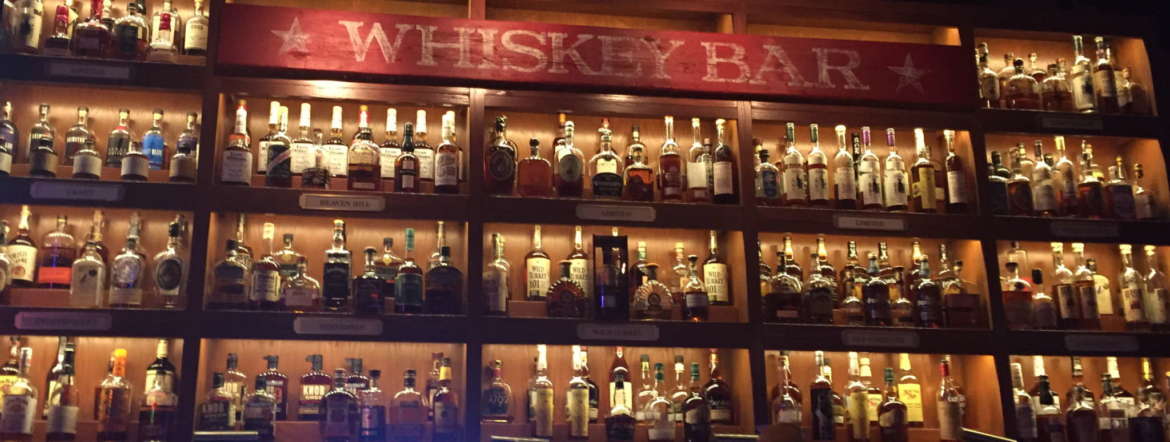
It wouldn’t be a true compilation of Chicago country bars without mentioning Bub City and Old Crow. Bub City, probably known to non-country fans as that BBQ place with the Christmas lights, also has a huge whiskey selection and their own house beer. Old Crow Wrigleyville (and its rooftop) has been successful enough to open a River North location in John Barleycorn’s old spot.
Both bars in Chicago have live music regularly and are usually one the first places someone will mention when you’re looking for a country bar. But they aren’t the only ones Chicago has to offer. For those still upset by the recent closure of long-standing dive bar, Carol’s Pub, this list is for you. Get your country fix at these other Chicago country bars.
Advertisement
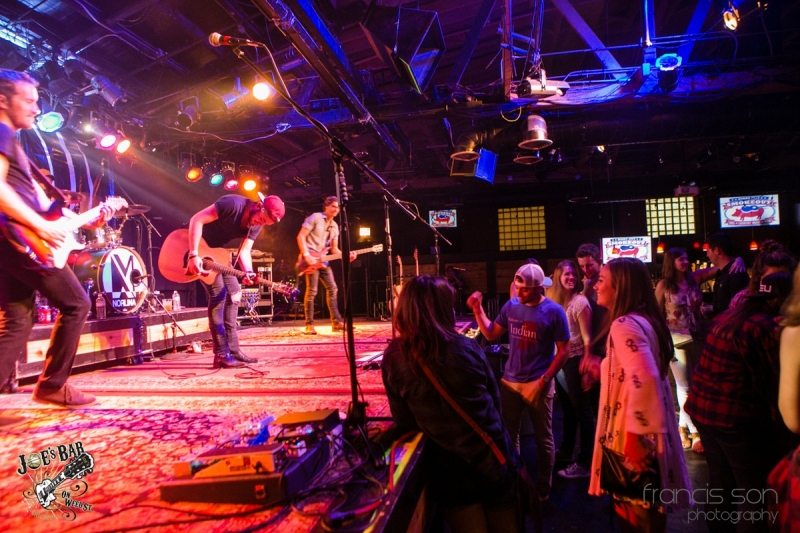
Photo Credit: Joe’s on Weed St
This country bar is known for its concerts and once you go, you know why. To see bigger names, you may have to win tickets, but the people who aren’t household names are high-quality. Their rooftop, over the off-track betting location next door, has a different feel but is another great spot to listen to live music.
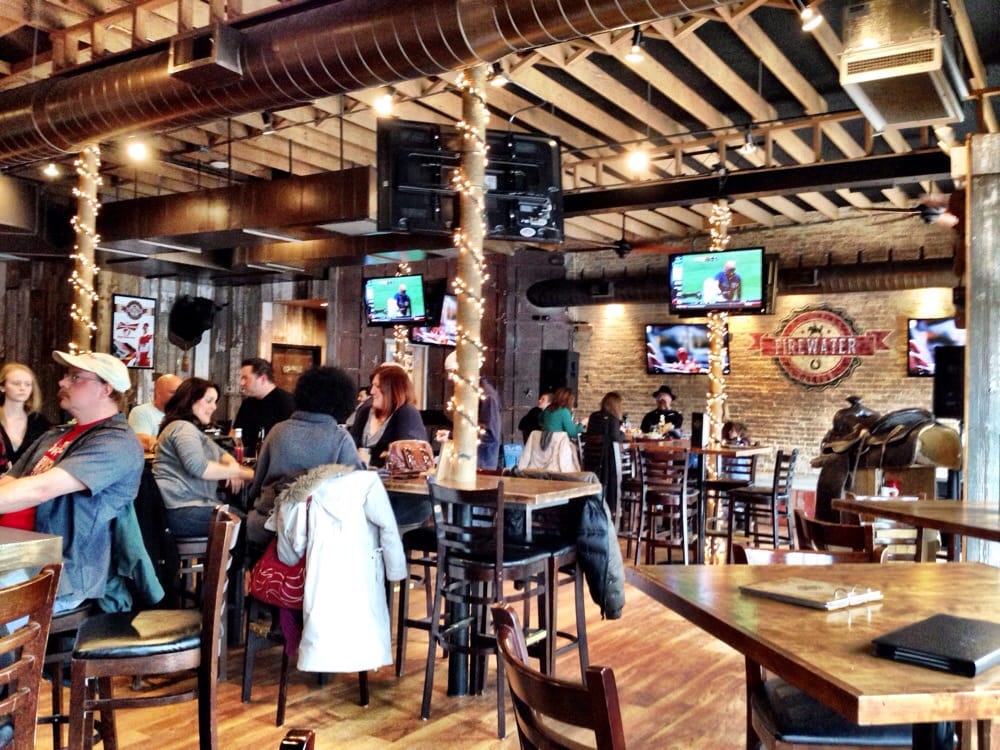
Photo Credit: Yelp
You’ll have to travel North for this one, but this Edison Park bar is all country, all the time. Visit for live music Thursday, Friday, and Saturday nights.
Advertisement
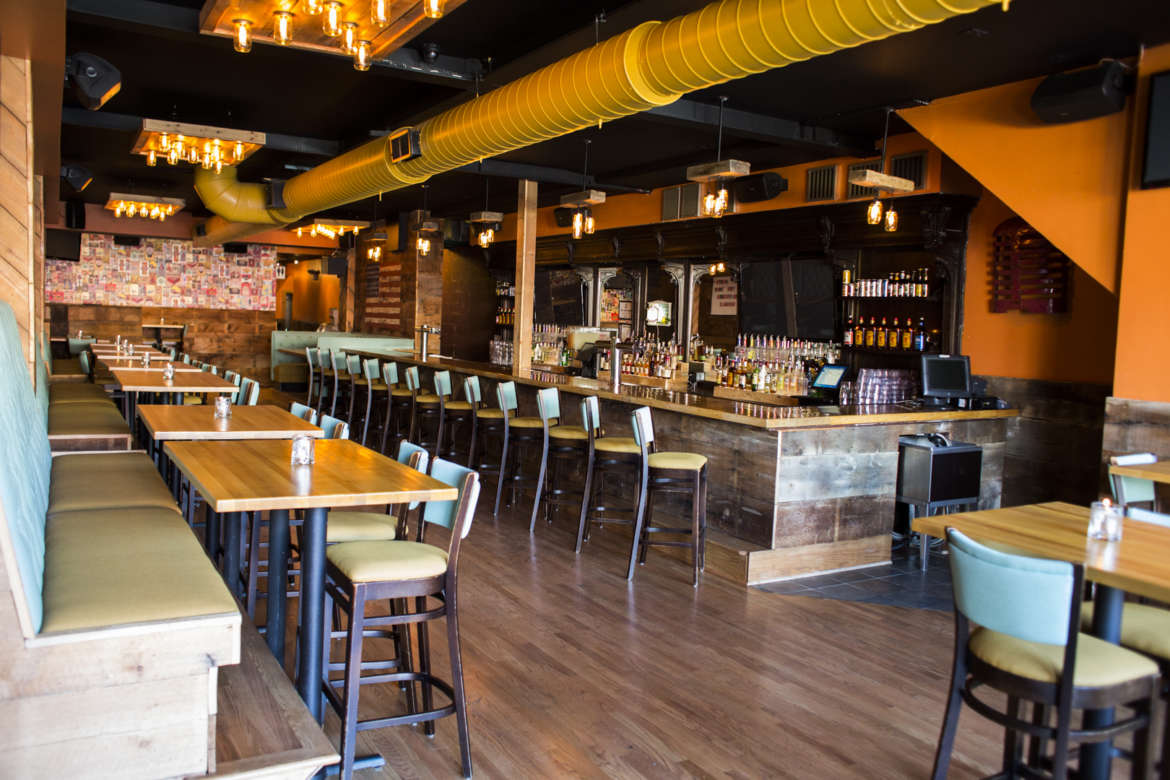
Photo Credit: Country Club
The Country Club, just down the street from Old Crow, is another Clark Street spot for country. Travel to this country bar in Chicago to hear live music with friends. Their own description of their bar says it all: Take the eclectic vibes of Austin’s 6th street, add musical chops that would fit right in Nashville, and you’ve got The Country Club.
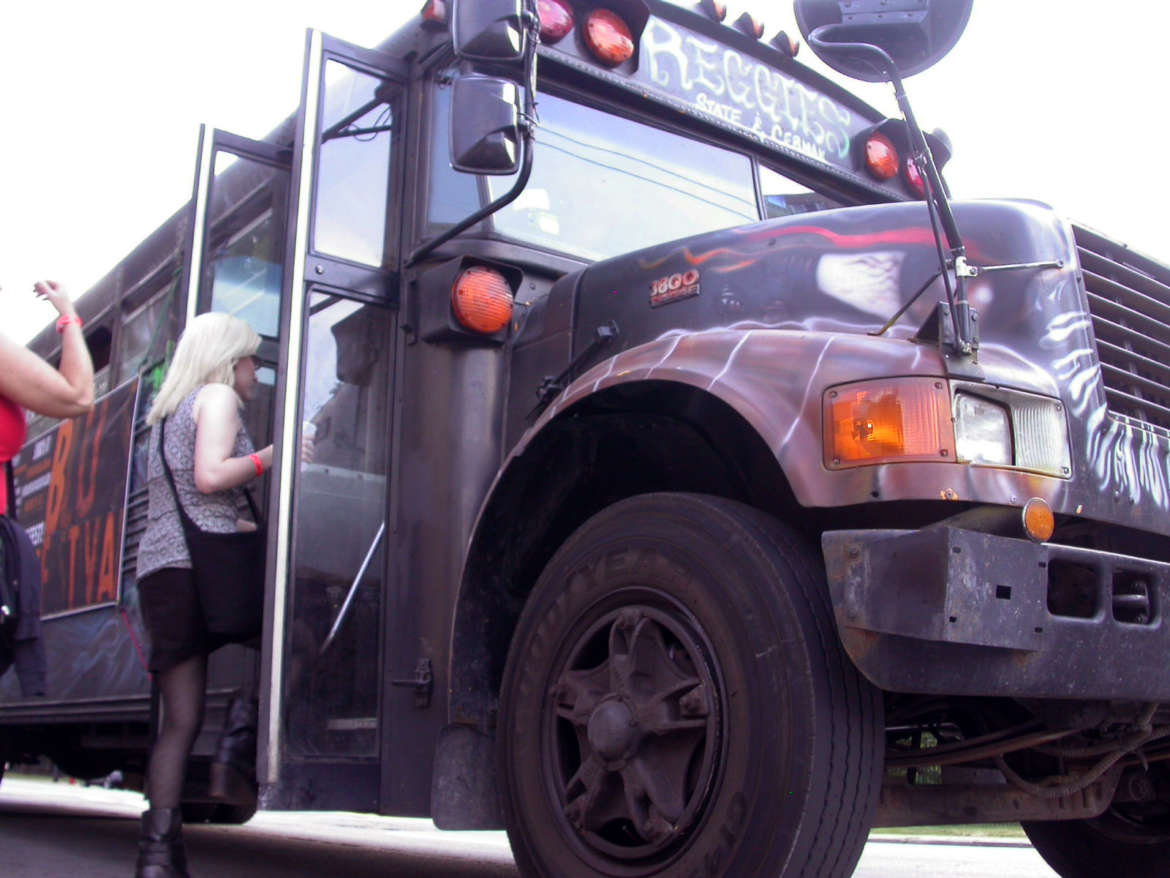
Photo Credit: Reggie’s Rock Club
Watch excellent shows and musicians at Reggies Chicago. Check out their calendar and visit their rooftop for your next concert pregame.
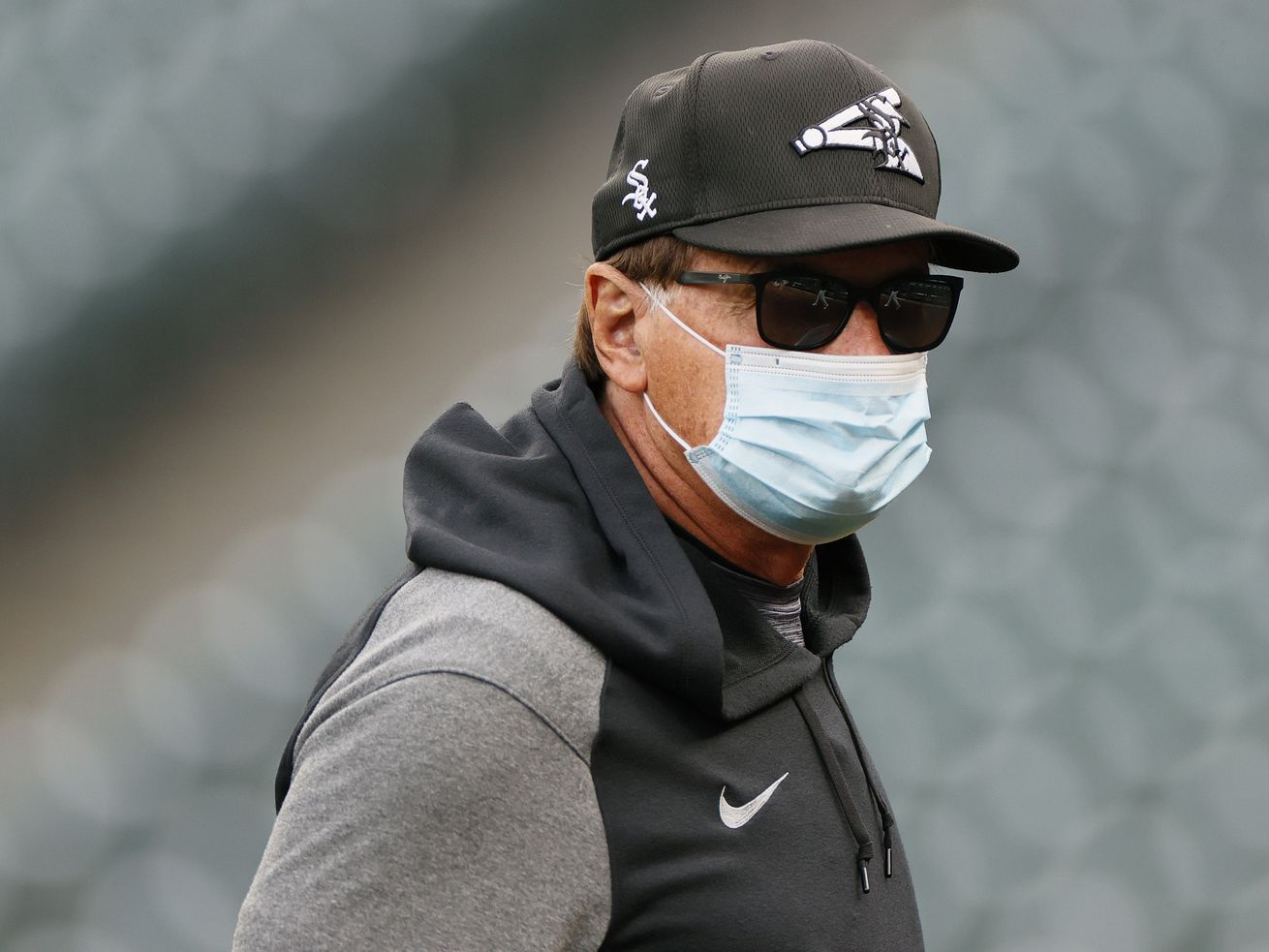
White Sox manager Tony La Russa has been heavily criticized for publicly calling out one of his players. | Steph Chambers/Getty Images
White Sox manager Tony La Russa wasn’t wrong for the act of calling out rookie Yermin Mercedes.
Tony La Russa has been all sorts of wrong about all sorts of things since the White Sox hired him in October to be their manager. And he might be wrong for believing that rookie Yermin Mercedes should have obeyed orders and not swung on a 3-0 count with his team leading the Twins 15-4.
But he’s not wrong for publicly criticizing Mercedes, even if modern sensibilities howl that it was a horrible, horrible thing to do.
When a manager or coach points out, for all the world to hear, what he thinks a player has done wrong, he is not burning the guy at the stake or planting him in front of a firing squad. But you would certainly have believed that was the case had you listened to the outrage that followed La Russa’s criticism of Mercedes, who homered on the 3-0 swing Monday night. He threw the player under the bus! The kid might never recover from the humiliation! How can La Russa face his players, who are now, as we speak, planning a rebellion?
There’s no way to say this without offending today’s incredibly sensitive athletes, so, oh, well: How did we get here, to Wimpyville?
I wasn’t a fan of La Russa’s hiring nor am I a fan of it now that he’s 40-plus games into his second stint with the Sox. But it’s clear he truly believes that, by speaking out, he was educating Mercedes about how the sport should be played. That might be another example of how out of touch the 76-year-old manager is with today’s game. But there’s also the distinct possibility that the world has tilted a bit too far in the direction of soft.
When everyone knows that a player made a mistake in a game, why is it so wrong for his coach to point it out publicly? Why is it such an egregious betrayal of trust? The offending emperor isn’t wearing any clothes. You know it. I know it. But the coach won’t say it for fear of alienating a player clad only in his birthday suit.
Why won’t coaches and managers speak up when players screw up? They’re afraid of getting fired, and, for a lot of these people, continued employment is Job One. They’re concerned about losing the locker room only as it applies to keeping their jobs. Shielding players from criticism thus becomes as important as knowing when to change pitchers.
Hence, all the zipped lips.
Maybe it takes a senior citizen, Hall of Fame manager to point out that there’s nothing wrong with calling out a player. Will the player be embarrassed? Quite possibly. Will he make the same mistake again? Probably not.
Again, I’m not defending La Russa for wanting to uphold the unwritten rules of baseball. I’m defending his ability to criticize players in public.
In Chicago, we’ve had a run of coaches who see no evil and speak no evil. Former Bears coach Lovie Smith was the king of complimenting all his players, including players whose football abilities deserved universal condemnation. This made him very popular in the locker room but perhaps the most boring quote in the history of quotes. Current Bears coach Matt Nagy has taken a similar tack of not criticizing players. Former Cubs manager Joe Maddon did the same thing, except he’d throw in a “groovy’’ now and then.
At least you could interpret former Blackhawks coach Joel Quenneville’s grunts and know when he was mad at a player.
Everybody stands at lecterns and lies these days. Without blinking, they let the listening audience know how much contempt they have for them.
Given the uphill public-relations battle La Russa is fighting, he won’t be the man to start an honesty movement in professional sports. But wouldn’t it be nice if telling the truth became contagious?
We’re told that there’s nothing in it for a coach or manager to be truthful. How do we know that? Perhaps he starts to develop players who realize their leader wants to bring out the best in them. Maybe, gasp, players toughen up a bit.
Buccaneers coach Bruce Arians publicly criticized Tom Brady for inaccurate throws last season, and Brady somehow survived. There are people who can handle criticism, who actually perform better when they’re on the business end of some unpleasant truths. Tampa Bay won the Super Bowl, and, as far as we know, Brady didn’t rack up massive mental-health bills.
It’s a different world than when La Russa was in his prime as a manager. Social media can be a brutal thing. Fans have ugly thoughts that must be aired (no they mustn’t). Athletes need as many people in their corner as possible. But when a coach makes a fool of himself defending the indefensible at a press conference, surely it’s cold comfort for the offending player. Surely the player is no less mortified.
It’s possible to tell the truth without tearing down the athlete: “He made a bad pass. We can’t have that. But he won’t do it again. That’s how much I believe in him.’’
Whoever is offended by that has the mental strength of a dandelion puffball.
How about we man and woman up, and see what happens?
“It’s time to get back out there and do something for people’s souls,” Tab Benoit says, about his return to in-person concerts. “I can see the relief on people’s faces when they come back to shows and know that they can enjoy something normal again.” | Jean Frank Photo
The Grammy nominated Delta blues guitarist — recently named one of the 30 best in the world today by Guitar World magazine — is bringing “The Chicago Takeover” to town, a six-night stand at City Winery.
Live music is finally back in Chicago — and Tab Benoit is wasting no time getting things plugged in again. The Grammy nominated Delta blues guitarist — recently named one of the 30 best in the world today by Guitar World magazine — is bringing “The Chicago Takeover” to town, a six-night stand at City Winery June 1 and 4-8. “It feels like an old friend,” Benoit says about getting back on the road and in front of audiences.
Though the Louisiana native has done a few gigs since November, including a special series of concerts with Samantha Fish at Nashville’s illustrious Ryman Auditorium, the upcoming summer trek will be his first fully fledged multi-city tour since 2019 and comes as COVID-19 restrictions are eased across the country — as of press time, City Winery will still be enforcing masks, temperature checks, a wellness questionnaire and sitting only one party together per table.
“It’s time to get back out there and do something for people’s souls,” he says. “And I think that’s really what it is. I can see the relief on people’s faces when they come back to shows and know that they can enjoy something normal again.”
Benoit, who recently co-authored the book “Blues Therapy” with Anita Schlank, Ph.D., about how much blues music can be therapeutic and healing for people, says there’s a lot to be said about how live music will be a boost to both bands’ and concertgoers’ mental health after a year of the industry going dark.
“I think we’ve forgotten what it’s like to feel the energy of other people around you when there’s live music playing. That’s why festivals are so great, there’s thousands of people all feeling the same thing — it’s really special and you can’t replicate it at home.”
So, even though Chicago’s Blues Fest unfortunately has to take another year off – the city has announced a smaller, one-day event for 2021 on Sept. 18 as part of a new music celebration initiative called Chicago In Tune — Benoit hopes to create some of the magic of that traditional weekend in his mini-residency in June.
“Every show we do will be a different experience. I don’t have a set list, and we always play requests from the audience. Allowing people to be part of the show is important to me,” he says, noting that all the blues legends he grew up listening to like John Lee Hooker, Buddy Guy and Albert Collins did it the same way. “They played what they felt, and played in the moment. And that’s what drew me to the blues more than anything. That raw emotion.”
Of course, Chicago is a special place for Benoit who has played the hallowed blues venues a number of times over the course of his incredible 30-year career, and the city was purposely chosen for this unique multi-night event. “I love Chicago, and it gives us the chance to see friends around the city like Buddy Guy,” says Benoit, noting deep roots with the Guy family since all hail from Louisiana.
In much the same way Benoit experienced the tutelage of those that came before him, he also provides those opportunities to the artists on his Whiskey Bayou Records label, including bringing signee Alastair Greene out for the upcoming tour (you can also see Benoit play drums during Greene’s set).
Though Benoit doesn’t have immediate plans to release any new music himself — most of his downtime was spent “doing things around the house I couldn’t do in the 30-something years I’ve been on the road” — he says right now his biggest focus is to just get out on the stage and help get the music scene going again. “And I mean the entire music scene, not just the blues genre,” he says. “We just happen to be some of the first out there. But the backbone of all live music in this country is the blues so it’s in the right hands. Let the blues bands go out there and get it running again.”
Here are more in-person shows in the coming weeks:
Wave Wall Wax
Starting May 29, Navy Pier’s Wave Wall platform hosts free Saturday night showdowns with some of the city’s top house music DJs like Cordell Johnson (June 5) and Selah Say (June 12). 5 p.m. Starting May 29, Navy Pier, 600 E. Grand. Free. navypier.org
Waco Brothers
The rousing alternative country statesmen led by The Mekons’ Jon Langford play two can’t-miss hometown shows where anything goes. 6 and 9:30 p.m. May 29, Reggies, 2105 S. State St. $30. reggieslive.com
KingTrey
Local rapper from Evanston got his start at the age of 17 with his first EP “The Good Word” and is poised to become one of the next scene standouts. 8 p.m. June 3, The Promontory, 5311 South Lake Park Avenue West. $40-150. eventbrite.com
Piqniq 2021
Rock station WKQX will be hosting their annual summer bash at the Lakeshore Drive-In with Lovelytheband, Shaed and Letdown. 7 p.m. June 4, Lakeshore Drive-In, 1362 S Linn White Dr. $40-300. 101wkqx.com
Billy Flynn
The incredible guitar/mandolin/harmonica player and vocalist brings an unforgettable set and some special guests to a venerable blues club. 8 p.m. June 4, Rosa’s Lounge, 3420 W. Armitage. $20. rosaslounge.com
The Claudettes
Timeless act infusing American roots music with rockabilly and punk all set to rollicking piano and sultry vocals is as good a reason as any to get out and see live music. 6 and 9 p.m. June 12, City Winery, 1200 W. Randolph. $30 per seat. citywinery.com
Former Pittsburgh Pirates pitcher Felipe Vazquez is led to the Westmoreland County Courthouse. | Andrew Rush/Pittsburgh Post-Gazette via AP
The two-time All-Star was placed on MLB’s restricted list after the charges were filed in 2019, and he has not been eligible to play since the end of that season.
The two-time All-Star was placed on MLB’s restricted list after the charges were filed in 2019, and he has not been eligible to play since the end of that season.
The jury in Westmoreland County late Thursday returned a guilty verdict on 15 of the charges facing Vazquez, including statutory sexual assault, unlawful contact or communication with a minor, indecent assault and corruption of a minor. Investigators said the incidents occurred in 2017, when the girl was 13 and 14.
During three hours of testimony Thursday, Vazquez, 29, maintained that he was unaware the girl was a minor during their relationship, which began in 2017 when she reached out on Instagram to wish him a happy birthday.
Vazquez was found not guilty of 10 other counts of unlawful contact or communication with a minor. However, the Pittsburgh Tribune-Review reports he faces additional charges of child pornography and unlawful contact with a minor in Florida after he continued to have a relationship with the girl when she moved there in 2018.
The left-hander pitched for five seasons in the major leagues with the Pirates and Washington Nationals. He first ascended to the closer’s role in 2017 when he recorded 21 saves with a 1.67 ERA for Pittsburgh. He made the National League All-Star team in 2018 and 2019, compiling a total of 65 saves over those two seasons.
Festivals are beginning to announce their future plans for 2021. | Ashlee Rezin Garcia/Sun-Times
Improving coronavirus numbers have made more summer events possible. Here’s the latest updates on this year’s changing entertainment landscape.
With coronavirus case numbers and positivity rates on the decline, the summer festival season in Chicago is in much better shape than last year.
The city has given the green light for festivals and “general admission outdoor spectator events” to welcome 15 people for every 1,000 square feet.
The city has debated various ways bolster vaccination rates among young people most likely to attend outdoor music events like Lollapalooza and Riot Fest. Mayor Lori Lightfoot said a proposal to create a coronavirus vaccine passport for Chicago events is “very much a work in progress” but that preferred seating at those events could be one way to urge vaccination.
Some festivals have already announced their return and concerts are starting to be rescheduled.
We’re tracking the status of the city’s festival and major events throughout the area as new cancellations and postponements are announced. Check back for more updates.
May
Navy Pier Fireworks: The Pier is hosting a 10-minute fireworks show every Saturday in May at 9:00 p.m.
Manifest Urban Arts Festival: Columbia College Chicago’s student driven event that showcases graduating student work. May 10-14.
For the Love of Chocolate: Long Grove, demonstrations, classes, presentations, experiences, vendors, chocolatiers, entertainment and so much more. Advanced online registration is required, May 14-16.
Hot Stove Cool Music virtual music festival, benefits the Foundation To Be Named Later, which was co-founded by former Cubs president Theo Epstein. Eddie Vedder headlines. May 18.
Mayfest: Armitage Ave. at Sheffield Ave. in Lincoln Park, May 21 – 23.
Pivot Arts Festival: Reimagining Utopia – A Performance Tour: Live, a multi-arts experience featuring world premieres in theatre, dance, video, music and puppetry. May 21 – June 5.
Chicago Symphony Orchestra concerts at Symphony Center, beginning May 27. Tickets will go on sale 10 a.m. May 11, at cso.org. Performances will take place over three consecutive weekends at 7:30 p.m. Thursdays, 1:30 p.m. Fridays, 7:30 p.m. Saturdays and 3 p.m. Sundays.
June
“Tuesdays on the Terrace,” Museum of Contemporary Art Chicago, starting June 1 and every Tuesday at 5:30 p.m. through Aug. 31.
Pride in the Park, Grant Park, Headlining will be Chaka Khan, the legendary Queen of Funk; Gryffin, the self-taught prodigal producer; and Tiësto, who has been dubbed “the world’s greatest DJ.” June 26- 27.
July
The Ravinia Festival announced it will reopen in July 1 for 64 concerts through Sept. 26 with a slate of outdoor concerts including a six-week residency by the Chicago Symphony Orchestra. Also slated to appear are: Cynthia Erivo, Kurt Elling, Brian McKnight, Ides of March, Madeleine Peyroux, Midori, Joshua Bell, Pinchas Zukerman, the Chicago Sinfonietta and the Joffrey Ballet.
Grant Park Music Festival, Millennium Park. All concerts are free with reserved seats for all concertgoers and will take place Wednesday, Fridays and Saturdays at 6:30 p.m. Run time will be 90 minutes, without intermission. July 2-Aug. 21.
Summerfest: Milwaukee. The festival will take place over three weekends, Sept. 2-4, 9-11 and 16-18. More than 100 artists are slated to perform including Chance the Rapper, Miley Cyrus, Luke Bryan, Pixies, Rise Against, Wilco, Diplo, and Fitz and the Tantrums.

:no_upscale()/cdn.vox-cdn.com/uploads/chorus_asset/file/22531361/merlin_97768748.jpg)
:no_upscale()/cdn.vox-cdn.com/uploads/chorus_asset/file/22531351/IMG_0295.jpg)
:no_upscale()/cdn.vox-cdn.com/uploads/chorus_asset/file/22531468/JACKSONPARK_052221_7.jpg)
:no_upscale()/cdn.vox-cdn.com/uploads/chorus_asset/file/22531567/GettyImages_3286239.jpeg)