
Summer is almost here and there was Mayhem between Cardinals and White Sox fans on Monday nightCCS Staffon May 25, 2021 at 6:09 pm
Absolute mayhem in the bleachers during Monday night’s Chicago White Sox and St. Louis Cardinals at Guaranteed Rate Field in Chicago.
The post Summer is almost here and there was Mayhem between Cardinals and White Sox fans on Monday night first appeared on CHI CITY SPORTS l Chicago Sports Blog – News – Forum – Fans – Rumors.Read More
City Council poised to rename outer Lake Shore Drive in honor of DuSable — at a cost of $2.5 millionFran Spielmanon May 25, 2021 at 6:19 pm

Ald. David Moore said the Lightfoot administration offered substitutes, such as renaming the Dan Ryan Expressway. That had “racial overtones,” he said. “Keep it on the South Side. South of like 35th Street. Let’s be honest. Keep it in the Black community,” Moore told the Sun-Times.
Barring an 11th-hour parliamentary maneuver, the Chicago City Council is poised Wednesday to rename Outer Lake Shore Drive in honor of Jean Baptiste Point DuSable at a cost one alderman pegged at $2.5 million.
Ald. David Moore (17th), the Council’s champion for DuSable Drive, said Tuesday Mayor Lori Lightfoot’s administration tried to block the ordinance with an alternative he views as having “racial overtones” — renaming the Dan Ryan Expressway in honor of Chicago first permanent, non-indigenous settler.
Lightfoot has also offered to complete DuSable Park, create an exhibit honoring DuSable at the “most traveled part” of the downtown Riverwalk and rename the entire Riverwalk in honor of DuSable.
“We were offered to rename the Dan Ryan. …. Keep it on the South Side. South of like 35th Street. Let’s be honest. Keep it in the Black community,” Moore told the Sun-Times.
“Those are racial overtones and ones that we have to move beyond in this city. We’re better than that.”
Moore refused to name the person who made the offer to rename the Dan Ryan. “I’ll just say the [Lightfoot] administration and leave it at that.”
The mayor’s office had no immediate comment on the matter Tuesday.
Zoning Committee Chairman Tom Tunney (44th) has said he’s gotten an earful about the name change from “people who actually live on Lake Shore Drive.” They fear it would be “somewhat of a nightmare in terms of mailing addresses and everything else they would have to re-arrange,” Tunney has said.
Downtown Ald. Brendan Reilly (42nd) has similarly warned the name change will require a “time-consuming and costly fix” for “tens of thousands” of Chicago voters and have “costly implications” for businesses, police and fire.
/cdn.vox-cdn.com/uploads/chorus_asset/file/22538950/LSDRENAME_18th_overpass.jpg)
Brian Ernst/Sun-Times
But on the eve of the showdown vote, Moore disclosed the combined cost to the city, state and CTA to change signs, maps and schedules pales by comparison to the cost of Lightfoot’s alternative proposal to honor DuSable.
“The state gave their numbers. The city gave their numbers. And it came out to less than $2.5 million to make the street change, signs and everything,” Moore said of the estimate delivered in recent months at Reilly’s request.
“But yet, the administration came back with a proposal of $40 million: $25 million for the park and $15 million for the Riverwalk and also threw in there the possibility of changing the Chicago River to DuSable. But they would have to go through the Department of Interior. All that heavy lifting just to not rename the Outer Drive? That’s an issue for me.”
In 1993, then-aldermen Toni Preckwinkle and Madeline Haithcock proposed renaming Lake Shore Drive to honor DuSable. Mayor Richard M. Daley put the kibosh on the idea.
Then, 18 years later, then-Ald. Ed Smith proposed a different honor — naming City Hall after DuSable. It met the same fate.
Since then, the political landscape has changed dramatically.
The Council is now majority-minority, with 20 Black aldermen and 13 Hispanic members.
More importantly, the death of George Floyd a year ago Tuesday at the hands of Minneapolis police officers has triggered a racial reckoning in Chicago and across the nation. It prompted the Council to create a reparations subcommittee charged with finding a way to make amends to “descendants of enslaved Africans” living in Chicago.
Against that backdrop, an ordinance that has languished in committee since October 2019 appears to have too much political momentum to stop.
“The peoples’ voices are louder. … I don’t think it’s as much political awareness as it is social conscience. People are raising their voice and knowing the significance of certain statues, certain recognitions and how that plays a role in our lives,” Moore said.
/cdn.vox-cdn.com/uploads/chorus_asset/file/22538961/LSDRENAME_31st.jpg)
Brian Ernst/Sun-Times
Moore, whose ordinance needs a technical fix to define the “Outer Drive,” said he has been pleasantly surprised by the outpouring from “students and young people” in the two years since he introduced the name change.
“I didn’t think it would happen at the rate that it did. That’s why it’s important to me. It raised awareness among young people to learn about DuSable and learn about … him finding Chicago. And not only just Black kids. It’s all our children across this city,” he said.
“When we talk about immigrants, people think of either European immigrants or Mexican immigrants. But we have a lot of immigrants from Haiti and from the African diaspora. Their voices are finally being heard in this. It means a lot to them to see this happen.”
Any two aldermen can move to “defer and publish,” which delays consideration of any matter for one meeting. Tunney said he has no plans to use that parliamentary maneuver. Reilly could not be reached.
Downtown Ald. Brian Hopkins (2nd) was asked whether he has any plans to delay the vote.
“Not sure. Under discussion,” Hopkins wrote in a text message to the Sun-Times.
Lightfoot also has the option of vetoing the name change. But allies say Lightfoot would be better served by letting it go and saving her energy for the more important battles ahead, such as doling out federal relief funds, passing some form of civilian police oversight and crafting a city budget, just to name a few.
LPGA Tour hires Princeton athletic director as new commissionerDoug Ferguson | Associated Presson May 25, 2021 at 6:32 pm

Mollie Marcoux Samaan will be the second woman to lead the tour since its formation in 1950.
The LPGA Tour chose Princeton athletic director Mollie Marcoux Samaan as its commissioner Tuesday, the second woman to lead the tour since its formation in 1950.
Marcoux Samaan succeeds Mike Whan, who announced in January he was resigning and then took over as CEO of the U.S. Golf Association.
She inherits a tour that made it through the COVID-19 pandemic and emerged with a 34-event schedule with record prize money approaching $80 million.
The LPGA said she would spend the coming months transitioning from Princeton to the LPGA.
“The LPGA Commissioner role is one of the best jobs in sports today and the opportunity of a lifetime,” she said in a statement. “I’m passionate about the game of golf and have been an LPGA fan since I was a little girl. I appreciate the LPGA’s history and the tenacity of its 13 founders. I’m truly inspired by our tour players and teaching professionals. I’m excited to dive into the LPGA initiatives to impact women and girls in the game at every age and ability.
“My mission and the LPGA’s mission are fully aligned: providing women and girls the opportunity to achieve their dreams through golf.”
The first woman to lead the LPGA was Carolyn Bivens, hired in 2005 with a bullish marketing plan to promote the players. But she alienated sponsors and media at a time when the tour was struggling to get through the recession. She was ousted in 2009 when the LPGA’s schedule had 24 tournaments, 10 of them held outside the U.S.
Marcoux Samaan is the ninth commissioner of the LPGA Tour.
“Mollie understands the power of golf to change the lives of girls and women,” said Diane Gulyas, chair of the LPGA board who led the search committee. “In every role, she’s had an outstanding record of performance in navigating change, forging lasting partnerships and seeing — and seizing — new opportunities.
Marcoux Samaan was a two-sport athlete at Princeton in soccer and hockey — she was named to first team All-Ivy League in hockey all four years — though her passion for golf runs deep.
She is a five-time club champion at North Fork Country Club in Cutchogue, New York, and her senior thesis for her history degree at Princeton in 1991 was titled, “The Social Construction of Sport and Gender: A History of Women’s Golf from 1895 to 1955.”
Marcoux Samaan spent 19 years with Chelsea Piers Management, which owns and operates amateur sports complexes in New York and Connecticut. She returned to Princeton in 2014 as its athletic director, during which the Tigers won a league-leading 65 Ivy League titles.
“We were impressed by her track record working with athletes, with her ability to forge new and innovative partnerships; and with her personal passion, authenticity and proven persistence for excellence,” said Juli Inkster, a Hall of Famer who served on the search committee.
Lonesome Cowboy: Joe West prepared to stand alone among umpiresBob Nightengale | USA Todayon May 25, 2021 at 5:01 pm

The 75-year-old is scheduled to set the career record for games Tuesday. What a strange journey it has been for one of the most colorful men in blue.
The Oak Ridge Boys will be there.
So will Commissioner Rob Manfred.
And Bears icon Jim McMahon.
Fourteen-time Grammy Award singer Emmylou Harris, too.
There will be another 130 guests and friends traveling to Chicago for the historic game Tuesday night at Guaranteed Rate Field between the White Sox and Cardinals.
Joe West is scheduled to work his record 5,376th game when he squats behind the plate, surpassing Hall of Famer Bill Klem’s mark that has stood for 80 years.
“This record will never be broken,” former umpire Terry Tata says. “It’s almost mathematically impossible.”
That’s because umpires now work no more than 120 games a season and spend two weeks in the instant replay office in New York, meaning it would take 45 seasons to surpass West.
Considering umpires don’t reach the big leagues until they’re at least 30, it’s hard to imagine a 75-year-old umpire standing behind home plate, particularly with automated strike zones and robot umpires on the horizon.
Then again, there may be no umpire like “Cowboy Joe’’ West ever again.
Because he’s not only an umpire. He’s also a singer-songwriter, actor, golfer and philanthropist.
West has appeared in two movies, recorded two albums, appeared at the Grand Ole Opry, sung with Mickey Gilley, Merle Haggard and Johnnie Lee, been a pallbearer for Boxcar Willie, played on the Celebrity Players Tour, thrown pitcher Dennis Cook to the ground breaking up a fight, grabbed Jonathan Papelbon by the jersey after making a lewd gesture, designed his own chest protector and won a $500,000 defamation lawsuit against former catcher Paul LoDuca.
“He’s like a traveling road show,” says umpire Dan Bellino, who requested in January to be on West’s crew for the historic game. “He can’t walk through a hotel lobby without people stopping him. It’s like the parting of the Red Sea.”
What other umpire would prompt a player to whip out his cell phone to take a picture with West during the game as Nelson Cruz did at the 2017 All-Star Game?
“That’s one hell of a compliment right there,” says former long-time umpire Jerry Crawford. “I’m sure there’s quite a few managers that don’t want to take a picture with Joe West.”
Well, at least not while he’s still working.
“I think when Joe retires people are going to realize the magnitude of his accomplishments,” Bellino says. “Sort of like a president of the United States who don’t realize the good they do until they leave office. Even though he’s always blasted by the media and blasted by the fans, they don’t realize Joe’s contribution to this sport.
“He’ll do everything for umpires. I’ve seen young guys tell him they’re interested in umpires, and Joe will ask for their address and send equipment. There’s not a single umpire, I don’t care if it’s slow-pitch softball, he won’t stop and talk to, answering their questions.”
‘Goes broke playing his own music’
West, 68, made his major-league debut in 1976 and became a full-time National League umpire in 1978. He has since umpired in three All-Star Games, six World Series and 23 postseasons, as well as worked no-hitters and many milestones of the past 40-plus years.
But he’s best known as a showman, the most flamboyant umpire in the game. He’ll tell you that he may not always be right, but he also has never been wrong.
He’ll walk into a honky-tonk, stuff dollars in the jukebox and play his own songs all night. “He’s the only guy I know,” umpire Jerry Layne says, “that goes broke playing his own music.”
He takes his golf clubs on the road, knowing they weigh exactly 78 pounds, but will tell the airline agent their scale is wrong. He traveled with his own fax machine until two years ago. The man never sleeps, and is always open for a good time.
“I remember we were at Mickey Gilley’s place in Texas,” Crawford says, “and Mickey’s guitarist (Larry Bob Lehman) tells Joe, ‘You ever see a Niagara Falls?’ He puts four shot glasses in between his fingers and chugs them all.
“Joe thought it was the greatest thing he’s ever seen. These are the kind of guys Joe runs around with.”
As much fun West has off the field, he is just as serious on it. He commands respect. And it’s not as if he looks for controversy, but somehow, controversy seems to find him.
He was suspended three games for shoving former manager Joe Torre outside the umpires’ room in 1981, and, 36 years later, was suspended another three games for saying Rangers All-Star third baseman Adrian Beltre was the biggest complainer in the game.
/cdn.vox-cdn.com/uploads/chorus_asset/file/22538697/AP18182553998553.jpg)
Brandon Wade/AP
West ejected Dodgers pitcher Jay Howell for having pine tar on his glove during the 1988 playoffs, and was there in 2004 when his crew ruled that Yankees third baseman Alex Rodriguez was out for interference when he slapped the ball out of Red Sox pitcher Bronson Arroyo’s glove.
“The fans threw everything at us,” West said. “They had to call the riot squad to calm everyone down. The next day, when the fans realized we had the call right, they gave us a standing ovation.”
West, who led Elon (N.C.) University to three conference championships as their starting quarterback and was inducted into the school’s Hall of Fame, has no fear. Managers and players quickly realize you can’t intimidate him. And don’t ever question who’s the boss.
“Back in the day when you were a rookie,” Hall of Fame pitcher Greg Maddux says, “umpires would test you. I remember throwing a 3-2 pitch right down the middle with the bases loaded. And he didn’t call it. Veterans had warned me not to look at him once he tests you, so I didn’t. Once that happened, man, we were good.
“His demeanor sometimes rubbed you the wrong way, but I never had an issue with him. He always got the call right. It was amazing how good he was on the bases. I never saw him miss a call.
“There were umpires who would get intimidated by the crowd, and become homers, but not Joe. Nothing would bother him.’’
West’s fearlessness, managers say, is why they loved him behind the plate in big games, particularly on the road. The bigger the moment, the louder the crowd, the better West was.
“In a big game, with a big crowd, and the game on the line,’’ former manager Buck Showalter says, “you wanted Joe behind the plate because he didn’t care who you were or where you were playing.”
‘He’s a stubborn mule-head’
West also doesn’t care about threats because he has been dealing with them his entire career.
He was once told by a team owner in the Puerto Rico winter league that he would never leave the island alive. Another time he got a death threat while on the crew with Paul Runge and Bob Engel.
“We’re about to walk on the field,” West said, “and Runge says, ‘Hey Joe, you go on ahead, we’ll be right behind you.’ “
Says Tata: “This is a guy who will walk into a blast furnace with two gasoline buckets, he doesn’t give a damn.’’
West doesn’t need Twitter to know he’s not popular with fans. No one gets booed more among umpires. Then again, no umpire is more renowned.
Joe West vs. @OzzieGuillen pic.twitter.com/VB116hbe2v
— White Sox Talk (@NBCSWhiteSox) May 25, 2021
“We all know the song, ‘My Way,’ by Frank Sinatra,’’ says Gerry Davis, who plans to retire this summer once he reaches his 5,000th game. “Well, Sinatra has nothing on Joe West on doing things his way.”
It’s no different now than with West breaking the record. The man should be planning his retirement, spending the rest of his life with his wife, Rita. Yet, after having knee replacement surgery during the winter, West says he feels good as ever, and if he steps onto the field next year, he’ll also break the record for being the oldest umpire in history.
“This is the best I’ve seen him move around in years,” said former umpire Eddie Montague, who now is an MLB supervisor. “But don’t tell him that or he’ll work 10 more years. He’s a stubborn mule-head.’’
There’s evidence of West’s longevity everywhere in the game. He was on the crew with crew chief Tom Gorman’s final game in 1977 in Montreal, and then was the crew chief when Gorman’s son, Brian, made his major league debut in 1991 in St. Louis.
“Everyone says that he’s controversial,’’ Brian Gorman says, ‘but he’s really not that controversial. It’s just more of the name recognition, the aura.
“You don’t have characters like that anymore. People love arguments, but the only real arguments are with instant replay, and the guy that made it made the decision, 2,000 miles away.”
From Yaz to Yastrzemski
While West has no fear of second-guessing or abuse, and embraces being a tough guy, there is another side of him off the field.
He frequently visits children’s hospitals without fanfare. He does countless charity events for veterans. He took a red-eye flight to show up for Bill Mazeroski’s charity golf tournament in Seven Springs, Pennsylvania, even going on stage and singing for his wife, Milene. He showed up unannounced at long-time Dallas Morning News baseball reporter Gerry Fraley’s home to spend time with him in his final days before he died as a result of cancer.
“I do many fundraisers for children’s hospitals and military veterans,” says Charlie Haje, a Florida residential and commercial real estate developer who runs charities, “and every single time Joe is asking me how he can help. When it comes to children, veterans and first responders, you won’t find anyone better than Joe. I don’t even have to ask, he’s right there on the front line.
“He may have a little crust on him, but it comes across real easy. He’s a passionate, sentimental guy, and you’ll see a little tear now and then. I’ll go to the end of the world for that man.’’
Layne, the longtime umpire who’s home dealing with his ninth concussion, and not knowing if he’ll be able to return, wishes everyone could see he impact West makes off the field. He doesn’t call attention to it. He just does it.
“People only know Joe West as this controversial umpire,’’ Layne says, “but what they don’t know is that big heart and the humanitarian side of life. He treats people like royalty. But all they know is all of the negative things.
“If you want to put all of the negative stuff on the left side of the page, I’ll put all of positive stuff on the right side, and see how it looks.”
West may call it quits at the end of the year, and players, managers and fans will have to direct their ire at other umpires. He’s undecided, but the day is coming soon.
No matter how you want to view West, he’ll forever be remembered.
“He is one of the great characters in the game,’’ Manfred said, “and truly loves the sport. Joe West’s devotion to his craft and his longevity are truly admirable.’’
And Tuesday night, perhaps just walking onto the field, or during the game, or when the tributes roll on the video board, look closely, you may see another side to him.
The big fella may shed a tear or two.
“My dad and my grandad both died before my age,” says West, the only one alive from his original umpiring crew. “so I’m just tickled to be able to live this long. It’s pretty special. To think I had Yaz (Carl Yastrzemski) when I walked onto the field for the first time at Tiger Town in spring training, and the other day I’m umpiring a game with Yaz’s grandson (San Francisco Giants outfielder Mike Yastrzemski).
“But emotional?
“I’m emotional now just thinking about it.’’
Read more at usatoday.com
House GOP leaders condemn Marjorie Taylor Greene over Holocaust commentsAssociated Presson May 25, 2021 at 5:05 pm

Greene excoriated safety protocols adopted by House Democrats, including a requirement that masks be worn on the House floor. She also called House Speaker Nancy Pelosi “mentally ill” while suggesting that the rules were comparable to the treatment of Jews during the Holocaust.
WASHINGTON — House Republican leaders forcefully condemned GOP Rep. Marjorie Taylor Greene on Tuesday, calling her comments comparing House COVID-19 safety rules like mask-wearing to the treatment of Jews in Nazi Germany “appalling.”
The freshman Georgia congresswoman’s comments belittled “the greatest atrocity committed in history,” said House Republican Leader Kevin McCarthy.
“Marjorie is wrong, and her intentional decision to compare the horrors of the Holocaust with wearing masks is appalling,” McCarthy said in a statement. “The fact that this needs to be stated today is deeply troubling.”
Greene, a conservative firebrand and ally of former President Donald Trump, has thrived on stirring controversy, pushing conspiracy theories and forcefully confronting her colleagues since taking her seat in the House in January. But, until now, Republican leaders have proven hesitant to criticize her and refused to join with Democrats earlier this year when they voted to strip her of committee assignments.
Their rebuke of her Tuesday came after Greene made an appearance on a conservative podcast, “The Water Cooler with David Brody,” released last Thursday. In her interview, Greene excoriated safety protocols adopted by House Democrats, including a requirement that masks be worn on the House floor. She also called House Speaker Nancy Pelosi “mentally ill” while suggesting that the rules were comparable to the treatment of Jews during the Holocaust.
“You know, we can look back in a time and history where people were told to wear a gold star. And they were definitely treated like second-class citizens, so much so that they were put in trains and taken to gas chambers in Nazi Germany,” Greene said on the podcast. “This is exactly the type of abuse that Nancy Pelosi is talking about.”
After her remarks sparked a firestorm of online criticism, Greene leaned in to the comparison further.
On Tuesday, she tweeted out a news story about a grocery store chain that plans to allow vaccinated employees go maskless. Those who do would have a logo on their nametags indicating they had been vaccinated.
“Vaccinated employees get a vaccination logo just like the Nazi’s forced Jewish people to wear a gold star,” Greene tweeted.
Several members of the House Republican leadership also criticized her words.
“Equating mask wearing and vaccines to the Holocaust belittles the most significant human atrocities ever committed,” said Rep. Elise Stefanik, the No. 3 GOP leader.
But until now, Republican.
American Jews take stock of internal divisions, antisemitismAssociated Presson May 25, 2021 at 5:29 pm
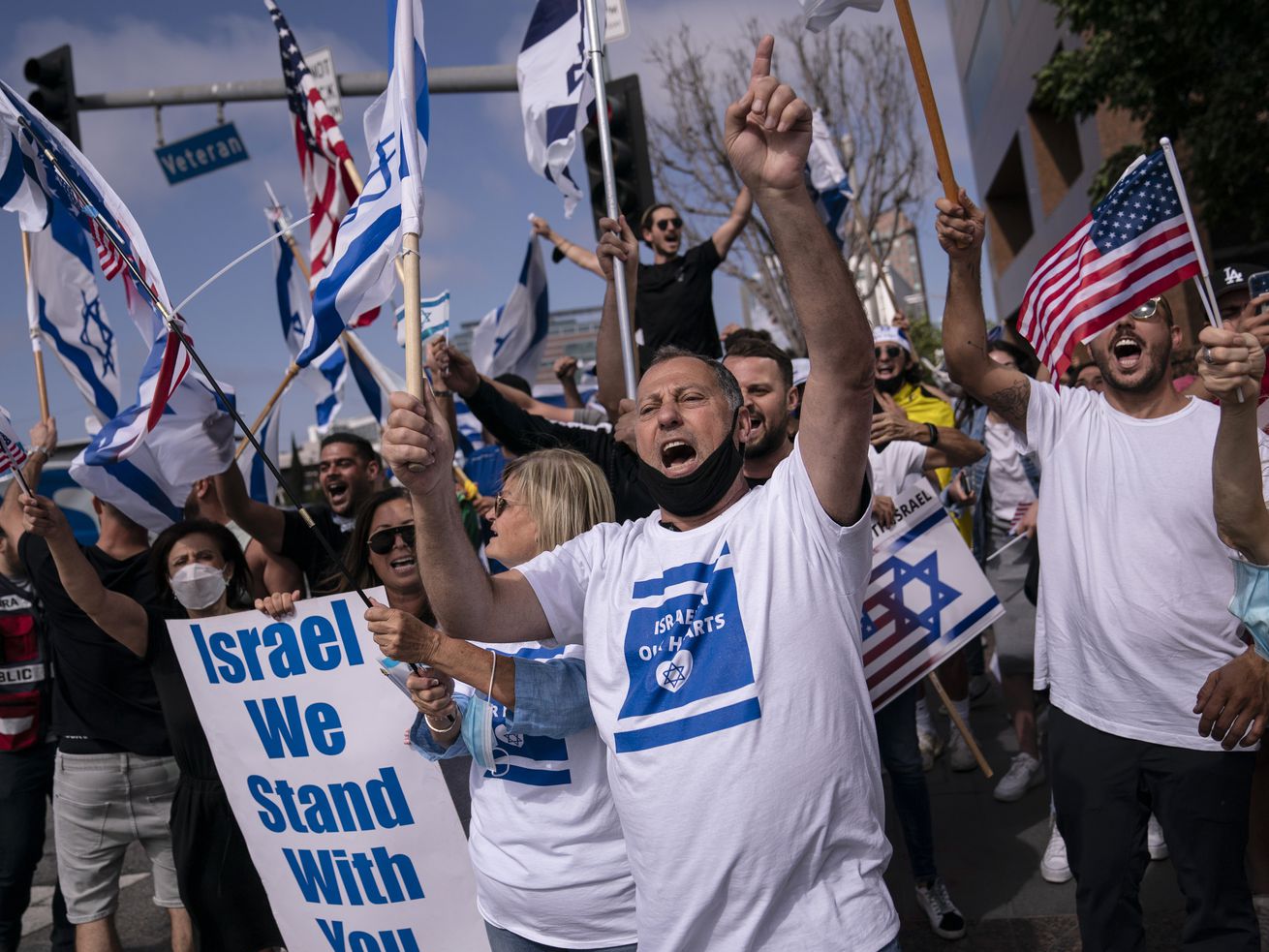
U.S. Jews are divided over how to respond to the violence and over the disputed boundaries for acceptable criticism of Israeli policies.
As fighting between Israel and Gaza’s militant Hamas rulers raged before last week’s cease-fire, U.S. rabbinical student Max Buchdahl wanted to be considerate of those in his community who are emotionally connected to Israel — but he also wanted to support Palestinians.
Buchdahl, 25, joined dozens of rabbinical and cantorial students who signed a letter expressing solidarity with Palestinians and appealing to U.S. Jews to demand change from Israel, which it accused of abuses.
Pushback came swiftly from Rabbi Bradley Shavit Artson, the dean of Ziegler School of Rabbinic Studies at American Jewish University, which trains a new generation of Conservative rabbis including a small number of the letter’s signatories.
He penned a response saying he admired highlighting the suffering of Palestinians but disapproved of what he saw as a lack of solidarity with Israel and Israeli Jews, and silence on their suffering and on the “murderous tyranny” of Hamas.
Both letters were published in the Forward, a media nonprofit targeting a Jewish American audience, part of a larger debate playing out nationwide among many U.S. Jews who are divided over how to respond to the violence and over the disputed boundaries for acceptable criticism of Israeli policies.
“I do see us wrestling with degrees of culpability, degrees of responsibility,” Artson said in an interview. “The areas of disagreement might be to what degree is Israel alone responsible for the occupation? To what degree is the occupation also the responsibility of Hamas” and other regional powers?
Jonathan D. Sarna, director of the Schusterman Center for Israel Studies at Brandeis University, said American Jews’ perceptions can vary greatly by generation.
To many who are old enough to remember the 1948 war surrounding Israel’s creation and later Arab-Israeli wars, “Israel is fragile, under attack, and its enemies want to destroy it,” Sarna said. “Younger Jews have been more influenced by a kind of David and Goliath narrative: To their mind, Israel has been stronger throughout their life. … They are concerned more about what they see as disproportionality.”
In a recently released survey of U.S. Jews by the Pew Research Center, 82% percent of respondents said caring about Israel is either an “essential” or “important” part of their Jewish identity. But the poll, conducted well before the latest fighting, also found deep skepticism toward authorities on both sides of the conflict, with just a third saying the Israeli government sincerely seeks peace and just 12% saying that about Palestinian leaders.
“There is a growing sense of alienation from the rigid, defensive script on Israel that fails to address Palestinian suffering and offer a path to peace,” said Rabbi Sharon Brous, co-founder of IKAR, a Jewish community in Los Angeles. The national racial reckoning has fueled an urgency among many U.S. Jews to help realize “a more just and equitable reality for Israelis and Palestinians,” she added.
“It breaks my heart that some in our Jewish community seem to believe that it is impossible, or at least unacceptable, to hold compassion, empathy and concern for the well-being of Palestinians along with compassion for our Israeli family,” Brous said.
The conversations sparked by the conflict have unfolded against the backdrop of reports of rising antisemitic incidents since the fighting. Preliminary data compiled by the Anti-Defamation League shows an increase in violent attacks, vandalism and harassment in the U.S. and around the world, as well as online, the group said before the cease-fire took effect.
“With anti-Semitism on the rise … there is an urgency for U.S. Jewry to find a common ground with each other across different denominations and age groups,” said Jay Ruderman, president of the Ruderman Family Foundation, a Boston-based philanthropical organization that works in both Israel and the United States.
“It also provides an opportunity for the American Jewish community and Israel to come together in a time when both groups need each other more than ever,” Ruderman added.
Brous said faith leaders should decry hate and affirm to their flocks that criticism of Israeli policies must not spill into antisemitism. At the same time, “criticism of Israel is not necessarily antisemitic,” she said.
Elliot Steinmetz, the men’s basketball coach at the Jewish Orthodox Yeshiva University in New York City, found himself enraged by the reports of antisemitic attacks and mounting criticism of Israel on social media.
On May 12 he posted on Instagram accusing some people of masking antisemitism behind political arguments. He challenged critics to be honest “instead of hiding behind Arab children,” saying “that’s what the terrorists do.”
“What prompted that was seeing some of our politicians — and it ultimately became celebrities and athletes as well — who like to chime in on issues they’re not educated on,” Steinmetz said in an interview.
“All of a sudden there’s attacks against Jewish people, and there’s nobody standing up,” he added. “Nobody.”
Steinmetz’s defense of Israel is a sentiment shared by former Yeshiva player Simcha Halpert, who moved to Tel Aviv in September to play professional basketball and has woken up several times in the middle of the night to rush to a bomb shelter. He defended Israel and accused Hamas of endangering innocents on both sides. Israel accuses Palestinian militants of causing civilian casualties by launching attacks from residential areas; many of Israel’s critics, meanwhile, accuse it of disproportionate use of force.
Halpert is also concerned about things back home — his father recently told his brothers in Los Angeles to avoid wearing in some areas the skullcap that identifies them as Jewish.
“It’s just a little crazy that we have to be worried,” Halpert said.
Buchdahl, the student who co-signed the letter published by the Forward, stressed that even as he supports solidarity with Palestinians, of course he opposes Hamas rockets being fired at Israeli civilians.
“I want people to see critiques of Israel as critiques of a nation-state,” Buchdahl said. “I want you to understand that I am critiquing policy, I am not critiquing your identity.”
Likewise, Artson, who penned the response, said he grieves innocent Palestinian casualties just as he does rockets that are “intended to create a massacre.”
“My heart has been ripped apart on multiple incompatible jagged edges,” Artson said.
An educator, he ultimately views the episode of the opposing letters as a learning opportunity.
“Two of the people who signed that letter came to my home, celebrated the holiday (of Shavuot) with me,” Artson said. “They hugged coming in, they hugged going out. And we even talked about the letter.”
___
Associated Press religion coverage receives support from the Lilly Endowment through The Conversation U.S. The AP is solely responsible for this content.
100 years after Tulsa Race Massacre, damage remainsAssociated Presson May 25, 2021 at 5:34 pm
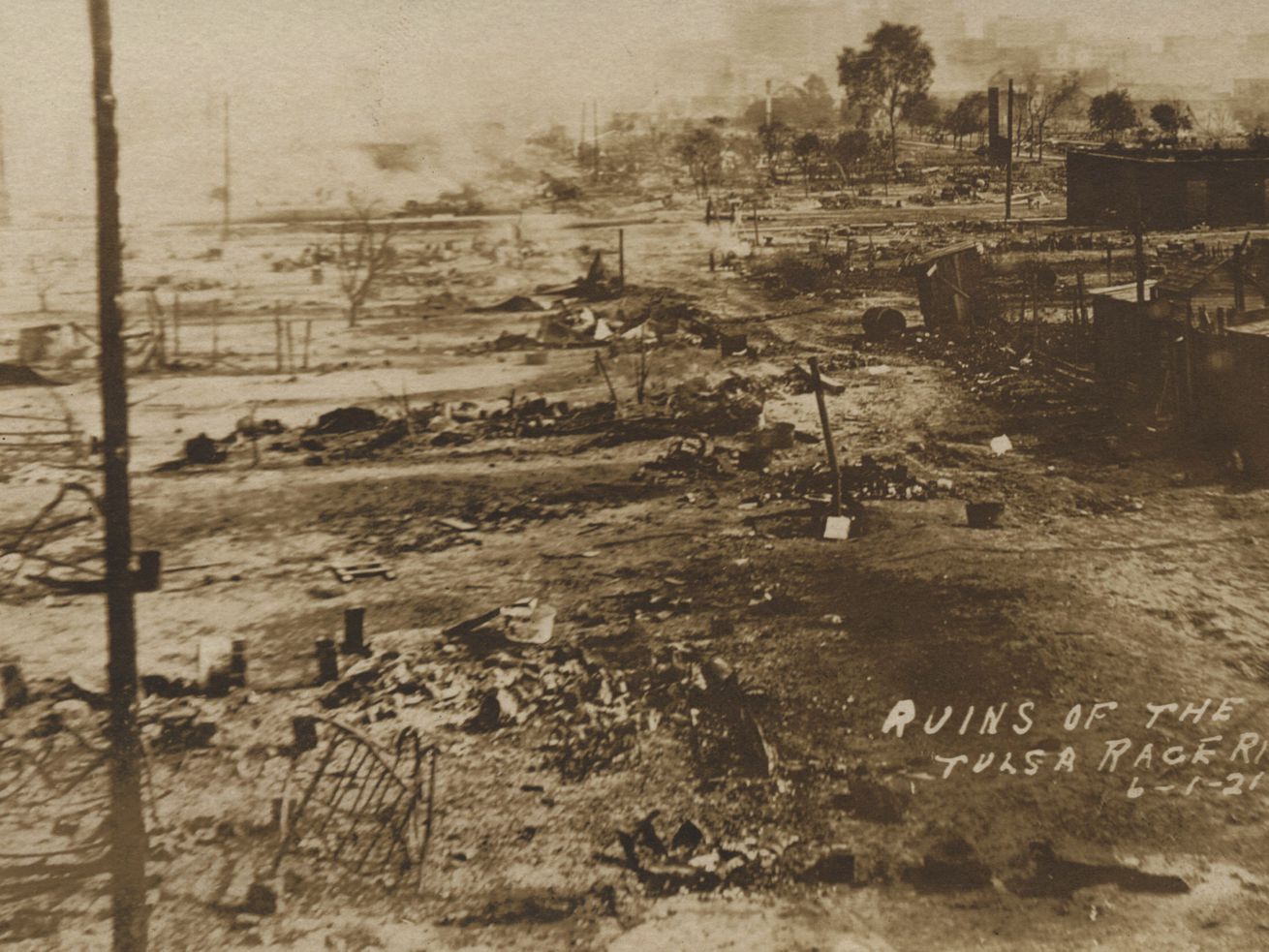
The Tulsa Race Massacre is just one of the starkest examples of how Black wealth has been sapped, again and again, by racism and racist violence — forcing generation after generation to start from scratch while shouldering the burdens of being Black in America.
TULSA, Okla. — On a recent Sunday, Ernestine Alpha Gibbs returned to Vernon African Methodist Episcopal Church.
Not her body. She had left this Earth 18 years ago, at age 100. But on this day, three generations of her family brought Ernestine’s keepsakes back to this place which meant so much to her. A place that was, like their matriarch, a survivor of a long-ago atrocity.
Albums containing black-and-white photos of the grocery business that has employed generations of Gibbses. VHS cassette tapes of Ernestine reflecting on her life. Ernestine’s high school and college diplomas, displayed in not-so-well-aged leather covers.
The diplomas were a point of pride. After her community was leveled by white rioters in 1921 — after the gunfire, the arson, the pillaging — the high school sophomore temporarily fled Tulsa with her family. “I thought I would never, ever, ever come back,” she said in a 1994 home video.
But she did, and somehow found a happy ending.
“Even though the riot took away a lot, we still graduated,” she said, a smile spreading across her face. “So, we must have stayed here and we must have done all right after that.”
Not that the Gibbs family had it easy. And not that Black Tulsa ever really recovered from the devastation that took place 100 years ago, when nearly every structure in Greenwood, the fabled Black Wall Street, was flattened — aside from Vernon AME.
The Tulsa Race Massacre is just one of the starkest examples of how Black wealth has been sapped, again and again, by racism and racist violence — forcing generation after generation to start from scratch while shouldering the burdens of being Black in America.
All in the shadow of a Black paradise lost.
“Greenwood proved that if you had assets, you could accumulate wealth,” said Jim Goodwin, publisher of the Oklahoma Eagle, the local Black newspaper established in Tulsa a year after the massacre.
“It was not a matter of intelligence, that the Black man was inferior to white men. It disproved the whole idea that racial superiority was a fact of life.”
___
Prior to the massacre, only a couple of generations removed from slavery, unfettered Black prosperity in America was urban legend. But Tulsa’s Greenwood district was far from a myth.
Many Black residents took jobs working for families on the white side of Tulsa, and some lived in detached servant quarters on weekdays. Others were shoeshine boys, chauffeurs, doormen, bellhops or maids at high-rise hotels, banks and office towers in downtown Tulsa, where white men who amassed wealth in the oil industry were kings.
But down on Black Wall Street — derided by whites as “Little Africa” or “N——-town” — Black workers spent their earnings in a bustling, booming city within a city. Black-owned grocery stores, soda fountains, cafés, barbershops, a movie theater, music venues, cigar and billiard parlors, tailors and dry cleaners, rooming houses and rental properties: Greenwood had it.
According to a 2001 report of the Oklahoma Commission to Study the Tulsa Race Riot of 1921, the Greenwood district also had 15 doctors, a chiropractor, two dentists, three lawyers, a library, two schools, a hospital, and two Black publishers printing newspapers for north Tulsans.
Tensions between Tulsa’s Black and white populations inflamed when, on May 31, 1921, the white-owned Tulsa Tribune published a sensationalized report describing an alleged assault on Sarah Page, a 17-year-old white girl working as an elevator operator, by Dick Rowland, a 19-year-old Black shoeshine.
“Nab Negro for Attacking Girl in Elevator,” read the Tribune’s headline. The paper’s editor, Richard Lloyd Jones, had previously run a story extolling the Ku Klux Klan for hewing to the principle of “supremacy of the white race in social, political and governmental affairs of the nation.”
Rowland was arrested. A white mob gathered outside of the jail. Word that some in the mob intended to kidnap and lynch Rowland made it to Greenwood, where two dozen Black men had armed themselves and arrived at the jail to aid the sheriff in protecting the prisoner.
Their offer was rebuffed and they were sent away. But following a separate deadly clash between the lynch mob and the Greenwood men, white Tulsans took the sight of angry, armed Black men as evidence of an imminent Black uprising.
There were those who said that what followed was not as spontaneous as it seemed — that the mob intended to drive Black people out of the city entirely, or at least to drive them further away from the city’s white enclaves.
Over 18 hours, between May 31 and June 1, whites vastly outnumbering the Black militia carried out a scorched-earth campaign against Greenwood. Some witnesses claimed they saw and heard airplanes overhead firebombing and shooting at businesses, homes and people in the Black district.
More than 35 city blocks were leveled, an estimated 191 businesses were destroyed, and roughly 10,000 Black residents were displaced from the neighborhood where they’d lived, learned, played, worked and prospered.
Although the state declared the massacre death toll to be only 36 people, most historians and experts who have studied the event estimate the death toll to be between 75 and 300. Victims were buried in unmarked graves that, to this day, are being sought for proper burial.
The toll on the Black middle class and Black merchants is clear. According to massacre survivor Mary Jones Parrish’s 1922 book, R. T. Bridgewater, a Black doctor, returned to his home to find his high-end furniture piled in the street.
“My safe had been broken open, all of the money stolen,” Bridgewater said. “I lost 17 houses that paid me an average of over $425 per month.”
Tulsa Star publisher Andrew J. Smitherman lost everything, except for the metal printing presses that didn’t melt in the fires at his newspaper’s offices. Today, some of his descendants wonder what could have been, if the mob had never destroyed the Smitherman family business.
“We’d be like the Murdochs or the Johnson family, you know, Bob Johnson who had BET,” said Raven Majia Williams, a descendant of Smitherman’s, who is writing a book about his influence on Black Democratic politics of his time.
“My great-grandfather was in a perfect position to become a media mogul,” Williams said. “Black businesses were able to exist because they could advertise in his newspaper.”
Smitherman moved on to Buffalo, New York, where he opened another newspaper. It was a struggle; eventually, after his death in 1961, the Empire Star went under.
“It wasn’t a very large office, so I’d often see the bills,” said his grandson, William Dozier, who worked there as a boy. “Many of them were marked past due. We didn’t make a lot of money. He wasn’t able to pass any money down to his daughters, although he loved them dearly.”
___
After the fires in Greenwood were extinguished, the bodies buried in unmarked mass graves, and the survivors scattered, insurance companies denied most Black victims’ loss claims totaling an estimated $1.8 million. That’s $27.3 million in today’s currency.
Over the years, the effects of the massacre took different shapes. Rebuilding in Greenwood began as soon as 1922 and continued through 1925, briefly bringing back some of Black Wall Street.
Then, urban renewal in the 1950s forced many Black businesses to relocate further into north Tulsa. Next came racial desegregation that allowed Black customers to shop for goods and services beyond the Black community, financially harming the existing Black-owned business base. That was followed by economic downturns, and the construction of a noisy highway that cuts right through the middle of historic Greenwood.
Chief Egunwale Amusan, president of the African Ancestral Society in Tulsa, regularly gives tours around what’s left. Greenwood was much more than what people hear in casual stories about it, he recently told a small tour group as they turned onto Greenwood Avenue in the direction of Archer Avenue.
Interstate 244 dissects the neighborhood like a Berlin wall. But it is easy for visitors to miss the engraved metal markers at their feet, indicating the location of a business destroyed in the massacre and whether it had ever reopened.
“H. Johnson Rooms, 314 North Greenwood, Destroyed 1921, Reopened,” reads one marker.
“I’ve read every book, every document, every court record that you can possibly think of that tells the story of what happened in 1921,” Amusan told the tour group in mid-April. “But none of them did real justice. This is sacred land, but it’s also a crime scene.”
No white person has ever been imprisoned for taking part in the massacre, and no Black survivor or descendant has been justly compensated for who and what they lost.
“What happened in Tulsa wasn’t just unique to Tulsa,” said the Rev. Robert Turner, the pastor of Vernon AME Church. “This happened all over the country. It was just that Tulsa was the largest. It damaged our community. And we haven’t rebounded since. I think it’s past time that justice be done to atone for that.”
Some Black-owned businesses operate today at Greenwood and Archer avenues. But it’s indeed a shadow of what has been described in books and seen in century-old photographs of Greenwood in its heyday.
A $30 million history center and museum, Greenwood Rising, will honor the legacy of Black Wall Street with exhibits depicting the district before and after the massacre, according to the 1921 Tulsa Race Massacre Centennial Commission. But critics have said the museum falls far short of delivering justice or paying reparations to living survivors and their descendants.
Tulsa’s 1921 Black population of 10,000 grew to roughly 70,500 in 2019, according to a U.S. Census Bureau estimate; the median household income for Tulsa’s Black households was an estimated $30,955 in 2019, compared to $55,278 for white households. In a city of an estimated 401,760 people, close to a third of Tulsans living below the poverty line in 2019 were Black, while 12% were white.
The disparities are no coincidence, local elected leaders often acknowledge. The inequalities also show up in business ownership demographics and educational attainment.
Attempts to force Tulsa and the state of Oklahoma to take some accountability for their role in the massacre suffered a major blow in 2005, when the U.S. Supreme Court declined to hear survivors’ and victim descendants’ appeal of a lower federal court ruling. The courts had tossed out a civil lawsuit because, justices held, the plaintiffs had waited too long after the massacre to file it.
Now, a few living massacre survivors —106-year-old Lessie Benningfield Randle, 107-year-old Viola Fletcher, and 100-year-old Hughes Van Ellis — along with other victims’ descendants are suing for reparations. The defendants include the local chamber of commerce, the city development authority and the county sheriff’s department.
“Every time I think about the men and women that we’ve worked with, and knowing that they died without justice, it just crushes me,” said Damario Solomon-Simmons, a native Tulsan who is a lead attorney on the lawsuit and founder of the Justice for Greenwood Foundation.
“They all believed that once the conspiracy of silence was pierced, and the world found out about the destruction, the death, the looting, the raping, the maiming, (and) the wealth that was stolen … that they would get justice, that they would have gotten reparations.” Solomon-Simmons said.
The lawsuit, which is brought under Oklahoma’s public nuisance statute, seeks to establish a victim’s compensation fund paid for by the defendants. It also demands payment of outstanding insurance policies claims that date back the massacre.
Republican Mayor G.T. Bynum, who is white (Tulsa has never had a Black mayor), does not support paying reparations to massacre survivors and victims’ descendants. Bynum said such a use of taxpayers’ money would be unfair to Tulsans today.
“You’d be financially punishing this generation of Tulsans for something that criminals did a hundred years ago,” Bynum said. “There are a lot of other areas of focus, when you talk about reparations. People talk about acknowledging the disparity that exists, and recognizing that there is work to do in addressing those disparities and making this city one of greater equality.”
State Sen. Kevin Matthews, who is Black and chairs the massacre centennial commission, said no discussion of reparations can happen without reconciliation and healing. He believes the Greenwood Rising history center, planned for his legislative district, is a start.
“We talked to people in the community,” Matthews said. “We wanted the story told first. So this is my first step, and I do agree that reparations should happen. Part of reparations is to repair the damage of even how the story was told.”
___
Among the treasured keepsakes that came home to Vernon AME was a certificate of recent vintage that recognized Ernestine Gibbs as a survivor of the 1921 Tulsa Race Massacre.
But for Gibbs and her family, the real pride is not in survival. It is in surmounting disaster, and in carrying on a legacy of Black entrepreneurial spirit that their ancestors exemplified before and after the massacre.
After graduating from Langston University, Ernestine married LeRoy Gibbs. Even as she taught in the Tulsa school system for 40 years, Ernestine and her husband opened a poultry and fish market in the rebuilt Greenwood in the 1940s. They sold turkeys to order during the holidays.
Carolyn Roberts, Ernestine’s daughter, said although her parents lived with the trauma of the massacre, it never hindered their work ethic: “They survived the whole thing and bounced back.”
Urban renewal in the late 1950s forced LeRoy and Ernestine to move Gibbs Fish & Poultry Market further into north Tulsa. The family purchased a shopping center, expanded the grocery market and operated other businesses there until they could no longer sustain it.
The shopping center briefly left family hands, but it fell into disrepair under a new owner, who later lost it to foreclosure. Grandson LeRoy Gibbs II and his wife, Tracy, repurchased the center in 2015 and revived it as the Gibbs Next Generation Center. The hope is that the following generation — including LeRoy “Tripp” Gibbs III, now 12 — will carry it on.
LeRoy II credits his grandmother, who not only built wealth and passed it on, but also showed succeeding generations how it was done. It was a lesson that few descendants of the victims of the race massacre had an opportunity to learn.
“The perseverance of it is what she tried to pass on to me,” said LeRoy Gibbs II. “We were fortunate that we had Ernestine and LeRoy. … They built their business.”
___
Morrison is a member of the AP’s Race and Ethnicity team. Follow him on Twitter: https://www.twitter.com/aaronlmorrison.
Gunshots heard near George Floyd square on anniversary of deathAssociated Presson May 25, 2021 at 5:37 pm

Associated Press video from 38th Street and Chicago Avenue — informally known as George Floyd Square — showed people running and seeking cover as shots rang out.
MINNEAPOLIS — The Minneapolis intersection where George Floyd died was disrupted by gunfire Tuesday, just hours before it was to be the site of a family-friendly street festival marking the anniversary of his death at the hands of police.
Associated Press video from 38th Street and Chicago Avenue — informally known as George Floyd Square — showed people running and seeking cover as shots rang out. Police said a man later appeared at a nearby hospital with a gunshot wound. Police spokesman John Elder said authorities believe he was injured in the shooting at George Floyd Square. He was in critical condition but was expected to survive.
Philip Crowther, a reporter working for AP Global Media Services, which provides live video coverage to customers, reported hearing as many as 30 gunshots about a block east of the intersection. Crowther said a storefront window appeared to have been broken by a gunshot.
“Very quickly things got back to normal,” Crowther said. “People here who spend a significant amount of time, the organizers, were running around asking, ‘Does anyone need a medic?’ It seems like there are no injuries.”
Police said they responded to reports of gunfire at about 10:10 a.m. at the 3800 block of Elliot Ave. South. Callers told police that a vehicle was seen speeding away from the area. Elder said no one was in custody by midday Tuesday.
Like other major cities, Minneapolis has been struggling with rising gun violence, a problem made worse, in part, by many officers leaving the embattled force since Floyd’s death. A 6-year-old girl was fatally shot and two other children wounded in recent weeks. Mayor Jacob Frey last week unveiled a sweeping set of public safety proposals aimed at fixing the problem. Other groups are pursuing a more radical remaking of the police department.
The intersection of 38th and Chicago has been barricaded since soon after Floyd’s death and quickly turned into a memorial — and also a challenging spot for the city, with police officers not always welcome.
The square was being transformed Tuesday into an outdoor festival on the anniversary of his death, with food, children’s activities and a long list of musical performers.
“We’re going to be turning mourning into dancing,” rapper Nur-D tweeted. “We’re going to be celebrating 365 days of strength in the face of injustice.”
Floyd, 46, who was Black, died on Memorial Day 2020 after then-Officer Derek Chauvin knelt on his neck, pinning him to the ground for about 9 1/2 minutes. Chauvin, who is white, was convicted last month of murder and faces sentencing June 25. Three other fired officers still face trial.
The “Rise and Remember George Floyd” celebration, including a candlelight vigil at 8 p.m., caps several days of marches, rallies and panel discussions about his death and where America is in confronting racial discrimination.
Many members of the Floyd family are scheduled to be in Washington, D.C., on Tuesday, in a private meeting with President Joe Biden, who called family members after the Chauvin verdict and pledged to continue fighting for racial justice.
Floyd family attorney Ben Crump said he hoped Biden will renew his support for policing reform named for George Floyd that would ban chokeholds and no-knock police raids and create a national registry for officers disciplined for serious misconduct.
“Now is time to act,” Crump said Tuesday on CNN. “Not just talk but act.”
Floyd’s brother Philonise, appearing alongside Crump, said he thinks about George “all the time.”
“My sister called me at 12 o’clock last night and said ’This is the day our brother left us,’” he said, adding: “I think things have changed. I think it is moving slowly but we are making progress.”
Nur-D, whose real name is Matt Allen, took to the Minneapolis streets in the days after Floyd’s death, often providing medical assistance to protesters who were shot or gassed in confrontations with police. He eventually founded an organization, Justice Frontline Aid, to support safe protest.
He described the past year as “like we’ve lived 20 years inside of one” and hoped that people would feel “honesty and a real sense of togetherness” during Tuesday’s celebration.
“If you’re angry, you can be angry. If you’re sad, you can be sad,” Nur-D said in a follow-up interview. “If you’re feeling some sense of joy over the verdict and some sort of like step in the right direction, and you want to celebrate that, do that as well.”
The event was organized by the George Floyd Global Memorial. Angela Harrelson, an aunt of Floyd’s and a member of the board of directors, said the organization has stockpiled 3,000 items surrounding Floyd’s death — things like artwork left behind in the square — and will display some of them in a pop-up gallery.
Separately, the Floyd family announced the launch of a fund that will make grants to businesses and community organizations in the neighborhood where he died, as well as broader grants “encouraging the success and growth of Black citizens and community harmony.” The money comes from $500,000 earmarked as part of the city’s $27 million civil settlement for the Floyd family earlier this year.
The event at George Floyd Square was due to start at 1 p.m., the same time Gov. Tim Walz asked Minnesotans to pause for a moment of silence to honor Floyd. Walz asked that the moment last for 9 minutes, 29 seconds – the length of time that prosecutors say Chauvin had his knee on Floyd’s neck.
1 killed as protesters scuffle with Iraqi security forcesAssociated Presson May 25, 2021 at 5:45 pm

Iraqi security forces fired tear gas and live rounds to disperse the crowds and demonstrators hurled stones at riot police, witnesses and Iraqi security officials said.
BAGHDAD — Clashes between security forces and protesters left one person dead and over a dozen injured Tuesday after hundreds of Iraqis took to the streets in Baghdad to protest a rise in targeted killings of prominent activists and journalists.
Violence erupted near Tahrir Square in the early evening following a largely peaceful demonstration. Iraqi security forces fired tear gas and live rounds to disperse the crowds and demonstrators hurled stones at riot police, witnesses and Iraqi security officials said.
One protester was shot and died in a hospital and over a dozen were injured, a security official and the semi-official High Commission for Human Rights said.
The security officials spoke on condition of anonymity in line with regulations.
The shooting began after security forces first used tear gas to disperse the crowds. The demonstrators responded by throwing stones, and on some occasions bricks at police, according to an Associated Press videographer on the scene.
Earlier, demonstrators gathered in the square amid heavy security, among them protesters from southern provinces including Dhi Qar and Karbala. Tensions there have mounted in recent weeks over the increasingly frequent targeted killings.
“Today’s protests took place because the weak government did not keep its promises to bring the murderers to justice,” said activist Kamal Jaban at Tahrir Square.
Many waved Iraqi flags and raised portraits of Ehab Wazni, a prominent activist assassinated in Karbala, among three targeted killings this month alone. Protesters had given the government two weeks to hold his killers responsible.
“The government did not deliver, we had to march,” said Jaban.
The High Commission for Human Rights reported nearly 35 activists have been killed in Iraq since an anti-government protest movement swept Iraq in October 2019. There have been nearly 82 attempted killings since them.
In the last year alone, 15 Iraqis were killed and there were 30 attempted killings recorded by the commission, said spokesman Ali al-Bayati.
Protesters expressed outrage that despite launching several investigations into the killings, Iraqi authorities have not named any perpetrators. They widely believe the killers to be linked to Iran-backed militia groups and that the government is powerless and unwilling to identify them.
“Impunity comes from the failure of state institutions to bring the perpetrators to account,” said al-Bayati. “This gives them the green light to continue.”
Many expect the killings to continue as Iraq plans to hold early elections in October, which had been a key demand of anti-government protesters.
Now, some of those same protesters are calling for the elections to be canceled as the death toll from targeted killings rises, saying they have no faith in the current system.
“We will not delay the elections if we get fair and safe chances to participate in them,” said Jaban. “We will boycott the elections unless there are positive changes.”
A recent Human Rights Watch report raised concerns that without justice the killings could prevent Iraqis from participating in the election.
“If the authorities are not able to take urgent steps to stop these extrajudicial killings the palpable climate of fear they have created will severely limit the ability of Iraqis who have been calling for change to participate in the upcoming parliamentary elections,” wrote senior researcher Belkis Wille.
Heavy security deployments were seen in central Baghdad ahead of the Tuesday protest.
Iraqi security forces arrested four “infiltrators” near Tahrir Square in the morning, according to an Iraqi military statement. The individuals were reportedly carrying weapons and sought to incite violence.
Tens of thousands of protesters, most of them Iraqi youth, took to the streets in October 2019 to decry corruption, poor services and unemployment. Demonstrators camped out in Tahrir Square for months.
But the movement petered out by February last year owing to the government’s heavy handed response and the coronavirus pandemic. Over 500 people died because security forces used live ammunition and tear canisters to disperse crowds.
Though protests have waned, targeted assassinations against civil society groups and outspoken activists continue to create a climate of fear. Many activists have left Baghdad to seek refuge in the Kurdish-controlled northern region, or sought asylum in Turkey.
___
Associated Press writer Murtada Faraj in Baghdad contributed.