My daughter has an idea: Let’s go to Pilsen Yards. She wants to check out the place her friends are talking about. It’s fun, the 140-seat patio twinkly with string lights, and the standout dish is the taco árabe ($4) with chicken, fattoush, queso fresco, and hummus. Tacos árabes sounded familiar, and I recalled they’re on the menu at Evette’s in Lincoln Park, where the cooking of one co-owner’s Lebanese grandmother is seen through the prism of another co-owner’s Mexican heritage. Their chicken árabes (two for $9, three for $12) combine cinnamon-scented, fresh-off-the-spit shawarma with cucumber yogurt, jalapeño tabbouleh, and radishes in a way that triggers both the taco and gyro pleasure responses.
But I don’t think I’ve cracked the taco árabe code yet. They’re a specialty of Puebla, where Christian Arabs fleeing the Middle East settled and brought with them not only the shawarma spit, the progenitor of al pastor, but the tradition of wrapping spiced lamb in a pita. Over time, the lamb gave way to pork and the pita to a thick flour tortilla. So I went to Maywood’s Antojos Poblanos el Carmen, a one-table spot where the taco árabe ($4.50) comes in an extra-thick tortilla. Inside is seared pork lavished with oregano, thyme, and onions melted into submission. Accompanied by the traditional chipotle sauce and radishes, it tastes not so much of fusion as of a longing for home, a Levantine soul with a Mexican heart. I’ll be back with my family — with any luck, we’ll score the table.
Tony Award nominee Joaquina Kalukango is among the Chicago cast of “Paradise Square” for its pre-Broadway engagement. | Provided
Tony Award nominee Joaquina Kalukango will lead the cast for the show which will be presented in a five-week, pe-Broadway engagement at the James M. Nederlander Theatre Nov. 2-Dec. 5.
The cast for the Broadway-bound musical “Paradise Lost,” which will receive its pre-Broadway run in Chicago this fall, was announced Monday.
Tony Award nominee Joaquina Kalukango and Chilina Kennedy will lead the cast for the show which will receive a five-week engagement at the James M. Nederlander Theatre (24 W. Randolph) Nov. 2-Dec. 5.
The cast will also feature John Dossett, A.J. Shively, Nathaniel Stampley, Sidney DuPont, Gabrielle McClinton, Kevin Dennis and Jacob Fishel.
Produced by Garth Drabinsky, “Paradise Lost” is directed by Tony Award nominee Moisés Kaufman (“I Am My Own Wife”), with choreography by two-time Tony Award winner Bill T. Jones (“Spring Awakening,” “Fela!’), and a book by Christina Anderson Marcus Gardley, Craig Lucas and Larry Kirwan. The production features the “re-imagined” songs of Stephen Foster and original compositions, with a score by Jason Howland (“Beautiful: The Carole King Musical”), Nathan Tyson (“Tuck Everlasting”), Masi Asare (“Monsoon Wedding”) and Kirwan.
Alessandra MelloThe Berkeley Rep cast of “Paradise Square” featured Hailee Kaleem Wright (front, left to right), Karen Burthwright and Sidney Dupont; Chloé Davis (back, left to right) Sir Brock Warren, Jamal Christopher Douglas and Jacobi Hall.
The production, which received its world premiere in 2019 at Berkeley Rep, tells the story, set in New York in 1863, about the tenement housing community of Five Points in Lower Manhattan where Irish immigrants and free-born Black Americans who had escaped slavery via the Underground Railroad co-existed and shared their cultures as the tight-knit community until the Civil War’s New York Draft Riots of 1863 violently changed everything.
“It is here in the Five Points where tap dancing was born, as Irish step dancing joyously competed with Black American Juba,” the show’s official press announcement stated.
Drabinsky, who Chicagoans may remember for his critically acclaimed projects here including “Ragtime,” “Showboat” and record-setting “Joseph and the Amazing Technicolor Dreamcoat” starring Donny Osmond in the 1990s, is the controversial theater mogul who was sentenced to five years in prison after being convicted in Canada of defrauding shareholders of Livent, the theater production company he co-founded with Myron Gottlieb, also convicted in the high-profile case. Drabinsky was released on parole in 2013 after serving 17 months, and additional charges in the U.S. were later dismissed.
In this Monday, Nov. 5, 2018 file photo, a woman walks past the logo for Google at the China International Import Expo in Shanghai. France’s anti-competition watchdog has decided to fine Google $268 million for abusing its “dominant position” in the complex business of online advertising. It said Monday, June 7, 2021 that the move is unprecedented. | AP
Google, based in Mountain View, California, did not dispute the facts and opted to settle after proposing some changes, according to a prepared statement from the Competition Authority.
PARIS — Google is being fined $268 million by France’s antitrust watchdog for abusing its ‘dominant’ position in online advertising.
Practices used by the search engine giant to sell ads “penalize Google’s competitors” along with publishers of mobile sites and applications, the Competition Authority said Monday. It is the responsibility of a company with a dominant market position to avoid undermining its competition.
Google, based in Mountain View, California, did not dispute the facts and opted to settle after proposing some changes, according to a prepared statement from the Competition Authority.
The head of the authority, Isabelle de Silva, said the decision was unprecedented in the way that it delved into the complex algorithmic auctions that power Google’s online display advertising business.
The fine, along with Google’s commitment to changing its practices, “will make it possible to re-establish a level playing field for all players, and the ability for publishers to make the most of their advertising space,” de Silva said.
Google France’s legal director, Maria Gomri, said in a blog post Monday that Google has been collaborating for the past two years with the French watchdog on issues related to ad technology, notably the platform known as Google Ad Manager. She wrote that commitments made during negotiations would “make it easier for publishers to make use of data and use our tools with other ad technologies.”
After tests in the months ahead, changes will be deployed more broadly, some of them globally, Gomri said.
The French authority’s investigation was prompted by complaints from Rupert Murdoch’s News Corp., French newspaper group Le Figaro and Belgium-based Rossel La Voix. Le Figaro later withdrew its complaint.
U.S. tech giants have been facing intensifying scrutiny in Europe and elsewhere over their business practices. Germany became the latest country to launch an investigation of Google, using stepped up powers to scrutinize digital giants.
The German competition watchdog said Friday that it was examining whether contracts for news publishers using Google’s News Showcase, a licensing platform launched last fall, include “unreasonable conditions.”
European Union regulators have also charged Apple with stifling competition in music streaming, accused Amazon of using data from independent merchants to unfairly compete against them with its own products. They are informally investigating Google’s data practices for advertising purposes.
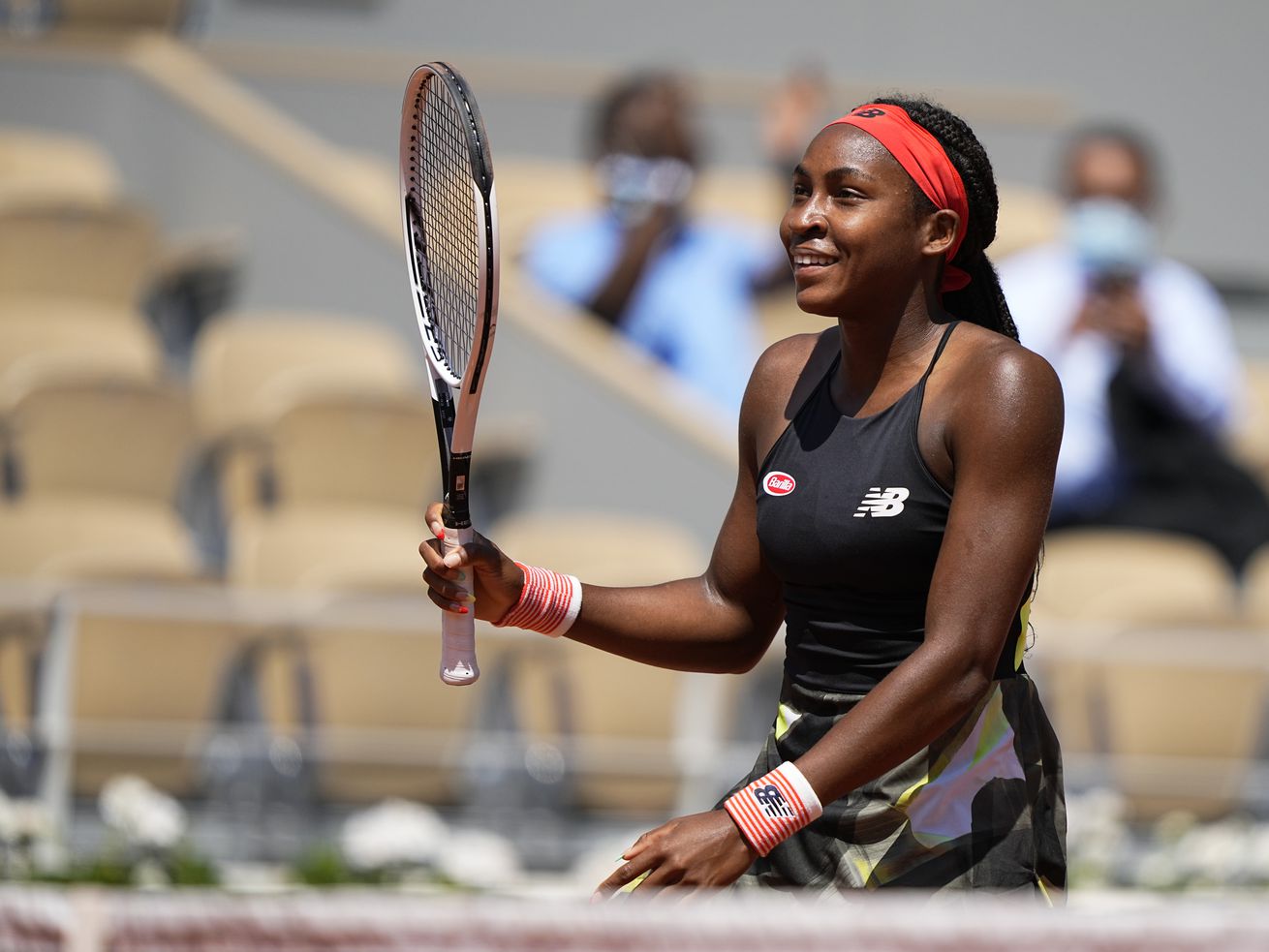
Coco Gauff celebrates after defeating Ons Jabeur during their fourth round match at the French Open. | Michel Euler/AP
The 17-year-old American overwhelmed Ons Jabeur in a 6-3, 6-1 victory at the French Open on Monday to become the youngest woman to reach the quarterfinals at any Grand Slam tournament in 15 years.
PARIS — If Coco Gauff keeps playing like this, she’s going to go from teenage prodigy to Grand Slam champion in a hurry.
The 17-year-old American overwhelmed Ons Jabeur in a 6-3, 6-1 victory at the French Open on Monday to become the youngest woman to reach the quarterfinals at any Grand Slam tournament in 15 years.
Gauff lost only nine points on her serve and was also highly effective at the net, winning 13 of 17 points when she came forward — which was especially impressive against a player who is known for her shot-making skills.
“I feel like this has been the most consistent tennis I have played at this level,” Gauff said. “Hopefully I can keep that going.”
Gauff will will next face Barbora Krejcikova, who also reached her first quarterfinal at a major by beating 2018 French Open runner-up Sloane Stephens with a similarly lopsided score — 6-2, 6-0. Also advancing was 17th-seeded Maria Sakkari, who eliminated last year’s finalist Sofia Kenin 6-1, 6-3. Later, defending champion Iga Swiatek was playing Marta Kostyuk.
“She’s young, she’s amazing, she’s coming up. She’s going to be the next star,” Krejcikova said of Gauff.
Gauff also had a quick match in the previous round, when Jennifer Brady retired with an injured left foot after Gauff won the opening set.
Jabeur said Gauff is a contender to raise the trophy — either this year or in the future.
“If she’s not going to win it now, she’s probably going to win another time,” the Tunisian said.
It wouldn’t be the first time Gauff claims a title at Roland Garros, having won the girls’ singles title in 2018.
Gauff already announced herself as a contender to become the next great American player when she made a run to the fourth round at Wimbledon as a 15-year-old qualifier two years ago. Now, having gone one step further, she became the youngest American to reach a Grand Slam quarterfinal since Venus Williams did it at 17 at the 1997 U.S. Open.
“I’m only going to be 17 once, so you might as well talk about it while I’m 17,” Gauff said.
Gauff has not dropped a set in Paris this year. She won both the singles and doubles titles at a warmup tournament in Parma before coming to Paris. That came after a run to the semifinals of the Italian Open.
In all, she’s on a career-best nine-match winning streak.
“Parma gave me a lot of confidence, especially on the clay,” Gauff said. “It taught me a lot about how to close out matches and deal with the pressure on important points.”
ANOTHER BORG
Exactly 40 years to the day after Bjorn Borg won the last French Open match of his career for his sixth title in Paris, his son, Leo, won his very first junior match at Roland Garros.
For Leo, it’s already too late to match his father’s precocity. Aged 18, Leo has yet to win a professional match on the main tour. Bjorn Borg had just turned 18 when he won his first French Open title.
“I was having a hard time when I was a bit younger,” Leo said when asked about the huge expectations linked to his name. “Now I’m getting used to it, I can control it more. But it’s going to be following me all my tennis career. It’s not bothering me.”
Leo started playing tennis when he was 6 years old but said he did not train seriously until he was 14 when he quit soccer. He made his professional debut in February last year and said his “lowest goal” is now to make it to the Top 10 at some point.
After spending three weeks training at the Rafa Nadal Academy in Spain last year, he returned to Sweden to work with his long-time coach at the Royal Tennis Club. His father occasionally gives him a few tips but doesn’t get mixed up with his son’s training.
“The best advice he gave me is to have things organized,” he said. “To have everything in life organized.”
In addition to his six Roland Garros titles, Bjorn Borg also won five times on the Wimbledon grass. After initially being drawn to hard-court tennis, Leo said his best surface is going to be clay because it’s better suited to his game.
On Monday, he progressed to the second round of the boys’ tournament with a 3-6, 6-3, 6-4 victory over Frenchman Max Westphal. Their match on Court 14 drew fans cheering loudly for both players.
“It was a great crowd, very loud, and a great feeling,” he said.
Leo’s father will arrive in Paris later this week and the teenager hopes he will still be in the fray at that stage so that Bjorn — who celebrated his 65th birthday this week — can watch him play.
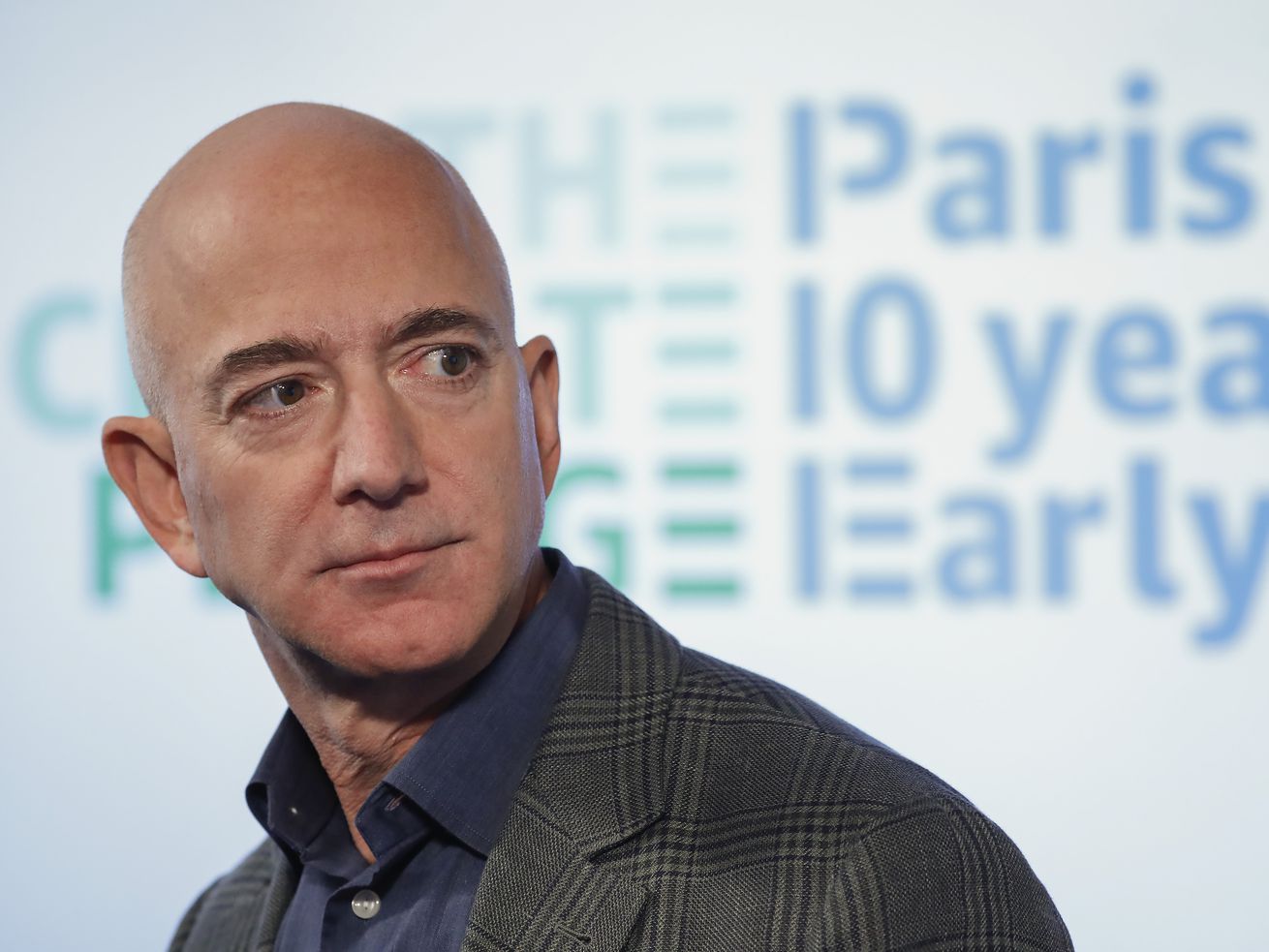
In this Sept. 19, 2019, file photo, Amazon CEO Jeff Bezos speaks during his news conference at the National Press Club in Washington. Bezos will be among the people on Blue Origin’s first human space flight next month. The company said in a post Monday, June 7, 2021, that Bezos will be joined on the New Shepard flight by his brother Mark and the winner of an online auction. | AP
The Amazon founder announced Monday he will launch July 20 from Texas along with his firefighter brother Mark. Also making the 10-minute up-and-down hop will be the highest bidder in a charity auction.
Jeff Bezos will ride his own rocket into space next month, joining the first crew to fly in a Blue Origin capsule.
The Amazon founder announced Monday he will launch July 20 from Texas along with his firefighter brother Mark. Also making the 10-minute up-and-down hop will be the highest bidder in a charity auction.
Bezos is stepping down as Amazon’s CEO on July 5 — just 15 days before liftoff — to spend more time on his space company as well as his newspaper, The Washington Post. His stake in Amazon is currently worth $164 billion.
“To see the Earth from space, it changes you. It changes your relationship with this planet, with humanity. It’s one Earth,” Bezos, 57, said in an Instagram post. “I want to go on this flight because it’s a thing I’ve wanted to do all my life. It’s an adventure. It’s a big deal for me.”
Bezos said he invited his younger brother — his best friend — to share the journey and make it even more “meaningful.”
The flight will officially kick off Blue Origin’s space tourism business. The company has yet to start selling tickets to the public or even to announce a ticket price for the short trips, which provide about three minutes of weightlessness. The capsule can hold six people, each with their own large window. The company hasn’t said who might occupy the remaining three seats on the debut passenger flight.
Virgin Galactic’s Richard Branson also plans to launch aboard his own rocket later this year, after one more test flight over New Mexico. SpaceX’s Elon Musk — who’s transported 10 astronauts to the International Space Station and already sold private flights — has yet to commit to a spaceflight.
Blue Origin successfully completed the 15th test flight of its reusable New Shepard rocket in April, with the capsule reaching an altitude of 66 miles. Before liftoff, a mock crew strapped into the capsule for practice, then hopped out, paving the way for the upcoming flight with passengers on board.
The company’s launch and landing site is in remote west Texas, 120 miles southeast of El Paso and close to the Mexican border. After the capsule separates, the rocket lands upright, to be used again. The capsule, also reusable, descends under parachutes.
For its first crew launch, the company chose the 52nd anniversary of the Apollo 11 moon landing by Neil Armstrong and Buzz Aldrin. It also used a space anniversary in May to announce an online auction for a seat on the flight — the 60th anniversary of the first U.S. spaceflight by Mercury astronaut Alan Shepard, for whom the rocket is named.
The current high bid is $2.8 million. The auction will conclude Saturday, with the winning amount donated to Club for the Future, Blue Origin’s education foundation. Nearly 6,000 people from 143 countries have taken part in the auction.
___
The Associated Press Health and Science Department receives support from the Howard Hughes Medical Institute’s Department of Science Education. The AP is solely responsible for all content.
In this Oct. 7, 1954, file photo, Dr. Jonas Salk, developer of the polio vaccine, holds a rack of test tubes in his lab in Pittsburgh. | AP
“As soon as the vaccine came out, everybody jumped on it and got it right away,” recounts Clyde Wigness, 84, a native of Harlan, Iowa. “Everybody got on the bandwagon, and basically it was eradicated in the United States.”
CINCINNATI — The COVID-19 pandemic and the distribution of the vaccines that will prevent it have surfaced haunting memories for Americans who lived through an earlier time when the country was swept by a virus that, for so long, appeared to have no cure or way to prevent it.
They were children then. They had friends or classmates who became wheelchair-bound or dragged legs with braces. Some went to hospitals to use iron lungs they needed to breathe. Some never came home.
Now they are older adults. Again, they find themselves in what has been one of the hardest-hit age groups, just as they were as children in the polio era. They are sharing their memories with today’s younger people as a lesson of hope for the emergence from COVID-19.
Clyde Wigness, a retired University of Vermont professor active in a mentoring program, recently told 13-year-old Ferris Giroux about the history of polio during their weekly Zoom call. Families and schools saved coins to contribute to the “March of Dimes” to fund anti-polio efforts, he recalled, and the nation celebrated successful vaccine tests.
“As soon as the vaccine came out, everybody jumped on it and got it right away,” recounts Wigness, 84, a native of Harlan, Iowa. “Everybody got on the bandwagon, and basically it was eradicated in the United States.”
In the late 1940s and early 1950s, before vaccines were available, polio outbreaks caused more than 15,000 cases of paralysis each year, with U.S. deaths peaking at 3,145 in 1952. Outbreaks led to quarantines and travel restrictions. Soon after vaccines became widely available, American cases and death tolls plummeted to hundreds a year, then dozens in the 1960s. In 1979, polio was eradicated in the United States.
“So really, what I would love for people to be reassured about is that there have been lots of times in history when things haven’t gone the way we’ve expected them to,” says Joaniko Kochi, director of Adelphi University’s Institute for Parenting. “We adapt, and our children will have skills and strengths and resiliencies that we didn’t have.”
While today’s children learned to stay at home and attend school remotely, wear masks when they went anywhere and frequently use hand sanitizer, many of their grandparents remember childhood summers dominated by concern about the airborne virus, which was also spread through feces. Some parents banned their kids from public swimming pools and neighborhood playgrounds and avoided large gatherings.
“Polio was something my parents were very scared of,” says Ohio Gov. Mike DeWine, now 74. “My dad was a big baseball fan, but very careful not to take me into big crowds … my Dad’s friend thought his son caught it at a Cardinals game.”
A 1955 newspaper photo surfaced recently showing DeWine becoming one of the first second-graders in Yellow Springs, Ohio, to get a vaccination shot. His future wife, Fran Struewing, was a classmate who got hers that day, too. Sixty-six years later, they got the COVID-19 vaccination shots together.
DeWine, a Republican, has drawn criticism within the state and his own party for his aggressive response to the COVID-19 outbreak. But he and Senate Minority Leader Mitch McConnell, a Kentucky Republican who overcame a childhood case of polio, and others of that time remember the importance of developing vaccines and of widespread inoculations.
Martha Wilson, now 88 and a student nurse at Indiana University in the early 1950s, remembers the nationwide relief when a polio vaccine was developed after years of work. She thinks some people today don’t appreciate “how rapidly they got a vaccine for COVID.” She doesn’t take for granted returning to the kind of safer life that allows for planning a big family reunion around Labor Day.
Kochi had a different experience than most children of the 1950s. Her mother, a believer in natural medicine such as herbal treatments, didn’t have her vaccinated (Kochi got vaccinated as an adult). While her mother was an outlier then, she would fit in with today’s vaccine skeptics.
DeWine thinks a key contrast between the 1960s and today, with its reluctance of so many Americans to get vaccinated, is that polio tended to afflict children and had become many parents’ worst nightmare.
“I know our parents were relieved when we were finally going to get a shot,” Fran DeWine recalls.
Her husband recently initiated a series of $1 million lotteries to pump up sluggish COVID-19 vaccination participation among Ohioans. President Joe Biden last week announced a “month of action” with incentives such as free beer and sports tickets to drive U.S. vaccinations.
Wigness blames today’s divisive politics and anti-science messages spread over talk shows and social media. Ferris, the teen he mentors, says he sees criticism of mask-wearing and other precaution among some of his peers. Ferris says the polio eradication success “certainly means it’s possible we can beat COVID, but it entirely depends on people.”
Martha Wilson, now living in Hot Springs Village, Arkansas, talked about polio and COVID-19 in a recent Zoom call with her granddaughter, Hanna Wilson, 28, of suburban New York. She reflected on treating patients iron lungs, a kind of ventilator used to treat polio.
“They were very confining. … It was not a very nice life,” says Wilson.
“I remember a book I read when I was a little kid, `Small Steps: The Year I Got Polio,’ by Peg Kehret. And it stuck with me,” Hanna says. “And I remember the iron lungs and things like that. But when I asked people about it — ‘Hey, do you remember what polio was?’ — no one knew.”
Hanna, an athletics administrator for the Big East Conference, happened to be in Iran in December 2019 when she heard the first reports of a new virus in China. She was visiting a grandfather, Aboulfath Rohani, who would die there a few months later at age 97.
Back home, her job was quickly transformed. Games, then tournaments, then entire seasons were canceled.
“It’s been eye-opening,’ she says. “So many people denied that it was real, they hadn’t seen anything like this.”
Both she and her grandmother point out that the nation endured not only polio but a deadly flu pandemic in 1918 whose estimated toll remains higher than COVID-19’s both in the United States and globally.
“I’m hopeful we will come out of this and it will be just another chapter in history,” Hanna Wilson says.
Martha Wilson says her mother-in-law survived illness from the 1918 flu pandemic and lived a long life.
“So that was one generation, polio was another generation, COVID’s another,” she says. “I think they happened so far apart that we’d forgotten that these things do happen. I think COVID caught us by surprise.
“And now Hanna and her generation will be maybe more aware when something else comes along.”
___
Follow Dan Sewell at https://www.twitter.com/dansewell
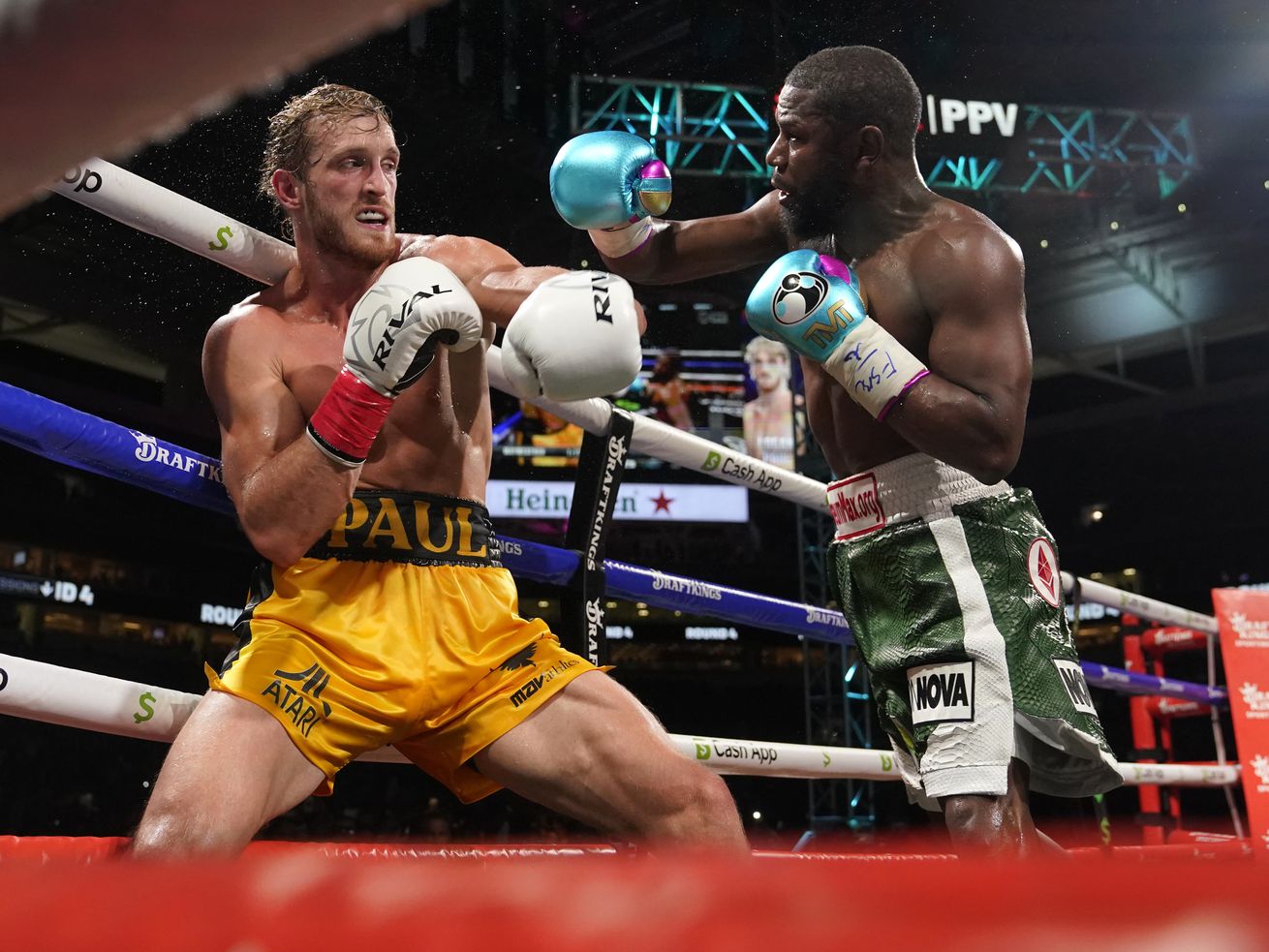
Floyd Mayweather, right, throws a punch at Logan Paul, left, during an exhibition boxing match at Hard Rock Stadium in Miami Gardens, Florida, on Sunday. | Lynne Sladky/AP
Mayweather and Paul boxed an eight-round exhibition Sunday night at Hard Rock Stadium. With the bout not being scored, no winner was declared.
MIAMI GARDENS, Fla. — Floyd Mayweather Jr. outclassed YouTube personality Logan Paul but couldn’t stop him inside the distance.
Mayweather and Paul boxed an eight-round exhibition Sunday night at Hard Rock Stadium. With the bout not being scored, no winner was declared.
The 44-year-old Mayweather used the ring skills that propelled him to world titles in five divisions and a 50-0 career record to frustrate Paul with solid lead and counter shots.
“You’ve got to realize I’m not 21 anymore but it’s good,” Mayweather said in the ring. “He’s better than I thought he was. Good little work. Tonight was a fun night.”
Mayweather, who won titles in the super-featherweight, lightweight, super-lightweight, welterweight and super-welterweight divisions, has said he will not return to competitive boxing. Instead, he will continue to tap into the pay-per-view market with exhibitions like his event with Paul.
Post-fight punch stats showed Mayweather comfortably ahead on total and power shots.
After the fight, Paul celebrated the accomplishment of going the distance against Mayweather.
“Shoot, man, I don’t want anyone to tell me anything is impossible ever again,” Paul said. “To get in here with one of the greatest boxers of all time, proves that the odds could be beat.”
Paul weighed 189 pounds for the exhibition and attempted to use his 34-pound advantage by leaning on the shorter Mayweather. But Paul’s lack of boxing skills left him open to Mayweather’s short left hooks to the head and rights to the body.
“He used his weight and tried to tie me up,” Mayweather said.
Earlier, former Cincinnati Bengals wide receiver Chad Johnson boxed a four-round exhibition against multi-combat sport veteran Brian Maxwell. Like the Mayweather-Paul exhibition there was no scoring, but Johnson avoided a knockout loss after he was floored with an overall right to the head in the final round.
Johnson, in his first boxing event, survived the remainder of the round. The 43-year-old Johnson scored with a solid right to the head in the opening minute of the bout and landed combinations to the head in the second round. But in the minute rest before the fourth round, Johnson breathed heavily and rested his arms on the ropes.
“This was fun, I lost my virginity tonight,” Johnson said about his maiden boxing experience. “This is one for my bucket list. My life has always been about taking chances.”
Luis Arias won a split decision over former super-welterweight champion Jarrett Hurd and former super-middleweight titleholder Badou Jack stopped Dervin Colina in the fourth round.
Chicago police work the scene where 27-year-old man was shot and killed in the 5600 block of S. Marshfield Ave, in the West Englewood neighborhood, Friday, June 4, 2021. | Tyler LaRiviere/Sun-Times
Six men and two women were shot in an attack early Sunday. Later in the day, an 11-year-old girl was wounded in the back.
Five people were killed and at least 53 others were wounded in shootings across Chicago over the weekend, including an 11-year-old girl who was shot Sunday night in the West Pullman neighborhood on the Far South Side.
Witnesses told officers someone opened fire from a red car about 9 p.m. in the 11700 block of South Michigan, according to Chicago police. The girl was hit in the lower back, police said. A family member drove her to Roseland Community Hospital, where she was listed in serious condition.
A nearby resident said she heard the shots from inside their home. She told her young children to get away from the windows and get on the floor.
Ashley Santiago and her family say shootings in the area are “an everyday thing, without fail. It doesn’t matter what time of day it is.”
“We can’t really let our kids come out and come play because stuff like this is happening,” she said.
In another shooting, eight people who were wounded Sunday morning when gunmen opened fire in Burnside on the South Side.
The group was standing on the sidewalk about 4 a.m. when two people in a silver car opened fire in the 8900 block of South Cottage Grove Avenue, police and Fire officials said.
Six of the victims were taken in critical condition to hospitals, fire officials said. Two others were transported in good condition.
Fatal shootings:
— A man was killed in West Englewood Saturday on the South Side. The 26-year-old was on the street about 4:50 p.m. in the 6400 block of South Hoyne Avenue when someone fired shots from a vehicle, Chicago police said.
The man was struck in the chest, hip and neck, police said. He was pronounced dead at Holy Cross Hospital.
— Earlier, a man was killed and another wounded in a shooting in Austin on the West Side. Officers found Gerald Collymore, 39, unresponsive about 1:30 a.m. with gunshot wounds to his head and chest in the 1300 block of North Mayfield Avenue, police said. He was pronounced dead the scene.
A 26-year-old man was hit in the ankle and went to West Suburban Hospital. He was transferred to Loyola University Medical Center, where he was in fair condition, police said.
— On Friday, a man was killed in another shooting in Austin, police said. Michael Cooper was in a backyard in the 5200 block of West Le Moyne Street when someone approached and opened fire about 7:25 p.m., striking him in the head, authorities said. The 23-year-old was taken to a hospital, where he was pronounced dead, police said.
— A man was fatally shot in West Englewood on the South Side, police said. Jermaine Sanders, 27, was on the sidewalk in the 5600 block of South Marshfield Avenue about 9:20 p.m. Friday when someone fired from a white sedan, authorities said. He was struck in the head and taken to the University of Chicago Medical Center, where he was pronounced dead.
— Less than an hour later, a man was found fatally shot in University Village on the Near West Side. Latrell Goodwin, 24, was found with gunshot wounds to his head and chest in a car about 10 p.m. in the 1300 block of West Roosevelt Road, police said. He was taken to Stroger Hospital, where he was pronounced dead.
At least 43 others were wounded in shootings across Chicago between 5 p.m. Friday and 5 a.m. Monday.
The Sox took 3 of 4 from Detroit and are in first place by 4 games in the Central. Nick and Pat are joined once again by James Fegan from The Athletic to talk all things White Sox.
She didn’t appear to be the intended target, according to police.
A woman was grazed early Monday in the crossfire of a shootout in River North.
The 32-year-old was crossing the street at 2 a.m. in the 600 block of North Wells Street when people inside two SUVs started shooting at each other, Chicago police said.
A stray bullet grazed her foot and a friend drove her to Stroger Hospital for treatment, police said.
She didn’t appear to be the intended target, according to police.


/cdn.vox-cdn.com/uploads/chorus_asset/file/22642869/Front__l_r___Hailee_Kaleem_Wright__Karen_Burthwright_and_Sidney_Dupont__Back_l_r__Chloe__Davis__Sir_Brock_Warren__Jamal_Christopher_Douglas_and_Jacobi_Hall_in_Paradise_Square_at_Berkeley_Rep._Photo__Alessandra_Mello_Berkeley_Repertory_Theat.jpg)