Videos

Creating the Good: A father who turned loss into hopeMonika Wnuk | AARP Illinoison June 24, 2021 at 4:51 pm

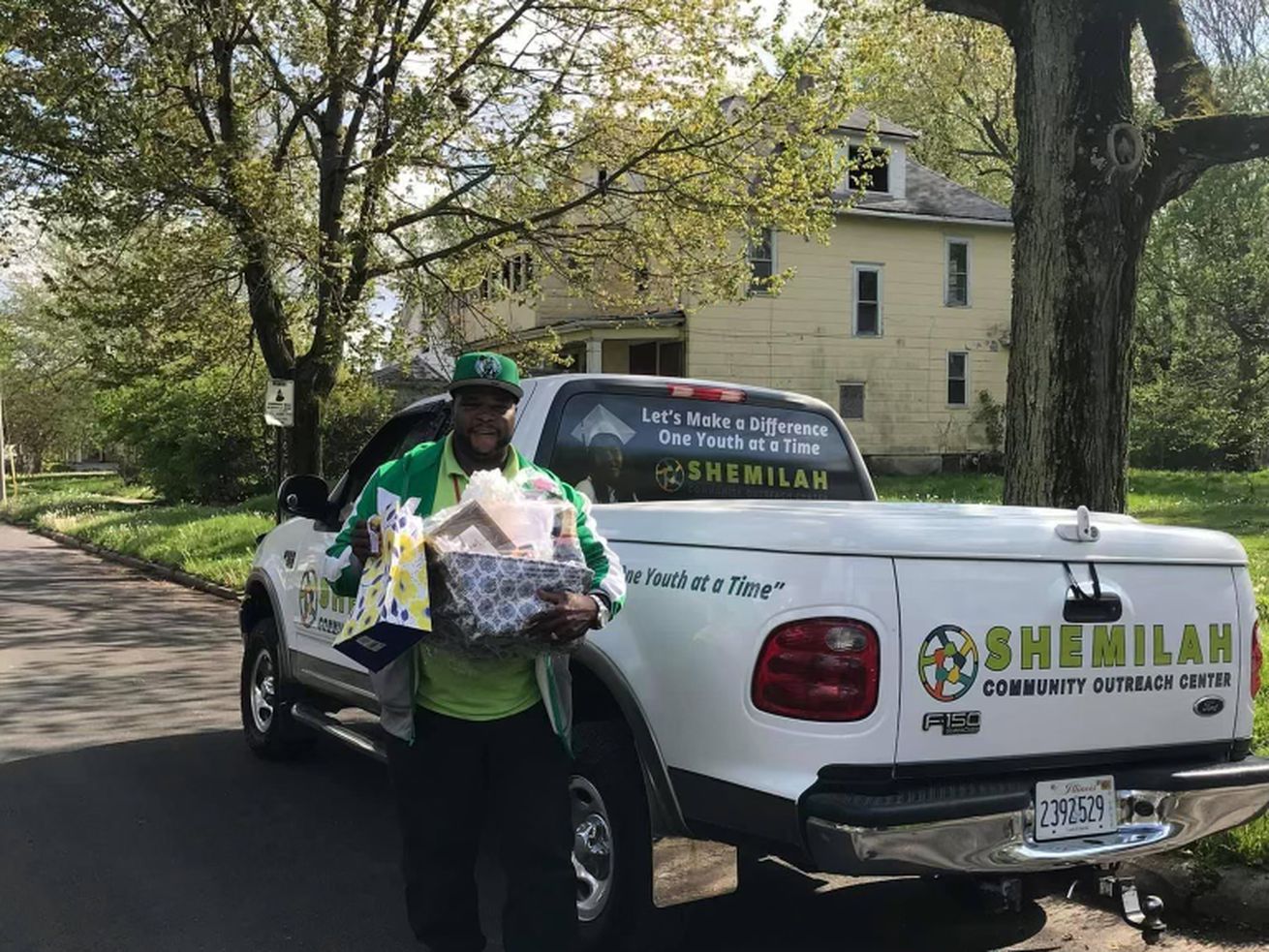
Shemuel Sanders. | Provided photo.

Shemuel Sanders suffered a tragic loss and channeled his life-changing experience into an opportunity to help others.

Shemuel Sanders suffered a tragic loss last June when his daughter, Shemilah, became the victim of a fatal shooting in their hometown of Decatur, Illinois.

Sanders, who often served as an informal mentor to youth in the Decatur middle school where he works, felt compelled, now more than ever, to do more.

“I never want another parent to have to feel what I’m feeling,” says Sanders, who does landscaping work during the summers, “so I started small — pulling a few young men into my landscaping work and paying them for their time.”

That is how the seeds of Shemilah’s Outreach Center were sown.

Once the community heard about what Sanders was doing, his phone wouldn’t stop ringing with calls from parents and young men who wanted to be involved.

In just a few weeks, his landscaping program, which started with 10 young men, quickly grew to 70 — the maximum number of participants that donations to the program could support.

When they returned to school in the fall, Sanders refocused his outreach on helping the men navigate e-learning, recruiting a team of retired teachers who volunteered their time to help students who were struggling outside of a traditional school setting.


Provided photo.

This year, the program has grown to include 200 young men and women and many more offerings for the youth, who can now learn forensic science taught by the local police department, take music or dance classes, and of course, continue to participate in the popular landscaping program.

The only limitation to the growth of the program is funding, and Sanders continues to fundraise to be able to support more participants.

“I’ve had to turn youth away, and that kills me,” says Sanders. “I believe I could easily reach 1000 youth with the community’s support – there is that much need for this work.”

To learn more or find out ways you can support Shemilah’s Outreach Center, visit https://www.shemilahoutreach.org/.

And to find volunteer opportunities in your community, visit www.createthegood.org.

Read More

Creating the Good: A father who turned loss into hopeMonika Wnuk | AARP Illinoison June 24, 2021 at 4:51 pm Read More »

This week in history: Hagenbeck-Wallace Circus train crash stuns Chicagoon June 24, 2021 at 3:00 pm

As published in the Chicago Daily News, sister publication of the Chicago Sun-Times:

In the early 20th century, the arrival of the circus in town disrupted everyday life, sometimes closing schools and businesses so everyone could attend. Even in major cities like Chicago where residents never lacked entertainment, the sight of a circus tent or train would have been a welcome one.

During the early morning hours of June 22, 1918, two trains carrying the Hagenbeck-Wallace Circus chugged on from Michigan City, Indiana, to nearby Hammond. The first arrived safely, but the second pulled off the main tracks to fix a hotbox. Five wooden cars of the second train — several of them filled with sleeping clowns, acrobats, performers and their families — stayed on the main track while the engineers fixed the problem.

At about 4 p.m., an empty train came barreling down the tracks, ignoring stop signals and the lights of several engineers trying to catch the driver’s attention. Nothing worked. The train crashed into the five cars, causing a deafening sound and a terrible fire.

When reporters for the Chicago Daily News caught up to the action, authorities reported 100 people dead, according to that day’s paper.

“At noon nearly 60 bodies had been removed from the mass of ashes and twisted metal into which the five sleeping coaches had been jammed,” the paper said. “More than 150 dead and injured were taken to Gary and 75 dead and injured were removed to Hammond. It was believed that 50 more were still in the funeral pyre, literally burned to ashes.”

The crash caused tanks of acetylene gas to explode, which sparked fires that spread quickly in the area.

“To add to the holocaust,” the paper reported, “water was unobtainable and the fumes of the gas and intense heat of the flames made it impossible for volunteer resources to approach within 150 feet of it. The crew of the circus train and the men of the troop train available worked heroically, but there was so little they could do.”

Some performers did manage to survive. One Daily News reporter interviewed acrobat Alec Codd at Mercy Hospital in Gary.

“It was like the cracking of an egg shell,” he said. “My legs doubled under the pressure of the walls of the car as they caved in. I felt a terrible pain in my back. Everything was dark, and, for one minute after the big crash that woke me up, everything was silent.”

Codd attempted to reach his sleeping wife, whose hand was “still warm, but motionless,” he said. He couldn’t move. Something pinned him down, and every time he tried to move, “a piercing pain shot through my body.” Just before the flames engulfed his car, a fellow performer freed Codd and dragged him out of the wreckage.

“All around me, there was pandemonium,” he recounted. “A strong wind was fanning the flames, which spread rapidly. And from underneath the mass of piled-up coaches, it flashed through my mind that it looked like a funeral pyre. I heard the groans and moans and the death cries of these whom I had worked with so long. Then I lost consciousness.”

D.W. Donohue, superintendent of the Chicago division of the railroad, and L.W. Landman, general passenger agent, told reporters they believed the empty train’s engineer, a man called Sergeant, had either fallen asleep or suffered an attack of paralysis. No other option would explain why he’d missed signals and the circus engineers telling him to stop from miles down the track.

Other experts, however, had different theories. Several railroad officials, who declined to be named, examined the empty train following the crash and noticed that the air brakes of the Pullman coaches had not been set on the wheels. Because military officials usually used the empty train to move soldiers serving in World War I to the east coast, the unnamed railroad officials suspected sabotage.

The Hagenbeck-Wallace Circus train wreck remains one of the most disastrous in history, with 86 officially dead and more than 100 injured. Next to the main story, the Daily News ran a list of names of those that died along with their respective roles in the circus.

Read More

This week in history: Hagenbeck-Wallace Circus train crash stuns Chicagoon June 24, 2021 at 3:00 pm Read More »

Fran Spielman interviews former Chicago Tribune columnist John Kasson June 24, 2021 at 3:28 pm

Sun-Times City Hall reporter Fran Spielman is joined by her long-time competitor and friend, former Chicago Tribune columnist John Kass. Topics include their time together covering City Hall, his recent controversies, and what’s next for Kass as he launches his own site, johnkassnews.com.

Subscribe: Apple Podcasts | Google Podcasts | Luminary | Spotify | Stitcher

Read More

Fran Spielman interviews former Chicago Tribune columnist John Kasson June 24, 2021 at 3:28 pm Read More »

University of North Carolina tenure debate for Nikole Hannah-Jones goes beyond academiaon June 24, 2021 at 3:39 pm

As a onetime academic, I’ve always been of two minds about the institution of tenure.

In theory, it protects intellectual freedom. In practice, however, junior faculty become so accustomed to keeping their heads down seeking a lifetime sinecure that timidity becomes second nature. They confine their heterodox opinions to the faculty lounge.

So I’m puzzled that a nationally famous journalist like The New York Times’ Nikole Hannah-Jones thinks she needs it. The hullaballoo at the University of North Carolina, provoked by its Board of Trustees declining to include tenure in its offer of a 5-year, $180,000 per annum contract, has become a symbolic struggle on depressingly familiar racial terms. I quite doubt she intends to make a career in Chapel Hill.

Sometimes, however, symbolic struggles are worth having. But do spare me the high-flown rhetoric about UNC’s inviolable academic standards. This is the school whose department of African and Afro-American Studies got caught awarding phantom “A” grades to varsity athletes for classes that never met. Literally did not exist.

The scam involved some 3000 students over two decades. Supposedly, UNC’s football and basketball coaches knew nothing.

Sure they didn’t.

But back to today’s racial controversy. Nikole Hannah-Jones, of course, is the author of the Times’s celebrated and controversial “The 1619 Project” — an ambitious attempt to reassess American history through the shame of slavery.

It’s UNC’s Hussman School of Journalism that has offered her the job. And that, in turn, has drawn the interest of Arkansas Democrat-Gazette publisher Walter Hussman, the school’s namesake, whose $20 million gift to his alma mater ensures that his phone calls and emails will always be answered.

Three big things trouble Hussman about “The 1619 Project.” First, its monthly magazine-style blend of fact and opinion, which the publisher finds unseemly. But that ship has sailed. Times readers know what they’re getting. More substantively, Hussman objects to what serious historians have called into question about the work: its assertion that the Revolutionary War was fought largely to prevent the abolition of slavery in the 13 colonies.

According to the Chronicle of Higher Education, Hussman was greatly influenced by a Politico column by Northwestern professor Leslie M. Harris headlined “I Helped Fact-Check the 1619 Project. The Times Ignored Me.” Harris had warned that the insupportable claim would give critics an excuse to disregard an otherwise important work, which is “exactly what happened.”

But should a piece of journalism whose headline allegation is somewhere between dubious and downright false be lionized? OK, so Hannah-Jones has earned a Pulitzer Prize. But would she be offered tenure in a first-rate history department? Probably not.

Princeton historian Sean Wilentz, who has publicly criticized her work, put it this way: “There are, no doubt, reasons to object to awarding a tenured position on the faculty to Hannah-Jones, in which scholarship and qualifications are the primary considerations. The substance of her work on ‘The 1619 Project’ is controversial. So is her choice to sometimes dismiss and demean her critics instead of engaging with their arguments on the merits.”

All too often, it goes like this:

“You’re wrong.”

“You’re white.”

The End.

Wilentz nevertheless emphasizes that the decision is the UNC faculty’s to make, not politically appointed trustees or alumni donors.

If Hannah-Jones has become a partisan lighting rod, it’s a role she’s clearly chosen. And yes, it’s all about race.

As for mega-donor Hussman, he’s found himself pillored in Slate as “a mini-Rupert Murdoch,” which is surely unfair to anybody familiar with the newspapers he publishes. The Democrat-Gazette’s news coverage is vastly superior to any newspaper in the region, and Hussman has risked a lot by offering iPad subscriptions (complete with iPads) to cut printing costs.

I wrote a column there myself during the Clinton and George W. Bush years. Although I’m confident Hussman disagreed with most of my opinions, he never interfered. When the publisher says he resents Hannah-Jones’ assertion that “Black Americans fought back alone,” he’s thinking about white Arkansas journalists who risked everything (and won Pulitzer Prizes) championing racial justice from the 1957 Central High integration crisis onward.

One of those journalists, the late Paul Greenberg, edited the Arkansas Democrat-Gazette. We didn’t agree about much else, but Greenberg stood strong for racial justice at a time when it could get a man killed.

Indeed, he was the editor and Hussman the publisher when I was unceremoniously dumped from a half-time teaching job after several columns lampooning the propaganda barrage used to sell the Iraq war.

“This isn’t conservatism,” I’d written. “It’s utopian folly and a prescription for endless war.” The dean said the college had no funds to pay me, transparently false. I’d taken the job to help the college out of a tight spot after a senior professor fell ill. Colleagues pretended they didn’t know I’d been sent away. Students were told I’d resigned.

You see, I didn’t have tenure.

Gene Lyons is a columnist for the Arkansas Times.

Send letters to [email protected].

Read More

University of North Carolina tenure debate for Nikole Hannah-Jones goes beyond academiaon June 24, 2021 at 3:39 pm Read More »

Jacob deGrom Is Chasing the Greatest Cubs Pitcher Everon June 24, 2021 at 3:31 pm

Last week, Jacob deGrom of the New York Mets pitched three shutout innings against the Cubs, striking out eight of the nine batters he faced, before leaving the game with shoulder tightness. On Monday, he shut out the Atlanta Braves for five innings, lowering his earned run average to 0.50.

DeGrom’s wizard-like season—he has allowed four earned runs and 27 hits in 72 innings, while striking out 117 batters—has been compared to Bob Gibson’s in 1968. Gibson finished with a 1.12 ERA, so dominating National League hitters that baseball lowered the mound and shrank the strike zone the following year.

But there’s an even stingier pitching standard for deGrom to pursue. It belongs to a Cub: Mordecai “Three Finger” Brown. In 1906, Brown’s ERA was 1.04, still the National League record.

“If I was asked to pick an all-time team, my nod would go to Brown as starting pitcher,” Cubs historian Ed Hartig once said. “Not only was he one of the best starting pitchers of his era, he was also one of the best relief pitchers.” 

Yet there is no statue of Brown outside Wrigley Field. He pitched his best seasons in West Side Park, and his career, which lasted from 1903 to 1916, is too remote to appeal to the modern fan’s nostalgia. But he was the best player on the best Cubs team ever.

Brown obtained his nickname as the result of an accident on his family’s farm in Nyesville, Ind., when he was five years old. 

“My brother used to cut feed for the horses in a patent box filled with circular knives,” Brown would remember, as recounted in the biography Three Finger: The Mordecai Brown Story, by Cindy Thomson and Scott Brown. “One day I was feeding the knives and my hand slipped in among the knives.”

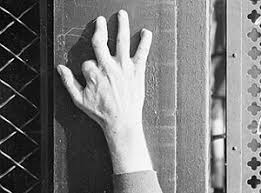
Brown’s index finger was severed just above the first knuckle. A few weeks later, he was playing with a rabbit in a tub when he slipped and smashed his already-mangled hand against the bottom. His sister rebandaged the hand badly. The middle finger and pinkie were forever crooked.

No one else in baseball had a hand like Brown’s, so no one else threw a curve like Brown’s. By spinning the ball off his middle finger, he made it curl down and away from his opponents’ flailing bats. As former Dodgers pitcher Carl Erskine observed, the index finger is “almost in the way” of a good curve grip. Brown’s hand most likely gave him what was a more effortless knuckle curve, a now-popular pitch that requires some tricky placement of the index finger—unless all you have is a knuckle.

“That old paw served me pretty well in its time,” Brown acknowledged. “It gave me a firmer grip on the ball so I could spin it over the hump. It gave me a greater dip.”

During a brief career as a coal miner (the source of his other nickname, “Miner” Brown), Brown began pitching for a local minor league team, the colorfully-named Terre Haute Hottentots of the Three-I League, which covered Indiana, Illinois and Iowa. He was signed by the Cardinals in 1903, and traded to the Cubs the next year.

Statistically, 1906 was Brown’s best year. Besides his 1.04 ERA, he was 26-6, with nine shutouts and 27 complete games. (Brown’s strikeout totals were never impressive. His deformities made him a finesse pitcher, not a power pitcher. With only three fingers, he couldn’t generate as much velocity as Walter Johnson.) The Cubs won 116 games, but that October, they lost the World Series to the White Sox. It was 1908—the year the team won its last championship of the 20th century—that established Brown as the greatest pitcher ever to wear a Cubs uniform.

To capture the pennant that year, the Cubs had to win the final game of the season, against the New York Giants, a makeup made necessary by the most famous baserunning error in baseball history: Merkle’s Boner. In a September 23 game against the Cubs at the Polo Grounds, the Giants apparently scored the winning run when Al Bridwell singled home Moose McCormick from third base in the bottom of the ninth. Fred Merkle, who was on first, thought the game was over, and returned to the dugout. Cubs second baseman Johnny Evers retrieved the ball and stepped on second for a force out, negating the run. Darkness was falling. The field was swarmed with fans. The umpires declared the game a tie, to be played over, if necessary. After the last day of the season, the Cubs and Giants were both 98-55, so it was necessary.

Giants fans, who felt cheated out of a victory, and a pennant, mailed letters marked with black handprints to the Cubs—a death threat, if they won the game. Jack Pfiester was the Cubs’ starter, but he just didn’t have it that day, hitting the first batter and walking the second. After another walk and hit, which left Giants up 1-0 with runners on first and second, player/manager Frank Chance pulled Pfiester, calling in Brown to pitch to third baseman Art Devlin.

“Unconscious of everything, careless of his bearing, the man who had faced and touched off many a death dealing blast in the depths of Indiana’s coal mines walked to his position, hurled a few balls to [catcher Johnny] Kling to assure himself of accurate aim. Then he was ready,” wrote Tribune sportswriter I.E. Sanborn. “Swish went Devlin’s bat, not once, but twice, then thrice, and the budding hero shriveled in the frost of a greater hero’s cool hard headed thinking.”

The Giants only scored one more run. Brown had yet another nickname, “The Royal Rescuer,” for his skill as a relief pitcher. (In 1911, Brown saved a then-record 13 games.)The Cubs won, 4-2. The losing pitcher was Brown’s nemesis, Christy Mathewson, a member of the Hall of Fame’s inaugural class in 1936; Brown was inducted in 1949, a year after his death. After the game, Giants fans punched and slashed the Cubs as they hightailed it for the clubhouse, where the police loaded them into squadrols for the ride back to the hotel.

The New York Times published a poem giving Brown his due as a Giant killer:

“Manhattan is busted,
The pennant is down,
And the Giants are walloped
By Mordecai Brown
Mordecai, Mordecai
Three-fingered Brown”

In the World Series against the Tigers, Brown won two games, pitched 11 scoreless innings, and made what Sanborn called “the greatest ‘inside play’ I ever saw pulled in a game of crucial importance.” In Game Four, with runners on first and second, Ty Cobb squared up to bunt. Brown leapt off the mound, intercepted the ball, and threw out the leading runner.

“Brown speared the ball with one hand and while bent in an awkward position, whirled like a top and burned the ball to [third baseman Harry] Steinfeldt,” Cobb recalled, offering a rare compliment to an opponent. “No pitcher ever made a finer play than ‘Miner’ Brown did that day and no one ever made one that was more critical or called for a greater display of nerve and ability.”

The Cubs, who had swept the Tigers in the 1907 World Series, won the 1908 Series four games to one. They wouldn’t win another for 108 years. Before turning into the Lovable Losers, the Cubs dominated the first decade of the 20th Century. In fact, the Society for American Baseball Research named the 1906-10 Cubs “The Best Team in National League History.” No player contributed more to the Cubs’ success than Brown, with 34.3 Wins Above Replacement in those years. Build that man a statue on Addison Street, with his mangled hand cast in bronze, to show that an accident which might have damaged a life instead made it unforgettable.

Read More

Jacob deGrom Is Chasing the Greatest Cubs Pitcher Everon June 24, 2021 at 3:31 pm Read More »

Chicago Bulls: History begs patience with Coby White’s developmenton June 24, 2021 at 3:23 pm

Read More

Chicago Bulls: History begs patience with Coby White’s developmenton June 24, 2021 at 3:23 pm Read More »

Man charged with shooting woman to death in BronzevilleDavid Struetton June 24, 2021 at 2:31 pm

Sun-Times file photo

Elijah Clippard, 31, faces a murder charge in the June 15 shooting of Crystal Crockett, Chicago police said.

A man has been charged with fatally shooting a woman earlier this month in Bronzeville on the South Side.

Elijah Clippard, 31, faces a murder charge in the June 15 shooting of Crystal Crockett, Chicago police said.

Clippard allegedly shot the 21-year-old woman in the head around 6:15 a.m. in the 4500 block of South Wabash, police said.

A witness heard gunfire and found the woman lying in an alley, police said. Crockett, of Bronzeville, was pronounced dead at the scene.

Police arrested Clippard Wednesday in the Eden Green housing development on the Far South Side, where he lived.

He was expected to appear in court later Thursday.

Read More

Man charged with shooting woman to death in BronzevilleDavid Struetton June 24, 2021 at 2:31 pm Read More »

Man, 19, charged with killing teen, shooting dog in West Side attacksDavid Struetton June 24, 2021 at 2:34 pm

The Leighton Criminal Courthouse.
The Leighton Criminal Courthouse. | Sun-Times file

Police say he participated in a West Garfield Park drive-by in 2020 and then, last month, broke into a home, attacked the people inside and shot their dog.

A teenager has been charged with fatally shooting someone last year in West Garfield Park and then, in March, breaking into a home, attacking the people inside and shooting their dog.

Eugene Burns, 19, was a participant in the Sept. 3 shooting that killed 17-year-old Jaylin Jerome Mason, Chicago police said.

Someone fired shots from a passing black Nissan Altima that evening as Mason stood in a group, police said. Mason was struck in the neck and chest and pronounced dead at Stroger Hospital.

On March 13, Burns forced his way into a home in the 5200 block of West Van Buren in the Austin neighborhood, police said. He allegedly battered a woman and two men in their 50s and 60s and shot their dog.

Burns was arrested Tuesday and charged with murder, three counts of home invasion, aggravated cruelty to animals and possession of a stolen vehicle, police said.

He was expected to appear in court Thursday.

Read More

Man, 19, charged with killing teen, shooting dog in West Side attacksDavid Struetton June 24, 2021 at 2:34 pm Read More »