Videos

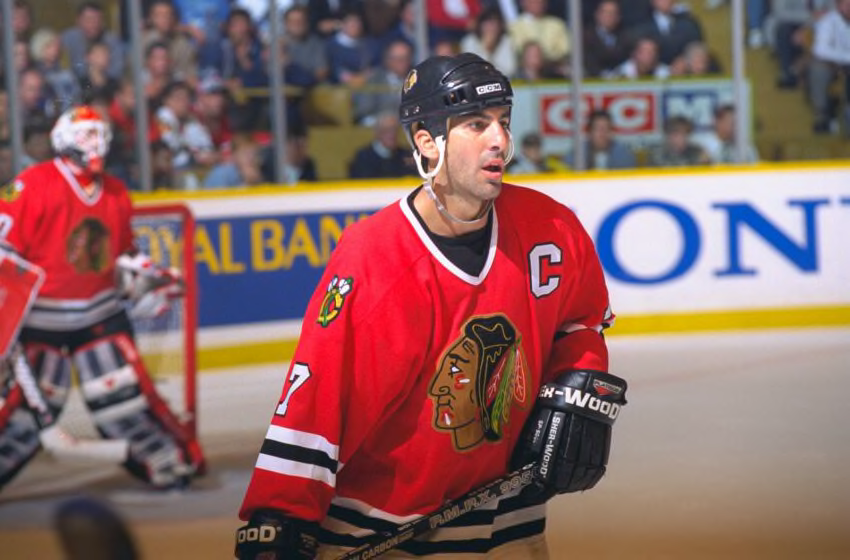
Former Chicago Blackhawks superstar joins ESPN as analyston June 29, 2021 at 5:43 pm

Read More

Former Chicago Blackhawks superstar joins ESPN as analyston June 29, 2021 at 5:43 pm Read More »

Ruling in Chicago rioting ‘Joker’ case leaves some statements unusable by prosecutorson June 29, 2021 at 3:55 pm

A federal judge found Tuesday that a Pilsen man invoked his right to counsel when authorities tried to get him to identify himself as the person wearing a “Joker” mask during the May 2020 riots in Chicago, leaving some comments he made unusable by prosecutors.

U.S. District Judge Andrea Wood said Timothy O’Donnell sought the help of a lawyer when an FBI agent and a Chicago police detective asked him June 2, 2020, about a photo of a person in a clown mask sitting on a bridge above the spray-painted words, “KILL COPS.”

Prosecutors say O’Donnell set fire to a Chicago police vehicle while wearing that mask in the 200 block of North State Street on May 30, 2020. His case is among the most high-profile to result from last year’s rioting and looting in Chicago in the wake of George Floyd’s murder by then-Minneapolis police officer Derek Chauvin.

O’Donnell repeatedly denied setting the police vehicle on fire during his interview and told authorities, “I do not stand for the exploitation of me and using me as a puppet to create an image,” according to Wood’s 13-page order Tuesday.

The ruling amounts to a partial victory for O’Donnell’s defense attorneys, Michael Leonard and Steve Greenberg. But authorities had also tied O’Donnell to the incident through a “PRETTY” tattoo seen on the neck of the person wearing the mask, which matches a tattoo of O’Donnell’s. Prosecutors have also said investigators found a similar mask during a search of an apartment where O’Donnell lived.

Timothy O'Donnell
Timothy O’Donnell
Chicago Police Department

In addition, U.S. Magistrate Judge Gabriel Fuentes found last year that video of the incident “is indeed quite damning,” in part prompting him to rule that O’Donnell should be held in custody while awaiting trial. Fuentes also noted then that, in addition to allegedly wearing a “Joker” mask, O’Donnell “self-reported that he has gone by the name ‘The Riddler’ in the past.”

O’Donnell is set to go to trial Feb. 7. He remains in custody at the Metropolitan Correctional Center, according to comments made by Leonard during a status hearing in the case Tuesday.

Wood’s ruling revolved around O’Donnell’s comments during his June 2, 2020, interview after the FBI agent showed O’Donnell the photo of the man in the mask on the bridge above the words “KILL COPS.”

O’Donnell allegedly said, “Yes, that is me, and they so nicely got me um- with uh- it’s all exploitation of image. See ‘kill cops’ and then an image of me as the clown,” according to Wood’s order.

The FBI agent asked O’Donnell to initial the photograph, and O’Donnell asked, “You want to — you just want to make the correlation of me as that man in the — ?” When the FBI agent answered, “Yeah, just you saying that ‘Yes, this is me in the picture,” O’Donnell replied, “I would prefer not to sign any kind of documents.”

Though the FBI agent said he wouldn’t force O’Donnell to sign, a Chicago police officer asked O’Donnell, “But is that you?” And that’s when O’Donnell said, “I’m in fear. I’m not going to say anything further on that matter without a lawyer present.”

Wood’s ruling suppressed any statements O’Donnell made about whether he wore the “Joker” mask after he made that comment. The FBI agent went on to ask O’Donnell about a photo of a person in the mask standing next to the CPD vehicle with his hand close to the gas tank. O’Donnell said a photographer asked him to pose there.

A man alleged to be Timothy O'Donnell reaches toward the gas tank of a Chicago police vehicle in Chicago.
A man alleged to be Timothy O’Donnell reaches toward the gas tank of a Chicago police vehicle in Chicago.
U.S. District Court records

“This is an image with the — the — the man in question is being told, you know, by a photographer to check — to check this out, ‘Hey, look what’s going on,’ like, I mean, not ‘Look what’s going on,’ it’s — he wanted an image, and that’s the image he got. He wanted that specific image,” O’Donnell allegedly said.

The FBI agent asked O’Donnell, “What if we told you we have witnesses that say you’re dancing and having a good time and enjoying yourself and not moving in fear?” O’Donnell replied, “That’s all what an attorney and a court of law — when they are — to be brought up.”

O’Donnell denied setting the vehicle on fire, said “it was supposed to be a peaceful protest” that day, and he said he was there helping bandage people injured by other protesters.

Read More

Ruling in Chicago rioting ‘Joker’ case leaves some statements unusable by prosecutorson June 29, 2021 at 3:55 pm Read More »

‘Summer of Soul’ is a treasure trove of iconic performances in a festival that history forgoton June 29, 2021 at 4:00 pm

In the summer of 1969, Sly and the Family Stone took the stage in front of a massive crowd at an outdoor music festival and killed with a funk/soul/psychedelic rock set highlighted by the showstopping “I Want to Take You Higher.” The group featured the charismatic and unpredictable and enormously talented frontman/keyboardist Sylvester Stewart, a white drummer and saxophonist, and Black females on piano, trumpet and vocals. They were revolutionary, and they were great, and they gave a performance for the ages.

And six weeks later, they’d do it again at Woodstock.

Some 50+ years after the fact, the Woodstock gathering in upstate New York remains the most famous, the most celebrated, the most legendary outdoor concert in modern history. But before Woodstock, on consecutive weekends in June, July and August of 1969, there was another memorable music festival playing about 100 miles away, at Mount Morris Park in Harlem, with all-star lineups including the aforementioned Sly and the Family Stone, as well as Gladys Knight and the Pips, Stevie Wonder, Nina Simone, BB King, The Fifth Dimension, The Staples Singers, Mahalia Jackson, and the list goes on and on. Whereas Woodstock was immortalized by an Academy Award-winning documentary, bestselling soundtrack album and countless anniversary celebrations, the concerts at the Harlem Music Festival were largely forgotten to history — until now, with the arrival of director Ahmir “Questlove” Thompson’s brilliant and invaluable and stirring documentary “Summer of Soul.”

A local New York TV station broadcast highlights every Sunday night throughout the festival back in ’69, which was also filmed by the late producer/director Hal Tulchin for a possible network special or movie — but we’re told there was no commercial interest in a “Black Woodstock,” so the footage was boxed up and stored away.

Thank the cinematic and music gods it was never destroyed or lost, as “Summer of Soul” is an absolute found treasure of golden onstage moments, interspersed with interviews from participants such as Gladys Knight as well as attendees and cultural commentators, along with celebrity artists such as Chris Rock and Lin-Manuel Miranda. One of the many highlights is when Billy Davis Jr. and Marilyn McCoo of the Fifth Dimension (who have been married for a half century and look amazing) watch footage of themselves and the rest of the group onstage in Creamiscle-colored outfits, performing the “Aquarius/Let the Sunshine In” medley from “Hair” that became a No. 1 hit for them. They’re visibly moved, as McCoo recalls how important it was for them to play Harlem because a lot of people who had only heard them thought they were white.

Gladys Knight & the Pips are shown in their 1969 performance at the Harlem Cultural Festival, featured in the documentary “Summer of Soul.”
Searchlight Pictures

“Summer of Soul” is filled with chills-inducing performances, whether it’s a 19-year-old Stevie Wonder jamming on the drums, the amazing Gladys Knight and those wondrous Pips telling us they “Heard it Through the Grapevine,” or the gospel group the Edwin Hawkins Singers performing a rousing rendition of their crossover smash hit “Oh Happy Day.” We often cut to medium and close-up shots of the fans, and what a beautiful crowd it is: men, women and children, clad in the garb of the late 1960s, having the time of their lives, grooving and moving and nodding and singing along with the incredible music emanating from the stage.

Thompson sprinkles in news footage from the time, reminding of us all that was happening in the summer of 1969, from protests in the streets to a man on the moon. Arguably the most compelling sequence in the film comes when Jesse Jackson talks about how “Take My Hand, Precious Lord” was Martin Luther King’s favorite song and then hands the microphone over to Mavis Staples, who trades vocals with Mahalia Jackson. It’s a moment of pure glorious and authentic emotion and grace, equal to anything we’ve seen in “Woodstock” or for that matter any other concert film.

My only quibble with “Summer of Soul” is director Thompson’s tendency to cut away in the middle of a performance for a bit of historical context, whether it’s archival news footage or a quote from one of the participants or attendees. True, their insights are often moving and insightful, but it might have made for an even more incredible viewing experience had we been given the chance to see more of the numbers performed in their entirety, as they were witnessed by the crowds at the Harlem Cultural Festival in that unforgettable summer of 1969.

Read More

‘Summer of Soul’ is a treasure trove of iconic performances in a festival that history forgoton June 29, 2021 at 4:00 pm Read More »

Greg ‘Da Bull’ Noll, legendary big-wave surfer, dies at 84on June 29, 2021 at 4:34 pm

LOS ANGELES — Greg “Da Bull” Noll, who became a surfing legend by combining a gregarious, outsized personality with the courage and skill to ride bigger, more powerful waves than anyone had ever attempted, has died. He was 84.

Noll, who had lived in the picturesque, seaside town of Crescent City, California, died Monday of natural causes, according to an Instagram post from his son’s company, Noll Surfboards. Requests for comment from the Noll family were not immediately returned, and it was not clear where he died.

One of the first and arguably one of the greatest big-wave riders, Noll was much more than a surfer. He was also an entrepreneur who helped transform the sport with his Greg Noll surfboards, which were among the first to be built from balsa wood, a substance that made them more maneuverable and light enough for most people to use.

He also appeared in numerous surfing documentaries, worked as a photographer on the 1967 film “Surfari” and was the stunt double for James Mitchum in the 1964 film “Ride the Wild Surf.” In 2010, he and his son Jed launched a surf apparel line.

It was the towering waves he caught, coupled with a blunt but friendly manner, that made Noll’s reputation.

From the early 1950s through the 1960s, he traveled from Southern California to Mexico, Australia and the North Shore of Hawaii’s island of Oahu in search of the biggest waves.

It was in October 1957, at Waimea Bay on Oahu’s North Shore, where he led a handful of surfers to a place where the waves can reach three stories high in the winter. The bay was said to be impossible to surf, and residents claimed nobody had tried since a young California surfer, Dickie Cross, had been killed there in 1943.

Grainy footage shows Noll catching a wave perhaps as high as 30 feet (9 meters), then somehow managing to stay standing as it pitches him some 10 feet (3 meters) or more straight down its face. From there, he moves outside and rides it nearly to the shore.

Years later, Noll would let out a cackle and an expletive as he recalled his first thought after finishing that ride: “I’m still alive!”

From then on, there was no stopping the surfer who was instantly recognizable in his distinctive black-and-white “jailhouse” shorts. He started wearing them, he once said, so people would know it was him on a wave and get out of his way.

In 1964, Noll was credited with being the first person to ride a wave at Oahu’s Third Reef Pipeline. In 1969, at Hawaii’s Makaha Beach, he rode what surfers who saw it asserted was the biggest wave anybody ever caught up to that point.

There was no definitive film footage taken that day, however, and in recent years, others have said the wave was no more than 20 feet (6 meters), not even as big as the ones Noll had surfed at Waimea. Still, no one who questioned the wave’s size doubted Noll’s skill or bravery in hauling his board into the pounding surf that day.

Soon after the Makaha Beach ride, Noll left surfing, closing his surfboard factory in Hermosa Beach and moving to Northern California, where he became a successful commercial fisherman and later a sport fishing guide.

He was unhappy, he said years later, with what the popular “Beach Party” movies of the 1960s had done to surfing. The films flooded the Southern California shoreline, he said, with people who couldn’t surf, got in the way of those who could and didn’t understand or appreciate the sport.

“That whole Hollywood scene at that particular time was just a mess when it came to doing anything meaningful with the surf community,” Noll told The Associated Press in 2013. “They lived in their own little bubble and thought surfing was all about beach parties and people jumping around dancing in the moonlight to funny music.”

By the late 1980s, however, commissions started coming in for custom-made surfboards. Noll opened a little shop in his garage to make them, putting his son Jed, then a teenager, to work with him.

In 2009, his son opened Noll Surfboards in San Clemente and put the father to work designing a line of customized boards for collectors that commemorate historical surfing events or honor legendary surfers.

“It gives me a chance to work with my son and share what I know about the ocean and the boards and the history,” Noll told the AP in 2018.

“Da Bull” was born Greg Lawhead in San Diego on Feb. 11, 1937, later taking the last name of his stepfather, Ash Noll. He moved to the surf town of Manhattan Beach with his mother when he was 3 and soon developed an affinity for the water.

As a young man, Noll had a bodybuilder’s physique, and it was that, along with what fellow surfers described as his hard-charging, bull-headed surfing style, that earned him his nickname.

Although he disdained the “Beach Party” movies, Noll acknowledged that out of the water, he could be a hell-raiser and a good-time party guy himself. He took to surfing, he once said, because it was more fun than working.

As he told the AP in 2008: “People always ask, ‘What is it that makes people want to give up their friends, their family, their jobs and just go surfing?’ Those people always categorize surfing as a sport. But it’s not. It’s a lifestyle.”

A complete list of survivors was not immediately available. Noll and his wife, Laurie, had daughter Ashlyne and sons Jed, Tate and Rhyn.

Read More

Greg ‘Da Bull’ Noll, legendary big-wave surfer, dies at 84on June 29, 2021 at 4:34 pm Read More »

GOP tries to sucker punch U.S. historyon June 29, 2021 at 4:37 pm

Chicago is a boxing town. Or was.

That shouldn’t be news, but I suspect it is, to some. The three most important heavyweight champions of the world in the 20th century all lived in Chicago. Jack Johnson bought a home for his mother on South Wabash Avenue in 1910, then moved in himself in 1912. Joe Louis lived at 4320 S. Michigan Ave. and won his first title at Comiskey Park in 1937. As a teen, Muhammad Ali won his first fights as a Golden Gloves champion here and later lived at several locations on the South Side.

I could share inspiring tales — the luxurious life Johnson led, the silver spittoons at Cafe de Champion, the club he owned on West 31st Street. Louis’ humility in the face of global fame. How Ali would stop his Rolls Royce and shadow box kids on the street.

Pause here, and consider how learning about this historic connection makes you feel about Chicago. Proud? Happy? Eager to know more?

I hope so. Because I left out something crucial. Johnson, Louis and Ali were — stop the presses — Black. Their race was in no way incidental to their athletic careers and personal lives. Just the opposite; it was pivotal. Because of his race, Johnson was at first prevented from fighting for the title; he had to go to Australia to do it. Johnson was then vilified for winning, and for dating white women. He was hung in effigy at State and Walton streets.

Louis had to act humble, trying to avoid the trouble Johnson got into. When named Cassius Clay, Ali was initially sneered at by the public as a poetry-spewing clown. After he found his Muslim faith and changed his name, white America refused to use it, as if he wasn’t a man who could call himself whatever he liked. Nobody objected to “Bob Dylan.”

Does the second, racial element of my boxing tale wreck it for you? Make you feel small? Or does it, as I believe, enlarge the story, nudging it from a mere gloss toward the complexity that real history demands?

Welcome to the critical race theory debate. Well, it’s not a debate in the educated parts of the country. We just call it “history.” But Red State backwaters, in their continual quest to cast themselves as victims, normalize ignorance and fire up the dupes, decided that a big problem facing the country, along with minorities voting, is children are being taught actual history. They’re passing laws, in Texas, in Florida.

Both states banned the use of the New York Times “1619 Project,” which presents slavery is an intrinsic aspect of the founding of the country. (Spoiler alert: It was.) The discussion of current events is also out — students can no longer get class credit for political action. In Texas, teachers discussing bigotry must now “give deference to both sides,” which is like requiring that Tony Zale be included in any Chicago boxing recap.

While the laws themselves are a muddle, the context is the most frightening part.

“Some of this stuff is, I think, really toxic,” said Florida Gov. Ron DeSantis, of teaching students about our country’s racist past and present. “I think it’s going to cause a lot of divisions. I think it’ll cause people to think of themselves more as a member of particular race based on skin color, rather than based on the content of their character.”

I think he means that discussing George Floyd might make some students realize they’re Black. I have news for him.

History is a balancing act. A good teacher mixes the positive and the negative. Terrified politicians try to put their thumb on the scales because they can’t stand living in a nation where Black Lives Matter, where the country’s true racial history is taught as if it were real history. Which it is, whatever laws are signed in Texas and Florida.

In 1762 Oliver Goldsmith called the history of Europe “a tissue of crimes, follies and misfortunes.” That is true for all history, everywhere. There is an exquisite irony of the Republican resistance to teaching troublesome racial reality — their bonehead attempt at censorship is a compelling argument for why the full scope of America’s past, both glory and shame, must be taught. Because look at the kind of people who are allowed to run things when it’ s not.

Read More

GOP tries to sucker punch U.S. historyon June 29, 2021 at 4:37 pm Read More »

Case Shiller: Chicago Area 7 Year Record Home Price Growth Doesn’t Cut Iton June 29, 2021 at 4:22 pm

Getting Real

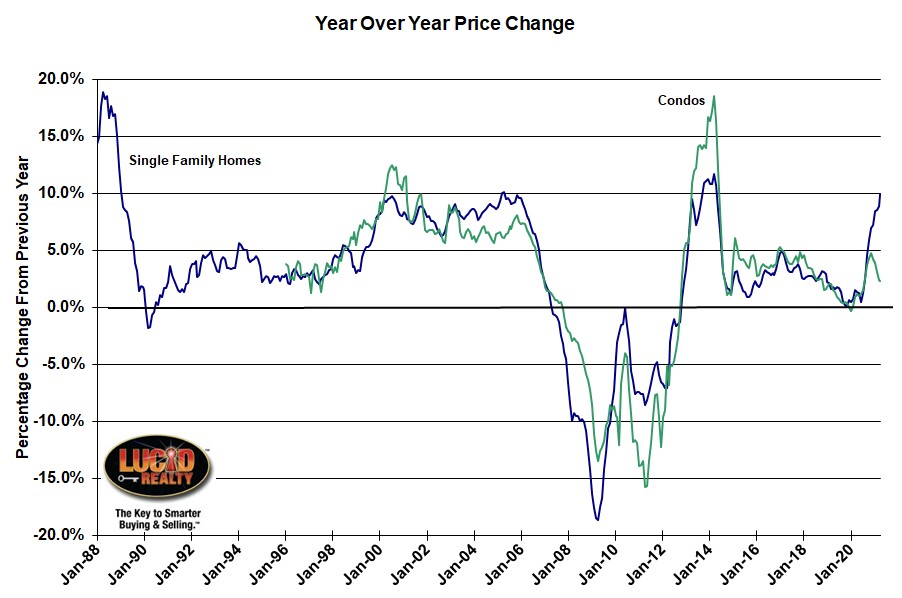
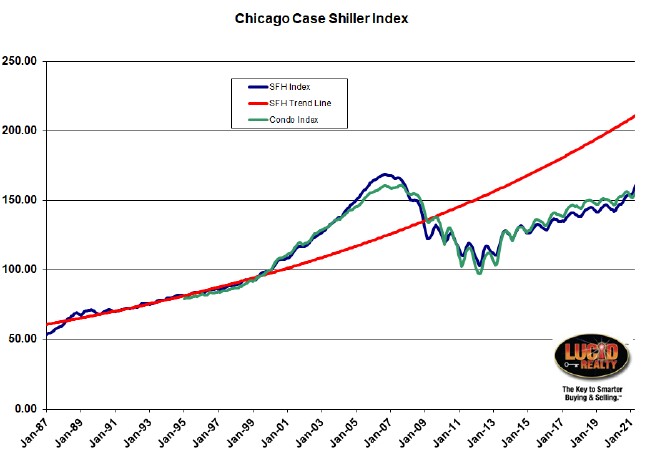
Case Shiller: Chicago Area 7 Year Record Home Price Growth Doesn’t Cut It

Read More

Case Shiller: Chicago Area 7 Year Record Home Price Growth Doesn’t Cut Iton June 29, 2021 at 4:22 pm Read More »

The Gals win The Great Raceon June 29, 2021 at 4:29 pm

Girls Go Racing

The Gals win The Great Race

Read More

The Gals win The Great Raceon June 29, 2021 at 4:29 pm Read More »

Ruling in Chicago rioting ‘Joker’ case leaves some statements unusable by prosecutorson June 29, 2021 at 2:55 pm

A federal judge found Tuesday that a Pilsen man invoked his right to counsel when authorities tried to get him to identify himself as the person wearing a “Joker” mask during the May 2020 riots in Chicago, leaving some comments he made unusable by prosecutors.

U.S. District Judge Andrea Wood said Timothy O’Donnell sought the help of a lawyer when an FBI agent and a Chicago police detective asked him June 2, 2020, about a photo of a person in a clown mask sitting on a bridge above the spray-painted words, “KILL COPS.”

Prosecutors say O’Donnell set fire to a Chicago police vehicle while wearing that mask in the 200 block of North State Street on May 30, 2020. His case is among the most high-profile to result from last year’s rioting and looting in the wake of George Floyd’s murder by then-Minneapolis police officer Derek Chauvin.

O’Donnell repeatedly denied setting the police vehicle on fire during his interview and told authorities, “I do not stand for the exploitation of me and using me as a puppet to create an image,” according to Wood’s 13-page order Tuesday.

While the ruling amounts to a victory for O’Donnell’s defense attorneys, authorities had also tied O’Donnell to the incident through a “PRETTY” tattoo seen on the neck of the person wearing the mask, which matches a tattoo of O’Donnell’s. Prosecutors have also said investigators found a similar mask during a search of an apartment where O’Donnell lived.

Timothy O'Donnell
Timothy O’Donnell
Chicago Police Department

In addition, U.S. Magistrate Judge Gabriel Fuentes found last year that video of the incident “is indeed quite damning,” in part prompting him to rule that O’Donnell should be held in custody awaiting trial. Fuentes also noted then that, in addition to allegedly wearing a “Joker” mask, O’Donnell “self-reported that he has gone by the name ‘The Riddler’ in the past.”

Wood’s ruling Tuesday revolved around O’Donnell’s comments during his June 2, 2020, interview after the FBI agent showed O’Donnell the photo of the man in the mask on the bridge above the words “KILL COPS.”

O’Donnell allegedly said, “Yes, that is me, and they so nicely got me um- with uh- it’s all exploitation of image. See ‘kill cops’ and then an image of me as the clown,” according to Wood’s order.

The FBI agent asked O’Donnell to initial the photograph, and O’Donnell asked, “You want to — you just want to make the correlation of me as that man in the — ?” When the FBI agent answered, “Yeah, just you saying that ‘Yes, this is me in the picture,” O’Donnell replied, “I would prefer not to sign any kind of documents.”

Though the FBI agent said he wouldn’t force O’Donnell to sign, a Chicago police officer asked O’Donnell, “But is that you?” And that’s when O’Donnell said, “I’m in fear. I’m not going to say anything further on that matter without a lawyer present.”

Wood’s ruling suppressed any statements O’Donnell made about whether he wore the “Joker” mask after he made that comment. The FBI agent went on to ask O’Donnell about a photo of a person in the mask standing next to the CPD vehicle with his hand close to the gas tank. O’Donnell explained that a photographer asked him to pose there.

A man alleged to be Timothy O'Donnell reaches toward the gas tank of a Chicago police vehicle in Chicago.
A man alleged to be Timothy O’Donnell reaches toward the gas tank of a Chicago police vehicle in Chicago.
U.S. District Court records

“This is an image with the — the — the man in question is being told, you know, by a photographer to check — to check this out, ‘Hey, look what’s going on,’ like, I mean, not ‘Look what’s going on,’ it’s — he wanted an image, and that’s the image he got. He wanted that specific image,” O’Donnell allegedly said.

The FBI agent asked O’Donnell, “What if we told you we have witnesses that say you’re dancing and having a good time and enjoying yourself and not moving in fear?” O’Donnell replied, “That’s all what an attorney and a court of law — when they are — to be brought up.”

O’Donnell denied setting the vehicle on fire, said “it was supposed to be a peaceful protest” that day, and he said he was there helping bandage people injured by other protesters.

Read More

Ruling in Chicago rioting ‘Joker’ case leaves some statements unusable by prosecutorson June 29, 2021 at 2:55 pm Read More »

Riders stage protest amid Tour de France road safety concernson June 29, 2021 at 3:13 pm

FOUGERES, France — Tour de France riders staged a protest at the start of Tuesday’s stage to complain about perceived dangerous racing conditions after a flurry of crashes reignited the issue of road safety.

Having left the town of Redon in the western Brittany region to start Stage 4, the peloton rode at a moderate pace and all riders got off their bikes after about one kilometer. They waited silently for about a minute before hitting the road again.

After the crash-filled Stage 3, several riders have criticized race organizers for setting up what they considered a dangerous finale to a Tour stage, especially in the early days of the race when nervousness is at its highest level.

Former world champion Philippe Gilbert said in a video that riders’ representatives asked for the Stage 3 timings to end with five kilometers left. The goal by the majority of riders was to avoid a risky final sprint in narrow and winding roads leading to the finish line.

“We had analyzed the route and saw that the finale was extremely dangerous,” said Gilbert, a Belgian classic specialist.

Gilbert said that race organizer ASO supported the proposal. “But the UCI (cycling’s governing body) commissaires did not accept the request, it was rejected in the morning at the start of the race,” he said.

Gilbert said a pileup on a downhill curve about three kilometers from the finish was a direct consequence.

“There was a big mistake from the people who approved this route,” he said.

Riders’ union CPA said in a statement it has asked the UCI to set up discussions to adapt the so-called “3-kilometer rule” during stage races. Under that regulation, riders who crash in the last three kilometers are awarded the time of the group they were riding with before they fell.

“This could avoid circumstances such as those which occurred in yesterday’s stage,” the union said. “Riders and CPA are determined to pursue changes for the safety and physical integrity of athletes. These changes are more necessary than ever.”

Thierry Gouvenou, who is in charge of the Tour route, told L’Equipe newspaper about the increasing challenges he faces to find finish sites without dangerous road materials.

“There are no longer any medium-sized towns without a small island, roundabout or narrowing,” he said. “Ten years ago, there were 1,100 dangerous points on the Tour de France. This year, there are 2,300. If the level of demand becomes too great, there will be no more finishes. That’s where we are.”

Gilbert did not put all the blame on the route on the UCI, though, saying the teams that scouted it before the race should have let know organizers about its dangers.

One of Gilbert’s teammates at the Lotto-Soudal team, ace sprinter Caleb Ewan, fell near the finish line as he contested the sprint and was forced to abandon with a broken collarbone.

Two top contenders for the yellow jersey — last year’s runner-up, Primoz Roglic, and 2018 champion Geraint Thomas — were involved in crashes on Monday, losing ground to their main rivals. But they fell on straight roads with no major difficulty and did not blame organizers.

Saturday’s opening stage was marred by two big pileups, one caused by a spectator holding a cardboard sign in the way of the peloton.

Calling for changes in the sport without offering solutions, veteran Groupama-FDJ sports director Marc Madiot called on all stakeholders to take their responsibilities “because if we don’t do it, we will have deaths and I don’t want to phone the family of the rider who will be in hospital forever. That’s not worthy of our sport.”

The last rider to die on the Tour was Fabio Casartelli, an Italian on the then-Motorola team of Lance Armstrong who crashed on the descent of the Portet d’Aspet pass in 1995. Many serious crashes have continued to mar the race since.

Read More

Riders stage protest amid Tour de France road safety concernson June 29, 2021 at 3:13 pm Read More »

Daily Cubs Minors Recap: Preciado, Stevens, Mena lead Cubs to win in opener of Arizona Complex Leagueon June 29, 2021 at 2:54 pm

Cubs Den

Daily Cubs Minors Recap: Preciado, Stevens, Mena lead Cubs to win in opener of Arizona Complex League

Read More

Daily Cubs Minors Recap: Preciado, Stevens, Mena lead Cubs to win in opener of Arizona Complex Leagueon June 29, 2021 at 2:54 pm Read More »