Videos

Afternoon Edition: July 7, 2021Matt Mooreon July 7, 2021 at 8:00 pm

Good afternoon. Here’s the latest news you need to know in Chicago. It’s about a 5-minute read that will brief you on today’s biggest stories.

Today will be mostly cloudy with scattered thunderstorms and a high near 86 degrees. Tonight, expect more scattered thunderstorms and the temperature to drop to a low around 64. Tomorrow will be mostly cloudy with a high near 73.

Top story

Person of interest questioned after Chicago cop, 2 federal agents shot on Southwest Side

A person of interest has been taken into custody after a Chicago police officer and two federal agents working undercover were wounded by gunfire this morning on the Southwest Side, police said.

Police spokesman Tom Ahern said in a tweet that the person was being interviewed by detectives, but gave no other details.

Police had found a white Chevrolet Malibu believed to be used in the shooting near 89th Place and Indiana Avenue. Officers had been looking for a suspect there, and a “drone command van” was sent to assist in the search.

The shooting happened shortly before 6 a.m. as the three were getting onto the northbound lanes of Interstate 57 near 119th Street, about a mile from the Morgan Park police station, police said.

The police officer was grazed in the back of the head, an agent with the U.S. Bureau of Alcohol, Tobacco, Firearms and Explosives was shot in the hand, and another ATF agent suffered a wound to his side, police said. All were taken to Advocate Christ Medical Center.

Police Supt. David Brown told reporters the three “were conducting an investigation. They were all together in one vehicle when they were fired upon.”

Frank Main, Jermaine Nolen, Stefano Esposito, Cheyanne M. Daniels, and Mitch Dudek have more on the still-developing story here.

More news you need

  1. President Biden landed at O’Hare late this morning and met with Mayor Lightfoot and Cook County Board President Preckwinkle on the tarmac. Both had brief one-on-ones with the president before he took off for McHenry Community College in Crystal Lake, where he spoke this afternoon.
  2. A federal judge denied a sentencing break today to Joseph Miedzianowski, who prosecutors have called the most corrupt cop in Chicago history. Miedzianowski was convicted of running a Miami-to-Chicago drug-trafficking operation and sentenced to life in prison in 2003.
  3. New age-progression photos of Tionda and Diamond Bradley were released yesterday, marking the 20th anniversary of the sisters’ disappearance from their mother’s Bronzeville apartment. Tionda and Diamond were 10 and 3, respectively, when they went missing on July 6, 2001.
  4. Suzanne Douglas, whose many roles included a mother on “The Parent ‘Hood” and Cissy Houston in Lifetime’s biopic “Whitney,” has died at age 64. The prolific actress and Chicago native grew up in Altgeld Gardens.
  5. After surviving decades of hardships, including Prohibition and the Great Depression, Southport Lanes is closed for good, its owner said today. That means most of everything is up for auction inside the old Schlitz-tied tavern turned bowling alley and neighborhood hangout.
  6. The highly anticipated “Black Widow” opens tomorrow, and while its stars deliver terrific performances, the lightweight story hinges on implausible plot turns and soapy antics, writes Richard Roeper. Marvel’s first new movie in theaters in more than two years will also be available to stream via Disney+ for $29.99.

A bright one

New indoor track in Pullman’s Gately Park will share space with After School Matters

South Side student athletes now have a new sports facility where they can practice.

Mayor Lightfoot cut the ribbon yesterday for a new indoor track in Gately Park in Pullman.

The 139,000-square-foot facility at 10201 S. Cottage Grove Ave. also will serve as the new flagship site for After School Matters, the non-profit group that hosts programs for students in the 8th through 12th grades at the Gately Park site and two other locations.

Mayor Lori Lightfoot spoke Tuesday at the opening of a new facility in Pullman which features an indoor track, plus space for other After School Matters programs.
Anthony Vazquez/Sun-Times

Joyce Chapman, president of the Gately Park Advisory Council, said the facility is “a long time coming for the Far South Side.”

After School Matters and the Chicago Park District announced the project in 2018, according to CEO Mary Ellen Caron. It was set to open last year but was delayed by the pandemic.

Yesterday was the first day of programs at the new facility, which has seats for 3,500 spectators and, Lightfoot said, will “put Chicago on par with New York City and Boston” when it comes to track and field championships.

In addition to the track, the building’s After School Matters wing has art and dance studios, music rooms, culinary spaces, tech labs and a rooftop garden spread over two floors.

Cheyanne M. Daniels has more on the new facility here.

From the press box

Your daily question ?

How would you define the “Midwest Nice” label? Do you think it’s accurate?

Reply to this email (please include your first name and where you live) and we might feature your answer in the next Afternoon Edition.

Yesterday, we asked you: How do you feel about the fireworks fired off throughout the city during Fourth of July weekend? Here’s some of what you said…

“You have the nerve to ask this question. They’re still popping at 3 a.m. in my neighborhood two days later. — Kenny Guest

“I feel bad for all vets, pets and wildlife, so I don’t think it’s worth it. I read that the U.S. needs to look into silent fireworks, like Italy.” — Yvette Spearman

“Fireworks are beautiful and fun! Chicago sure enough represented strong! It’s our tradition growing up. Not everyone can make it to the big shows downtown, neither are a lot of us really wanted down there. My heart goes out to the dogs and birds etc. Just for the record — I don’t like the noise from cops, firemen, ambulances, car music, airplanes, freight trains and other noises either.” — Keith Davis

“Scheduled fireworks during a set period of time is fine. It is the random fireworks, set off at random intervals, durations, and inappropriate times, that I strongly object to.” — Gail Waldoch

“I love it. It’s a national tradition that has deep cultural significance. People should respect their neighbors and not carry on until 2 a.m., but I think the tradition of families and neighbors setting off fireworks always brings to mind what the observance represents, and it’s a fun way to commemorate the people who fought for our hard-won independence.” — Rich Williamson

“Old man talking here: back in the day, a few “captains,” or whatever you want to call them, would get portions of a neighborhood together and there’s be some localized fireworks. Now? Everyone and their brother must show how they have their own fireworks. Like OK dudes, you have the exact same fireworks at the other 900 people on the block. Congrats. And the city’s inability to crack down? In a time when they at the very least could be fining people for noise violations? Ridiculous.” — Joe Kushner

“I hate them! In my neighborhood, they start a week early and are still continuing! I will tolerate them on the Fourth of July only. At times they make the whole house shake — it sounds like a war zone! My poor dog nearly has a heart attack! The municipalities offer wonderful fireworks displays. That should be enough — we don’t need your dynamite!” — Charlotte Deutsch Meyer

“I like them. Too many square people with no lives just like to complain a lot to ruin it for the rest of us.” — Ibrahim Ali

“It was worse than ever. I’ve never heard nonstop booms and explosions of that intensity. Terrible for people, animals and wildlife. The garbage and mess in Welles Park the next day was shocking.” — Liz Strause

“I love it. They always start in June. A little here and there. I love the fireworks by Winnemac Park. I’ve lived here for over 20 years. Yes, I have dogs — they survive each year. So I hope they don’t stop. Now it’s over and you may hear them once in a while.” — Sandra Sanchez

“I tried to enjoy the fireworks but I kept jumping because some sounded like gunshots.” — Erica Palmer

“They started way too early for this graveyard worker.” — Michelle Burke

“I have a 21st-floor balcony, and someone on the roof of a nearby shorter building was shooting huge rockets all evening/night. They went off so close to my unit that I had to close the balcony door, as it was deafening. I was afraid to step outside for fear a stray spark or firework would land on my balcony or me. It started out interesting and ended up annoying and scary.” — Mary Jane Tala

“I love it. I will admit my neighborhood went a bit overboard. I think some of the stuff was too big for a residential area.” — Terry Barnicle

“We talk about vets and pets, but children with autism and sound sensitivity suffer too. We have had six weeks of the neighborhood fireworks nightly, and it’s still happening. Enough.” — Sheila Bobik

Thanks for reading the Chicago Afternoon Edition. Got a story you think we missed? Email us here.

Sign up here to get the Afternoon Edition in your inbox every day.

Read More

Afternoon Edition: July 7, 2021Matt Mooreon July 7, 2021 at 8:00 pm Read More »

Thoughts on the Cubs top prospects heading into the MLB Drafton July 7, 2021 at 8:31 pm

Cubs Den

Thoughts on the Cubs top prospects heading into the MLB Draft

Read More

Thoughts on the Cubs top prospects heading into the MLB Drafton July 7, 2021 at 8:31 pm Read More »

Person of interest questioned after Chicago cop, 2 federal agents shot on Southwest SideFrank Mainon July 7, 2021 at 7:12 pm

A person of interest has been taken into custody after a Chicago police officer and two federal agents working undercover were wounded by gunfire Wednesday morning on the Southwest Side, police said.

Police spokesman Tom Ahern said in a tweet that the person was being interviewed by detectives, but gave no other details.

Police had found a white Chevrolet Malibu believed to be used in the shooting near 89th Place and Indiana Avenue. Officers had been looking for a suspect there, and a “drone command van” was sent to assist in the search.

The shooting happened shortly before 6 a.m. as the three were getting onto the northbound lanes of Interstate 57 near 119th Street, about a mile from the Morgan Park police station, police said.

The police officer was grazed in the back of the head, an agent with the U.S. Bureau of Alcohol, Tobacco, Firearms and Explosives was shot in the hand, and another ATF agent suffered a wound to his side, police said. All were taken to Advocate Christ Medical Center.

Police Supt. David Brown told reporters the three “were conducting an investigation. They were all together in one vehicle when they were fired upon.”

Brown gave no details about the undercover operation. He said one of the ATF agents is a woman. The police officer and the other ATF agent are men.

Illinois State Police troopers were called to assist with the investigation.

Cmdr. Patrina Wines was one of two Chicago police officers shot and wounded early Monday.
Ashlee Rezin Garcia / Sun-Times

The two wounded ATF agents and police officer are among five law enforcement officials shot in Chicago over the past three days.

Chicago police Cmdr. Patrina Wines and a sergeant were wounded by bullets fired into a crowd of revelers in the 100 block of North Long Avenue in Austin at about 1:30 a.m. Monday. Wines was struck in the foot, and the sergeant was grazed in the leg.

Brown said 36 Chicago police officers have either been shot or shot at this year.

“We have more than 100,000 gang members in the city of Chicago,” Ald. Matt O’Shea (19th) said Wednesday. “They are emboldened and have nothing to fear from law enforcement. The police are under siege.”

O’Shea, whose ward includes the area where the shooting occurred, said the police department is struggling with a shortage of manpower because of a record number of retirements this year.

Ald. Matt O’Shea (19th): “The police are under siege.”
Pat Nabong / Sun-Times

“We’re at a critical point in the city of Chicago. We need help. Police can’t do it alone,” he said, appealing to President Joe Biden, who is visiting Crystal Lake Wednesday.

“In some communities, mothers and fathers are scared to let their kids out in front of their house,” O’Shea said. “We continue to have these episodes here on the South Side, and today was another example of the utter lawlessness we see in the streets.”

Read More

Person of interest questioned after Chicago cop, 2 federal agents shot on Southwest SideFrank Mainon July 7, 2021 at 7:12 pm Read More »

To those who still cling onto the Big Lieon July 7, 2021 at 7:42 pm

The Amused Curmudgeon

To those who still cling onto the Big Lie

Read More

To those who still cling onto the Big Lieon July 7, 2021 at 7:42 pm Read More »

No More Heroes are building the future of Chicago rapJack Riedyon July 7, 2021 at 4:20 pm

Azeez “Laka” Alaka and Brandon Holmes have a clear vision for their production company, No More Heroes, even if their headquarters is still under construction. In November 2020 the friends and business partners bought a vacant commercial building on 19th near Douglass Park, and on an overcast May afternoon they lead a tour of it, explaining over the sound of power tools how everything will eventually be laid out. They point out the eventual locations of recording studios, common spaces, a grassy backyard for cookouts, and sets being built to resemble jails, hospitals, and courtrooms–which, they joke, will get you far in the world of rap videos.

The founders of No More Heroes searched for three years to find a spot that could accommodate the late hours, loud noises, and various forms of smoking that often go hand-in-hand with recording studios. Alaka and Holmes had competed for the building on 19th with nearby film and television studio Cinespace, but they closed the sale–the first step in creating a home base suited to their rising prominence in hip-hop. “It’s gonna be a place where people gon’ come, even if they don’t wanna record here,” Alaka says. “They might just wanna bump into us.”

Alaka and Holmes began working together in 2018, when the former was still operating as Laka Films, and officially adopted the name No More Heroes in April 2020. During those three years they’ve created videos for some of the biggest names in major-label rap, including Lil Durk, G Herbo, and Polo G, as well as upcoming talents such as Pronto Spazzout, Lil Eazzyy, and DCG Brothers. Their work is full of striking moments that feel engineered to resonate as looping excerpts on social media.

In the video for DCG’s “Mmhmm,” the rappers lip-synch while messing around on a golf course–dancing, humping the ground, flipping golf carts. Its playful, memorable contrasts–between the bourgeois setting and their goofball antics, and between the silly tone of the video and DCG’s street-rap lyrics about selling drugs and scaring rivals–earned accolades from Pitchfork and Stereogum (as well as from the Reader). “Everyone think all these hood artists aren’t that creative, but they are–you just gotta put them in that environment,” Alaka says. “And if you make them think it’s cool, you’re just building a bigger fan base.”

Connor Wiles of Chicago video-directing duo New Trash calls Alaka a legend. “Any version of the city’s rap history without him is incomplete,” he says via Instagram message. “Even with the amount of videos [No More Heroes] do, they still always have these super unique visuals and somehow never repeat themselves, which is like the hardest thing to do. I’m always looking forward to what they’re gonna drop next.”

Holmes and Alaka’s for-hire video business is thriving already, and they have plans to expand in several directions. Their YouTube channel features an in-studio performance series called Red Light Freestyles, which has posted four installments since it debuted with a G Herbo verse in April 2020. They’re also active in artist development–most notably, they worked with DCG to grow their following and in the process helped land the group an Atlantic Records deal. And No More Heroes have taken an active role in creating some of the music that comes out of their shop, earning credits (and thus royalties) when Holmes and Alaka choose beats, hire rappers for verses, or offer other artistic input. Despite their work with major labels, they’ve maintained their independence–which leaves them free to take any job they want. “Why can’t we have a poppin’ YouTube and still go shoot $100K, $200K videos for labels? We just try stuff. Shit, we bought a building,” Alaka says, laughing.

No More Heroes’ closest cousin in Chicago is Lyrical Lemonade, an operation that began as a hip-hop blog in 2013 and has since evolved to include artist management, event production (most notably for the Summer Smash festival), a clothing line, and music videos directed by founder Cole Bennett. The main difference so far is that Alaka and Holmes also act as producers a la DJ Khaled.

Alaka grew up on the south side and began his career in 2014, when he launched the Laka Films YouTube channel. His personal social-media handles still bear that name. “I just dropped out of school, pretended to be younger, went to YouMedia, learned a couple skills on YouTube, then went to the streets of Chicago and clicked ‘record.’ And figured it out!” he says. Alaka filmed bop and drill artists at a time of renewed national interest in Chicago’s rap scene, earning millions of views and a sizable following. “I was getting YouTube checks, feeling like the man,” he recalls with a grin. Alaka later met a director who goes by Daps, who taught him how to write industry-standard treatments and expand from his early single-camera shoots to more elaborate productions.

Holmes grew up in southwest-suburban Yorkville and started shooting videos in 2015 using a friend’s grandmother’s camera. After making more than $200 in a week, he quit his day job. “We just hustled,” he says. “Moved to Chicago, ordered a bunch of camera gear on credit cards and Amazon accounts, paid it off, kept going, and made it to where we are now.” He launched his own YouTube channel in 2016, and though he gradually abandoned it as his partnership with Alaka took off, it’s still hosting the videos he made a few years back for hot locals such as Taco and CupcakKe.

Viral successes such as DGainz’s 2012 video for Chief Keef’s “I Don’t Like” had become essential to turning independent street rappers into stars, and both No More Heroes directors learned that lesson from seeing it happen. “That’s what makes us the rawest A&Rs–we watch music videos from upcoming cameramen,” Alaka says. “No one has ever got on in our city without shooting a video with an upcoming cameraman. It’s impossible.” Because they leapt into the music industry DIY style, without wasting time with gatekeeping institutions, they’ve amassed far more experience in the biz than you might expect of two 26-year-olds–just like many of the independent rappers they’ve worked with.

Alaka and Holmes were introduced by a mutual Tinder match in late 2017 and met in person while working on the set of a TrenchMobb video. Alaka first hired Holmes as a camera operator in 2018, and they soon became friends and trusted collaborators who speak every day, though they’re not often in the same city at the same time.

In person, the two men couldn’t come across more different. Holmes’s voice rarely rises above a calm murmur, while Alaka’s speech picks up speed and volume rapidly as he dishes about the industry. He dismisses amateur rappers who want to “make it” without putting in the work to consistently release music, and he’s just as scornful of major-label artists who go into debt to their labels or waste their advances on lean and other indulgences.

Their disparate personalities give them more tools to manage dozens of people on a marathon video shoot, which they typically finish in one 14- to 18-hour day. And their growing reputation is attracting a range of artists, even those who might be rivals musically or otherwise. “I just don’t get involved in personal matters,” Alaka says. “If I don’t come there gangsta, I’m not shaking up any gang signs, I’m not trying to be what I’m not, people just respect it.”

“We just stay out the way and give everybody a chance to tell their story, creatively,” Holmes adds.

Alaka and Holmes began thinking about rebranding in late 2019, after noticing waning interest in the Laka Films channel. They spent four months considering new names for the enterprise. “Laka Films” put all the emphasis on Alaka as an individual, and he wasn’t comfortable with that anymore–one of his biggest regrets is trying to be too independent when he was just starting out. “Black people in general have trust issues, and trying to do everything by themselves,” he says. His partnership with Holmes changed all that. “As soon as we teamed up, G, everything went times three, times four, times five.”

The new name came to the team right at the beginning of the pandemic lockdowns. “The first day, we had our meeting, we went to go grab our whiteboard, and we made our name,” Alaka says. “All we had to do was sit down!” COVID-19 gave them an opportunity to slow down and consider their next steps, though they continued traveling to film, albeit sparingly (and with slimmed-down crews following COVID protocols). This let them take advantage of the fact that so many people were stuck inside with plenty of time to watch videos.

Holmes and Alaka settled on “No More Heroes” because of what they’d experienced traveling with Chicago singer-rapper Juice WRLD on his last tour before his death in 2019. Each night they saw more than 200 people working together to put on the show, and the two of them wanted to emphasize a similar spirit of teamwork in their own company. “We are the furthest thing from a one-man show,” Holmes says. They commissioned a logo from Los Angeles-based illustrator Jake Larsen that taps into the superhero-saturated zeitgeist, combining elements of Spider-Man’s mask, a comic-book word balloon, and the universal “no” symbol. The first Red Light Freestyle–the G Herbo episode on April 20, 2020–was also the debut of the new brand.

Chris Zielinski, a content director and longtime friend of Alaka’s who’s been working with him since 2016, explains one of the benefits of the change. “Laka Films, I’ll wear a T-shirt because that’s one of my best friends. But no one else is really gonna wanna rock a Laka Films shirt, because they don’t necessarily want to be underneath you,” he says. “But if you have a brand that makes you feel like a part of something–‘No More Heroes’ sounds cool and sounds like something I could get behind.” That said, the production company still maintains something of a hierarchy, even though Holmes and Alaka enjoy developing talent behind the camera and are quick to credit their collaborators. They each have a flashy chain with an iced-out No More Heroes logo–and only those two exist.

Brandon Holmes and Azeez Alaka outside the building they bought last November to house No More Heroes - TARIYAWN KNIGHTEN FOR CHICAGO READER

Even before No More Heroes embarked on their ongoing rebranding and expansion, they’d begun developing a relationship with DCG. The west-side rap group, consisting of teen brothers Bsavv and Shun, had reached out to Alaka to film a video for their 2019 track “Dangerous,” encouraged by his work with King Von, Famous Dex, and G Herbo. Bsavv remembers thinking, “I need Laka, he’s one of the most turnt persons in our city.”

No More Heroes were impressed with the young performers’ charisma, even in unscripted settings. Zielinski set up a tripod for an impromptu interview with DCG. “They were just talking and making jokes with each other, and Laka and I were looking at each other, knowing these kids have the greatest chemistry,” he says.

No More Heroes soon struck a deal to overhaul DCG’s image for a wider audience. Their changes included eliminating guns from ensuing videos and turning “DCG” from an inside reference into an aspirational backronym–it now stands for “Dreams Conquer Goals.” The group also moved to Los Angeles last year at No More Heroes’ suggestion, to better focus on music full-time. The changes are an interesting example of what’s acceptable in the larger music industry, even in street rap, decades into the subgenre’s existence. DCG’s songs still talk about drugs and violence, but in the right tone and with the right euphemisms to take off beyond Chicago. “Talk that gangster shit, but don’t name names, don’t be smoking your opps, stuff like that,” Alaka says.

The group’s plans (and No More Heroes’ plans for the group) were complicated in early 2020, when Shun was incarcerated on gun charges, but he was released in May after three months. DCG had already worked with Laka Films, and they put out their first collaboration with No More Heroes in June–the video for the remix of “Okay” dropped just a few weeks after Shun returned home. The song, with a feature from fellow Chicago duo Heavy Steppers, “helped take DCG out of the basement,” Zielinski says.

DCG say that the greatest thing they gained from No More Heroes was an understanding of their own potential to use hip-hop as a ticket out of bad circumstances, like countless rappers before them. “He got our heads on the right track and opened our eyes to life, to see how young we is and how much success we’ve got ahead of us,” Shun says. As they modified their image, the most important advice they received from Alaka and Holmes was to be themselves. “If you really know where you come from and what your past is like, you’re gon’ bring all that to your business,” Bsavv says.

Alaka had gone through this development process before with Chicago artist Famous Dex, and Dex’s videos are still some of the most viewed on the NMH YouTube page. But in 2016, when the rapper signed with Rich the Kid’s Atlantic imprint, Rich Forever, Alaka got no share of the deal. “You live and you learn–you mess up once,” Zielinski says. “The next time, before you go through the process of building an artist with you, talk to them and see if they want to have a partnership on it. You’re both contributing to the bigger image.”

Those lessons paid off for No More Heroes when DCG signed to Atlantic–the deal, announced in early June, was something of a joint venture, establishing a channel by which No More Heroes could bring more artists to Atlantic without tying them exclusively to the label. DCG commemorated the announcement with the release of “House Party,” a new song produced by buzzy collective Internet Money with a video from Cole Bennett of Lyrical Lemonade. Speaking by phone a few weeks after the announcement, Alaka and Holmes explain that they expect their connections at Atlantic to lead to more directing gigs for the label’s artists: “Being at the forefront of their minds, they’re willing to reach out to us first to offer projects that are reasonably in their realm,” Holmes says.

Holmes and Alaka want to keep developing No More Heroes as a musical entity, curating beats and pairing them with vocalists–that way they’ll earn a share of their work’s revenue in perpetuity, rather than receiving only a flat fee as is typical for a video. “Buying a song is real estate,” Alaka says. “You get points, you get money.”

The first musical release to credit No More Heroes was a February collaboration between DCG and Chicago rapper Lil Zay Osama, and when we spoke in May, Holmes and Alaka were already months into work on a collab with G Herbo and rising Memphis star Pooh Shiesty. The pairing’s appeal is simple: “Herb is a great artist on features, Shiesty makes some good hooks: you put it together and you make magic,” Alaka says. They created the song in several studio sessions, doing “surgery” on one long freestyled performance from Shiesty to create verses and hooks, then adding Herbo’s contribution. (“Freestyles don’t go viral,” Alaka explains.) Hype for the two rappers’ first collaboration built among fans as the track was leaked and teased across social media.

With the song complete, No More Heroes filmed a video for it with Herbo and Shiesty. The rappers’ labels haven’t released it yet, but Alaka is happy to describe it. “The ‘Switch It Up’ video is raw,” he says. “It is stupid. Shiesty switching into so many different things–we’ve got Shiesty and Herb switching they chains while they rapping, Herb jumping out a window skydiving, holding the Thor thunder. It’s stuff you ain’t seen in a video! I don’t think people ready for it.”

But when the song “Switch It Up” was officially released in late May, as the first track on the deluxe edition of Shiesty Season, it used a different beat–the rappers and their labels had been unable to clear the original. “The producer had a loop that was a sample, and we couldn’t find the sample, and they looked for weeks and tried their hardest, and that project had to drop,” Alaka says. Some fans who’d been excited by the leak were disappointed by the final version, with a few even sending harassment and death threats to No More Heroes.

Disgruntled cranks notwithstanding, “Switch It Up” has been streamed millions of times on Spotify alone, and No More Heroes hope the video will reignite the hype around the song when the labels decide to release it. “So much time was spent on it, and we were looking forward to it doing so much for us, and shit just did not happen,” Holmes says.

The delays and disappointments surrounding the “Switch It Up” video release haven’t slowed down No More Heroes’ plans or dimmed the founders’ enthusiasm. They’re at work on a full-length No More Heroes project, and DCG (who are also recording their own album debut) have already contributed verses. The company has also begun to push its second artist, Chicago rap-crooner FlyNari, with the release of “ChromeHearted” in mid-May. “It’s real easy once you do it once,” Zielinski says. “You build the connections to take the next artist through the process.”

No More Heroes want to be a dominant force not just in Chicago rap but in rap, period. “We want to be like the next QC in Chicago,” Alaka says, referring to Atlanta label Quality Control Music, whose roster includes stars Migos, Lil Baby, and City Girls. “Just imagine if one person had Durk, Herb, Polo, and Juice all at once.” And though each project could take years to come to fruition, they have toyed with the idea of launching a comic-book series, a festival, or even a school.

As an independent Black-owned start-up, No More Heroes also want to nurture the communities the company’s founders come from. They run internship programs where local high school students interested in the music business can earn class credits by shadowing NMH folks on their jobs, learning how to operate cameras, and receiving lessons in editing, networking, and building a portfolio. After protests and riots last June led to widespread property damage on the south and west sides, No More Heroes partnered with the Bronzeville Chamber of Commerce and Project Forward to organize a community clean-up day near 47th and King Drive. Holmes estimates 100 people showed up to clean (they were fed for free by local food vendors), and a simultaneous GoFundMe raised around $17,000 that the team distributed to 17 different businesses.

“We try to put as many people on as possible, as many Black people on as possible, and try to do so much for our community,” Alaka says.

“Chicago violence is just so bad, it’s hard to tell people to stay,” he admits. “But I think Atlanta violence is bad too, and somehow they figure it out.” He points out that hip-hop’s current capital city has a robust infrastructure of songwriters and studios, and says that he and Holmes hope their new headquarters will contribute to the growth of something similar in Chicago. “People come here, and they’re gonna record, and you’re gonna have all these so-called killers in sessions all night long,” Alaka says.

Holmes and Alaka emphasize that for all their lofty ambitions, they’re still building a business from a blueprint they’re drawing and redrawing as they go, trying to stay ahead of the ever-shifting music industry. Not every No More Heroes project has been a success, but they’re proud of what they’ve achieved so far. “Everything is growth. You always get excited when you do something, I don’t care what nobody say,” Alaka says. “Even if it flops! Even if no one comes to the studio, we put that shit there! I will rap!” v

Read More

No More Heroes are building the future of Chicago rapJack Riedyon July 7, 2021 at 4:20 pm Read More »

Cubs’ Jake Arrieta sure looks done, but his eyes don’t see it that wayRick Morrisseyon July 7, 2021 at 6:47 pm

Professional athletes have always had difficulty telling themselves it’s time to retire, but fewer than ever seem to know when enough is enough.

You can blame Tom Brady for that. He won a Super Bowl last season at 43, turns a year older next month and apparently plans on playing and living forever. Suddenly, lots of athletes in their competitive golden years think that if they stop eating tomatoes, as Brady did, they can play at a high level into their 40s. This has to be killing the BLT lobby.

No one knows if Brady has discovered some nutritional secret to being able to play longer than everybody else or if he’d be just as successful on a diet of Big Macs. It doesn’t matter. Everybody thinks it’s the former.

This brings us to Cubs pitcher Jake Arrieta, who is 35 and struggling to do what he used to do so well. I don’t know if he has looked to Brady for inspiration, but Arrieta has been a big fan of cutting-edge diets and exercise programs throughout his career. If he was being reticent during his 2015 Cy Young season, all a reporter had to say was, “Where can a guy get some decent kale juice in this town?” and Arrieta wouldn’t shut up. Brady’s success at an advanced age and his disavowal of some common foods – I’m talking to you, strawberries and eggplants – resonates with a certain kind of athlete.

The problem for Arrieta is that there doesn’t appear to be a secret recipe to stop the steady decline of his career. Since that magical 2015 season, when he had a 1.77 earned-run average and led the National League in victories, starts, complete games and shutouts, he has gotten worse every year. His ERA is an elevator that only goes up: from 1.77 to 3.10 to 3.53 to 3.96 to 4.64 to 5.08 to this season’s 6.30.

Former Cubs president Theo Epstein saw the decline happening fairly early and was smart enough to make Arrieta a contract offer he could refuse in 2018. Jake went to the Phillies, where the downturn accelerated. With Epstein gone, the Cubs reverted to their age-old habit of nostalgia when they signed Arrieta to a one-year contract before this season.

And it looked good for a while, didn’t it? He was the Jake of old in his first five starts, with an ERA of 2.57. But he went downhill after that. In his last two starts, he hasn’t made it out of the second inning, including an outing Tuesday in which he gave up seven earned runs and was pulled after 55 pitches.

Afterward, Arrieta was stubborn in the face of evidence, and reporters’ questions, that more than suggested he might be on his last legs as a productive pitcher.

“There is still a lot left in the tank,” he said. “No question about that. The stuff plays. The execution is not there. It hasn’t been for a while, but I’ve been in similar situations in my career. I’ve been in worse situations than this.”

Athletes are taught to never quit. It’s an excellent mindset when you’re down 20 points in the fourth quarter of a basketball game. It’s problematic when you’re past your prime and hurting your team. The loss Tuesday was the Cubs’ 11th in a row. Arrieta clearly isn’t the team’s only problem, but that doesn’t make him any less a problem.

“I have all the tools,” he insisted. “I know what needs to be done.”

It’s not easy giving up the thing you do best, especially at an age considered young by any standard except pro sports. We see it all the time, with athletes trying to hang on because they have no idea what else to do with their lives. There are always a few Olympians who refuse to leave the stage, but at least they can argue they don’t make the ridiculous money that athletes in the major sports do. Arrieta has made more than $100 million in his 12-year career. With a bit of belt-tightening, I think he’ll be OK.

He got knocked out of Tuesday’s game so early he could have watched Game 1 of the NBA Finals. It might have given him ideas. Suns point guard Chris Paul, who is 36, scored 32 points and had nine assists in a victory over the Bucks.

If it inspires Arrieta to play better, great. If it inspires him but he can’t play better, then maybe the facts are exactly what they seem to be: evidence that it’s time.

Read More

Cubs’ Jake Arrieta sure looks done, but his eyes don’t see it that wayRick Morrisseyon July 7, 2021 at 6:47 pm Read More »

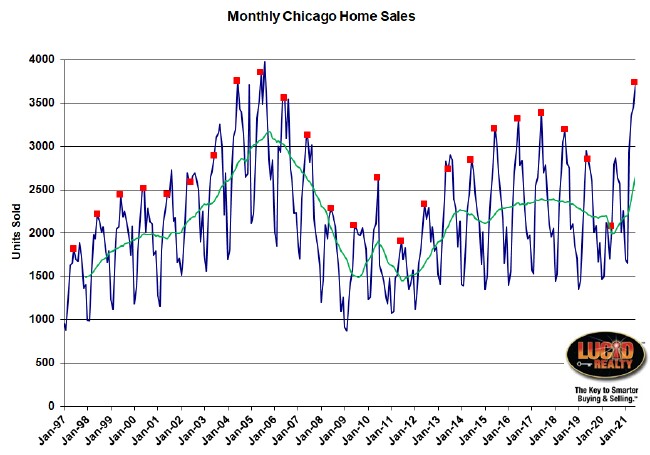
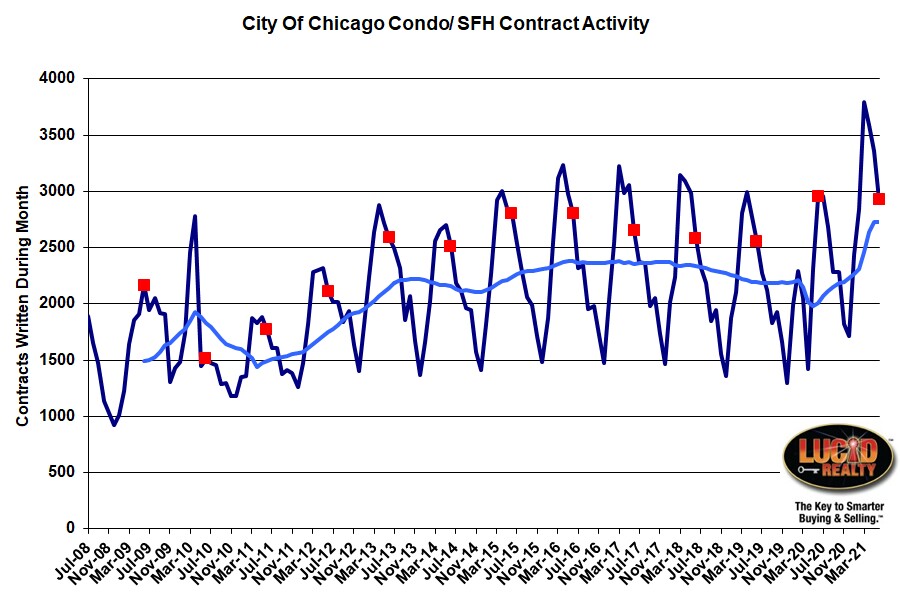
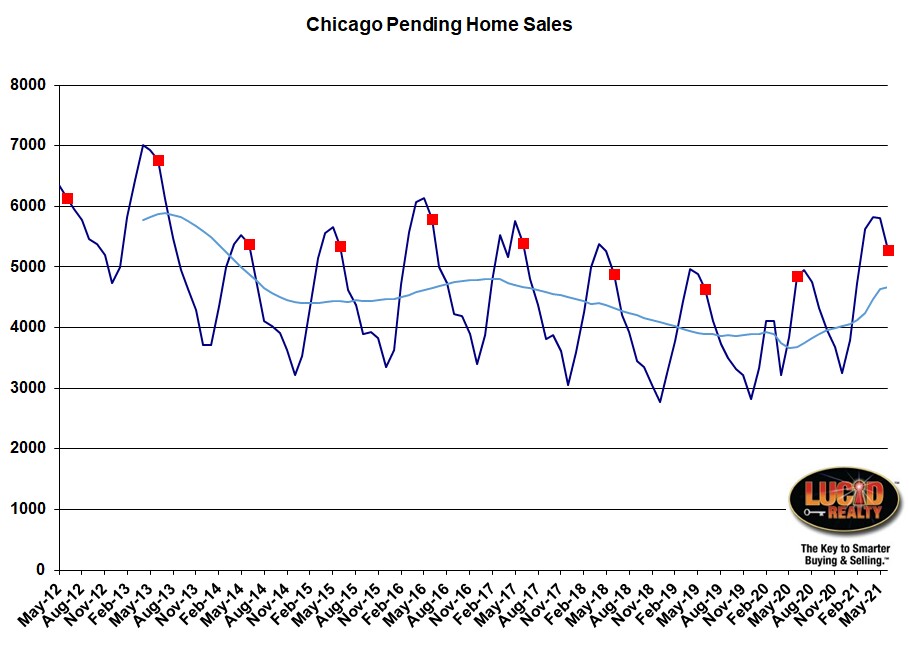
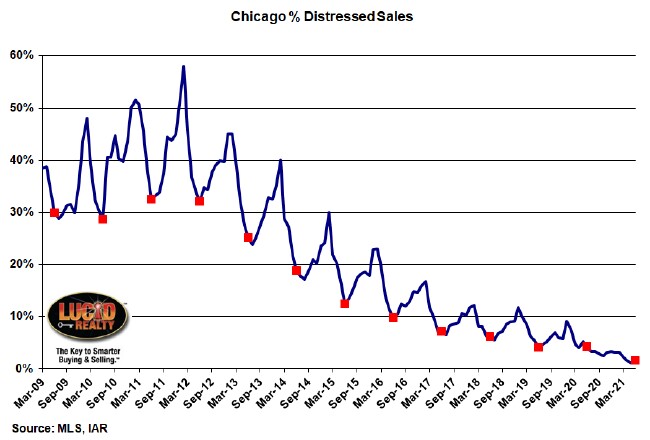
Chicago Real Estate Market Update: June Sales 2nd Highest In 25 Yearson July 7, 2021 at 5:58 pm

Getting Real

Chicago Real Estate Market Update: June Sales 2nd Highest In 25 Years

Read More

Chicago Real Estate Market Update: June Sales 2nd Highest In 25 Yearson July 7, 2021 at 5:58 pm Read More »

Looking for YOMHN with Monica BrownDeanna Isaacson July 7, 2021 at 4:00 pm

Memory is an abstraction. It holds our entire history, but how much of that is our ‘real’ story? And what stories do we tell ourselves about this story? Monica J. Brown, Artist’s Statement

If you visited the Reader office between 1992 and 2008, when it was located on Illinois Street above the busy Star of Siam restaurant, you’re likely to have met Monica J. Brown. During those years, Brown had the job of handling the crowds who made their way up to the Reader‘s second-floor reception counter, mostly to turn in ads for the paper’s famously fat classified section.

That was her day job, the one she kept because it left her free at other times to work on her art. Born and raised in Kewanee, Illinois, Brown had come to Chicago after collecting a BFA as a painting major at the Otis College of Art and Design in Los Angeles. She later earned a master’s in interdisciplinary arts from Columbia College Chicago, adding writing and performance to her tool kit. She was looking for the best way to tell the stories that inspired her solo show of visual work, on display now at ARC Gallery.

“Roots, Branches: Ancestor(s) Stones,” as the show is titled, is a tribute to Brown’s forebears, part of her ongoing mission to honor and connect with the women who came before. So far, she’s been able to trace eight generations of their history, working backwards from successive pairs of daughters and mothers to a still-mysterious woman she calls YOMHN.

It’s an epic mission: YOMHN gave birth to Zilpha in 1830 in North Carolina. After that, four generations were born in Tennessee: Zilpha’s daughter Parthena, in 1861; Parthena’s daughter Ora, in 1891; Ora’s daughter Grace, in 1910; and Grace’s daughter Flora, in 1925. Shortly after Flora’s birth, Grace–with mother, grandmother, and children in tow–left Tennessee for Kewanee, where Flora’s daughter, Elizabeth, was born in 1947, and where Elizabeth, having married Donald J. Brown, gave birth to Monica J. Brown in 1969.

This story’s been calling Brown since childhood. She told part of it in a one-woman play, Branch and Bough, written while she was in graduate school. The play is a brief encounter with three generations: Ora, Grace, and Flora, each in turn sharing a confidence across an iconic kitchen table. Brown says the writing and performing of it made her realize that “My ancestors are with me; all I had to do was recognize it.” And that the stories of those earlier generations, even when they tell of troubles–betrayals, divorces, the death of children–are a treasure trove of resilience, a source of support.

“There’s power in story,” Brown says: “I think stories can heal.”

The 15 pieces of Brown’s work on the walls at ARC include three collages that juxtapose vintage photos and intense fields of color. In two of them (both titled I prayed for you before you were born), a woman in an apron, Brown’s great-great-grandmother, stands behind a small child, a granddaughter of three or so. Both faces are blurred–as inexact as memory, Brown said when I asked her about that. But in the first of the two, a circle of vibrant chartreuse puts a spotlight on a point of connection: the woman’s open hands resting, as if to bless, on the head of the child.

Brown’s next project, already in progress thanks to a DCASE grant, will focus on YOMHN. The name is an acronym (you owe me her name), originally prompted by Brown’s frustration at the lack of records about this predecessor, who may or may not have been a free woman. But now, she says, her search is about something more than that, about understanding “who she was.”

“Not as a victim. We had more than victimization as African Americans. I’m not saying there isn’t something that’s owed. There should be reparations. But I’m saying there’s also something else that’s the reason we are still here, that we still exist, despite all that shit. Circumstances bring to light the character of the person who responds to them.”

These ancestors, including her mother, who died in December, were “strong, determined women,” Brown says. They worked hard, fed anyone who came to their door, and taught their daughters to “give without worrying about receiving.”

A longtime yoga teacher and Thai bodywork practitioner, Brown has nieces and nephews, but no children of her own. That was a choice, she says. “I’m the one who’s supposed to look back and remember, to honor the legacy of the ancestors, to share, and pass down.”

“It doesn’t have to be directly through my womb.” v


Read More

Looking for YOMHN with Monica BrownDeanna Isaacson July 7, 2021 at 4:00 pm Read More »

Chicago police officer, 2 federal agents wounded in shooting on Southwest SideFrank Mainon July 7, 2021 at 4:58 pm

A Chicago police officer and two federal agents working undercover were wounded by gunfire Wednesday morning on the Southwest Side, officials said.

The police officer was grazed in the back of the head, an agent with the U.S. Bureau of Alcohol, Tobacco, Firearms and Explosives was shot in the hand, and another ATF agent suffered a wound to his side, police said.

All were taken to Advocate Christ Medical Center, where they were being treated for injuries not considered life-threatening, officials said.

The shooting happened shortly before 6 a.m. as the three were getting onto the northbound lanes of Interstate 57 near 119th Street, about a mile from the Morgan Park police station, police said.

“They were conducting an investigation. They were all together in one vehicle when they were fired upon,” police Supt. David Brown told reporters.

Brown gave no details about the undercover operation. He said one of the ATF agents is a woman. The police officer and the other ATF agent are men.

Illinois State Police troopers were called to assist with the investigation.

Police were looking for a white Chevrolet Malibu believed to be used in the shooting — and the car apparently was found near 89th Place and Indiana Avenue. Officers were looking for a suspect there. A police “drone command van” was sent to the area to assist in the search.

Cmdr. Patrina Wines was one of two Chicago police officers shot and wounded early Monday.
Ashlee Rezin Garcia / Sun-Times

The two wounded ATF agents and police officer are among five law enforcement officials shot in Chicago over the past three days.

Chicago police Cmdr. Patrina Wines and a sergeant were wounded by bullets fired into a crowd of revelers in the 100 block of North Long Avenue in Austin at about 1:30 a.m. Monday. Wines was struck in the foot, and the sergeant was grazed in the leg.

Brown said 36 Chicago police officers have either been shot or shot at this year.

“We have more than 100,000 gang members in the city of Chicago,” Ald. Matt O’Shea (19th) said Wednesday. “They are emboldened and have nothing to fear from law enforcement. The police are under siege.”

O’Shea, whose ward includes the area where the shooting occurred, said the police department is struggling with a shortage of manpower because of a record number of retirements this year.

Ald. Matt O’Shea (19th): “The police are under siege.”
Pat Nabong / Sun-Times

“We’re at a critical point in the city of Chicago. We need help. Police can’t do it alone,” he said, appealing to President Joe Biden, who is visiting Crystal Lake Wednesday.

“In some communities, mothers and fathers are scared to let their kids out in front of their house,” O’Shea said. “We continue to have these episodes here on the South Side, and today was another example of the utter lawlessness we see in the streets.”

Read More

Chicago police officer, 2 federal agents wounded in shooting on Southwest SideFrank Mainon July 7, 2021 at 4:58 pm Read More »

Darius Rucker traverses pop, country music with dynamic hitsSelena Fragassi – For the Sun-Timeson July 7, 2021 at 5:00 pm

After taking a year off due to COVID-19, the popular Windy City Smokeout returns July 8-11, becoming one of the first large-scale events to take place in Chicago. The barbecue and country music festival, hosted by Bub City and Joe’s Bar, will take place in the parking lot of United Center for an expanded four-day weekend featuring live performances from the likes of Brett Eldredge, Darius Rucker and Dierks Bentley, alongside some of America’s best smoked meat purveyors and makers of craft beer.

But with an eclectic array of vendors to choose from, Friday night music headliner Darius Rucker has one piece of advice: “Go to Rodney Scott’s Whole Hog BBQ and you’ll be okay,” says the singer-songwriter, touting his hometown friend from Charleston, South Carolina.

Rucker, famously known for fronting ’90s alt rock gods Hootie & The Blowfish (which formed in the ’80s at the University of South Carolina), is also one of contemporary country music’s brightest stars. Since 2008, he’s released four No. 1 albums on the Billboard Country Charts and 10 massive No. 1 singles that have dominated country radio, including his latest effort, the gushing love ballad “My Masterpiece,” which came out in May.

“I didn’t think it was where I was going to end up,” he admits of his musical about face, a journey he profiles in his 2010 hit called “This,” about being able to pursue his musical dream during a Hootie hiatus. “I’ve been saying for years that I wanted to do a country record some day and here we are. And the fact that I’ve been able to make a difference has been really cool.”

Darius Rucker, a self-proclaimed lifelong country music lover who cites influences such as Lyle Lovett, Nancy Griffith and in particular Radney Foster, is one of a handful of Black artists in the genre.
David McClister

Rucker, a self-proclaimed lifelong country music lover who cites influences such as Lyle Lovett, Nancy Griffith and in particular Radney Foster and his album “Del Rio, TX 1959” (“it changed the way I heard music”), is one of a handful of Black artists in the genre. Along with modern day stars like Lil Nas X, Rucker reflects a growing diversified talent pool in country music.

He landed a coveted primetime spot hosting the CMA Awards with Reba McEntire last November, more than 10 years after Rucker earned the organization’s New Artist of the Year honors in 2009. It’s a success story he attributes to a legion of devotees: “Country fans are so freaking loyal,” he says, of course not counting out Hootie fans who have migrated to his solo work, which includes an upcoming, yet-to-be-named new album.

During the pandemic, Rucker found time to hone in on the material, a follow-up to 2017’s wildly popular album “When Was The Last Time.”

“Going through the pandemic and the way that life changes, there was so much to write about and so many things to say. And I’m really excited about the record,” says the songwriter, who worked with writing companions J.T. Harding, Josh Osborne and Ross Copperman for sessions, mostly via Zoom. “I really don’t want that to become the norm — ever,” he says, joking.

One thing Rucker tried to take up during the pandemic — to augment his prolific charitable work and playing golf — was learning to play the piano. “Yeah that didn’t work out so well,” he says, laughing. “I had this great fantasy of getting up on stage one day and playing [Hootie hit] ‘Let Her Cry’ on piano, but I guess that’s not going to happen.”

Though other surprises may be in store for the quartet who’s beloved 1994 debut “Cracked Rear View” still remains among the Top 10 best-selling studio albums of all time. In 2019, the band regrouped for a full-fledged tour and their first album in 15 years, “Imperfect Circle,” an experience Rucker calls “incredible.”

“The one thing I will say about Hootie & The Blowfish is whenever we get together we’re us. It was like being back in the day in college — except everyone now has their own bus,” he jokes, adding, “I’m sure there will be another tour and another record when we all think the time is right. …The year 2019 really showed us that those ’90s fans still want to come and see us in the big places — we can still do that.”

One of the band’s biggest fans happens to be rapper and musician Post Malone, who released a cover of Hootie’s hit “Only Wanna Be With You” in February.

“I was blown away,” says Rucker of the take, noting he and Malone have even discussed collaborating at some point. “Post is a friend, and I’m a huge fan of his. As an artist, to have someone that big and who I think is so talented want to do one of our songs was pretty freaking amazing. …It’s amazing to me that I’ve been here doing this for so many years and still have hits. I’m very thankful.”

Selena Fragassi is a freelance writer.

Read More

Darius Rucker traverses pop, country music with dynamic hitsSelena Fragassi – For the Sun-Timeson July 7, 2021 at 5:00 pm Read More »