Videos

Fallout of fatal shooting of Chicago Police officer Ella French continuesMadeline Kenneyon August 12, 2021 at 4:27 pm

Filed under:

  • Stream

21

Total Updates

Since

Aug 8, 2021, 1:39am CDT

Read More

Fallout of fatal shooting of Chicago Police officer Ella French continuesMadeline Kenneyon August 12, 2021 at 4:27 pm Read More »

This World Elephant Day, learn about Wildlife SOS and its work saving abused pachydermson August 12, 2021 at 4:32 pm

Marching to a Different Drummer

This World Elephant Day, learn about Wildlife SOS and its work saving abused pachyderms

Read More

This World Elephant Day, learn about Wildlife SOS and its work saving abused pachydermson August 12, 2021 at 4:32 pm Read More »

Bears plan to play rookie QB Justin Fields extensively in preseason game vs. DolphinsJason Lieseron August 12, 2021 at 2:38 pm

Bears coach Matt Nagy plans to send rookie quarterback Justin Fields into the game early Saturday against the Dolphins and play extensively — possibly even into the fourth quarter.

The anticipation for Fields’ debut, even in a preseason game, has been pulsing since the Bears traded up to draft him No. 11 overall and positioned him as the future of the franchise. Everyone will get the long look they’ve been wanting.

That includes Nagy, who is prioritizing the opportunity to get Fields experience and evaluate his progress instead of being overly cautious about him getting hurt in a preseason game.

Andy Dalton will start, but could exit after as few as three plays. He and Nagy have both said he is ready to launch into the season, which starts in one month against the Rams. Fields is scheduled to take over then and stay in past halftime, at a minimum, before the Bears let third-stringer Nick Foles finish.

Nagy would prefer to keep some first-team skill players in for Fields’ snaps, and that group would likely include wide receiver Darnell Mooney and tight end Cole Kmet. No. 1 receiver Allen Robinson has been working through a hamstring issue this week, and it’s hard to envision him playing much or at all.

Read More

Bears plan to play rookie QB Justin Fields extensively in preseason game vs. DolphinsJason Lieseron August 12, 2021 at 2:38 pm Read More »

Squeezing Kabul, Taliban take 10th Afghan provincial capitalAssociated Presson August 12, 2021 at 3:38 pm

KABUL, Afghanistan — The Taliban captured a strategic provincial capital near Kabul and broke through defensive lines in Afghanistan’s third-largest city Thursday, further squeezing the country’s embattled government just weeks before the end of the American military mission there.

Seizing Ghazni cuts off a crucial highway linking the Afghan capital with the country’s southern provinces, which similarly find themselves under assault as part of an insurgent push some 20 years after U.S. and NATO troops invaded and ousted the Taliban government. Meanwhile, the assault on the city of Herat, still raging Thursday night, could put nearly all of western Afghanistan under Taliban control just a day after the militants completed their capture of the country’s northeast.

While Kabul itself isn’t directly under threat yet, the loss of Ghazni and the battles elsewhere further tighten the grip of a resurgent Taliban estimated to now hold some two-thirds of the nation. Thousands of people have fled their homes amid fears the Taliban will again impose a brutal, repressive government, all but eliminating women’s rights and conducting public amputations, stonings and executions. Peace talks in Qatar remain stalled, though diplomats met throughout the day.
The latest U.S. military intelligence assessment suggests Kabul could come under insurgent pressure within 30 days and that, if current trends hold, the Taliban could gain full control of the country within a few months. The Afghan government may eventually be forced to pull back to defend the capital and just a few other cities in the coming days if the Taliban keeps up its momentum.

The onslaught represents a stunning collapse of Afghan forces and renews questions about where the over $830 billion spent by the U.S. Defense Department on fighting, training those troops, and reconstruction efforts went — especially as Taliban fighters ride on American-made Humvees and pickup trucks with M-16s slung across their shoulders.

Afghan security forces and the government have not responded to repeated questions from journalists over the days of fighting, instead issuing video communiques that downplay the Taliban advance.

On Thursday, the militants raised their white flags imprinted with an Islamic proclamation of faith over the city of Ghazni, just 80 miles southwest of Kabul.

Militants crowded onto one seized Humvee and drove down a main road, with the golden dome of a mosque near the governor’s office visible behind them, yelling: “God is great!” The insurgents, cradling their rifles, later gathered at one roundabout for an impromptu speech by a commander. One militant carried a rocket-propelled grenade launcher.

Ghazni provincial council member Amanullah Kamrani alleged that the provincial governor and police chief made a deal with the Taliban to flee after surrendering. Taliban video and photos purported to show the governor’s convoy freely passing by Taliban fighters as part of the deal.

Later Thursday, Afghan Interior Ministry spokesman Mirwais Stanekzai said the governor and his deputies had been arrested over that alleged deal. The officials could not be immediately reached for comment.

Stanekzai also acknowledged in a video message that parts of Ghanzi had fallen, though he insisted government security forces “do exist” in the city.

The loss of Ghazni — which sits along the Kabul-Kandahar Highway — could complicate resupply and movement for government forces, as well as squeeze the capital from the south.

Already, the Taliban’s weeklong blitz has seen the militants seize nine other provincial capitals around the country. Many are in the country’s northeast corner, pressuring Kabul from that direction as well.

Several more are under pressure. Herat, Afghanistan’s third-largest city and the capital of a province with the same name, has been targeted in militant attacks for days. On Thursday afternoon, the insurgents broke through the city’s defensive lines.

Witnesses described the Taliban as moving through the streets, battling government forces. The fighting closed highways, and Herat’s airport suspended flights amid the chaos.

Video posted by the Taliban shows insurgents capturing the provincial police headquarters. A person close to Ismail Khan, one of the warlords fighting the Taliban, said his forces were under siege in the governor’s office and the intelligence department. The sound of heavy gunfire rang out near the governor’s office.

The person spoke on condition of anonymity because he was not allowed to speak to the media.

In southern Afghanistan, the Taliban’s heartland, heavy fighting continued in Lashkar Gah, where surrounded government forces hoped to hold onto the capital of Helmand province.

On Wednesday, a suicide car bombing marked the latest wave of violence to target the capital’s regional police headquarters. By Thursday, the Taliban had taken the building, with some police officers surrendering to the militants and others retreating to the nearby governor’s office that’s still held by government forces, said Nasima Niazi, a lawmaker from Helmand.

In neighboring Kandahar, the Taliban attacked a prison in the capital city and freed inmates inside Wednesday night, officials said. On Thursday, Kandahar provincial governor spokesman Bahir Ahmadi acknowledged that the Taliban had entered the capital, also called Kandahar, but said Afghan forces were fighting to push them back.

Niazi criticized ongoing airstrikes targeting the area, saying civilians likely had been wounded and killed.

“The Taliban used civilian houses to protect themselves, and the government, without paying any attention to civilians, carried out airstrikes,” she said.

With the Afghan air power limited and in disarray, the U.S. Air Force is believed to be carrying out strikes. Aviation tracking data suggested U.S. Air Force B-52 bombers, F-15 fighter jets, drones and other aircraft were involved in the fighting across the country, according to Australia-based security firm The Cavell Group.

U.S. Air Force Maj. Nicole Ferrara, a Central Command spokeswoman, acknowledged that American forces “have conducted several airstrikes in defense of our Afghan partners in recent days.” However, she declined to offer any details on the attacks or to discuss the Afghan complaints of civilian casualties.

Even as diplomats met in Doha, Qatar on Thursday, the success of the Taliban offensive called into question whether they would ever rejoin long-stalled peace talks aimed at moving Afghanistan toward an administration that includes members of the current Afghan government and the Taliban. Instead, the Taliban could come to power by force — or the country could splinter into factional fighting like it did after the Soviet withdrawal in 1989.

The government’s High Council for National Reconciliation called for peace talks to resume, saying it had submitted a plan to Qatar, without elaborating.

___

Gambrell reported from Dubai, United Arab Emirates, and Faiez from Istanbul. Associated Press writers Hamed Sarfarazi in Herat, Afghanistan, and Kirsten Grieshaber in Berlin contributed to this report.

Read More

Squeezing Kabul, Taliban take 10th Afghan provincial capitalAssociated Presson August 12, 2021 at 3:38 pm Read More »

7 Best Kid-Friendly Restaurants in ChicagoBrian Lendinoon August 9, 2021 at 4:35 pm

Whether you want to treat the kids to a fun experience or just want to take the night off from cooking because you know the next couple of months of your life will be spent making and packing lunches, celebrate a family night out at one the best kid-friendly restaurants in Chicago. And yes, chicken fingers are most definitely included.

845 W Washington Blvd, Chicago, IL 60607

For parents who love supporting other very-recent parents, El Che Steakhouse & Bar in Chicago’s West Loop is the place to go. Chef & Owner John Manion is the recent two-time dad to a less-than-two-year-old daughter and less-than-four-year-old son, Maelyn and Maximo. Guests will notice the kid’s names make their way onto the menu at this kid-friendly restaurant in Chicago. An example includes the most popular dish at Manion’s former Time Out Market stall, the “Maximo beef rib.”

Advertisement

2075 N Lincoln Ave, Chicago, IL 60614

Advertisement

Tucked only a few blocks away from Lincoln Park Zoo on the corner of Dickens and Lincoln is a popular restaurant in Lincoln Park called Gemini. Husband-and-wife-duo Ryan and Anna O’Donnell’s first restaurant under the Ballyhoo umbrella, Gemini, opened in 2009 just days before their wedding. The neighborhood restaurant has become popular with families and kids who love the variety of choices on their menus:

Each main item of the kids menu tops off at $12, and meals come with fresh fruit and the choice of side like fries, brussel sprouts for the brave ones or even asparagus. Kids are sure to feel older with Gemini’s Zero Proof cocktails including strawberry lemonade, FKG, and the Danny-O.

1200 W Webster Ave, Chicago, IL 60614

If you are looking for the best restaurants to attend with kids in the Lakeview area of Chicago, Old Pueblo is a neighborhood cantina highlighting authentic Mexican and Sonoran flavors. Parents love Mariachi Mondays from 5:30-8:30 p.m., Taco Tuesdays with $7.95 margaritas by the glass, $29.95 pitchers and $10 taco platters, and their kids menu with options like two tacos or a steak quesadilla topping out at only $9.95.

205 N Peoria St., Chicago, IL 60607

The West Loop’s recently opened casual restaurant and bar, PB&J, is actually an acronym for ‘Pizza, Beer & Jukebox.’ However, it does still serve the classic peanut butter and jelly sandwich too, making it a great kid-friendly restaurant in Chicago. Kids can pick a classic Wonder Bread PB&J ($5) or get in touch with their Memphis roots with the Elvis Style ($7), which is toasted wheat bread, chunky peanut butter, honey and sliced bananas served open faced. A kid-specific menu includes kids cheeseburger ($8), chicken tenders ($12) and a grilled cheese ($7).Take a look at PB&J’s menu and see for yourself what looks good.

1146 Wilmette Ave, Wilmette, IL 60091

Ballyhoo Hospitality has always created family-forward & kid-friendly neighborhood restaurants, and their newest restaurant, Sophia Steak, is no exception. Sophia is a neighborhood steakhouse in the Chicago area in partnership with notorious Chicago restaurateur, Glenn Keefer. You may even want to order off the kids menu when you see it (kidding, ha…or?):

  • Homemade chicken fingers with fries ($12)

  • Steak plate with jasmine rice ($15)

  • Chicken plate served with jasmine rice ($12)

  • Pasta & meatball with fusilli pasta, red sauce and parmesan ($12)

  • ¼ pound cheeseburger with aged white cheddar and served with fries ($12)

Kids will even have their own dessert menu for a perfect treat to end their meals. Parents will love the free valet parking available for all guests, which allows them to easily get dropped off in front of the restaurant without dealing with parking & pushing strollers across the restaurant parking lot.

35 Oakbrook Center, Oak Brook, IL 60523

At Crate & Barrel’s first in-store restaurant in their large store in Oak Brook, Chef Bill Kim offers a great example of how chefs are spending more time thinking about the kid’s menu than they have in the past, offering unique and delicious items on The Table at Crate’s kids menu, whether you’re 6 or 60. If you are searching for the best restaurants for kids near Chicago, popular items on the kids menu include Popcorn Chicken Bites with Waffle Fries ($7), Corkscrew Pasta ($7), Mac and Cheese ($12) and a classic cheeseburger served with American cheese and Waffle Fries ($10). There’s room for the whole family at the table.

1542 N Damen Ave, Chicago, IL 60622

Chef Bill Kim’s approach to a kids menu is simple: “When I was growing up, there was no kids’ menu at our home,” said Kim, who was born in Korea and moved to the U.S. when he was 7. “If you didn’t eat what the adults were eating, you’re not going to eat.”

Families have long frequented urbanbelly in Wicker Park for its convenience. The restaurant features a welcoming atmosphere and approachable kid’s menu. Chef Bill goes beyond basic chicken nuggets to offer delicious Asian American-influenced options in smaller portions, such as the Kid’s Chicken Rice, fried katsu chicken with steamed jasmine rice ($6), and Kid’s Noodle Soup, chicken broth and wheat ramen noodles ($4). For the pickier eaters in your household, Chef Bill even has fries ($4).

Featured Image Credit: Kinship Company

Read More

7 Best Kid-Friendly Restaurants in ChicagoBrian Lendinoon August 9, 2021 at 4:35 pm Read More »

Daily Cubs Minors Recap: Canario goes deep in 4th straight game; Martini homers for 3rd time in 5 games; Bain righting the ship; Lugo keeps rollingon August 12, 2021 at 2:56 pm

Cubs Den

Daily Cubs Minors Recap: Canario goes deep in 4th straight game; Martini homers for 3rd time in 5 games; Bain righting the ship; Lugo keeps rolling

Read More

Daily Cubs Minors Recap: Canario goes deep in 4th straight game; Martini homers for 3rd time in 5 games; Bain righting the ship; Lugo keeps rollingon August 12, 2021 at 2:56 pm Read More »

Complicity and silence around sexual harassment are commonContributorson August 12, 2021 at 2:33 pm

New York Gov. Andrew Cuomo’s resignation came after more than a week of bad news, starting with a damning report from the state attorney general’s office that detailed his sexual harassment of 11 women, some of whom worked in his office. An executive assistant to Cuomo, Brittany Commisso, filed a criminal complaint against him with the Albany County sheriff’s office. The state Legislature readied impeachment proceedings.

Then, top aide Melissa DeRosa resigned amid a flurry of questions surrounding her role in protecting Cuomo. Attorney Roberta Kaplan also resigned from the #MeToo advocacy organization Time’s Up after the attorney general’s report revealed that she helped draft a letter that denied Cuomo’s wrongdoing.

As news emerged about the silence from Cuomo’s staff, who had long protected him, and his victims who feared blowback, our thoughts turned immediately to our research on harassers.

See No Evil, Hear No Evil, Speak No Evil” is the title of our new article for the Journal of Applied Psychology, which describes the role witnesses play in helping and protecting harassers. Evidence suggests that, rather than helping victims, witnesses often protect the harasser.

The report on Cuomo’s sexual harassment is replete with examples that showcase how members of Cuomo’s top staff, known collectively as the “Executive Chamber,” silenced victims. One victim explained in the report: “I was terrified that if I shared what was going on that it would somehow get around … and if senior aides Stephanie Benton or Melissa DeRosa heard that, I was going to lose my job.”

Although #MeToo gave voice to millions of women to speak up about sexual harassment, it remains rare for victims to report sexual harassment to employers. They are afraid of blowback. They think management won’t believe them. They fear being blamed or shamed. And these fears are warranted.

Silent complicity

Research shows that reporting mechanisms rarely work and often backfire.

For example, employees who speak up about workplace harassment frequently face retaliation, both personal and professional. This is evident in multiple victim accounts in the Cuomo investigation.

One victim was quoted in the report saying that “she did not feel she could safely report or rebuff the conduct because, based on her experience and discussion with others … it’s kind of known that the governor gives the seal of approval who gets promoted and who doesn’t.”

But what about bystanders? Colleagues? Leaders? Why don’t they speak up when they see sexual harassment?

Part of the problem, we have found, lies with social networks — the webs of interconnections among victims, perpetrators, co-workers and managers. The way these networks are configured encourages members to be silent, silence others and not hear victims who voice concerns about sexual harassment.

One of Cuomo’s 11 alleged victims, a state trooper, described a conversation she had with Cuomo while driving him to an event. The governor questioned her clothing choices, asking why she wasn’t wearing a dress. After the conversation, the victim’s state police superior, who was in the car during the interaction, messaged her, saying that the conversation “stays in the truck.”

‘Textbook example’

Why do people protect harassers? A number of factors are at play.
First, a harasser can establish a central status by having many strong ties to others in the network. Strong relationships within a tie require an investment of time and resources on both sides, and in turn, they yield loyalty and reciprocity. So network members close to the harasser are more likely to stay silent about his misdeeds, and to silence or manipulate those who speak up into questioning their sanity.
Also, when the harasser is the sole link between disconnected members of the network, he can isolate victims, control information and conceal wrongdoing. The result of all this: Victims, witnesses and would-be supporters stay silent.

In the case of Cuomo, he had many loyal ties. The attorney general’s report states that the Executive Chamber had “an intense and overriding focus on secrecy and loyalty that meant that any and all perceived acts of ‘disloyalty,’ including criticism of the governor [Cuomo] or his senior staff, would be met with attacks of a personal and professional nature.”

The second reason people protect male sexual harassers lies in how certain network beliefs prize men and masculinity. These beliefs normalize male dominance over women, encouraging support for those who enact displays of masculine superiority.

When these beliefs pervade a social network, and central men sexually harass women, network members stay silent. They also rally to defend and protect harassers by silencing and not hearing those who speak up.

Because women are devalued in these networks, powerful witnesses have little motive to hear sexual harassment complaints or take action to support female victims. The investigation into Cuomo’s conduct concluded: “This culture of fear, intimidation, and retribution co-existed in the Executive Chamber with one that accepted and normalized everyday flirtations and gender-based comments by the governor.”

Finally, mythologies about sexual harassment are frequently found in social networks such as the one that surrounded Cuomo. These common myths deny that sexual harassment has happened, often by questioning women’s complaints — for example, suggesting that false allegations are common. Or they downplay the gravity of these offenses.

When harassment becomes undeniable, myths lead network members to move on to justify it: absolving harassers of responsibility or blaming victims — asking what women did to invite sexual advances.

Myths such as these silence network members because speaking up is likely to be futile or even dangerous. Throughout the report, senior staff members in Cuomo’s office denied wrongdoing by Cuomo. One victim, Ana Liss, testified that Cuomo had held her hand, kissed her cheek and been flirtatious. She did not want to report it because “the environment in the Executive Chamber deterred her … she was fully expecting the governor’s team would deny, deny, deny, character assassinate.”

It is rare that scholarly research and current events so perfectly reflect each other. But the Cuomo case is — no metaphor here — a textbook example of a network of complicity and silence around sexual harassment.

This article originally was published on The Conversation.

Send letters to: [email protected].

Read More

Complicity and silence around sexual harassment are commonContributorson August 12, 2021 at 2:33 pm Read More »

More than 9,000 anti-Asian incidents reported since start of pandemicTerry Tang | APon August 12, 2021 at 2:43 pm

The frequency of anti-Asian incidents — from taunts to outright assaults — reported in the United States so far this year seems poised to surpass last year despite months of political and social activism, according to a new report released Thursday.

Stop AAPI Hate, a national coalition that became the authority on gathering data on racially motivated attacks related to the pandemic, received 9,081 incident reports between March 19, 2020, and this June. Of those, 4,548 occurred last year, and 4,533 this year. Since the coronavirus was first reported in China, people of Asian and Pacific Islander descent have been treated as scapegoats solely based on their race.

Lawmakers, activists and community groups have pushed back against the wave of attacks. There have been countless social media campaigns, bystander training sessions and public rallies. In May, President Joe Biden signed the bipartisan COVID-19 Hate Crimes Act, expediting Justice Department reviews of anti-Asian hate crimes and making available federal grants. Those supporters should not feel discouraged because the data hasn’t shifted much, Stop AAPI Hate leaders said.

“When you encourage hate, it’s not like a genie in a bottle where you can pull it out and push it back in whenever you want,” said Manjusha Kulkarni, co-founder of Stop AAPI Hate and executive director of the Asian Pacific Policy and Planning Council. “There’s too much perpetuating these belief systems to make them go away.”

Several factors contributed to the data, from an increase in incidents to a greater desire to report, according to Kulkarni. As the economy opened up more in the past few months, it meant more public interactions and opportunities to attack, she said. Also, a bump in reporting typically occurs after a high-profile incident like the March 16 Atlanta-area spa shootings that left six Asian women dead.

“There, too, is where we saw some that were incidents that had taken place weeks or months before, but they just were either not aware of our reporting center or didn’t take the time to report,” Kulkarni said.

The reports aggregated by Stop AAPI Hate are from the victims themselves or someone reporting on their behalf, like an adult child. Overall, the report found verbal harassment and shunning — interactions that don’t qualify legally as hate crimes — make up the two largest shares of total incidents. Physical assaults made up the third. But their percentage of the incidents this year increased from last year — 16.6% compared to 10.8%.

More than 63% of the incidents were submitted by women. Roughly 31% took place on public streets, and 30% at businesses.

Many Asian Americans and others blame former President Donald Trump for ratcheting up the danger by talking about the virus in racially charged terms. While Biden has demonstrated allyship, there is concern that a U.S. investigation into the origins of COVID-19 could lead to more hostility and treatment of Asian Americans as enemy foreigners.

“We understand that other nation-states are competitors to the United States, and a number of them do have authoritarian regimes,” Kulkarni said. “But the ways in which we talk about the people and the ways in which blame is assigned somehow looks different for communities of color than it does for, say, the Russian government or the German government.”

Many of the headline-making attacks over the past year and a half have been against elderly Asian people on both coasts. In most of those cases, a senior was beaten, kicked, shoved or even stabbed out of nowhere. Several such incidents have been caught on video.

A U.S. Census survey released earlier this month found Asian American households were twice as likely as white households to admit they didn’t have enough food throughout the pandemic because they were afraid to go out — not due to affordability or transportation issues. In contrast, other racial groups’ households said they were experiencing food insecurity because of the pandemic. Asian American respondents didn’t say specifically if it was fear of racial attacks that kept them at home.

Anni Chung, president and CEO of San Francisco-based Self-Help for the Elderly, says the seniors they help were hit by a “second virus that is a hate virus.” The nonprofit provides food and programs to more than 40,000 older adults in the Bay Area, most of them Asian. The organization went from transporting a pre-pandemic load of 400 meals daily to over 5,000 per day. Last year, they gave out 963,000 meals overall compared with 436,000 typically.

“Sometimes when we talk to seniors, they say this hatred drove them to be stuck in their house even worse than the pandemic,” Chung said.

For them, the fear is more than a headline but something in their own backyard.

“One of our clients was on the bus. Right before the man got off the bus, he just punched her,” Chung said. “She said no one — not the bus driver and a number of Chinese on the bus — went to her care.”

Giving into that fear means seniors have missed important things like doctor’s appointments or exercise routines at the park. So, in June, with some funding from the city, the organization expanded a volunteer escort service to accompany seniors on errands or outings around Chinatown and other neighborhoods. They had more than 200 requests that month.

The onslaught of verbal and physical assaults has drawn more skepticism than sympathy from some. Peter Yu, a Republican U.S. Senate candidate in Colorado who is also Chinese American, came under fire last month for characterizing anti-Asian hate crimes as exaggerated.

“I would welcome him to look at the data and see there has been a significant increase,” Kulkarni said. “This may be a situation when people refuse to see racism or misogyny. I think they’re just really refusing to see reality and how unfortunately, in the U.S, we have allowed those forces to prevent people from living their lives.”

Tang reported from Phoenix and is a member of The Associated Press’ Race and Ethnicity team.

Read More

More than 9,000 anti-Asian incidents reported since start of pandemicTerry Tang | APon August 12, 2021 at 2:43 pm Read More »

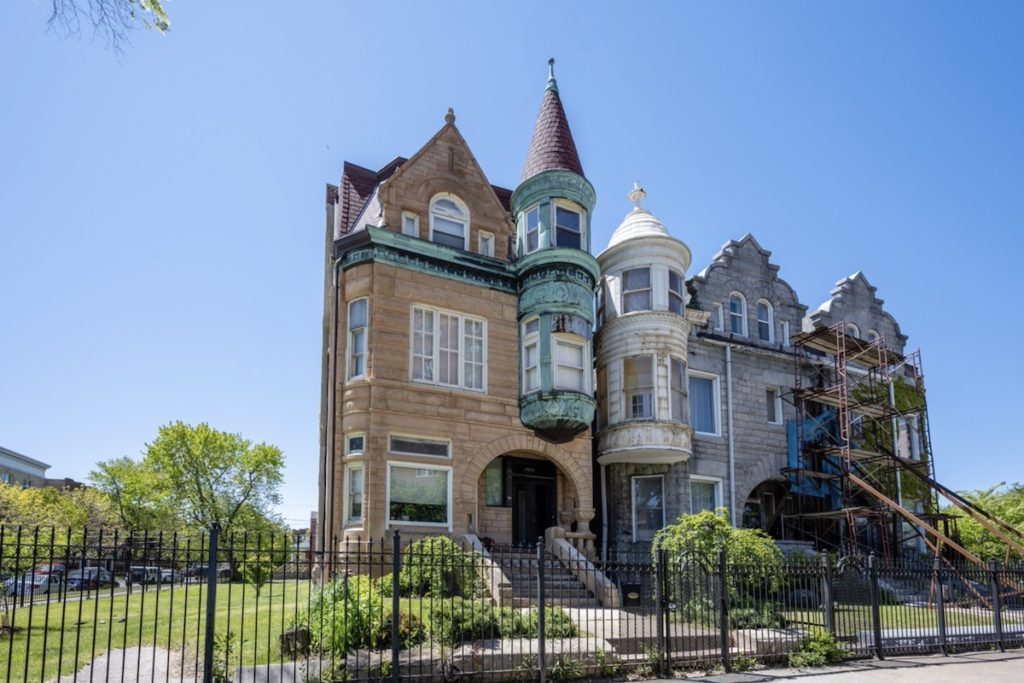
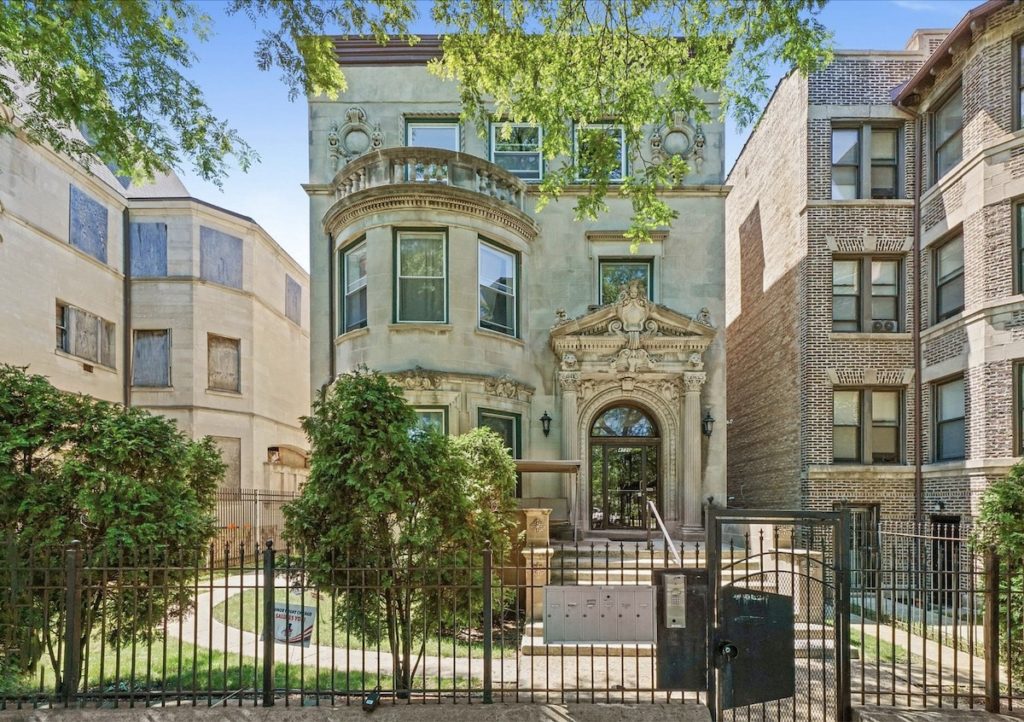
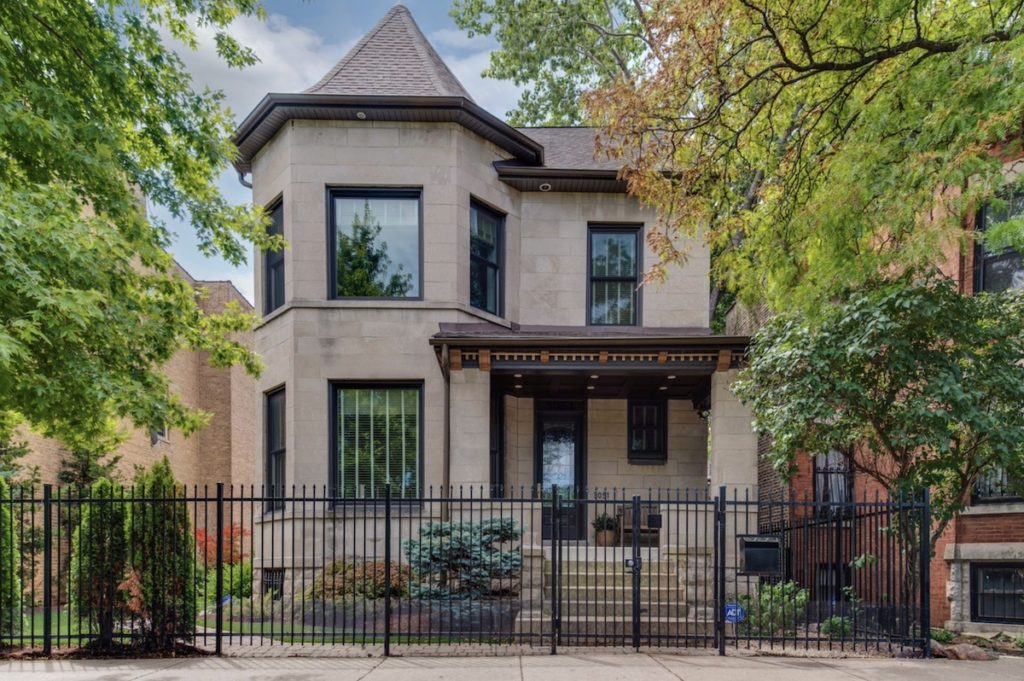
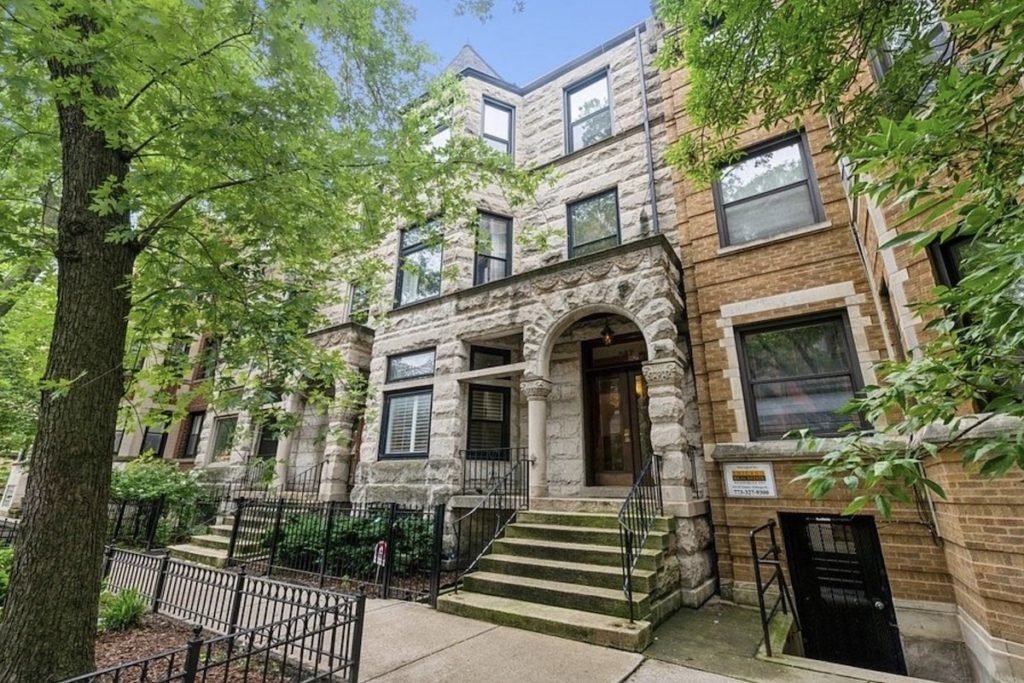
Five Greystones For Sale in ChicagoWhet Moseron August 12, 2021 at 2:00 pm

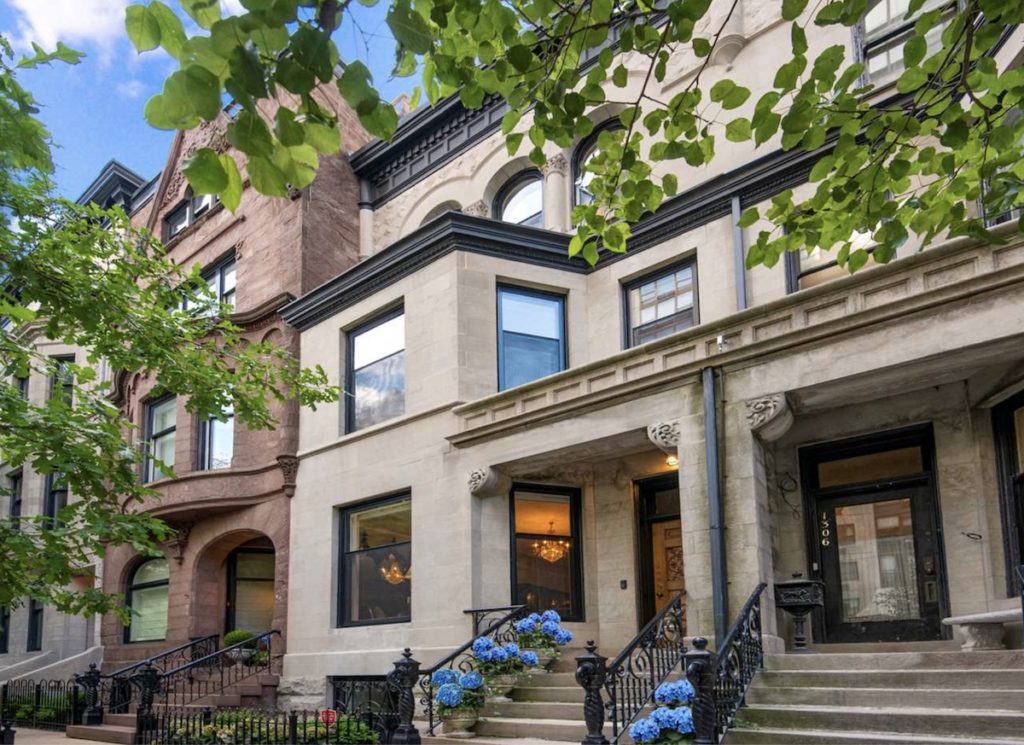
Chicago is known for its architecture. Many people associate bungalows, worker cottages, and courtyard apartments with the city. But there is another residential building type that is just as common around many neighborhoods—the greystone. You’ve probably seen them in the city’s historic park and boulevard system, which has such a substantial number that it is now known as “the Greystone Belt.” Popular between 1890 and 1930, this construction style got its name from the locally sourced Bedford limestone used on the facade.

Greystones come in a variety of sizes and design motifs, yet sometimes it’s hard to tell the difference between a multi-flat building from its single-family counterpart—just another reason why this building was so in demand over a hundred years ago. With over 30,000 greystones in Chicago, there is bound to be one that catches your eye. Here are five that are currently for sale.

Let’s start on Chicago’s South Side, specifically the Oakland Historic District, which runs from 35th to 43rd Streets between Cottage Grove and DuSable Lake Shore Drives. A number of Victoria era residences survive here, including this 1893 Romanesque Revival greystone. The home has been restored by its longtime owner, a local architect, who has brought back a lot of its original beauty. Inside you’ll find patterned mahogany wainscoting, ornamental plaster ceiling inlays, seven ornate fireplaces, and a gorgeous wooden staircase that connects all three levels of the home. It comes with an additional side lot, which offers plenty of options either for future development or to use as outdoor space. Did I mention the third story has a large recreation room with views of Lake Michigan?

In the 1870s Grand Boulevard, now Dr. Martin Luther King, Jr. Drive, was constructed as a wide tree-lined boulevard and carriage drive to connect downtown with the parks on the South Side. Designed by world-renowned American landscape architect Frederick Law Olmsted, the street is lined with beautiful, old buildings like this 1896 classical greystone residence. Formerly the home of the Deborah Boys’ Club, today it is condominiums, and this particular unit is perfect for modern day living with an open floor plan and master suite with exposed brick walls. Other perks include basement storage and an attached, heated garage. All for $365,000!

There are literally blocks and blocks of vintage greystones in Logan Square, especially along its historic boulevard. Located in the heart of the neighborhood, this deconverted two-flat was originally built in 1912 and is now a single-family home. It comes with all the bells and whistles that you’d expect in an updated residential building—high-end kitchen appliances, customized window furnishings, Sherle Wagner bathroom fixtures, and a finished basement with home projector screen. Plus it’s on a rare double lot! Close to the Blue Line, Kennedy expressway, and one of my personal favorites, the Logan Square Farmers Market.

Today the streets of Lakeview are a mix of old and mostly brand new construction. But there are still plenty of vintage properties available in the neighborhood. If you’d like to go back in time when multi-unit buildings exhibited high-quality craftsmanship, this 1901 greystone duplex might be what you’re looking for. It’s spacious inside yet has individually defined spaces like a formal dining room and a galley kitchen. Historic elements include hardwood floors and transom windows. But don’t worry there are lots of updates like subway tiles, granite countertops, and double vanities. Best part? You’re walking distance from the best things about city life like Belmont Harbor and the Lakefront Trail.

Saved the best for last! Potter Palmer is a legendary name in Chicago history. In the 1880s he transformed what was then a frog-infested swamp into what is now the most expensive real estate in the city—the Gold Coast. This 1883 double house was one of the developments Palmer built near his lakefront castle. Today it’s a combination of historic charm and updated luxury with a 2018 renovation that preserved the home’s original details, including its greystone facade, carved staircase, wood floors, leaded windows, mosaic tile foyer, plaster moldings, and beautiful fireplaces. I used to work in this area and over the years I’ve seen plenty of historic properties completely gutted beyond the preserved facade, so I give props to the person who kept this home’s historic elements. Good job! 

Read More

Five Greystones For Sale in ChicagoWhet Moseron August 12, 2021 at 2:00 pm Read More »