Never mind it being Friday. Today, Aug. 13, is International Left-handers’ Day.
That’s, er, correct — a day to celebrate being left-handed and to “raise awareness of the everyday issues that lefties face as we live in a world designed for right-handers,” as the official web site explains.
If you say you are left-handed, you are. But www.lefthandersday.com features a test, “How left-handed are you?”
I tried the test in case you don’t want to. How’d I do?
I moved to Chicago from the south suburbs in 1986. I have diverse interests, but I love writing about what I’m interested in. Whether it’s a personal interest or part of my career, the correct words to get the idea across are important to me. I love words and languages — French and Scottish words enrich my American English. My career has included years as a journalist and years working in museums, and the two phases were united by telling stories. I’m serious about words and stories. So here I am, ready to tell stories about words and their languages.
Your business runs on its reputation. One of the factors today’s consumers consider when deciding where to spend their money is how sustainable a company is. They recognize the importance of doing their part to preserve the planet.
Therefore, your organization can reap real bottom-line rewards along with the warm fuzzies that come with doing the right thing by going greener. Here are seven ways small business owners can demonstrate eco-friendly values.
1. Switch to Solar
If you’re looking for a way to save money come tax time, consider converting your business’ office building to solar power now. You can deduct the cost of renovations and reap a valuable credit if you act fast. Small business owners can claim a 22% credit through the year 2022. After that, the percentage drops to 10% unless Congress extends the incentive.
You can also save money on other bills by making this upgrade. For example, adding a solar roof to your building means generating independent electricity, freeing you from high monthly utility fees.
2. Go Paperless
Paper isn’t the most effective way to keep business records. You could lose valuable data due to theft or fire — or even someone accidentally throwing the wrong document into the shredder. It also costs the planet more than 15 billion trees per year to produce all those reams.
Going paperless offers substantial advantages besides simply saving money and trees. Come tax time, the right software lets you seamlessly integrate your profit and loss statement into your Schedule C. You can protect vital client data using today’s toughest technology instead of a file cabinet.
3. Recycle
Many offices overlook the simple act of adding recycling bins. It doesn’t take an intern long to run these items to the sorting center.
You can invest in stylish bins for customer-facing areas. When it comes to the back office, save money and the planet by reusing old containers and boxes for sorting cans and cardboard.
4. Allow Telecommuting
What’s the fastest way to keep your staff happy? If you started telecommuting during the pandemic, please allow your employees to continue to do so long after things return to normal. You’ll have far fewer problems with employee retention. Fully 40% of American adults who responded to a recent survey indicated that they would rather quit their jobs than return to the office full-time, anyway.
Driving to and from the office produces considerable carbon emissions. The pandemic showed people how much the planet could benefit from telecommuting. The benefits of allowing this work style far outweigh the advantages of keeping your staff within your sight.
5. Source Supplies With Care
If you manufacture goods as part of your business, look into sustainable materials. For example, could you switch to hemp or bamboo instead of wood pulp for any of your processes?
Even your choice of company car can demonstrate your organization’s commitment to eco-friendly values. Opting for one of today’s fuel-efficient electric models can cut considerable carbon emissions.
Seek little ways to make better choices. Can you buy bamboo paper towels instead of the traditional bleached models for the breakroom? Can you offer customer loyalty gifts that reduce plastic waste and encourage sustainability, like reusable water bottles instead of the throwaway kind?
6. Make Environmentally Conscious Upgrades
Is it time to replace the furniture in your break room or waiting area? If so, please look for varieties that limit volatile organic compounds, affecting overall air quality. These substances emit dangerous gasses like formaldehyde.
Are you renovating your corporate bathrooms? Look for the lowest-flow toilet models you can find. Water is also a precious resource to protect.
7. Form Strategic Partnerships
Many organizations partner with local charities for specific events or to promote general social welfare. You can demonstrate your businesses’ eco-friendly values by forming strategic partnerships with those dedicated to environmental causes.
For example, you might recruit staff members to participate in a beach cleanup or tree-planting activity in your community. You could also dedicate a portion of your profits toward the environmental cause of your choice.
Demonstrate Your Business’ Eco-Friendly Values With These Tips
Demonstrating your business’ eco-friendly values is a wise strategic move to attract today’s conscientious consumers. Use the tips above to build your brand as a sustainability leader.
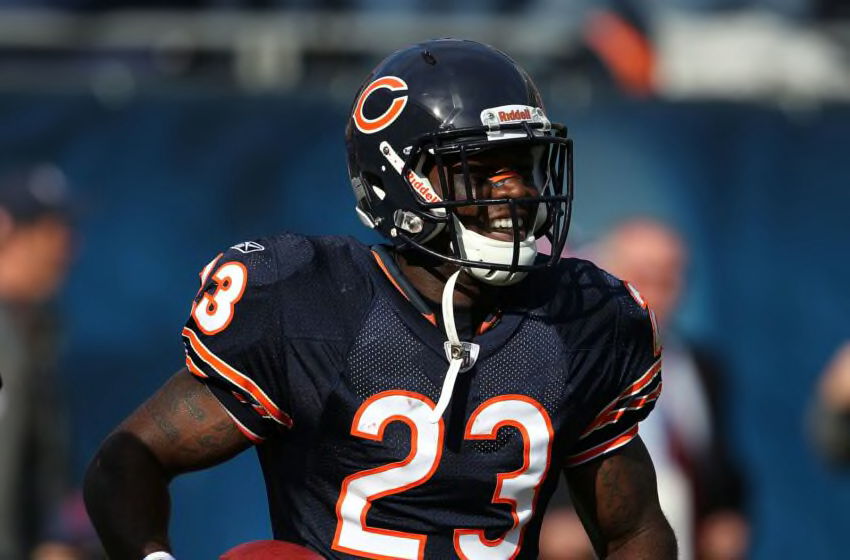
CHICAGO – OCTOBER 17: Devin Hester #23 of the Chicago Bears smiles after returning a punt 89 years for a touchdown in the 4th quarter against the Seattle Seahawks at Soldier Field on October 17, 2010 in Chicago, Illinois. The Seahawks defeated the Bears 23-20. (Photo by Jonathan Daniel/Getty Images)
We just watched the Hall of Fame celebration take place for the National Football League last weekend and it was very cool to see. Guys like Peyton Manning, Calvin Johnson, and Charles Woodson headlined the class this year but there is something for Chicago Bears fans to look forward to next year. Devin Hester is going to be on the ballot for the first time and it has become a popular debate around the league.
It really shouldn’t be much of a debate, however. Hester is the single greatest kick/punt returner in the history of the sport. That might make him the best player on special teams in the history of the sport. There are some kickers that may have a case for that title but that is beside the point.
In team sports, if you are the best ever at your position, you deserve to be in the Hall of Fame. When we analyze football teams to determine if they are good or bad, we look at offense, defense, and special teams. It is very important to be good in that area and Hester made the Bears elite.
Hester’s ability to return kicks for yards and even touchdowns were the strength of his game. He used incredible speed and agility to do that throughout his regular-season career. In his NFL tenure, he had 14 punt returns, five kickoff returns, and one returned missed field goal for a total of 20 special teams touchdowns. Those numbers are insane when you truly think about them.
Devin Hester was one of the most valuable Chicago Bears players for a long time.
Hester wasn’t only a valuable return man on scoring plays either. He often put the Bears in really good field position when he wasn’t bringing it to the endzone. He was incredibly valuable to have on that side of the ball for so many years. He spent 8 years with the Bears and then had two with the Atlanta Falcons followed by a split season with the Seattle Seahawks and Baltimore Ravens. All but one of his return touchdowns came with Chicago.
Hester did play a little bit of wide receiver throughout his career as well. Some coaches thought his return magic could translate to being a wide receiver but it just never happened. He was actually drafted as a defensive back too which is the crazy part. He wasn’t great at anything other than returning kicks or punts but he was the best ever at that.
The highlight of Hester’s career actually came in the playoffs. Not only was it the playoffs, but the Super Bowl. All week leading up to Super Bowl XLI, the Indianapolis Colts claimed that they wouldn’t kick to Devin Hester. They ended up doing it anyway and he made them pay by returning the opening kick-off.
Unfortunately, the Bears ended up losing that game anyway but it was one of the most exciting moments in franchise history. Hester was there to provide a lot of those moments to Bears fans. He deserves to be in the Hall of Fame for being the best to ever do it at that position.
Ludovick Choquette was Western Illinois’ leading rusher in the spring season. (Twitter photo)
An improved rushing game would vastly help both sides of the ball for Western Illinois.
“In this conference (the Missouri Valley), and really in any conference that travels around the country, you’ve got to marry a great run game and a defense,” WIU head coach Jared Elliott said earlier this week during fall camp as the Leathernecks prepare for a Sept. 2 opener at Ball State.
It’s been no secret that Western has struggled to move the ball on the ground in recent years. During the spring season, the Leathernecks averaged just 2.5 yards a carry and only 56.3 yard per game.
Moreover, Western has not had a back rush for 1,000 yards since Nikko Watson in 2015. Clint Ratkovich led WIU in rushing with just 258 yards and one touchdown in 2019 — the lowest full-season total since the Leathernecks went Division I in football.
“When your time of possession was the way it was for us in the spring (with opponents having the ball roughly 13 minutes longer a game) and you’re putting your defense out on the field as much as we did and you’re not efficient on the early downs and you’re not able to take the chunk plays of three or four yards and stay on schedule and get yourself some third-and-manageables, it makes it very difficult,” Elliott said. “That’s where we are focusing (on running the ball). That’s been a heavy emphasis the first five days (of camp) and (will we) maintain it.”
Elliott and his staff realize that the fix won’t happen without a plan.
“We’ve got commit to it. It’s a mentality for us on the offensive side of the ball,” Elliott said. “It’s got to become a mindset for us, not only with our players but with our coaching staff . . . we’ve got to run the ball and we’ve got to stop the run (on defense).”
Building blockers
Following a shortened spring season in which the Leathernecks posted a 1-5 record, the WIU staff hit the recruiting trail.
Western brought in signees to bolster its offensive line.
“Walking away from the spring, that was our biggest area of emphasis in terms of recruiting. We needed to build depth,” Elliott said. “We went out and signed eight guys from spring to June, and that’s not easy to do. And our guys (coaches) did it.
“We got high school guys, we got prep school guys, we got junior college guys, we got (transfer) portal guys. I don’t care where they come from as long as they fit who we are.”
Like any camp, the coaching staff wants to see competition among its roster and its position groups.
“It’s up to us to identify who those best five (offensive linemen) are in camp,” Elliott said.
Senior quarterback Connor Sampson said, “I think one thing you’ll see focused in the fall is being a run-first offense.”
And that’s coming from a quarterback who has thrown for nearly 4,000 yards in his career. Sampson, picked as the all-conference second team quarterback in the spring, knows a balanced attack enhances his team’s chances of winning.
“That will take our offense to a whole new level once we get that run game going. You’re going to start seeing safeties bite on the run and that’s going to allow a lot of opportunities downfield,” Sampson said.
Backfield in motion
Western’s run game took a huge hit in the first game of the spring when sophomore DeShon Gavin suffered a season-ending injury. The Joliet native and Providence Catholic graduate had been expected to be a dual threat running the ball and catching it out of the backfield.
Freshman Ludovick Choquette took over that role, leading WIU in rushing and catching 13 passes in five games. Choquette, a Quebec native, twice produced 90 or more yards of total offense in the abbreviated spring.
Another freshman, Iosefa Pua’auli, was the Leathernecks’ second leading rusher. The Honolulu native is listed at slotback on this fall’s roster.
Three of the next four top spring rushers were receivers.
“They compliment each other,” receiver Tony Tate said of the running and passing games. “You can’t really have a great passing game without a consistent running game.”
Generating some excitement early in camp is freshman Jaylen Reed, listed at 5-foot-8 and 165 pounds. Reed was a four-year starter at East St. Louis and helped his high school to a 6A state championship his junior year.
Whoever emerges as WIU’s main ball carrier, the Leathernecks want to avoid three-and-out situations that wear down their defense.
“We got behind the sticks early. We had a lot of mental miscues, but now I believe we’ve got that all situated,” said senior safety Michael Lawson.
Blog co-authors Barry Bottino and Dan Verdun bring years of experience covering collegiate athletics. Barry has covered college athletes for more than two decades in his “On Campus” column, which is published weekly by Shaw Media. Dan has written four books about the state’s football programs–“NIU Huskies Football” (released in 2013), “EIU Panthers Football (2014), “ISU Redbirds” (2016) and “SIU Salukis Football” (2017).
The immigration lawyer who’s charged with bribing Ald. Edward M. Burke (14th) to get a sign permit for a Northwest Side shopping center has lost control of the building amid a foreclosure lawsuit that accuses him of failing to make mortgage payments since shortly after he was indicted.
Charles Cui’s lender sued him last August, saying the attorney owes more than $12.9 million on the mortgage for the building that houses his law firm, a health club he owns and a Binny’s Beverage Depot liquor store that leases space there.
For now, Cui and Binny’s have to make their monthly rent payments to a Michigan company appointed to oversee the property last fall until a Cook County judge decides the case.
According to the lawsuit, Cui got the mortgage in 2017 and stopped making payments in September 2019 — five months after he was indicted by a federal grand jury on charges that he bribed Burke by hiring the alderman’s law firm to appeal the building’s property taxes.
According to the indictment, Cui also was hoping Burke could get City Hall to approve a pole sign that Binny’s wanted and that city officials had rejected.
Federal prosecutors say Cui hired Burke only after City Hall said no to the sign permit for Binny’s, whose rent would drop by $750,000 if they couldn’t get approval to put their sign on the pole.
Ald. Edward M. Burke (14th).Ashlee Rezin Garcia / Sun-Times
“Although Cui hired Burke’s firm to perform actual property tax work, his express purpose was to influence Burke in his official capacity, which made the arrangement unlawful,” prosecutors said in the indictment. “In other words, the retention of Klafter & Burke was the bribe.”
Cui, 50, of Lake Forest, and his lawyers have denied the charges.
A federal judge has yet to set a trial date for the racketeering case against Burke, Cui and a third man — Peter J. Andrews, who was a longtime aide to Burke.
Cui, who is also a real estate developer, didn’t respond to interview requests regarding his property at 4901 W. Irving Park Rd. in Portage Park.
The pole sign at the center the bribery case involving Charles Cui before it came down. Bank of America had a sign up on the pole when it had a branch on the property at 4901 W. Irving Park Rd. in Portage Park. City of Chicago
His criminal defense lawyer won’t comment.
In 2016, then-Mayor Rahm Emanuel, Burke and the rest of the Chicago City Council agreed to give Cui as much as $2 million toward his $14 million plan to redevelop the Irving Park Road property, which formerly was home to a Bank of America branch, and another property down the street.
Cui’s development plans called for the former bank building to become home to a Binny’s store, a gym, a theater, an art center and law offices for Cui, who also would put up a new building that would house a Culver’s restaurant.
In the spring of 2017, city officials rejected Cui’s permit application seeking permissions for Binny’s to put up a sign on the pole that formerly had a sign for the bank.
In August 2017, the indictment says, Cui emailed Burke about the pole sign. The next day, Cui hired Burke’s law firm to handle property tax appeals for the building.
Burke and the rest of the city council voted to approve Binny’s request to erect two signs on the building extending over the public way.
But the pole sign never went up, and the pole has been removed.
Federal agents raided Burke’s office on Nov. 28, 2018. The following day, when investigators questioned Cui, prosecutors say he lied to them when he told them that he hired Burke’s law firm “just because he is a good tax appeal lawyer” rather than because he wanted help with getting approval for Binny’s sign.
A grand jury indicted Cui on April 11, 2019.
A month later, City Hall canceled its $2 million financing deal with him. He never got any city money for the project.
On Sept. 27, 2019, court records show, Cui stopped making payments on the $9.75 million mortgage, which he originally got from Citi Real Estate Funding, Inc.
Cui sold the Culver’s property on July 29, 2020, for $3.15 million to the restaurant’s operator.
On Aug. 14, 2020, a Delaware company called CGCMT2017-B1 West Irving Park Road LLC sued for foreclosure on the mortgage that Citi Real Estate had given Cui, saying he owed more than $12.9 million. The Culver’s property isn’t part of the foreclosure suit.
Last October, a Cook County judge appointed a receiver to run the property, which is 78% occupied.
Binny’s pays $38,891 a month in rent. Binny’s operators think Cui overcharged the store for maintenance of the property’s common areas, according to the foreclosure suit, and are negotiating a settlement with the receiver.
Cui pays the receiver $8,278 a month in rent for his law office, according to the suit.
But Cui’s gym, Retro Fitness Center, owes $551,013 in rent, the lawsuit says, because he cut its rent during the coronavirus pandemic without getting permission from the lender or the receiver.
The intensive care unit at St. Bernard Hospital on the South Side is at capacity because of the latest surge in the number of coronavirus cases.
Last month, the small hospital treated more than three dozen COVID-19 patients — about the same number as in July 2020, just before a bigger wave of illness. That has St. Bernard administrators worried.
“This tells you the trajectory of the COVID impact — it’s only going to go up,” says Rochelle Bello, the hospital’s director of infection prevention.
This month, the hospital already has treated 20 people diagnosed with the virus. None of the patients over the past two months were vaccinated. Two died.
City officials tout the low number of hospitalizations even as the number of COVID cases has risen sharply in recent weeks. But some areas, especially low-income communities of color where vaccination rates are low, are getting hit hard. From the South Side to the West Side, the Delta variant of the virus — about twice as contagious as earlier forms — is disproportionately striking Black and Latino communities.
Over the past month, Black Chicagoans made up 26% of the city’s total number of COVID cases, yet they accounted for 56% of hospitalizations and 65% of deaths, according to the city’s figures.
Combined, Blacks and Latinos account for 84% of the recent deaths and nearly three-quarters of all hospitalizations.
“I do worry that there are whole parts of Chicago that are just not vaccinated,” says Dr. Allison Arwady, the city of Chicago’s public health commissioner. “I see these cases and these hospitalizations and deaths, and these are so largely preventable at this point.”
Dr. Allison Arwady, commissioner of the Chicago Department of Public Health: “I do worry that there are whole parts of Chicago that are just not vaccinated.”Ashlee Rezin Garcia / Sun-Times
St. Bernard largely serves people in Englewood, a community that badly trails the rest of the city in people being vaccinated against the coronavirus. Fewer than one-third of those living in the area’s 60621 ZIP code are fully vaccinated, the lowest rate in Chicago. Citywide, almost 54% of residents are fully vaccinated.
In recent weeks, St. Bernard has admitted COVID patients from 28 to 64 years old. The hospital also treated — but did not admit — infected children, including a 2-year-old, according to Bello, who says the Delta variant is resulting in far more severe illnesses.
Only about 37% of Black Chicagoans and 46% of Latinos are fully vaccinated, compared with about 60% of whites, despite city officials’ promises that the shots would be distributed equitably.
The low vaccination rates are cause for rising concern as the city and Illinois face this latest COVID surge, caused largely by Delta, which arrived about when Mayor Lori Lightfoot was announcing Chicago’s full reopening in early June. Around the same time, state health officials for the first time recorded cases of the highly contagious variant.
The Delta variant now accounts for more than 90% of COVID cases in Chicago, Arwady estimates.
The city’s reopening — which included dropping almost all of the precautionary public health measures that had been in place for much of the pandemic — makes controlling the spread extremely difficult.
Dr. Cathy Creticos, director of infectious diseases at Howard Brown Health.YouTube
“We still have a lot of people who aren’t vaccinated,” says Dr. Cathy Creticos, director of infectious diseases at Howard Brown Health. “We still aren’t at a vaccination rate where we aren’t going to see a wave of infection.”
With the number of cases dropping prior to the city’s reopening, many Chicagoans stopped seeking vaccinations or even tests, Creticos says.
Demand for COVID-19 testing had decreased so much that Howard Brown Health consolidated testing from 12 locations to just two — in Englewood and Uptown. Two weeks ago, the clinics started to see an increase in testing.
Arwady defends the city’s decision to reopen. She points to the Delta variant as the main reason more Chicagoans are getting sick and notes that, following recently revised guidelines from the federal Centers for Disease Control and Prevention, City Hall is now advising that masks should once again be worn indoors regardless of whether people have been vaccinated.
“I really want to keep Chicago open if we possibly can,” Arwady says, echoing Lightfoot’s pledge.
On Thursday, Arwady announced that more than 200 reported infections have been reported among those who attended Lollapalooza, the recent four-day outdoor music festival that drew 385,000 people to the lakefront.
But she downplayed that number as nothing beyond what might normally be expected given the huge crowds and said it wasn’t a “superspreader” event.
City officials plan to continue to track cases among people who were at Lollapalooza, which became a symbol of Chicago’s reopening, though some health officials still question the decision to let the festival go on despite the latest surge.
A masked festival-goer stood out among thousands of unmasked people at Lollapalooza in July. Mayor Lori Lightfoot has defended the decision to let the festival go on despite a COVID surge.Pat Nabong / Sun-Times
Humboldt Park Health had reached a point where it didn’t have any COVID patients, but that’s changed in the last month or so, says Dr. Abha Agrawal, its chief medical officer. In recent days, the hospital was treating five coronavirus patients, including three in intensive care. None of the five had been vaccinated, according to Agrawal.
“If the trend were to continue in the city or state, we are going to be back at where we used to be,” he says.
The 60629 ZIP code on the Southwest Side has been seeing a high positivity rate in recent weeks even though more than half of its residents are vaccinated. The Latino-majority area is home to many who have been going in to their workplaces, many of them in public-facing jobs, throughout the pandemic. Many also live in multigenerational homes. Those are both factors that make them vulnerable to infection.
Dr. Marina Del Rios says it’s those “essential workers,” such as restaurant employees and housekeepers, she has been seeing lately in the packed emergency room at the University of Illinois Hospital at Chicago on the West Side. Del Rios says she also is seeing people get sick from family gatherings.
“It’s unlike last year, when most people were keeping in their bubbles and masking and keeping their physical distances,” Del Rios says. “We reopened too quickly. We celebrated too quickly.”
Dr. Marina Del Rios at Norwegian American Hospital in January, when she was the first person to get the Pfizer-BioNTech COVID-19 vaccine in Chicago.Ashlee Rezin Garcia / Sun-Times
UIC’s intensive care area is near capacity, entirely with COVID patients, according to a hospital spokeswoman, who says 20 are being treated for the coronavirus.
Del Rios, who was the first Chicagoan to be vaccinated, is among health professionals critical of the city’s reopening and especially for allowing Lollapalooza to go on.
Del Rios and other doctors, including Dr. Ali Khan, executive medical director of Oak Street Health, say they hope the Delta threat will convince more people to get vaccinated, especially since the shots have been shown to be highly effective even with that variant.
“We actually have something that is darn near miraculous,” Khan says of the vaccines.
At Esperanza Health Centers, demand for COVID testing and vaccinations has risen in recent weeks after waning earlier this summer. At the height of the vaccination rollout, its community health clinics on the Southwest Side were administering 1,500 doses a day, but those efforts tapered off to 50 doses a day, says Dan Fulwiler, Esperanza Health Centers’ chief executive officer. In recent weeks, the clinics have been administering 100 doses a day, Fulwiler says.
Dan Fulwiler.Esperanza Health Centers
He says one woman wanted to get the vaccine but wasn’t able to make an appointment before contracting COVID and dying.
“Their lives are very busy,” Fulwiler says of Esperanza’s patient population. “Sometimes, people are working two jobs.”
At one point, the Gage Park Latinx Council was routinely flooded with thousands of calls asking about getting the vaccine, but it’s getting far fewer now, says Antonio Santos, its executive director.
The community organization has been among those working to get people vaccinated in the Southwest Side neighborhood, which had been hard hit by the pandemic.
“We have to remain diligent and vigilant and precautious as a city,” Santos says. “Just because numbers are down, the way pandemics work, none of us are safe until all of us are safe.”
Brett Chase’s reporting on the environment and public health and Elvia Malagon’s reporting on social justice and income inequality are made possible by a grant from The Chicago Community Trust.
A man was shot while sitting inside a restaurant Friday morning on the Far South Side.
Just before 1:25 a.m., the man, 27, was seated at a restaurant in the 8400 block of South Stony Island Avenue when someone approached the entrance and opened fire, Chicago Police said.
He was shot in the groin and taken to University of Chicago Medical Center where he was listed in fair condition, police said.
A man was shot and critically wounded Thursday in Englewood on the South Side.
Around 11:50 p.m., the victim, 25, was standing in an alley in the 5900 block of South Justine Street when someone approached and opened fire, Chicago Police said.
The 25-year-old was shot once in his back and was taken to University of Chicago Medical Center where he was listed in critical condition, police said.
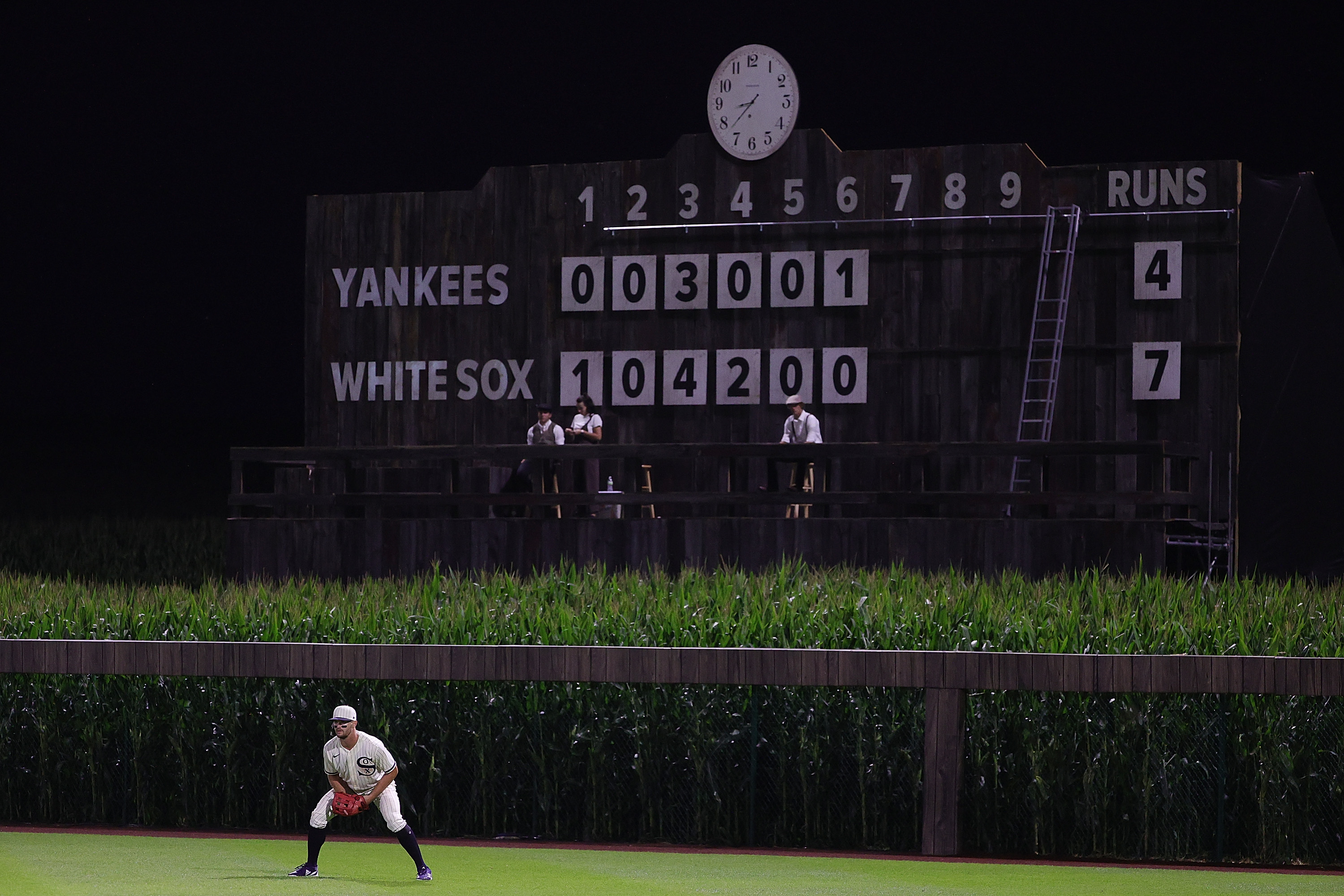
More than three decades after “Field of Dreams” became a hit, one of the most famous cornfields in history finally gets the opportunity to host real big league ball.
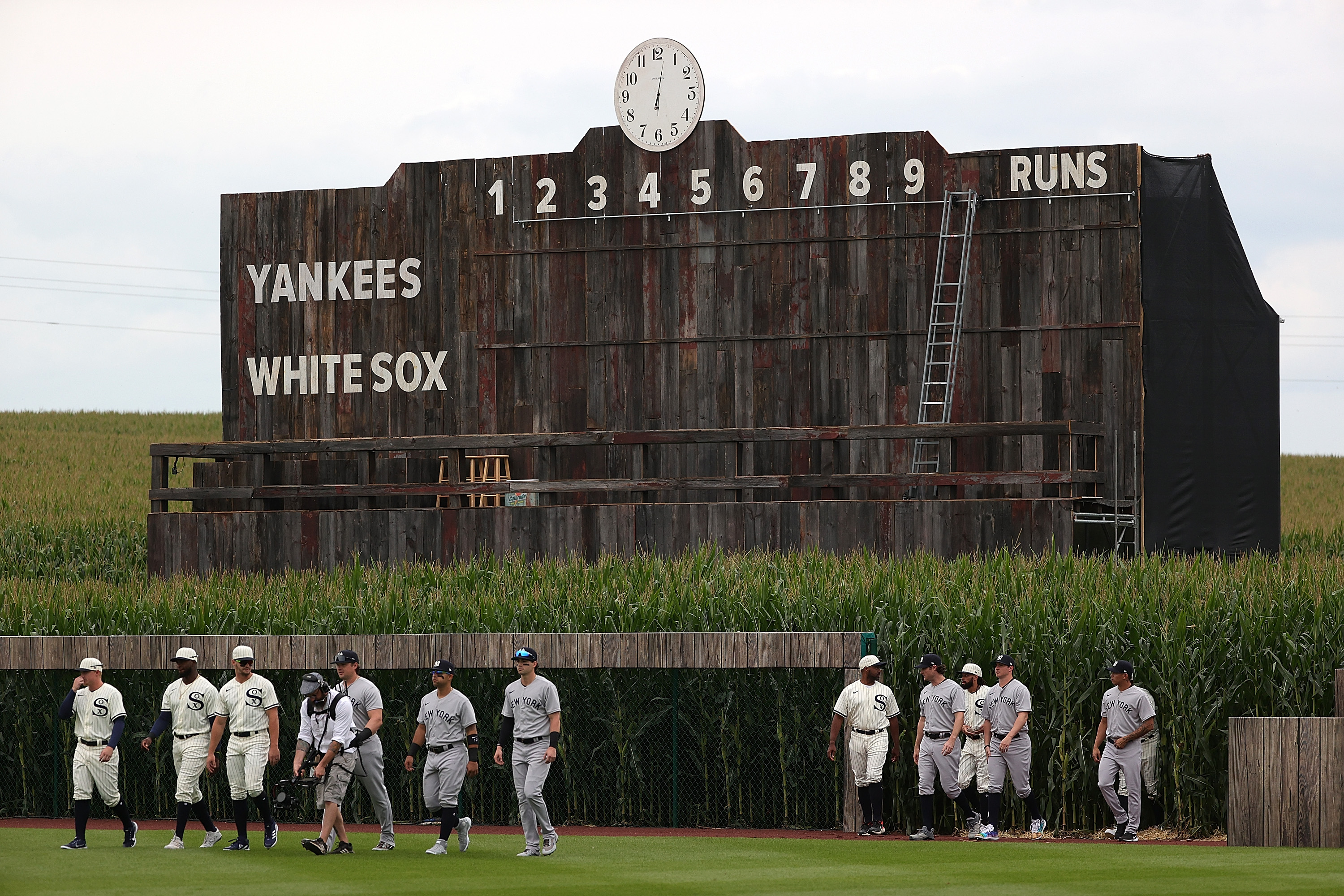
Members of the Chicago White Sox and the New York Yankees take the field prior to a game at the Field of Dreams on August 12, 2021 in Dyersville, Iowa.
Stacy Revere/Getty Images
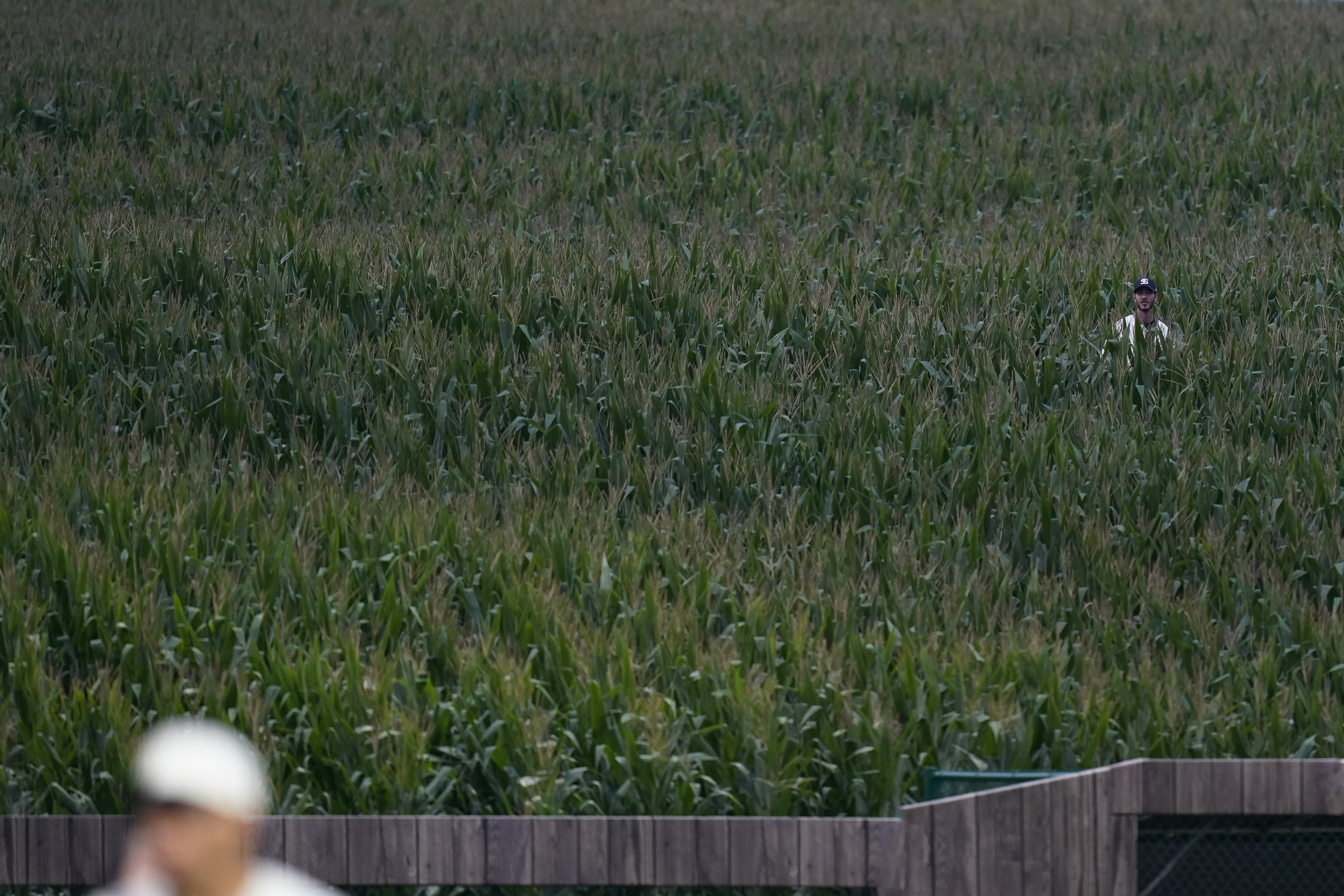
White Sox third baseman Jake Lamb walks through a cornfield before a the “Field of Dreams” game.
Charlie Neibergall/AP
Actor Kevin Costner walks onto the field prior to a game between the Chicago White Sox and the New York Yankees.
Stacy Revere/Getty Images
A general view of the Field of Dreams during the first inning between the Chicago White Sox and the New York Yankees on August 12, 2021 in Dyersville, Iowa.
Stacy Revere/Getty Images
A-10 aircraft conduct a flyover before a baseball game
Charlie Neibergall/AP
A hot air balloon is seen during the third inning.
Stacy Revere/Getty Images
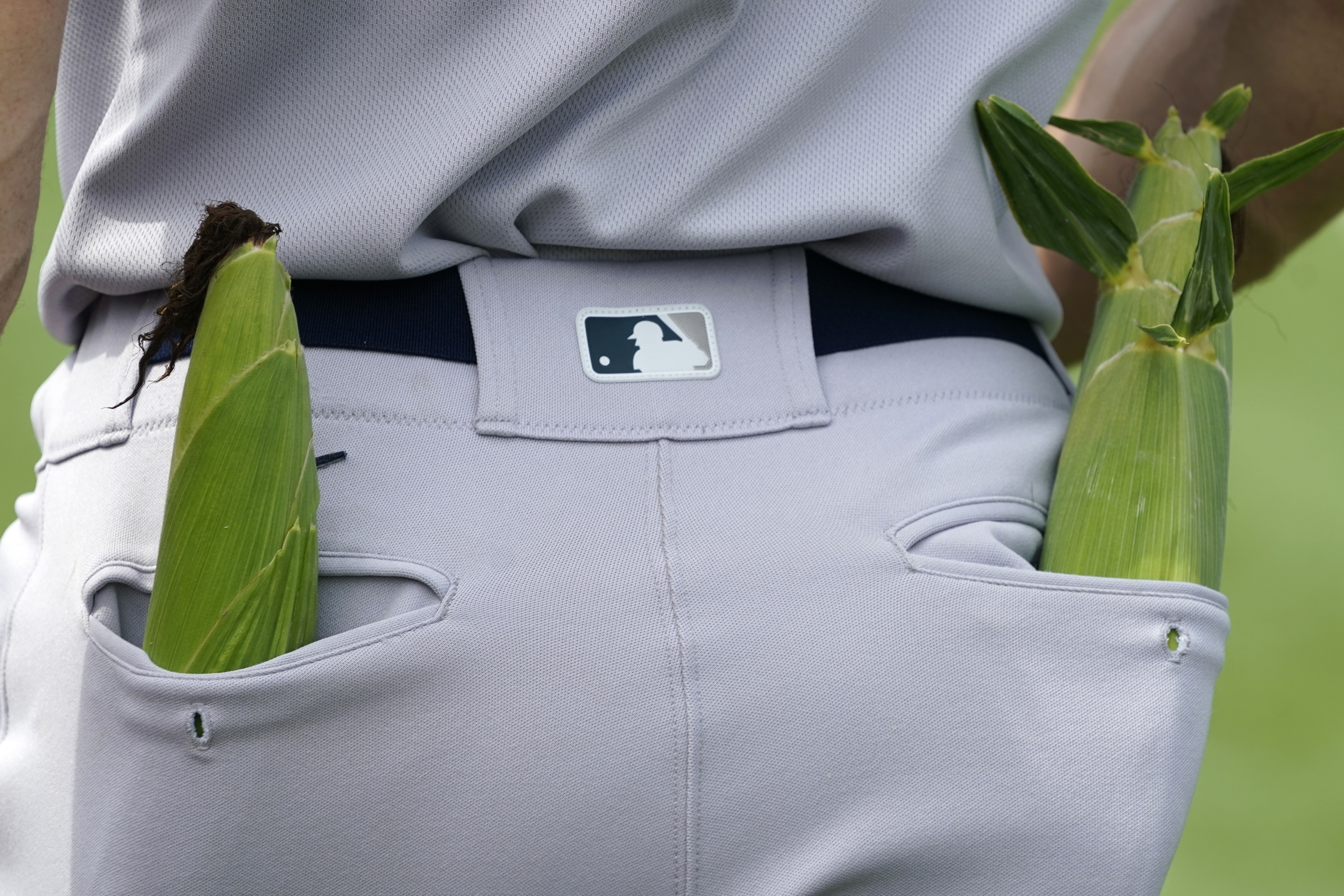
Yankees designated hitter Giancarlo Stanton walks on the field with earns of corn in his back pockets before the game.
Charlie Neibergall/AP
Yankees right fielder Aaron Judge watches a home run from the Sox’ Seby Zavala fly into the outfield corn in the fourth inning.
Charlie Neibergall/AP
Aaron Judge anticipates a pitch during the fourth inning against the White Sox.
Stacy Revere/Getty Images
White Sox bullpen pitcher watches from the outfield corn during a baseball game against the Yankees in Dyersville, Iowa.
Charlie Neibergall/AP
Sox right fielder Adam Engel anticipates a pitch during the seventh inning against the New York Yankees.
Stacy Revere/Getty Images
Yankees designated hitter Giancarlo Stanton walks to the dugout during the sixth inning against the White Sox as the sun sets at the Field of Dreams game.
Stacy Revere/Getty Images
The White Sox and New York Yankees played in tiny Dyersville, next to the actual site used in the 1989 film. Kevin Costner, James Earl Jones, Ray Liotta and Amy Madigan starred in the movie.
The Sox won 9-8 in dramatic fashion with a game-winning, two-run home run by Tim Anderson.
A crowd of about 8,000 watched the made-for-TV event which was delayed a year after the pandemic postponed the original plans to play at the specially built field.
Costner came back for this, stealing the scene with a slow, ponderous stroll into the outfield his character Ray Kinsella often took in the film before stopping to watch the real White Sox and Yankees emerge from the corn for pregame introductions.
Clutching a ball in his hand, while the original symphonic score from the movie played over the loudspeakers, Costner stepped up to a microphone and told the crowd, “It’s perfect.”
This won’t be a one-time visit, either. Major League Baseball confirmed that the Field of Dreams game will return in August 2022, with the teams to be determined.
DYERSVILLE, Iowa — This is how you end a “dream” game.
With a dream home run in the bottom of the ninth inning.
After a nightmare top of the ninth.
“It was a dream come true,” said bench coach Miguel Cairo, who filled in for manager Tony La Russa, who was attending the funeral of his brother in law.
Closer Liam Hendriks was roughed up for four runs in the ninth, two on Aaron Judge’s homer and the go-ahead run on Giancarlo Stanton’s blast.
There were eight homers in the game, four by each side. Jose Abreu, Eloy Jimenez and Seby Zavala preceded Anderson’s two-run shot with Zavala (walk) on base against lefty Zach Britton.
“He’s amazing,” Cairo said of Anderson. “The energy. He’s a leader. He’s the man.”
Fireworks went off as Anderson circled the bases before being mobbed by teammates at home plate.
“Big games like this, this is the time to show up,” said Anderson, who also doubled in a run in the third inning. “Being able to walk this one off was one of the best moments of my career.”
With baseballs flying out to all fields at the cozy Field ballpark — 335 feet to the foul poles, 380 to the power alleys and 400 to center with a high well — the Sox used the long ball to build a 7-3 lead. The Yankees used it, too, though, getting Hendriks for the closer’s ninth and 10th homers allowed this season.
Members of the Chicago White Sox and the New York Yankees take the field prior to a game at the Field of Dreams on August 12, 2021 in Dyersville, Iowa.
Stacy Revere/Getty Images
White Sox third baseman Jake Lamb walks through a cornfield before a the “Field of Dreams” game.
Charlie Neibergall/AP
Actor Kevin Costner walks onto the field prior to a game between the Chicago White Sox and the New York Yankees.
Stacy Revere/Getty Images
A general view of the Field of Dreams during the first inning between the Chicago White Sox and the New York Yankees on August 12, 2021 in Dyersville, Iowa.
Stacy Revere/Getty Images
A-10 aircraft conduct a flyover before a baseball game
Charlie Neibergall/AP
A hot air balloon is seen during the third inning.
Stacy Revere/Getty Images
Yankees designated hitter Giancarlo Stanton walks on the field with earns of corn in his back pockets before the game.
Charlie Neibergall/AP
Yankees right fielder Aaron Judge watches a home run from the Sox’ Seby Zavala fly into the outfield corn in the fourth inning.
Charlie Neibergall/AP
Aaron Judge anticipates a pitch during the fourth inning against the White Sox.
Stacy Revere/Getty Images
White Sox bullpen pitcher watches from the outfield corn during a baseball game against the Yankees in Dyersville, Iowa.
Charlie Neibergall/AP
Sox right fielder Adam Engel anticipates a pitch during the seventh inning against the New York Yankees.
Stacy Revere/Getty Images
Yankees designated hitter Giancarlo Stanton walks to the dugout during the sixth inning against the White Sox as the sun sets at the Field of Dreams game.
Stacy Revere/Getty Images
“We’re not going to quit until it’s over,” Sox starter Lance Lynn said.
Lynn allowed four runs in five-plus innings. Michael Kopech got out of a jam left by Lynn in the sixth, and Aaron Bummer pitched out of Kopech’s jam in the seventh. Craig Kimbrel pitched a scoreless eighth and Hendriks got the ninth.
La Russa was attending the funeral of his brother-in-law in Tampa, Fla., and planned to watch the game on TV. He will have liked what he saw.
“I’ve got his back,” Cairo said. “He preaches family, and right now he’s with his family. His second family is here and now we have to do it for him.”
Pitching through pain
Sox starters got extra rest shortly after the All-Star break and there’s probably more of that to come. “Dead arm” issues are part of the rigors of pitching through 30 starts.
“Everybody is different when it is, too,” Lynn said. “Guys have different spots and different times of the year when they feel things. I would say the older you get the more you get used to it so you have less of them than the young guys.”
Lynn (11-3), who allowed four runs on four hits with seven strikeouts in five-plus innings, said he feels good “maybe five starts out of 30.”
“You’re never pain free,” he said. “You throw a baseball for a living. It’s one of those things you get used to, and some days are worse than others.”
Carlos Rodon went on the 10-day injured list Wednesday with shoulder fatigue, but in his case it’s more than a “dead arm” and a shutdown was needed.
This and that
Adam Engel left the game with right groin tightness. He is day to day.
*With his 221st homer, Abreu tied Harold Baines for third all-time on the Sox list.
*Commissioner Rob Manfred confirmed there will be a second Field of Dreams game next year but didn’t indicate which teams would play when asked about Cubs manager David Ross insinuated the Cubs would be in it.





:no_upscale()/cdn.vox-cdn.com/uploads/chorus_asset/file/22774040/merlin_98588978.jpg)
:no_upscale()/cdn.vox-cdn.com/uploads/chorus_asset/file/22774032/BOA_pole_sign.jpg)
:no_upscale()/cdn.vox-cdn.com/uploads/chorus_asset/file/22779507/merlin_95422809.jpg)
:no_upscale()/cdn.vox-cdn.com/uploads/chorus_asset/file/22779499/Creticos.jpg)
:no_upscale()/cdn.vox-cdn.com/uploads/chorus_asset/file/22779376/LOLLAFRI_073121_41.JPG)
:no_upscale()/cdn.vox-cdn.com/uploads/chorus_asset/file/22779568/merlin_95138905.jpg)
:no_upscale()/cdn.vox-cdn.com/uploads/chorus_asset/file/22779579/_Dan_Fulwiler_copy.jpg)








Leave a comment