Most Americans became aware of Kraftwerk when “Autobahn,” the pioneering German electronic band’s first U.S. single, hit Top 40 playlists in 1975. But not fans of Chicago’s Triad Radio: they’d known about Kraftwerk for years, because the nightly radio show had been programming tracks from the group’s first three albums since 1971. Triad on-air host and program director Saul Smaizys had even played “Autobahn” in 1974–not the 3:27 single edit but the nearly 23-minute album version, from a test pressing of the Autobahn LP delivered by a record-company representative. “We put that on,” Smaizys says, “and the phones went crazy.”
It was neither the first nor the last time that Triad listeners were privy to previews of pop music’s future. Every weeknight from 1969 till 1977, first on WEAW and then on WXFM, Triad introduced Chicagoans to the music of soon-to-be stars: David Bowie, Genesis, the Scorpions, Donna Summer, and many others who would define popular music in the 1970s and 1980s. At the time, the status quo in radio was to broadcast short singles selected by program directors, not disk jockeys, but Triad defied that model. By airing pop and rock songs not marketed as singles, it helped construct a new status quo on the FM dial: the progressive album-oriented rock format.
The progressive rock format referred to stations with eclectic programming inside the rock genre, and Triad certainly had that–but it also went further, becoming a Chicago pioneer of commercial free-form radio, which expanded its eclecticism to allow for anything in any genre. The show’s producers, not station management, selected the music, and Triad supplemented its diet of rock with jazz, fusion, blues, reggae, folk, comedy, interviews, poetry, electronica, classical, experimental music, Eastern music, and more. Just about any type of recording that sounded good (or at least interesting), Triad would play.
Triad debuted just two years after the nation’s first acknowledged commercial free-form format, masterminded by former Top 40 jock Tom Donahue and broadcast in the evenings over San Francisco’s KPMX. In Chicago, Triad preceded WGLD’s progressive-rock show Psyche, launched in 1970, and WXRT‘s reincarnation as a progressive rock station in 1972 (John Platt, who helped establish the format on WXRT, had been part of WGLD). Triad also enlarged its cultural footprint by printing free monthly radio guides that eventually grew to magazine size, often topping 100 pages and branching out into events coverage, editorials, and more.
Given the Internet’s thorough transformation of music discovery, it takes a little mental labor to imagine being a Chicago music buff, scanning the AM and FM bands in the early 70s in hopes of finding something interesting. But when those folks landed on Triad, it was as though they’d become Dorothy stepping out of black-and-white Kansas and into Technicolor Oz.
In 2017, Saul Smaizys began digitizing the show’s archives, which he maintains himself. On the GoFundMe page he created that year to fund the work, he explains at least part of his motive: “I believe the contents of the archive will be of great benefit to music fans and researchers in that period of musical history.”
Triad Radio air checks, interviews, station IDs, promos, and advertisements, as well as scans of monthly radio guides and other ephemera, may be freely downloaded here.
The material that Smaizys still has includes lots of interviews, some with notables such as Bowie, Kraftwerk, Pink Floyd, and Heart and others with lesser-known artists, among them genre-jumping jazz flutist Hubert Laws, Irish folk musician Paul Roche, and Steve Miller Band keyboardist Ben Sidran. He has correspondence with artists, including German bands Can and Kraan; artist promotional photos and bios; and copies of many of the monthly Triad radio guides.
The archive also contains many “air checks,” which allow a present-day audience to hear exactly what Triad broadcast 45 or even 50 years ago. They’re snippets of live radio, often an entire segment or show, and Smaizys’s tapes include not just music but also DJ patter, station IDs, interstitials, and sometimes commercials.
Smaizys wants this material to be available to the public for free, just as Triad’s broadcasts and radio guides were always free–his approach is an extension of Triad’s philosophy of sharing the best and most distinctive voices with everyone willing to listen. Triad was, as one of its early radio guides declared, where the usual was unusual.

Triad Radio was the brainchild of three young Lithuanian Americans who wanted to create an outlet for the vibrant music pouring out of the 1960s counterculture–they felt it wasn’t getting the airplay it should on commercial radio. Entrepreneur Donatas Bacinskas (aka Dan Bacin, who later founded Bacino’s Pizza), artist Alvydas Biciunas (whose family owned Bridgeport’s famed Lithuanian restaurant Healthy Food), and artist and writer Aldona (who prefers to go by her first name alone) met at a Chicago conference for Lithuanian young adults. Around Christmastime in 1968, Bacin and Biciunas visited Aldona in her native Boston, inviting her to come back to Chicago and help them build their forum for new music. Bacin calls it an idea borne out of the “boundless certainty of youth”–at the time, all three of them were between 19 and 21.
Aldona and Bacin had begun a romantic relationship, so though Aldona had just enrolled at Boston University, she pulled up roots and moved to Chicago. During the snowy trek to the midwest, she listened over and over to Iron Butterfly’s “In-a-Gadda-da-Vida” in the car.
Bacin figured out how to buy airtime on local radio–Aldona calls him the “consummate salesman.” Triad launched in March 1969 on Evanston’s WEAW-FM, airing weekdays from midnight till 5 AM. The show’s first on-air host was a man named Dennis Gray, and because it broadcast just 25 hours per week, it only needed one.
To cover initial costs–mostly airtime, since in the early days nobody working for Triad was paid–Bacin cobbled together money borrowed from family. In summer 1969, he and Aldona generated additional income by selling waterbeds at the Illinois State Fair. “It was a heck of a lot of work and really hot!” Bacin recalls. Thankfully, advertising revenue eventually paid for the daily airtime.
The show’s name, Triad, is a musical term for a chord that stacks three notes in intervals of thirds, but it also referred to the show’s founding trio. Bacin offered a third meaning in 1971, when he told a Billboard reporter that philosophically, Triad embodied “the imperishable part of man as mind, spirit, and soul; the common cord [sic].” As its opening theme, the program adopted Jefferson Airplane’s “Triad,” a mellow, introspective groove from the 1968 album Crown of Creation. Bacin says that the Eye of Providence, specifically as it appears atop a pyramid on the back of the dollar bill, was a visual depiction of Triad. It became the show’s iconic symbol, ultimately adorning covers of radio guides as well as T-shirts and stickers.
Aldona recalls that Triad programmed a little bit of everything right from the start. “I liked folk, rock, and jazz, so we had a lot of that,” she says. “Then we tapped into the idea that record companies would send us records.” She laughs. “That may be why we started the show in the first place–free records!”
The show’s format expanded further in early 1970, when Smaizys came on board. Also of Lithuanian heritage, Smaizys (pronounced smy-ZHEEs) was born in Wurzburg, Germany, in 1947, the same year as Kraftwerk cofounder Florian Schneider (who passed away in April). Smaizys’s family emigrated to the U.S. in 1949, living in Cleveland for a spell before settling among fellow Lithuanians in Bridgeport. Smaizys had been a radio enthusiast since childhood: preparing for school meant tuning in to WAAF to listen to pioneering Chicago jazz DJ Holmes “Daddy-O” Daylie. “I always liked jazz and the blues,” Smaizys says. “I used to listen to Big Bill Hill. He had live remotes from clubs. I remember hearing Howlin’ Wolf live on the air.”
As much as Smaizys cares about music, his true love was (and still is) photography. When Bacin called him about Triad in early 1970, he was working a film-processing job at Astra Photo, which had become Chicago’s first black-and-white custom lab when it opened in 1955.
Bacin and Smaizys had met years earlier at a Lithuanian youth center on the south side, and they’d bonded over music, spending weekends listening to records at Smaizys’s apartment near Clark and Surf. “We’d listen to the Rolling Stones, Frank Zappa,” Smaizys says. “I had some electronic-music records. I had knowledge of a lot of weird sounds.”
Those “weird sounds” were what prompted Bacin’s call. He wanted Smaizys to pick out background music to play behind Triad’s on-air host while he announced the songs. Smaizys hadn’t considered radio as a profession, but he liked what he heard and joined the team. In spring 1970, Triad was barely a year old but had already added a second shift on WXFM 105.9 FM (aka WXFM 106). For a short period, Triad aired on two stations: WEAW on weekdays from midnight to 5 AM, and WXFM on weeknights from 8 PM to midnight.
When brokering two shows got too expensive for the growing but still financially vulnerable enterprise, the Triad team dropped the WEAW slot. The show’s relationship with WXFM–its home for the rest of its run–was generally sound, but there were occasional dust-ups with station management. “They kind of got down on us for some of the things we played,” Smaizys remembers. “We got in trouble one time by playing a song by a Black Panther member. He let out the F-word and we kind of missed it.” Live radio had its hazards without a seven-second delay.
When Smaizys joined Triad, Dennis Gray was still the on-air host. “For a while, he would do the announcing and I would cue the records,” Smaizys says. “Then I did two days of announcing and he did three days. We would flip it the following week. He’d announce for two days and I’d do three.” Eventually Gray moved on to play in local space-rock band Stratosled (which included Jack “Hawkeye” Daniels from the Shadows of Knight), and Smaizys took over the announcer’s seat altogether.
Just as Triad’s programming was the antithesis of pop radio, Smaizys’s Zen-like calm and baritone voice were the antithesis of the rapid-fire patter of the era’s “personality” disc jockeys. His measured delivery communicated confidence, cool, and an almost intimidating musical authority–but he still sounded like the kind of guy you’d want to hang out with on weekends, checking out new sounds on the turntable.
At first, Triad had little local competition in the free-form sphere. Smaizys recalls an underground progressive-rock show called Spoke that debuted on WLS-FM in 1968 with the tagline “The flesh that holds the wheel of life together.” It featured music by the likes of Savoy Brown, the Rolling Stones, and Jefferson Airplane, but by 1969 it was gone. In January 1970, WGLD-FM began broadcasting a progressive rock format (including the show Psyche), and Bacin admits that it was competition–but “only to a certain extent. You have to have confidence in your own approach.” Triad was steadily building an avid listenership, and record companies were starting to pay attention.
While Smaizys handled the airwaves, Bacin took care of business, selling ads and securing free product from record labels as well as interviews with artists. “Dan was really good at getting records for us,” Smaizys says. “He’d get jazz, rock, imports. He’d get blues. We had so much to choose from.” What Bacin couldn’t provide, Smaizys bought from the import bin at the Loop location of Rose Records.
Listeners also sent in records from time to time–one couple, avid fans of the show, contributed the 1971 debut album of pioneering Krautrock band Faust to Triad’s growing library. It was during this time, Aldona says, that “Saul became more active in picking the music and drawing from his own tastes.” At first Aldona, Bacin, Biciunas had selected Triad’s music, but after Smaizys got involved, he gradually became the sole programmer. His love for Krautrock–an emerging form of German experimental rock that combined psychedelia, electronic music, and repetitive “motorik” rhythms–wasn’t immediately shared by everyone at the show, but its spaced-out, avant-garde sound soon became Triad’s calling card.
That’s not to say Triad’s playlist narrowed at all under Smaizys’s influence. Its bottomlessly eclectic palette included European progressive-rock bands, electronic music, and the Afrofuturistic stylings of Sun Ra alongside jazz-fusion bassist Stanley Clarke, Ken Nordine’s Word Jazz, and meditations with Indian spiritual leader Sri Chinmoy. It was unlike anything else on Chicago radio at the time, and it drew scads of listeners, mostly teens and young adults. A listener from Niles named Ron Friedman, who’d go on to work as Triad’s comptroller, remembers the show shaping how he understood music. “Saul would play Emerson Lake & Palmer’s ‘Pictures at an Exhibition,’ and then play the original version,” he says. “Triad pretty much informed my musical taste, from jazz to classical to rock in its different incarnations.”
New York native Rob Gillis, who joined the Triad management team in 1975 and stayed till the end, points out that the show’s anything-goes eclecticism followed an internal logic–it wasn’t the radio equivalent of iPod shuffle. “Triad played music in a way that made sense,” he says. “It had to have a groove. It had to have interesting rhythms or an atmosphere. We were saying, ‘This is an adventure and you’re going on it.'” The Triad team thought of the show as a way to elevate the mind through sound. As Bacin told Billboard in the mid-1970s, “The basis of radio today is the intermeshing of education with entertainment. They should be one in [sic] the same.”
Each five-hour nightly Triad broadcast was subdivided into regularly featured specialty segments. Flight 106 was an hour-long survey of contemporary rock, jazz, and blues. New Sounds and New Releases introduced the latest cuts from albums by national and international artists in a variety of genres. Sounds From Across the Big Swamp focused on Krautrock (Can, Kraan, Amon Duul II, Guru Guru), prog rock (Triumvirat, Gentle Giant, Genesis), and fusion (Passport, the Mahavishnu Orchestra). “Saul and I were in sync about having a wide variety of music,” Bacin says. “Whether it was Jimi Hendrix, John Cage, or Mozart, there was a place for it on Triad.”
In 1970 or possibly early 1971, Smaizys had the idea to publish a monthly radio guide with highlights from upcoming Triad shows. “At first it was a one-sheet, folded in thirds,” he says. “We’d send it out to listeners who sent us a stamp. From there, we made a booklet, hand drawn by our resident artist.” The guide used a parade of art directors, and one of the first was Triad cofounder Biciunas, who added his own calligraphy to early editions. The one-sheet quickly expanded to digest size, and by the end of 1971 it had already reached 48 pages. “Eventually,” Smaizys says, “we had enough material for a full-size magazine.”
Bacin acknowledges that the radio guide was inspired by a similar publication that Peabody Award-winning radio executive Ray Nordstrand cultivated in the 1950s at WFMT, where he served as an announcer for the famous Midnight Special broadcast (it describes itself as “the world’s weekly aberration of folk music and farce, show tunes and satire, madness and escape”). In 1951 WFMT arguably became the first alternative radio station in the U.S., and The Midnight Special has been airing regularly since 1953.
The full-size Triad monthly radio guide debuted in late 1971 or early 1972, and the show distributed it through local retailers who advertised in the magazine, especially record stores and head shops. As the guide grew, it was called Cosmozodiac for a couple years, and by the middle of the decade it had topped 100 pages per issue.
Like a free, Chicago-based version of Rolling Stone or Creem, the guide in its fullest flower featured not just Triad’s daily radio schedule but also a cultural arts calendar, a wide range of reviews (albums, films, concerts, books, and theater), cartoons, editorials, horoscopes, discussions about meditation, an arts-related crossword puzzle, and even recipes (one explained how to make nicotine-free herbal tobacco). Early issues were as free-form in thought and presentation as the evening broadcast. Later issues were more polished and included feature articles on music celebrities such as Paul McCartney–those kinds of stories, Gillis notes, expanded readership.
Recognized journalists such as Abe Peck, previously editor of countercultural Chicago newspaper The Seed, wrote for the magazine; so did Mahavishnu Orchestra leader John McLaughlin. The task of producing the guide pushed the Triad team to expand, and at one point it included more than two dozen employees and contributors, among them associate publisher Chris Vassilopoulos, editor Patrick Goldstein, and salesperson Jason Perlman. George Kase, now a director and owner with Chicago Film Works after spending years in advertising, produced some Triad radio spots (mostly station IDs and other promotional interstitials) and helped out with art direction.
At the time, WLS, WVON, and WCFL distributed free weekly surveys, usually one-sheet circulars that listed the most-played records for that week. If those surveys were how you learned about what was happening in popular music, then the Triad radio guide–which advertised itself as “The Midwest’s Largest Free Magazine”–would expand your mind as hugely and irrevocably as the show it supported.
Artist interviews didn’t appear in the Triad guide till it got big enough to accommodate them, but they were an integral part of the show’s on-air presence from the start. David Bowie was among the first. In 1970, the Thin White Duke swept through Chicago on a promotional tour, visiting radio stations to push his third studio album, The Man Who Sold the World. Bacin remembers him as intense but soft-spoken. He recalls Bowie’s “dual-colored eyes,” and that he wore a pageboy haircut and tweed pants with two-inch cuffs–not the image most associate with the future Ziggy Stardust.
Smaizys says the Bowie interview almost didn’t happen. “He was at the station, but we couldn’t get the tape recorder working. By the time the station engineer fixed it, Bowie had to leave, so we only got about five minutes,” he says. “Since we didn’t get the full interview, we went to where Bowie was staying, at the apartment of Robin McBride, the Mercury Records representative. It was on Armitage, across from the Park West. We did more interviewing, and Bowie played a couple of songs on guitar.” The second tape, with the longer interview and impromptu solo concert, has gone missing, but Smaizys hopes it will turn up somewhere in the Triad archives. He’s already digitized the brief clip recorded at WXFM.
Other artists Triad interviewed over the years include Yoko Ono, reggae star Peter Tosh, Ray Manzarek of the Doors, John Kay of Steppenwolf, and Scottish folk rocker Donovan (“He stayed all night and left in the morning,” Bacin says). “One night we had David Bromberg and his band, with Jackson Browne,” Smaizys says. “It was a jam session after one of their concerts. We recorded it.”
On April 20, 1975, the day after Kraftwerk performed at the Aragon, cofounders Florian Schneider and Ralf Hutter sat for a Triad interview. Kraftwerk’s influence on the birth of hip-hop is well-known, and British journalist David Hepworth went even further in his 2016 book Never a Dull Moment–he wrote that the band and their Krautrock peers “contained the spoor [sic] that would lead to the dance music of the twenty-first century and a revolution quite as big as the one that had brought along rock and roll.”
“Kraftwerk might not even be known in the United States if it were not for Triad,” Friedman says. “They were not being played anyplace else in the country.” Smaizys’s relationship with Schneider was such that when he and his girlfriend toured Europe in 1979, they stayed at Schneider’s penthouse in Dusseldorf.
Triad conducted most of its artist interviews in Smaizys’s production studio, in what became known as the Triad House (Gillis would later call it the Triad Mansion, though that doesn’t appear to have caught on). Rented in 1970, the Rogers Park house served as the command center for Triad’s growing media enterprise as well as living quarters for Bacin and Aldona, Dennis Gray, and Smaizys.
By the mid-1970s, as Gillis remembers it, typesetting and paste-up for the radio guide took place in the attic, where the house’s gabled roof provided plenty of space. The photo and reproduction studios were in the basement, and the business office and dining area were on the first floor. The second floor contained the living quarters, Smaizys’s recording studio, and the Triad record library. “The record collection got to a point where it was all the way down one side of a lengthy hallway and then some,” Bacin says. “That doesn’t count what Saul had in his studio.”
In 1972 Friedman, at that point still just a devoted listener, stopped by the Triad House in response to an ad seeking a distribution manager. Next thing he knew, he was piling radio guides into his AMC Gremlin at Chicago printer Newsweb. “I was hauling Triad radio guides from the printer to the suburbs, dropping them off at the record stores and head shops and salons that were advertising with Triad,” he says.
Working at Triad was an all-in experience, though, so Friedman’s job soon got bigger. “You ended up doing all sorts of things,” he says. “I was involved in the production of the radio guide, the late-night typesetting.” Smaizys operated the reprographic cameras and assembled material for his shows using a four-track recorder–rather than always mixing live on the air, he often made collages of music and other material at home in advance. “Saul did all sorts of pre-taped stuff,” Friedman recalls. “Mixing comedy with music–true audio-media free-form. He had programs and schedules done a month in advance.” Gillis agrees: “I have nothing but admiration for Saul’s skills, in the way he mixed music.”
Triad also helped German bands uninvolved with Krautrock break out in the U.S., among them the Scorpions and Lucifer’s Friend. “We seemed to have a bigger following in Illinois than other parts of the U.S.,” says Lucifer’s Friend front man John Lawton (later of Uriah Heep). “Without the help of shows like Triad, bands like Lucifer’s Friend–and many more under the umbrella of Krautrock–would never have gotten half of the recognition they deserved.”
Gillis says that Triad’s reputation with European artists and producers was such that in 1975 Giorgio Moroder, the future Father of Disco, sent Smaizys a seven-inch tape reel containing an erotic dance track that featured a woman’s orgasmic moans. Triad debuted it in Chicago, playing only the instrumental passages–and a few months later, the whole song charted nationally as Donna Summer’s “Love to Love You Baby.”
Triad also gave important support to emerging local artists, of course. In late 1971, producer-manager John Ryan brought Triad demos from a still-unsigned Styx, whose debut LP with Wooden Nickel Records wouldn’t come out till August ’72. Singer-songwriter James “JY” Young, the young band’s lead guitarist, was already a fan of Triad. “On both my stereo and in the car, 106 was where the cool stuff was,” Young recalls. “They mixed in the blues and even Top 40 from time to time. The Siegel-Schwall Band, the Butterfield Blues Band. To me, they were the coolest things. Triad was absolutely what we listened to at night.”
Ryan also brought local country-rock band Heartsfield to Triad’s attention. “They played some of our first demos, like ‘Music Eyes,’ before we ever had a record out,” remembers lead guitarist Fred Dobbs. The airplay led to a bounty of bookings. “We got a lot of Chicago gigs in the early days. They called us the ‘Lincoln Avenue Sweethearts’! We’d pack the places.” After Ryan introduced Heartsfield to Robin McBride at Mercury Records, the band’s self-titled debut LP, which included the single “Music Eyes,” hit in 1973. And even though a radio edit of the song existed, Triad played the six-and-a-half-minute album version. Dobbs and Heartsfield’s current manager, Dick Reck, both credit Triad for presenting songs at the length artists wrote them.
Local fusion outfit Forest also credits its early success to Triad. “Underground radio was a big thing, and that’s how we found out about Triad,” says Forest guitarist Ray McKenzie. The group, formed at Elk Grove High School, was inspired by what Triad aired–in particular the Mahavishnu Orchestra, Chick Corea & Return to Forever, and Weather Report. “We made a tape at Chicago Recording Company and sent it to Saul,” McKenzie recalls. When Smaizys played the Forest song “Monday Morning Rain,” McKenzie says, it was the band’s big break. “We got a bunch of gigs after that.”
Triad received a major boost in 1975 when WXFM, licensed to Elmwood Park, began beaming its signal from atop the Sears Tower, which had been completed a couple years before. That broadened its range to include parts of southern Wisconsin and northwest Indiana. By then the show was already having an impact bigger than its regional footprint would suggest.
“Triad punched above its weight class,” Bacin says. “We started getting west-coast correspondence for the magazine. I was traveling to New York and occasionally to Capitol Records in Hollywood.” Because of Triad’s not insubstantial influence in a major American city, its personnel moved in circles that included the likes of Mick Fleetwood and Frank Zappa. Bacin produced two Triad concerts featuring John McLaughlin, one at the Midwest Buddhist Temple–the first time the building was opened for commercial use.
Unfortunately, this turned out to be a peak for Triad, not a plateau. Gillis believes the beginning of the end arrived in April 1976: that was when WXRT, where Don Bridges had created a similar evenings-only free-form show in August 1972, expanded to a 24-hour progressive rock format. “Triad was no longer the only game in town,” Gillis says. “It couldn’t do what WXRT did, because it didn’t own WXFM. It was still paying for radio time. Advertisers began spreading their money around.”
Triad’s radio operation started bleeding ad revenue before its monthly print guide did, but even there competition had grown. By the mid-1970s, other free magazines with cultural content, including the Chicago Reader and the Illinois Entertainer, had entered the fray. Record stores and labels that had once put a significant percentage of their local ad budgets into Triad now had more options.
Given Triad’s proven success in breaking metal bands such as Lucifer’s Friend and the Scorpions, Gillis recommended Triad shift from free-form to a hard-rock format. Despite the team’s valiant efforts, which included bringing in a new on-air host, the financial picture grew grim. “In my head Triad had run its course,” Bacin says. “I had gotten interested in the work of Peter Zarlenga and was looking to do something with his company, which was a combination of philosophical truth and education.”
In 1977, Bacin sold the radio and publishing sides of Triad to Rick and Perry Johnson, owners of the Dog Ear Records retail chain and the Dharma record label, both based in northern Illinois. The Johnsons hired Bacin to spend six months helping them find their way. “I had a list of things for them to definitely not do,” Bacin says, “and they did them all! For example, they turned the monthly magazine into a twice-a-month publication. That didn’t work.”
Later that same year, Don Bridges bought the radio portion of Triad from the Johnsons. But its initial spark of freewheeling counterculture optimism–what Bacin had called the “boundless certainty of youth”–had faded. The final Triad radio broadcast aired in June 1977. Dave Freeman, a former Triad sales associate, picked up the show’s evening time slot at WXFM for jazz programming. The magazine continued for a while longer, becoming more music-centric–Gillis recalls in particular that editor Bill Paige “did a great job covering the early punk/new wave scene.” But untethered from the radio show that had birthed it, by the middle of 1978 the magazine had folded too. Triad was gone.
Gone but not forgotten. In late 2010, more than 40 years after Triad was founded, Smaizys created the podcast Remember Triad Radio. It was a short-lived project–he posted just eight episodes in five months, ranging from 21 to 82 minutes in length–but each of these air checks captures a slice of a Triad broadcast. One episode bears the following description: “Just as it was heard in 1975 with commercials and all. Guru Guru, John Klemmer, Michael White, Jade Warrior, Mahavishnu Orchestra, Burnin’ Red Ivanhoe, Arthur Brown, Sidney Poitier reads Plato, Moody Blues.”
Smaizys started a Triad Radio Facebook page in 2012 or 2013, then launched the Triad Radio Audio Archive Project in 2017. It’s an attempt to revitalize the spirit of the media enterprise for longtime listeners as well as give new generations a glimpse of decade-defining artists during their embryonic years. “I started digitizing old interviews and air checks, and copies of the radio guide,” Smaizys says, “putting them on a server so people could check them out for free.”
Sometimes that material overlaps with the recordings Smaizys posted as podcasts, but it’s often more complete. Triad frequently aired only portions of artist interviews, and the free, downloadable archive offers a chance to hear them in their entirety. The recordings already available for free download include the Bowie and Kraftwerk interviews as well as chats with Pink Floyd (backstage at the International Amphitheatre in 1973), Gentle Giant (at the Triad House, on a tour promoting the 1974 album The Power and the Glory), Yoko Ono, Moondog (on Wabash Avenue outside Rose Records in 1975), John Cale, and Anthony Braxton (whose two-part interview from 1970 includes three solo alto sax improvisations).
Smaizys estimates that he has more than 100 seven-inch tape reels and cassettes still to transfer. He also plans to continue digitizing promotional bios and photos, correspondence with artists, monthly radio guides, and other Triad ephemera.
The GoFundMe that Smaizys set up for the Triad archiving project in 2017 is still active, and he eventually hopes to raise $5,000 to pay for server space to host the files, cover his time commitment, and acquire the other resources needed to digitize the brittle, four-decade-old tapes and piles of documents. As of this writing, he’s about $2,200 short.
For eight important years in the evolution of popular music, Triad was the night school where intrepid listeners gathered faithfully at the vanguard of sonic innovation. The thrill was as much in anticipating what Smaizys might play as in actually hearing the music. To borrow the tagline of Ken Russell’s 1975 film of the Who’s Tommy, your senses would never be the same. And by the end of the evening, you might have a new favorite band half a world away. “Triad was very important in Chicago, and it influenced a lot of people,” says Ray McKenzie of Forest. “They should be very proud of what they did.”
Triad’s mission–to make the usual unusual, and in the process elevate the minds and spirits of its listeners–also gave a major boost to the careers of emerging superstars. Name an adventurous artist who made it big in the 70s or early 80s, and odds are Triad 106 FM played them. “Triad opened the door for so many of the acts that were to become the mainstays of the next decade,” says James “JY” Young. “They were the front-runners.” v
Read More









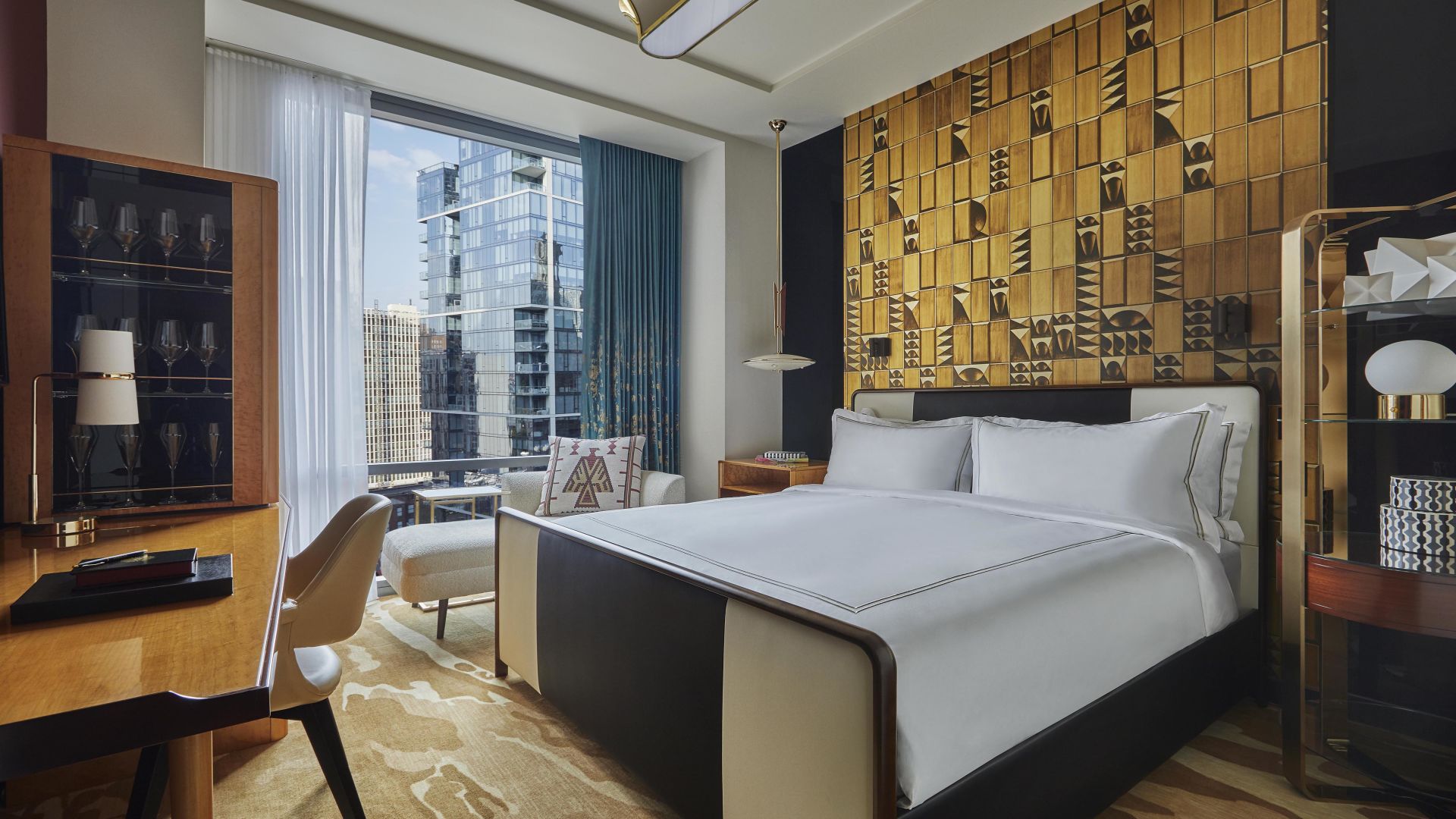
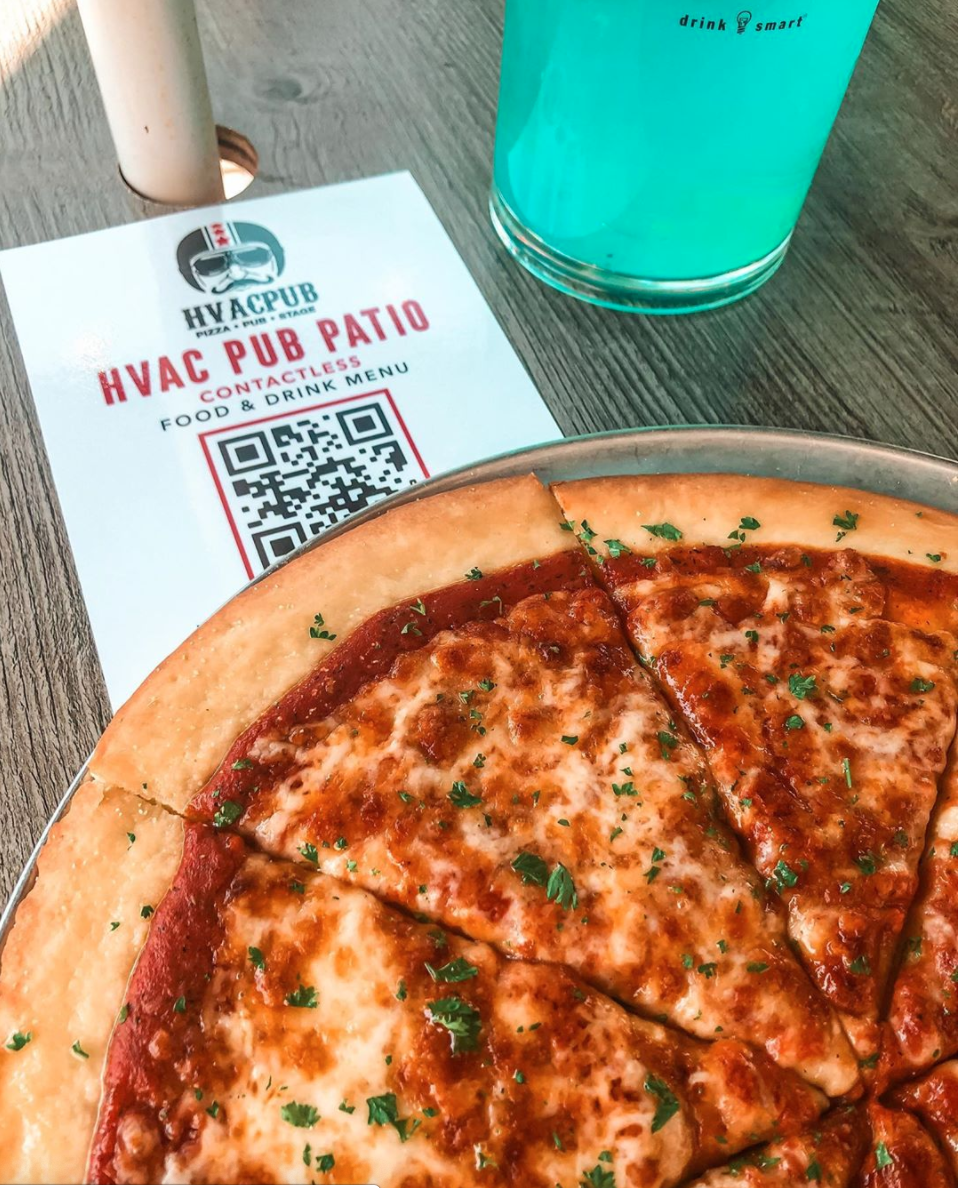
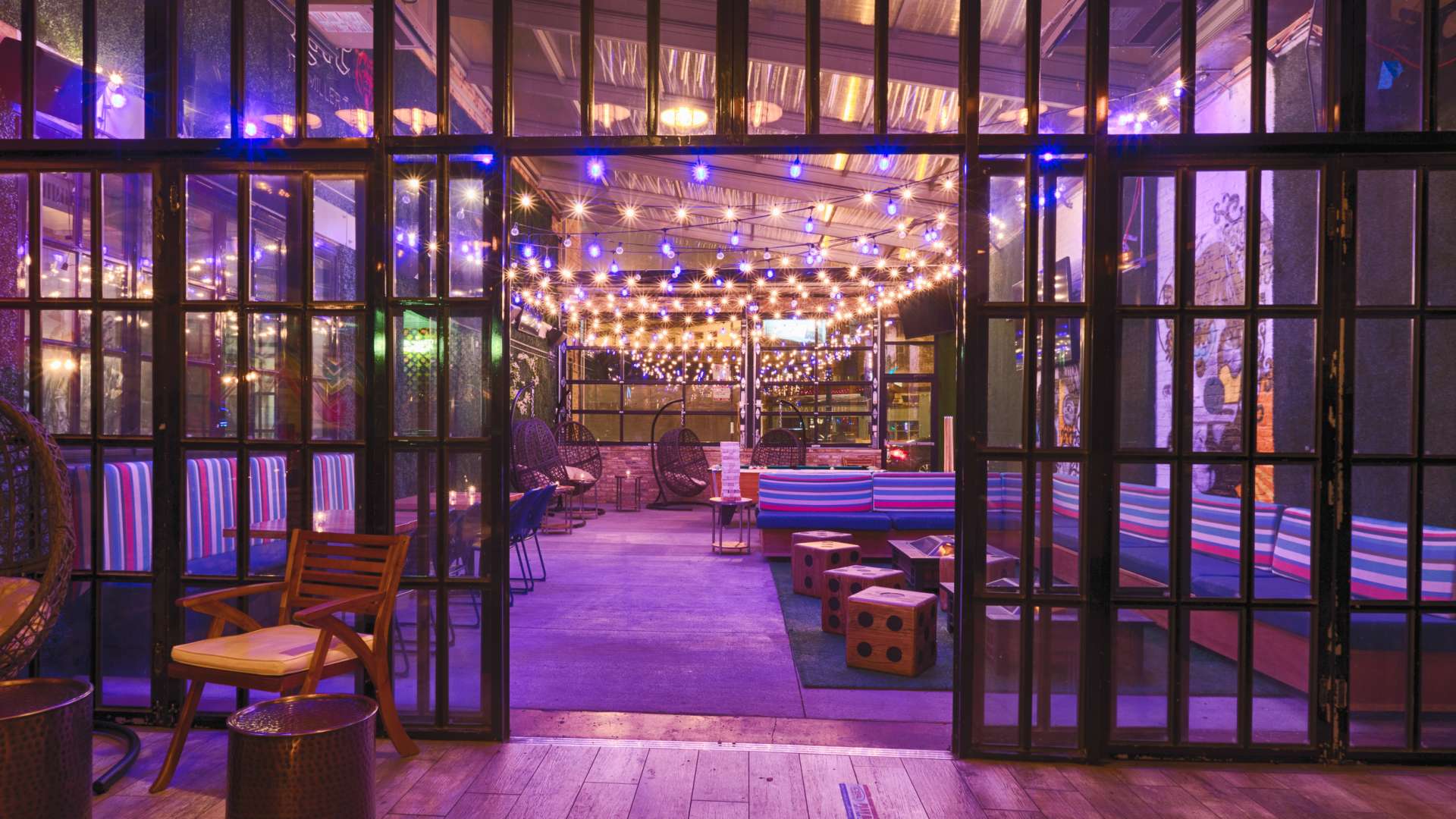


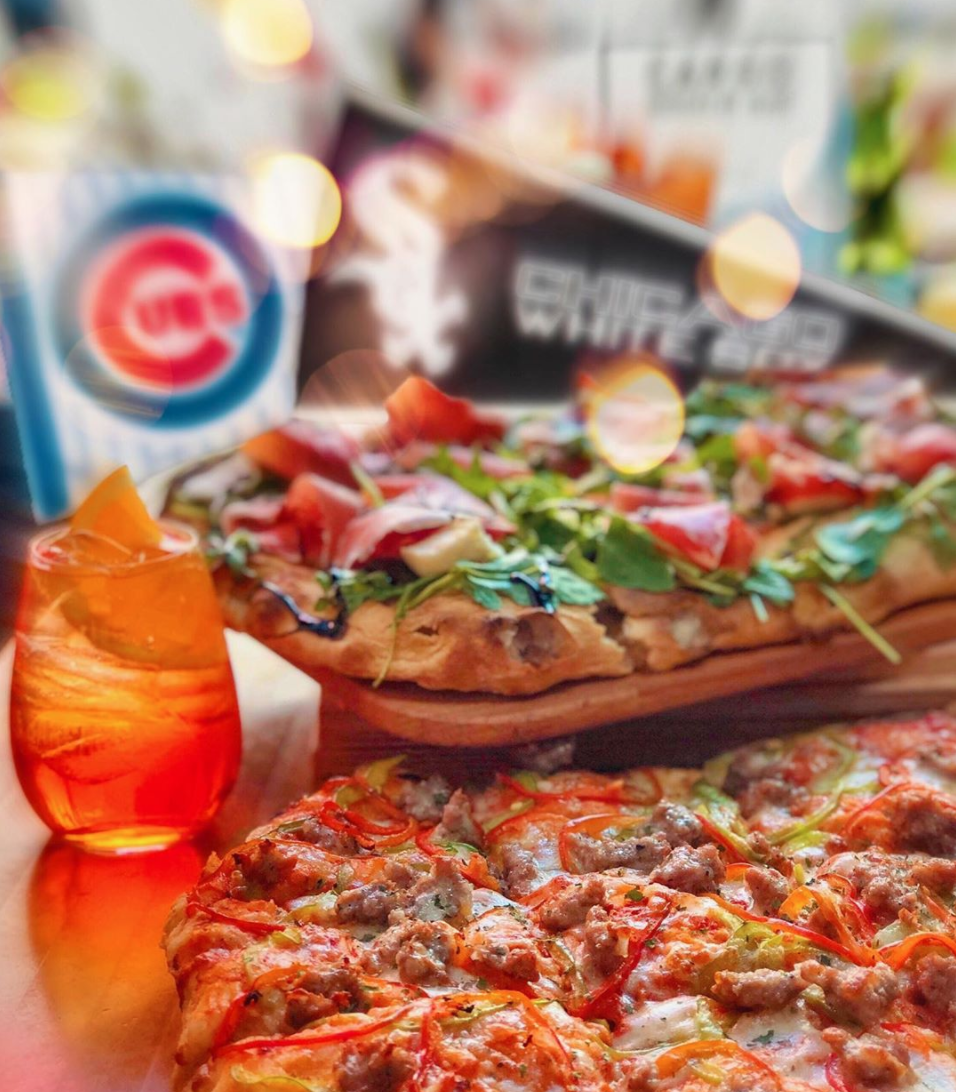

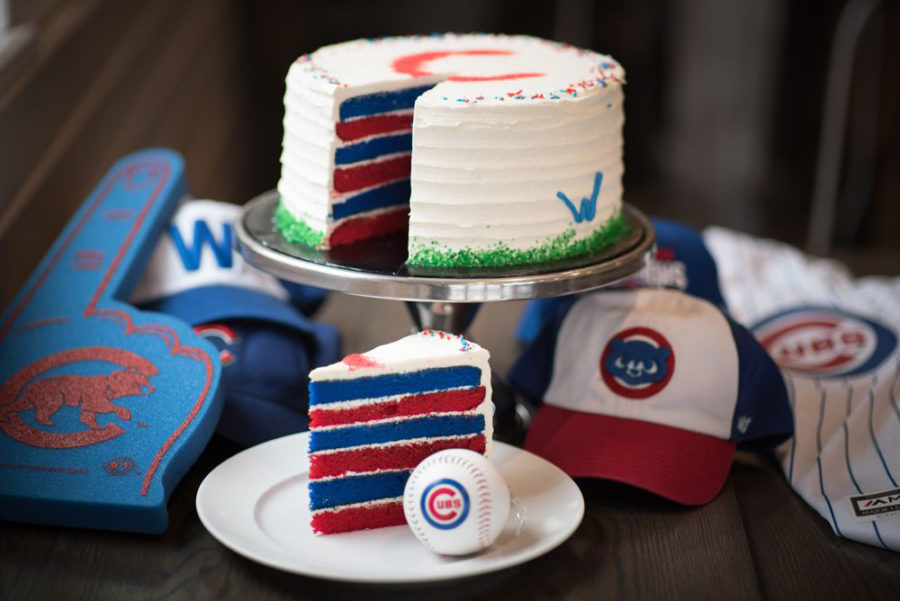
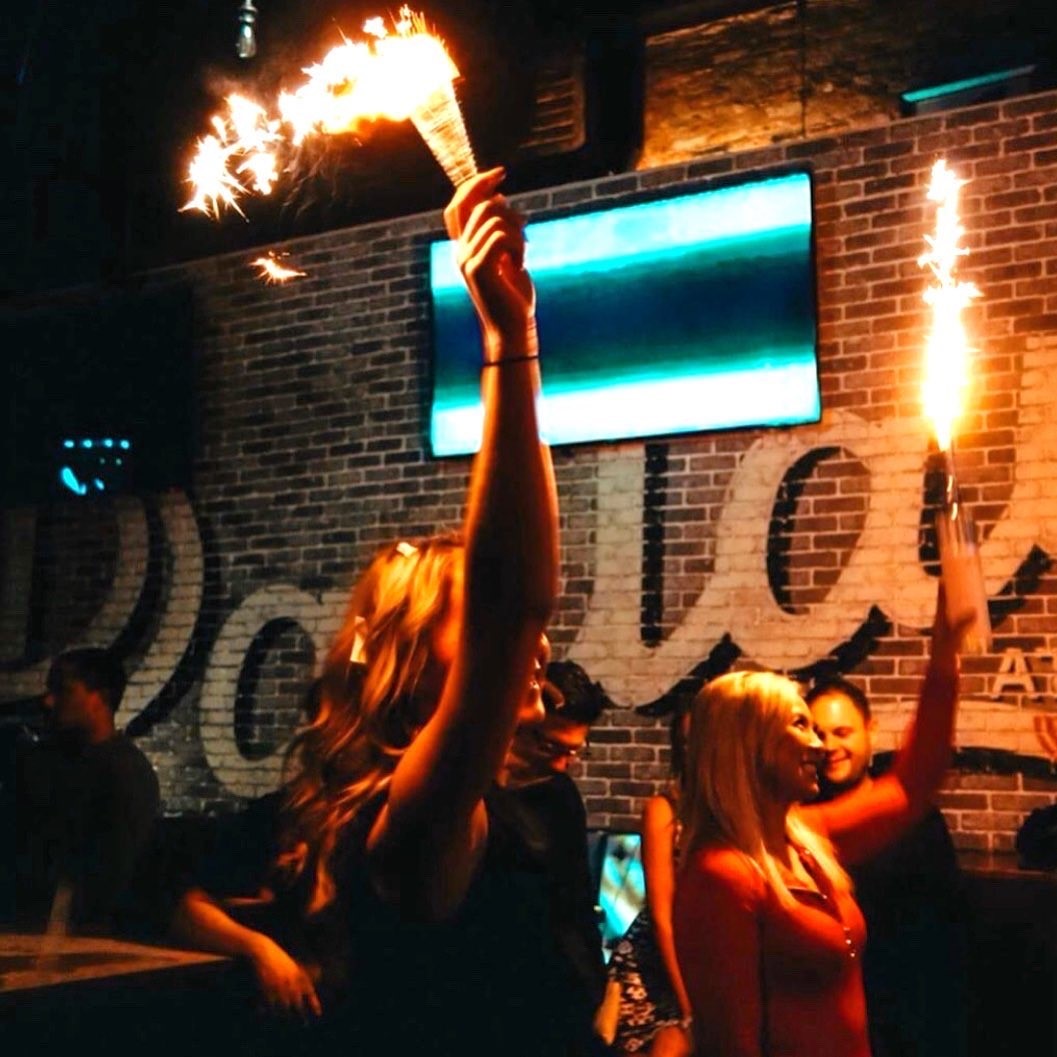
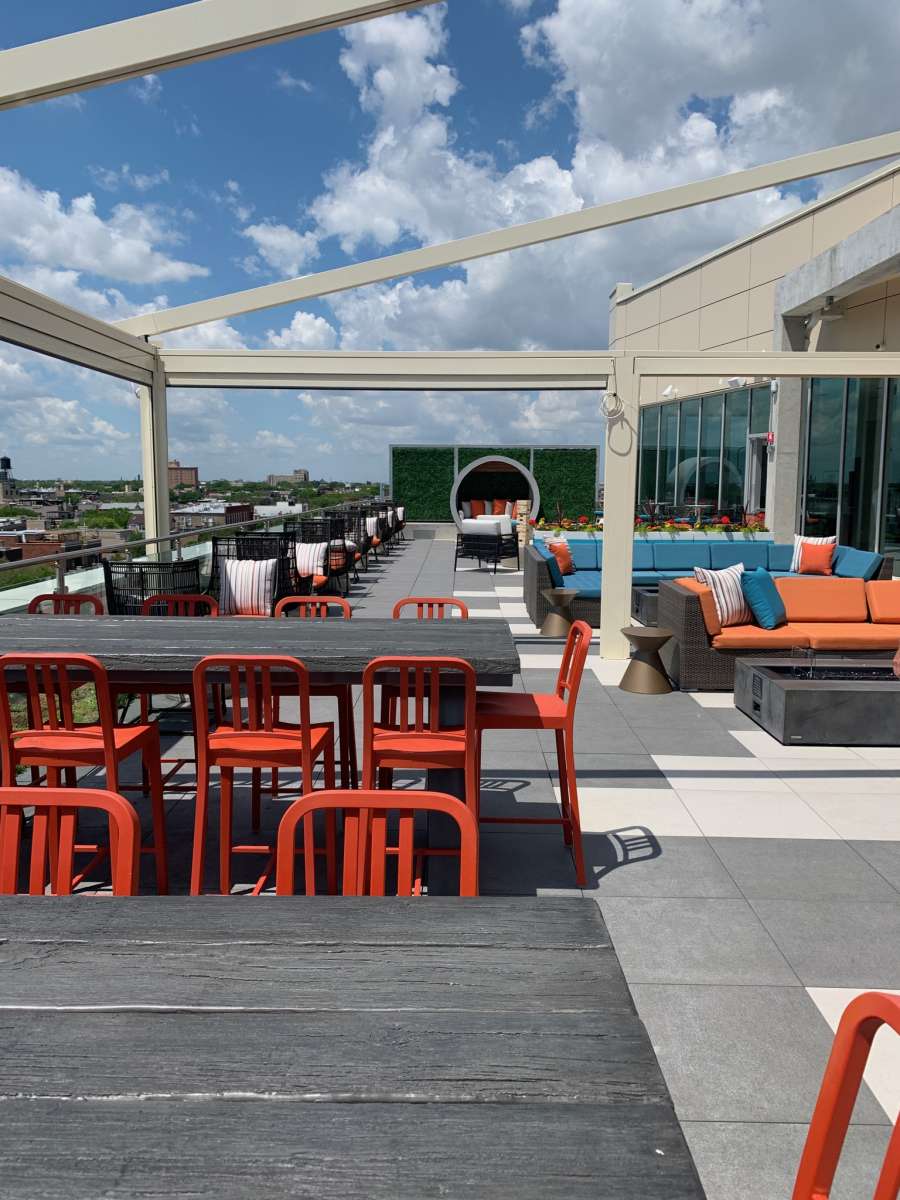
 To bring that summer attention to Parlay, Green Curtain Events has tailored two event packages, running from Thursday to Sunday, that come loaded with enough to make your Lolla 2020 watch party an experience you won’t forget For a party of 4, the $350 package will guarantee you entry with preferred seating, reserved service for over 3 hours, three appetizers for the table, two buckets of White Claw Hard Seltzer, and a premium bottle which will be presented by your server.