What’s New

Adopted Bodies Are Good at Holding It All Inon November 19, 2020 at 3:09 pm

Portrait of an Adoption

Adopted Bodies Are Good at Holding It All In

Read More

Adopted Bodies Are Good at Holding It All Inon November 19, 2020 at 3:09 pm Read More »

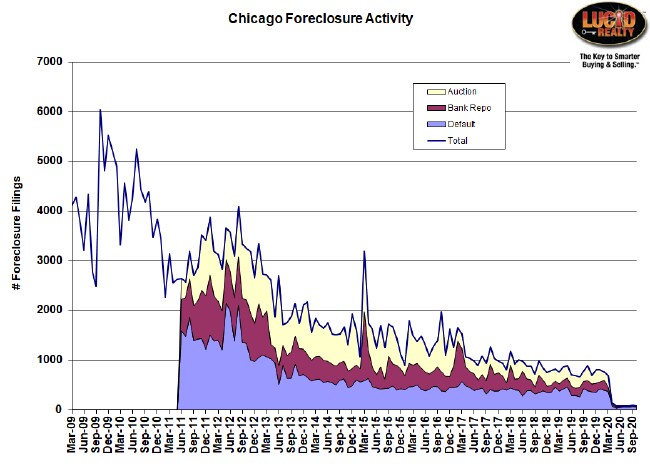
Chicago Foreclosure Activity Stalled While We Wait For Dam To Breakon November 19, 2020 at 2:28 pm

Getting Real

Chicago Foreclosure Activity Stalled While We Wait For Dam To Break

Read More

Chicago Foreclosure Activity Stalled While We Wait For Dam To Breakon November 19, 2020 at 2:28 pm Read More »

It’s 2020 and it’s time for a mental health tune-upon November 19, 2020 at 3:20 pm

I’ve Got The Hippy Shakes

It’s 2020 and it’s time for a mental health tune-up

Read More

It’s 2020 and it’s time for a mental health tune-upon November 19, 2020 at 3:20 pm Read More »

John Herndon of Tortoise has a deal for youon November 19, 2020 at 12:00 pm

John Herndon - KATHRYN FRAZIER

John Herndon doesn’t really want to tell me this story. He hasn’t discussed it much in public, and he’s not sure he wants to now. You can’t blame him. It’s hard to know who to trust with details of the cruel abuse you survived in foster care, or who will understand what it was like to be raised by committee in an intentional community in North Carolina.

When Herndon talks about his life, he usually starts later in the story–with his years as a punk teen in California in the early 80s, or with his 1985 move to Chicago. He’s made a lasting mark on the Windy City’s long musical history by drumming with the likes of Poster Children, Five Style, Isotope 217, and of course postrock innovators Tortoise.

“It’s just a weird time for everything,” Herndon says. He moved from Chicago to Los Angeles in 2012, and for our interview he’s sitting in his Eagle Rock garage to escape the noise and questions of his two sons, who’ve been homeschooling during the pandemic. He’s turned the garage into a music and art studio, so he’s comfortable there. “It feels super weird, but I guess at the end of the day, making work is a valid thing,” he says. “I think people appreciate that.”

Herndon has been creating beat-driven solo music as A Grape Dope since around 2000, debuting that year with an EP in the Hefty Records Immediate Action series. In August he released his first full-length under that name, Arthur King Presents A Grape Dope: Backyard Bangers, via Los Angeles indie Dangerbird. The album collages together disco, jazz, hip-hop, and pop, dotted with samples of ambient noise and nature sounds collected from his backyard. It’s beautiful and inscrutable, and its tracks lend themselves perfectly to remixes: last month’s Backyard Blenders: The Remixes consists of four gorgeous reimagined versions by Four Tet, Laetitia Sadier of Stereolab, Roberto Carlos Lange (aka Helado Negro), and Herndon’s Tortoise and Isotope 217 bandmate Jeff Parker.

“I totally cried out loud when I heard them,” he says. “Wow, my friends, putting their care into the work. It felt like a really special thing.” Herndon wants people to hear this music that some of his favorite people have poured themselves into–in fact it seems like it’s more important to him than promoting his own album. That’s the main reason he’s in his garage having this conversation–his publicist suggested that if he were willing to talk about his life, it might help generate some coverage for the new release. A bit begrudgingly, he agreed. “It’s fine,” he says to me. “But I’m not trying to tell my life story.”

With that established, Herndon starts to talk. “I wish I remembered more details about my childhood,” he says, almost apologetically. “My brother and I were born on Long Island.” His mother and father were young when they became parents, first to Herndon’s brother in 1964 and then to him in ’66. “My folks were, you know, living the 1960s lifestyle,” he says. “I think that was making their decision-making process maybe not the greatest.”

The family soon moved from Long Island to Boston, immersing themselves in the communities of craftspeople and hippies living in the city just a few years after Timothy Leary and Richard Alpert (aka Ram Dass) were fired from Harvard for their psychedelic experimentation. Herndon’s father ended up getting arrested–Herndon prefers not to say what for–and he and his brother were left with their mother, who soon proved she wasn’t up to the task of parenting two young children alone.

“My mother, I think, was using a lot of substances, which I think triggered sort of a latent schizophrenia, or bipolar disorder, or both,” Herndon explains. “While my father was in jail, she brought my brother and I to the park in Boston and just left us on a park bench. And then she just bounced. Police found us, and then, from what I understand, neither her parents nor my father’s parents were willing or able to care for us, so we were put in the foster care system.” He was just a toddler, at most two years old, but he remembers.

Herndon was lucky in that he and his brother were kept together as they moved from home to home, but not much else went their way. “My memories of the foster care system were . . . it was just abusive. We were locked in our rooms, locked in closets, and beaten a lot, tied up, et cetera,” Herndon says. He recalls being beaten with a leather belt, and another time when his hands and feet were bound to the side of a crib.

The brothers were in foster care for a few years, until shortly after Herndon’s father was released from prison. Child services wouldn’t give him custody due to his criminal record, so he convinced his new girlfriend–an architect trained at Georgia Tech–to adopt both boys. (“She’s still my mom,” Herndon says.) In 1971, Herndon and his brother moved in with his father and his girlfriend and the intentional community they had started near Boston, known as the Grateful Union Family Trust.

“Everyone was living together in Cambridge,” says Herndon. “And then they thought, ‘Let’s get a big piece of land and see if we can be more self-sufficient.’ I think the idea was to live off the land, and then they were just going to try to figure it out.” The Grateful Union Family Trust–including all of Herndon’s family–left Boston for North Carolina in 1976 to live on about 300 acres they’d bought in the Blue Ridge Mountains with the intent of establishing an arts-and-crafts-fueled intentional community.

The group of weavers and artists and visionaries helped fund their new lives with a mail-order craft and yarn business that eventually turned into the Earth Guild store, which is still open in Asheville today. Herndon uses “Earth Guild” as shorthand for the community’s full name, which he finds a bit of a mouthful.

“They’re kind of an intellectual group of craft people,” Herndon explains. “Not as much like druggy free love and more like, ‘Let’s run a business and get work done.'” As the commune got on its feet, Herndon and his brother found theirs, exploring the strange new world of country life after years of city dwelling.

“It was totally wild,” he says. “When we moved to North Carolina, we were like the super freaks who just moved in.” He was just ten and already an old hand at moving, but it was a big leap from the Fayerweather Street School in Cambridge–a progressive experimental institution with no homework and open classrooms–to the tiny country school that served his new home in Spring Creek, North Carolina. When he got to high school, he had to take the bus for two hours each way. “A lot of the kids there were, like, ‘What’s up, Yankee! South’s gonna do it again!’ And I was just like, where am I?”

Culture shock aside, there were perks to life at the commune. “I got a drum set, and I don’t know if that would have happened in Boston,” Herndon says. “We had all this land, and there was a barn, and we had a whole community of people.” In the 1970s, the area surrounding Asheville was filling up with hippies and other folks eager to get off the grid. They were looking for arable land and more space to build the communities they envisioned.

Leary was a frequent visitor, but among the full-time residents in the area, Herndon speaks most highly of a couple named Dave and Camille Shafer, who’d arrived in 1972. According to Herndon, Dave was a “beatnik from Philadelphia who always wore a beret” over his ponytail; he was a photographer and also served as the postmaster of Hot Springs, just a few miles up the road from Spring Creek. Camille was from France and had lost one hand and part of that arm when she was two years old–she’d had the misfortune of finding an undetonated World War II grenade. Herndon describes her as an amazing sculptor and fiber artist and says she once hitchhiked to Spain and knocked on Salvador Dali’s door. As Herndon remembers the story, Dali was out, but his wife, Gala, let Camille in, and they made lunch and waited for him to get back–at which point all three shared a meal. Camille is still in Hot Springs, having turned her home into an arts community center called Azule.

It was at Dave and Camille’s house that Herndon fell in love with the drums. He’d met the couple through the weekly potlucks that the communes and farms around Asheville took turns hosting. “They started having potlucks every Sunday, and there would always be a volleyball competition. Everybody had stakes in their yards, and there was one net that would get passed around,” Herndon says. “So at the potlucks there’d be an insane volleyball game and then usually a bluegrass kind of jam, and the potluck would move from house to house. When it got to David and Camille’s house, there was a Fender Rhodes piano and a drum kit there.”

Herndon was totally smitten. “Somehow Dave was able to get some other pieces together, and then my folks got me this drum kit for Christmas,” he says. “I just started playing the drums. I would just go and practice for six, eight, whatever hours a day. And that’s just what I did.”

Many of John Herndon's striking tattoos are of his own design. - KATHRYN FRAZIER

His folks were freewheeling types, but they were adamant about drum lessons. “They’re like, ‘If you want to get this instrument, that’s cool, but you have to take lessons.'” Herndon guesses he was 12 or maybe 13 when he found a teacher at a music store in Asheville. “I would bring him songs. I’d say, ‘Teach me this Steve Miller Band song.’ Or there was a lot of Kiss, and I really liked the band Boston,” he says, laughing. “My dad came home from a business trip with cassettes, like Parallel Lines from Blondie and Elvis Costello’s This Year’s Model. And then around that time I found the Specials’ first record and I was like, ‘I’m totally into punk rock.’ But it was like Adam & the Ants.”

Herndon drummed every second he could, between school, homework, mandatory community meetings, and the many, many chores that come with living on a commune. “There was an insane amount of gathering of wood, because all of the heat in our house was wood heat,” he explains. Herndon rushed through everything to get back to his drums, and he slowly perfected his craft.

As much as Herndon loved drumming, though, it wasn’t enough to keep him happy–and as he got older, the downsides of small-town life started getting to him. “I saw friends just sort of abusing alcohol and getting in their cars and driving off mountainsides,” he says. “And I was like, ‘I’m just gonna die if I stay here.'” In the early 80s, his father decamped to California, leaving his sons on the commune. He remarried and had a daughter, and Herndon decided to join them for his last year of high school in 1983. “I really loved music and thought there might be more opportunity to find people to play with,” he says. “And I was really into skateboarding, and my dad was out there, so I just thought, maybe I could live there.”

Herndon realized too late that following his father to California was not a great idea. Even though his dad passed away a few years ago, Herndon is still hesitant to talk much about him or the work he did. “I don’t know the law and I don’t want someone connecting dots,” he says, which seems fair. He will say that his dad “thought that psychedelics were going to save the planet.” But having a father living as an outlaw (albeit an outlaw who drove a Mercedes and voted for Reagan) was tough for a kid. The two of them butted heads a lot.

“I just feel like, among other things, it just made me have to be a liar about my life for my whole life,” Herndon says. “I had to lie to everyone, which is a sucky thing.” California wasn’t the paradise filled with music and skateboarding that Herndon had dreamed he’d find. He didn’t get along with his stepmother either, and he got in trouble at school when a teacher tried to grab some drumsticks out of his hand. He was eventually suspended, and later he got into a physical altercation with his dad.

Herndon moved in with a friend for a few days, and when he returned home, he saw that his dad had taken his drums out of the house. “I was just like, ‘Fuck these people,'” he remembers. “As soon as school was done, I just moved back to Carolina.”

Soon Herndon was back in Asheville, living in the attic overstock room of the Earth Guild store and sleeping in a cardboard box. “I was like, ‘I can do this. This seems like a great setup,'” he says, and cracks himself up laughing. His folks disagreed. Herndon uses “folks” to refer not exclusively to his parents but also to members of the Earth Guild, who sort of parented by posse, as Herndon puts it. They told him to enjoy his summer, but that in the fall he needed to get a job and an apartment.

“They did it because they cared about me and loved me and wanted to see me get it together and make my way out into the world,” Herndon says. So he did. He got an apartment and started playing music with friends of his parents, with whom he’d previously played in high school. “We played a lot of covers, and would play a kind of a club circuit and some wedding gigs and stuff,” he explains. “I was doing that and just kind of trying to figure out where I wanted to go. Because I didn’t want to stay in Asheville.”

As he was weighing options for his next chapter, he met a woman who’d come to Asheville while on summer break from the School of the Art Institute in Chicago. They kept in touch in the fall, and when one of her roommates moved out in December, Herndon leaped at the chance: “I just packed everything up and went to Chicago.”

Herndon arrived here in 1985 and jumped into the music scene, seeking out experimental, creative collaborators. “It felt really inviting and accepting and open,” he says. “There was a lot of collaboration amongst people from different music scenes. It was really an exciting, exciting experience.” As Herndon “grew up and learned to be a musician,” he played in cabaret-pop ensemble Maestro Subgum & the Whole, indie outfit Precious Wax Drippings, and noise-rock band Poster Children, among others, and learned that he didn’t want to “smash the drums” anymore.

“We got back from the Poster Children tour, and I told them that I didn’t want to tour anymore,” Herndon says. “I wanted to quit and focus on starting this band Tortoise.” That group coalesced in 1990–and the rest, as they say, is history.

These days Herndon is back in California, and he’s been spending the pandemic “pacing and practicing and being a dad.” He makes music, designs tattoos, and creates visual art, but he doesn’t have a regular day job–he just freelances here and there. He and his sons’ mother have split, and he’s now married to Jennifer Gutowski, a preparator at the Broad Museum.

“I’ve been scribbling in a sketchbook probably longer than I’ve played music, but I never had any formal lessons with artwork–and I took a lot of lessons for music,” Herndon says. This year he was supposed to have a show of his brashly elegant gouache and india-ink pieces at a gallery in LA, but like so many things it’s been delayed by COVID-19.

For now, Herndon is happy for people to focus on his new album and its collection of remixes. He’s going to be chilling out at home and adamantly not thinking about his upbringing–unless he consents to another grilling by a pesky journalist who wants to know how it affects his work. “Early childhood experiences affect so many other aspects of our adult life–I would think they must affect the art and music a person creates,” he says, patiently. “But it’s not something I’m usually thinking about. Probably just makes me compelled to make a lot of noise.” v

Read More

John Herndon of Tortoise has a deal for youon November 19, 2020 at 12:00 pm Read More »

Merzbow’s four-decade-plus reign of sonic terror continues with Screaming Doveon November 19, 2020 at 2:00 pm

Japanese sound artist Masami Akita has been revolutionizing noise with his project Merzbow since 1979–he’s put out somewhere in the neighborhood of 500 albums, singles, and live recordings under that name, but who’s counting? Akita has bounced between electronics, tape manipulations, and scrap metal and contact mikes, both in his solo work and his collaborations with artists such as Boris and Mike Patton, and he’s consistently remained at the forefront of the harsh-noise world. His 1996 album Pulse Demon, for instance, essentially set the template for punishing electronic noise to come with its overwhelming, crushing layers of ear-obliterating static scrawls. His releases this century have continued to push even further into the red. On his new LP, Screaming Dove, he lays out four tracks of pure, unrelenting, anxiety-attack-inducing, speaker-shredding electronic noise. It’s so dense with shrill tones that it affects you physically–the album is all unbearable tension with absolutely no release. My cats were very much not into it. Merzbow has been the artist to look to for the harshest of the harsh for more than four decades, and Screaming Dove strongly suggests he’ll keep that perch for years to come. v

Read More

Merzbow’s four-decade-plus reign of sonic terror continues with Screaming Doveon November 19, 2020 at 2:00 pm Read More »

Chicago Cubs: Theo Epstein’s five best moves as Presidenton November 19, 2020 at 12:00 pm

Read More

Chicago Cubs: Theo Epstein’s five best moves as Presidenton November 19, 2020 at 12:00 pm Read More »

Goosebump — Petraits Rescueon November 19, 2020 at 1:43 pm

Pets in need of homes

Goosebump — Petraits Rescue

Read More

Goosebump — Petraits Rescueon November 19, 2020 at 1:43 pm Read More »

PHOTOS: For the first time in 50 years, Lake Shore Drive 6-bedroom penthouse on the market for $17 millionon November 19, 2020 at 1:44 pm

ChicagoNow Staff Blog

PHOTOS: For the first time in 50 years, Lake Shore Drive 6-bedroom penthouse on the market for $17 million

Read More

PHOTOS: For the first time in 50 years, Lake Shore Drive 6-bedroom penthouse on the market for $17 millionon November 19, 2020 at 1:44 pm Read More »

Chicago Craft Beer Weekend, November 20-22on November 19, 2020 at 5:46 am

The Beeronaut

Chicago Craft Beer Weekend, November 20-22

Read More

Chicago Craft Beer Weekend, November 20-22on November 19, 2020 at 5:46 am Read More »

TheMIND reclaims his mental real estateon November 19, 2020 at 2:45 am

Zarif Wilder, aka theMIND - ADRIAN OCTAVIUS WALKER

The cover art for theMIND’s new album, Don’t Let It Go to Your Head, shows a young Black couple kissing with plastic bags over their heads. Photographed by Nolis Anderson, it’s a take on Rene Magritte’s 1928 surrealist painting The Lovers, which shows two people–one in a jacket and tie, the other in a top that exposes what could be a white shoulder–kissing through white cloth wrapped completely around their heads.

The Chicago singer’s version is arguably more devastating–the two Black lovers seem almost smothered by plastic bags, which are adorned with smiley faces. The artwork is first and foremost a statement on love and relationships: “When a hurt person gets into a relationship? It’s like the equivalent of you putting a bag over your lover’s head and suffocating them,” theMIND says. “What’s that saying? ‘If a real one holds you down, you’re supposed to drown.’ I think that’s a very violent thing to say, but when you’re really in the shits with somebody, they’ll be like, ‘I’ll drink that Kool-Aid with you too.'”

The cover art for Don’t Let It Go to Your Head can start conversations about issues that impact the Black community, but the album itself comments even more directly on the erasure of Black bodies–and on a government designed to disenfranchise Black, Brown, and other marginalized communities. DLIGTYH is also a treatise on the anxiety that can come with being an artist–a look at how theMIND cares for himself in a music industry that often treats Black people as commodities.

[embedded content]

theMIND . Don’t Let It Go To Your Head

TheMIND explores these sociopolitical issues through the context of his own experiences and traumas, grounding himself in the belief that he’s accountable for who he is and what he does with that. His debut solo project, 2016’s Summer Camp, was a coming-of-age tale–what he calls a “grandiose story of the boy turning into a man”–but DLIGTYH reflects larger community-wide and systemic struggles.

Born Zarif Wilder in Philadelphia, theMIND ended up at Columbia College Chicago in 2007 thanks to a chance meeting at a Philly airport with Lupe Fiasco, who persuaded him to attend the school. Wilder linked up with production crew ThemPeople at Columbia and later began collaborating closely with rapper Mick Jenkins. He also started working as a background singer, and to this day he can often be heard on Chicago releases.

Where Summer Camp scratched the surface of his old wounds, DLIGTYH digs into them. Summer Camp put a fantastical spin on his childhood, allowing Wilder to avoid directly discussing growing up in foster care and surviving abusive households. Fantasy also became a way for him to elide the full truth about his relationship with his two sisters–one of whom is his twin–which became strained after he ran away from their adoptive mother’s home. Wilder was taken in by his middle school science teacher, Jeffrey Williams, and began calling Williams’s family his own.

“I didn’t really want to talk [on Summer Camp] about the things that were plaguing me, because I felt like if I did, then I would look like an asshole,” he explains. “[With DLIGTYH], I just really got to a place where I’m at peace with my own truth, where I was just like, ‘This is my story. I have just as much of a right to tell it as [everyone else] does.'”

"Don't let the pain and the trauma and everything else get to you," says Wilder, "because these things can also break you." - ADRIAN OCTAVIUS WALKER

The title of the new album has become a mantra for him: a reminder to not play with his time and to make sure fame, ego, and his own insecurities don’t get the best of him. “Don’t let the pain and the trauma and everything else get to you, because these things can also break you,” he says.

For Don’t Let It Go to Your Head, Wilder enlists a familiar group of artist friends, selecting his collaborators–Kari Faux, Sun, and Chicagoans Saba, Qari, and Phoelix–based on the textures of their voices. Montreal producer Da-P handles all the production except on the song “Craig,” where he works with Los Angeles-based producer Esta.

On the opening track, “Peanut Gallery,” Wilder admits to getting in his own way. At first we hear a 20-second deluge of his thoughts, which start out comprehensible–you can hear him saying to himself, “Oh, you Hollywood now? Boy, get your broke ass home! She don’t love you.” His internal monologue becomes increasingly jumbled and hard to understand, before finally ceasing as his voice breaks through to say, “Stop. You’re overthinking it. Continue.”

On the electrifying posse cut “Free Trial” (with Qari and Phoelix), Wilder considers how everything in life comes at a price: “Ain’t shit for free / Not even sleep / Wanna spend a lifetime happy / Comes at a fee,” he sings. When Qari takes his guest verse, he raps, “I feel blessed when I’m supposed to be cursed,” acknowledging that Black people are always on trial for merely existing–and pushing back against that judgment.

Elsewhere Wilder touches on themes that have become more crucial to him as he’s gotten older. On “Aura Prelude,” he addresses the pressures of being an artist, while on “Black Aura” (featuring Saba), he talks about protecting himself while working in a soul-sucking industry: “Burn sage / The ashes fall / Along wit’ the energy / The ashes fall / Along with a version of you and me.”

On “Ms. Communication,” Wilder goes back and forth with his girl, making excuses for his behavior and indirectly indicting himself for shirking responsibility. On “Sea,” his meditative coo mingles with Da-P’s sparse production, and the track feels like an inversion of “Ms. Communication”: Wilder holds himself accountable for how he treated a former lover.

Wilder can’t speak on his traumas without recalling his youth. The song “Craig” is inspired in part by a story about a childhood friend and neighbor who was also in foster care. Wilder remembers one day when he and his buddies saw Craig run out into the rain. “He looked up at the sky and said, ‘Is that all you got, God?'” Wilder says. “Literally, a bolt of lightning hit right next to him. It was like God [said], ‘Stop playing with me, bro.’ Craig just ducked and ran back on the porch like, ‘Yo, what the fuck!'” In the song, Wilder croons to himself, “You play too much.” He gives an honest account of the hardships he and his people have endured, and of tender moments overshadowed by violence.

“I wanted to tell this story about me and my timing,” Wilder says, referring to the death of his little brother a couple years ago. “I felt like I played with the opportunities of having a conversation with him, and then after he passed away, it was a sting that fucked with me about [the fact that] I can’t play with time anymore.”

On “9mm,” Wilder tells the tale of a boy who’s given a gun at a young age and told to become a man. At the end of the song, he makes a bitter joke about how little America as a whole cares about the inequities faced by the Black community: “Back to your regularly scheduled programming,” he sings. “Sorry for the interruption.”

“Being Black in America, or any community that is systemically oppressed, you add on [anything else], it’s going to fuck them up even worse,” Wilder says. “You’re going to see the individuals who are really being affected by the system. As a person who had to exist in the government system, I’ve seen people who don’t care about these communities and kids–who don’t care about what happens to them. They’re just there for a check.”

“That’s only going to perpetuate violence,” he continues, “because these individuals who are already starving–now they’re not just hungry, their friends and families are dying around them. What do you expect to happen now?”

“So now you have these kids who are acting out and who need actual help, but these systems that were set up to help have failed them. And not even failed them, since they’re playing and working the exact way that they’ve been set up to work.”

DLIGTYH shows how such systemic bias and neglect have shaped Wilder’s life. That past is out of his hands, but he doesn’t want to gamble with the time he has left.

“I’ve always had this really playful fucking spirit about me,” he says. “I still do, but not to the point of playing with my life–playing with relationships and people who were close to me, and thinking that I’ll get a chance to do that again. Now it’s just this voice in my head, like, ‘N***a, stop playing. You don’t have that opportunity to play like that.'” v

Read More

TheMIND reclaims his mental real estateon November 19, 2020 at 2:45 am Read More »