What’s New

Yoshio ‘Yosh’ Yamada, Englewood High coach held in WWII Japanese American camp, dead at 94Maureen O’Donnellon May 21, 2021 at 10:15 am
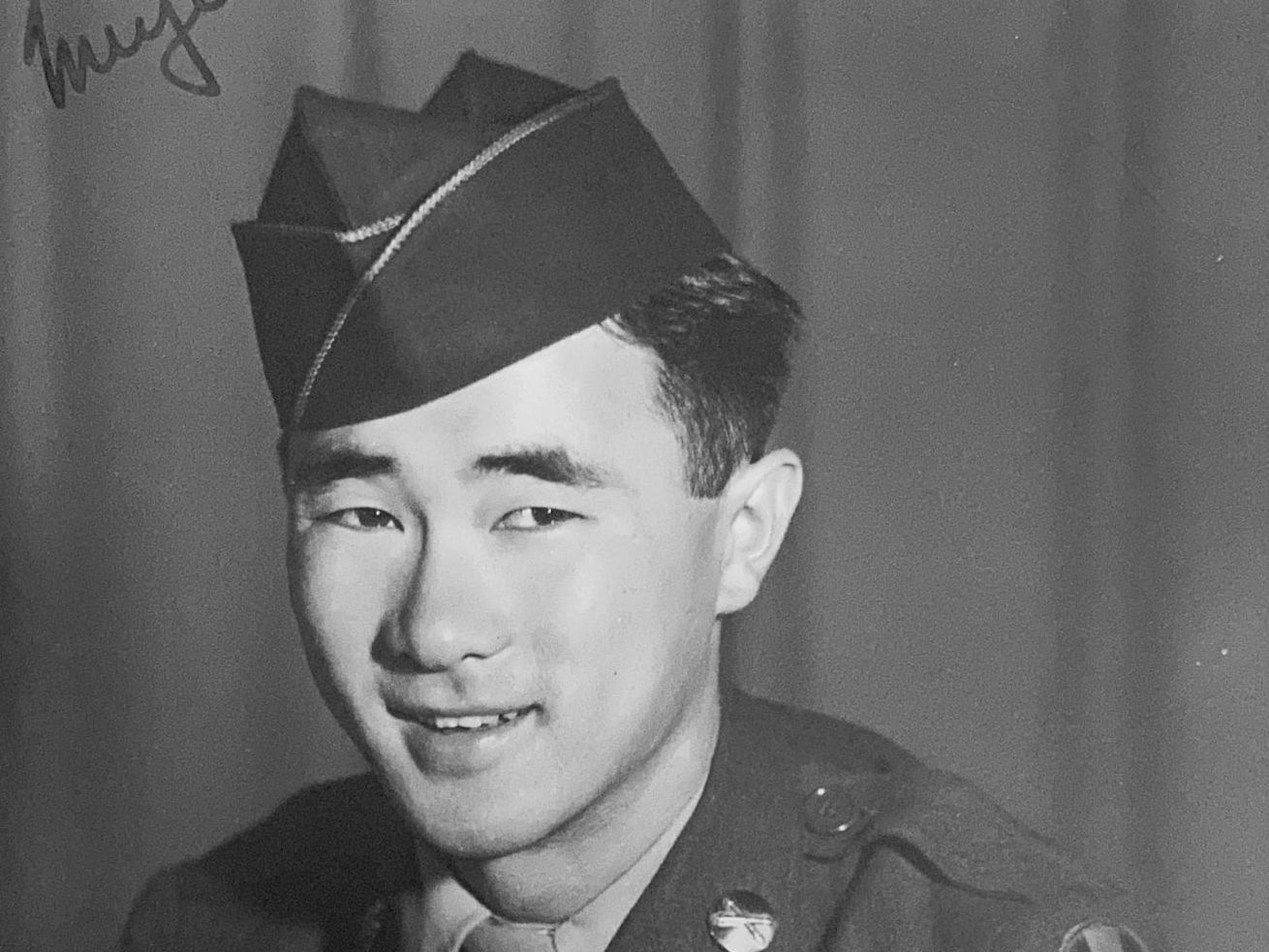
Yosh Yamada enrolled in college after being held at a World War II internment camp for Japanese Americans. But soon he was drafted into the Army.
Yosh Yamada enrolled in college after being held at a World War II internment camp for Japanese Americans. But soon he was drafted into the Army. | Provided

After being held at the Topaz Internment Camp, he was drafted into the Army, where, he later wrote, ‘I served the very country that had imprisoned me.’

The football players he coached at Englewood High School said the racial prejudice Yoshio “Yosh” Yamada experienced as a Japanese American during World War II helped him empathize with his Black students.

“He was in one of the internment camps during the war, so he understood the oppression of Black people,” said Charles Hudson, 73, a 1967 graduate who played guard on the Englewood Eagles football team. “That was like being in prison. I think he just felt he had to help underprivileged people like Black people.”

Mr. Yamada called himself “a coach-counselor” in a 1965 interview with the Chicago Daily News.

“I know that athletics help to keep many boys in school that would otherwise drop out,” he said. “If I see a boy on the verge of quitting, I’ll give him more responsibility. . .make him feel he’s needed.”

Mr. Yamada died last month in Sacramento, where he’d moved to be closer to his sister June Tamanaha and his extended family. He was 94 and suffered from heart failure and kidney disease, according to his nephew Steve Tamanaha.

Yosh Yamada coaching his football players at Englewood High School in 1965.
Chicago Daily News
Yosh Yamada coaching his football players at Englewood High School in 1965.

A respected coach, athletic director and gym teacher, he was a familiar figure on the South Side. He worked at Englewood High School from 1952 until his retirement in 1991, coaching from the 1950s into the 1970s, and lived for a time in Bronzeville’s Lake Meadows apartments.

His students respected his no-nonsense style on the field and in the driver’s education courses he taught.

“If you messed up,” Hudson said, “he would let you know: ‘You’re going to the prom by CTA.’ ”

And when his players didn’t have money for extras or essentials, “He’d get them socks and things like that,” Hudson said.

“I never kept track of how much money I took out of my own pocket to pay for equipment, shoes, carfare or meals,” Mr. Yamada once said in a Chicago Sun-Times interview. “I used to pay for trips to colleges, so I could show them what they had to look forward to if they became good football players.”

“He was inspiring,” said Eugene Hudson, 73, who played fullback for Mr. Yamada at Englewood. “Most of his players went to college.”

Eugene Hudson, who worked for Western Electric, and Charles Hudson, who went on to a career with the Chicago Public Schools that included coaching football at Englewood, credit Mr. Yamada with helping them get into Morehouse College.

Both men are relatives of Jennifer Hudson, the Chicago-raised singer and actor. When three members of her family were killed in 2008, Mr. Yamada was invited to the funeral for her mother Darnell Donerson, brother Jason and nephew Julian, according to Eugene Hudson, who is an uncle of the Academy Award-winner.

“He sat with the family,” said Charles, a first cousin of Darnell Donerson. “That did us a lot of good to see Coach show up.”

Mr. Yamada grew up in Oakland, California. He was the second-youngest of nine children of Masayo and Masaoki Yamada, natives of Yamanashi prefecture in Japan. His father died when he was a child, and his mother operated a small laundry business.

Mr. Yamada later wrote about the day the U.S. government ordered his family into captivity. They wound up at Topaz Internment Camp near Delta, Utah.

“One Friday afternoon in 1942 when I was 15 years old, my family got a knock on the door,” he wrote. “When my mother answered she was told to take my eight brothers and sisters and me to our church on Sunday to be delivered to a camp. My family was sent by train to an internment camp in Utah where we remained for 2-and-a-half years.

“We lost everything, including our home and business in Oakland. I. . . graduated from the high school in the camp where we often moved about with guns pointing at us.”

Topaz initially wasn’t ready for internees, so the Yamadas were first housed at Tanforan, a former racetrack near San Francisco.

“All the manure was still below the floorboards, so it really stunk,” said Mr. Yamada’s niece Paula Mishima.

Mishima said her mother Miye told her life at Topaz meant “having to wait in line for everything and how there was no privacy, how cold it was and how dusty it was.”

Yosh Yamada played for the Topaz Rams, a high school football team at Topaz Internment Camp.
1944 Ramblings yearbook
Yosh Yamada played for the Topaz Rams, a high school football team at Topaz Internment Camp.

Young Yosh excelled with the Topaz Rams basketball, football and track teams, the latter which had to make do “without a track, pole vault pit, high jump pit, and who used chairs for hurdles,” according to the high school yearbook at the camp.

Jane Beckwith, president of the Topaz Museum Board, said it was a point of pride with the Topaz athletes that they often beat the “big farmboys” they competed against from nearby high schools “who were at least 50 pounds heavier.”

Yosh Yamada (top right) and other members of the Topaz Rams football team.
1944 Ramblings yearbook
Yosh Yamada (top right) and other members of the Topaz Rams football team. I

He graduated in 1944 and enrolled at the University of Wisconsin-Madison. A few months after that, he was drafted into the Army, where, he later wrote, “I served the very country that had imprisoned me.”

After the war, he returned to Madison, where he got bachelor’s and master’s degrees in physical education. He ran track and lettered with the school’s champion 150-pound football squad.

Mr. Yamada and his brothers and sisters scattered to New York, St. Louis and Chicago, where he and his mother, who worked for Curtiss Candy Co., lived in an apartment building on Sheffield Avenue for a time.

Coach Yosh Yamada (under arrow) with his winning Chicago Public League Blue Division players on the 1958 Englewood High School Eagles football team.
Englewood High School yearbook (courtesy of Robert Pruter)
Coach Yosh Yamada (under arrow) with his winning Chicago Public League Blue Division players on the 1958 Englewood High School Eagles football team.

At Englewood, his players won the Chicago Public League’s first Blue Division championship in 1958. He coached them against Hyde Park High School in what’s been called the oldest football rivalry in the state.

At home, his family said he was a “fun” uncle.

“He gave me his car when I was in high school, so, when I graduated in 1979, I was driving a ’76 Grand Prix, black,” Steve Tamanaha said. “He was the uncle who would always take me to Bargain Town” — an old Chicago toy store.

In 1991, the year he retired, Mr. Yamada received a $20,000 reparations check from the U.S. government for his internment.

“There never was any evidence that any of us had done anything against the United States,” he told the Sun-Times then. “These reparations are too little and too late.”

An athlete all his life, Yosh Yamada enjoyed golfing.
Provided
An athlete all his life, Yosh Yamada enjoyed golfing.

He liked to play golf, go to the Super Bowl every year and gamble at the Hammond Horseshoe casino. In his later years, living on the West Coast, he enjoyed the local casinos, visits with family and doing Sudoku puzzles.

In addition to his sister June Tamanaha, Mr. Yamada is survived by many nieces, nephews, grandnieces and grandnephews.

A celebration of his life is being planned for the summer, Steve Tamanaha said.

When he retired, Mr. Yamada told the Sun-Times, “Working in the public schools gave me a chance to do something for minorities, especially in the Black community, to help repay for some of the things that were given to me.

“I have no regrets. It was enjoyable to work with kids. They never discriminated against me.”

Read More

Yoshio ‘Yosh’ Yamada, Englewood High coach held in WWII Japanese American camp, dead at 94Maureen O’Donnellon May 21, 2021 at 10:15 am Read More »

Chicago man jumps into Lake Michigan every day, comes out betterMark Brownon May 21, 2021 at 10:45 am

Dan O’Conor, who calls himself the Great Lake Jumper, dives into Lake Michigan near Montrose Harbor while guitarist Cam Mahai sings “EndTimes.”
Dan O’Conor, who calls himself the Great Lake Jumper, dives into Lake Michigan near Montrose Harbor while guitarist Cam Mahai sings “EndTimes.” | Ashlee Rezin Garcia / Sun-Times

Nearly a year ago, before he became the Great Lake Jumper, Dan O’Conor was just a guy with a hangover and a need to clear his mind, like a lot of us then, really.

Dan O’Conor had no grand plan or higher purpose when he rode his bicycle from his home in Lincoln Square to the lakefront last June 13 and jumped into Lake Michigan.

He had no thought of becoming the Great Lake Jumper, the crazy guy who would jump into the lake every single day for a year, no matter the conditions, drawing attention to the plight of musicians and music venues hurt by the coronavirus shutdown.

No, back then, O’Conor was just a guy with a hangover and a need to clear his mind of the pandemic and the politics and all of the other stuff weighing on him, the same stuff weighing on most of us then, really.

It worked.

The water was refreshing, and O’Conor felt rejuvenated.

So he came back the next day and the day after that. It wasn’t until the fourth day that he took a photo of the lake and posted it to Twitter to chronicle the fact.

He didn’t start making videos until the streak hit Day 120. And it was yet another week after that before he began recording his actual jumps — with his camera phone perched in his shoe, which served as a tripod.

That attracted the attention of a reporter from Block Club Chicago, which helped make O’Conor a media star, his exploits quickly spreading to radio and television.

Still, in that first interview, O’Conor said he had no intention of continuing through the winter when the lake froze over. I mean, who would do a crazy thing like that?

By then, O’Conor had become a thing. And a thing needs a higher purpose.

“People kept asking: What is this benefiting? How can I support it?” O’Conor says.

The honest answer was that it was benefiting O’Conor and his mental health. But he realized that probably wasn’t enough.

His wife Margaret, who runs a neighborhood food pantry and knows well her husband’s passion for live music, offered a suggestion: “You should have people serenade you in the lake.”

O’Conor keeps a spreadsheet of the more than 6,800 musical acts he’s seen perform, beginning with Alice Cooper at ChicagoFest in 1980. He used to work for SPIN, the music magazine, starting as a writer before moving on to ad sales. These days, he drives a paratransit van in the suburbs and sometimes a limo.

So O’Conor teamed up with his friends at CIVL, the Chicago Independent Venue League, figuring he could promote the organization’s emergency relief fund to help furloughed staff, artists and performance venues.

As his videos chronicle, O’Conor, 53, didn’t stop jumping into the lake when it froze over or when winter waves threw car-size chunks of ice onto the shoreline.

Instead, he’d hack a hole in the ice using shovels, hammers, even a bowling ball attached to a chain to keep his streak going, moving his jumps inside Montrose Harbor only when safety demanded.

Since mid-January, musical accompanists have regularly joined O’Conor for his lake jumps, everyone from a woman playing a washboard to the 15-piece Mucca Pazza band.

In the videos, you can see the musicians play as O’Conor comes from off-screen and dives into the water.

Dan O’Conor in his Great Lake Jumper robe.
Ashlee Rezin Garcia / Sun-Times
Dan O’Conor in his Great Lake Jumper robe.

What O’Conor’s diving lacks in style, he makes up with enthusiasm. His best dive is a front somersault — a throwback to growing up in Buffalo Grove, attending Wheeling High School and playing football well enough to make the Sun-Times’ all-state team in 1985.

At this point, it should be simple for O’Conor to keep going through June 12, which will be Day 365.

He isn’t saying for sure he’ll quit that day. But he’s got a family vacation scheduled for July on Cape Cod, so it will end.

On Wednesday, Day 341, O’Conor jumped from the point beyond Montrose Harbor, with guitarist Cam Mahai alongside wearing a red clown nose and singing “EndTimes.”

O’Conor’s 19-year-old son Keith was there, as he has been for most of his dad’s jumps since the start of winter, when Margaret insisted that O’Conor not go out there alone.

“It’s incredible, a little bit inspiring, the commitment,” Keith says of his dad. “He has not missed a day, and I’ve witnessed that. That’s definitely changed my view on how motivated you can be for anything.”

Who is to say where the boundary of perseverance, commitment, determination and obsession lies? Not me.

O’Conor climbs from the water in his Motorhead swim trunks, and he smiles a genuine smile beneath his drooping handlebar moustache.

He makes those who see him smile.

What’s so crazy about that?

Read More

Chicago man jumps into Lake Michigan every day, comes out betterMark Brownon May 21, 2021 at 10:45 am Read More »

CPS leasing school lots to a company that hasn’t paid its bills to City Hall for 3 yearsLauren FitzPatrickon May 21, 2021 at 10:30 am

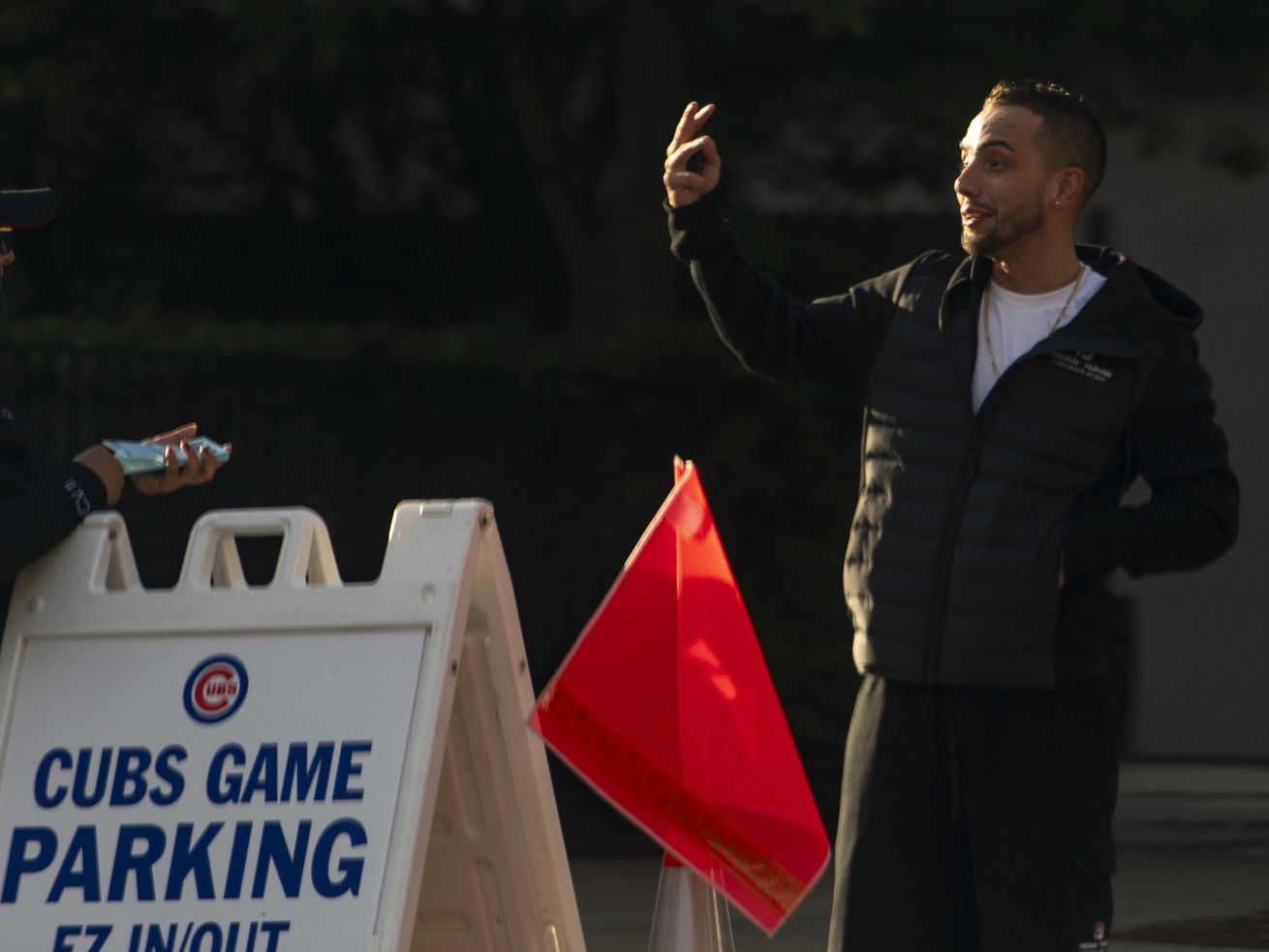
Premium 1 Parking owner Dylan Cirkic at a Chicago Public Schools owned-lot at 3830 N. Southport Ave. during a Cubs game Monday night.
Premium 1 Parking owner Dylan Cirkic at a Chicago Public Schools owned-lot at 3830 N. Southport Ave. during a Cubs game Monday night. | Tyler LaRiviere / Sun-Times

School system replaced parking operator who was indicted with one that’s in arrears to the city and repeatedly has been cited for violations. It also bounced 2 checks to City Hall.

The last time the Chicago Public Schools system agreed to lease some of its school parking lots to a company that would then charge people to park there during nearby sporting events, things didn’t end well.

The clout-heavy company that had that deal for nearly a decade kept charging for parking at those school lots but stopped paying, according to CPS. It sued the company — which the Chicago Sun-Times found had a convicted child sex offender parking cars for a Cubs game while kids played nearby on the school’s busy playground.

Soon after CPS sued, the company’s owner was indicted in an unrelated federal bribery case.

So CPS went looking for somebody else who’d pay to get the lucrative business. Several clout-heavy companies wanted in.

But the one that CPS chose, Premium 1 Parking Inc., owes the city tens of thousands for unpaid taxes and fines, has been in arrears for three years and doesn’t have all of the required city business licenses, records show.

Under Premium 1 Parking’s current contracts with CPS, which took effect April 1, the company agreed to pay about $13,000 a month to use 10 school lots near Wrigley Field and other busy neighborhoods.

Premium 1’s city licenses for valet parking and for garage parking — required for using the school lots — have been placed “on hold” by the city Department of Business Affairs and Consumer Protection as of April 30. The city says that means the company won’t be able to renew those licenses or obtain new ones until its debts are paid.

And city inspectors cited Premium 1 in March for “operating without the required public garage license” at 10 schools.

In December, city officials agreed to put Premium 1 on a 24-month payment plan to pay off $45,000 it owed for unpaid valet parking taxes and fees resulting from 52 administrative violations dating to 2018 — including fees for twice bouncing checks it used to pay the city.

But, aside from a $20,000 payment on Dec. 14, owner Dylan Cirkic hasn’t made any of the $1,000-a-month payments he agreed to, according to City Hall. That’s what triggered his company’s latest license problems.

“No other payment was remitted beyond the initial down payment,” says Kristen Cabanban, spokeswoman for Mayor Lori Lightfoot’s city law department.

Cirkic, who started Premium 1 in 2016, disputes that he’s in arrears to City Hall, saying, “I don’t owe any money.”

CPS was still allowing his company to charge people up to $40 as recently as Monday to park on school property during a Cubs home game.

But Cirkic’s company owes CPS “approximately $23,000 in rental fees, plus late fees and applicable revenue fees,” having missed payments in April and May after paying a total of $77,300 to 10 CPS schools prior to that, according to schools spokesman James Gherardi.

Gherardi says CPS could dump Premium 1 after June 10 if it doesn’t pay up and then would “launch a competitive bidding process for parking lot rentals to ensure schools have the highest possible potential revenue streams.”

He says CPS “was not aware of serious concerns with the vendor when it entered into its agreement. And when discussing repayment, the vendor misled the district and provided false information regarding its accounting, which is completely unacceptable.”

Parking attendants with Premium 1 Parking flag drivers during a Cubs home game Monday to park in a garage at 808 W. Addison St. that InterAmerican Elementary Magnet School shares and that it leases to the company.
Tyler LaRiviere / Sun-Times
Parking attendants with Premium 1 Parking flag drivers during a Cubs home game Monday to park in a garage at 808 W. Addison St. that InterAmerican Elementary Magnet School shares and that it leases to the company.

For over a decade, CPS has let principals bring in extra money for their schools by leasing their parking lots and auditoriums for use when school’s not in session and kids aren’t in their buildings. Each school gets to keep whatever money it brings in, with the deals all vetted by the school system’s central office downtown.

The leases can be lucrative for schools near the ballparks and United Center — areas that generally are wealthier and more heavily white than the city as a whole.

Other schools have gotten smaller payments by leasing space for nearby restaurants and churches to use.

During the 2010s, the company leasing the most school lots was Blk & Wht, a business owned by James T. Weiss — who’s former Cook County Assessor Joseph Berrios’ son-in-law and a friend of the Daley family — and Iman Bambooyani, who also operated The Raw Bar near Wrigley Field.

Blk & Wht had contracts for parking cars at as many as 11 schools, agreeing to pay $2.1 million from April 2018 to the end of 2020 — including $1.1 million to a single school, InterAmerican Elementary Magnet School, near Wrigley Field.

On a Cubs game day in July 2018, Sun-Times reporters found a convicted child sex offender parking cars on an InterAmerican lot adjacent to the school’s playground, which was crowded with kids playing.

Click to read the Sun-Times’ Aug. 5, 2018, report.

Then, in April 2019, Blk & Wht stopped paying to use lots at three schools nearest Wrigley Field, according to CPS, which sued.

On Nov. 19, 2019, Weiss told CPS he no longer would be parking cars on school property, breaking his contract — but he continued parking cars on one of the school lots for another month, according to CPS’s lawsuit.

Weiss broke his contract six days after his offices were raided by federal authorities as part of an investigation of then-state Rep. Luis Arroyo, a Chicago Democrat who later was charged with paying a bribe to then-state Sen. Terry Link to support legislation to legalize video gambling machines in towns that ban such gambling.

Weiss — who also owns Collage LLC, which operates video terminals known as sweepstakes machines — was lobbying state and city officials to legalize those machines.

Weiss since has been indicted, accused of bribing Arroyo. He has pleaded not guilty.

Its lawsuit against Weiss’s company still in the courts, CPS says Blk & Wht owes it about $366,000.

InterAmerican used to count on getting hundreds of thousands of dollars a year by leasing its parking lot and the garage it shares with the Chicago Police Department’s 19th District station on Addison Street. The school had been getting $381,000 a year that it used to hire extra teachers, according to Carolina Barrera-Tobón of InterAmerican’s Local School Council.

“The effects of those funds no longer being available is still hurting our community,” Barrera-Tobón says. “Those parking garage funds have historically been used to fill extra ‘specials’ positions and a climate and culture position.”

Eager to keep the parking revenue coming in for its schools, CPS sought bids for 11 lots not long before the coronavirus pandemic hit and tanked the economy.

CPS’s procurement department told prospective bidders to certify that they “are not in arrears or default with CPS” and would pay the costs of the required insurance, background checks and city permits.

In February 2020, Premium 1 put in the biggest offer by far to snag the parking deal — at least $800,000 to cover the period from March through December.

Among the seven other bidders that tried to get the CPS parking business was LAZ Parking, which has the city’s parking-meter deal.

Another company, One Parking, at one point was offered the InterAmerican school contract, according to InterAmerican’s Local School Council. But CPS canceled that deal and other school rentals after COVID closed the schools and “decimated the sports and restaurant parking market and was especially devastating near Wrigley Field,” Gherardi says. “We are pursuing much more limited licenses with short terms until the market improves.”

Cirkicand his lawyer William J. Didier said in documents filed with his bid that Premium 1 had parked cars at Hawthorne Elementary School in Lakeview in 2017 and 2018.

Apart from leasing the school lots, Premium 1 also handled valet parking at pricey Loop and River North restaurants and at Barney’s until the pandemic shut down the luxury department store adjacent to the Magnificent Mile for good.

The parking deals with private businesses led to trouble for Premium 1. In 2019, city inspectors cited the company for engaging “in deceptive practice by offering/conducting valet parking services at 15 E. Oak St. for Barneys New York to consumers without first obtaining the required city of Chicago valet parking license.”

According to city records, Premium 1 also parked cars elsewhere without having valid licenses from the city or insurance and illegally parked a customer’s Lexus in a tow zone at 338 W. Belden Ave. while handling valet parking at 2300 N. Lincoln Park West for a nearby restaurant.

Premium 1 parking attendants also were accused, according to city records, of showing city inspectors expired licenses or licenses from competitors they used to work for.

In 2019, its workers outside the Italian Village restaurants in the Loop were cited for pretending to be working for a company called Priority Parking.

The fines piled up. Twice when Premium 1 tried to pay, its checks bounced.

Still, CPS stuck with Premium 1, though by the time schools officials negotiated new parking contracts last September, they agreed to accept about $13,000 a month for 10 schools — far less than the $84,000 a month that Premium 1 had offered to pay pre-pandemic.

From April 1 to June, schools officials allowed Premium 1 to extend its contracts even though the company’s parking licenses were suspended for failing since December to make the monthly payments it agreed to give City Hall under its payment plan.

Read More

CPS leasing school lots to a company that hasn’t paid its bills to City Hall for 3 yearsLauren FitzPatrickon May 21, 2021 at 10:30 am Read More »

2 teens hurt in Gresham shootingon May 21, 2021 at 8:13 am

Two teenagers were wounded, one critically, in a shooting early Friday night in Gresham on the South Side.

The pair were sitting in a living room of a home about 1:10 a.m. in the 7900 block of South Laflin Street when someone fired shots from outside, Chicago police said.

An 18-year-old man suffered gunshot wounds to the abdomen and back, according to police. He was taken to Christ Medical Center in Oak Lawn in critical condition, police said.

A 19-year-old man suffered a graze wound to the arm and was transported to Holy Cross Hospital in good condition, police said.

There is no description of the shooter and no one in custody, according to police.

Area Two detectives are investigating.

Read More

2 teens hurt in Gresham shootingon May 21, 2021 at 8:13 am Read More »

Police Board rejects firing officer accused of making false statements in hospital patient beatingEmmanuel Camarilloon May 21, 2021 at 3:12 am

The Chicago Police Board voted Thursday to restore Officer Clauzell Gause to his position.
The Chicago Police Board voted Thursday to restore Officer Clauzell Gause to his position. | Sun-Times file photo

In a 5-3 vote during their monthly meeting Thursday, the board passed a motion declaring Officer Clauzell Gause not guilty of making a false statement regarding his use of force and to restore him to his position.

The Chicago Police Board has voted to clear a veteran police officer accused of lying to investigators after video surfaced that appeared to show the officer punching a handcuffed man at a South Side Hospital nearly seven years ago.

In a 5-3 vote during their monthly meeting Thursday, the board passed a motion declaring Officer Clauzell Gause not guilty of making a false statement regarding his use of force and to restore him to his position.

The Civilian Office of Police Accountability recommended Gause be fired last year for allegedly lying to investigators about the incident. He had also been hit with felony misconduct charges, but those were dropped by the Cook County state’ attorney’s office in 2019.

The confrontation happened June 3, 2014, when then-24-year-old Rayshon Gartley was taken to Jackson Park Hospital for a mental health evaluation. Prosecutors said Gause was seen on surveillance footage punching and shoving Gartley, who was restrained and handcuffed at the hospital.

Gause omitted from a report that Gartley was handcuffed when he punched him, according to a document outlining the charges. Gause also told COPA investigators in an interview that he didn’t make contact with Gartley’s face or head, the document states.

But hospital surveillance video allegedly captured Gause, who was in uniform, holding Gartley’s arms behind his back and shoving him against a wall, causing him to bounce back toward the officer, prosecutors said. Gause then appeared to punch Gartley in the face with a closed fist.

Gartley filed a lawsuit against the city and Police Department in 2016. Records show the suit was settled for $175,000 in 2018.

It was not the first time Gause had been accused of misconduct while wearing a CPD uniform. At least 14 complaints have been filed against him, according to the Citizens Police Data Project.

Gause was also one of 11 Chicago police officers named in a federal lawsuit filed by Jerome James, who accused the officers of using excessive force after he was arrested outside a White Castle restaurant in December 2013.

According to the suit, James was throwing something in a trashcan outside the restaurant in Rosemoor when officers who were waiting for food took him into custody “without any probable cause that a crime had been committed.”

While James was being held at the Calumet District station, he asked the officers why he was being held, causing the officers to assault him, the lawsuit states.

The officers allegedly used “brass knuckles” to punch him in the face, hurled racial epithets at him and ripped the clothes off his body, leaving him naked for “several hours,” the suit states.

James was taken to Roseland Community Hospital, but only after another detainee alerted a supervising officer that James needed medical attention, the suit alleges.

The city settled the lawsuit for $60,000 in December 2015, records show.

Contributing: Tom Schuba, Nader Issa

Read More

Police Board rejects firing officer accused of making false statements in hospital patient beatingEmmanuel Camarilloon May 21, 2021 at 3:12 am Read More »

Republican Bailey describes sex education bill as teaching ‘perversion’ — sparking Democratic outcryAndrew Sullenderon May 21, 2021 at 3:34 am

State Sen. Darren Bailey, R-Xenia, left, earlier this month; State Sen. Mike Simmons, D-Chicago, right, in February.
State Sen. Darren Bailey, R-Xenia, left, earlier this month; State Sen. Mike Simmons, D-Chicago, right, in February. | Facebook; Ashlee Rezin Garcia/Sun-Times file

The Senate bill on sex education seeks to standardize the curriculum in Illinois schools, ensuring each grade “has the opportunity to be safe and … have access to age- and developmentally appropriate and medically accurate information,” according to the bill’s sponsor, state Sen. Ram Villivalam, D-Chicago.

SPRINGFIELD — Two of the state Senate’s newest members — the chamber’s first LGTBQ senator and a Republican farmer from southern Illinois — clashed Thursday over legislation meant to standardize sex education curriculums in the state.

State Sen. Darren Bailey, a downstate Republican running for governor, accused the bill’s Democratic sponsors of “pushing perversion in our schools.”

North Side state Sen. Mike Simmons, who is gay, called Bailey’s remark “deeply offensive” and asked that it be stricken from the record.

In the House, members advanced legislation that would require menstrual hygiene products to be available in bathrooms in every school building, male and female — a bill that also prompted a heated verbal exchange.

The Senate bill on sex education seeks to standardize the curriculum in Illinois schools, ensuring each grade “has the opportunity to be safe and … have access to age- and developmentally appropriate and medically accurate information,” according to the bill’s sponsor, state Sen. Ram Villivalam, D-Chicago.

Starting in second grade, students would learn to define consent, gender identity, and different types of families, including cohabitating and same-sex couples. Villivalam said those standards help students “understand a healthy relationship.”

State Sen. Ram Villivalam in 2018.
Rich Hein/Sun-Times file
State Sen. Ram Villivalam in 2018.

But Bailey objected.

“Teachers who work hard to teach our kids about proper education have absolutely no reason in teaching this … absolute nonsense,” said the Republican from downstate Xenia, a former House member elected to the Senate in November.

In a statement following the vote Bailey denied his remark about “perversion” referred to teaching students about same-sex relationships.

“It’s a bill teaching children sexual acts and more that should not be taught in public schools,” he said. “[The Democrats] know it’s wrong and they don’t want parents to actively know what they’re trying to make our schools teach their kids.”

Other Republicans in the chamber said that the standards in the bill were being pushed by “dark money” abortion rights groups that support educators providing graphic images to minors.

Then state Rep. Darren Bailey, R-Xenia, speaks at a protest against Gov. J.B. Pritzker’s stay-at-home order in Springfield last year.
Ted Schurter/The State Journal-Register via AP file
Then state Rep. Darren Bailey, R-Xenia, speaks at a protest against Gov. J.B. Pritzker’s stay-at-home order in Springfield last year.

“One of the organizations that’s advocating for this, a portion of their curriculum has photographs that 10-year-olds will be looking at with complete frontal nudity including pubic hair — both male and female – [and] one picture that has a male erection,” said state Sen. Terri Bryant, R-Murphsyboro.

Simmons, who was appointed to the state Senate in February, did not respond to a reporter’s request to elaborate on his understanding of Bailey’s remarks.

But state Sen. Celina Villanueva, D-Chicago, said that she had worked as a sexual health educator and that “misinformation and a lack of knowledge for our students” leads to serious consequences.

“I’m not going to allow it to happen when people decide that they want to call this bill ‘perversion.’ Because let’s be completely honest, when you use your Trumpian talking points about a bill teaching children about their body and [would] also educate them about the predators that actually exist in this world — you’re just using them to get a soundbite.”

The bill passed in a partisan 37 to 18 vote and advanced to the House.

That chamber saw its own verbal fireworks over a bill that would require menstrual hygiene products to be made available “in bathrooms of every school building that are open for student use in grades 4 through 12 during the regular school day,” according to a synopsis of the bill.

State Rep. Barbara Hernandez, D-Aurora, said the bill is important to young “menstruators who are not able to purchase products, and they need this as an emergency situation.”

State Rep. Barbara Hernandez, D-Aurora, last year.
Rich Hein/Sun-Times file
State Rep. Barbara Hernandez, D-Aurora, last year.

State Rep. Andrew Chesney, R-Freeport, asked Hernandez “why you feel it’s appropriate to put menstrual products in a male bathroom?”

“As a male who did go to a public high school, as a male who went to bathrooms from sixth grade to 12th grade, I can promise you, not one of my male friends ever needed these, and I would really appreciate if the sponsor would stay the hell out of my bathrooms, and I promise her I will stay out of hers,” Chesney said.

Despite the division, the bill passed 68 to 43 with seven members not voting.

Read More

Republican Bailey describes sex education bill as teaching ‘perversion’ — sparking Democratic outcryAndrew Sullenderon May 21, 2021 at 3:34 am Read More »

Republican Bailey describes sex education bill as teaching ‘perversion’ — sparking Democratic outcryAndrew Sullenderon May 21, 2021 at 2:34 am

State Sen. Darren Bailey, R-Xenia, left, earlier this month; State Sen. Mike Simmons, D-Chicago, right, in February.
State Sen. Darren Bailey, R-Xenia, left, earlier this month; State Sen. Mike Simmons, D-Chicago, right, in February. | Facebook; Ashlee Rezin Garcia/Sun-Times file

The Senate bill on sex education seeks to standardize the curriculum in Illinois schools, ensuring each grade “has the opportunity to be safe and … have access to age- and developmentally appropriate and medically accurate information,” according to the bill’s sponsor, state Sen. Ram Villivalam, D-Chicago.

SPRINGFIELD — Two of the state Senate’s newest members — the chamber’s first LGTBQ senator and a Republican farmer from southern Illinois — clashed Thursday over legislation meant to standardize sex education curriculums in the state.

State Sen. Darren Bailey, a downstate Republican running for governor, accused the bill’s Democratic sponsors of “pushing perversion in our schools.”

North Side state Sen. Mike Simmons, who is gay, called Bailey’s remark “deeply offensive” and asked that it be stricken from the record.

In the House, members advanced legislation that would require menstrual hygiene products to be available in bathrooms in every school building, male and female — a bill that also prompted a heated verbal exchange.

The Senate bill on sex education seeks to standardize the curriculum in Illinois schools, ensuring each grade “has the opportunity to be safe and … have access to age- and developmentally appropriate and medically accurate information,” according to the bill’s sponsor, state Sen. Ram Villivalam, D-Chicago.

Starting in second grade, students would learn to define consent, gender identity, and different types of families, including cohabitating and same-sex couples. Villivalam said those standards help students “understand a healthy relationship.”

State Sen. Ram Villivalam in 2018.
Rich Hein/Sun-Times file
State Sen. Ram Villivalam in 2018.

But Bailey objected.

“Teachers who work hard to teach our kids about proper education have absolutely no reason in teaching this … absolute nonsense,” said the Republican from downstate Xenia, a former House member elected to the Senate in November.

In a statement following the vote Bailey denied his remark about “perversion” referred to teaching students about same-sex relationships.

“It’s a bill teaching children sexual acts and more that should not be taught in public schools,” he said. “[The Democrats] know it’s wrong and they don’t want parents to actively know what they’re trying to make our schools teach their kids.”

Other Republicans in the chamber said that the standards in the bill were being pushed by “dark money” abortion rights groups that support educators providing graphic images to minors.

Then state Rep. Darren Bailey, R-Xenia, speaks at a protest against Gov. J.B. Pritzker’s stay-at-home order in Springfield last year.
Ted Schurter/The State Journal-Register via AP file
Then state Rep. Darren Bailey, R-Xenia, speaks at a protest against Gov. J.B. Pritzker’s stay-at-home order in Springfield last year.

“One of the organizations that’s advocating for this, a portion of their curriculum has photographs that 10-year-olds will be looking at with complete frontal nudity including pubic hair — both male and female – [and] one picture that has a male erection,” said state Sen. Terri Bryant, R-Murphsyboro.

Simmons, who was appointed to the state Senate in February, did not respond to a reporter’s request to elaborate on his understanding of Bailey’s remarks.

But state Sen. Celina Villanueva, D-Chicago, said that she had worked as a sexual health educator and that “misinformation and a lack of knowledge for our students” leads to serious consequences.

“I’m not going to allow it to happen when people decide that they want to call this bill ‘perversion.’ Because let’s be completely honest, when you use your Trumpian talking points about a bill teaching children about their body and [would] also educate them about the predators that actually exist in this world — you’re just using them to get a soundbite.”

The bill passed in a partisan 37 to 18 vote and advanced to the House.

That chamber saw its own verbal fireworks over a bill that would require menstrual hygiene products to be made available “in bathrooms of every school building that are open for student use in grades 4 through 12 during the regular school day,” according to a synopsis of the bill.

State Rep. Barbara Hernandez, D-Aurora, said the bill is important to young “menstruators who are not able to purchase products, and they need this as an emergency situation.”

State Rep. Andrew Chesney, R-Freeport, asked Hernandez “why you feel it’s appropriate to put menstrual products in a male bathroom?”

“As a male who did go to a public high school, as a male who went to bathrooms from sixth grade to 12th grade, I can promise you, not one of my male friends ever needed these, and I would really appreciate if the sponsor would stay the hell out of my bathrooms, and I promise her I will stay out of hers,” Chesney said.

Despite the division, the bill passed 68 to 43 with seven members not voting.

Read More

Republican Bailey describes sex education bill as teaching ‘perversion’ — sparking Democratic outcryAndrew Sullenderon May 21, 2021 at 2:34 am Read More »

White Sox like a band of brotherson May 21, 2021 at 1:01 am

The White Sox must be thankful that, as they prepare for a three-game series against the Yankees this weekend in New York, clubhouses will remain off limits to media because of COVID-19 restrictions.

With the hullabaloo surrounding them because of manager Tony La Russa’s strong stance on an unwritten rule of baseball — former Yankees left-hander CC Sabathia unloaded Thursday on La Russa, keeping the firestorm burning — imagine Sox players being subjected to New York’s media army for three days.

The Sox are a story because they have one of the best records in the majors and are a sideshow they don’t care to be because of La Russa calling out one of his own players, Yermin Mercedes, for missing a sign and hitting a home run on a 3-0 pitch against Twins position player Willians Astudillo on Monday.

La Russa, 76, was brought out of a nine-year retirement by chairman Jerry Reinsdorf last fall to replace Rick Renteria and has made headlines with a few admitted missteps on the field, most recently not knowing about a rule in a 10-inning loss to the Reds on May 5.

La Russa got raked over the coals by fans and media for that one. And while that oversight might not have factored into a 1-0 loss that day anyway, the Sox responded with six victories in a row just as they were losing center fielder Luis Robert to an injury for at least three months.

Fast-forward to this week. The national attention on the Sox shifted to La Russa’s old-school stance on sportsmanship, his calling Mercedes ”clueless” and apologizing to the Twins for the homer Mercedes hit after he missed a take sign and then not having a problem with a pitch thrown behind Mercedes as obvious payback. All of that over a game that turned into a sideshow, as games always do when position players pitch to save bullpens.

It was a lot for Sox players to digest, especially in the context of La Russa’s team-building push under the premise they are one family. Teammates did what good brothers do: They stood by Mercedes.

”No negativity,” right-hander Lucas Giolito after pitching eight innings of one-run ball in the Sox’ 2-1 victory Wednesday. ”We all support Yermin. We love home runs here. That’s it.”

In the same way the Sox didn’t waver after the controversy against the Reds, they won the day after the Twins’ 5-4 walk-off victory while the Mercedes flap was hitting the fan. That gave them a victory in a series played without slugger Jose Abreu.

”We’re going to move on,” Giolito said before going to his locker to put on, like all of his teammates did, a cheesy-looking romper for the Sox’ charter flight to New York.

A team photo near the plane, smiling faces everywhere, captured one of those fun, team-bonding events for a group doing everything in its power to move past anything threatening to be a distraction, including La Russa, who was seen smiling on the plane but wearing a plaid shirt.

The Sox look good on the field, and they know it.

”We want the whole thing,” Giolito said. ”So we’re going to do everything in our power to make that happen, and that means taking every single game seriously, motivating each other and also having a lot of fun, which is what we’re doing.”

And La Russa, a Hall of Famer with three World Series rings, won’t get in the way as long as he doesn’t lose games managing them, which shouldn’t happen any more than it would for any manager. The game and its new culture might be passing him by, but he’s getting to know his team better, and indications are he hasn’t forgotten how to call the shots during a game.

”Winning is fun, so we don’t want to get away from that,” Giolito said.

Read More

White Sox like a band of brotherson May 21, 2021 at 1:01 am Read More »

To mask or not to mask? Here’s what we’re going to doon May 21, 2021 at 1:24 am

To wear a mask — or not?

That’s the decision Chicagoans face now that the city and state have fallen in line behind the latest Centers for Disease Control and Prevention guidelines, unveiled recently to much confusion and head-scratching.

According to the guidelines, those of us who are fully vaccinated now have the green light to ditch masks in almost all settings, indoors and out.

Very cool.

But that leaves it to us to figure out how we handle, say, that big and crowded get-together coming up that may or may not be outdoors, depending on the weather. And that may or may not include stubborn, refuse-to-be-vaccinated friends and relatives.

So we’ve done the math, as it were, and we’ve decided. Though we’re all fully vaccinated — we of the Sun-Times editorial board — we’re all still inclined to carry a mask and err on the side of wearing it.

Just out of an abundance of caution.

Chicago is on the honor system now, following a Tuesday announcement to that effect by Public Health Commissioner Dr. Allison Arwady. Masks no longer will be required in most places, the exceptions being city-owned buildings, health care settings, schools, public transit and other “congregate settings.” In those places, masks remain mandatory.

That means all businesses are free to drop mask mandates, though the city is encouraging them to keep mask policies in place and to verify customers’ vaccination status until the city lifts all pandemic restrictions.

“At some level here,” Arwady said, “we are really needing folks to be doing the right thing.”

What it comes down to is what it’s always come down to, ever since the pandemic hit: Balancing personal freedom with being a good neighbor and responsible citizen. Not to mention this: The pandemic is still with us and just 38% of Chicagoans are fully vaccinated.

So we’re taking incremental steps and urging others to do the same. We’re ditching masks outdoors, which we would not do if we were not fully vaccinated, but we’ll still be wearing masks indoors a lot even when no mask is required.

We’ll wear one in a grocery store. Maybe at a wake. Maybe in a crowded music club.

That kind of thing.

Not as a matter of virtue signaling but out of an instinct to proceed with caution.

Send letters to [email protected]

Read More

To mask or not to mask? Here’s what we’re going to doon May 21, 2021 at 1:24 am Read More »

Israel, Hamas agree to cease-fire to end bloody 11-day warAssociated Presson May 20, 2021 at 11:10 pm

A man inspects the rubble of destroyed residential building which was hit by Israeli airstrikes, in Gaza City, Thursday, May 20, 2021.
A man inspects the rubble of destroyed residential building which was hit by Israeli airstrikes, in Gaza City, Thursday, May 20, 2021. | AP

At least 230 Palestinians have been killed, according to Gaza health officials, while 12 people in Israel have died.

GAZA CITY, Gaza Strip — Israel and Hamas agreed to a cease-fire Thursday, halting a bruising 11-day war that caused widespread destruction in the Gaza Strip, brought life in much of Israel to a standstill and left more than 200 people dead.

Like the three previous wars between the bitter enemies, the latest round of fighting ended inconclusively. Israel claimed to inflict heavy damage on Hamas but once again was unable to halt the Islamic militant group’s nonstop rocket barrages. Almost immediately, Israeli Prime Minister Benjamin Netanyahu faced angry accusations from his hard-line, right-wing base that he stopped the operation too soon.

Hamas, the Islamic militant group sworn to Israel’s destruction, also claimed victory. But it now faces the daunting challenge of rebuilding in a territory already suffering from poverty, widespread unemployment and a raging coronavirus outbreak.

Netanyahu’s office said his Security Cabinet had unanimously accepted an Egyptian cease-fire proposal after recommendations from Israel’s military chief and other top security officials. A statement boasted of “significant achievements in the operation, some of which are unprecedented.”

It also included a veiled threat against Hamas. “The political leaders emphasized that the reality on the ground will determine the future of the campaign,” the statement said.

The fighting erupted on May 10, when Hamas militants in Gaza fired long-range rockets toward Jerusalem. The barrage came after days of clashes between Palestinian protesters and Israeli police at the Al-Aqsa Mosque compound. Heavy-handed police tactics at the compound, built on a site holy to Muslims and Jews, and the threatened eviction of dozens of Palestinians by Jewish settlers had inflamed tensions.

The competing claims to Jerusalem lie at the heart of the Israeli-Palestinian conflict and have repeatedly triggered bouts of violence in the past.

Hamas and other militant groups fired over 4,000 rockets into Israel throughout the fighting, launching the projectiles from civilian areas at Israeli cities. Dozens of projectiles flew as far north as Tel Aviv, the country’s bustling commercial and cultural capital.

Israel, meanwhile, carried out hundreds of airstrikes targeting what it said was Hamas’ military infrastructure, including a vast tunnel network.

At least 230 Palestinians were killed, including 65 children and 39 women, with 1,710 people wounded, according to the Gaza Health Ministry, which does not break the numbers down into fighters and civilians. Twelve people in Israel, including a 5-year-old boy and 16-year-old girl, were killed.

The United States, Israel’s closest and most important ally, initially backed what it said was Israel’s right to self-defense against indiscriminate rocket fire. But as the fighting dragged on and the death toll mounted, the Americans increasingly pressured Israel to stop the offensive.

In a rare public rift, Netanyahu on Wednesday briefly rebuffed a public call from President Joe Biden to wind things down, appearing determined to inflict maximum damage on Hamas in a war that could help save his political career.

But late Thursday, Netanyahu’s office announced the cease-fire agreement. Hamas quickly followed suit. The deal was to take effect at 2 a.m., and militants continued to launch sporadic rocket at Israel early Friday.

In Washington, Biden hailed the cease-fire. “I believe we have a genuine opportunity to make progress, and I’m committed to working for it,” he said.

Biden said the U.S. was committed to helping Israel replenish its supply of interceptor missiles for its Iron Dome rocket-defense system and to working with the internationally recognized Palestinian Authority — not Hamas — to provide humanitarian aid to Gaza.

Netanyahu quickly came under heavy criticism from members of his hawkish, nationalist base. Gideon Saar, a former ally who now leads a small party opposed to the prime minister, called the cease-fire “embarrassing.”

In a potentially damaging development for the Israeli leader, the Palestinian militants claimed Netanyahu had agreed to halt further Israeli actions at the Al Aqsa Mosque and to call off the planned evictions of Palestinians in the nearby Sheikh Jarrah neighborhood.

An Egyptian official said only that tensions in Jerusalem “will be addressed.” He spoke on condition of anonymity because he was discussing behind-the-scenes negotiations and provided no details.

Itamar Ben Gvir, head of the far-right Jewish Power party, tweeted that the cease-fire was “a grave surrender to terrorism and the dictates of Hamas.”

The cease-fire comes at a sensitive time for Netanyahu. In the wake of an inconclusive election in March, Netanyahu failed to form a majority coalition in parliament. His opponents now have until June 2 to form an alternative government of their own.

The war greatly complicated the efforts of his opponents, who include both Jewish and Arab parties and were forced to suspend their negotiations in such a fraught environment. But the inconclusive outcome of the war could give them renewed momentum to restart those talks.

Meanwhile in Gaza, a Hamas spokesman, Abdelatif al-Qanou, said Israel’s announcement was a “declaration of defeat.” Nonetheless, the group said it would honor the deal, which was to officially go into effect at 2 a.m.

Ali Barakeh, an official with Islamic Jihad, a smaller group that fought alongside Hamas, said Israel’s declaration of a truce was a defeat for Netanyahu and “a victory to the Palestinian people.”

Despite the claims, both groups appeared to have suffered significant losses in the fighting. Hamas and Islamic Jihad said at least 20 of their fighters were killed, while Israel said the number was at least 130 and probably higher.

Some 58,000 Palestinians fled their homes, many of them seeking shelter in crowded United Nations schools at a time of a coronavirus outbreak.

Since the fighting began, Gaza’s infrastructure, already weakened by a 14-year blockade, has rapidly deteriorated.

Medical supplies, water and fuel for electricity are running low in the territory, on which Israel and Egypt imposed the blockade after Hamas seized power from the Palestinian Authority in 2007. Since then, Palestinian President Mahmoud Abbas has governed autonomous areas of the Israeli-occupied West Bank and has limited influence in Gaza.

Israeli attacks have also damaged at least 18 hospitals and clinics and destroyed one health facility, the World Health Organization said. Nearly half of all essential drugs have run out.

Israeli bombing has damaged over 50 schools across the territory, according to advocacy group Save the Children, destroying at least six. While repairs are done, education will be disrupted for nearly 42,000 children.

___

Akram reported from Gaza City, Gaza Strip. Associated Press writers Ilan Ben Zion in Jerusalem, Samy Magdy in Cairo, Zeke Miller in Washington and Iris Samuels in Helena, Montana, contributed reporting.

Read More

Israel, Hamas agree to cease-fire to end bloody 11-day warAssociated Presson May 20, 2021 at 11:10 pm Read More »