
The Way to Moreon May 26, 2021 at 1:11 pm
The Way to Moreon May 26, 2021 at 1:11 pm Read More »

Emma Stone’s having a ball as she embodies the future Dalmatian snatcher from underdog street thief to scheming fashionista.
We’re not even halfway through the Disney villain origins story “Cruella” when this much is clear: If this movie DOESN’T win Academy Awards for best makeup and hairstyling and best costume design, I can’t wait to see what tops it.
While overlong and at times too self-conscious in its quest for period-piece hipster status, “Cruella” is a visual feast, from the dizzying array of outfits designed by and worn by Emma Stone’s Estella/Cruella to some striking, glam-inspired makeup to dazzling set pieces with dozens of extras wearing amazing ensembles. Reynolds Woodcock from “The Phantom Thread” would pass out from the sheer overwhelming number of scenes involving fashion design, discussion of fashion design, more fashion design — and pop-up fashion events taking place during traditional fashion events. This is a VERY fashionable film.
It’s also funny and ridiculous and dark and occasionally meandering, clocking in at 2 hours and 14 minutes when 110 minutes or so might have been a better fit. Especially in the final half-hour, events are stretched to the limits and we’re hearing exposition when we don’t need any further clarification. Still, the talented director Craig Gillespie (“Lars and the Real Girl,” “I, Tonya”) has delivered a clever, devilishly offbeat story with appropriately over-the-top and wildly entertaining performances from Emma Stone as the titular character and Emma Thompson as her nemesis, who is so casually cruel (in a manner of speaking), so cold and cunning, she makes Streep in “The Devil Wears Prada” look like the Employer of the Year.
“Cruella” takes us all the way back to the arrival of a newborn baby named Estella who has a curious shock of hair — half black, half white — and a penchant for acting out. When her mother Catherine (Emily Beecham) drops off 12-year-old Estella (played by Tipper Seifert-Cleveland) for her first day at a new school, she cautions Estella not to let the “Cruella” side of her personality get the better of her — but Estella’s efforts to play nice don’t last through the first day, as she’s the frequent target of bullying, and she fights back with a vengeance.
After an unspeakable tragedy leaves Estella all alone with only her faithful dog Buddy by her side, the girl winds up in London, where she teams up with a couple of Dickensian orphans named Jasper (Ziggy Gardner) and Horace (Joseph MacDonald), who support themselves via pickpocketing and small-time thievery. They’re a scrappy bunch, eh govnah?
Cut to a decade later, and we’re smack dab in swinging 1970s London, with Estella (now played by Emma Stone), Jasper (Joel Fry) and Horace (Paul Walter Hauser) still rip-off artists and still the best of friends. Estella is holding onto her dream of becoming a fashion designer, and she eventually lands a job working for the legendary and legendarily monstrous designer known as the Baroness (Emma Thompson), a demanding taskmaster with three menacing Dalmatians constantly by her side. Oooooh, she’s the worst, which makes for fantastic fun.
/cdn.vox-cdn.com/uploads/chorus_asset/file/22539986/Film_Review___Cruella_1_.jpg)
“Cruella” often has the rhythms of a musical, with director Gillespie pulling off one elaborate comedy/action sequence after another, accompanied by a Billboard chart roster of pop and rock tunes, from “She’s a Rainbow” by the Rolling Stones to “These Boots Were Made for Walkin’ ” by Nancy Sinatra to “Car Wash” by Rose Royce to “Should I Stay or Should I Go” by the Clash. (There’s a sensational, “Goodfellas”-esque tracking shot set to “Time of the Season” by the Zombies.) The film has the madcap tone and pop-music vibe of Matthew Vaughn’s “Kingsman: The Secret Service” and Edgar Wright’s “Baby Driver,” and the combo platter of pop tunes and popping visuals is entertaining as hell, though the gimmick veers close to wearing out its welcome.
Estella’s transition from an essentially likable underdog to an ambitious, ruthless and borderline psychotic villain-in-training is rather abrupt — but it’s explained by certain plot developments we won’t reveal. Emma Stone seems to be having a lot of fun playing Estella, but it looks like she’s having the time of her life playing the increasingly wicked Cruella, who becomes an underground fashion design star in the West End with her bold vision and attention-getting stunts, even as she plots her revenge against the Baroness.
/cdn.vox-cdn.com/uploads/chorus_asset/file/22539993/Film_Review___Cruella_2_.jpg)
Stone and Thompson are magical together as they verbally spar, while Joel Fry gives a winning performance as Jasper, who is clearly in love with Estella, and Paul Walter Hauser provides comic relief as the hapless but loyal Horace. Mark Strong is his usual reliable self as The Baroness’ longtime valet, who has a trick or two up his sleeve, while John McCrea is warm and funny and quick as Artie, who runs a cutting-edge fashion store and has a look and style inspired by David Bowie.
There’s a LOT going on in “Cruella” and we haven’t talked much about the Dalmatians, who do play a key role in the story — as well they should. (There’s also a mid-credits scene sure to delight anyone who remembers the 1961 animated version or the 1996 live-action telling of “101 Dalmatians.”)
Even as Cruella’s heart turns colder, we understand where she’s coming from. The world can be cruel, and Cruella would tell you she’s merely adapting to it.
Amazon is paying $8.45 billion for MGM, making it the company’s second-largest acquisition after it bought grocer Whole Foods for nearly $14 billion in 2017.
NEW YORK — Amazon is going Hollywood.
The online shopping giant is buying MGM, the movie and TV studio behind James Bond, “Legally Blonde” and “Shark Tank,” with the hopes of filling its video streaming service with more stuff to watch.
Amazon is paying $8.45 billion for MGM, making it the company’s second-largest acquisition after it bought grocer Whole Foods for nearly $14 billion in 2017.
The deal is the latest in the media industry that’s aimed at boosting streaming services to compete against Netflix and Disney+. AT&T and Discovery announced on May 17 that they would combine media companies, creating a powerhouse that includes HGTV, CNN, Food Network and HBO.
Amazon doesn’t say how many people watch its Prime Video service. But more than 200 million have access to it because they’re signed up for its Prime membership, which gives them faster shipping and other perks. Besides Prime Video, Amazon also has a free streaming service called IMDb TV, where Amazon makes money by playing ads during movies and shows.
Buying MGM would give Amazon access to more films, shows and famous characters, including Rocky, RoboCop and Pink Panther. Amazon will also get a cable channel: Epix, which MGM owns.
Known for its roaring lion logo, MGM is one of the oldest Hollywood studios, founded in 1924 when films were silent. It has a long list of classics in its library, including “Singin’ in the Rain.” More recent productions include reality TV staples “Shark Tank” and “The Real Housewives of Beverly Hills,” as well as the upcoming James Bond movie “No Time to Die” and an Aretha Franklin biopic called “Respect.”
Amazon already has its own studio but has had mixed results. Two of its shows, “The Marvelous Mrs. Maisel” and “Fleabag,” won best comedy series Emmys. But many of its films have failed to click with audiences at the box office. Recently, Amazon has been spending on sports and splashy shows. It will stream “Thursday Night Football” next year and is producing a “Lord of the Rings” show, which reportedly cost $450 million for its first season alone.
The deal, which is subject to customary approvals, will make Amazon, already one of the most powerful and valuable companies in the world, even bigger. Regulators around the world are scrutinizing Amazon’s business practices, specifically the way it looks at information from businesses that sell goods on its site and uses it to create its own Amazon-branded products.
A report by the House Judiciary Committee in October called for a possible breakup of Amazon and others, making it harder for them to buy other businesses and imposing new rules to safeguard competition.
Amazon, founded in 1995 as an online bookstore, has become a $1.6 trillion behemoth that does a little bit of everything. It has a delivery business network that gets orders to people in two days or sooner; sells inhalers and insulin; has a cloud-computing business that powers the apps of Netflix and McDonald’s; and has plans to send more than 3,200 satellites into space to beam internet service to Earth.
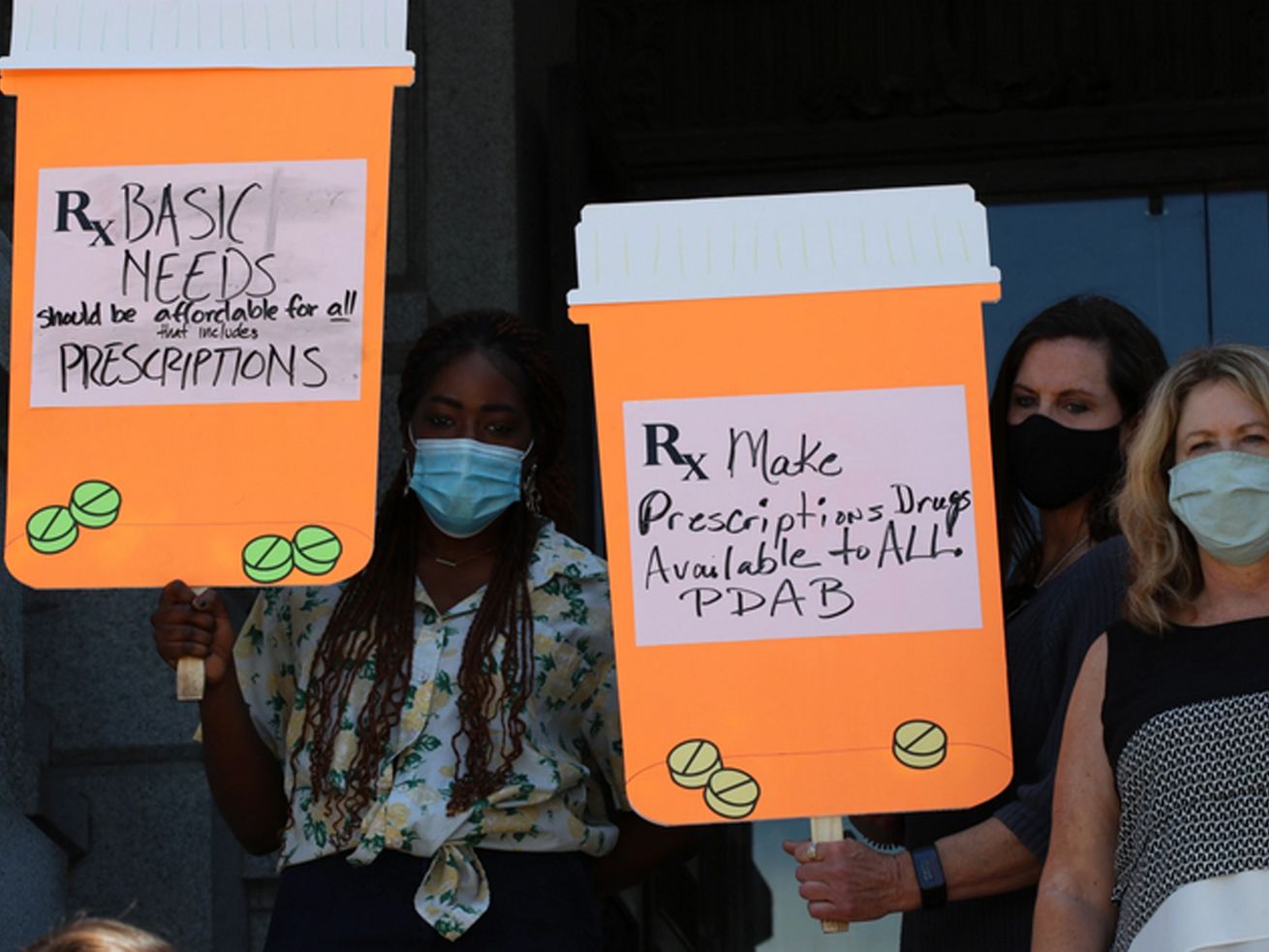
Unable to set prices, the state, like many others, is exploring legislative and administrative approaches to cut out-of-pocket costs on medications.
DENVER — Tired of waiting for federal action to reduce prescription drug costs, Colorado is acting on its own — even if it must do so with one arm figuratively tied behind its back.
Unable to set prices or change patent protections, the state is exploring legislative and administrative approaches to cut out-of-pocket costs on medications.
None of the efforts alone would result in broad-based, deep cuts. Still, state officials estimate the combined impact of the measures could save Coloradans 20% to 40% in out-of-pocket costs.
“That’s why it’s so important to have a variety of levers,” said Kim Bimestefer, executive director of the Colorado Department of Health Care Policy & Financing. “You start stacking all these up, and it’s remarkable how much we can drive down the cost.”
Like many states, Colorado — which spends more than $1 billion annually on drug purchases — has been looking to lower drug prices
One bill would create a prescription drug affordability board, which could review prices of medications sold to consumers and set payment limits. The legislation, backed by Democratic Gov. Jared Polis, has passed the Colorado Senate and is making its way through the House. The board’s job would be to ensure that those savings are passed on to consumers.
Drugs would qualify for an affordability review under various triggers, including when prices increase by more than 10% a year or exceed either $30,000 a year for brand-name drugs or $100 a month per person for generics. Patients and consumer advocates also could nominate drugs for review.
State officials estimate those categories probably cover 100 to 125 medications, but the board would be permitted to set limits for only 12 drugs a year. It could review affordability of more drugs and make recommendations for other types of administrative or legislative action to lower costs.
“It is inherently limited,” said Isabel Cruz, a policy manager with the nonprofit Colorado Consumer Health Initiative. “That’s the political reality that we had to accept.”
The bill is intended to help people like Koen Lichtenbelt, 18, of Ridgeway, Colorado, who was diagnosed with a rare autoinflammatory disease when she was in kindergarten. The condition damaged his nerves. In December, doctors prescribed the drug Hizentra, with an out-of-pocket cost of $10,000 a month. His parents footed the bill for three months before their insurance plan agreed to cover it.
His mother Cat Lichtenbelt said, that’s “$30,000, which is the price of a car, but, you know, this is our son’s life.”
Once on the medication, Koen, who’d been missing half of his school days for years, was able to graduate this year. He’s been accepted to Colorado State University but is taking a gap year to work as a first-responder at a fire department. Had he not had access to the drug, Lichtenbelt said, her son would likely need to rely on state aid.
“There is a need for pharmaceutical companies to continue to develop medications and drugs to improve people’s lives,” she said. “However, what is the price point at which there is access to actually being able to use those drugs?”
/cdn.vox-cdn.com/uploads/chorus_asset/file/22539426/Screen_Shot_2021_05_25_at_4.33.05_PM.png)
Beside opposition from hospital and pharmacy groups, the pharmaceutical industry is throwing its weight against the bill, threatening that, in Colorado, it won’t sell the drugs facing payment limits.
“Creating a board of unelected bureaucrats with the authority to arbitrarily decide what medicines are worth and what medicines patients can get would be a disaster for patients,” said Hannah Loiacono of the national Pharmaceutical Research and Manufacturers of America.
The Colorado BioScience Association says setting payment limits could reduce funding available for pharmaceutical discoveries.
“If passed, this bill will create unpredictability for the startups and development-stage companies in Colorado’s life sciences ecosystem, making it harder for them to raise funds,” said Jennifer Jones Paton, the group’s president and CEO. “Investors will look elsewhere.”
Still, the bill is expected to pass. Proponents said it’s unlikely a manufacturer could carve out specific drugs or states from its supply chain and noted that drug companies already sell their highest-cost drugs at lower prices to Medicaid, community clinics and charity hospitals.
On July 1, the governor’s office is launching a tool embedded in electronic medical records allowing doctors and other prescribers to see what patients with public or private health plans would pay for a medication. Bimestefer said 80% of prescribers in Colorado have the tool enabled, and 37% are using it ahead of the official start date.
The state also is pursuing contracts with drug companies linking prices to the effectiveness of the drugs, measured, for example, by whether they reduce hospitalizations.
The Colorado legislature previously approved importing drugs from Canada for consumers to purchase at lower costs. Now, with federal approval, the state is reviewing bids from contractors to make that happen, estimating Canadian imports would reduce costs for 50 common drugs by 63%.
But the state found that importing drugs from Australia and France could save 78% to 84%. Colorado would need an adjustment to federal law to import from those countries.
“If we open up other countries, we could increase the supply of the drugs coming in,” Bimestefer said. “This will actually help us battle pharma if we can turn on the spigot full, full, full throttle.”
Colorado’s efforts are part of a national trend, said Megan Olsen, a principal in the policy practice at Avalere, a Washington, D.C., healthcare consulting firm.
According to the National Academy for State Health Policy, nearly every state is considering some prescription drug cost bill this year. There are 14 prescription drug affordability board bills, 24 foreign drug importation bills and 58 bills addressing prescription drug coupons or cost-sharing. And, following a December Supreme Court ruling allowing states to regulate pharmacy benefit managers — the companies that control drug prices paid by insurance companies, states are considering 97 such measures.
Trish Riley, executive director of the academy, said states serve as 50 health policy laboratories, experimenting with policies that can set precedent for other states, prove the viability of various approaches and put pressure on the federal government to act. Some national policies, such as the Children’s Health Insurance Program, started as state measures.
“We’re on the front lines,” Bimestefer said. “And we can see some of the solutions more readily.”
KHN (Kaiser Health News) is a national newsroom producing in-depth journalism on health issues.

It seems the Republican Party believes it needs Greene’s anti-Semites to win. What else could explain its muted response to her garbage? What a disgrace.
After the freshman congresswoman from Georgia recently lit a firestorm comparing mask mandates to the persecution of the Jews during the Holocaust, she came out with a fresh batch of crazy. In the early morning hours on Tuesday, Marjorie Taylor Greene took to Twitter to double down on the obscene remarks she made to Christian Broadcasting Network’s David Brody.
Her first tweet to greet the day: ”Vaccinated employees get a vaccination logo just like the Nazi’s forced Jewish people to wear a gold star. Vaccine passports & mask mandates create discrimination against unvaxxed people who trust their immune systems to a virus that is 99% survivable.”
Her next tweets after that weren’t much better.
In response to a report that the University of Virginia is requiring vaccines for all in-person learning next year — students can request medical and religious exemptions — Greene tweeted: “Well hate freedom media would you look at this story. It appears Nazi practices have already begun on our youth. Show your VAX papers or no in person class for you. This is exactly what I was saying about the gold star. This is disgusting!”
Having insufficiently insulted the world’s Jewish population, apparently, Greene decided it was a good idea to target two prominent Jewish members of the media for disagreeing with her vulgar comparisons.
To Ben Shapiro, founder of the Daily Wire, she tweeted, “I never compared [mask and vaccine mandates] to the Holocaust, only to the discrimination against Jews in early Nazi years. Stop feeding into the left wing media attacks on me.” And to Jake Sherman, a reporter at MSNBC: “You are a liar. Stop twisting my words.”
To quote Shapiro, Greene’s thinking is indeed “demented nonsense.” It’s also so obviously out of bounds, it should be easily and roundly condemned by Republican leadership.
Yet there were crickets from Minority Leader Kevin McCarthy after her initial comments. Finally, in the wake of these new ones, McCarthy released a statement and a tweet, which read in part: “Marjorie is wrong, and her intentional decision to compare the horrors of the Holocaust with wearing masks is appalling. Let me be clear: the House Republican Conference condemns this language.”
Good. Now what? Will it call for her censure? Better yet, her expulsion?
Jewish groups and leaders immediately condemned the initial remarks that McCarthy couldn’t bother to.
“Such comparisons demean the Holocaust and contaminate American political speech,” said the American Jewish Congress, demanding an apology.
Jonathan Greenblatt, CEO of the Anti-Defamation League, also reminded CNN viewers that Greene has trafficked in anti-Semitic tropes and conspiracy theories before.
“This is a woman who thinks there are Jewish space lasers starting forest fires. She’s a QAnon enthusiast. She is offensive in almost everything that she does.”
To which Greene’s ever-impolitic and loyal goose stepper Nick Dyer responded, with another tinge of anti-Semitism: “The people of Northwest Georgia aren’t interested in the opinions of a radical leftist.”
How long will Republican leadership allow this horror show to play out?
While Democrats forced McCarthy to strip Greene of her House committee assignments the first time around, after threats of violence against Democratic members of Congress surfaced, the party has otherwise left her alone to keep peddling this kind of filth — and raise a whopping $3.2 million in her first three months in office.
Just like the party decided in 2016 that it needed the white supremacists and bigots Donald Trump was courting to win an election, it seems to believe it needs Marjorie Taylor Greene’s anti-Semites to win again. What else could explain its muted response to Greene’s garbage?
What a disgrace.
As anti-Semitic attacks rise all over America, a U.S. member of Congress is loudly and repeatedly comparing mask and vaccine mandates — meant to keep every American safe from COVID-19 — to the tactics used by Adolph Hitler to persecute the millions of Jews sent to their deaths in the Holocaust.
She’s doing it for three discrete reasons, all of which are despicable. First, because she’s an anti-Semite, an undeniable fact she’s proven over and over again. Second, merely to own the libs with anti-science, culture-war red meat. And third, to become famous, the only way she knows how.
Those of us in the media are regularly scolded for columns like these giving her oxygen. But the idea of not covering a rabid lunatic with a seat in Congress and obvious fundraising power wouldn’t just be pointless, it would be malfeasance.
Marjorie Taylor Greene is a scourge and a cancer on the Republican Party. That much is obvious. But as long as the Republican Party tacitly accepts her for her voters and her money, the Republican Party is also a scourge and a cancer on America.
S.E. Cupp is the host of “S.E. Cupp Unfiltered” on CNN.
Send letters to [email protected].
Marjorie Taylor Greene pollutes the RepublicS. E. Cuppon May 26, 2021 at 1:25 pm Read More »
It’s not a matter of ‘if’ Justin Fields starts for the Chicago Bears, rather when. Will it happen this season? That remains to be seen. Since we only officially have Matt Nagy’s word to base things off of, he won’t get the starting nod when week one rolls around. But things can change fast in the National Football League. And as the days go by, the calls for Justin Fields starting are only going to grow louder and louder.
In fact, many Chicago Bears fans, analysts, and football personas have already started championing Justin Fields starting on week one. NFL broadcaster Cris Collinsworth is on that side of the discussion as he claimed in a recent podcast that Fields would start if he was the head coach. Fortunately, or unfortunately, depending on if you agree with him or not, that title belongs to Matt Nagy. Will he give in to the hype and chatter and let Fields loose? Or will he keep his young prospect on the bench for the majority of the season à la Patrick Mahomes-style?
Despite what many of us fans want, there’s a slim chance Justin Fields starting week one happens. Not impossible, but slim. The Chicago Bears coaching staff have everything to gain with the development of their first-round draft pick, and equally as much to lose if they mess it up. That’s why we *should* expect to see Andy Dalton take the first snap week one when the Bears play the Rams. However, don’t expect that to last all season long.
Chicago Bears quarterback coach John DeFilippo has echoed the words of Nagy recently when he said that, “we’ll all know when it’s Justin’s time to go win a football game.” So it’s clear that they’re expecting Fields to start this year, but when? Realistically, if we had to call it, we’re saying Justin Fields starting happens before the week 10 bye. And if you want our best realistic guesstimate, it happens in Week 8 after two games against the Packers and the Buccaneers. But let’s not be realistic here for one second.
Week One. Sign it, seal it, deliver it. That’s our call.
What do the Chicago Bears have to lose at this point? An injury concern? Yeah, okay… maybe. But there’s that risk in literally EVERY play throughout an NFL season. Justin Fields is tough, and he’s already got the mindset that he’s going to do everything in his power to get the starting job. A lack of regular season action will only delay his potential stardome. Plus, if the Bears want to keep other offensive weapons happy over the course of the season they will go this route. Justin Fields starting should only serve to bolster the offense and his development as a professional NFL quarterback. They probably won’t end up doing this and that’s understandable, but they certainly wouldn’t get bashed if they did. Let the kid play!
The post Is Justin Fields Starting For The Chicago Bears In 2021? appeared first on UrbanMatter.
The Chicago Cubs have had one of the more up and down seasons of any team in Major League Baseball so far this year. There have been stretches that they have looked horrible and there have been stretches that they look amazing. Lately, they have been very good. No matter where the team was, however, […]
Chicago Cubs: 3 wild trade packages for Craig Kimbrel – Da Windy City – Da Windy City – A Chicago Sports Site – Bears, Bulls, Cubs, White Sox, Blackhawks, Fighting Illini & More

If the world can agree on one thing, it’s that 2020 was not our best year on record. For former Chicagoan Jaimie Branch, it should’ve been a time of triumph for her current quartet, Fly or Die.…Read More