What’s New

Gunman appeared to target some victims at rail yard: SheriffAssociated Presson May 27, 2021 at 6:43 pm

HERO Tent President Kiana Simmons places a candle at a vigil organized by her group following the mass shooting at the Valley Transportation Authority (VTA) light-rail yard, outside City Hall on May 26, 2021 in San Jose, California.
HERO Tent President Kiana Simmons places a candle at a vigil organized by her group following the mass shooting at the Valley Transportation Authority (VTA) light-rail yard, outside City Hall on May 26, 2021 in San Jose, California. | Getty

“It appears to us at this point that he said to one of the people there: ‘I’m not going to shoot you,’” Santa Clara County Sheriff Laurie Smith said. “And then he shot other people. So I imagine there was some kind of thought on who he wanted to shoot.”

SAN JOSE, Calif. — A gunman who killed nine people at a California rail yard fired 39 shots and appeared to target some of the victims, a sheriff told The Associated Press on Thursday.

The shooter arrived at the light rail facility for the Valley Transportation Authority in San Jose around 6 a.m. Wednesday with a duffel bag carrying two semi-automatic handguns and 11 high-capacity magazines, Santa Clara County Sheriff Laurie Smith said in an interview.

“It appears to us at this point that he said to one of the people there: ‘I’m not going to shoot you,’” Smith said. “And then he shot other people. So I imagine there was some kind of thought on who he wanted to shoot.”

While there are no cameras inside the rail yard’s two buildings, Smith said footage captured him moving from one location to the next. It took deputies six minutes from the first 911 calls to find the gunman on the third floor of one of the buildings, Smith said.

He killed himself as deputies closed in on the facility serving the county of more than 1 million people in the heart of Silicon Valley. More than 100 people were there at the time, and authorities found five victims in one building and two in another, Smith said.

Authorities do not yet know whether the gunman had worked regularly with any of the victims. Investigators were serving search warrants on his home and cellphone, seeking to determine what prompted the bloodshed, the sheriff said.

“I’m not sure we’ll ever actually find the real motive, but we’ll piece it together as much as we can from witnesses,” she said.

The attacker was identified as 57-year-old Samuel Cassidy, according to two law enforcement officials who were not authorized to discuss the investigation publicly and spoke to The Associated Press on condition of anonymity.

The 9 mm handguns he had appear to be legal, Smith said, though his 11 high-capacity magazines — each with 12 rounds — are prohibited in California. Authorities do not yet know how he obtained the weaponry.

The sheriff said he also appeared to have set a timer or slow-burn device to set his home on fire, and authorities also found explosives there. The fire was reported minutes after the first 911 calls came in from the rail facility.

Cassidy’s ex-wife said he had talked about killing people at work more than a decade ago.

“I never believed him, and it never happened. Until now,” a tearful Cecilia Nelms told the AP on Wednesday.

She said he used to come home from work resentful and angry over what he perceived as unfair assignments.

“He could dwell on things,” she said. The two were married for about 10 years until a 2005 divorce filing, and she hadn’t been in touch with Cassidy for about 13 years, Nelms said.

The death toll rose from eight after officials confirmed the death late Wednesday of 49-year-old Alex Ward Fritch, who had been hospitalized in critical condition after the attack.

It was the 15th mass killing in the U.S. this year, all shootings that claimed at least four lives each for a total of 87 deaths, according to a database compiled by The Associated Press, USA Today and Northeastern University.

President Joe Biden ordered flags to be flown at half-staff and urged Congress to act on legislation to curb gun violence.

“Every life that is taken by a bullet pierces the soul of our nation. We can, and we must, do more,” Biden said in a statement.

Gov. Gavin Newsom also spoke emotionally Wednesday about the country’s latest mass killing.

“There’s a numbness some of us are feeling about this. There’s a sameness to this,” he told reporters. “It begs the damn question of what the hell is going on in the United States of America?”

The shooting killed employees who had been bus and light rail operators, mechanics, linemen and an assistant superintendent over the course of their careers. One had worked for the agency since 1999.

The other victims were Paul Delacruz Megia, 42; Taptejdeep Singh, 36; Adrian Balleza, 29; Jose Dejesus Hernandez, 35; Timothy Michael Romo, 49; Michael Joseph Rudometkin, 40; Abdolvahab Alaghmandan, 63, and Lars Kepler Lane, 63.

Singh had worked as a light rail train driver for eight or nine years and had a wife and two small children, said his cousin, Bagga Singh.

“We heard that he chose the people to shoot, but I don’t know why they chose him because he has nothing to do with him,” Bagga Singh said.

San Jose City Councilman Raul Peralez said Rudometkin was a close friend.

“There are no words to describe the heartache we are feeling right now, especially for his family,” he wrote on Facebook. “Eight families are feeling this same sense of loss tonight and our entire community is mourning as well.”

There was nothing in public records to indicate Cassidy ever got in trouble with the law. He received a traffic ticket in 2019, and sheriff’s officials said they were still investigating his background.

But in court documents filed in 2009, an ex-girlfriend described him as volatile and violent, with major mood swings because of bipolar disorder that became worse when he drank heavily.

Several times while he was drunk, Cassidy forced himself on her sexually despite her refusals, pinning her arms with his body weight, the woman alleged in a sworn statement filed after Cassidy sought a restraining order against her. The documents were obtained by the San Francisco Chronicle.

The Associated Press generally does not name people who say they have been sexually assaulted.

Cassidy had worked for Valley Transportation Authority since at least 2012, according to the public payroll and pension database Transparent California, first as a mechanic from 2012 to 2014, then maintaining substations.

Doug Suh, who lives across the street from Cassidy, told The Mercury News in San Jose that Cassidy seemed “strange” and that he never saw anyone visit.

“I’d say hello, and he’d just look at me without saying anything,” Suh said. Once, Cassidy yelled at him to stay away as he was backing up his car. “After that, I never talked to him again.”

Wednesday’s attack was the deadliest shooting in the San Francisco Bay Area since 1993, when a gunman attacked law offices in San Francisco’s Financial District, killing eight people before taking his own life.

It also was Santa Clara County’s second mass shooting in less than two years. A gunman killed three people and then himself at a popular garlic festival in Gilroy in July 2019.

___

Associated Press journalists Jocelyn Gecker in San Francisco, Martha Mendoza in Santa Cruz, John Antczak in Los Angeles, and Michael Balsamo and Colleen Long in Washington contributed to this report.


Read More

Gunman appeared to target some victims at rail yard: SheriffAssociated Presson May 27, 2021 at 6:43 pm Read More »

Activists call for charges against Louisiana troopers in Black man’s deathAssociated Presson May 27, 2021 at 6:16 pm

This image from video from Louisiana state police state trooper Dakota DeMoss’ body-worn camera, shows trooper Kory York bending over with his foot on Ronald Greene’s shoulder after he was taken into custody on May 10, 2019, outside of Monroe, La.
This image from video from Louisiana state police state trooper Dakota DeMoss’ body-worn camera, shows trooper Kory York bending over with his foot on Ronald Greene’s shoulder after he was taken into custody on May 10, 2019, outside of Monroe, La. | AP

“Make no mistake: Ron Greene was murdered at the hands of Louisiana State Police,” civil rights attorney Ron Haley said.

NEW ORLEANS — Louisiana State Police troopers involved in the violent arrest of a Black motorist who died in police custody in 2019 should be immediately fired and charged with crimes, leaders of the National Urban League and other civil rights groups said Thursday.

Marc Morial, the national president of the Urban League and a former mayor of New Orleans, was joined by other state and local civil rights groups in calling for action during an online news conference. Their remarks came just a week after The Associated Press obtained and published body camera video that appears to contradict at least one trooper’s statement that Ronald Greene continued to be a threat even after he was restrained, and that his behavior was the reason troopers used force.

“After seeing that video, no reasonable person could come to any other conclusion … than a crime has been committed by Louisiana state troopers,” said Morial, who during the news conference played a separate AP video report that included an interview with an expert on police use of force.

Civil rights attorney Ron Haley added, “Make no mistake: Ron Greene was murdered at the hands of Louisiana State Police.”

Greene’s death is already under investigation by state and federal authorities. It also is the subject of a lawsuit. Morial said state police should fire and arrest the troopers involved.

Asked for a response by the AP, state police Capt. Nick Manale said in an email that the troopers involved “have already received internal discipline while awaiting the results of the federal review.” He said the state police force continues to cooperate in the investigation and is “confident in the judicial system and fair review of this incident.”

Greene’s mother, Mona Hardin, appeared at the news conference with family attorney Lee Merritt. Merritt said they had met with a state legislator and have appealed to the governor’s office and district attorney to ask a judge to issue an arrest warrant for the troopers. Merritt said they were told to trust the process and await the results of a federal investigation.

“No one has delivered any specific action,” Merritt said. “We believe in equal protection under the law. And we know if a white citizen, a fellow police officer, the governor’s child, had met the same end that Ronald Greene met, there would be action by now.”

Union Parish District Attorney John Belton did not immediately respond to a telephone message and an emailed request for comment.

Hardin thanked Morial and others attending the news conference.

“We need help,” she said. “We need someone’s attention … to move these mountains.”

News conference participants said Greene’s treatment points to the need for passage of a national police reform bill known as the George Floyd Justice in Policing Act, which would ban chokeholds, include prohibitions on no-knock police raids like the one in Louisville, Kentucky, that killed Breonna Taylor, and create a national registry for officers who are disciplined for serious misconduct, among other proposals. It has been passed by the House but is stalled in a closely divided Senate.

They also called for passage of police reforms at the state level, including an end to “qualified immunity” — protection from lawsuits for police officers and others for actions they take in the course of their work — and a review of Louisiana’s “police officers’ bill of rights,” which provides legal protections for officers accused of wrongdoing.

Various activists and members of Greene’s family also planned to march at a rally seeking justice at the state Capitol in Baton Rouge on Thursday afternoon. After remarks on the Capitol steps, the group plans to march to the Governor’s Mansion.

The video obtained by the AP and later released by state police shows troopers stunning, beating and choking Greene, 49, following an automobile chase and crash in northeast Louisiana in May 2019.

Greene’s family was initially told that he died in the car crash. State police later issued a brief statement acknowledging there was a struggle with officers and that Greene died on the way to the hospital.

The video shows troopers converging on Greene’s car outside Monroe, Louisiana, after a high-speed chase that followed an unspecified traffic violation. Troopers can be seen repeatedly jolting the 49-year-old unarmed man with stun devices, putting him in a chokehold, punching him in the head and dragging him by his ankle shackles.

He also was placed facedown on the ground for more than nine minutes while restrained — a tactic use-of-force experts criticized as dangerous and likely to have restricted his breathing.

An autopsy cited the restraint and an “inflicted head injury” as factors in Greene’s death, along with cocaine-induced delirium and other injuries that might have been the result of the car crash.

Read More

Activists call for charges against Louisiana troopers in Black man’s deathAssociated Presson May 27, 2021 at 6:16 pm Read More »

Cubs: Anthony Rizzo makes interesting comments about Joe Weston May 27, 2021 at 5:58 pm

Read More

Cubs: Anthony Rizzo makes interesting comments about Joe Weston May 27, 2021 at 5:58 pm Read More »

GGTB A Chicago White Sox Podcast – Episode 102 – Wanted: A Right Fielder That Can HitNick Bon May 27, 2021 at 5:00 pm

The Sox take 2 of 3 from the Cardinals and remain in 1st place in the AL Central but the offense remains an issue. Can the Sox stay afloat until Robert and Engel return? Let’s hope so! The guys talk Vaughn, Collins, bunting, hamstring injuries, strobe lights, and much more on this episode. Go Sox!

The post GGTB A Chicago White Sox Podcast – Episode 102 – Wanted: A Right Fielder That Can Hit first appeared on CHI CITY SPORTS l Chicago Sports Blog – News – Forum – Fans – Rumors.Read More

GGTB A Chicago White Sox Podcast – Episode 102 – Wanted: A Right Fielder That Can HitNick Bon May 27, 2021 at 5:00 pm Read More »

GOP offers $928B on infrastructure, funded with COVID aidAssociated Presson May 27, 2021 at 5:20 pm

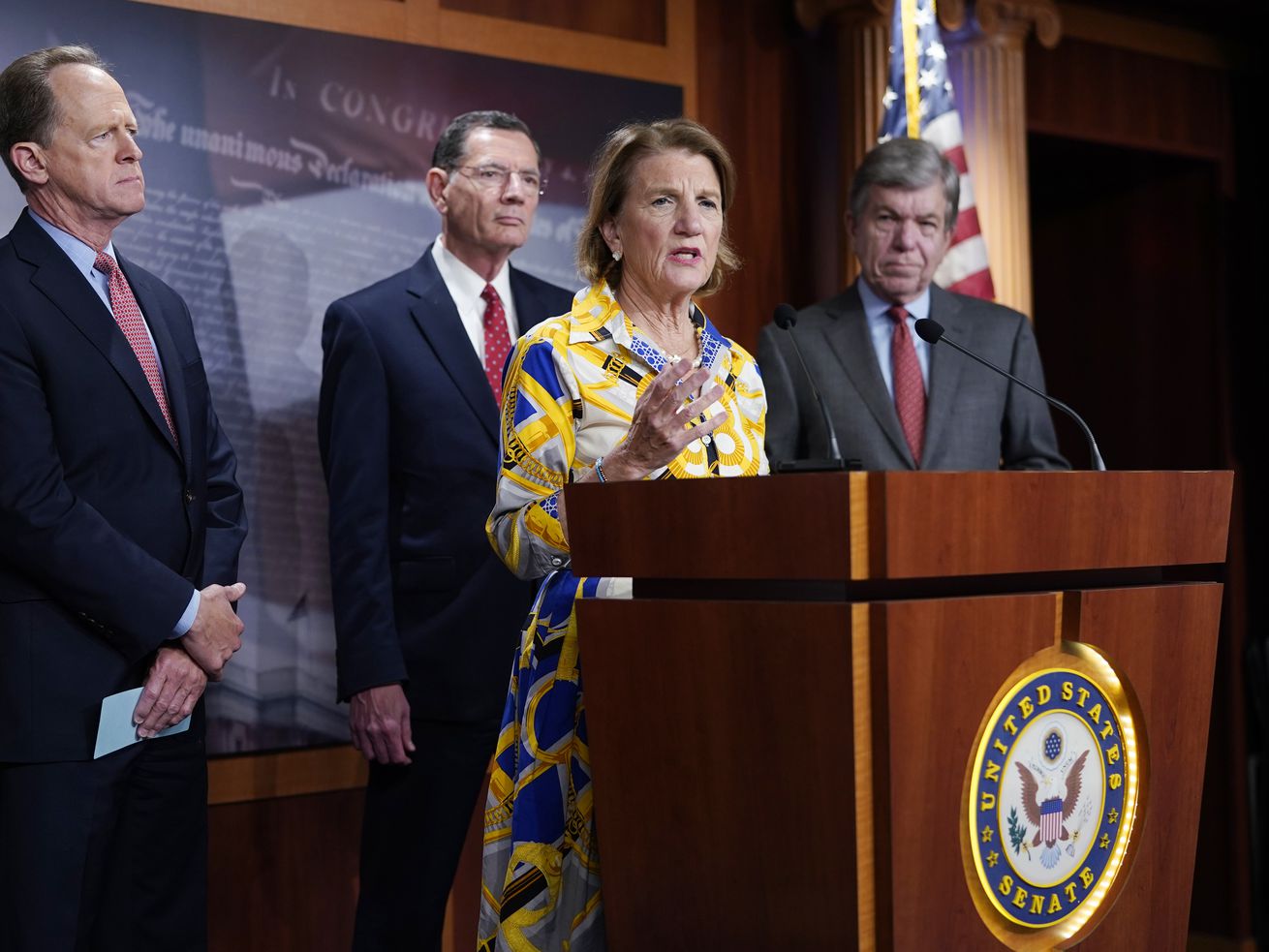
Sen. Shelley Moore Capito speaks at the Capitol in Washington, Thursday, May 27, 2021, as from left, Sen. Pat Toomey, R-Pa., Sen. Barrasso, R-Wy. and Sen. Roy Blunt, R-Mo., look on. Republican senators outlined a $928 billion infrastructure proposal Thursday, a counteroffer to President Joe Biden’s more sweeping plan as the two sides struggle to negotiate a bipartisan compromise and remain far apart on how to pay for the massive spending.
Sen. Shelley Moore Capito speaks at the Capitol in Washington, Thursday, May 27, 2021, as from left, Sen. Pat Toomey, R-Pa., Sen. Barrasso, R-Wy. and Sen. Roy Blunt, R-Mo., look on. Republican senators outlined a $928 billion infrastructure proposal Thursday, a counteroffer to President Joe Biden’s more sweeping plan as the two sides struggle to negotiate a bipartisan compromise and remain far apart on how to pay for the massive spending. | AP

The Republican offer would increase spending by $91 billion on roads and bridges, $48 billion on water resources and $25 billion on airports, according to a one-page summary released by the GOP negotiators. I

WASHINGTON — Republican senators outlined a $928 billion infrastructure proposal Thursday that would tap unused coronavirus aid, a counteroffer to President Joe Biden’s more sweeping plan as the two sides struggle to negotiate a bipartisan compromise and remain far apart on how to pay for the massive spending.

The Republican offer would increase spending by $91 billion on roads and bridges, $48 billion on water resources and $25 billion on airports, according to a one-page summary released by the GOP negotiators. It also would provide for one-time increases in broadband investments, at $65 billion, and $22 billion on rail.

Republicans have rejected Biden’s proposed corporate tax increase to pay for new investments, and instead want to shift unspent COVID-19 relief dollars to help cover the costs, a nonstarter for many Democrats.

“It’s a serious effort to try to reach a bipartisan agreement,” said Sen. Shelley Moore Capito of West Virginia, the lead GOP negotiator.

The Republican senators said their offer delivers on “core infrastructure investments” that Biden has focused on as areas of potential bipartisan agreement. But their overall approach, up from an initial $568 billion bid, received a cool response by Democrats and the White House.

As Biden left for an event in Ohio, he said he called Capito to thank her for the proposal, but told her, “We have to finish this really soon.”

With about $250 billion in new spending, the GOP plan falls short of the more ambitious proposal outlined in the president’s American Jobs Plan. In earlier negotiations. Biden reduced his $2.3 trillion opening bid to $1.7 trillion.

Biden, in an economic address later Thursday in Cleveland, planned to present “head-on” the choice before Congress and the country, according to a White House official, framing the argument as whether Americans want to keep giving breaks to corporations or invest in modernizing infrastructure. The official was not authorized to publicly discuss Biden’s remarks before the president’s speech and spoke on condition of anonymity.

White House press secretary Jen Psaki made clear the administration’s concern that the new proposal “still provides no substantial new funds for critical job-creating needs” and fails to spell out how Republicans would pay for the programs.

“We are worried that major cuts in COVID relief funds could imperil pending aid to small businesses, restaurants and rural hospitals using this money to get back on their feet after the crush of the pandemic,” Psaki said in a statement.

Biden and Capito are expected to meet next week, while Congress is on a break. Psaki said the White House is also “continuing to explore other proposals that we hope will emerge.”

A bipartisan group of lawmakers that includes Sen. Mitt Romney, R-Utah, is also preparing an alternative plan.

Investing in infrastructure is a top legislative priority for Biden. Talks are at a crossroads before a Memorial Day deadline to make progress toward a bipartisan deal. The White House is assessing whether the president can strike the contours of an agreement with Republicans or whether he will try to go it alone with Democrats if no progress is made in the coming days.

Core differences remain over the definition of infrastructure: Republicans stick to traditional investments in roads, bridges, ports and water drinking systems, while Biden takes a more expansive view.

Under Biden’s initial proposal, there is more than $300 billion for substantial upgrades to public schools, Veterans Administration hospitals and affordable housing, along with $25 billion for new and renovated child care centers.

Biden’s proposal would spend heavily on efforts to confront climate change, with $174 billion to spur the electric vehicle market, in part by developing charging stations, and $50 billion so communities can better deal with floods, hurricanes, wildfires and other natural disasters.

One area of agreement is on boosting broadband, but the sides are apart on details. Republicans raised their initial offer to $65 billion in an earlier exchange; Biden is seeking $100 billion.

Sen. John Barrasso, R-Wyo., said the Republicans’ proposal reflects what “what people at home in Wyoming think of is infrastructure, roads with potholes.”

The White House, still expressing public hopes for bipartisanship, welcomed the GOP offer. But it was greeted with some initial coolness inside the West Wing.

Aides have for days signaled that using COVID-19 relief money was a nonstarter, noting that much of that money has been allocated and suggesting that the rest should be held in reserve for future virus-related costs.

There was also skepticism about how the Republicans claimed Biden has signaled agreement to a $1.2 trillion deal in a recent meeting — a claim the White House disputed.

At $928 billion over eight years, the new GOP offer features $257 billion in new money, more than the $225 billion the White House had said was in the initial Republican proposal. But still far less than the White House had hoped.

Sen. Pat Toomey, R-Pa., said there is $700 billion in unspent COVID-19 aid from the American Rescue Plan, which was the administration’s $1.9 trillion response to the coronavirus crisis earlier this year.

Toomey said some of that money could fill the gap between the amount of revenue normally collected from transportation taxes and fees, and the new spending the GOP senators are proposing.

But he said the Republican negotiators have made it “very, very clear on every single time we’ve had a discussion is that we’re not raising taxes.”

Read More

GOP offers $928B on infrastructure, funded with COVID aidAssociated Presson May 27, 2021 at 5:20 pm Read More »

76ers banish fan who threw popcorn on Russell WestbrookTim Reynolds | Associated Presson May 27, 2021 at 5:12 pm

The Washington Wizards’ Russell Westbrook is helped to the locker room after an injury Wednesday.
The Washington Wizards’ Russell Westbrook is helped to the locker room after an injury Wednesday. | Matt Slocum/AP

The fan, who was not identified by the team, threw the popcorn onto Westbrook as the Wizards’ guard was leaving Wednesday night’s game at Wells Fargo Center with an ankle injury.

The Philadelphia 76ers said Thursday that they have immediately revoked the season-ticket membership from the fan who threw popcorn on Washington guard Russell Westbrook, plus banned him from all events at their arena indefinitely.

The fan, who was not identified by the team, threw the popcorn onto Westbrook as the Wizards’ guard was leaving Wednesday night’s game at Wells Fargo Center with an ankle injury.

“We apologize to Russell Westbrook and the Washington Wizards for being subjected to this type of unacceptable and disrespectful behavior,” the 76ers said in a statement announcing the ban. “There is no place for it in our sport or arena.”

The NBA agreed, saying Thursday that its rules on fan behavior will be “vigorously enforced in order to ensure a safe and respectful environment for all involved.”

NBA buildings are welcoming their largest crowds of the season for the playoffs, after a regular season where attendance was severely limited because of policies put in place to keep players and others safe during the pandemic.

It has not been without problems, and players are airing concerns.

The popcorn incident with Westbrook came on the same night where fans in New York directed profane chants at Atlanta guard Trae Young in Madison Square Garden, just as they had in the series opener there on Sunday.

And Brooklyn guard Kyrie Irving — in advance of Game 3 of the Nets’ series at Boston — said he hoped the scene there on Friday night “is strictly basketball, there’s no belligerence or any racism going on, subtle racism, people yelling (expletive) from the crowd.”

“The return of more NBA fans to our arenas has brought great excitement and energy to the start of the playoffs, but it is critical that we all show respect for players, officials and our fellow fans,” the NBA said Thursday.

Westbrook has been part of high-profile incidents involving fans before, including one where a fan in Utah was alleged to have directed racial taunts his way. Westbrook was fined $25,000 for his reactions to that incident, one in which Utah guard Donovan Mitchell even came to his defense.

“These arenas, they’ve got to start protecting the players. We’ll see what the NBA does,” Westbrook said Wednesday night. “I’ve been in a lot of incidents where fans, they say whatever, and the consequences for me are a lot more detrimental to those people in the stands because they feel like they’re untouchable.”

After the Westbrook incident in Utah two years ago, the league changed and toughened its code of conduct for fans, including putting those in closest proximity to the players and the court on alert that anything over the line will lead to ejections and possibly more.

Players such as Westbrook and LeBron James — who chimed in on Twitter shortly after the Westbrook incident Wednesday — still clearly believe that fan behavior remains a major issue.

“I’m sick and tired of it, honestly,” Westbrook said.

Read More

76ers banish fan who threw popcorn on Russell WestbrookTim Reynolds | Associated Presson May 27, 2021 at 5:12 pm Read More »

Activists call for charges against Louisiana troopers in Black man’s deathAssociated Presson May 27, 2021 at 5:22 pm

This image from video from Louisiana state police state trooper Dakota DeMoss’ body-worn camera, shows trooper Kory York bending over with his foot on Ronald Greene’s shoulder after he was taken into custody on May 10, 2019, outside of Monroe, La.
This image from video from Louisiana state police state trooper Dakota DeMoss’ body-worn camera, shows trooper Kory York bending over with his foot on Ronald Greene’s shoulder after he was taken into custody on May 10, 2019, outside of Monroe, La. | AP

“Make no mistake: Ron Greene was murdered at the hands of Louisiana State Police,” civil rights attorney Ron Haley said.

NEW ORLEANS — Louisiana State Police troopers involved in the violent arrest of a Black motorist who died in police custody in 2019 should be immediately fired and charged with crimes, leaders of the National Urban League and other civil rights groups said Thursday.

Marc Morial, the national president of the Urban League and a former mayor of New Orleans, was joined by other state and local civil rights groups in calling for action during an online news conference. Their remarks came just a week after The Associated Press obtained and published body camera video that appears to contradict at least one trooper’s statement that Ronald Greene continued to be a threat even after he was restrained, which justified the troopers’ use of force.

“Mr. Greene was killed by these state troopers,” Morial said after playing an Associated Press video report that included an interview with an expert on police use of force. “After seeing that video, no reasonable person could come to any other conclusion other than a crime has been committed by Louisiana state troopers.”

Civil rights attorney Ron Haley added, “Make no mistake: Ron Greene was murdered at the hands of Louisiana State Police.”

Greene’s mother, Mona Hardin, appeared at the news conference with family attorney Lee Merritt, who said they had met with a state legislator as well as previously appealed to the governor’s office and district attorney to ask a judge to issue an arrest warrant for the troopers. Merritt said they were told to trust the process and await the results of a federal investigation.

“No one has delivered any specific action,” Merritt said. “We believe in equal protection under the law. And we know if a white citizen, a fellow police officer, the governor’s child, had met the same end that Ronald Greene met, there would be action by now. ”

Hardin thanked Morial and others attending the news conference.

“We need help,” she said. “We need someone’s attention … to move these mountains.”

Various activists and members of Greene’s family also planned to march at a rally seeking justice at the state Capitol in Baton Rouge on Thursday afternoon. After remarks on the Capitol steps, the group plans to march to the Governor’s Mansion.

The video obtained by the AP and later released by state police shows troopers stunning, beating and choking Greene, 49, following an automobile chase and crash in northeast Louisiana in May 2019.

Greene’s family was initially told that he died in the car crash. State police later issued a brief statement acknowledging there was a struggle with officers and that Greene died on the way to the hospital. Since then, Greene’s death has come under investigation by state and federal authorities. It also is the subject of a lawsuit.

The video shows troopers converging on Greene’s car outside Monroe, Louisiana, after a high-speed chase that followed an unspecified traffic violation. Troopers can be seen repeatedly jolting the 49-year-old unarmed man with stun devices, putting him in a chokehold, punching him in the head and dragging him by his ankle shackles.

He also was placed facedown on the ground for more than nine minutes while restrained — a tactic use-of-force experts criticized as dangerous and likely to have restricted his breathing.

An autopsy cited the restraint and an “inflicted head injury” as factors in Greene’s death, along with cocaine-induced delirium and other injuries that might have been the result of the car crash.

Read More

Activists call for charges against Louisiana troopers in Black man’s deathAssociated Presson May 27, 2021 at 5:22 pm Read More »

‘Couldn’t stay quiet’ Capitol cop’s mom wants Jan. 6 probeAssociated Presson May 27, 2021 at 5:54 pm

Capitol Police Officer Harry Dunn and Gladys Sicknick, the mother of late Capitol Police Officer Brian Sicknick, arrive for a meeting with Sen. Ron Johnson (R-WI) to urge for a January 6 commission on May 27, 2021 in Washington, DC.
Capitol Police Officer Harry Dunn and Gladys Sicknick, the mother of late Capitol Police Officer Brian Sicknick, arrive for a meeting with Sen. Ron Johnson (R-WI) to urge for a January 6 commission on May 27, 2021 in Washington, DC. | Getty

Brian Sicknick was one of the on-duty officers badly outnumbered by the mob who stormed the building, smashing windows and breaking through barriers.

WASHINGTON —Brian Sicknick’s family wants to uncover every detail about the Jan. 6 insurrection by pro-Trump rioters, when the Capitol Police officer collapsed and later died. They can’t understand why lawmakers do not.

Sicknick was one of the on-duty officers badly outnumbered by the mob who stormed the building, smashing windows and breaking through barriers. He was sprayed with a chemical, collapsed and later had a stroke and died. Two other officers took their own lives in the days afterward, and dozens more were hurt — including one officer who had a heart attack and others who suffered traumatic brain injuries and permanent disabilities. Some may never return to the job.

“He was just there for our country,” his mother Gladys said. “He just was doing his job and he got caught up. It’s very sad.”

She and his girlfriend Sandra Garza made an extraordinary push Thursday with Republican lawmakers who are likely to vote down the creation of an independent commission to investigate the deadly siege by President Donald Trump’s supporters, meeting with several senators though the effort is likely doomed.

“I’m usually staying in the background,” Gladys Sicknick said. “I couldn’t stay quiet anymore.”

The Capitol Police are caught in the middle of a political firestorm involving the lawmakers they are sworn to protect. Congressional leaders are fighting over security, money, leadership and staffing at the police force following the failure of the Capitol Police and other law enforcement agencies to prepare for and hold back the massive mob in the most violent domestic attack on Congress in history.

The House last week narrowly approved $1.9 billion to bolster security at the Capitol, with Democrats pushing past Republican opposition to harden the complex with retractable fencing and a quick-response force. And the House approved the commission to investigate the deadly siege.

But Senate Republicans on Thursday were ready to deploy the filibuster to block the commission, shattering chances for a bipartisan probe of the deadly assault. Most Republicans oppose the bill that would establish a commission to investigate the attack by Trump supporters in a failed attempt to overturn Democrat Joe Biden’s election, part of a growing trend in the GOP to diminish the violence and horror of the day.

There have been several oversight hearings, largely focusing on law enforcement failures. The top watchdog for the department testified recently that the police force needed a “cultural change,” pointing to inadequate training and outdated weaponry as among several urgent problems facing the force. A nationwide search is underway for a permanent police chief. The department’s acting chief, Yogananda Pittman, was in charge of intelligence when the riot occurred and has faced a vote of no confidence from her own officers.

For Sicknick’s girlfriend, Garza, it’s been an excruciating time. She and Gladys Sicknick were joined at the Capitol on Thursday by a Capitol police officer and a Metropolitan police officer, both of whom have spoken out publicly about the day, and former Republican Rep. Barbara Comstock of Virginia.

“It’s very obvious that this was not a peaceful day,” Garza said. “Police officers were being attacked.”

Garza also spoke of how some celebrated the medical examiner’s ruling in her boyfriend’s death that found he suffered a stroke and died from natural causes. Two men have been charged with assaulting Sicknick and another officer, and the U.S. Capitol Police said that the agency accepted the medical examiner’s findings but that the ruling didn’t change the fact that Sicknick had died in the line of duty.

“It was very hard to deal with the ambiguity of not knowing what happened to Brian,” Garza said. “It was also very hard to know that his last moments on earth were dealing with what he had to deal with.”

Unlike a traditional municipal law enforcement agency that polices the community at large, Capitol Police officers are solely responsible for protecting Congress and the hallowed building, which makes the infighting in Congress about their future even more strained.

It’s also prompted a handful of officers to speak out publicly and directly lobby lawmakers, highly unusual moves that have involved going around their leadership. One officer has spoken out on television. Others have quietly talked to the media.

Last week, a letter released by a House Democrat was signed by “proud members of the United States Capitol Police” and lashed out at some lawmakers downplaying or lying about the dangers they faced during the insurrection. About 50 people signed onto the letter before it was released, a fraction of the department’s 2,000 officers.

The missive, on Capitol Police letterhead, was delivered to the office of Rep. Jamie Raskin, a Maryland Democrat, and was circulated to top staffers in the House by his office. Raskin said in an interview last week that the officers approached his office, and that they and their families have been traumatized about what happened on the 6th. Raskin said “they can’t believe there is dissension in the Congress” about the simple facts of the insurrection.

“It is inconceivable that some of the Members we protect would downplay the events of January 6th,” the letter reads. “It is a privileged assumption for Members to have the point of view that ‘it wasn’t that bad.’ That privilege exists because the brave men and women of the USCP protected you, the Members.”

The letter was quickly disavowed by Capitol Police leaders, who said the agency doesn’t take any position on legislative matters. They said in a statement that the letter was not an official statement from the department and that it had “no way of confirming it was even authored by USCP personnel.”

Federal prosecutors have charged more than 400 people in the wake of the riot, the largest undertaking in the Justice Department’s history. Trump was impeached again for his role in the insurrection but was acquitted of inciting the mob to violence.

___

Associated Press writers Mary Clare Jalonick, Nomaan Merchant, Michael Balsamo and Padmananda Rama contributed to this report.

Read More

‘Couldn’t stay quiet’ Capitol cop’s mom wants Jan. 6 probeAssociated Presson May 27, 2021 at 5:54 pm Read More »

Cops who kill often catch break at sentencing timeAssociated Presson May 27, 2021 at 4:37 pm

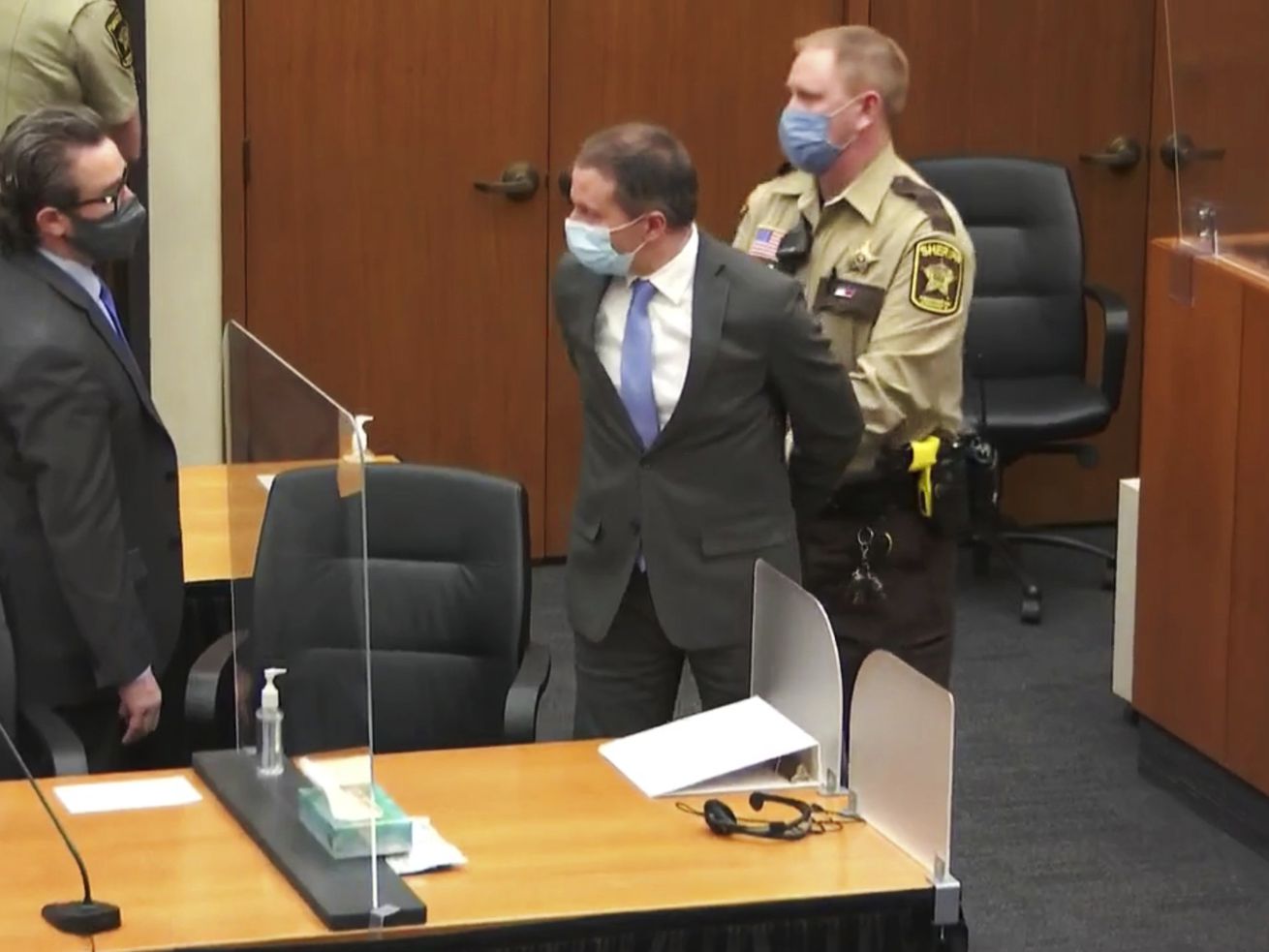
In this April 20, 2021 file image from video, former Minneapolis police Officer Derek Chauvin, center, is taken into custody as his attorney, Eric Nelson, left, looks on, after the verdicts were read at Chauvin’s trial for the 2020 death of George Floyd, at the Hennepin County Courthouse in Minneapolis, Minn.
In this April 20, 2021 file image from video, former Minneapolis police Officer Derek Chauvin, center, is taken into custody as his attorney, Eric Nelson, left, looks on, after the verdicts were read at Chauvin’s trial for the 2020 death of George Floyd, at the Hennepin County Courthouse in Minneapolis, Minn. | AP

As former Minneapolis Police Officer Derek Chauvin waits to be sentenced for killing George Floyd, it’s worth remembering what happened in Chicago after a jury convicted a white police officer in the shooting death of 17-year-old Laquan McDonald.

CHICAGO — Throughout the murder trial, prosecutors showed jurors the video seen countless times around the world of the white police officer killing a Black male. And when it was over, the jurors found the officer guilty of murder.

That was in 2018. Now, as former Minneapolis Police Officer Derek Chauvin waits to be sentenced for killing George Floyd, it’s worth remembering what happened in Chicago after a jury convicted a white police officer in the shooting death of 17-year-old Laquan McDonald: The judge didn’t follow prosecutors’ recommended 18-20 years behind bars. Former officer Jason Van Dyke got a more lenient sentence — and might be released from prison in about three years.

It’s possible things have changed. Floyd’s horrific death touched off mass protests and calls for police reform that have rippled across the U.S. and in Congress. Chauvin could end up the exception, with a sentence of 30 years behind bars, particularly after the judge who will sentence him agreed Chauvin had committed particular cruelty in Floyd’s death. But if history is any indication, a slam-dunk sentence is not guaranteed.

That was filmmaker Spike Lee’s point when, shortly after the verdict, he said on CNN that he started worrying as soon as “I heard the judge would be the one (who) would be the one that handed out the sentence.” The jury, he said, “got it right, but we don’t know what this judge (will decide).”

Much has been written about how rare it is for a police officer to be charged for an on-duty killing. Philip Stinson, a Bowling Green University criminal justice professor who tracks police prosecutions, has found that since 2005, just 142 non-federal police officers have been charged with murder or manslaughter for on-duty shootings.

Chauvin is part of an even smaller roster of officers who have actually been convicted in on-duty killings: According to Stinson’s count, Chauvin is just the eighth officer convicted of murder for an on-duty killing.

The officers convicted of murder for on-duty shootings were sentenced to an average of 16.4 years in prison, Stinson found. In comparison, the average sentence for a murder conviction in the United States was, just over 48.8 years as of 2018, according to a report released this year by the U.S. Department of Justice’s Bureau of Justice Statistics.

The average time they spend behind bars can be considerably less than that. Depending on the state, convicted felons can have as much as half their sentence lopped off if they behave themselves in prison. In Minnesota, the presumption is that defendants with good behavior will serve two-thirds of their sentences before they are released on parole.

What that means, according to the Bureau of Justice Statistics, is that the people who received decades-long sentences for murder or non-negligent manslaughter actually served an average of 17.8 years in state prison before they were released.

For police officers, it often translates to less than a decade behind bars. In Texas, for example, when a former Balch Springs police officer convicted of murder in the shooting death of an unarmed Black teenager was sentenced in 2018 to 15 years in prison, he knew he’d be eligible for parole after serving 7.5 years.

That helps explain why in Illinois, Van Dyke’s attorney sounded more like he’d won the case than lost it when the judge handed down what amounts to a three-year sentence.

“He truly felt great. I mean, he was not just relieved, he was happy …” attorney Dan Herbert told reporters.

Under Minnesota’s sentencing guidelines, Chauvin will only be sentenced for the most serious charge — second-degree murder — in Floyd’s 2020 death. That meant that at the time Chauvin was convicted he faced a presumptive sentence of 12 1/2 years in prison, with the judge limited to sentencing him between 10 years and eight months to 15 years.

But in May, Judge Peter Cahill ruled that there Chauvin abused his authority as a police officer when he restrained Floyd in 2020 and that he treated Floyd with particular cruelty — aggravating factors that add much more more prison time.

The reasons why police officers seem to catch such a break at sentencing begin with one of the first things a prosecutor typically points to when asking for a stiff prison sentence: the defendant’s criminal history.

That, however, runs up against the reality that police officers rarely have any criminal history, for the simple reason that felony convictions get officers fired or prevent them from getting hired in the first place.

“Sentences can go way up if someone has a felony record,” said Robert Weisberg, a law professor at Stanford University and co-director of the Stanford Criminal Justice Center. “Chauvin doesn’t have that.”

And there’s another argument: “Officers who otherwise have lived a lawful life can make a really strong argument that a long prison sentence isn’t necessary to protect the public, that he … won’t be a threat to public safety,” said Joseph McMahon, the special prosecutor who successfully prosecuted Van Dyke.

Chauvin, his attorneys can argue, won’t commit a similar crime because he’s no longer a police officer.

That’s what a California judge said when he didn’t follow a prosecutor’s request to sentence a former police officer convicted of involuntary manslaughter in a 2015 fatal shooting to four years in prison in favor of 180 days in jail and three years’ probation.

“He has absolutely no prior criminal record, the crime was committed because of very unusual, somewhat bizarre circumstances, which is very unlikely — in fact — will never occur again,” Butte County Judge James F. Reilley said of former Paradise Police officer Patrick Feaster.

That doesn’t mean prosecutors are defenseless, though.

During Van Dyke’s sentencing hearing, McMahon made sure the judge knew about his past, even if that past did not include any convictions.

“I went through all the prior complaints against Jason Van Dyke and even though every one of was (determined to be) unfounded by Chicago Police, I found those individuals all across the country and had them testify about their experiences.”

People like a Black man named Edward Nance. During Van Dyke’s sentencing hearing, Nance tearfully recounted the day Van Dyke pulled him from his car, handcuffed him behind his back and dragged him to his squad car violently enough to rip rotator cuffs. Nance spoke of his constant physical pain, multiple surgeries, and anxiety and depression that more than a decade later made it impossible to sleep through the night.

That is the “kind of witness” available to Minnesota prosecutors if they wish, said McMahon.

___

Associated Press researcher Rhonda Shafner in New York contributed to this report.

Read More

Cops who kill often catch break at sentencing timeAssociated Presson May 27, 2021 at 4:37 pm Read More »

GOP offers $928B on infrastructure, funded with COVID aidAssociated Presson May 27, 2021 at 4:33 pm

Sen. Shelley Moore Capito speaks at the Capitol in Washington, Thursday, May 27, 2021, as from left, Sen. Pat Toomey, R-Pa., Sen. Barrasso, R-Wy. and Sen. Roy Blunt, R-Mo., look on. Republican senators outlined a $928 billion infrastructure proposal Thursday, a counteroffer to President Joe Biden’s more sweeping plan as the two sides struggle to negotiate a bipartisan compromise and remain far apart on how to pay for the massive spending.
Sen. Shelley Moore Capito speaks at the Capitol in Washington, Thursday, May 27, 2021, as from left, Sen. Pat Toomey, R-Pa., Sen. Barrasso, R-Wy. and Sen. Roy Blunt, R-Mo., look on. Republican senators outlined a $928 billion infrastructure proposal Thursday, a counteroffer to President Joe Biden’s more sweeping plan as the two sides struggle to negotiate a bipartisan compromise and remain far apart on how to pay for the massive spending. | AP

The Republican offer would increase spending by $91 billion on roads and bridges, $48 billion on water resources and $25 billion on airports, according to a one-page summary released by the GOP negotiators. I

WASHINGTON — Republican senators outlined a $928 billion infrastructure proposal Thursday that would tap unused coronavirus aid, a counteroffer to President Joe Biden’s more sweeping plan as the two sides struggle to negotiate a bipartisan compromise and remain far apart on how to pay for the massive spending.

The Republican offer would increase spending by $91 billion on roads and bridges, $48 billion on water resources and $25 billion on airports, according to a one-page summary released by the GOP negotiators. It also would provide for one-time increases in broadband investments, at $65 billion, and $22 billion on rail.

Republicans have rejected Biden’s proposed corporate tax increase to pay for new investments, and instead want to shift unspent COVID-19 relief dollars to help cover the costs.

“It’s a serious effort to try to reach a bipartisan agreement,” said Sen. Shelley Moore Capito of West Virginia, the lead GOP negotiator.

The Republican senators said their offer delivers on “core infrastructure investments” that Biden has focused on as areas of potential bipartisan agreement. But their overall approach, up from an initial $568 billion bid, received a cool response by Democrats and the White House.

With about $250 billion in new spending, the GOP plan falls short of the more ambitious proposal outlined in the president’s American Jobs Plan. In earlier negotiations. Biden reduced his $2.3 trillion opening bid to $1.7 trillion.

Biden, in an economic address later Thursday in Cleveland, planned to present “head-on” the choice before Congress and the country, according to a White House official, and will frame the argument as whether Americans want to keep giving breaks to corporations or invest in modernizing infrastructure. The official was not authorized to publicly discuss Biden’s remarks before the president’s speech and spoke on condition of anonymity.

Investing in infrastructure is a top legislative priority for Biden. Talks are at a crossroads before a Memorial Day deadline to make progress toward a bipartisan deal. The White House is assessing whether the president can strike the contours of an agreement with Republicans or whether he will try to go it alone with Democrats if no progress is made in the coming days.

Core differences remain over the definition of infrastructure: Republicans stick to traditional investments in roads, bridges, ports and water drinking systems, while Biden takes a more expansive view.

Under Biden’s initial proposal, there is more than $300 billion for substantial upgrades to public schools, Veterans Administration hospitals and affordable housing, along with $25 billion for new and renovated child care centers.

Biden’s proposal would spend heavily on efforts to confront climate change, with $174 billion to spur the electric vehicle market, in part by developing charging stations, and $50 billion so communities can better deal with floods, hurricanes, wildfires and other natural disasters.

One area of agreement is on boosting broadband, but the sides are apart on details. Republicans raised their initial offer to $65 billion in an earlier exchange; Biden is seeking $100 billion.

Sen. John Barrasso, R-Wyo., said the Republicans’ proposal reflects what “what people at home in Wyoming think of is infrastructure, roads with potholes.”

The White House, still expressing public hopes for bipartisanship, welcomed the GOP offer. But it was greeted with some initial coolness inside the West Wing.

Aides have for days signaled that using COVID-19 relief money was a nonstarter, noting that much of that money has been allocated and suggesting that the rest should be held in reserve for future virus-related costs.

There was also skepticism about how the Republicans claimed Biden has signaled agreement to a $1.2 trillion deal in a recent meeting — a claim the White House disputed.

At $928 billion over eight years, the new GOP offer features $257 billion in new money, more than the $225 billion the White House had said was in the initial Republican proposal. But still far less than the White House had hoped.

Sen. Pat Toomey, R-Pa., said there is $700 billion in unspent COVID-19 aid from the American Rescue Plan, which was the administration’s $1.9 trillion response to the coronavirus crisis earlier this year.

Toomey said some of that money could fill the gap between the amount of revenue normally collected from transportation taxes and fees, and the new spending the GOP senators are proposing.

But he said the Republican negotiators have made it “very, very clear on every single time we’ve had a discussion is that we’re not raising taxes.”

Read More

GOP offers $928B on infrastructure, funded with COVID aidAssociated Presson May 27, 2021 at 4:33 pm Read More »