What’s New

The Big Red Bus Chicago Bulls Podcast – Episode 69 – The Sun of Bulls HornsNick Bon June 14, 2021 at 5:00 pm

See Red Fred and Doug Thonus hop onto the bus this week and talk about all things Bulls and their path back to the playoffs in 2022. What are the realistic options? The nuclear options? The guys cover it all from the best case to nightmare scenarios.

The post The Big Red Bus Chicago Bulls Podcast – Episode 69 – The Sun of Bulls Horns first appeared on CHI CITY SPORTS l Chicago Sports Blog – News – Forum – Fans – Rumors.Read More

The Big Red Bus Chicago Bulls Podcast – Episode 69 – The Sun of Bulls HornsNick Bon June 14, 2021 at 5:00 pm Read More »

Chicago, Comics Capital of the Worldon June 14, 2021 at 5:38 pm

Imagine if I turned this article into a comic. (I’d do it, but I can draw about as well as I solve math equations.) In the first panel, you’d see Tim Samuelson and Chris Ware, who are actual, real-life people. Samuelson retired in January as Chicago’s first and only official cultural historian; Ware is a star in the world of cartooning, known for exacting, labyrinthine books whose aesthetic intricacy complements their profound insights on the human condition. Above their heads you’d see enormous speech bubbles, because I surmise two such knowledgeable people would have a lot to say. And they’d be talking about Gasoline Alley.

In the next panel, Samuelson and I are on the phone, and I’m asking him what was so innovative about that comic. “That was a pioneering comic strip that would tell an ongoing story,” he says of the Frank King–created work, syndicated out of the Tribune starting in 1918. “In fact, in that particular comic, the characters aged: There are characters that go from a baby and then you watch them grow up and go off to World War II.”

Kerry James Marshall, ‘Rythm Mastr,’ 2018
Kerry James Marshall, Rythm Mastr, 2018 Illustration: Courtesy the artist, Jack Shainman Gallery, New York, David Zwirner, London, and Koplin del Rio, Seattle/Photograph by Bryan Conley

Moving back to that first panel, Ware and Samuelson’s conversation shifts to a plan they first discussed a few years ago to mount an exhibit on Gasoline Alley at the Chicago Cultural Center. New panel: Museum of Contemporary Art chief curator Michael Darling approaches Ware about doing a show on the history of Chicago comics. In Ware’s mind, a colorful sequence of Chicago comics unspools: Dick Tracy, Brenda Starr, Little Orphan Annie, the contributions of Black artists such as Jackie Ormes, Jay Jackson, and Leslie Rogers.

This all wound up resulting in two exhibitions, both running June 19 to October 3: Chicago: Where Comics Came to Life, 1880–1960 at the Cultural Center and Chicago Comics: 1960s to Now at the MCA.

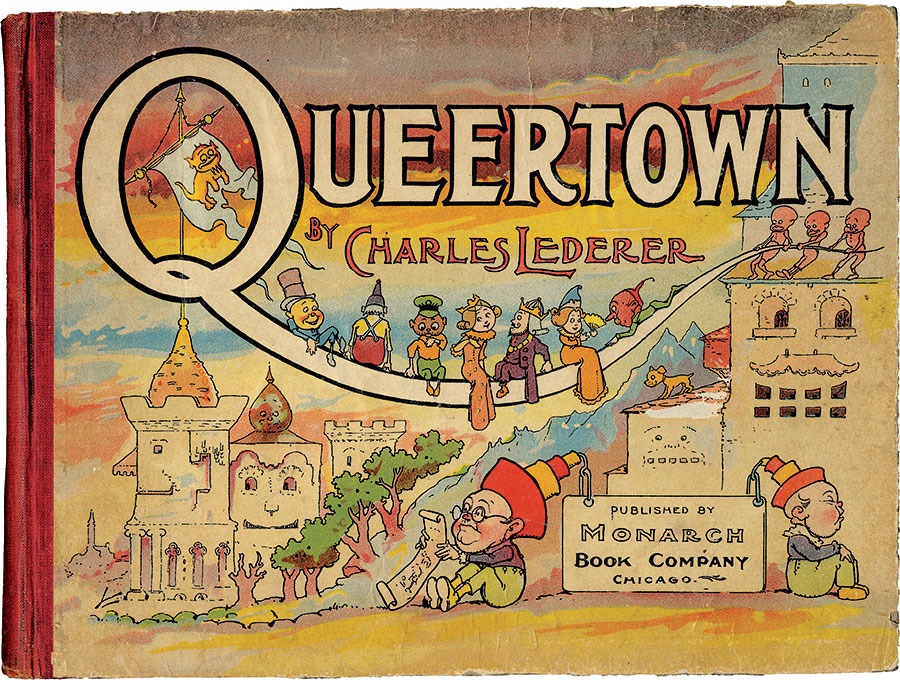
Charles Lederer, ‘Queertown,’ 1906
Charles Lederer, Queertown, 1906 Illustration: Courtesy of Chicago Department of Cultural Affairs and Special Events

Samuelson and Ware quickly realized that the entire history of comics in this city was too much to organize into one show, so they focused on the period covered by the Cultural Center exhibit. For its portion, the MCA brought on Brooklyn-based Dan Nadel, a renowned curator and author on cartooning. In the course of his research on Chicago’s Black cartoonists, he discovered far more material than he could include. As a result, he also compiled a collection of this underrecognized work: It’s Life As I See It: Black Cartoonists in Chicago, 1940–1980, which will be published June 1 by New York Review Comics. “It’s the first anthology of Black comic book artists anywhere,” Nadel says.

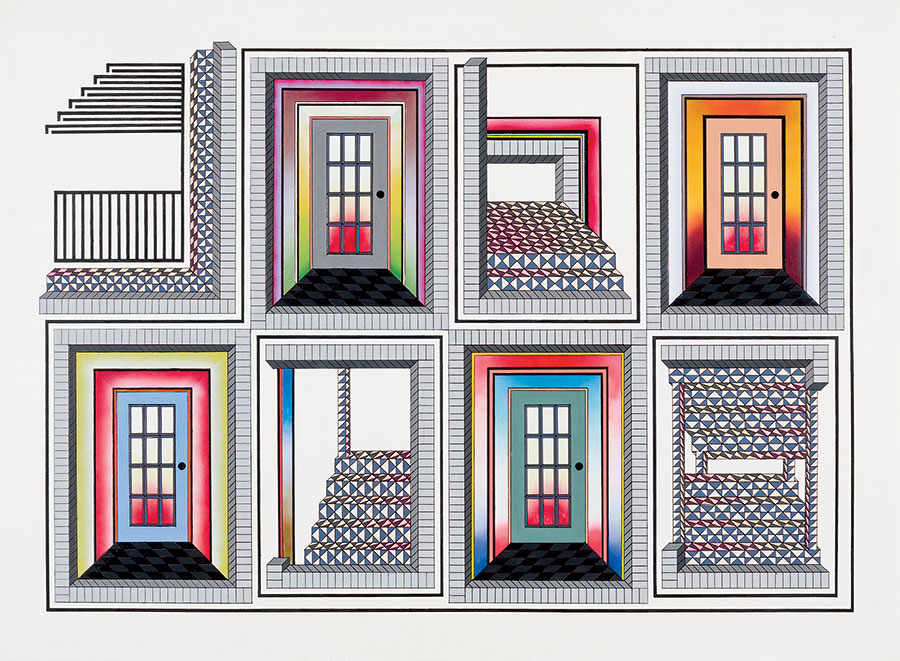
Edie Fake, ‘Dusk,’ 2015
Edie Fake, Dusk, 2015 Illustration: Courtesy of the artist and Western Exhibitions

The exhibitions themselves will showcase exclusive and rare material. At the Cultural Center, you’ll be able to see copies of the first color strips in America, taken from Chicago’s Daily Inter Ocean in 1893, and the Tribune’s first color comics section. The MCA will display cartooning from such famous Chicagoans as Kerry James Marshall and Daniel Clowes and have rooms dedicated to single artists. That includes one for Ware, who is designing it himself using, he says, “essentially the same approach as I have for the Cultural Center.”

And what approach is that? “Lifting how one reads the standard two-dimensional rat maze of comics into three dimensions,” he says. “I have no idea if it works or if it’s completely insane.”

Read More

Chicago, Comics Capital of the Worldon June 14, 2021 at 5:38 pm Read More »

University of Illinois goes full wokeon June 14, 2021 at 5:05 pm

The Barbershop: Dennis Byrne, Proprietor

University of Illinois goes full woke

Read More

University of Illinois goes full wokeon June 14, 2021 at 5:05 pm Read More »

How Should Business Owners Prepare for Flood Season?on June 14, 2021 at 4:57 pm

Small Business Blog

How Should Business Owners Prepare for Flood Season?

Read More

How Should Business Owners Prepare for Flood Season?on June 14, 2021 at 4:57 pm Read More »

Chicago Presents 16 exciting summer events in city neighborhoodson June 14, 2021 at 5:24 pm

Show Me Chicago

Chicago Presents 16 exciting summer events in city neighborhoods

Read More

Chicago Presents 16 exciting summer events in city neighborhoodson June 14, 2021 at 5:24 pm Read More »

Grant Park Music Festival returns to full capacity for 2021 seasonon June 14, 2021 at 4:30 pm

The Grant Park Music Festival on Monday announced it has removed all seating restrictions for its upcoming season, following the city and state’s lifting of all pandemic restrictions last Friday.

Beginning with the July 2 opening night concert at the Jay Pritzker Pavilion in Millennium Park, seating will be free (first-come, first-served) and at full capacity in the pavilion and the Great Lawn. Reservations are no longer required.

Artistic director and principal conductor Carlos Kalmar will return to lead the Grant Park Orchestra, with Christopher Bell directing the Grant Park Chorus, in an eight-week season running through Aug. 21. All concerts are free and will take place Wednesday, Friday and Saturday evenings at 6:30 p.m. Run time will be 90 minutes, without intermission.

The July 2-3 annual “Independence Day Salute” will incorporate a multi-media experience with video on two screens flanking the pavilion stage. The program will feature a host of traditional favorites including the “Armed Forces Salute,” the “1812 Overture,” “Stars and Stripes Forever” and selections from “West Side Story,” among others.

The festival had earlier announced restricted seating, including socially distanced lawn “pods” and pre-concert reservations for all concerts.

Read More

Grant Park Music Festival returns to full capacity for 2021 seasonon June 14, 2021 at 4:30 pm Read More »

Thinner Mints: Girl Scouts have millions of unsold cookieson June 14, 2021 at 4:44 pm

The Girl Scouts have an unusual problem this year: 15 million boxes of unsold cookies.

The 109-year-old organization says the coronavirus — not thinner demand for Thin Mints — is the main culprit. As the pandemic wore into the spring selling season, many troops nixed their traditional cookie booths for safety reasons.

“This is unfortunate, but given this is a girl-driven program and the majority of cookies are sold in-person, it was to be expected,” said Kelly Parisi, a spokeswoman for Girl Scouts of the USA.

The impact will be felt by local councils and troops, who depend on the cookie sales to fund programming, travel, camps and other activities. The Girl Scouts normally sell around 200 million boxes of cookies per year, or around $800 million worth.

Rebecca Latham, the CEO of Girl Scouts of New Mexico Trails, said her council had 22,000 boxes left over at the end of the selling season in late spring, even though girls tried innovative selling methods like drive-thru booths and contact-free delivery.

Latham said troops in her area sold 805,000 boxes of cookies last year; this year, they sold just under 600,000. That shortfall means the council may not be able to invest in infrastructure improvements at its camps or fill some staff positions, she said.

The council is now encouraging people to buy boxes online through its Hometown Heroes program, which distributes cookies to health care workers, firefighters and others. It also organized one-day sales with organizations like the New Mexico United soccer team, to whittle the total down further.

Parisi said Girl Scouts of the USA did forecast lower sales this year due to the pandemic. But coronavirus restrictions were constantly shifting, and the cookie orders placed by its 111 local councils with bakers last fall were still too optimistic.

By early spring, when troops usually set up booths to sell cookies in person, U.S. coronavirus cases were still near their peak. Hundreds of girls opted not to sell cookies in person. Online sales and even a delivery partnership with Grubhub failed to make up the difference.

As a result, around 15 million boxes of cookies were left over as the cookie season wound down. Most — around 12 million boxes — remain with the two bakers, Louisville, Kentucky-based Little Brownie Bakers and Brownsburg, Indiana-based ABC Bakers. Another 3 million boxes are in the hands of the Girl Scout councils, which are scrambling to sell or donate them. The cookies have a 12-month shelf life.

It’s unclear how much of a financial hit the Girl Scouts suffered because of the decline in sales since the organization won’t reveal those figures. And it isn’t the biggest blow the cookie program has ever faced. That likely came during World War II, when the Girl Scouts were forced to shift from selling cookies to calendars because of wartime shortages of sugar, butter and flour.

But the glut of cookies has laid bare some simmering issues within the Girl Scouts’ ranks. Some local leaders say this year’s slower sales should have been better predicted because falling membership was threatening cookie sales even before the pandemic began. Around 1.7 million girls were enrolled in Girl Scouts in 2019, down almost 30% from 2009.

“Without girls, there is no cookie program. Unfortunately, it took a global pandemic to bring all the problems to the surface,” said Agenia Clark, president and CEO of Girl Scouts of Middle Tennessee, a local council.

Clark and some other local leaders were able to avert a cookie stockpile because they calculated their own sales projections instead of relying on guidance from the national office. Clark believes a new technology platform adopted by the Girl Scouts isn’t adequately forecasting membership declines and their impact. In April, she sued the Girl Scouts of the USA because she doesn’t want to her council to be forced to use that platform.

Parisi acknowledged that membership fell during the pandemic as troops struggled to figure out ways to meet safely. But those numbers are already rebounding, she said.

There were other reasons for the declining sales. Some local leaders say they might have sold cookies this year but chose not to because of an Associated Press story linking child labor to the palm oil that is used to make Girl Scout cookies.

Gina Verdibello, a troop leader in Jersey City, New Jersey, said her 21-member troop, which has girls ranging in age from 10 to 15, decided to boycott this year’s cookie program and held a protest at their city hall. Verdibello said she knows of at least a dozen other troops that opted not to sell because of the palm oil issue.

“We want to sell cookies. It’s part of our thing. But this is putting kind of a damper on it,” said Verdibello, whose troop has continued to fund activities with donations from people who heard about their boycott.

Parisi said such boycotts weren’t widespread. But she said the Girl Scouts are working with the Roundtable on Sustainable Palm Oil, a nonprofit group that sets environmental and social standards for the industry, to ensure farmers are meeting those standards.

In the end, local councils won’t be held financially responsible for the 12 million boxes that remain at the two bakers. Little Brownie Bakers and ABC Bakers said they are working with the Girl Scouts to sell or donate cookies to places like food banks and the military. The bakers can’t sell directly to grocers because that might diminish the importance of the annual cookie sales. But they may sell to institutional buyers like prisons.

Parisi said bakers and councils have occasionally dealt with excess inventory before because of weather events like ice storms or tornadoes. But this level is unprecedented.

She said some pivots, like the partnership with Grubhub, are likely here to stay. But girls are also eager to get back to their booths next year.

“Girl Scout cookie season isn’t just when you get to buy cookies,” she said. “It’s interacting with the girls. It’s Americana.”

Read More

Thinner Mints: Girl Scouts have millions of unsold cookieson June 14, 2021 at 4:44 pm Read More »

Juneteenth celebrations: What to do where to go in Chicago and beyondon June 14, 2021 at 4:38 pm

June 19 marks Juneteenth, the true day of liberation in 1865 for the remaining enslaved African Americans, who were notified of their freedom on that date in Galveston, Texas.

Here are some Juneteenth celebrations planned in Chicago and beyond:

Abraham Lincoln Presidential Library and Museum, 212 N. Sixth St., Springfield: A rare copy of the Emancipation Proclamation signed by President Abe Lincoln will be displayed Tuesday through July 6. Admission: adults $15, kids 5-15 $6; presidentlincoln.illinois.gov.

The Abraham Lincoln Presidential Library and Museum's rare, signed copy of the Emancipation Proclamation.
The Abraham Lincoln Presidential Library and Museum’s rare, signed copy of the Emancipation Proclamation.
Provided

A. Philip Randolph Pullman Porter Museum, 10406 S. Maryland and 1900 W. Jackson: The ninth annual Juneteenth celebration kicks off at Malcolm X College. The Friday slate of the event includes a caravan parade route outlining the Great Migration trail to the Pullman Porter Museum and a panel discussion. The Saturday slate, which takes place at the Pullman Porter Museum, includes music and vendors. 10 a,m. to – 5 p.m.; Saturday 2-9 p.m. June 18-19. The event is free; facebook.com/events.

Juneteenth Jazz Celebration, New Mount Pilgrim Missionary Baptist Church, 4301 W. Washington Blvd., 2 p.m. June 19: honoring historian and educator Haki R. Madhubuti with a performance by Isaiah Collier & The Chosen Few. Free; register for tickets at eventbrite.com.

Beverly/Morgan Park Juneteenth Family Festival and Black business Crawl, 11000 S. Longwood Dr. and 2407 W. 111th St. (Beverly Arts Center): The event includes storytelling, art, drumming circles, food, and activities for kids, along with featured promotion of Black-owned businesses, 11 a.m. to 7 p.m. and Noon – 3 p.m (BAC location), June 19. The event is free; facebook.com/events.

CMPI Juneteenth Celebration, online: The Chicago Musical Pathways Initiative will host a virtual celebration of diversity in classical music coinciding with Juneteenth. The slate of performers will include composer Xavier Foley and bassist Joseph Conyers, 6:45 p.m. June 19. The event is free; app.mobilecause.com.

Eden Place Nature Center, 4417 S. Stewart: The Fuller Park venue will host a Father’s Day Juneteenth celebration, The picnic outing includes storytelling, and music from the 64th Street Drummers and the Nancy Green Team Performers, 1-3 p.m. June 20. The event is free; edenplacenaturecenter.org

Evanston’s Juneteenth Parade, 1801 Main, Evanston: This year’s parade, which has the theme, “A journey towards real reparations,” kicks off at the Robert Crown Center and proceeds north on Dodge Avenue to Simpson Street, east on Simpson Street to the Morton Civic Center. 11 a.m. June 19. The event is free; cityofevanston.org.

Fred!, online: The SPAA (Speakers Publishers & Authors Association) Theater & Performing Arts Center will host “Fred!” a virtual musical celebrating the life and times of abolitionist Frederick Douglass, 7 p.m. June 19. $10 cover charge; eventbrite.com.

The Garfield Park 1865 Fest Coalition, 100 N. Central Park: The Garfield Park 1865 Fest Coalition will host a three-day festival celebrating Juneteenth while honoring Black military veterans and those currently serving. The Saturday slate of events includes cultural workshops and a Sunday, live gospel concert. Garfield Park Fieldhouse, Friday 2-5 p.m.; Saturday and Sunday, Music circle, 11 a.m. to 8 p.m. June 18-20. The event is free. Registration for the military honors are available via Eventbrite.

Girl Scouts of Greater Chicago Area and Northwest Indiana, Walgreens, 3405 S. King Drive: The GCNWI is hosting a Chicago Neighborhood Walk in Bronzeville. The event will include a walk along the Bronzeville Hall of Fame along with food and snacks. 10 a.m. to noon. June 19. $2 cover charge. Internet registration ends June 16; activecommunities.com.

Harold Washington Cultural Center, 2701 S. Martin Luther King Dr.: The center partners with M.A.D.D. Rhythms and Bronzeville businesses for an in-person Juneteenth celebration including dance, DJ and live music, food, workshops, raffles, art and children’s activities. 1 p.m. June 19. Admission is free. Visit maddrhythms.com.

Jerk 48, 611 E. 67th: The jerk eats restaurant is hosting a block party with free food, a bounce house, giveaways and games, along with music provided by Chosen Few DJs member Wayne Williams. 2-5 p.m. June 19. The event is free; instagram.com/jerk_48.

Juneteenth yoga class, 1618 E. 53rd: Black-owned yoga studio, YogaSix, is offering a Juneteenth yoga class. All proceeds will go to a social justice nonprofit or the DuSable Museum of African American History, 10 a.m. June 20. Suggested $10 donation; yogasix.com.

Old Town School of Folk Music, online: The school presents a free stream of “Freedom Songs Juneteenth Celebration” featuring the Original Chicago Blues All Stars Revue, which includes members of blues great Willie Dixon’s band. The evening begins with singer-poet Ugochi and the Afro Soul Ensemble. Livestreams at 8 p.m. June 19. The event is free; oldtownschool.org.

The Woodlawn, 1200 E. 79th: The Chatham eatery and event space will host a Juneteenth Block Party featuring guest DJs, spoken word poetry, comedy, and light refreshments, Noon-10 p.m. June 19. The event is free; thewoodlawn1200.com.

Contributing: Mary Houlihan

Read More

Juneteenth celebrations: What to do where to go in Chicago and beyondon June 14, 2021 at 4:38 pm Read More »

Poll shows renaming Lake Shore Drive for DuSable not supported by majority of Chicago voterson June 14, 2021 at 4:51 pm

Mayor Lori Lightfoot has said repeatedly she’s “heard from residents all over the city” who don’t support renaming Outer Lake Shore Drive in honor of Jean Baptiste Pointe DuSable.

Now, downtown aldermen equally determined to block the change have produced a poll to support the mayor’s claim.

It shows 41% oppose the name change — including 28% who feel strongly about it — compared to 32% of those surveyed who support the change, including 19% who strongly. back the proposal.

Among the rest of those polled, 24% were undecided and 3% refused to answer.

The proposal to rename the Outer Drive was highest among African American respondents, but still short of a majority — 48%, compared to 32% among Hispanics and 25% support among whites.

DuSable, who was Black, was the first non-indigenous permanent settler in what is now Chicago.

The poll of 600 registered Chicago voters was conducted June 3-4 by FAKO Research and Strategies. Aldermen Brian Hopkins (2nd) and Brendan Reilly (42nd) paid the $12,000 cost with campaign funds. The margin of error was plus or minus 4.31 percentage points, so the difference between those who oppose it and those who support it is just outside that margin.

“We were both receiving a lot of feedback from people across the city who do not support changing the name of LSD. We wanted to see if that anecdotal evidence was indicative of broader public sentiment against changing the name,” Reilly wrote in an email to the Sun-Times.

“The poll confirmed our suspicions were true: most Chicagoans oppose the name change …Nearly 7 out of 10 Chicago voters currently do not support renaming Lake Shore Drive. In fact, the measure fails to garner even 50% support in any single demographic group or region of the city.”

Reilly previously had argued that the name change will require a “time-consuming and costly fix” for “tens of thousands” of Chicago voters and have “costly implications” for businesses, police and fire.

But Ald. David Moore (17th), who joined Ald. Sophia King (4th) in championing the name change, has said the combined cost to the city, state and CTA to change signs, maps and schedules totals $2.5 million.

Neither Moore nor Hopkins could not be reached for comment on the poll Monday, but King responded to the survey results with a taunting tweet at Hopkins.

“At first you were only opposed because your constituents would have to change their addresses. Now that that’s not the case you come up with some paid survey to tell you what you want to hear,” King tweeted.

Reilly noted the city has “already honored DuSable by naming Michigan Avenue Bridge as DuSable Bridge; installing the DuSable Bust on the Mag Mile; DuSable Harbor; DuSable High School; the DuSable Museum; and soon, building DuSable Park.

“Supporters of renaming the Drive are passionate in their mission and I applaud them for it. However, the poll shows that most Chicagoans do not share their vision,” Reilly wrote.

“I hope the Mayor & City Council can find a different option to properly honor Jean Baptiste Pointe DuSable as our city’s founder.”

Last month, an eleventh-hour parliamentary maneuver temporarily derailed the plan to rename Outer Drive in honor of Chicago’s first permanent, non-indigenous settler.

Moore has accused Lightfoot’s administration of trying to block the ordinance with an alternative he views as having “racial overtones” — renaming the Dan Ryan Expressway for DuSable instead.

Lightfoot has also offered to spend $40 million to complete DuSable Park, establish an annual “DuSable Festival,” rename the downtown Riverwalk in honor of DuSable and install monuments, sculptures and other public arts projects and educational exhibits in DuSable’s honor.

Lake Shore Drive, seen from the northbound on-ramp entrance at East 18th Drive.
Lake Shore Drive, seen from the northbound on-ramp entrance at East 18th Drive on the Museum Campus. The Chicago City Council is poised to rename Lake Shore Drive after Jean Baptiste Point DuSable. Ald. David Moore (17th) has said the combined cost to the city, state and CTA to change signs, maps and schedules to reflect the name change totals $2.5 million.
Brian Ernst/Sun-Times

King told the Sun-Times last week that the mayor’s offer is no substitute for a name change. She has argued that the votes were there last month to support the name change and that they will be there when the City Council meets again next week to forge ahead over Lightfoot’s strenuous objections.

“To come up with $45 million to not rename Outer Lake Shore Drive…is kind of insulting. It smacks of some of the same historical barriers…It really highlights the inequity in this city,” King said.

Lightfoot fears that changing the name of Chicago’s most iconic and picturesque boulevard — made famous in song and movies — could hurt marketing of the city and be costly and cumbersome for homeowners and businesses.

King doesn’t buy it.

She has noted that the same bogus arguments were made before Columbus Drive was renamed for Ida B. Wells after Italian-Americans blocked plans to rename Balbo Drive for the crusading journalist and civil rights leader.

“As a Black woman, you should understand that and know better,” King said of Lightfoot.

“In this day of Black reckoning and really trying to understand our history and stand up to all of the racial barriers of the past, this would be a great time to say that Chicago is a diverse city and we celebrate diversity and we understand that it only makes us stronger. And, oh by the way, this was our founder, who just happened to be Black.”

Read More

Poll shows renaming Lake Shore Drive for DuSable not supported by majority of Chicago voterson June 14, 2021 at 4:51 pm Read More »