After taking the top high school shortstop on day one, the Chicago Cubs focused on urgent needs on day two
On day one of an abbreviated MLB Draft, the Chicago Cubs added to their middle infield depth, taking shortstop Ed Howard from nearby Mount Caramel High School with the 16th overall pick. Howard is such a cool story because he’s local, and he also played for the Jackie Robinson West Little League team.
As noted, Howard now joins Nico Hoerner, Chase Strumpf, Aramis Ademan, and soon-to-be international free agent signing, Christian Hernandez as one of the most talented middle infield groups in all of baseball.
Shifting the focus to day two, we discussed that the Cubs needed to address the pitching and outfield situations, and they wasted no time. With their second-round pick, the north siders selected Burl Carraway, a reliever from Dallas Baptist University. The Cubs went heavy on relievers early on in the draft last year, but they really lack quality bullpen guys right now, especially lefties.
Carraway made 28 appearances last year and struck out 72 batters in 41.2 innings while also collecting six saves. Before the season was canceled, he made eight appearances, striking out 17 in just 9.1 innings of work. Watch for the 21-year-old to move quickly through the minors, potentially being added to the taxi squad of rosters, if and when there is a season.
The Chicago Cubs tabbed Michigan’s Jordan Nwogu as their outfielder of future with the third-round pick.
With just two outfielders in their top-25 prospects, the Cubs addressed a big need on Thursday, taking Michigan’s Jordan Nwogu. The Ann Arbor kid stayed home to attend one of the most respected baseball programs in the country. As a true freshman, Nwogu posted a .349/.442/.571 slash line with eight doubles, one triple, six home runs, and 29 RBI while also swiping 11 bases.
His plate discipline needed some fine-tuning, but he addressed that in a breakout sophomore campaign. In 2019, Nwogu posted a .992 OPS with 14 doubles, four triples, 12 home runs, and 46 RBI with 16 stolen bases and a 44-to-51 walk-to-strikeout ratio. He was on a similar path this year through 15 games before the shutdown.
RELATED PRODUCT
Chicago Cubs Bottle Insulator with Pocket & Opener
Here’s what Baseball America had to say about the Michigan product:
Nwogu earned a starting role midway through his freshman season and has been Michigan’s leadoff hitter for the past two years. Nwogu still looks like a football player (6-foot-3, 225 pounds) and he has plus-plus raw power and plus speed. Scouts are not all that excited about his funky swing–he gets good weight transfer and has plenty of bat speed, but it’s a very top-hand heavy swing
Let’s see if the Cubs will tinker with his swing or leave it alone.
I’m sorry, how hard does Luke Little throw?
105 mph. Not bad for a fourth-round pick. Luke Little is a big dude, standing at 6-foot-8, 240 pounds. He’s a draft-eligible sophomore who played his collegiate baseball at San Jacinto Junior College and has a verbal commitment to South Carolina in fall. He had a breakout campaign in 2019, making 17 appearances – including six starts – while striking out 69 batters in 35.1 innings (17.6 K/9). He posted a 2.04 ERA during that span, but he’ll need to fix his command a bit, as he allowed 36 walks as well.
What to look for in Koen Moreno
I guess first and foremost is will Moreno sign? He has already signed his letter of intent with East Carolina, and he’s definitely at the underslot here with a slot bonus pool of just $367,900. At age 18, he reportedly already throws 94 MPH, which should only increase as he continues to fill out his 6-foot-2, 170-pound frame.
Ranked as the 128th best prospect, according to Baseball America, scouts love that he has the natural ability to put spin on the ball. His fastball is his bread and butter pitch right now, but he complements it with an average curveball and changeup.
He could be a tough sign away from East Carolina, where many scouts believe he could end up being taken within the top three rounds, especially once the draft expands to 40 rounds again.
EDMONTON, AB – FEBRUARY 11: Dominik Kubalik #8 of the ChicagoBlackhawks skates against the Edmonton Oilers at Rogers Place on February 11, 2020, in Edmonton, Canada. (Photo by Codie McLachlan/Getty Images)
The Chicago Blackhawks need Dominik Kubalik to have a chance in the playoffs.
It was a bit uncertain how Chicago Blackhawks forward Dominik Kubalik would do in his rookie season. It was fair to assume that he would have a pretty good year, especially in the goal-scoring department, based on his resume but he probably exceeded expectations. Exactly three months ago yesterday, the Hawks played their last game of the season before COVID-19 put an end to the regular season and Kubalik scored his 30th goal in the win.
Kubalik was rock solid in 2019-20 and deserves a lot of credit for the Hawks even making it to the 24 team playoffs. His 30 goals made him only the fourth Blackhawks rookie to reach the 30 goal plateau. Only Steve Larmer, Darryl Sutter, and Artemi Panarin had done it before him.
He should be getting some Calder Trophy (rookie of the year) consideration for his efforts. He won’t win it because it is a two-horse race between Cale Makar of the Colorado Avalanche and Quinn Hughes of the Vancouver Canucks but seeing him get some top-three consideration would be lovely. There is a good chance that he receives some top-three votes and will almost certainly finish in the top-five.
The Blackhawks need Kubalik to hit the ground running again when the playoffs start in order to have a chance. You know exactly how the stars are going to perform but a lot of these guys like Kubalik have never experienced the playoffs. If he is able to score goals at the pace that he was before the season ended it would go a long way in Chicago’s chances.
Kubalik and the Hawks are going to match up against the Edmonton Oilers. They are a high flying team so that could help him in his offensive game. He is going to get his chances to score, especially since his regular-season success has earned him a spot on a top-six line.
Senior running back Jeff Proctor (7) will be the top candidate to replace standout James Robinson this season. (Photo by Barry Bottino)
The last time we saw Illinois State on the football field, James Robinson’s immense talent was on full display.
The second-leading rusher in ISU history was plowing through defenses on his way to 601 yards in three FCS playoff games.
“James is obviously a great player and very tough,” ISU head coach Brock Spack said in an interview with Prairie State Pigskin. “We really rode him through the playoffs pretty hard. He’ll be hard to replace.”
With Robinson off to the NFL’s Jacksonville Jaguars, the question is who’s next to step into the spotlight for ISU?
With the 2020 season opener in Champaign against Illinois a mere 12 weeks away (fingers crossed), the Redbirds are not lacking for talented candidates, according to Spack and running backs coach Khenon Hall.
But one player won’t replace Robinson this season. Instead, Spack said ISU will rely on a group approach.
“It will probably be done by committee,” he said. “We probably have five, six backs that are going to be really good players.”
As a whole, the group will look slightly different than Robinson in one aspect.
“We’ll probably be faster there,” Spack said. “James was very explosive, and we’ve got a couple of guys that have explosive power.”
Let’s take a look at several of the candidates for the Redibirds:
Proctor moves to leading man role
Jeff Proctor
If the ISU backfield is a committee, there’s no doubt that 5-foot-8, 185-pound senior Jeff Proctor is in the chairman’s seat.
“He’s going to be the bell cow,” Hall told Prairie State Pigskin.
Proctor, who was the No. 2 back behind Robinson last season, is now seven months removed from a season-ending knee injury he suffered in November against Missouri State.
Last season, his first at ISU after transferring from the junior college ranks, Proctor ran for 4.2 yards a carry as the team’s second-leading rusher (112 carries, 472 yards). His shifty style was a nice compliment to Robinson.
Proctor ran for 70 or more yards in three games, including a season-high 85 yards against Indiana State.
Here are five other potential candidates:
Kevin Brown, Sophomore, 5-8, 170
Brown, who hails from East St. Louis, had 22 carries last season as a redshirt freshman, with eight of those carries coming in a playoff win against Southeast Missouri. He gained 30 yards in that game while giving Robinson a breather.
The biggest game of his career though, was when he scored two touchdowns and rushed for 41 yards in the 2018 season finale against Youngstown State.
“He’s a confident runner,” senior offensive guard Gabe Megginson said. “That guy came in against Youngstown and he was running like he’d been there for years.”
Pha’Leak Brown, Redshirt freshman, 5-10, 200
While Proctor and Brown are smaller, quicker backs, Pha’leak Brown adds a different dimension.
“Pha’leak is a bigger back,” Spack said. “We’ve got other guys who are more scatback kind of guys.”
A South Carolina native, Brown rushed for 30 touchdowns and more than 1,500 yards as a high school senior.
“He reminds me of a younger James Robinson,” Megginson said. “He’ll put on some moves. He’s a little more shifty.”
Cole Mueller, Redshirt freshman, 6-0, 190
As a scout team player last season, Mueller intrigued coaches and teammates with his speed and quickness. Hall went as far as calling Mueller “a young shining star.”
“Cole is a guy we’re really curious about because he’s got really good straight-line speed and he’s a bigger back,” Spack said.
As a high school senior in Wentzville, Mo., west of St. Louis, Mueller ran for 85 touchdowns in three years as a starter, including a state-record eight TDs in a game as a junior.
“He’s so quick,” Megginson said. “He just takes the ball, and nobody knows where he’s going.”
Melvin Pettis, Junior, 5-8, 175
When Megginson sees Pettis, who played high school play at Warren Township in Gurnee, he sees toughness.
“Melvin is gritty,” Megginson said. “He’ll bang around for a couple, five or six yards.”
Pettis began his career at NAIA St. Ambrose in Iowa. He played in nine games there in 2017, rushing 55 times for one touchdown and a 3.3 yards per carry average.
Nigel White, Redshirt freshman, 5-9, 165
The lightest back on the ISU roster, White played in two games last season as a redshirt, carrying the ball once.
Playing at Florida powerhouse St. Thomas Aquinas, White rushed for 13 touchdowns over his final two seasons in high school.
“Nigel is special as well,” Hall said.
As a whole, the group offers different options for the ISU offense.
“We’ve got different types of guys, different body types,” Hall said. “We’ve got guys who do different things (well). We’ve got a well-round backfield. They lack game experience, but practice and film helps those guys to continue to develop.”
Blog co-authors Barry Bottino and Dan Verdun bring years of experience covering collegiate athletics. Barry has covered college athletes for more than two decades in his “On Campus” column, which is published weekly by Shaw Media. Dan has written four books about the state’s football programs–“NIU Huskies Football” (released in 2013), “EIU Panthers Football (2014), “ISU Redbirds” (2016) and “SIU Salukis Football” (2017).
Gigi and Posty are a pair of companionable guinea pigs looking for loving guardian together. Gigi is a two-year-old agouti grey and white crested or crowned guinea pig; her friend Posty is a one-year-old Abyssinian tri-color guinea pig.
These girls get along well and share a large cage full or hay and fun things to eat and play with.
They make fabulous whistles, squeaks, wheeks and pops – Especially when they hear their food coming.
Guinea pigs eat a diet of unlimited Timothy hay or Orchard hay – in fact, hay is 75 percent of a guinea pig’s diet. They also eat limited pellets, and fresh greens and veggies including romaine, red leaf and green leaf lettuces, cilantro, parsley, carrots, cucumbers, oranges, apples, bell peppers, etc.
Please read up on guinea pig care and diet before adopting by visiting this excellent web site http://www.guinealynx.info/.
They would love a home with a family who will handle them daily, keep them well fed, and keep their habitat nice and clean. They love to come out of their cage daily for supervised exercise around the house and to be held.
If you’re interested in meeting and possibly adopting Gigi and Posty, please contact [email protected] for an adoption application.
They are being fostered in Chicago’s Andersonville neighborhood.
Their adoption fee of $70 as a pair benefits the Friends of Petraits Rescue. For an additional $100, we’ll include a kit of everything you need to care for them including a large cage, hay, litter, food, treats, hidey hut and water bottle.
I’ve been critical of the several previous draft classes run by Jason McLeod under the Theo Epstein and Jed Hoyer regime for their lack of focus on power arms and bats. I understand going safe with some picks, but they had a tendency to go safe on all but a couple of picks per year. Sure, they’d roll the dice on an overslot prep arm or bat in the middle rounds every year, but that seemed to be about as far as they would stick their neck out. That approach, more than anything, is what is responsible for the lack of success the Cubs have had developing players chosen outside the 1st round over the last eight years.
They recognized their mistake two years ago and began to draft for greater upside in a handful of picks in each of those drafts, but it seems clear after new VP Dan Kantrovitz finished his first draft last night, he is not going to be near as conservative. After choosing the top prospect at the premium infield spot in the 1st round on Wednesday, he transitioned toward a focus on bigtime power arm and bat upside with his final four selections on Thursday.
2nd Round
LHP Burl Carraway – Dallas Baptist
Ht: 6-0 | Wt: 173 | B-T: L-L
A wiry strong lefty with one of the top fastball-curve combos in the draft class, the only reason Burl Carraway didn’t go in the 1st round is he is limited to a relief role. But he is considered the premier reliever in the class and potential closer. His
Mid-to-upper-90s heat and hard-biting curve allow him to blow hitters away with regularity. They are both nasty (70 grade each). Carraway has only thrown 41.2 career innings, but he’s recorded 72 punchouts in that time. He struck out more than half of the left-handed batters he faced in 2019.
Kyle Peterson says that Burl Carraway is capable of being in the #Cubs bullpen this year. High velocity and a big curveball from the left side. pic.twitter.com/VBclrvgDM1
His delivery has some effort, and there are issues throwing strikes (39 BB). If there is one thing that could hold him back from fulfilling a late inning role it is that. His fastball and curve should play against hitters from both sides.
3rd Round
LF Jordan Nwogu – Michigan
Ht: 6-3 | Wt: 235 | B-T: R-R
There aren’t many size, speed, strength combos from the collegiate ranks than Jordan Nwogu. He’s produced well, mostly serving as Michigan’s leadoff man, but there is untapped power potential. He’s already begun making adjustments to his swing, but he figures to be a work in progress for a while. His swing is geared to go the other way, so he’ll need to learn to turn on the ball more in order to unlock all of his power.
Here are some swings over time from Jordan Nwogu, borrowed from our friends @TheProsPipeline@d1baseball@2080ball@tedcahill. The first two from 2019. The third from Feb 2020, the last from Nwogu’s final weekend. Lots of changes to set-up and load, clearly takes well to coaching pic.twitter.com/HctcKasm51
— Cubs Prospects – Bryan Smith (@cubprospects) June 12, 2020
.@Cubs 3rd round pick Jordan Nwogu has serious pop
His defense is not considered a strength. There is a history of adventurous routes. Michigan had good outfield depth so Nwogu was even used as a DH on a regular basis. He doesn’t throw well, so left field is likely where he ends up despite his speed.
Nwogu was a straight-A student as a prep, along with being a defensive end/linebacker who received multiple FBS football scholarship offers. Instead, he chose to accept an academic scholarship to concentrate on baseball for the Wolverines.
4th Round
LHP Luke Little – San Jacinto (Texas) JC
Ht: 6-8 | Wt: 225 | B-T: L-L
There may be no harder thrower in the 2020 draft than Luke Little. While he worked in the mid-to-upper-90s in game action over his career, he’s posted recent video which features him hitting up to 105 on the gun.
The #Cubs selected Luke Little, who has a big, big arm.
There’s lots of risk to go along with the upside. Little has struggled mightily throwing strikes in the past, but after dropping 30 pounds last winter he reportedly showed small sample size (5 G, 9 IP, 3 BB, 17 K) improvement in repeating his delivery and throwing strikes. He backs up his fastball with a low-80s slider, as well as a curve and change. He’s raw, but if he can stay in shape, he may be able to capitalize on his big arm.
Even if that is a hot gun in those videos, there are just not many left handed humans on the planet capable of hitting triple digits, and 6’8″ is intimidating on the mound. Little is going to be a big test for the Cubs Pitch Lab over the next couple of years.
Cubs take Luke Little, who reportedly hit 105 mph in a recent bullpen session. Kiley McDaniel fears he’s just a big arm guy without command and secondaries.
But he’s a 6’8″ lefty that can throw over 100 mph. Get this guy in the pitching lab, maybe he becomes a thing. pic.twitter.com/0dM7hZlCdY
A highly athletic prep arm with low mileage, Moreno was topping out in the 93-94 range last fall and is expected to continue adding a few more ticks of velocity in the coming years. He’s known for generating high spin rates on his curve, so with refinement there is hope it develops to become plus. Add in good current feel for a changeup and Moreno could end up with at least three above average pitches.
Cubs 1st round pick, Ed Howard vs Cubs 5th round pick, Koen Moreno
Listen to players’ perspectives of Tiger Woods and watch some of his highlights from his nine-win 2000 season in which he claimed the year’s final three majors (U.S. Open and The Open Championship and PGA Championship).
Whether I’m organizing things or just trying to figure out when something started or how long it may last, I tend to use either a year (in case I need to look it up in a diary) or, if I can’t be specific, before or after an event in my life. For instance, I’m not sure of my sofa’s exact age, but I know that my mother sewed the blue velvet armrests for it. She gave up sewing when her last illness began in 1998. (Hang in there, sofa!) So that gives me a specific enough time period, late last century but before ’98.
The past two years have been littered with milestones for me, good and bad. Two of the more specific milestones are my father’s death in March 2018 and the novel coronavirus and its shelter-in-place order, which began just after the anniversary of Dad’s death. So these two years and things that I have done or acquired will be easy to label, I catch myself thinking — before or after Dad’s death and, if after, before or after… what?
This time in our lives may wind up with as many names as the dog in the picture — terrier, Jack Russell, Parson Russell, or just dog.
I won’t use the phrase I hear in so many radio ads, “this challenging time.” That’s not enough difference with last year (or many other periods in anyone’s life).
“This mess” appeals… but again, it may not be specific enough!
Sometimes I catch myself thinking of “before the virus.” But I’ve caught other viruses in my life (not COVID-19, I’m glad to say), and one laid me (un)fairly low back in 1988. For many years, I thought of that time as The Virus, with the same capital-letter voice that my parents used for The War. I’m glad that’s gone, and although I think of some things as “closed due to the virus,” I don’t confuse them with 1988.
“The Shutdown” works well — again, with that capital Seriousness that appeals, although The Shutdown as an event (or series) doesn’t.
Before Corona or During Corona seem to fit, but they sound like fighting the virus itself, like “what I like to do to feel better when I have the flu.” (I know, I know, it’s worse than flu — that’s just my comparison.) After Corona sounds a bit like drinking beer, anyway, which I don’t.
For a “before Corona’ comparison, just look back here and here to the idea I had around Jan. 1 that our main problem in 2020 was going to be jokes about vision.
I was reading the news then about China, but I didn’t see all of this coming. Hmm, “all of this.” Nah, it is as un-specific as “this mess.”
I think I’ll go with “before the virus shutdowns” with matching “during” and (oh, pleeeease) “after” expressions. Feel free to debate in the comments.
Margaret Serious has a page on Facebook.
Time for the whatchamacallit, subscription instructions!Type your e-mail address in the box and click the “create subscription” button. My list is completely spam-free, and you can opt out at any time.
I moved to Chicago from the south suburbs in 1986. I have diverse interests, but I love writing about what I’m interested in. Whether it’s a personal interest or part of my career, the correct words to get the idea across are important to me. I love words and languages — French and Scottish words enrich my American English. My career has included years as a journalist and years working in museums, and the two phases were united by telling stories. I’m serious about words and stories. So here I am, ready to tell stories about words and their languages.
Last month was our twelfth wedding anniversary. I would have posted about it, but it was a difficult week. He had just finished radiation, just started new chemotherapy, and we had begun to have overnight nursing care come so I could sleep. We were approaching the last days of school.
I wanted to write about how much I love this man. How much I appreciate him. How kind and how good and how damn noble he is. How self-sacrificing. How humble. How sweet. How loving. How strong. If there has ever been a better man than my husband, I never met him.
Only, there isn’t a lot of romance in a quarantined, convalescent celebration. We watched a few movies, drank a bottle of champagne, and reminisced about old times. We held hands and joked and kissed, and the world outside continued its unending campaign of chaos. We both ordered each other presents that didn’t arrive. We ate brunch foods until we nearly exploded.
I’ll write about our anniversary in a few weeks, when he’s well enough to celebrate properly, I thought.
That was May 23rd. On May 25th, George Floyd was murdered in Minneapolis. And my home, full of Twin City suburbanites, was plunged into new levels of anxiety. I couldn’t write about my husband then, as the protests spread, as white supremacist rioters destabilized and antagonized, as my friends were brutalized by police in Chicago and New York and Seattle.
I wasn’t going to post anything.
Only so much has happened.
The oddly comforting thing about going through this kind of personal trauma while the world is collapsing into disaster after disaster is that everyone is in the same emotional state as you. During Mike’s previous bouts with brain surgery, I’ve felt that I’m standing alone. Can’t you see the world is on fire? I would silently ask, as people went about their days normally, unaffected, unharmed, and unconcerned.
Not now. As Mike’s condition has gotten more and more complicated, so too has the rest of the country.
Since our anniversary COVID-19 cases have spiked dramatically. Protests have established and maintained in every state. Trump had clergy gassed for a photo-op. J.K. Rowling doubled-down on transphobia. Obama delivered a commencement address. There were murder hornets for a hot minute. A spread of five asteroids barrelled towards the earth.
But in our house, different chaos has reigned. Last week Mike had his fifth brain surgery, without pomp or circumstance or significant warning. I drove him to the hospital through police barricades, past military police vehicles, through the secret underground of downtown Chicago. I spent two days kettled in downtown while police rounded up anyone “not supposed to be here.” Mike’s doctors wrote me a note to hand to military police in case I was picked up, explaining that I was needed at the hospital, essential.
And this week, after beginning to make a comeback from his brain surgery and the symptoms that led to it, his pulmonary embolism from March grew and threw a clot. And now here we are, in the hospital again.
There are windows boarded up in the buildings around the hospital. Grocery stores restocking. And there are people without masks wandering around as though COVID-19 is gone. And there are people in masks keeping their distance from everyone else.
It’s as though the hospital is a singularity, warping time in waves around it, and all the possible timelines that could have been are, all at once, now. It feels like the epicenter of an apocalypse, but I don’t know which one it will be.
Will it burn? Will it be overrun by the sick and dying? Will another storm blow it away? Will a meteor fall from the sky and obliterate everything around it?
Since Mike first got sick, I have been saying the same thing. None of us know when we will die, although we all know we will. The only difference between loving somebody with a terminal disease and loving somebody without is that you know. You know they will die, and it’s a thing we usually try so hard to ignore.
People all over the country, all over the world, are opening their eyes to a day where somebody they love may die. From COVID-19. From police brutality. From murder hornets. Every day, today could be the day that the dying starts in earnest.
This has been my life for almost thirteen years, and I have loved my life. I have spent those thirteen years with the best man. With the best love. With near-constant happiness, and joy, and pride, and delight, and ecstacies of the heart, body, soul, and mind. I have had the most incredible life. This was not our best anniversary. This is not our best year. This is probably one of the top three worst weeks of Mike’s life. It’s definitely in my top five. But when we spent seven hours in the ER, waiting and waiting and waiting on pain management for some of the worst pain Mike had ever experienced, when nothing could touch it and he couldn’t breathe and he was scared and I was being calm and taking charge of his care, I could sing to him. I could sing him every song from our wedding mix, the favor we gave all our wedding guests, to make him smile and laugh and sing along no matter how much it hurt, and keep his O2 saturation high enough to be safe.
Mike is stable, his clots aren’t going anywhere right now. He’s on blood thinners and they’re managing his pain, but he’s not coming home in the next few days. I don’t know how long Mike has in the hospital. I don’t know how long Mike is going to live. I don’t know how long any of us will live. But I am here, loving him, as is almost the only thing I can do.
Lea Grover scribbles about sex-positive parenting, marriage after cancer, and vegetarian cooking. When she isn’t revising her upcoming memoir, she can be found singing opera, smeared to the elbow in pastels, or complaining/bragging about her children on twitter (@bcmgsupermommy) and facebook.
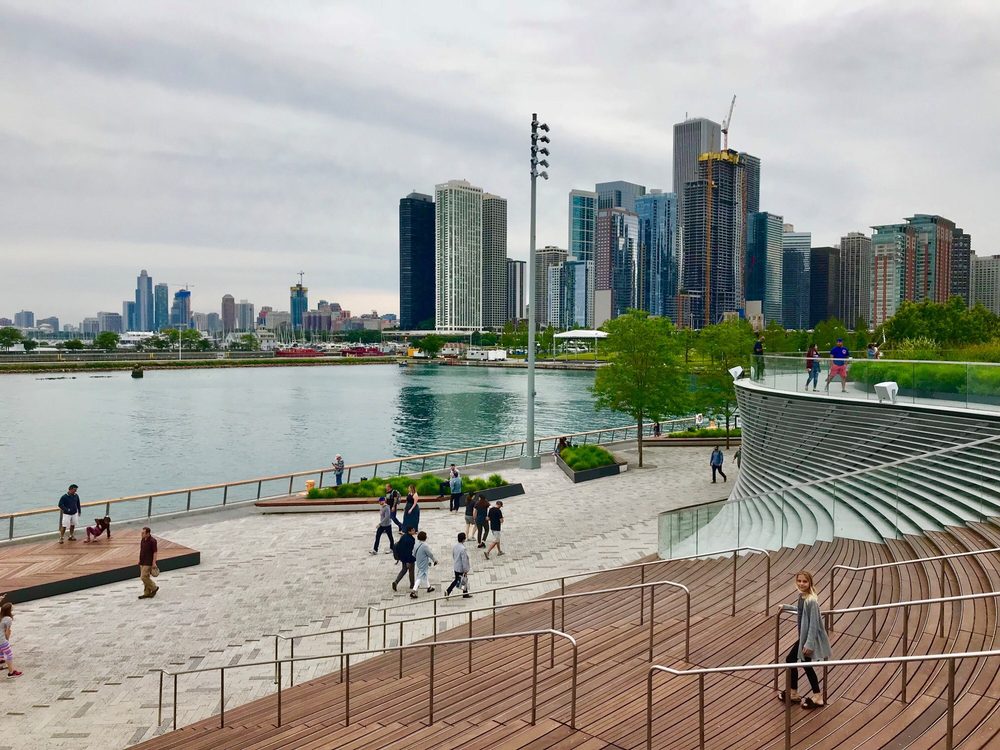
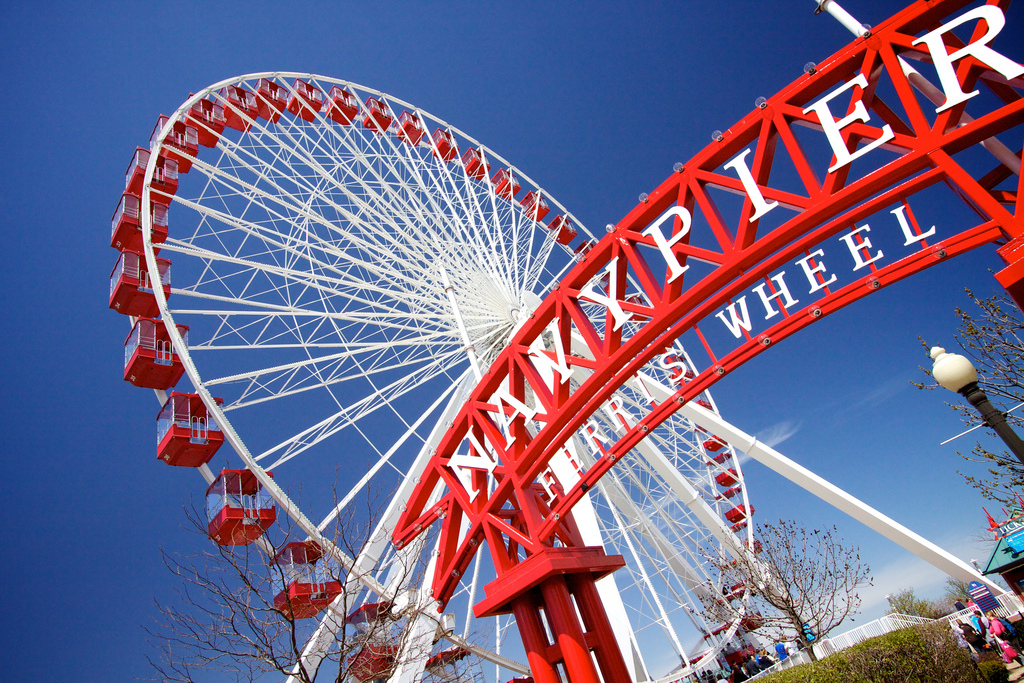
As of yesterday, Chicago’s iconic Navy Pier reopened some of its attractions, patios, and outdoor spaces back to the public. Since the onset of COVID-19, Navy Pier hasn’t been open since March 16th. With the cancelation of so many other Chicago summer staples, the return of this Chicago classic is a welcome one.
Photo Credit: Maggie Daley Park
View Open Drive-In Theaters, Libraries, and Parks in Chicago
Itching for a movie on the big screen? Looking for a good book? Check out drive-in theaters, libraries, and more, open now in Chicago.
Parallel to the way that Illinois has been moving through different phases of operation as coronavirus plays out, Navy Pier is entering the first phase of its reopening plan. According to Marilynn Gardner, President and CEO of Navy Pier, this is one of the longest closures the Pier has seen in recent history.
Advertisement
To ensure the safety of all guests, employees will be wearing masks or coverings in public spaces and prior to their shifts, their temperature will be checked. In accordance with state laws, gatherings of 10 or more people will not be allowed on patio spaces. On the Pier property and within the parking garages, more than 75 hand sanitizer dispensers have been installed for guests.
Photo Credit: Navy Pier Yelp Page
Across the area, signs will demarcate the appropriate spacing for groups of guests to keep between each other. All guests over the age of two are required to wear face masks that cover both the nose and mouth. Don’t worry if you forget yours at home; Navy Pier will have masks available for purchase for guests that have forgotten their masks at home or misplaced them. Navy Pier has made it clear that anyone violating these rules and putting the safety of employees and/or others “will be subject to removal from the premises.”
Advertisement
Photo Credit: Offshore via Heron Agency
Areas available and open to the public are the Navy Pier parking garages, East End Plaza, tour boats, Polk Bros Park, Peoples Energy Welcome Pavilion, Pier Park, North and South Dock, select outdoor restaurant spaces such as Tiny Tavern, Margaritaville Chicago, Billy Goat Tavern, and Offshore Rooftop & Bar. Other select free programs will also be available. Bottle filling stations will be operating, but no public drinking fountains will be available for us.
Photo Credit: Navy Pier
It should be noted that no Navy Pier rides will be in operation at this time, but the Pier has laid out some protocol guidelines for when the rides do resume ‘normal’ activity. Included in these guidelines are timetables to consistently and frequently sanitize all digital ticketing screens at kiosks, putting Centennial Wheel riders in gondolas with guests only in their party, and utilizing only three of the six teacups at a time to ensure physical distancing and limited exposure time per teacup at a time. Expect the Centennial Wheel to halt operations for fifteen minutes every two hours for a complete sanitary wipedown.
Advertisement
Operations for Navy Pier as a whole will run from 10 am to 8 pm, while hours may vary from restaurant to restaurant. Interior spaces like the Chicago Shakespeare Theater and Chicago Children’s Museum are to remain closed for Phase 1.
All of the guidelines, safe practices, and more, can be found in full detail on Navy Pier’s website. Even though this is only Phase 1 of their reopening, there’s plenty available to guests to allow for an enjoyable visit with friends and family. What do you want to see open in Phase 2? Let us know in the comments below!
Advertisement
At UrbanMatter, U Matter. And we think this matters.
Advertisement
Tell us what you think matters in your neighborhood and what we should write about next in the comments below!
3 comments