What’s New

The Beauty of Your Face isn’t afraid to get uglyon July 22, 2020 at 4:50 pm

Sahar Mustafah’s novel, The Beauty of Your Face, is the story of Afaf Rahman, the middle child in a Palestinian American family struggling to make its way in Chicago. It’s bookended by a terrorist attack on a Muslim school for girls, with final chapters that are likely to leave you discomfited, but the heart of it is a coming-of-age journey among characters both unexpected and recognizable. Published in April by W.W. Norton, it’s the first novel for Mustafah, whose collection of short stories, Code of the West, came out in 2017. (She’ll discuss it at a Women & Children First virtual event at 7 PM, August 5.) Here’s an edited version from a phone interview last week.

Deanna Isaacs: This is a story steeped in Palestinian American culture, but it’s also a real Chicago book; how did that happen?

Sahar Mustafah: This is not autobiographical, but the settings are obviously super familiar to me. I was born in Chicago, and I went to St. Simon the Apostle, on the south side; it was the neighborhood Catholic school. We were the only Arabs and the only Muslims in that school. When I was ten years old we went overseas to Palestine. We were there five years, which was formative and probably the first time I felt like I belonged. There were many expats like me; we all went to an incredible school founded by American Quakers. I came back to Chicago as a sophomore at Gage Park High School, and graduated from there.

Afaf has trouble at school and more trouble at home; her stomach “knots up” when she thinks about her mother. What’s up with that character?

She’s not the kind of mom that a child deserves. I was imagining her as someone incredibly broken. She’s displaced from her country when they immigrate, and then she loses her firstborn. So grief takes its toll on her, and that trickles down to the relationship with Afaf. She comes off as incredibly harsh, but what I intend to do with almost everything I write is to have readers understand where characters are coming from. I’m not interested in justifying behaviors. I’m interested in what are the choices that we make, the forces that carry us along? And that can be said for the shooter, which is why I include him. I’m also defying that trope of the Palestinian mother who tends to suffer and is basically abused by a domineering husband.

That’s just one of the ways in which this is not the story readers might expect; did that make it hard to find a publisher?

In the industry it’s important for publishers to package books–they’re only letting in certain narratives. Books by Arab American writers are relatively limited; I felt a responsibility. I just didn’t want to continue to inflate the stereotypes. I’m heartened by readers who’ve reached out to say they hadn’t read this before.

Without going into spoiler territory, can you talk about the ending?

I’m an optimistic person, but I’m also resisting making audiences, particularly white audiences, feel hopeful and good. My endings are always in service to the experiences of my characters. I had rejections with notes about how I needed to drop the shooter, which really infuriated me. I thought it seems like the industry’s just going to reject it because they don’t want me to tell this story. I don’t give the shooter time; I don’t allow him a confession. I think it’s wrong to even speculate beyond “OK, here’s how he became radicalized.” I don’t have answers. I’m not trying to solve the problems of the world. But I like to think that after reading this a reader is going to have shifted a little bit maybe in their thinking.

Will we hear more about this family?

No, at least not for the time being. I just finished a first rough draft of a second novel; it’s such a strange time to release a book, in the pandemic. Thank goodness I had this other project. I need to let this book go on its journey among readers, and I need to continue to write. v


Read More

The Beauty of Your Face isn’t afraid to get uglyon July 22, 2020 at 4:50 pm Read More »
Looking to enjoy art offline?on July 22, 2020 at 4:15 pm

I’ve been enjoying the virtual aspects of my art-viewing experience the past few months. People got a little experimental; they had to think outside of the box to get folks to view work. I, by no means, plan to attend opening receptions or risk my health to commute around the city to check out art on a wall, but now that physical spaces are reopening I will travel to a gallery or two to see a show if proper regulations are put into place (like I did with Western Exhibitions).

This weekend I took a little trip up to Andersonville and when I passed by a bar, I heard people screaming and cheering. From. The. Inside. It was like normal times. I had to pause and peep inside. urely I wasn’t imagining this. Sure enough, there was a drag queen spinning around a pole in a Dolly Parton wig. Masks were nowhere to be seen as folks were packed in the tiny place. Horrified, I continued walking.

It’s no wonder everyone else is feeling the pressure to reopen. If we can hoot, scream, and cheer, why wouldn’t the masses flock to everything else? If they are doing it, why can’t we? It starts as a trickle and becomes a flood. Before I could even blink, I was getting e-mail notifications about museums and galleries reopening. While I may not personally be rushing to step inside (although my experience at Western Exhibitions almost makes more sense than walking down a busy neighborhood street), it seems a lot safer and justifiable than ordering a cheeseburger and swapping flying particles of spit with the table next to me.


If you’re looking to get outside of your house and into a new white-wall setting, here are a few places where you can do so safely.


Dank Haus Gallery

The German American Cultural Center Gallery is having its first public event with the Chicago Alliance of Visual Artists (CAVA) since the pandemic started. “Urban Lives/Social Fabric” will open with the theme of how artists cope, view, and emotionally traverse turbulent times. The artists involved in the group show focus on the city’s industry, Chicago neighborhoods, festivals, and the diversity that make up the city. The opening of the reception will adhere to strict mask requirements and hand sanitizing stations. Located in the heart of Lincoln Square, the gallery requires visitors to RSVP to the exhibition’s two reception sessions, which are Fri 7/24, 5 PM-6 PM and 6:30 PM-8 PM.


Corbett vs Dempsey

After closing in mid-March, Corbett vs. Dempsey will be reopening with a new group show called “Cosmic Meteorites & Other Burners.” John Corbett says, “We are cautiously excited to reopen because making exhibitions in real space is what we do. There is no substitute for the experience of art in person.” Over the course of the pandemic, the gallery had various virtual initiatives as well as a series of online exhibitions called the “Big Dig,” which look at the archives of artists like Rebecca Morris and Karl Wirsum. The new group show looks at the idea of transition or transformation. Corbett says, “It was inspired by a group of ‘burners’ -ceramic objects meant to emit smoke during performance processions–by Cauleen Smith, as well as a glass-based sculpture by Josiah McElheny that consists of a beautiful blue ‘meteorite’ housed in a blue glass case. All the work in the show, somehow, has a kind of defiant radiance.” Visitors to the gallery will be required to wear a mask, make an appointment, and capacity will be limited to four folks in the gallery at a time. The exhibition runs through 8/29.


Art Institute of Chicago

After working throughout the pandemic on how to eventually reopen, the Art Institute announced its opening slated for Thu 7/30 with an exhibition of work by Malangatana Ngwenya, the pioneer of modern African art. The Art Institute invites visitors to purchase tickets in advance, wear the proper face coverings, and practice social distance. A spokesperson from the museum explains that the decision to reopen was “a combination of guidance from the city and state along with confidence in our ability to provide an environment where visitors feel safe and comfortable while enjoying an experience they have come to expect from the Art Institute.” Moreover, the spokesperson said that they were willing to adapt to the needs of visitors, “whether they visit on July 30, 2020 or July 30, 2030.”


Silver Room AMFM

Former gallery AMFM will be presenting the work of Isiah “ThoughtPoet” Vaney, at the Silver Room with the exhibition “Black & Mild.” The photographic works look at life in urban areas and how COVID-19 has impacted people in the artist’s neighborhood. The show was previously slated to be on view in April but was postponed due to the pandemic. All proceeds from purchasing work will go to BYP 100, Let Us Breathe Collective, and Good Kids Mad City. It’s on view until Fri 7/24.


Elmhurst Art Museum

The Elmhurst Museum‘s reopening plan includes “A Space Problem,” which features local artists and mid-century furniture. In September, an exhibition of the early influences of Frank Lloyd Wright will open. In the main atrium, the museum will be displaying “Art in the Post,” which are postcards created by artists and community members on their experience during the last few months. Moreover, Luftwerk will be creating three colored flags that signal S.O.S. as an outdoor project for the museum.


John McKinnon, the executive director of the museum, explains that while they were closed, the museum regularly checked in with other organizations, reviewed CDC guidelines, and watched the reopening of other museums around the world. “We were prepared when Phase four protocol came out,” he says, “and opened just after other businesses in our immediate area.” The museum stayed busy during the pandemic, says McKinnon. During their closure, they created a new outlet called, “Museum From Home,” which included activities, charities, yard-sign campaigns, online talks, and a special Pride Month activity guide. “We plan to continue our ‘Museum From Home’ activities after reopening, which will provide in-person and remote possibilities to respond to our current exhibits,” says McKinnon.


Masks will be required, tickets should be purchased in advance, and capacity will be limited. Extra cleanings throughout the day and staff health checks are protocol within the museum. v


Read More

Looking to enjoy art offline?on July 22, 2020 at 4:15 pm Read More »

Manual Cinema celebrates a decade of innovative workon July 22, 2020 at 2:00 pm

“The cradle rocks above an abyss, and common sense tells us that our existence is but a brief crack of light between two eternities of darkness,” writes Vladimir Nabokov in Speak, Memory, where he describes the past as a series of illuminated pictures, through which one’s character “becomes visible when the lamp of art is made to shine through life’s foolscap.” Potent backlit images magnified to eyelash-fine detail before being whisked away, with a sly billow of the curtain that brings the mechanism of the art abruptly into view also describes the magic of Manual Cinema, the homegrown puppet theater company celebrating its tenth anniversary this year. Using overhead projectors and cut paper visibly moved by hands, wires, and transparencies, Manual Cinema combines the low-tech nostalgia of silhouettes in the dark with dazzling projections, cerebral design, and live music in quadraphonic surround sound. Mostly wordless, sometimes embodied, their productions tell stories in images and episodes that flicker by as the artists rendering them work ceaselessly in the drama of plain sight.

Artistic directors Drew Dir, Sarah Fornace, Ben Kauffman, Julia Miller, and Kyle Vegter first teamed up for the Rough House Experimental Puppetry Festival in 2010. The Ballad of Lula Del Ray, their 20-minute piece on a single overhead projector about a desert-dwelling teen’s quest for country music, proved so popular that they found themselves performing all over town. “We did Lula at the Whistler, at Cole’s, at a bunch of bars in Logan Square, at friends’ events,” recalls Miller, who first became intrigued with shadow puppetry–and acquainted with Fornace–while working with Redmoon Theater the year before. “We were like, Oh! People are into this! Maybe we could make another thing! Maybe we should come up with a name!” They dubbed themselves “Manual Cinema,” and, project by project, they developed the cinematic shadow puppetry they’re now known for worldwide.

“Definitely none of us were experts in this medium,” says Dir. With a diverse array of backgrounds in theater, visual art, and music, the company has developed a method and medium they compare to making films.

“The process for each production takes at least a year under ideal circumstances,” says Kauffman. “We do some written treatment but quickly move to more cinematic tools to develop an idea: storyboards, animatics, demo videos. Our shows don’t have a lot of dialogue or text, so we rely on visual language, sonic language, and cinematic language of editing, compressing, and expanding time.”

“It is an iterative process and very designed at every level,” says Dir. “Each time we bring in another layer of artists, it changes–the show might begin with a storyboard, but then the puppets are built and start to change the story. The composers start to change the story, and the puppeteers. The show is remade over and over again. In that way it’s a lot like film, written as a screenplay, remade again in production, remade in postproduction. We’re constantly cutting it.”

“It is a living organism,” adds Kauffman. “There’s enough unknowns and curveballs that you don’t know what a show is until it’s fully up on its feet on a stage”–he and Miller speak rapidly, their words dovetailing into a single sentence–with “costumes, lighting” (Miller), “performers” (Kauffman), “the timing of what they’re doing–until it opens” (Miller). “We made four or five versions of Lula as we were learning how much more story we could tell” (Miller).

This collaborative, experimental approach has defined how the company developed its particular art over the years. “A huge part of the ethos of Manual Cinema is showing the mechanism and the technique of how we’re making the show and sharing the stage with the final image, but we didn’t start that way,” says Miller. After two years of working more traditionally behind a screen, a 2012 collaboration with video artist Rasean Davonte Johnson while in residence at the Logan Center for the Arts resulted in an installation version of Lula del Ray, with the company performing live inside the black box theater as video of the work was projected onto a screen in the lobby, where speakers created a surround sound environment, with audiences encouraged to wander between the two.

An engagement at Theater on the Lake the next year further solidified their methodology: “It’s a big theater, and we had a tiny footprint!” says Miller. “That’s when we hung a big video projection screen and had us underneath it.” Each production thereafter has added more variables and possibilities to the product: projections, live actors, experimentation with depth of field, and so on.

Their touring schedule brought to a halt by COVID-19, like others, Manual Cinema began streaming archival video in April–to enthusiastic response. “You see one show, but we might not come back to your theater for two years–or ever,” notes Miller. As it became clear that their tenth anniversary performance series at the Chopin Theatre would be canceled, they added the four intended productions to the queue to be streamed starting July 27, billed as a “retrospectacular.” Yet still hungry for “the live element,” the company has continued to work remotely to create a live performance streaming August 22 as a “Tele-FUN-draiser,” with 10 percent of the proceeds going to the artists who were in the archival videos and previously booked for the run.

They anticipate cautiously working in person again this fall to develop an adaptation of A Christmas Carol, a project long on their to-do list. “There’s so much to mine right now: social distancing, isolation, holidays with family members, what’s safe, what’s not. Can you visit your grandparents?” says Miller. “We’re in the process of coming up with protocols: what PPE is required, how does everyone have a station so no one is touching the same stuff. We experimented with that on a video shoot in May for [the forthcoming feature film] Candyman, but it’s a weird position to be in when you have no federal oversight and you have to figure out what’s safe for you and your employees.”

Reflecting on the last ten years, Kauffman says,Our tenth anniversary roughly coincides with the decades of our lives. We started Manual Cinema in our early 20s; now we’re in our 30s. So it feels like the end of a chapter, and the pandemic is making us think about the future in a new way and forcing us to reimagine what we do and who we are.”

Miller remembers Manual Cinema’s first international performance in 2014, the first time Americans were invited to perform in the Tehran Mobarak International Puppet Festival. “We went to Iran during the U.S. nuclear conversation. We did two shows to a packed audience, and it was the first time they flew the American flag in Tehran since the revolution. They didn’t have gaffer’s tape in the theater because they had been under the trade embargoes. It was so emotional to be invited, and I feel fortunate to be able to share our work.”

“I don’t think any of us expected to be in this line of work or saw ourselves making this kind of art when we started out,” says Dir. “All of us fell into it, and we’re grateful that we found it and each other–or the work found us. For the first couple years it was just experimentation of the medium, trying to figure out what this is, Manual Cinema. What makes it really creatively alive is that we’re still trying to answer that question, and the work is continuing to give us new and exciting answers to that question. The answers keep changing, so that’s what makes it a worthwhile project to continue.” v


Read More

Manual Cinema celebrates a decade of innovative workon July 22, 2020 at 2:00 pm Read More »

Original Rainbow Cone Ice Cream Truck Coming to Chicago Suburbson July 22, 2020 at 8:12 pm

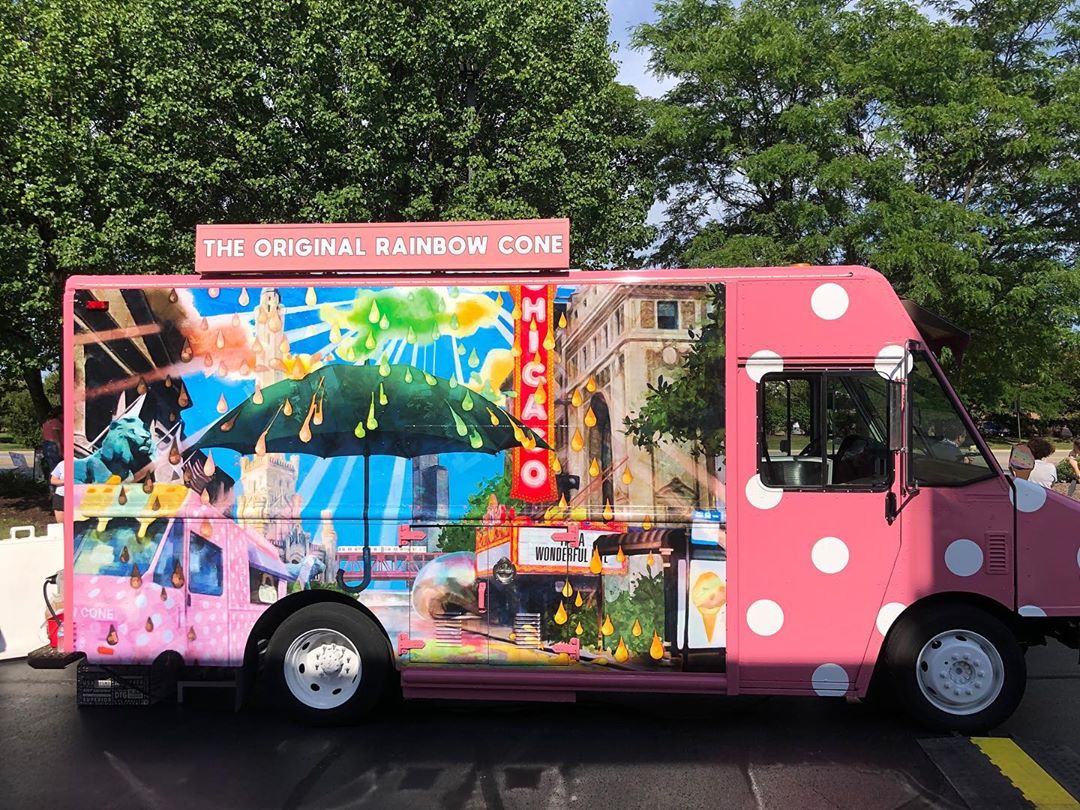
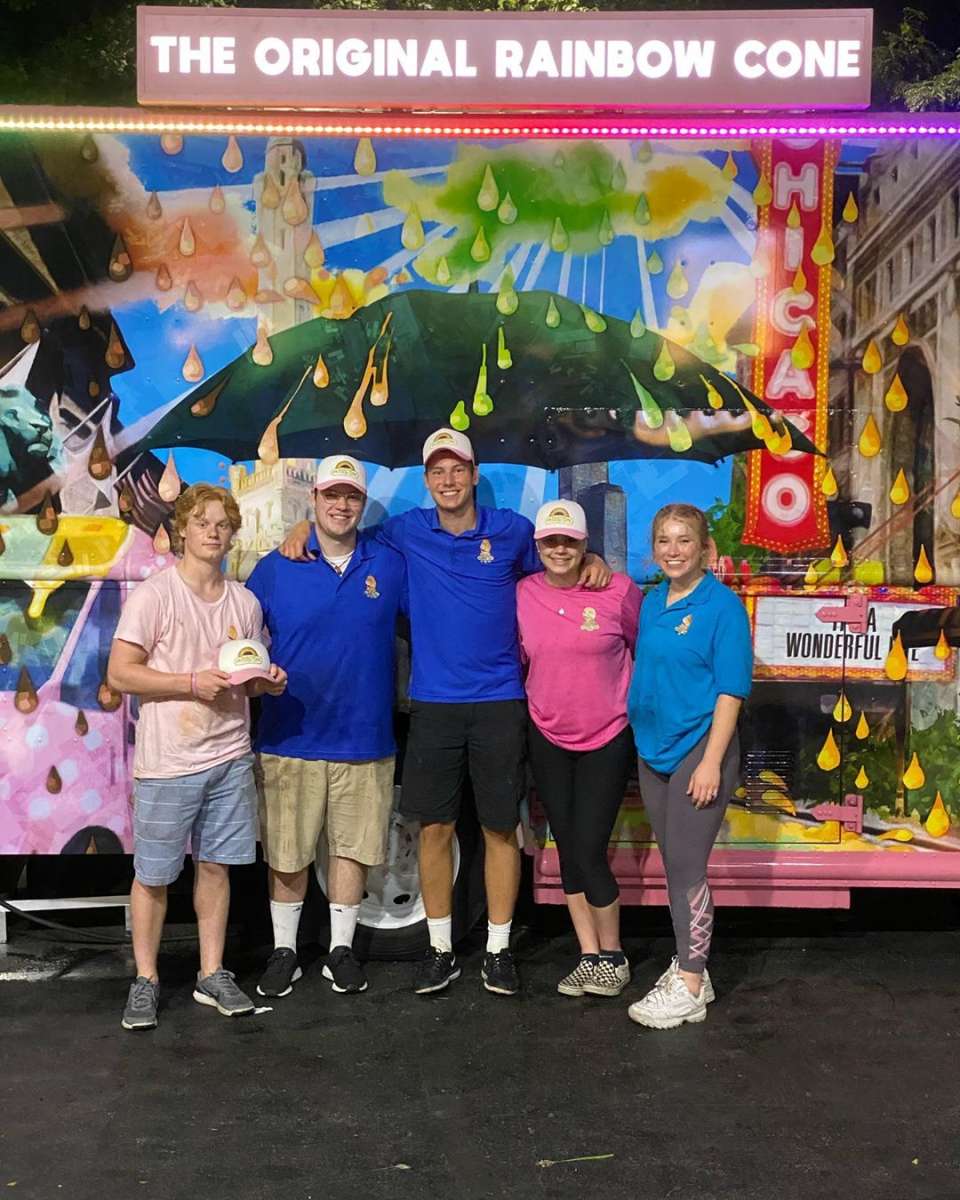
With coronavirus putting a lock on music festivals, beaches, local street festivals, and more, summer in Chicago really hasn’t felt like true summer. Though they weren’t at Taste of Chicago To-Go, Original Rainbow Cone now has an ice cream truck to be our summer staple. First stop? The Chicago suburbs. 

With indoor bar service coming to a halt this Friday and more restrictions coming into place for indoor dining, Original Rainbow Cone’s truck is hoping to extend the establishment’s reach to get their signature cone to customers that aren’t able to reach their brick and mortar location on 9233 S. Western Ave.

Advertisement

original rainbow cone truck
Photo Credit: The Original Rainbow Cone Instagram Page

Lynn Sapp, owner of Original Rainbow Cone and grandson of the man who founded the famed business in 1926, is usually used to bringing Original Rainbow Cone’s goodies to festivals across the city in the summertime. While the truck has been in the works for quite some time now, Sapp said that the abrupt adaptation the business has needed due to the coronavirus pandemic was the push to get the truck operational sooner than later.

The truck hasn’t made its way into cities and neighborhoods yet, given that parking and logistics are still difficult to get a handle on, but Original Rainbow Cone’s truck is bringing the Chicago favorite out into the suburbs and their parking lots. (The plan is to eventually have the truck make its rounds in the city and its neighborhoods, to keep updated on its whereabouts, we recommend following their Instagram page.)

Advertisement

original rainbow cone truck
Photo Credit: The Original Rainbow Cone Instagram Page

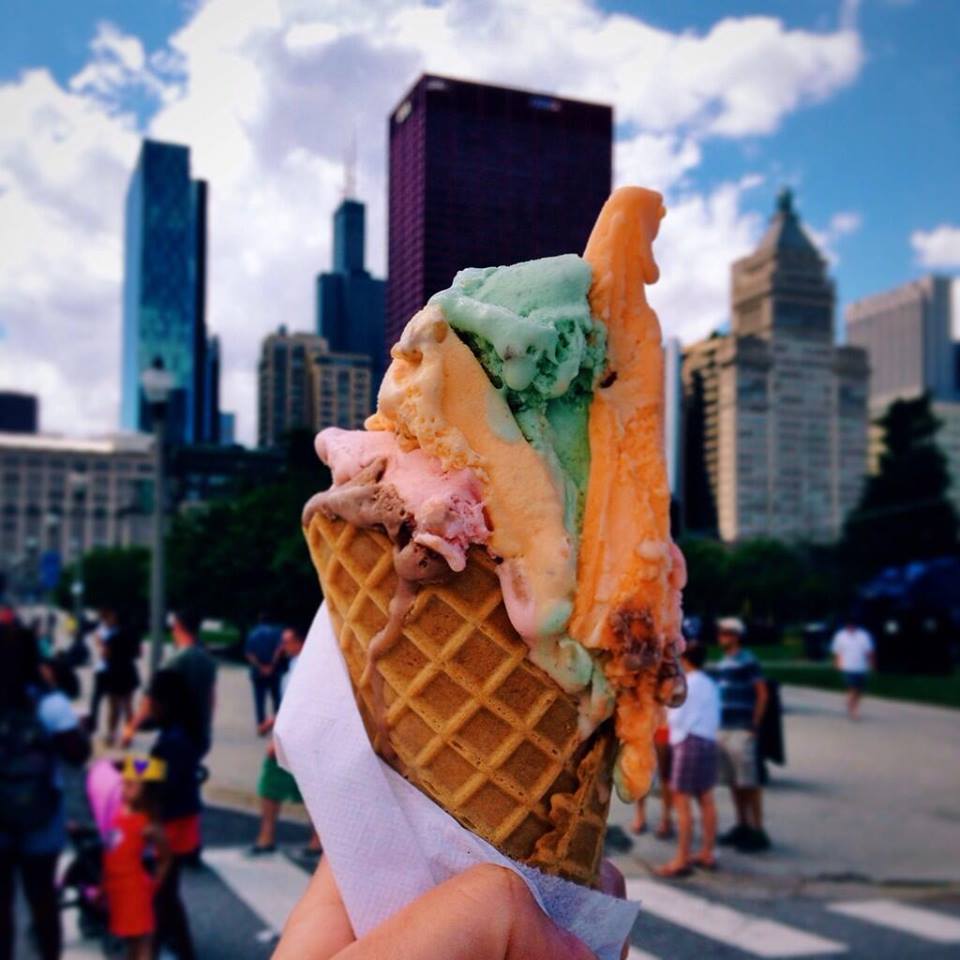
The cones that Original Rainbow Cone serves are a little more complicated than the standard ice cream cone, mainly because the signature stack includes a slab of chocolate, pistachio, strawberry, New York cherry, and orange sherbet. “We have a little bit of a learning curve with the extreme heat and elements like that and getting used to serving out of a truck,” Sapp said. “I’m pretty excited that a company that’s been around for [94 years] is now on wheels.”


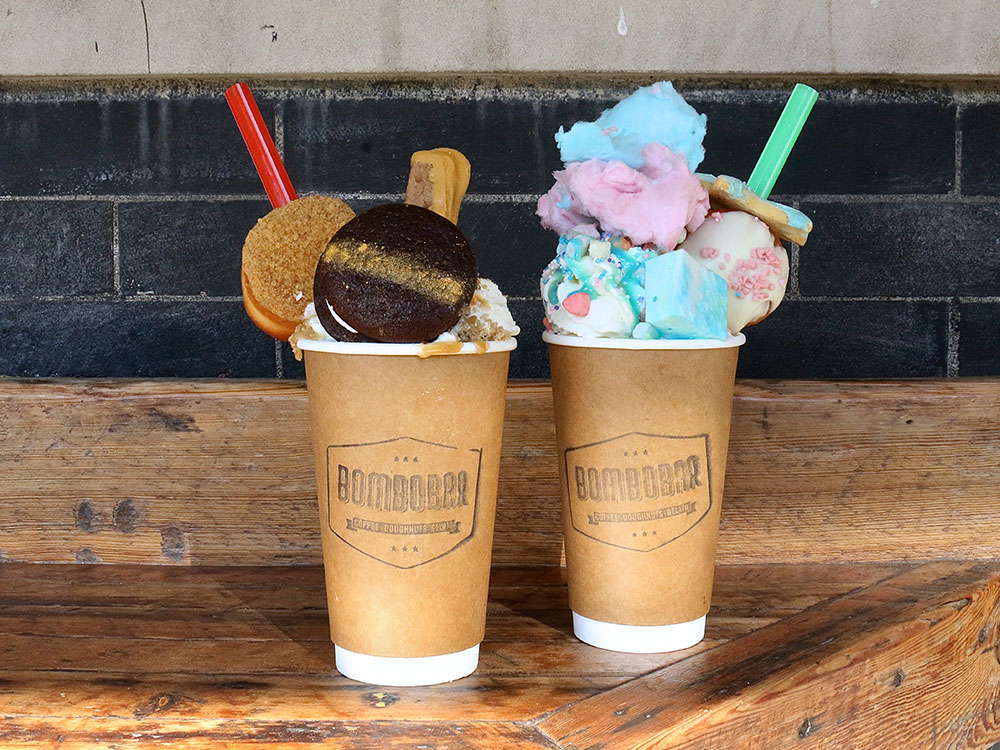
BomboBar
Photo Credit: Bombo Bar

View the Best Dessert Places in Chicago

Craving even more of that good stuff? View our list of the best dessert places in the city.

Advertisement

View the Best Dessert Places in Chicago


On July 11th, the truck made its suburban debut at the Buona Beef in Darien. Starting this Friday, July 24th, the truck will spend its weekend at the Buona Beef in Bolingbrook. On Friday you can grab their almost century-old, famous cone from 4 pm to 10 pm; 2 pm to 10 pm is your primetime for ice cream-ing Saturday and Sunday at the same location.

Advertisement

rainbow cone chicago
Photo Credit; Original Rainbow Cone Facebook Page

For those located in the city and have the means to, the Original Rainbow Cone location in Beverly is still open for pickup, takeout, and catering!

Advertisement

At UrbanMatter, U Matter. And we think this matters.

Tell us what you think matters in your neighborhood and what we should write about next in the comments below!

Advertisement

Featured Image Credit: Original Rainbow Cone Instagram Page

Advertisement

Read More

Original Rainbow Cone Ice Cream Truck Coming to Chicago Suburbson July 22, 2020 at 8:12 pm Read More »

Could college football — or lack of college football — affect the November election?on July 22, 2020 at 2:43 pm

DES MOINES, Iowa — Halloween and college football are scheduled to coincide this fall, three days before national elections, with the COVID-19 pandemic an unwelcome backdrop to all of it.

In the South on Oct. 31, Georgia and Florida are supposed to renew their annual rivalry in Jacksonville, a boisterous tradition dubbed “The World’s Largest Outdoor Cocktail Party.” The Baylor Bears are intended to travel to Austin to tangle with the Texas Longhorns in a contest that would have the full attention of that football-loving state. And in the Midwest, Nebraska and Ohio State are on tap to trod into the Horseshoe, where two proud fan bases would normally converge to create a red October.

There is nothing normal about this college football season. There’s a strong chance the stadiums will be empty, an open question of whether the games will be played at all.

And that could underscore the seriousness of the grip the coronavirus has on America as voters head to the polls Nov. 3.

“No one gives a hoot in hell if organic chemistry classes are canceled,” veteran Washington Post political columnist George Will told USA TODAY Sports. “But cancel the Alabama-Mississippi game and you’re playing with fire.”

President Donald Trump is up for re-election. So are 11 governors, including those in West Virginia, North Carolina, Utah, Washington, Indiana and Missouri, all home to FBS football programs. There is no research on whether the absence of America’s favorite sport would cause some voters to turn on incumbent officeholders. Then again, there’s never needed to be.

“I think it’s a fascinating question,” said Justin Holmes, a political science professor at the University of Northern Iowa.

“For a lot of incumbents, there is the goal to get back to normal in some way. We’ve had a lot of deviations from normal as of late. We have an awful lot of people get wrapped up in college sports. The audience for that is huge. They tailgate around it. They have parties around it. I don’t think it’s different in kind from other deprivations that we’ve had. But people who spend their Saturdays in front of the TV, what are they going to do with themselves? That could hit home. Whether they take it out on people politically, I’m not sure what that looks like.”

Trump has been pushing for schools to resume face-to-face learning in the fall. His vice president, Mike Pence, even brought that message to Baton Rouge, Louisiana, this month, sitting at a table with Ed Orgeron, the head coach of reigning college football champion LSU and applauding as Orgeron proclaimed: “Football is the lifeblood of our country. It gets everything going, the economy going – the economy of Baton Rouge and the economy of the state of Louisiana.”

The optics of that meeting were not lost on political observers such as David Wasserman, an analyst for the nonpartisan Cook Political Report and an NBC News contributor.

“It’s not just college football. It’s school,” Wasserman said of what Americans may be missing as they prepare to cast their ballots Nov. 3. “I think it has an indirect effect on the presidential election since the voters believe the country is on the wrong track, much more than they did three or four months ago. And that is a terrible climate for an incumbent president to be running for re-election.

“If (Trump) can portray Democrats as the party of keeping schools closed, portray Republicans as the party of keeping schools open, that becomes a more complicated public policy issue.”

Wasserman doesn’t believe the absence of college football would have any bearing on gubernatorial races, since polls show strong support for incumbents in those positions. Nor does he sense a broad anti-incumbent sentiment in America generally as politicians grapple with how to keep constituents safe from the coronavirus without derailing the economy.

“Sports may be the one unifying thing we have left in the country that unites urban and rural areas of states as they’ve become more politically polarized,” Wasserman said.

“(Trump’s sliding approval ratings) means voters are in a bad mood, and they are upset with the direction of the country.”

John Weaver is a college football fan, particularly of his alma mater Texas A&M, and a political consultant best known for his work on the presidential campaigns of Republicans John McCain and John Kasich. He’s spending this election cycle as an adviser to the Lincoln Project, dedicated to defeating Trump and what he sees as members of the Republican Party who have “enabled” him.

Weaver said he believes empty college football stadiums from Texas to Michigan would cast a powerful symbolic message in early November, just when the college season typically reaches its crescendo.

“It will show the instability and chaos in the country and the cost to the country of the lack of a plan, the lack of effort to see this thing through,” Weaver said.

“We’ll have empty stadiums that normally hold 50,000 to 100,000 people on a glorious Saturday afternoon that also helps fund every other sports program at a university. That is going to resonate with a pretty broad group of fans across the country. There will be a political price to pay, too. It’s a further eroding of things in our society that people in their mind’s eye hold dear.”

Weaver said he believes an autumn without college football could spur enough anger to be decisive in a close electoral race.

Holmes, the professor, pointed out that there has been research done on whether rain on election day puts voters in a bad enough mood that it alters their decision at the ballot box. Something that seems so trivial can have a marginal impact.

“We do know that there are voters – and I don’t understand these people, but they exist – who really make their mind up for the presidential vote on election day. Somebody like that I think is more apt to be influenced by (the lack of football) or just any little thing,” Holmes said.

“In a close race, anything that would remind us of how things used to be and they’re now not would feed into that general sense of dissatisfaction that people have. For Trump, that’s a lot of his problem.”

Will isn’t convinced that football, or the absence of it, will be a significant factor in the results of Nov. 3.

Not even in the Deep South?

“If the pandemic can shut down the SEC,” Will allowed, “then it is of world historic importance.”

Read more at usatoday.com

Read More

Could college football — or lack of college football — affect the November election?on July 22, 2020 at 2:43 pm Read More »

Ben Baker Billington’s Quicksails builds whole worlds from serene synthson July 22, 2020 at 1:00 pm

Many prolific musicians call Chicago home, but multi-instrumentalist Ben Baker Billington is a veritable Energizer Bunny. He’s been contributing otherworldly experimental sounds to the scene since his mid-aughts stint in noise project Druids of Huge, and his musical resume is too long to reproduce in full here. Any outre artist looking for an open-minded collaborator with a refined ear and exacting technique would be well advised to call on Billington, and many have: he’s played drums for free-jazz misfits Tiger Hatchery, industrial-gospel legends Ono, and twisted psych-improv outfit ADT, as well as in the backing bands of Ryley Walker and Circuit des Yeux. Billington has also helped shape the city’s experimental scene as a concert programmer: he spearheads the Hideout’s monthly Resonance series, and during the COVID-19 pandemic he’s been helping organize Experimental Sound Studio’s celebrated livestream series, the Quarantine Concerts. Earlier this month, he became the assistant director of the Elastic Arts Foundation, the Logan Square community arts nonprofit that runs the eponymous performance space. But not to be forgotten amid all this activity is Billington’s long-running solo project, Quicksails. On Blue Rise, the latest Quicksails album for eclectic local label Hausu Mountain, he employs modular and digital synthesizers to create subtle, wide-screen tones. He teases the featherweight atmospheres of “Florian’s Brush” with drum brushstrokes, telegraphing an imminent shift in mood as sudden as a summer storm–it never arrives, though, and instead he builds toward a cinematic, heavenly melody. Billington understands how to harness the power of understatement, and on Blue Rise the tiniest details open doors to immersive worlds. v

Read More

Ben Baker Billington’s Quicksails builds whole worlds from serene synthson July 22, 2020 at 1:00 pm Read More »

10 Mexican Restaurants for Legendary Fish Tacos in Chicagoon July 21, 2020 at 8:31 pm

Table of Contents

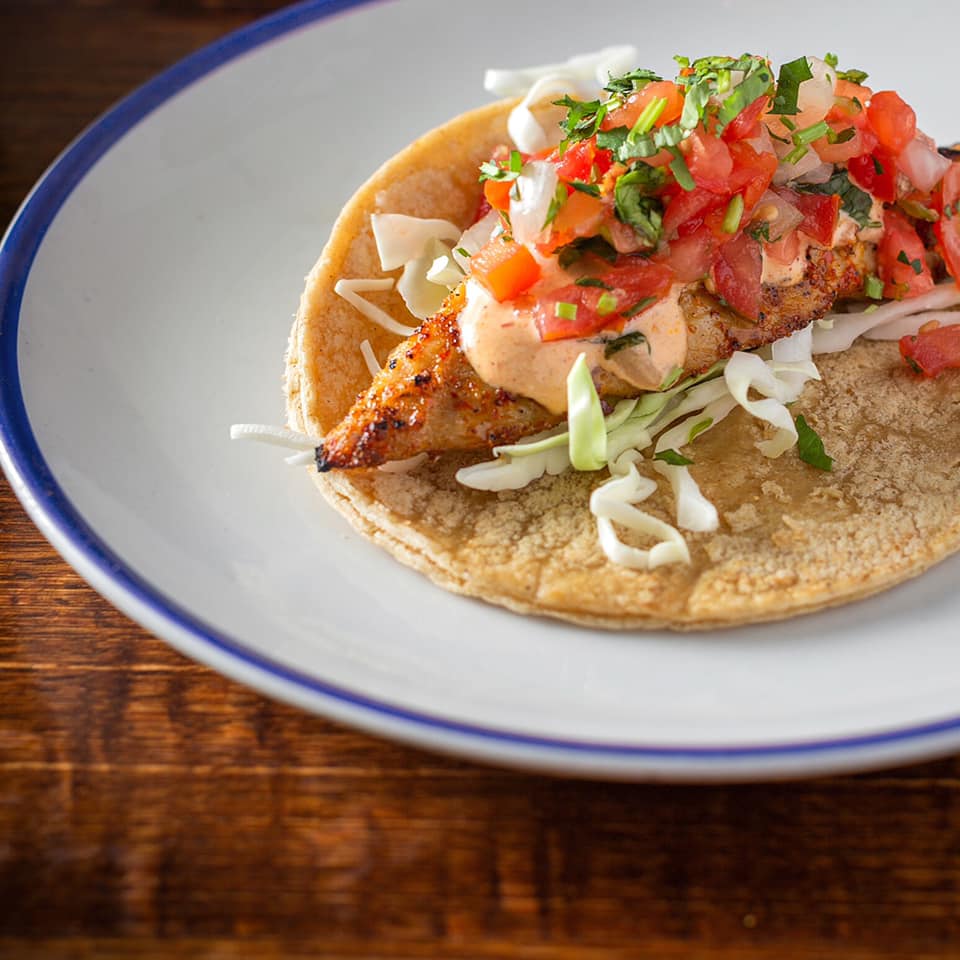
As you swipe through dating apps, pausing sometimes to read a little further through people’s bios, you see a lot of love for a particular food: tacos. What’s not to love about a tasty little hammock of well-seasoned meats (if you’re into that sort of thing), veggies, and pico de gallo? While you might not swipe right on every guy holding up a fish in his profile picture, you can pretty much always say yes to the fish tacos at these glorious Mexican restaurants in Chicago.

Photo Credit: L’Patron Yelp Page

L’ Patron

3749 W Fullerton Ave, Chicago IL

Advertisement

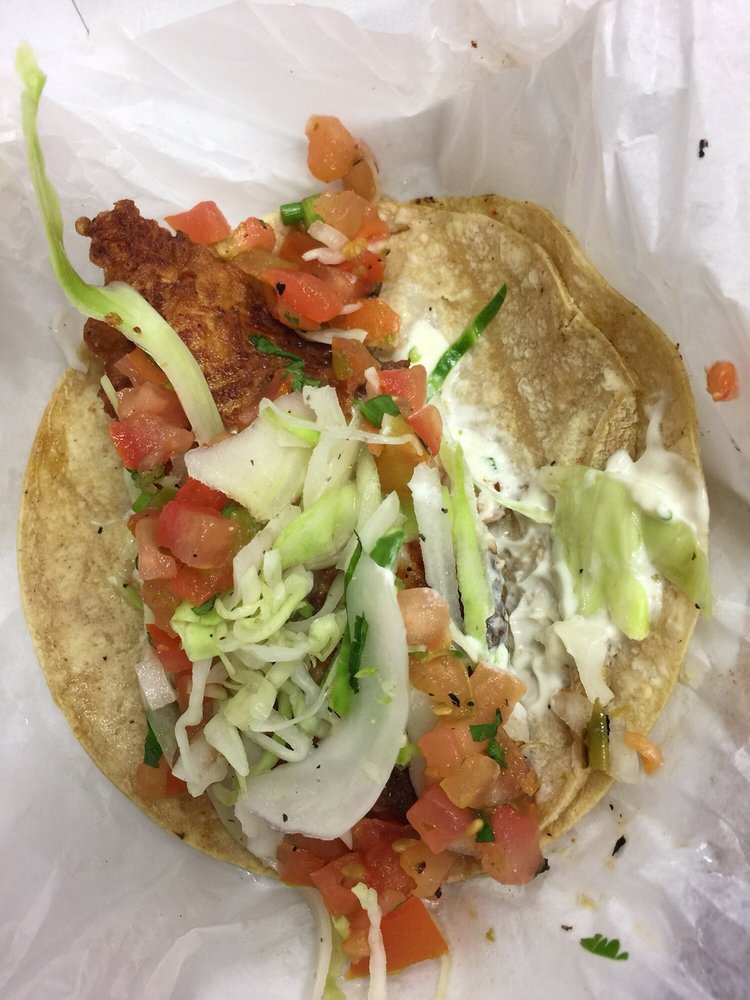
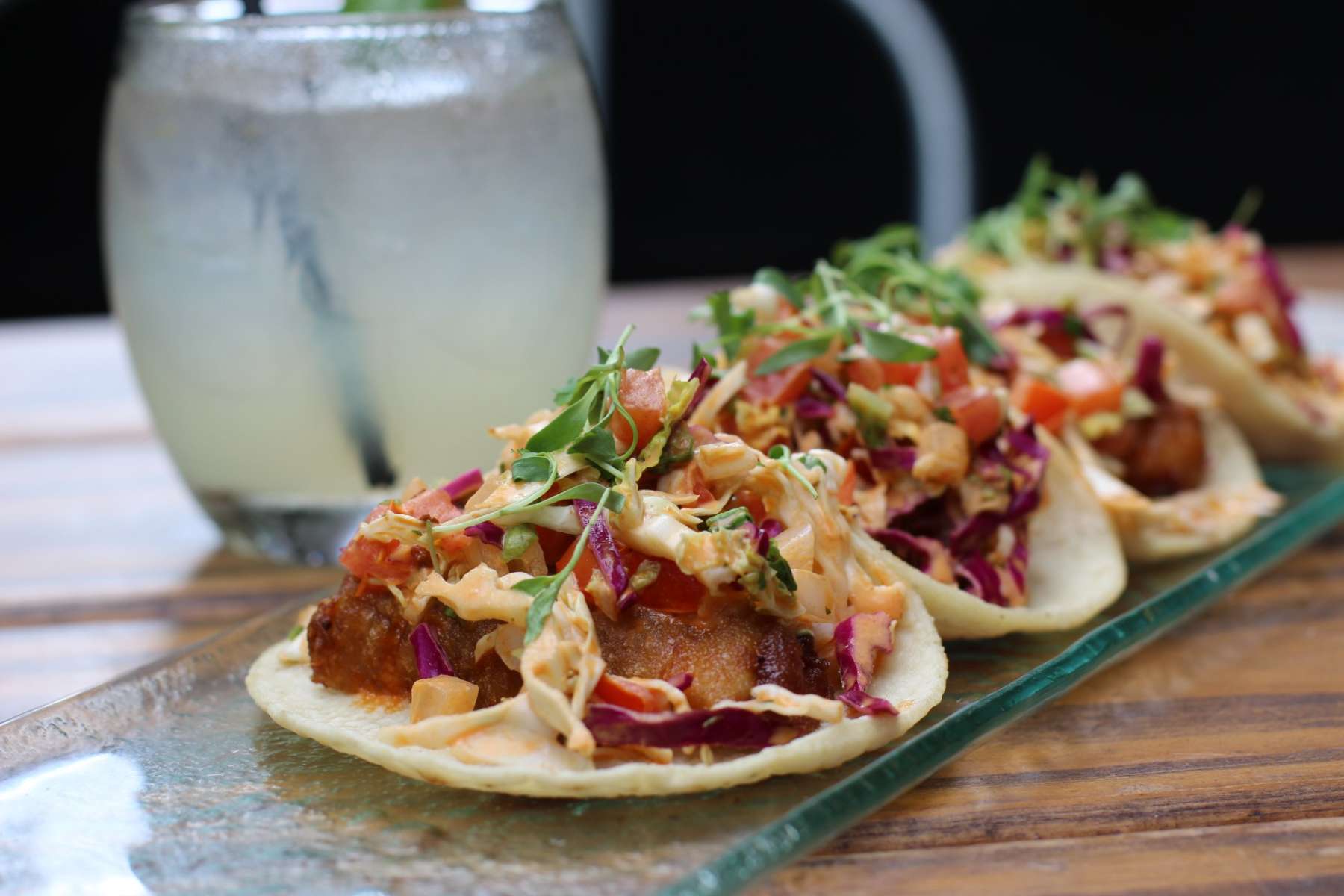
Started in Logan Square in 2012 by the Gonzalez family, L’ Patron’s fish filet tacos are created using tilapia, which is dressed up with cabbage and pico de gallo.

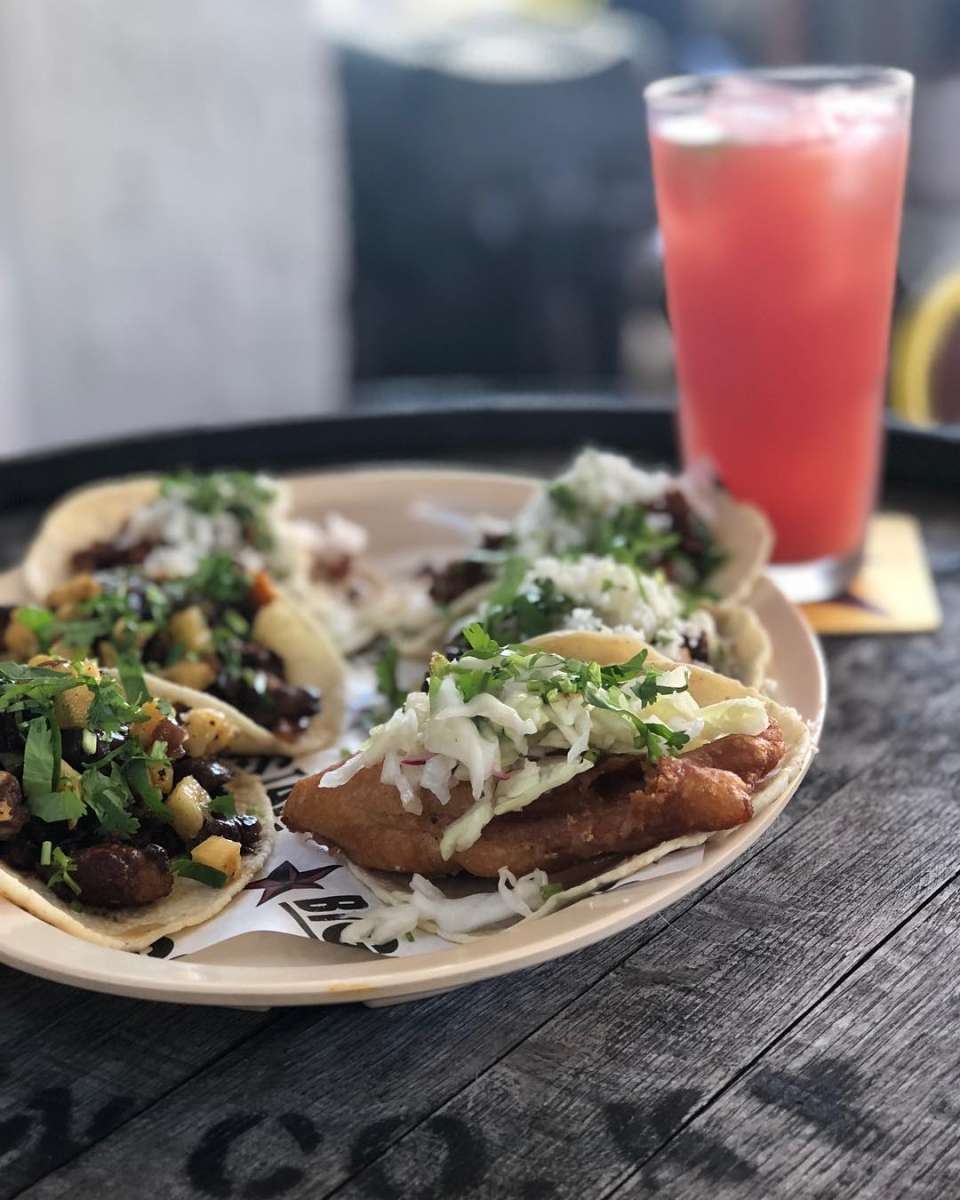
Photo Credit: Big Star Facebook Page

Big Star

1531 N Damen Ave, Chicago IL | 3640 N Clark St, Chicago IL

Advertisement

This version of the fish taco includes — along with cabbage, red onion, lime, and cilantro — the zest of chipotle mayo, so be sure to have your margarita ready to cool things off.

fish tacos chicago
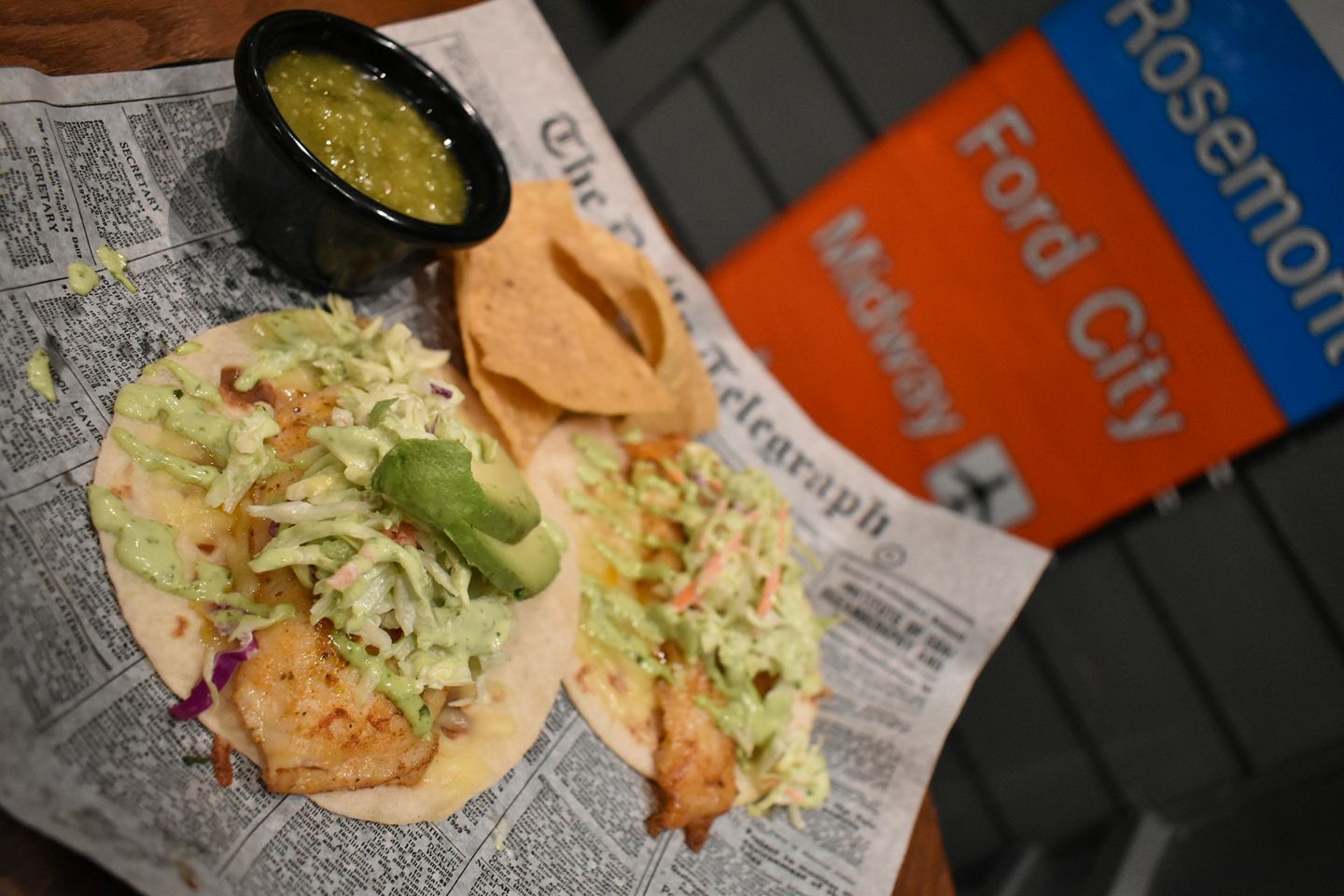
Photo Credit: Chicago Taco Authority Facebook Page

Chicago Taco Authority

4219 W Irving Park Rd, Chicago IL 60641

Advertisement

If you’re looking to catch the train to Flavortown, you’re on the right track — this spot in Irving Park tops its fish tacos with cajun seasoning, jalapeño coleslaw, Chihuahua cheese, and cilantro aioli.

fish tacos chicago
Photo Credit: La Oaxaqueña Yelp Page

La Oaxaqueña

3382 N Milwaukee Ave, Chicago IL 60641

Advertisement

If you’re looking for something more authentically Mexican and a little less trendy, it’s about time you checked out the highly-praised fish tacos at this small Irving Park spot.

fish tacos chicago
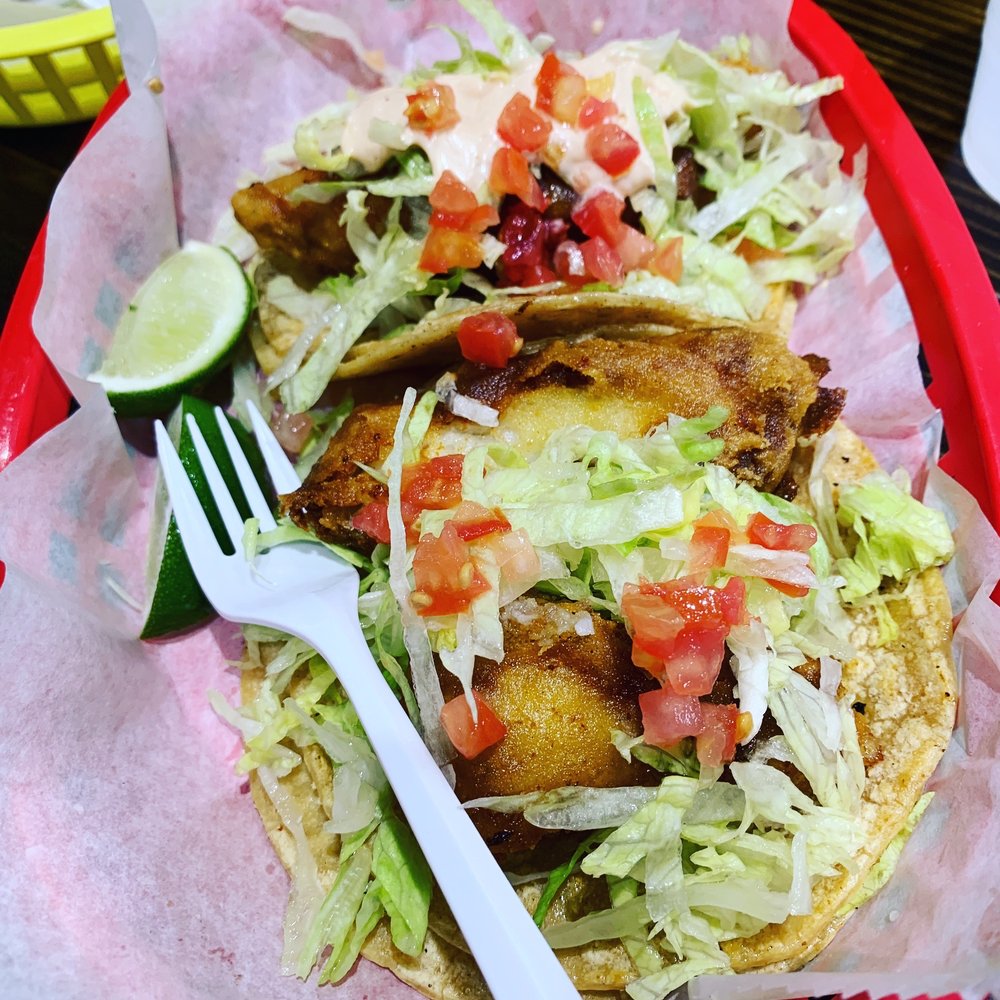
Photo Credit: Edgewater Tacos Yelp Page

Edgewater Tacos

5624 N Broadway, Chicago IL 60660

Advertisement

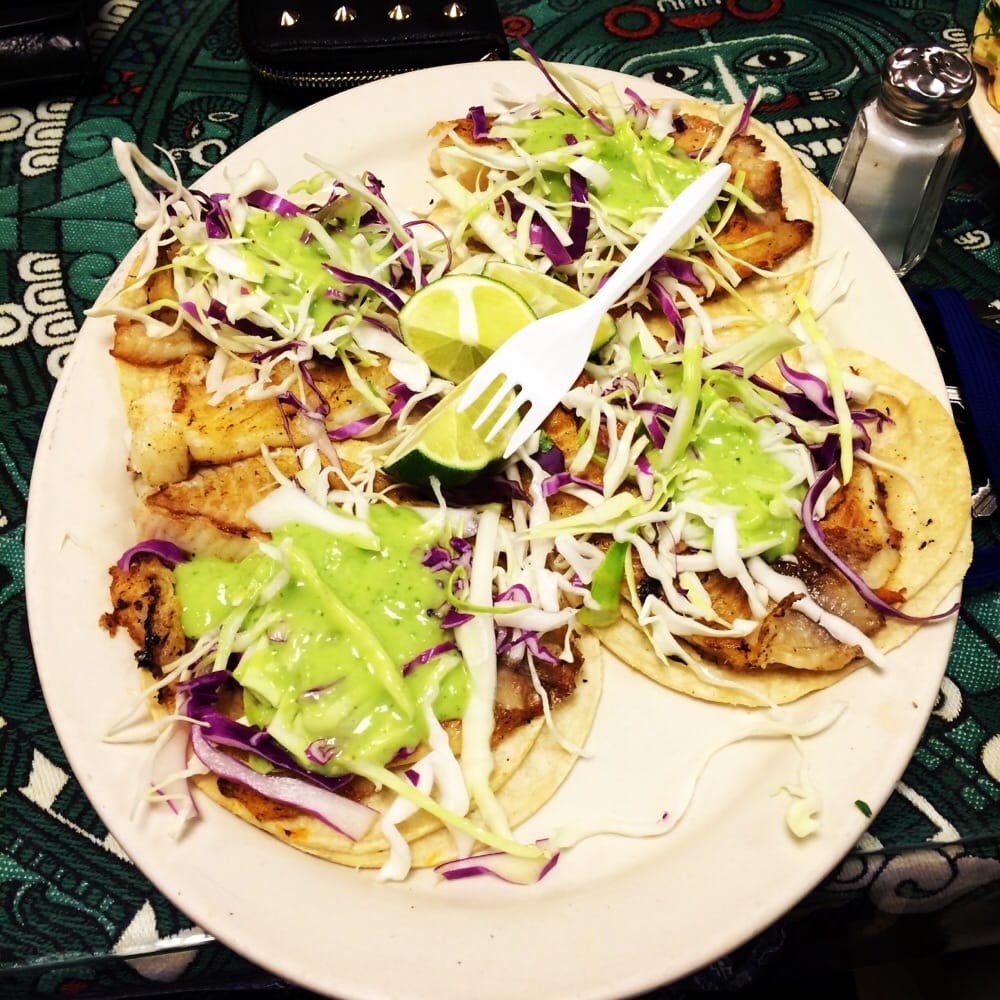
The delicious fish tacos of Edgewater Tacos comprise Alaskan cod, lightly battered with some lettuce, tomato, and a dash of chipotle mayo for a little kick.

fish tacos chicago
Photo Credit: Lonesome Rose Facebook Page

Lonesome Rose

2101 N California Ave, Chicago IL 60647

Advertisement

Visit this hip Logan Square establishment for some amazing margaritas and the truly excellent Baja Fish tacos, which include beer-battered tilapia, cabbage, pico de gallo, rémoulade, and salsa verde.

fish tacos chicago
Photo Credit: Mercadito Facebook Page

Mercadito

108 W Kinzie St, Chicago IL 60654

Advertisement

While many of your standard fish tacos include a beer-battered cod or tilapia, those of the Mercadito variety use herb-marinated, grilled mahi-mahi, topped with caper aioli and spring slaw. This is for the experienced fish taco-taster looking for something a little different.

fish tacos chicago
Photo Credit: Chilango Facebook Page

Chilango

1437 W Taylor St, Chicago IL 60607

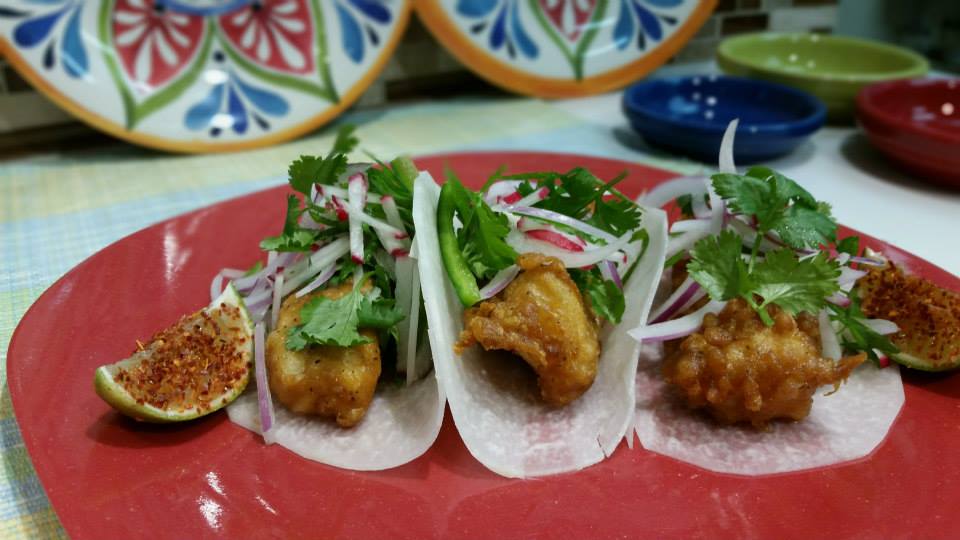
Known for a variety of great Mexican street food, Chilango tops its well-loved fish tacos with jalapeño, radishes, carrots, cilantro relish, and a coconut-cilantro sauce.


Tacos
Photo Credit: Velvet Taco Chicago Facebook

View the Best Tacos by Neighborhood in Chicago

Craving tacos but not a fan of fish? View our list of the best tacos by neighborhood in the city.

View the Best Tacos by Neighborhood in Chicago


Photo Credit: El Palmar Yelp Page

El Palmar

1008 W Irving Park Rd, Chicago, IL 60613

The Buena Park restaurant and taqueria, boasting a “modern interpretation of classic dishes” as well as fresh ingredients, round out a full menu of Mexican dishes with classic fish tacos.

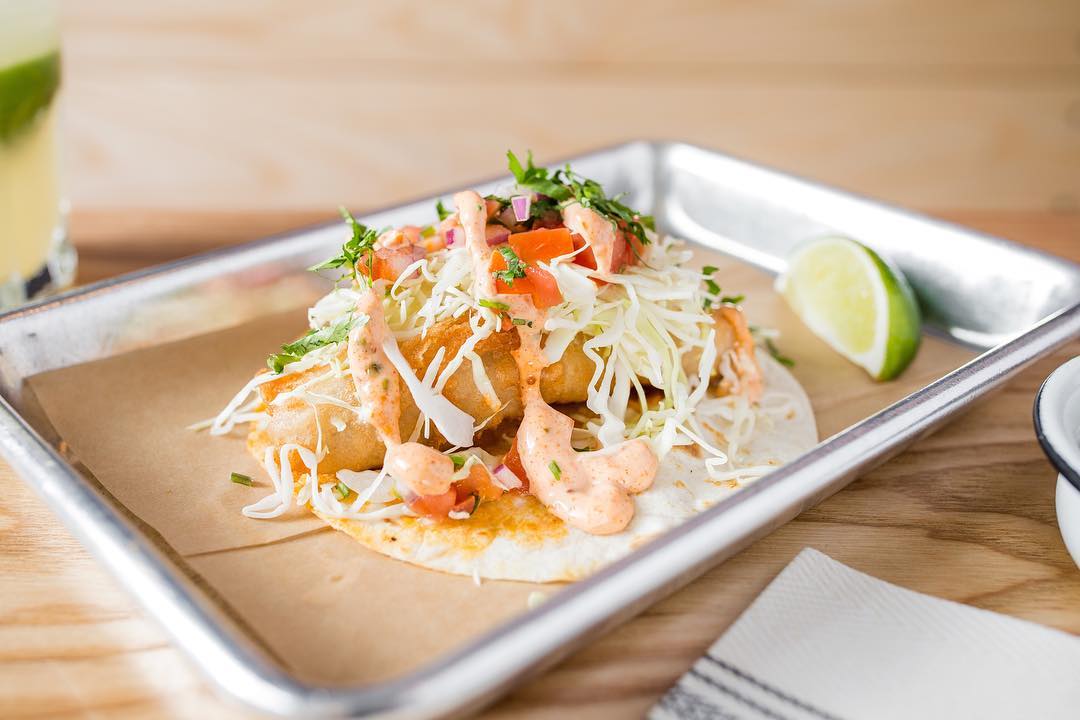
Photo Credit: Tuco and Blondie Facebook Page

Tuco and Blondie

3358 N Southport Ave, Chicago IL 60657

Another purveyor of the mahi-mahi-based fish taco, Tuco and Blondie tops said taco with cabbage (a must), a zesty and bright chipotle lime creme, and, of course, pico de gallo.

At UrbanMatter, U Matter. And we think this matters.

Tell us what you think matters in your neighborhood and what we should write about next in the comments below!

Read More

10 Mexican Restaurants for Legendary Fish Tacos in Chicagoon July 21, 2020 at 8:31 pm Read More »